Podcast
The Chills at Will Podcast
Hosted by chillsatwillpodcast · EN
The Chills at Will Podcast is a celebration of the visceral beauty of literature. This beauty will be examined through close reads of phrases and lines and passages from fiction and nonfiction that thrills the reader, so much so that he wants to read again and again to replicate that thrill. Each episode will focus on a different theme, such as "The Power of Flashback," "Understatement," "Cats in the Cradle," and "Chills at Will: Origin Story."
42episodes
Episodes
Newest firstAll episodes
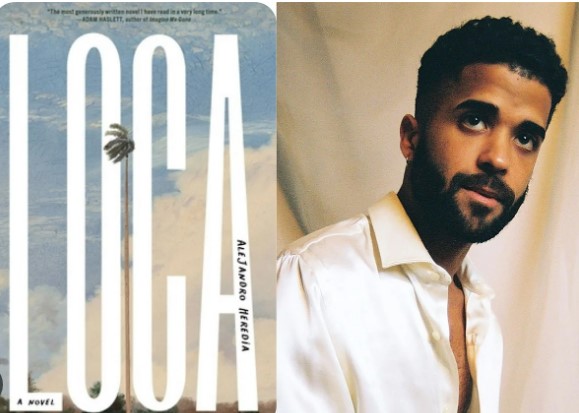
Episode 271 with Alejandro Heredia, Author of Loca, Crafter of Beautiful, Indelible Images, and Resonant Characters and Scenes
Feb 11, 202501:12:09Tap to summarizeNotes and Links to Alejandro Heredia’s Work Alejandro Heredia is a queer Afro-Dominican writer from The Bronx. His debut novel LOCA is out today (February 11) from Simon and Schuster. He has received fellowships from Lambda Literary, VONA, the Dominican Studies Institute, Kenyon Review, and Trinity College. In 2019, he was selected by Myriam Gurba as the winner of the Gold Line Press Fiction Chapbook Contest. His chapbook of short stories, You’re the Only Friend I Need (2021), explores themes of queer transnationalism, friendship, and (un)belonging in the African Diaspora. Heredia’s work has been featured in Teen Vogue, Lambda Literary Review, The Offing, and elsewhere. He received an MFA in fiction from Hunter College. Heredia currently serves as Black Mountain Institute’s Shearing Fellow at the University of Nevada, Las Vegas. Buy Loca Alejandro Heredia's Website Book Review for Loca At about 2:40, Alejandro shares his feelings as the book’s Pub Day approaches, as well as feedback that he hasn’t gotten on the novel At about 4:40, Alejandro talks about his bilingualism, growing up in The Bronx and The Dominican Republic, and what led him towards writing At about 7:10, Alejandro talks about how being bilingual helps him to become a better writer/thinker and how his Spanglish has developed At about 9:25, Alejandro gives some background on a specific Dominican word At about 10:25, Alejandro responds to Pete’s questions about what he was reading that served as foundational for him and he expands upon “writing across difference” At about 13:10, Alejandro cites contemporary fiction that inspires and challenges, including Gina Chung’s work At about 14:10, Alejandro outlines ideas of how he sees the use of the word “queer” At about 16:00, Alejandro expands upon seeds and stimulating ideas for his book, especially wth regard to the “Author’s Note” At about 19:10, Alejandro expands on his Author’s Note reference to fiction’s “capaciousness” and how fiction’s constructs helped him write about loss and grief in Loca At about 21:10, Alejandro talks about the significance of his two epigraphs and ideas of “home” and friendship At about 23:40, Pete and Alejandro talks about the book’s exposition and an early inciting incident At about 24:30, Pete asks Alejandro about main character Charo’s domesticity and her visceral negative reaction At about 26:05, The two discuss ideas of community and Y2K and the importance of the “queer space” at The Shade Room in a Dominican and Puerto Rican community At about 28:20, Alejandro talks about intersectionality and his qualms about its usage in early reviews of the novel At about 30:55, Pete and Alejandro discuss Vance and Sal’s first meeting and budding relationship and ideas of “identity politics and language” At about 32:25, The two discuss important familial and friend characters At about 33:55, Yadiel is discussed as a proud queer character and Aljandrro expands upon a moment in which Sal and Yadiel At about 36:15, Alejandro responds to Pete’s questions about a “moment in time” and a “utpian moment,” and expands upon the good and bad of life “at the margins” At about 39:35, Alejandro replies to Pete’s question about the ways in which he deals wth sexual abuse and its effects and the abuse as “foundational” and “inform[ing]” Sal’s adolescence and beyond At about 42:45, Vance and his likability and Ren are described At about 43:55, Anacaona and her history are discussed in connection to an important flashback in the book At about 46:00, Alejandro expands upon ideas of “erasing Blackness” that come as unintentional (?) effects of the portrayal of the Taino peoples At about 49:15, Robert and his sympathetic nature and his usage of a homophobic slur are discussed, as Alejandro discusses the “reclaiming” of the word in the queer Dominican community At about 50:40, Don Julio, Sal’s roommate, and his emblematic background are discussed, along with the benefits and drawbacks of “normalizing” a reclaimed word At about 53:00, Alejandro talks about being a “writer of images” after Pete compliments one of many resonant scenes At about 54:55, Pete and Alejandro tiptoe around any spoilers At about 55:50, Sal and Kiko and their minor triumphs and Sal’s success as a teacher are discussed At about 57:00, Pete wonders about Lena, an eccentric character in the book, and Alejandro talks about some ambiguities At about 59:00, Robert and Charo’s relationship and ideas of repression, personal choice, and guilt throughout the book are discussed At about 1:03:25, Pete and Alejandro discuss generational differences in the ways in which Sal and Vance interact and see progressive movements At about 1:07:40, Alejandro discusses social media contact info and points listeners towards his upcoming tour dates You can now subscribe to the podcast on Apple Podcasts, and leave me a five-star review. You can also ask for the podcast by name using Alexa, and find the pod on Stitcher, Spotify, and on Amazon Music. Follow Pete on IG, where he is @chillsatwillpodcast, or on Twitter, where he is @chillsatwillpo1. You can watch other episodes on YouTube-watch and subscribe to The Chills at Will Podcast Channel. Please subscribe to both the YouTube Channel and the podcast while you’re checking out this episode. Pete is very excited to have one or two podcast episodes per month featured on the website of Chicago Review of Books. The audio will be posted, along with a written interview culled from the audio. This week, his conversation with previous guest Carvell Wallace will be up on the website. A big thanks to Rachel León and Michael Welch at Chicago Review. Sign up now for The Chills at Will Podcast Patreon: it can be found at patreon.com/chillsatwillpodcastpeterriehl Check out the page that describes the benefits of a Patreon membership, including cool swag and bonus episodes. Thanks in advance for supporting Pete’s one-man show, his DIY podcast and his extensive reading, research, editing, and promoting to keep this independent podcast pumping out high-quality content! This month’s Patreon bonus episode will feature an exploration of the wonderful poetry of Khalil Gibran. I have added a $1 a month tier for “Well-Wishers” and Cheerleaders of the Show. This is a passion project of Pete’s, a DIY operation, and he’d love for your help in promoting what he’s convinced is a unique and spirited look at an often-ignored art form. The intro song for The Chills at Will Podcast is “Wind Down” (Instrumental Version), and the other song played on this episode was “Hoops” (Instrumental)” by Matt Weidauer, and both songs are used through ArchesAudio.com. Please tune in for Episode 272 with Lamya H. Lamya is a queer Muslim writer and organizer living in New York City whose 2023 memoir HIJAB BUTCH BLUES won the Brooklyn Public Library Book Prize and a Stonewall Non-fiction Book Award, and was also a finalist for Lambda Literary and Publishing Triangle Awards. Lamya’s organizing work centers around creating spaces for LGBTQ+ Muslims, fighting Islamophobia, Palestine, and prison abolition. The episode airs on February 18.
Transcribe →
Episode 270 with Jason De León, Author of Soldiers and Kings: 2024's National Book Award for Nonfiction, and Relentless Researcher, Attuned Listener, and Master Storyteller
Feb 5, 202501:10:07Tap to summarizeNotes and Links to Jason De León’s Work Jason De León is Director of the Cotsen Institute of Archaeology, Loyd E. Cotsen Endowed Chair of Archaeology, Professor of Anthropology and Chicana/o and Central American Studies at the University of California, Los Angeles. De León is Executive Director of the Undocumented Migration Project (UMP) Inc. a 501(c)(3) research, arts, and education collective that seeks to raise awareness about migration issues globally. He is the author of two award winning books: “The Land of Open Graves: Living and Dying on the Migrant Trail” (featuring photos by Michael Wells) and “Soldiers and Kings.” Soldiers and Kings won the 2024 National Book Award for Nonfiction. De León is 2017 MacArthur Foundation Fellow. In addition to his scholarly pursuits, Jason is an active musician who sang and played guitar with the Long Beach based hardcore-punk-reggae band Youth in Asia in the mid to late 1990’s and the Americana band The Wilcox Hotel based out of State College, PA between 2005 and 2008. He currently plays bass in The War Pigs and is involved in various musical projects including periodic reunions with The Wilcox Hotel. Buy Jason's Books Jason Website Jason’s National Book Award Receipt: Video Book Review: Soldiers and Kings New York Times Review Jason on CBS Sunday Morning: Video At about 2:50, Jason helps Pete get over some Lakers/Kings traumas At about 6:15, Jason talks about the experience of winning the National Book Award At about 8:45, Jason shouts out indie bookstores like Literati, Village Well, Powell’s as places to buy his book At about 10:05, Jason gives background on his early relationship with language and story, and how this reading was shaped by his childhood At about 11:10, Jason talks about ups and downs of reading and writing for joy, and how “story” has been an interest At about 13:20, Jason talks about how multilingualism was part of his childhood and the ways in which speaking foreign languages At about 14:50, Jason responds to Pete’s question about writers who challenge and inspire him, including Ernest Gaines, Lus Alberto Urrea, Willie Vaultin, and Jesmyn Ward At about 17:00, Jason cites songwriters like John Prine, Jason Isbell, and Bruce Springsteen as inspirational At about 19:20, Jason gives background on the protocol and timing and embedding done in his research for Soldiers and Kings At about 20:30, Pete is highly complimentary of Jason’s balance of first person and third person and his skilled objectivity; Jason responds to Pete’s questions about any “vertigo” that came with intense fieldwork and academia and family life At about 24:15, Jason speaks to the significance of the book’s epigraph from Jason Isbell At about 27:50, Jason discusses the difference between “smuggling” and “trafficking” and their implications in the book and beyond At about 29:15, Jason and Pete reflect on the titles for the people represented on the book, and Jason responds to Pete’s question about how he wrote to avoid generalization At about 32:30, Jason recounts a story from his first book that is emblematic of fully-drawn characters At about 34:30, Pete asks about ethical concerns in research for the book At about 36:05, Jason outlines how childhood experiences and exposure to violence may have helped him connect more with the main characters of the book At about 38:50, Jason reflects on how he proved himself trustworthy in his research and how and why the characters are “good judges of characters” At about 41:00, The two discuss Honduras and its importance in migration in the last decade or so, as well as how its emblematic of the global and natural forces At about 45:45, the two reflect on youth and its importance in the book and how privilege, or lack thereof, connect to ideas of redemption and traumas At about 49:35, Pete cites a telling quote from Father Greg Boyle in reference to the high number of adverse experiences that so many migrants have had to carry; Jason discusses ideas of hope At about 52:15, Pete highlights a resonant poem by Warsan Shire that leads Jason to talk about the “sharks” that put people on the migrant route At about 55:25, Jason responds to Pete’s question about the infamous “La Bestia” At about 57:20, Jason explains the term “clavo” and its implications to “stateless” people At about 58:55, Pete notes that the book deals so successfully with At about 1:01:00, “The Future Belongs to Those Who Dream,” a chapter title, and its implications for optimism and hope is discussed At about 1:04:55, Pete cites the book’s wondrous last page, as well as the book’s long future “shelf life” You can now subscribe to the podcast on Apple Podcasts, and leave me a five-star review. You can also ask for the podcast by name using Alexa, and find the pod on Stitcher, Spotify, and on Amazon Music. Follow Pete on IG, where he is @chillsatwillpodcast, or on Twitter, where he is @chillsatwillpo1. You can watch other episodes on YouTube-watch and subscribe to The Chills at Will Podcast Channel. Please subscribe to both the YouTube Channel and the podcast while you’re checking out this episode. Pete is very excited to have one or two podcast episodes per month featured on the website of Chicago Review of Books. The audio will be posted, along with a written interview culled from the audio. This week, his conversation with Episode 264 guest Maggie Sheffer is up on the website. A big thanks to Rachel León and Michael Welch at Chicago Review. Sign up now for The Chills at Will Podcast Patreon: it can be found at patreon.com/chillsatwillpodcastpeterriehl Check out the page that describes the benefits of a Patreon membership, including cool swag and bonus episodes. Thanks in advance for supporting Pete’s one-man show, his DIY podcast and his extensive reading, research, editing, and promoting to keep this independent podcast pumping out high-quality content! This month’s Patreon bonus episode will feature an exploration of the classic Gabriel Garcia Marquez short story, “The Handsomest Drowned Man in the World.” I have added a $1 a month tier for “Well-Wishers” and Cheerleaders of the Show. This is a passion project of mine, a DIY operation, and I’d love for your help in promoting what I’m convinced is a unique and spirited look at an often-ignored art form. The intro song for The Chills at Will Podcast is “Wind Down” (Instrumental Version), and the other song played on this episode was “Hoops” (Instrumental)” by Matt Weidauer, and both songs are used through ArchesAudio.com. Please tune in for Episode 271 with Alejandro Heredia, a queer Afro-Dominican writer from The Bronx and winner of the Gold Line Press Fiction Chapbook Contest. His writing has been featured in Teen Vogue, Lambda Literary Review, and elsewhere; His resonant debut novel LOCA has its Pub Day on Feb 11, the day on which the episode airs.
Transcribe →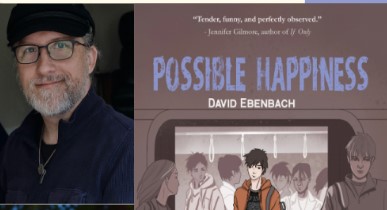
Episode 269 with David Ebenbach: Author of Possible Happiness, Multitalented with Genre, and Thoughtful, Generative Writer of Relatable, Flawed, and Sympathetic Characters
Jan 22, 202500:57:48Tap to summarizeNotes and Links to David Ebenbach’s Work David Ebenbach writes. He’s been writing ever since he was a kid, when he kept his whole family awake by banging away on an enormous manual typewriter, and he’s never wanted to stop. In fact, David’s now the author of ten books of fiction, poetry, and non-fiction, and his work has picked up awards along the way: the Drue Heinz Literature Prize, the Juniper Prize, the Patricia Bibby Award, and more. Born and raised in the great city of Philadelphia, these days David does most of his writing in Washington, DC, where he lives with his family—because he uses a laptop now, he doesn’t keep them awake with his typing—and where he works at Georgetown University, promoting inclusive, student-centered teaching at the Center for New Designs in Learning and Scholarship, and teaching creative writing and literature at the Center for Jewish Civilization and creativity through the Master’s in Learning, Design, and Technology Program. Buy David's Books David Ebenbach’s Website Book Review: LitPick about Possible Happiness At about 2:15, David talks about the cool cover design for Possible Happiness At about 3:00, David discusses a recent reading in which his students were able to hear/see his work At about 4:00, David highlights wonderful contributions from Carol Nehez, his inspirational high school teacher At about 5:55, David details pivotal reading and writers from his adolescence At about 7:30, Pete and David discuss connections between his book and West Philly’s own Will Smith At about 8:15, David responds to Pete’s questions about Philadelphia’s deep writing tradition and pivotal events in 1980s Philadelphia; he cites John Wideman and Mat Johnson At about 11:00, David cites Ted Chang, Charles Yu as a few contemporary writers he enjoys At about 12:25, David explains the webs involved with his books and genre and publishing At about 13:55, David speaks about teaching informs his writing and vice versa-featuring shouts out to Asha Thanki and Kate Brody At about 16:15, David lists some favorite texts of his classmates, including work by Jewish writers from the Global South, like Esther David and others like Nathan Englander and Robert Levy-Samuels At about 18:40, David gives out information about buying Possible Happiness and shares how he finds joy on social media-specifically Facebook At about 21:00, David responds to Pete’s questions about inhabiting the persona/headspace of the teens represented in Possible Happiness At about 23:55, David gives background on Jacob, the protagonist’s, mindset and book’s exposition At about 27:00, Pete and David discuss Jacob’s “inertia” and how depression and how the book’s common phrase of “howling like a coyote” relate At about 28:15, David talks about the term “depression” and both capacious and maybe “limiting” At about 29:10, David and Pete discuss Jacob’s mother’s living with depression and At about 30:20, David reflects on the significance of a literal collective howl in the book At about 31:55, Pete compliments David’s usage of a “moment in time,” and David cites Raymond Carver’s “Cathedral” and Miranda July’s work as examples of authors manipulating time At about 34:40, Pete has a bone to pick over Full House’s treatment in the novel! At about 35:10, The two discuss the awesome (in the truest sense of the word) pacing in Tobas Wolff’s “Bullet in the Brain” At about 36:10, the machinations of the social groups at the book’s high school are discussed, as well as the “quaint” ways of home phones pre-cell phones At about 37:55, Pete thanks David for dropping info on Philadelphia’s metro At about 39:00, David discusses the ways in which clubs that accepted people under 21 and the culture that brought Jacob ways to release anger/angst At about 40:00, The two discuss the pop culture references from the late 80s/early 90s featured in the book At about 41:30, Pete details information about Jacob’s happy days and days dealing with depression and connections to his social life At about 42:10, The religiosity of Jacob’s family and his uncle’s family are discussed, and David reflects on the ways that Jacob’s Judaism is represented At about 44:15, The two discuss the real-life parallels between identity and race and class in the book At about 47:00, Jacob’s trip to Chicago to meet his father and ideas of neglecting to talk about depression are discussed At about 49:20, David responds to Pete’s question about the source(s) of Jacob’s resentment towards his father At about 50:30, Pete compliments the subtle and nuanced ways in which David writes about depression and teen life At about 51:35, David cites some benefits of writing about the pre-cell phone days At about 53:00, David gives some hints about his exciting upcoming projects You can now subscribe to the podcast on Apple Podcasts, and leave me a five-star review. You can also ask for the podcast by name using Alexa, and find the pod on Stitcher, Spotify, and on Amazon Music. Follow Pete on IG, where he is @chillsatwillpodcast, or on Twitter, where he is @chillsatwillpo1. You can watch other episodes on YouTube-watch and subscribe to The Chills at Will Podcast Channel. Please subscribe to both the YouTube Channel and the podcast while you’re checking out this episode. Pete is very excited to have one or two podcast episodes per month featured on the website of Chicago Review of Books. The audio will be posted, along with a written interview culled from the audio. This week, his conversation with Episode 264 guest Maggie Sheffer is up on the website. A big thanks to Rachel León and Michael Welch at Chicago Review. Sign up now for The Chills at Will Podcast Patreon: it can be found at patreon.com/chillsatwillpodcastpeterriehl Check out the page that describes the benefits of a Patreon membership, including cool swag and bonus episodes. Thanks in advance for supporting Pete’s one-man show, his DIY podcast and his extensive reading, research, editing, and promoting to keep this independent podcast pumping out high-quality content! This month’s Patreon bonus episode will feature an exploration of the wonderful poetry of Khalil Gibran. I have added a $1 a month tier for “Well-Wishers” and Cheerleaders of the Show. This is a passion project of Pete’s, a DIY operation, and he’d love for your help in promoting what he’s convinced is a unique and spirited look at an often-ignored art form. The intro song for The Chills at Will Podcast is “Wind Down” (Instrumental Version), and the other song played on this episode was “Hoops” (Instrumental)” by Matt Weidauer, and both songs are used through ArchesAudio.com. Please tune in for Episode 270 with Lamya H. Lamya is a queer Muslim writer and organizer living in New York City whose 2023 memoir HIJAB BUTCH BLUES won the Brooklyn Public Library Book Prize and a Stonewall Non-fiction Book Award, and was also a finalist for Lambda Literary and Publishing Triangle Awards. Lamya’s organizing work centers around creating spaces for LGBTQ+ Muslims, fighting Islamophobia, Palestine, and prison abolition. The episode airs on February 4.
Transcribe →
Episode 268 with Dan Gutman: Writer of Fun, Funny, Challenging, Educational, Enriching, Page-turners in Multiple Genres and for Motivating Reluctant and Voracious Readers
Jan 7, 202500:46:50Tap to summarizeNotes and Links to Dan Gutman’s Work New York Times best-selling and award-winning author Dan Gutman has written more than 190 books for readers from kindergarten through middle school. Dan’s My Weird School series includes 100+ titles, and has sold more than 35 million copies globally over the past 20 years. Dan also is the author of the best-selling Genius Files series, the Baseball Card Adventure series, and many more. Dan’s books have been named Junior Library Guild Selections and Bank Street College’s Best Children’s Books of the Year, and have been awarded numerous state book awards, including: The California Young Reader Medal, the Massachusetts Children’s Book Award, and the Iowa Children’s Choice Award, among others. When he’s not writing books, Dan loves to ride his bike, play pickleball, throw Frisbees, and explore New York City where he lives with his wife Nina. To find out more, follow Dan on Facebook, BlueSky, and Instagram. Buy Dan's Books Dan Gutman's Website Book Review: The Genius Files At about 0:45, Audrey nails the biographical reading of Dan Gutman’s info At about 2:25, Dan responds to Pete asking if “it gets old” after writing 190+ books At about 3:15, Pete talks about the baseball bug hitting the family At about 3:40, Audrey gives background on the family’s connection with Satchel Paige, and Chris gives backstory involving Shoeless Joe Jackson At about 5:45, Dan expands on the legend of Shoeless Joe and talks about the popularity of baseball with young people At about 6:40, Dan and the Riehls discuss the famous Honus Wagner baseball card and some facts about him, the star of one of Dan’s books At about 8:50, Dan responds to Audrey’s question about his inspirations for the baseball series through giving background on his writing for kids and connecting to baseball At about 11:10, Dan traces his journey in initially getting his work published At about 13:20, Chris recommends a baseball player for Dan’s new book At about 13:50, Dan reflects on why he chose the baseball players he did for his books At about 15:15, Dan replies to Audrey’s question about his own baseball career, and shares a cool Easter egg At about 16:15, The At about 16:40, Chris recounts two family card collecting stories similar to The Sandlot-the second dealing with a Michael Jordan rookie card At about 19:10, Dan discusses the research needed for his writing, and how he balances fantasy/fiction with nonfiction At about 21:10, Pete shares his experience reading about larger cultural events and historical events through sports books like those about Jackie Robisnon At about 22:35, Dan shares his experiences in writing about Jackie Robinson and Joe DiMaggio At about 23:35, Dan responds to Pete’s questions about books and genres that inspired his love of reading, and how reading about baseball was a huge catalyst At about 25:50, Dan shares wonderful feedback and compliments shared by eager readers of his work and their parents and teachers At about 27:10, Pete and Dan discuss The Genius Files series and its ethos, and Dan gives background on the series’ genesis At about 30:25, Dan talks about writing for different ages and in different genres, and his mindset in doing so At about 31:55, Dan responds to Pete asking about his “beta readers” and getting reading feedback At about 33:00, Dan shouts out some favorite writers for young people At about 34:30, Dan talks about the ways in which visual arts and photography are balanced with his words At about 36:50, Dan reflects on what his books have in common and ideas of the “muse” as he mentions some exciting upcoming projects At about 41:00, Dan gives contact and social media info, as well as book ordering information You can now subscribe to the podcast on Apple Podcasts, and leave me a five-star review. You can also ask for the podcast by name using Alexa, and find the pod on Stitcher, Spotify, and on Amazon Music. Follow Pete on IG, where he is @chillsatwillpodcast, or on Twitter, where he is @chillsatwillpo1. You can watch other episodes on YouTube-watch and subscribe to The Chills at Will Podcast Channel. Please subscribe to both the YouTube Channel and the podcast while you’re checking out this episode. Pete is very excited to have one or two podcast episodes per month featured on the website of Chicago Review of Books. The audio will be posted, along with a written interview culled from the audio. This week, his conversation with Episode 255 guest Chris Knapp is up on the website. A big thanks to Rachel León and Michael Welch at Chicago Review. Sign up now for The Chills at Will Podcast Patreon: it can be found at patreon.com/chillsatwillpodcastpeterriehl Check out the page that describes the benefits of a Patreon membership, including cool swag and bonus episodes. Thanks in advance for supporting Pete’s one-man show, his DIY podcast and his extensive reading, research, editing, and promoting to keep this independent podcast pumping out high-quality content! This month’s Patreon bonus episode will feature an exploration of the wonderful poetry of Khalil Gibran. I have added a $1 a month tier for “Well-Wishers” and Cheerleaders of the Show. This is a passion project of Pete’s, a DIY operation, and he’d love for your help in promoting what he’s convinced is a unique and spirited look at an often-ignored art form. The intro song for The Chills at Will Podcast is “Wind Down” (Instrumental Version), and the other song played on this episode was “Hoops” (Instrumental)” by Matt Weidauer, and both songs are used through ArchesAudio.com. Please tune in for Episode 269 with David Ebenbach. He is the author of ten books of fiction, poetry, and non-fiction, and his work has picked up awards along the way: the Drue Heinz Literature Prize, the Juniper Prize, the Patricia Bibby Award, and more. He works at Georgetown University, promoting inclusive, student-centered teaching at the Center for New Designs in Learning and Scholarship, and he teaches creative writing and literature at the Center for Jewish Civilization and creativity through the Master’s in Learning, Design, and Technology Program. The episode airs on January 14. Please go to ceasefiretoday.com, which features 10+ actions to help bring about Ceasefire in Gaza.
Transcribe →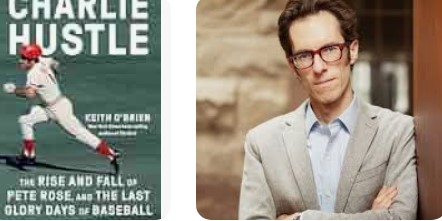
Episode 267 with Keith O'Brien, Author of Charlie Hustle and Award-Winning Journalist Who Skillfully and Faithfully Shows and Tells Well-Rounded Stories
Dec 25, 202401:21:44Tap to summarizeNotes and Links to Keith O’Brien’s Work Keith O'Brien is a New York Times bestselling author and award-winning journalist. He has written four books, been a finalist for the PEN/ESPN Award for Literary Sportswriting, been longlisted for the Andrew Carnegie Medal for Excellence in Nonfiction, and has contributed to multiple publications over the years. O’Brien’s work has appeared in the New York Times Magazine, the Atlantic, the Washington Post, and on National Public Radio. His radio stories have aired on All Things Considered, Morning Edition, and Weekend Edition, as well as Marketplace and This American Life. The Wall Street Journal calls his latest book, CHARLIE HUSTLE, "compulsively readable and wholly terrific." Publishers Weekly calls it "definitive and elegantly told, this is a home run," and Kirkus Reviews hails CHARLIE HUSTLE as a "masterpiece of a sports biography." A midwesterner by birth, O'Brien grew up in Cincinnati and graduated from Northwestern University. He now lives in New Hampshire with his wife, two children, two dogs and two cats. Buy Charlie Hustle Keith O'Brien's Website New York Times Review of Charlie Hustle At about 2:00, Pete asks Keith about the medium of radio, and Keith talks about how he loves radio and how it works different “muscles” At about 3:40, Keith traces his early reading and writing life and his love of sports stories, Sports Illustrated, and more, including David Halberstam’s stellar work At about 5:45, Pete and Keith fanboy over great work from The Best American Sports Writing of the Century At about 7:05, Keith shouts out Mirin Fader and Andrew Maraniss and Jonathan Eig, among others, as writing inspirations At about 8:55, Keith talks about how work in Japan helped to ignite his love of and skill for writing At about 10:45 (13:50), Keith discusses how he views storytelling, showing/telling, as well as objectivity in writing, as well as expectations for readers At about 14:50, Pete quotes a meaningful excerpt from the beginning of Charlie Hustle, and Keith expands upon how “stunned” he was by the crying and emotional responses from those talking about Pete Rose’s impact in their lives At about 17:20, Pete alludes to the Author’s Note, and asks Keith about his childhood outlook on Pete Rose and the Reds as a native Cincinnatian At about 21:05, Pete gives some exposition from the book and summarizes the “high point” from the Introduction At about 22:00, Keith paints a picture of Pete Rose’s childhood growing up on the Westside of Cincinnati, and talks about “Big Pete” Rose and his legendary exploits, including a At about 26:40, Keith explains the significance of two events in the summer of 1956 and how it shaped Pete At about 29:15, Keith recounts an emblematic story involving Pete Rose and boxing At about 30:45, Pete picks up on the aforementioned story and asks Keith if he sees the same mindset in Pete Rose in denying his betting later in life; Keith talks about a lack of vulnerability for Pete Rose At about 32:45, Keith charts the importance of Pete Rose’s Uncle Buddy in jumpstarting Pete’s career At about 37:15, Keith gives background on Pete Rose’s iconic nickname and its “mythology” At about 39:55, The two reflect on the “juxtaposition” between those who gave Pete Rose his nickname and Pete Rose At about 41:10, Keith talks about racism and the treatment of Black players in the Major Leagues, as well as how Pete viewed/spoke about race At about 44:35, Keith expands on the ways in which Pete was seen as a “white, working-class hero” in the media and among fans At about 48:15, Keith reflects on the echoing importance of Pete Rose’s collision with Ray Fosse At about 52:15, Keith responds to Pete’s questions about how Pete Rose’s upbringing may or may not have been “seeds” for his later gambling and vice At about 56:35, Decree Rule 21(d) and its ubiquity in baseball clubhouses is discussed At about 57:10, Pete talks about how skillfully Keith shows Pete Rose’s impending fall at the end of Part III At about 58:35, Keith responds to Pete’s questions about Pete Rose and whether he felt remorse over the way he treated women and his children At about 1:00:20, Keith reflects on how the same qualities that made Pete Rose great also were his downfall At about 1:01:40, The two discuss “credible allegations that Pete Rose had had a relationship with an underage girl in the 1970s and its impact on his baseball analyst job At about 1:03:20, Keith responds to Pete’s questions about the importance of a homecoming in 1986 to Cincinnati At about 1:06:50, Keith expands upon the inextricable links between Bart Giamatti and Pete Rose At about 1:09:10, The two discuss Pete Rose’s last years and prodigious autograph signing and the ways in which his fans continued to be moved by meeting him and talking to him; Keith shares his personal experiences in being amazed by the awe of the fans he witnessed in person At about 1:11:45, Keith reflects on the “crucial” and “poigna[nt]” ending of the book, an ending that Pete is highly complimentary of At about 1:13:30, Keith discusses how he felt upon learning of Pete’s death and the sadness associated with Pete “being defined by his greatest mistakes” At about 1:15:00, Pete and Keith reflect on connections between Jake LaMotta in Raging Bull and Pete Rose and the “fleeting” nature of fame At about 1:16:15, shoutout to Ellen Adar for the audiobook At about 1:17:10, Keith shouts out places to buy the book, including Waterstreet Books in NH, and gives social media/contact info You can now subscribe to the podcast on Apple Podcasts, and leave me a five-star review. You can also ask for the podcast by name using Alexa, and find the pod on Stitcher, Spotify, and on Amazon Music. Follow Pete on IG, where he is @chillsatwillpodcast, or on Twitter, where he is @chillsatwillpo1. You can watch other episodes on YouTube-watch and subscribe to The Chills at Will Podcast Channel. Please subscribe to both the YouTube Channel and the podcast while you’re checking out this episode. Pete is very excited to have one or two podcast episodes per month featured on the website of Chicago Review of Books. The audio will be posted, along with a written interview culled from the audio. This week, his conversation with Episode 255 guest Chris Knapp is up on the website. A big thanks to Rachel León and Michael Welch at Chicago Review. Sign up now for The Chills at Will Podcast Patreon: it can be found at patreon.com/chillsatwillpodcastpeterriehl Check out the page that describes the benefits of a Patreon membership, including cool swag and bonus episodes. Thanks in advance for supporting Pete’s one-man show, his DIY podcast and his extensive reading, research, editing, and promoting to keep this independent podcast pumping out high-quality content! This month’s Patreon bonus episode will feature an exploration of the wonderful poetry of Khalil Gibran. I have added a $1 a month tier for “Well-Wishers” and Cheerleaders of the Show. This is a passion project of Pete’s, a DIY operation, and he’d love for your help in promoting what he’s convinced is a unique and spirited look at an often-ignored art form. The intro song for The Chills at Will Podcast is “Wind Down” (Instrumental Version), and the other song played on this episode was “Hoops” (Instrumental)” by Matt Weidauer, and both songs are used through ArchesAudio.com. Please tune in for Episode 268 with Dax-Devlon Ross, who is the author of six books. His journalism has been featured in Time, The Guardian, The New York Times, and other national publications, and he won the National Association of Black Journalists’ Investigative Reporting Award for coverage of jury exclusion in North Carolina courts. His most recent book, Letters to My White Male Friends, is a call to action and a reflection on race. The episode airs on December 31. Please go to ceasefiretoday.com, which features 10+ actions to help bring about Ceasefire in Gaza.
Transcribe →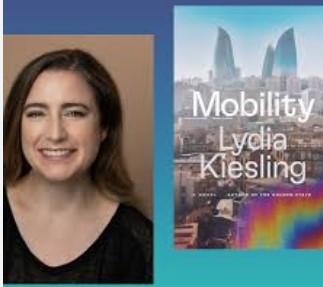
Episode 266 with Lydia Kiesling, Author of Mobility and Keen Observer and Reflection-Inducing Craftswoman of Psychological and Geopolitical Storylines with Unforgettable Characters
Dec 18, 202401:09:31Tap to summarizeNotes and Links to Lydia Kiesling’s Work Lydia Kiesling is a novelist and culture writer. Her first novel, The Golden State, was a 2018 National Book Foundation “5 under 35” honoree and a finalist for the VCU Cabell First Novelist Award. Her second novel, Mobility, a national bestseller, was named a best book of 2023 by Vulture, Time, and NPR, among others. It was longlisted for the Joyce Carol Oates Prize and a finalist for the Oregon Book Award. Her essays and nonfiction have been published in outlets including The New York Times Magazine, The New Yorker online, and The Cut. Contact her at lydiakiesling@gmail.com. Buy Mobility Lydia Kiesling's Website Lydia’s Wikipedia Page Alta Online Book Review for Mobility At about 1:35, Lydia gives out contact information and social media information, as well as places At about 4:10, “Return of the Mack” as an “eternal jam” is highlighted in the book At about 5:40, Lydia talks about her reading life and how it connected to her “cusp generation” and her time as a “foreign service brat” At about 9:50, Lydia talks about her experience reading Joyce Carol Oates, for whom an award is named that Lydia was longlisted for, and Pete compares the narrator, Bunny, and her situation in Mobility to iconic characters from “Where are you going, Where have you been?” and “In the Land of Men” At about 11:30, Lydia recounts interesting parts of her life in boarding school and how it shaped her At about 15:20, Lydia discusses the reading life fostered through memorable English classes in boarding school At about 21:15, Lydia highlights the ways in which her life as a writer developed, including early work in the blog era and a great opportunity from The Millions At about 26:00, Lydia shouts out contemporary writers who thrill and inspire, including Jenny Erpenbeck and Bruna Dantas Lobato At about 30:55, Lyda responds to Pete’s questions about the ways in which Lydia’s history as a “diplomat brat” has affected her view of the US At about 34:45, The two discuss seeds for the book and the importance of the book’s concise epigraph At about 37:25, Lydia highlights The Oil and the Glory as inspiration for the book At about 40:45, Pete lays out part of the book’s exposition and underscores the importance of the book’s first scene and use of oil prices to mark each year At about 42:30, Lydia responds to Pete asking about the draw of Eddie and Charlie and the older men/boys At about 43:55, Pete quotes Mario Puzo in relating to “men doing what they do when they’re away from home” and Lyda builds on it when talking about Baku and the things and people that came with oil drilling At about 45:00, Lydia gives background of the soap opera referenced in the book as she and Pete further discuss important early characters At about 47:40, Lydia explains the background and significance of a ring that Bunny covets that says “I respond to whoever touches me” At about 51:00, Pete recounts some of the plot involving Bunny’s return to the US and Texas and asks Lydia about the intentions of her mentor, Phil At about 53:20, Lydia expands on the “weird current” that comes with being a young woman/woman in a male-dominated world At about 54:40, Pete and Lydia discuss the manner in which Bunny and so many in our society choose to look away when faced with the evils of capitalism, oil, war, etc. At about 58:15, Lydia emphasizes the ways in which story and narrative govern so much of the way politics and business work At about 59:40, The two discuss Bunny as a nominal liberal At about 1:01:15, Lydia responds to Pete’s question about any reasons for optimism in response to climate change At about 1:04:00, The idea of “geologic time” as a negative and positive is discussed with regards to the environment and oil and positive change You can now subscribe to the podcast on Apple Podcasts, and leave me a five-star review. You can also ask for the podcast by name using Alexa, and find the pod on Stitcher, Spotify, and on Amazon Music. Follow Pete on IG, where he is @chillsatwillpodcast, or on Twitter, where he is @chillsatwillpo1. You can watch other episodes on YouTube-watch and subscribe to The Chills at Will Podcast Channel. Please subscribe to both the YouTube Channel and the podcast while you’re checking out this episode. Pete is very excited to have one or two podcast episodes per month featured on the website of Chicago Review of Books. The audio will be posted, along with a written interview culled from the audio. This week, his conversation with Episode 255 guest Chris Knapp is up on the website. A big thanks to Rachel León and Michael Welch at Chicago Review. Sign up now for The Chills at Will Podcast Patreon: it can be found at patreon.com/chillsatwillpodcastpeterriehl Check out the page that describes the benefits of a Patreon membership, including cool swag and bonus episodes. Thanks in advance for supporting Pete’s one-man show, his DIY podcast and his extensive reading, research, editing, and promoting to keep this independent podcast pumping out high-quality content! This month’s Patreon bonus episode will feature an exploration of the wonderful poetry of Khalil Gibran. I have added a $1 a month tier for “Well-Wishers” and Cheerleaders of the Show. This is a passion project of Pete’s, a DIY operation, and he’d love for your help in promoting what he’s convinced is a unique and spirited look at an often-ignored art form. The intro song for The Chills at Will Podcast is “Wind Down” (Instrumental Version), and the other song played on this episode was “Hoops” (Instrumental)” by Matt Weidauer, and both songs are used through ArchesAudio.com. Please tune in for Episode 267 with Keith O’Brien. He is a New York Times bestselling author and award-winning journalist who has written four books, been longlisted for the Andrew Carnegie Medal for Excellence in Nonfiction, and contributed to multiple publications over the years, including the New York Times Magazine, the Atlantic, and NPR. Kirkus Reviews hails his latest, Charlie Hustle, as a "masterpiece of a sports biography." The episode airs on December 24. Please go to ceasefiretoday.com, which features 10+ actions to help bring about Ceasefire in Gaza.
Transcribe →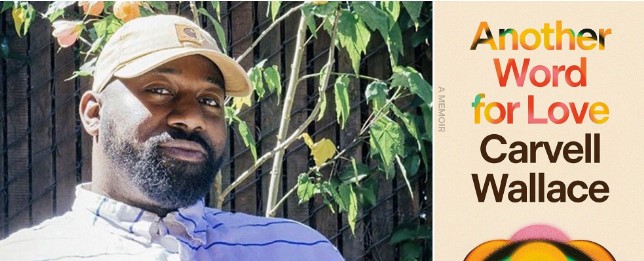
Episode 265 with Carvell Wallace, Author of Another Word for Love, a Modern Classic, and Upturner of Tropes in Beautifully and Honestly Portraying Darkness and Beauty and Love's Vagaries
Dec 10, 202401:22:05Tap to summarizeNotes and Links to Carvell Wallace’s Work Carvell Wallace is a writer and podcaster who has contributed to The New Yorker, GQ, New York Times Magazine, Pitchfork, MTV News, and Al Jazeera. His debut memoir, Another Word For Love (MCD, 2024), explores his life, identity, and love through stories of family, friendship, and culture and is a 2024 Kirkus Finalist in Nonfiction. He was a 2019 Peabody Award nominee, a 2022 National Magazine Award Finalist, a 2023 winner of the Mosaic Prize in Journalism, and a 2025 UCross Fellow. He lives in Oakland. Buy Another Word for Love Carvell Wallace’s Website New York Times Review of Another Word for Love “Carvell Wallace on What Writing Taught Him About His Life” for LitHub At about 2:25, Carvell describes his “active” reading youth during his youth, including interest in Edgar Allan Poe and fables and fairy tales, and how creative pursuits in college paused and started his writing life At about 6:25, Carvell shouts out a teacher who exposed him to great literary works and “treated [him] like a real writer” At about 7:45, Carvell talks about being an artist “getting off the academic train” and academic “tracking” At about 9:20, Carvell and Pete discuss “math people” and implications around embracing the label or not At about 10:40, Carvell lists Song of Solomon, Judy Blume, Grapes of Wrath as “formative” texts and writers, and he details how imitation works in his writing, At about 14:00-Ayn Rand and Jordan Peterson talk! At about 15:50, Carvell discusses his take on expectations of literary and pop culture “representation” growing up, as well as how he “goes to reading to find [himself]” At about 19:15, Pete asks Carvell about his wide level of interest and knowledge and “muses,” and Carvell describes the “throughline” for his varied work as “people” At about 22:50, Carvell and Pete discuss the definitive answer to the pronunciation of “gif” and highlight meaningful gifs of JR Smith and Andre Iguoadala At about 25:15, Carvell responds to Pete’s question about writers and creators who inspire, including the film podcast You Must Remember This and Tricia Hersey’s We Will Rest At about 28:20, Pete tiptoes into asking about Frankenstein’s monster At about 29:05, Pete highlights stirring parts of Another Word for Love and shares gushing blurbs At about 30:40, Pete asks about the structuring of the book and links that Catrvell envisioned and put into practice; Carvell explains his rationale for structuring around recovery At about 33:05, Carvell connects Choose Your Own Adventure to the ways in which he tried to avoid “prescriptive” writing At about 34:05, Carvell replies to Pete’s question about “killing [his] darlings” At about 36:10, Carvell gives background on his June Jordan epigraph and talks about her revolutionary ways At about 40:00, Carvell muses profoundly on the “contradiction(s)” of the United States At about 42:05, Carvell responds to Pete’s asking about the “encroaching shadows” and loneliness that govern the book’s opening scene; Carvell also reflects on the “unreliability of memory” At about 46:00, The two reflect on a pivotal early chapter about a literal and figurative “fog” and unorthodox lessons learned from the experience At about 48:45, Carvell explains the importance of descriptions in the books about seeking intimacy with his mother and flipping tropes At about 50:20, Carvell talks about writers and dishonesty and remembrance with regard to a possibly apocryphal story regarding kids forced to take care of themselves At about 54:40, Carvell talks about nomenclature for sexual assault and reflections on ideas of culpability and masculinity At about 58:20, Carvell reflects on healing through writing the book and his ethic in writing it At about 1:01:05, Pete recounts important parts of Carvell’s childhood daydreaming At about 1:02:20, Carvell points out a “theory of recovery” as seen in a metanarrative and ideas of “endless beautiful things in the world” At about 1:03:30, Carvell muses on connections between hip hop and Shakespeare that especally At about 1:05:20, The two discuss “The Finger” and racism shown by a white man and its larger implications At about 1:08:40, Pete asks Carvell about links between “overwrit[ing] reality” and racist violence towards him At about 1:10:00, The two reflect on change and the birth scene of his child; Carvell reflects on humility as illustrated in the scene At about 1:12:45, Pete recounts important scenes that end Part I and govern Part II and asks Carvell about “re-union” and healing At about 1:14:10, Pete gushes honestly over the book’s greatness, evocative nature, and resonant nature At about 1:15:30, Carvell talks about the book’s end and its lack of an end At about 1:16:20, Carvell shares contact info, social media info, and places to buy his book, including great Bay Area bookstores like Harold’s Books You can now subscribe to the podcast on Apple Podcasts, and leave me a five-star review. You can also ask for the podcast by name using Alexa, and find the pod on Stitcher, Spotify, and on Amazon Music. Follow Pete on IG, where he is @chillsatwillpodcast, or on Twitter, where he is @chillsatwillpo1. You can watch other episodes on YouTube-watch and subscribe to The Chills at Will Podcast Channel. Please subscribe to both the YouTube Channel and the podcast while you’re checking out this episode. Pete is very excited to have one or two podcast episodes per month featured on the website of Chicago Review of Books. The audio will be posted, along with a written interview culled from the audio. This week, his conversation with Episode 255 guest Chris Knapp is up on the website. A big thanks to Rachel León and Michael Welch at Chicago Review. Sign up now for The Chills at Will Podcast Patreon: it can be found at patreon.com/chillsatwillpodcastpeterriehl Check out the page that describes the benefits of a Patreon membership, including cool swag and bonus episodes. Thanks in advance for supporting Pete’s one-man show, his DIY podcast and his extensive reading, research, editing, and promoting to keep this independent podcast pumping out high-quality content! This month’s Patreon bonus episode will feature an exploration of the wonderful poetry of Khalil Gibran. I have added a $1 a month tier for “Well-Wishers” and Cheerleaders of the Show. This is a passion project of Pete’s, a DIY operation, and he’d love for your help in promoting what he’s convinced is a unique and spirited look at an often-ignored art form. The intro song for The Chills at Will Podcast is “Wind Down” (Instrumental Version), and the other song played on this episode was “Hoops” (Instrumental)” by Matt Weidauer, and both songs are used through ArchesAudio.com. Please tune in for Episode 266 with Lydia Kiesling. She is a novelist and culture writer whose first novel, The Golden State, was a 2018 National Book Foundation “5 under 35” honoree and a finalist for the VCU Cabell First Novelist Award. Her second novel, Mobility, a national bestseller, was named a best book of 2023 by Time and NPR, among others. The episode airs on December 17. Please go to ceasefiretoday.com, which features 10+ actions to help bring about Ceasefire in Gaza.
Transcribe →
Episode 264 with Maggie Sheffer, Author of the Award-Winning Collection, The Man in the Banana Trees, and Master of the Weird, The Offbeat, The Clever, The Poignant, and The Resonant
Dec 4, 202401:08:04Tap to summarizeNotes and Links to Maggie Sheffer’s Work Marguerite (Maggie) Sheffer is a writer who lives in New Orleans. She is a Professor of Practice at Tulane University, where she teaches courses in design thinking and speculative fiction as tools for social change. Formerly, she taught English at the East Oakland School of the Arts, Castlemont High School, Life Academy, and GW Carver High School. Her debut short story collection, The Man in the Banana Trees, was selected by judge Jamil Jan Kochai for the Iowa Short Fiction Award, was published in Fall 2024. Maggie is a founding member of Third Lantern Lit, a local writing collective, and the Nautilus and Wildcat Writing Groups. She received her MFA from Randolph College. She was a 2023 Veasna So Scholar in Fiction at The Adroit Journal, and was selected as a top-twenty-five finalist for Glimmer Train's Short Story Award for New Writers. Her story “Tiger on My Roof” was a finalist for the 2024 Chautauqua Janus Prize, which awards emerging writers’ short fiction with “daring formal and aesthetic innovations that upset and reorder readers’ imaginations.” Her position on semicolons (for) is noted in an Australian grammar textbook (pg. 16). Buy The Man in the Banana Trees Maggie's Website From LitHub: "Marguerite Sheffer on Crafting a Collection of Century-Spanning Speculative Fiction" "Marguerite Sheffer: These Stories Are an Intimate Map of What Scares Me" from Writer’s Digest At about 2:05, Maggie shares a fun story about being published with George Bernard Shaw At about 3:35, Maggie talks about her early reading life At about 4:40, The two reflect on the evolving reputation of Star Wars and Star Wars fans At about 6:05, Maggie shares how wine bottles led to writing an early and pivotal short story At about 7:10, Maggie describes a gap in “actively writing” while teaching and interacting differently with writing At about 8:10, Maggie lists texts and writers that helped her “reorder [her] brain” At about 10:15, Pete and Maggie stan Tillie Olsen’s “I Stand Here ironing” At about 12:05, Pete recounts a story about how he happened upon the great story by Shirley Jackson, “The Lottery” At about 12:50, Maggie responds to Pete asking about what drew and draws her to science and speculative fiction At about 13:50, Maggie highlights past guest Jamil Jan Kochai, Ken Liu, E. Lily Yu, Sofia Samatar, Clare Beams, Maurice Carlos Ruffin, the book The Safekeep, and others as contemporary writers who thrill and inspire At about 15:05, Pete asks Maggie how teaching has inspired her writing At about 16:45, Maggie cites Octavia Butler’s and Sandra Cisneros’ work and The Things They Carried and other texts that were favorites of her students At about 18:10, The two discuss the epigraph and seeds for the short story collection At about 19:50, The two discuss the collection’s first story and connection to Tillie Olsen’s idea of being “imprisoned in his own difference” and students being “othered” At about 24:00, Maggie reflects on an important truth of fiction At about 24:40, Maggie discusses famous unicorn tapestries that inspire a story of hers At about 26:00, Pete compliments Maggie’s “delightfully weird” stories and “soft endings” and she responds to his questions about allegory/plot and “cool stories” At about 27:40, Maggie talks about realizing the throughlines in her collections At about 29:10, Maggie responds to Pete’s questions about writing in Covid times At about 29:40, Pete cites examples of misogyny in the collection and asks about Joycleyn Bell and Maggie expands upon the story “The Observer’s Cage”-its genesis and connections to Jocelyn Bell Burnell At about 32:20, Pete notes the use of animals as stand-ins for humanity and Maggie expands on deas of resistance as seen in the collection At about 33:20, The two discuss ideas of redress and reclaiming the past through stories in the collection, especially “The Observer’s Cage” At about 36:00, the two discuss a story with ghosts and ideas of “unfinished business” and capturing past natural greatness At about 38:00, Maggie talks about sadly learning that an idea that she thought was original was not, as the two discuss a few stories about commercialism, dystopia, and climate change At about 41:40, the two discuss middens, and themes of reclaiming what has been lost At about 43:50, Pete notes an interesting story that deals with memory and AI, and Maggie talks about writing from a interesting-placed narrator At about 45:40, Pete draws connections between a title character, Miriam Ackerman, and Truman Capote’s wonderful “A Christmas Memory”, while Maggie discusses the relationship between the title character and the narrator At about 48:30, The two discuss violence and parental lack of control, especially in “Tiger on the Roof” and its memorable ending and creative plot At about 51:45, Pete highlights the poignant and resonant closing line for the above story and connects the ending to Alice Elliott Dark’s classic, “In the Gloaming” At about 53:20, The two discuss the collection’s title story and Maggie discuses inspiration from Carmen Maria Machado At about 54:20, The two discuss the way the above story is “gutting” in its portrayal of the “banality of loss” At about 57:30, Maggie reminds that the book is not just a “downer!” At about 58:10, Maggie reads from “En Plein Aire” At about 1:01:50, Maggie gives information on places to buy her book and social media and contact information At about 1:02:40, Maggie shares information on some exciting new projects You can now subscribe to the podcast on Apple Podcasts, and leave me a five-star review. You can also ask for the podcast by name using Alexa, and find the pod on Stitcher, Spotify, and on Amazon Music. Follow me on IG, where I’m @chillsatwillpodcast, or on Twitter, where I’m @chillsatwillpo1. You can watch this and other episodes on YouTube-watch and subscribe to The Chills at Will Podcast Channel. Please subscribe to both my YouTube Channel and my podcast while you’re checking out this episode. I am very excited to have one or two podcast episodes per month featured on the website of Chicago Review of Books. The audio will be posted, along with a written interview culled from the audio. A big thanks to Rachel León and Michael Welch at Chicago Review. Sign up now for The Chills at Will Podcast Patreon: it can be found at patreon.com/chillsatwillpodcastpeterriehl Check out the page that describes the benefits of a Patreon membership, including cool swag and bonus episodes. Thanks in advance for supporting my one-man show, my DIY podcast and my extensive reading, research, editing, and promoting to keep this independent podcast pumping out high-quality content! This month’s Patreon bonus episode features segments from conversations with Jeff Pearlman, Matt Bell, F. Douglas Brown, Jorge Lacera, Jean Guererro, Rachel Yoder, and more, as they reflect on chill-inducing writers who have inspired their own work. I have added a $1 a month tier for “Well-Wishers” and Cheerleaders of the Show. This is a passion project of mine, a DIY operation, and I’d love for your help in promoting what I’m convinced is a unique and spirited look at an often-ignored art form. The intro song for The Chills at Will Podcast is “Wind Down” (Instrumental Version), and the other s...
Transcribe →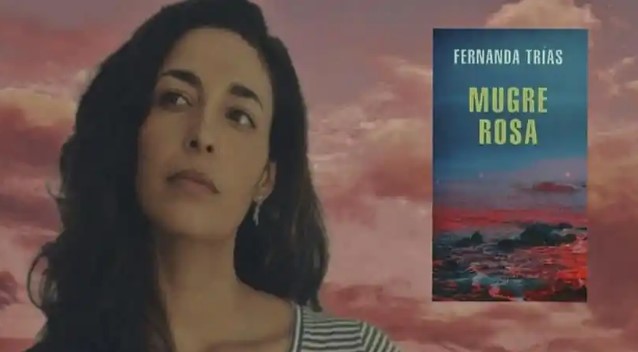
Episode 263 with Fernanda Trias, Author of Mugre Rosa/Pink Slime, and Acute and Detail-Oriented World Builder and Creator of Thought-Provoking Fiction
Nov 26, 202401:09:20Tap to summarizeNotes and Links to Fernanda Trías’ Work Fernanda Trías was born in Uruguay and is the award-winning author of three novels, two of which have been published in English. She is also the author of the short story collection No soñarás flores and the chapbook El regreso. A writer and instructor of creative writing, she holds an MFA in creative writing from New York University. She was awarded the National Uruguayan Literature Prize, The Critics’ Choice Award Bartolomé Hidalgo, and the Sor Juana Inés de la Cruz International Prize in Mexico for her novel Pink Slime. Both The Rooftop and Pink Slime were awarded the British PEN Translates Award, and Pink Slime was chosen by The New York Times in Spanish as one of the ten best books of 2020. Translation rights for her work have been sold in fifteen languages. She currently lives in Bogotá, Colombia, where she is a teacher at the creative writing MFA program of Instituto Caro y Cuervo. In 2017, she was selected as Writer-in-Residence at the Casa de Velázquez in Madrid, where she started writing her latest novel, Pink Slime. Buy Pink Slime Fernanda Trias' Publisher Page for Simon and Schuster Review of Pink Slime from Reactor Mag At about 2:00, Pete and Fernanda discuss the book’s Spanish and English titles and different subtleties of each; Fernanda details how she decided to title the book as she dd At about 3:20, Annie McDermott, Episode 91 and Mario Levrero shout outs! At about 4:00, Fernanda discusses her reading life growing up, the ways in which better translations slowly came to Uruguay, and reading At about 6:45, Fernanda talks about respect for Garcia Marquez, though not being a huge fan, and cites Juan Rulfo as “perfección” At about 8:15, Pete expands on a Rulfo favorite of his, “No Oyes Ladrar los Perros,” and Fernanda expands on her love of Rulfo’s Pedro Paramo At about 10:05, Fernanda talks about favorite contemporary authors, like Herta Muller and Olga Tokarczuk At about 12:00, Pete shouts out Jennifer Croft, and Fernanda responds to Pete’s questions about why there is such a affinity for Eastern European writing in Latin América, and she specifies the Río Plata region as connected At about 14:55, Fernanda describes her familial connections to Europe-particularly Italy and Spain At about 17:15, Fernanda responds to Pete’s question about seeds for her writing life At about 19:05, Fernanda references The Stranger and El Lugar by Levrero as chill-inducing books At about 21:30, Pete is complimentary of Fernanda’s worldbuilding, and she expands on what she loves about it At about 23:00, Pete and Fernanda discuss translation in her book, especially of colloquialisms like “ni fu ni fa” At about 26:25, Fernanda responds to Pete’s question about climate change and other stimuli for Mugre Rosa/Pink Slime At about 28:50, Pete mentions the book’s interesting dialogues that complement the action, and Fernanda expands on the evolving dialogues At about 30:50, Fernanda talks about the book’s opening and the “first image” in her mind of a foggy port that creates an ambience for the book At about 33:45, Pete shares laudatory blurbs for the book, especially about the book’s “envelop[ing]” world built by Fernanda At about 34:25, Fernanda describes the book’s opening, including a pivotal scene involving a possible last fish At about 37:05, Pete wonders about nostalgia, and Fernanda talks about her interest and lack of interest in certain ideas of what has been lost At about 39:40, Fernanda discusses the relationship between the narrator and Max and its significance in the novel, especially in charting changes in the narrator as the book continues At about 44:20, Pete points out a funny saying/joke from the book and Fernanda outlines her conversations with Heather Cleary in the translating of the joke At about 46:05, The two discuss “surrendering and letting go” and connections to the novel and specifically, the narrator and Max’s relationship At about 47:30, Pete lays out some basics on the relationships between the narrator and her mother, as well as her work situation with Mauro; Fernanda talks about how Covid’s social dynamics have mirrored so many parts of her novel and the ways in which the rich were able to move to safety At about 51:45, the two discuss the differing relationships between the narrator’s two mother figure-Fernanda talks about the key questions of “What is a mother?” At about 55:50, Fernanda and Pete discuss Mauro and his health condition and his memories of the time outlined in the book At about 58:00, Pete and Fernanda reflect on ideas of community and if there is optimism/hope that comes with the book At about 1:01:50, The two discuss ideas of systems and individuals’ culpability At about 1:04:00, Fernanda gives social media info, and places to buy her book You can now subscribe to the podcast on Apple Podcasts, and leave me a five-star review. You can also ask for the podcast by name using Alexa, and find the pod on Stitcher, Spotify, and on Amazon Music. Follow me on IG, where I’m @chillsatwillpodcast, or on Twitter, where I’m @chillsatwillpo1. You can watch this and other episodes on YouTube-watch and subscribe to The Chills at Will Podcast Channel. Please subscribe to both my YouTube Channel and my podcast while you’re checking out this episode. I am very excited to have one or two podcast episodes per month featured on the website of Chicago Review of Books. The audio will be posted, along with a written interview culled from the audio. A big thanks to Rachel León and Michael Welch at Chicago Review. Sign up now for The Chills at Will Podcast Patreon: it can be found at patreon.com/chillsatwillpodcastpeterriehl Check out the page that describes the benefits of a Patreon membership, including cool swag and bonus episodes. Thanks in advance for supporting my one-man show, my DIY podcast and my extensive reading, research, editing, and promoting to keep this independent podcast pumping out high-quality content! This month’s Patreon bonus episode features segments from conversations with Jeff Pearlman, Matt Bell, F. Douglas Brown, Jorge Lacera, Jean Guererro, Rachel Yoder, and more, as they reflect on chill-inducing writers who have inspired their own work. I have added a $1 a month tier for “Well-Wishers” and Cheerleaders of the Show. This is a passion project of mine, a DIY operation, and I’d love for your help in promoting what I’m convinced is a unique and spirited look at an often-ignored art form. The intro song for The Chills at Will Podcast is “Wind Down” (Instrumental Version), and the other song played on this episode was “Hoops” (Instrumental)” by Matt Weidauer, and both songs are used through ArchesAudio.com. Please tune in for Episode 264 with Maggie Sheffer. She is Professor of Practice at Tulane University, where she teaches courses in design thinking and speculative fiction as tools for social change. She is a founding member of Third Lantern Lit, a local writing collective, and her debut short story collection, The Man in the Banana Trees, was selected by judge Jamil Jan Kochai for the Iowa Short Fiction Award, and is published as of November 5. The episode airs on December 3. Lastly, please go to ceasefiretoday.com, which features 10+ actions to help bring about Ceasefire in Gaza.
Transcribe →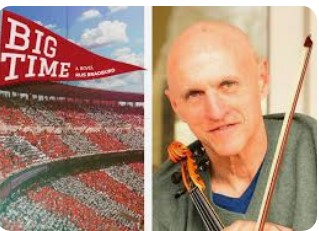
Episode 262 with Rus Bradburd, Author of Big Time, His First Novel that Connects to Four Nonfiction Works Passionately and Thoroughly Exploring Intersections Between Sport, Race, and Larger Culture
Nov 19, 202401:01:40Tap to summarizeNotes and Links to Rus Bradburd’s Work Rus Bradburd’s latest book is the satirical novel, “Big Time.” Rus attended Chicago Public Schools for eleven years before graduating from North Park College. After coaching basketball for fourteen seasons at UTEP and New Mexico State University, he left the game to study with Robert Boswell and Antonya Nelson—and pursue a life in writing. His five books focus on the intersections of sport, social progress, politics, and race. Rus has remained connected to the game through his acclaimed Basketball in the Barrio summer program in El Paso, as well as serving as NMSU’s television “color analyst.” He was awarded a Fulbright fellowship to return to Ireland to work on his next book about refugees in Belfast, “Almost Like Belonging.” An accomplished fiddle player, he lives in Chicago, Belfast, and New Mexico. Buy Big Time Rus Bradburd's Website At about 2:00, Rus gives background on his fiddle playing and his time as color commentator for New México State University At about 3:40, Rus talks about Big Time as his first work of fiction, as well as its nice timing, and he details how he worked on the book for many years At about 5:40, Rus outlines some of the book’s exposition and plot, and talks about the current Colorado Football connections At about 6:40, Rus talks about Univ of Chicago’s 1939 dropping of football and other stimuli for the book’s genesis, including Rick Russo’s work, and Dave Meggyesy's book At about 8:40, Rus talks about satire and fiction and ideas of how fiction often gets at truth so well At about 10:00, Rus gives more background on committee workloads and how the proliferation of committees and on particular example worked their ways into his book At about 12:25, Rus talks about normalization of budget imbalance in universities At about 13:30, Pete and Rus discuss the book’s epigraph, and Ruis talks about how the book satirizes college athletics, while he’s “knee-deep” in sports still At about 15:30, Pete details a compare and contrast lesson that he teaches At about 17:00, Rus responds to Pete’s question about the book’s opening and main characters Mooney and Braverman, history professors, working concessions at football games At about 18:40, Rus gives background on “pop poet” Layla, and the ways in which she and the two history professors work together; Rus connects today’s conversations around student protests and protests in the book At about 20:30, Rus talks about the downfall of the Coors State English Department in the book At about 22:00, Rus cites the Missouri Football protest in fodder for a similar situation in his book At about 23:00, Rus speaks about rich owners often asking taxpayers to finance big building projects At about 24:20, Pete asks Rus about any inspirations for Layla, and he expands upon how the character evolved in his writing At about 27:50, Pete charts the roles and importance of some characters in the book At about 28:35, Rus discusses the financial costs and gains of big sport universities, and argues that the sporting program is taking away from education and educators At about 33:00, Rus talks about a flawed system that puts so much work and so little compensation for adjunct instructors and showcases much hypocrisy At about 35:00, Pete points out links between Braverman and Mooney’s activism and civil rights movements, and Rus connects to the push and pull that governs his own thoughts with regards to activism At about 38:00, Rus talks about how the book’s events are in many ways reminiscent of fractures on the political Left At about 40:25, Pete and Rus talk about NlL and how it relates to topics covered n the book, and whether/how NIL affected Rus’ writing At about 44:00, Rus cites Dagoberto Gilb as an example of a writer who is successful while not being preachy, and how through satire, one can be a “little more message-heavy” At about 45:50, Rus responds to Pete’s questions about satire and hyperbole and highlights how his writing the book made him love his characters At about 48:45, Pete asks Rus about doing dystopia in The Age of Trump, and Rus cites David Shields and a tantalizing book idea that is now obsolete At about 51:10, Pete wonders about Rus’ thoughts on the frenzied rise of legalized sports gambling, and Rus talks about further normalization of formerly-”sacreligious” things like beer sales at college games At about 53:20, Rus cites Billy Lynn’s Long Halftime Walk as an influence on his book and talks about using a real beer company’s name At about 54:45, Pete compliments Rus’ use of stream of consciousness At about 56:30, Rus shares out information on readings and book events coming up, including one with Beto O’Rourke, and contact and book buying information You can now subscribe to the podcast on Apple Podcasts, and leave me a five-star review. You can also ask for the podcast by name using Alexa, and find the pod on Stitcher, Spotify, and on Amazon Music. Follow me on IG, where I’m @chillsatwillpodcast, or on Twitter, where I’m @chillsatwillpo1. You can watch this and other episodes on YouTube-watch and subscribe to The Chills at Will Podcast Channel. Please subscribe to both my YouTube Channel and my podcast while you’re checking out this episode. I am very excited to have one or two podcast episodes per month featured on the website of Chicago Review of Books. The audio will be posted, along with a written interview culled from the audio. A big thanks to Rachel León and Michael Welch at Chicago Review. Sign up now for The Chills at Will Podcast Patreon: it can be found at patreon.com/chillsatwillpodcastpeterriehl Check out the page that describes the benefits of a Patreon membership, including cool swag and bonus episodes. Thanks in advance for supporting my one-man show, my DIY podcast and my extensive reading, research, editing, and promoting to keep this independent podcast pumping out high-quality content! This month’s Patreon bonus episode features segments from conversations with Jeff Pearlman, Matt Bell, F. Douglas Brown, Jorge Lacera, Jean Guererro, Rachel Yoder, and more, as they reflect on chill-inducing writers who have inspired their own work. I have added a $1 a month tier for “Well-Wishers” and Cheerleaders of the Show. This is a passion project of mine, a DIY operation, and I’d love for your help in promoting what I’m convinced is a unique and spirited look at an often-ignored art form. The intro song for The Chills at Will Podcast is “Wind Down” (Instrumental Version), and the other song played on this episode was “Hoops” (Instrumental)” by Matt Weidauer, and both songs are used through ArchesAudio.com. Please tune in for Episode 263 with Fernanda Trías, award-winning author of three novels and the short story collection No soñarás flores; awarded the National Uruguayan Literary Prize, The Critics’ Choice Award Bartolomé Hidalgo, and Sor Juana Inés de la Cruz International Prize in Mexico for Pink Slime/Mugre Rosa. The episode goes live on November 26. Lastly, please go to ceasefiretoday.com, which features 10+ actions to help bring about Ceasefire in Gaza.
Transcribe →