Podcast
The Chills at Will Podcast
Hosted by chillsatwillpodcast · EN
The Chills at Will Podcast is a celebration of the visceral beauty of literature. This beauty will be examined through close reads of phrases and lines and passages from fiction and nonfiction that thrills the reader, so much so that he wants to read again and again to replicate that thrill. Each episode will focus on a different theme, such as "The Power of Flashback," "Understatement," "Cats in the Cradle," and "Chills at Will: Origin Story."
42episodes
Episodes
Newest firstAll episodes
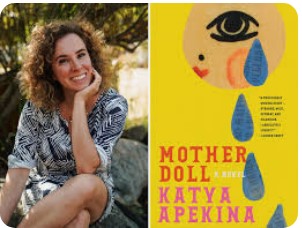
Episode 248 with Katya Apekina, Author of the Hilarious, Offbeat, Tragic, Cathartic Mother Doll, and Multiskilled and Multidimensional Writer
Aug 20, 2024Tap to summarizeNotes and Links to Katya Apekina’s Work For Episode 248, Pete welcomes Katya Apekina, and the two discuss, among other topics, her language abilities and her extensive cross-cultural readings; motherhood, the loss of loved ones, and other catalysts for Mother Doll, and salient themes and issues in her collection like intergenerational traumas, women’s agency, fatalism, guilt, and redemption. Katya Apekina is a novelist, screenwriter and translator. Her novel, The Deeper the Water the Uglier the Fish, was named a Best Book of 2018 by Kirkus, Buzzfeed, LitHub and others, was a finalist for the LA Times Book Prize and has been translated into Spanish, Catalan, French, German and Italian. She has published stories in various literary magazines and translated poetry and prose for Night Wraps the Sky: Writings by and about Mayakovsky (FSG, 2008), short-listed for the Best Translated Book Award. She co-wrote the screenplay for the feature film New Orleans, Mon Amour, which premiered at SXSW in 2008. She is the recipient of an Elizabeth George grant, an Olin Fellowship, the Alena Wilson prize and a 3rd Year Fiction Fellowship from Washington University in St. Louis where she did her MFA. She has done residencies at VCCA, Playa, Ucross, Art Omi: Writing and Fondation Jan Michalski in Switzerland. Born in Moscow, she grew up in Boston, and currently lives in Los Angeles with her husband, daughter and dog. Buy Mother Doll “Katya Apekina’s ‘Mother Doll’ isn’t your ordinary ghost story” in The Los Angeles Times Katya's Website At about 2:40, Katya talks about her early experiences in being bilingual and how her early language learning has affected her reading and writing and ways of seeing the world At about 6:05, Katya talks about ways in which Russian writing manifests itself At about 8:00, Katya catalogs formative and informative writers and writing upon which she draws inspiration At about 9:45, Katya details a Holden Caulfield-esque action she took in high school At about 10:45, The two discuss cool craft techniques of Chekhov At about 11:25, Katya outlines the beginnings of her formal writing life after pivoting from photography, including the power of Charles Simic and Roberto Bolaño At about 14:45, Katya highlights contemporary writers who inspire and thrill her, including Sasha Vasilyuk and Ruth Madievsky, and Alexandra Tanner At about 17:35, Pete shares the wonderful reviews for the book, including Lauren Groff’s At about 18:20, Katya shares seeds for the book, especially with regards to intergenerational traumas At about 21:45, Katya recounts some plot summary and real-life inspirations and parallels At about 22:50, Pete quotes the book’s first line-a “banger”-and Katya gives background on the book’s sequencing At about 25:25, Pete sets some of the book’s exposition and asks Katya about the “chorus” and her visual idea of this chorus At about 27:20, Irina is introduced and the two discuss her wanting to relieve her burdens, and Katya describes what Zhenia might see in Anton/Ben At about 30:10, Katya responds to Pete’s questions about why Zhenia decides to help translate for Paul, the medium, regarding her great-grandmother At about 33:00, Katya expands upon Paul’s reasons for getting into the medium space, as well as how some people are many “permeable” to messaging from beyond At about 35:10, Pete traces some early flashbacks from Irina and her early leanings towards revolution At about 36:15, Katya responds to Pete’s asking about Hanna and other characters and their motivations and possible naivete At about 39:00, Pete and Katya discuss the changing and convoluted factions and connections that characterized the Russian Revolution, and the differing visions of change At about 41:50, Katya talks about how Zhenia thinks of her grandmother’s death and funeral At about 43:30, Pete asks about parallels in the book, both on the micro and macro levels; Katya speaks about “iterations” of history At about 46:30, Pete alludes to “Eleven” by Sandra Cisneros in asking Katya to speak to the significance of the book’s title At about 48:40, The two discuss fatalism as a common theme in Russian diasporic literature in general, and this book in particular At about 51:00, Katya talks about exciting upcoming projects At about 52:00, Katya gives contact info and social media information You can now subscribe to the podcast on Apple Podcasts, and leave me a five-star review. You can also ask for the podcast by name using Alexa, and find the pod on Stitcher, Spotify, and on Amazon Music. Follow me on IG, where I’m @chillsatwillpodcast, or on Twitter, where I’m @chillsatwillpo1. You can watch this and other episodes on YouTube-watch and subscribe to The Chills at Will Podcast Channel. Please subscribe to both my YouTube Channel and my podcast while you’re checking out this episode. I am very excited about having one or two podcast episodes per month featured on the website of Chicago Review of Books. The audio will be posted, along with a written interview culled from the audio. A big thanks to Rachel León and Michael Welch at Chicago Review. Sign up now for The Chills at Will Podcast Patreon: it can be found at patreon.com/chillsatwillpodcastpeterriehl Check out the page that describes the benefits of a Patreon membership, including cool swag and bonus episodes. Thanks in advance for supporting my one-man show, my DIY podcast and my extensive reading, research, editing, and promoting to keep this independent podcast pumping out high-quality content! This month’s Patreon bonus episode features segments from conversations with Deesha Philyaw, Luis Alberto Urrea, Chris Stuck, and more, as they reflect on chill-inducing writing and writers that have inspired their own work. This is a passion project of mine, a DIY operation, and I’d love for your help in promoting what I’m convinced is a unique and spirited look at an often-ignored art form. The intro song for The Chills at Will Podcast is “Wind Down” (Instrumental Version), and the other song played on this episode was “Hoops” (Instrumental)” by Matt Weidauer, and both songs are used through ArchesAudio.com. Please tune in for Episode 249 with Jesse Katz, whose writing has appeared in The New York Times Magazine, New York Magazine, Rolling Stone, Details, Texas Monthly, Food & Wine, Men's Health, and many other publications. His work has been anthologized in Best American Magazine Writing and Best American Crime Writing; his latest book is the critically-acclaimed The Rent Collectors, about the reverberations of a tragic murder in LA’s MacArthur Park area. The episode airs later today, August 20. Lastly, please go to https://ceasefiretoday.com/, which features 10+ actions to help bring about Ceasefire in Gaza.
Transcribe →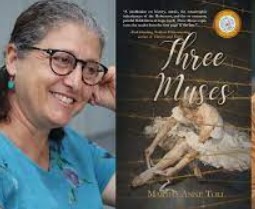
Episode 221 with Martha Anne Toll, Renaissance Woman, Book Reviewer, Creative, and Award-Winning Writer of the Moving, Contemplative Three Muses
Jan 26, 2024Tap to summarizeNotes and Links to Martha Anne Toll’s Work For Episode 221, Pete welcomes Martha Anne Toll, and the two discuss, among other topics, her early reading and writing and written word-heavy household, her love of music and other artistic pursuits, and the way muses have worked in her life and in her novel, ideas of grief, survivor’s guilt and connection, real-life tragedies and heroes from the Holocaust that informed her writing, and other salient themes from her book like permanence, memory, and connection. Martha Anne Toll's debut novel, THREE MUSES, was shortlisted for the Gotham Book Prize and won the Petrichor Prize for Finely Crafted Fiction. THREE MUSES has received glowing tributes since it came out in September 2022. She writes fiction, essays, and book reviews, and reads anything that’s not nailed down. She brings a long career in social justice to her work covering authors of color and women writers as a critic and author interviewer at NPR Books, the Washington Post, Pointe Magazine, The Millions, and elsewhere. She also publishes short fiction and essays in a wide variety of outlets. Toll is a member of the National Book Critics Circle and serves on the Board of Directors of the PEN/Faulkner Foundation. ’ Her second novel, DUET FOR ONE, will be out in early 2025. Buy Three Muses Martha's Website New York Journal of Books Review of Three Muses At about 2:00, Martha provides a cool definition At about 2:25, Martha talks about her future project-her book coming out in 2025, and she shouts out places to buy Three Muses At about 4:20, Martha discusses her early reading and writing life, and the ways in which her parents influenced her habits At about 7:15, Martha traces her writing journey At about 8:40, Martha talks about inspiring and beloved writers (like Alex Chee, Garth Greenwell, Kiese Laymon, Vikram seth and shirley hazzard) and writing in contemporary times, as well as how working as a book reviewer affects her own reading for pleasure At about 10:55, Martha speaks to Pete’s questions At about 12:10, Martha gives seeds for Three Muses, including how she had ideas based on a real-life story from the Holocaust and the Greek view of three muses At about 14:10, Pete and Martha lay out some of the book’s exposition At about 15:30, Martha responds to Pete wondering about how the protagonist John was roused by a dance from Katya/Katherine At about 16:45, Martha reflects on Katya’s problematic and ongoing collaboration and personal relationship with the director Boris At about 20:05, Pete lays out some of Katya’s traumas At about 20:50, Martha talks about Janko/John’s horrific childhood and the loss of his family in Mainz, Germany, in the Holocaust-Martha describes how her cousin Alan Boucher’s memoir informed some parts of the book At about 22:25, Martha speaks about the guilt-inducing “Sophie’s Choice” that afflicts and saves John/Janko’s; she expounds upon his survivor’s guilt At about 24:30, Pete and Martha compare Janko’s story with that of Elie Wiesel and the ways in which iit was so gutting to see people killed in the camps so close to Liberation At about 26:30, The two discuss the idea of reinvention as seen through John in the book, and Martha expands on “unlikely heroes” who helped John to survive At about 29:20, Martha discusses Barney and Selma Katz, who “adopt” John, and she talks about John’s own psychoanalysis and psychologist training At about 31:05, The two discuss themes in the book of memorializing, living “in the present tense,” and how memory guides the characters’ actions At about 33:05, Pete traces John and Katya’s connections, and Martha debates how and if the “innate” connections are there At about 36:00, Pete asks Martha about any responsibilities/urgency to get Holocaust stories on the page At about 37:45, Martha speaks of art and its “incredibl[e] importan[ce]” and the power of fiction At about 38:55, Martha shouts out Forgottenness by Tanja Maljartschuk as an example of the power of memory At about 39:55, Martha responds to Pete’s question about the emotional toll of writing her book You can now subscribe to the podcast on Apple Podcasts, and leave me a five-star review. You can also ask for the podcast by name using Alexa, and find the pod on Stitcher, Spotify, and on Amazon Music. Follow me on IG, where I’m @chillsatwillpodcast, or on Twitter, where I’m @chillsatwillpo1. You can watch this and other episodes on YouTube-watch and subscribe to The Chills at Will Podcast Channel. Please subscribe to both my YouTube Channel and my podcast while you’re checking out this episode. I am very excited that starting in February with Episode 220, I will have one or two podcast episodes per month featured on the website of Chicago Review of Books. The audio will be posted, along with a written interview culled from the audio. A big thanks to Rachel León and Michael Welch at Chicago Review-I’m looking forward to the partnership! Sign up now for The Chills at Will Podcast Patreon: it can be found at patreon.com/chillsatwillpodcastpeterriehl Check out the page that describes the benefits of a Patreon membership, including cool swag and bonus episodes. Thanks in advance for supporting my one-man show, my DIY podcast and my extensive reading, research, editing, and promoting to keep this independent podcast pumping out high-quality content! NEW MERCH! You can browse and buy here: https://www.etsy.com/shop/ChillsatWillPodcast This is a passion project of mine, a DIY operation, and I’d love for your help in promoting what I’m convinced is a unique and spirited look at an often-ignored art form. The intro song for The Chills at Will Podcast is “Wind Down” (Instrumental Version), and the other song played on this episode was “Hoops” (Instrumental)” by Matt Weidauer, and both songs are used through ArchesAudio.com. Please tune in for Episode 221 with Andrew Leland, a writer, audio producer, editor, and teacher. His first book, The Country of the Blind: A Memoir at the End of Sight, about the world of blindness (and figuring out his place in it), was published in July 2023 by Penguin Press, to great acclaim and receiving many awards. The episode will air on January 31.
Transcribe →