Loading summary
Transcript1 lines
- [00:04]
A
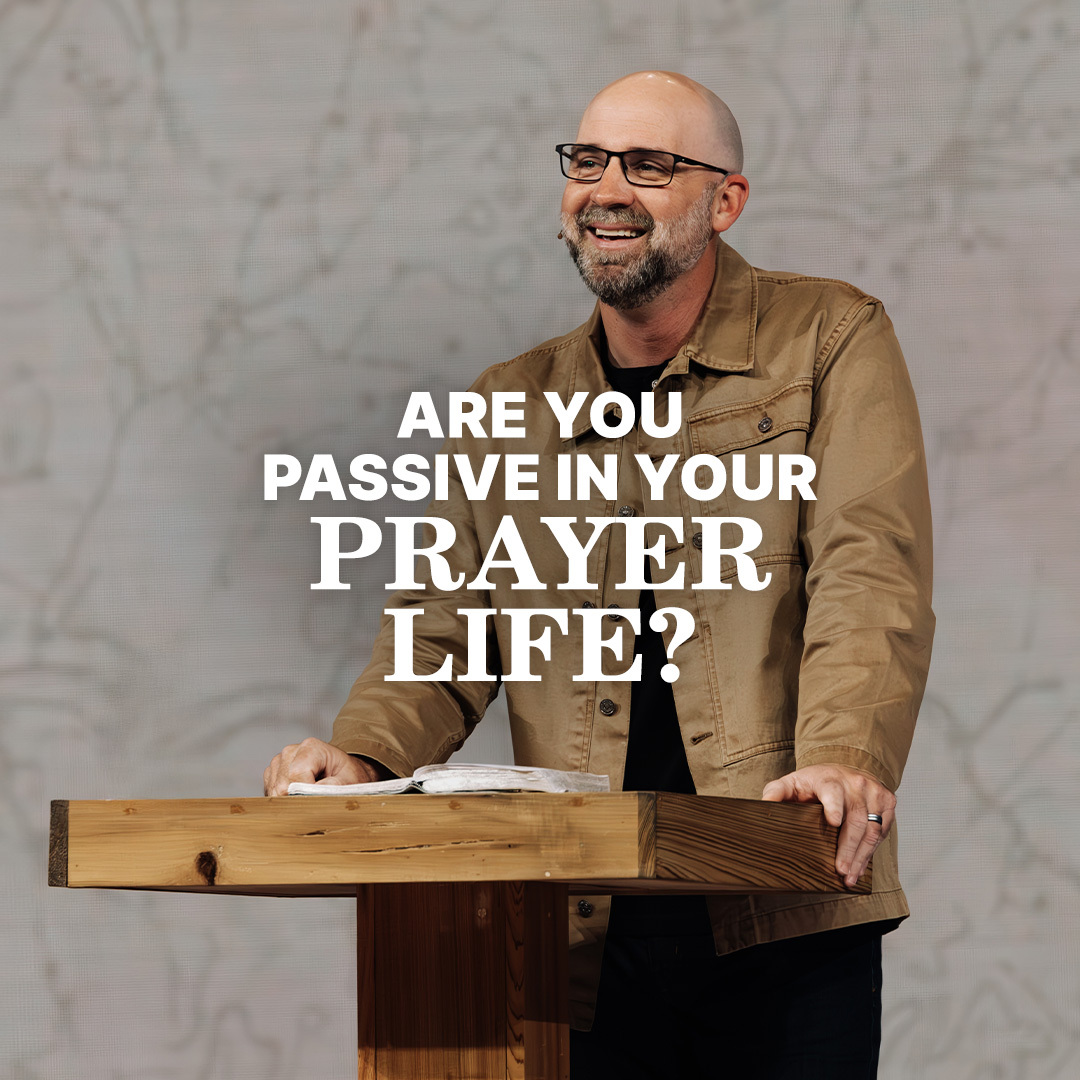
Amen. Amen. It's May of 2018, and I'm walking off the stage having just officiated my own father's funeral. And I'm standing in the front row, and I'm having a moment with the Lord. And I just asked the Lord. I'm like, lord, it would be great if you would bring some older godly men into my life that help fill this massive void that is now left by my father. And almost instantly, the Lord put two men's pictures in my mind. And one of them was Elder Petey, who we just heard testimony about, and the other was Elder Rusty, who's another one of our elders. And just as a brother in Christ and as an attender at the church of 1122, I am so thankful for the godly shepherds that God has chosen to care for and to lead this flock. Amen. Amen. I am. I'm Pastor Britt, by the way. Good to see you. Just start with my dad's funeral. Here we go. And we've been studying the New Testament book of First Timothy, and we're going to continue to do that today. We're going to talk about elders and deacons and all kinds of fun stuff. And so we're going to pick up in chapter two, where we left off last week in verse eight. And the Apostle Paul wrote this letter to a young pastor, one of the first pastors that there ever was. His name was Timothy. Paul wrote this letter. And primarily what the letter is about is the local church and how to handle the local church and what the local church is supposed to be and supposed to look like. And so we're going to pick up in verse eight of chapter two, Paul writes this. He says, I desire that in every place the men should pray, lifting holy hands without anger or quarreling. Have you ever been mad at somebody and then started praying for them and have your heart changed toward that person? One time I went into Pastor Joby's office, and I was frustrated with another staff member who will remain nameless. And I was frustrated with them because they were doing many frustrating things. And I was just letting Pastor Joby know about it. Some would call it complaining. I called it communicating. And Pastor Joby's sitting in his way. He just kind of looks at me and he's like, hey, let me ask you a question. How much time do you spend praying for them by name and for their kids by name? And I thought to myself, well, how much time do you spend praying for them? And praying? Because the answer's done. I'd rather complain about it. And so I took the godly counsel and I began to pray for this person by name. And it's amazing what happened. In short order, my heart began to change toward this person and toward this situation. It's amazing how that happens. See last week's sermon, Pastor Adam did a wonderful job talking about prayer. Two weeks ago, Pastor Joby talked about prayer. And as I've been listening and digesting all that we've been talking about prayer, there's a question that I've been wrestling with and even some conviction. And the question is this. Why am I so often passive in prayer? Why am I even uncommitted in my prayer life at times? And so I've been really trying to get down to the bottom of it. And I've come up with three reasons why I often find myself being passive in prayer. Number one is that the truth is I'm impatient. I'm an impatient person. And I know that I'm not stronger than the Lord. I know I'm not mightier than the Lord. I know I'm not faster than the Lord. Which begs a theological question. Is the Lord fast? I mean, how can you be going somewhere when you're already there? You should put that in your theological pipe and smoke it while you're watching the super bowl tonight. How about that? You're welcome. I'm not faster than the Lord, but there's one thing for sure. I am more impatient than he is. You see, the Lord is patient and kind, abounding in love and steadfast mercy is what the Psalms say. Me, I'm in a hurry. I am busy, I am frustrated, and I regularly have a short tone of voice that is unhelpful. I am just more impatient than the Lord. My wife, a few years ago was training for a half marathon and trying to be a good husband. I said, you know, babe, I'm going to kind of join in this process. And so she had a 10k that she had to run in order to qualify her time to run the half marathon. And so I don't know anything about running. I have no idea still to this day how far a 10k is like, I don't know. And I'm like, babe, but I'm going to run this 10k with you. And she's like, okay, you might want to go out and do a little running before race day. And so I go out and I do a few laps around our cul de sac a couple of days in a row, and I come back in and I'm like, after having done, you know, I don't know, half K, whatever it is, I come in and I say, babe, is 10k the only option? She's like, well, no, there's also a 5K. And I, well, that sounds like less. I'll do that, but I'll be there with you in spirit. And so race day comes and we take off. She's running her 10k and I'm running my 5k. And the race officials seemingly thought it was a good idea to put a bridge in the first half mile of this race. And I don't know anything about running, I certainly don't know anything about running bridges. And by the time I got to the top of this bridge, it was obvious that I didn't know anything about breathing either. And so I'm on the way the downside of this bridge and I kind of pull up next to this 14 year old young man and he was a big old boy. And so me and him are just running together, just pounding pavement, you know, just getting after it. And I'm trying to talk us through it. I'm like, you see that mailbox up there? 400 yards, we're going to make it there. You see that car? A thousand yards, we're going to make it there. And I'm saying as few words as possible. And the sounds that were coming out of him were just, boy, they were just different. We finally get toward the end of our race and we come around the last bend and he sees the finish line. And as he sees the finish line, he looks over at me and he looks at the finish line. You know what he does? Boom, he's gone, man. He just turned on the jets, he just took off and left me in the dust. And so finally I crossed the finish line at my 27 minute mile pace. And I. You're like, did you run backwards? You know, and I see my man after I finished the race and I got my like participation medal. I'm feeling all good about myself and I look at him like, bro, what happened? We were in this thing together. We were shoulder to shoulder, side by side, we were running this race together and you just took off and left me. And he's like, well, when I saw the finish line, I knew two things were true. One, that I wasn't going to beat most people, but I was pretty sure I could beat you. And he did. And he did this so often is what my relationship with the Lord can look like. That I can be in seasons of real friendship with God, togetherness with God. Or I'm in the prayer closet and I'm meeting with him, and then there's something that will catch my eye, some prize or some finish line or some worldly thing that I think is good, and I will just go after it and step away from our relationship with the Lord. And it's the spirit of impatience. Let me remind us today that inside of our waiting, the Lord is with us. And whatever the Lord's plan is for us is better than anything. We're gonna go try to get on our own. We can wait on him. Much of the Christian life is waiting. And so one of the reasons I struggle in prayer is because I'm impatient and I wanna take things into my own hand. Another reason I struggle in prayer is because of my priorities. I can confess that sometimes my priorities just get jacked. I'm really good at taking good things and turning them into God things. Now, y' all know I love some golf. I love it. I got the clothes, I got the clubs. I know all the words. I know all the players. I love some golf. I play a lot of golf. Here's the fundamental problem in my relationship with golf. I'm not any good. I'm not any good at the game. And the reason I'm not any good is because I never learned how to actually swing the club. I've just been making it up for 20 years. And so there is something off at the foundation of my game. And it's called my swing. Therefore, I'm never going to be good at it. So do you know what generally happens in golf is I hit the ball and I duck hook it into the woods or I slice it over into trouble. This is the nature of my golf game. There's something off at the foundation. Does it really matter that something's off in my golf game? No, because golf's a hobby and who really cares? The Christian life, though, is not a hobby. It's a priority. It actually is our life. And at the foundation of the Christian life is prayer. Tim Keller says that God is as real to me as prayer is important to me. That's a pretty profound statement. The third reason that I find myself struggling often in prayer, and this is real. It's because of pain I've experienced in my life. When I was a teenager, my family was going through a season of heartache. My mother was battling cancer. And we were praying, man, we were doing all the things that Pastor Joby says. We had the Presbyterians praying. We had the Charismatics calling down the Shekinah. We had the Southern Baptists praying the three times a day before meals when they pray. I mean, we had everybody praying. And we were praying like crazy and praying and praying and praying for 20 months. Every day we're praying family. We're just praying and praying and praying. And then things just did not go our way. My mother ended up passing away, and the prayers did not get answered the way that we thought we should. And heartache set in. And the funny thing about heartache is that it will often turn into a hardened heart. And that's certainly true in my experience. And maybe you're here today and, man, you're just in a season where life's just, man, it's just been hard for whatever reason, and you're on that slow slide into a hardened heart. Let me remind you today that you're not alone. It took me like 20 years to realize this. You're not alone. We talk about the church. You see, the church is best experienced as a family. The church is not just a place that you attend. It is a people that you belong to. And the tie that binds. The church is the most supernaturally powerful force on the earth. And it is the blood of Jesus. It is the good news of the gospel message of Jesus Christ. It is what unites the people of God together. And this thing is never going to let us go. And so we stand as a supernatural people chosen by God, sealed with a promise unto glory, heirs of the riches of mercy. And what we are doing in this life together is declaring the infinite worth of Jesus Christ. There is nothing more substantial. There is no people that you could belong to that has more power, more authority, and more intimacy than the people of God known as the local church. You're not alone. And so if you're going through a disheartened season, I would just encourage you, man, reach out. You can text the word care to 44 1122. You can fill out the respond cards in the seat seat back in front of you. And let us help pray what God's doing in your life. We want to be a part of your life. So pain is a reason. And as I was walking through this, processing through all of this many years ago, and God was softening my heart. He led me to a blessing that I want to share with you. And it's in Numbers, chapter six. And this blessing has been formative and changed my prayer life completely. And it's been a good reminder for me over the last couple of weeks. Numbers, chapter six. The blessing is this. It says The Lord spoke to Moses, saying, speak to Aaron and his sons, saying, thus, you shall bless the people of Israel, and you shall say to them this verse 24. The Lord bless you and keep you. Do you believe the Lord wants to bless you? Do you believe that the Lord has made every provision and has every intention in and through Jesus Christ of keeping you forever? May the Lord bless you and keep you. I didn't for a long time. You see, I knew the Lord was able to bless. I just had a hard time believing that he wanted to bless me. And part of my problem was that I had a very shallow view of what the blessing was. Let's continue. Verse 25. It says this. The Lord bless you and keep you. That the Lord make his face to shine upon you and be gracious to you. Let me ask you a question. Who do you give your face to? Now, I'm not asking who do you look at? I'm asking, who do you allow to get all up in your faith's space? Now, I love our campus pastors. We got some great campus pastors. Amen, Church. They're great. I love them. I love our campus teams. Whether your campus pastors, Justin Ireland or Ron Horner at Bay Meadows or here at San Pablo, Trey Brunson. I love our campus pastors, and I think of them as brothers. That said, I don't really give them my Facebook space very often. Do you know who gets to come in my face space? My wife. My wife does, and she can come on in anytime. Do you know who else gets my face space? My two daughters. My daughters get it. They get to come on in. When the scripture says that the Lord make His face to shine upon you, what it means is the Lord has given you his face. There is nothing off limits in regards to the presence of the Lord when it comes to you. He doesn't just want us to be standing at a distance. He wants us to come near. He has given us his face. I have learned that the point of prayer is not what I say to God as much as it is what he says to me. And maybe even more importantly, the prayer closet is the place where I'm consistently reminded how the Lord looks at me. And in and through Jesus Christ, he looks at me with favor and blessing. Verse 26, it says, the Lord lift his countenance upon you and give you peace. Peace is only found in the presence of the Lord. The Lord wants to meet with you. The Lord wants to bless you. The Lord is the blessing. He is not just who we pray to he is why we pray. My daughter Abigail, she used to do gymnastics. And you've never had a good time in your life until you've spent three or four hours at an eight year old gymnastic practice. And so I was there one day and I've told you this before, and since I know you hang on my every word, you'll remember it, but I was there one day and normally what I would do at gymnastics practice is I would get my phone out and I would work on my phone or I would just troll mindlessly around on the interwebs. This is what I would do most days. Well, this day, for whatever reason, my phone came in low battery and after about 45 minutes or an hour of practice, but my phone dies. And so I just put my phone in my pocket. And so I'm just sitting there and I'm just watching gymnastics practice. And what I noticed was that every couple of minutes my daughter would look over at me to see if I was watching and I would give her the thumbs up or I would give her a smile and a few minutes would go by and then she would glance back over to see if I was watching her do her skills and her drills. And this went on for like 45 minutes. Every handful of minutes, she would just look over to see if I was looking. And I began to be aware of what was happening in this moment. And I began to realize that it wasn't just my daughter who was looking for my face, that all the kids in the gym were looking over at their parents. And honestly, I say this with no judgment because I had been there many, many days for many, many hours. What they were finding when they would look over at their parents is they were finding their parents face were buried in their phone and their parents were completely distracted. Now, as I'm watching all of this happen, I began to have a little bit of dad guilt. And you're like, yeah, Britt, we can feel it. Thanks. I began to have a little bit of dad guilt. But God in his kindness, quickly, he just kind of lifted my eyes up off myself and he said this to me. He said, ryan, aren't you glad that every time you look at me, I'm never distracted, that you always have my face, that my eyes are always set on you. The Lord's presence is where peace is found. Paul says, I want men everywhere to lift up holy hands in prayer without anger or disputing. He addresses this to men, well, why? Well, how many of you know a prayer warrior? Anybody know some prayer warriors? Yeah, I Know, a few prayer warriors. Question how many of them are men? Some probably. But in my testimony, 90% of the people that I would consider to be people of prayer or prayer warriors. Female. I think that's part of what Paul's talking about, is that men generally have a resistance to spiritual responsibility. And then Paul says, with their hands up. What's that about? Well, if you were about to get into a fight, what would you do? Put your hands in your pocket and sit down. Prayer is a spiritual weapon. It is the most potent spiritual weapon that we have in the war against the enemy. And we wield this weapon in the power of the Holy Spirit. And so Paul says, I want your hands up. What's he saying? That in spirit, spiritual practices, posture and attentiveness matter. Every week at the end of our service, we say we're going to do three things as we respond to God's word. We're going to pray. And we say, we're going to stand and we're going to pray standing. Or we want you to come down to the altars that we have at all of our campuses, and we want you to bow down. What we're saying is we want us to put our bodies in the posture that we want our hearts and minds to be, which is submitted unto the lordship of Jesus Christ. Posture and attendance matter in spiritual practices. And then we say, we're going to sing. We're going to say true words about God. We're going to sing theologically correct statements about God and the character of nature and God, hoping that our mind and our heart catch up with the realities of who God is and we get in line with him. And then we say we're going to bring our first and our best through tithes and offerings. Jesus says that bringing is a heart issue, that there is a number one competitor for the human heart, which is money, and that we want to be submitted under the lordship of Jesus Christ. And so we bring our first and best through tithes and offerings. We pray, we sing, and we bring posture and attentiveness, matter and spiritual practices. That's what Paul's talking about. And then he says this. He says, I want you to do it without anger or disputing. Why? Well, because they were. I mean, who knew Christians like to argue about stuff. Who knew that men and women at times were prone to argue with one another? That's shocking revelation right there. There's a lot of false teachings going on in Ephesus at the time of this letter is written, and much of the false Teaching, whether it be the Roman mythologies or the Judaizers, they're pitting men and women against each other. And so they're experiencing great division, not unity, as the Bible commands. And so Paul continues in verse nine, and he says this likewise also, that women should adorn themselves in respectable apparel, with modesty and self control, not with braided hair or gold or pearls or costly attire, but with what is proper for women who profess godliness with good works. Now, on one level, Paul's talking about the danger of materialism. He's saying that filling our lives with stuff is very different than filling our lives with godliness and with good works. And church was one of the primary social events of the week. And so it seems that these people were going all Kentucky Derby at the time, getting dressed up, trying to outdo one another with their clothes. And Paul is ultimately saying this. He's saying, listen, hey, you don't go to church to be seen. You go to church to be known. What do you want to be known for? What do you want to be known for? Now, I'm not a woman. Paul addresses this to women. I'm not a woman. I don't claim for one second to have any clue about a woman's worldview or about a woman's lived experience. That said, I do live with 3.25 of them. And the 25, she's not really a woman, but she is a lady. She's our little golden doodle named Piper. And she is by far the highest maintenance created being that we have in our house. No doubt about it, I'm second on that list. But as a husband and as a dad, I see this demonic lie, this temptation, whatever word you want to use, regularly come against the women that I. I love so much. And the lie is subtle. And it sounds something like this. The lie sounds something like this. And what the lie says is, it says there is a better version of you that you need to be more like. There's a better version of you that you need to be more like. And when we give ear to this lie, ultimately what we'll do is we'll find ourselves in a comparison trap. Now, is this temptation unique to women? No, but it's. It's real all the same. And when we fall into the comparison trap, it's not so much that we spend our time comparing ourselves to each other, it's that we spend our time comparing ourselves to an idealized version of ourselves. Okay, let me remind you, as a brother, as a friend, that God does not love some future version of you more than he loves the real you right now. He doesn't love some future version of you more than he loves the real you right now. The real God sent a real Jesus down a real cross for the real you. And so we don't need to work harder and try harder and to do better, to try to get to some idealized place of ourself. We can accept and receive and believe God's love for us right now in and through Jesus Christ. And that is where our identity is formed. Amen. Amen. So Paul says, talks about the dangers of materialism. And then verse 11, he says this. Let a woman learn quietly with all submissiveness. Let's handle the second half first. The phrase quietly with all submissiveness is the same word that Paul uses in verse two when he tells everybody that he wants them to lead a quiet life. And every commentary I've read agrees that Paul is talking about a posture or a demeanor here. And so if it read like this, in order to learn you need a peaceable demeanor, then everyone would say, is there any other way to learn? I was sitting in an executive team meeting for our church a handful of years ago and evidently this day I was being quite verbose and offering many unhelpful thoughts. And our CFO at the time, her name is Stacy Brown, she just leans over the table and she looks at me and she's like, hey, can I ask you a question? Sure. She goes, are you listening to hear or are you listening to respond? And I just looked back at her and said, what did you say? I wasn't listening. And I didn't. I didn't say that would have been funny though. What a great question. Are you listening to hear or are you listening to respond? It stuck on me. Now this verse, verse 11, honestly, verse 11, 12, 13 and 14 verses like this are understandably tough for us to hear through our western ears because of the way women were treated for so long. That here is not what Paul is doing. In fact, it's the opposite. To the first century reader, the the mind blowing part of this statement would have been the first part when Paul says, let a woman learn. You see, Christianity is the only religion in the world that values and integrates women as equal to men. Islam does not. Buddhism does not. Hinduism does not. Judaism does not. If you went to the western wall of the Temple Mount in Jerusalem right now you would see a section carved out for the men which is closer to where they believe the holy of Holies was. And a Further away, lesser than section, you will see women praying. Christianity is the only religion in the world that values and integrates men and women as equal. In the Christian church, we sit shoulder to shoulder. We stand shoulder to shoulder. We sing shoulder to shoulder. We learn shoulder to shoulder. We get hungry together. We got bad coffee breath together. We sing badly together. In the Christian church, under the power of Jesus Christ, we, men and women are doing this life together. We were doing it together anywhere in the world. Jesus and Paul's teachings are followed. Women are liberated and elevated. The first person who ever discipled me outside of my own home was a lady named Judy Clay, and she was the middle school minister at our local church. And I was in the seventh grade, and I'm running around trying to get attention from all the wrong people and trying to get included in all the wrong crowd. And she pulls me to the side one night and she grabs me and she pulls me into her face space. And she looks at me and she's like, hey. And I quote, you're acting like a fool. I mean, what a calling, right? To give your life over to disciple middle school students. I think God's calling most of y' all to do that. Actually. I just felt him say it. You have. You have a destiny in middle school ministry. You're welcome. She pulls me in, she says, you're acting like a fool. It is clear that God has a call on your life, and I'm not gonna let you miss it. And so for the next year and a half, almost weekly, she would sit down with me and she would pour godly wisdom into me. She would pour God's word into me. I'm thankful for Judy. So, Judy, wherever you are, I love you. Thank you. In the New Testament, we see women like Phoebe the deaconess, Lydia, the CEO and significant church leader, Priscilla. My favorite story in Acts is her husband, Priscilla. And Aquila Euodia Anna, the prophetess Martha, the sister of Lazarus. If the Bible was propaganda in the first century, they had a terrible strategy because women were the ones who were first trusted with the testimony of the Resurrection. Paul continues in verse 12, and he says this. I do not permit a woman to teach or exercise authority over a man. Rather, she is to remain quiet. Now, this is the most highly discussed and debated verse in all of Paul's writings. No question about it. And there are three ways that this verse is interpreted and then implied. And truthfully, there is no consensus between the three. Now, the good news is that if you do the work, if you actually sit down and do the exegesis of this text and you find one of the views that you agree with, then you'll find a church that is doing it a version of that way. And the three viewpoints are this. Number one is that Paul's not giving any direction as it applies to how or who is responsible to teach sound doctrine in all local churches. He's only speaking to Ephesus because of their specific issues. The second viewpoint is this, is that Paul's giving a strict command that clearly divides responsibilities as it relates to who and how men and women can teach in the local church. And the third viewpoint is this, that Paul is saying that someone is ultimately responsible for a church's doctrine and primarily responsible for teaching it. Now, these views have over time worked themselves out into an ecclesiastical practice and people have taken a position and put fancy schmancy words on them. And the three practices that have worked themselves out from these views, the first is, according to the first view is called egalitarian practice. And ultimately the position is this, that all assignments in the church are open to anyone that's qualified. Churches that would take this position would be PC USA Churches, United Methodist Churches, Holiness churches like Church of the Nazarene, some Wesleyan Churches, Advent Christian Christian Churches, American Baptist churches. They would take the first. The second, based on the second viewpoint, is what's known as hierarchical. And the way they hold the position is that women and men are to operate in different spheres of ministry within the church, that men have specific assignments, as do women. Some Catholic churches operate this way, as do some Orthodox. Generally, they give their bishops or priests a lot of latitude in how they apply it. Any church that has the word primitive in the title or independent, they would hold this position. And the third position is complementarian. Holding to the third viewpoint and a complementarian position argues this. All assignments in the church are open to all qualified men and women, with the singular exception of elder, pastor, overseer, which is assigned to a man. These would be PCA churches, EV free churches, most Episcopal churches, Calvary chapels, US 1122. We're a complementarian church. And practically what that means is that we believe the person responsible for primarily dividing God's word in the local church is the pastor who is to be a qualified male. In our case, his name is Pastor Joby Martin. Under Pastor Joby's spiritual leadership or authority, whatever word you want to use, men and women can serve God faithfully and use their gifts to edify this body. Now, there is a ton of nuance in there and we deep dive this on the Deepen podcast. And so if you want to learn more about that, then we would invite you to do it. We actually recorded the Deepen podcast a few weeks ago. Normally we do it on Thursday nights right after service, but we knew Pastor Job was going to be out and we recorded a few weeks ago and Pastoral confession. At the time, I only had about a quarter of the sermon written and so we spent a lot of time digging into that. And so if you want to learn more about it, you can go for it. It's an important note here in verse 11, verse 12 that Paul's not talking about a 21st century org chart here under Pastor Joby, who is the spiritual leader and spiritual authority of our church. Women have and do serve at the highest levels of organizational and staff leadership. On some ministry teams, women lead men and others men lead women. We have pastors who report to women as their boss. It's not a 21st century org chart. He's drawing in the Pastoral epistles. The authority he's speaking of is the responsibility for the church to have and preach sound doctrine. That's what First Timothy is about, as does much of the New Testament. Offer counsel on this verse 13. Let's continue. For Adam was formed first and then Eve. And Adam was not the one deceived, it was the woman who was deceived and became a sinner. But women will be saved through childbearing if they continue in faith, love and holiness with propriety. A couple of points here. Number one, Paul goes to creation to give context to his statements. Why? Well, because the Greek goddess Diana and the Roman goddess Artemis, their creation narratives argued that women were created first, which is different than the Jewish creation narrative that we believe and hold to in the Old Testament. And so it was causing a lot of doctrinal tension inside the local church too. Paul is saying that God's purposes of redemption started at creation, that God is at no point reacting to anything going on in culture. He has always had a plan to show his glory to and through men and women since the beginning. Number three, they both screwed up. Adam and Eve both screwed up. And since they were created as equal partners complements to one another, they equally fell. Adam was not deceived, but Romans 5 clearly says that Adam is responsible. Number four, did Paul just say that women would be saved by having babies? Question mark. Well, that would be a big negative ghost rider. The pattern is full. Why? Because that would go against everything else that the New Testament teaches. So that's not what Paul is saying. So what I think Paul is saying is that there's some things that only women have been trusted with with, like having babies. Men can't do that. Do y' all remember the movies that came out in the 1980s, Arnold Schwarzenegger and Danny DeVito called twins. Do y' all remember that movie? There was another one called Junior. Man, those weird movies, right? I just thought about that when I was. That's got nothing to do with anything. But Paul's saying there are sacred responsibilities trusted to. To women. And the women should walk in these sacred responsibilities in faith, love, holiness and propriety. Now, before we move on, now that we've handled four of the most highly discussed and debated verses in the entirety of the New Testament, I think we should all go get a drink and have some comfort food. And I'll have a diet Dr. Pepper and some mozzarella cheese sticks. That's what I'm up here doing work, man. Y' all just like staring at me. Paul goes from how certain things are to be handled to whom Timothy should be looking for to help carry the load he has been trusted with. This is chapter three. He starts talking about elders. This saying is trustworthy. If anyone aspires to the office of overseer, Overseer, pastor and elder. That word is interchangeable in the the New Testament. If anyone aspires to the office of overseer, he desires a noble task. Therefore, an overseer must be above reproach. The husband of one wife, sober minded, self controlled, respectable, hospitable, able to teach. Not a drunkard, not violent, but gentle, not quarrelsome, not a lover of money. He must manage his own household well, with all dignity, keeping his children submissive. For if someone does not know how to manage his own household, how will he care for God's church? He must not be a recent convert. What does that mean? That's a great question. Is that two years? Is that two months? Is that 20 years? Thanks, Paul. Or he may become puffed up with conceit and fall into the condemnation of the devil. Moreover, he must be well thought of by outsiders so that he may not fall into disgrace. And I want you to circle this so that he may not fall into disgrace, into a snare of the devil. You've got this new church plant on the front end of the most significant movement in the history of the world known as the local church. And Timothy's this young pastor, one of the first pastors ever, and he's going, okay, this thing's starting to grow, Paul. Who am I supposed to go to to help carry all this responsibility. And Paul begins to outline who Timothy should be looking for to help him carry this responsibility and to carry this, this on. And Paul says, all right, a couple things. Number one, they can't be drunk. And Paul. And Timothy goes, well, I know five people. He's like, they can only be the husband to one wife. Well, I know three people. He's like, they must be well thought of by outsiders. Timothy's like, the list is getting a little narrow over here. What's Paul getting at? Character and integrity matter. Character and integrity matter. Especially in the local church. It matters first. Peter writes it like this. He says, so I exhort the elders among you. That's what he says in verse one of First Peter, chapter five. He's talking specifically to pastors, overseers, elders. He says, so I exhort the elders among you, be sober minded, be watchful. Your adversary, the devil prowls around like a roaring lion seeking someone to devour. What are Peter and Paul saying? They are saying that there is a special bite in the jaws of deception, specifically, specifically reserved for pastors. I've been at this for a long time, more than 20 years, 28 years actually. And over the last 20 plus years, my testimony is this, that I know 47 pastors, people who at one time were pastors who have had a moral fall and are no longer able or qualified to serve in the ministry. I know 47 first names. I know their wife's names, another kid's names. Whether it be sexual, sin or some other kind of impropriety. What Peter and Paul are talking about, this snare of the devil set for pastors, it's real, man. It's real. And you should regularly pray for your pastors and your leaders. If you were the enemy and you were trying to stop what God was doing at a church of 1122, how would you do it? Who would you go after first? Whose family would you try to take out? If you were the enemy and you were trying to stop what God was doing here, you just think about how you would go about doing it and pray against that in Jesus name, for Pastor Joby and for our other leaders. In just a minute, we're have an opportunity to pray and respond. And I want to invite you to dedicate our prayer time today to praying for Pastor Joby and praying for our elders and praying for our pastoral staff. It's a real thing. The snare of the devil is a real. Is a real thing. A few years ago a book came out called Dangerous Calling and the whole thing is about how physically, spiritually and emotionally dangerous this profession, this way of life, this calling is. And on the back of the book, there were five recommendations written by famous pastors at the time. And within five years of the book called Dangerous Calling coming out, four of the five men who wrote recommendations on the back had either fallen out of ministry with moral failures or their churches had fallen apart over leadership issues. This is a real thing. Some of them churches didn't even exist anymore. It's a real thing now. For every one person who has had a fall and disqualified themselves for ministry, praise God, there are a thousand who have passed into glory, who have finished faithfully. For every one who has fallen, there is a thousand who have passed from this life into the next, having finished faithfully. And this is one of them. That's my dad. Look at the verse above his coffin. It says, I have fought the good fight. I have finished the race. I have kept the faith. And he did. And he did. Look, if I can somehow hold this book and be half the man that he was, it will have been a life well lived. The legacy of faith is a real thing. And I know many of you, you may not have grown up with your dad as a pastor. And I get it. I get it. And some of much of the people who attend 1122, you're a first generation Christian. You're the first one in your family to ever surrender your life to the lordship of Jesus Christ. Let me tell you about this gospel seed that God has planted in your life. He has planted the power of the truth of the gospel in you. And the Holy Spirit right now is walking, watering that. And God over time is going to make it grow. And your grandkids, grandkids are going to see the fruit of it. This is a generational movement of God known as the gospel. And we hold strong to the legacy of faith. And we stand on the shoulders of men and women who have lived faithfully and praise God for it. I'm not going to spend a lot of time on this, but I would be amiss if I didn't take just a second and honor our lead pastor, Pastor Joby Martin. I love that man. I love him. I'm so thankful that he's our pastor. Look, he's an anointed, appointed, gifted man of God who declares God's gospel to us. I did a little math coming in this weekend. And over the last 14 years since our church started, Pastor Joby has preached around 1,620 ish sermons to the church of 1122. Okay, that is 89,100 minutes spent preaching, and that is 60 straight days preaching the gospel. And in that time, God in his sovereignty and according to his purposes, he has chosen to save 16,679 people have surrendered their life to the lordship of Jesus Christ. And you know him here. You know him as the. As our pastor who stands and exhorts and edifies through the word of God every week. I know him back there, man. I know him around the table. I know him around the fire pit. I know him in the truck. And I'm just telling you, our pastor is a really good man. He is a qualified man. He is a called man, and you should pray for him regularly. We're talking about stuff here. I just don't know what it is. All right, we're out of time. So here's how we're going to end. You ready? The next few verses are about deacons, and you should read them. Here's the gist of it. You ready? Deacons are awesome. They're awesome. Our deacons are awesome. We have many of them. Men and women serve God faithfully. A deacon's role is this, you see, before the church is an organization to be led or before the church is an institution to be managed. She is a wife to be loved is how the New Testament talks about her. She's Jesus wife. And deacons with all they got, all the time they love on Jesus wife in hope of preparing the bridegroom for the bride on the day that he returns. The bride for the bridegroom on the day that he returns. It's a life of service and faithful ministry. And I want to close with this. My favorite author is a guy named David Brooks, and he wants. He once wrote an article where he talked about the difference between resume virtues and eulogy virtues. Resume virtues are the skills that we bring to the marketplace. These are the things that measure success in worldly terms by how many and how much. Resume virtues answer the question, how are you doing with, like, crushing it or. Man, I'm just really, really busy. Or things are going good. And what we mean by going good is that. That nobody in my house is sick and I got a little money in the bank. That's what resume virtues value. Eulogy virtues are something else completely different. Eulogy virtues are about a depth of character. They're about a purposed integrity. They are the sum of all the parts of a life that has been given in pursuit of godliness and of good works. You see, eulogy virtues are about a Deep abiding life of faith. They are about something greater than the individual self. And that's what the local church is all about. It's not just about what we get out of it. It's about what we contribute to it, that we get to belong to a people of God and give our lives over for the sake of something greater than our individual self, which is the glory of Christ on the earth through his church. Paul's talking about eulogy, virtues, character and integrity matter. The characters, the qualities the godly men and women must pursue and possess if they want to live and love well in the local church. Over the holidays, I was able to. Between Christmas and New Year, I was able to attend the funeral of my wife's grandmother. And she was 95 years old when she passed, and her name is Ida Jean Smith, and she married George. And in the late 1940s and early 1950s, Ida and George felt the call of God to move from Pennsylvania. They grew up Pennsylvania Dutch, and she spoke some kind of Pennsylvania Dutch German that she would speak at us regularly. And I'm like, is she cussing at me? Like, I didn't know. But they felt the call of God to move from where they lived in Pennsylvania down to LaGrange, Georgia, where they started a rehabilitation and recovery house for men who were battling alcoholism. And they did this. They didn't know anyone. Only one person did they know anywhere in the area. And they moved down with no money. And they lived in poverty for years in a trailer behind a truck, drinking water out of the hose, where they served God faithfully decade after decade after decade, trying to help men break the chains of alcoholism and walk in the freedom that Christ provides. They did this for decade and decade. When they first moved to town in La Grange, Georgia, they joined a local church, and Ida began to teach Sunday school at this church. This is a picture of her teaching Sunday school in the 1960s, 60s. And she taught that Sunday school class every week for 60 years. 60 years I'm at her funeral, and there are women who are in their 50s who are standing there giving testimony to the impact that Ida had on her life. Praise God for that. Now, as I'm in the. As I'm sitting in the funeral, I began to wonder about Ida's experience. And I know that when Ida closed her eyes on this life and she opened her eyes in glory, that she just got all up in God's faith space. And she heard these words, well done, my good and faithful servant. Enter now and into the joy of your master. The Legacy of faith matters Let me ask you a question. Are you living for resume virtues or for eulogy virtues? Are you serving God faithfully in your life? Are you pouring your life out for the sake of the gospel and for the sake of his people through the local church? The invitation of the good news of the Word of God today is that each of us would be deepen in whatever step God calls us that each of us would deepen our understanding, our commitment, our resolve to be a part of this people and to pour our lives out for the sake of the gospel. Are you living for resume virtues or for eulogy virtues? Let me pray for us. God, we love you and we thank you for your kindness. We thank you for your goodness. We thank you for the purposes that you have for all of us to walk joyfully dependent on you, to trust you every step of the way. And I pray that as we respond to your words, Father, that you would convict us, that you would comfort us, that you would challenge us. God, I pray that we would all grow by taking next steps as we pray. God, would you help us to put our bodies in the posture that we want our lives to be in as we sing? Would you help the words that we're singing grab hold of our mind and as we bring God, would our meager offerings, would they bless your heart and would you bless them and bless us in that obedience? Father, we pray that we would have a manifest meeting with you in the next few minutes that we would leave a little different than when we came. Most of all, Father, we thank you for Jesus. It is for his name's sake. Jesus is all for your glory and it's all because of your power and your resurrection that we gather you're the point. Help us to be singularly focused on you. We pray. Pray all these things by the power of Jesus name and all God's people said amen. Would you stand with me at all of our campuses? We're going to respond, we're going to pray, we're going to sing and we're going to bring let's respond.