Podcast
The Circle: The Queer Men's Embodiment Podcast
Hosted by Eric Bomyea and Timothy Bish · EN
Welcome to The Circle, an on-going conversation about men’s work, men's embodiment practices, and personal growth from the perspective of two queer men. Hosted by Eric Bomyea and men’s embodiment coach, Tim Bish, together, we investigate the purpose of men’s work, how queer men can participate, what value they might receive, and the unique value they add in the pursuit of growth for all. We also explore the challenges, dynamics, and transformative practices that empower men to show up authentically in the world. Each episode goes all in on themes like masculine and feminine energies, intuition, purpose, integrity, and brotherhood. We offer in-depth discussions on breaking through societal expectations, healing personal wounds, and developing a sense of presence. Drawing from the teachings of Amir Khalighi, David Deida, John Wineland, and our own experiences, we guide listeners through the journey of leading a conscious, integrated, and impactful life. Join us as we explore what it means to show up powerfully as queer men, navigate the dynamics of men’s spaces, and offer insights that benefit all men—gay, straight, or otherwise. Whether you're redefining your relationship masculinity, connecting with your intuition, or pushing past your edges, The Circle is your space for growth, connection, and transformation.
21episodes
Episodes
Newest firstAll episodes
What If It Wasn't Just One Thing? Understanding Complex Trauma with John Horton-Young
Nov 2701:07:20Tap to summarizeWe often think of trauma as a single, defining event. But what if the real wound wasn’t one moment—it was a pattern? A long stretch of not feeling safe, loved, or even seen?In this episode, we sit down with John Young, a psychotherapist who specializes in Complex Trauma and Dissociative Identity Disorder. He’s also the founder of the Complex Trauma Initiative, which helps survivors access the care they need—care that’s often hard to find, and even harder to afford.Together, we explore:The difference between trauma and complex traumaWhy so many people live with its effects without ever realizing itWhat happens when standard therapy does more harm than goodAnd how to begin the slow, relational work of healing with the right kind of support.This one goes deep. Because when we understand the roots of our pain, we can begin to rewire how we relate—to ourselves, to others, and to the world.
Transcribe →
Untangling Compulsion and Connection: Sex Addiction & Recovery w/ Tangle
Nov 2000:50:42Tap to summarizeCraving connection is human. But when that craving turns compulsive, it can quietly shape how we show up in sex, love, and intimacy. In this episode, Tangle joins us to share his story—of navigating depression, seeking spiritual healing, and finding recovery in a sex and love-focused 12-step program. We talk about honesty, service, attention, and what it means to build intimacy that actually nourishes.
Transcribe →When the Spark Shifts: Desire in Long-Term Relationships w/ Nathan Serrato
Nov 1300:59:59Tap to summarizeDesire changes. And in long-term relationships, that shift can feel confusing or even shameful. In this episode, queer mindset coach and somatic practitioner Nathan Serrato joins us to explore why desire fades, how resentment often blocks intimacy, and what it takes to reconnect with ourselves and our partners over time.
Transcribe →
Finding Your True Voice: Vocal Embodiment with Colin Levin
Nov 601:07:21Tap to summarizeWhat does it mean to truly sound like yourself? In this episode of The Circle, we’re joined by baritone and voice instructor Colin Levin—who has performed over 50 operatic roles—to explore how voice connects to breath, gender identity, and the stories we carry about how we should sound. We unpack gender-affirming voice work, vocal embodiment, and the healing journey of uncovering your authentic voice—whether you’re singing, speaking, or simply learning to be heard.
Transcribe →Celebrating One Year of the Circle Podcast: Reflections on Growth and Challenges
Oct 3000:42:15Tap to summarizeIt’s our first birthday! In this anniversary episode, Eric and Tim look back on 58 conversations about men’s work, embodiment, and personal growth—told through a queer lens and grounded in community. We share surprising messages from listeners who felt less alone, and reflect on moments that changed us: Jonathan Scott’s “diamonds in the surf” tribute to queer lineage; Chef Ava’s practice of “scanning the room with love”; Hannah O’Rourke’s clarity on asexuality and sourcing confidence from within; and Gregory Ganymedes on projection—the pedestal and the villain, both born in us.We talk about nerves, training wheels, and what practice makes possible; moving from Provincetown to Denver; launching MyEmbodiment.com to bring live breathwork, meditation, and yoga to anyone, anywhere; and the relationships that made this show real—special gratitude to producer Chad Rossi and the Provincetown Recording Studio.If this conversation serves you, share it with someone you love. Leave a rating or review to help more folks find The Circle. And if you’re ready to go deeper, join us for live practices and community at MyEmbodiment.com. Our container is open, but not broken.Chapters00:00 Celebrating One Year of the Circle Podcast01:33 Reflections on Growth and Challenges03:26 Surprising Listener Connections05:28 The Importance of Community07:29 Personal Growth Through Podcasting09:04 Impactful Conversations and Highlights13:40 Navigating Change and Fear15:52 Self-Validation and Inner Confidence18:19 Understanding Projection and Its Impact18:49 Awareness and Projection in Relationships19:42 Exploring Energetic Perspectives on Health20:39 The Impact of Men's Work on Personal Growth22:49 Connecting Through Shared Experiences25:38 The Importance of Community in Healing27:58 Universal Themes in Personal Development29:50 Celebrating Relationships and Support Systems33:55 Looking Ahead: Growth and New Opportunities
Transcribe →
Unlearning Shame: Healing Internalized Homophobia and Reclaiming Worth
Oct 2300:56:47Tap to summarizeMany of us grew up absorbing quiet messages about who we’re allowed to be. Even after coming out, those messages can live on — shaping how we love, express, and even how we see ourselves.In this episode, we’re joined by therapist, author, and speaker Chris Tompkins (Raising LGBTQ Allies) for a conversation about internalized homophobia: how early shame becomes part of our identity, and how to begin unlearning it.We explore:The difference between what’s said — and what’s left unsaid — in childhoodHow internalized shame shows up in relationships, sex, and self-imageThe role of the body and nervous system in healing old beliefsWhy “safe play” and conscious exploration are essential in reclaiming joyHow affirming environments can interrupt cycles of silence and neglectThis episode is a reminder that there’s nothing wrong with you — and that healing begins the moment you start to believe that. 🌐 Join The Circle community → www.myembodiment.com
Transcribe →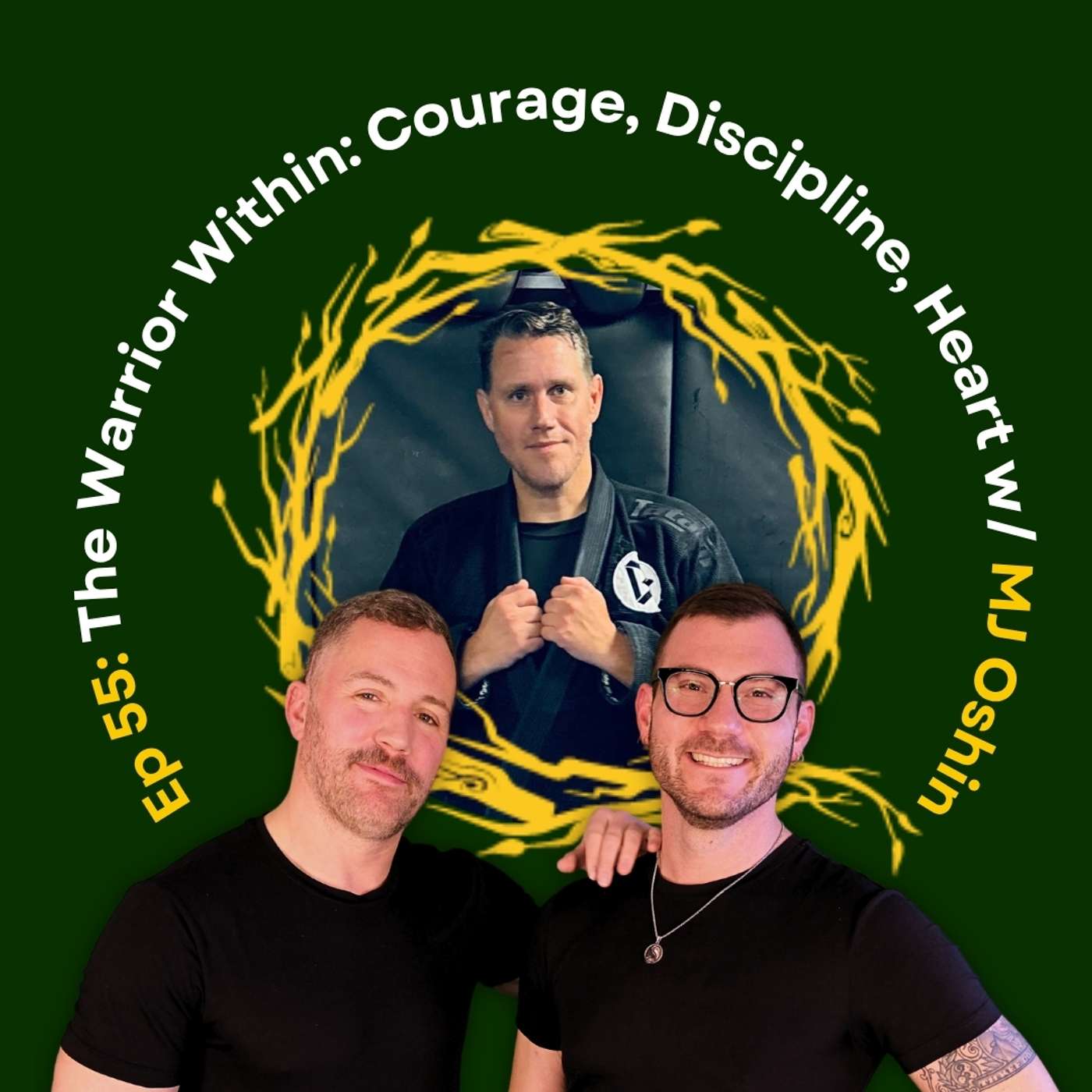
The Warrior Within: Courage, Discipline, and Heart with MJ Oshin
Oct 1601:05:14Tap to summarizeThe Warrior archetype is one of the most iconic—and misunderstood—expressions of masculine energy. It’s the part of us that acts with courage, protects what’s sacred, and stays disciplined in pursuit of something greater than ourselves. But when disconnected from heart and purpose, the Warrior can turn destructive—hurting others or collapsing into self-erasure.In this episode of The Circle, Eric and Tim are joined by MJ Oshin—a Brazilian Jiu-Jitsu black belt and active paramedic—to explore what it means to embody the Warrior with integrity. Together they unpack:The difference between strength and dominationThe shadow forms of the Warrior: Sadist and MasochistHow rhythm, movement, and discipline refine the Warrior’s energyWhat it takes to rebuild trust in healthy, heart-centered power—especially for queer menThis is a conversation about courage, purpose, and the art of taking right action.
Transcribe →Q&A [Pt. 3/3] — What Is Men’s Intuition and How Do We Access It?
Oct 900:12:40Tap to summarizeIn the final episode of our three-part Q&A series, we explore the often-overlooked topic of men’s intuition—what it is, how it works, and why it matters.Tim challenges the idea that intuition is gendered, reframing it as a universal human capacity rooted in embodied awareness. Together, we unpack how cultural conditioning teaches men to distrust their feelings, how gaslighting severs us from our body’s wisdom, and how embodiment practices help us rebuild that connection.Eric asks how “trusting your gut” actually functions in daily life, and Tim shares how sensations in the body—tightness in the chest, warmth in the gut, openness in the heart—can become reliable signals of intuitive knowing. The conversation closes with an invitation to practice: to notice, to feel, and to trust the subtle intelligence within.Short, honest, and grounded in lived experience, this episode invites you to see intuition not as magic—but as the language of the body learning to speak again.
Transcribe →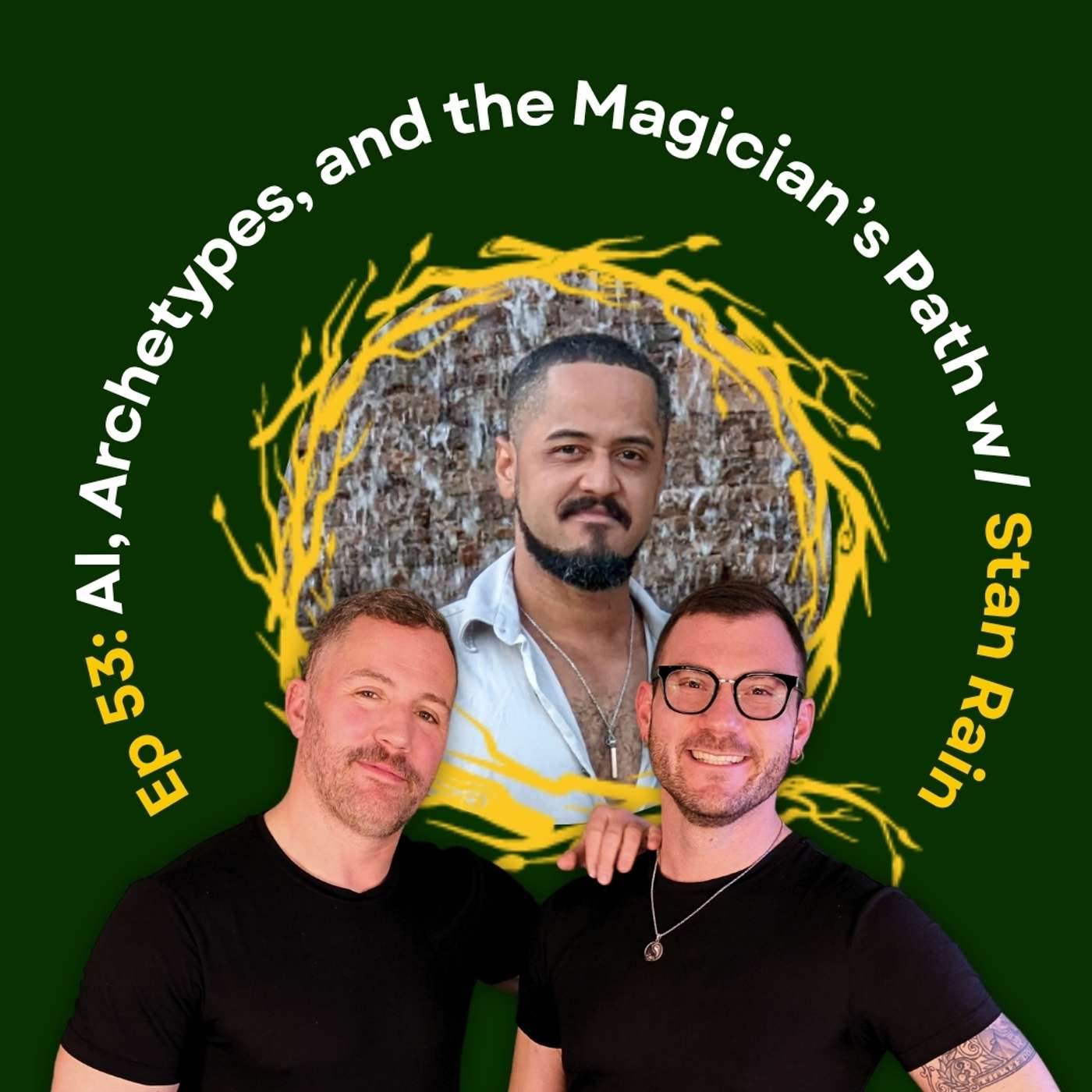
Conscious Wizardry: AI, Archetypes, and the Magician’s Path with Stan Rain
Oct 201:00:11Tap to summarizeThis week on The Circle, we go all in on the Magician archetype through a queer lens with guest Stan Rain, founder of the Naked Dojo. Together we explore the Magician’s gifts of creativity, imagination, and transformation—and the shadow expressions of the manipulator and the innocent one—through real stories and Internal Family Systems. We also step into modern wizardry with Stan’s AI co-facilitator, TONI, and ask what it means to use powerful tools in service of intention rather than manipulation. This episode blends archetypal psychology, embodiment practice, consent-minded facilitation, and conscious technology to help you bring more clarity, play, and power to your Magician in daily life.Chapter Markers00:00 — Welcome and Intro to the Magician Archetype 02:00 — Meet Stan Rain 04:05 — Four archetypes overview and why they matter 07:18 — Painter’s palette metaphor for choice and balance 09:22 — Who is the Magician: creativity, imagination, manifesting 12:40 — Play as a practice: Lego blocks and adult tinkering 16:10 — Curiosity and experimentation in movement and art 18:45 — Shadow states: manipulator and innocent one 22:28 — Safety, queerness, and why shadow shows up 25:36 — IFS parts and relating to shadow without shame 28:30 — Using shadow skillfully and the Star Wars analogy 31:05 — Hypnotherapy as conscious influence and intention 34:02 — Awareness, intention, and skillful use of power 36:45 — Enter TONI: AI co-facilitator in a breathwork container 40:00 — How TONI runs timing, music, and context 42:30 — Boundaries: what AI should not say in a healing space 45:18 — Mirror effect of AI and why intention is everything 48:00 — Emptiness, projection, and staying grounded in purpose 50:35 — Practical takeaways: questions to invite your Magician 53:10 — Human creativity at the core, tech as a tool 56:05 — First steps for listeners new to archetypes 58:20 — Closing ritual and gratitude
Transcribe →Q&A [Pt. 2/3] — What Does It Mean to Be a Man and What Is a Queer Man?
Sep 2500:14:34Tap to summarizeIn part two of our three part Q&A series, we turn to two of the biggest questions our listeners ask: what does it mean to be a man? And what do we mean when we say queer men?Tim shares how his definition of manhood has evolved from fear and rigidity to a more expansive, skillful, and authentic engagement with life. Together, we explore how gender expectations shape our experience, how queerness challenges cultural norms, and how men's work can offer a place to wrestle with these questions in community.Eric asks what it means to belong in a men's circle and how queer men bring unique gifts like fluidity between energies, expanded empathy, and a broader sense of masculinity to these spaces. Along the way, we remind ourselves that ideas of manhood are not fixed: they change across cultures, across history, and across our own lifetimes.Short, sharp, and from lived experience, this episode unpacks the evolving conversation about what it means to be a man and why queer perspectives matter in men's work.Chapter Markers0:00 – Welcome & Episode Framing Eric introduces part two of the Q&A series, focusing on what it means to be a man and what we mean by queer men.1:10 – Defining Manhood Tim reflects on how his understanding of being a man has evolved through men's work, healing, and lived experience.4:25 – Who Belongs in Men's Circles? Expanding inclusion: identity, nonbinary men, and working with the masculine aspects of self.7:05 – What Does Queer Mean? Tim shares why he embraces the word queer and how queer men experience masculinity differently than straight men.10:20 – Unique Gifts of Queer Men in Men's Work Queer men’s fluidity between energies, empathy, and expanded perspectives on relationships and masculinity.12:50 – Manhood Through Time & Culture Tim and Eric reflect on how cultural ideals of men shift over history and why authenticity matters more than rigidity.14:00 – Closing & Invitation Eric invites listeners to continue the conversation and join practices at myembodiment.com.
Transcribe →