Podcast
The Color of Dust
Hosted by Jack Baumgartner, Seth Wieck, and Sam Kee · EN
Exploring the seen and unseen in the soil of art and agriculture with Jack Baumgartner, Seth Wieck, and Sam Kee.
colorofdust.substack.com
colorofdust.substack.com
11episodes
Episodes
Newest firstAll episodes
The Color of Dust Finale
Mar 1901:20:29Tap to summarizeJack and Seth host the final episode of The Color of Dust, reflecting on the last two years of conversations with Sam, what we set out to do, and what's next. This is a public episode. If you would like to discuss this with other subscribers or get access to bonus episodes, visit colorofdust.substack.com
Transcribe →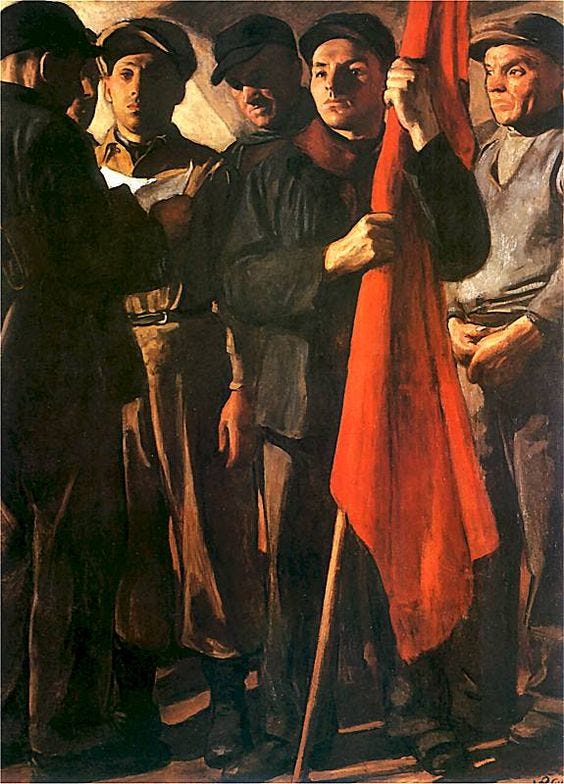
85. The Rolling Rood Screen Manifesto
Feb 1101:17:11Tap to summarizeIn this episode, we team up with Dr. Matt Miller (Matt was on episode 34) to continue our conversation about The Rolling Rood Screen (for context, listen to episode 70, More ). We were very excited to learn about a similar project he began some years ago called The Center for Needless Splendor… Because our projects have a similar spirit and angst, we knew it would be fitting to seek his collaboration. We hope you enjoy this rich and thoughtful conversation with Matt. His website is https://matt-miller.org/. About Dr. Matt MillerSubmissions for The Rolling Rood ScreenBy the end of the episode, you will learn how to help us with the inaugural edition of The Rolling Rood Screen. Your first assignment is to send us your manifestos. We are not talking about an ‘artist statement,’ but a full-blooded barbaric yawp. So channel your inner-Ted Kaczynski, strap your heart to your sleeve, and load a fresh sheet of paper into your typewriter. Tell the world…What do you believe? What do you stand for? What is your vision? A manifesto is a public declaration of your dream for this world. It is putting your stake in the ground. But just don’t give us your core values, also include an action plan. Inspire us to seek the promised land that you map out for us. Let your manifesto be a witness to what God is doing. To make this happen, here are some guidelines:* Here’s an example: * There’s no word count. Manifestos need to be a little unhinged, written at a fever pitch!* We accept only physical copies. Handwritten, type-written, printed on a Hewlett-Packard, as long as it does not arrive on an electronic screen.* Mail the physical copies to: Rolling Rood ScreenPO Box 8Umbarger, TX 79091* We’re assembling a newsprint compendium of manifestos, an omnibus of screeds, an atlas of your artistic topographies! Since we are going to print these out, feel free to throw in a little cash to cover some of the the editing, printing, material, and shipping costs. Nothing that would break the bank though if a letter-carrier lifted your harangue. To keep this as sketchy as possible, we accept CASH or nothing. All accepted contributors will receive a free copy. * Please include your name and a brief bio (of yourself, preferably). * Include your mailing address, so we can send you our first issue.* Include your email address (just for kicks and giggles).* The only limits are Seth’s tolerance and the cost of printing.Most importantly, our goal is to bring together as many artists (poets, farmers, musicians, etc.) as possible in order to reach just one person. That’s how we rolling rood screen. This is a public episode. If you would like to discuss this with other subscribers or get access to bonus episodes, visit colorofdust.substack.com
Transcribe →
84. We Are the Art that Makes Art
Jan 2101:04:01Tap to summarizeIt is a human necessity to make art, to tell a story. It is as important to us as food is. Join us as we talk about art that is slow to unfold, and how it is that we are images that need to make images. Toward the end of the episode, we talk about Seth’s forthcoming book of poems, Call Out Coyote. This is a public episode. If you would like to discuss this with other subscribers or get access to bonus episodes, visit colorofdust.substack.com
Transcribe →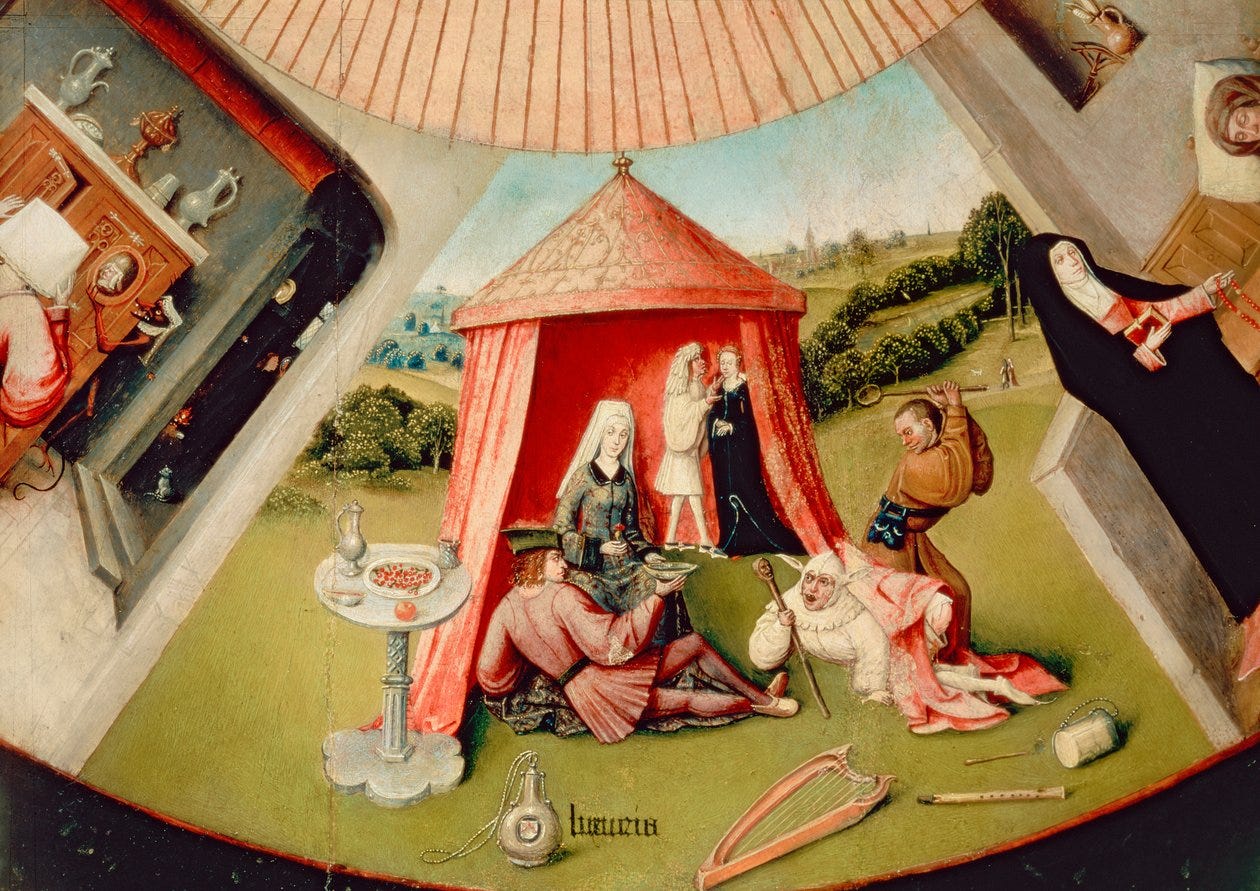
83. Lust, Luxuria
Jan 1401:10:50Tap to summarizeWe continue our journey with the table top painting by Hieronymus Bosch (c. 1450-1516) called The Seven Deadly Sins and the Four Last Things. Today we talk about lust or luxuria.Thanks for visiting The Color of Dust, and please consider subscribing. This is a public episode. If you would like to discuss this with other subscribers or get access to bonus episodes, visit colorofdust.substack.com
Transcribe →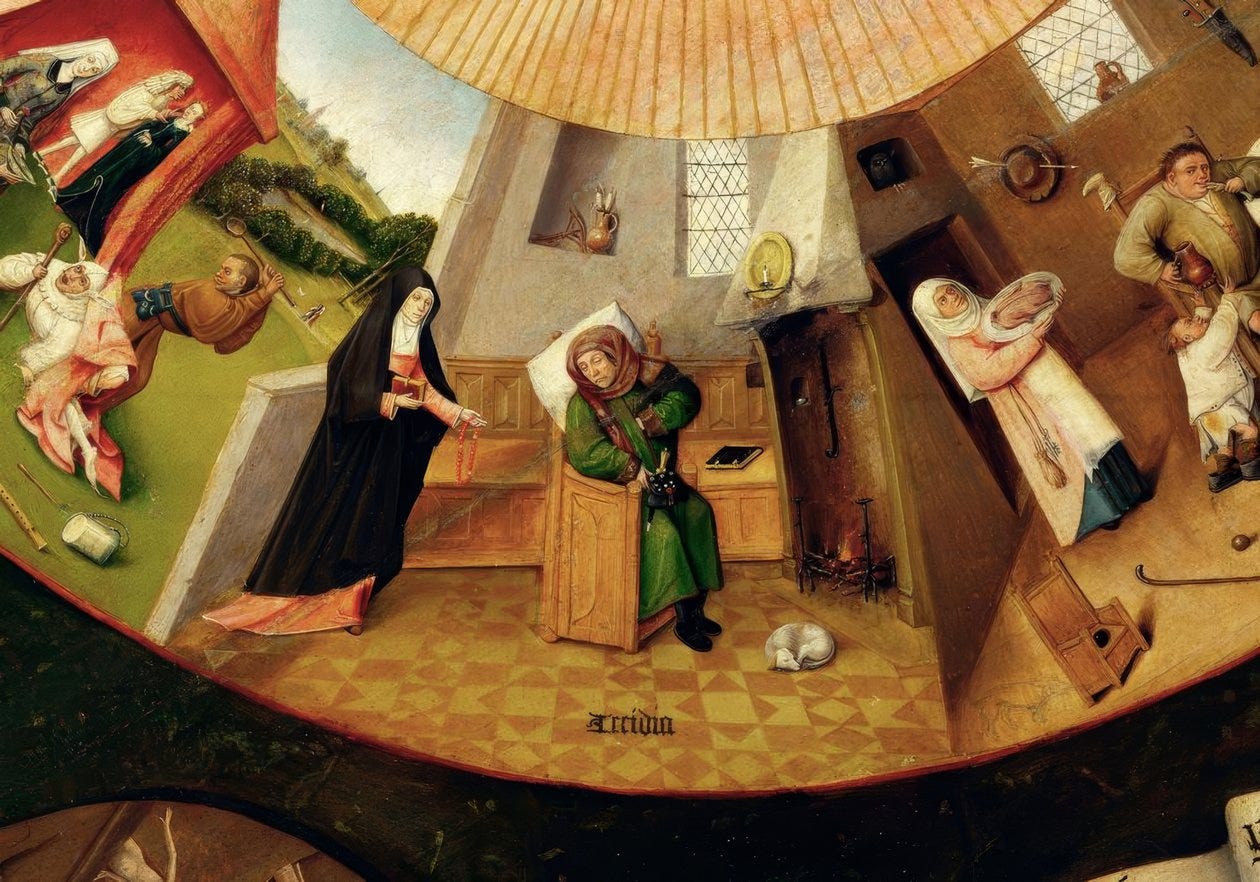
82. Sloth: from Music to Mercy
Dec 3101:14:45Tap to summarizeWe continue our journey with the table top painting by Hieronymus Bosch (c. 1450-1516) called The Seven Deadly Sins and the Four Last Things. Today we talk about acedia or sloth, using Jack’s recent music endeavors as a prompt for the discussion. Be sure to listen to the end to catch a ‘revelation’ about the painting that we discover!Thanks for visiting The Color of Dust, and please consider subscribing. This is a public episode. If you would like to discuss this with other subscribers or get access to bonus episodes, visit colorofdust.substack.com
Transcribe →
81. Last Words
Dec 1701:08:18Tap to summarizeWe especially miss those we have lost during holidays and anniversaries. Today we consider the poem Last Words by Michael Symmons Roberts, which was written to commemorate the first anniversary of 9/11. One of the purposes of physicality, says Dr. Thomas Dilworth during our conversation, is the expression of love. He traces love through the motifs of touch, Paradise Lost, the Crucifixion, and the Big Bang. We discover that silence is not absence, as well as the importance of saying “I love you” while we still have the chance. We trust you will find Dr. Dilworth’s exposition of the poem to be both insightful and moving, as well as the recitation of the poem by Seth Wieck at the end. We’ve included the poem below, in addition to information about the music selected for this episode. There is also a PDF of an essay that Dr. Dilworth wrote about the poem.Michael Symmons Roberts is an award-winning British poet with a degree in philosophy and theology from Oxford. He is also a librettist, writing operas with the composer James MacMillan. Symmons Roberts is Professor of Poetry at Manchester Metropolitan University. His website is symmonsroberts.com.The PoemLast Words Michael Symmons Roberts (i) You have a new message: Kiss the kids goodbye from me Keep well, keep strong, you know I’m sure, but here’s to say I love you. I lay these voice-prints like a set of tracks, to stop you getting lost among the tall trees beneath the break-less canopy, on the long slow walk you take from here without me. (ii) You have a new message: I do not want to leave you this magnetic print, this digit trace, my coded and decoded voice. I do not want to leave you. If I had a choice, my last words would be carried to your window on three slips of sugar paper in the beaks of birds of paradise. The words would say, I’m sure you know, I love you. (iii) You have a new message: I throw my voice across the city, but it meets such a cacophony we overload the network. Countless last words divert on to backup spools and hard drives. Systems analyst turns archaeologist: his fingertips, as delicate as brushes, sift through sediment of conferences, helpline hints, arguments and cold calls, searching for the ones that say You know, I’m sure, I love you. (iv) You have a new message: This is the voice you hear in dreams, this is the tape you cannot bear to play. This is the voice-mail you keep in a sealed silk bag in a tin box in the attic. But the message is out - in the sick-beds and the darkened rooms; in the billowing curtains and the hush so heavy you can hear the pulse in your wrists. The message is out, in the ether, in the network of digits and wires. I know, you’re sure, I love you. (v) You have a new message: Don’t remember this, don’t save this message. Keep instead the pictures of last Sunday in the park when summer leaves were turning, Rollerbladers hand-in-hand, our boys throwing fists of cut grass at each other. Think of the extravagance of green, and think especially of the sky, its blinding cloudlessness. You know, I’m sure, but here’s to say I love you. (vi) You have a new message: This is the still, small voice you longed to hear among the ruins. This is the voice you fished with microphones on long lines, lowered into cracks between the rocks of this new mountain. And your ears ache with the effort, the sheer will to listen, to conjure my words, your name on my lips, out of nowhere. Here’s to say. (vii) You have a new message: When a city is wounded, before it moans, before it kneels, it draws a breath, and keeps it, as though all phones are on hold, all radios de-tuned, cathedrals locked and all parks vacant. It becomes a windless forest. But remember, silence is not absence. Learn to weigh them, one against the other. Each room of our house contains a different emptiness. Listen. Then break it. Say you know, I’m sure, I love you. (viii) You have a new message: Do not forget the beauty of aeroplanes, those long, slow pulses from the sun which passed above our garden as we lay out in the heat. Do not forget their gentle night-time growl, and how we used to picture people in them - sleeping, talking, just as we were, how we used to guess the destinations. Do not forget the grace of aeroplanes, the majesty of skyscrapers. You know, I’m sure. (ix) You have a new message: Still, a year on, you rifle through black boxes, mail-boxes, voice-boxes, in search of my final words. You hunt them in the white noise between stations on the radio, the blank face of a TV with the aerial pulled out. You walk in crowds, wondering if my words were passed to him, or her, as messenger. If I’d had time to leave you words, you know, I’m sure, they would have been I love you. (x) You have a new message: Now, my voice stored on your mobile, I can tell you fifty times a day how much I love you. “Tell the kids,” I say. I don’t know if you still do. Sometimes, when you’re out of town, on trains, or in the shadow of tall buildings You lose the signal. The network breaks. You hear vowels splinter in my throat, as if struck by a sudden despair. (xi) You have a new message: Where did my last words go? Out and out on radio waves into the all-engulfing emptiness, fading to a whisper as they cross from sky, to space, to nothing. Or in, and in, as litany repeated in your heart until all tape is obsolete. Each cadence, every tongue-tick, every breath is perfect, as you say my words: You know, I’m sure. (xii) You have a new message: There is nothing new in this. My voice has printed like a bruise, like a kiss, like a kiss so strong it leaves a bruise. I love you. You know it, I’m sure. Beyond the smoking ruins, smoking planes, and empty rooms, above and beyond is a network. A matrix of souls, as fragile as lace, but endless and unbreakable. To save the message, press. The MusicI chose the well-known composition Gymnopedie No. 1 by Erik Satie for a couple of reasons. The Greek word gymnopaedia refers to an ancient annual festival where young men danced “stripped” either of clothing or of weapons. Symbolically, appropriately, this is the reversal of an event like 9/11, where men took-up weapons, airplanes, in an act of destruction. It is also a reversal of the fall into shame of Adam and Eve. But at the same time, the music points to moments when we can put aside our violence and stand before each other naked and unarmed: physicality as violence vs. physicality as beauty. The second reason I chose this music was for its intense peacefulness. A commenter online wrote, “It’s a piece that always makes you stop what you’re doing, and feel like you have suddenly become more aware of everything.” The music does what grief does, and what this poem does. Below you will find a downloadable version of the song from Classicals.de.Our “Fourth” CohostDr. Thomas Dilworth is the author of the collection of poems Here Away. He is also the pre-eminent reader and interpreter of the work of David Jones, and his forthcoming book is on the illustrated limericks of Edward Lear. Here is the essay he wrote about the poem Last Words, which you can download.Thank you for spending some time with The Color of Dust. We hope you enjoy this special poetry episode. Subscribe to receive future episodes like this one. This is a public episode. If you would like to discuss this with other subscribers or get access to bonus episodes, visit colorofdust.substack.com
Transcribe →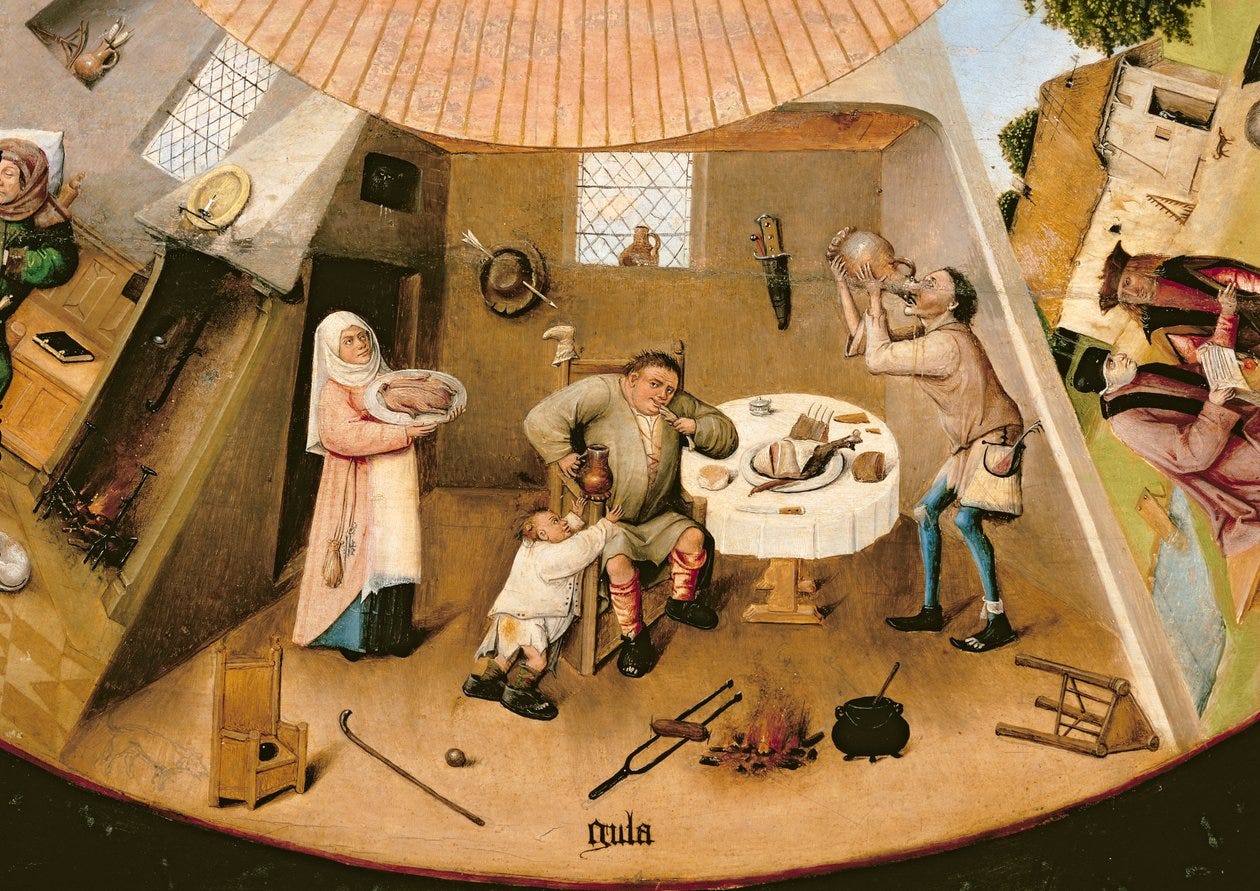
80. Gluttony, Gula
Dec 1001:16:13Tap to summarizeIn this episode, we discuss gluttony, or gula, from the table top painting by Hieronymus Bosch (c. 1450-1516) called The Seven Deadly Sins and the Four Last Things. Gluttony does not have to do exclusively with overeating, but with anything done to excess or for the wrong reasons. There is much to explore in this portion of the painting, and we’d love to hear what you think about it. Thanks for visiting The Color of Dust, and please consider subscribing. This is a public episode. If you would like to discuss this with other subscribers or get access to bonus episodes, visit colorofdust.substack.com
Transcribe →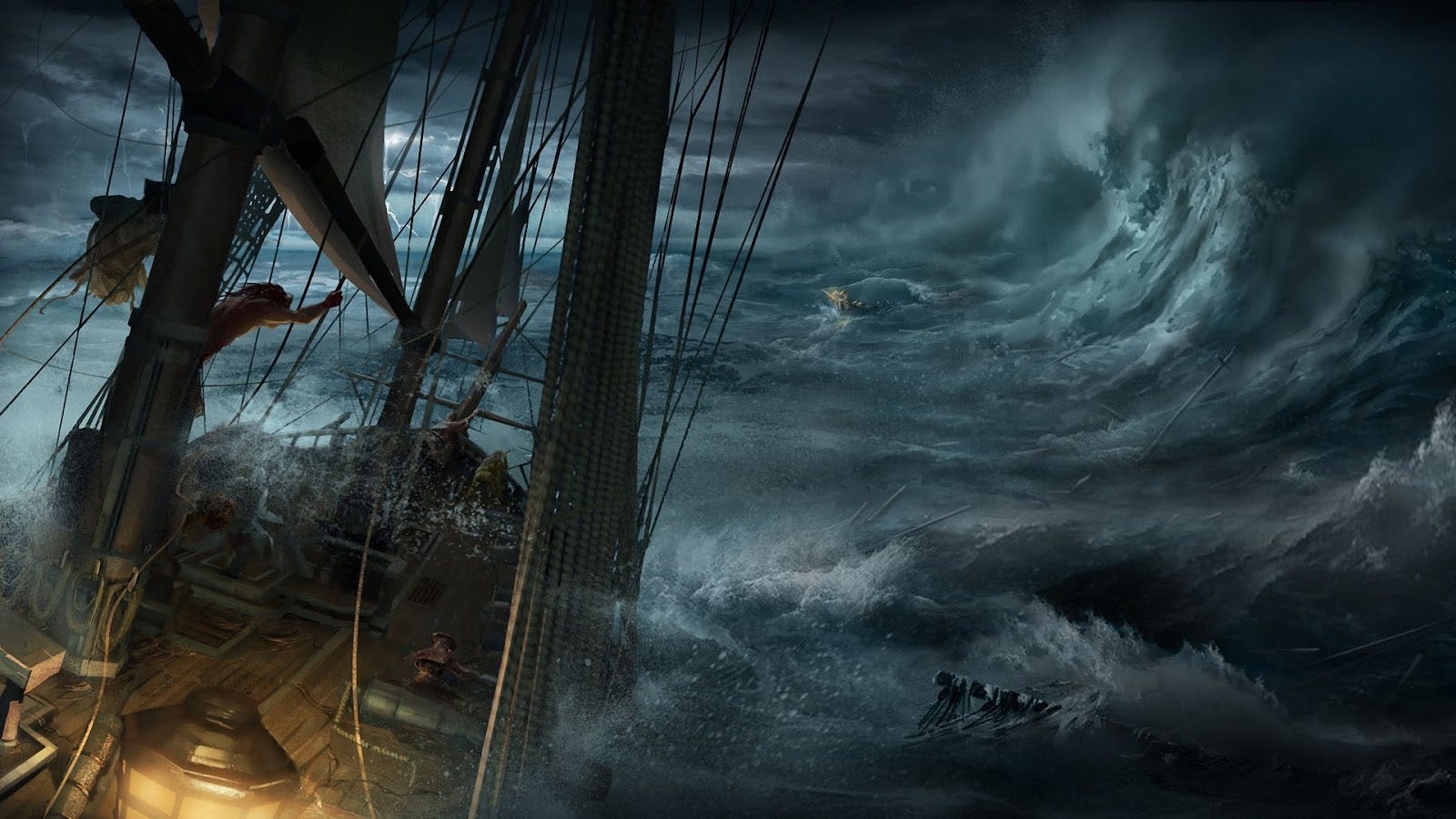
79. The Wreck of the Deutschland, Pt. II
Dec 700:58:56Tap to summarizeToday, December 7, 2025, marks the 150th anniversary of the wreck of the Deutschland, the event on which Gerard Manley Hopkins based the first of his ‘mature’ poems, which was written shortly after the tragedy. After becoming a Jesuit priest in 1868, Hopkins had decided not to write poetry anymore, but this event, along with some nudging by one of his superiors, catapulted him back to pen and paper. The sheer eruption that ensued would be known as The Wreck of the Deutschland, one of the greatest English poems ever written; and, although he composed the poem in 1875, it was not published until 1918—thirty years after his death.Dr. Thomas Dilworth joins The Color of Dust to talk about The Wreck of the Deutschland, in particular, the first ten stanzas, known as the autobiographical or meditative section. In part 2, we cover stanzas 5-10 of the autobiographical section, noting the crucial themes that Hopkins seeded into the opening lines of his ode, which contains thirty-five stanzas in total. Please join us to discover the richness of his language, thought, and introspection—and perhaps take up Dr. Dilworth’s challenge to memorize the first eight lines. Below you will find both stanzas 5-10 of the poem and the music selected for this episode. *(Note: Hopkins’s original indentations of each line were not followed in the version below.)The Poem (Stanzas 5-10)The Wreck of the Deutschland by Gerard Manley Hopkins I kiss my hand To the stars, lovely-asunder Starlight, wafting him out of it; and Glow, glory in thunder; Kiss my hand to the dappled-with-damson west: Since, tho’ he is under the world’s splendour and wonder, His mystery must be instressed, stressed; For I greet him the days I meet him, and bless when I understand. Not out of his bliss Springs the stress felt Nor first from heaven (and few know this) Swings the stroke dealt— Stroke and a stress that stars and storms deliver, That guilt is hushed by, hearts are flushed by and melt— But it rides time like riding a river (And here the faithful waver, the faithless fable and miss). It dates from day Of his going in Galilee; Warm-laid grave of a womb-life grey; Manger, maiden’s knee; The dense and the driven Passion, and frightful sweat; Thence the discharge of it, there its swelling to be, Though felt before, though in high flood yet— What none would have known of it, only the heart, being hard at bay, Is out with it! Oh, We lash with the best or worst Word last! How a lush-kept plush-capped sloe Will, mouthed to flesh-burst, Gush!—flush the man, the being with it, sour or sweet, Brim, in a flash, full!—Hither then, last or first, To hero of Calvary, Christ,’s feet— Never ask if meaning it, wanting it, warned of it—men go. Be adored among men, God, three-numberéd form; Wring thy rebel, dogged in den, Man’s malice, with wrecking and storm. Beyond saying sweet, past telling of tongue, Thou art lightning and love, I found it, a winter and warm; Father and fondler of heart thou hast wrung: Hast thy dark descending and most art merciful then. With an anvil-ding And with fire in him forge thy will Or rather, rather then, stealing as Spring Through him, melt him but master him still: Whether at once, as once at a crash Paul, Or as Austin, a lingering-out swéet skíll, Make mercy in all of us, out of us all Mastery, but be adored, but be adored King.The MusicThe music chosen for this episode is the Kyrie portion from Missa Papae Marcelli by Palestrina, which you can both listen to and download below. Might the five nuns have been singing the 16th Century polyphonic Latin text of the Kyrie: “Lord, have mercy; Christ, have mercy…" during the fateful storm at sea? I like to think so. Regardless, enjoy this version of the Kyrie by Palestrina!Our “Fourth” CohostDr. Thomas Dilworth is the author of Here Away, a collection of poems. He is also the pre-eminent reader and interpreter of the work of David Jones and is featured on The Poetry Foundation for his poem Slighting.Thank you for spending some time with The Color of Dust. We hope you enjoy this special poetry episode. Subscribe to receive future episodes like this one. This is a public episode. If you would like to discuss this with other subscribers or get access to bonus episodes, visit colorofdust.substack.com
Transcribe →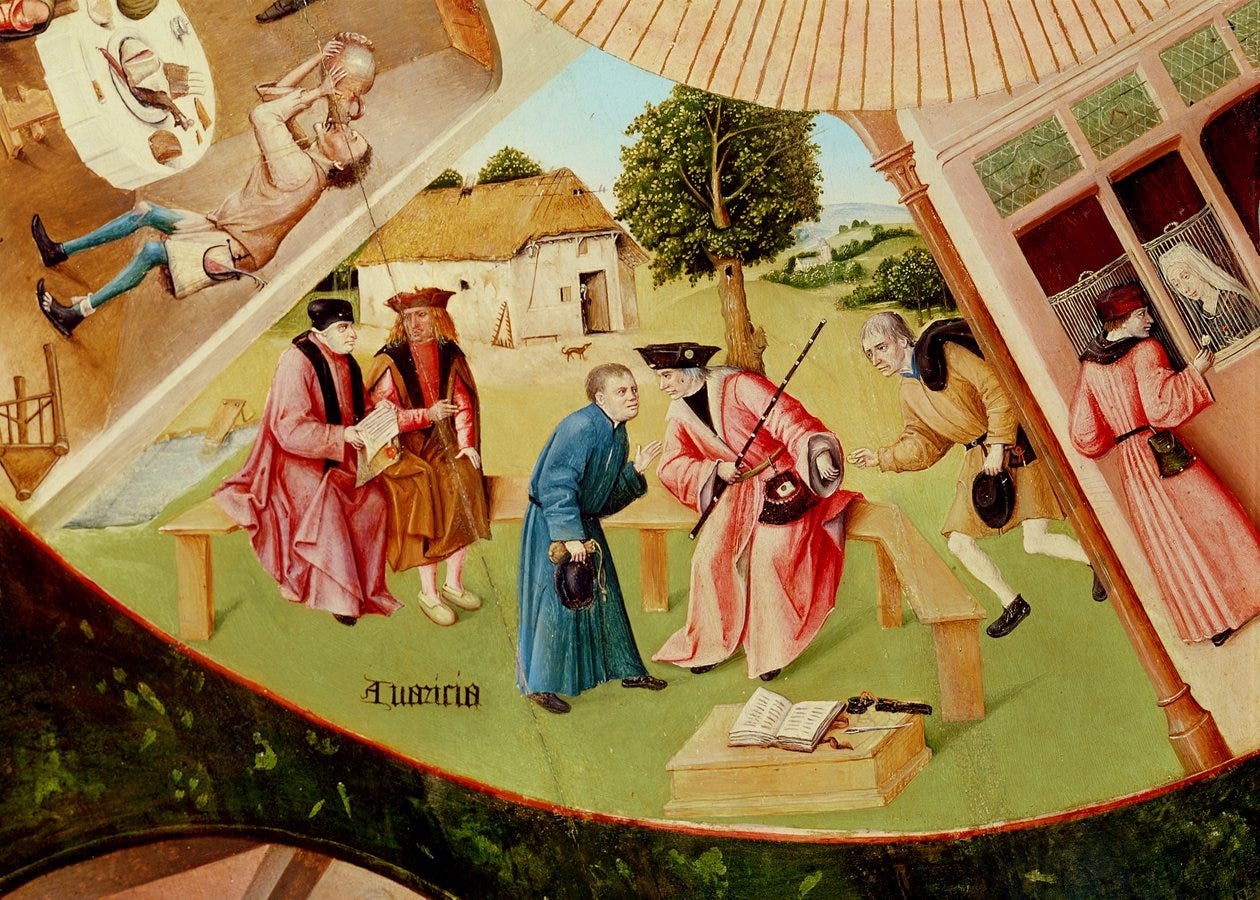
78. Greed, Avaricia
Dec 301:23:12Tap to summarizeAnger, envy, and now greed! We continue our journey around the table top painting by Hieronymus Bosch (c. 1450-1516) called The Seven Deadly Sins and the Four Last Things. Today we meditate on avaricia, avarice, which is greed. Our conversation takes an unexpected and exciting turn, as we offer an interpretation that contradicts what’s normally concluded about this portion of the painting. We’ve also included some “bonus” material on greed and dogs at the conclusion of the episode.Thanks for visiting The Color of Dust! Subscribe for free to receive new posts and support our work. This is a public episode. If you would like to discuss this with other subscribers or get access to bonus episodes, visit colorofdust.substack.com
Transcribe →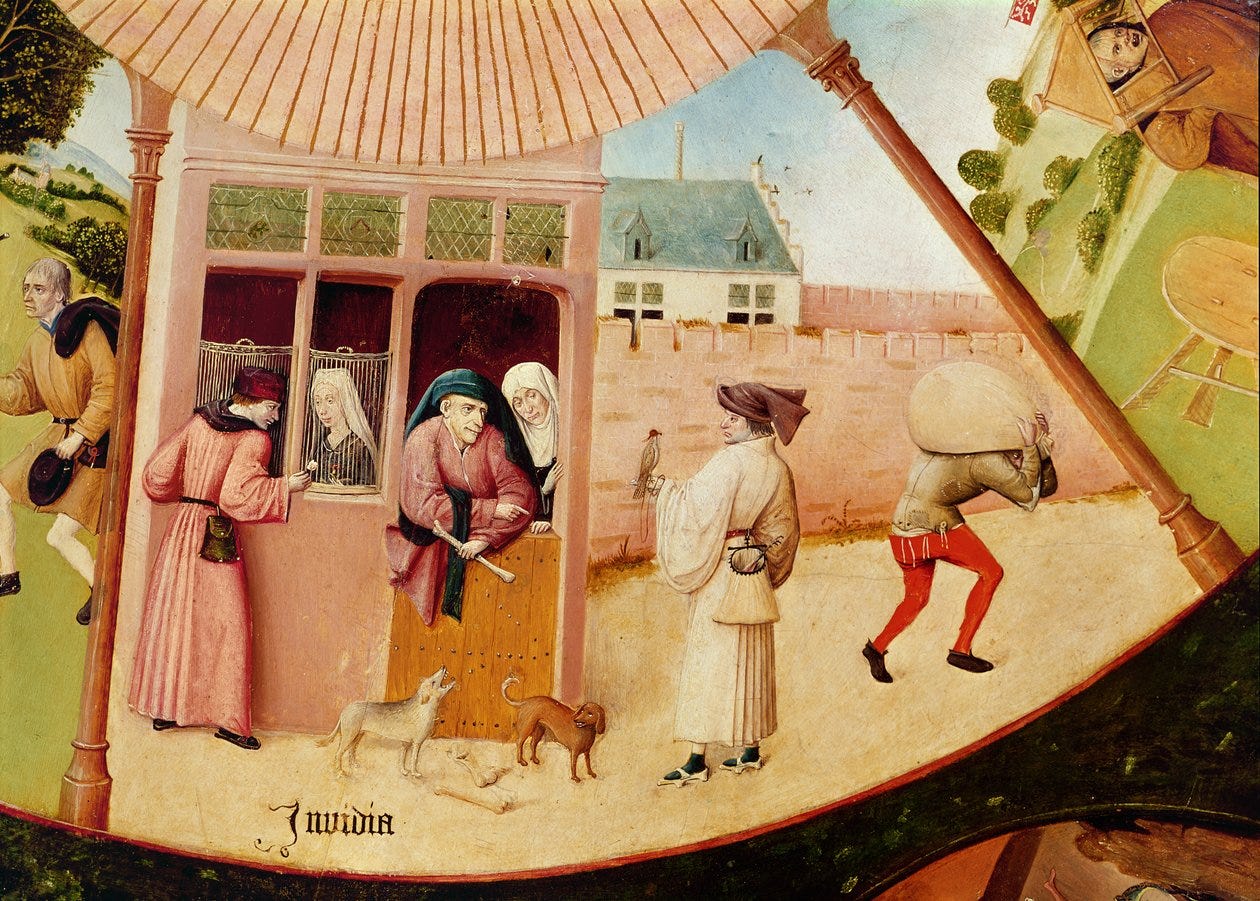
77. Envy, Invidia
Nov 2601:20:29Tap to summarizeFinally, the episode on art interpretation, the evil eye, envy, and truck-nuts that you’ve been waiting for! In this episode, we continue our meditation on the table top painting by Hieronymus Bosch (c. 1450-1516) called The Seven Deadly Sins and the Four Last Things. Our focus today is invidia—no, that’s not a pharmeceutical company—but it is envy. “Two dogs over one bone seldom agree,” goes the old Flemish proverb. The scene of envy that Bosch paints has some folks standing around a vending booth, giving each other a noticeable side-eye; there are even two dogs doing the same, and, yes, there are some bones involved. Invidia is also personified as an evil witch by Ovid, which you can see here:At the end of the episode, we share a beautiful poem by Christina Ward called Invidia (included here). As usual, take a look at the chapter headings below to see the ground we cover.Invidia by Christina M. Ward seven deadly sins you, one of them and I, have lived holding your hand. Sinewy-foul skin wrapped taut, eyes that impaled me green. tiny red-head baby gets to wear yellow and I, wrapped in pink can’t comb my hair kids at school wear Jordache and new Keds and I, wear last year’s socks my brother’s jeans sweet sixteenth cars and graduation checks, plans for the future like shiny pearls but I, pregnant, plan a wedding brick homes, wooden doors Christmas wreaths, lights shiny cars, paved driveways and I, travel by them watching the gas light glowing green on the dash, anxiety grinding like hunger Invidia — let me go. young boys eventually become young men and I, their mother — age. I do not look around anymore for what they have that we do not. The wanting is exhausting, merely plodding against the wind Invidia cast your horrid gaze upon these empty seas… I’ll simply stay afloat and set sail, the sun waits the same for me I hang a wreath of hope on this mobile-home, painted metal door — humble, bent. Home, just the same. Out with you! Invidia — Nemesis — wretched evil eye — you are not welcome here. I’ll hang my wreath in peace, if you please. I’ll not hang my head. I’ll not avert my eyes — in shame. I will lift on broken wing.Chapters00:00 Reconnecting and Reflecting on Past Conversations 03:34 Exploring Bosch’s Seven Deadly Sins 06:18 Navigating Initial Discomfort in Art Appreciation 09:14 The Role of Personal Interpretation in Art 12:28 Finding Meaning Beyond the Artist’s Intent 15:18 The Concept of ‘Easter Moments’ in Art 18:25 The Journey of Understanding Art 21:33 Engaging with Envy in Bosch’s Work 33:23 Exploring Envy and the Evil Eye 40:33 The Power of Blessing Over Envy 50:38 The Deadly Nature of Envy 54:44 The Visual Representation of Envy 57:05 Artistic Observations and Symbolism 58:13 The Nature of Envy in Biblical Context 01:00:45 Envy and Its Consequences 01:04:42 The Spiritual Implications of Envy 01:07:47 Toxic Emotions and Their Impact 01:10:49 The Role of Envy in Human Experience 01:12:44 Finding Freedom Amidst Envy 01:15:51 Reflections on Envy and Hope Thanks for visiting The Color of Dust! Subscribe for free to receive new posts and support our work. This is a public episode. If you would like to discuss this with other subscribers or get access to bonus episodes, visit colorofdust.substack.com
Transcribe →