Podcast
The Daily Aftershock (Writing Prompt)
Hosted by Max Wallis' Daily Aftershock Writing Prompts (The Aftershock Review) · EN
Daily writing prompts from the raw edges of memory, survival, and creative reinvention. Each one designed to crack something open. For poets, memoirists, and anyone writing through the wreckage.
aftershockpoetry.substack.com
aftershockpoetry.substack.com
12episodes
Episodes
Newest firstAll episodes
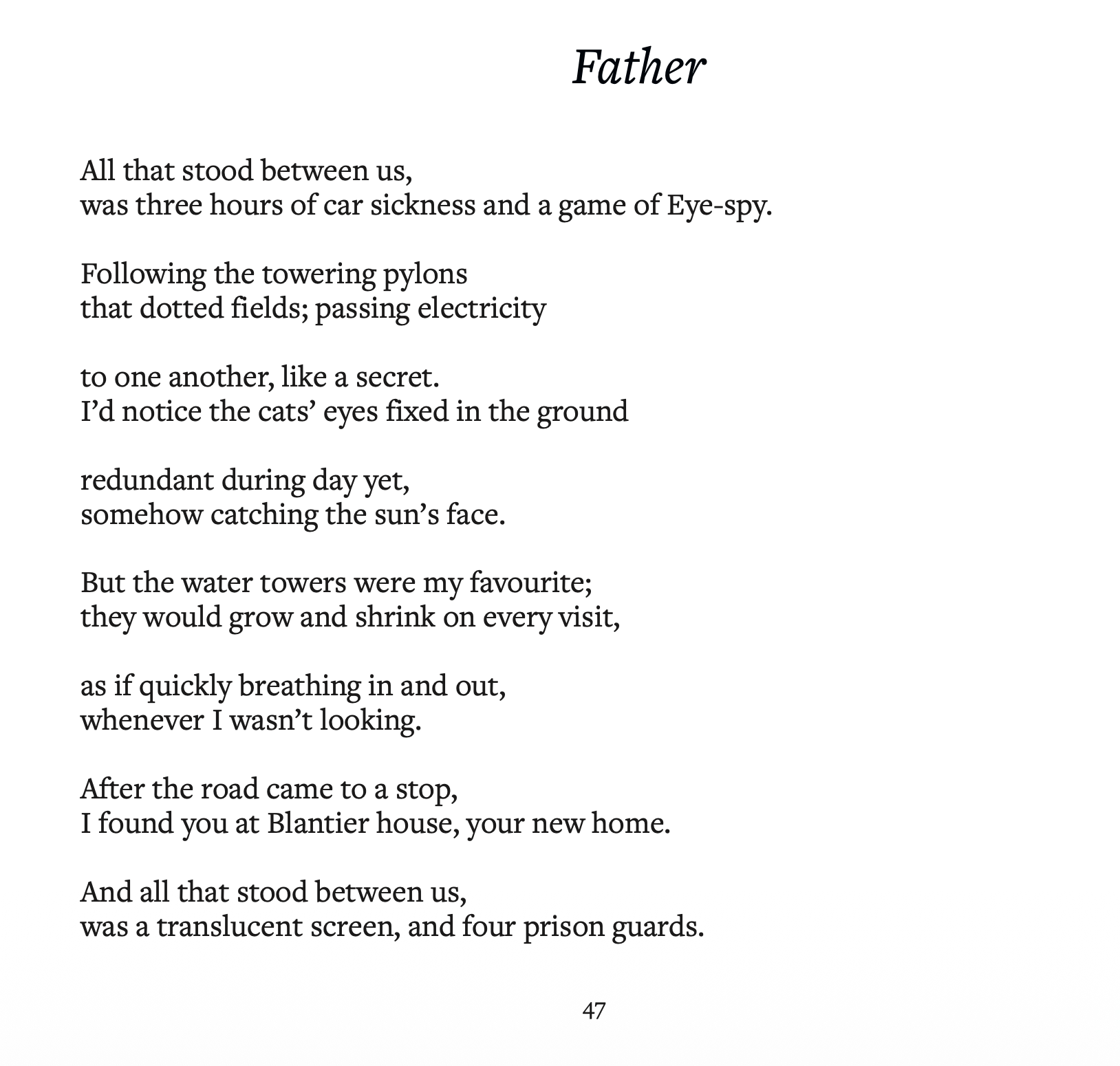
Father by Dominique Dunne
Oct 30Tap to summarizeEditorial Note by Max WallisIf Mother exposed the violence of public scrutiny, Father turns inward, to a child’s gaze pressed against the glass of memory. There is a quiet pilgrimage here: three hours of nausea and games, the pylons and cats’ eyes transforming the motorway into a living conduit of connection.Dunne captures the way children mythologise distance. Her imagery: pylons “passing electricity / to one another, like a secret” bridges what the law has broken. Even the landscape seems complicit in this fragile communication, the water towers breathing in and out as though keeping time with love’s endurance.The poem’s final revelation is devastating in its understatement: the longed-for reunion mediated by “a translucent screen, and four prison guards.” Yet what remains is not despair but a small, steady faith in attention itself — the child’s noticing as an act of survival. Dunne writes with restraint and grace, transforming absence into illumination.Dominique Dunne is a former Barbican poet and poetry producer for the Shake the Dust Festival at Southbank Centre. She has supported Kae Tempest, performed at Ronnie Scott’s, and delivered a TEDx talk on original writing. Dominique holds a BA in Creative Writing from Bath Spa University and has taught poetry to both children and adults. Writing from personal experience on heartache and joy, she believes that ‘Poetry can bridge the gap between the personal and the universal.’ Currently, she works as a creative career coach, helping young people break into the arts. This is a public episode. If you'd like to discuss this with other subscribers or get access to bonus episodes, visit aftershockpoetry.substack.com/subscribe
Transcribe →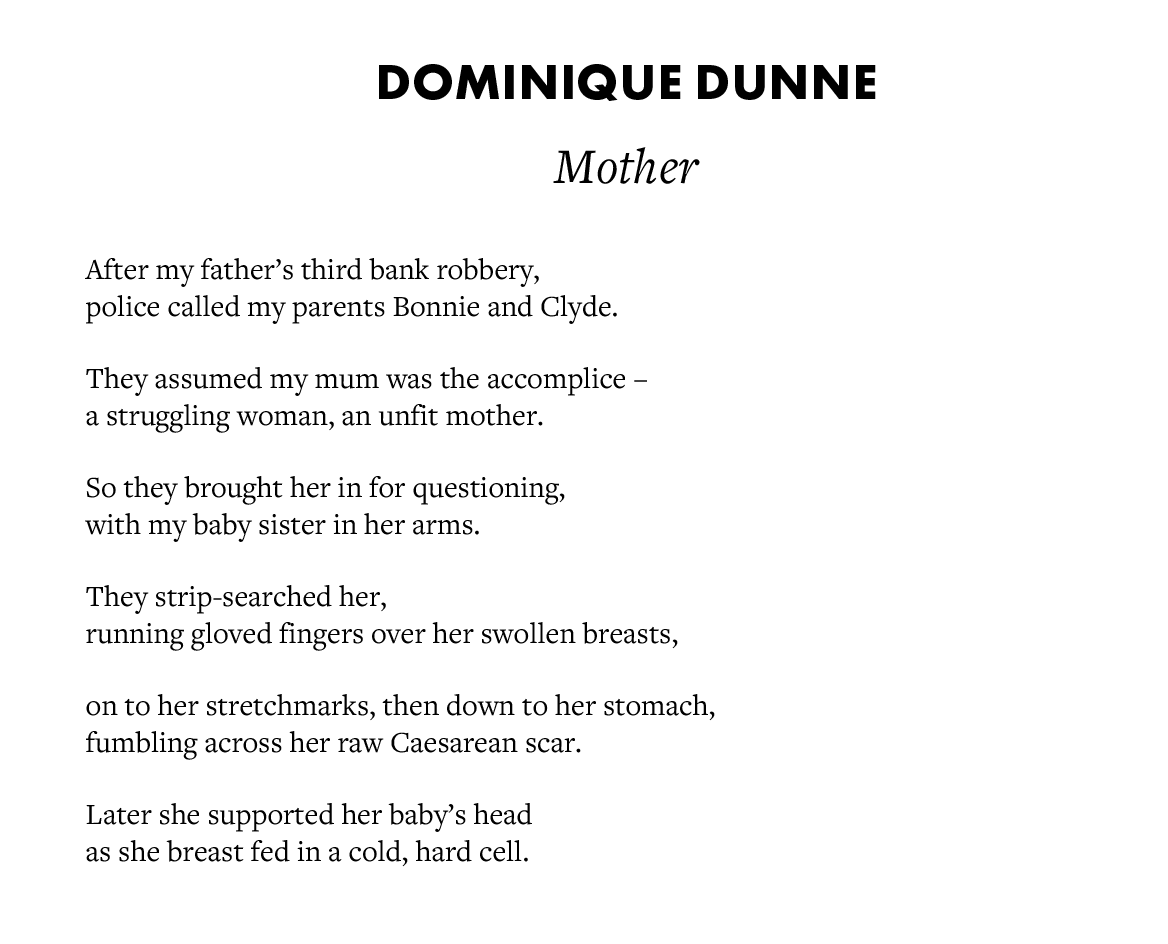
Mother by Dominique Dunne
Oct 29Tap to summarizeEditorial Note by Max WallisWhat a poem this is, dear readers. Dunne’s Mother revisits a family story with unflinching clarity — a father imprisoned after a string of bank robberies, a mother wrongfully suspected and humiliated. The poem begins in rumour, with police dubbing the couple “Bonnie and Clyde”, and moves inward, to the mother’s body: a site of both evidence and accusation.What’s striking is the precision of its gaze. Dunne writes not from melodrama but from memory’s still room: each detail exact, each image carrying the weight of what can’t be said aloud. The strip-search becomes emblematic of how women - and indeed mothers - are criminalised for surviving. The Caesarean scar, the breast milk, the cold cell: they form a counter-narrative to the state’s gaze: a language of endurance.Mother is not a plea or protest, but a document of love under siege. It exposes cruelty without spectacle, finding poetry in the quiet act of holding a child amid harm. Dunne’s restraint is its own defiance — a refusal to let shame speak last.Dominique Dunne is a former Barbican poet and poetry producer for the Shake the Dust Festival at Southbank Centre. She has supported Kae Tempest, performed at Ronnie Scott’s, and delivered a TEDx talk on original writing. Dominique holds a BA in Creative Writing from Bath Spa University and has taught poetry to both children and adults. Writing from personal experience on heartache and joy, she believes that ‘Poetry can bridge the gap between the personal and the universal.’ Currently, she works as a creative career coach, helping young people break into the arts. This is a public episode. If you'd like to discuss this with other subscribers or get access to bonus episodes, visit aftershockpoetry.substack.com/subscribe
Transcribe →