
Podcast
The Essential Coaching Skills Podcast
Hosted by Doug OBrien · EN
Listen to our coaching podcast for expert advice, personal development insights, and success stories. Explore NLP and hypnosis topics.
23episodes
Episodes
Newest firstAll episodes
AI Can't Do This Yet: Why Poetry, Trance & Human Voice Still Matter - w/ Julie Flanders
Apr 1100:53:14Tap to summarizeWhat if poetry and hypnosis are the same thing? That's the question that opens this conversation — and the answer from Julie Flanders, award-winning lyricist and co-founder of the internationally acclaimed band October Project, might surprise you. Julie is also a transformational coach, poet, and producer whose work has reached millions worldwide. She's written three Amazon #1 bestselling poetry books, created the October Project International Poetry Contest (now in its 8th year), and built virtual choirs during COVID that drew singers from every continent. And she has a fascinating take on what makes human creativity — especially in the age of AI — so irreplaceable. 0:00 Is poetry the same as hypnosis? A lyricist's answer 1:47 Contemplation, the inner temple — and how language enters trance 3:44 Why algorithms don't write good poetry (yet) 4:44 Julie's influences: T.S. Eliot, Mary Oliver, Rumi — and why accessibility wins 8:32 Writing lyrics vs. writing poems: the surprising difference 10:02 October Project's Book of Rounds: 400 children and a mantra that loops 14:54 The COVID virtual choir: joy, bad singing, and hand-drawn missing faces 20:27 Make Music New York: 1,000 people walking and singing on the solstice 22:44 October Project Poetry Contest: how to enter (first poem is free) 31:21 From psychic to executive recruiter to coach — Julie's real origin story 35:07 Why change has to enter the body — not just the mind 43:48 The mythology of coaching (and music): what nobody tells you before you start Julie Flanders is an award-winning poet, lyricist, and producer, and the co-founder of the internationally acclaimed band October Project and the emergent new project Elle Dit Music. Her work has received Anthem, Telly, and ACDA honors, and reaches millions of listeners worldwide. Her 3 poetry books have been #1 bestsellers on Amazon. She is also the creator of the October Project International Poetry Contest, now in its eighth year, engaging poets from all over the world to celebrate April is Poetry Month by writing and submitting their own work for recognition. October Project - Return To Me - Worldwide Choir - GOLD TELLY & AMERICAN PRIZE WINNER 2023 https://youtu.be/wv9fbUHq6ks?si=qhTG1ZB4brOs9huI October Project - Virtual Choir of Joy - ANTHEM AWARD 2022, TELLY AWARD 2021 https://youtu.be/ODFsQ45yVnI?si=0Nhnzfq6WJFRrdoG October Project - Book of Rounds - Lyric Videos https://www.youtube.com/playlist?list=PLEI3F1h2TKvadz2PVQ8G86PklJ92sqs5I http://www.octoberprojectmusic.com http://www.Elleditmusic.com www.julieflanders.com ----------------------------------- BECOME AN EXTRAORDINARY COACH!JOIN THE MEMBERSHIP NOW & Get My Six-Week Storytelling Course LIVE. https://www.essentialcoachingskills.com/membership-aug2025 JOIN 3K+ READERS ON THE WEEKLY ESSENTIAL COACHING SKILLS NEWSLETTER: https://www.essentialcoachingskills.com/newsletters/the-essential-coaching-skills-newsletter NEED DOUG AS YOUR COACH? BOOK HERE: https://www.essentialcoachingskills.com/coaching CONNECT ON LINKEDIN: https://www.linkedin.com/in/dougobrien/
Transcribe →
What REALLY Creates Change in Coaching? (TEMENOS Principle EXPLAINED)
Apr 800:16:51Tap to summarizeHave you finished your NLP training, your coaching certification, your hypnotherapy course... and now you're staring at an empty calendar wondering when you became someone who actually does this for a living? In this episode, NLP Master Trainer and Ericksonian coach Doug O'Brien explores the real psychology of making that leap. He opens with a concept from Carl Jung — Temenos — a protected vessel for transformation. And he makes the case that great coaching is not a technique applied in a single session. It's a space created over time. 🎙️ ABOUT DOUG O'BRIEN Doug O'Brien is an NLP Master Trainer, Ericksonian Hypnotherapist, and coach with over 35 years of experience. Certified by Tony Robbins and endorsed by Richard Bandler and Robert Dilts. He teaches coaches, therapists, and practitioners how to create lasting behavior change through NLP, Ericksonian hypnosis, storytelling, and nervous system-aligned coaching. 0:00 The Jungian idea of Temenos — a protected space for transformation 0:29 Why coaching is an ongoing conversation, not a one-and-done event 0:58 The disservice of 'one session fixes everything' (NLP & hypnosis culture) 1:23 The moment spring training ends and real clients begin 1:52 The office, the debt, the Zoom room — and the terror that follows 2:48 Your first real client: they have a problem and they think you can fix it 3:16 A brief history: NLP came from therapy (Perls, Satir, Erickson) 4:16 The 'watch the watch' problem and the one-session my 6:16 Thomas Leonard: coaching is a conversation 6:45 Doug's minimum: four sessions. Here's why. 7:13 The ecological ripple effects of change (quit smoking example) 7:42 The doctor/therapist model vs. a pair of equals 8:40 If you're going to coach, you should be coached 11:07 Solution-oriented coaching: listen, then actually do something 12:04 Doug's personal story: he needed it too (musician turned coach) 13:04 Stop taking more trainings. You're ready. Just start. 13:34 Temenos revisited: Jung, alchemy, and the pressure cooker of change 15:00 Why time limits create therapeutic pressure — and make sessions better ----------------------------------- BECOME AN EXTRAORDINARY COACH! JOIN THE MEMBERSHIP NOW & Get My Six-Week Storytelling Course LIVE. https://www.essentialcoachingskills.com/membership-aug2025 JOIN 3K+ READERS ON THE WEEKLY ESSENTIAL COACHING SKILLS NEWSLETTER: https://www.essentialcoachingskills.com/newsletters/the-essential-coaching-skills-newsletter NEED DOUG AS YOUR COACH? BOOK HERE: https://www.essentialcoachingskills.com/coaching CONNECT ON LINKEDIN: https://www.linkedin.com/in/dougobrien/
Transcribe →
The Power of Questions
Mar 1400:30:56Tap to summarizeThe questions you ask determine what your mind focuses on—and that focus shapes your emotional state, your decisions, and ultimately your life. In this episode of the Essential Coaching Skills Podcast, Doug O’Brien explores the power of questions in coaching and personal transformation. Drawing from NLP, Tony Robbins’ work, and practical coaching experience, Doug explains how intentional questions can shift emotional states, improve problem solving, and help clients move from reactivity to empowerment. You’ll also learn Tony Robbins’ Morning Questions and Problem-Solving Questions, simple tools that can dramatically change how you approach challenges and opportunities. 00:01 – Introduction: The Power of Questions 00:29 – Questions in Coaching and NLP 01:28 – The “Imperative Question” Concept Leslie Cameron Bandler’s idea that each person carries a core question that influences their choices and behavior. 03:54 – Focus Determines State Why the questions we ask control our focus—and how focus directly affects our emotional state. 05:22 – Tony Robbins’ Morning Questions Doug introduces Tony Robbins’ structured morning questions for shaping mindset and emotional state. 07:14 – Why Questions Work Better Than Affirmations 08:50 – The Three-Step Happiness Question 18:11 – Better Questions for Difficult Situations 19:32 – The Five Problem-Solving Questions 24:09 – A Marathon Training Story 26:59 – Coaching Story: Shifting Depression with Questions A coaching story illustrating how powerful questions can shift emotional state quickly. ----------------------------------- BECOME AN EXTRAORDINARY COACH!JOIN THE MEMBERSHIP NOW & Get My Six-Week Storytelling Course LIVE. https://www.essentialcoachingskills.com/membership-aug2025 JOIN 3K+ READERS ON THE WEEKLY ESSENTIAL COACHING SKILLS NEWSLETTER: https://www.essentialcoachingskills.com/newsletters/the-essential-coaching-skills-newsletter NEED DOUG AS YOUR COACH? BOOK HERE: https://www.essentialcoachingskills.com/coaching CONNECT ON LINKEDIN: https://www.linkedin.com/in/dougobrien/
Transcribe →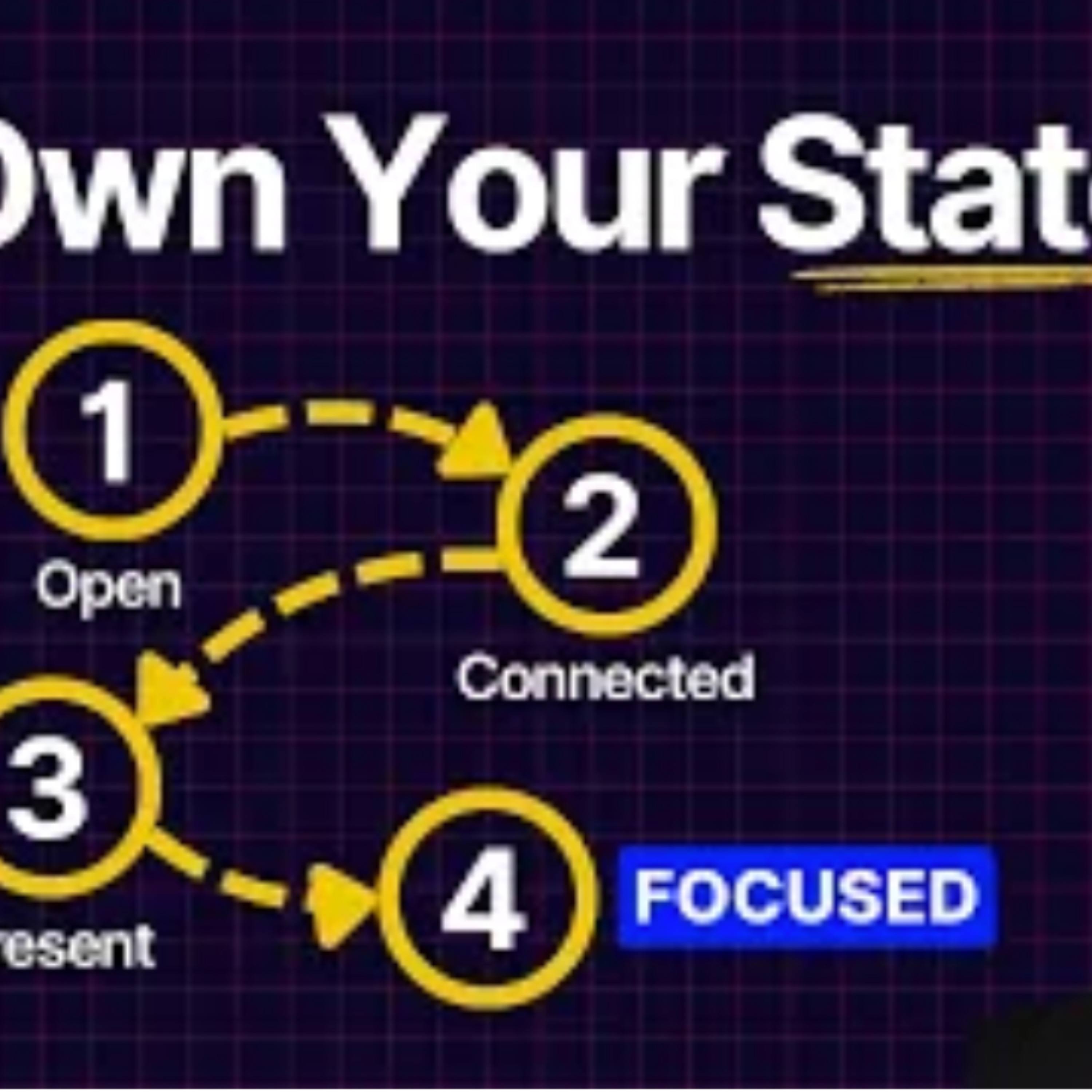
All about State Management
Mar 700:23:03Tap to summarizeHave you ever walked into a situation completely 'on' — clear, connected, in control — and wondered why you can't access that every time? You can. And it's simpler than you think. In this episode, NLP Master Trainer and Ericksonian coach Doug O'Brien teaches one of the most essential and practical NLP tools in existence: the Circle of Excellence. It's a body-mind anchoring technique that lets you choose your emotional state — and access it on demand — for any situation. Because you are not at the mercy of your circumstances. That person who "makes you mad" doesn't make you anything. You do. And once you understand that, you can change everything. 🔗 LINKS & RESOURCES 📚 The User's Guide to Storytelling (book + bonus class): https://www.essentialcoachingskills.com/users-guide-to-storytelling 🎓 Essential Coaching Skills Membership: https://www.essentialcoachingskills.com/membership-aug2025 🌐 Website: https://www.essentialcoachingskills.com 📧 Newsletter: https://www.essentialcoachingskills.com/newsletters/the-essential-coaching-skills-newsletter 🎙️ ABOUT DOUG O'BRIEN Doug O'Brien is an NLP Master Trainer, Ericksonian Hypnotherapist, and coach with over 35 years of experience. Certified by Tony Robbins and endorsed by Richard Bandler and Robert Dilts. He teaches coaches, therapists, and practitioners how to create lasting behavior change through NLP, Ericksonian hypnosis, storytelling, and nervous system-aligned coaching. 0:00 Why your state determines everything you do 0:34 The body-mind connection: we are one organism 1:04 Why circumstances don't control your emotions — you do 2:04 The traveling salesman and the fake lottery win 4:52 What Tony Robbins got right (and what to watch out for) 5:21 Peak state isn't always firewalk state 6:18 The Circle of Excellence: what it is and how it works 7:46 Body posture exercise: stand like you're depressed (then don't) 9:38 Motion equals emotion — the Tony Robbins principle 10:06 The Botox study: why you can't feel what your face can't mirror 12:24 How to anchor a state using color and memory 13:20 Real example: anchoring anger for punk rock, love for ballads 14:18 How to pick the right color and emotion for your circle 16:36 Step-by-step: entering, feeling, and breaking the state 17:06 Live demo: anchoring the coaching state (open and connected) 20:08 How to fire the anchor instantly without thinking 20:38 Choosing the right state for the right situation 21:37 You are in charge of your state 22:08 Closing: take control, stop letting circumstances lead ----------------------------------- BECOME AN EXTRAORDINARY COACH!JOIN THE MEMBERSHIP NOW & Get My Six-Week Storytelling Course LIVE. https://www.essentialcoachingskills.com/membership-aug2025 JOIN 3K+ READERS ON THE WEEKLY ESSENTIAL COACHING SKILLS NEWSLETTER: https://www.essentialcoachingskills.com/newsletters/the-essential-coaching-skills-newsletter NEED DOUG AS YOUR COACH? BOOK HERE: https://www.essentialcoachingskills.com/coaching CONNECT ON LINKEDIN: https://www.linkedin.com/in/dougobrien/
Transcribe →
Copy This Exercise: This Is The Smarter Way to Build Habits That Stick
Feb 2800:26:40Tap to summarizeYou're not broken. You're not lazy. You're probably using the wrong structure. In this episode, NLP Master Trainer and Ericksonian coach Doug O'Brien shares the EASE Method — a four-level system for building habits that actually stick without willpower, burnout, or shame spirals. EASE stands for: Easy → Acceptable → Stretch → Extraordinary You'll hear the story of a college violinist whose teacher gave him one simple instruction that changed everything: "If you can't practice, just take the violin out of its case and sit with it on your lap for five minutes."That's it. And it works — not just for music, but for fitness, writing, business-building, and any long-term goal that keeps falling apart. 0:00 Why massive action burns people out 0:21 Introducing the EASE Method 0:49 The pattern: start strong, then collapse 1:17 You're not broken — it's the structure 1:45 The story of the brilliant violinist 3:13 The teacher's secret: just 5 minutes 4:11 Newton's First Law and why you stay on the couch 5:10 Newton's Second Law: a body in motion 6:09 How to get a couch potato off the couch 6:39 The one-to-one ratio: practice and progress 8:20 What Tony Robbins taught Doug — and what was missing 9:18 Why firewalk motivation doesn't last at home 11:10 EASE explained: Easy, Acceptable, Stretch, Extraordinary 12:07 Real client example: the gym-door strategy 13:37 The extraordinary goal as your carrot 14:28 Doug's marathon story: running to Boston 17:50 The acceptable level: what to do on hard days 19:19 Meeting Stu Mittleman: the 1,000-mile world record holder 21:26 How daily action shifts your identity 22:23 When EASE is NOT the right tool 23:21 Taxes, deadlines, and when to light a fire 23:50 Closing: design change vs. forcing change 25:16 How to work with Doug ----------------------------------- BECOME AN EXTRAORDINARY COACH!JOIN THE MEMBERSHIP NOW & Get My Six-Week Storytelling Course LIVE. https://www.essentialcoachingskills.com/membership-aug2025 JOIN 3K+ READERS ON THE WEEKLY ESSENTIAL COACHING SKILLS NEWSLETTER: https://www.essentialcoachingskills.com/newsletters/the-essential-coaching-skills-newsletter NEED DOUG AS YOUR COACH? BOOK HERE: https://www.essentialcoachingskills.com/coaching CONNECT ON LINKEDIN: https://www.linkedin.com/in/dougobrien/
Transcribe →
Using Stories in Coaching - the #1 Skill
Feb 2300:17:18Tap to summarizeStorytelling is not a performance skill. It is a transformation skill. If you coach, practice NLP, hypnosis, or therapeutic conversation, this episode will deepen your craft. 00:01 – Storytelling Is Not a Soft Skill 00:54 – We Learn from Experience 02:48 – Common Human Struggles How universal themes make stories relatable and powerful. 03:17 – Isomorphic Metaphor Explained 04:46 – Identity-Level Coaching 06:12 – Changing the Inner Hero 06:40 – One Story, Many Meanings 08:02 – Coaching Without Templates 08:57 – The Harry Murphy Story 11:24 – Discovery Over Directive 12:51 – The Realization Pattern 15:32 – Storytelling as an Essential Coaching Skill Why this belongs at the center of coaching mastery. ----------------------------------- BECOME AN EXTRAORDINARY COACH! JOIN THE MEMBERSHIP NOW & Get My Six-Week Storytelling Course LIVE. https://www.essentialcoachingskills.com/membership-aug2025 JOIN 3K+ READERS ON THE WEEKLY ESSENTIAL COACHING SKILLS NEWSLETTER: https://www.essentialcoachingskills.com/newsletters/the-essential-coaching-skills-newsletter NEED DOUG AS YOUR COACH? BOOK HERE: https://www.essentialcoachingskills.com/coaching -----------------------------------
Transcribe →
The hidden cost of will-power based change
Feb 1200:18:13Tap to summarize Most people try to change by trying harder. They use willpower, discipline, and effort to push themselves toward the life they want. It works for a while. Then something starts to resist. In this episode, I talk about why sustainable change rarely comes from effort, and why it works much better when your life is designed so you don’t have to fight yourself. Get coached by Doug: https://www.essentialcoachingskills.com/coaching **00:01 – Sustainable change vs. effort-based change** Why lasting change is a design issue, not a discipline issue. **00:18 – What willpower-based change looks like** New Year’s resolutions, late-night habits, and short-lived control. **00:48 – Why effort feels like progress** How culture rewards pushing harder while people quietly burn out. **01:15 – Peak states and short-term success** Firewalks, motivation spikes, and why intensity doesn’t scale. **01:44 – The problem with relying on peak performance** Why success usually takes longer than a burst of motivation. **02:13 – Why you need better design, not more drive** How systems reduce friction and remove the need for force. **02:42 – Willpower is a finite resource** Why suppression and self-monitoring aren’t sustainable strategies. **03:11 – The system eventually rebels** Burnout, self-criticism, and fatigue disguised as laziness. **03:41 – Dan Millman’s three selves** The basic self, conscious self, and higher self explained. **04:10 – The seven-year-old inside you** Why parts of us don’t understand delayed gratification. **04:38 – What happens when suppression fails** Tantrums, binges, and biological rebellion. **05:07 – The real cost of willpower** Loss of trust, joy, creativity, and nervous system safety. **05:41 – Designing systems that remove friction** Why consistency should feel easier, not harder. **06:09 – Life as a night owl musician** A personal story about rhythm, identity, and transition. **07:07 – Becoming a morning runner** Why change was hard until the system changed. **08:03 – Nighttime guy vs. morning guy** Internal conflict and how Doug resolved it. **08:32 – Removing decision-making entirely** Laying out running gear as a behavioral system. **09:02 – The firehouse metaphor** Why systems must run without thinking. **09:32 – The E-Myth explained simply** Entrepreneurs vs. overworked technicians. **10:52 – Joe’s Garage and system failure** Why talent alone creates exhaustion without structure. **11:20 – What real entrepreneurship actually is** Designing repeatable systems that work without willpower. **12:49 – McDonald’s as a systems model** Why consistency beats motivation. **13:03 – Why systems replace willpower** How ease creates momentum. **13:31 – Identity replaces discipline** “I’m a runner” vs. “I should run.” **13:59 – Easy, acceptable, and extraordinary** A compassionate framework for consistency. **14:57 – Showing up counts** Why even 100 yards reinforces identity. **15:27 – Who you are determines what you do** Behavior follows identity, not effort. **15:56 – The invitation to reflect** Where are you forcing what could be redesigned? **16:25 – Willpower as wisdom** Why needing willpower is a signal, not a failure. **17:05 – Sustainable change requires alignment** Doug’s core coaching philosophy in practice. **17:35 – Closing and invitation** Why better design makes life easier. Get coached by Doug: https://www.essentialcoachingskills.com/coaching
Transcribe →
Ensure your nervous system is aligned with your plans for success.
Jan 3100:17:52Tap to summarizeYour nervous system is always checking to make sure things are safe. It's number one job is to keep you alive. Sometimes new patterns that are needed for success can feel scary or unsafe. You may find that subconscious sabotage takes place. A good coach is able to deal with this and find a remedy. Here I give you some options. https://www.essentialcoachingskills.com/coaching **00:07 – Why good plans still fail** Great roadmaps break down when energy and follow-through disappear. **01:03 – Dopamine and the planning trap** Why planning feels rewarding and execution feels like a slog. **01:33 – The marathon metaphor** Why long-term goals lose momentum without emotional reward. **02:32 – Why coaching matters** Coaching helps people stay plugged in when motivation fades. **02:45 – The nervous system always votes** Safety determines whether action continues or stops. **03:01 – Why change triggers avoidance** New goals feel unsafe to the body, even when they feel exciting mentally. **04:58 – Regulation through physical practice** Running, movement, and daily routines as nervous system regulation. **05:56 – Meditation, hypnosis, and self-regulation** Daily practices that stabilize emotional and mental state. **06:21 – Entering coach state intentionally** Why Doug prepares his nervous system before every session. **07:20 – Hypnosis and performance anxiety** Early exposure to hypnosis through music performance training. **08:18 – Gradual exposure and safety training** How visualization retrains the nervous system step by step. **09:37 – Safety as the foundation of success** Why the body must feel safe before progress can happen. **10:35 – NLP and the Circle of Excellence** Using anchoring to access optimal emotional states. **11:59 – Choosing the right peak state** Peak calm can be more powerful than peak intensity. **12:27 – The Cloud Technique** Releasing emotional overwhelm and choosing a better state. **13:53 – Plans without state alignment fail** Why cognition alone cannot sustain change. **14:52 – Accessing internal resources** Coaching helps clients reconnect with what they already have. **15:22 – Beliefs, meaning, and emotional response** How reframing meaning restores safety and confidence. **16:19 – Benjamin Franklin’s virtue practice** A weekly method for living values consistently. **17:07 – Integration and closing thoughts** Congruence creates momentum across all systems. If you want to deepen your coaching skills and learn how to work with state, nervous system alignment, NLP, and hypnosis in real conversations, explore Doug’s training programs at: https://www.essentialcoachingskills.com/coaching
Transcribe →
Why Smart People still get Stuck
Jan 2800:25:20Tap to summarize Essential Coaching Skills Podcast 👉 Explore Doug’s coaching and training programs - https://www.essentialcoachingskills.c... 👉 Or work with Doug directly to get unstuck and move forward - https://www.essentialcoachingskills.c... 00:00 — Why smart people get stuck Doug explains why capable and intelligent people still struggle to take action. *01:01* — The perfection trap Many people wait until they feel “ready” or “expert” before starting. *01:52* — Being stuck is not a motivation problem Being stuck is not laziness, not lack of discipline, and not lack of intelligence. *02:21* — Insight does not equal change Understanding something does not mean you can do it. *03:13* — The three requirements for real change Cognitive understanding. Behavioral capacity. Emotional readiness. *04:11* — Why willpower fails Willpower works for short bursts. It does not create lasting change. *04:40* — The Chuck Close story How a paralyzed artist kept painting by changing the system instead of relying on inspiration. *09:30* — “Inspiration is for amateurs” Professionals design systems that make action automatic. *10:13* — How to remove thinking from action Doug shares how he made running automatic by laying out his clothes. *11:07* — The firehouse principle When systems are right, action happens without debate. *12:04*<span class="yt-core-attributed-string--lin...
Transcribe →
How it FEELS to be Well Coached
Jan 1700:17:14Tap to summarizeHow do you know if coaching is actually working? What should a good coaching session feel like? And how can you tell the difference between helpful coaching and coaching that just creates pressure, hype, or dependence? In this episode, Doug O’Brien explains what good coaching really feels like from the client’s side. This is not about techniques, certifications, or motivation. It is about the lived experience of being well-coached. 00:00 – Introduction Doug explains why this episode is about the experience of coaching, not techniques or credentials. 01:30 – What coaching is not Why people confuse coaching with therapy, advice, or motivation. 02:50 – Why most people don’t know what good coaching feels like How the field began and why expectations are often wrong. 03:45 – The core feeling of good coaching Why good coaching feels safe, calm, and unrushed. 04:30 – “You feel met, not managed” Why great coaching feels like being on the same team. 05:00 – Bad coaching vs good coaching (basketball story) The difference between pressure, fear, and real support. 05:50 – Your nervous system should relax in coaching Why good coaching does not feel performative or stressful. 06:00 – How a good coach understands you before you understand yourself Why clarity emerges naturally in great sessions. 06:40 – The running coach story How great coaches adapt to different personalities. 07:50 – What real support feels like Why good coaching gives you what you need, not what’s scripted. 08:20 – Pressure vs healthy structure The difference between stress and supportive accountability. 09:20 – The EASE approach to progress Why success should feel sustainable, not punishing. 10:20 – One quiet benefit of good coaching: less self-judgment How compassion replaces criticism. 11:00 – You should leave coaching with more energy Why good coaching feels light and organizing. 11:40 – Flow state and effortless progress Why coaching should feel natural, not forced. 12:45 – Coaching should increase agency, not dependence Why you should not become reliant on your coach. 14:00 – The real goal of coaching Why eventually, you should not need your coach anymore. 15:20 – How to know if coaching is working for you What to notice in your own experience. 16:00 – Final invitation Why good coaching creates conditions where change feels natural. Good coaching does not push you forward. It creates the conditions where moving forward feels natural. Learn more about Doug’s work at EssentialCoachingSkills.com
Transcribe →