
Podcast
The European VC
Hosted by eu🔵vc · EN
The go-to podcast for everything European Venture | Hosted by David Cruz e Silva & Andreas Munk Holm
theemergingvc.substack.com
theemergingvc.substack.com
30episodes
Episodes
Newest firstAll episodes

Interloom Wants to Give AI Agents Something They’ve Always Lacked: Memory
Apr 300:19:03Tap to summarizeAI agents are getting smarter but in enterprise operations, they’re still surprisingly ineffective. The reason isn’t model capability. It’s memory.That’s the core idea behind Interloom’s new announcement: a $16.5M seed round led by DN Capital to build what it calls a “memory layer” for enterprise AI. But beyond the headline, the company is tackling a deeper, more structural problem—how work actually gets done inside organisations.The Problem: AI Without ContextDespite rapid advances, AI agents struggle in real-world operations because they lack the lived experience of human experts. As Interloom’s CEO Fabian Jakobi explains, most operational knowledge isn’t documented but learned over time and applied instinctively.“Most of the actual knowledge is not written down. It’s just being done.”This creates a massive gap. While companies rely on SOPs and documentation, the reality is that the majority of decisions—often cited as ~70%—exist only in the heads of employees or buried across emails, tickets, and conversations.For AI agents, that’s a dead end.Interloom’s Approach: Capturing Work as It HappensInterloom flips the problem. Instead of trying to predefine workflows (which rarely works), it builds a system that learns from real operations in motion.At its core is a new kind of workspace—part ticketing system, part AI collaboration layer—where humans and agents work together. But unlike traditional tools, every action is captured, structured, and reused.“The system… is built to actually trace and capture every single action… to make sure that we remember how we did it last time.”Each resolved case becomes part of Interloom’s Context Graph—a continuously evolving memory of how the organisation operates. Over time, this allows AI agents to move from assisting experts to autonomously handling similar cases.From Static Software to Adaptive SystemsA key insight from the Interloom team is that traditional software was never designed for this level of complexity. Most enterprise tools are rigid and rule-based, while real-world operations are messy, dynamic, and constantly changing.Jakobi compares the future of enterprise AI to Google Maps:* Static maps = traditional software* Real-time traffic data = human + AI feedback loop* Navigation = adaptive decision-makingIn the same way, Interloom uses real-world actions to continuously refine how work is done—bridging the gap between deterministic systems and flexible AI agents.Why This Matters NowTwo trends are converging:* The rise of AI agents in frontline operations* The loss of institutional knowledge as experienced workers retireInterloom positions itself at this intersection. By capturing expertise as it happens, it ensures that knowledge doesn’t disappear—and that AI systems can actually use it.As Jakobi puts it:“If we’ve never written it down, how will the agent do anything? … It won’t be able to.”A New Layer in the Enterprise StackInterloom isn’t trying to replace large models or existing systems. Instead, it’s building a new layer on top: one that grounds AI in real operational memory.That distinction is key. The challenge in enterprise AI isn’t just better models, it’s embedding them into the messy reality of how organisations function.And if Interloom is right, the winners in this space won’t just be the companies with the best AI but the ones with the best memory.Thanks for reading EUVC | The European VC! This post is public so feel free to share it. This is a public episode. If you would like to discuss this with other subscribers or get access to bonus episodes, visit theemergingvc.substack.com
Transcribe →
Unsung: What if corporate isn’t the only path?
Mar 2600:49:03Tap to summarizeA different way to think about buildingWe spend a lot of time in venture talking about starting companies. Raising capital, building from zero, and scaling as fast as possible. It is the default narrative, the one most people absorb without ever really questioning.But there is another path that far fewer people consider.Buying an existing business and running it.What Unsung is aboutThat is what Unsung is about. It is a new community and podcast focused on entrepreneurship through acquisition — on small businesses, and on the people choosing to build their lives by taking over companies that already exist.These are businesses that are often profitable, often overlooked, and often full of untapped potential.We are launching Unsung together with Will Maunder-Taylor because we believe this is one of the most important and most underexplored opportunities in Europe today. Not everyone should start from scratch. For many people, this path is not just viable. It is better aligned with how they want to build their careers and their lives.Episode 1: Peppa Wise, Multiverse on Meritocracy in Action: How Great Sales Leaders Are MadeWhy this episode mattersThis first episode is a good example of why these worlds overlap more than you might expect.Whether you are building a startup or taking over an existing company, the fundamentals remain the same. You are still solving for talent, for sales, and for how to build teams that perform at a high level over time.In this conversation, Will Maunder-Taylor sits down with Peppa Wise, a sales leader at Multiverse and one of the most experienced operators in high-performance sales environments in Europe.Her career challenges many of the assumptions people hold about experience and progression. She was leading teams in her early twenties, not because she followed a traditional path, but because she operated in environments that recognised and rewarded talent early.What comes through clearly is a different way of thinking about potential. The most effective organisations are not those that simply hire for experience, but those that understand how to identify and develop the underlying traits that actually drive performance — intelligence, coachability, and above all, drive.What the episode covers00:00 — What Unsung is aboutCareers, small business ownership, and the overlooked path of buying and growing existing companies01:00 — Peppa Wise’s early career & rapid progressionPeppa Wise’s career from joining Darktrace as a graduate to leading teams early in high-performance environments03:00 — Talent vs experienceWhy the best companies prioritise potential, drive, and coachability over traditional CVs10:00 — Building a career that compoundsBalancing short-term earnings with long-term learning, development, and trajectory13:00 — Hiring great peopleDefining your ideal candidate profile and how to assess real talent beyond experience24:00 — Building high-performance teamsCreating meritocratic environments where people are pushed, supported, and rewarded31:00 — Pipeline & executionWhy outbound, consistency, and pipeline generation are the foundation of great sales teams36:00 — Operating rhythm & forecastingHow top teams run cadence, manage deals, and build predictable performance43:00 — Advice for founders & operatorsHow to hire better, take smart risks on talent, and avoid common mistakes47:00 — Closing thoughtsReflections on careers, opportunity, and choosing a different pathWhat you’ll take awayThis is not a theoretical discussion. It is grounded in practical insight.The episode explores:* How to define what great talent actually looks like* How to build systems that allow people to succeed* How to create environments where performance compounds over time* Why sales remains one of the clearest meritocracies availableIt also highlights something often overlooked: careers, like businesses, do not need to follow a single, predefined path.The third pathMost people think their options are to climb the corporate ladder or to start something from zero.But there is a third way.You can buy something that already works and make it better.That is the lens Unsung is built around.Listen & followIf it resonates, make sure to follow Unsung and start thinking about what your own path could look like if you stepped outside the default options. This is a public episode. If you would like to discuss this with other subscribers or get access to bonus episodes, visit theemergingvc.substack.com
Transcribe →
FYLD’s Recent $41M Series B to Bring AI to the Frontlines of Infrastructure
Mar 2200:18:11Tap to summarizeFYLD recently announced a $41 million Series B, with Partech backing the company to accelerate the transformation of large-scale infrastructure projects through AI.While much of the AI conversation has focused on software and knowledge work, FYLD is tackling a far more overlooked layer: the physical economy. As CEO & co-founder Shelley Copsey shared in a recent conversation with Andreas and Partech’s Rémi Said, critical industries like utilities, construction, and energy still operate largely on pen and paper—despite managing thousands of frontline workers daily.FYLD flips the model. Instead of building for the back office, the company designed its platform from the ground up for field workers—those operating in complex, high-risk environments. The result is an AI-powered system that helps teams understand what’s happening in real time, prioritise interventions, and improve safety and productivity across massive, distributed operations.This user-first approach has driven exceptional adoption. According to Partech, customer feedback was overwhelmingly strong, with near-universal usage across deployed teams and immediate ROI across the organisation—from field workers to the C-suite.More broadly, FYLD is riding a major shift: infrastructure—one of the world’s largest and least digitised industries—is now entering its AI moment. As Shelley noted, forward-thinking organisations are rapidly moving beyond pilots and adopting AI at scale to protect margins, address labor shortages, and deliver better outcomes.Looking ahead, FYLD is positioning itself as the operating system for field services globally. With expansion in the US already underway and a growing roster of major customers, the company aims to redefine how frontline work is managed—bringing intelligence, automation, and real-time decision-making to the physical world. This is a public episode. If you would like to discuss this with other subscribers or get access to bonus episodes, visit theemergingvc.substack.com
Transcribe →
Basecamp Research and the Race to Build the “Internet of Biology”
Mar 2200:26:52Tap to summarizeWhat if biology had its own version of the internet—and AI could learn from it to design new medicines?That’s the ambition behind Basecamp Research. In a recent conversation with Andreas, co-founder Oliver Vince described the company in simple terms: “we’re trying to build ChatGPT, but for DNA.”While most AI models in biology rely on a narrow slice of existing data, Basecamp is doing something fundamentally different. Instead of scraping what’s already known, they’re going out into the real world—mapping life on Earth and generating entirely new biological data at scale.The Data Problem Holding Back BiologyOne of the most striking insights from the conversation is just how limited today’s biological data really is.Roughly 68% of all biological data comes from just a handful of species—humans, mice, and a few others. That means most AI models in biology are trained on an extremely narrow view of life.Basecamp’s thesis is that this is the bottleneck.If AI in language improved by training on the entire internet, then AI in biology will only reach its full potential once it can learn from the full diversity of life. That’s what led to the launch of the Trillion Gene Atlas: an effort to map biology at planetary scale and unlock entirely new training data for models.From Expeditions to Foundation ModelsWhat makes Basecamp unique is how it gathers that data.The company started by running expeditions to some of the most remote environments on Earth—sequencing DNA in places like ice caps and volcanic ecosystems. In one early experiment, nearly 80% of the genetic data they collected was completely unknown to science.That moment became the foundation of the company.Today, Basecamp operates across more than 30 countries, working with local scientists and partners to build a global pipeline for genomic data collection. The goal isn’t just scale—it’s diversity. The harder-to-reach ecosystems are exactly where the most novel biology lives.From Data to “Prompt-to-Medicine”The second major breakthrough is what happens once that data is fed into models.Basecamp’s EDEN models represent a shift from prediction to generation. Instead of analyzing biological sequences, they can begin to design therapeutics directly.As Oliver explained, the goal is a system where you can input disease biology and get a candidate treatment in return. Early results are already promising, with models generating functional outputs across different therapeutic areas.It’s still early—but the direction is clear.Why This Matters NowA key theme in the conversation is timing.Advances in sequencing, compute, and AI are all compounding at once. The cost of generating biological data is dropping rapidly, while model capabilities are improving just as quickly. Basecamp is positioning itself at the intersection of these trends—building the data layer that makes everything else possible.And importantly, this isn’t just about bigger models.As Oliver noted, synthetic data works in domains where you can simulate reality—but biology isn’t one of them. To truly understand life, you need real-world data at massive scale. That’s the gap Basecamp is filling.The Long-Term VisionThe end state is ambitious: a world where biology becomes programmable.Where instead of years of trial-and-error, researchers can generate therapies directly from data. Where AI systems can reason across biology the way language models reason across text.We’re not fully there yet—but the trajectory is accelerating.For Basecamp, the launch of the Trillion Gene Atlas isn’t the finish line. As Oliver put it, it’s the starting gun for the next phase—scaling the data, models, and infrastructure needed to make that future real.And if they succeed, it could redefine not just drug discovery—but how we understand life itself. This is a public episode. If you would like to discuss this with other subscribers or get access to bonus episodes, visit theemergingvc.substack.com
Transcribe →
Rivia Raises $15M to Build the Intelligence Layer for Clinical Trials
Mar 2200:21:09Tap to summarizeZurich-based Rivia has raised a $15 million Series A led by Earlybird to accelerate its mission of transforming how clinical trials are run. At a time when trial data has become exponentially more complex and fragmented, Rivia is building a unified intelligence layer that structures data, applies scientific logic, and embeds AI agents directly into operational workflows.As co-founder & CEO Erik Scalfaro shared in a recent conversation with Andreas and Earlybird Partner Dr. Christian Nagel, the problem is deeply rooted: clinical teams today still rely on hundreds of disconnected data sources, from patient records to wearable data, making even basic decisions difficult. Rivia’s approach brings this data together into a structured engine that enables real-time oversight, proactive decision-making and significant efficiency gains, already powering over 40 trials globally.This foundation is what sets Rivia apart. Rather than layering AI on top of messy systems, the company started by building the underlying data infrastructure, creating what Earlybird sees as a defensible “data moat.” By tightly integrating data into workflows and continuously learning from each trial, Rivia’s platform becomes more valuable over time, delivering immediate ROI while compounding long-term advantage.The impact is tangible. From preventing costly patient drop-offs to enabling earlier detection of trial issues, Rivia is helping teams shift from reactive to proactive operations—ultimately reducing costs and improving success rates. With 4x ARR growth in 2025 and fresh capital to scale its agentic product suite, Rivia is positioning itself as core infrastructure for the future of drug development.Looking ahead, the ambition is bold: to enable leaner teams, faster trials, and a step-change in how new therapies reach patients—powered not by more manual effort, but by intelligent, scalable systems. This is a public episode. If you would like to discuss this with other subscribers or get access to bonus episodes, visit theemergingvc.substack.com
Transcribe →
This Week in European Tech with Dan Bowyer, Mads Jensen & Lomax Ward
Mar 1600:37:29Tap to summarizeIn this episode of Upside, Dan Bowyer, Mads Jensen of SuperSeed and Lomax Ward of Outsized Ventures unpack a week where geopolitics, AI arms races and Europe’s tech momentum took over the headlines.A new oil shock triggered by tensions around the Strait of Hormuz threatens global energy flows and raises the spectre of another inflation cycle with direct consequences for venture capital and startup funding. At the same time, the economics of modern warfare are shifting rapidly, with cheap drones and fast-iteration defence technology reshaping how conflicts are fought and who builds the tools.Against that backdrop, Europe delivered a surprisingly strong week for tech: France produced the continent’s first $1B seed “Instacorn”, Revolut finally secured its UK banking licence, and new proposals could finally push Europe closer to unified capital markets.Meanwhile in AI, the race for chips, coding platforms and infrastructure continues to accelerate, from Nvidia’s looming announcements at GTC to Meta building its own inference silicon and the meteoric rise of AI coding startup Cursor.This isn’t just a tech news cycle.It’s energy markets, AI infrastructure, and European innovation ecosystems moving at the same time.What’s covered• The Strait of Hormuz oil shock and its ripple effects on venture markets• Ukraine’s emergence as a real-time defence innovation ecosystem• The shifting economics of warfare: cheap drones vs expensive missiles• Europe’s first $1B AI seed round and the rise of frontier labs in Paris• Yann LeCun’s new “world models” bet and the next frontier in AI• Capital markets integration and whether Europe can finally unify funding• Cursor’s $50B trajectory and the future of AI coding platforms• The AI chip war: Meta’s inference silicon vs Nvidia’s dominance• AI layoffs and whether productivity narratives are masking pandemic over-hiringKey themes from the episode▪️ The oil shock could ripple directly into venture markets. A disruption to energy supply raises inflation risks, which in turn could keep interest rates higher for longer — tightening capital across the startup ecosystem.▪️ Ukraine has quietly become a defence innovation hub. Rapid iteration in drone technology and battlefield software is turning the country into a real-time R&D lab for next-generation warfare.▪️ The economics of warfare are shifting. Cheap drones costing tens of thousands can disable infrastructure defended by systems costing millions, pushing militaries toward faster, cheaper innovation cycles.▪️ Europe’s AI scene is gaining momentum. Paris produced the continent’s first $1B seed round, signalling that Europe can now generate “instacorns” in frontier AI.▪️ World models may be the next AI frontier. Yann LeCun’s new venture is betting that understanding physical reality — not just language — is the path toward general intelligence.▪️ Capital markets integration in Europe may finally move forward. New proposals from the EU’s largest economies aim to simplify public market supervision and make it easier to raise capital across the bloc.▪️ Cursor’s meteoric rise raises hard questions about AI aggregation. The AI coding platform is targeting a $50B valuation — but if coding agents eliminate the need for traditional IDEs, its long-term moat may be fragile.▪️ The AI chip war is heating up. Meta is developing its own inference chips, potentially challenging Nvidia’s dominance as AI infrastructure spending accelerates.▪️ AI layoffs may be narrative as much as reality. Tech companies from Block to Atlassian are framing restructuring as AI-driven productivity gains — though pandemic over-hiring may explain just as much.🎧 Listen on Apple Podcasts or Spotify — and if you’re building in AI, defence, energy or deep tech, this one’s worth queueing with chapter markers. This is a public episode. If you would like to discuss this with other subscribers or get access to bonus episodes, visit theemergingvc.substack.com
Transcribe →
Turbine Raises $25M to Bring “Virtual Cells” Into Drug Discovery
Mar 1600:24:56Tap to summarizeTurbine Raises $25M to Bring “Virtual Cells” Into Drug DiscoveryLive announcement feat. Szabi Nagy, Founder and CEO of TurbineBudapest-based biotech company Turbine has raised a $25 million Series B round to accelerate the development of its AI-powered biological simulation platform. The round was led by Interactive Venture Partners and Bayer’s venture arm, with participation from existing investors including Accel and Merck.Founded in 2015, Turbine is working on one of the toughest challenges in biology: understanding how cells behave well enough to predict how drugs will work before experiments even begin. Instead of relying only on lab experiments and animal testing, Turbine’s technology creates AI-powered “virtual cells” that allow scientists to simulate experiments digitally.The implications could be significant. Drug discovery remains slow and expensive, often costing billions of dollars to bring a single drug to market, much of it spent on failed trials and experiments. By running experiments in simulation first, Turbine aims to help researchers focus on the most promising ideas earlier—saving time, reducing costs, and improving the odds of success.The company has already worked with major pharmaceutical companies including Bayer, AstraZeneca, and Merck. Now, Turbine is shifting from research collaborations toward becoming part of the everyday infrastructure of drug discovery, integrating its simulation tools directly into how scientists work.Beyond cancer research, Turbine’s models are beginning to simulate other cell types and biological systems, opening opportunities in areas such as immunology and dermatology. The broader ambition is clear: use AI and simulation to make biology more predictable.If that vision succeeds, drug discovery could begin to look less like trial and error and more like engineering. This is a public episode. If you would like to discuss this with other subscribers or get access to bonus episodes, visit theemergingvc.substack.com
Transcribe →
Helen McShane, Young Lives vs Cancer and Zoe Peden, Ananda on Mission-Driven Capital: When a 60-Year-Old Frontline Charity Becomes an Investor
Mar 1300:22:54Tap to summarizeWhat happens when a 60-year-old frontline charity decides not only to support families but also to invest in startups?For more than six decades, Young Lives vs Cancer has supported children and families navigating cancer. Through its frontline workers embedded across NHS pathways, the organisation has developed a rare perspective on how paediatric cancer care actually functions: the clinical structures, the safeguarding requirements, and the psychosocial gaps that often remain invisible to policymakers and investors.Andreas speaks with Helen McShane, who leads the Innovation Lab at Young Lives vs Cancer, and Zoe Peden, Partner at impact venture firm Ananda. Helen brings the institutional lens—how a charity embedded in healthcare systems approaches innovation and system change—while Zoe chairs the Lab’s investment committee and contributes venture discipline, from governance and portfolio thinking to evaluating early-stage opportunities.Together, they explore why the charity has begun experimenting with a new role inside the healthcare innovation ecosystem: deploying capital alongside its institutional expertise.Proximity to the system inevitably leads to pattern recognition. Over time, Young Lives vs Cancer began to see that many persistent challenges facing young cancer patients were not problems of intent but of innovation and adoption. Digital tools existed. Founders were building solutions. Yet early-stage companies often struggled to navigate the complexity of healthcare institutions and clinical environments.Through its Innovation Lab, the charity is now testing a new model: supporting startups not only through partnerships but also through targeted investment.What’s Covered in This Episode00:00 — Why a charity would start investing in startupsHow frontline experience led Young Lives vs Cancer to explore venture-backed innovation.03:00 — The concept of mission capitalWhy charities can support startups in ways traditional investors cannot.06:30 — Why a £30k investment still mattersHow credibility, partnerships, and institutional access create value beyond cheque size.10:00 — Building venture governance inside a charityAligning boards, leadership, and investment discipline.14:00 — The barriers facing healthcare startupsSafeguarding, procurement, and the realities of NHS adoption.19:00 — The long-term ambition for the Innovation LabWhat success could look like five years from now.Mission CapitalThe Innovation Lab’s first investment—£30,000 into Little Journey, a digital platform helping children prepare for hospital procedures—illustrates the approach.The value of the partnership extends far beyond the cheque itself. Young Lives vs Cancer brings assets that traditional venture investors cannot replicate: frontline insight into patient needs, safeguarding expertise, trusted relationships with families, and credibility inside NHS cancer pathways.Those assets can significantly reduce the barriers that healthcare startups face when attempting to move from product development to real-world adoption.For founders building in paediatric healthcare, that combination of institutional access and lived-experience insight can be as valuable as capital itself.Why Healthcare Innovation Needs Institutional PartnersHealthcare innovation often stalls not because products fail but because systems resist change.Startups entering clinical environments must navigate safeguarding requirements, privacy standards, procurement frameworks, and the operational realities of healthcare providers. Even promising technologies can struggle to gain traction without trusted partners who understand how those systems work.Mission-driven organisations such as Young Lives vs Cancer sit in a unique position. Their institutional knowledge, patient relationships, and credibility with clinicians allow them to act as bridges between startups and healthcare infrastructure.The Innovation Lab attempts to translate those advantages into a practical model for supporting innovation.A New Interface Between Charity and VentureYoung Lives vs Cancer is only beginning to explore this approach, but the implications extend beyond a single investment.Charities hold unique assets: domain expertise, trusted relationships with communities, and institutional credibility inside systems that are often difficult for startups to enter. Venture capital brings capital discipline, portfolio thinking, and the ability to scale new solutions.The experiment is still early, but it signals how mission-driven institutions and venture capital may increasingly converge to unlock innovation in complex systems like healthcare. This is a public episode. If you would like to discuss this with other subscribers or get access to bonus episodes, visit theemergingvc.substack.com
Transcribe →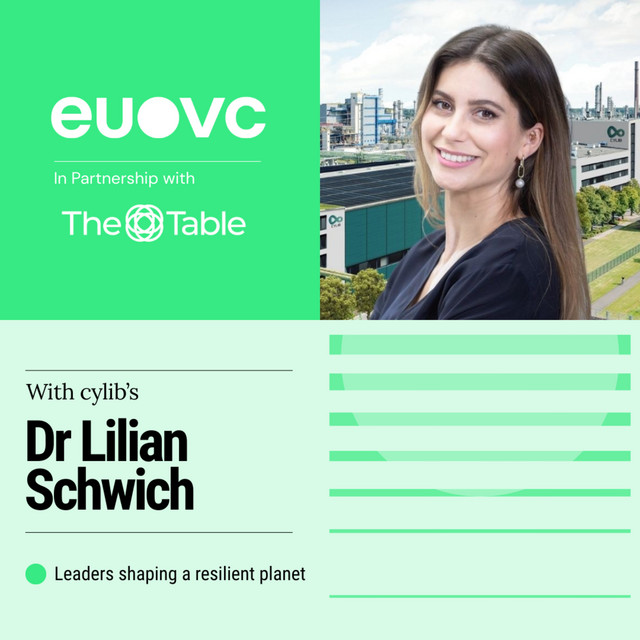
Dr Lilian Schwich, cylib on Europe’s Battery Recycling Gap
Mar 1100:38:04Tap to summarizeEurope’s climate transition is no longer only about emissions. It is increasingly about sovereignty. Industrial capacity, access to critical materials, and resilient supply chains are now national and continental priorities.Dr Lilian Schwich, Co-Founder & Co-CEO cylib, joins Carmel Rafaeli, Founding Partner at The Table, and our very own Andreas Munk Holm, for a deep dive into one of the most overlooked gaps in Europe’s battery value chain: refining metallurgy. This is the step that turns black mass and battery scrap into separated, high-purity critical raw materials that gigafactories can actually use.Lilian explains why Europe remains behind Asia in the battery ecosystem, where the real opportunity still sits, and what it takes to scale an industrial climate company at speed using the right capital stack of equity, grants, and debt alongside corporate partnerships that truly work.The conversation closes on something rarely discussed openly in climate tech: building a company with your spouse while raising a child, and the operating choices and investor culture that make that possible.This episode is part of Leaders Shaping a Resilient Planet, a series spotlighting founders who are rebuilding Europe’s industrial backbone with depth, discipline, and long-term conviction.Capital Allocation Is Still UnevenBefore diving into cylib, Andreas frames the broader backdrop for climate in Europe.Women-founded teams still receive a disproportionately small share of venture capital, with mixed-gender teams also underfunded relative to their contribution and potential. The imbalance is not marginal. It shapes which companies scale and which ecosystems get built.That gap is precisely why Carmel Rafaeli founded The Table: to increase both the speed and size of capital flowing into women-led climate ventures, and to make access to that pipeline dramatically easier for investors and operators.What The Table Is BuildingCarmel describes The Table as a non-commercial co-investing community connecting syndicates, funds, family offices, and corporate venture capital around women-led climate deals from pre-Seed to Series A. The requirement is simple: at least one female founder must hold a meaningful and equitable stake.In parallel, The Table is building a foundation that provides recoverable grants to match investment tickets. This is catalytic capital designed to accelerate underfunded innovation while helping close the gender funding gap.The premise is structural. If capital allocation is uneven, outcomes will be too.What cylib Actually Doescylib is a battery recycling company focused on lithium-ion batteries. Its approach is end-to-end industrial processing across multiple inputs, including end-of-life packs from electric vehicles and trucks as well as production scrap from gigafactories.The output is what Europe urgently needs: high-purity critical raw materials that can be reintegrated into advanced manufacturing, including new batteries.Lilian’s core point is direct. Battery recycling is not a “nice to have.” It is a foundational capability for Europe’s industrial future.The Missing Link in Europe’s Battery Value ChainLilian makes a sharp distinction about Europe’s current position.Capacity is growing in earlier steps such as collection, mechanical preprocessing, and refurbishment. But Europe has a significant gap in refining metallurgy. That means separating lithium from cobalt and producing materials at purity levels high enough for reintegration into cell manufacturing.Without this step, the loop remains open and gigafactories remain dependent on external supply chains.In that sense, battery recycling is not just a climate story. It is a sovereignty story.Is China Too Far Ahead?A common investor sentiment is that batteries in Europe may be strategically important but not investable because Asia, particularly China, is far ahead.Lilian does not deny the lead. She reframes the opportunity.Europe’s industry is electrifying rapidly. Batteries are not only about electric vehicles. They are central to energy storage, data centers including AI infrastructure, and industrial and defence applications.Her thesis is blunt. If Europe fails to build this value chain, European industry loses competitiveness. The cost is systemic.Why Go End-to-End?Carmel raises the question many investors ask. Why build the full stack instead of focusing on one step in the chain?Lilian’s answer centres on speed and positioning. Ecosystem partnerships are being decided now. To be a reliable industrial partner, you must demonstrate a clear path to industrialisation. Scrap volumes are already massive, and Europe lacked players capable of converting that material into usable outputs at scale.There was also a technical conviction. After studying the landscape, cylib believed that resource efficiency and full-material recovery were not being taken seriously enough. Going end-to-end was a strategic necessity.Regulation as TailwindIn discussions about European competitiveness, regulation is often framed as a constraint.Lilian offers a different view. In raw materials and resilience, Europe’s regulatory posture can be an advantage. In an uneven global landscape, policy becomes a lever to invest in sovereignty, build industrial resilience, and accelerate critical infrastructure.This is where climate policy and strategic autonomy converge.The Capital Stack for Industrial ClimateOne of the most practical parts of the episode focuses on funding.Scaling hardware to full industrial operations using only equity does not make sense. cylib’s model relies on three pillars: early equity, strategic public grants, and debt as the asset base and revenue profile mature.Grants in Europe can be meaningful, but they are complex. Timelines are long, and applying to the wrong call can drain momentum. cylib treated grant strategy as a high-intent project, including professional support to ensure the financial structure did not accidentally disqualify them.For founders building industrial climate companies, this is not optional knowledge. It is blueprint-level strategy.Corporate Partnerships Without Getting BurnedCorporate capital is another dimension of the stack.Lilian shares how Porsche began with a technical collaboration and proof of concept focused on environmental footprint improvement and access to raw materials. Over time, that technical credibility evolved into a strategic venture relationship.Her advice to founders is pragmatic. Start with the real pain point. Treat proof of concept as co-development, not quick revenue. Be willing to invest more than planned to make the solution real. Propose ideas that may initially be dismissed. And build patience into the relationship. Corporates may not move fast, but they start early.Fundraising Strategy: Think Two Rounds AheadCarmel asks whether founders should think two or three rounds ahead before entering the market.Lilian’s answer is yes, especially in hardware. The earlier you are precise about the scale you are building toward, the better positioned you will be. Series A in deep tech can be particularly difficult, with high capital needs and pre-profitability dynamics.Relationships with later-stage investors must be built early. Strategy cannot be improvised.The Human Operating SystemThe episode ends on something rarely discussed with this level of openness.Lilian shares what it is like to build a company with her spouse. The advantages include rapid feedback loops, shared context, and high trust. There is no polite internal dance.Then there is parenting. Lilian and Gideon bring their child to work daily and has a dedicated baby room, supported by a team and investors who understand that life and company-building coexist.Carmel notes that the ecosystem is slowly becoming more open and realistic. Andreas adds that supporting founders through real life requires structural support, not just good intentions. If millions can be invested into companies, marginal resources can be invested to ensure founders and families remain stable.Why This Series ExistsLeaders Shaping a Resilient Planet exists to spotlight founders who are rebuilding Europe’s industrial backbone with seriousness and depth.These are not symbolic leaders or narrative-driven profiles. They are operators navigating regulation, industrial scale-up, capital intensity, and geopolitical complexity. They are building infrastructure that determines whether Europe remains competitive in a climate-constrained world.Dr Lilian Schwich is one of those founders.Scaling cylib means mastering metallurgy, regulation, capital strategy, and corporate alignment in parallel. It reflects a broader shift in climate tech toward sovereignty, resilience, and industrial execution.Europe’s climate transition is increasingly a sovereignty transition. ...
Transcribe →
This Week in European Tech with Dan Bowyer, Mads Jensen & Lomax Ward
Mar 901:08:00Tap to summarizeWelcome back to Upside, where Dan Bowyer, Mads Jensen of SuperSeed and Lomax Ward of Outsized Ventures go behind the headlines shaping European venture, geopolitics and technology.This week felt like multiple systems colliding at once.A war threatens one of the most important energy choke points in the world. AI companies are discovering that governments may have the final say over frontier models. Hyperscalers are spending hundreds of billions on infrastructure while investors quietly whisper the word bubble.And in Europe, Germany’s chancellor just said the quiet part out loud:We’re not productive enough.What’s Covered03:00 The Strait of Hormuz: the energy choke point behind the headlines10:30 Warfare innovation: drones and the “fast fashion” defence model18:00 Anthropic vs the Pentagon: who controls frontier AI?27:30 AI layoffs: productivity shift or pandemic hangover?34:30 The $650B AI infrastructure boom44:00 Friedrich Merz and Europe’s productivity reality check52:30 Europe’s fusion moonshotEnergy, War and the Venture Ripple EffectThe Strait of Hormuz rarely makes startup pitch decks. But it probably should.Roughly one fifth of global oil supply moves through that narrow passage, alongside fertilisers, aluminium and other critical commodities. Any disruption feeds directly into energy prices, inflation and capital markets.And capital markets are the oxygen of venture.Higher energy costs → higher inflation → tighter monetary policy → less liquidity in private markets.The uncomfortable truth is that Europe depends heavily on regions where it has almost no geopolitical leverage.And crises like this make that painfully visible.Defence Is Starting to Look Like a Startup IndustryModern warfare is changing faster than defence procurement systems.Cheap attack drones costing tens of thousands are being countered by interceptor drones costing roughly the same — instead of the multi-million-dollar missiles designed for a different era.Ukraine has become the world’s most intense real-time R&D lab for this shift. Rapid iteration. Short supply chains. Software-defined warfare.It’s a defence model that looks far closer to startup speed than legacy military procurement.And that opens the door for venture-backed companies in ways that simply didn’t exist a decade ago.Anthropic vs the PentagonOne of the biggest AI stories this week wasn’t a model launch. It was a refusal.Anthropic declined to allow its models to be used for certain military applications. The response from Washington was immediate: threats to designate the company as a national security supply-chain risk.That label has historically been used against foreign firms. Not American ones.The confrontation surfaces a deeper question that hasn’t fully landed yet:If frontier AI really becomes as powerful as its creators claim, will governments allow private companies to control it?History suggests the answer is probably no.AI Layoffs and the Narrative of ProductivityBlock’s announcement of massive job cuts was framed as an AI productivity revolution. Maybe.But the simpler explanation is that many tech companies hired aggressively during the pandemic and are now correcting.Across the industry, layoffs attributed to AI often look suspiciously like post-Covid normalisation.The productivity shift may be real. But the narrative arrived before the data.The $650 Billion AI Infrastructure BetWhile venture investors debate bubbles, the hyperscalers are behaving as if the opposite is true.Collectively they are expected to spend roughly $650 billion on AI infrastructure this year alone. Data centers. Custom silicon. Power infrastructure. This is one of the largest coordinated capital deployments the technology sector has ever seen.At the same time, venture firms are quietly advising founders to extend runway and prepare for potential shocks.It’s a strange moment where unprecedented investment meets macro uncertainty.Friedrich Merz Says the Quiet Part Out LoudGermany’s chancellor delivered an unusually blunt message this week:Europe simply isn’t productive enough.The statement lands at a moment when defence budgets are rising, geopolitical risks are multiplying, and economic growth across the continent remains stubbornly weak.The issue isn’t a lack of ideas. Europe still produces world-class research and deep technical talent. The problem is execution: slow procurement, fragmented markets and political systems that struggle to move quickly.In a world defined by technological competition, those constraints are becoming harder to ignore.Europe’s Fusion MoonshotNot everything this week was about crisis.Proxima Fusion signed an agreement to build what could become Europe’s first commercial fusion power plant.Fusion remains a long-horizon technology — meaningful grid power may still be decades away. But projects like this signal something important:Europe still has the ability to pursue ambitious scientific and industrial bets.And in a world increasingly shaped by energy and technology sovereignty, those bets matter.Closing ReflectionThis episode carries one underlying theme: The era of comfortable assumptions is ending.Energy security can’t be taken for granted. AI governance is becoming geopolitical.Industrial policy is back and productivity is once again a national priority.Europe still has extraordinary ingredients but ingredients alone don’t win.Execution speed does. This is a public episode. If you would like to discuss this with other subscribers or get access to bonus episodes, visit theemergingvc.substack.com
Transcribe →