
Podcast
The European VC
Hosted by eu🔵vc · EN
The go-to podcast for everything European Venture | Hosted by David Cruz e Silva & Andreas Munk Holm
theemergingvc.substack.com
theemergingvc.substack.com
30episodes
Episodes
Newest firstAll episodes

Ash Pournouri (Belong), Sundar Arvind (Mozart AI) & Daniel Waterhouse (Balderton Capital): AI Music, Control and the Next Creative Era
Mar 600:54:35Tap to summarizeThis special episode is an inside look at AI music from three very different vantage points: the builder, the investor, and the industry insider.Andreas is joined by Sundar Arvind, CEO & Co-Founder at Mozart AI, building a collaborative generative audio workstation; Daniel Waterhouse, General Partner at Balderton Capital; and Ash Pournouri, Co-Founder of Belong, entrepreneur, producer, and former manager of Avicii.Together, they unpack how AI is reshaping music creation, how serious investors underwrite risk in a litigious industry, why “one-click songs” miss the point, and whether AI expands creativity or commoditizes it.If you want a grounded view of where the real fault lines are — rights, training data, authorship, collaboration, and the psychology of creativity — this is it.What’s covered:* 00:40 Mozart AI’s vision: a collaborative generative audio workstation* 05:10 DAWs, EDM, and why tech has always expanded music creation* 06:35 Why “one-prompt songs” optimise for quantity, not craft* 09:20 Underwriting AI music: how VCs think about billion-dollar incumbents* 13:00 Is this a new instrument or a 100x larger market?* 18:45 Are professional artists already using AI tools?* 21:00 Copyright, training data, and legal diligence in AI music* 25:15 Philosophically: what are “rights” when machines learn from music?* 33:40 Diffusion models explained simply: how AI generates sound* 36:30 The return of the band? Multiplayer music creation* 40:00 Ash Pournouri joins: the industry’s instinct is protection* 44:10 “You can’t stop development”: why demand always wins* 48:50 Packaging matters: AI as tool vs AI as replacement* 51:20 Lowering thresholds and democratization across decades* 53:30 Five-year predictions? We’re on the vertical part of the curve* 54:20 The “vibe coding” moment for music🎧 Listen on Apple or Spotify, or queue it for later with chapters ready to go.Show NotesMozart AI’s lens: not a “one-click song,” but a new creative workstationSundar is clear from the start: Mozart AI is not trying to win the viral prompt race.Yes, you can generate a song from a single prompt. But that’s not the point.The real thesis is about preserving and upgrading the creative journey:– reduce engineering friction– increase time spent translating intent into sound– keep the human in the loop– eventually make music creation multiplayerOne-click songs optimize for novelty and volume.Creative tooling optimizes for authorship.And that distinction becomes central to everything that follows.Underwriting AI music: conviction beyond incumbentsDaniel addresses the obvious question: why invest in a space where billion-dollar players already exist?The answer is threefold:– exceptional founder conviction– massive, underappreciated market expansion– fundamentally different product philosophyThe bet isn’t on prompt-based song generation.It’s on collaborative, creative infrastructure.Daniel frames it simply: this isn’t just a new instrument. It could become a new layer of participation in culture.If even a fraction of music listeners become music creators, the market expands dramatically beyond today’s “music industry.”The industry’s first instinct: protect, restrict, controlAsh’s central claim is consistent with history: the music industry is conservative.Not because it’s irrational, but because it is structurally built around:– rights management– administration– legacy power structures– guarding monetizationWhen disruption arrives, especially anything that looks like extracting value from IP, the response tends to be:– pushback– lawsuits– attempts to restrict– attempts to gain ownership/controlAI music is no exception.Ash compares this moment directly to Napster and Spotify: innovation isn’t welcomed. It’s negotiated under heavy guardrails.“You can’t stop development” demand forces the market openAsh takes a market-first stance.If the audience wants something, development will happen.Restriction may slow it, but it won’t stop it.Illegal file-sharing revealed demand → legal streaming models emerged → the industry adapted.The same structural pattern is playing out again.He adds a creator-centric insight:If your audience is already somewhere,you either exist there or you don’t exist to them at all.Packaging is everything: tool vs replacementAsh’s sharpest insight isn’t technical — it’s strategic.Adoption depends on framing.If AI is presented as replacement, the industry treats it as an existential threat.If AI is presented as a tool that increases productivity and creativity, acceptance rises sharply.He uses MTV as analogy:MTV didn’t pitch itself as monetizing artists’ IP.It pitched itself as marketing and reach.The same logic applies here:Tool framing unlocks cooperation.Replacement framing triggers war.Lower thresholds, wider participationSundar and Ash converge on a historical pattern:Music has repeatedly lowered the barrier to entry:– you once needed instruments + studio access– then came digital audio workstations– then Autotune– then bedroom producers– then streaming distributionEach wave triggered panic.Each wave expanded participation.AI is the next threshold-lowering wave.More people can create.Faster.With less overhead.And as Sundar notes, this doesn’t remove skill, it reshapes where skill matters.Inspiration vs infringement: the philosophical fault lineThe debate isn’t only legal. It’s philosophical.Humans learn by listening. Artists borrow, reference, remix, reinterpret. If human inspiration is legal and culturally accepted, where exactly does machine learning cross the line?Sundar argues that when AI is assistive, compensated, and commercially cleared, it functions as a tool, not a thief.Daniel points out the nuance: copyright law was built for a different era, and this category will likely evolve through negotiation, precedent, and global coordination.Would AI have changed historic hits?Andreas poses the uncomfortable question:Would iconic tracks have been AI-produced or just improved?Ash’s answer is psychological, not technical. Creators want authorship. They don’t feel creative if they’re cheating. They want appreciation for their ideas, not for pressing a button.AI could:– speed up execution– unblock ideas– reduce friction– remove adminBut the core creative impulse doesn’t disappear.AI helps you get what’s in your head into the world faster.It doesn’t replace the head.The new skill curve: craft still mattersSundar highlights an emerging gap:There is already a clear difference between:– average prompt-only users– high-skill musicians using AI iterativelyThe best users aren’t just generating.They’re refining, exporting stems, remixing, iterating.AI expands the floor.But the ceiling still belongs to:– taste– craft– repetition– experienceThe future is hard to predict because we’re on the vertical curveWhen asked what music looks like in five years, Ash refuses to speculate. Not out of caution, but because the pace of change is exponential. We are not in linear development.“Ten years happen in one year.”New tools arrive daily. Two years ahead already feels unpredictable.The slope is vertical. The unexpected upside: AI may bring creators back. The episode ends on a surprisingly optimistic note.Ash admits something personal:AI makes him want to create again.Why?Because it strips away:– admin– coordination overhead– frictionIt allows ideas to ship faster without requiring an entire machine around them.In an industry where bureaucracy exhausts artists,that shift is not trivial.One-line takeawayAI won’t kill music.It will lower the threshold to create, expand participation, force the industry to renegotiate control and leave true authorship where it has always belonged: with humans.Thanks for reading EUVC | The European VC! This post is public so feel free to share it. This is a public episode. If you'd like to discuss this with other subscribers or get access to bonus episodes, visit www.eu.vc/subscribe
Transcribe →
Jo Slota-Newson & Marc Sabas, Almanac Ventures: Systemic Deep Tech for Industrial Decarbonisation
Mar 500:16:36Tap to summarizeIndustrial systems are responsible for 75% of global emissions, yet only a quarter of climate-focused VC money flows into them. Not because investors don’t care, but because these systems are hard. They’re interconnected. Capital-intensive. Slow-moving. Technically dense. And deeply under-innovated.Almanac Ventures is built to change that.In this episode of the EUVC Podcast, Andreas Munk Holm sits down with Jo Slota-Newson and Marc Sabas, co-founders of Almanac Ventures — a new European seed and pre-seed deep tech fund laser-focused on unlocking decarbonisation in industrial systems through scientific breakthroughs and commercial discipline.This is a pitch episode — a chance for the EUVC LP & GP community to hear directly what Almanac stands for, how they invest, and why the next decade of industrial innovation will be shaped by specialist deep tech funds with true scientific and financial edge.Here’s what’s covered:* 00:49 | What Almanac Ventures is: a European seed/pre-seed deep-tech fund backing scientific breakthroughs applied to industrial systems* 01:31 | The founding team: Jo’s nanoscience PhD + 18 years commercialising deep tech, Marc’s finance → CVC → impact VC journey (and Jo’s 37km Channel swim)* 03:52 | The complementary edge: technical rigour meets financial/commercial structuring, evidenced through 45 investments and a 2.3× MOIC track record* 05:22 | The industrial innovation gap: 75% of emissions come from industry, yet only ~25% of climate VC targets it (because the systems are hard, complex, and interconnected)* 06:11 | Why industry is ripe for deep-tech disruption: 20th-century inefficiencies, high value pools, and the need for performance + cost + decarb together* 10:17 | “Deep tech works for venture—if you know where to look”: how to identify capex-efficient, scalable industrial technologies vs. science projects that need different capital* 12:25 | Case study: Hot Green — a new compressor architecture enabling industrial heat pumps for up to 200 degrees°C processes (F&B, manufacturing) with electrification upside* 13:49 | Case study: ReClinker — Cambridge spinout recycling cement inside steel arc furnaces, piggybacking heat, removing the CO₂-heavy chemistry step* 15:19 | Do you need to be an operator to invest in deep tech? — why complementary experience (science + venture + corporate + some ops) beats any single “must-have”* 18:35 | Investment strategy — first-check investor at TRL 4–7, pan-Europe, €300k–€1M tickets, aiming for a 25–30 company portfolio with follow-on capacity🎧 Listen on Apple or Spotify, or queue it for later with chapters ready to go.What Almanac Ventures Invests InAlmanac is an early-stage deep tech VC investing across Europe at pre-seed and seed, targeting:* Scientific breakthroughs* Applied to industrial systems* Delivering the three pillars of scalability:* Better performance* Lower cost* Real decarbonisation impactThey focus on the industrial systems that underpin modern life:* How we make things (manufacturing, materials, heat)* How we use resources (chemistry, automation, photonics, electrification)* How we live (infrastructure, clean energy, efficiency technologies)Behind it is a thesis that the biggest opportunities in climate + industrial innovation require both scientific insight and systemic understanding.Who’s Behind AlmanacJo Slota-Newson — Scientist × Commercializer × Investor* PhD in nanoscience from Cambridge* Postdoc in advanced materials in British Columbia* Former CTO & co-founder of solar cell startup PolySolar* 9 years investing in deep tech across the UK* AND the small detail of having swum 37 km across the English Channel. Solo.“When Jo told me that, I thought: that’s my co-founder.” — MarcMarc: Finance × Corporate Venturing × Climate Investor* Started in banking* Moved into corporate innovation at Telefonica* Corporate VC background* Venture investor across three funds, including climate impact* Deep experience helping technical founders shape markets & GTMTogether, they’ve invested in 45+ companies, deployed €47M, and generated a 2.3x cash multiple across realised and unrealised positions.Why Industrial Deep Tech Is Hard And Worth ItJo breaks down the core challenge:“Industrial systems are massively complex. They’re interconnected. You can’t treat them like linear problem-solution sets.”And this is where most generalist VCs fall short. They underweight:* The technical nuance of scientific innovation* The systems thinking needed to see the leverage points* The interdependencies between processes, supply chains, and energy flows* The capital efficiency constraints that make something venture-scalableIndustrial systems run on 20th century technology. They’re inefficient. Dirty. Expensive. And ripe for transformation.But they require investors who can combine:* Technical depth (to assess what’s real vs. hype)* Commercial design (to find capex-light, scalable business models)* Systems mapping (to identify the leverage points with outsized impact)Almanac is built to operate in this overlap.Why Industrial Tech Is Venture-BackableThere’s a myth that “industrial tech is too hard for venture.”Marc disagrees:“We look for credible technical pathways that hit value-creative milestones within 2–5 years.”Jo adds:“Not every scientific breakthrough is venture-backable. But when you find drop-in solutions, capex-light models or early revenue paths — that’s where deep tech works.”This is where Almanac’s scientific and financial complementarity becomes a competitive edge.Portfolio ExamplesTwo investments illustrate their thesis:1. Hot Green: Industrial Heat Pump ElectrificationA UK-based company building high-efficiency heat pumps that operate in the up to 200°C range, unlocking electrification for:* Food & beverage* Chemicals* Light industryTheir breakthrough: A new compressor design as the most expensive part of the heat pump, delivering high performance at low cost.Backed by Almanac alongside Empirical Ventures and Coca-Cola Europacific Partners.Why Almanac invested:* Massive industrial heat decarbonisation need* Drop-in adoption potential* Capex-efficient hardware innovation2. Reclinker: Recycled Cement with a Systems AdvantageA spinout from Cambridge University connecting cement recycling directly with electric arc furnace steelmaking.Why this is deep tech and systems thinking combined:* They piggyback on the heat already present in steel arc furnaces* Turn waste into high-quality recycled clinker* Eliminate the CO₂-intensive chemistry step in traditional cement production* Decarbonize both cement AND steel in one systemIt’s a Nature-published breakthrough with a low-capex deployment model.Exactly the kind of hidden industrial leverage point Almanac exists to find.Do You Need Operator Experience in Deep Tech VC?While Jo believes her experience as a deep tech operator helps her connect with teams, both founders push back on the idea that this is the only profile you need to invest in deep tech.Jo:“Founders appreciate talking to someone who has both a PhD and has been in the trenches. But venture teams need diversity — technical, financial, systemic.”Marc:“Corporate experience matters too. I know how industrial buyers make decisions, how internal champions work, how innovation is adopted. That’s a huge unlock.”In Almanac’s model, technical credibility meets commercial reality.Almanac’s Fund & Strategy* Stage: Pre-seed & Seed* Check size: €300k–€1M* Portfolio: 25–30 companies* Focus: TRL 4–7* Geography: Pan-European* Capital allocation: Meaningful reserves for follow-on* Role: Often the first institutional investor helping founders cross the “first valley of death” (lab → first commercial deployment)Investor TakeawayIf Europe is serious about climate and industrial competitiveness, we need funds that:* understand scientific nuance* can decode industrial systems* know how to design capex-efficient, venture-scale pathways* support technical found...
Transcribe →
Martin Schilling, Deep Tech Momentum: Why Europe’s Deep Tech Problem Isn’t Funding
Mar 400:47:59Tap to summarizeEurope does not have a deep tech problem. It has a commercialisation problem.The last European companies to reach €100B+ market caps were SAP and ASML, both founded 40–50 years ago. If Europe wants a new generation of deep tech champions, venture capital alone won’t get us there. Customers have to step in.In this episode, Andreas Munk Holm is joined by Martin Schilling, former operator, investor, and founder of Deep Tech Momentum, to unpack why Europe excels at funding breakthroughs but consistently fails to industrialise them.This is a conversation about:* why enterprise buyers are the missing link in European deep tech* what corporates are doing wrong (and how they can fix it)* how founders actually win large customers in complex, regulated markets* and why courage — not grants — is Europe’s real constraint🎧 Here’s what’s covered:* 01:15 Martin’s background: from N26 operator to deep tech ecosystem builder* 01:52 What is Deep Tech Momentum (DTM)?* 03:00 Why commercialisation — not capital — is the real bottleneck* 04:19 The age gap: Europe’s top companies vs the US* 06:26 Why US corporates acquire twice as many startups as Europe* 06:54 The uncomfortable truth: Europe funds innovation others industrialise* 08:54 Why corporates (not just VCs) must change behaviour* 10:49 Neo-primes: the new system integrators Europe desperately needs* 12:50 The four things corporates must fix to work with startups* 15:06 Why startup collaboration must be CEO-owned* 17:14 Buyers first: why conferences get this wrong* 19:03 Money + customers: the only two things founders really need* 21:27Trust, speed, and why procurement kills startups* 23:25 Why trust starts inside the corporate, not with founders* 27:03 Selling deep tech to enterprises & governments: what actually works* 32:03 When CVCs help — and when they hurt* 33:08 Enterprise sales mistakes founders keep making* 38:28 Deep tech sales reality: defense, policy, and long cycles* 44:57 Why DTM is not EU-funded — by design* 49:07 The state’s real role: customer, not grant machine* 49:23 Final takeaway: Europe needs courage, not more programs🎧 Listen on Apple or Spotify, or queue it for later with chapters ready to go.✍️ Show NotesEurope’s Deep Tech Bottleneck Isn’t Science — It’s DemandEurope has world-class research in:* quantum* robotics* biotech* advanced materials* space & defenseWhat it lacks is enterprise pull.As Martin puts it:“Europe funds breakthroughs — and others industrialise them.”The result:* European deep tech startups scale slower* exits skew toward US acquirers* capital recycles out of the continentThis isn’t new — but it’s now existential.The Age Problem No One Talks AboutOne of the most striking stats Martin shares:* Top 10 European companies by market cap: average age ~87 years* Top 10 US companies: average age ~30–35 yearsWhy this matters:* younger companies collaborate more easily with startups* older corporates accumulate bureaucracy, risk aversion, and procurement drag* acquisition and partnership muscle atrophies over timeIn the US, Fortune 500 companies acquire 2x more startups than their European counterparts. Silicon Valley giants acquire 10–20x more.That difference alone reshapes ecosystems.Neo-Primes: Europe’s Missing LayerMartin introduces the idea of “neo-primes” — modern system integrators that:* assemble deep tech into deployable products* act as customers, partners, and acquirers* industrialise innovation at speedExamples are emerging in defense and AI — but Europe needs many more.“These companies must become the next SAPs and ASMLs — and pull startups with them.”The Four Corporate Failures Blocking Deep TechMartin outlines four systemic problems corporates must solve:1. CEO OwnershipStartup collaboration cannot live in:* innovation labs* venture units* CTO side projectsIf it doesn’t sit on the CEO agenda, it dies.2. Trust DeficitCorporates fear startups will:* disappear* fail to deliver* collapse mid-procurementFounders fear:* endless pilots* slow decisions* zero P&L ownershipTrust must be rebuilt structurally — not rhetorically.3. Capability GapsMost corporates lack:* fast POC budgets* empowered decision-makers* integration paths into core businessInnovation theatre no longer works.4. P&L ClarityStartups must articulate — clearly:* revenue uplift* cost reduction* competitive advantageIf it doesn’t hit the P&L within 9–12 months, it won’t scale.Buyers First, Not Investors FirstA core insight behind Deep Tech Momentum:“Markets only work if buyers show up first.”Instead of building conferences around:* startups → then VCs → then LPsDTM flips it:* enterprise buyers first* founders follow* investors amplifyThe goal isn’t inspiration — it’s contracts.How Founders Actually Win Enterprise CustomersFrom Martin’s operator playbook:* Track input KPIs, not just revenue* proposals sent per week* outreach → meetings → pilots* Maintain 3–4x pipeline coverage* Design sales cycles around:* regulators* policymakers* primes & system integratorsIn sectors like defense, founders must:* engage political stakeholders* influence capability definitions* sell years before procurement beginsThis isn’t optional — it’s the job.The State’s Real Role: Customer, Not Grant GiverOne of the sharpest critiques in the episode:Europe doesn’t need more grants.It needs state demand.Historical reminder:* The US Department of Defense bought ~70% of early semiconductors* That procurement created entire industriesThe lesson:* less regulation* fewer fragmented programs* more state purchasing power deployed deliberatelyFinal Thought: Europe Needs CourageMartin closes with a challenge:“Trust requires courage.Courage to take risk.Courage to buy early.Courage to move fast.”Europe doesn’t lack talent, capital, or ideas.It lacks confidence and commercial bravery.💡 One-Liner TakeawayEurope doesn’t need more deep tech — it needs customers brave enough to buy it.EUVC | The European VC is a reader-supported publication. To receive new posts and support my work, consider becoming a free or paid subscriber. This is a public episode. If you'd like to discuss this with other subscribers or get access to bonus episodes, visit www.eu.vc/subscribe
Transcribe →
Theo Cesarini, Incard & Thomas Depuydt, Smartfin: Building the Financial OS for Digital-First Companies
Mar 200:21:39Tap to summarizeEurope’s banking stack wasn’t built for high-growth digital operators.Not for D2C brands spending six figures a month on Meta.Not for agencies juggling multiple revenue streams.And not for founders who want real-time clarity without stitching together six tools and burning a weekend on reconciliation.In this episode, Andreas sits down with Theo Cesarini, CEO & co-founder of Incard, and Thomas Depuydt, Managing Partner at Smartfin — lead investor in Incard’s recent £10M Series A — to unpack the thesis behind building a financial operating system for modern entrepreneurs.This is a conversation about why fintech isn’t “done,” why software + banking is the real wedge, and why the next generation of financial tools will look less like a bank… and more like a customizable platform.What’s covered:* 01:56 Theo’s journey: ecom → SaaS → agency → fintech* 03:28 Why Smartfin invested: market, team, and velocity* 04:40 What Series A looks like in fintech today* 05:51 The App Store model: customizing banking by vertical* 07:39 Competition in fintech: why crowded doesn’t mean closed* 10:27 Customer impact: cashback economics + spend insights* 11:41 After the £10M raise: what actually changes* 12:57 The ambition: international from day one* 14:13 Built for Gen Z founders* 16:04 Who Incard is for (and why accounts don’t get frozen)* 17:08 Hiring a “Navy SEAL” fintech team* 18:50 AI-era org design: scaling with fewer, more senior operatorsFrom fragmented finance to orchestration layerTheo didn’t start in fintech.He started in e-commerce, moved into SaaS and media agencies, and ran head-first into the same problem many founders quietly accept: finance is fragmented, slow, and disconnected from how modern digital businesses actually operate.Cash spread across platforms.No real-time bottom line.Manual reconciliation.Banks that look identical whether you’re a freelancer or scaling internationally.Incard’s answer is not “another neobank.”It’s a financial orchestration layer that combines:* banking infrastructure* payments* and an App Store of vertical-specific modulesThe idea is simple but powerful: every business has unique financial workflows — so why does every business get the same banking interface?An e-commerce founder activates different tools than an agency owner.A reseller activates different apps than a SaaS startup.Instead of six disconnected tools, Incard wants to centralize and customize.Why Smartfin leaned inThomas frames the investment decision around three pillars:* Market timing – Traditional banking UX hasn’t caught up with digital-native operators.* Product architecture – The blend of payments + banking + software is defensible.* Team intensity – Velocity and execution quality stood out.Importantly, Smartfin isn’t a “payments-only” investor. Their portfolio leans software-heavy. Incard fit because it behaves like a software platform layered on financial rails — not just a card issuer.On metrics, Thomas emphasizes a principle rather than a checklist:At Series A, the question is whether capital unlocks growth — not whether growth exists.In Incard’s case, licensing milestones (like securing a UK license) and geographic expansion are execution steps. The market demand is there. Capital accelerates the roadmap.“Crowded” markets and why that’s fineFintech is competitive. That’s obvious.But competition doesn’t invalidate opportunity.The nuance is in positioning:* Many neobanks are national.* Many fintech tools handle one slice of the stack.* Few combine banking + payments + vertical software in a cohesive way.Smartfin’s view: multiple large winners can exist in this space — and Incard has a credible path to being one of them.How Incard impacts founders todayTwo practical levers:1️⃣ Cashback economicsIncard shares a significant portion of card revenue back to founders. For ad-heavy businesses spending on Meta, TikTok, or SaaS tools, even a few percentage points matter.Some customers have earned back five-figure sums purely from spend optimization.2️⃣ Spend Insights + consolidationThrough connected accounts and analytics modules, founders can:* analyze spend across banks* detect waste* track financial performance in real timeTheo makes a sharp point:Saving £1 of waste is often more valuable than earning cashback on £1 of spend.Time saved is the hidden upside. Finance becomes less administrative and more strategic.After the £10M Series ATheo describes the post-raise period as “very busy.”But the real shift isn’t visibility — it’s expansion.The roadmap now includes:* US expansion (second half of the year)* Broader European rollout* Expanding the App Store beyond e-commerce* Opening new vertical modulesThe ambition is clear: build an international financial platform, not a single-market neobank.Built for the next generationOne of the more striking parts of the conversation is tone.Theo positions Incard as built for Gen Z entrepreneurs — not just in features, but in voice, speed, and product philosophy.He calls them “the Marty Supreme of banking.”The point isn’t branding for branding’s sake. It’s alignment. The founders building Incard were customers themselves for nearly a decade.That cultural closeness matters.AI-era org design: why small teams winIncard operates with fewer than 30 people — unusually lean for a regulated fintech operating across multiple markets.Theo credits automation and AI tools:* low-priority admin tasks automated* compliance workflows streamlined* focus shifted to senior, autonomous operatorsHiring philosophy:* highly selective* ownership-heavy* minimal politics* creativity over hierarchyThomas jokes after meetings he often thinks:“I’d like to work here.”That intensity is part of the thesis.Who Incard is forIncard is currently focused on:* D2C founders* ad-heavy digital businesses* high-growth operators spending heavily on platforms like Meta and TikTokAnd yes — Theo makes a point of emphasizing something founders deeply care about:They won’t freeze your account when volume spikes.One-line takeawayIncard is betting that the future of fintech isn’t another bank — it’s a customizable financial operating system for digital-native companies, built lean, built international, and built for founders who don’t want finance to slow them down.EUVC | The European VC is a reader-supported publication. To receive new posts and support my work, consider becoming a free or paid subscriber. This is a public episode. If you'd like to discuss this with other subscribers or get access to bonus episodes, visit www.eu.vc/subscribe
Transcribe →
This Week in European Tech with Dan Bowyer, Mads Jensen & Lomax Ward
Mar 200:59:22Tap to summarizeWelcome back to another episode of Upside where Dan Bowyer, Mads Jensen of SuperSeed and Lomax Ward of Outsized Ventures go behind the headlines shaping European tech, capital, and power.This week felt like three worlds colliding:Nvidia posts another monster quarter and the market shrugs.Ukraine, four years into war, is quietly becoming Europe’s most important defence manufacturing and innovation engine. And AI safety is being re-priced in real time by geopolitics, procurement, and competitive pressure.This isn’t just a news cycle. It’s a systems cycle.This is Upside where optimism is earned, not assumed.What’s covered:* 03:30 Nvidia earnings: still beating, still not moving* 09:40 Ukraine four years on: from aid recipient to capability supplier* 17:30 European defence spend: announcements vs real procurement* 23:30 Anthropic bends: safety becomes conditional* 31:00 Distillation at scale: China, IP theft, and national security* 35:00 SaaSpocalypse vs SaaS redemption: systems of record meet systems of action* 40:30 OpenAI + Anthropic margins: the hidden constraint under the hype* 46:00 Chips & quantum: Europe’s deep tech wedge — if capital shows up* 54:30 The “abundant intelligence” thought experiment: disruption and credit risk🎧 If you’re building in defence, AI, chips, or deep tech, this one’s worth listening with chapter markers.Nvidia: Blowout Quarter, Shrugged ReactionNvidia beat expectations again.Data center revenue did what it’s done for over a year now: it carried the whole story.Up 75% year-on-year to $62B, ~91% of total sales.And the market… barely cared.That’s the psychological shift.When you beat numbers 14–15 quarters in a row, the beat becomes baseline. The whisper numbers become the real numbers. And suddenly the question isn’t “how good was this quarter?” but:How long can this stay abnormal?The bull case is still clean:* Forward valuation looks reasonable if growth persists* Next-gen chips (Rubin, successors to Blackwell) drive another efficiency step-change* China is effectively “zeroed” in some models — meaning any rules relief is upside* Networking is still quietly compoundingThe bear case is also obvious now:* Inference is eating the mix, and inference is where differentiation compresses fastest* Custom silicon is creeping up (TPUs, Trainium, internal chips at Meta/Microsoft)* The core question becomes margins: can 70%+ profitability remain a law of nature?Nvidia is still the juggernaut.But the market is starting to look past the shovel seller and ask:who’s paying for all this digging?Ukraine, Four Years In: The European Reset That Doesn’t UnwindFebruary 24 marked four years since Russia’s full-scale invasion.We’ve said it before, but it’s worth stating plainly:Europe’s assumptions died in 2022.Not just about security. About energy. About industry. About tech dependence. About how fast reality can force a rewrite.This week we saw:* European air defence startups raising real rounds (e.g., ~$30M tickets)* European public institutions inching closer to defence as a legitimate asset class* Ukraine’s defence tech fundraising reaching meaningful scale* Rearmament plans moving from rhetoric into budget linesBut the deeper story isn’t fundraising.It’s capability.Ukraine is fighting a 21st-century war defined by:* rapid drone iteration cycles* countermeasures evolving weekly* supply chain improvisation* software-defined battlefields* high-frequency innovation under existential pressureThat produces something Europe hasn’t had in decades:a live, modern defence innovation ecosystem inside the continent.And when the war ends, a large portion of that industrial and technical capacity won’t disappear.It will become exportable.Is the Defence Wave Real or Still Mostly Announcements?The spending shift is real.The secular drivers are real:* Russian threat isn’t going away* the US is explicitly reducing its underwriting posture* autonomous systems + AI are forcing a replatforming of defence procurement* industrial rearmament is becoming politically sellable againBut the bottleneck is predictable:procurement speed and deployment scale.Budgets can double and still fail to translate into startup outcomes if:* contracts stay small* sales cycles remain glacial* governments keep buying legacy* venture-backed defence companies can’t become “suppliers of record”We’re early.The breakout signal won’t be another NATO memo.It’ll be: a wave of large, repeatable multi-year contracts for new entrants.That’s when it becomes a real market.AI Safety: From Moral Stance to Competitive LuxuryThis week, the safety narrative cracked in public.Anthropic updated its responsible scaling posture in a way that boils down to:We won’t slow down if we aren’t clearly ahead.That’s a subtle sentence with an enormous implication:safety becomes conditional on relative advantage.At the same time:* the Pentagon pressures model providers to loosen safeguards* Grok clears pathways for classified intelligence workflows* “all lawful purposes” becomes the default standard* defence use is no longer theoretical—it’s procurement paperworkThis is the pattern:When the environment becomes existential, ethics becomes context-sensitive.Not because everyone turns evil.Because incentives harden.And once you raise at the scale these labs are raising, your room to “take the moral L” narrows sharply.Distillation at Scale: The IP Theft Question That Turns GeopoliticalAnthropic flagged what it described as industrial-scale distillation behavior — tens of thousands of accounts, millions of interactions, linked to Chinese labs.You can debate the specifics. But the macro point is obvious:it’s easier to steal intelligence than to steal goods.And if the West spends tens of billions building frontier models while competitors harvest the outputs cheaply, that’s not just a corporate problem.That’s strategic leakage.At some point, this becomes:* export controls* enforcement measures* diplomatic bargaining chips* and potentially retaliation economicsIP theft is not new.But in the AI era, it scales faster than the institutions designed to police it.SaaSpocalypse vs SaaS RedemptionThe market mood swings are hilarious because they reveal something real:Nobody knows where the value accrues.One week: SaaS is dead.Next week: Agents will supercharge SaaS.The cleanest mental model we discussed:* SaaS = system of record* AI = system of actionMeaning: SaaS doesn’t disappear. It becomes the data layer that AI operates on.Winners likely have:* strong data moats* clean APIs* compliance + governance ownership* pricing that moves away from seats and toward valueBut the “AI saves SaaS” thesis collides with one terrifying reality:the foundation model economics aren’t settled.The Margins Problem Under the HypeOpenAI and Anthropic both missed their own margin forecasts last year.They’re growing insanely fast.But gross margins in the 30–33% zone are not the destination people assumed.And inference is expensive:* free users are costly* scale amplifies costs before efficiencies arrive* “growth first” works until it hits credit and public-market mathThis matters because it feeds upstream.If foundation model profitability stays pushed out, the entire infra stack gets re-rated.That’s why Nvidia can beat and still get punished.The market isn’t doubting Nvidia’s quarter.It’s questioning the sustainability of the ecosystem beneath it.Chips & Quantum: Europe’s Leverage, If It Can Fund ItQuantum in Europe is rising:* stronger funding year-on-year* large public commitments* credible companies across architectures* early government purchase behavior (a rare European strength)But the same European constraint shows up again:scale capital.Europe is excellent at hard science formation.It is weaker at:* funding the long ramp* keeping companies local as they scale* preventing US listing gravity from becoming defaultThe question isn’t “can Europe win a niche?”It’s whether Europe can fix capital allocation plumbing — and move from capability to dominance.</p...
Transcribe →
Max Bray and Juliet Bailin, Kindred Capital VC: LP Conviction, $15B Funds & The Venture Barbell
Feb 2700:37:28Tap to summarizeWhat exactly are LPs buying when they allocate to venture today and do they still believe in it?In this episode, Andreas sits down with Max Bray and Juliet Bailin, both Venture Partners at Kindred Capital VC to unpack what’s really happening beneath the fundraising headlines.Max brings the raw perspective of trying to raise a first-time fund in 2025 with unicorn-founder GPs, strong angel track records, and still struggling to secure second meetings.Juliet brings the sharper counterpoint: LP frustration isn’t always ignorance. Sometimes it’s a rational response to how venture has been practiced, especially around transparency, liquidity discipline, and the unrealistic expectation that a GP should be world-class at everything.This is a conversation about:* LP behavior in uncertain cycles* The myth of the “full-stack investor”* Why solo GP economics are brutal* Whether software still needs venture* And why the fund model is splitting at the extremesNot hot takes. Not doom.Just honest mechanics.What’s covered:* 01:04 Max’s 2025 fundraising reality: even strong “on-paper” stories struggle to get second calls* 03:46 LP rotation: capital moving toward liquidity, security, and shorter-duration bets* 05:08 LP frustration: transparency gaps + liquidity decision-making* 07:09 LPACs as sparring partners, not governance theatre* 09:31 Europe’s structural issue: too few LPs and GPs have lived full cycles* 12:47 The “full-stack investor” myth: investing + fund management + compliance + IR* 14:46 Solo GP economics: why 2/20 breaks at the small end* 26:08 The barbell thesis: platforms on one end, specialists on the other* 27:56 Software defensibility compression in the AI era* 30:24 Will AI decentralize outcomes or centralize them further?* 33:10 The rise of AI roll-ups and alternative capital models* 35:19 The “middle-market squeeze” — real or overhyped?* 39:34 What founders actually care about when choosing a fund🎧 Listen on Apple or Spotify and if you’re raising, investing, or building a fund, this one is worth sitting with.LP Conviction: The Real Problem Isn’t Belief Max’s experience fundraising through 2025 revealed something deeper than “tough market vibes.”Even strong founding teams with unicorn-building operators and meaningful angel track records struggled to get traction.Why?Because in uncertain macro conditions, early-stage venture looks like:* The longest-duration asset* The least liquid* The hardest to underwriteAnd many LPs — especially non-dedicated ones — simply rotate toward liquidity.Public markets. Bonds. Secondaries. Later-stage.Not because venture “doesn’t work.”But because venture tests patience more than most capital pools are structured to tolerate.LP Frustration Is Sometimes RationalJuliet pushes back on the easy narrative that LPs just “don’t get it.”Two recurring pain points:1️⃣ TransparencyLPs often lack real visibility into:* How deals are sourced* Why are specific pricing decisions made* Who is driving conviction internally* How portfolio construction decisions evolve over time2️⃣ Liquidity DisciplineMany GPs are trained to:* Pick founders* Win deals* Support companiesFewer are trained to:* Manage reserves intentionally* Optimize DPI* Think structurally about liquidity windows* Avoid hype-cycle overexposureThat gap creates friction.Not because venture doesn’t work.But because execution quality varies widely.The Full-Stack Investor MythOne of the most important insights in the episode:We expect VCs to be exceptional at:* Founder selection* Portfolio construction* Governance* Fund structuring* Compliance* Tax* Investor relations* Fundraising* Liquidity managementThat’s not a role. That’s multiple careers in one.Juliet’s argument is clear: we’ve overloaded the GP model. The industry may need to evolve toward systems and structures that allow investors to specialize, rather than forcing everyone to be an octopus.Solo GPs: Beautiful Model, Brutal EconomicsThe romantic narrative of solo GPs masks a hard reality:On smaller funds, 2/20 doesn’t work cleanly.After:* Legal costs* Fund admin* Compliance* Travel* Portfolio support* GP commitThere isn’t much left.Many solo GPs are effectively:* Betting on carry* Absorbing personal financial risk* Operating at extreme efficiencySome are adjusting to 2.5% or blended fee models.LPs are often more flexible here than expected.But the structural tension remains.The Barbell: Where Venture Is HeadedMax’s thesis: The industry will likely shrink in number of funds, but not necessarily in AUM.Why? Because capital is concentrating into:Large Platforms* Brand dominance* Check size flexibility* Global distribution* Faster deployment* Lower price sensitivityFocused Specialists* Domain depth* Taste* Concentrated portfolios* Clear positioning* High-conviction capitalAnd the middle? The middle doesn’t die, but it must justify itself.Founders are asking:“Why you?”Not “nice deck.”Not “good vibes.”But a clear, credible reason why working with this fund increases their probability of success.Does Software Still Need Venture?AI is compressing the cost of building software.If defensibility weakens, do we see:* More seed-strapped companies?* More smaller outcomes?* Fewer unicorn trajectories?Or…Does AI actually accelerate centralization?Andreas argues the latter may be more plausible.Even if building is easier:* Distribution still matters* Network effects still matter* Category leadership still mattersThe mechanism may change. The power law might not.The Quiet Shift: Alternative Capital ModelsAnother emerging thread:If venture doesn’t perfectly fit every opportunity, we’ll see:* AI roll-ups* Search-fund-style strategies* Blended debt-equity structures* Capital models tailored to real-world assetsVenture was applied broadly over the last decade.The next decade may be about matching capital structures more precisely to business reality.Final ThoughtVenture isn’t collapsing, but tolerance for fuzzy positioning is.* LPs want clarity on outcomes.* Founders want probability of success.* The middle must justify itself.* And the industry is being forced to mature.This isn’t doom. It’s selection.EUVC | The European VC is a reader-supported publication. To receive new posts and support my work, consider becoming a free or paid subscriber. This is a public episode. If you'd like to discuss this with other subscribers or get access to bonus episodes, visit www.eu.vc/subscribe
Transcribe →
Sahil Patwa, Tenet: AI Rollups, Empathy-Driven Transformation, and Why Buying SMEs May Beat Selling SaaS
Feb 2700:18:40Tap to summarizeAI can already automate close to 50% of knowledge work. Sahil Patwa believes the real opportunity isn’t building another SaaS tool. It’s acquiring entire industries and transforming them from within.In this episode, Andreas sits down with Sahil Patwa, General Partner at Tenet — Europe’s first inception-stage investment firm dedicated to AI-powered rollups. Tenet just launched and has already made its first investment in the German tax advisory space.This conversation dives into the difference between search funds and AI rollups, what makes the model venture-backable, the importance of founder empathy, and why some SMEs might go from 10% margins to 40% margins faster than we think.The thesis: AI-powered rollupsTenet calls its strategy AI Pro — AI-powered rollups.The idea is simple:* AI can already automate ~50% of knowledge work* Many white-collar service businesses are low-margin and slow-scaling* Instead of selling them software, acquire them* Build an AI-native operating layer* Transform margins and capacity* Scale through M&A and organic growthSahil describes it as moving from:“Sleepy service businesses to companies that operate and scale at software-like margins and software-like pace.”This is not incremental digitization.It’s structural transformation.Why not just sell SaaS?The common approach is obvious: build AI software and sell it to fragmented SMEs.But Sahil argues that’s often the wrong model.Many SMEs aren’t under-digitized because they lack tools.They’re under-digitized because implementation and behavior change are hard.Traditional SaaS requires:* Changing workflows* Structuring messy data* Re-training teams* Adopting new habitsAI changes that.If product design is done right, the system adapts to how people already work — instead of forcing them to adapt to software.In Sahil’s words:“In the AI world, things can happen based on how you’ve always done them — just better.”Why this isn’t a search fundThe obvious comparison is ETA (Entrepreneurship Through Acquisition) and search funds.Buy a business.Improve operations.Sell at a higher EBITDA multiple.Tenet’s model looks similar on the surface — but the underwriting logic is different.Search funds optimize.AI rollups transform.Capital isn’t just used to buy one business and layer on debt.It’s used to:* Build a proprietary AI platform* Automate core COGS (often 50–60%)* Improve margins dramatically* Create industry-level competitive advantagesSahil explains:“We’re not underwriting buying a business and running it slightly better. We’re underwriting fundamentally transforming industries using AI.”That requires venture-style capital, flexibility, and product building — not just financial engineering.The founder profile: empathy + AI-native thinkingTenet typically writes €5M first checks at inception.What are they looking for?1. Empathy-driven operatorsChange management is the hardest part.Integrating SMEs, modernizing workflows, and aligning teams requires founders who respect what already exists.Sahil spent years in digital transformation and emphasizes:Empathy isn’t optional.It’s the core variable.2. AI-native buildersNot just ChatGPT power users.They want:* Strong AI application engineers* Builders who know how to combine LLM “Lego blocks”* People who can drive 4–5x productivity internally3. M&A capabilityCorporate finance and integration experience are a plus.Some founders learn it.Some bring it.But the skill must exist in the team.Case study: Tax Force (German tax advisory)Tenet’s first investment is Tax Force, operating in the German tax advisory market.Why tax?* 7–8 years to qualify as a tax advisor in Germany* Severe talent shortage* Firms actively refusing new business* 50–70% of current work automatable todayAdministrative burden dominates the profession.If AI can automate even half of that:* Advisors focus on relationships and judgment* Capacity expands 3–4x* Organic growth unlocks instantlyThis isn’t theoretical.Demand already exists.Capacity is the constraint.Integration: the uncomfortable realityM&A is notoriously hard.SME integration is even harder.Sahil’s take is pragmatic:The key isn’t force.It’s alignment.Founders must:* Respect legacy operators* Understand incentives* Bring teams along* Use product design to reduce frictionAI works best when it enhances existing behavior rather than replacing identity.The real moat isn’t just code.It’s trust.A bigger shift: services > SaaS?One of the most interesting ideas from the episode:In many verticals, it may now be better to sell AI-powered services than AI software.Instead of:Selling tools to operators…The operator becomes the platform.Margins move from:5–10% → 30–40%And scale begins to look more like software than traditional services.If that model proves repeatable, it creates a new category sitting between PE and venture.What Tenet wantsIf you’re:* Building an AI rollup* Considering transforming a service vertical* Deeply AI-native and operationally experiencedTenet wants to talk.They believe AI rollups could define Europe’s next decade.And they’re underwriting that belief from day one.One-line takeawayAI rollups aren’t about buying sleepy businesses — they’re about turning fragmented service industries into AI-native platforms with venture-scale upside.EUVC | The European VC is a reader-supported publication. To receive new posts and support my work, consider becoming a free or paid subscriber. This is a public episode. If you'd like to discuss this with other subscribers or get access to bonus episodes, visit www.eu.vc/subscribe
Transcribe →
Pedro Coelho, Biorce: From Personal Loss to a $52M Series A and the One-Click Clinical Trial Vision
Feb 2600:19:05Tap to summarizeClinical trials take, on average, 12 years and billions in capital before a drug reaches a pharmacy shelf. Pedro Coelho thinks that the timeline can be cut in half.In this episode, our very own Andreas talks with Pedro Coelho, founder & CEO of Biorce, fresh off closing a $52M Series A led by DST, with long-time backer Norrsken continuing its support. Pedro is Portuguese, built Biorce out of Barcelona, and is now relocating to the US for the company’s next chapter.This conversation goes from deeply personal origins to AI-driven operating systems, hiring in the age of automation, and why conviction often means running straight at the wall instead of mapping it first.What’s covered:* 00:47 The personal story behind Biorce* 02:07 What Biorce actually does* 03:18 AI in clinical trials: from 12 years to 6* 04:40 The “one-click clinical trial” vision* 06:04 Would Pedro do it again? (serial founder reflections)* 08:13 Building pre-AI vs building in the AI era* 09:08 Build vs buy: why Biorce built its own CRM* 11:46 Hiring in fast-changing phases* 13:28 Conviction: gut, data, and running through walls* 16:03 Moving to Austin: scaling R&D and building a second A-team* 16:41 TAM vs TAP: what investors often misunderstand* 17:53 Barcelona ecosystem misconceptions* 18:15 What’s next for BiorceThe origin: when a clinical trial becomes personalBiorce wasn’t born out of a whiteboard session.It started with Pedro’s father being diagnosed with melanoma.A clinical trial extended his father’s life by ten months. It also exposed Pedro to how complex, slow, and fragmented the clinical trial ecosystem is. After his father passed away, Pedro sold his previous company and turned fully toward fixing the system.The answer, in his view, wasn’t incremental improvement. It was technology and specifically AI.What Bios does: compressing the drug development timelineBefore a drug reaches a pharmacy, it typically spends 12 years in development and testing.Biorce is building what Pedro describes as a clinical trial operating system that allows pharmaceutical and biotech companies to:* Design trials* Generate protocols* Select sites and endpoints* Execute trial workflowsAll in one integrated AI-driven system.One example: trial protocols with 100+ page documents that used to take three months to write can now be generated in 90 seconds at ~86% accuracy.The broader goal is bold:* Reduce development timelines from 12 to 6 years* Cut development costs by roughly 50%And eventually reach what Pedro calls the vision:The one-click clinical trial.They’re not there yet. Accuracy and consistency still need to reach near perfection. But that’s the trajectory.Building before AI vs building with AIPedro has built companies both pre-AI and now squarely inside the AI wave.His view is clear: this is the best moment in history to build if you’re a doer.Instead of relying on off-the-shelf SaaS tools, Biorce builds internal systems from scratch. Pedro even built the company’s first CRM himself over a Christmas break.The reasoning wasn’t ego. It was alignment.Their sales playbook was so specific that traditional CRM systems didn’t reflect how they operated. So they built one that mirrored their internal logic.This is the shift AI enables:* Faster internal tooling* Custom systems over generic stacks* Senior operators who automate low-leverage workFor Pedro, AI doesn’t just change the product. It changes team composition.Hiring in phases: excellence and velocityPedro is blunt about something many founders avoid:Different phases require different people.A strong founder must be excellent at hiring and equally disciplined at recognizing when someone no longer fits the company’s stage.In Biorce’s case:* The team is lean* Expectations are high* Operators are hired as “mini CEOs”* Ownership is extremeHe frequently changes course as new data emerges. Decisions are dynamic and the team has to be comfortable with that.The standard isn’t comfort. It’s velocity.Conviction: data, gut, and running through wallsHow do you build conviction at this scale?Pedro describes a blend:* Data as foundation* Gut as accelerator* Speed as defaultHe uses a metaphor:They were a bullet train moving at 1,000 miles per hour. Walls would appear. Either they’d break through or they’d adjust and move again. But they wouldn’t slow down preemptively to study every possible obstacle.Conviction compounds through motion.Moving to Austin: global ambitionsBiorce is opening a new office in Austin, growing toward 100 people, and doubling down on R&D.The move is about:* Access to talent* AI research velocity* Building a second A-teamPedro sees it not as abandoning Europe but as expanding the company’s international center of gravity.TAM vs TAP: what investors often missPedro highlights a subtle but important distinction he believes many investors misunderstand:TAM (Total Addressable Market)vsTAP (Total Addressable Platform potential)Markets look one way on paper.Platforms that reshape ecosystems expand the pie.He references Uber as an example — few predicted its scale purely from TAM analysis.In Biorce’s case, the ambition is not to serve an existing clinical trials market more efficiently. It’s to redefine how that ecosystem operates.Barcelona misconceptionsOne final note Pedro addresses is the stereotype.Barcelona is sometimes perceived as slow-paced or relaxed.Biorce ships at extreme speed.They release new product capabilities monthly.Their execution rhythm competes globally.For Pedro, Europe’s biggest challenge isn’t talent or ambition but perception.What’s nextThe $52M Series A isn’t the finish line. It’s the beginning.Immediate priorities:* Hiring across engineering, product, and operator roles* Expanding US operations* Accelerating AI research* Continuing to compress clinical trial timelinesThe long-term ambition remains unchanged:Transform clinical trials so fundamentally that the ecosystem never looks the same again.One-line takeawayBiorce isn’t just using AI to optimize clinical trials — it’s trying to rebuild the entire development lifecycle, with the conviction of a founder who has lived through why it matters.EUVC | The European VC is a reader-supported publication. To receive new posts and support my work, consider becoming a free or paid subscriber. This is a public episode. If you'd like to discuss this with other subscribers or get access to bonus episodes, visit www.eu.vc/subscribe
Transcribe →
Lubomila Jordanova, Plan A: Climate Isn’t “Over”
Feb 2500:35:17Tap to summarizeClimate isn’t “over.” But building in climate has entered a new chapter, defined by shifting regulation, politicized narratives, buyer confusion, and a market that funded dozens of overlapping platforms.In this episode, Andreas and co-host Carmel Rafaeli, Founding Partner at The Table, sit down with Lubomila Jordanova, Co-founder & CEO of Plan A, just weeks after Plan Ajoined forces with Diginex, the NASDAQ-listed sustainability technology company, at the end of 2025.The conversation is part of Leaders Shaping a Resilient Planet, a series spotlighting exceptional founders in climate tech who happen to be women. The focus is not identity as a theme, but execution as a discipline. These are operators building in some of the most complex and capital-intensive parts of the real economy.This is not an acquisition recap. It is a clear-eyed discussion about what it takes to build and responsibly exit a climate tech company in a market that is maturing quickly.What’s covered:* 00:52 The Table: co-investing community + the Foundation’s recoverable grants model* 02:05 Introducing Lubomila Jordanova and Plan A* 02:45 The acquisition: why Plan A chose to lead consolidation* 04:35 Fundraising logic → acquisition logic: what changed* 06:40 Founder outcome vs VC outcome: how alignment works in an exit* 11:30 “The truth is where the real economy sits”: what carbon software actually sells* 13:30 The uncomfortable line: “glorified consulting with a digital angle”* 15:05 What VC portfolios get wrong in climate: return distribution, capital stack, secondaries* 16:55 Why “climate” can’t be one bucket: hardware vs SaaS vs reporting* 20:00 Managing investor perception: visibility, bias, and boardroom baggage* 23:15 The broader financial pyramid: VC vs public markets vs real-economy signals* 27:35 Post-exit reality: why a public-company KPI lens changes the conversation* 31:10 Three founder learnings (humility, ecosystem, real-world problems)* 33:55 A rare founder truth: pregnancy during the exit + building with “more hats than one”🎧 Listen on Apple or Spotify, with chapters ready to explore, and stay tuned for future episodes of Leaders Shaping a Resilient Planet as we continue conversations with the builders shaping a more resilient world.Show NotesChoosing Structure Over MomentumLubomila describes the decision to join forces with Diginex as strategic rather than reactive. The first wave of climate software produced fragmentation across carbon accounting and ESG tooling. Regulation evolved unevenly across markets. Enterprise buyers demanded deeper integration and longer-term commitments. Cap tables became more crowded as companies layered in new rounds of capital.Eventually, the core question shifts. It is no longer simply whether another round can be raised, but whether the existing structure is the right one for long-term growth and mission durability.That shift from fundraising logic to structural logic is central to the conversation. With more than 20 shareholders and growing operational complexity, Plan A had to balance investor expectations with the realities of scaling inside global enterprises. The tension many founders quietly navigate becomes explicit here: an exit does not only have to satisfy venture return narratives. It has to serve the company, the team, customers, and the next chapter of execution.In climate, consolidation is not necessarily a retreat. Often, it is a sign of category maturity.The Measurement GapA defining thread of the discussion is how climate companies are evaluated.Carbon accounting and decarbonization platforms are frequently judged through a pure SaaS lens. Yet these businesses sit inside supply chains, logistics systems, procurement processes, and multi-year transformation roadmaps. They influence packaging decisions, supplier relationships, and capital allocation across enterprises. Their impact reaches into the operational core of the companies they serve.When standard SaaS templates are applied to real-economy transformation, nuance gets lost. Gross margin expectations, sales cycle assumptions, and scaling models can drift away from the structural realities of the domain.Lubomila argues that climate cannot be treated as a single venture bucket. Hardware companies, ESG reporting platforms, carbon removal infrastructure, workflow software, and deep industrial decarbonization businesses each operate under different economic and technical constraints. They require different capital stacks, time horizons, and definitions of success. Portfolio construction often fails to reflect that diversity, which in turn shapes misaligned expectations downstream.Capital Shapes What Gets BuiltCarmel broadens the discussion by outlining what The Table is building: a global co-investing community backing women-led climate ventures from pre-Seed to Series A, alongside a Foundation that deploys recoverable grants as catalytic capital.The premise is straightforward. Capital structures influence behavior. If funding mechanisms are not designed for the realities of climate businesses, friction will surface later in the form of strained governance, unrealistic timelines, or forced strategic pivots.Climate innovation does not only require capital. It requires capital that understands regulatory cycles, enterprise adoption curves, and system-level complexity.Perception and Narrative CyclesThe episode also explores the human side of scaling.Visibility can be misinterpreted. Board members bring expectations shaped by other companies and other cycles. Venture capital operates within a broader financial ecosystem where public markets, private equity, and macroeconomic signals ultimately shape what is perceived as durable or bankable.Narratives can shift quickly. The real economy does not.Founders operate at the intersection of those shifting narratives and slower-moving operational realities. Navigating that tension is part of the job.Founder RealitiesThe conversation closes with grounded reflections rather than celebratory headlines.Humility matters in a market where someone will always be better funded or better connected. Ecosystem matters more than ego, particularly in a sector that depends on collaboration across supply chains and institutions. And the real economy contains more opportunity than venture mythology sometimes acknowledges. Building something consequential does not require speculative moonshots. It requires disciplined execution on meaningful problems.In a moment rarely discussed so plainly, Lubomila also shares that she was pregnant during the exit and welcomed her baby seven months ago. The point is not performative. It is a reminder that founders often carry multiple roles simultaneously and that sustainable performance depends on support systems rather than personal mythology.Why This Series ExistsLeaders Shaping a Resilient Planet exists to spotlight a particular kind of founder: those rebuilding parts of the real economy with discipline, technical depth, and long-term conviction. These are not symbolic leaders or trend-driven stories, but operators working through regulatory complexity, enterprise sales cycles, capital constraints, and system-level change.Lubomila Jordanova is one of those founders.Building Plan A required more than vision. It meant navigating evolving regulation, earning enterprise trust, maintaining technical rigor, managing a complex shareholder base, and operating under public scrutiny. The decision to join forces with Diginex marks an important milestone for the company, but it also reflects something broader about where climate tech is headed.The sector is entering a new phase defined by consolidation, sharper capital discipline, deeper integration into enterprise systems, and more realistic expectations about how value is created. The hype cycle is receding, and in its place is a more grounded era of execution.Climate tech needs founders who understand both mission and mechanics, who can translate urgency into durable systems and real-world outcomes. Lubomila is one of them.EUVC | The European VC is a reader-supported publication. To receive new posts and support my work, consider becoming a free or paid subscriber. This is a public episode. If you'd like to discuss this with other subscribers or get access to bonus episodes, visit www.eu.vc/subscribe
Transcribe →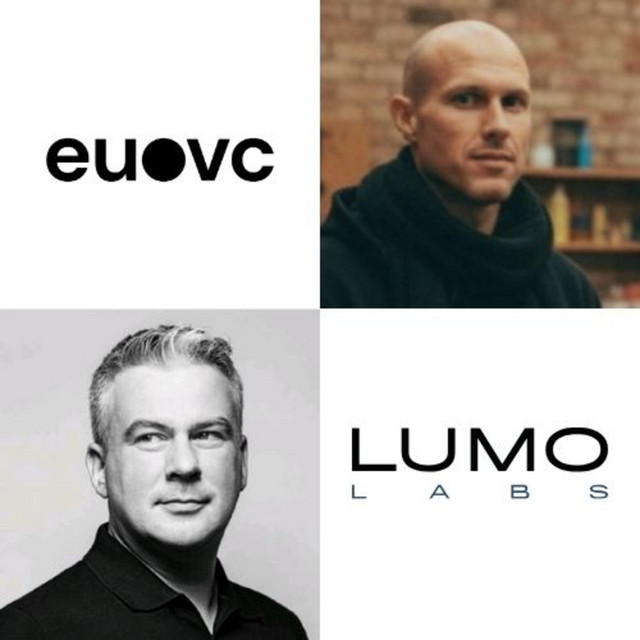
Andy Lurling, Lumo Labs: Smart Capital from Eindhoven and Investing in AI for Health
Feb 2400:21:34Tap to summarizeIn a market where “AI fund” can mean almost anything, Lumo Labs is unusually specific: digital deep tech, deployed early, and anchored in one of Europe’s densest innovation clusters—Eindhoven, home of Philips’ legacy and the High Tech Campus (“smartest square kilometer” energy).In this EUVC pitch episode, Andreas sits down with Andy Lurling, founder & GP of Lumo Labs, to unpack how an entrepreneur-turned-investor built a fund that’s deliberately more than money: a structured support program, deep technical selection, and a thesis shaped by real-world constraints, health systems under pressure, and cities as the source of most emissions and pollution.What’s covered: * 00:59 Why “Labs” and why Eindhoven: origin story + Philips legacy* 02:31 Andy’s founder journey: EyeOpener, ESA as first investor, and the exit* 06:15 From angel tickets to a fund: two cornerstone LPs pull them into fund building* 08:26 Fund I recap: €20m, 23 pre-seed/seed investments* 08:58 Fund II status: just over €40m raised, targeting €100m final size* 10:34 The actual thesis: AI + digital deep tech (security, IoT, AR)* 13:12 SDG focus: health, education, sustainable cities + climate action (urban)* 15:31 Why these sectors: prevention over curing, and cities as the “source problem”* 19:22 Where they invest: Netherlands/Belgium/Germany core; Spain/Portugal + Nordics via scouts* 20:30 “Smart capital” in practice: leadership, market fit, storytelling, follow-on readiness* 23:30 Track record snapshot: 30 companies; 3 dead; 9 (soon 11) moving into scale-up territory🎧 Listen on Apple or Spotify, or queue it for later with chapters ready to go.Show NotesWhy “Lumo Labs”“Lumo” means light/enlightened (Esperanto + Latin), a nod to Eindhoven and Philips’ roots in lightbulbs. “Labs” is literal: Lumo started in former Philips lab buildings, and their sweet spot is very early-stage tech transfer where a lot of real innovation still begins.The founder-to-fund arcAndy built EyeOpener, developing algorithms that combined satellite navigation and gyroscope data to accurately track high-speed objects—first backed by the European Space Agency, with applications across motorsports and safety. The exit was undisclosed, but the point he emphasizes is timing: building through the financial crisis shaped how he thinks about resilience and capital.From there, he and his co-founder made five angel investments—then got pulled into fund formation by two powerful local anchors:* the owner of High Tech Campus Eindhoven* the Brabant Regional Development AgencyInstead of “deciding to start a fund,” the fund emerged because the ecosystem basically demanded it.Fund strategy: digital deep tech, not hardware-heavyLumo is software-first. They can look at companies with a hardware component, but they avoid hardware development and inventory—preferring teams that build hardware-agnostic platforms so they can scale across brands and ecosystems.Core tech buckets:* AI-first (the base layer across everything)* cryptology / digital security* IoT infrastructure layers* AR (“display of the future”)Usually it’s “AI + one” of the above.SDGs as a filter, then focus within the focusLumo’s impact framework started early (2016/2017), using the UN SDGs to force focus. Over time, the firm centered on:* Good health & wellbeing (largest)* Quality education (smallest)* Sustainable cities & communities* Plus climate action, framed as climate tech for the urbanized environmentThe important nuance: they avoid being “climate generalists.” They want the problems where people live and work—grid optimization, circular buildings, mobility, water management, citizen participation—rather than, say, an ocean-only thesis.The wedge in health: cure → preventionTheir health thesis is blunt: costs are rising, workers are scarce, so the system must shift from curing to prevention and early diagnosis. Their example is practical: earlier detection reduces intensity, recovery time, and cost burden across the system.“Smart capital” = a repeatable support systemLumo positions itself as more than cheques. They’re not a venture builder or accelerator, but they run a structured program that acts like a “main menu” across four areas:* Excellent leadership (founder dynamics, gaps, team building)* Product-market fit (including pilot customer access via network)* Marketing + storytelling (especially for engineering-heavy teams)* Follow-on readiness (preparing founders for the very different Series A investor landscape)They also do a monthly “five-minute digital check-in” to systematize support with ongoing data signals, rather than pure intuition.Fund II snapshot* Fund I: €20m, 23 investments, very early* Fund II: €40m+ raised so far, targeting €100m* Geography focus: NL/BE/DE core; Spain/Portugal + Nordics via local presence* Portfolio: 30 companies total, 3 didn’t make it; 9 (soon 11) from Fund I progressing toward “scale-up” stageOne-line takeawayLumo is building a deep-tech, AI-first early-stage fund that aims to win on selection and structured founder support, rooted in Eindhoven’s industrial R&D heritage and focused on the biggest system constraints: health capacity and urban sustainability.Thanks for reading EUVC | The European VC! This post is public, so feel free to share it. This is a public episode. If you'd like to discuss this with other subscribers or get access to bonus episodes, visit www.eu.vc/subscribe
Transcribe →