Podcast
The Food Chain
Hosted by BBC World Service · EN
The Food Chain examines the business, science and cultural significance of food, and what it takes to put food on your plate.
43episodes
Episodes
Newest firstAll episodes

Should we all eat the Mediterranean way?
Jan 1500:26:27Tap to summarizeThe Mediterranean diet is rich in vegetables, pulses and olive oil and traditionally includes small amounts of fish and very little red meat. Thousands of studies back its health benefits. In fact, it's considered to be one of the most widely researched diets in the world. But why has this way of eating come to prominence over others? Marta Guasch-Ferre from the University of Copenhagen, Denmark explains what the Mediterranean diet is and how her Spanish roots have informed her work. Professor Sarah Tracy from the University of Oklahoma tells the story of the diet's roots, popularised by American scientist Ancel Keys in the 1950's. And Ruth asks, if this way of eating isn't familiar in your culture, can you still make use of the Mediterranean diet's principles to improve your health? Singapore based cardiologist Professor Huang Zijuan has been looking at the science behind Asian inspired food swaps that could offer the same health benefits. Plus public health expert Professor Pekka Puska explains how he used the work of Ancel Keys in the 1970's to help transform the life expectancy of Finnish men. He co-led the now world famous North Karelia project, after Keys' research revealed how the region in eastern Finland had the highest rates of blood cholesterol in the world. Produced by Lexy O’Connor The sound engineer was Andrew Mills. If you would like to get in touch with the show, please email: thefoodchain@bbc.co.uk Image: A family is eating together. The wooden table is covered in brightly coloured plates of salads, pastas and olives. Hands reach over to take some of the food. (Credit: Getty/Compassionate Eye Foundation/Natasha Alipour Faridani)
Transcribe →Tweaks for 2026: How to eat better
Jan 800:26:29Tap to summarizeRuth Alexander gathers the most useful, actionable nutrition advice from our episodes of 2025 to help set you up for 2026. Things like how to nourish your brain, keep an eye on portion sizes, and why it’s important to focus on fibre. Experts from around the world tell us about the small tweaks that can make a real difference to how we eat, think, and feel.Producer: Izzy Greenfield Sound mixing: Hal Haines(Photo: a person looks at a variety of foods, Credit: Getty Images)
Transcribe →The power of the review
Mar 27, 202500:26:28Tap to summarizeWhat’s the purpose of restaurant reviews? The Food Chain looks at who is qualified to write a review, how helpful they are today and the impact they can have on a business. In this programme Ruth Alexander speaks to Giles Coren, restaurant critic for The Times newspaper in the UK, Opeyemi Famakin, online reviewer and influencer in Nigeria, and Ana Roš, chef and owner of the Hiša Franko restaurant in Slovenia which holds three Michelin stars. If you would like to get in touch with the show, please email: thefoodchain@bbc.co.uk Presenter by Ruth Alexander. Produced by Beatrice Pickup and Bisi Adebayo. (Image: from left to right, Giles Coren, Opeyemi Famakin and Ana Roš. Credits: BBC, Opeyemi Famakin and Suzan Gabrijan)
Transcribe →Why is saffron so expensive?
Mar 20, 202500:26:29Tap to summarizeSaffron - the world's most expensive spice - is treasured for its rich aroma, vibrant colour, and unique flavour. But why does it command such a high price?In this episode of The Food Chain, Ruth Alexander uncovers the story of saffron from crocus flower to kitchen, finds out about the labour-intensive harvesting process, and learns about the innovations in lab-grown saffron that could change the industry forever.Iranian chef and author Najmieh Batmanglij shares saffron's culinary and cultural significance. Saffron trader Mehrdad Rowhani offers insight into the complex global market and the problem of fraud, and agricultural scientist Dr Ardalan Ghilavizadeh tells us about why more countries are investing in lab-grown saffron, taking the harvest from traditional fields and into indoor units.To get in touch with the show, please email: thefoodchain@bbc.co.ukProducer: Izzy Greenfield Reporting: Irshad Hussain
Transcribe →The art of food branding
Mar 13, 202500:26:28Tap to summarizeWhy do brands have such power over us? Ruth Alexander talks to the designers influencing your decisions about what and where you eat. Renowned graphic designer Paula Scher shares her insights on what it takes to create a visual identity that stands the test of time, including her work on the US fast-food restaurant Shake Shack. And Arjen Klinkenberg, the creative mind behind Dutch company Tony’s Chocolonely, tells us how he designed its distinctive chocolate bar wrapper in just 10 minutes. Together they discuss what makes a design classic a classic and reveal the secret to building a brand that endures (hint: don’t tweak). To get in touch with the show, please email: thefoodchain@bbc.co.uk Producers: Izzy Greenfield and Sam Clack.
Transcribe →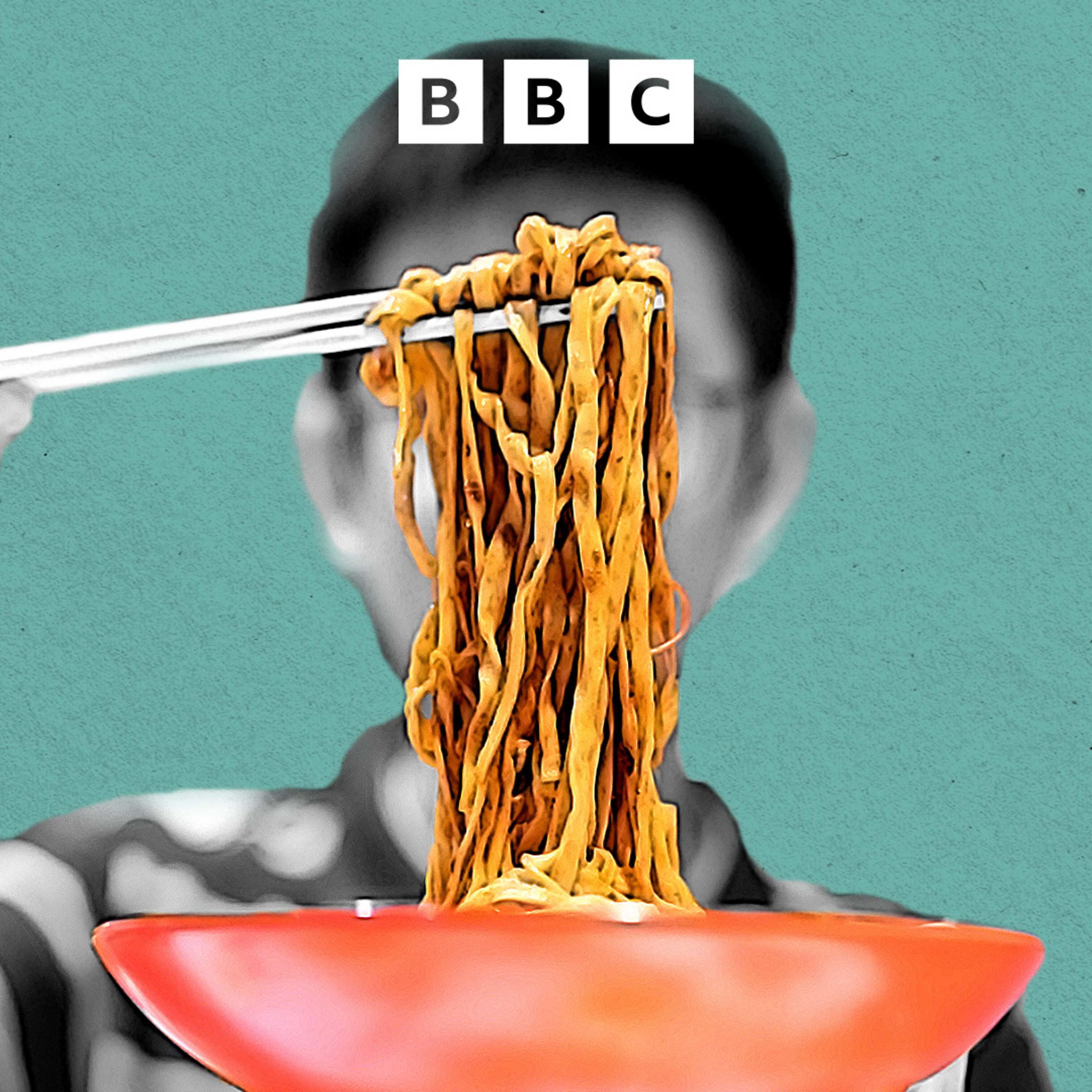
Why we love noodles
Mar 6, 202500:26:29Tap to summarizeWhat makes a noodle? Is it the shape? The ingredients? In this programme Devina Gupta explores the history of noodles, tracing their origin back to Third-Century China. She finds out how they came to be eaten in so many different ways in so many different places. Devina enjoys a Tibetan-influenced noodle dish in Delhi’s Monastery Market, a long-time home of Tibetan restaurants and businesses in India. She hears how noodles were one of many foods to travel the silk trading routes in the region. Jen Lin-Liu, author of ‘On the Noodle Road: From Beijing to Rome with Love and Pasta’, tells Devina about the earliest mention of noodles in historical documents. Frank Striegl in Tokyo, who runs the blog ‘5AM Ramen’ picks up the story, explaining how noodles travelled from China to Japan and became ramen – one of Japan’s iconic dishes today. In 1958 dried instant noodles were invented in Japan. Devina speaks to Varun Oberoi of Nissin India, to hear about the opportunities and challenges facing the instant noodle company today. Presented by Devina Gupta. Produced by Beatrice Pickup. (Image: noodles dangling from chopsticks above a bowl. Credit: Getty Images/ BBC)
Transcribe →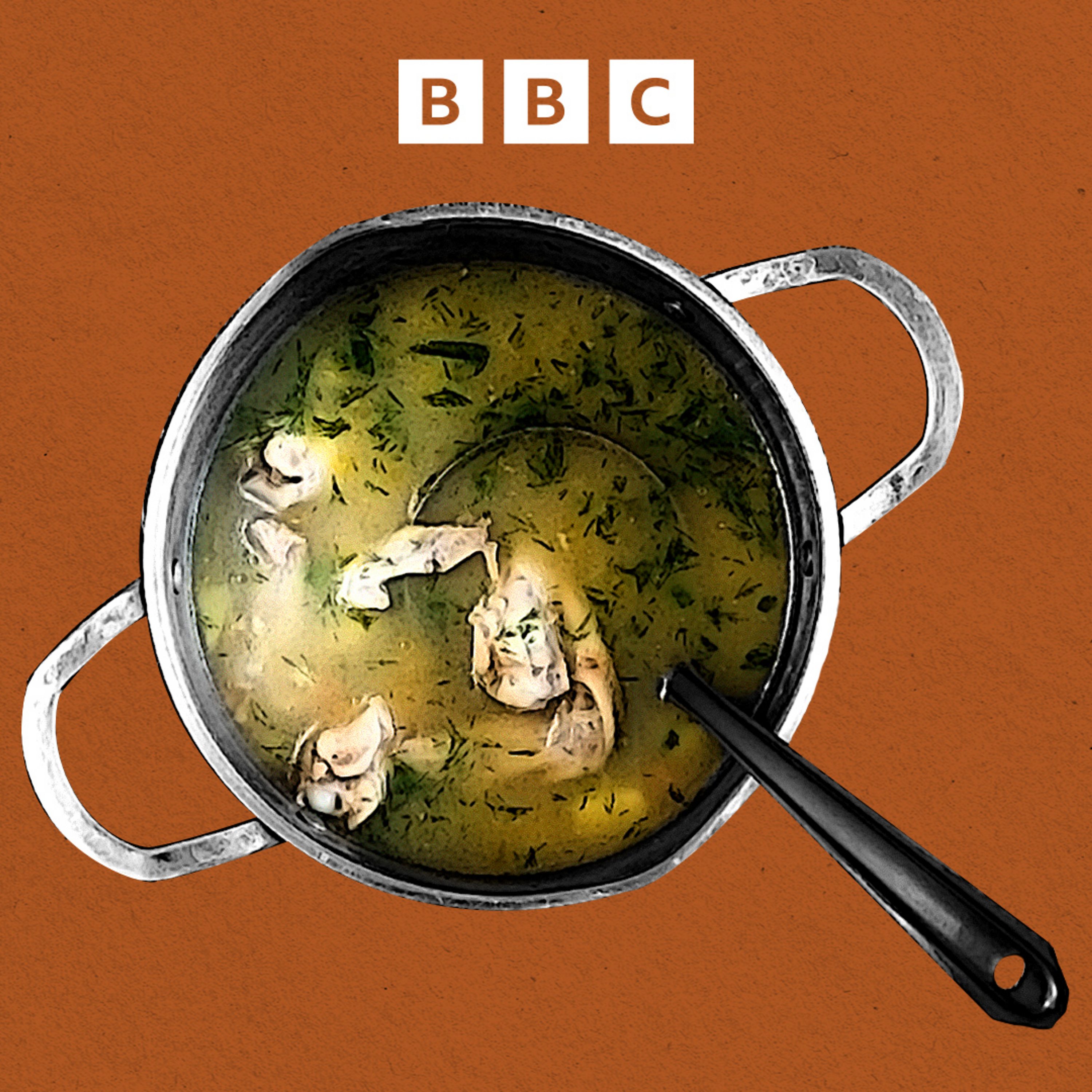
Bouillon: The story of stock
Feb 27, 202500:26:28Tap to summarizeJohn Laurenson explores the enduring appeal of stock. A century and a half ago, a butcher at the big Parisian food market Les Halles started selling beef broth – ‘bouillon’ in French - to the people who worked there. In a few years this had developed into what was perhaps the world’s first restaurant chain. By the end of the Nineteenth Century there were hundreds of ‘bouillons’ in Paris. Today, with inflation making traditional French restaurants too expensive for many people, these big, affordable eateries are making a comeback. The French aren’t, of course, the only people to discover the delights of this simple, warming, nourishing food. John learns how bouillon influenced Vietnam’s iconic dish, pho, as a result of the French colonial presence in the region in the 1800 and 1900s. Producer/presenter: John Laurenson(Image: A dish of stock with chicken and herbs with a ladle sticking out of it. Credit: Getty Images/BBC)
Transcribe →Masters of the craft
Feb 20, 202500:26:29Tap to summarizeWhat motivates someone to dedicate years of their life to learning one skill?Ruth Alexander finds out what it takes to master a craft, the exacting standards one must meet, and why it's all worth it.Sushi chef Eddie Chow tells us how it took more than ten years to achieve the title of 'master sushi chef', and the pain of getting there.What does it take to become an illustrious master butcher in Germany? Claus Bobel explains the importance of tradition, and his daughter Yulia tells us why she's following in his footsteps.And 'Lady of the Ham' Cati Gomez describes the process of becoming a cartadora, and why ham carving is getting more and more popular around the world.
Transcribe →How to make a TV cooking show
Feb 13, 202500:26:29Tap to summarizeWe find out the secret recipe that goes into some of the TV food shows watched by millions around the world. From hiring snake wranglers in South Africa to fending off flies in Sweden, three top producers lift the lid on what it takes to serve up a feast of culinary entertainment. Seasoned professionals Avril Beaven (Great British Menu), Irene Wong (Man Fire Food) and Jane Kennedy (Masterchef South Africa and My Kitchen Rules South Africa) explain the people skills needed to manage big personalities. And open up about the gruelling schedule that goes into creating televised cooking shows. If you would like to get in touch with the programme, email thefoodchain@bbc.co.uk. Presenter: Ruth Alexander Producers: Sam Clack and Hannah Bewley (Image: Jane Kennedy, Irene Wong and Avril Beaven)
Transcribe →The world's oldest restaurants
Feb 5, 202500:26:28Tap to summarizePeople have been eating out in restaurants and bars for hundreds of years, and some of those early establishments are still open today. This week Ruth Alexander meets the people running some of the world’s oldest restaurants. When so many close within the first 12 months of opening, what’s the secret to centuries-old success?Antonio Gonzales Gomez runs Botin, in the Spanish capital Madrid. The restaurant is judged as the oldest by the Guinness World Records, and he tells us how he and his family have kept it going for so long.Ruth heads to the east of England to Nottingham, where the battle to claim the title of 'world's oldest pub' is fierce. Buildings archaeologist Dr James Wright explains what evidence he's found to declare the winner.We hear how a 200-year-old tavern in Missouri, in the United States, has been battling to stay open, and the man who runs the "oldest sausage restaurant in the world" tells us why being located of an historic German town boosts business.
Transcribe →