Loading summary
Transcript177 lines
- [00:10]
Acast Host
ACAST powers the world's best podcasts. Here's a show that we recommend.
- [00:18]
Max Rushton
Hello American podcast listeners. Max Rushton here from the Guardian Football Weekly, which I think you should give a listen. It is good. It comes out three times a week and the podcast delivers you analysis, news, both the good and the bad from the Beautiful Game and maybe even the occasional laugh. He's angry about everything.
- [00:32]
Melody Thomas
He doesn't have a great poker face, does he? I would like to play cards with Bruno Fernandes.
- [00:40]
Max Rushton
You can listen to the Guardian Football Weekly wherever you get your podcasts. Hopefully see you soon.
- [00:48]
Acast Host
ACAST helps creators launch, grow and monetize their podcasts everywhere. Acast.com
- [00:58]
Max Rushton
Kia ora kouto welcome to the
- [00:59]
Acast Host
Good Sex Project, the series about sex and love that you really don't want to listen to with kids around. This episode is about sex work. It contains frank discussion of that mahi, as well as some swearing and also a brief mention of sexual harm. This podcast was made with the support of New Zealand.
- [01:19]
Parliament Narrator / Interviewer
On Air,
- [01:22]
Melody Thomas (Narrator)
it's June 2003, and inside New Zealand's parliament, a vote's about to happen, one that could completely change how this country treats sex work. Following years of hard graft by Aotearoa's sex worker organisation, the New Zealand Prostitutes Collective, or nzpc, a bill has been drafted, one which aims to decriminalise sex work and safeguard the human rights of sex workers.
- [01:48]
Parliament Narrator / Interviewer
The bill is the most controversial moral issue Parliament has debated since the 1986 Homosexual Law Reform.
- [01:55]
Melody Thomas (Narrator)
The bill was placed into what's known as the parliamentary biscuit tin, which is, and I cannot stress this enough, an actual cookie tin. MPs submit proposed laws. They're drawn out at random, and that's how some legislation in New Zealand begins. The MP behind this bill was the Labor Party's Tim Barnett, and he didn't think it stood much of a chance of being selected. And then it was. And suddenly the future of sex work in New Zealand was up for debate. At its first reading, the bill passed easily, 87 votes to 21. The second was tighter, 62 to 56. By the night of the third and final reading, it was looking like it could go either way. Until a passionate speech by Georgina Beyer. I beg of you, local legend, the world's first openly transgender MP and the first sex worker MP here in New Zealand that we know of, in a
- [02:53]
Parliament Narrator / Interviewer
situation when you are with a client and you have a knife pulled on you, and while the horror of that situation at the time is one of life and death, it would have been nice to have known that instead of having to deal out the justice myself afterwards to that person, I may have been able to approach the authorities, the police in this case and say I was raped and yes, I'm a prostitute and no, it was not right that I should have been raped because I said no.
- [03:21]
Melody Thomas
The ayes are 60, the noes are 59. Abstention 1.
- [03:25]
Melody Thomas (Narrator)
The bill passes by a single vote.
- [03:28]
Melody Thomas
The bill will be read a third time. Unlock the law.
- [03:32]
Melody Thomas (Narrator)
Against the odds, the Prostitution Reform act becomes law and New Zealand becomes the first country in the world to fully decriminalise sex work. Despite a lot of hand wringing from opponents in the lead up to that final vote, a government review five years later found that their dire predictions never came true. The industry never ballooned. Trafficking didn't surge.
- [03:54]
Sherida Fraser
It was a harm reduction model.
- [03:56]
Melody Thomas (Narrator)
This is Sherda Fraser from nzpc.
- [03:58]
Sherida Fraser
That really opened the door for much safer sex work nowadays.
- [04:04]
Melody Thomas (Narrator)
New Zealand's model was held up as the gold standard by sex worker led organisations and by global health bodies like the World Health Organisation, the UN and Amnesty International. The the New Zealand law isn't perfect. Section 19 of the bill, which was added at the last minute, excluded one particularly vulnerable subset of sex workers from its protections.
- [04:24]
Sherida Fraser
Migrant sex workers, if they're on a temporary visa, are prohibited from doing sex work and risk deportation. So they don't get to enjoy the same workplace rights and conditions really that local sex workers do.
- [04:37]
Melody Thomas (Narrator)
NZPC continued to push for migrant workers to be included in decriminalisation. But overall, the Prostitution Reform act has been a world leading positive step for the safety of sex workers in this country. But the law isn't the only thing that shapes an industry. And other massive changes were affecting the world of sex work at the same time. To understand those, we have to rewind. In the 80s and 90s, if you wanted to engage a sex worker, there are a few different ways to go about it. You could scour the classifieds.
- [05:11]
Sherida Fraser
Busty Becky. I was English Rose, even though I wasn't English.
- [05:19]
Melody Thomas (Narrator)
You could dial a number from your landline.
- [05:21]
Jane (Sex Worker Interviewee)
Go ahead, Carl. What are you doing in there?
- [05:25]
Parliament Narrator / Interviewer
Nothing.
- [05:27]
Melody Thomas (Narrator)
Or take a cruise down a well known street.
- [05:29]
Melody Thomas
I'm not looking for business, are you? Are you looking for business? What were you looking for exactly?
- [05:35]
Melody Thomas (Narrator)
Then along came the Internet and cell phones and. And completely changed the game. Clients could find a sex worker to connect with in real life or online with the click of a button.
- [05:46]
Sky (Sex Worker Interviewee)
Hi.
- [05:47]
Jane (Sex Worker Interviewee)
Come closer. Hey sweetheart, what are you wearing?
- [05:50]
Melody Thomas (Narrator)
Closer now.
- [05:52]
Acast Host
Touch yourself self.
- [05:53]
Melody Thomas (Narrator)
Then in 2020, another massive disruption. The number of cases of COVID 19 outside China has increased 13 fold.
- [06:03]
Melody Thomas
You weren't able to see in person clients and a lot of the touring opportunities were shut down for a few years.
- [06:09]
Melody Thomas (Narrator)
That's Rhys. He's a full service companion for women and couples based in Brisbane and we're going to hear a lot more from him shortly.
- [06:16]
Melody Thomas
So a lot of the industry went online. Like we watched Leafans become a household name.
- [06:22]
Melody Thomas (Narrator)
Onlyfans, chatterbait, fansly. It's 2026 and the world's your oyster. You can order custom content made just for you. Do you want me to pop the balloon, daddy? Step into virtual spaces and watch livestreams.
- [06:38]
Acast Host
Hey, big boy, you feeling thirsty?
- [06:41]
Melody Thomas (Narrator)
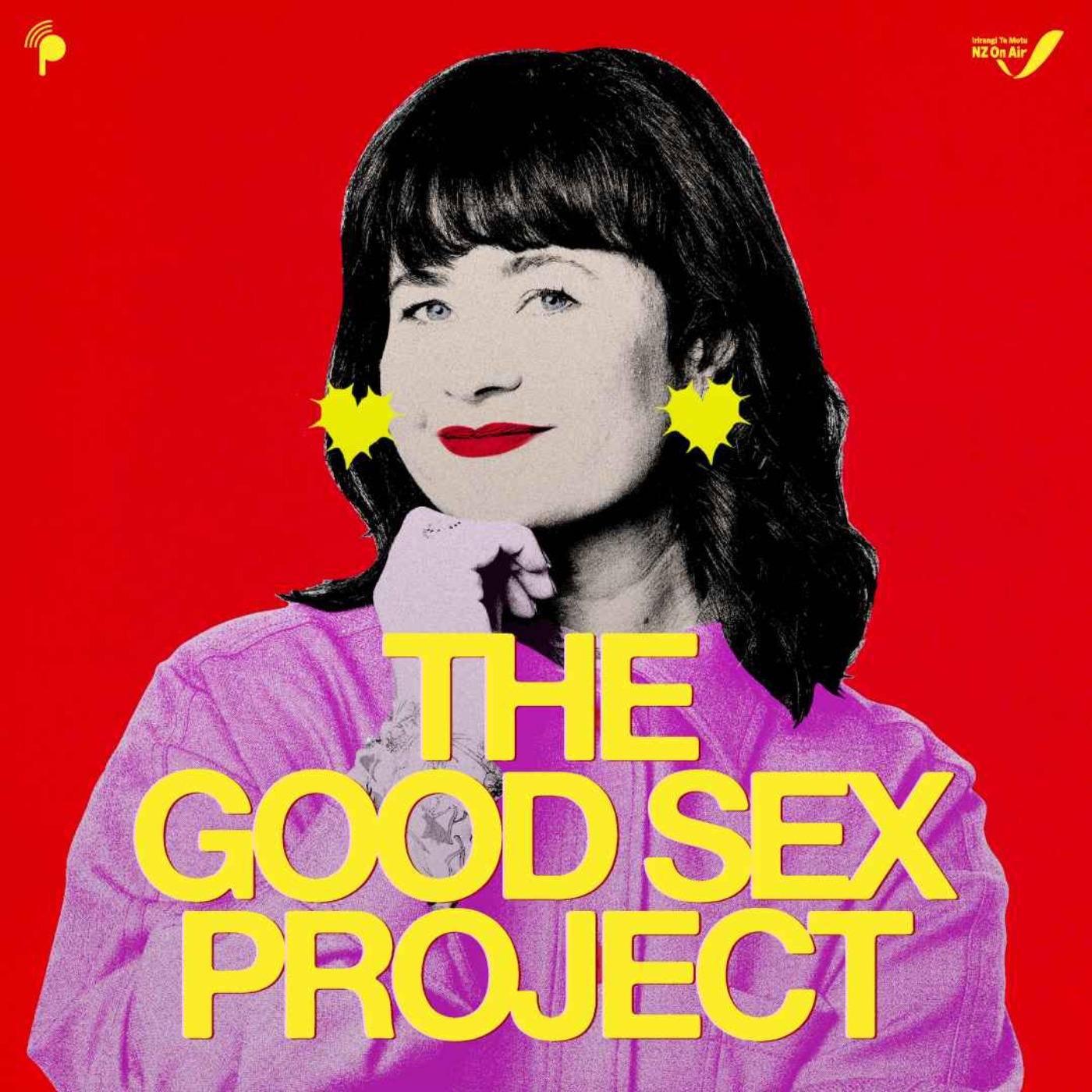
Whatever you're into, whatever you're curious about, it's out there. The oldest profession in the world has never had more ways to do business. And yet, for all that openness, all that access, it's still the thing polite society refuses to look in the eye. Why is that? How does that affect the people who actually do the work? And what does it mean that an industry this significant keeps getting reshaped by forces it seldom has any control over? Welcome to the Good Sex Project. I'm Melody Thomas and this is episode four, Skin in the Game. A few years ago, I reckon I would have told you that I don't know any sex workers personally, but I would have been wrong. The truth is, a lot of us know sex workers and just don't know
- [07:41]
Sky (Sex Worker Interviewee)
we do because we've had to exist in the shadows. People don't realise that we're absolutely everywhere.
- [07:46]
Melody Thomas (Narrator)
This is Sky, a former sex worker who at the time that we spoke, was working for nzpc. That's the organisation that spent years pushing for the Prostitution Reform Act.
- [07:56]
Sky (Sex Worker Interviewee)
Sex work encompasses the entire what we call red umbrella. And that can be anything from, you know, your traditional full service sex work to stripping things, to fetish work, to online content like OnlyFans or camming, to sensual massage and anything sexy for money, really. In every aspect of the workforce, there's someone in there who's either done sex work or is doing sex work.
- [08:19]
Sherida Fraser
I mean, sex workers aren't all cut from the same cloth.
- [08:23]
Melody Thomas (Narrator)
This is Sherida again, Sky's boss at nzpc, where she's the regional coordinator. She's also an ex sex worker.
- [08:30]
Sherida Fraser
I've tried to think about what is it that we've all got in common. Sometimes I think it's slight risk taking because you are choosing to step into a stigmatised community when you choose sex work. But I don't even know if it's that cause I know heaps of really reserved sex workers as well.
- [08:48]
Sky (Sex Worker Interviewee)
You know, we're multifaceted. I can be sexy one minute and then the next minute I might be reading a book or doing something really mundane and boring. We're just normal people, we just want to get on about our day.
- [08:58]
Melody Thomas (Narrator)
But that is easier said than done because more than 25 years after the decriminalisation of this work in Aotearoa, much of the stigma remains.
- [09:10]
Jane (Sex Worker Interviewee)
It's really funny to think back on, like the judgements I used to have around sex work before I had considered doing it myself.
- [09:16]
Melody Thomas (Narrator)
This is Jane, though she's not using her real name and her voice has been altered to protect her identity. Because while she's been working part time as a full service escort for four years. And full service just means, you know, sex workers who offer in person sexual services, she doesn't feel like she can tell her family about it. She doesn't want to be judged or misjudged by the people she loves. Now in Aotearoa, full service sex workers can choose to work in a few different ways. Some will become part of an agency. Sometimes that's a booking service essentially, which connects clients with sex workers, mostly for out call visits. Sometimes it's a brothel, a fixed premises where multiple sex workers are all based under one roof. When Jane first started out, she joined an agency where a friend was already working.
- [10:03]
Jane (Sex Worker Interviewee)
She showed me around and explained everything and that felt like quite a safe way to start, where you have like a lot of people around and you can learn things from them.
- [10:15]
Melody Thomas (Narrator)
There were other safety checks in place as well.
- [10:17]
Jane (Sex Worker Interviewee)
You get to see the client on a little camera so that you can check that like you don't know them and then you just meet them at the door so they don't have to to any kind of reception or anything. And they're not getting to meet multiple girls or anything like that. They have to book you based off of a online ad that doesn't have your face in it.
- [10:37]
Melody Thomas (Narrator)
But the downside's the commission cut.
- [10:39]
Jane (Sex Worker Interviewee)
An agency will take like 40% of your wage.
- [10:43]
Melody Thomas (Narrator)
So eventually, once she had a bit more experience, Jane set out on her own.
- [10:47]
Jane (Sex Worker Interviewee)
Now I work independently, which is so nice to be your own boss.
- [10:51]
Melody Thomas (Narrator)
It can mean carrying all the responsibility alone, but not always.
- [10:55]
Sherida Fraser
Between 2003 and Covid, there was more of a shift away from brothels and massage parlours because workers could work independently out of their own Homes and start little collectives if you like, and work together in groups.
- [11:10]
Melody Thomas (Narrator)
That's Sherida from NZPC again. And what she's describing is how Jane works at the moment. Jane will travel to a town with some sex worker friends. They'll book into a couple of hotel rooms and then spend a day or two seeing clients.
- [11:24]
Jane (Sex Worker Interviewee)
We have like various different safety nets in place where we can check up on people. So we'd just be like keeping in touch, like, are you free now? Or like, I'm free at this time. Should we go get some food occasionally? Might do some bookings together.
- [11:39]
Melody Thomas (Narrator)
Can you talk me through a typical appointment with a client?
- [11:43]
Jane (Sex Worker Interviewee)
Yeah. So there is kind of like a standard service and then there's like extras that people can add on. So I arranged the time and length of booking and the price beforehand.
- [11:57]
Melody Thomas (Narrator)
Most bookings are for an hour. Sometimes it's 45 minutes and occasionally 15 minutes. That's a thing. But at the other end of the scale, Jane's also done the occasional 12 hour booking.
- [12:09]
Jane (Sex Worker Interviewee)
Generally if they're wanting to book like 12 hours, I'd ask them to come and do like one hour booking beforehand as like a vibe check for both of us. Really?
- [12:19]
Parliament Narrator / Interviewer
Yeah.
- [12:19]
Jane (Sex Worker Interviewee)
And. And then as that's like a 12 hour overnight, then I tell them that I need five hours of sleep in that time.
- [12:27]
Melody Thomas (Narrator)
The client might have special requests. These are all arranged online beforehand as well. Maybe a particular outfit they want Jane to wear or a fantasy they want to try out and then
- [12:41]
Jane (Sex Worker Interviewee)
open the door. How's your day going? Take the payment and then you're right to have a quick shower. I don't normally ask too much. I quite enjoy just trying to like read someone or like not let them take the lead, but give them space to sort of figure out what they want to do with that time. If someone seems quite nervous or maybe it's their first time, then I generally ask if they want a bit of a massage. Standard service would include Kasang. Deep French kissing is an extra. You can have light French kissing included. Some people want to like cuddle and chat and you just have to gauge what someone is wanting. And then other people, they're not really wanting to like, look you in the eye or chat. And they're more wanting sex. But you can easily gauge what someone is looking for, whether it's conversation and company or like a specific physical sexual act. I would generally go down on them. I mean, if they want to go down to me, they can. And then you have sex generally once. And then probably Lie around chatting afterwards. It would be really hard to do a long booking with someone that doesn't want to talk. Like that's really going to drag
- [14:09]
Melody Thomas (Narrator)
anyone who's ever thought to themselves sex work feels like easy money is maybe thinking about that again at this point. 5 hours sleep for 7 hours of sex or even worse, conversation. But Jane really enjoys this work most of the time. Here's something interesting about Jane that I didn't tell you at the beginning. She actually has another job. When she responded to our call out for sex workers to interview, she made a joke that she was involved in two of the oldest professions in the world, which is what grabbed our interest. You want to guess what the other one is? Well, she gave us a clue. One involves lots of penises and one involves lots of vaginas. Okay, I'll let her tell you.
- [14:52]
Jane (Sex Worker Interviewee)
I've worked as a hospital midwife for you having to meet someone and they're in labour and you spend 10 or 12 hours with them and by the end of it you feel like you know them so well and they're going to remember you for the rest of their life.
- [15:04]
Melody Thomas (Narrator)
I'm curious to know if something shifted for you just then when she told us that whether after you heard she was a midwife and not just a sex worker, Jane felt a bit more respectable, like someone whose opinion you'd take seriously because she was the same person 10 seconds ago. That's stigma and it works on all of us, including people who should know better.
- [15:27]
Jane (Sex Worker Interviewee)
I definitely think I had the classic stigmas around who sex workers are, that they maybe like don't have much direction in life or that they want like easy money or that they think their self worth comes from like their appearance or their body or their beauty.
- [15:47]
Melody Thomas (Narrator)
Are there any ways in which sex work and midwifery inform each other?
- [15:51]
Jane (Sex Worker Interviewee)
I guess I enjoy that feeling of service. You get to be in these really intimate spaces, getting to know someone in this very private world. It's just making people feel at ease in like what can be very uncomfortable situations.
- [16:12]
Melody Thomas (Narrator)
Just like all care or service work, Sex work can be all consuming if
- [16:17]
Jane (Sex Worker Interviewee)
you're just like constantly giving of yourself and giving and giving and then feeling like burnt out or depleted or resentful. I think women tend to just give themselves to death, right? So to be in like care work and of service in a way that it's like a circular energy where you're not just like getting resentful, like you are enjoying that exchange. You have to kind of stay tuned into how you're actually feeling. And if you start, like becoming a bit robotic, that's where it's probably gonna not feel very nice. Just not something I could ever do full time. You're just giving so much of yourself. Like you need to have a lot of holidays from it and breaks. I genuinely enjoy just getting to meet all of these different people and it's like kind of exciting. Just like you don't know what your date's gonna be like. Like there's so many unknowns.
- [17:16]
Melody Thomas (Narrator)
Jane's experience as an educated PKEH woman doing sex work part time alongside another career comes with a kind of privilege that she'd be the first to acknow. Not every sex worker gets to treat this as a lifestyle choice or a fascinating side quest. But when you are in a position to be able to choose this work freely, it turns out that enjoying it isn't that unusual.
- [17:37]
Melody Thomas
It became a calling and I think the more I do it, the more purpose I found and the more exciting it was.
- [17:45]
Melody Thomas (Narrator)
We'll hear more from Australian sex worker Reece after the break. Time to hear from Reece, the full service companion for women and couples based in Brisbane. If you want to search him out yourself, look for reecensual on Instagram and you can find him from our Instagram page where we've posted some video clips from our interview. Now, Rees travels a lot for his work in the biz. They call it touring. When I spoke to him for this interview, he was in Canada where a group of fans had pooled their money to make it happen. How do people react when you tell them what you do?
- [18:22]
Melody Thomas
I love this question. I told a story about meeting a lovely elderly couple on the plane a few months ago. I think I told them what I did for work and so it turns out they were very religious and the wife was like, oh, nice. And how did you get into it? And were you like forced to do it? So it was like this belief that the sex industry to them is something that is more about trafficking or coercion, exploitation. Yeah. And I expressed, no, I, I do this for myself. And she was so sweet. It was very well received. And then later they said that they would pray for me. And I thought that was just an absolute sweet thing to say because who can go wrong with more blessings?
- [19:06]
Melody Thomas (Narrator)
Rees didn't grow up planning to be a sex worker. He actually did a Bachelor of Health Science. But at the same time, I was
- [19:13]
Melody Thomas
seeking more money for less time because uni student wages don't quite pay the bills. So I went into topless waitering that was great. And I learned that there was stripping and then I discovered full service work which was a lot more aligned with my personality.
- [19:32]
Melody Thomas (Narrator)
When it comes to sex work, Reec prefers one on one or one on two interactions. He's an introvert, he's neurodivergent and a self described people pleaser. So full service in person work allows him to focus on the stuff that he's really good at, like ensuring his clients feel seen and taken care of.
- [19:50]
Melody Thomas
A lot of my work has developed into empowerment and building confidence for women to step back into their intimate self, step back into their power of feeling desired and wanting desire.
- [20:05]
Melody Thomas (Narrator)
Clients can struggle with those things for a bunch of different reasons, but a lot of the women that Rees works with are sexual assault or domestic abuse survivors whose struggles relate to trauma.
- [20:15]
Melody Thomas
So we work a lot with re establishing those connections to what they enjoy about intimacy. Rather than building on the fear responses. It also comes down to a lot of nervous system regulation. I am very aware of being a male presence in a small space can be quite overwhelming.
- [20:35]
Melody Thomas (Narrator)
For many of his clients. Reece is the first person who's ever asked clearly and without embarrassment or shame, what they actually want. And he'll do that even if their appointment with him is the first time that they've ever been sexually intimate with anyone.
- [20:50]
Melody Thomas
I'm still going to have that conversation even if you don't know what your expectations and boundaries are, because at least then I know where to start from. And like even no answer is an answer and sometimes people find it very if you just sit in that tension as well, because I will ask the question and then I'll be silent. And I don't mean to put them on the spot and I can easily take that pressure away from them. But I think tension holds a really powerful moment of change for people. I would rather people start having those conversations regularly and having good sex than just leaving it all up to chance.
- [21:35]
Melody Thomas (Narrator)
Like so many workers in this industry, Reece has had to be agile in order to survive. He put in years of touring, years of carefully building his brand before going face out, which means showing his face and his content. In 2020, then the world shut down. Sites like OnlyFans exploded and people were
- [21:56]
Melody Thomas
able to monetize who they were and what they look like and showed that sex work can be empowering, but it
- [22:06]
Melody Thomas (Narrator)
can also be devouring. If you don't have limits on what you're monetising, which is something a lot of people learned as they went along. When lockdowns began to wind down a Lot of sex workers like Reese saw their in person clients start to return, which is great, except he was still trying to do all the online work that he'd pivoted to during the pandemic. So now he was touring and seeing clients in person, as well as keeping up with virtual calls, recording audio erotica, maintaining his TikTok presence, running a behind the scenes vlog, and studying at university. Eventually, burnout hit. Something had to give.
- [22:41]
Melody Thomas
I need to schedule my own downtime because that burnout will creep up on me.
- [22:46]
Melody Thomas (Narrator)
And then technology came to the rescue.
- [22:51]
Acast Host
I want to whisk you away to a place where our bodies entwine in a symphony of passion. Let me lead you through a dance of pleasure where every touch, every kiss, every gasp is a melody that crescendos into pure bliss.
- [23:09]
Melody Thomas (Narrator)
That's not actually Rhys. It's an AI version of him built by the platform Bloom, using an audio recording of him and years of his TikTok content to replicate his voice and personality. So now clients can chat to a version of Rees that's available at any hour of any day while the real Reese gets some rest.
- [23:27]
Melody Thomas
They've done really well with the technology that they have. It's very cool to put that out there and have my following give me such a good response. Back.
- [23:37]
Acast Host
Undress slowly, maintaining eye contact. Kneel in front of me to show your submission and readiness to play.
- [23:46]
Melody Thomas (Narrator)
Sex, work and technology have always had a complicated relationship. On the one hand, the desire for sexual content has been a quiet driver of some of the biggest technological leaps of the last century. It was insatiable appetites for porn that helped drive demand for faster modems. Online sex workers were early adopters of webcams, building subscription and pay per minute performance models before the technology even went mainstream. And they helped pioneer online payments. But that same technology has repeatedly been used against the very workers who helped shape it. In 2018, a US law known as Foster Sesta, framed as anti trafficking legislation, pressured Internet platforms to censor sex work content. But those platforms weren't just where sex workers found clients. They were also where they screened them. There were shared blacklists of dangerous men, verification tools, community networks. When the platforms went down, all of that went with them. Research found that all of this led to economic instability for nearly three quarters of online sex workers and pushed many back onto the streets, where they were more exposed to violence than before. It's a reminder that the platforms that have given sex workers so much reach and visibility come with a catch. What the platform giveth, the platform can Also taketh away.
- [25:07]
Sherida Fraser
I do think it's really complicated what technology has done for and against sex workers.
- [25:16]
Melody Thomas (Narrator)
It's a tension Sherida navigates every day in her work at the nzpc.
- [25:21]
Sherida Fraser
There's a lot of complications with hidden cameras at the moment. Sex workers are having to check the rooms, check where the clients put their devices. Always be on high alert for hidden cameras.
- [25:34]
Melody Thomas (Narrator)
The risk has grown greater as cameras have gotten smaller and harder to detect. And the more recent development of smart glasses is a prime example of this. It's a technology that's fast becoming a tool of choice for covert non consensual recording. There are whole sites devoted to these recordings.
- [25:52]
Sherida Fraser
It's awful, absolutely awful. And yeah, we've supported quite a few people over the last few years who have found that they've been secretly recorded in New Zealand.
- [26:04]
Melody Thomas (Narrator)
We all witnessed one really public example of this. In June 2025, it emerged that Michael Forbes, the Prime Minister's number two media guy, had secretly recorded audio from sessions with several Wellington sex workers. But that wasn't all. There were also non consensual photographs of women captured at the gym, at the supermarket, usually zoomed in on specific parts of their bodies. And a few videos filmed of women getting ready to go out at night, undressed and unaware that anyone was watching. Two sets of victims, very similar violations. But sky noticed a real difference in how they were treated.
- [26:43]
Sky (Sex Worker Interviewee)
You know, when I was talking to people in my personal life about it, nobody really batted an eyelid when I said that the victims were sex workers. But as soon as I mentioned that, oh yeah, there was other non consensual recording of, you know, non sex worker women, suddenly they were outraged. There's a real attitude out there that, oh well, sex workers, they've chosen this job, they just have to deal with this.
- [27:03]
Melody Thomas (Narrator)
When Covid disrupted the sex work industry, just like it disrupted so many other industries, its workers scrambled to adapt, some more than others.
- [27:11]
Sky (Sex Worker Interviewee)
The young whippersnappers like myself were quite comfortable jumping onto online platforms. But, you know, the sex work population is extremely varied and there's a lot of 40, 50, 60, even workers in their 70s. And when suddenly everybody had to jump
- [27:26]
Melody Thomas (Narrator)
online, NZBC jumped in to help, calling on members of the community who are already working in online spaces to come and school them up on all the different platforms, the hoops to jump through and what the risks are.
- [27:39]
Sherida Fraser
So we were able to put together a bit of a guide. We would normally only focus on health and safety issues, but I think during COVID we did Do a little bit of this is how you could diversify your services.
- [27:55]
Melody Thomas (Narrator)
When I mentioned that OnlyFans boomed during the COVID period, I wasn't being hyperbolic. Between November 2019 and December 2020, the site went from 7 and a half million users to 85 million. OnlyFans and online work generally kept a lot of workers afloat during a really precarious time. But the shift online didn't just change how sex workers worked, it changed what the public thought sex work looked like. And what they saw was a very particular, very shiny version of,
- [28:30]
Sky (Sex Worker Interviewee)
to a degree, might have destigmatised that kind of top 0.01% of creators. Whereas workers kind of doing it as their everyday mahi, they were still kind of left behind.
- [28:44]
Melody Thomas (Narrator)
Girls next door earning fortunes from their nudes, certain celebrities raking in a million dollars in a single day. That's the picture of OnlyFans that we see on our feeds, but it's a distorted one.
- [28:56]
Sky (Sex Worker Interviewee)
Yeah, I've definitely spoken to a few non sex workers who have said things to me like, oh, you know, if all else fails in my life, then I'll just join OnlyFans and I'll make tens of thousands of dollars and it'll be easy. I'll just post pictures of my feet and become a millionaire. And I think it's really important to manage those expectations
- [29:16]
Melody Thomas (Narrator)
because the numbers tell a different story. The top 1% of creators earn the vast majority of the platform's revenue. For most people, OnlyFans isn't a goldmine, it's a grind. And it's one that comes with plenty of risks.
- [29:29]
Sky (Sex Worker Interviewee)
The reality is that if you're going to have an online content platform, then you're most likely going to have your face out. You kind of have to come to terms with the fact that family members are probably going to encounter it at some point. Old bosses, ex boyfriends, aunties, all of those people. It's not just a get rich quick scheme that I think a lot of people glamorise or make it out to be.
- [29:50]
Melody Thomas (Narrator)
And that applies to sex work more widely, not just online.
- [29:54]
Sherida Fraser
There's still an idea that if you need some extra money, you can turn to sex work. But we're in a cost of living crisis and sex work is quiet.
- [30:05]
Sky (Sex Worker Interviewee)
But yeah, we've got more splendid daddies than sugar daddies.
- [30:10]
Melody Thomas (Narrator)
That's splendour, as in fake sugar. And the gap between the perception and the reality of OnlyFans income isn't just a problem for people who are thinking about joining it's deepened a fault line within the sex work community itself. A hierarchy of perceived legitimacy that goes by the excellent name of the whorachy.
- [30:29]
Sherida Fraser
We're allowed to say whores. Nobody else is, by the way. That's one of those words. But you can say the whorechy.
- [30:36]
Melody Thomas (Narrator)
This is Sherda's definition.
- [30:37]
Sherida Fraser
The whoreaki is the stratification of whores, a hierarchy of whores. And it presents some sex workers as better than others based on variables like how many clients they might see per day, how much money they might earn, how close they get to clients. So content creators, digital sex workers are kind of at the top of the hierarchy because they're not even seeing their clients in person. Whereas somebody who works from the street will be at the bottom of the hauraki because they are seeing their clients in person and they're very visible to the public.
- [31:15]
Sky (Sex Worker Interviewee)
There's still that very horarchal view of oh, good whore versus bad whore, because one's earning tens of thousands of dollars and it's all very glamorous.
- [31:23]
Melody Thomas (Narrator)
The top of the algorithm shiny version of sex work that went mainstream during COVID was always the exception rather than the rule for most sex workers in Aotearoa who jumped online during that period. There was nothing shiny about it. They were just trying to keep the lights on while the world went sideways.
- [31:39]
Sherida Fraser
The less social media visible ones are just going to work in the brothel and doing their job and coming home to their kids. You know, they're just living their life, trying to go as under the radar as possible.
- [31:51]
Melody Thomas (Narrator)
And the whorachy doesn't just affect how the public sees sex workers, it shapes how sex workers see each other.
- [31:57]
Sky (Sex Worker Interviewee)
If you see people talking about, oh, she's a high class escort, she posts pictures wearing Louis Vuitton and she flies everywhere with her clients, I'm like, sorry, but if you're sucking dick for money, you're sucking dick for money.
- [32:14]
Melody Thomas (Narrator)
One more thing that you should know before we move on from OnlyFans, because Sherida and sky have started to see another alarming trend.
- [32:22]
Sherida Fraser
There's these Andrew Tate wannabe tech bros who are, quote unquote, managing content creators, cold contacting young hot people on Instagram, pulling them into what can be quite exploitative situations.
- [32:42]
Melody Thomas (Narrator)
This trend might have started overseas, but it's officially landed here in Aotearoa. Sherada has seen multiple contracts sent to young Kiwi women by Kiwi men. And what they're offering can sound really appealing, especially to someone who's struggling to make ends meet. But the promises they make are seldom delivered on. Sherida actually had one of these contracts ready to show me.
- [33:03]
Sherida Fraser
The creator has to provide 100 high quality images per week and 10 minutes of video and at least seven short form videos as well as custom made work as requested by specific fans. Which sounds like a lot of work to me.
- [33:24]
Melody Thomas (Narrator)
And the penalty for not providing these things is 250 NZD per missed item.
- [33:30]
Sherida Fraser
The creator grants the manager the perpetual irrevocable right to use their image even after termination of this agreement. Perpetual right to use an image. If there's a breach of this part of the contract, it's a $20,000 fine. It's a crazy contract that young people are agreeing to and they think because they signed a contract then it's contract law and they have to do it. They don't have to do it because it's totally unfair, unreasonable terms of contract. It wouldn't stand up in a court, it wouldn't stand up in a disputes tribunal, especially as these people are often vulnerable due to their age.
- [34:15]
Melody Thomas (Narrator)
But it doesn't need to stand up in court because just the threat of that kind of find is enough to scare a lot of people into silence. Especially when as in a few of the cases shared is seen, the manager also controls Both the Creator's OnlyFans account, all the passwords, logins, et cetera, and their bank account, which they gain access to using documentation provided by the performer.
- [34:36]
Sherida Fraser
They feel really, really trapped. And you can go on YouTube and just find all these bros who start giving advice about how to find content creators, young women, manage them, how to make money. It's very exploitative and I don't know that we've got practices or policies or legislation that is keeping up with the technological advances.
- [34:59]
Melody Thomas (Narrator)
Before we begin to wrap up, I want to come back to stigma because it can feel like a vague concept, but it has very real material consequences. Sky felt that firsthand during COVID I
- [35:11]
Sky (Sex Worker Interviewee)
was actually one of the people who was denied the wage subsidy and that was very frightening. And I'd only recently moved back to the country, so you know, my savings were pretty minimal. I was told by the worker that I was in contact with at MSD that I had to provide a list of all my clients and their names and their details, which first of all I don't have, and second of all would be a major breach of privacy. So I was terrified. I was basically outright denied any money
- [35:37]
Melody Thomas (Narrator)
from msd, that's the Ministry of Social Development.
- [35:40]
Sky (Sex Worker Interviewee)
And I reached out to NZPC and luckily they were able to help me. And I was assigned a different case manager and the next person just approved it straight away. It really just goes to show that that stigma on that personal, individual level, rather than the agency itself, made a huge impact on who was given money to live. As a sex worker, you know, you're doing something that's not illegal, you're paying your tax, you're just making ends meet like everybody else, but you're treated like a second class citizen.
- [36:12]
Melody Thomas (Narrator)
And the financial discrimination against sex workers extends. Extends beyond one case manager's bias. As society moves deeper into cashless transactions, sex workers in Aotearoa are running into another wall.
- [36:24]
Sky (Sex Worker Interviewee)
Sex work is decriminalised in Aotearoa and it's criminalised or partially criminalised in a lot of other countries. So it can be very, very difficult to set up your banking from a business perspective as a sex worker here.
- [36:40]
Melody Thomas (Narrator)
So where does all, all of this leaves sex workers now? Technology's opened a lot of doors. There's new income streams, new audiences, new ways to work safely and independently. But it's also created new vulnerabilities, new means for exploitation and ways for the system to fall short. I mean, we're nearly at the end of this episode and we've barely touched on how AI is going to impact sex work. What happens to the client base when anyone with a photograph can doctor up their own pornographic video?
- [37:10]
Sherida Fraser
I think the risks for Deepfake and for privacy and just ownership of your own image and your own likeness are going to be so great. I don't know that anybody will want their image on the Internet very much longer.
- [37:26]
Melody Thomas (Narrator)
It's a strange horizon to be looking at, one where your image and your likeness might exist and be used entirely without your knowledge or consent. For sex workers who've spent years fighting for control over their own bodies and their own labor, it's a particularly loaded threat.
- [37:42]
Sky (Sex Worker Interviewee)
One tiny benefit, I guess, is that, you know, if your nudes get leaked now, you can say, ah, excuse me, that's very clearly AI. That's a T.
- [37:51]
Melody Thomas (Narrator)
Or if it is AI, but you look really hot, you
- [37:53]
Sky (Sex Worker Interviewee)
can be like, absolutely, that's me, that's me.
- [38:00]
Melody Thomas (Narrator)
Sex work carries real risks, but those risks aren't evenly distributed. They fall harder on some sex workers than others, depending on where they sit in the hierarchy, on what they look like and where they work. Here's Rhys again.
- [38:13]
Melody Thomas
I see it all the time. Unfortunately for my female peers, they get a lot of negative engagement and I take my hat off to them. The risk is so much Higher for them. I'm not risking my life to see my clients.
- [38:29]
Melody Thomas (Narrator)
But for all the very real risks, most days sex work is just that. It's work with all the mundane frustrations that come with any job.
- [38:39]
Sherida Fraser
It's hard when you're a sex worker as well, because you feel like you have to always be positive about it. Because if you say, I had a bad day in sex work, everybody jumps to the worst possible scenario and thinks that you're, you know, being abused, when actually you just had a bunch of no shows and you just had a boring bunch of clients for the day or whatever.
- [39:00]
Sky (Sex Worker Interviewee)
Or Dave had some weird bo.
- [39:02]
Sherida Fraser
Yeah, yeah. Someone didn't wash their ass properly.
- [39:06]
Sky (Sex Worker Interviewee)
Just to note there, if that ever happens, we do make them shower again.
- [39:11]
Melody Thomas (Narrator)
Aotearoa led the world on this once. The question now is whether our laws, systems and attitudes can keep up with everything that's come sooner since. So that the people doing this work get to do it safely, with dignity and with the same rights as everyone else.
- [39:28]
Sherida Fraser
Unfortunately, sex workers still don't feel comfortable putting sex work on their cv. That's the utopia, when we can all just talk about our transferable skills. You know, we're really good at laundry. I can fold a fitted sheet like nobody else do.
- [39:42]
Sky (Sex Worker Interviewee)
You know what? I'm one of the lazy sex workers that don't really.
- [39:45]
Sherida Fraser
I used to just roll it up.
- [39:46]
Sky (Sex Worker Interviewee)
I was the one that everyone else, the brothel hated because I'd, like, shove it into the wardrobe. Terrible. But I can put one on really well.
- [39:53]
Melody Thomas (Narrator)
Sex work is often called one of the oldest professions in the world. It's outlasted every technological disruption from the printing press to the algorithm, as well as pandemics, legislation, moral panics, Christianity. And it'll probably outlast more still, because when you get down to it, it's all about connection, about our desire to be seen and held and to feel pleasure alongside another person. And that's not going to change anytime soon. Thank you so much to Sherida, Sky, Jane and Rhys for sharing your experience for this episode. We really appreciate the insights you've offered and thank you to NZPC for all the incredible work you do, including your continued mahi on behalf of migrant workers excluded from the Prostitution Reform act protections under section 19. Down with the Hawraki. Coming up in the next episode of the Good Sex Project, we're getting into age gap relationships. Someone who's still technically a teenager dating someone in their 20s. I'm sort of like, oh, what? Why would you do that? We're looking at how our attitudes have shifted across cultures, across generations, and across gender lines.
- [41:17]
Melody Thomas
When you look at a show like
- [41:18]
Melody Thomas (Narrator)
MILF Manor, you could never make the
- [41:20]
Melody Thomas
reverse show of that where you have a bunch of older men who are dating younger women.
- [41:24]
Max Rushton
Right?
- [41:24]
Melody Thomas (Narrator)
That's in episode five of the Good Sex Project Gap year. See you then. You're like a sexual psychic.
- [41:37]
Sky (Sex Worker Interviewee)
Absolutely not.
- [41:38]
Melody Thomas (Narrator)
You're going to give me a reading. What am I into, Reece?
- [41:42]
Melody Thomas
You are for sure into words of affirmation. Oh my God, Are you blushing?
- [41:50]
Melody Thomas (Narrator)
No. Thank you to Mercury TV and to Dave Gibson for the archival audio featured in our intro. And to Edmund for valiantly jumping in to record a couple of sexy lines for us. It's zero notice. And four complete strangers. What a champ. If you loved this episode, please do share it with friends, family, or even complete strangers. You can tell that person at the sauna or your book club or the cafe or the bathroom line at the gig all about this amazing podcast and we would really appreciate it. The Good Sex Project was made by PopSoc Media. It was written and developed by me, Melody Thomas. Our producer and audio editor is Kirsten Johnstone. Co producers are Kay Hecke and Elena Bates. Phil Brownlee recorded me in the studio and our sound mix is by Mark Chesterman. Paddy Fred did the music and some of the sound design. Thank
- [42:56]
Max Rushton
you.
- [43:08]
Acast Host
Acast powers the world's best podcasts. Here's a show that we recommend.
- [43:16]
Max Rushton
Hello American podcast listeners. Max Rushton here from the Guardian Football Weekly, which I think you should give a listen. It is good. It comes out three times a week and the podcast delivers you analysis, news, both the good and the bad from the Beautiful Game and maybe even the occasional laugh. He's angry about everything.
- [43:30]
Melody Thomas
He doesn't have a great poker face, does he? I would like to play cards with Bruno Fernandes.
- [43:38]
Max Rushton
You can listen to the Guardian Football Weekly wherever you get your podcasts. Hopefully see you soon.
- [43:46]
Acast Host
Acast helps creators launch, grow and monetize their podcasts everywhere. Acest.
- [43:53]
Parliament Narrator / Interviewer
Com.