Podcast
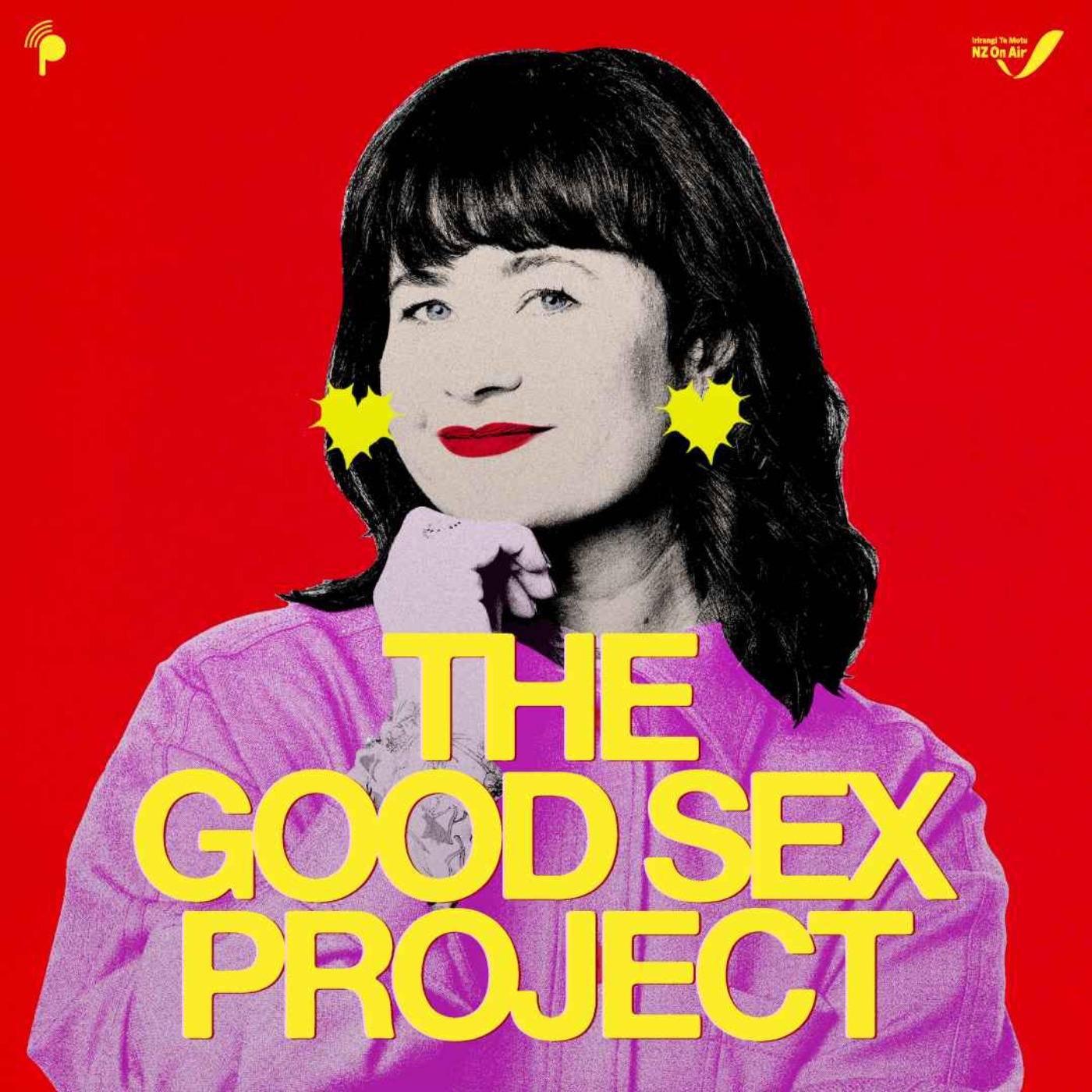
The Good Sex Project
Hosted by Popsock Media · EN
A podcast about good sex, good relationships and how to have them. Follow creator and host Melody Thomas as she meets everyday New Zealanders, who speak with striking openness and vulnerability about real issues in their sex and love lives. Meet internationally renowned experts with practical advice that you can use in your own life. The Good Sex Project is an internationally-award winning sexual revolution in podcast form. Get listening now!
The Good Sex Project is made with the support of New Zealand on Air.
If you want to get in touch with Melody or the team, please send us a message on Instagram - @goodsexproject - or email goodsexproject@gmail.com.
WARNING: This podcast contains frank conversations about sex and relationships, and includes some swearing. Some episodes also deal with themes around toxic relationships. WHERE TO GET HELP: Victim Support – 0800 842 846 (24-hour service). Need to talk? Free call or text 1737 any time for support from a trained counsellor. Youthline – 0800 376 633, free text 234, email: talk@youthline.co.nz or online chat. Rape Crisis – 0800 88 33 00 (will direct you to a nearby centre).
Hosted on Acast. See acast.com/privacy for more information.
30episodes
Episodes
Newest firstAll episodes
Phone A Friend
2w ago01:03:17Summary readyWe're wrapping up Season 3 by checking back in with some of the people who've stayed with us longest. Porte, the radio announcer who lost his legs in a train accident in his twenties and was last heard from in his seventies, deep in a spicy love triangle. Chloe, who had a running list of "fuckeries" on her phone - a catalogue of truly terrible sexual encounters that had her convinced she might be asexual. Simon, in his mid-sixties, grappling with the fact that he wasn’t his boyfriend’s sexual ‘type’. And Harper, finding her feet again - and her boundaries - after leaving a relationship that had taken a lot from her. A lot can change in a season. We find out what has. Hosted on Acast. See acast.com/privacy for more information.
SummaryNaked Honesty
3w ago00:47:19Summary readyShame thrives in silence, and nowhere more than in the territory of sex and sexuality. This final episode makes the case for why talking about the taboo isn't just cathartic but quietly radical: a way of dissolving isolation, dismantling shame, and discovering you were never as alone as you thought. We reflect on what happens when people finally say the thing out loud: in therapy, to a friend, on a podcast. Hosted on Acast. See acast.com/privacy for more information.
SummaryDr Peggy Kleinplatz - What Makes Sex Magnificent
4w ago00:55:04Summary readyTwenty years ago, Dr. Peggy Kleinplatz had a seven-and-a-half-month waiting list of couples stuck in the same story: one partner wants sex, the other doesn't, and both feel broken. So she stopped studying what goes wrong and started studying what goes right - interviewing people having the best sex of their lives to find out what it's actually made of.The answer breaks down into eight components, and technique isn't one of them. In this bonus episode, Dr. Kleinplatz - Professor at the University of Ottawa and co-author of Magnificent Sex - talks with Melody about why "natural and spontaneous" is a myth, and why the couples who never fight might be the ones most at risk. Hosted on Acast. See acast.com/privacy for more information.
SummaryThe Real Sealed Section
4w ago00:42:27Summary readyWhat separates good sex from sex that’s genuinely transformative? This episode starts with a challenge: one couple's New Year’s resolution to pursue 365 orgasms (for her) in a year, and what that commitment unlocked for them about pleasure, communication, and each other. Then we go deeper with Dr. Peggy Kleinplatz, whose landmark research into "magnificent sex" found that the best lovers aren't who you'd expect - and that what makes sex extraordinary has almost nothing to do with technique. An episode about what we're actually reaching for when we reach for more. Hosted on Acast. See acast.com/privacy for more information.
SummaryLetting Go of the Fairytale: Brynley Stent on Singles Club Season 2
Jul 1900:41:00Summary readyComedian and actress Brynley Stent (Shortland Street, Taskmaster, 7 Days) joins Melody Thomas for a candid, funny chat about love, singledom, and why finding "the one" doesn't magically fix everything. They talk about the vulnerability of putting a relationship on camera, the pressure of visas and biological clocks, and why friendship might matter just as much as romance.Content note: frank discussion of sex and dating, some swearing. Hosted on Acast. See acast.com/privacy for more information.
SummaryLetter To My Libido
Jul 1400:35:36Summary readyFive writers. Five letters to their libido. Equal parts filthy, funny, and unexpectedly profound - a bonus episode to balance out this week's heavier one.This is a bonus episode with a different shape: five writers - Nadine Hura, Sam, Joseph Trinidad, Emily Writes and Melody - read the letters they wrote to their libido for TGSP's live launch event. Inspired by Jessie Casson's Letter to My Libido project, these are funny and tender pieces of writing about desire, identity, faith, grief and reclaiming your own body. Hosted on Acast. See acast.com/privacy for more information.
SummaryTender Ground
Jul 1400:48:24Summary readySexual trauma doesn't end when the event does. Its effects ripple forward - into how we see ourselves, how we move through intimacy, how we flinch or freeze or dissociate in moments that are supposed to feel safe. This episode explores the long aftermath of sexual trauma: the ways it reshapes identity, trust, and the body's relationship to pleasure, sometimes for years or decades. We speak with Jimanekia Eborn, sexual assault and trauma expert, who brings both clinical insight and deep personal honesty to the question of what survival actually looks like and what it takes to move beyond it. This isn't an episode about victimhood. It's about the slow, nonlinear, often surprising work of reclaiming yourself. Hosted on Acast. See acast.com/privacy for more information.
SummaryGender Attitudes in Aotearoa with Dr Rebecca Stringer
Jul 900:42:57Summary readyNew Zealand's Gender Attitudes Survey shows a sharp rise, particularly among young men, in adherence to rape myths and the belief that gender equality has gone too far. Rebecca Stringer, associate professor in gender studies at Otago University, joins Melody to make sense this troubling trend, and unpacks why this isn't as new as it feels (hello, 90s political correctness backlash), what's different this time around (the monetisation of misogyny by people with real skin in the game), and why disenfranchised young men are directing their very legitimate economic anxieties in entirely the wrong direction. They also get into what it takes to counter far-right rhetoric in the classroom, and how the left might actually win some of these guys back. Hosted on Acast. See acast.com/privacy for more information.
SummaryGap Year
Jul 700:45:11Summary readyDivide your age by two and add seven. It's the rule nobody made up officially, yet somehow everyone knows it. But where did it come from - and does it actually mean anything? This episode pulls apart the age-gap conversation: when a difference in years is genuinely a red flag, when it's simply nobody's business, and how the calculus has shifted across generations and cultures. We look at the power dynamics that can quietly distort relationships with significant age differences, speak with a couple who have navigated the raised eyebrows and the real challenges, and ask what we're actually worried about when we worry about age gaps - and whether those concerns are always applied consistently, or only in certain directions. Hosted on Acast. See acast.com/privacy for more information.
SummaryThe Angel in the Algorithm - Madelaine Thomas on protecting your intimate images
Jul 200:22:44Summary readyMadelaine Thomas had her intimate images leaked without consent while working as a dominatrix - and couldn't find any technology that would have helped her identify the culprit. So she built it. A bonus conversation about Image Angel, deepfakes, the shame that lingers even when you did nothing wrong, and funding an anti-abuse startup with sex work. Hosted on Acast. See acast.com/privacy for more information.
Summary