← The Great Detectives of Old Time Radio| Daily Mystery Dramas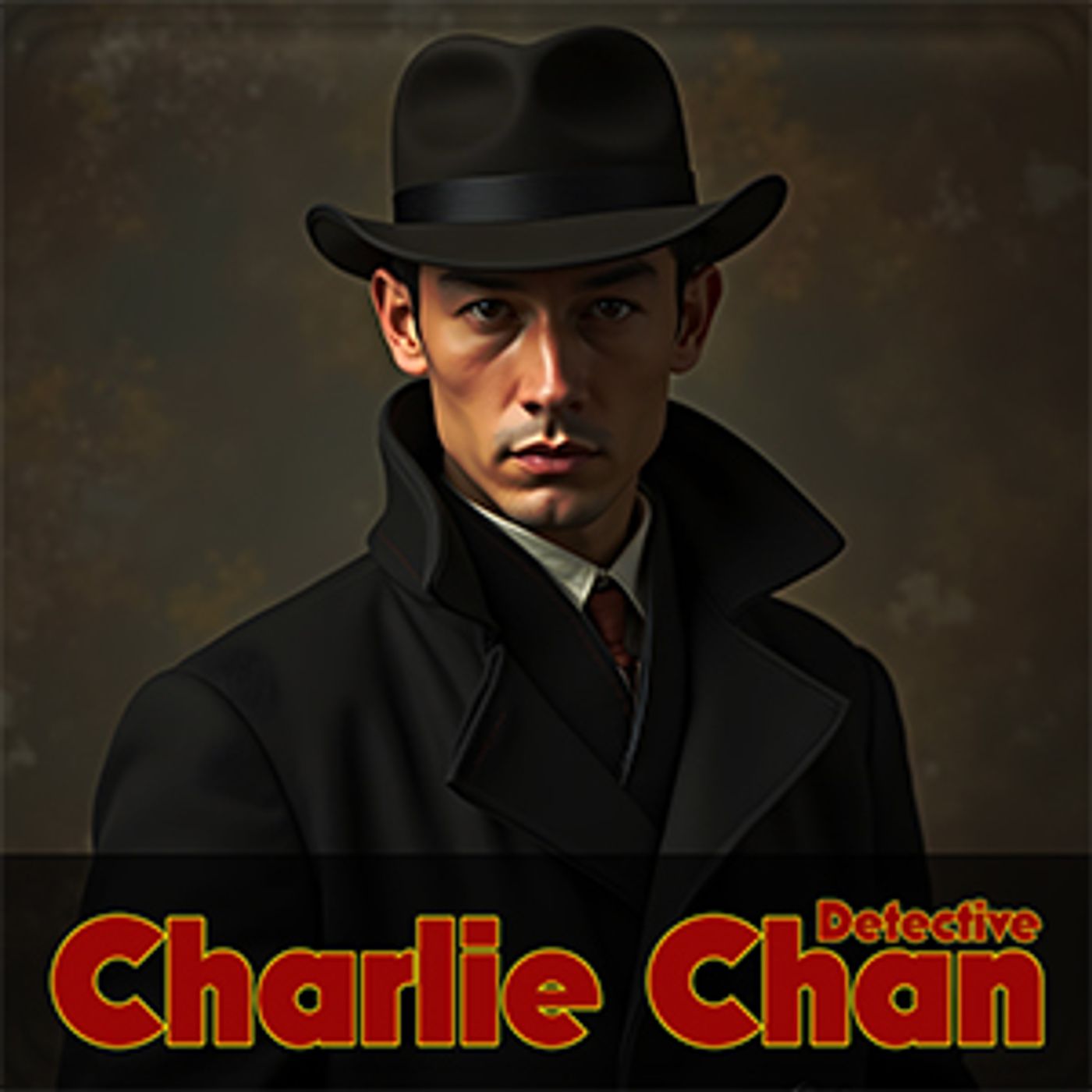
The Great Detectives of Old Time Radio| Daily Mystery Dramas
Charlie Chan: Chan Gets Tough/The Telegram (EP4726)
00:33:42
Today's Mystery: Inspector Chan suspects that both John Ryder and Luis Romano have key information, but neither are willing to talk. Original Radio Broadcast Date: 1935 or 1936 Originating from Los Angeles Starring: Walter Connolly as Inspector...
Loading summary
Transcript211 lines
- [00:02]
Adam Graham
This Father's Day at Lowe's.
- [00:03]
Charlie Chan
Score free gifts for the greatest dad right now. Get a free Blackstone 8 piece accessory kit when you buy a Blackstone 28 inch griddle. Plus get two free select Craftsman V20 tools when you buy an RP brushless drill and impact driver combo kit. Shop these deals and more this Father's Day at Lowe's. We help you Save valid through 615 wall supplies. Last selection mirrors by location.
- [00:31]
Campaign for Tobacco Free Kids
Nearly 90% of kids who vape say flavors are why they do it. A lot of the flavors that I've heard are like peach, mango, watermelon. It makes it seem like more childlike and innocent. Oh, if I try this once, it won't be that much of a problem. But then eventually it becomes a problem. It's time to restrict the sale of flavored tobacco products in Oregon and protect our kids from nicotine addiction. Urge lawmakers to Pass Senate Bill 702A. Take action at flavorshookoregonkids.org for by the Campaign for Tobacco Free Kids Action Fund.
- [01:30]
Adam Graham
Welcome to the Great Detectives of Old Time Radio from Boise, Idaho. This is your host, Adam Graham. In a moment, we're going to bring you this week's episodes of Charlie Chan. But first, I do want to encourage you. If you're enjoying the podcast, please follow us using your favorite podcast software. So I want to let you know about one of our other podcasts and today I'm focusing on Public Domain Video Theater. This summer we are going to be bringing you three movies of 70 minutes or more, with the first one coming up this weekend. You can watch them on the video companion to this podcast, Public Domain Video theater over@videotheater.greatdetives.net on our YouTube channel and also on Spotify, where we are also reposting from our back catalog as we build an audience on Spotify. So do check that out. Now, from 1935 or 1936, here are our next two chapters. Chan gets Tough and the Telegram.
- [03:03]
Narrator
The most delightfully fascinating character in the realms of mystery. Charlie Chan.
- [03:29]
Charlie Chan
Sam.
- [04:13]
Narrator
At Pine View, near beautiful Lake Tahoe, Ellen Landini and Dr. Swann have been murdered. Suspicion had pointed definitely toward Dr. Swann, but with the finding of his body, all the guests at Pine View fall under renewed suspicion. In the eyes of the law. Every person there had ample motive. Each could have killed the famous singer, and no one really has a satisfactory explanation of his or her actions at the time the crime was committed. Charlie Chan has questioned and re questioned John Ryder Landini's second husband and finally, after considerable thought, the Honolulu detective bluntly accuses Ryder of thinking that he. Ryder knows who murdered Landini.
- [04:55]
Ellen Landini
You must be out of your mind, Chan, to suggest such a thing.
- [04:58]
Charlie Chan
No, Mr. Ryder. I am not given to making rash accusations. You have been withholding vital information. You have told half truth. These things you cannot deny.
- [05:11]
Ellen Landini
I have told you before, Chan. Neither you nor the entire police force can make me say what I don't wish to say.
- [05:18]
Charlie Chan
Then you have no desire to assist in the capture of the murderer? No wish to see Madame Landini's untimely death?
- [05:25]
Ellen Landini
Quite frankly, Chan, I really don't care. I freely admit that I hated her. She. She treated me as no one should treat a sick dog. A murderer can go scot free for all of me.
- [05:37]
Charlie Chan
Mr. Ryder, I. I am ashamed of you. You do not realize the seriousness of your statement. But more than that, and more disappointing than that, your callousness Ill becomes a man of your intelligence. Ill becomes a man moving in the society to which you belong. Come in. Oh, Mr. Ward.
- [06:03]
Ellen Landini
Dudley. James got the idea in the back of his head that I know who the murderer is.
- [06:08]
Adam Graham
What?
- [06:08]
Ellen Landini
What's that?
- [06:09]
Charlie Chan
My exact words were, I believe, Mr. Ward. I have reason to believe that Mr. Ryder knows who murdered Madame Landini.
- [06:19]
Ellen Landini
Surely you must be mist. If John knew, he would most certainly tell.
- [06:25]
Charlie Chan
So sorry to be in contradiction to you, Mr. Ward, but I disagree. Mr. Ryder would never tell.
- [06:33]
Ellen Landini
For once, Chan is right. But, John, that's a very curious attitude to take. A very serious attitude to take. Sorry, Dudley, but that's the way I feel. If there's nothing else in the way of an inquisition, I'm going downstairs to join in a rubber fridge. I'll join you in a moment, John. Something must have upset John Ryder. He isn't generally stubborn. Tell me, Inspector, are we any nearer a solution?
- [07:01]
Charlie Chan
Mr. Ward, we are very close to solution. But as to being close to material evidence which will obtain for State a conviction, no, not so close.
- [07:15]
Ellen Landini
Come in.
- [07:16]
Ms. Beaton
Here you are, Mr. Chairman. Good news for you. Yes, A letter postmarked Honolulu.
- [07:21]
Charlie Chan
Oh, thank you so much, Ms. Beaton.
- [07:23]
Ellen Landini
I'm going down to arrange about lunch. If you need me, I'll be in the kitchen talking to Mrs. O' Farrell.
- [07:29]
Charlie Chan
Yes, Mr. Ward. No, do not go, Ms. Beaton. Please sit down.
- [07:34]
Ms. Beaton
Don and his father are on their way up. Oh, yes.
- [07:37]
Charlie Chan
Here they are now landed. Come in, Sheriff. Mr. Holt. Honored that you should join us again. Am I excused? For a moment while I read contents of letter from honorable mother of my children.
- [07:52]
Ms. Beaton
Of course, Mr. Chan, that goes without saying.
- [07:54]
John Ryder
There you are, dad. Sit down by the window.
- [07:57]
Ellen Landini
Thank you, son.
- [07:58]
Ms. Beaton
Who brought you over? Mr. Hughes.
- [08:00]
Ellen Landini
Cash. Cash Shannon Don's deputy.
- [08:03]
John Ryder
I'll bet he suggested it.
- [08:04]
Ellen Landini
Well, son, now that you mention it, he did.
- [08:07]
John Ryder
I knew it. He heard there was a pretty girl over here. And he drove that old tin can just as fast as he could. I'll bet he only hit every second bump in the road.
- [08:18]
Ms. Beaton
Well, Mr. Chan, good news from Punchbowl Hill.
- [08:21]
Charlie Chan
Yes, yes, Ms. Beaton. We have additional reasons for speeding solution to Flandini's murder.
- [08:31]
John Ryder
Yeah.
- [08:32]
Charlie Chan
I must soon leave for Honolulu. To be in time for first birthday of sun. I hope, son.
- [08:39]
Ms. Beaton
You hope?
- [08:40]
Ellen Landini
I didn't know you had a baby, Mr. Chan.
- [08:42]
Charlie Chan
Perhaps words first birthday are ambiguous. Perhaps more correct to say initial birthday.
- [08:51]
Ellen Landini
Kind of anxious to get home, aren't you, Mr. Chan?
- [08:54]
Charlie Chan
Indeed, yes, Mr. Holt. Man gets very lonesome away from center of family circle. Larger that circle is more lonesome man gets, it seems to me. And I have very large family circle, Mrs. Chan. And 11 children.
- [09:16]
Ms. Beaton
Tell us about them, Mr. Chan.
- [09:18]
Charlie Chan
What shall I say? Mr. Chan is most delightful person. Children of them I am most fond and proud parent Home itself. Besides, beautiful setting. Is source of inspiration and constant source of joy.
- [09:39]
John Ryder
I'll bet it's beautiful.
- [09:41]
Ms. Beaton
I'd like to see it.
- [09:42]
Charlie Chan
Perhaps someday. You may.
- [09:44]
Ms. Beaton
Well, now, Mr.
- [09:45]
Charlie Chan
Chair. Yes, I am serious. However, we have business to discuss. I have had very strange interview with Mr. Ryder. Which did nothing else but convince me that he thinks he knows who murdered Landini.
- [10:02]
John Ryder
He thinks our Singh did it, eh?
- [10:04]
Charlie Chan
That is correct. He apparently has followed same line of reasoning as we.
- [10:09]
John Ryder
But don't forget that Ryder was the one who might have tried to throw blame on AH Singh. By bringing up the fact that AH Singh had broken his glasses.
- [10:16]
Ellen Landini
Yeah, but, son, that wouldn't change the main point. That AH Singh's glasses were broken. And that the fellow who mixed the cigarette box lids. And fetched the wrong colored scarf. Wasn't seeing any too well.
- [10:30]
Charlie Chan
And added to that is a disturbing element of Mr. Hugh Beaton. Having heard Landini order someone to get her scarf.
- [10:39]
Ellen Landini
Darn it, if that boy sing don't quit cropping up in this case, it'll just naturally break my heart.
- [10:47]
Ms. Beaton
May I say something? I don't think that Romano's surprise was very genuine. When he learned that Landini had never signed her new will. The will in which she was to leave everything to Hugh.
- [10:58]
Charlie Chan
That is quite correct, Ms. Beaton. One should remember that even if one wins the race. The Torn Sandal betrays the stumble. Romano should have realized that I would make discovery that he wrote Ms. Meecher asking about said will.
- [11:16]
John Ryder
But look here, Inspector. If Romano had wanted to throw suspicion on anyone, he could have thrown plenty on our thing.
- [11:22]
Charlie Chan
That is true, Sheriff. Perhaps it is that Mr. Romano spoke truly when he said that he had given us clues. Importance of which no one of us is able to grasp. Perhaps when you go, Mac eye, you had better send Mr. Romano to see me go.
- [11:41]
Ms. Beaton
Makai. What's that?
- [11:44]
Charlie Chan
Another word of my native Hawaii. That you will have working knowledge of Hawaii before you make trip to paradise. The Pacific. Makai means below, down, underneath. No, on second thought, I shall accompany you. Ah, I perceive Mr. Romano entering own room.
- [12:08]
Mr. Romano
Oh, Mr. Chan, if possible, I would like word with you.
- [12:13]
Charlie Chan
Certainly, Mr. Romano. I will join you all downstairs. That's correct. You are our pupil? Yes, Mr. Romano.
- [12:22]
Mr. Romano
Will you sit down, please?
- [12:24]
Charlie Chan
Thank you. And what, Mr. Romano, is troubling you, Mr. Chan?
- [12:29]
Mr. Romano
This news I have received, this fortune which have been dropping my lap, so to speak, it has made vast difference in my life.
- [12:37]
Charlie Chan
Pleasant one, no doubt.
- [12:39]
Mr. Romano
Naturally. From a pupper I ascend suddenly to a man of property. What is my first reaction? To get away from this spot, lovely as it may be, to hasten to New York, to realize my inheritance to London, of Paris, the continent, where I shall feel at home. I shall sit in the twilight in the piazza at Venice while the band plays music. Ah, yes, amuse it. Perhaps again I shall conduct opera. Who knows? Oh, but I ramble. Tell me, Mr. Chan, we unlucky ones who cannot give a satisfactory account of ourselves, how long must we languish here?
- [13:18]
Charlie Chan
You must languish till guilty person be found.
- [13:22]
Mr. Romano
Then we may go.
- [13:23]
Charlie Chan
Those who are not concerned, yes.
- [13:26]
Mr. Romano
But one who had information, who perhaps assist in the arrest of the guilty. What of him?
- [13:32]
Charlie Chan
That one would, of course be forced to linger here.
- [13:35]
Mr. Romano
Ah, that would be so unfortunate for him. But then I am not surprised that long ago I find that there is no justice in American law.
- [13:43]
Charlie Chan
And this information you have, Mr. Romano, which will assist in arrested murderer. What is it?
- [13:49]
Mr. Romano
I do not understand them, Mr. China.
- [13:51]
Charlie Chan
I thought, Mr. Romano, that what I asked you was this information, which you fear may keep you here longer than you desire to stay. What is it?
- [14:02]
Mr. Romano
Oh, you are mistaken, Mr. Chen. I do not have such information. I was merely asking, shall we say, hypothetical question.
- [14:11]
Charlie Chan
So sorry, Mr. Romano, but you are not telling truth. You have information, but to disclose same. You are afraid, senor.
- [14:19]
Mr. Romano
You are attacking my honor.
- [14:21]
Charlie Chan
I am enough. Please. You will not tell me?
- [14:24]
Mr. Romano
I have nothing to say, Mr. Chandler.
- [14:26]
Charlie Chan
Later, perhaps, Mr. Romano. After I have received answer to wires sent to Madame Landini's lawyers in New York. You may change your mind.
- [14:36]
Mr. Romano
You have a wire Them? What do you wire them?
- [14:40]
Charlie Chan
That Mr. Romano used to learn in due course. One thing sadly lacking in this mystery is true motive for murder. If person knew that he would benefit by death of Madame Landini. Then that person would probably be arrested by police.
- [14:59]
Mr. Romano
But, Mr. Chandler, that is not a fair. It is outrageous, monstrous. Why should I anyone be?
- [15:07]
Charlie Chan
Ah, drama. Then shall we go together? But perhaps I should not insist. Perhaps now you do not have very good appetite for lunch.
- [15:22]
Narrator
So Romano has information and then attempts to deny it. And what of his alarm at the fact that Charlie Chan has wired Landini's New York attorney? Your sponsor has a word for you. After which Inspector Chan will be with us again. Well, Mr. Chan, what have you in mind for tonight?
- [15:51]
Charlie Chan
Letter from my honorable wife. Mr. Wilson is uppermost in my thoughts. I am reminded of Chinese emperor many centuries ago. Who was informed that efforts were being made to remove him from throne. He replied, palace walls may crumble under the onslaught. The peacock throne may be occupied by usurper. My yellow jacket may be torn from my back. But if the wife of my youth remain true, I shall be yet an emperor.
- [16:26]
Narrator
Thank you, Mr. Chan, and good night. Charlie Chan has just risen from the lunch table. When Ajit AH Singh enters with a telegram in his hand.
- [16:35]
Charlie Chan
On a Telegram for you, Mr. Chan. Thank you. Ah Singh. Excuse me, please, while I read this.
- [16:42]
Ms. Beaton
Certainly.
- [16:43]
John Ryder
Cash coming back for you, dad?
- [16:44]
Charlie Chan
Yes.
- [16:45]
Ellen Landini
Said he'd pick me up about 7.
- [16:48]
John Ryder
News, Mr. Chan?
- [16:49]
Charlie Chan
Yes, indeed, Mr. Romano?
- [16:52]
Mr. Romano
Oh, yes, Mr. Chan.
- [16:54]
Charlie Chan
When you finish your lunch, please join us in the study.
- [16:58]
Mr. Romano
If it is really necessary, I was a good.
- [17:01]
Charlie Chan
Please, Mr. Romano, join us in the study. Can I help you, Mr. Holt?
- [17:07]
Ellen Landini
Yeah, yeah. If you don't mind, Mr. Chan, bring Ms. Beaton.
- [17:11]
Charlie Chan
Sheriff, if you will be so kind.
- [17:13]
John Ryder
Right now. Come on, Leslie.
- [17:15]
Ms. Beaton
All right.
- [17:16]
Ellen Landini
Is serious, Mr. Chan?
- [17:18]
Charlie Chan
Quite, Mr. Holt. Telegram from Ellen Landini's New York attorney.
- [17:24]
Ellen Landini
Oh, that's it, is it?
- [17:25]
Charlie Chan
Yeah. Top step, Mr. Holt? Yeah.
- [17:29]
Ellen Landini
I get so inclined to count them automatically.
- [17:32]
John Ryder
Well, what is it, Inspector?
- [17:34]
Ms. Beaton
You look very serious, Mr. Chand.
- [17:35]
Charlie Chan
Indeed? Yes, Ms. Beaton. Despite expectations of our profession, approaching arrest always produces depressing feeling. Be so kind as to close doors, Sheriff.
- [17:50]
Ellen Landini
Really.
- [17:51]
Charlie Chan
Thank you so much. Telegram is from Landini's lawyers, New York. It informs us that Mr. Romano knew that new will leaving property to Hugh Beaton. Had not been signed according to information. Romano wrote for information previous to arrival at Pine View and that he received information likewise before arrival at Pine View.
- [18:19]
Ellen Landini
That is serious.
- [18:20]
Charlie Chan
Now becomes necessary, Ms. Beaton, to ask you to most carefully search your memory as to whether or not Mr. Romano was last person you saw leaving study night of Landini's murder.
- [18:36]
Ms. Beaton
Inspector, I. I don't want to be the one.
- [18:39]
John Ryder
I know, Leslie, but this is. Well, this is duty.
- [18:43]
Ms. Beaton
But I'm so afraid of being wrong if I should have been mistaken.
- [18:47]
Charlie Chan
Adopt attitude, Ms. Beaton, if you please, that you are on witness stand and are answering under oath to best of your ability.
- [18:57]
Ms. Beaton
Very well, to the best of my ability. My memory says Mr. Romano left the study first, Mr. Dr. Swan second, and Mr. Ward last.
- [19:09]
Charlie Chan
Romano did not return.
- [19:11]
Ms. Beaton
I didn't see him.
- [19:12]
Ellen Landini
Well, if that's right, it couldn't very well have been Romano.
- [19:16]
John Ryder
Not unless he walked through the other rooms out onto the balcony and waited his chance. Come in.
- [19:24]
Charlie Chan
Sit down. Mr. Romano, please. Mr. Romano, we have asked you here to tell us, please, what it is you hesitated to tell me before lunch.
- [19:36]
Mr. Romano
I am sorry, but I do not know what it is that you mean.
- [19:39]
Charlie Chan
I think you do, Mr. Romano. You asked me before lunch what would happen to one who was possessed of information which would lead to capture of murderer.
- [19:51]
Mr. Romano
I tell you, I know nothing. If I said to Mr. Chen. Observe that. I say if.
- [19:57]
John Ryder
Look here, Romano, you know something, so don't deny it. You don't want to tell because you're afraid it'll delay you in getting back to the bright lights and spending Landini's money. Well, it might. I can't promise. But if I can fix things so that it won't, I will. But one way or the other. Romano, you're telling or I lock you up. Get that and get it quick.
- [20:18]
Mr. Romano
I am. I am so upset. This American law, it is so confusing. What I saw, it was nothing. But I will tell you. I am in my room, looking out at a flying field. I see plain light and for time I watch it. Then it comes to me. Landini will be going now. Have I accomplished my purpose?
- [20:39]
Ellen Landini
No.
- [20:40]
Mr. Romano
A few bills are thrown to me like I am a beggar. I, who have every right to demand. Am I not the husband? Have I not made Landini great, a singer? I go to my door. I will demand from Landini a definite appointment in Reno. I opened the door. I see a man, somewhat in the manner I am not, is the empress. Do you understand? But this man, he looks. He acts stealthily. But Then while I'm thinking, the shuttering's out.
- [21:09]
John Ryder
That's all right. The man who was the man.
- [21:11]
Mr. Romano
The man I saw. This man who sleeps stealthily from door to door. The man was a singer.
- [21:19]
John Ryder
All right, Romano. You keep that to yourself.
- [21:22]
Mr. Romano
Me, I shall not talk. First Landini, then a swan. I have no liking to be the third. It is you, I hope, that will keep these facts which I disclose to yourselves.
- [21:33]
John Ryder
Yes, you can go now, eh, Mr. Chan?
- [21:35]
Charlie Chan
Yes. That will be all. Thank you so much. It is useless to polish and to burnish after the guilt has worn away. No matter what we do, what we ignore, we revert always to our seeing.
- [21:55]
Ellen Landini
Yeah. For all we do, for all we try to hide it, it keeps coming back to our sing.
- [22:02]
Ms. Beaton
But, Mr. Chen, Romano is the one who profits by Landini's death. Ah Singh does not.
- [22:09]
Charlie Chan
But money would not tempt Ah Singh to murder. We at last, me included, cannot fathom the depth to which ideas of loyalty would carry a thing.
- [22:24]
John Ryder
But just the same, couldn't Romano be lying? He lied before. He could be making up this whole thing about AR Singh.
- [22:31]
Ellen Landini
Yes, something to that, my boy. If Romano was trying to cook something up, who would he pick on? Poor, defenseless Ah Singh, who ain't so quick on the comeback. And yet I ain't so sure.
- [22:48]
Charlie Chan
No. Why?
- [22:50]
Ellen Landini
Well, if Romano was trying to fix things so it would look like our sing, would he have done it so doggone well? Wouldn't he have said that he saw Syng creeping into the study and then heard the shot? No, Inspector. It rings too true. It ties in with the facts too well.
- [23:13]
Charlie Chan
Yes, Mr. Holt. It laughs much too well.
- [23:18]
Ms. Beaton
But. But it's impossible.
- [23:20]
Charlie Chan
What, Ms. Beaton? What is impossible?
- [23:23]
Ms. Beaton
Singh would have had to pass the door to the room I was in twice. And I didn't even see him once.
- [23:29]
John Ryder
But why twice, Leslie? He escapes through the balcony window. You wouldn't have seen him that time.
- [23:34]
Ms. Beaton
But don't you see? The door to Landini's old room, the room Landini used to have, was locked. That had to be unlocked before Ah Sing could make his escape.
- [23:44]
John Ryder
But Ah Singh would have unlocked that on his way to the study to kill landini.
- [23:48]
Charlie Chan
Ah, Ms. Beaton, I congratulate you. No, Sheriff. Ah Singh would not go to the study that way first time. How could he know that Landini would be alone?
- [24:03]
Ellen Landini
Dargon, you're right. Yes, Mr. Holt, but it really don't change the setup. Singh comes to the study with a blanket over his arm. He finds Landini alone. He goes out Slips through the empty room, unlocks the door to the balcony. And he goes back and closes the study door. After, he gets into the study, kills Landini, then goes out to the balcony and locks that door after him.
- [24:31]
John Ryder
Guess it looks that way.
- [24:32]
Charlie Chan
All right, Sheriff. Look here.
- [24:34]
John Ryder
What, Inspector?
- [24:35]
Charlie Chan
Look in the mirror. What do you see?
- [24:38]
John Ryder
Cecile looking up and down the passage. She's got something in her hand that she's trying to hide.
- [24:43]
Charlie Chan
Most furtive manner suggests that we investigate. You come with me, Sheriff. Quickly, but quietly. Cecile. Cecile.
- [24:54]
Ms. Beaton
Oh, Monsieur Chen. You require something?
- [24:57]
Charlie Chan
We. Sheriff and I would like to speak with you a moment.
- [25:01]
Ms. Beaton
What?
- [25:01]
Charlie Chan
Yes, Monsieur Chen, why did you so very carefully look up and down passageway just now? Perhaps you were looking for something.
- [25:13]
Ms. Beaton
No, Monsieur Chen. But I am so very afraid. Ever since that night, madame.
- [25:19]
Charlie Chan
Yes, yes, we understand that, Cecile. But what are you trying to hide there in the folds of your skirt?
- [25:25]
Ms. Beaton
Me, monsieur? Why? Why, nothing, Monsieur Cecile. Not a single Cecile.
- [25:31]
John Ryder
I. I'd hate to have to do it. But unless you show us what you're trying to hide, I'll have to get Ms. Beaton or Ms. O' Farrell to search you.
- [25:38]
Ms. Beaton
Oh, it is nothing. Only I have been so afraid. My husband, Michael, he bring me this for protection.
- [25:46]
John Ryder
A.45.
- [25:48]
Charlie Chan
So it would appear.
- [25:49]
Ms. Beaton
But look, monsieur, this gun, she has not been what you call fire.
- [25:54]
Charlie Chan
You understand how to use this, Cecile? Me?
- [25:58]
Ms. Beaton
Oui. My husband, yes.
- [26:00]
Charlie Chan
Your husband taught you? You're about to say we.
- [26:04]
Ms. Beaton
He was in the war. This is his.
- [26:07]
Charlie Chan
He was aviator?
- [26:09]
Ms. Beaton
Oh, no, monsieur. No. He would like to be. But he was sergeant in infantry and a crack shot.
- [26:16]
Charlie Chan
Cecile.
- [26:17]
John Ryder
But yes, Michael would say, Inspector, this.45 is fully loaded. All right. But if I know my guns, it has been fired. And not so long ago, either.
- [26:28]
Narrator
Hossing and Cecile and perhaps Ireland. Could it have been Ireland or Cecile who fired the shot which misled Charlie Chan for so long? We'll have to leave it to the inspector to pursue this latest development. When you have heard your sponsor's message, Inspector Chan will be with us again.
- [26:49]
Ms. Beaton
It.
- [27:14]
Campaign for Tobacco Free Kids
Sam.
- [27:54]
Narrator
Well, Inspector Chan, have you a parting thought for us this evening?
- [27:58]
Charlie Chan
Indeed, yes, Mr. Wilson. I am thinking of Chinese proverb which says, when man is seen continuously in company of worthy persons, his name will be free from taint of scandal. But when man has reputation of consorting with persons of ill repute, protesting his innocence will avail him but little.
- [28:26]
Narrator
Oh, very true that is, Inspector. Thank you and good night.
- [28:30]
Charlie Chan
Thank you. The world.
- [29:07]
Campaign for Tobacco Free Kids
Use of flavored tobacco by teens is a crisis. Tobacco companies use flavors like cotton candy, watermelon ice and cool mint to hook kids like me. They seem harmless, but they aren't. Addiction to nicotine sets us up for a lifetime of health problems. Organ legislators can do something about it. Passing Senate Bill 702A will keep flavored tobacco away from kids. But there are just a few short weeks left for lawmakers to act. Take action to protect kids like me@ flavorshookorgonkids.org paid for by the Campaign for Tobacco Free Kids Action Fund.
- [29:41]
Adam Graham
Welcome back. Charlie Chan Getting Tough Seems more like Charlie Chan getting mildly annoyed and providing some limited poor pushback and trying to get compliance while offering mild rebuke. But I guess for this portrayal of Charlie Chan, that's getting tough. Also, I love the character moments in the first episode when he's talking about his family and his life in Hawaii. And to be honest, I think that sort of warmth and dimension to his character makes him stand out from many of his brethren in the world of fictional Golden Age detectives, which often get divided into things like hard boiled or more cerebral detectives. But the vast majority of the popular detectives of the era were bachelors, and even more were childless. Even with Nick Charles, who became a father in the Thin man movies, I don't think being a father redefined him. It caused him to clean up his act a bit, so he wasn't constantly plastered as he was in the first Thin man movie. But I think with Charlie Chan being A father of 11, it's such a big part of his character and who he is, and you can see the ease at which he goes into this sort of fatherly warmth that's really typical of his interactions. To me, I think that there are a lot of people who, when they think of Charlie Chan, they focus on things like his mannerisms or the way he talks. But his general demeanor and approach as a family man ground him. And I think it's an underrated appeal that makes him stand out, which I think is a good point to bring up. As we're approaching Father's Day at the time that we're first releasing this podcast, I have to say that Romano is climbing my suspect list. He's a little too eager to get his hands on the money. And I'm dubious of his tip about Auth Singh because pretending to be reluctant and having it dragged out of him could be an attempt to give this tip quote credibility. Also, if I could talk to Romano. As someone who has had reason to study the probate process recently, I hate to break this to you, but you're not going anywhere anytime soon. Presumably, her last will made you the beneficiary, and that will speed things along, but this is going through probate, and I kind of doubt you're the only person that she owes debts to. So all of those creditors are going to have to be paid, and there's going to have to be time for them to come out of the woodwork. In addition, recall the secretary stated the bulk of her wealth is tied up, remember, in real estate, which makes estates typically more complex and requires more time to process. Now, I appreciate this was in the 1930s, so 90 years ago, but I don't think the law has changed that much. Regardless of whether he's got to testify or not, he's not going to Europe, at least not on estate money for close to a year at the earliest. Well, now it's time to thank our Patreon supporter of the day, and I want to go ahead and thank David, Patreon, supporter since March of 2024, currently supporting the podcast at the shamus level of $4 or more per month. Thanks so much for your support, David. And that will actually do it for today. If you are enjoying the podcast, please follow us using your favorite podcast software. And please be sure to rate and review the podcast wherever you download it from. We will be back next Tuesday with another episode of Charlie Chan, but join us back here tomorrow for Broadway's My.
- [33:55]
Ellen Landini
Beat, where, say, tell me about it.
- [33:57]
Charlie Chan
When you heard the shot.
- [33:58]
Ellen Landini
What?
- [33:58]
Charlie Chan
You didn't. Oh, I didn't? Didn't what? Oh, I didn't hear a shot. What attracted me was a smell of smoke. I rushed in, a waste basket was on fire, and. Mr. Bristol. Wait a minute. What's that?
- [34:11]
Ellen Landini
Hello?
- [34:11]
Charlie Chan
Old phone in there. It's been doing that ever since. Receiver just dangling there. I. I wouldn't touch it.
- [34:19]
Ellen Landini
Hello? Hello, Frank. What's the idea keeping me waiting? What happened?
- [34:24]
Charlie Chan
You told me to.
- [34:25]
Ellen Landini
Hang on. It's Eddie.
- [34:28]
Charlie Chan
You're not Frank. Who are you? The police. The police? What's happened? What's happened up there? You're talking to Mr. Briscoe? Yes. My name's Eddie Cutler.
- [34:38]
Ellen Landini
I called Frank for a golf day.
- [34:40]
Charlie Chan
He said, excuse me, there's someone at the door. Hang on.
- [34:43]
Ellen Landini
He said, where are you now, Mr. Cutler? At my place of business on Wall Street.
- [34:47]
Charlie Chan
What happened? A murder. Stick around, Mr. Cutler.
- [34:51]
Ellen Landini
I want to talk to you.
- [34:52]
Adam Graham
I hope you'll be with us then. In the meantime, send your comments to box Thirteenreatetectives.net Follow us on Twitter at Radio Detectives and check us out on Instagram. Instagram.com Great detectives from Boise, Idaho, this is your host, Adam Graham, signing off.
- [35:13]
Campaign for Tobacco Free Kids
Use of flavored tobacco by teens is a crisis. Tobacco companies use flavors like cotton candy, watermelon ice, and cool mint to hook kids like me. They seem harmless, but they aren't. Addiction to nicotine sets us up for a lifetime of health problems. Oregon legislators can do something about it. Passing Senate Bill 702A will keep flavored tobacco away from kids. But there are just a few short weeks left for lawmakers to act. Take action to protect kids like me@vors hookoregonkids.org paid for by the Campaign for Tobacco Free Kids Action Fund.