← The Great Detectives of Old Time Radio| Daily Mystery Dramas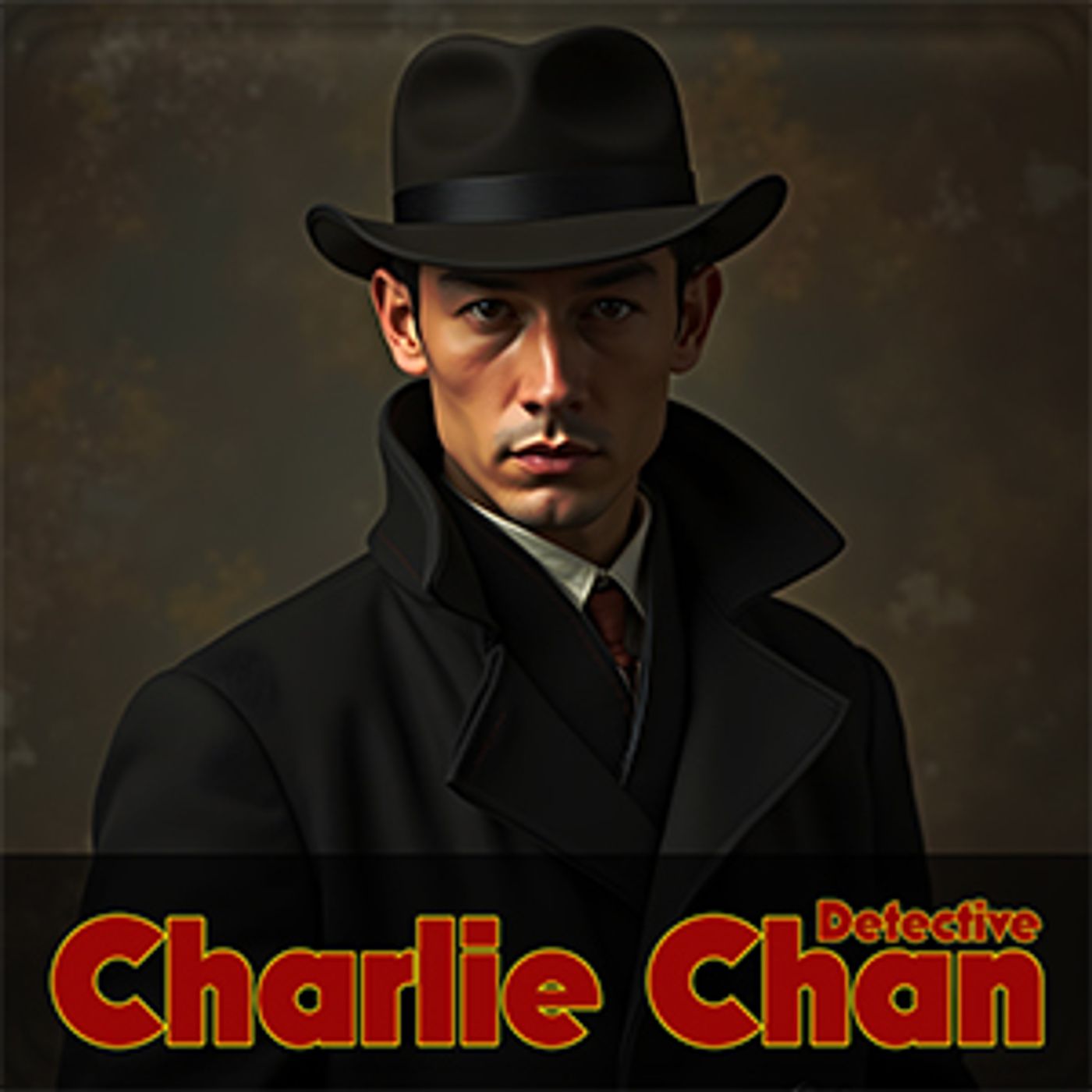
The Great Detectives of Old Time Radio| Daily Mystery Dramas
Charlie Chan: Discussing Gerald's Alibi, Willoughy Won't Tell Name of Officer, and Solution of the Murders is at Hand (EP4786)
00:43:53
Today's Mystery: Inspector Chan knows who killed Colonel Willoughby, but how can he prove it? Original Radio Broadcast Date: 1936 Originating from Los Angeles Starring: Walter Connolly as Inspector Charlie Chan Support the show monthly...
Loading summary
Transcript279 lines
- [00:00]
Kristen Bell
Hi, I'm Kristen Bell and if you know my husband Dax, then you also know he loves shopping for a car.
- [00:05]
Charlie Chan
Selling a car, not so much.
- [00:07]
Adam Graham
We're really doing this, huh?
- [00:09]
Kristen Bell
Thankfully, Carvana makes it easy.
- [00:10]
Inspector Duff
Answer a few questions, put in your.
- [00:12]
Kristen Bell
VIN or license and done. We sold ours in minutes this morning and they'll come pick it up and pay us this afternoon.
- [00:19]
Inspector Duff
Bye bye Truckee of course, we kept.
- [00:22]
Kristen Bell
The favorite.
- [00:24]
Evelyn Mitchell
Hello other Truckee.
- [00:26]
Kristen Bell
Sell your car with Carvana today. Terms and conditions apply.
- [00:32]
Evelyn Mitchell
Lowes has the Labor Day deals you need to give your home a new look. Buy one, get one free, select interior paint via Visa gift card, rebate, then add the final touch with two for $8 on select 2.5 or 3 quart mums. Refresh your home and save big while doing it. Lowes we help you Save valid through 93 mums offer in store only. Selection varies by location while supplies last. More terms and restrictions apply. See Lowes.com rebates for detail.
- [01:00]
Inspector Duff
Sam.
- [01:29]
Adam Graham
Welcome to the Great Detectives of Old Time Radio from Boise, Idaho. This is your host, Adam Graham. In a moment, we're going to bring you this week's episode of Charlie Chan. But first I do want to let you know about our other podcast and I want to encourage you to check out the great adventurers of Old Time Radio. Every week we are bringing you two Old Time Radio adventure series going from start to finish. Right now we're working through the interplanetary adventures of Flash Gordon, which drops today, and of course cloak and dagger. Check it out@greatadventures.info or wherever you get your podcast from. Now we are going to bring you three episodes today as we wrap up the Willoughby Murder mystery. I do want to caution you that the last one is a bit lower quality than the other two. It's not bad listening quality, certainly. Certainly not as bad as some of the Falcon episodes we've had in recent weeks. But the first two episodes, like all the other episodes we played in the Willoughby murder case, have been from a group of programs that were greatly improved versus what had been circulating, as well as adding some missing episodes. The last episode is just a bit more standard quality, so just be aware of that. But it's perfectly listenable. So here are today's episodes discussing Gerald's alibi Willoughby won't tell the name of officers and solution to the murders is at hand.
- [03:36]
Evelyn Mitchell
The most delightfully fascinating character in the realms of mystery, Earl Durr Bigger's Charlie Chan in the case of the murder of Colonel Willoughby, Charlie Chan Is convinced that he knows who the murderer is. Gerald Willoughby, the murdered man's nephew, apparently has an ironclad alibi. He was in Chicago when the colonel was killed. And he was en route to San Francisco when Simmons, the butler, was killed. But Inspector Chan, after duly pondering the case, sees in the nephew. The only man with a vestige of motive. Sees in his own theoretical case the only reasonable assumption possible. The island detective believes that for reasons unknown, Gerald had desired both the colonel and his son out of the way. The bulky Honolulu detective sits in a chair by the library fire, talking to Sergeant O' Brien and Ms. Evelyn Mitchell, the murdered man's secretary.
- [05:35]
Charlie Chan
You see, Sergeant, in this case we are dealing with very prominent man. And we must prove sufficient motive if we are to even force an arrest.
- [05:45]
Sergeant O'Brien
But how in the world are you going to do that, Inspector? You can't prove a motive when you haven't got a single piece of writing. Not a solitary witness. Now, if it was money, that's easy. Or a woman, that's easier.
- [05:58]
Mr. Blake
A woman Or Reggie. Sir Reginald did say something about both cousins being in love with the same woman. Gerald's wife. Oh, but that hardly fits the case as far as the murder of the colonel is concerned.
- [06:10]
Charlie Chan
But it may. Who can tell? Observe, if you please. Peculiar situation. I am convinced that Gerald killed his uncle, then killed Simmons. Yet if you should ask me for motive, I can only give a suggestion. If you say Gerald has alibi, he was in Chicago when first murder was committed to and on planes flying to San Francisco when second murder was committed. I can only say it is for purpose of proving that said Gerald has motive, that we are here. It is to break said alibi that we must bend all our efforts.
- [06:50]
Sergeant O'Brien
And you're after feeling quite sure that Mr. Duff won't help us.
- [06:55]
Charlie Chan
That is not strictly correct, Sergeant. But Inspector Duff has known Gerald Willoughby for years. He cannot conceive of his being guilty. He does not wish to find him guilty.
- [07:06]
Mr. Blake
Nor does Sir Reginald. Not that he has said anything, but. Well, I just know, that's all.
- [07:12]
Charlie Chan
Quite so, Ms. Evelyn. Both Duff and Sir Reginald will assist us to do everything necessary when we present them with some semblance of proof. But to present moment, all I can place before them a theoretical case which I have built because there is no practical evidence of contrary nature.
- [07:33]
Sergeant O'Brien
I can understand Duff's feelings. I'm the same way when it comes to making a move that will bring a case before the district attorney or the grand jury, I. Well, more than once I've known who a Murderer was. But I couldn't do anything about it. I didn't have the proof.
- [07:49]
Charlie Chan
Quite true, Sergeant. And that is the situation here. It is not murder we have to find. It is method whereby he committed murder.
- [07:58]
Mr. Blake
But we can't get away from the fact that Gerald sent that telegram from Chicago before Simmons was killed. Which proves that he was in Chicago the day after his uncle's murder. An impossibility.
- [08:09]
Charlie Chan
Do you recall the true particulars of the murder in the Rue Morgue? Not the story by the great author Edgar Allan Poe, but the actual case from which he built his story of the ape.
- [08:22]
Sergeant O'Brien
It's kind of hazy in my mind.
- [08:24]
Mr. Blake
I always thought it was a piece of fiction.
- [08:26]
Charlie Chan
By no means. The murder took place at number 16 LaRue Morgue. Two o' clock in the morning. Rose Delacourt goes into her apartment. Observe. The woman was seen to enter her room. Stout oak door was bolted on the inside. The window likewise, was vaulted on the inside. The chimney so small that not even a cat could get in or out. Yet here is a woman stabbed with such force that the blade, which must have been like the blade of a sword, goes through the body to the mattress. Not a cry, not a sound, yet the woman is dead. It is an unsolved crime. But while no one can prove who committed it, it was committed. While we have not so far proved that Joel committed this murder, he is the only one with motive. The fact that we cannot prove how he did it does not permit us to shrug shoulders, so to speak, and retire from case.
- [09:34]
Sergeant O'Brien
I'm with you, Inspector. Somehow, someplace we've missed a pint. Somewhere the murderer slipped. Somewhere we've slipped. Some little thing we haven't given the.
- [09:46]
Charlie Chan
Right part to correct. Sergeant, let us retrace steps for a moment. Night of murder. Colonel Willoughby is standing in gymnasium. Note which he believes was written by Duff is slipped into his hand.
- [10:00]
Mr. Blake
He walks about 12 steps to the hallway. And in less than two minutes, you, Mr. Chan, find him lying there dead.
- [10:07]
Sergeant O'Brien
The very next day, Simmons answers the door. We go out to see what's happened to him within two minutes. And he only says records. I saw it was record.
- [10:23]
Charlie Chan
Record. Think, Sergeant. Is it not strange that a man in his last moment should use the word records in preference to papers?
- [10:40]
Sergeant O'Brien
Records, military records or police records?
- [10:43]
Charlie Chan
Be so kind as to ask Duff and Sir Reginald and Joel to step in the room, please. Also, Mr. Blake. I wish to ask favor of him.
- [10:53]
Sergeant O'Brien
Sure, Inspector.
- [10:54]
Charlie Chan
Thank you so much, Mr. Evelyn. We have not searched Colonel's business papers as thoroughly as we have searched private correspondence. Perhaps in that we have been somewhat negligent, we shall correct it. You have papers here in this black briefcase.
- [11:12]
Mr. Blake
I'll spread the knot on the desk here by the window.
- [11:15]
Charlie Chan
I do not wish to appear hurried, but I am anxious to leave day after tomorrow by steamer.
- [11:21]
Mr. Blake
You think you actually believe you can solve this by then?
- [11:25]
Charlie Chan
I am confident of it. I am certain that with Mr. Blake's cooperation, we shall trap murderer into showing visible evidence of his guilt. And then confession will follow suit. Yes, I am certain of it. Yes. We have been discussing last words of Simmons. Words which he repeated record. We thought that record was strange word for dying man to you. Somehow persistent thought comes to us that in that word there is definite clue.
- [12:05]
Evelyn Mitchell
I've done quite a bit of thinking about that too, Charlie. But I can't think of any military records in connection with the case at all. Perhaps Gerald knows something. No, really, I don't. It's all very distressing. My cousin Douglas was ordered tried by court martial for cowardice. The papers carried the story. We were all very much upset.
- [12:24]
Charlie Chan
Naturally, it is distressing affair, as you say, to family of military reputation. You were in France at the time?
- [12:32]
Evelyn Mitchell
Yes. So, of course, I didn't know much about it. I was colonel of a territorial unit. Well, as I say, just a few days before the court was to convene, Douglas committed suicide.
- [12:42]
Charlie Chan
We now know, of course, that he did not. But that is what you thought at the time?
- [12:47]
Evelyn Mitchell
Yes. Well, we managed to have the thing hushed up then, but it almost broke Uncle's heart.
- [12:53]
Charlie Chan
How long afterwards was it before Colonel Willawood began to doubt that his son had committed suicide?
- [13:02]
Evelyn Mitchell
I can answer that, Inspector. The colonel came to me with the story that an old soldier, whom we now know to be Simmons, told the colonel that Douglas wasn't dead. He said that he never was guilty of cowardice. And the old man immediately started on a trip around the world to see if he could locate his son. He's been traveling ever since. 11 years now.
- [13:23]
Charlie Chan
And you, Mr. Willoughby, knew nothing of this?
- [13:25]
Evelyn Mitchell
I knew a little of it, yes. I was like my uncle. I didn't like the idea of the stigma of cowardice being attached to the family. But I know the army charges of cowardice aren't brought lightly. They're generally well substantiated.
- [13:38]
Charlie Chan
Quite so. But to return to the word record, no one can give leading thought on that point.
- [13:45]
Evelyn Mitchell
Afraid not, Inspector.
- [13:48]
Charlie Chan
Come in, please. Ah, Mr. Drake. Sit down, please. I have favor to ask of you. In one moment.
- [13:54]
Evelyn Mitchell
I'll be delighted the only other records I could think of, Charlie, were police records.
- [13:58]
Sergeant O'Brien
I thought of them too, Inspector, but that don't seem to help us much.
- [14:02]
Evelyn Mitchell
I can't see it either, Sergeant.
- [14:04]
Charlie Chan
Oh, before I forget. You have convinced Mr. Gerald that prisoner we have at present in jail is Colonel Sam Douglas.
- [14:12]
Evelyn Mitchell
Yes, I'm convinced. I don't see what on earth he was doing searching my uncle's papers.
- [14:17]
Charlie Chan
Quite clear, I think. Young man was fearful that he was to be disclosed. And for reasons best known to himself, he desires that the past be dead.
- [14:27]
Evelyn Mitchell
Naturally, no one at his age wants to be reminded of an experience of 20 years ago.
- [14:32]
Charlie Chan
Ah, but it is more than that. Think, please. Is there any other reason he might have for wishing proof not to become known?
- [14:42]
Evelyn Mitchell
Why, why, no.
- [14:44]
Charlie Chan
No, of course not. You are tired from Tripp, I understand. That will be all just now. Thank you so much. Oh, Inspector Duff. Will you stay behind for one moment, please, Mr. Blake?
- [14:58]
Evelyn Mitchell
Of course. I'm going down to the jail. Want to come, Evelyn? Ms. Mitchell.
- [15:03]
Mr. Blake
Do you mind, Mr. Chan?
- [15:04]
Charlie Chan
Indeed, no. I think little fresh air will do you good. Especially taken in company of Sir Reginald.
- [15:12]
Evelyn Mitchell
By Jove, you do notice things, don't you, Charlie? Come along, Evelyn. Right with you.
- [15:16]
Charlie Chan
Gerald Blake, would you be kind enough to invite all guests who were present night Colonel was killed to attend another gathering at your home?
- [15:27]
Evelyn Mitchell
Why, certainly, if. Well, if you have a reason.
- [15:31]
Charlie Chan
I have very definite reason. I intend to clear mystery.
- [15:35]
Evelyn Mitchell
When? I mean today or tomorrow.
- [15:38]
Charlie Chan
Tomorrow evening at seven.
- [15:40]
Evelyn Mitchell
Just as you say, Inspector.
- [15:41]
Charlie Chan
Sergeant, you are to stay with me tonight. We will complete our little plot.
- [15:45]
Sergeant O'Brien
I'll be Johnny on the spot.
- [15:47]
Charlie Chan
Inspector Duff, my old friend. I am going to play a role of Chinese Santa Claus tomorrow. Can you have British consul here as one of guests?
- [15:56]
Evelyn Mitchell
Certainly. But what's the big idea?
- [15:58]
Charlie Chan
I am going to vindicate honor of young man at present in jail. I wish official witness of confession of murderer that Lieutenant Douglas Willoughby was not cowardice. Charged by superior officer Charlie Chan.
- [16:13]
Evelyn Mitchell
Inspector Duff and Sir Reginald Bartoldy are guests at the Blake home in San Francisco. Where Colonel Willoughby, a world famous traveler, was giving a lecture on China. During the showing of the picture, the film started to slip. Inspector Chan, surprised that the colonel did not notice the blurred film. Orders the light switched on. The colonel is found murdered. The following day, the one man who could provide an explanation of the affair, Simmons the butler, is found at the front door. Shut through the heart. Inspector Chan going on the assumption that the whole case hinges on the colonel's search for his lost son. Builds a theoretical case. Against Gerald Willoughby, the murdered man's nephew. And we find Sergeant o' Brien of the San Francisco police. Discussing the case with the Honolulu detective in Mr. Blake's library.
- [17:02]
Sergeant O'Brien
Ah, here you are, Mr. Chan. I've just been after trying to get our prisoner down there in the jail to tell us something. But he won't say a word. That he won't.
- [17:12]
Charlie Chan
You advised him, of course, that his identity must now be made known. That he can no longer hide the fact that he is Lieutenant Douglas Willoughby. Who was supposed to have committed suicide during the war.
- [17:25]
Sergeant O'Brien
Oh, sure. But it don't seem to make any difference. He says that he won't tell the name of the officer who brought charges of cowardice against him. And that since there isn't anyone alive today who knows anything about it, we can't find out.
- [17:39]
Charlie Chan
You told him of the matter of Simmons then?
- [17:41]
Sergeant O'Brien
Sure, and I did. I thought the shock might force him into saying something. You see, Mr. Chan, I figured this. Unless we can learn the truth about the charge being brought against the young feller. We can't prove motive against our suspect.
- [17:57]
Charlie Chan
You are quite correct, Sergeant. Confident as I am that I know who the murderer is. I can do nothing toward effecting a conviction. Unless I can prove that our suspect had much to gain by murdering the colonel. The murder of Simmons was merely to silence the one remaining with me.
- [18:18]
Sergeant O'Brien
You've got more than that to prove, Mr. Chan.
- [18:21]
Inspector Duff
What, Sergeant?
- [18:21]
Sergeant O'Brien
How Gerald was able to kill the colonel in San Francisco when Gerald was obviously in Chicago. Also how he was able to kill Simmons when he was on a plane between here and Chicago.
- [18:35]
Charlie Chan
Come here, Sergeant. There, if you will be so kind. Papers on this desk?
- [18:42]
Sergeant O'Brien
Yes, I I see them. Airline schedules.
- [18:45]
Charlie Chan
Sergeant, do you ever place yourself in position of person wishful of committing murder?
- [18:51]
Sergeant O'Brien
Well, I I try to do that when I'm figuring what the criminal might be likely to do.
- [18:57]
Charlie Chan
Assume with me for a moment, please. That we are murderer with desire to kill, Colonel. He must do so without arousing any suspicion of himself. Naturally. Go ahead.
- [19:09]
Sergeant O'Brien
I'm listening.
- [19:10]
Charlie Chan
Potential murderer is not known in the United States. So he engages a room for himself at hotel in Chicago. He then engages some person to live in said hotel. This person to make himself seen frequently. Thereby providing alibi for himself. While he takes train to San Francisco under assumed name and in disguise.
- [19:35]
Sergeant O'Brien
I get you. He gets some fellow to hang around the hotel. So his lullaby while he gets on the same train as Duff. And comes out here to San Francisco.
- [19:45]
Inspector Duff
Correct, Sergeant.
- [19:46]
Charlie Chan
Having left behind him his alibi, he comes to this house, where he knows Colonel will be, slips in the hallway, kills Colonel and leaves no trace but few silk threads of scarf on the hilt of night he used.
- [20:01]
Sergeant O'Brien
Yes, but Mr. Chance.
- [20:03]
Charlie Chan
Yes, Sergeant.
- [20:04]
Sergeant O'Brien
That don't account for Mr. Gerald Willoughby being able to get off the plane arriving from Chicago. He's got an alibi there we can't break.
- [20:13]
Charlie Chan
I think. Yes, I am certain I know how that was accomplished.
- [20:18]
Sergeant O'Brien
You do?
- [20:19]
Charlie Chan
Yes, Sergeant. Mr. Gerald Willoughby sent wire, possibly in code, telling his accomplice to take plane for San Francisco via Los Angeles.
- [20:30]
Sergeant O'Brien
Coming by Los Angeles? But why?
- [20:33]
Charlie Chan
Because, Sergeant, he killed Simmons, caught plane for Los Angeles and changed places with his accomplice, who had booked passage in name of General Willoughby. Therefore, when we went to plane to meet him, he had all appearance of having made through trip from Chicago. I have checked time schedule with time Simmons was killed and in manner I have described, both murders were possible.
- [21:01]
Sergeant O'Brien
Well, I'm with you. What's the next move?
- [21:05]
Charlie Chan
After interview with Inspector Duff and Sir Reginald, you must go to hotel at which murderer is stopping and possess yourself of pair of his shoes. Also search for colored scarf threads of which we found on hilt of knife. Come in, please. Ah, Miss Evelyn. Inspector Duff. The Reginald we were talking of. You.
- [21:31]
Evelyn Mitchell
Have you made any progress?
- [21:32]
Charlie Chan
I think so. Yes, I am confident we have. Although one should not forget that it is unwise to sell the blooms before the seeds are in the ground.
- [21:44]
Evelyn Mitchell
Chinese manner of saying, don't count your chickens before their hat.
- [21:48]
Charlie Chan
You have finished little task I set you, Ms. Evelyn.
- [21:51]
Mr. Blake
Well, I don't know whether or not you'll call it finished, Mr. Chance, but I got quite, quite a list made out.
- [21:56]
Evelyn Mitchell
Yes, by Jove. We've been sitting in the study trying to think of all the different kinds of records. Been quite like a crossword puzzle game. I didn't know there were so many different kinds of records.
- [22:05]
Charlie Chan
I gather then that your list is, shall we say, formidable.
- [22:09]
Mr. Blake
It is. Shall I read it?
- [22:11]
Charlie Chan
Thank you so much.
- [22:13]
Mr. Blake
Sports records, aviation records, stratosphere records, sailing records, medical records, police records, court records, weightlifting records, sales records, birth records.
- [22:25]
Charlie Chan
One moment, please. May I have the list?
- [22:27]
Mr. Blake
Certainly. Here you are.
- [22:28]
Charlie Chan
Thank you so much. Duff, my friend. Where is Mr. Gerald?
- [22:33]
Evelyn Mitchell
At his hotel. Dressing for the party tonight, I suppose. Which reminds me, we'd better be doing the same.
- [22:38]
Charlie Chan
But you have time to do something for me.
- [22:41]
Evelyn Mitchell
Certainly. What is it?
- [22:42]
Charlie Chan
Will you go to jail and bring to party our prisoner?
- [22:45]
Evelyn Mitchell
Douglas?
- [22:46]
Charlie Chan
Yes. Please do not for one second let him out of your sight. To do so may mean his life. You, Sir Reginald, will You assist naturally. I'll do anything without arousing suspicion. Will you go to Mr. Gerald's hotel and escort him here moment he is ready to leave upon some pretext or other phone either myself or sergeant, that you are leaving?
- [23:11]
Evelyn Mitchell
Well, yes. I just as soon help to prove that you're on the wrong track by suspecting Gerald. I'll do as you ask again.
- [23:19]
Charlie Chan
Thank you so much. Ah, as you leave, please be so kind as to ask Mr. Blake to step into library.
- [23:27]
Evelyn Mitchell
Right. Oh, I shall.
- [23:29]
Charlie Chan
When we receive telephone call from Sir Reginald to effect that Mr. Gerald is on his way here, Then you, sergeant, can proceed with safety to search for colored scarf which will, I am certain, show where fine threads have been dragged from fabric by engraved handle of knife murderer used.
- [23:51]
Sergeant O'Brien
Sure, and I will. And at the same time, I'll get a pair of his shoes.
- [23:55]
Charlie Chan
Correct, sergeant.
- [23:56]
Evelyn Mitchell
You ordered me, inspector.
- [23:58]
Charlie Chan
Ah, yes, Mr. Blake. Is it possible, do you think that tonight, when guests are served glasses of liquid refreshment, that Sergeant o' Brien could play a role of butler?
- [24:10]
Sergeant O'Brien
What? Me play a butler? Are you joking, Mr. Chan? I couldn't pass for a butler.
- [24:16]
Charlie Chan
You are a good detective, sergeant. You must play butler.
- [24:21]
Evelyn Mitchell
Of course, I don't understand why you want him to do that, but I'll do all I can to help.
- [24:26]
Charlie Chan
You are outvoted, Sergeant. You play leading role of button.
- [24:30]
Sergeant O'Brien
Oh, but honest, Mr. C.H.
- [24:31]
Charlie Chan
One moment, Sergeant. While I explain in serving glasses to guests, you will be in position of possessing yourself of glass used by Mr. Gerald. Said glass will undoubtedly be marked by fingerprints. Said fingerprints may be necessary in obtaining eventual conviction.
- [24:53]
Sergeant O'Brien
All right, Mr. Chand. I'll play bottle. But if the byes and the farce ever hear of this, I'll never hear.
- [25:00]
Charlie Chan
The end of it. Do not worry, Sergeant. When this case is ended, you will be inspector. I can assure you of it.
- [25:08]
Sergeant O'Brien
And I'm after telling you, inspector, that I appreciate it.
- [25:12]
Evelyn Mitchell
If there isn't anything else, Inspector Tan, I'll hurry along. Of course.
- [25:15]
Charlie Chan
You have preparations for guests all over here. Night of murder art over here tonight.
- [25:22]
Evelyn Mitchell
Every one of them.
- [25:23]
Charlie Chan
One more thing before you leave. Little statuette of soldiers which murdered Colonel Grasp in his hand as he was struck down. You will place that in living room in some high place where it can be noticed, but where it cannot be touched.
- [25:41]
Evelyn Mitchell
Certainly. Yes, I'll attend to that.
- [25:43]
Charlie Chan
Use cloth in holding statuette. We do not wish to disturb fingerprints. But I do wish to see whether or not Mr. Gerald's eyes are irresistibly drawn toward it.
- [25:56]
Evelyn Mitchell
I'll be Careful.
- [25:57]
Charlie Chan
And, Miss Evelyn, you desire to leave us to get properly attired for party? If you don't require me, by no means. Case is almost ended. Run along and get into your pretty clothes. For your pleasure. As well as that of Sir Reginald.
- [26:14]
Mr. Blake
Why, Mr. Chan, how did you know?
- [26:18]
Charlie Chan
Am I not supposedly detective?
- [26:21]
Evelyn Mitchell
Oh, I forgot. I found this piece of film in the library. It belongs to the colonel's travel film.
- [26:26]
Charlie Chan
Ah, yes. Piece broken off, by the way. In looking at film before, I noticed something I did not understand. Perhaps you, Miss Evelyn, can explain what is black line running down extreme edge of film?
- [26:43]
Mr. Blake
Oh, well, that's the soundtrack. These are sound pictures, you know. But the colonel didn't have the reproducing equipment with him on his Chinese trip. He recorded the sound both on the film and on the records.
- [26:54]
Sergeant O'Brien
Record, record, records.
- [26:58]
Charlie Chan
So stupid of us. Quickly, Sergeant. We go to Simmons room. Make thorough search, I think. Yes, I am certain. When we have found record to which Simmons referred case is finished.
- [27:12]
Evelyn Mitchell
The solution of the murder of Colonel Willoughby and Simmons is at hand. Charlie Chan, having built a theoretical case against the murdered man's nephew. Gerald Willoughby only waits the gathering together of the guests who were present the night the murder was committed. To obtain convincing proof that his theory is correct. Sergeant o', Brien, disguised as the butler, stands in the study with Sir Reginald, Mr. Blake and Ms. Evelyn Mitchell. While Charlie Chan completes his plans for trapping the murderer.
- [27:39]
Inspector Duff
Everything is in readiness, Mr. Blake. Yes, Inspector. As far as I know, you received a little bronze statuette of soldier from police. And placed it in room in which Jeff our semblance that he did, Mr. Chan, I brought it from headquarters myself. And you, Miss Evelyn, attended to your little duties this afternoon.
- [27:56]
Mr. Blake
Why, Mr. Chan, how did I mean. What do you mean?
- [28:00]
Inspector Duff
Useless to hide things from detectives. Is that not so, Sir Reginald?
- [28:05]
Evelyn Mitchell
Apparently so, Inspector. I suppose that we'll be casting no bombshells in your direction. When I tell you that Evelyn and I are to be married.
- [28:11]
Inspector Duff
I am truly delighted. I wish you very, very much happiness.
- [28:16]
Evelyn Mitchell
Thanks, old chap.
- [28:16]
Mr. Blake
Thank you, Mr. Chan.
- [28:18]
Inspector Duff
You have fingerprint man here, Sergeant?
- [28:19]
Sergeant O'Brien
Sure may have Mr. Chan.
- [28:21]
Inspector Duff
He's in the kitchen. He's a good one, and he works fast. As soon as you have served first round of drinks. You will be careful to see the glass Mr. Gerald uses is segregated. So that fingerprint identification is made quickly and easily.
- [28:36]
Evelyn Mitchell
I do. We shall drop the whole thing. Charlie, I hate to see you make a mistake.
- [28:39]
Mr. Blake
But if Mr. Chan does make a mistake, no one but ourselves will know if the fingerprints on the wine Glass don't correspond with the prints on the statuette. No one needs to know anything.
- [28:48]
Inspector Duff
Ms. Evelyn is correct, Mr. Blake. Host will not be embarrassed. Mr. Gerald will never know he was suspected. You left Mr. Gerald in the living room, Sir Reginald?
- [28:59]
Evelyn Mitchell
Yes, he's talking to some of the guests. Duff is there to see that nothing goes wrong along these lines.
- [29:03]
Inspector Duff
Mr. Gerald has not recognized his cousin Douglas?
- [29:06]
Evelyn Mitchell
No. Duff introduced him. Douglas, I mean, as Mr. Jim Watson. And Gerald took the introduction as a matter of course. By Jove.
- [29:13]
Inspector Duff
What, Sir Reginald?
- [29:14]
Evelyn Mitchell
I was thinking of Isabel, Gerald's wife. If you're right, Charlie, this is going to be pretty bad for her.
- [29:19]
Inspector Duff
Unfortunately, criminal in his act activities brings unhappiness and ruin to more than himself. The criminal always thinks he is more clever than other people.
- [29:29]
Evelyn Mitchell
By the way, Inspector, one thing I want to know. What speech did Gerald make when you first spoke with him that convinced you of his guilt?
- [29:36]
Inspector Duff
You will remember Mr. Gerald spoke of his uncle meeting the murderer face to face. Now you know that no one except ourselves and the murderer knew that Willoughby had been stabbed in the heart while facing his assailant.
- [29:49]
Evelyn Mitchell
By Jove, Mr. Chan.
- [29:50]
Inspector Duff
I do recall now, Mr. Blake. If you answer, Reginald will go to living room. And you, Sergeant, will serve drinks.
- [29:57]
Sergeant O'Brien
All right, Mr. Chan.
- [29:58]
Inspector Duff
After you have had glass tested for fingerprints. You will return to living room. Knock on Door this way we shall then know that fingerprint test have been successful.
- [30:14]
Sergeant O'Brien
I'll do everything the way you want it, Mr. Chan.
- [30:17]
Inspector Duff
Good luck, Sergeant in role of butler. I'll need it.
- [30:19]
Evelyn Mitchell
After you, Blake.
- [30:21]
Inspector Duff
Now, Miss Evelyn, you have notebook and pencil?
- [30:24]
Mr. Blake
Yes, Mr. Chan.
- [30:25]
Inspector Duff
You will enter room with me. And as unobserved as beautiful lady can be. You take secluded seats where you can make notes of everything that transpires.
- [30:36]
Mr. Blake
Yes, Mr. Chan. I'll sit by the heavy curtains in the window.
- [30:38]
Inspector Duff
Come. Then shall join others in living room. My arm, Miss Evelyn. We must enter as naturally as possible. Nothing must be done to arouse suspicion of murderer. Although, if my theories are correct, he already is in shadow of noose. Ladies and gentlemen, may I present to those of you who not already met him. Inspector Chan of the Honolulu Police. How do you do? Yes, I. I shall be as brief as possible. You must all, of course, know why you are here tonight. I promised Mr. Blake. Inspector Duff of Scotland Yard, Sir Reginald. That here in this room, I should give into their hands the murderer of Colonel Douglas Willoughby. It is a theory, but a practical one. That the murderer invariably revisits the scene of his crime. We decided not to risk success by Theory. So we brought murderer here. May I. May I humbly submit this thought to you. It is one thing to know who is murderer. It is entirely different thing to present proof that will result in conviction of said murderer. This much we know. Murderer was person who was acquainted with daily activities of murdered Colonel. He had followed him to this house from hotel. We are likewise certain of one other fact. Murdered Colonel saw and recognized murderer. And in one last desperate effort to leave us with essential clue. Murdered man grasped a little statuetta soldier which stood on stair rail. That was essential clue. Which within three minutes shall place hangman rope about cruel and vicious criminals. You have rung bell for Butler, Sir Reginald.
- [32:32]
Evelyn Mitchell
Yes, Inspector. You ought to be here now.
- [32:37]
Charlie Chan
Come here.
- [32:39]
Mr. Blake
You rang, sir?
- [32:40]
Inspector Duff
There is no longer any necessity to disguise yourself, Sergeant. You may bring the evidence in place. Same on table.
- [32:48]
Evelyn Mitchell
Here you are, Sergeant. I'll help you.
- [32:50]
Charlie Chan
What on earth kind of evidence can that be?
- [32:53]
Inspector Duff
Correct. Those of us who were present when Simmons was murdered remember his last words. Record, he said. Get records. Through process of elimination, Inspector Duff, Sir Reggie and I determined upon phonograph records. But enough record speaks for itself. You. You have wound motor sergeant already, Inspector. Very good. Quiet, please, everyone.
- [33:25]
Evelyn Mitchell
To whom it may concern. This is the voice of one James Walker. Attorney at law and notary public.
- [33:30]
Inspector Duff
I swear that in my presence the.
- [33:32]
Evelyn Mitchell
Two gentlemen who speak have satisfied me.
- [33:34]
Inspector Duff
That they are whom they represent themselves to be.
- [33:36]
Evelyn Mitchell
Colonel Douglas Willoughby and Sergeant Major Simmons.
- [33:39]
Inspector Duff
Quiet, please. I am going to explain why I made this recording. I did so because I know that in the event of my death by accident. Should I leave only papers divulging the nature of the sex? Jose. That these papers would fall into hands I did not trust. The world knows that during the war my son was charged with cowardice. And that he was supposed to have committed suicide. This was not the case. My son and my nephew Gerald grew up together. Gerald was older, the more aggressive. They both fell in love with the same woman. And to my satisfaction. For I loved her like a daughter. She seemed to care for my son. The threatened court martial and supposed death of my son changed all that. And Isabel married Gerald. After the war, Sergeant Major Simmons came to me and told me that his conscience was hurting him. He speaks for himself.
- [34:32]
Charlie Chan
You see, sir, it was this way.
- [34:35]
Inspector Duff
Master Gerald was in command of the sector.
- [34:37]
Charlie Chan
He ordered Master Douglas to retreat.
- [34:40]
Evelyn Mitchell
Master Douglas did so.
- [34:41]
Inspector Duff
And Master Gerald brought charges of cowardice against him. He was very upset. And Master Douglas, realizing that the fight.
- [34:51]
Evelyn Mitchell
Back meant dragging the family name through.
- [34:53]
Inspector Duff
The mud, so to speak, made Me.
- [34:55]
Evelyn Mitchell
Swear never to reveal the truth. You see, sir, Master Douglas did not walk. Wish to hurt Lady Isabel now Master Gerald's wife.
- [35:03]
Inspector Duff
I believe we have heard by you on the grounds of motive. If the needle. If you will be so kind. That was on Simmons part to blackmail me. That wasn't my uncle's voice.
- [35:13]
Evelyn Mitchell
This whole thing is a plot.
- [35:15]
Inspector Duff
Sergeant, you have the wine glass?
- [35:16]
Sergeant O'Brien
Yes, Inspector.
- [35:17]
Inspector Duff
Likewise. Silk handkerchief, Colored handkerchief.
- [35:20]
Sergeant O'Brien
Yes. And the shoes. They're all in this box.
- [35:22]
Inspector Duff
Ah, yes. Observe, please, how nicely shoe fits into plaster calf. We made of murderous footprint. This shoe, Mr. Gerald, was taken from your room. Will you deny it? What about it? You probably made the print to fit my shoe. Ah, then this colored silk scarf, it is yours?
- [35:39]
Charlie Chan
I don't know.
- [35:39]
Inspector Duff
It was found likewise by sergeant in your trunk. Observe, if you please. Threads pull from center. Same threads, according to Temis are threads found on the hilt of knife used to kill Colonel Willoughby.
- [35:54]
Charlie Chan
A good lawyer will soon take care of these theories.
- [35:56]
Inspector Duff
So I thought. So I thought, Mr. Gerald. But here is something no lawyer, no matter how good, can defend. The glass, Sergeant.
- [36:05]
Sergeant O'Brien
Here it is, Inspector.
- [36:07]
Inspector Duff
Tonight, Sergeant playing part of butler served cocktails. He took glasses to fingerprint expert waiting in kitchen. Fingerprints on your glass, Mr. Gerald? Our famous fingerprints found on little statuetta soldier. Which now stands on top shelf of bookcase. Have you touched that since you came into this house?
- [36:27]
Charlie Chan
I'll swear that he hasn't. He couldn't have.
- [36:29]
Evelyn Mitchell
He hasn't touched it tonight. I've been with him practically every minute.
- [36:32]
Inspector Duff
Exactly. And he could not have touched it before. Since it has been in possession of police. When did your fingerprints find their way to that piece of bronze?
- [36:42]
Charlie Chan
I. I'm not talking.
- [36:45]
Inspector Duff
There is no need. Your fingerprints were left on that statuette when murdered man held it before him in one last effort of defense. You are satisfied, Duff?
- [36:55]
Evelyn Mitchell
Right then.
- [36:55]
Inspector Duff
Well satisfied, Reginald?
- [36:57]
Evelyn Mitchell
Yes, Inspector. There's no doubt in my mind.
- [36:59]
Inspector Duff
Very good, Sergeant. You may arrest Mr. General Willoughby for the murder of his uncle, Colonel Willoughby.
- [37:06]
Sergeant O'Brien
Do you come quietly or do I have to put the bracelets on you?
- [37:09]
Charlie Chan
I'll come quietly.
- [37:10]
Inspector Duff
The slyest fox, though he raid the farm a dozen times. Finds for his cost. That his very boldness is his undoing. So it is with man. The murderer, though he plans carefully, leaves the mark of Cain upon his work. As surely as he carries said mark in his heart.
- [37:32]
Evelyn Mitchell
After you've heard from your sponsor, Inspector Chan will be with us again. It. Well, Inspector Chan, what do you have for us this evening?
- [39:14]
Inspector Duff
Case we have completed. Reminds me of ancient Sayings do not despise the tender rice shoot today. Its loss means nothing. But carefully tended, it may tomorrow prevent a famine.
- [39:28]
Evelyn Mitchell
Meaning in our occidental tongue that unconsidered trifles may be very important.
- [39:32]
Inspector Duff
Correct, Mr. Wilson.
- [39:34]
Evelyn Mitchell
Thank you and good night. Finding great candidates to hire can be like, well, trying to find a needle in a haystack. Sure, you can post your job to some job board, but then all you can do is hope the right person comes along. Which is why you should try ZipRecruiter for free at ZipRecruiter.com Zip ZipRecruiter doesn't depend on candidates finding you. It finds them for you. Its powerful technology identifies people with the right experience and actively invites them to apply to your job. You get qualified candidates fast. So while other companies might deliver a lot of hay, ZipRecruiter find you what you're looking for. The needle in the Haystack. See why 4 out of 5 employers who post a job on ZipRecruiter get a quality candidate within the first day. ZipRecruiter the smartest way to hire. And right now, you can try ZipRecruiter for free. That's right, free at ZipRecruiter.com Zip that's ZipRecruiter.com Zip ZipRecruiter.com Zip.
- [41:02]
Adam Graham
Welcome back. And that's a wrap for this serial. I wonder if a couple got married every time Charlie Chan investigated and solved a murder case in the 30s, at least on the radio. I will say that I was thinking of a record the first times that Simmons referenced that. But that might be a case of chronological bias because of course, I was born in the 80s. And when you said record, you think of a vinyl record. And of course, home recording was a very normal thing, practically not completely universal. But most people could have a little tape recorder in the 1930s. While phonograph records were very common, home recording wasn't. Generally self recorded records were a novelty that you'd record at a store in a big city. Now, there were home recording setups, but they weren't widely owned. So generally, if you were a 1930s person and you thought of a record, you thought of a commercial recording. And it's hard to see what that could have had to do with Colonel Willoughby's death. So you can understand why it wasn't top of mind for Charlie Chan. And I can't blame him for jumping to the same thought I had. Now, of course, what the record did was clarify the motive. But the big thing that clinched it was the evidence that was found through pretty typical police work rather than any miraculous detective magic. Now, we can hope all the right warrants were obtained, but 1930s audiences didn't care much one way or another as long as Charlie Chan got his man. Now we turn to listener comments and feedback, and we go to YouTube where Amy writes, regarding my comments on the last part of the Landini murder case. I like Birmingham Brown. He was the comic relief. Well, thanks for the comment, Amy. I guess the only criticism that I would have offered, if you want to call it that, is that sometimes the extraneous elements took up so much of the film that you really didn't have a chance to really get to appreciate Charlie Chan as a character. And so what I've enjoyed about these serials is just a chance to really spend time with Charlie Chan, see him investigate, and to enjoy him working and appreciate what makes him such a great detective. But I understand some folks may just enjoy getting as much hijinks as possible. And if that's what you enjoy, I have no quarrel with you. But thanks so much. Appreciate the comment, Amy. Now it's time to thank our Patreon supporter of the day. And I want to go ahead and thank Neil. Neil's been one of our patreon supporters since September 2016, currently supporting the podcast at the shamus level of $4 or more per month. Thanks so much for your support, Neil. And that will do it for today. We will be back on Tuesday with Charlie Chan episodes that are self contained. So self contained half hour episodes. No more serials and a new lead actor. But join us back here tomorrow for Broadway's My Beat, where?
- [44:27]
Evelyn Mitchell
Some other time.
- [44:28]
Charlie Chan
Maybe right now.
- [44:29]
Mr. Blake
You're a policeman, aren't you? What policeman?
- [44:32]
Evelyn Mitchell
Clover.
- [44:32]
Charlie Chan
Danny Clover, Homicide.
- [44:34]
Mr. Blake
I'm Muriel Carlson. What can I do for you?
- [44:36]
Evelyn Mitchell
I asked to see Robert Burton, Laura Burton's husband.
- [44:39]
Mr. Blake
And you're from Homicide?
- [44:40]
Evelyn Mitchell
That's right.
- [44:42]
Mr. Blake
Wonderful. Who did Robert murder?
- [44:44]
Evelyn Mitchell
We just want to talk to him.
- [44:45]
Charlie Chan
We're not sure he committed murder, Ms.
- [44:46]
Mr. Blake
Carlson, but it's possible that he did.
- [44:48]
Inspector Duff
Did he kill Laura?
- [44:50]
Evelyn Mitchell
Laura is dead.
- [44:51]
Mr. Blake
Shot, strangled, beaten, poisoned.
- [44:54]
Charlie Chan
Strangled.
- [44:54]
Mr. Blake
Well, I only ask because. Well, I'm Laura's sister, and if any of my friends ask me how Laura.
- [44:59]
Charlie Chan
Died, I can tell them it's all.
- [45:01]
Evelyn Mitchell
Your sister's dying, Dusty. Huh?
- [45:02]
Mr. Blake
Oh, it's much more than that, Mr. Clover. It's a release. For years, I've been wondering how Laura would die. It's been bothering me. Now I can think of something else.
- [45:11]
Evelyn Mitchell
Where'd she die in a waterfront hotel.
- [45:13]
Mr. Blake
Then Robert killed her.
- [45:14]
Inspector Duff
Of course.
- [45:15]
Mr. Blake
I say of course because there's no doubt about it, Laura was always running off to places like waterfront hotels with him so she could get to know him better. Maybe her own canopied furniture border. You know, I thought Laura's second husband would kill her. Now it turns out her fourth husband.
- [45:30]
Adam Graham
I hope you'll be with us then. In the meantime, do send your comments to box Thirteenreatdetectives.net Follow us on Twitter at radiodetectives and check us out on Instagram instagram.com greatdetectives From Boise, Idaho, this is your host Adam Graham, signing off.
- [45:53]
Kristen Bell
You just realized your business needed to hire someone yesterday. How can you find amazing candidates fast? Easy. Just use Indeed. Stop struggling to get your job posts seen on other job sites with Indeed sponsored jobs. Your post jumps to the top of the page for your relevant candidates so you can reach the people you want faster. According to Indeed data, Sponsored jobs posted directly on indeed have 45% more applications than non sponsored jobs. Don't wait any longer. Speed up your hiring right now with Indeed and listeners of this show will get a $75 sponsored job credit to get your jobs more visibility at indeed.comarts just go to indeed.comarts right now and support our show by saying you heard about Indeed on this podcast. Terms and conditions apply. Hiring Indeed is all you need. Shop the Sherwin Williams Labor Day sale and get 35% off paints and stains August 22nd through September 4th with prices starting at $31.84.
- [46:56]
Evelyn Mitchell
It's the perfect time to transform your space with color. Whether you're looking to revamp your interior.
- [47:00]
Inspector Duff
Or exterior, we have you covered with bold hues, soothing neutrals and everything in between.
- [47:06]
Kristen Bell
Visit your neighborhood Sherwin Williams store or.
- [47:08]
Evelyn Mitchell
Shop the same sale online. Delivery available on qualifying orders. Click the banner to learn more. Retail sales only some exclusions apply.
- [47:14]
Inspector Duff
See Store for details.
- [47:17]
Kristen Bell
You just realized your business needed to hire someone yesterday. How can you find amazing candidates fast? Easy. Just use Indeed. Stop struggling to get your job posts seen on other job sites with Indeed sponsored Jobs. Your post jumps to the top of the page for your relevant candidates so you can reach the people you want faster. According to Indeed data, Sponsored jobs posted directly on indeed have 45% more applications than non sponsored jobs. Don't wait any longer. Speed up your hiring right now with Indeed and listeners of this show will get a $75 sponsored job credit to get your jobs more visibility at indeed.comarts just go to indeed.comarts right now and support our show by saying you heard about Indeed on this podcast. Terms and conditions apply. Hiring Indeed is all you need.