← The Great Detectives of Old Time Radio| Daily Mystery Dramas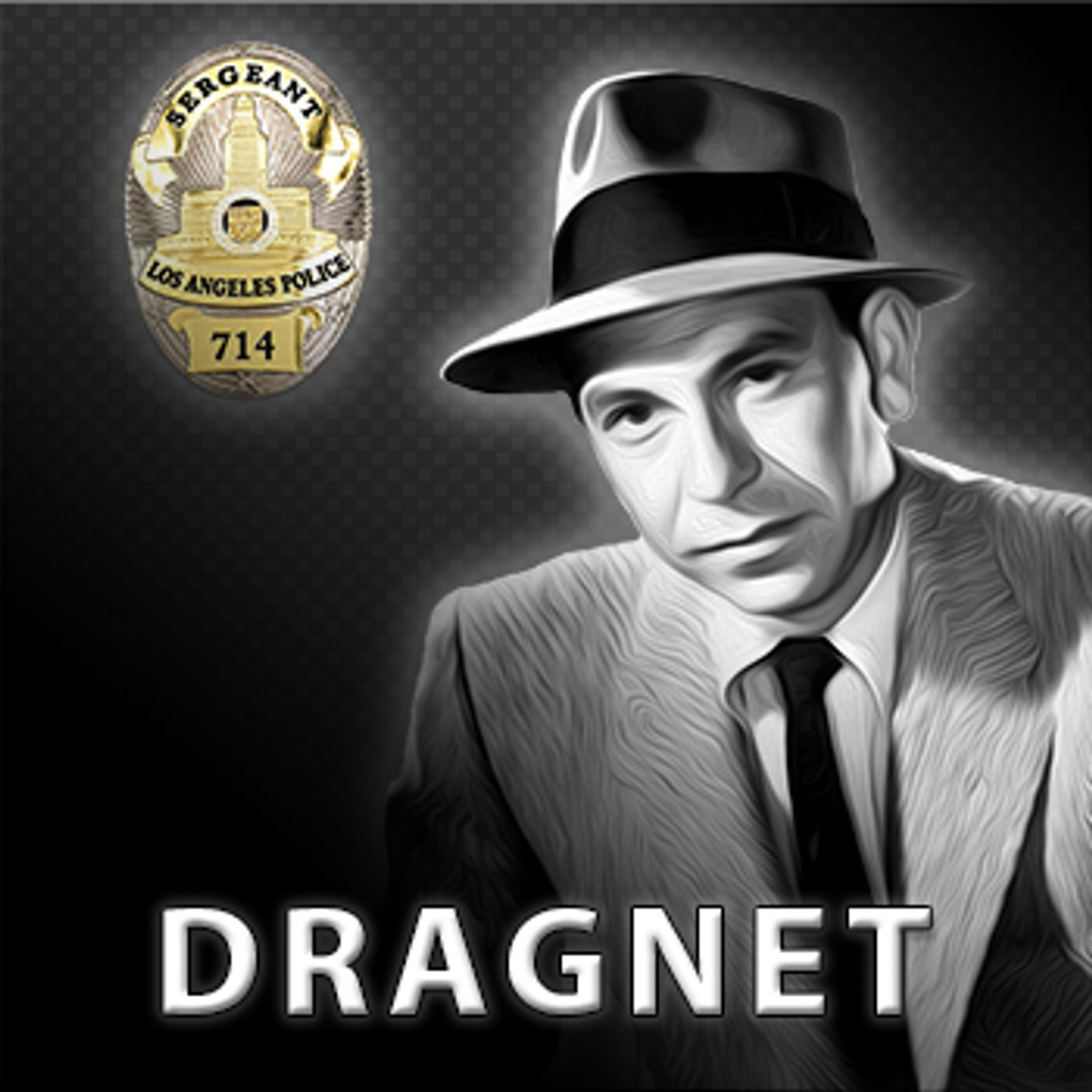
The Great Detectives of Old Time Radio| Daily Mystery Dramas
Dragnet: The Big Mailman (EP4773)|Police Procedural Audiodrama
00:35:27
Todays Mystery: Joe Friday and Ben Romero join forces with a US Postal inspector to correct a forger who is stealing and then cashing ch Original Radio Broadcast Date: May 24, 1951 Originating from Hollywood Starred: Jack Webb as Sergeant Joe...
Loading summary
Transcript344 lines
- [00:00]
Adam Graham
Sam.
- [00:29]
Sam
Welcome to the Great Detectives of Old Time Radio from Boise, Idaho. This is your host, Adam Graham. In a moment, we're going to bring you this week's episode of Dragnet. But first, I do want to encourage you. If you're enjoying the podcast, please follow us using your favorite podcast software. And today's program is brought to you in part by the financial support of our listeners. You can support the show on a one time basis by mailing a donation to Adam Graham, P.O. box 15913. That's P.O. box 15913, Boise, Idaho, 83715. In addition, you can become one of our ongoing Patreon supporters for as little as $2 per month. Just go to patreon.greatdetectives.net now from May 24, 1951, here is the big mailman.
- [01:38]
Narrator
The story you are about to hear is true. Only the names have been changed to protect the innocent. You're a detective sergeant. You're assigned a forgery detail. A United States postal inspector comes to your office. You've received the same complaints he has. Somebody is stealing mail in your city. Your job. Help get him.
- [02:14]
Dragnet. The documented drama of an actual crime. For the next 30 minutes, in cooperation with the Los Angeles Police Department, you will travel step by step on the side of the law through an actual case transcribed from official police files. From beginning to end, from crime to punishment, Dragnet is the story of your police force in action.
- [02:38]
Joe Friday
Was Monday, March 3rd. Was raining in Los Angeles. We were working the day watch out of forgery detail. My partner's Ben Romero. The boss is Captain Harry Elliott. My name's Friday was 7:45am when I got to room 29. Forgery detail.
- [02:54]
Ben Romero
Morning, Jill. Hi, Ben.
- [02:55]
Adam Graham
Sure.
- [02:56]
Joe Friday
Coming down out there?
- [02:58]
Ben Romero
Yeah.
- [02:59]
Joe Friday
Look at this coat. It's soaking wet.
- [03:01]
Ben Romero
Is that the same trench coat, that English one? Yeah.
- [03:04]
Joe Friday
Ever since I had it cleaned, it seems to soak up the water a little more.
- [03:07]
Ben Romero
Does it leak? Oh, no.
- [03:08]
Joe Friday
It just seems to take on a little more water. Keeps me dry.
- [03:11]
Ben Romero
Got something to show you, Joe. Yeah? Remember that old raincoat of mine, used to leak up through the seams over the shoulders?
- [03:17]
Joe Friday
Oh, yeah, sure.
- [03:18]
Ben Romero
Take a look at this. What do you got there? Pretty neat, huh?
- [03:21]
Joe Friday
Yeah. What is it?
- [03:22]
Ben Romero
My new raincoat. Never know, would you? It's small, compact. The whole thing's hardly any bigger than a pack of cigarettes. Not bad, huh? Yeah.
- [03:29]
Joe Friday
What'd you get it?
- [03:29]
Ben Romero
Wife bought it for me. Amy says it's regular. Full size raincoat, size 40 long.
- [03:34]
Joe Friday
Amy says so. Didn't you try it on?
- [03:35]
Ben Romero
Oh, no. You know how they make something like this? It's made out of plastic. Size isn't too important. Just a plain coat slips right on over your suit. Just like any other raincoat. I know it'll fit.
- [03:45]
Joe Friday
You haven't worn it yet?
- [03:46]
Ben Romero
No, it hadn't started to rain when I left home. Could I see that? Sure. Real compact, isn't it? Now, something like this is really practical. Yeah, huh? Little packages like that, you carry it around with you all the time. Never take up any room at all. Yeah.
- [04:00]
Joe Friday
What's it look like?
- [04:01]
Ben Romero
Just like that little pouch there. Same stuff. Transparent, you know, regular plastic.
- [04:05]
Joe Friday
Well, could we look at it inside, I mean.
- [04:07]
Ben Romero
Okay, let's see.
- [04:08]
Joe Friday
Well, here, you better do it.
- [04:09]
Adam Graham
Yeah.
- [04:10]
Ben Romero
Okay. Well, just unzip it here. Sure is compact, isn't it?
- [04:16]
Joe Friday
Yeah.
- [04:17]
Ben Romero
Here we go. Look there, Joe. All folded up nice and neat. Yeah, sure. It's lightweight, too. Plastic's great, isn't it? Fine. Yeah. There we go. Full size raincoat. See there. Fits fine. Never know a full size coat would go into a thing like that little pouch there, would you? It's no bigger than tobacco pie.
- [04:37]
Joe Friday
Yeah, that's pretty good.
- [04:38]
Ben Romero
You know what? Try it on, Joe. Never know you had anything on. Sure is light and nice.
- [04:43]
Joe Friday
Yeah, I can see.
- [04:45]
Ben Romero
Now we just put it back in the pouch till I'm ready for it. Let's see now. Collar goes up front, folds in like this. No, no, no, that isn't right. Goes this way. Let's put it down on the table. That'll be better.
- [05:03]
Joe Friday
Yeah.
- [05:05]
Ben Romero
Yeah, that's better. Now, here we go. Now we fold the arms in here. Now the bottom part comes up this way. Now we fold it over. And again. Easy, isn't it? Just follow the crease marks in your home, Jill.
- [05:19]
Joe Friday
Yeah.
- [05:20]
Ben Romero
Now, if you'll hand me that little box, Jim.
- [05:22]
Joe Friday
Oh, yeah, There you go.
- [05:24]
Ben Romero
Oh, thank you. Now. No, I guess that's too big. Well, we'll make one more fold, okay? Yeah. Well, it's small enough this way. But it's too fat, isn't it?
- [05:35]
Joe Friday
You better watch it there. You're gonna tear that little sack.
- [05:38]
Ben Romero
That's funny. I fold it right over the old creases there. Too fat, isn't it? Yeah.
- [05:43]
Joe Friday
Well, couldn't you just carry it in your pocket like that without the pouch?
- [05:46]
Ben Romero
Sure, it's it. Slip it in my coat pocket. No, no, that won't do, Joe. It bulges right out. It's kind of springy. Jumps out just like a piece of pongee silk.
- [05:55]
Joe Friday
Yeah, it seems to.
- [05:57]
Ben Romero
Well, it's still lightweight and easy to handle.
- [05:59]
Joe Friday
Sure, plenty easy to carry. Just like that anyway.
- [06:01]
Ben Romero
Yeah, well made. Little pouch there. Seems a shame not to be able to use it.
- [06:06]
Joe Friday
You smoke a pipe?
- [06:07]
Ben Romero
No, you know that. Just cigarette. I'll find some use for it. Probably a hundred things a fella could use a little pouch like this for if he could just think of them. Right?
- [06:15]
Joe Friday
O yeah, that's right.
- [06:18]
Captain Harry Elliott
Romero, you want to step in here for a minute?
- [06:20]
Joe Friday
Right, Captain.
- [06:22]
Captain Harry Elliott
You fellows know Inspector Smith, Post office, department.
- [06:25]
Ben Romero
Sure. How are you, Romero?
- [06:26]
Inspector Leo Smith
Good to see you, Leo. How you doing, Joe?
- [06:28]
Captain Harry Elliott
Sit down, won't you?
- [06:28]
Adam Graham
Thank you.
- [06:29]
Joe Friday
Thanks very much.
- [06:30]
Captain Harry Elliott
Inspector Smith's over here on that mail thief case that we've been working on.
- [06:33]
Ben Romero
Oh, yeah?
- [06:34]
Joe Friday
Did you receive those reports we sent over to you yesterday?
- [06:36]
Inspector Leo Smith
No, I haven't been to the office yet. Came straight over here.
- [06:38]
Joe Friday
Burglary turned it over to us yesterday afternoon. Ben and I ran it down. Seems to us like it might fit in somewhere here.
- [06:44]
Inspector Leo Smith
Miller and Ashton have probably got your reports now. I was just gonna call in. Do you mind filling me in on it?
- [06:49]
Ben Romero
Department house over on Alpharado. Landlady reported the theft of part of a mailbox out there.
- [06:54]
Joe Friday
Somebody stole a master panel off the front of the community mailbox at the apartment house. Figure it must have happened sometime during the night.
- [07:00]
Inspector Leo Smith
Oh, yeah, I believe we got something on that, too. A postman on the route reported it.
- [07:04]
Captain Harry Elliott
That's how he's getting into the mailboxes. Steals the front panel, makes a key for himself. From then on, he's in business. Smart guy like we're after could put a key like that to good use. It fit a great many different mailboxes around town.
- [07:16]
Inspector Leo Smith
Yeah, it's the same mo. We've been on this guy for a long time. He pulled the same thing down in San Diego. Was knocking down about $2,000 a month. Then he laid out. Now he's at it again up here in la.
- [07:26]
Joe Friday
Well, as you know, we've been getting reports of the thefts and the passing of the checks about 10 days ago.
- [07:31]
Inspector Leo Smith
Yeah, I know.
- [07:32]
Joe Friday
We've got five checks passed by this same thief. According to handwriting analysis. We know it's the same guy.
- [07:37]
Ben Romero
Talk to the victims and the bank tellers. Description of the guy seems to tally with what you people have on him.
- [07:43]
Joe Friday
Yeah, there's just one thing we haven't been able to piece out yet.
- [07:46]
Inspector Leo Smith
What's that, Joe?
- [07:47]
Joe Friday
When he steals a check, how does he know what bank to Pass it on.
- [07:50]
Inspector Leo Smith
I think we got the answer to that one.
- [07:51]
Joe Friday
Well, let's say that he steals a letter. And we know he doesn't only hit the community mailboxes. Sometimes he goes to a private residence, fishes the letters right out of the mail slots. In that case, yeah, he's got some.
- [08:00]
Inspector Leo Smith
Kind of a gimmick he gets down in those slots with.
- [08:02]
Joe Friday
That's what we figure, Leo. But we'll say after he's got a letter with a check in it. Now, it's easy enough for a good forger to put an endorsement on it, but how does he know what branch of the bank to pass it on?
- [08:11]
Inspector Leo Smith
Well, at some time or other, he's stealing bank statements as well. Maybe he's just lucky at the time he steals a check. There's other mail in the box, too. The victim's bank statements.
- [08:20]
Ben Romero
Well, as far as that goes, I suppose he's stolen more than once from the same party. He could probably get away with bank statements easy.
- [08:26]
Inspector Leo Smith
That's it. People never seem to report anything missing in the mails until weeks after it's happened.
- [08:30]
Captain Harry Elliott
It's easy to see why they're not sure anything's wrong until they wait several days. They don't want to bother us in the case of anything routine like monthly bank statements.
- [08:39]
Inspector Leo Smith
And in the case of a check, well, sometimes it's from a relative or someone who owes them money, and they don't want to embarrass him by writing or calling to find out about it.
- [08:46]
Joe Friday
I suppose in the case of anything like a dividend check, we got a couple of those, Leo. The people who lose them just don't think it's time for them to arrive yet. So they just wait, huh?
- [08:54]
Inspector Leo Smith
That's it. And that's why he's been so successful. Plus the fact that it takes about a week for any kind of check to be processed through central clearing at any bank, and then two, the bank wouldn't necessarily know that anything was wrong at that time.
- [09:06]
Ben Romero
Until the bank receives a complaint from the party who missed the check. They couldn't have any way of knowing that anything was wrong.
- [09:11]
Inspector Leo Smith
That's right.
- [09:13]
Captain Harry Elliott
Tell them what you were telling me this morning, Leo.
- [09:15]
Inspector Leo Smith
Well, you people aren't in it deep enough to know this yet, but this guy's been hitting the same branch bank maybe two, three times in a row.
- [09:21]
Ben Romero
Not here in la, had he?
- [09:22]
Inspector Leo Smith
No, not yet. It looks to us like he's just started up his operations here in town. That's the way he worked it down in San Diego.
- [09:29]
Joe Friday
Well, it's easy enough to figure if he got a teller in some bank to go along with him, someone who didn't suspect him. And since the victims reported so late, he could get away with it at least that many times at the same bank, didn't he?
- [09:38]
Inspector Leo Smith
Yeah, if people report missing mail immediately, it'd make it a lot tougher for the thief.
- [09:44]
Captain Harry Elliott
That last name on him still good?
- [09:45]
Inspector Leo Smith
Harvey Fletcher. That's where we're going on.
- [09:47]
Captain Harry Elliott
Yeah, we've got bulletins out to all the banks carrying that description on them. Any change earlier?
- [09:53]
Inspector Leo Smith
WMA. Average build, 150, 160 pounds. Gray eyes, about 32 to 35. Well dressed, carries a briefcase. Likable personality.
- [10:03]
Captain Harry Elliott
That's what we got.
- [10:04]
Inspector Leo Smith
Oh, there's a little something we picked up yesterday from a bank teller. She told us the man had long sideburns. For what it's worth, you might add that.
- [10:11]
Joe Friday
Okay, Don Myers in Handwriting has checked through his files, Leo. They haven't got anything on him, and the stats office hasn't been able to make him on his mo.
- [10:19]
Inspector Leo Smith
We know you people are doing everything you can for us. We appreciate it.
- [10:21]
Ben Romero
Yeah, I wish we could do more.
- [10:24]
Joe Friday
That name, Harvey Fletcher. Of the five checks that we've got on the guy, according to handwriting analysis on him, he's only used that name once. Rest of the time he signs the same last name as the payee's name on the face of the check.
- [10:36]
Ben Romero
He passes himself off as a brother or husband or some relation to the rightful payee.
- [10:40]
Inspector Leo Smith
Yeah, that's what's taking in all those bank tellers. Plus a smooth personality. He's cool, collected, all the confidence in the world.
- [10:47]
Joe Friday
Yeah, that figures.
- [10:48]
Inspector Leo Smith
We got one day before yesterday with a little different twist isn't going to help us any. But here's the way he's working it. In some cases, deposits a large check to the victim's account, then he only takes out a small portion in cash. Throws the tellers off even more.
- [11:01]
Captain Harry Elliott
Here goes for the stats, Leo.
- [11:04]
Inspector Leo Smith
What's this?
- [11:04]
Captain Harry Elliott
Copies of the last five checks that we got on the day.
- [11:07]
Inspector Leo Smith
Oh, yeah, thanks, Harry.
- [11:08]
Captain Harry Elliott
Myers says they're all in the same handwriting. Is there anything else we can do for you, Leo? We've got all the banks in the area covered. Got bulletins out on them.
- [11:17]
Inspector Leo Smith
Well, that's fine.
- [11:18]
Captain Harry Elliott
I don't think we've overlooked anything. Patrol units have been alerted with this.
- [11:21]
Joe Friday
Latest theft of that mailbox panel. It's too bad we can't localize his operations a little.
- [11:25]
Ben Romero
Leo, didn't you Say that if he makes a key, that key would fit any number of boxes in the city. We couldn't pin him down to one neighborhood, could we?
- [11:32]
Inspector Leo Smith
That's right. That key will work on different mail routes. He probably knows the neighborhood around Alvarado is hot. Now he'll leave it alone.
- [11:39]
Ben Romero
Anyway, it's impossible to stake him out on the actual thefts of the mail. It's too bad we can't get to him through one of the banks when he cashes them all.
- [11:46]
Inspector Leo Smith
Your man Par and ours put together couldn't cover all the banks in LA at one time. But we've been spot checking throughout the city, hoping maybe to tab him just by luck.
- [11:54]
Captain Harry Elliott
Might get a break for one of our bulletins. Maybe some teller will spot him.
- [11:57]
Inspector Leo Smith
Well, I'm not sure yet. That's one of the reasons I came over here this morning. But maybe we've got a little something. What's that? Well, a bank out in Westwood phoned us yesterday. The teller thought she recognized the guy from his inscription. Didn't dawn on her till after the guy left her window. She rushed out in time to get the license number of his car.
- [12:13]
Joe Friday
Maybe it's a break, huh?
- [12:14]
Inspector Leo Smith
Yeah, it looks pretty good. The check was drawn on the account of a William E. Scott. That's the number two victim here in la?
- [12:20]
Captain Harry Elliott
That's right. You got the photo stat of his checks right there.
- [12:22]
Inspector Leo Smith
Yeah, I know. Everything seems to fit. This check he passed yesterday out in Westwood was probably stolen at the same time as the first one. Or at least it came from this Scott's mailbox. That we know.
- [12:33]
Ben Romero
Well, didn't this William Scott report the theft of two checks? I know he didn't to us. Maybe he did to you.
- [12:37]
Inspector Leo Smith
No, he didn't. Said he couldn't be sure. He gets quite a few checks through the mail. Owns a lot of stock, gets dividends.
- [12:43]
Ben Romero
Yeah. Probably doesn't know when they come each month.
- [12:45]
Inspector Leo Smith
That's right. He didn't miss the first one till it was way overdue. Might even be others missing. He doesn't know for sure yet.
- [12:50]
Joe Friday
Well, anyway, he's positive on this latest one out in Westwood. That the bank teller caught, huh? Sure.
- [12:55]
Inspector Leo Smith
As soon as the bank manager called him, he knew he hadn't authorized anybody to cash any of his checks. Does the M.O.
- [13:00]
Ben Romero
Seem to match?
- [13:01]
Inspector Leo Smith
Well, that's what's got us going on. It looks real good. Smooth operator. Deposited part of the money, took the balance in cash. The major switch in his operation was the fact that he didn't go to the Victim's regular bank, as he did on that first check. Sounds good, doesn't it? We kind of think so. That's the reason I came over here this morning. Conway, our handwriting man, thinks it's the same as the guy we're after. He asked me to check it through Don Myers to be sure.
- [13:23]
Ben Romero
What signature do you use on this last one?
- [13:25]
Inspector Leo Smith
Now, that's another part of the MO that checks out. You remember on the first check, he forged the victim's name, William Scott. And he made it a second party check by signing the phony name George Scott. Passing himself off as a nephew of the victim.
- [13:38]
Joe Friday
Pretty smart. He goes to this victim's regular bank and he doesn't take the chance of being tabbed as the payee he covers by using that nephew gimmick.
- [13:45]
Inspector Leo Smith
Yeah, this time he goes to a different branch. Not the regular branch that the victim deals with, as in the first case. He simply forges the victim's name and lets it go at that.
- [13:54]
Captain Harry Elliott
Been doing anything on that license number?
- [13:55]
Inspector Leo Smith
Well, Ashton and Miller checked it out late yesterday afternoon. They're on it now. Need any help? Not so far. I'm interested in what Don Myers has to say about the handwriting. He ought to be through about now, huh?
- [14:05]
Captain Harry Elliott
I'll give him a call.
- [14:06]
Inspector Leo Smith
Thanks, Harry.
- [14:15]
Captain Harry Elliott
Hello, Don.
- [14:16]
Ben Romero
Who's this?
- [14:17]
Captain Harry Elliott
This is Elliot. You know if Don's checked that stuff through for Inspector Smith yet? Okay.
- [14:23]
Inspector Leo Smith
Thanks. Law.
- [14:24]
Captain Harry Elliott
No, that's all right. We'll get through. Don was called out of the office for a minute.
- [14:29]
Inspector Leo Smith
That was Sloan.
- [14:30]
Captain Harry Elliott
He says he. Sure Don's finished with it.
- [14:32]
Inspector Leo Smith
Well, fine. You say when he'll be back?
- [14:34]
Captain Harry Elliott
He just dug down to Thad Brown's office for a minute. I'll call down there for you.
- [14:37]
Inspector Leo Smith
That's all right. I'll walk down there myself. I need the exercise.
- [14:40]
Ben Romero
Okay, you and I walk on down with you.
- [14:42]
Inspector Leo Smith
Swell. Let's go.
- [14:43]
Adam Graham
All right.
- [14:43]
Captain Harry Elliott
You fellas will be back here once?
- [14:45]
Inspector Leo Smith
Oh, sure, as soon as I check with Myers.
- [14:46]
Captain Harry Elliott
All right.
- [14:53]
Inspector Leo Smith
Which way is it from here? Hall looks the same from one end to the other.
- [14:57]
Joe Friday
Goes this way, Leo.
- [14:58]
Ben Romero
Okay. This affects you like the Federal Building does. Me, I get all turned around up there.
- [15:03]
Inspector Leo Smith
Yeah, those fellas down in San Diego had a rough go on this thing.
- [15:08]
Joe Friday
Yeah, I was talking to McGuire and Ormsby down there just the other day. They said they were going around in circles on them.
- [15:12]
Inspector Leo Smith
They broke a lot of ground for us. Checked out a lot of suspects, Cleared them. Checked out all that stuff that Breton from CII sent down.
- [15:19]
Ben Romero
Yeah.
- [15:19]
Inspector Leo Smith
You know how thorough that guy is.
- [15:21]
Ben Romero
It figures they've done a lot of leg work.
- [15:24]
Inspector Leo Smith
Friday, you say you just talked to him down there?
- [15:26]
Joe Friday
Yeah, that's right, Lynn.
- [15:27]
Inspector Leo Smith
Well, then you know about all those bulletins they got on the guy. Description, exemplars of his handwriting sent him to every police department in the United States.
- [15:34]
Ben Romero
It's a big job.
- [15:36]
Joe Friday
I'll go get Don. It's right in here.
- [15:37]
Inspector Leo Smith
Thanks, Joe.
- [15:38]
Ben Romero
Right.
- [15:39]
Joe Friday
Don. Yeah. Joe, Leo Smith from the post office. Department's waiting to see you.
- [15:42]
Ben Romero
All right, Joe.
- [15:43]
Don Myers
Just on my way back to the office here.
- [15:44]
Joe Friday
Fine.
- [15:47]
Inspector Leo Smith
Hello, Don.
- [15:47]
Don Myers
Sorry, Leo, I had to duck out for a minute.
- [15:49]
Inspector Leo Smith
Oh, that's all right. Say, did you get a chance to look that sky check over? Yeah, I did.
- [15:53]
Don Myers
Got a couple of things to show you back in the office.
- [15:55]
Inspector Leo Smith
Okay, fine.
- [15:57]
Don Myers
Was Conway positive on this one?
- [15:59]
Inspector Leo Smith
Well, he said he felt we had the right man, but he wanted your opinion to be absolutely sure.
- [16:03]
Don Myers
I couldn't be positive, but I think maybe he's your man. There's a great similarity, but too much pressure on the downstrokes. The E's, the O's, just not too sure. They're a little different than some of the previous samples of the guy's handwriting.
- [16:15]
Ben Romero
Uh huh.
- [16:16]
Don Myers
I can show you better back at the office.
- [16:18]
Inspector Leo Smith
Got a few things for you.
- [16:19]
Ben Romero
Think there's a possibility, Don?
- [16:21]
Don Myers
Let me put it this way. I won't say it is and I won't say it isn't. Let's pick them up and find out for sure.
- [16:26]
Inspector Leo Smith
Here we are. Go ahead, fellas.
- [16:30]
Don Myers
I've blown those things up here.
- [16:32]
Ben Romero
Uh huh.
- [16:32]
Captain Harry Elliott
Call for you, Leo. I'm three.
- [16:34]
Inspector Leo Smith
Oh, thanks, Harry.
- [16:35]
Joe Friday
Excuse me.
- [16:40]
Inspector Leo Smith
The Smith talking.
- [16:43]
Ben Romero
You did? Uh huh.
- [16:46]
Inspector Leo Smith
We did. All right, look, why don't you bring him down a forgery detail here at the city hall. We'll talk to him. Here, write it.
- [16:55]
Ben Romero
Right.
- [16:55]
Inspector Leo Smith
Thanks. Well, looks like the end of the trail. That was Ashton. He and Miller picked him up. He's our man. Admitted the forgery.
- [17:03]
Ben Romero
Looks like San Diego did all the work and we get all the luck.
- [17:06]
Inspector Leo Smith
Anyway, we got him.
- [17:18]
Narrator
You are in the Scientific Investigation division of a metropolitan police department. The ballistics room.
- [17:32]
You have just heard a test bullet fired from a.38 caliber revolver found in the possession of a suspect.
- [17:37]
The test slug is removed from the ballistics box and compared with the slug.
- [17:41]
Found at the scene of the crime. There they are. Side by side. They look alike. But examination will prove a world of difference.
- [17:57]
Joe Friday
In the routine solution of a case, the police officer is always benefited by the legwork of his fellow officers. In this case, the men of the San Diego Police Department in conjunction with the Post Office Department had done most of the spade work and the actual apprehension of the suspect appeared to be almost too easy on our end. Even though Ben and I hadn't participated in the physical arrest of the suspect, we felt the same gratification for the speedy solution of the case as did the postal authorities. Monday, March 3, 3:27pm Miller and Ashton of the Post Office Department brought the suspect in for questioning. The prisoner was turned over to Inspector Leo Smith. Ben and I sat in on the interrogation.
- [18:33]
Inspector Leo Smith
Carver, Gleason. That's your true name?
- [18:35]
Adam Graham
Yes, sir, it is.
- [18:36]
Inspector Leo Smith
You say you've never been arrested before?
- [18:38]
Adam Graham
No, sir, I never have.
- [18:40]
Inspector Leo Smith
You know we're going to check that out.
- [18:41]
Adam Graham
Yes, sir.
- [18:43]
Ben Romero
All right.
- [18:44]
Inspector Leo Smith
Now let's go over it again, the same way. That's up to you. We want the truth.
- [18:49]
Adam Graham
I've told you the truth. You asked me questions about stealing mail, about forging checks. You said I was down in San Diego. Well, that's not true. None of it's true.
- [18:58]
Inspector Leo Smith
Have you ever stolen from the mails?
- [19:00]
Adam Graham
No, sir, I never have. I know that's a pretty serious offense.
- [19:03]
Inspector Leo Smith
What makes you think forging? Isn't that what you're trying to say?
- [19:06]
Adam Graham
No, I'm not. I didn't say that. But this was the first time I've ever done anything like this. I didn't even think about the consequences.
- [19:13]
Inspector Leo Smith
Should have thought about them. When's the last time you were in San Diego?
- [19:18]
Adam Graham
I've never been there. I don't even know for sure where it is.
- [19:21]
Inspector Leo Smith
How long you been in Los Angeles?
- [19:23]
Adam Graham
About three months now.
- [19:24]
Inspector Leo Smith
Where's your home?
- [19:25]
Adam Graham
Akron, Ohio.
- [19:27]
Inspector Leo Smith
How old did you say you were?
- [19:28]
Adam Graham
25.
- [19:29]
Inspector Leo Smith
What have you been doing since you got out here?
- [19:32]
Adam Graham
It's just it, nothing. Can't find a job.
- [19:35]
Inspector Leo Smith
Well, how you been getting by? How you been living?
- [19:37]
Adam Graham
Been staying down at the ymca? Hope Street? I guess it is.
- [19:41]
Inspector Leo Smith
What have you been doing for money?
- [19:43]
Adam Graham
Well, my folks gave me a little when I left Akron. Thought I'd have a job by now. I didn't want to write home for anymore. So when I found that check, I figured I could get away with it. I needed money and I cashed it.
- [19:55]
Inspector Leo Smith
Where'd you say you found it?
- [19:56]
Adam Graham
Over on that street out that way. La Cignega. Is that how you say it?
- [20:03]
Inspector Leo Smith
La Cienega?
- [20:04]
Adam Graham
Yeah.
- [20:04]
Inspector Leo Smith
What were you doing out there?
- [20:06]
Adam Graham
Well, I was answering an ad in the classifieds, trying to find a job. I had to park the car down the street from the place. And on my way back, I found this check on the sidewalk, right near the bank, on the corner.
- [20:17]
Inspector Leo Smith
Where'd you get the car?
- [20:18]
Adam Graham
It's my father's.
- [20:19]
Inspector Leo Smith
The car is registered in your name with California plates. How do you explain that?
- [20:23]
Joe Friday
Well, what?
- [20:24]
Adam Graham
Folks told me when I got to California to go right to the authorities and register the car if I was gonna stay, so I wouldn't get in any trouble. That's where part of my money went.
- [20:33]
Inspector Leo Smith
You got anything else you wanna tell us?
- [20:36]
Adam Graham
I did it. I admit that. I wanna make it up somehow. The check was for $57. I gave the men that arrested me 50 of it. And I spent $7.
- [20:46]
Inspector Leo Smith
Yeah, that's all on the record.
- [20:48]
Adam Graham
I did wrong. I'll pay the $7 back.
- [20:51]
Inspector Leo Smith
You can take that up with the judge. Gleason. Friday. Romero, you want to step outside with me a minute?
- [20:56]
Joe Friday
Yeah.
- [20:56]
Ben Romero
Right.
- [20:58]
Inspector Leo Smith
Gleason, you wait here with that officer.
- [20:59]
Adam Graham
Yes, sir.
- [21:04]
Inspector Leo Smith
What do you think?
- [21:05]
Ben Romero
He's telling the truth. He's not the one we want.
- [21:08]
Inspector Leo Smith
How about you, Joe?
- [21:09]
Joe Friday
Yeah, I'll go along with Ben.
- [21:10]
Inspector Leo Smith
Well, that makes three of us.
- [21:15]
Joe Friday
Monday, March 3, 5pm we went in and checked with Don Myers. In carefully going over exemplars of Carver Gleason's handwriting, he had definitely eliminated him as our suspect. Carver Gleason remained in custody awaiting trial. Three months went by during this time. The burglaries and forgeries continued. Suspects were picked up, checked out and released. We got nowhere. Tuesday, July 12th. We received a communication from Chief Adam Jensen of the San Diego Police Department, who stated he was forwarding a radiogram from Chief John W. Polsen of the Milwaukee, Wisconsin Police Department. The radiogram from Chief Polsen stated that his handwriting man in Milwaukee had identified the suspect's handwriting as listed in one of the San Diego bulletins as belonging to Philip E. Holloway. Holloway was arrested two years previous on a reckless driving charge. The physical description of the man matched closely with the one that we had received on the suspect known to us as Harvey Fletcher. They further stated that although he was at one time a resident of Milwaukee, they had nothing further on him. It was just an outside chance, but we decided that in all probability, this could be the suspect's true name, Phillip E. Holloway. This information was forwarded to the postal authorities. Ben and I started to check through our channels to determine the whereabouts of the suspect, Philip E. Holloway, with a possible alias of Harvey Fletcher.
- [22:32]
Ben Romero
That's it, Joe. Nothing in any of the phone books? Yeah. Covered everything. I can think of our records, sheriff's records. Nothing from CII utility companies.
- [22:40]
Joe Friday
Yeah, well, maybe Smith found something on him. We haven't got anything here.
- [22:43]
Ben Romero
Think I'll give him a call, huh? Joe?
- [22:45]
Joe Friday
Yeah, I'd like to know. That's extension 664.
- [22:53]
Ben Romero
Yeah, I know. No, 664. Hello. Inspector Smith, please.
- [23:00]
Inspector Leo Smith
How's that? Oh, I see.
- [23:03]
Ben Romero
No, that's all right. Thank you. On his way over here, he left five minutes ago.
- [23:07]
Joe Friday
I sure hope he's got something.
- [23:09]
Inspector Leo Smith
Joe. Ben.
- [23:10]
Ben Romero
Hi, Leo.
- [23:11]
Inspector Leo Smith
I think maybe we ran it down.
- [23:12]
Ben Romero
Good.
- [23:13]
Joe Friday
How'd you do it? Through the postal service?
- [23:14]
Inspector Leo Smith
Yep. Didn't figure, did it?
- [23:16]
Joe Friday
Well, we didn't think he'd stay put long enough to have a permanent address.
- [23:18]
Inspector Leo Smith
Well, he's been on the move, but we got the last known address on him. Received mail there two days ago.
- [23:23]
Ben Romero
You want to check with Don Myers? He's been working over those exemplars Milwaukee sent us.
- [23:27]
Adam Graham
I checked.
- [23:27]
Inspector Leo Smith
Called him about 15 minutes ago.
- [23:29]
Ben Romero
Oh, we just got back from R and I.
- [23:30]
Joe Friday
What do you have to say this time?
- [23:31]
Inspector Leo Smith
He and Conway agree all the way this trip?
- [23:33]
Joe Friday
Yeah.
- [23:34]
Inspector Leo Smith
Holloway's our man.
- [23:39]
Joe Friday
Together with the postal authorities, Ben and I helped in the 24 hour surveillance placed on the suspect, Philip E. Holloway. Our findings disclosed that he was living in a modest apartment house and he was employed by a local vacuum cleaner company as a door to door salesman. This type of occupation would enable anyone to have suspicion free access to any and all types of home mailboxes. The first three days of the surveillance failed to disclose any further incriminating evidence. Thursday, July 17th, 5th day of the 24 hour surveillance, 2:30pm Holloway came out of his apartment building, got into his car and drove approximately four miles to the Echo park residential district. He parked his car, got out and went up the steps of a small apartment house together with Inspector Leo Smith. Ben and I followed him.
- [24:23]
Inspector Leo Smith
You want to pull up here, Ben? This is good.
- [24:25]
Joe Friday
Yeah.
- [24:25]
Ben Romero
All right.
- [24:29]
Joe Friday
He's going for that mailbox, isn't he?
- [24:31]
Ben Romero
Yeah.
- [24:33]
Joe Friday
He's got the key. He's opening the panel.
- [24:36]
Ben Romero
Not a worry in the world. Broad daylight. Look at that.
- [24:43]
Inspector Leo Smith
He's got all the letters out of the box. Got them in his pocket on his way back to his car.
- [24:47]
Joe Friday
Leo, there's a bank right up there on Sunset. See?
- [24:50]
Inspector Leo Smith
Okay, let's stay with him.
- [24:51]
Ben Romero
How's it look, Joe? You can see up ahead there. Is he pulling out?
- [24:54]
Joe Friday
Wait a minute. All right, let's go. Better pull up here, huh?
- [25:09]
Inspector Leo Smith
Look at that. Just like it was Blueprinted. Going right in the bank.
- [25:13]
Joe Friday
Come on.
- [25:14]
Ben Romero
Yeah.
- [25:24]
Inspector Leo Smith
Joe, you see him?
- [25:25]
Ben Romero
There he is.
- [25:25]
Joe Friday
Second window.
- [25:26]
Inspector Leo Smith
Let's get in line. Right behind him.
- [25:28]
Ben Romero
All right.
- [25:31]
Adam Graham
Yes, sir, may I help you? Yes, I wonder if you can cash a check for me. Yes, sir. Would you endorse it, please?
- [25:36]
Ben Romero
Surely. There you are.
- [25:41]
Adam Graham
As you can see, this is one of my mother's checks. I guess I can cash it all right for her. Do you have any identification? I'm sorry, I don't.
- [25:47]
Joe Friday
I'll say.
- [25:47]
Adam Graham
I have this envelope to check with.
- [25:49]
Ben Romero
Mailed in the left room. Yes, I think that's all right.
- [25:51]
Adam Graham
How would you like this, sir?
- [25:52]
Inspector Leo Smith
He doesn't want it anyway. Miss, just hold that check for us, please. Postal Inspector.
- [25:56]
Adam Graham
Yes, sir.
- [25:56]
Ben Romero
I beg your pardon.
- [25:58]
Adam Graham
I believe you're making a mistake here.
- [25:59]
Joe Friday
No, there's no mistake. Come on, step over here. Shake him down.
- [26:02]
Adam Graham
I don't understand all this.
- [26:04]
Inspector Leo Smith
That key you used over there on Baxter Street. That the one you made from that panel you stole over on Alvarado about four months ago?
- [26:11]
Ben Romero
You know about that, huh?
- [26:12]
Joe Friday
Yeah, we do.
- [26:15]
Ben Romero
I did all right for a while, didn't I?
- [26:18]
Adam Graham
That key angle's a pretty good one, isn't it?
- [26:21]
Ben Romero
There isn't a lock in the world.
- [26:22]
Adam Graham
I can't make a key for.
- [26:23]
Inspector Leo Smith
We got one in mind you might have trouble with.
- [26:32]
Narrator
The story you have just heard was true. Only the names were changed to protect the innocent.
- [26:38]
On October 15, trial was held in United States District Court, State of California. In a moment, the results of that trial. The suspect, Philip Elwood Holloway, was found guilty on all counts. He was sentenced to 10 years in the federal penitentiary. Five years of his sentence was suspended and he was placed on probation. One of the conditions being that he make restitution of the stolen money.
- [27:08]
Ladies and gentlemen, accidents of all types kill more persons from 1 to 35 years of age than does any single disease. America's homes and children can best be kept safe. If every father, mother and child Develops the personal responsibility. To know and observe home safety rules. Make home safety a family affair.
- [27:28]
Inspector Leo Smith
Be careful.
- [27:29]
Narrator
The life you save may be your own.
- [27:38]
Just heard Dragnet. A series of authentic cases from official files. Technical advice comes from the office of Chief of Police W.H. parker, Los Angeles Police Department.
- [27:47]
Stay tuned for counterspy next over most NBC stations.
- [28:00]
Sam
Welcome back. This is probably one of those episodes that's was more interesting to me. Due to my background in financial services. Than it will be to most of you with Dragnet. There's often this very fine balance between being educational and Being entertaining. And this one kind of fails on the entertainment side, though it should be said, the educational element was important in that time because, and for us listening 70 odd years later, it's an interesting cultural artifact. It captures the sort of psychological and consumer tendencies that made the thief's job easier in this area, like, you know, careless practices and not, you know, like not being aware of when you should be expecting your dividend checks, or having sort of these social psychological things where you're reluctant to ask people, like, you said, you sent me that payment, I don't have it in the mail. And then you have just the huge systematic problems such as the length of time it took to process checks and how people had to wait for their bank statements. And then of course, you have the identification standards that were used at bank branches. And even though this was recorded, recorded half a century before I got into the industry, there was a part of me inside screaming when the teller said she could take the envelope for identification. Of course, the consumer couldn't do anything about the processing issues, but they could do things to protect themselves in terms of being aware of when you receive your dividend checks and just being willing to call and say, I'm just checking, I know you sent it, but I'm wondering if it might have been lost in the mail, we might need to place a stop payment, those sort of things. And you can also see why there's been such an embrace of things like automatic payments, direct deposit, electronic brokerage, etc. Because those carry with them some risk of some high tech criminal activity. But in many ways that may be preferable to dealing with all of these sort of low tech scams and frauds that are very hard to track down. It's a lot easier to deal with encryption on a financial website than to have a situation where like, okay, well, we kind of need to be able to watch every mailbox in a single portion of Los Angeles. And of course, check processing would be moved forward after 9, 11, when planes were grounded. And it really slowed the entire economy down because you couldn't process checks. And I think what Dragnet was dealing with and the police officer at the time was sort of the growing pains of a changing world and the sort of banking practices that might have worked okay in a small town where everyone knew each other were not going to work. As technology advanced, as the ability of people to take advantage of the sort of shifting population of Los Angeles, a constant immigration, and this would happen in other cities as well, and this would be some of the impetus for some changes in the financial service industry. But in this episode of Dragnet, we just get some of the pain points that began that movement. The other thing that this highlights is the idea of interdepartmental cooperation, because the focus of Dragnet is on the work of the Los Angeles Police Department. But there are cases that require coordination with the feds and with other cities. And we saw that here where, you know, he worked with the postal inspector, with the San Diego Police Department, even got some help from the police department in Milwaukee, and they even let Inspector Smith deliver the zinger to the suspect. And you can't get much more cooperative than that on Dragnet. The world has changed a lot in the last 74 years. But one thing that hasn't you really can't get those coats back into their little packet. And that's pretty much true of everything that comes in a nice convenient pouch. You try to fit it back in and you're either gonna tear it or it won't look right. But in one way, it's something that an unchanging reality that gives you a bit of comfort, I guess. Alright, well, now it's time to thank our Patreon supporter of the day. And I want to thank Mick, patreon Supporter since June 2015, currently supporting the podcast at the Showmas level of $4 or more per month. Thanks so much for your support, Mick. And that will do it for today. If you're enjoying the podcast, please follow us using your favorite podcast software. And if you're enjoying the podcast on YouTube, like the video, subscribe to the channel and mark the notification bell. All those great things that help YouTube channels to grow. We'll be back next Thursday with another episode of Dragnet. But join us back here tomorrow. For yours truly, Johnny Dollar Wear the Mojave Desert.
- [34:11]
Narrator
Thousands of square miles of sand, sun bleached gravel and rock, of cactus, sage and Joshua trees, high flat mesas, towering crags, countless trails leading off from the highway, long abandoned roads leading up into the harsh, bleak mountains with their promise of infinite wealth to the prospectors who scratched away in their hungry search for silver and gold. And who knows, perhaps some of these were trails of the pioneers beat a tortuous path westward to the great Pacific, who with their oxen and heavy wagons were lucky if they made six miles a day. Yet here I was, cruising along at an easy 60 miles an hour, and above me, a jet plane lazily tearing off 600 miles an hour. Yeah, it made me think about the men who lived and struggled here, the men who died of hunger and thirst, following the same path I was taking, never knowing that only a few miles away beyond the mountain, was the mighty Colorado. Water, food and life for those lucky enough to find it.
- [35:07]
Sam
I hope you'll be with us then. In the meantime, send your comments to box13reatdetectives.net follow us on Twitter at radiodetectives and check us out on Instagram. Instagram.com greatdetectives from Boise, Idaho, this is your host, Adam Graham, signing off.