← The Great Detectives of Old Time Radio| Daily Mystery Dramas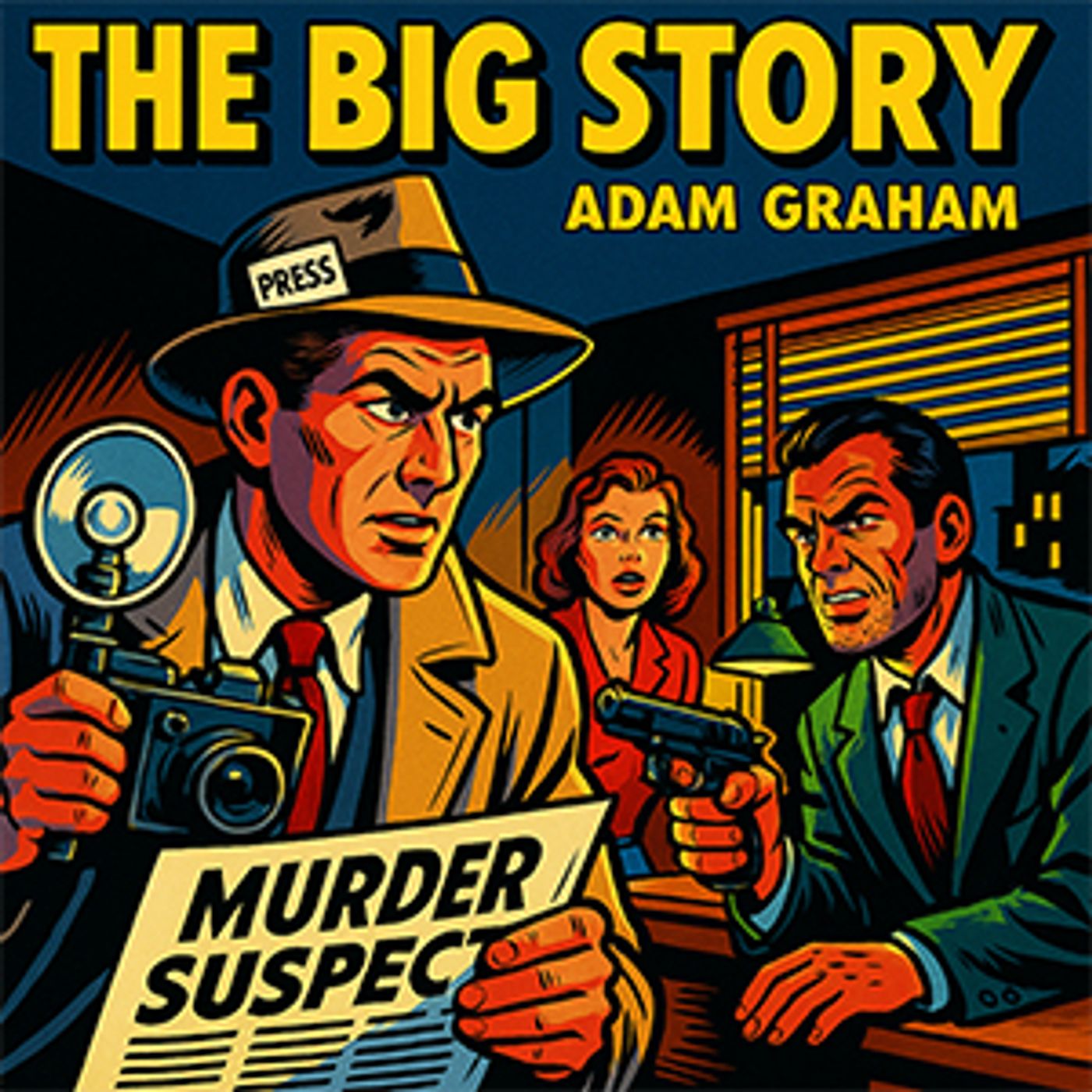
The Great Detectives of Old Time Radio| Daily Mystery Dramas
The Big Story: The Jigsaw Crime (EP4917)
00:39:02
Today's Mystery:A legendary Arkansas reporter investigates the murder of an unidentified man. Original Radio Broadcast: January 26, 1949 Originating from New York Starring: Martin Wolfson as Joe Wirges; Art Carney; Larry Haines; Art Carney; Martin...
Loading summary
Transcript20 lines
- [00:01]
A
At Lowe's get up to 35% off select major appliances plus members get free delivery, install and more. When you spend $2,500 on select major appliances Lowe's we help you save valid through 225 while supplies last Selection varies by location. Excludes Massachusetts, Maryland, Wisconsin, New Jersey, Florida. Loyalty programs subject to terms and conditions. Visit lowe's.com terms for details subject to change. Visit your nearby Lowes on Colorado street in Kennewick. Coffee Genius. Here, most people see a busy cafe, but I see precision at every step, thanks to Genius. From global payments transactions, instant inventory, precise operations in sync. Absolutely Genius. From sold out crowds worldwide to managing the morning rush, genius keeps operations running smoothly. One Portado. Flawless pour, perfectly timed. Just beautiful big league reliability for any business. That's genius.
- [01:29]
B
Welcome to the Great Detectives of Old Time Radio from Boise, Idaho. This is your host, Adam Graham. In a moment, we're going to bring you this week's episode of the Big Story. But first, I do want to let you know about our other podcast and I want to encourage you to check out the great adventures of Old Time Radio There. We bring you two great adventure stories every week, currently featuring Tarzan and Counterspot. And you can find this wherever you get your podcast from or at our website@great Adventures.info well, now, from January 22, 1949, here is the jigsaw crime.
- [02:16]
A
Now famous cigarettes present the Big Story. Two phone conversations took place about the same time. One between a man named Tom Cooey and his wife. Don't talk like that, Tom. Don't. I can't help it, Delia. If he goes on like this, I swear I'll kill him. Ed Rumley's a crump. Tom. Promise me you won't do anything. Some partner, lazy lies to me, never does any work, blames me. I swear, one more stunt like that one in Galveston, and I swear I'll kill him. The other was between the first man's partner, Ed Rumley, and his brother in Galveston. He pockets 50 bucks. I know it for a fact, Jack. 50 bucks. Then he tells me he took in 25 and splits that with me. Look, Ed, talk to him. He's your partner. Yeah, yeah, my partner. Some partner. Some swindler. But I'll tell you one thing, Jack. One more deal like that, just one, and Tom Coy's gonna be a dead man. The big story here is America, its sound and its fury, its joy and its sorrow, as faithfully reported by the men and women of the great American newspapers. Little Rock, Arkansas, from the pages of the Arkansas Gazette, the story of a puzzle whose pieces would not match until a reporter put them together. Then they spelled murder. To Joseph Wurgis of the Little Rock, Arkansas Gazette for his brilliant work. In this jigsaw of crime goes the Palmell Award for the big story. Now, the story as it actually happened. Joe Word's story as he lived it. Little Rock, Arkansas. All your life, you, Joe Urges of the Arkansas Gazette, did one thing well, police reporting. You did it so well. There wasn't a crime committed in Little Rock in the last 31 years. In most of Arkansas, for that matter, that you weren't connected with. Not just reporting it, but helping, sleuthing, asking questions, finding answers. So at 55, you were something of a legend in Little Rock. No crime was complete without Joe Urges on the spot. And that was why you were sore at the young new lieutenant of Homicide, Sam Halder. So, because the first you knew of it was when you heard Halda's report. Barry found an empty lot adjacent to farm of CyTravers, Rose City, two miles north of Little Rock. Dead one week. Face disfigured. Clues none. Identification impossible. You got to the scene of the crime, Travers farm, two hours after the police. Two hours. Usually you beat them by at least half an hour. With your son, Gene, a cub on the paper. You walk up to the new lieutenant two hours late and say it right out. What's the idea? Huh? Oh, hello, Joe. What's the idea, Lieutenant? You know my son, Gene? Hi, Gene. Hello, Lieutenant. What idea? Well, don't I read anymore? Man's murdered, no clues, identification difficult. Don't you call me anymore. Ah, look, Joe, the weather's bad. I got the news at 7 this morning and it's a goose chase. I didn't want to get you out of bed unnecessarily. I'm used to cold weather, bad weather, any kind of weather. And I like goose chases. Maybe you think I'm getting old, is that it? Ah, quit it. You know I respect you and all that. Okay, okay. Now. What do you mean, identification is difficult? My report. I said impossible. No such a thing, Lieutenant. Where is he? Down that dip where the cop is. Can I look? Take a few pictures? No such thing is impossible. You're quite a guy, aren't you? Yep. Let's walk on over. I wrote identification impossible on my report because, one, we don't know who's dead. Two, we don't know who killed him. Three, we don't find any clothes, no wallet, no identification whatsoever. How about on the underwear. Four, if you let me finish. No identification on the underwear or anywhere on the scene of the crime. Oh, there's the body. Look, Gene. See him? Yes, Pa. Always look at a body from like 10ft away. Gives you perspective. See? I see, Pa. Now take a picture from here, Gene. Then one from the feet, then a close up. I'll stay here and tell the lieutenant why I said identification is difficult, but not impossible. Now you're bluffing, Joe. What tells you the identification? Not the identification, Lieutenant. It just gives me ideas. Two men camped out in this field. One the dead man, the other the guy who did it. Footprints of two men are quite clear. Okay, two men did camp out. Travers the farmer, says a week ago two men asked to sleep out in his field. They had a car. Yeah, it looks like amateur crime, not a gangster killing. Gangster never pick a place like this. Too open. Gangster never let himself be seen by Travers. So what? So as amateurs, they bungled somewhere. They bungled. Left something for somebody to find. Joe, I heard you theorize before. And I heard about how you solve cases. But honest, you never heard anything like this before. Exactly A Gene, you finished? Yeah, Pa. Okay. Now, over there, see? About a hundred yards over there, papers. See? Lots of little pieces of paper. Got it all over those scraps of junk. You don't mean to tell me. Get a big bag, Jean. Pick up everything you see, even if you can't make it out. Okay, so what do you think you're doing? I said they were amateur. Amateurs. Always leave something or somebody who can read it. Follow me. Joe, I'm afraid you're slipping. Getting old. Maybe so, Lieutenant. Maybe so. But I'd advise you not to file that report on identification impossible for 24 hours. Don't have to listen. Just my advice. Oh, Pa, I'm tired. Can't see anymore. Well, you go to bed. Gene, why don't you stop shuffling these scraps of paper?
- [09:08]
B
Paper?
- [09:09]
A
We've been at it 20 hours and we haven't got a thing. You think the Lieutenant's right too? I'm getting old. I didn't say that, Pa. I'll sit with you all day tomorrow and the next day.
- [09:18]
B
Only.
- [09:19]
A
Only I sounded awful big, didn't I? 24 hours, Lieutenant. I sounded swell headed. Well, not exactly. Ah, now I think I got something. What, Pa? Look, Gene, a letter. Part of a letter, anyhow. An envelope. This little piece in greening, and that did it. What have you got? The letter. Signed Delia. See? Lonely for you, Delia. And in the same handwriting, same ink. Is this envelope to Tom C O U. And there's a letter missing. Y C O U blank Y. Yeah, but part of that might not be the murdered man or the murderer. It might be. Well, anybody. True. Might be someone who picnic there a year ago, tore up the letter and left it there. Sure. Or maybe a passing motorist threw it out the window. Then why am I excited? Because it might also be the murdered man or the murderer. Right. Well, you begrudge me the answer. I suppose so. Never begrudge an aging father an answer. Come on, Gene. We're still under the 24 hours. And I really got something for Lieutenant Halder. So his name is C O U blank Y. Coorie Cooley, something like that. And he's got a wife named Delia. That's all. Joe. The letter was mailed from Bridgeport. Yeah, long shot under the one. But I'll put a call through. You don't have to. What? I already did. I put the call through. Told the operator to connect you here at your office soon as she got a Mrs. Delia C O U blank Y in Bridgeport. Well, don't say it, Lieutenant. Lieutenant hall, your homicide. Hey you. Thank you. Hello? Hello, this is Mrs. Delia Cooey. Oh, hello Mrs. Cooey. Her name is Cooey. Who is this? Mrs. Cooey, my name is Joe Word from Little Rock, Arkansas. Nothing to be alarmed at. Just your husband's name is Tom, is that right? That's right. Have you heard from him? No, ma', am, just. Just a routine newspaper check. Oh, have you heard from him? No, I thought it was him calling. See, it's been a long time. Over 10 days. And he always writes or phones me. Has Something happened? No, Mrs. Cooey, it's nothing definite. Just we may have some information for you. If we do, we'll get in touch with you. Mrs. Cooey, how old is your husband? He's 32. Something is the matter. As I said, if anything comes up, we'll call you back. Don't worry. Why didn't you tell her, Joe? Tell her what, Lieutenant? I'll tell her to come down and identify the body. Well, it's her husband we found in the field. Now you know it as well as I might be, but then again, it might not. What are you talking about now? Did you take a good look at that body? I spent a day going over that body. Did you see his teeth? I saw his teeth. Are those the teeth of a man? 32. A false supper plate. Well, it's happened before. Look at his feet. Bunions on his feet, sir. Are those the feet of a man of 32? That man was 50, at least. Well, just because a guy has a plate in his mouth and bunions will. Well, Maybe he's a 32 year old mail carrier. It's possible. But I say our man's 55 these a day. All right, I've said my piece. What are you going to do? File the death certificate in the name of Tom Cooey. What are you going to do? First, give you some free advice. Don't. And second, I'm going back and finish that jigsaw puzzle I've been working on with Gene. There's still a few pieces of paper have me worried. You've got Lieutenant Halder worried. But you're worried too. Joe urges. A few pieces of paper. Have you worried? One, a half torn receipt with a number 73,569. And the other, the name of a post office. Hudson Terminal Post Office. On a somewhat similar piece of paper, you wonder if the two go together. If you have on the disarrayed table in front of you two pieces of a receipt for a registered letter. Well, suppose you have Pa, then maybe the amateur murderer tore up this receipt and you'll find his name. Oh, that's a thousand to one. At least 2001, Gene. It might be the murdered man tore up the receipt. Or it might be neither of them did it. Maybe it's 73,569 to 1, gene, but I like long shot. You play the long shot. A phone call to a friend in the post office at Hudson Terminal and you find that the letter was mailed three months ago by a man named Ed Rumley to his brother Jack in Sacramento, California. So you put through a call to Sacramento. Mr. Rumley, you've got a brother named Ed? That's right. He's about 55, Ed's 54. Paul's supper plate in his mouth. That's right. Say, what is this? Bunions on his feet. Bad bunions. Yes, but what's this all about? Mr. Rumley, you'd better hop a plane and get out to Little Rock soon as you can. I'm afraid your brother's been murdered. We'll be back in just a moment with tonight's big story. This is Cy Harris returning it to your narrator. And the big story of Joe Burgess as he lived it and wrote it. First Lieutenant Sam Halder announces that the identification of a murdered man is impartial, possible. And you, Joe Worse of the Arkansas Gazette. Prove that wrong. Then he announces that the murdered man is one Tom Coy. And you blandly write a lead story for your paper that the murdered man is Ed Rumley. To be on the safe side, you don't run the story because the identification by Rumley's brother and his from California hasn't been made yet. But when Rumley's brother arrives and takes one look at the body, you'll know you're right. The murdered man is Ed Rumley. So you run your story and you and the lieutenant get on with the case. So your brother and cooey were partners, Mr. Rumble? That's right, Lieutenant. And he and Cooey didn't get along. They hated each other. Yes, that's true. They were partners in business. Sold auto polish together and they weren't doing well. And they fought a lot. Was it a surprise to you your brother was killed? I knew they had trouble, but I never thought it'd come to this. You think Cooey did it? I don't know. Why don't we let the man go to his hotel, Lieutenant? He's had a great shock. His brother's death and all that. Yeah, yeah. Sorry, Mr. Rumley. That's all right. Thank you. Thank you. Now, Joe, I think we sent out a dragnet for a man named Cooey. Tom. C O U E Y. Right? Right. But here you're both wrong. It isn't two minutes later when the death sergeant opens the door and lets in a tall man wearing a Palm beach suit. Lieutenant Halter. I'm Tom Cooey. You're Cooey? Yes, sir. I have read a story in the paper that Ed had been killed. I thought I could be of help and got here as soon as I could. Where have you been? Well, as. As you see, I didn't even bother to change my clothes. I was in Florida. I took a plane, got here as soon as possible. Ed's good friend Lieutenant Jean's outside. You mind if I get him? No, go ahead. You do anything you like. Sit down, Miss Gooey. Anyway, I can help, Lieutenant. Well, just tell me, you and Rumley were partners? Yes, that's right. Auto polish lot. But about three months ago we broke up. We weren't doing too well. We split what we had. Ed took the stock, I took the car and we just parted. Bradley. Why? Ed was the salt of the earth. You have no idea how this distresses me. Just hold it, Mr. Coey. What? Pictures. Go ahead, Gene. One from the side, then one from the front. What are you shooting? Pictures for now, Joe. Just routines. Okay. You were friends with Rumley. Were you ever in this territory? Oh, yes. Were you up in Little Rock, Mr. Cooey? Recently? No. About six years ago I was. Not recently, no. Ever in Knoxville? A year ago for pleasure, but not recently. When did you last see Rumley? Well, let me see now. Must be four months ago. And where did you see him last? Richmond. We split up in Richmond, as I said. He took the stock, the polish and I took the car. And that was the last time I saw him. Poor fellow. Well, thanks for coming in, Mr. Cooey. Lieutenant, can I say a word? You don't have to waste. But, Joan, you aren't going to let him go, are you? Maybe Travis ought to see him. The farmer, one of them asked Travis for permission to camp on a farm, remember? Yeah, I remember. Okay. Okay, Mr. Coohey. I'll have to keep you for, oh, a few hours. Make it 24, Lieutenant.
- [19:13]
B
Why?
- [19:14]
A
Just to be on the safe side. Trust me. Just a few hours, Mr. Coeet. Dust routine. The Travers. It was on your property they stayed that night, huh? That's right, Lieutenant. Now just look at this man and tell me, did you ever see him before? Was he one of the men, that man? Nope. Never saw him before. Satisfied, Joe? I'd still say make it 24 hours, Lieutenant. What? Given to an old man. Swim, Lieutenant. Okay, okay. I'm awfully sorry, Mr. Coeet. Just a few more hours. Where's Dean? We're just. Dean, where are you? Here I am, Lieutenant. Now, where's Joe? Where's your father? Gee, I don't know, Lieutenant, but he said he'd be here. Well, I've been waiting half the day for him. He said he'd be here at 6. I'm gonna let Cooey go. He said Please to wait 24 hours, he said, Lieutenant, 24 hours. What for? The man's innocent. Why am I holding him? Suspicion to murder. I've got no suspicion to murder. What's your old man doing anyway? I don't know, Lieutenant, but he said please to wait. Well, it's seven. He's got until 8 o'. Clock. Not a minute more. Tell him that I don't know where to find him. Eight o'. Clock. I don't care. Gene. Gene. Sergeant. Yes, Lieutenant. Walter, it's 8:15 and he's not here yet. Did you hear from him? No, sir, I didn't. Okay. Bring Coy in. Sergeant. I'm releasing him. Don't be so hasty, Lieutenant. What, Pa? Did you find anything I think it's a fine idea to bring Cooey in, but I don't think you ought to release it. What did you find? What have you got? Tell me. You ought to develop patience, Lieutenant Gene. Patience is an asset in the old as well as in the young. You wanted to see me, Lieutenant Hallif? Yes, Mr. Coohy, I did. Well, go ahead, Joe. Mr. Coohy, sit down that chair. You'll be more comfortable, Ms. Standing, Lieutenant. Yeah, go ahead. Sit down. Go ahead, Joe. I have a document here, Mr. Cooey. Just a second. That says. No, this is the letter I forgot to mail from my wife. Ah, here it is. A letter from your wife, Mr. Cooley. From Delia. From Delia? Oh, don't be alarmed. Perfectly harmless letter, Miss. You love, you write more often. But that's not what I'm after. It's the envelope I call to your attention. Well, what about it? The postmark. Plural postmark. This was sent to you in Knoxville, then forwarded to you in Little Rock. Note, it bears three postmarks. Bridgeport, where she mailed it from Knoxville and Little Rock. So what, Joe? Suggesting that Mr. Coohy was at one time in Knoxville and later in Little Rock. Two facts which, if I remember correctly, he denied. Were you? Well, I. Yes. Yes, I guess I was. Now, with that much cleared, we ask this question, Mr. Cooey. Were you ever in Rose City? Rose City? To refresh your memory, was the place where Ed Rumley met his death on the farm of a man named Travers in Rose City? Ever there? No, never. Good. You also told us you never sold automobile polish in Knoxville or Little Rock or Rose City in the company of Ed Rumley. Yes, that's true. I was in Knoxville and Little Rock, but not with Rumley. We broke up in Richmond four months ago. I told you that. Oh, yes, so you did. But if it should be established that you did sell the polish in all those cities with Rumley within the past month, you might look like a liar. I said I never did, and that's all I've got to say. And here in my pocket, I have. No, that's my telephone bill. Here I have seven depositions from auto store owners in Little Rock and Rose City swearing that you and Ed Rumley together sold them polish within the past month. Well, how could they swear that when I never. Do you recall my son took your picture? Well, armed with that picture and the photo of Mr. Rumley before you murdered him, I never did anything. Of these photos, I say I went to the auto stores and asked if they saw you. And these depositions say they did. Seven, Lieutenant Halden. Seven. Fairly conclusive. All right, Cooey. Let's have the truth. It's about time. Okay, okay. We sew the polish together, but that's all. I left town two weeks ago and never saw Rumley again. Another lie. One of the depositions says you sold polish together the day of the murder. One week ago. You hated him and he hated you. Rumley's brother says that and so does your wife. As a matter of fact, you gentlemen both threatened to kill each other. Come on now, Coy. Start talking. Okay. We were in the field together. We camped out in Travis Field. We were broke. That's why we camped out. Brumley threatened me. We were about to go to sleep that night when he threatened me. I. I had to do it. He would have killed me. Had a club maybe. Maybe it was the carjack. I don't know. And he tried to kill me. I took it away from him with self defense. I. I didn't even think of what I was doing. Oh, how the man lies, Gene. Note how criminals lie. First, it was premeditated. You removed not only his clothes, but also the label from the underwear. You were careful to leave his body face down in the water, hoping it would leave him unrecognized. And do you know how I know that? Oh, it was not a hot night. The Weather Bureau, with whom I have just checked, tells me the night in question was a very cold night. You slept with your clothes on. And when the deed was done, you removed his clothes. You dragged the body 200 yards to the gully and left it there. You want me to prove each of these points? Or will you sign the full confession I prepared for you? Well, I think Mr. Cooey needs a fountain pen, Lieutenant. You know he lost his in Traverse Field. I found it if you want it, Mr. Cooey. But I don't think you have much use for where you're going, do you, Lieutenant? Well, Gene, we better get along. It's my. It's after 9 o'. Clock. I better get to bed. You know, I can't take these late hours anymore. I'm not as young as I used to be. In just a moment, we'll read you a telegram from Joseph Wors of the Little Rock Arkansas Gazette. With the final outcome of tonight's big story. Now we read you that telegram from Joseph Wors of the Little Rock Arkansas Gazette. Realizing his story of self defense wouldn't stand up in court, Giller, in tonight's Big Story pleaded guilty to the murder and thereby escaped the electricity. Sentenced to life imprisonment in the penitentiary, he escaped after serving four years, but was recaptured two years later. My sincere appreciation for tonight's Pall Mall award. Thank you, Mr. Woodrus. The makers of Pall Mall Famous Cigarettes are proud to have named you the winner of the Pall Mall five hundred dollar award for notable service in the field of journalism. Listen again next week, same time, same station, when Pell mell Famous Cigarettes will present another big story. A big story from the front pages of the Joliet Illinois Herald. News by line, William M. Hart. A big story about a reporter who tried to stop an explosion of dynamite. Human dynamite. The Big Story is produced by Bernard J. Proctor with music by Vladimir Silinsky. Tonight's program was written by Arnold Pearl. Your narrator was Bob Sloan. And Martin Wilson played the part of Mr. Wurgs. In order to protect the names of people actually involved in tonight's authentic big story, the names of all characters in the dramatization were changed with the exception of the report her Mr. Wornes. This is Ernest Chappell speaking for the makers of Palmel Famous Cigarettes.
- [28:04]
C
If you're an H vac technician and a call comes in, Grainger knows that you need a partner that helps you find the right product fast and hassle free. And you know that when the first problem of the day is a clanking blower motor, there's no need to break a sweat. With Grainger's easy to use website and product details, you're confident you'll soon have everything humming right along. Call 1-800-GRAINGER clickgrainger.com or just stop by Granger for the ones who get it done.
- [28:33]
B
Welcome back. Well, first of all, let's go ahead and provide the rest of the cast. In addition to Mr. Wolfson, the cast included Joyce Gordon as Delia. And then we had Larry Haynes, Art Carney, Michael o' Day and Joe Desantis. This episode was a strong one. I think that the characterization is very different from your typical Big story episode, which is usually about this sort of unassuming reporter who does his job and has this one case that is his big moment. The way that he's written and played feels like if you tuned in not knowing that this was supposed to be based on a true story, you would not suspect it. But the fact of the matter is that the real life Joe Worges was a larger than life character. He did not have the national profile of Dorothy Kilgallen or a Walter Winchell because To be honest, he was based in Arkansas and not New York City. But Joe Gazette, as he was known, went to work as a newspaper reporter when he was lad of 19 and stayed with it for 49 years out of 50. Took like a one year sabbatical in the middle of that. But he had a massive legacy. Quoting from the Encyclopedia of Arkansas he was a natural detective and helped the police break down suspects and solve crimes. During the heyday of the national pulp detective magazines, the 30s through the 50s, Worges was a frequent contributor to and subject of journals like True Detective that publicized crime mysteries. So probably at least some of the fictional detective heroes may have been indirectly inspired by Joe Worges. Because a lot of people who grew up to be crime writers, they read these sort of magazines. The police literally relied on him. They knew where he could be reached even when the newspaper couldn't. And they would notify him if something broke. Which the idea that he was taken aback that he wasn't notified in this episode. Yeah, that is true. If you were in Arkansas, Little Rock area and something was breaking in the crime area, you would call Joe Wurtis. You would make sure that he knew what was going on. I mean, according to this, even they, they even scheduled execution so that he could be there. And according to the Encyclopedia, we're just was actually featured in multiple episodes of the Big Story. Though this appears to be the only one in circulation. And I love the way Wilson portrayed him. I was amused during the part when he was confronted, confronting the suspect and was doing this thing, oh wait, no, no, no, that's my grocery list. And I thought, oh my goodness, he's doing Columbo before Peter Falk. Now, I think most of the facts of this case, the story behind the big story, Dr. Joe Webb tracked down the real incident and the victim was George Riolo and the killer was Walter Beal. And both were actually from Westchester county, but Riollo was originally from California. Now the big difference with the case is that it did not happen in 1949 when worges would be about 52, give or take. Actually happened back in 1931 when worges was 35. So a lot of references to him being old or being a bit over the hill. Nobody would have had that assumption in 1931. It's probably one of those conceits of the program that it acts like each case is somewhat recent to make the accomplishment seem fresh. Words would actually keep on writing and being a living legend. Until he retired in 1966. Two of his sons. He had four sons. Would go on to work in journalism with his son Gene, becoming a publisher and editor of a paper and being a crusader against corruption in state politics. So probably one of the more fascinating subjects for one of these Big Story episodes we've encountered so far. Listener comments and feedback now and we have a few comments regarding the episode A Blind Date with Murder. We start with Peter on Spotify. I guess it wasn't such a harmless little fib after all. Society can still learn a lesson from this story. I think that there are lessons to be learned from real life that should teach us to be more circumspect about how we talk and warn us against that. But we seem not to want to learn those lessons. Dawn Comments Whoever told the actress she could play a young girl lied. Ouch. The music was spectacularly inappropriate for the story. The focus on the consequence of gossip and and not the fact that a policeman went on a killing spree by modern sensibilities, it misses the mark completely. A good story told well usually stands the test of time. This one had an expiration date. Well, Mark, I definitely think there's something to the perspective, I think, on some of the points, the music. It feels like with the Big Story that you kind of get the same sort of music and score every episode. There are other series that mix it up to capture the tone. As to the sensibilities, I think you raise a fair point. Although it wasn't written for our sensibilities in the 21st century, and there are many good or even great stories that cut against our sensibilities and certainly the way that some stories are told in the 21st century offend the sensibilities of future generations. I think that whenever you're creating something, you are kind of limited by the standards of the time and what your audience will accept and what, in this case, what the network is going to broadcast. Probably having this storyline where the focus is on the danger of gossip and being malicious made it more palatable to the networks and so that the story could actually be made and the reporter could get their Pall mall award. And $500 was certainly a big sum of money at the time. And you will see that with films that are made today and stories that are produced in a dramatic way, they are not told true to life. They are told in ways that fit into our cultural narratives and the narratives of the people who are making the productions. I've yet to see one where people are like, yeah, that is totally accurate to how everything happened. There are, you know, not to say that no truth is reflected, but it is colored with the perspective of its time. I think you do have a point. Over on Facebook, Joey writes, I can't help but think how the child in the story would feel if she realized what her fib fid led to. However, even if her fib was true, the friendly neighborhood cops reaction was still way over the top. And I think that's a fair point, Joey, because there are ways that that our lives can harm others, but the way people choose to respond to a lie or respond to a situation is on them. And the same thing with the real life policeman who went on a killing spree after some allegations. If the allegations were false, there are all sorts of ways he could have chosen to respond to it. He chose a killing spree and that is ultimately on him. And then we go over to YouTube comment regarding the episode the Lottery from Mildred I like these episodes of the Big Story. Well, thanks so much, Mildred. I'm glad you're enjoying this series. Well, now it's time to thank our Patreon Supporter of the Day. And I want to go ahead and thank Susan patreon supporter since October 2018, currently supporting the podcast at the Detective Sergeant level of $7.50 $0.14 or more per month. Thank you so much for your support and that will do it for today. If you're enjoying the podcast, please follow us using your favorite podcast software and be sure to rate and review the podcast wherever you download this from. We will be back next Tuesday with another episode of the Big Story, but join us back here tomorrow for Broadway's My Beat Wear she said the man
- [38:54]
A
who's been annoying her would be here at ringside. You see him anywhere? Big how would I know him if I saw him? A man running away from something in the street? That's an annoyer. I get the urge myself sometimes. You know any of these men around us? Yeah, that one there with the two blondes and a male attendant. That's Joey Crane. His last wife made a settlement on him. A native village in Mallorca or someplace. He needs poly like a hey, that one who looks like scientist. Uhhuh, a scientist. When things are dull around here, I go over to him and discuss what's new and nuclear fission. And there's always something new. Polly interests him in terms of how soon she's going to explode. You think him a cultured scientist? The one alone against the wall. Him? Daddy, I'm surprised at you. Do not be taken in by the rough and tumble. Three buggers hey, that's Polly. I heard a scream before. Where is she? Sounds like from the dressing room. Danny, you think maybe you're going to take me to her? Victory? Yeah, sure, sure. Come on. In here. Danny. Look what he did to me. Look at my dress he tried to tear. Look at me. Holly. Polly, take it easy. It's going to be all right. Get your hands off of me. Where'd he go? Ms. Morgan? If I had the gun I just killed. Where'd he go?
- [40:13]
B
Ms. Morgan, I hope you'll be with us then. In the meantime, send your comments to Box 13 at. Great. Follow us on Twitter at radiodetectives and check us out on Instagram. Instagram.com Great detectives from Boise, Idaho, this is your host, Adam Graham signing off.
- [40:33]
C
If you're an H Vac technician and a call comes in, Grainger knows that you need a partner that helps you find the right product fast and hassle free. And you know that when the first problem of the day is a clanking blower motor, there's no need to break a sweat. With Grainger's easy to use website and product details, you're confident you'll soon have everything humming right along. Call 1-800-GRAINGER clickgrainger.com or just stop by Grainger for the ones who get it done.
- [41:03]
B
If you're the purchasing manager at a manufacturing plant, you know having a trusted partner makes all the difference. That's why hands down, you count on Grainger for auto reordering.
- [41:13]
A
With on time restocks, your team will
- [41:15]
B
have the cut resistant gloves they need at the start of their shift and you can end your day knowing they've
- [41:21]
A
got safety well in hand. Call 1-800-GRAINGER clickgrainger.com or just stop by
- [41:27]
B
Grainger for the ones who get it done.
- [41:33]
C
If you're an H Vac technician and a call comes in, Grainger knows that you need a partner that helps you find the right product fast and hassle free. And you know that when the first problem of the day is a clanking blower motor, there's no need to break a sweat. With Grainger's easy to use website and product details, you're confident you'll soon have everything humming right along. Call 1-800-GRAINGER clickgrainger.com or just stop by Grainger for the ones who get it done.