Podcast
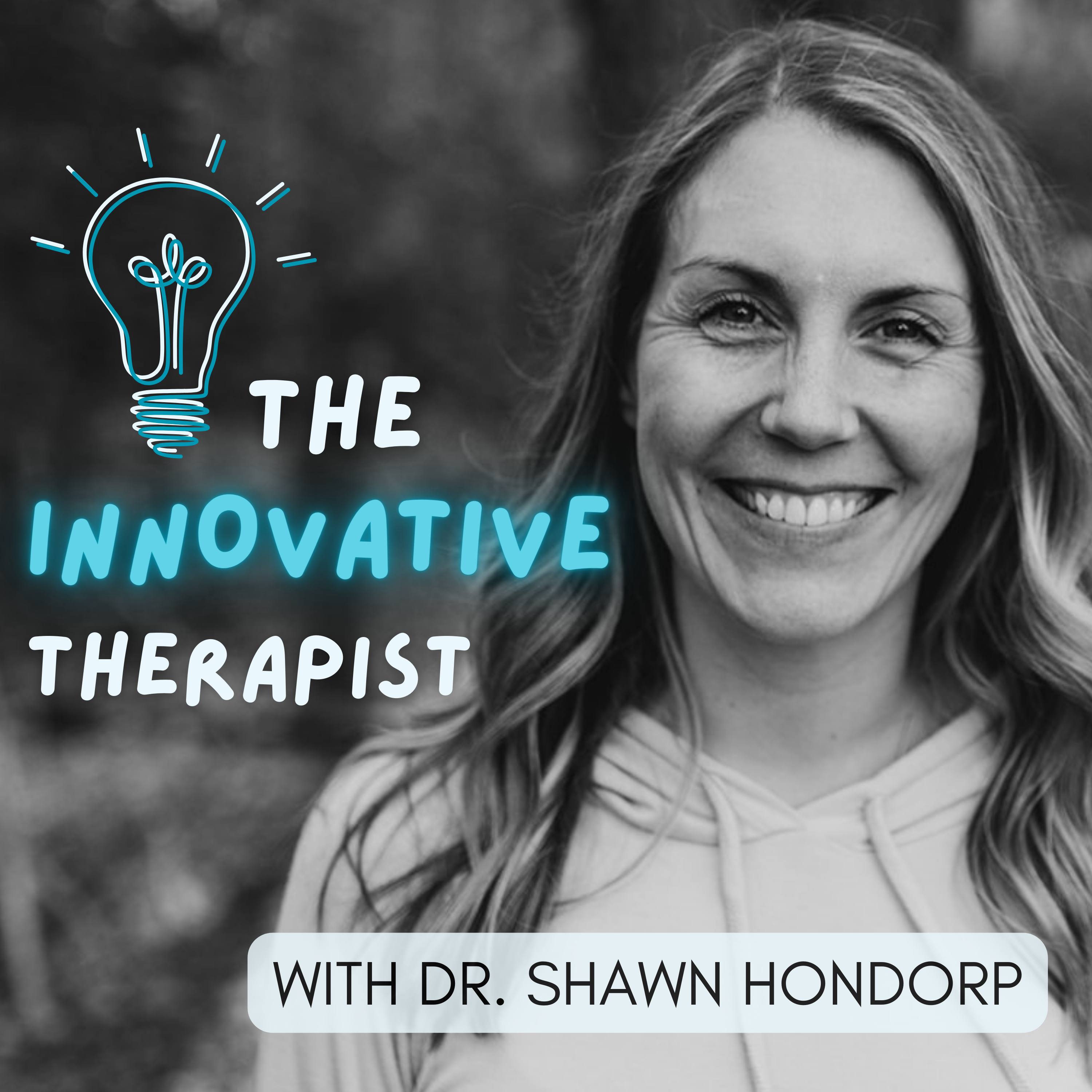
The Innovative Therapist
Hosted by Dr. Shawn Hondorp, PhD, ABPP · EN
Are you a therapist or helper that likes to think deeply and creatively about ways to build trust with our bodies in and out of the therapy office? Do you want to overcome disordered relationships to food so that you can live a life that feels aligned and amazing, and help inspire others to do the same? Do you hate small talk – your idea of fun is deep and meaningful talks about living more courageous and connected lives? If so, then welcome to the Innovative Therapist podcast where we talk about creative ways to heal and build self-trust, Internal Family Systems theory and Parts Psychology, and unlearning the many messages from oppressive systems that lead us away from body trust. I’m Dr. Shawn Hondorp, clinical psychologist. Let’s work together to create safe learning environments for those who want to explore innovative approaches to healing, one authentic conversation at a time. 🌈✌🏻✌🏽✌🏿🌳
34episodes
Episodes
Newest firstAll episodes
Play Without “Purpose”: Waste of Time or the Lifeforce We’re All Missing? with Kara Latta
1w ago00:29:33Tap to summarizeEpisode 170: Play Without “Purpose”: Waste of Time or the Lifeforce We’re All Missing? with Kara Latta ✨ Free resource: Uncover Your Zone of GeniusDownload the Guide Here What if the thing many adults dismiss as “unproductive” is actually the very thing we’re all starving for? In this episode of The Innovative Therapist Podcast, I sat down with Kara Latta, founder of The Playful Warrior, for a deeply honest and energizing conversation about play, perfectionism, visibility, entrepreneurship, creativity, and what it really means to come alive again. Kara helps adults reconnect with play, spontaneity, joy, and freedom — especially high-achieving perfectionists who have become disconnected from themselves through years of overthinking, pressure, productivity, and self-consciousness. And honestly? This conversation felt like a giant exhale. In This Episode We Explore: ✨ Why play is essential for creativity, healing, and nervous system flexibility✨ Kara’s journey from PR executive to play coach and retreat host✨ The fear of being seen, visible, playful, or “too much”✨ Why adults often resist play — even when they deeply crave it✨ Entrepreneurship as a path of self-discovery and self-trust✨ The connection between spontaneity, creativity, and innovation✨ Why over-preparing and perfectionism disconnect us from aliveness✨ How following “playful breadcrumbs” can completely change your life About Kara Latta Kara Latta is changing the world through the power of play. As the Founder of The Playful Warrior, she helps ambitious, sensitive humans overcome perfectionism and rediscover joy, confidence, and creativity through the ✨ magic of play ✨. Her playful approach to healing perfectionism has resonated with thousands, and she has been featured on The Morning Show, Breakfast Television, and Shondaland. Kara’s message is simple: play is anything but fluffy. It’s a powerful way to break free from self-doubt, unlock creativity, and make life feel more fun, meaningful, and fulfilling. When Play Feels Uncomfortable One of my favorite parts of this conversation was hearing Kara talk about realizing how disconnected she had become from freedom and joy. Not because she lacked creativity.Not because she lacked talent. But because so much energy was going toward: managing perception trying to get things “right” avoiding awkwardness and protecting herself from judgment I think so many therapists, helpers, and entrepreneurs will resonate with this. Because often the real question isn’t:“How do I become more creative?” It’s:“How do I feel safe enough to actually let myself play?” Play Isn’t Frivolous Kara shared how reconnecting with play during one of the hardest seasons of her life completely transformed her relationship with herself and eventually became her life’s work. And throughout this conversation, one message became incredibly clear: Play is not a waste of time. Play helps us reconnect with: curiosity courage creativity flexibility embodiment innovation confidence spontaneity joy aliveness In a world constantly telling adults to optimize, produce, hustle, and perform… play can feel wildly uncomfortable. But maybe that discomfort is actually pointing us toward something important. Entrepreneurship, Creativity & Learning to Trust Yourself We also had a really honest conversation about entrepreneurship and how building meaningful work often requires becoming a completely different version of yourself. We talked about: visibility online fear of judgment imposter syndrome launching retreats surrender experimentation self-trust people-pleasing and learning to stop over-controlling every outcome At one point, Kara described entrepreneurship as: “a wild self-discovery spiritual journey.” And honestly… I deeply agree. Maybe This Is the Thing We’re Missing The more I reflect on this conversation, the more I keep coming back to this idea: Maybe play without a clear purpose isn’t frivolous. Maybe it’s the lifeforce many of us have lost touch with. And maybe reconnecting with it is part of how we heal, innovate, connect, create, lead, and fully inhabit our lives again. Connect with Kara 🌐 The Playful Warrior Website📸 The Playful Warrior Instagram Kara offers retreats, coaching, playful experiences, and free resources to help adults reconnect with creativity and joy. Want More Conversations Like This? ✨ Download the free Uncover Your Zone of Genius guide:Zone of Genius Guide 💌 Join my email list for podcast updates, creative inspiration, and upcoming events:Join the Newsletter Disclaimer:This blog and podcast are for informational and educational purposes only. They do not constitute medical or mental health advice and are not a substitute for professional consultation or treatment.
Transcribe →Inner Leadership When Shame Shows Up
2w ago00:19:24Tap to summarize✨ Free Resource: Uncover Your Zone of Genius If you’ve been feeling pulled toward something new but aren’t sure what it is (or you’re struggling to trust it), download my free Zone of Genius Guide. It’s designed to help therapists, helpers, and creatives reconnect with the work that feels most alive and aligned. Download it here. Hey friends, Last week, I shared that I was learning to detach my worth from outcomes. And I meant it. I had created a mother-daughter play and connection event that I felt incredibly proud of—even before anyone signed up. My retreat wasn’t full, and I was still able to feel excited about what I was creating. That felt like a huge shift. Then this week, something happened that brought the old shame story rushing right back. I noticed a spot on my neck that might have been a simple irritation—or might have been shingles returning only two months after I’d had it the first time. I didn’t know yet. But almost immediately, a familiar part of me said: Something is wrong. You must be failing. You should have taken better care of yourself. And then another part wanted to criticize me for still having that reaction at all. Apparently, I wasn’t healed enough. In this episode, I’m sharing an honest look at what inner leadership actually looks like when shame, uncertainty, and self-doubt show up—and why healing doesn’t mean we never get triggered again. 🎧 In This Episode We Explore: ✨ Why healing doesn’t mean difficult feelings or old shame stories never return ✨ How self-criticism can use the language of growth against us: You should be more healed by now ✨ What it means to let an ashamed or frightened part matter without letting it run your life ✨ The difference between pushing through pain and creating alongside it ✨ Why I cannot analyze my way out of every painful experience ✨ How entrepreneurship has helped me become more connected, grounded, and alive—even when the outcomes are difficult to measure ✨ Why asking for support can be an act of discernment rather than evidence that we’re incapable ✨ What it means to build a life that feels good now instead of waiting for some future milestone Healing Doesn’t Mean Never Getting Triggered For years, I think I imagined healing as reaching a place where certain feelings simply wouldn’t happen anymore. I wouldn’t feel as much shame. I wouldn’t question myself. I wouldn’t get pulled into the familiar story that if something went wrong, I must have done something wrong. And I have changed. Business outcomes don’t derail me in the same way they once did. I have more capacity to notice disappointment without turning it into a verdict about my worth. I recover more quickly when a critical part gets activated. But growth doesn’t mean the old story never visits. This week reminded me that shame is remarkably flexible. If it isn’t focused on business, it can focus on my health. Or parenting. Or how well I’m taking care of myself. The circumstances change, but the message stays the same: If something hurts, goes wrong, or remains outside your control, you must have caused it somehow. My growth isn’t that I never hear that story anymore. It’s that I have much less shame about having shame. What Inner Leadership Actually Looks Like Inner leadership isn’t sitting above our emotions, perfectly calm and unaffected. It also isn’t allowing every frightened, disappointed, or critical part to take over our whole system. To me, it sounds more like: I see you. You’re allowed to be here. You matter to me. And you don’t have to run the show. That day, I let myself cry because I felt disappointed and scared. I reached out to my doctor. I told my husband and my coach what was happening instead of sitting alone inside it. Then I recorded this podcast episode. Not because I needed to push through, prove my productivity, or pretend I was fine. Because creating with an experience is one way I make meaning from it. There’s a difference between pushing past pain and creating alongside it. The difficult feeling was still present. It just wasn’t making every decision. That, to me, is inner leadership. I Cannot Analyze Away My Pain As a psychologist and researcher, I’ve spent much of my life learning how to analyze, explain, justify, and defend. Those are useful skills. I still love learning. But I keep encountering a truth that intellectual understanding cannot resolve: I cannot analyze away my pain. No amount of information can completely prevent uncertainty, disappointment, fear, or shame. And knowing why I feel something isn’t the same as allowing myself to experience it without abandoning myself. Sometimes the next step isn’t another explanation. Sometimes it’s letting myself feel what is true, receiving support, and deciding how I want to live while the answer is still unclear. Why I Keep Choosing the Less-Traveled Path When entrepreneurship feels tiring or uncertain, a part of me still asks: Why are you doing this? Why not return to a more traditional job? Why not focus only on private practice, see clients, write my notes, and be done? There’s nothing wrong with either of those choices. But I keep a handwritten list near my desk called Why I’m Choosing the Less-Traveled Path. I add to it whenever I remember something important. Because I only get one life. Because it isn’t too late to show younger Shawn that her ideas mattered and she was enough. Because entrepreneurship is hard, but it’s also fun. Because I love meeting interesting people and feeling connected to my community. Because flexibility allows me to experience more of my life now. Because becoming a better inner leader helps me become a better leader for my children. The outcomes that matter most aren’t always the easiest ones to measure. I may not yet have a perfectly predictable stream of income from every part of my Zone of Genius. But I’m more connected to my community. I have more interesting relationships and collaborations. I’m more grounded with my kids. I have greater choice and self-trust around my work. And because I’m no longer overworking, I actually feel more engaged in the clinical work I still choose to do. Those changes count—even when they don’t fit neatly into a spreadsheet. <hr...
Transcribe →Can You Be Proud of Yourself Before You Have “Success”?
3w ago00:21:23Tap to summarize✨ Free Resource: Uncover Your Zone of Genius If you’ve been feeling pulled toward something new but aren’t sure what it is (or you’re struggling to trust it), download my free Zone of Genius Guide. It’s designed to help therapists, helpers, and creatives reconnect with the work that feels most alive and aligned. Download it here:https://pages.drshawnhondorp.com/zone Hey friends, Today I launched something I’ve never created before. A mother-daughter connection event called Color Outside the Lines. As I recorded this podcast, exactly zero people had signed up. And honestly? I still felt incredibly proud. That sentence would have been impossible for me to say five years ago. For most of my life, my confidence, sense of worth, and ability to relax were directly tied to outcomes. Grades. Achievement. Being liked. Podcast downloads. Retreat registrations. Business revenue. In this episode, I’m sharing what’s shifted, why entrepreneurship has become one of the greatest healing experiences of my life, and why I think focusing on identity may be even more powerful than focusing on outcomes. 🎧 In This Episode We Explore: ✨ Why entrepreneurship became one of the deepest healing experiences of my life ✨ The surprising shift from measuring success by outcomes to measuring it by identity ✨ How following “creative breadcrumbs” led me to create a mother-daughter event I never could have planned ✨ Why meaningful work often brings both incredible joy and unexpected grief ✨ Why we need community when we’re building a life that feels aligned ✨ What it really means to trust yourself before you have proof When Success Determines Your Worth For years, I believed I was simply “goal-oriented.” Looking back, I can see that something much deeper was happening. My nervous system only relaxed after receiving external validation. If things were going well, I felt okay. If they weren’t, I questioned everything about myself. Entrepreneurship didn’t create that pattern. It exposed it. And once I could finally see it, I had the opportunity to begin healing it. Identity Is Different Than Outcomes I’ve often encouraged people to enjoy the process rather than obsess over the outcome. Recently, I heard someone describe it a little differently: Focus on identity instead. That language immediately clicked. Instead of asking: “Did this work?” I’ve started asking: “Who am I becoming while I create this?” That simple shift has changed how I show up in my business, my parenting, and honestly, my entire life. Following Creative Breadcrumbs People often ask me how I knew I wanted to create retreats, communities, or now, mother-daughter experiences. The truth is… I didn’t. There wasn’t one defining moment. There were hundreds of tiny ones. Dance. Books like Hunt, Gather, Parent and Dopamine Kids. Watching families in Guatemala. Learning about play. Conversations with other entrepreneurs. Listening to what made me feel more alive. Eventually those breadcrumbs became a path. I didn’t design it. I discovered it. The Part Nobody Talks About Here’s something I don’t hear discussed very often. Doing work that feels deeply aligned doesn’t only bring excitement. It also brings grief. Recently I created a playlist for my upcoming mother-daughter event. Every time I listen to it, I cry. Not because I’m worried about whether the event will sell. Because something about it feels profoundly me. I’ve come to believe that meaningful work shines a light on every place we’ve spent years disconnected from ourselves. The joy is incredible. The grief can be just as powerful. And somehow… Both are signs we’re moving in the right direction. We Weren’t Meant to Do This Alone Whether it’s entrepreneurship, parenting, healing, or creativity… Growth is uncomfortable. That’s why I believe so deeply in community. I’ve experienced firsthand how much easier it is to keep taking aligned action when someone can compassionately hold space for your fear instead of trying to eliminate it. Sometimes we don’t need another strategy. We need someone who can remind us that we’re still worthy while we’re learning. A Powerful Reminder for Therapists, Helpers, & Creatives Maybe the question isn’t: “Will this work?” Maybe the better question is: “Who am I becoming by creating this?” Because at the end of the day, I don’t want my life to be measured only by what I accomplished. I want it to be measured by whether I had the courage to trust my creative instincts. To build things that mattered. To love the people around me well. And to become someone who believes she’s worthy before the results arrive. Connect With Me If this episode resonated with you, I’d love to hear from you. You can: Download the Zone of Genius Guide Reply to one of my emails Reach out about 1:1 coaching Learn more about the Innovative Therapist Retreat Sometimes one honest conversation is the beginning of everything. Disclaimer This podcast and blog are intended for educational and informational purposes only and are not a substitute for psychotherapy, medical care, or individualized mental health treatment. If you’re struggling with your mental health, please seek support from a qualified healthcare professional.
Transcribe →Beyond the Therapy Chair: Leadership, Travel, & Building an Aligned Life with Julia Nepini
Jul 600:42:23Tap to summarize✨ Free Resource: Uncover Your Zone of Genius If you’re a therapist or helper who feels pulled toward more creative, meaningful, or aligned work… I made something for you. 👉 Uncover Your Zone of GeniusThis free guide will help you identify the strengths, interests, and patterns that often point toward your most meaningful work. Grab it here:https://pages.drshawnhondorp.com/zone Episode 167: Beyond the Therapy Chair: Leadership, Travel, & Building an Aligned Life with Julia Neppini What If You’re Meant for More Than the Therapy Chair? There’s a quiet question many therapists carry: Is this really the only way I’m allowed to do this work? One client at a time.One room.One role.One version of success. In this conversation with Julia Nepini, we explore what happens when therapists begin listening to the deeper pull toward leadership, entrepreneurship, creativity, travel, teaching, speaking, and building lives that actually fit who they are becoming. To me, this episode felt like a giant permission slip. I hope it does for you too. Meet Julia Nepini Julia Nepini is a clinical and forensic social worker, entrepreneur, consultant, podcast host, and speaker. She is the owner of a Massachusetts-based group practice with a team of approximately 30 people, founder of Compassionate Consulting Company, and host of The Compassionate Climb podcast. Julia helps clinicians at all stages of business growth—from startup to scaling teams and streamlining operations—and has become known for helping therapists build sustainable, aligned businesses rooted in integrity and impact. She’s also an international speaker who has presented in: 🌍 Bali🌍 Costa Rica🌍 Panama🌍 Portugal …and she shared so much wisdom in this conversation about what it actually looks like to build a life and business aligned with your values. Therapists Aren’t Trained to Be Leaders One of the biggest themes we explored was leadership. Because most therapists are trained to: Hold space Care deeply Support others Avoid harm …but we are often not trained to: Set boundaries Lead teams Navigate conflict Talk about money Make hard business decisions Julia spoke vulnerably about how her Enneagram type (Type 1 with a 2 wing) shaped her leadership journey: ✨ High standards✨ Deep empathy✨ Perfectionism✨ Difficulty holding boundaries at times The Healing Power of Finding “Your People” One of the best parts of our conversation centered around belonging. Julia talked about growing up feeling: “Too much” “Not enough” Too loud Too driven Too ambitious Too enthusiastic …and how entrepreneurship and aligned community helped her finally feel: “Right where I need to be.” Because sometimes entrepreneurship isn’t just about business. Sometimes it’s about finally finding spaces where you no longer have to shrink yourself. Travel, Freedom, and Reimagining Success Julia also shared how international travel became part of her vision for success. Not in a flashy way. But in a deeply values-aligned way. She described wanting to create a business that could: ✨ Operate without her constantly present✨ Generate income sustainably✨ Allow her to travel, teach, connect, and experience the world✨ Give her daughter a different model for life and work And I loved her honesty about the guilt that initially surfaced around this. Because so many helpers struggle to receive: Time freedom Financial abundance Spaciousness Joy Even when they help create those things for others. Therapists and Money: The Conversation We Need to Have This part of the episode was 🔥. We talked openly about the messages many therapists receive: “You shouldn’t care about money.” “Helping professionals aren’t supposed to make much.” “It’s selfish to want more.” And Julia shared something I strongly agree with: We HAVE to start talking about money honestly. Because when therapists avoid conversations about: pricing sustainability compensation profitability time and energy costs …it often leads to burnout. Not freedom. One quote that really stood out: “You deserve compensation for your time.” Simple.But powerful. Key Takeaways From This Episode ✨ Therapists are allowed to want more✨ Entrepreneurship can be deeply healing✨ Boundaries support sustainability✨ Multi-passionate people don’t need to fit one box✨ Money conversations matter✨ Alignment creates clarity✨ Your “too muchness” may actually be your gift✨ You can build a life that genuinely fits you A Reflection For You What parts of yourself have you been trying to minimize to fit into a professional mold? And… What might happen if those parts are actually part of your Zone of Genius? Connect with Julia Nepini 🎙 Podcast: The Compassionate Climb📱 Instagram & Facebook: Compassionate Consulting Company 🌟 Upcoming Event:The Therapist’s Evolution Summit📍 Seattle Convention Center🗓 August 19–21, 2027 A conference for therapists exploring: multiple income streams retreats consulting group practice growth books masterminds sustainable entrepreneurship and creative ways to leverage their skills You Belong Here. A space for therapists & creative entrepreneurs who crave a more courageous and connected life. Join my newsletter here:https://drshawnhondorp.com/contact/ Disclaimer This blog and podcast are for informational and educational purposes only. They do not constitute medical or mental health advice and are not a substitute for professional consultation or treatment.
Transcribe →We’ve Been Conditioned to Believe Someone Else Has the Answers
Jun 2900:23:04Tap to summarize✨ Free Resource: Uncover Your Zone of Genius https://pages.drshawnhondorp.com/zone Episode 166: We’ve Been Conditioned to Believe Someone Else Has the Answers The problem isn’t that you don’t know what to do. Most of us already know we need better boundaries. We know we need more rest. We know we need to stop people-pleasing. We know we need to spend less time scrolling and more time doing the things that make us feel alive. So why is it still so hard? In this solo episode, I explore a realization that has been changing how I think about healing, leadership, creativity, business, parenting, and personal growth: Most of us don’t need more information. We need the conditions that allow us to hear ourselves. Drawing from my own experiences with therapy, coaching, money, entrepreneurship, parenting, and creativity, I share why I believe many of us have been conditioned to look outside ourselves for answers and what it takes to rebuild self-trust in a world full of noise. In This Episode, We Explore: Why information overload is making self-trust harder, not easier The difference between understanding yourself and becoming the version of yourself you want to be How shame, fear, and unworthiness quietly shape our decisions (without our consent!) The connection between money, worthiness, and leadership Why strategy matters less than we think How to create conditions that help you access your own wisdom The role of community, retreats, coaching, writing, and reflection in personal growth A powerful question that can help you reconnect with what you truly want Key Takeaway We’ve been taught to believe that someone else has the answers. A therapist. A coach. A certification. A book. A podcast. A strategy. And while all of those things can be helpful, the deepest transformation often happens when we stop looking for someone else to tell us what to do and start creating the conditions that allow us to hear and LEAD ourselves. The issue isn’t a lack of information. The issue is access. Access to our own wisdom. Access to our own desires. Access to the parts of ourselves that have been waiting a very long time to be heard. And access to our own leadership energy that we all have, even if it’s been covered up for a long time. Memorable Quotes From This Episode “Most of us don’t need more information. We need help holding the space long enough to hear our deep inner knowing.” “I couldn’t analyze my way out of feeling unworthy.” “The best strategy in the world won’t work if shame is in the driver’s seat.” “What would I do if I deeply trusted myself?” “The people who feel most alive aren’t the people who had certainty. They’re the people who learned how to trust themselves.” Who Should Listen? This episode is for you if: You feel overwhelmed by information and struggle to make decisions. You know what you “should” do but find yourself stuck. You’re a therapist, helper, leader, or entrepreneur who feels exhausted by traditional models of work. You’re exploring what more aligned leadership could look like. You’re navigating questions about worthiness, money, creativity, or visibility. You want more joy, freedom, and self-trust in your life. You’re tired of waiting for certainty before taking action. Ready to Go Deeper? If this conversation resonates, I invite you to explore one of the spaces where we intentionally create the conditions for deeper self-trust, creativity, and aligned action. Inspired Innovators Community A community for therapists, helpers, and creative entrepreneurs who want to create work and lives that feel nourishing instead of depleting. Lake Michigan Retreat | October 5-8, 2026 A three-night immersive retreat plus two months of integration support designed to help you reconnect with your creativity, your desires, and the parts of you that feel most alive. Questions? Reach out anytime info@drshawnhondorp.com. xoxo, Shawn
Transcribe →Building Outside the Box: Therapy Intensives, Creativity, & Following the Breadcrumbs with Steffeny Feld
Jun 2200:27:54Tap to summarizeEpisode 165: Building Outside the Box: Therapy Intensives, Creativity, & Following the Breadcrumbs with Steffeny Feld ✨ Free resource: Uncover Your Zone of GeniusDownload the Guide Here What happens when therapists stop trying to force themselves into systems that don’t fit… and start listening to what actually feels aligned? In this episode of The Innovative Therapist Podcast, I sat down with Steffeny Feld for a deeply honest conversation about therapy intensives, entrepreneurship, creativity, nervous system capacity, and what it really looks like to build an innovative business as a therapist. Steffeny is the founder of Intensive Design Lab, where she helps therapists create intensive models that respect their worth, honor clients’ identities, and create more spaciousness, sustainability, and depth in the therapy process. But honestly? This conversation became about much more than intensives. It became a conversation about: listening to your body trusting your creativity following intuitive “breadcrumbs” redefining leadership and allowing yourself to build work that actually feels good to live inside of In This Episode We Explore: ✨ Why many therapists feel burned out by traditional therapy models✨ Steffeny’s journey from community mental health to private practice to intensives✨ Entrepreneurship as a creative and spiritual growth process✨ Why “aligned action” often feels scary at first✨ The connection between nervous system capacity and business growth✨ Visibility, perfectionism, and the fear of being seen✨ Why therapists need more innovative and sustainable practice models✨ The importance of following what feels energizing, alive, and meaningful Therapy Intensives as a Different Way of Healing One of the biggest themes in this conversation was the idea that healing doesn’t always fit neatly into one-hour weekly sessions. Steffeny shared how, after building a successful private-pay caseload, she realized she still felt deeply exhausted and disconnected from the way she wanted to work. That realization eventually led her toward therapy intensives — longer-form, immersive therapeutic experiences that allow for deeper work, more flexibility, and often more spaciousness for both clients and clinicians. And one thing I deeply appreciated about this conversation is that Steffeny doesn’t approach intensives from a hustle mindset. She approaches them from a place of: sustainability alignment creativity nervous system awareness and honoring both therapist and client humanity Following the Breadcrumbs Another major theme woven throughout this episode was this idea of “following the breadcrumbs.” Not over-planning every step.Not having a perfectly mapped-out business strategy. But noticing: what energizes you what people are asking for what your body is saying yes to and where momentum naturally exists Steffeny shared that many of the most impactful parts of her business emerged organically through conversations, experimentation, and responding to real needs instead of forcing a rigid plan. Honestly, I resonated deeply with this. Because so many therapists are taught to disconnect from intuition, creativity, embodiment, and experimentation in favor of certainty, perfectionism, and “doing it right.” But often the work that feels most alive comes from somewhere much deeper than strategy alone. Visibility, Leadership & Being Human We also had a really honest conversation about visibility and leadership. About: imposter syndrome overworking perfectionism entrepreneurship nervous system crashes after big successes and the vulnerability of creating something innovative and public One of my favorite parts of the conversation was hearing Steffeny talk about leadership not as being the loudest or most polished person in the room… …but as being willing to tell the truth. To say:“This worked on paper, but I was miserable.”“This success didn’t actually feel sustainable.”“This model no longer fits me.”“There may be another way.” I think so many therapists need permission to hear that. Creativity, Reciprocity & Building Work That Feels Alive Toward the end of the conversation, we explored something I’ve been thinking about constantly lately: What if work could feel reciprocal? What if therapists didn’t have to choose between: meaningful impact financial sustainability creativity spaciousness embodiment and joy? What if innovative work actually allowed us to bring more of our humanity into the healing process instead of less? This conversation felt like such an important reminder that there are many ways to help people heal — and many ways to build a meaningful life. About Steffeny Feld Steffeny Feld is a therapist, speaker, and copywriter with a passion for helping therapists create therapy intensive models that respect their worth, honor their clients’ identities, and make room for joy and ease in their own lives. Intensive Design Lab isn’t just a course. It’s a community and movement toward a more sustainable, ethical, and creative way of practicing therapy rooted in equity, respect, and sustainable growth. Connect with Steffeny 🌐 Intensive Design Lab Website👥 Therapy Intensive Community Facebook Group Want More Conversations Like This? ✨ Download the free Uncover Your Zone of Genius guide:Zone of Genius Guide 💌 Join my email list for podcast updates, creative inspiration, and upcoming events:Join the Newsletter Disclaimer:This blog and podcast are for informational and educational purposes only. They do not constitute medical or mental health advice and are not a substitute for professional consultation or treatment.
Transcribe →Creativity Didn’t Fix Me. It Helped Me Trust Myself.
Jun 1500:11:08Tap to summarizeFor a long time, I thought I just needed better strategies. Better time management.Better business plans.Better systems.More discipline. What I didn’t realize was that underneath so much of my anxiety, overthinking, perfectionism, and exhaustion was a nervous system that didn’t actually trust me to lead my own life. In this solo episode, I’m sharing more personally about: my journey from clinical health psychology into creativity-centered community work healing beyond insight and intellectual understanding the role dance and embodiment have played in my life parenting, authenticity, and “Pack Leadership” why creativity and play are not frivolous and how learning to trust myself changed the way I live, parent, work, and lead This episode is a little messy, honest, reflective, and deeply human. It’s less of a polished teaching episode and more of a real conversation about what happens when we stop trying to perform healing and start actually living more fully in our bodies and lives. I also talk about:✨ hyper-independence✨ body trust✨ entrepreneurship and burnout✨ emotional regulation✨ perfectionism and visibility✨ why therapists/helpers often struggle to receive support themselves✨ and why creativity can become a pathway back to ourselves If you’ve ever felt like you’ve done “all the work” but still feel disconnected from yourself, your joy, or your direction, I hope this episode helps you feel a little less alone. 🎧 Listen wherever you get podcasts. ✨ Download the free “Uncover Your Zone of Genius” guide:Zone of Genius Guide 💌 Join the newsletter + community updates:The Innovative Therapist Email List Disclaimer:This blog and podcast are for informational and educational purposes only. They do not constitute medical or mental health advice and are not a substitute for professional consultation or treatment.
Transcribe →The Movement Patterns Keeping You Small
Jun 800:09:57Tap to summarizeWhat if healing isn’t just about changing your thoughts, but practicing entirely new ways of moving through the world? In this solo episode, I reflect on my recent conversation with Erica Hornthal and unpack why dance, movement, creativity, and performance have been so unexpectedly healing in my own life. Over the past four years, returning to dance as an adult has helped me notice something important:many of us have deeply ingrained “movement patterns” that were designed to keep us safe. Patterns like: shrinking back minimizing ourselves apologizing for our gifts avoiding visibility staying small to avoid rejection or shame And while those patterns may have once protected us, they can also quietly disconnect us from the life we actually want. In this episode, I talk about:✨ dance and nervous system healing✨ practicing new movement patterns✨ why creativity can feel emotionally uncomfortable✨ visibility, self-trust, and leadership✨ shrinking, apologizing, and minimizing our value✨ reciprocal relationships and community✨ female friendship, connection, and healing✨ and what it means to follow the “breadcrumbs” of what makes you feel alive I also share: my adult dance journey after taking nearly 20 years off how entrepreneurship has challenged me to stop hiding the subtle ways I still minimize myself and my work and why playful, embodied experiences can help us access more confidence, authenticity, and joy This episode is reflective, honest, and deeply connected to the heart of what we explore inside The Innovative Therapist community: How do we stop shrinking and start becoming more fully ourselves? ✨ Download the free “Uncover Your Zone of Genius” guide:Zone of Genius Guide 💌 Join the newsletter + community updates:The Innovative Therapist Email List Disclaimer:This blog and podcast are for informational and educational purposes only. They do not constitute medical or mental health advice and are not a substitute for professional consultation or treatment.
Transcribe →When Insight Isn’t Enough: Dance, Movement, and the Healing Power of the Body with Erica Hornthal
Jun 100:30:35Tap to summarizeEpisode 161: When Insight Isn’t Enough: Dance, Movement, and the Healing Power of the Body with Erica Hornthal A Gift for Therapists & Helpers If you’re a therapist or helper who feels pulled toward more creative, meaningful, or aligned work, I made something for you. Uncover Your Zone of GeniusThis free guide will help you identify the strengths, interests, and patterns that often point toward your most meaningful work. Grab it here:https://pages.drshawnhondorp.com/zone If you’ve been following my work lately, you know I’ve been thinking a lot about creativity, embodiment, and what actually creates change, beyond just understanding. Because here’s the truth I keep coming back to: Insight alone doesn’t always lead to transformation. Why Insight Isn’t Always Enough So many of us have been trained to believe that healing happens through understanding. We analyze patterns.We make meaning.We connect the dots. And to be clear, this matters. But as Erica shared in this conversation: 👉 You can understand something from every angle…👉 and still find yourself stuck in the same patterns. Why? Because so many of our patterns live in the body. They were formed before we had language.They’re reinforced through how we move, react, brace, avoid, and engage with the world. So if we’re only working at the level of thought…we may be missing the level where change actually happens. The Missing Piece: Movement Erica is a dance movement therapist and the developer of Kinesthetic Cognitive Therapy, a framework rooted in a simple but powerful idea: The way you move influences the way you think, feel, and behave. When I look back at my own journey, especially over the past few years of returning to dance, I can see this so clearly. There are things I simply couldn’t “think” my way out of. Like chronic shame. Instead, I’ve been moving my way into something different. 🌀 What We Talk About in This Episode Here are a few of the threads we explored together: ✨ Why overanalyzing can actually create more constriction (not more freedom)✨ How movement patterns shape emotional and behavioral patterns✨ Why many therapists and helpers feel stuck despite deep insight✨ The difference between performative movement vs. healing movement✨ How some “somatic” trends can unintentionally reinforce patterns instead of shifting them✨ The importance of variation, choice, and awareness in movement✨ What dance movement therapy actually looks like in practice✨ How to begin noticing your own movement patterns in everyday life Overthinking as a “Movement Pattern” We often think of movement as physical. Dancing, walking, exercising. But Erica reframed this in a way that felt both simple and profound: Everything is movement. Even overthinking. For me, overthinking used to look like: Freezing Contracting Trying to “solve” my way out of discomfort Avoiding action while staying very mentally busy That’s a movement pattern. And here’s the tricky part… ➡️ It can feel productive➡️ It can even feel safe➡️ But it often keeps us stuck What I’ve been practicing instead (and what we talk about in this episode) is: Small, different movements. Not huge leaps. Just… something new. Small Movements, Big Shifts One of my favorite parts of this conversation was how much we normalized starting small. Not:“Completely change your life.” But:“Shift one thing.” Reach for the phone instead of avoiding it Send the message Move your body in a way that feels unfamiliar Slow down when you want to speed up Speed up when you tend to shut down These are movement interruptions. And over time, they create new patterns. New capacity.New options.New ways of being. A Nuanced Conversation About Dance & Healing We also explored something I think is really important: Not all movement is automatically healing. Dance can be: Expressive Liberating Joyful And… It can also: Reinforce existing patterns Become performative Be driven by external validation This isn’t about making movement “right” or “wrong.” It’s about asking: 👉 Why am I doing this?👉 What am I seeking?👉 What does my body actually need right now? That level of awareness changes everything. A Question to Sit With As you listen to this episode (or even just reading this), I’d invite you to gently explore: 🌀 Where in my life am I relying on insight… when what I might need is movement? 🌀 What is one small way I could move differently this week? Want Support Exploring Your Own Zone of Genius? If this conversation is stirring something in you, this is the exact kind of work we explore inside my community and offerings. Start here: ✨ Uncover Your Zone of Genius (Free Guide)https://pages.drshawnhondorp.com/zone And if you’re not already on my email list, you can join here:https://drshawnhondorp.com/contact/ Final Reflection This conversation felt like a bridge. Between thinking and feeling.Between insight and action.Between knowing… and actually changing. And maybe most importantly: A reminder that your body is not separate from your healing. It’s part of it. Disclaimer:This blog and podcast are for informational and educational purposes only. They do not constitute medical or mental health advice and are not a substitute for professional consultation or treatment.
Transcribe →Reciprocity, Creativity, & Work That Feels Alive
May 2500:38:33Tap to summarizeWhat does it actually mean to create work, relationships, and community that feel reciprocal instead of extractive? In this solo episode, I’m reflecting on my recent conversation with Lauren Silverstein and unpacking the idea of reciprocity in a much more personal way. Because the more I lean into work that feels aligned, creative, and alive, the less willing I am to spend my time in ways that drain my nervous system or disconnect me from myself. In this episode, I talk about:✨ reciprocal vs. extractive relationships✨ why creativity and play matter so much in healing✨ over-responsibility, people-pleasing, and helper burnout✨ zone of genius work and embodied leadership✨ the connection between authenticity and nervous system regulation✨ parenting, community, and learning to support each other differently✨ money, self-worth, and charging for work that feels meaningful✨ and why following your soul’s “breadcrumbs” often makes no logical sense at first I also share more personally about: my journey with body trust and healing from binge eating how dance and creativity changed the way I show up in my life and work the mother-daughter experiences I feel called to create and the grief and beauty of becoming more fully yourself later in life This episode is reflective, nuanced, a little messy in the best way, and deeply connected to the heart of what we explore inside The Innovative Therapist community:How do we build lives and work that feel energizing, relational, creative, and fully alive? ✨ Download the free “Uncover Your Zone of Genius” guide:Zone of Genius Guide 💌 Join the newsletter + community updates:The Innovative Therapist Email List Disclaimer:This blog and podcast are for informational and educational purposes only. They do not constitute medical or mental health advice and are not a substitute for professional consultation or treatment.
Transcribe →