Podcast
The John Batchelor Show
Hosted by John Batchelor · EN
The John Batchelor Show is a hard news-analysis radio program on current events, world history, global politics and natural sciences. Based in New York City for two decades, the show has travelled widely to report, from the Middle East to the South Caucasus to the Arabian Peninsula and East Asia.
502episodes
Episodes
Newest firstAll episodes
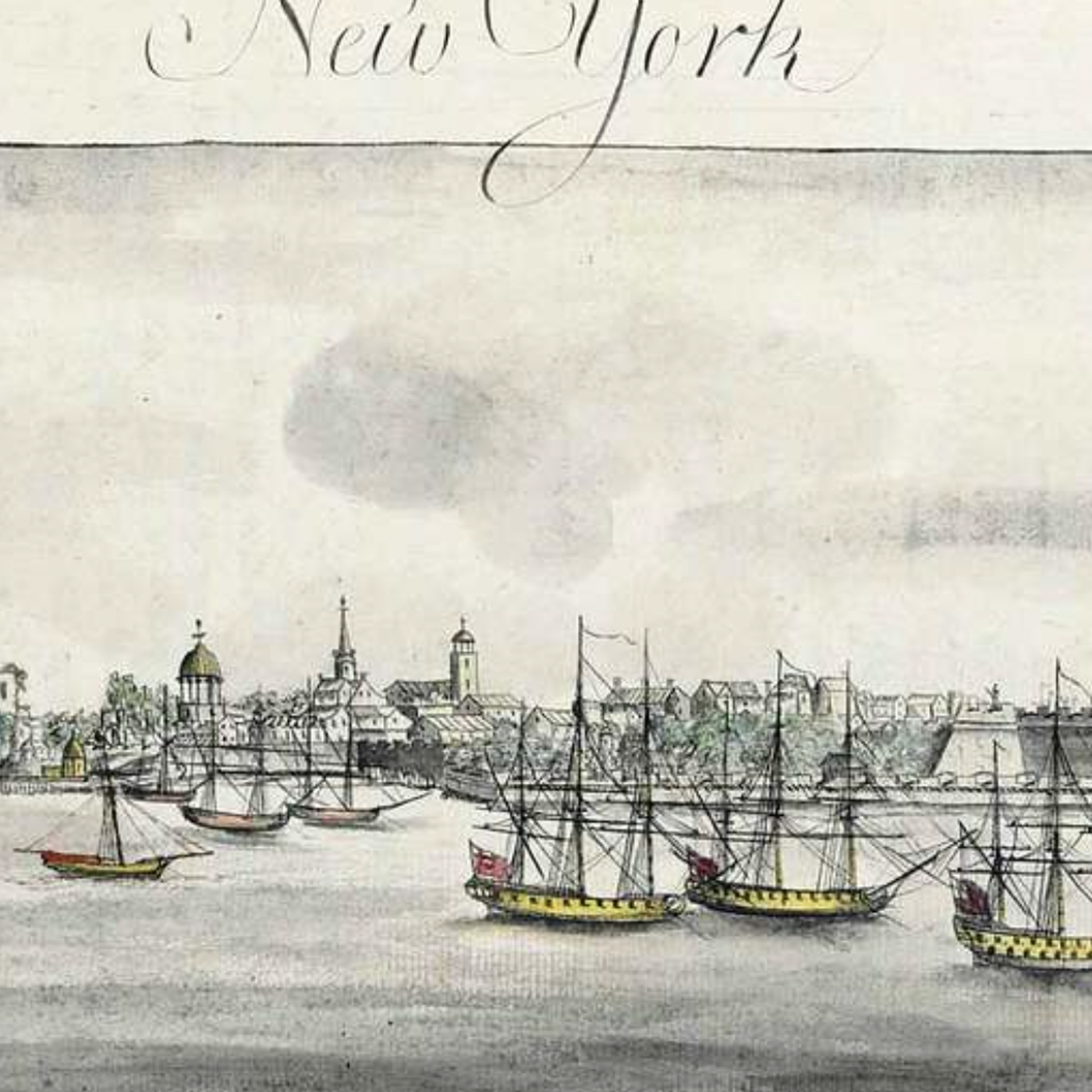
S8 Ep1009: Benjamin L. Carp explains that following the blaze, the British detained several suspects found with "combustibles" like gunpowder and turpentine-soaked matches. While Washington officially claimed ignorance regarding the fire's origin, he ...
Jun 1500:11:18Tap to summarizeBenjamin L. Carp explains that following the blaze, the British detained several suspects found with "combustibles" like gunpowder and turpentine-soaked matches. While Washington officially claimed ignorance regarding the fire's origin, he privately celebrated the outcome. A notable figure associated with this period is Nathan Hale, who was executed as a spy just one day after the fire. Although most historians conclude Hale did not set the fires, the coincidence of his execution and reports of a "New England captain" caught in the act led many at the time to link him to the arson. (5)1776
Transcribe →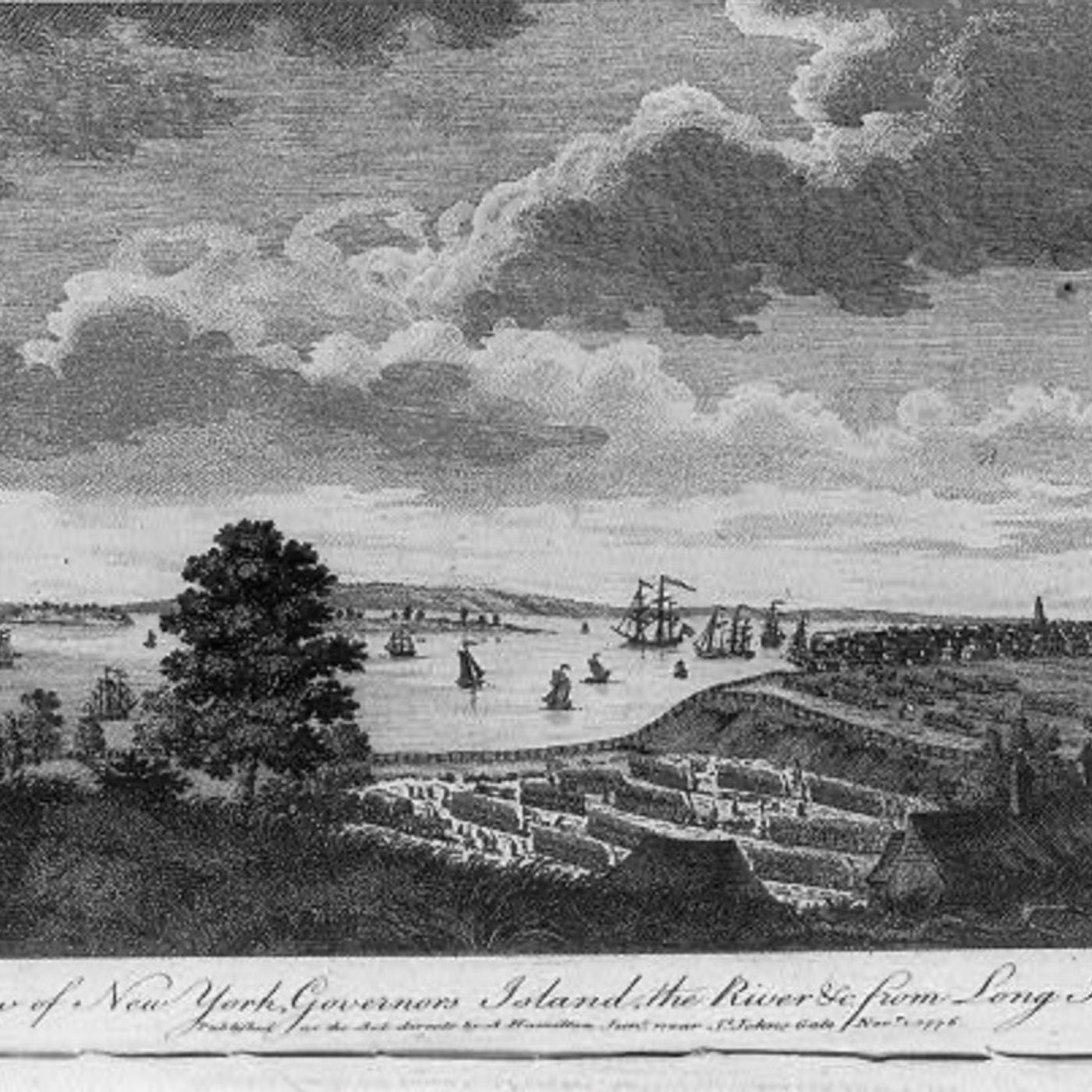
S8 Ep1009: Benjamin L. Carp describes how, as the fire spread, witnesses reported that pumps and bucket handles had been sabotaged to hinder firefighting efforts. The fire consumed Trinity Church, a prominent symbol of the Crown, which some believed w...
Jun 1500:09:29Tap to summarizeBenjamin L. Carp describes how, as the fire spread, witnesses reported that pumps and bucket handles had been sabotaged to hinder firefighting efforts. The fire consumed Trinity Church, a prominent symbol of the Crown, which some believed was a deliberate target of anti-Anglican rebels. In the ensuing chaos, British soldiers engaged in summary executions, bayoneting individuals suspected of being "incendiaries" or throwing them into the flames. One man, Wright White, was brutally hanged by his heels by enraged soldiers, serving as a grim example of the arbitrary violence and high tensions characterizing that night of destruction. (4)1776
Transcribe →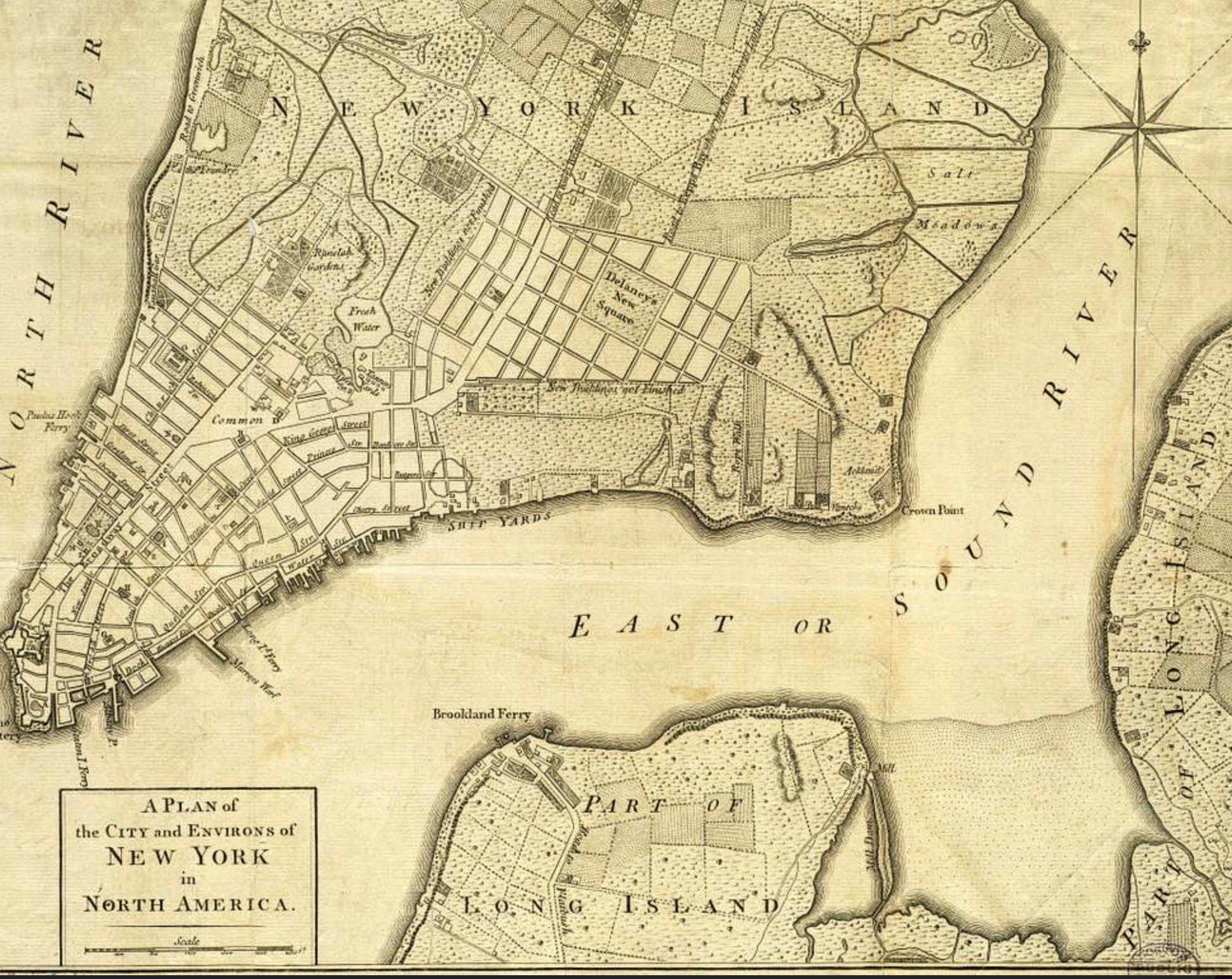
S8 Ep1009: Benjamin L. Carp describes how the fire erupted between midnight and 1:00 a.m. on September 21, 1776, near White Hall Slip. While some attributed it to a drunken accident, British witnesses on nearby warships reported seeing flames ignite a...
Jun 1500:11:09Tap to summarizeBenjamin L. Carp describes how the fire erupted between midnight and 1:00 a.m. on September 21, 1776, near White Hall Slip. While some attributed it to a drunken accident, British witnesses on nearby warships reported seeing flames ignite at 15 to 20 separate points simultaneously. This multiplicity of ignition sites strongly suggested a coordinated design by rebel saboteurs. The city was particularly vulnerable because firefighting equipment was in disarray and the alarm bells had been removed to be melted down for Continental Army cannons, leaving the few remaining watchmen unable to sound a general alarm. (3)
Transcribe →
S8 Ep1009: Benjamin L. Carp explains how, following the defeat at the Battle of Long Island, Washington and his officers faced a critical decision regarding New York's fate. General Nathanael Greene urged Washington to burn the city to prevent the Bri...
Jun 1500:08:09Tap to summarizeBenjamin L. Carp explains how, following the defeat at the Battle of Long Island, Washington and his officers faced a critical decision regarding New York's fate. General Nathanael Greene urged Washington to burn the city to prevent the British from using it as a vital winter base and naval port. However, John Hancock and the Continental Congressexplicitly ordered Washington to leave the city intact to protect property and the rebel reputation. Washington later lamented this as a "capital error," privately agreeing with the strategic necessity of destroying the city to deprive the enemy of its many advantages. (2)1761 PARIS
Transcribe →
S8 Ep1009: Benjamin L. Carp discusses his book on the 1776 fire. As George Washington enters New York in the spring of 1776, he finds a politically fractured and largely depopulated city. Most residents had fled to avoid the coming conflict, leaving t...
Jun 1500:12:23Tap to summarizeBenjamin L. Carp discusses his book on the 1776 fire. As George Washington enters New York in the spring of 1776, he finds a politically fractured and largely depopulated city. Most residents had fled to avoid the coming conflict, leaving the town diminished. Washington remains suspicious of loyalist pockets while the British Navy controls the harbor. The segment highlights rebel outrage following the British burning of Charles Town and Falmouth, setting a tense backdrop for the eventual Manhattan conflagration. (1)1760
Transcribe →
S8 Ep1008: H.W. Brands describes how the attack on Pearl Harbor on December 7, 1941, fundamentally changed the nature of the conflict, which Lindbergh privately characterized as Roosevelt getting the country "in through the back door." While Roosevelt...
Jun 1500:06:36Tap to summarizeH.W. Brands describes how the attack on Pearl Harbor on December 7, 1941, fundamentally changed the nature of the conflict, which Lindbergh privately characterized as Roosevelt getting the country "in through the back door." While Roosevelt was surprised by the location of the attack, he had been pressuring Japan through ultimatums regarding their presence in China and Indonesia. Hitler, believing Roosevelt was already "itching for a cause of war," did the president a "favor" by declaring war on the United States 72 hours later, merging two separate conflicts into World War II. Once the U.S. was officially at war, Lindbergh attempted to fulfill his duty as a loyal citizen by volunteering for the Army Air Corps. Roosevelt personally blocked the request, unwilling to let his chief critic become a military hero, while his administration continued to smear Lindbergh as a "Nazi sympathizer" unfit for command. Undeterred, Lindbergh signed on with aircraft manufacturers as a consultant and surreptitiously traveled to the Pacific theater. There, he not only tested planes but also flew combat missions against the Japanese, providing his skills to his country despite being officially barred from service. Lindbergh lived until 1974, eventually dying in Hawaii, leaving behind a legacy as a man whose technical brilliance was overshadowed by a bitter and historic debate over America's role in the world. (8)19441936
Transcribe →
S8 Ep1008: H.W. Brands explains how, in May 1941, Roosevelt declared an "unlimited national emergency," putting American industry and the public mind on a wartime footing. This move escalated the "moral war" against Germany and effectively criminaliz...
Jun 1500:13:09Tap to summarizeH.W. Brands explains how, in May 1941, Roosevelt declared an "unlimited national emergency," putting American industry and the public mind on a wartime footing. This move escalated the "moral war" against Germany and effectively criminalized dissent, as Roosevelt began labeling his critics "copperheads" and "fifth columnists"—terms implying disloyalty or treason. Lindbergh felt this was a dangerous overreach, noting that his father had been hounded by the Justice Department for similar dissent during World War I. The administration intensified its pressure, with the FBItapping America First Committee phones and British agents attempting to sabotage their gatherings. Roosevelt even misrepresented the Greer incident, claiming a German submarine had fired unprovoked on an American ship, when in fact the Greer was actively hunting the submarine. On September 11, 1941, during a rally in Des Moines, Iowa, a desperate Lindbergh made a fatal rhetorical error. He identified three groups pushing for war: the British, the Rooseveltadministration, and Jewish Americans. Although he stated their sympathies were understandable, his mention of "American Jews" allowed his enemies to brand him an anti-Semite and a "Nazi stooge." Even supporters like Herbert Hoover told him that while his words might be true, he was "wrong to say it" because he had moved himself politically out of bounds. (7)1940
Transcribe →
S8 Ep1008: H.W. Brands describes how, in early 1941, Lindbergh took his arguments to Congress, testifying before the House Foreign Affairs Committee and the Senate. He presented himself as a political "babe in the woods," taking pride in his "innocenc...
Jun 1500:07:19Tap to summarizeH.W. Brands describes how, in early 1941, Lindbergh took his arguments to Congress, testifying before the House Foreign Affairs Committee and the Senate. He presented himself as a political "babe in the woods," taking pride in his "innocence" compared to the "culture of politics" embodied by Roosevelt. While interventionists argued that air power had made the world smaller and America more vulnerable, Lindbergh used his technical expertise to argue the opposite: air power made the United States more defensible. He reasoned that any invader would require an armada of ships that could now be attacked by aircraft 300 miles off the American shore, long before they reached land. Lindbergh rejected the label of "isolationist," proposing instead a robust "hemispheric defense." He argued that America's frontier was not on the Rhine River but 200 miles off its own coasts, encompassing the entire Western Hemisphere including Canada and Latin America. His message resonated with the public; massive rallies at the Manhattan Center and Madison Square Garden saw crowds so large that many were left waiting outside. Lindbergh's diary noted his own popularity with some vanity, viewing the cheering crowds as a sign that the people agreed with his "America first" message. However, the debate in the summer of 1941 was increasingly characterized by mockery from London, where leaders were desperate for America to stop simply selling weapons and start fighting. (6)1936
Transcribe →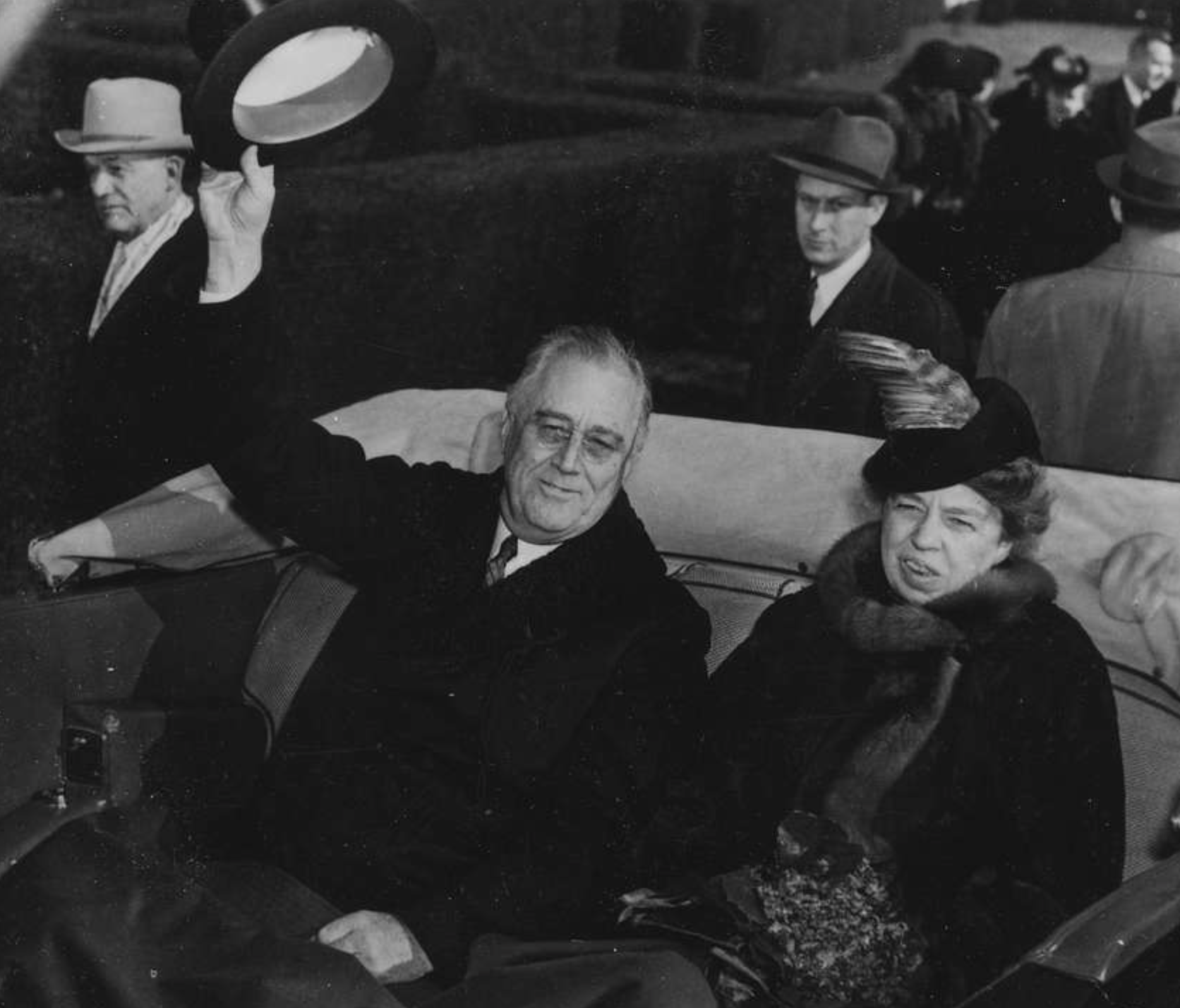
S8 Ep1008: H.W. Brands describes how, in early 1941, Roosevelt introduced the Lend-Lease Act (HR 1776), a bill that ironically shared its name with the year of American independence but intended to "marry America's future to Britain's future." Because...
Jun 1500:10:36Tap to summarizeH.W. Brands describes how, in early 1941, Roosevelt introduced the Lend-Lease Act (HR 1776), a bill that ironically shared its name with the year of American independence but intended to "marry America's future to Britain's future." Because Britain was running out of cash, Roosevelt argued that the U.S. should lend or lease weaponry to ensure they didn't go down for lack of funds. He was aided by a sentimental shift in American public opinion, driven by Edward R. Murrow's broadcasts which portrayed the "stubborn British" as heroic underdogs fighting for democracy. Simultaneously, a covert information war was being waged by William Stephenson, the director of British propaganda in America, who worked with William "Wild Bill" Donovan to manipulate U.S. opinion with the administration's blessing. While Roosevelt publicly complained about German propaganda, his own administration used unacknowledged stories and rumors to move Americans toward war. Lindbergh called out this hypocrisy, arguing that aiding Churchill—an "unreconstructed" imperialist—was not a defense of democracy but a defense of British rule in places like India. Roosevelt even utilized a forged map, allegedly showing a German plan to reorganize Latin America and replace the Bible with Mein Kampf, to stir fear. Lindbergh's diary reveals his deep intuition that every step away from neutrality was a calculated move toward war, regardless of the president's stated desire for peace. (5)1941
Transcribe →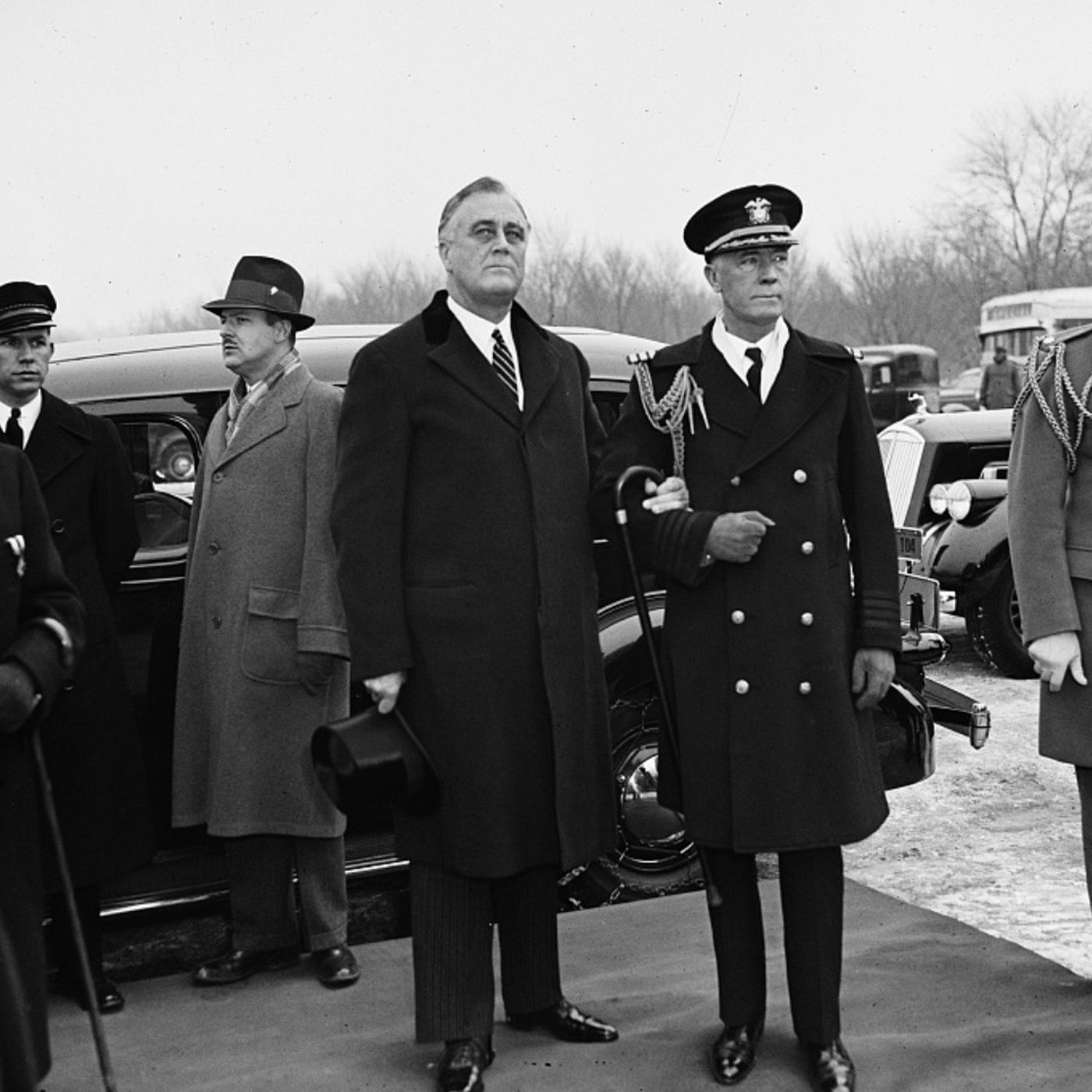
S8 Ep1008: H.W. Brands describes how, during the summer of 1940, as London burned under the Luftwaffe's terror weapons, Roosevelt made the historic decision to seek a third term. He used "Rooseveltian misdirection" to freeze out potential Democratic s...
Jun 1500:08:36Tap to summarizeH.W. Brands describes how, during the summer of 1940, as London burned under the Luftwaffe's terror weapons, Roosevelt made the historic decision to seek a third term. He used "Rooseveltian misdirection" to freeze out potential Democratic successors like James Farley and John Nance Garner, eventually engineering a "draft" of himself based on the international emergency. Lindbergh and other skeptics saw this as a move toward a presidency for life, with Lindbergh accurately predicting Roosevelt would run for a fourth term and die in office. To formalize the opposition, the America First Committee was formed under General Robert Wood of Sears Roebuck, with Lindbergh serving as its star speaker. Lindbergh enjoyed massive media support and funding, delivering rallies that drew thousands while Roosevelt campaigned on promises that "your son will not die in a foreign war." The debate became increasingly personal, with Senator Burton Wheeler suggesting that every fourth American son would be "plowed into the ground" if the country intervened. Roosevelt, a master of press conferences, used his "slippery" instincts to treat reporters as adjuncts to his administration, planting ideas to see how they would be received by the public. Despite Lindbergh's constant radio messages that the U.S. was secure behind two oceans and possessed a superior military, Roosevelt began planning the Lend-Lease program as 1941 approached. (4)
Transcribe →