Podcast
The Nick Taylor Horror Show
Hosted by American Nightmare Studios · EN
Exploring the techniques, strategies, and key pieces of advice for aspiring horror directors, straight from the minds of some of the greatest filmmakers and creators in horror. Host Nick Taylor engages in one-on-one conversations with directors, producers, writers, actors and artists to uncover the keys to their creative and professional success in the horror business.
27episodes
Episodes
Newest firstAll episodes

ALL YOU NEED IS BLOOD Director, Cooper Roberts
Nov 7, 202400:55:45Tap to summarizeCooper Roberts is an editor and director who just released his feature debut, All You Need is Blood—a delightfully gory tribute to Amblin-esque coming-of-age movies and zombie films. Cooper’s background includes experience in advertising and music videos, and most notably, he was nominated for a Grammy Award in 2016 for co-directing the music video for Jack White’s band, The Dead Weather, and their song “I Feel Love.”All You Need is Blood is a movie I really want to shout from the rooftops for more people to see. It’s a love letter to childhood dreams of filmmaking and zombie movies and is full of charm and blood in equal measure. The effects are also awesome, and the movie is hilarious—I urge you to see it and tell your friends. All You Need is Blood is available to stream on the KINO app, which you can download today.In this conversation with Cooper we dig into the 6 plus year journey of bringing AYNIB to fruition, the challenges of relying on practical effects on indie movies and why casting is one of the most important elements of directing.Here are some key takeaways from this conversation with Cooper Roberts.80% of Directing is CastingCooper cited a famous quote, commonly attributed to Elia Kazan, that directing is 80% casting. For this reason, he paid close attention to the casting process and took his time finding the right people, which tremendously helped bring the characters—and therefore the film—to life. Cooper noted that casting actors who naturally embody the character makes directing them much smoother and more intuitive. Casting actors outside their usual genres can also yield surprising performances, as audiences respond well to seeing familiar faces in unexpected roles, as was the case with Mina Suvari playing a comedic role, which brought a fresh, unexpected dimension to the film.Never underestimate good old cold outreach.With few industry connections, Cooper turned to IMDb Pro to cold-email indie producers. Out of a hundred emails, he connected with several promising candidates and eventually found a committed team. A lot of would-be filmmakers wait to be discovered or think it’s the responsibility of an agent or manager to get their movies moving forward, but it’s all on you. Even if you don’t have representation, just reach out to people. Cold outreach might seem daunting, but when executed well, it can be highly effective in finding partners and funding resources.Build a ‘Brain Trust’ for Script FeedbackWhile writing the script for All You Need is Blood, Cooper sought to create his own ‘brain trust’ of script consultants and friends for feedback during the writing process, which he modeled after Pixar. Although he didn’t take all the notes, he found the input invaluable, as even a "bad" note could highlight a weak spot in the story. He noted Stephen King’s advice from On Writing—if multiple people give similar feedback on a section, it’s worth reevaluating. It is very easy to fall in love with your own voice and be blind to glaring issues in your script because you’re just too close to it to be objective. This is why it’s crucial to have trusted advisors and confidantes who can help you mold your projects. For more on Brain Trusts, I highly recommend Creativity Inc. by Ed Catmull, which outlines how Pixar was founded and how they operate to this day with a large emphasis on storytelling. Also, shoutout to script consultant Carson Reeves—Cooper and I both worked with him, and I can tell you he’s great. Check out Carson at https://scriptshadow.net.Show NotesMovies Mentioned:Dead Alive (Braindead)Toy Story 3Toy Story 4American BeautyLoserCocoThe BabadookKill BillDjango UnchainedTerrifier (1, 2, and 3)Books:On Writing by Stephen KingThe Creative Act: A Way of Being by Rick RubinCreativity, Inc. by Ed CatmullFollow Cooper Roberts at:IMBd: https://www.imdb.com/name/nm2843533/
Transcribe →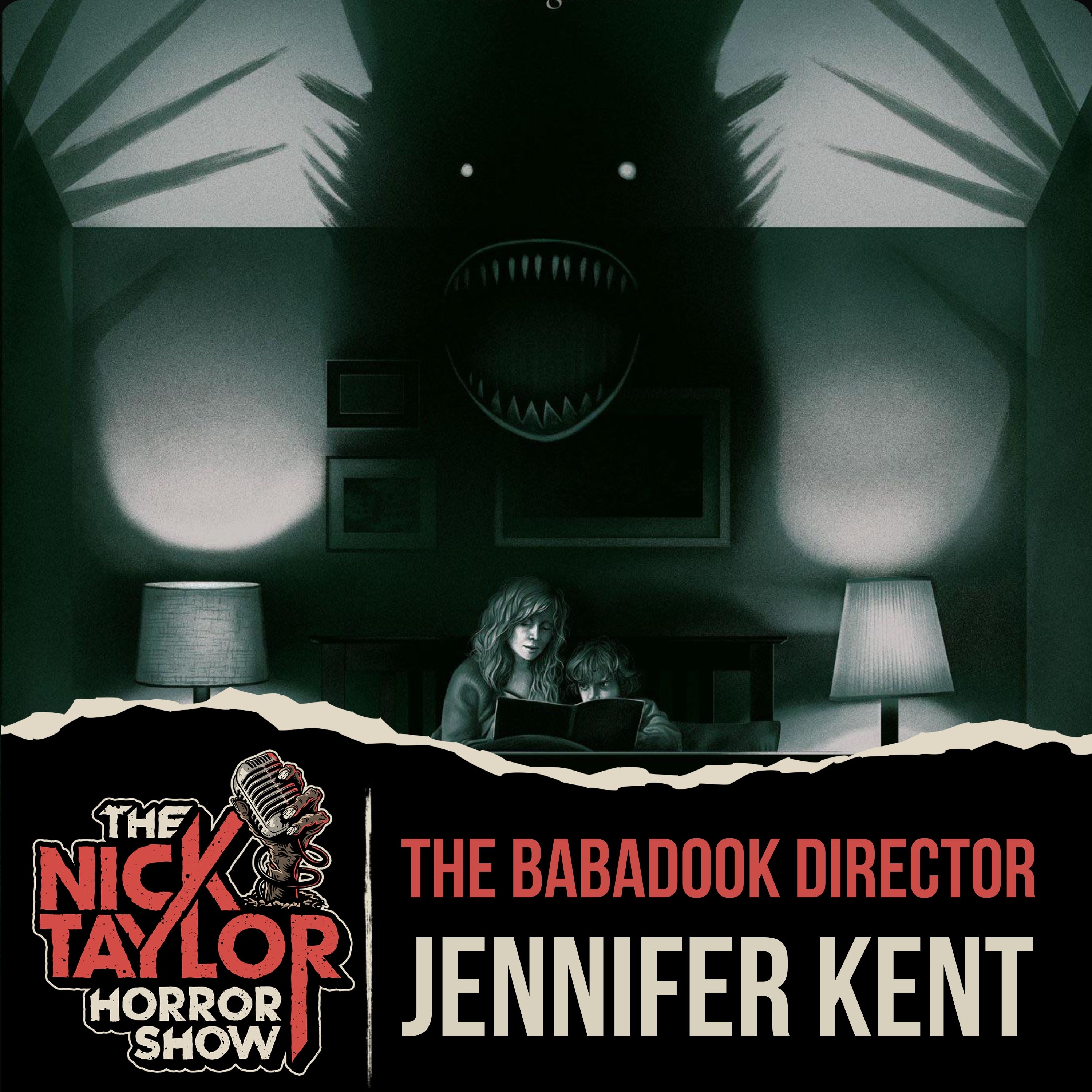
THE BABADOOK Director, Jennifer Kent Celebrates 10 Years
Sep 19, 202400:47:59Tap to summarizeToday, we’re celebrating a special milestone—the 10th anniversary of The Babadook— with director, Jennifer Kent. The Babadook was Jennifer’s feature debut and has since become an iconic classic and one of the GOATs of horror.Jennifer has been recognized for her ability to craft horror with heart, making audiences not only tremble but also reflect deeply on the emotional struggles at the core of her stories. Her follow-up film, The Nightingale, is a brutal yet emotionally resonant tale of revenge set in 1820s Tasmania. And Jennifer also wrote and directed The Murmuring for Guillermo del Toro's Cabinet of Curiosities anthology series on Netflix. The episode starred The Walking Dead's Andrew Lincoln and reunited her with Babadook star Essie Davis.The Babadook is back in theaters starting today, through Sunday, September 22nd so be sure to check your local listings and catch it on the big screen!This episode feels like years of film school in 45 minutes as Jen offers a wealth of insights and lessons and I can honestly say, this is my favorite interview I’ve ever done of the Nick Taylor Horror Show and definitely the most insightful.We dive into Jennifer’s journey, from her early career as an actress to transitioning into filmmaking under the mentorship of Lars von Trier as well as her creative process, how she approaches working with actors, and how she brings terrifying visions to life through practical effects, meticulous sets and sound design. We’ll also discuss what makes The Babadook so enduring, the power of horror as a storytelling tool and much much more.There are three big topics we did not cover in this interview because Jennifer has spoken at length about them in previous interviews so I will cover these really quickly up front.Number One: The Babadook as a Queer Icon. A Netflix glitch mistakenly categorized The Babadook under the LGBTQ+ genre causing an outpouring of memes parodying the error. But, what began as an online joke morphed into something meaningful for the queer community as powerful metaphors emerged. In The Babadook, the monster symbolizes repressed emotions and trauma and many in the queer community saw parallels between this and the experience of repressing one’s identity. The film's message of embracing and living with one's inner "monster" instead of destroying it is also seen as a metaphor for self-acceptance. Furthermore, The Babadook can be seen as a "destroyer of families," which parallels and parodies certain rhetoric about queerness being a threat to traditional family structures and in one scene the Babadook literally emerges from a closet.Number Two, the possibility of a Babadook Sequel: Jennifer has been very clear that there will never ever be a sequel to The Babadook. She made sure to retain the rights to any sequels and said she will never allow one to be made. To her, The Babadook is a film that stands alone, and a sequel would destroy its integrity.Number Three: Did Amelia Write the Babadook book?: This topic has been speculated by fans and even raised on The Last Drive-In with Joe Bob Briggs. It's revealed that Amelia used to write children's books, so it would make sense that she created the Babadook book as a form of coping with her trauma. Jennifer has said that this was intended but never said outright which allows for multiple interpretations. I personally think she did write the book.Alright, before we get to the interview, I owe a huge thank you to the team at IFC, specifically Danielle Freiberg and Rob Scheer for their support in making this happen. I've wanted to chat with Jen since I started this podcast and this interview was a treat and an honor and I thank you both truly. Without further ado, here is Jennifer Kent, Director of The Babadook.Here are some key takeaways from this conversation with Jennifer:Balancing Fear and Beauty: Horror doesn’t have to be purely bleak or nihilistic. Jennifer believes in blending horror with elements of beauty by finding light even in the darkest moments. In her conversation with Clive Barker, he emphasized that horror and beauty must coexist and that without beauty, horror feels incomplete. Jennifer echoes this sentiment, believing that horror with heart creates something far more powerful. While there’s a place for nihilistic horror, the combination of fear and emotional depth can elevate the genre into something extraordinary, where similar to chocolate and peanut butter the combination is greater than the sum of its parts.Be stubborn. Perhaps the most important lesson Jennifer learned from working with Lars Von Trier is the need to stubbornly maintain control over the elements that matter most. This allows your films to have a singularity and can be the defining factor between having a distinct directorial signature or not.That doesn't mean you should be intentionally difficult, but you must resist outside forces that try to sway or distract your vision. Jennifer has seen firsthand how systems can systematically wear down a director, diluting a film until it becomes unrecognizable from the original vision—homogenized and lifeless. As a filmmaker, you must fight tooth and nail for your vision, because in any creative pursuit, there will always be forces trying to destroy it.Don’t underestimate sound. Jennifer highlighted the immense role that sound design plays in creating fear and tension in a film, especially in horror. For The Babadook, she spent as much time perfecting the sound as she did with the picture, emphasizing that sound makes up at least 50% of a horror film’s effectiveness. She worked closely with her sound designer to craft unique, unsettling sounds that amplified the psychological terror in the film with subtle effectiveness. Instead of relying heavily on music or jump-scare cues, Jennifer opted for sparse, carefully designed soundscapes that intensified the unease, often blending naturally into the environment. Jennifer recommends filmmakers experiment with sound to build tension and avoid signaling scares too early. Sound should evoke emotion and fear just as much as the visuals, making it an integral part of the storytelling process.The Babadook is back in theaters starting today, Thursday, September 19th, through Sunday, September 22nd. Be sure to check your local listings and catch it on the big screen!Show Notes:MoviesThe BabadookHenry: Portrait of a Serial KillerCannibal HolocaustBeetlejuiceThe Tenant (Polanski)RecOrdet (Carl Dreyer)Fall of the House of Usher (French silent film)Roman Polanski’s Horror TrilogyDirectors & InspirationsClive BarkerMario BavaDario ArgentoGerman ExpressionismBooks & ResourcesAmerican Cinematographer Magazine (Babadook article)Follow Jennifer Kent at:IMBd: https://www.imdb.com/name/nm0448768/
Transcribe →
The Howl - Your Past Month's Horror News - September, 2024
Sep 7, 202400:58:15Tap to summarizeHey everyone, back with another monthly episode of The Howl, a new concept where me and my cohost Adam Cruz summarize and discuss the past month's horror news, share what we've watched recently, and just generally nerd out over all things horror.Our goal with The Howl is to catch listeners up with all of the horror news they may have missed from the past month in a fun, conversational format. If you want a quick-read version of The Howl sent directly to your inbox every month, then sign up for my monthly newsletter at nicktaylor.com/thehowl.So to recap, The Howl is all about catching you up on what's happening in horror, delivering some solid movie recommendations, and hopefully entertaining you at the same time. These episodes also have a video component, so feel free to check us out at The Nick Taylor Horror Show YouTube channel as well.So without further ado, here is me, Nick Taylor in conversation with Adam Cruz on a new monthly segment we're calling The Howl.SHOW NOTESMovies Discussed:BeetlejuiceYou Should Have Left (2020)Jennifer's BodyVivariumAlien: RomulusPredator vs AlienEvil Dead (Remake)PrometheusTexas Chainsaw Massacre (2022)Wolf CreekHell of a Summer (Upcoming)CuckooThe BabadookShaun of the DeadDeliverance (New Lee Daniels film)Red DragonManhunterHannibal (2001)TV Shows:Stranger ThingsHannibalBooks:The Shining by Stephen KingPet Sematary by Stephen KingThe Exorcist by William Peter BlattyDirectors:Zoe Kravitz (Mentioned for directorial debut)Lee DanielsFede Alvarez (Alien: Romulus, Texas Chainsaw Massacre)Mick Garris (The Shining TV adaptation)Follow Adam Cruz at:Instagram https://www.instagram.com/murdermemes_TikTok: https://www.tiktok.com/@murdermemes_Store: www.murdermemes.shopFollow Nick Taylor at:Instagram: https://www.instagram.com/nicktaylorhorrorshow/TikTok: https://www.tiktok.com/@nicktaylorhorrorshowYouTube: https://www.youtube.com/@NicktaylorhorrorshowWebsite: www.nicktaylor.com
Transcribe →
DANIEL ISN'T REAL Director, Adam Egypt Mortimer
Aug 16, 202401:00:20Tap to summarizeAdam Egypt Mortimer is an American filmmaker, Producer and graphic novel writer. Originally from Boston, Adam kicked off his directing career with Some Kind of Hate in 2015 and followed that up with 2019’s Daniel Isn’t Real and 2020’s Arch Enemy.But Adam doesn't stop at films; he's also ventured into comics, co-creating series like Ballistic and Black Star Renegades. In this episode Adam opens up about his journey. We chat about facing personal fears as a director, easing the pressure when making your first film, and staying adaptable when shit goes sideways on set.Adam shares his thoughts on enjoying the filmmaking process, keeping your passion alive, the importance of continuous learning, and even some of his favorite horror deep cuts. Adam delivers an incredibly insightful and candid interview, and I got a lot of advice as well as reassurance from this conversation. I hope you enjoy it as much as I did. Please welcome, Adam Egypt Mortimer.Here are some key takeaways from this conversation with Adam Egypt Mortimer:Identify and address your anxieties. Filmmaking demands a wide range of skills, as Sidney Lumet emphasizes in his book Making Movies. Directors need to be renaissance people, well-versed in everything from art and psychology to music and literature. It can be overwhelming to juggle these diverse disciplines, but an effective director has to recognize their weaknesses and actively work on them. For Adam, working with actors was a major source of insecurity, so he made it a priority to study Judith Weston’s work to improve in that area before approaching his first movie.Depressurize your first film. There's a common belief that your first film needs to be a masterpiece like Reservoir Dogs, Blood Simple, or Brick. However, Adam argues that this pressure can harm you creatively and cause your movie to suffer. He suggests accepting from the outset that your first film will have flaws, and that's okay. Instead of aiming for perfection, focus on proving to yourself and the world that you can complete what you start. By alleviating some of the pressure, you allow yourself more creative freedom and ultimately will make a better film.Adapt at a Darwinian level. Adam’s story about a lead actor falling ill on a crucial production day is a powerful example of adaptability. When faced with this setback, he intentionally avoided panicking and instead saw it as an opportunity to create something new. He reassured himself and his crew that this disaster could lead to an opportunity to make a scene that was even better than was originally planned in the script. While this mindset might seem like wishful thinking, it underscores the level of strength and resilience you’ll need to develop as as a director because shit will happen—you need to not only handle it but use it to your advantage.Relax and enjoy the journey. Reflecting on his career, Adam wishes he could tell his younger self to enjoy the process more. Making movies takes time, effort, and a bit of luck, so it's crucial to relax and give yourself the space to do it right. He specifically mentioned that he would encourage his younger self to not be so hard on himself and to watch more cool French movies. The message is clear: whatever inspires you, make time for it, and remember to enjoy the journey that led you to fall in love with cinema in the first place.Show NotesMovies:Some Kind of HateDaniel Isn’t RealArch EnemyBad Day at Black RockEasy Riders, Raging BullsThe ExorcistPersonaFight ClubAlienVideodromeBride of FrankensteinMartyrsPossessionBugKiller JoeHoneymoonBooks:Directing Actors by Judith WestonThe Director's Intuition by Judith WestonRaging Bulls, Easy Riders by Peter BiskindTom Savini's Grande IllusionsOther:Invader (Novel by Adam Egypt Mortimer and Brian Deleuw) FUNDED on Kickstarter https://www.kickstarter.com/projects/adamegypt/invader-novelFollow Adam Egypt Mortimer at:Instagram: https://www.instagram.com/adamegypt666/X (Twitter): http://www.twitter.com/adamegyptWebsite: adamegyptmortimer.comIMBd: https://www.imdb.com/name/nm4008890/
Transcribe →
DOCTOR JEKYLL Director Joe Stephenson (from Hammer Films)
Aug 1, 202400:32:25Tap to summarizeJoe Stephenson is a British director who made his feature directorial debut with the 2015 film Chicken. His second film was the acclaimed 2018 documentary McKellen: Playing the Part about the life and career of Sir Ian McKellen. Joe’s third film is, Doctor Jekyll, an adaptation of Dr Jekyll and Mr. Hyde starring Eddie Izzard from Hammer Films.In this episode, Joe and I delve into the process of reimagining a classic horror story with a modern twist, working with the legendary Eddie Izzard, as well as the past, present and future of Hammer Films. We also get into the many challenges of shooting on a tight budget, how to select locations when shooting in one location, and the hurdles Joe overcame, including epic storms and COVID-19.Here are some key takeaways from this conversation with Joe Stephenson.Improvisation Can be MagicalJoe’s approach to directing Doctor Jekyll focused on creating an environment where actors could infuse their own creativity into their performances, especially with the movie’s star, Eddie Izzard, whose improvisational skills added a unique energy to the character and film. Joe enabled improvisation by first having the actors perform the scenes exactly as they were written in the script, ensuring that they had a solid, reliable version in the can. Only after that was done did he encourage the actors to experiment with their lines and actions, exploring different ways of delivering the scene. This approach gave the film the best of both worlds: a faithful representation of the script and the discovery of new, spontaneous moments. This is a great approach, especially when working with megawatt talents like Eddie Izzard, who can bring more to the scene than is in the script.Find Unique LocationsJoe wanted a location that hadn’t been overexposed in other films, and Stanford House near Rugby, UK, provided the perfect setting with its distinctive and untouched appearance, adding to the film’s uniquely creepy atmosphere. Shooting in a single location like Stanford House offered multiple benefits. The house's grand, eerie presence played a significant role in setting the film's tone and allowed for visual consistency. Joe also housed the actors on-site, which helped them immerse themselves even more deeply in their roles and the movie’s tone.Directing is Problem SolvingThe production of Doctor Jekyll faced numerous unforeseen challenges, from weather issues to the impact of COVID-19. Dealing with the unpredictable English weather forced the crew to constantly adjust their shooting schedule, including canceling a crane shoot due to a severe storm. COVID-19 added another layer of complexity. When the film’s gaffer tested positive, a replacement had to be brought in who hadn’t worked with the DOP before, disrupting the established workflow and adding stress to an already tight schedule. These challenges, coupled with budget constraints, meant the production was under constant pressure. However, Joe’s ability to stay calm and adaptive helped keep the film on track. As my guests have illustrated time and time again, most of filmmaking comes down to being adaptable and resilient, as things will inevitably go wrong, especially on low-budget movies.SHOW NOTESMovies:Doctor JekyllChickenGreat ExpectationsMidas ManBooks/Novellas:Strange Case of Dr. Jekyll and Mr. Hyde by Robert Louis StevensonFollow Joe Stephenson at:Instagram: www.instagram.com/joestephenson/X (Twitter): http://www.twitter.com/JoeStephensonIMBd: https://www.imdb.com/name/nm3087240/
Transcribe →
The Howl, MAXXINE and LONGLEGS - an Epic Horror Double-Header - July 2024
Jul 25, 202400:45:31Tap to summarizeHey everyone, back with another monthly episode of The Howl, a new concept where me and my cohost Adam Cruz summarize and discuss the past month's horror news, share what we've watched recently, and just generally nerd out over all things horror.Our goal with The Howl is to catch listeners up with all of the horror news they may have missed from the past month in a fun, conversational format. If you want a quick-read version of The Howl sent directly to your inbox every month, then sign up for my monthly newsletter at nicktaylor.com/thehowl.So to recap, The Howl is all about catching you up on what's happening in horror, delivering some solid movie recommendations, and hopefully entertaining you at the same time. These episodes also have a video component, so feel free to check us out at The Nick Taylor Horror Show YouTube channel as well.So without further ado, here is me, Nick Taylor in conversation with Adam Cruz on a new monthly segment we're calling The Howl.SHOW NOTESMovies:MaxineLong LegsSilence of the LambsSinisterPhantasmDespicable Me 4House of the DevilThe SacramentPiecesThe ProwlerThanksgiving (original trailer)TV Shows:HannibalDirectors:Ty WestBrian De Palma (references: Body Double, Blow Out, Dressed to Kill)Actors:Nicholas CageKevin BaconGiancarlo EspositoBobby CannavaleAdditional References:Jonestown (referenced in The Sacrament)Boogie Nights (influential for "X")Texas Chainsaw Massacre (influential for "X")Follow Adam Cruz at:Instagram https://www.instagram.com/murdermemes_TikTok: https://www.tiktok.com/@murdermemes_Store: www.murdermemes.shopFollow Nick Taylor at:Instagram: https://www.instagram.com/nicktaylorhorrorshow/TikTok: https://www.tiktok.com/@nicktaylorhorrorshowYouTube: https://www.youtube.com/@NicktaylorhorrorshowWebsite: www.nicktaylor.com
Transcribe →
The Inheritance’s Joe Russo and Alejandro Brugués
Jul 12, 202400:47:28Tap to summarizeAlejandro Brugués is an Argentinian-Cuban director and writer known for directing Juan of the Dead, which is credited as Cuba's first zombie movie. He made his directorial debut with the 2006 film Personal Belongings and directed the segment The Thing in the Woods in the anthology horror film Nightmare Cinema from Mick Garris, as well as a segment for ABCs of Death 2.Alejandro’s latest movie is The Inheritance, a horror thriller that revolves around a wealthy patriarch who devises a twisted scheme to prolong his life through a sinister game of manipulation with his own children.Joe Russo is a dear friend, consistent guest on the show, three-time BloodList writer, producer, and director known for The Au Pair Nightmare, which he directed, Hard Kill, which he wrote, and as a producer on Nightmare Cinema, The World’s Greatest Beer Run, and of course, The Inheritance, which he produced and co-wrote.In this episode of The Nick Taylor Horror Show, I speak to Joe and Alejandro about the making of The Inheritance, which was a multi-year labor of love riddled with challenges. We get into everything from their multi-year collaborative relationship, the movie’s influences, hair-raising production challenges, and how adaptability and resourcefulness are crucial for getting your movies made.Here are some key takeaways from this conversation with Joe and Alejandro.The Door Never Opens the Right Way. Filmmaking is rife with unexpected challenges and setbacks, humorously summarized by Alejandro when he recalled how a 400-pound door was installed to open in the wrong direction. This illustrates that on set, problems are inevitable: set pieces won’t work as planned, locations will change at the last minute, props will malfunction, and actors will break down. This movie experienced more than its fair share of problems, including restrictive COVID protocols, unexpected location changes, and losing their distributor. Understanding that these issues are a natural part of filmmaking can help maintain a positive and proactive attitude on set. Both Joe and Alejandro highlighted the importance of being flexible and creative in problem-solving on set.Keep a shot list and a shit list. In addition to a shot list, Alejandro keeps a list of everything that could go wrong on a particular day with every single shot and mentally prepares for those scenarios. Preempting problems is crucial for staying on schedule and maintaining quality under pressure. The ability to get ahead of any technical, acting, or camera problems that can occur with your shots will develop your problem-solving skills and enable your resilience as a director.Storyboard with Action Figures. Alejandro uses action figures in pre-production and on set to visualize and stage scenes. This technique helps him communicate his vision clearly to the cast and crew and even test out blocking. Not everyone can draw storyboards, but it's essential to figure out how to visually communicate your ideas effectively. Whether it's through action figures, detailed sketches, or digital tools, find what works best for you and stick to it without shame.Show NotesMovies:Evil DeadKnives OutHouse on Haunted HillReady or NotThiefThe Fall of the House of UsherBooks:"Making Movies" by Sidney LumetTV Shows:The Walking DeadSuccessionFollow Joe Russo at:Instagram: https://www.instagram.com/joerussogramX (Twitter): https://x.com/joerussotweetsWebsite: https://joerussofilm.com/IMBd: https://www.imdb.com/name/nm2349665/Follow Alejandro Brugués at:Instagram: https://www.instagram.com/abrugues/IMBd: https://www.imdb.com/name/nm1486025/
Transcribe →