Loading summary
Transcript37 lines
- [00:00]
Henry Halliwell
Sam foreign.
- [00:37]
David Cummings
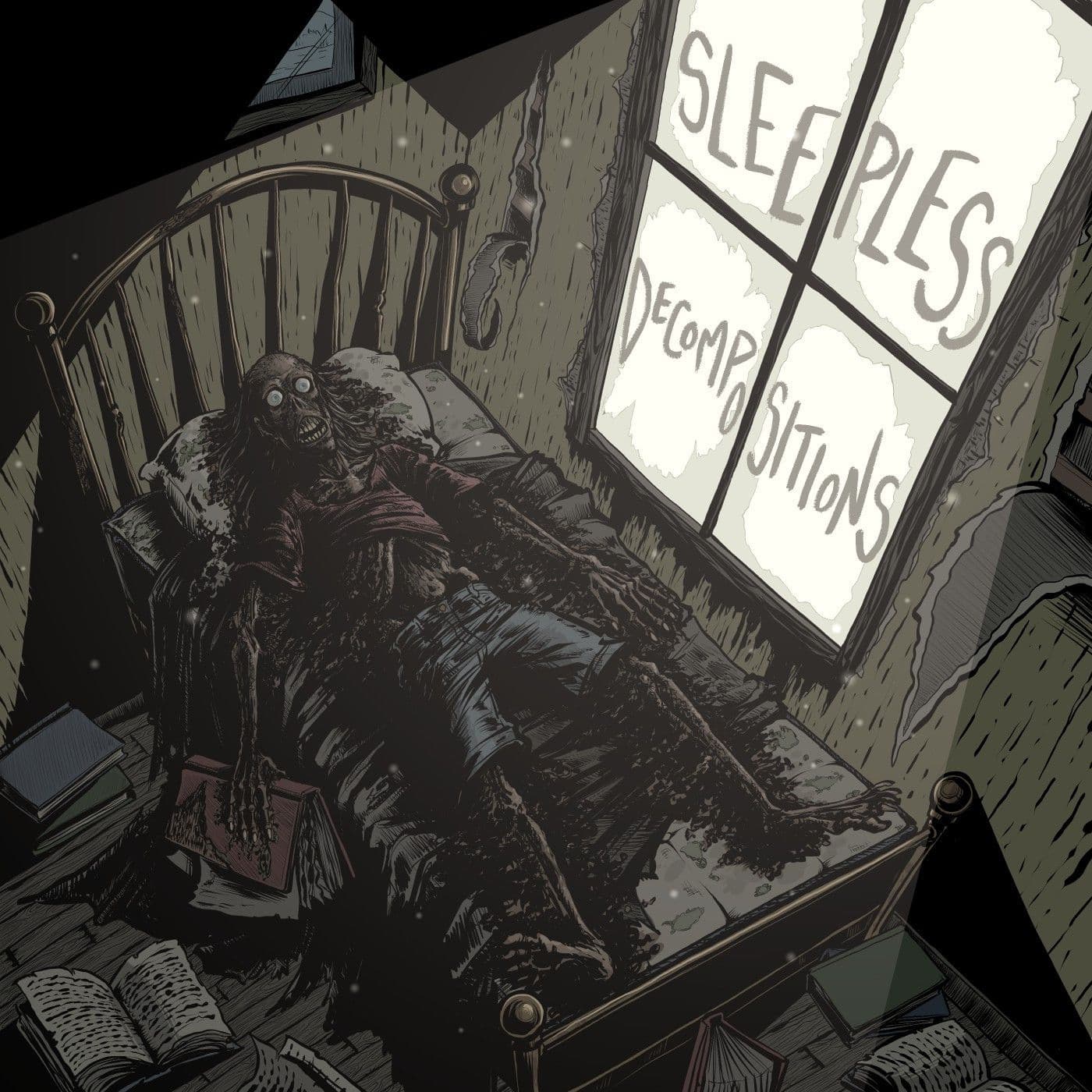
Sleepless listeners and welcome to sleepless decompositions, volume 22. I'm your host, David Cummings. At the start of the show, I'd like to begin by making you aware of one of our longtime fan favorite voice actors. Atticus Jackson has been a big part of this show for almost 10 years now. And Atticus is dealing with a health issue these days that is requiring some substance, substantial medical costs. Here's the man himself to share a bit about his situation.
- [01:11]
Atticus Jackson
Hey y'. All, Atticus here. First and foremost, thank you all for your amazing support and kind words over the years. The listeners have always shown that they have had so much heart and today, I guess I'm asking for a piece of it. A piece of that delicious, juicy, beating heart. But first, some unhappy truths. I developed a skin condition in my 20s that I didn't know how to name and even now I kinda wish it didn't because it's hard to say. Hydradinitis suppurativa, I believe I just call it hs. Now, HS is a chronic and autoinflammatory skin disease that turns any sweat gland or hair follicle into a potential abscess, leaving scars and blisters all over my body, which, as you can imagine, is incredibly depressing and a real life nightmare. I'm blessed enough to have an amazing support team to get me through all the hard parts. I got Mary, the kids, got my dogs, my family, the podcast. But doctors in medicine cost money. Money that I'm not able to raise on my own in a timely manner. So I put together a GoFundMe as an extra support system for me and my family. And I am incredibly grateful to anyone and everyone who has already donated. There's been like over a hundred donations already, which is. It blows my mind how much love's out there. You're literally saving my family and I am so incredibly touched by that. But on the GoFundMe there are photos and update stories. I implore you to check those out for more context. And I love you all. We'll leave a link in the show notes. If you can donate. If you have the means, please do. If you can't, do not worry. You are not beholden to me at all. I will still be here creating crazy voice characters and dying every other episode. But yeah, feel free to help me and my family because we could sure use it and I would be eternally grateful to you. Thank you very much.
- [03:47]
David Cummings
As Atticus said, please check the show notes for a link to his GoFundMe campaign. Please consider donating and also share the campaign with others if you can. We're grateful for Atticus and all that he brings to this show. Let's give him some well deserved support at this time. Now on this volume of Sleepless Decompositions we think about the origins of horror. This podcast originates from North America, often called the New World, but so much of our Western culture, certainly horror culture, originated in Europe. We think of places like Romania and its famous region of Transylvania, where a certain Vampir is said to be from Victor Frankenstein was Swiss and was in Germany when he brought his monster to life. And from Krampus to Vlad the Impaler to Jack the Ripper, horror abounds all over Europe and has done so for many centuries. And in that Old World spirit, we present two tales for you which have a European flair to them. So whether you want to visit an historical village or check out Prague, you don't need a Jet2 holiday to travel there, hop on board the no Sleep podcast and be transported to lands of Euro horror. And even when traveling, you need to brace yourself for these sleepless decompositions.
- [05:23]
Rocket Money Advertiser
Want to feel more confident with your finances this year? If you have 60 seconds, I can show you how quick and easy it is to start building healthy money habits that could last you the entire year just by using rocket Money. Step 1 Download Rocket Money. Step 2 Link all your accounts and see your entire spending picture your subscriptions, your upcoming bills, your due dates, everything. Step 3 Tap a subscription you don't use and cancel it. Boom. That's money back every single month. Step 4 Create a financial goal for something you want to save for, whether it be a vacation, a retirement account, or a pet's birthday. We don't judge. Now. Let the app automatically move small amounts of cash towards your goal. In a month, you'll see real dollars piling up. In a year, you'll be shocked at how much money you saved, similar to the over 10 million members on the app that have saved up to $740 a year when using all of the app's premium features, use the Savings Challenge as one step closer to feeling better about your finances today@rocketmoney.com that's rocketmoney.com Cancel one more time. It's rocketmoney.com Cancel this episode is brought.
- [06:30]
Peloton Advertiser
To you by Peloton. The new Cross Training series balances your workouts with 15 workout types for endless movements on and off your equipment. Stay motivated with weekly personalized plans that guide you from beginner to expert and push past your goals with routines tailored to you. Get the new Cross Training Series. Terms apply.
- [06:52]
David Cummings
In our first tale, we meet a man dealing with climate change, but as a mere villager from an ancient time. This is not the type of climate change we're dealing with today. You see, in this tale shared with us by author Aches Linardus, the man is the first in the village to notice the sun is getting slightly closer as time goes by, and its effects are more than just sunburns. Performing this tale is James Cleveland. So this is the perfect tale for a cold January night. Think warm thoughts as we hear about how the sun approaches every summer.
- [07:47]
Narrator/Storyteller
I first noticed it three summers ago, but none of the villagers believed me. I awoke in my house feeling a little warmer than usual, the dust of my bed sticking to my back through layers of sweat. The air was drier, thick with bitter dust. Once outside, I squinted at the sun, wrapped my thumb and index finger around its flickering outline to pretend I was snatching it like a marble from the sky. I did this every morning, but this time the distance between my fingers was slightly larger. Why was I doing this every morning? It was my daily gift to my wife. My mum taught me that if I was lucky enough to find myself a good woman, I should treat her better than my father treated her. He abandoned Mum before I even met him, flew off into the sky. Mum told me to shower my wife in jewels as bright as son, and although I didn't love her as a man is supposed to, I knew she was a good woman and a great friend. And since I had no money for jewels, I gave her the sun every morning. But that morning the size was wrong. Now how could I be so sensitive to the slightest difference? Even an alchemist would struggle to distinguish under a magnifying lens. It's rather simple. I was born this way. My first memory is of an ant crawling along my baby arms. I was probably two years old when I held it in my fingers. It dipped its antennas up at me and I squinted, focusing on the tiny thing and measuring its antennae against a scar along my thumb, the one the village doctor gave me when he cut me. I never understood how cutting me helped, but he was confident it did, and more importantly, he was an adult and knew better. This scar never healed and never shrunk, and I could use it to measure things. So as a child grew fascinated with comparing sizes, other kids found it strange, and it's why I never had friends. While they picked teams to play catch, I was the annoying one, pointing out the chance for success based on how long their legs and arms were and how that related to the ball size. They never got it and treated me cruelly. Years later, one of them became my wife's boyfriend. She didn't know I knew, but I was happy for her. I really was. She'd been a great friend, if nothing else, and had every right to pursue activities that I didn't care to pursue with her. And I was truly sad to see her boyfriend die of heatstroke first. When the sun creaked closer the next summer, Two summers ago, the sun had grown even bigger. I could only snatch it if I stretched my index and thumb to maximum distance between one another, but it was also redder. The villagers noticed a size difference by then, and they felt the heat too, so they stayed home and kept their windows open for the breeze to soothe them. They couldn't see. The changed color, though I saw was subtle, but my eye was too precise to miss it. As a child, I trained my eye by gathering flowers of all kinds and arranging them by size and shade. Although it isn't entirely correct to say I gathered them. The flowers followed me. I sort of willed them too. Pretending to be a wizard, I'd extend my arm over the window and beckon them, hoping they would levitate toward me. My mother mentioned my father would do such things to impress her, so I thought, if he could do it, why not me? I did not expect it to work. It was an idle game of imagined hope. But soon the petals flew off their daisies and roses and floated over the window, nesting on my palms. It brought a smile to my face, and I kept doing it until the neighbor's garden was winter bare in the middle of spring, and she came screaming at our door. My mother told her off, though, because I hadn't left the house in days, as I was sick with fever and she had no right to make outrageous accusations. Anyway, there was no such thing as magic. I felt guilty for hiding my crime, but at that age you got excited when discovering such things. And I was afraid of the mayor. He had done terrible things to witches before. Even if the priest insisted witches were not real, those two had always disagreed, and Mother said it was because the priest was too honest at the mayor won every time, her master of lies, and it's how he got voted for as long as I had been alive. Still, I was unable to resist experimenting with flowers. The more I played with them, the more sensitive I grew to colour, even addicted to it. I'd arranged the petals on the street, leaving messages, hoping my father soaring through the Skies would appreciate the meticulous detail to the alignment of shades and hue. All of the messages said the same things. We need you or mother needs you. Which was true. And maybe my father could defend my mother from the villagers that began accusing her of witchcraft. I'd also colour my scar by rubbing petals and leaves against sucked in all the colour and stayed yellow and green for days. I still have the scar as an adult and it often takes on the colour of the spices I use in cooking. So now it is red. Since I started using paprika in my dishes, it digs into the scars, creases and crusts it until it changes colour. I nibble my thumb now and then, tasting it. When others offered me food, like in the village tavern, and the meat lacked spices, as it always did, I dug my thumb deep into the cooked flesh and wiggled it there, trying to spread the spice. Wash it, my wife demanded one day. Now, I loved her as a friend and I knew she was agitated and in mourning for the dead boyfriend, even though she wouldn't admit it to me. So I respectfully declined. That night I hugged her in bed, hoping that would calm her so she wouldn't cry in her sleep. And since I hadn't done so in a long time, it seemed strange how her elbow shoved against my ribs and how her skin stuck to my fingertips. One summer ago I woke mid afternoon, or maybe night. It made no difference anymore. Body warm and so sweaty I could feel my palm creases. I stepped over my wife's shrunken corpse and went outside to see the sun, so large I had to use both hands to fit its outline. Even if she weren't dead, I doubt she would appreciate it, seeing as it was the sun that killed her. I was not sure why the heat never hurt me as much as it did the rest of the villagers, most of whom were bedridden and suffering severe heatstroke, could be the droplets that clung to me, keeping the surface of my skin wet before they evaporated. These droplets came from the clouds. I was famished after the drought had already weakened the crops and sucked up the river. So I reached up to the clouds every day like a kid playing wizard again. Rain, rain. Rain. Come back to the village. I wished father make rain return. But no rain came. Instead, a rivulet floated down from the clouds and when it touched my fingers, it slowly enveloped me membrane like it was the most refreshing feeling of my life. The sun loomed larger and red as an apple, evaporating the droplets from the back of my neck. As I thumped along the flagstone paved streets, no bird chirped, no cat mewled, and not a single merchant praised his wares. There were only my footsteps and the whooshing of dry wind. In that quiet contemplation, I wondered, was I a monster for not feeling anything about my wife being dead? Was I a monster for feeling a sense of relief? For not being asked to perform activities beyond my interests, nor co inhabit a space in ways that never aligned with me? I sure felt like a monster. But there was no one to judge me as one anymore. No one to confess my disgusting thoughts to. The village mayor was bedridden, as was the priest. We reached the summer of now with the village folk shrunk like raisins on the streets, arranged one next to the other with arms laying by their sides. I did not bury anyone. I hoped to bury my wife once the priest healed. But he never did. He died soon after the mayor, who had died soon after the village doctor, who had died soon after her 44 patients. It makes me feel special in a way. A one man village. A little playground with no one to tell me there's no such thing as magic. No one to judge me as a demon child, no one to accuse my mother of witchcraft, and no one to burn her alive? One by one, I drag the dead villagers and align them on the street. The putrid smell is suffocating, but I've gotten used to it. Even though the sun is as large as a flying titan or God, its heat doesn't hurt. The clouds are always beside me, come down from the sky to spread along the village like mist, as I willed them to. I drag my wife along the streets and place her beside the mayor. She is a little taller than him and a little shorter than the doctor. It fits my vision. I still enjoy arranging things by size. What bugs me is their shade and hue constantly change because their skin chars in the sun and blackens in different ways for each villager. It sort of reminds me of when they burned my mother at the stake. The way her skin wrinkled. Although, unlike her, these ones don't scream. They are silent and cooperative about the arrangement. Understandably, this would be unsettling to a standard person, but it's just not to me. I was never unsettled. I don't know why that is. Mother always said Father was never unsettled by anything either. He came from some distant land he never described to her. She kind of wished for the perfect man upon a falling star one day, and he slowly drifted from the night sky. Down to her window, skin cold, irises black as midnight, black as mine, and hands with which to shape and cook delicacies she'd never dreamed of. Must have gotten that from him as well. Anyway, he returned to the sky eventually. Or so my mother said. Maybe it's why I wish to pull the sky down so much, to finally meet him. Maybe. I wonder if he noticed me pulling the sun down. Sure, it was an accident, and I only figured it was me about a week ago. It's quite silly how playing this game for my wife had such unintended consequences. Almost funny. I should have imagined this would happen, pretending to pull the sun every morning. But really, the whole sun.
- [19:42]
David Cummings
We'll keep decomposing after a quick break from the sponsors who keep these episodes free for you. Now that the holidays are over, you might be feeling like you've got a big spending hangover. The drinks, the holiday food, the gifts. It all adds up. Luckily, Mint Mobile is here to help you cut back on overspending on wireless this January with 50% off unlimited premium wireless. And as someone who has gifted Mint Mobile to special people in my life, I can confirm that it's a great option for you. Mint Mobile's end of year sale is still going on, but only until the end of the month. Get a 3, 6 or 12 month unlimited plan for $15 a month. All Mint plans come with high speed data and unlimited talk and text on the nation's largest 5G network. You can bring your current phone and number over to Mynt and you have no contracts and no nonsense. This January, quit overspending on Wireless with 50% off unlimited premium Wireless plans start at 15 bucks a month at mintmobile.com nosleep that's mintmobile.com nosleep Limited time offer upfront payment of $45 for three months, $90 for six months, or $180 for 12 month Plan required the equivalent of 15 bucks a month taxes and fees extra initial plan term Only more than 50 gigabytes may slow when network is busy. Capable device required Availability, speed and coverage varies. See Mint Mobile for details. Now back to more sleepless decompositions. In our final tale, we meet Henry, a man in medical school, soon to graduate as a certified physician. But his studies have drained him to the point where he needs a break time for a gap year to travel around Europe. But in this tale shared with us by author Ollie A. White, it's when he visits Prague that things become strange. And by strange, I don't just mean his encounter with a viral social media trend. It's more about the effects it has on him. Performing this tale are David Ault, Ash Millman, Erica Sanderson, Jake Benson, and Tanya Miloevich. So if you find yourself traveling on the continent, keep your wits about you if you encounter the flash Mobility.
- [22:37]
Henry Halliwell
In the summer of my 26th year, burnt out from a non stop parade of studies, exams, qualifications, graduations, more studies, I decided I'd had enough back home for the summer. Overcast skies and Norwich smog were set to frame my immediate future. And one day upon waking, I realized with a jolt that I absolutely, positively couldn't stand it any longer. I had to get out of the country. I had to travel, see the world, take in what I could before the last vestiges of my youth seeped away entirely and full blown adulthood had grasped me by the lapels. I was training to become a doctor with an aim to specialize in haematology, as my father had, as had his father before him. It was in my blood, they said. Hahahaha. Of course. And while I excelled at my studies, acing all my exams, it was a hard slog. Most nights I could be found chained to the books, surrounded by photographs of diseased lungs or diagrams of the female genitalia. The human body, and thus the human experience, had hidden itself from me, present only in the pages of dusty tomes or the words of my lecturers. In the last four years I'd touched more cadavers than I had other living people. That day, when it all became too much, I realized I was decaying in my skin, rotting away at my very soul, with nothing in my future but an endless line of patience whose own lifeblood was as entropic as mine. And while I'd committed myself to this career path and had done so with pride, I knew that if I did not take this final opportunity to be myself, to go out there and stretch my legs and have one last shot at freedom, I would always regret it. Plans were hastily made. With the semester at medical school over, I called in a favor or two with the administration, and by lunchtime I'd managed to defer my further studies for one year. Booking the tickets was next. I left my parents home and headed to Norwich High Street. Entering the first travel agency I found, I booked a ticket to France on the Channel Tunnel, with no further plans for accommodation or sightseeing than to simply make my way around Europe at my leisure. With the ticket bought, it was decided I would leave that Friday, August 11, 1995. Revealing the plan to my parents was the trickier part, they'd always enthusiastically pushed me into my studies. They found it important to instill a sense of diligence and focus in me, my father especially. They'd talked me out of a gap year before university, so discovering I intended to take one now with a year left on my medical degree did not go down well. Of course, the subject of money came up. I reassured them that I had plenty of savings, having worked a variety of jobs through college and university, putting money aside when I could and spending little. I also had a sizable inheritance from my grandfather, and I knew that despite the severity of their opposition to my plans, my parents would step in and help me out should I really need it. I spent plenty of quality time with my parents for the rest of that week. I dropped in on other family members, on the few friends who still remained in Norwich, and even paid a visit to my sister Lindy, the black sheep of the family in her small flat in Blakeney. My sister was estranged from our parents, with our father disapproving first of her accidental teenage pregnancy and then the subsequent abortion. I had never held any animosity towards her personally.
- [26:46]
Narrator/Storyteller
I'm gonna worry about you, Henry.
- [26:49]
Henry Halliwell
As our visit concluded and I went to take my leave, she pulled me into a tight hug, and it alarmed me how thin she felt beneath her baggy woolen jumper. I stepped away, feeling slightly bewildered and awkward. Physical affection had never been a priority in our family. I gently socked her on the arm. You should come and visit me once I get settled somewhere. Lindy glanced around her frugally furnished living room. My eyes followed hers, sweeping over a pile of unopened bills on the coffee table. Yeah, that'd be nice. Before I left, I tucked £200 onto the biscuit jar, the edges of the notes sticking out just so that she couldn't fail to spot them once I'd gone. I was three months into my trip when I found myself in the beautiful city of Prague. It was a city I'd long dreamed of visiting, having pored over numerous books of history and architecture as a teen and listened to tales from many a university fellow who'd been with the dissolution of Czechoslovakia having occurred only two years prior, I expected, I don't know, a sense of disruption or encroaching modernity to have pervaded the streets of my beloved dream city. But it was not so. Strolling down the cobbled street, listening as vendors hawked their wares and passersby chatted happily, one could almost have believed one to exist out of time the baroque charm of the city felt much as I imagined it. Exotic bakery smells drifting through the air, mingling with the smell of roasted coffee. The clip clop of horses hooves echoing from distant streets, the rush of fountains breezing the air. I walked around in a daze for almost a week, exploring the city streets, my eyes wide as saucers, my neck perpetually craned to take in the astonishing Renaissance architecture. Turrets and spires towered above me, casting glorious shadows that gave the city a clandestine feel. Even in the broadest daylight, alleys and archways offered for tantalizing glimpses down side streets, and more than once I found myself in a labyrinth of sumptuous boutiques and cafes that one would never discover were one to only stick to the main streets. It was a Friday afternoon, exactly one week after I'd first arrived in the capital. I'd walked up and down those streets so many times that I felt like I really belonged here, like I knew the place. I was no longer a tourist. While a camera around my neck no doubt gave me away, I liked to think I could pass as an inhabitant of the fair city. I'd once even stopped to give directions to a group of German tourists. My Deutsch, rusty but serviceable, which left me with a glow for the rest of the day. My Czech, nowhere near on the same level, was a by a phrase book I kept on my person at all times. But I'd been pleasantly surprised to discover that many Europeans outside of the UK were multilingual and that we frequently had a language, often English, in common. Nothing eases the feelings of homesickness like finding someone from your homeland. However, in Austria, I'd met a fine young fellow named Alfred, a traveler on a gap year like myself, Alfred was 22, taking a break from education before a postgrad degree, and like myself, he'd wanted to see something of the world. In Austria, we'd spent many nights up late in an almost deserted hostel, playing cards and drinking and generally putting the world to rights. We'd visited clubs, partied, danced with girls, walked through mountain towns with dates on our arms, and soon formed a fast friendship. One thing I liked about Alfred Alfie was that, much like myself, he valued time alone. While we decided to travel together for a while, his next destination had also been Prague. We spent our days apart, meeting up each evening at whatever hostel or hotel we settled in to generally paint the town red as such. On that Friday, Alfie was off doing goodness knows what, and I was once again exploring the Prague streets. That day, I decided to once again, head off the beaten track. As I often did, I simply wandered until something caught my eye. In this particular instance it was a stunning Gothic arch marking the entrance of a side street I was sure I'd never visited. My shoes slapped over the pavement and I nodded greetings at various other folk as I headed towards the shadowy entrance. It was a mild day for November, but there was still enough of a chill in the air for me to pull my scarf tighter around my neck as I stepped out of the sunlight and into the shadows of the walls. The side street led me on a winding path. There were no shops here, simply what looked like small townhouses, their doors chipped and mottled, their windows shuttered. As I headed further in, I noticed fractured flower pots sitting on windows, the plants inside long dead. I wondered aloud if these houses were abandoned. For some reason, my mind began to drift into fancy, imagining this as the poor quarter many years before, laughable given the architecture and how perhaps it had been ravaged by plague, quarantined off, and never reopened. I could almost picture a plague cart trying to make its way down these narrow walkways, its wooden wheels scraping either wall as the cart's bearer tugged it onwards, laden with bodies. I shook my head, far too maab for such a nice day. Above me, the buildings towered, their walls so high that they almost appeared to touch. When I looked up, I could just make out a thin strip of blue sky high above me, which was slowly being taken over by dark clouds. If it began to rain, I thought, at least the partially covered alleyways would provide some shelter. After 30 minutes of walking, I began to get a little concerned. I hadn't seen any road routes heading off from this one central alley, which had seemingly spiraled and turned for miles in a single, long, crooked corridor. At least I'm not lost, I said aloud, the sound of my voice breaking the silence in a way that felt irreverent. I thought about turning around and making my way back, but the prospect of another half an hour of closed off houses. Houses and familiar scenery didn't appeal. No, I'd committed to my journey, and finish it I must. As I rounded the next corner, I practically jumped out of my skin. A group of children stood in an alcove between houses. They were huddled together, heads almost touching, as they apparently surveyed something that one of the group, a small boy with a dirty face, was holding. Clearly sensing me, the children turned to look in my direction. Smiles danced across their faces, smiles I didn't entirely like. And for the first time, it really dawned on me, that I was alone in a city that, realistically, I didn't know. Moreover, nobody knew where I was, and save for these children, I hadn't seen another person since I'd stepped through that first island archway. The boy, the one holding the thing that kept the other's attention wrapped, said something in check. I frowned. I could recognize the language, but I didn't understand what he was saying. I I'm English. I shrugged apologetically, trying not to let any of my nervousness show. The boy gave me a sneer. The other children giggled. He was singing. Another child joined in. I perked up. Singing songs. Singing of any kind was a passion of mine. I'd always harbored a pipe dream of becoming a professional singer, long since quashed by the expectation I'd go to medical school. But even now, when I had a chance, I was fond of flexing the old vocal cords. I'd even fronted a band at university, and we'd had a few gigs in local pubs and whatnot. People said we were quite good. There was talk of a record deal at one time. Of course, it never happened. The boy shook his head. One of the other children began to whistle, tuneless and low. Oh.
- [36:18]
Narrator/Storyteller
Music.
- [36:20]
Henry Halliwell
The boy smiled.
- [36:24]
Peloton Advertiser
Music.
- [36:26]
Henry Halliwell
Anno. I noticed one of the boy's front teeth was missing. I wondered how old he was. He was small, they all were, but his face looked older somehow. His eyes particularly betrayed an age I wouldn't have ascribed to his height and build. They were crinkled, tiny crow's feet punctuating his skin as he regarded me.
- [36:52]
Peloton Advertiser
Music.
- [36:54]
Henry Halliwell
The boy then leaned past his cohorts to point down the street towards yet another corner. Now that he mentioned it, I could hear music. Strange, I thought, that I hadn't heard anything until now. Perhaps it had just started up. Although the tune seemed to be some ways into the song. It was familiar, but I couldn't quite place it. The same word as before, and yet this time, for some reason, his cohorts found this hilarious, erupting into fits of giggles. A stick thin girl with ginger hair sounded out the English word carefully.
- [37:42]
Peloton Advertiser
Music.
- [37:45]
Henry Halliwell
Well, well, I guess I'll just go and have a look then. Look.
- [37:54]
David Cummings
Look.
- [37:56]
Henry Halliwell
The children laughed again at this, but more subdued. The girl covered her mouth with her hand. I doffed my cap at them and made my way past. They'd already turned back to study the thing. The boy, the leader, I assumed, held. I tried to catch a glimpse of of it as I walked past, but the boy's hand was shielding it from my view. I cast a glance back over my shoulder some meters onwards and saw they were all staring at me. I forced a smile and headed in the direction of the music. If the children had surprised me, then, what I saw around the next corner left me speechless. The alley opened up into a large square and a more perfect, parochial setting you couldn't wish for. A central fountain tinkled merrily, rainbows dancing off the drops that emerged from the mouth of a bronze fish. The smell of fresh bread drifted from a bakery which stood next to a grocer's, complete with fresh fruit and vegetables on the stands outside. An antiquarian bookshop and a florist took up another wall, while the third was occupied by a large open fronted cafe. Tables and chairs sat outside, most of which were occupied by smiling, chatting people sipping from coffee cups. Tucking into sumptuous looking G, I looked around for where these people had come from. There seemed to be only one other exit from the square, a narrow gap between buildings barely large enough for the average man to walk through without turning sideways. I smiled. Typical of Prague to have such an oasis hidden away between the cracks. I had no doubt that the other exit opened straight onto a main street. A quick glance at the other people in the square told me that they were a mix of tourist and native Czech, and I decided then and there that this place must be one of the city's many open secrets, a lovely hideaway, the details of which were passed between citizens and visitors just often enough to keep it thriving, but not so much for the place to become bustling. I had every confidence that the bakery would be spoken of in hushed tones as serving the best bread in the city, while the cafe Zhluters Nadchka no doubt offered the finest coffee beans one could hope to taste. Indeed, the smell was beginning to make my mouth water. First, though, I wanted to locate the source of the music. Now I was in the square. It reverberated off every inch of the brickwork, filling the air with its strange, slightly off tempo melody. It was a song I knew, a piece of classical music, I was sure, but it struck me that the instrument on which it was being played was not the traditional choice for this particular tune. I proceeded further into the square and to the left, heading around the fountain. People milled around me, chatting away. I heard Czech, obviously, but I could also pick out snatches of French, Spanish, Italian, German. No English, though. For a moment I was absolutely sure that I'd bump into Alfie here. But after a quick scan of the crowd, I saw no sign of my friend. I did, however, set eyes upon the source of the music as I made my way clockwise around the square. There, just out of sight of the entrance, stood a man. On the ground before him was a strange device. It had wheels much like those of a pram, atop which sat a box. For a moment, unprompted, the idea struck me that it was a tiny coffin. This was compounded by a look at the man's face. He had a dour expression, his eyes wet and wrinkled, his jowls drooping, one side slacker than the other. He stared forward at nothing in particular, and I wondered if perhaps he was blind. A brief, almost imperceptible nod in my direction put paid to that notion. I looked back at the box. Of course, it wasn't a tiny coffin. It didn't look anything like one. In fact, it had pipes which had previously escaped my notice, and I finally recognized it as a street organ. A handle jutted out of its right side, which the old man gripped, turning it with imprecise, haphazard circulations. His lack of consistency was what led the tune to sound so unusual. So stop. Starty, jerky, even. His hand was wrapped around the handle so tightly, his knuckles, which were swollen and knobbly, had turned white. I approached, reaching into my jacket pocket for any spare karuna I had. I glanced down at the ground by the wheels of the street organ, to where a bust cap would normally sit. I froze. Eyes stared up at me, peeking out from behind the instrument, wide and round and black. They blinked, as did I. The thing behind the street organ pulled itself into view. At first I smiled. It was a monkey. The traditional organ grinders monkey, of course. As the creature snuck out, almost shyly, it gave me a simian grin, then reached up and plucked a small cap off its head. Holding it out towards me. With its other hand, it pawed at the ground. It was then I realized that the monkey had no legs. Instead, it sat on a tiny wheeled platform which served as a makeshift wheelchair.
- [43:45]
Narrator/Storyteller
Oh, beast.
- [43:48]
Henry Halliwell
The organ grinder stared at me, still turning his handle. The squeak, squeak, squeak of the monkey's wheels grew louder as the creature pulled itself towards me, chittering and gibbering with excitement. I could see now that at some time during its life, the creature's legs had been amputated at the knee. Only small stumps remained, twitching and thumping against the wooden platform on which it traveled. Bandages, dirty and old, covered the ends of its limbs. It felt like it took an eternity for the monkey to reach me. I was still some feet away from the organ grinder, and the monkey's progress was slow and halting. I realized too late that I should have spared the creature some effort and taken a few steps forward. But something had stopped me. The sight of the wretched creature, perhaps, or the way the organ grinder stared at me with his blank, drooping gaze, all the while turning the handle that cranked out the song. A Swedish Rhapsody, I recalled suddenly. I glanced around. Nobody else in the square seemed to be paying the organ grinder or his monkey any attention. Instead, they carried on their business, chatting and laughing, walking and heading into and out of shops. I kept seeing new faces here and there, although for the life of me I hadn't seen anyone enter or leave the square. And then I looked down and the monkey sat before me, pitiful and tiny and legless, holding out a cap which was threadbare and filthy. The monkey shook the cap at me again, its lips peeling back to reveal yellow, chipped teeth. Crusty detritus caked its eyes. Bald patches revealed psoriatic patches of skin on its otherwise hairy body. Had I not seen the creature moving, breathing, making noise, I would have dismissed it as a discarded children's toy once loved, now no longer. Suddenly, I wanted nothing more than to empty the contents of my pockets into that monkey, his cap, to give it the money it so desperately needed to survive. The organ grinder was irrelevant. I forgot about him entirely. All I saw was this tiny, broken being just trying to make a living. I reached into my pocket and felt the cool brush of coins. The organ's music suddenly grew faster, even more staccato, and the spell was broken. I chided myself for anthropomorphizing this little creature. It was a pet, a mindless simian, and any coins I gave it would go straight into the pockets of the organ grinder, who, judging from the burst veins on his bulbous nose, would pour it straight into a bottle of his favorite poison. Nonetheless, I tossed a few coins into the monkey's cap. I expected it to wheel itself off and go bother someone else. Instead, the monkey opened its mouth wide. Despite its size, the sharpness of its mottled teeth made me shiver. The creature looks like it was screaming. Then it reached into the cap, withdrew one of the coins, and bit it. Apparently satisfied, it let out a shriek, then quickly began to paddle away, much faster than on its initial journey. The music stopped. A sudden hush descended over the square. People talked, but in whispers now, as if worried their conversations would be overheard. In the absence of song, the organ grinder was staring down at the ground, his grip on the instrument's handle loosened. I could see his fingers trembling, trembling as they stretched, could practically hear his aging bones crack and pop as his digits, long, pale and spidery, extended, then curled back around the wood. The handle began to turn. For an instant I got the impression that the man wasn't guiding the instrument, but rather the other way round. He gripped it, but the handle moved, Moved him. The organ rasped, sputtering, almost as if it was clearing its throat. And then from its interior a note rang out, loud and long and melancholy. And then it began. Divine, haunting, mesmerizing piano music drifting forth from the organ, the notes flowing through the square, over the crowd, over me. Sadness began to well up in my chest. Tears started to prick my eyes. Images of my sister swam through my mind, of her on the day I accompanied her to the abortion clinic, holding her trembling hand in the waiting room, of the look on her face when, a month later, my father found out and cast her from the house. Of my mother, crying into a handkerchief, unable to look my father in the eye. I thought of myself too, of the life I'd led and the youth I'd lost, caught up as I was in my studies and my books, of the dreams I'd cast aside to pursue the career in medicine that had been expected of me. The music, the singing, the voice I'd long neglected but once held, dreams of hearing on the radio. I thought of my first serious girlfriend, who'd died of an overdose a few years previously, long after we'd lost touch. Of the band I used to be in at uni before a falling out silenced our music forever. Of the family dog I'd grown up with now buried beneath the tree in my parents garden. Movement stirred me. From the gross emerged a line of people, four or five, dressed in black shawls, veils covering their faces. They held violins, and as they stepped into the square, their bows begin to sway slowly back and forth over the strings, teasing beautiful and heartbreaking music. Forth that joined in with the organ grinders. Impossible piano. I looked around at the crowd who stood enraptured by the performance. I saw movement by the bookstore. A trio of black clad men strode forth, clarinets tipped to their lips. The men had pale skin, albino, even their heads, completely hairless, though mostly closed. I saw the leading man's eyelids flicker, saw pink dark eyes beneath his eyelids. The lips around the clarinet were blue, fat and worm like fingers dancing over the keys like tiny ballerinas. The clarinet players took their spot next to the violinists who had flanked the organ grinder. The violinists played with vigor, joined by the newcomers, their veils dancing at their chins, revealing similarly pale skin in glimpses as they played. Now, from the florist, flautists were emerging. Four young girls, no taller than my chest, skipping forth in bone white dresses, dark hair bouncing on their shoulders as they capered forth, their dancing far too cheerful and energetic for the melancholy, emotive dirge that played. The girls curtsied in my direction as they took their spots in front of the rest of the plates. I noticed they all had bare feet, filthy and bloody. Broken toenails glinted wickedly in the November sun. From the cafe, another stream of violinists. This quintet held their violins vertically, the spikes on the heads of their instruments pointing directly into their throats. I winced as they bowed rapidly, the sharp metal points digging into their flesh. A drop of blood blossomed under the chin of the lead violinist, and I looked up into his face. Dark circles ringed his eyes, yellowing sclera rolling sickly in the sockets. His nose was gone, merely two holes in lumpy, scarred flesh. And he had no lips, the skin of his mouth receding to reveal dirty brown teeth. His companions, the other violinists, were veiled as the quartet had been. This group made their way to the other musicians and positioned themselves behind the guards. Then they continued to play their tragic obsequi, the ghostly nocturnal swan song drifting through the courtyard, spiraling up into the air, floating off into the cerulean sky. Where were the storm clouds I'd seen previously? And despite the light, where was the sun? I had the sudden claustrophobic sensation that I was inside a great dome, trapped in who knew where. And yet. The song, the song, the beautiful song. It rang in my ears like kisses. And then it was done. Rivers of tears had flowed down my cheeks and were already drying on my flesh. The orchestra stood frozen in place, breathing fitfully, all, without exception, gazed up at the heavens. I had no idea what I just witnessed, no words in that moment to explain what I'd experienced. This slice of beauty, this slice of tragedy. And yes, fear had been mine and mine alone. And yet I'd shared it with others, hadn't I? All those other people in the square who until now, had been talking and laughing and living. I had to speak to them. I had to find someone who knew my language, talk to, to them about what we'd just seen, just witnessed. I forced myself to peel my gaze away from the orchestra and look around everyone, everyone in that Square, standing or sitting, was staring at me. All of their eyes were on me. Nobody moved, nobody spoke. They stared. And their stares weren't benign. They stared at me like one might stare at an intruder, at an unwelcome guest, at someone or something which shouldn't be there, which occupied a space it wasn't supposed to. Their stairs were filled with fury. What? II all at once, the entire crowd began to hum. A single note, rejected, in unison, dozens of voices in pitch perfect harmony, a low minor note emerging from their throats. And I was under no illusion. This note, this single note, was filled with malice and anger. It was pure hate distilled into music, all aimed at me. I haven't seen them move. I haven't detected any movement from the orchestra. And yet, as I wheeled around to face them, the veiled violinists no longer had their faces covered. If the others had looked unusual, then the previously veiled players looked downright animalistic. Their skin was slimy, insect like. Bulging lips and pulsating skin made up their faces. Eyes barely visible through swollen, wormy flesh. From these beings, too, the hum resonated, their instruments held at their sides, now forgotten. The clarinet players and the male violinist also had fixed me with malevolent stares. And even as I was watched, their faces seemed to ripple and change, growing more like their formerly masked counterparts. I stared in horror at the four girls, the flautists. The skin of their cheeks, pink and ruddy, was beginning to crack, sores opening before my eyes. As one, they let go of their flutes, which dropped to the cobblestone ground without so much as a sound. Then the girls began to pull at their own hair, tearing clumps out fierce and raw, bloody scalp attached to the strands. And all the while they simply stared at me, not taking a single step forward, eyes fixed on mine, that infernal hum sounding from their throats. Only the organ grinder wasn't looking at me. His roomy eyes were cast towards the ground, and he continued to turn the street organs handle. No sound came from it, though, just the hum that came from all the beings in the square, which was growing louder and louder. Pressure started to build inside my head. This note, this single note, was such a far cry from the beautiful music which had so pleased my ears just moments ago. I felt a trickle of something running down my neck, and I realized, realized I was bleeding. The terror that had held me in place for so long suddenly released its hold on me, just enough for me to move. My head darted back and forth. Where could I go? I was Surrounded as of yet, nobody had made a move towards me, but that didn't mean they wouldn't. There was the exit. Where was the alley I'd come from? Or the one opposite? I spun around desperately, the humming crowd blurring Everything, everything felt like it was spinning in a hundred impossible directions at once. Sickness rose in my stomach. I tried to steady myself. With no crash, no fanfare, no warning at all. The humming stopped. I stopped. The crowd stared. The musician stared. Slowly, the organ grinder released his grip on the organ's handle and he too lifted his gaze to meet mine. I screamed. I screamed so loud and so shrill that I thought my ears would burst. And I ran. I ran forward, past the musicians, past the fountain, diving at the crowd, forcing my way through, shoving and biting and scratching and kicking. Sure, I could feel hands clawing at my jacket, my scarf, my hair. Somehow I stumbled through the narrow gap in the wall that served as an exit. I ran and I ran. And I didn't stop running. I don't know how long I ran. I don't know how long I tripped and hopped my way down those twisting passages at the heart of the city. All I know is that when I finally emerged on a street I recognized not too far from the hostel, my lungs were burning and my calves were seizing up. With others around me, I was able to convince my terrified mind that I was finally safe. And then I started laughing. I laughed and laughed and laughed until I cried, sobs hurting my chest, my ribs feeling fit to burst. I collapsed onto a bench and wept into my scarf, taking great gulping breaths through which I laughed and cried. Passersby gazed at me, some shaking their heads. Just a crazy guy losing it in the city. Nothing new. A dark cloud of melancholy hung over me as after as long a rest as I dared, I made my way back to the hostel. It had been a terrifying experience, an unexplainable one. But already my rational, soon to be doctor's brain was trying to come up with excuses for what I'd seen. It was a street performance. It was a joke I wasn't privy to, a custom I wasn't aware of. And after all, nobody had actually hurt me, had they? I was fine, wasn't I? Maybe I'd had a narrow escape, but it was an adventure, wasn't it? I burst through the doors of the hostel to see Alfie waiting for me in the reception area. As we degree he was sitting there reading a novel, a smile on his face, blissfully unaware of the torment I'd endured. I rushed over to him and grabbed him. Why, Alfie. Alfie. Oh, my dear friend Alfie. Do I have a story to tell you. This. This might be the wildest one yet. Oi. Get off me, you old geezer. Alfie shoved me away roughly.
- [60:57]
David Cummings
Off.
- [60:59]
Henry Halliwell
I stared at him. Hey, settle down. I'm serious. You're not going to believe what I. But Alfie was staring at me with a mixture of disgust and contempt. His nose wrinkled in distaste and he backed away so far his calves knocked against the chair, his hands held up in front of of him defensively. What the hell's your problem, guy? I looked around the reception area as if to find support. The girl at the desk was staring at me with a mixture of horror and annoyance. Alfie, please. What the hell? Have I upset you somehow? I'm kind of. I'm not okay right now. I. Instead of replying, Alfie looked over my shoulder. Does anyone understand a word of what these fellows say?
- [61:53]
David Cummings
Not check. Don't know.
- [61:57]
Henry Halliwell
I stared at the girl behind the desk, dumbfounded. Hadn't I only been flirting with her that morning? She knew I spoke English. Heck, Alfie surely did. I took a step back. Alfie, I'm honestly not in the mood for at such a cruel joke. Except I didn't say that even to my own ears. I could recognize now that the words which came from my mouth were not the words I intended to say. In fact, they weren't words at all. Rather, they were gibberish. A strange humming language that even I, the speaker, couldn't decipher. I tried to again. Alfie, it's me, Henry. Alfie, look at me. But still, the only things which emerged from my mouth were those strange alien notes. There was a beauty to them, I thought. A beauty that Alfie and the girl clearly couldn't appreciate. This time, when I spoke, I didn't even try speaking familiar words. I simply opened my mouth and let the tune flow. A haunting, bassy dirge that danced over my lips like a curse. I saw a tear well up in the corner of Alfie's eye. I thought, I prayed, that finally he'd recognized me. You fucking freak. But instead he barged past me, shoving me as he went, muttering a curse at me as he stalked out of the reception and into the night.
- [63:29]
Narrator/Storyteller
But.
- [63:29]
Henry Halliwell
You daft cunt. I took a few steps away from the seating area, towards the desk. The girl. I stopped. On the wall, a dirty, chipped mirror cast my reflection. The youthful face of Henry Halliwell no longer looked back at me. Instead, the face I saw was old, ancient even. My skin was cracked and mottled, my hair a dirty white, cheeks sagging, stubble dusting my chin, my eyes a pale blue, almost completely white. My appearance was at once alien and at the same time horribly, devastatingly familiar. I was no longer myself, and yet I very much was. I'd simply been drained, extinguished. A few bars of mournful song escaped from my lips. Please leave, sir. It took me a second to realize that not only had the girl behind the desk spoken in Czech, but that I'd also understood her perfectly. My lips curled in a snarl. I opened my mouth and let forth a stream of song so bleak that I knew it would pierce her heart. It had the effect I'd expected, but none of the sadness was aimed at me. Instead, the girl slumped down on her seat as if the very light had been extinguished from her life. I left the hostel and disappeared into the Prague night. That was 22 years ago. 22 years of living rough on the streets of Prague, surrounded by the beauty I'd so long admired. I'm a sore on the landscape, an impossible old man who nonetheless never ages, dirty and ragged and somehow still a fixture of this wonderful place. By night, I search the back alleys and side streets for that square, for that orchestra. I haven't found them yet, but I will. I know I will. They're missing a singer. And after all, isn't that what I'm supposed to be? Because I'll tell you this, no matter how ugly I am, how broken and decrepit and decaying, my voice makes up for it. It's beautiful. It's tragic. If you hear me sing, you can't help but drop a few coins in my cap, even as you wrinkle your nose and hurry away, feeling somehow a little bit more uneasy, a little bit more unhappy than before you heard me. My voice can break hearts. Some days it does. I'm a singer without a band, a melody without accompaniment. But I know if I keep looking, someday I'll find them tucked away in a secret corner of the city, playing their music, calling me home.
- [67:38]
David Cummings
As your time with us has come to an end and you can now finally escape these sleepless tales. We thank you for joining us here at the no Sleep Podcast for our sleepless decompositions. Join us next week for volume 23. The no Sleep Podcast is presented by Creative Reason Media. The musical score was composed by Brandon Boone. Our production team is Phil Mikulski, Jeff Clement, Jessie Cornett, and Claudius Moore. Our editorial team is Jessica McAvoy. Ashley McAnally, Ollie A. White, and Kristen Simido. I'm your host and executive Producer, David Cummings. Please visit thenosleeppodcast.com for show notes and more details about the people who bring you this show, along with hundreds of hours of audio horror stories in our archives. On behalf of everyone at the no Sleep Podcast, we thank you for listening and for supporting our dark tales. This audio program is copyright 2025 by Creative Reason Media, Inc. All rights reserved. The copyrights for each story are held by the respective authors. No duplicates, publication, or reproduction of this audio program is permitted without the written consent of Creative Reason Media, Inc.
- [69:47]
Peloton Advertiser
This episode is brought to you by Peloton. The new Cross Training Series balances your workouts with 15 plus workout types for endless movements on and off your equipment. Stay motivated with weekly personalized plans that guide you from beginner to expert and push past your goals with routines tailored to you. Get the new Cross Training Series Terms Apply Being a nurse means being focused on others At Post University, our advanced nursing degree programs are focused on you with 100% online classes, monthly start dates and accredited programs for BSN, MSN and DNP degrees. Apply now at Post Eduardo From Taco.
- [70:24]
Henry Halliwell
Night in Tulum to Sushi in Tokyo, make every bite rewarding with gold from Amex.
- [70:28]
Atticus Jackson
Wherever you dine four times, membership rewards points at restaurants worldwide are piling up.
- [70:33]
Henry Halliwell
Learn more at americanexpress.
- [70:35]
Atticus Jackson
Com.
- [70:35]
Henry Halliwell
Explore Gold Terms and Points Cap Apply.