Loading summary
Transcript158 lines
- [00:08]
Mr. Strange
They're calling. The phone is ringing. A message from an unknown caller. A voice unrecogniz. Audio messages from the shadows. But one message is clear and it.
- [00:46]
Will Rogers
Says.
- [00:49]
Mr. Strange
Brace yourself for the no Sleep podcast. Well, hello there, boys and girls, it's Mr. Strange and I'm still looking for you.
- [01:14]
Rob Myers
I'm getting closer and closer.
- [01:23]
Mr. Strange
It's a new year and we're full of hope and excitement as the promise of brighter days ahead bring smiles to our joyous faces. Right? Anyone? Okay, I'll admit it. We're halfway through January and that means we're entering a time of the year which is traditionally known as the most depressing and hopeless. And oh boy, do you spend any time online these days? Have you noticed your doom scrolling has become even doomier and gloomier than ever lately? Yes. It seems no matter which way you turn, there is a darkness out there. There's a meanness, a negativity which seems to permeate every corner of our lives these days. What you need is to listen to some stories which, despite being horror stories, give you a sense of fun and positivity so you can feel good about things again. And one day we might bring you an episode like that. But this week, well, let's just say we're leaning hard into the darkness, the negativity, the meanness, the tragedy, the complete absence of hope. Get the picture? Yes. This episode features stories which illustrate an aspect of horror which most of us can find quite relatable. The idea that we're supposed to plaster a smile on our face and live good, friendly lives while all around us there is violence and rancor and strife. So while we do wish you a happy new Year, we also hope you can take some comfort in knowing that your life most likely isn't as bad as the people you're about to meet in this dark episode. Now, do you dare pick up your phone and listen to the voices calling to you? In our first tale, we join a worker slinging burgers and fries at a local chain restaurant. Everyone is a happy customer when picking up some greasy food at the drive thru. Right? Well, in this tale shared with us by author Will Rogers, the worker soon realizes that their current customer is a wee bit surly and things only get worse from there. Performing this tale are Alante Barraquette and Will Rogers. So maybe take some time and slow down a bit. You don't always need to eat fast food.
- [04:13]
Benny
Two more hours. Two more hours and I can go home. I'm getting a little too old for the overnight shift. It's exhausting. A year ago this used to be easier, but now all I can do is daydream about getting to bed. On a small monitor an old beat up truck pulls up to order. Welcome to Steakburger. What can I get you? Through my headset all I hear is static and a distant rumbling. The truck's engine probably what can I get you? The system doesn't work and you have to give it another try. I find myself shocked and alert as a deep voice abruptly barks back, give.
- [05:09]
Mr. Strange
Me one fucking minute.
- [05:11]
Benny
I'm speechless though. I glance across the kitchen to spot my co worker Benny playing games on his phone. This is the definition of a thankless and Benny has been here too long to be bothered. He's not even cooking fries.
- [05:35]
Rob Myers
You listening?
- [05:37]
Benny
Yes sir, what can I get? He interrupts as I kick myself for calling him sir.
- [05:47]
Mr. Strange
Number one, no onions chocolate milkshake.
- [05:50]
Rob Myers
You got that?
- [05:52]
Benny
Yes sir.
- [05:53]
Mr. Strange
Repeat it back to me.
- [05:55]
Benny
Number one chocolate milkshake, no onions. Right, no onions. I find one fucking onion in there.
- [06:05]
Mr. Strange
I swear to God.
- [06:08]
Benny
No onions, sir, I. I promise.
- [06:11]
Mr. Strange
Good, I'm pulling around.
- [06:13]
Benny
I punch the order into the system, typing no onions in all caps, praying Benny doesn't screw up. He's already on his feet and working as the old truck pulls up to the window. The man in the driver's seat isn't at all what I expected. He's clean shaven, wearing a dark gray suit. Without even looking at me, he holds out a debit card which I eventually hand back with his receipt. He balls it up and drops it outside his window and all I want is for Benny to finish up his order so the guy will leave. Even as he ignores me, he creeps me out. Eventually the man has his milkshake and a bag of food somewhere nearby. An owl hoots and finally the man drives off. To say I am relieved would be an understatement. Benny eventually comes over to get my attention, but the clueless dope just asks to borrow my phone charger. The night thankfully gets more normal. Some college kids order a ton of chicken nuggets, but mostly it's pretty dead. Until I spot the old truck on the monitor again. It slowly creeps past the speaker system, heading to the window again. He's back. The man rolls down his window and knocks on the glass behind me. I see nothing behind his eyes as I remove the barrier between us. Is everything okay, sir?
- [08:07]
Mr. Strange
How many of you are in there?
- [08:09]
Benny
It doesn't compute for a second and he helpfully asks again, is it just.
- [08:16]
Mr. Strange
You and that other kid cooking burgers?
- [08:20]
Benny
No, no. We've got got a manager in the back.
- [08:25]
Mr. Strange
Oh yeah? Let me talk to them.
- [08:28]
Benny
With my blood running cold, I worthlessly excuse myself and head to the manager's office. Benny is back to his game, blissfully unaware of the situation. The manager's office is locked. Makes sense. She went home hours ago. I play out a little scene in my head. I ask her to come speak to the man at the window. She tells me she's busy on the phone. And then I finally walk back, dreading finding myself locked in the man's vacant glare again. I just hope it took long enough to make it believable.
- [09:07]
Mr. Strange
You're a terrible fucking liar. I think you and that boy are the only people in the building. The only people around for a mile.
- [09:17]
Benny
He could be right for what it matters. I feel like there's no one else in the state who can help me. All I want is for the moment to pass. I give the man my manager's number. I tell him to come back in the morning. I apologize for whatever I did to offend him, but it's no use. And then he pointedly shifts the car into park and turns the engine off, never taking his eyes off me.
- [09:47]
Mr. Strange
You got a phone?
- [09:49]
Benny
Yes.
- [09:50]
Mr. Strange
How long you think it'll take for the police to get here?
- [09:55]
Benny
With that, the man lunges forward, grabbing onto the drive thru window and pulling himself up and out of his car, crawling into the restaurant. I scream, which thankfully gets Benny's attention. He finally puts down his game, rushing to my side, then stepping in front of me. He's a bit more heroic than I'd ever have expected, especially as the man gets to his feet, grabbing a metal spatula off the counter, I say, the only thing that makes sense. Sir, if we forgot to leave out the onions, I'm sorry. Shockingly, this puts a smile on the man's face. The laugh starts small, but grows until he's shaking with laughter, head pitched back, eyes tearing. Fucking Benny. Is it too much to ask that he reads the actual orders? I enter.
- [11:01]
Mr. Strange
Uh, little kid. The cook here did a great job. Best burger I've had in years.
- [11:08]
Benny
If that's not why he's here, we're in trouble. As he wipes his eyes, I glance around.
- [11:16]
Mr. Strange
I'm afraid there's just more I'm hungry for tonight. You two are just in the right place at the wrong fucking time.
- [11:27]
Benny
Then he surprises me again. With an embarrassing roar, he jumps at the man who takes the corner of the spatula and aims for my coworker's eyes. Reflexively, I look away, only having to suffer the sound of metal slicing in the skin. The man is laughing again, loving the bloodshed, and I dream of being home, being away from this maniac and this awful fucking job. I think of the customers who bought bark at you, the world spinning without you as you sit and wait for some other overworked kid to replace you at the end of your shift. The fear and anger build until I decide not to let this guy kill me without taking some hits himself. He's occupied with Benny, who's taken more hits from a knife in the man's other hand. In two quick steps, I'm at Benny's workstation, grabbing a metal tray from a vat of bubbling oil. It rains down on poor Benny and the madman whose laughter turned into a scream of pain as he turns his attention to me. I grab a ladle and scoop up more oil, hurling it directly into the man's crazed and hollow eyes. This hit does it, and he falls to the ground, clawing at his sizzling eye sockets. I hadn't expected to win. He screams for what feels like an hour, though I'll never be certain. At some point he falls silent as I stare, and a short time later I hear keys in the locked front door. A kid in a paper hat opens the door, shocked at what she sees, but my shift is over. As I grab my purse from under the register, I decide the man deserves one last scoop of oil. An onion ring sticks to the side of his horribly burned face and it makes me chuckle. Oh, it's finally time to go home and get some sleep. I have night shift again tomorrow.
- [14:16]
Will Rogers
Foreign.
- [14:30]
Mr. Strange
Enjoy your burger while we have a quick word from our sponsor. For ad free extended horror content, go to sleepless.thenosleeppodcast.com It's 2025, a new year, and despite all the darkness out there, we have a whole year ahead of us. What do you want your 2025 story to be? We can find out how to make it a good one, thanks to this show being sponsored by BetterHelp. It's your life and your story to write, and you don't want it to be a horror story. So perhaps you're ready for a plot twist. Or maybe there's a part of your story that you've been wanting to revise. Life isn't about resolutions that fade by February. It's about picking up the pen and becoming the author of your own life. Think of Therapy as your editorial partner, helping you write new chapters and create the meaningful story you deserve to live. Therapy has been key in helping me understand that I have a lot more control over my own happiness than I think. So don't let the doom out there make you feel hopeless. I would encourage you to let BetterHelp make your story a brighter one. BetterHelp is fully online, making therapy affordable and convenient, serving over 5 million people worldwide. Access a diverse network of more than 30,000 credentialed therapists with a wide range of specialties. Easily switch therapists anytime at no cost. So write your story with BetterHelp. Visit betterhelp.com nosleep today to get 10% off your first month. That's betterhelp.com nosleep thanks to BetterHelp for sponsoring this episode. Now back to the horror. This next story is fire if you have a favorite band, it can be heartbreaking to hear they're breaking up. Now imagine how you'd feel if the entire band was killed in a tragic fire while performing live. That's what we'll learn in this tale shared with us by author Dan Leroy. Rob Myers is a music journalist who is coming to terms with the loss of his favorite band, and it really hits close to home for him. Performing this tale are Dan Zapula, Atticus Jackson, Aaron Lillis, Matthew Bradford and Sarah Thomas. So let others pretend they were the real fans you know you can rightly proclaim they were my band.
- [17:22]
Rob Myers
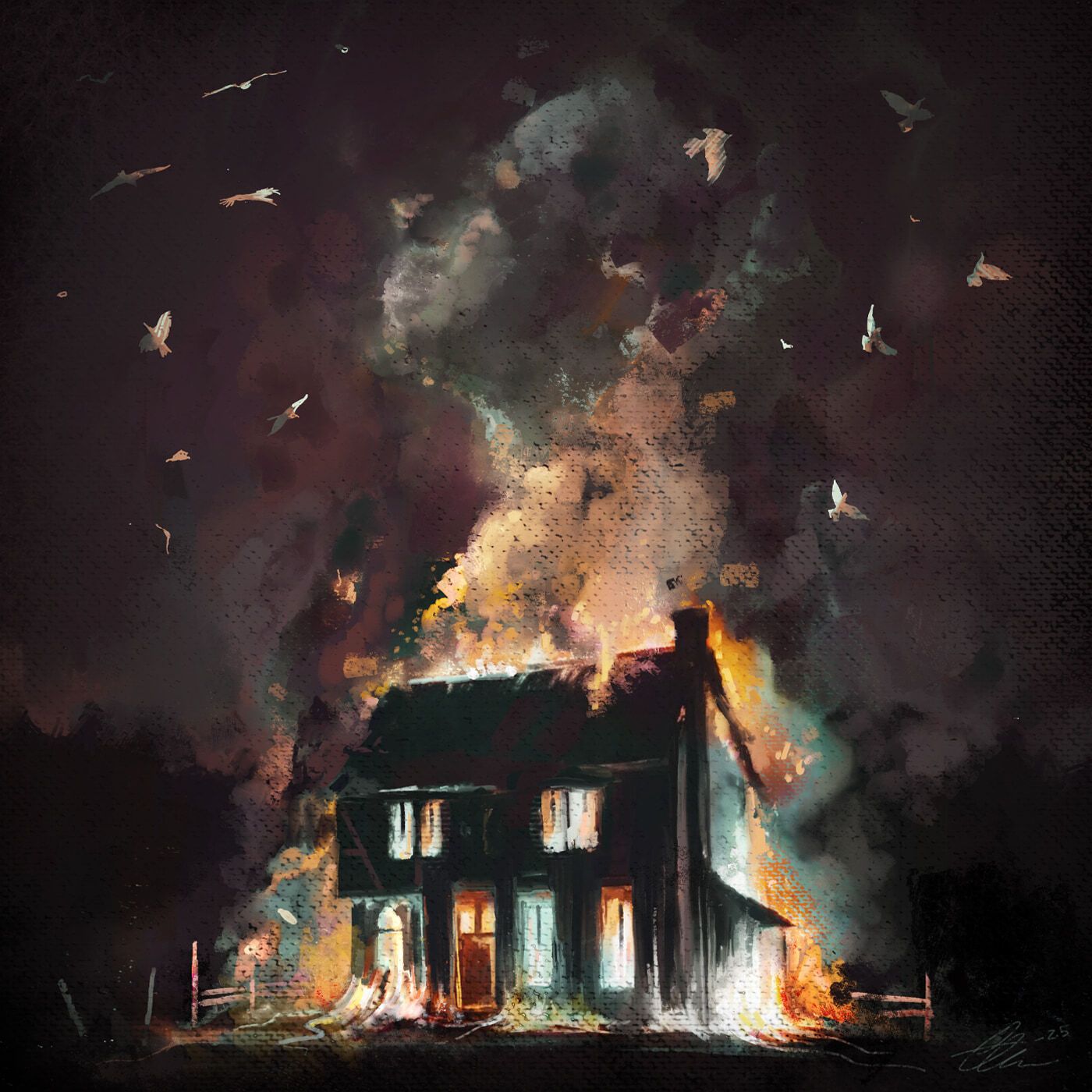
As I scroll through the news story on my phone I can feel the moisture collecting in the corners of my eyes. It blurs my vision but no tears have fallen yet. I swipe a hand across my face and keep reading. Legendary British post punk trio among seven killed in Club Fire CLEVELAND all three members of Human Capital, a UK band known for its political activism and uncompromising music, died Thursday night after the nightclub where they were performing caught fire. Singer and guitarist Paul Peckingham, bassist Barry Jekyll and drummer Nigel Jones were among the seven fatalities that resulted from the fire. The blaze also claimed the group's manager, Alan McPherson, Rhodey Eddie Kirk and a member of the local stage crew whom police had not identified at press time. The fire began on stage Thursday in the middle of Human Capital's set at the well known Cleveland club B Sides, a local fixture for decades. During the song the Colonist, authorities suspect a faulty flashpot may have ignited a curtain on stage as well as some of the band's clothing. There were no audience fatalities, although more than a dozen people were transported to local hospitals and treated for smoke inhalation. One concertgoer suffered a broken arm when she tripped trying to escape the fire and was trampled by other patrons. The members of Human Capital met at Leeds University in England near the end of the 1970s. The group's 1980 debut album, One Divides Into Two, was praised by the New Musical Express as what would have happened if Marx and Engels wrote anthems instead of books. Although Human Capital refused to sign to a major label, they had several independent hits in the UK including Down to the Countryside, a top 20 single in 1986. The raw voiced Peckingham was invited to appear on the 1984 Band Aids single Do They Know It's Christmas and the group was part of the Red Wedge movement alongside bands like the Style Council, Billy Bragg and the Smiths. Human Capital continued to record and tour regularly through the 90s and into the new millennium. They celebrated their 40th anniversary in 2020 with a tour where they played One Divides into Two in its entirety. The state fire marshal's office is investigating the blaze My eyes are full again and my nose is leaking snot through the blur I look up at the poster hanging over my table, the COVID of East Wind, the first Human Capital album I ever bought on a Cassette Back in 1989, a black and white dockside shot with splashes of red Jones cap, Jekyll's jacket and the flag Peckenham carried, whipped by sea breezes and what I really believed at the time was a wind of change. Those are things you think as a silly ass high school sophomore. But although I might have outgrown those ideas, I never outgrew the band. Human Capital meant more to me with every passing year, despite in fact because of the fact that they never changed the world. Because they didn't. Human Capital eventually became more human, more like me. I guess I didn't change the world either. Rob Myers became a middle of the pack rock journalist. A few big bylines over the years, but mostly a career spent writing for local papers and regional music mags and glossy new publications with high hopes that conveniently went out of business before they could get around to cutting me a check. It didn't matter. Six days out of seven every time I heard Nigel Jones and Barry Jekyll lock into the groove of our revolution and Paul Pakenham ripped out that chorus line from his guts. We'll pull you up friend off the floor because you can't stay down there anymore. I felt just like I did when I was 15 and discovering human Capital for the first time. I wanted to share them with everyone and Also no one. It's the paradox every real music lover gets. You want them to be the world's biggest band. And also, ultimately, all yours. Snot is running down my face again, and I backhand it. This isn't getting me anywhere. I have a piece about some horrible blues band that's due in an hour. I haven't even transcribed the quotes, and I probably won't. Why bother? It's all nonsense. How am I going to write seriously about some no hope or accountant turned guitarist in a world without human capital? I suddenly feel sick. Really sick. I squint back at my laptop screen and try to focus. I've read this story 30 or 40 times already. I ought to know it by heart. There's another casualty mentioned toward the end of the piece. The seventh person killed in the explosion was Suella Barnes, a Pittsburgh journalist traveling with the band. I stare at that line for a long time. My tears start pooling again, but they still don't fall. I see Suella's younger brother, Kyle, a couple of days later at the wake. We don't care much for each other because Suella and I never really cared much for each other. Also because he often tagged along with his sister to shows and parties and wherever and was usually kind of obnoxious. But his face is pale and pinched in the dim light of parlor number two. When he turns toward the closed casket, I can see the beginnings of a bald spot beneath his spiky haircut. He's wearing a sports coat that looks too small and too tight, and I feel bad for him. Kyle, so sorry, man. He nods. I consider a half bro hug, but decide against it. We're not even that close. It's. It's a huge loss. A huge loss for journalism. For music journalism in Pittsburgh or, ugh, everywhere. Now I'm just babbling because I don't know what else to say. I remember why I only decided to come to this at the last minute, and why I should have stayed home. Suella, I add needlessly, like he doesn't know I'm talking about his sister who was just killed in a fire. Kyle doesn't seem to be listening. He nods again, distractedly, and sniffs once. But he's looking past me, at someone standing behind me that I can't see. It's just as well. Call me if you need anything, I say, clapping his tricep. I hope I don't sound too insincere or too relieved. On my way out, I see a large framed display in the lobby. I get closer and squint because the light out here is weak, too. But I think I recognize what's in the frame, and I'm right. It's a copy of a story Suella did for rolling stone in 2020, an interview with Paul Peckingham. When Human Capital announced the one divides into two 40th anniversary tour, the thought that I'm never going to interview Paul Peck and him suddenly flashes across my brain like heat lightning. I squeeze my eyes shut and look down, count to 10, blow out, then look back up at the frame. I've read this Rolling Stone story before, of course, so I already know what it says, right down to the tagline at the end where it mentions the book Suella was working on. The sickly smell of some kind of funeral home flower, I have no idea what it is, hits my nostrils just then, and I back away from the display, almost stumbling into a couple done up like a male and female David Bowie circa Young Americans. They glare, eyebrowless. I turn awkwardly and flee for the street. I was going to sign the guest book, but who really cares whether I showed up at Suella's wake or not? Especially Suella. If all that makes me sound like an asshole, then guilty as charged. I guess. It was always weird between me and Suella, right from the time she moved to Pittsburgh from Philadelphia 10 years ago. We met at a party after a David Byrne concert downtown. It was at the apartment of my editor at the City Paper, where I'd been the main music writer for a while. The editor, Gavin, was a tall, perpetually awkward guy who introduced us with one of those cringy lines, something like, here's the newest music writer in town. Is Pittsburgh big enough for you both? I tried to play along. Well, I hope you'll let me keep my humble job at least, I said as we shook hands. Suella gave me a long look. That should have been her nickname. Long look. She was one of those females who excel at giving you the once over twice. I guess it was a way of establishing power. Maybe it was something she read in some self help book, but it definitely worked. Suella was also one of those angular chicks who dress in black. It makes them look even sharper. I don't mean sharper as in she looked sharp. Although sure, she was attractive enough. I mean she looked like she had an edge in her leather jacket and black 501s and razor cut bob, and on both arms she had matching tattoos, sleeves of two intertwined snakes. The heads met on the backs of her hands with the tongues nearly touching at the middle knuckles. Plus she usually did that thing with her eye makeup that exaggerated the corners of her eyes, and she rarely blinked when she looked you up and down judgmentally. It was like being examined by an Egyptian hieroglyph, a little disconcerting. If you're any good at your job, Mr. Meyers, she said finally without smiling, then maybe I'll let you stay. As it turned out, my job was safe. I found out a month later that Suella had become the music critic at the Post Gazette. The best gig in town. I put in for it, of course, but I didn't have much hope. Trey Neely, the PG's main freelance reviewer, was a young guy, an up and comer, and everybody figured he had the gig locked up.
- [28:44]
Mr. Strange
Nope.
- [28:45]
Rob Myers
Fucking hell, I muttered when a coworker texted me to see if I'd heard the news. That cutthroat bitch. No, no, no. I know what you're thinking, but this isn't one of those stories where instant hate hides instant attraction. Suella and I never slept together, never even went on a date. After that first meeting, I heard from another mutual friend that Suella had said that I seemed like a poser and that she thought I was 10 years older than my actual age. Suella was a big one for age. We were only five years apart. I'm 49 and she's sorry she was 45. But whenever we talked, which wasn't really that often, she took every opportunity to exaggerate the difference in our ages, like she couldn't get far enough from me and wanted to lengthen the distance. So no, nothing at all between us. Believe me, it never would have worked anyway. We were both kind of in love with the same person. And by person I mean banned. Human Capital never had a top 40 hit in America, but like a lot of British groups in the 80s, they did get a fair amount of club play. If you went to a place like heaven in Pittsburgh, like I did, you could count on hearing them in the setlist at some point. The song you'd be most likely to hear, the one that went to number seven on the Billboard dance charts during the winter of 1987, was the Colonist. The riff sounded a little like the Knack's My Sharona, that stop start kind of rhythm. There were two exploding snare drum hits at the end of the riff and an oo oo on each hit. The oohs were ironic, of course. Human Capital were well above any sort of dance floor silliness. They were making fun of the dumb British colonizer. But everyone shouted the ooze out anyway and threw their hands in the air like they ironically just didn't care. So did I, of course. It was the perfect way of showing you, like Paul Barry and Nigel were too smart for such gestures and yet secretly enjoyed them having your cake and eating it too. I probably have every version of that song. 7 inch, 12 inch import, 12 inch picture disc, a single, and a box in my bedroom with the rest of my Human Capital memorabilia. I tell you all this because it was that riff from the Colonist that woke me up early this morning, maybe around 3 or 3:30. I didn't even look at the clock. I swear I caught myself with my hands raised. Muscle memory, maybe. Then I fumbled around for my phone. Had I changed my alarm? But I couldn't find it. I half rolled out of bed and ended up on the floor on my hands and knees. The rift cycled through one more time. I could feel it vibrating from the floor below me. Then it stopped on the second snare hit. The only sound in the silence that followed was me. Ooo. I heard myself mumble. Shaking my head, I straightened my back, still kneeling on the thin bedroom carpet. Nothing. I just knelt there for I don't know how long in the thick dark, sorting dumbly through a tangle of feelings. I was pissed at being wakened up and sad because of the memories that song dredged up and, oddly, a tiny bit hopeful. Hey, another Human Capital fan lives here. And then, finally, hollow. Who cares? They're dead. They're all dead. Crawling back into bed under my thin blanket, I felt something else too. Fear. I didn't want to hear that song again. Not right now. Not for a long time, maybe. And I didn't. But the weird anticipatory silence kept me awake for quite a while. It was sometime before COVID probably around 2018 or so, that I started going through the predictable midlife crisis thing. I was in my mid-40s and other than keeping my hair, I didn't have a lot of other accomplishments. You've heard this story before. No wife, no kids, paycheck to paycheck job. Drifting from concert to party to my shabby apartment. I'd look at myself in the chipped bathroom mirror under the occasionally flickering fluorescent light, puffy eyed and puffy bellied, and I'd realize this was my actual life, not some depressing indie film. And what are you going to do about it? I sometimes asked my reflection. It got bad enough that I couldn't even make eye contact with myself and if I wasn't too drunk to answer the question, I'd usually mumble back, write a book. Of course I'd thought about writing a book before. A music book. I'd done more than think about it. I'd gotten as far as submitting a proposal to a publisher a couple of times. Once I even made it to the second round of the 33 and a third series. You know those little books about a single album? Naturally, I pitched One Divides into Two. I was going to argue that it was the greatest piece of art ever inspired by Karl Marx. How many great ones are there, really, after all? And I worked really hard on the proposal. Busted my ass when I got the email telling me I'd made it to the second round. I felt giddy when I went out that night to see a local ska band. I couldn't stop grinning, thinking about this book I was going to write and how I was going to do it. Then, on a rainy May afternoon a month after that, I got the news that my proposal hadn't been picked after all. It was an agonizing decision, and I should rest assured that this had nothing to do with the quality of my pitch and all the other phrases that always hit you like brass knuckles in the nuts no matter how long you've been doing this. It wasn't until another midlife crisis y morning in 2018, around about 4am that I decided I was ready to make another stab at a book at some kind of permanence. I knew very well that there was no biography of Human Capital, and I knew there was a fan base that would buy it if it were written in the right way by the right guy. Me, I said to my blurry reflection. And before I crashed out with my overheating laptop perched on my thighs in bed, I'd reworked my proposal through a friend of a friend of an acquaintance. You know how these things work. I'd corresponded a couple of times with a guy in London who ran a small publishing house. They'd put out books about several other bands from the 80s and 90s, what used to be called alternative music. Human Capital weren't household names, but they were bigger than any of these bands. My unshaven face itched and my mouth was dry and my breath smelled like a sewer. But before I went to scrub my teeth, I looked at my proposal through bloodshot eyes, said some kind of non denominational prayer, and pressed send. When I awoke I had to pee so badly that it felt like I had a knife in my side. But first I grabbed my phone. My mailbox refreshed itself and my heart leaped when I saw that bold black reply. Re Human Capital Biography. The email was short, just a couple of lines. I like what you've got here, Rob. Let's set up a zoom call for next week. I was so excited I almost soiled the bed. But I made it to the bathroom where I enjoyed the best piss ever. I struggle for a moment to decide if this is a dream. Finally I conclude that it's not. I juggle my phone into my palm, turn it right side up, and squint at the time. Nearly 3:30, the colonist cycles through one more chorus riff. Then it cuts off again right after the ooze. It's early November, but my back is clammy and my armpits are damp. This is the third time this week I've been awakened by that fucking song. It seems like it's getting louder and louder too. This time it's shaken a glass of water off my milk crate nightstand. I know because when I reach for the glass to get a sip, it isn't there. Disgusted, I fall back into my flat, sweaty pillow and stare up into the darkness. Enough is enough. Fan or no fan downstairs. Tomorrow I put an end to this shit. But it's already tomorrow. Of course, somewhere in the two hours it takes me to finally fall back asleep, it officially becomes today. I wait for the sound of that song and the first gray light of dawn. It must be the light that comes first, because I don't hear the song again until the next night. This time I wake up faster. I take a shoe and bang it on the wall before the music goes off. Shut the fuck up. There's immediately pounding from the other wall. My neighbor to the left.
- [38:56]
Benny
Hey.
- [38:57]
Rob Myers
Trying to sleep here? So am I. It's them downstairs, not me. Silence. I realize this conversation, if you can call it that, is really ridiculous. I set my alarm and wake up before noon, crusty and crabby. I leave a message in a croaky mid morning voice for the landlord. Then I make myself a cup of tea and wait. I wait all afternoon until almost five when there's a knock on the door. A young guy in a navy work shirt with a name tag that says Ramone is standing there. I start to speak and he cuts me off.
- [39:38]
Mr. Strange
Neighbors say, you're making too much noise. Can't sleep.
- [39:42]
Rob Myers
My mouth drops open. I'm making too much noise. What about the guy right downstairs? Ramon stares at me blankly. He's been waking me up every fucking night with his Music, I say, my throat squeezing shut a little and my voice getting higher. Ramon frowns.
- [40:04]
Mr. Strange
Two complaints about you banging around.
- [40:07]
Rob Myers
He points to the doors on either side of me. Yeah, but what about right down there? What about that guy? I ask, pointing at the floor. What are you doing about that guy? Ramon just keeps staring at me like I'm an idiot. Then he shakes his head and turns away, speaking over his shoulder.
- [40:27]
Mr. Strange
There ain't no that guy. Now knock off the shit at night. Next time won't be me.
- [40:35]
Jordan Anderson
It'll be the cops.
- [40:37]
Rob Myers
I watch him walk down the stairs. He gives a little shrug, like he's trying to shake off a bug or something. It's nearly dark and I shut and latch the door. The temperature feels like it's dropped 10 degrees. I throw a blanket around my shoulders, sit in my busted up Craigslist recliner, and mean to turn the stereo on, but I don't. I just stare at the wall, at the poster of East Wind, listening. I fall asleep in the chair and I don't wake up until I hear the OO ooze. The recliner footrest is out and I trip over it. The ancient metal skins one shin and I can feel blood dripping into my sock, but I only half notice because I'm banging on the floor. I'm shouting too, although I'm not sure I'm making words. The music is louder than ever, rattling the windows in their panes, and this time it doesn't stop and I finally realize that there's another rhythm underneath the drums and guitars, a steadier pounding. It's my front door. When I open it. A short guy in a T shirt that barely covers his gut is standing there, his fist ready for another hit, buddy. His face is red and screwed up.
- [42:04]
Jim
What's the matter with you? You hopped up on something?
- [42:07]
Rob Myers
I'm dazed and don't respond at first. He gets madder.
- [42:12]
Jim
I gotta work.
- [42:14]
Rob Myers
He points at himself, then me with one stubby finger which almost reaches my.
- [42:20]
Jim
Chest at 7am you don't got a job. Whatever. You ain't gonna screw around all night and keep the decent people awake.
- [42:28]
Rob Myers
Then I realize the music is still playing downstairs. I hold my hands up and shrug. Look, man, I'm with you. I'm not trying to cause trouble. It's this guy below me and his music, that same Human Capital song. I gesture at the floor, which is still vibrating, kept me up almost every night this week. I have no idea what's wrong with him. The short guy's face seems to get even redder and twist itself up even more. I realize he doesn't look like a Human Capital fan. He's probably never heard of them. In fact, maybe he's mad because he thinks I said human trafficking.
- [43:06]
Jordan Anderson
Music. Music.
- [43:08]
Rob Myers
He cranes what there is of his neck around me into my apartment.
- [43:13]
Jim
You filming this or something? You think this is funny? You what putting this on YouTube?
- [43:17]
Rob Myers
I'm not filming. He cuts me off and backs away from the door.
- [43:22]
Jim
I knew it was a mistake coming up here.
- [43:24]
Rob Myers
You here. He points again from a safe distance.
- [43:29]
Jim
Better start packing up your I'm making it my business to get you tossed out of here by tomorrow night.
- [43:35]
Rob Myers
Then he's gone into the shadows of the hallway. I watch them for a few minutes. By the time I go inside inside, I realize the music has stopped. I had that Zoom call with the London publisher and it went about as well as I could have hoped. He agreed that Human Capital were really the last major band of their era without a real biography. He thought my idea for diving deep into the Marxist aspect of the band was spot on. He nodded when I said I was pretty sure I could arrange interviews with the group and if I looked a little too eager than a professional journalist should at that prospect, the chance to finally meet my heroes. He didn't mention it. We traded emails for a month and he said he'd be sending over a contract soon. No advance on royalties, of course, but who needs an advance for a labor of love? Then came the afternoon I got the email. Rob, it began, I'm so sorry to have to do this to you. What he was so sorry to have to do to me was canceling our informal deal for the book. The reason, he said, was that he'd just heard from an industry source that a Human Capital biography was already in the works with a decent sized American publisher with the band's involvement confirmed under the circumstances, the email continued, I'm sure you can see that I don't have any choice. It was the PS that did me in, though. Maybe one bit of news to lessen the blow a bit. It read, the writer is from your area, I believe. Perhaps she's a friend of yours. Her name is Suella Barnes. Did Suella Barnes really love Human Capital? Did they change her life? Did she know the words to all the songs and how and why the words came to be written? I mean, who knows? It's not like we can ask her now. I have a theory which doesn't exactly make me Sherlock Holmes. I'm pretty sure that sometimes around the time of that rolling Stone Interview Suella slept with Paul Peckingham and was probably still doing it right up to the fire. Can I prove this? Nope. Do I need to? Not for my peace of mind. It wouldn't have been the first time Suella hooked up with a musician, nor the first time she hooked up with a semi famous one. About that stuff, I do have proof. Look, don't get me wrong. I'm not calling her a slut. If that's what she had to do to get ahead, then fair play to her, as the Brits say. But did Suella Barnes love human capital more than I did? Much easier question. So easy. Doesn't even deserve an answer, though. I hang around the apartment all day, waiting. The cops don't come, despite the short guy's threat, but I'm still awake when the colonist comes on again that night. This time I'm calm. I don't bang a shoe or yell. I just slip on a hoodie, slip out my door, and head down the narrow staircase. When I get downstairs to an identical looking hallway, the music has stopped. I put my ear to the door of apartment 301. Nothing. I gently knock, then listen harder, but there's still no sound. There's a little plug in nightlight at the end of the hall, shining feebly. I suddenly imagine the other doors as eyes watching to see what I'm going to do. The truth is, I don't know, but I'm suddenly seized by a thought. This can't continue. Taking a breath, I jiggle the door handle. It opens easily and the blackness gives way to a lighter black. The light is diffusing from a halo in the corner of what I assume is the living room. It's coming from an object perched on a high table. It doesn't take me long to figure out that it's the glow of a stereo, partly because I trip over one of the speakers. The speaker, an old fashioned model mounted on a stand, hits the back of my legs and then rolls onto the carpet with a dull clunk. I've forgotten how heavy these things used to be and curse in the dark as I get to my feet. I touch something on the tabletop that feels cold, then soft, then suddenly sharp. I recoil instinctively, but then I locate the object again, right next to the stereo. Still on my knees, I push the object into the ambient light coming from the receiver. I immediately shove the thing onto the floor, where it lands with another clunk. The only sound I make meanwhile is a groan, a long one, which seems like it ought to fade into nothingness but in fact only gets louder and louder. What I saw in the gloom was a human hand. A jagged splinter of bone poked out from the severed wrist and the flesh above it was, I realized, puckered and charred from the heat of a fire. But that's not why I'm still groaning when the police find me in the empty apartment two hours later. It's because on the back of the hand is a familiar tattoo, the head of a snake, its curled tongue flickering like a knowing grin.
- [49:36]
News Reporter
A local journalist has confessed to deliberately starting the club fire that killed all three members of the British rock group Human Capital and four other people. Rob Myers, 49, a music columnist for the Pittsburgh City Paper, was taken into custody by police early this morning. Myers was discovered in a vacant apartment directly below his own in the Troy Hill neighborhood after neighbors reported hearing noises from the empty unit. A police source, who is asked not to be named, said Myers was discovered with the hand of one of the club fire victims, fellow journalist Suella Barnes, 45, of Pittsburgh. He must have kept it as some kind of trophy, the source said. Myers reportedly admitted to police that he traveled to Cleveland last week before Human Capital's concert at the nightclub B Sides. He allegedly tampered with the flashpots that the band used on stage, perhaps by bribing a club employee. One of the flashpots is believed to have ignited a curtain as well as clothing worn by band members. Barnes was traveling with the band because she was working on a biography of the group. Myers is being held without bail at the Allegheny Regional Jail. Police have not disclosed a motive for the crime. The police source claimed that after confessing, Myers went completely catatonic. All he does is go ooh, ooh every few minutes and then throws his hands in the air, the source said. It's pretty creepy. It's like he's singing along to some song nobody else can hear.
- [51:30]
Mr. Strange
Keep on rocking while we have a quick word from our sponsor. For ad free extended horror content, go to sleepless.thenosleeppodcast.com have you made your New Year's resolutions yet? Sure, I'd like to lose weight. Read more all that usual stuff. But what I'd really like to do is lock in years and years of healthy money habits. And I can, thanks to this show being sponsored by Acorns. Like me, a lot of us feel like our money is slipping through our fingers. But it's not your fault the world is trying to spend your money. There's streaming apps and delivery fees and tips on self checkout machines. The list goes on. Good thing there's Acorns. Acorns hopes to grow your money into more of your money. Acorns makes it easy to start automatically saving and investing so your money has a chance to grow for you, your kids and your retirement. You don't need to be an expert. Trust me. Acorns will recommend a diversified portfolio that fits you and your money goals. You don't need to be rich. Acorns lets you invest with the spare money you've got right now. You can start with $5 or even just your spare change. Basically, Acorns does the hard part so you can give your money a chance to grow. Head to acorns.com nosleep or download the Acorns app to start saving and investing for your future today. Paid non client endorsement compensation provided Incentive to positively promote Acorns Tier 1 compensation provided investing involves risk Acorns Advisors, LLC, an SEC registered investment advisor. View important disclosures@acorns.com nosleep now back to the horror. This one is bound to make you smile. In our world, we're expected to always show others our happy, friendly side. Everything is fine. You're doing well. No complaints right now. Imagine how much better things would be if we could pop a pill and truly experience intense, blissful happiness. Well, in this tale shared with us by author Edward R. Stapleton iii, a new drug has done just that. Happy people all the time. And trust me, you'd better be happy or else. I joined the cast of Kristen D. Mercurio, Peter Lewis, Wafia White, Kyle Akers, Matthew Bradford, Jeff Clement, Alante Barakette and Jesse Cornett in performing this tale. So come on, don't be a downer, darling. You'd be so much happier if you could just keep smiling.
- [54:36]
Wesley King
Westley stared at the the picture, the one remembrance he had left of his wife. He kept it in the back of his wallet. This was the photograph that kept him alive for the last year.
- [54:47]
Benny
Five minutes, Mr. King.
- [54:49]
Wesley King
This was the only time he had to feel five minutes alone in his dressing room to gather every emotion he had. Sadness, bitterness, longing, and surrender it all to this picture for safekeeping. He put it away, looked in the mirror and rehearsed his smile.
- [55:09]
Jordan Anderson
They won't believe you if it's not complete, if the teeth aren't showing, if the crow's feet wrinkles aren't bunched up in the corner of your eyes.
- [55:19]
Wesley King
Fortunately, Wesley had always been known for his smile. He was the charming, beaming face of Channel 4 News, a face of warmth and charm that greeted 1.3 million viewers every morning.
- [55:32]
Benny
It's time.
- [55:33]
Wesley King
His assistant Ron met him in the hallway, flashing crooked teeth from his rugged face, which grinned with an untethered, unnatural ecstasy.
- [55:42]
Jordan Anderson
I'm ready, Ron. Let's go.
- [55:45]
Wesley King
They walked past all the smiling, giggling faces backstage, then out onto the studio floor where his co host Rhonda Simmons, was waiting for him. He sat by her side and looked towards the camera. This was the world euphoria has made. It was a small green pill, first synthesized in a lab in New Jersey two years earlier. One pill gave you 48 hours of pure, unadulterated bliss. It was cheap and easy to manufacture and started appearing everywhere. In schools, on the streets, in offices. More and more people were facing each day with a spirit of pure joy. The side effects came after a few months of use. Damage to the amygdala and the cingulate cortex of the brain created permanent shifts in personality. Users were smiling while they ate, while they walked, while they slept. They were capable of no other facial expression than a bright, beaming smile and no other emotion than pure joy. The violence followed. The first victim was a young man who was seen crying at a bus stop. A cheerful bystander threw a rock at his face. Some more laughed and hollered. Then they joined in. They grabbed him, clawing at him, throwing him onto the ground, smashing his head into the pavement, laughing and cheering the whole time until his body was an unrecognizable mess in the middle of the road. Things escalated quickly after that. All over, random acts of mob violence started happening against the unsmiling. They were purging the world, purifying it, removing anything that wasn't bliss, joy and laughter. By killing off anyone who displayed other emotions, Euphoria was building a world of pure happiness. Being unhappy was dangerous. People started taking Euphoria just to stay safe, so they didn't have to fake it. The trials followed. Soon after that. A defendant suspected of facing happiness would be placed in a chair in a stadium and tied down. The tribunal would attempt to provoke other emotions in the defendant while the crowd cheered them on. Wesley had been a suspect in one such tribunal one year ago. They brought his wife out in front of him and locked her in a cage while Wesley looked on. They tortured her, threw things at her and poked her with spears as the crowd chortled and hollered. She died slowly, painfully, as she looked toward him with pleading, anguished eyes. Wesley didn't break. He smiled. He laughed. He cheered as she died. He had no choice. He had to live. To keep their daughter safe. As soon as there was some sign, some hope of a safer place to.
- [58:54]
Rob Myers
Be.
- [58:58]
Wesley King
The cameraman gave the signal.
- [59:01]
Will Rogers
This is Wesley King and I'm Rhonda Simmons.
- [59:06]
Jordan Anderson
And we're coming at you live from the biggest, the best, the most wonderful news station in the metropolitan area. Have you ever seen other news stations?
- [59:17]
Will Rogers
They're shit.
- [59:18]
Jordan Anderson
They're worthless. And we have a great show for you this morning on a beautiful, amazing, wonderful day.
- [59:27]
Will Rogers
Best day ever.
- [59:29]
Jordan Anderson
A special guest chef, Sallie Weathers, is coming to our test kitchen today to show us how to make the best cupcakes of your life.
- [59:38]
Will Rogers
Delicious. Orgasmic.
- [59:41]
Jordan Anderson
But first, let's go to Jordan to see what the fuck's going on out there.
- [59:47]
Wesley King
The crew howled and snorted with glee as the screen cut to Jordan Anderson, their star reporter, out on the scene of a major accident.
- [59:56]
Jim
Hey, y'all, how you doing? We have quite the smasher going on here. Five cars, up to seven victims at least. Carnage, bloodshed. Let's take a look.
- [60:05]
Wesley King
Jordan led the cameraman through a group of howling bystanders to get a close up of the Gore. Back in the studio, Wesley and Rhonda made small talk.
- [60:15]
Jordan Anderson
How are you doing, Rhonda? How's Bill?
- [60:18]
Will Rogers
Great, great. Bill is great. Amazing. He starts a new job this morning.
- [60:25]
Jordan Anderson
Awesome. That's so awesome.
- [60:29]
Will Rogers
And you?
- [60:31]
Jordan Anderson
Great.
- [60:32]
Wesley King
Conversations were like this now, bland and meaningless. Are you really alive? If everything is perfect? On the screen, Jordan was talking to a bleeding man with a broken femur popping through his jeans. His face was pale and sweaty, but still smiling.
- [60:50]
Jim
Dude, your leg is fucked up. How you doing?
- [60:54]
Benny
I'm dying. It's awesome, man.
- [60:58]
Rob Myers
Hey, aren't you Jordan Anderson? I love you, man.
- [61:02]
Benny
I love your show.
- [61:06]
Wesley King
This was going to be a good news day. The viewers loved a good accident scene. They loved the carnage, the savagery, the gore. Jordan was always there, giving them a front row seat. The man with the broken femur was carted away, and Jordan led the camera over to look at a body in an overturned Chrysler. Wesley took a sip of coffee and a deep breath.
- [61:31]
Jordan Anderson
Tell me more about this job, Rhonda.
- [61:35]
Wesley King
But Rhonda didn't reply. He heard instead only a faint whimper. The crew went silent. All eyes full of hungry smiles focused on Rhonda. As Rhonda looked in horror at the screen, Wesley saw it. Bill Simmons, Rhonda's husband, was the mangled, bleeding corpse in the Chrysler.
- [62:03]
Jim
Look at this sorry bastard.
- [62:06]
Wesley King
Jordan poked at a gash in the side of Bill's face. Then the camera in the studio came back on and slowly zoomed in on Rhonda.
- [62:17]
Will Rogers
Welcome back, everyone.
- [62:20]
Wesley King
She tried to laugh. She tried to bring herself back, but it was too late. A tear had made its way down her cheek. Her red, puffy eyes betrayed her. All around the studio were feverish, grinning faces. Charlie, the weatherman, grabbed her by the hair and yanked back her head.
- [62:41]
Benny
Why so sad, Rhonda? Why don't you just smile a little?
- [62:49]
Wesley King
Wesley acted without thinking. Maybe it was instinct. Maybe it was a year of rage pulling itself to the surface. Maybe that one token of remembrance, that photo in his wallet, burned its way into his blood and set him on fire and told him this was enough. He broke his mug of hot coffee on Charlie's face and tackled him to the ground.
- [63:11]
Jordan Anderson
Why don't you shut up, Charlie?
- [63:15]
Wesley King
Wesley shoved a shard from the broken mug into his throat. Blood shot out of his neck in spurts as he choked and struggled, still smiling even as he breathed his final breath and his body went still. Wesley looked up at the camera. 1.3 million viewers looked back at him, but there was only one viewer he cared about. He spoke to the camera as if his daughter were the only one watching.
- [63:51]
Jordan Anderson
Shannon, keep safe. I'm sorry, but it's time now. Honey, get the bag. Get to the rendezvous. If I'm not there in an hour, don't wait.
- [64:03]
Wesley King
The crew was quiet. They were still beaming and smirking, but they seemed unsure of what to do next.
- [64:10]
Jordan Anderson
Rhonda, get to the test kitchen.
- [64:14]
Wesley King
They sprinted over toward the kitchen set up across the studio where Sallie Weathers had been setting up her cupcakes. Wesley grabbed a knife from the top drawer. A cackling Sally lunged at Rhonda, but Rhonda picked up a frying pan and knocked her out with one blow. The crew closed in, circling them. Ron leapt forward first. Wesley shoved the knife deep into his chest and pushed him away. Rhonda fought off the first cameraman with her pan as he laughed and taunted her. She hid him under his chin and he stumbled backwards. Rhonda and Wesley inched towards the side exit. The crew kept their distance, but their eyes were still glowing, teeth bared, letting out eager chuckles and chortles, waiting for their chance to make a move. The pair made it through the door into the stairway, and Wesley secured it by tying the door handle to the railing with a fire hose.
- [65:09]
Will Rogers
What's the point, Wesley? Where can we go? They all saw us. The world saw us. Nowhere is safe.
- [65:18]
Jordan Anderson
I know where to go. Trust me.
- [65:21]
Wesley King
They ran down the flight of Stairs to the first floor. They opened the door to see Jim, the security guard, waiting for them. A gun was in his hand.
- [65:32]
Jordan Anderson
Hello, Jim. Did you see the broadcast?
- [65:36]
Wesley King
Jim's face became serious. He held the gun out towards Rhonda.
- [65:42]
Mr. Strange
I saw it. I think you're gonna need this. And take the back entrance.
- [65:49]
Rob Myers
There's a crowd out front.
- [65:51]
Mr. Strange
They're already gathering. And remember, I didn't see you.
- [65:58]
Will Rogers
Thank you, Jim.
- [66:00]
Wesley King
They sprinted towards the back entrance and onto 61st Street. Wesley tucked the knife into his coat pocket, and Rhonda held the gun under her blazer. They put on their best smiles and walked quickly along the sidewalk. For the first two blocks, it seemed they were safe. But each time they glanced back, they noticed a few more people behind them, keeping pace, all with ravenous smiles. After a few blocks, they turned the corner onto West End Avenue, but twisted. Maniacal giggles pursued them.
- [66:33]
Will Rogers
Where are we going? Weston? What were you talking about before? Where is this rendezvous?
- [66:41]
Wesley King
The crowd grew. They felt them gaining behind them, heard them chortling, giggling, laughing, whispering with each other.
- [66:50]
Jordan Anderson
I'll give you the details later. For now, keep close. Get ready to run. Ready?
- [66:57]
Mr. Strange
Now.
- [66:59]
Wesley King
They sprinted out into the street, the traffic weaving and swerving around them as the crowd chased after them. A van crashed into a group of three of them, sending them flying, and the mob jumped and laughed at the spectacle. Rhonda and Wesley, seizing on the distraction, took a turn down 70th and ducked into the entrance of a parking garage. They ran down the tunnel, turned a corner, and rested against a wall.
- [67:26]
Will Rogers
Did they see us?
- [67:28]
Wesley King
They heard laughter echoing from outside, but no one was following them.
- [67:33]
Jordan Anderson
I think we're good. I I I think.
- [67:37]
Wesley King
He paused. He heard a familiar, familiar voice. Jordan's voice, coming from a television in a booth nearby. He looked in and caught eyes with the parking attendant who had been watching the news on a small television in the corner.
- [67:52]
Mr. Strange
Wesley King. In my garage.
- [67:56]
Wesley King
He laughed a deep, thunderous laugh, then reached under the desk, pulling out a handgun.
- [68:05]
Mr. Strange
Well, it's my lucky day.
- [68:09]
Wesley King
Rhonda got off the first shot, hitting the man in the side. But the man laughed and fired several shots back. They ran and jumped behind a pickup truck. There was a moment of silence, followed by footsteps and more laughter.
- [68:27]
Mr. Strange
Ah, come on. I just want your autograph. I don't mean any harm.
- [68:35]
Wesley King
The man came closer. They knew there would be more soon, that the gunshots would draw the mob from outside. They couldn't wait for it.
- [68:44]
Jordan Anderson
I'll distract him. You take the shot. Don't hesitate. Make it count.
- [68:50]
Wesley King
Wesley ran out across the garage. Some shots fired after him. Rhonda stood up, took aim, and fired two rounds into the side of the attendant's head. The big man tumbled to the ground. Rhonda stood over him, unsure of how to feel. So far today, she had lost her husband, fled a homicidal crowd, and taken a man's life. She had lost the last bit of who she had been. Tears came to her and rage and sadness, and she stood trembling, weeping over this man's body. But for the first time in over a year, the fear was gone. She felt a rush of every other emotion, and it rose up, consumed her, empowered her, fueled her. She had lost everything else, but for a moment, found the start of something new. These thoughts ran through her for a moment, but then she returned to reality. They had to go. She dug through the man's pockets and found a set of car keys. She pushed a button, and a car nearby answered with a beep. She picked up his gun, then stood up to look around.
- [70:03]
Will Rogers
Wesley, where are you? Let's go.
- [70:07]
Wesley King
Wesley was curled up on the ground by a blue Toyota, looking down at a picture in his right hand while his left clutched a wound on his chest. Chest? Blood bubbled out from around it, making a sucking sound with each breath. He looked up at her, coughed up a small mouthful of blood, then smiled. He held up the picture.
- [70:31]
Jordan Anderson
You see her? See how beautiful she was? So many moments. Some happy, some tragic, some boring. I miss them all.
- [70:45]
Wesley King
She ran over to him.
- [70:48]
Jordan Anderson
I thought you were one of them, Rhonda. I thought.
- [70:53]
Will Rogers
I thought you were, too. That smile.
- [70:57]
Jordan Anderson
I always had that smile. Charmed my way through life. Charmed her into my life. And you. You got it, too.
- [71:09]
Will Rogers
I have clinical depression. Sometimes when it feels like you're dying, you need a good smile to make it in the world. I was already used to faking it when all this started.
- [71:28]
Jordan Anderson
I'll have to try that sometime.
- [71:31]
Wesley King
He handed her the picture.
- [71:34]
Jordan Anderson
Give that to Shannon. Tell her that her mother was amazing. Tell her that the memory of her. This. This picture here. Kept me smiling every day since I met her. Tell her. Tell her that sometimes a little memory of where we're from can help us get where we need to go, huh? She'll be at the 79th Street Boat Basin. Stay safe. Don't be seen. My cousin keeps a boat there. Shannon will know which one, and she'll know where to take it.
- [72:10]
Will Rogers
And you. You can make it. Please try.
- [72:19]
Jordan Anderson
Nah. I got other plans.
- [72:24]
Wesley King
They heard the echoing laughter of a crowd gather outside. They were heading into the garage.
- [72:30]
Will Rogers
What other plans do you got?
- [72:34]
Wesley King
Wesley laughed. It seemed like the purest, truest laughter she had heard in a long time.
- [72:43]
Jordan Anderson
Give me one of those guns. I'm gonna keep these smiling. Crazy Fox Bill, is he? While you get out of here.
- [73:36]
Mr. Strange
Our phone lines have been cut. The cell signals are lost, but we will return to delve into your darkest hangups when the calls will be coming from inside your house. The no Sleep Podcast is presented by Creative Reason Media. The musical score was composed by Brandon Boone. Our production team is Phil Michalski, Jeff Clement and Jesse Cornett. Our editorial team is Jessica McAvoy and Ashley McElli. To discover how you can get even more sleepless horror stories from us, just visit sleepless.the nosleep podcast.com to learn about the Sleepless Sanctuary ad. Free extended episodes each week and lots of bonus content for the dark hours. All for one low monthly price. On behalf of everyone at the no Sleep Podcast, we thank you for taking our nightmarish calls. This audio program is copyright 2024 and 2025 by Creative Reason Media, Inc. All rights reserved. The copyrights for each story are held by the Respect prospective authors. No duplication or reproduction of this audio program is permitted without the written consent of Creative Raisin Media, Inc.
- [75:15]
Will Rogers
New Year Same great savings all in the Fred meyer app. Get 10 for $10 on select varieties of Kroger pasta, Starkist tuna pouches or Powerade. Then get Tender Fresh Heritage Farm boneless chicken breast for 2.49a pound, all with your card. Shop these deals at your local Oregon Fred Meyer today or click the screen now to download the Fred Meyer app to save big today. Fred Meyer Fresh for Everyone. Prices and product availability subject to change restrictions apply. C Site for details.