Podcast
Red Thread Toolbox with Jenna Redfield
Hosted by Jenna · EN
How to optimize your life from the inside out! The tools, tactics & techniques to constantly improve your life, business and marketing.
Sharing extended interviews from the Jenna Redfield YouTube channel, this podcast will deep dive into systems and tools to help you organize your online life.
jennaredfield.substack.com
jennaredfield.substack.com
21episodes
Episodes
Newest firstAll episodes
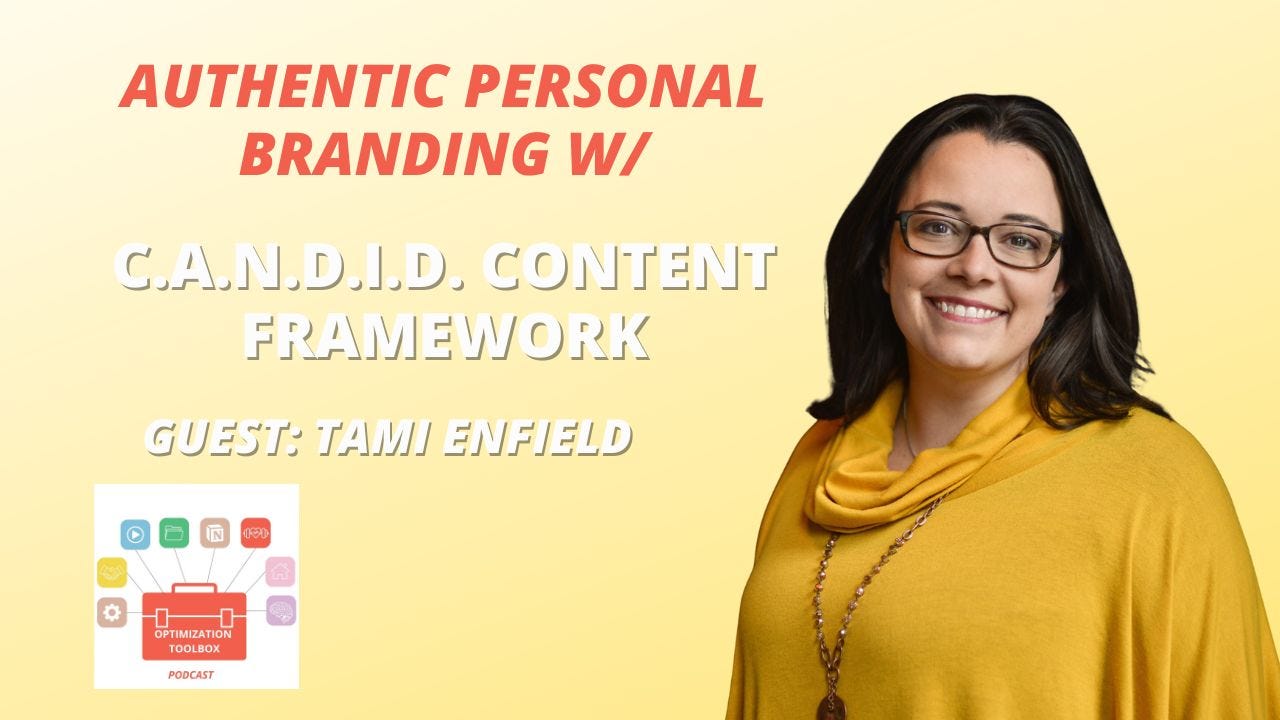
How to Overcome Fear and Self-Doubt to Create Real, Authentic Content with the C.A.N.D.I.D. Content Framework
Aug 1200:35:59Tap to summarizeThe Optimization Toolbox by Jenna Redfield is a reader-supported publication. To receive new posts and support my work, consider becoming a free or paid subscriber.Over the years of working with clients on their marketing and content, I’ve noticed a pattern: so many people have the same hang-ups when it comes to visibility. They want to grow their brand, they know they should be putting themselves out there — but fear, self-doubt, and a desire to “play it safe” get in the way.For me, visibility feels natural. I’ve been showing up online for years, experimenting with video, sharing stories, and making connections. But I’ve learned that for a lot of people, this is really hard.That’s why this conversation with Tami Enfield of Brand Yourself Consulting was so interesting to me. Tami approaches the challenge from the angle of authenticity — helping people show up in a way that feels real and human, instead of polished and performative.I wanted to bring our two perspectives together — visibility and authenticity — because when you combine them, you get content that not only reaches people but resonates.From StoryBrand to Candid ContentTami’s background includes certification in the popular StoryBrand framework, but over time, she shifted toward a more human-centered approach. She noticed that while frameworks like StoryBrand help clarify messaging, they don’t always address the creator’s experience making the content.Why So Many People Struggle to Show Up AuthenticallyFrom Tami’s work with clients, three big fears keep people from creating real, memorable content:* Fear of judgment – Worrying about how they’ll be perceived.* Thinking they have nothing interesting to say – Underestimating their own story.* Fear of seeming unprofessional – Especially when blending personal and professional topics.These fears lead to “safe” content — posts that check the box but don’t connect.Performative vs. Authentic ContentWe talked about “performative” posts — the kind that look polished but don’t show the real human behind them. Signs your content might be performative:* Only sharing highlight reels* Posting on certain causes just when it’s trending (and disappearing the rest of the year)* Avoiding any signs of struggleAuthentic content, on the other hand, can be imperfect, but it resonates because it’s real.Sharing from the Scar, Not the WoundOne of my favorite takeaways from Tami: share vulnerable stories from the scar, not the wound.* From the wound: You’re still raw, triggered, or processing.* From the scar: You’ve processed the experience and can focus on the lessons learned.This keeps your content from becoming “trauma dumping” while still allowing your audience to connect with your humanity.Why Not Everyone Should Like Your ContentIf you’re trying to make posts that everyone agrees with, you’ll water down your voice until it’s forgettable. As Tami said, “If nobody hates your content, you’re probably not saying much.”Leaning into your unique perspective and niche means some people will love you and others won’t — and that’s okay.The Candid Content FrameworkTami’s framework blends audience-focused and creator-focused content creation:Audience-Focused (CAN)* Connection – Align with your core values and show empathy.* Alignment – Make sure your content fits your brand values.* Narrative – Tell a story that connects.Creator-Focused (DID)* Daring – Push your comfort zone just a little.* Inspired – Post content you’re genuinely excited about.* Delighted – Share things that make you happy to hit publish.Links & Resources Mentioned* Brand Yourself Consulting* Tami on Instagram* Tami on LinkedIn* The Candid Content Revolution PodcastCheckout our first episode back in 2019 aboveReady to Show Up Authentically Yourself?If this conversation with Tami got you thinking about how you’re showing up online—and maybe realizing you’re ready to step into more visibility—that’s exactly the work I do with my clients.Through my Untangle Clarity Calls, we take all the ideas, content, and messaging that feel scattered and simplify them into a clear, actionable visibility plan. It’s about untangling the noise so you can focus on showing up in a way that feels like you.And if you want to create a lot of on-brand content in one go, my VIP Video Days are perfect for batch-filming high-quality videos in person, so you can show up consistently without the stress of figuring it out week to week.You can check out all the details and book your spot here: https://redthreadstudiomn.com/Thanks for reading The Optimization Toolbox by Jenna Redfield! This post is public so feel free to share it. Get full access to The Optimization Toolbox by Jenna Redfield at jennaredfield.substack.com/subscribe
Transcribe →
You’re not lazy. You’re self-sabotaging (and here’s how)
Jul 29, 202500:37:43Tap to summarizeThe Optimization Toolbox by Jenna Redfield is a reader-supported publication. To receive new posts and support my work, consider becoming a free or paid subscriber.Let’s be real: if ambition alone was enough, you’d already be “there.” But for so many neurodivergent entrepreneurs—especially those of us with ADHD—there’s a gap between what we want and what we actually do.That’s the sticky middle: where you’re smart, driven, full of ideas… but still somehow stuck.In this episode of The Optimization Toolbox, I sat down with Olivia Slavosky, a certified self-sabotage coach, to unpack why that happens and how to move through it.This episode is for you if:* You’re always “about to start” something but don’t follow through* You overthink or over-prepare and call it being responsible (when really it’s fear)* You feel like you’ve done all the inner work and still don’t act* You’re ambitious and self-aware… but tired of your own BS⏱️ What We Cover (Timestamps)00:00 – Why we’re talking about self-sabotage (especially for ADHD brains)01:35 – Olivia’s story: Starting over, again and again04:30 – What self-sabotage really looks like (and why it’s not laziness)06:45 – Perfectionism, people-pleasing, and “procrastivity”10:20 – Messy action: the antidote to fear-based stuckness15:15 – How ADHD brains self-sabotage through busyness + overcommitting20:30 – Real tools to interrupt the cycle: pattern tracking, love/fear dialogue24:50 – Coaching vs. therapy: which one do you need?31:20 – Olivia’s take on identity shifts + healing burnout💡 Standout Moments & Quotes“You can’t out-strategize self-sabotage.”Even the best plan won’t work if your nervous system is screaming “this isn’t safe.” Self-sabotage isn’t a time management issue—it’s a fearmanagement issue.“Perfectionism is just procrastination in a prettier outfit.”Or as I call it, procrastivity—when you’re tweaking, refining, or “prepping” instead of just doing the thing. It feels productive, but it’s really avoidance.“The only way out… is through.”Resistance isn’t a red light—it’s an invitation. When we stop trying to avoid the hard stuff and actually move through it, everything shifts.“I forgive myself for buying into the misunderstanding that I should be further along.”One of the most powerful tools Olivia shared: a compassionate self-forgiveness practice. You fill in the blank with your inner criticism—and then reframe it with truth.“You already have the answers—you just have to get quiet enough to hear them.”Whether through journaling, bodywork, or a love/fear dialogue, so much of this work is about coming back to yourself—not outsourcing your clarity.📣 Why I Made This EpisodeHonestly? Because I needed it too.I’m an ADHD entrepreneur who can talk systems and strategy all day—but if I’m not addressing what’s underneath the stuckness, I’ll still spiral in my own patterns.And I know I’m not alone.This episode is for the smart, self-aware folks who’ve read the books, taken the courses, made the to-do lists—and are still wondering why they can’t get out of their own way.🎧 Listen if you’re tired of spinning in place. Share it if you know someone who needs this.Go follow Olivia on IG @oliviajoancoaching (we are going live together in August!) 🎯 Feeling stuck in your marketing? Let’s untangle it.If you’re spinning out on content ideas, overwhelmed by platforms, or procrastinating on showing up—my 90-minute Untangle Clarity Session is for you.This isn’t just a brainstorm—it’s a reset.In this session, we’ll:* Untangle your current marketing mess (strategy, offers, messaging, content)* Identify where you’re stuck—and why it’s happening (hello, perfectionism + self-sabotage)* Clarify what actually matters for your visibility, audience, and next steps* Leave you with a simple, ADHD-friendly plan to move forward with ease👉 Perfect if you’re a coach, creative, or service provider who’s tired of second-guessing every post or pivot.⚡️This is the session I wish I had every time I was overthinking my own marketing.→ Book your 90-minute Untangle Clarity Session hereJennaThanks for reading The Optimization Toolbox by Jenna Redfield! This post is public so feel free to share it. Get full access to The Optimization Toolbox by Jenna Redfield at jennaredfield.substack.com/subscribe
Transcribe →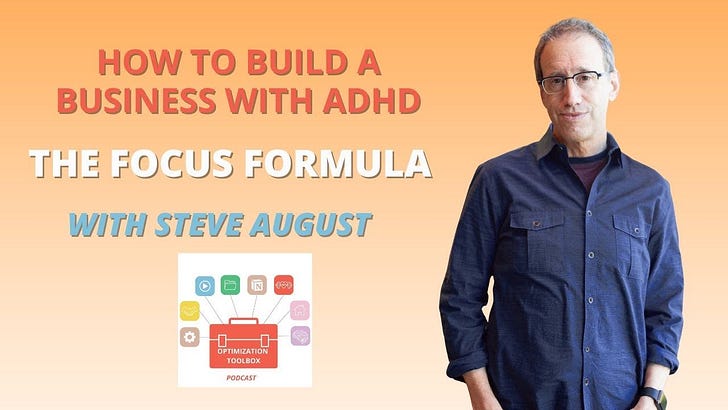
📌 The Focus Formula: A Framework for ADHD Entrepreneurs Who Want to Actually Finish Things
Jul 15, 202500:39:00Tap to summarizeThe Optimization Toolbox by Jenna Redfield is a reader-supported publication. To receive new posts and support my work, consider becoming a free or paid subscriber.If you’re an ADHD entrepreneur, chances are you’re either stuck in idea overload… or lost in the land of half-finished projects.This isn’t because you’re lazy or undisciplined.It’s because most business advice wasn’t made for your brain.This week on The Optimization Toolbox, I interviewed Steve August—serial entrepreneur, ADHD business coach, and creator of the Focus Formula—a framework that helps neurodivergent founders finally get traction without burning out.Steve built and sold a multimillion-dollar company, all while undiagnosed. When he finally hit a wall (he couldn’t even finish writing an email), he started digging into why things felt harder than they should.The answer?ADHD—and a lack of structure that worked for his actual brain.🧠 The “Focus Formula” FrameworkSteve breaks down ADHD entrepreneurship into three core challenges:* Decide – Prioritize and choose what matters* Do – Start, focus, and actually finish* Sustain – Keep going without crashingIt’s not about discipline—it’s about designing a system that supports how your brain operates.⚙️ How to Decide: Find Your Magnetic NorthYou can’t prioritize if you don’t know where you’re headed.That’s where Steve’s “Magnetic North” comes in.It’s not just a business goal—it’s a visceral, body-level pull. Something you care enough about to push through resistance, rejection, and discomfort.✅ Ask yourself:* What am I willing to be uncomfortable for?* What mission lights me up and grounds me?* What direction would I choose if I couldn’t fail?⏳ How to Do: The Two-Hour WorkdaySteve’s productivity secret?He knows he has just 2 peak hours of executive function a day—and he protects them.Instead of cramming in 8 hours of tasks, he pre-decides which priorities deserve his highest-functioning window, using a visual dashboard (like XTiles or Notion).No traditional calendar. No to-do list spiral.Just a laser-focused “What matters most today?” approach.🔁 How to Sustain: Weekly OS & Co-WorkingSteve’s entire framework runs on a weekly rhythm—not daily hustle or quarterly overwhelm.He hosts daily ADHD co-working sessions where founders body double and say their intentions out loud. It’s not just about accountability—it’s about showing up in community.Why it works:* It leverages rejection sensitivity to create commitment* It reduces time blindness by anchoring tasks to people* It helps you stop overcomplicating your systems👥 Why ADHD Entrepreneurs Struggle with ScalingHere’s what Steve sees over and over:* Early-stage ADHD entrepreneurs thrive in chaos and creation* Growth requires consistency, sequencing, and data—not our strong suit* Leaving structured environments (like school or corporate) often reveals how much we relied on external systemsADHD makes you great at starting.But scaling? That’s where the frameworks come in.🧩 You Don’t Need a New Planner. You Need a Framework.Steve sees too many ADHDers obsess over the perfect tool—when what they really need is a simple, visual, flexible system.His advice?Start with principles, not platforms.📍 Know your Magnetic North📍 Schedule your best 2 hours for Deep Work📍 Review your week, not your day📍 Choose what sustains you—not what impresses others💬 Favorite Quotes from the Interview:🗣️ “ADHD isn’t a deficit of attention. It’s a surplus of attention—and nowhere to put it.”🗣️ “I don’t use a calendar. I use a dashboard. Because I care about priorities, not time slots.”🗣️ “If people say ‘That’s interesting,’ you’re not there yet. If they say ‘How much is it?’—you’ve got an offer.”🚀 Final TakeawayYour brain isn’t broken.It’s just playing a different game.If you’re an ADHD entrepreneur, frameworks like Focus Formula help you shift from chaos to clarity—without changing who you are.You don’t need to be someone else.You just need systems that get you.✨ Connect with Steve:💻 steveaugustcoaching.com📱 Steve on LinkedInOther updates!If you’ve followed me for a while, you know I’ve spent the past decade helping entrepreneurs get seen and stay consistent online.And now—I finally gave my video brand a name:✨Red Thread Studio✨This is the home for my VIP Video Days, where I help founders, experts, and small business owners turn their message into 30+ scroll-stopping short-form videos in one single day.📍Strategy-first📍No scripts needed📍One-day shoot, one-day turnaroundYou bring the ideas. I bring the camera, clarity, and edits.🎯 Want to get visible without getting overwhelmed?Check out Red Thread Studio here and book your VIP Day now.Thanks for reading The Optimization Toolbox by Jenna Redfield! This post is public so feel free to share it. Get full access to The Optimization Toolbox by Jenna Redfield at jennaredfield.substack.com/subscribe
Transcribe →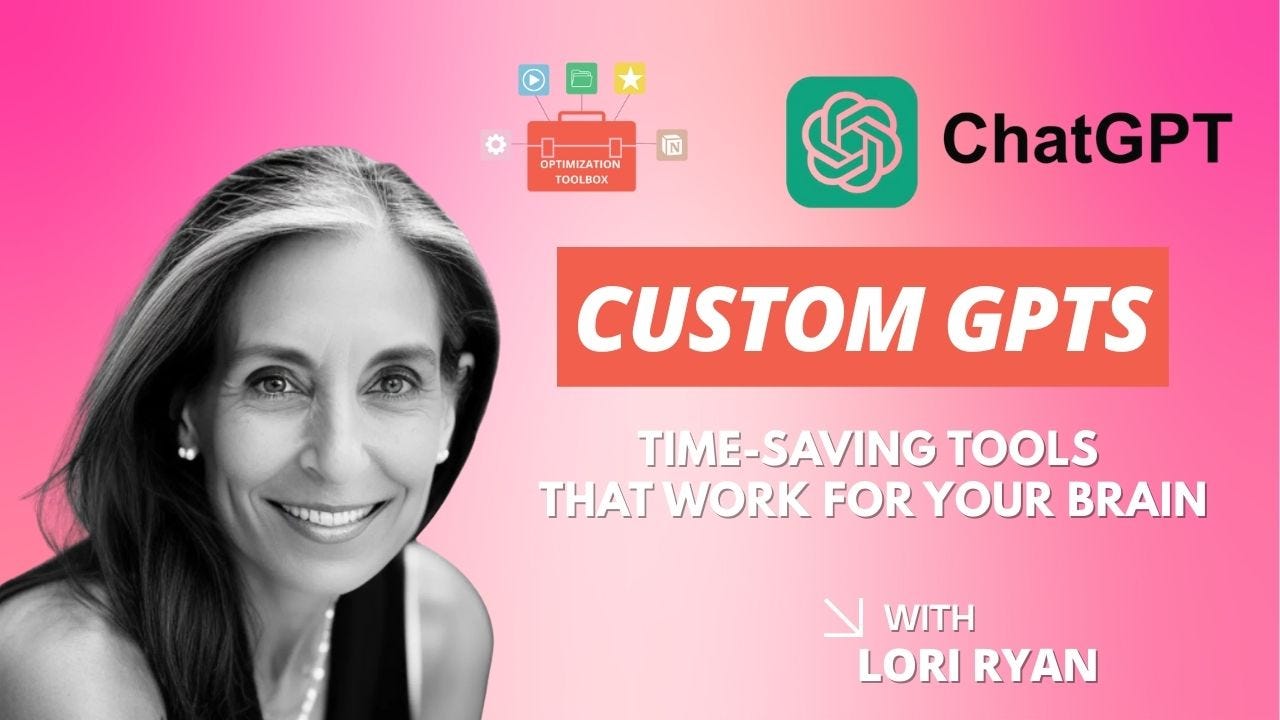
ChatGPT Is My Executive Function: 15 Weird Ways I Use CustomGPTs as an ADHD Business Owner
Jul 1, 202500:44:00Tap to summarizeThanks for reading The Optimization Toolbox by Jenna Redfield! Subscribe for free to receive new posts and support my work.Over the past few months, some of my most popular YouTube videos have been about ChatGPT and custom GPTs—how I use them, how to build your own, and why they’re worth setting up. Clearly, it’s something people are curious about. And for good reason.In this week’s episode of The Optimization Toolbox, I brought on my friend Lori Ryan (aka Lorignite)—someone who also uses AI daily—to break down real-life use cases. This isn’t “how to use AI to replace yourself.” It’s how to use it as a tool to support your brain, especially if you’re neurodivergent, a solo business owner, or juggling a million things at once.If you are interested in AI and in the Twin Cities, my friend Caroline Holden started a local meetup! 🧰AI Tools & Features Recommended1. ChatGPT (OpenAI)* Custom GPTs for specific tasks (e.g. YouTube, bios, email intros)* Transcription analysis (e.g. timestamping YouTube videos)* Voice recognition for brain dumps or ADHD-friendly workflows* Conversational use on mobile (voice-to-text, video input)* Memory and personalization for crafting your own tone/voice* Live object or image analysis (e.g. stain removal, clothing advice)* GPT as a first-aid kit / decision assistant2. Deep Research Feature (Paid ChatGPT)* Used for sourcing Reddit hacks, obscure research, liver health, food sensitivities, etc.* Great for fact-checking or getting less obvious insights3. Claude (Anthropic)* Used for visual, interactive transcripts* Can summarize key quotes, takeaways, controversial moments* Now connects to calendars4. Tactiq (Transcription Tool)* $12/month transcription for Zoom/Meet/Teams* Great for meeting notes, follow-ups, client deliverables5. Canva* Used for thumbnail creation after ideating in ChatGPT6. Google Drive + Calendar Integration* In Team ChatGPT accounts, connect Google Drive & Calendar* Ask: “What documents should go with this GPT?” or “How should I prioritize my day?”💡Unique Custom GPT Ideas* Doomscroll Detox – Translates heavy news headlines into friendly, digestible formats (spicy, child-like, nerdy, etc.)* Skit Happens – Turns scenarios into SNL-style skits for humor or social commentary* Bio Generator – Writes bios tailored to each audience or event* Intro Email GPT – Introduces two people using their LinkedIn profiles and context* YouTube Content GPT – Processes transcripts into:* Titles* Descriptions* Tags* Timecodes* Newsletter Formatter – Rewrites raw event data into branded, publish-ready content* Shopping Assistant GPT – Uses color analysis and body shape (e.g. Warm Spring, Soft Dramatic) to guide clothing decisions* Interior Design Helper – Uses uploaded images to suggest layout/design improvements* Liver Hack Researcher – Gathers obscure info from forums (e.g. Reddit) to explore liver detox solutions🧠Tips & Best PracticesGetting Unstuck with ChatGPT* Use it to reduce mental friction (especially with ADHD/ND minds)* Think of it like a “co-pilot” or “thought processor”* Use it to summarize brain dumps, format content, or write draftsPrompting Strategy* Don’t stop at the first answer — iterate 5–6 times for better output* Give it context, like you would with a new hire* Ask it to review rather than create from scratch if you still want your original voiceMake it ADHD/ND-Friendly* Ask for:* Bullet points* Simplified formats* Short, digestible text* Assume your readers also have short attention spans or processing differencesUse It for Mental Support* Gut-check messages or emails* Ask “What’s the worst that could happen?”* Use it for inner critic dialogues, therapeutic reflection (like exploring attachment styles)🔗 Unexpected Use Cases* Asking about skin triggers (e.g. “Are blueberries a problem for me?”)* Reviewing spam emails for legitimacy* Creating fake SNL skits for fun* Detecting scams (e.g. “Fan club invite — legit or not?”)* Taking photos of clothing or window blinds and getting advice* Asking it to describe your writing voice* Using ChatGPT during workouts or walks to brainstorm in real-time🧑💻 Final Advice* Keep the tab open. Use it like Google.* Use a sticky note reminder to ask ChatGPT before you get stuck.* Think of it as part of your everyday thought process, not just a work tool.* Start small (recipes, replies, formatting), then scale to bigger workflows.🧠 Why it works for my brainCustom GPTs let me reuse the same prompts, language, and formatting without having to re-explain what I need every time. It’s like building a mini assistant that remembers how I work.As someone who is neurodivergent, this has been one of the most supportive tools I’ve added to my “optimization toolbox.” It helps me think, write, and execute faster—without the overwhelm of starting from scratch.🎥 Watch or ListenIn the episode, Lori and I get into even more specific use cases—including her GPTs like “Doomscroll Detox” and “Skit Happens.” We also talk about how these tools support soft skills, relationships, and real-world decision-making.🎧 Or listen to The Optimization Toolbox wherever you get your podcastsNew Podcast I was on! 🎧 My most ADHD podcast episode yet!I went full unmasked neurodivergent mode on this one 🙃Just joined Radio and the Drum Podcast with my good friend Mickeli Bedore, and we covered so much:⚡️ How TikTok led to my ADHD + autism diagnosis⚡️ Why I ditched gluten, coffee, and alcohol⚡️ The real struggles behind entrepreneurship with a spicy brain⚡️ My fave tools, systems & weird wellness hacks⚡️ And the tension of living between “too much” and “not enough”If you’ve ever felt like your brain works differently—this one’s for you. No fluff, lots of rabbit holes, and a whole lot of “same.”🎙️ Listen to Radio and the Drum — Episode 6: “Finding Your Unique Path” with Jenna Redfield on SpotifyThanks for reading The Optimization Toolbox by Jenna Redfield! This post is public so feel free to share it. Get full access to The Optimization Toolbox by Jenna Redfield at jennaredfield.substack.com/subscribe
Transcribe →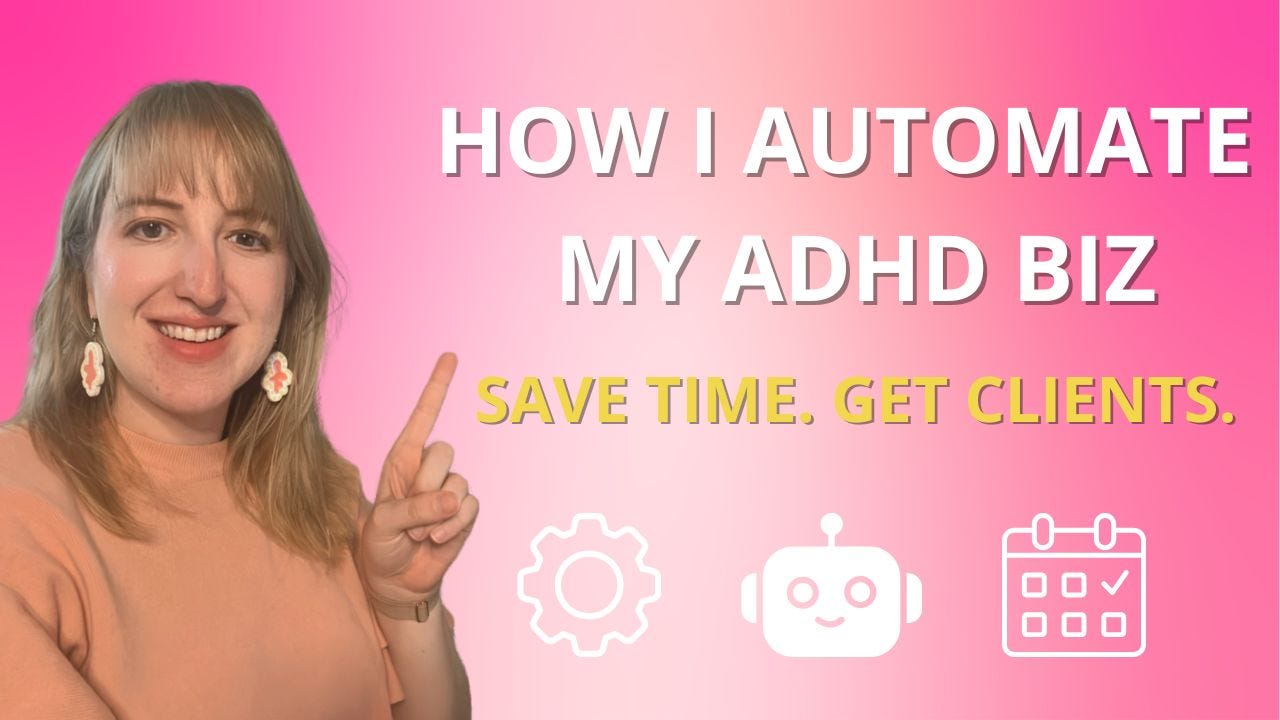
How I run a full-time business with ADHD (without burning out)
Jun 17, 202500:16:17Tap to summarizeThanks for reading The Optimization Toolbox by Jenna Redfield! Subscribe for free to receive new posts and support my work.Over the past 10 years (yes over a decade running a business), my business has evolved—and today, it's made up of a mix of online offers and in-person services:* I sell online courses and Notion templates through my website* I create video content on YouTube, Substack, and TikTok, earning ad and platform revenue* My main service is I work with local clients as a social media videographer and content strategist* I also offer Clarity Calls, where I help entrepreneurs simplify their systems, automate their offers, and build out their funnels and digital presence.People come to me when they’re stuck with tech, systems, or strategy—and I love showing them how simple it can be.If I don’t automate it, I will absolutely forget it.That’s especially true as someone who is both autistic and has ADHD. My brain craves structure, but it also struggles with executive functioning. So I created a personal system I call the S.I.M.P.L.E. Method to help me stay consistent, visible, and organized across my business.This week’s YouTube video walks through my current stack of tools, AI workflows, and digital shortcuts that make business easier for me — and more seamless for my clients.📽️ Watch the video here → How I Automate My ADHD BusinessThe S.I.M.P.L.E. Method for Business Automation✅ S: Systematize EverythingThe fewer steps your client has to take, the better.* I use FGFunnels to create Click-to-Book pages with one button to book a free call and another to buy a service (like a VIP Day or Clarity Call).* These are prepaid, instantly scheduled, and impressively easy for clients. Here's my Coffee Chat Page as an example.* I also create automated reminders and email sequences to cut out the back-and-forth.✨ I: Impress With EasePeople always compliment my client experience—because it’s simple.* Custom Zoom link for easy meeting access (who wants to remember a long name?)* Branded waiting room graphics (promoting this substack!)* Beautiful Notion client portals (Want to learn how? Check out Notion Foundation 2.0 coming next week)* Optimized LinkedIn and Instagram bios that point directly to my free call scheduler🛠️ M: Master Your ToolsI used to be a software hopper. Now I go deep, not wide.* Notion — my digital brain, content planner, CRM, and life hub* Google Photos — searchable archive for social content & visual storage* FGFunnels — the backend of my website and the system that automates my entire client journey—from booking and payments to emails and follow-ups—so people can easily work with me without any back-and-forth.* CapCut for editing everything video* Canva for branding & templates* Substack — my all-in-one newsletter + podcast + content home🤖 P: Personalize with AIAI is my time-saving best friend.* Whisper for transcription* ChatGPT for repurposing podcast transcripts into blog posts, reels, and YouTube descriptions* Keyword research, title brainstorming, and even thumbnails all powered by GPT* LensOCR for screenshot-to-text magic♻️ L: Leverage Content Systems* Weekly content flow: YouTube > Substack > Reels > IG/LinkedIn* I use Notion templates to track, repurpose, and plan all content* Substack is where I consolidate it all (subscribe if you're not already!)Watch the replay of my “Content Planning with Notion” workshop free here! https://notion.jennaredfield.com/webinar-broadcast-7516-9211-2768❌ E: Eliminate Admin* Zapier and Make.com auto-send form entries to Notion* Notion CRM tracks all networking, calls, and contacts* Luma for scheduling free events or webinars* Templates, canned responses, and no more "what time works for you?" emailsWant my full tech stack? Check it out herehttps://jennaredfield.com/toolsWhy This MattersAutomation isn’t just about saving time—it’s about creating more mental space, reducing burnout, and building a business that works with your brain, not against it. Whether you're neurodivergent, multi-passionate, or just someone craving more clarity in your workflow, the systems I’ve shared here are meant to inspire and support your journey.If any of these tips or tools sparked an idea for your own business, I’d love to hear what stood out. And if you’re ready to take action, I invite you to:* 💬 Book a free Discovery Call to see how I can help you* 🧠 Check out Notion Foundation 2.0 to get your systems streamlined and working for you (ReLaunching next Week!)Thank you for being here, for supporting my content, and for showing up for yourself.✨ JennaThanks for reading The Optimization Toolbox by Jenna Redfield! This post is public so feel free to share it. Get full access to The Optimization Toolbox by Jenna Redfield at jennaredfield.substack.com/subscribe
Transcribe →
AI Massage Robots & Longevity Labs: The Future of Wellness with Jill Palmquist, Chief Storytelling Officer at Life Time
May 13, 202500:27:22Tap to summarizeThanks for reading The Optimization Toolbox by Jenna Redfield! Subscribe for free to receive new posts and support my work.Let’s talk about what it means to actually live well—not just take supplements or download another wellness app—but to feel good in your body, connected to your community, and supported by tools that actually help.That’s what this episode is all about.I sat down with Jill Palmquist, the Chief Storytelling Officer at Life Time (yes, the big wellness brand you’ve definitely heard of—or passed by at the mall), and we got into everything from longevity and blood testing to belonging and why storytelling might just be the most underrated wellness strategy.From the Front Desk to This Full Circle MomentI used to work at a Life Time location here in Minnesota over 10 years ago. Back then, I was at the front desk swiping cards and figuring out what direction I wanted my life to go.Now, I’m running a podcast about optimizing your life and talking to the chief storyteller of one of the biggest health brands in the country. Life is weird. And very full circle.What’s wild is how much Life Time has grown since then—and how intentional that growth has been. Jill’s job is to shape and share the brand’s story, and it’s way more than just words on a screen. It’s culture-building. And she’s really good at it.Wellness Meets Tech Meets SoulWe talked a lot about how Life Time is evolving—not just keeping up with trends, but leading the conversation around longevity and personalized health. Think:* On-site Miora Clinics for DNA, hormone, and blood biomarker testing* AI-powered massages (yes, robots are giving massages now)* Cryotherapy, red light therapy, infrared saunas—literally my dream lineup* Their own supplement line that’s actually high quality (third-party tested)This is the kind of stuff I geek out over—data-backed health optimization that’s actually accessible in a real-life space, not just something you read about on Reddit.Jill put it perfectly:“You can get the data—but we want someone there to help you understand it and walk you through it.”Yes. That part. It’s not just about tracking. It’s about integrating.Community Is the Real Wellness HackHere’s where it gets deeper. Jill talked about how people walk into Life Time and immediately feel better. And I’ve felt that too—there’s something about the energy in the space, especially at the bigger clubs, that’s just… alive.We’re all so isolated these days. And I know for me, wellness is so much harder when I’m trying to do everything alone.That’s what I love about how Life Time is positioning itself. It’s not just a gym. It’s a third place. A place where you see the same faces, join a class, meet a new friend, or just feel less like you’re floating through life solo.“People don’t just work out here—they belong,” Jill said.That line stuck with me.Storytelling Isn’t Just for Marketing—It’s MedicineJill’s role as Chief Storytelling Officer is probably one of the coolest job titles I’ve ever heard. And when she explained it, I realized it’s exactly what I’ve been trying to do too—with this podcast, with my YouTube, with Notion, with clients.She’s also the author of In This Lifetime, a beautiful coffee table book that captures what it means to live a full life—told through members’ stories from childhood to old age. It’s emotional. It’s smart. And it doesn’t feel like marketing. It feels human.Honestly? I want to do more of that in my work too. How to Actually Start Living Well (Without Burning Out)We wrapped the episode by talking about how small choices can shift everything. If you’re feeling stuck in your health, Jill said: just move your body for two minutes. Drink water. Step outside and look up at the sky. That’s where the shift starts.She also talked about her own health journey—like me, she went through a lot of years chasing “perfect” and now focuses on consistency, nourishment, and joy.That resonates so much. Especially for those of us managing ADHD, neurodivergence, or just decision fatigue. My Takeaways from Jill:* Optimization should feel good, not overwhelming* Community matters—find your third space* Track what matters, then follow through* Your story is your strategy, especially in health and business* You don’t have to do it all—just start somewhere🎧 Listen to the full interview on the Optimization Toolbox Podcast📚 Check out Jill’s book: In This Lifetime📨 Subscribe to Jill’s Substack: Oh That Jill🔬 Explore Life Time’s innovations: lifetime.lifeThanks for reading The Optimization Toolbox by Jenna Redfield! Subscribe for free to receive new posts and support my work. Get full access to The Optimization Toolbox by Jenna Redfield at jennaredfield.substack.com/subscribe
Transcribe →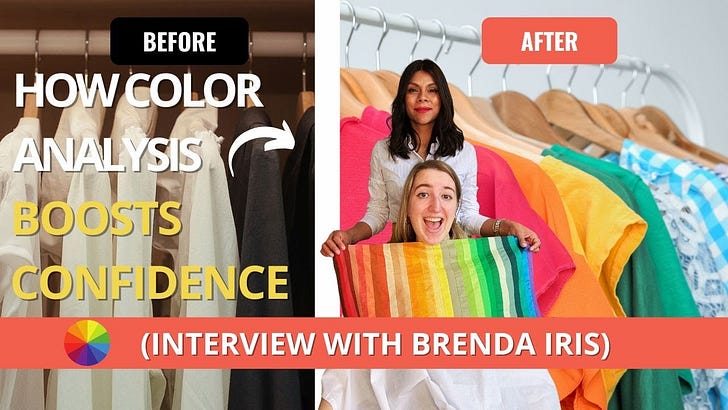
How Color Analysis Boosted My Confidence: Interview with My Stylist Brenda Iris
Apr 29, 202500:39:16Tap to summarizeWelcome back to The Optimization Toolbox!At The Optimization Toolbox, we focus on simple, actionable ways to optimize every area of life — from mindset and productivity to health, style, and personal brand.Color analysis might seem like just a fashion tool, but it’s actually a life optimization tool: when you dress in alignment with your natural colors, you eliminate decision fatigue, boost your confidence, make better shopping choices, and show up more powerfully in every room you enter.Optimizing your wardrobe isn’t just about looking better — it’s about feeling more energized, authentic, and ready to take on opportunities. It’s another way to create systems and tools that help you live your best life with less friction, more confidence, and more intentionality.This month, I’m thrilled to share a conversation that truly changed how I see myself — quite literally.I sat down with Brenda Iris of Mindful Styling, the woman who completely transformed my wardrobe, my confidence, and honestly, how I walk into every room. Brenda is a holistic stylist and color analyst who believes in intentional styling, self-expression, and showing up as your most radiant self — not hiding behind trends or society’s expectations.In our conversation, we talked about:* Why black isn’t always the magic answer (especially if you’re blonde or low contrast)* How finding your season (like Spring, Autumn, Winter, Summer) gives you a palette that flatters your unique features — skin, hair, eyes, and energy* The difference between hiding versus highlighting who you are through clothes* How wearing the right colors, makeup, hair tones, and even jewelry can create an instant facelift and boost your glow* How investing in your right palette means better shopping decisions — and fewer closet regrets* Why you should dress the body you have now instead of waiting for some future version of yourselfA few personal reflections:Before getting my color analysis, I constantly felt unsure when shopping. I’d waste money, feel invisible, or even make my skin and eyes look dull without understanding why. Since working with Brenda, I’ve embraced my Warm Spring palette, built a wardrobe I actually love wearing, and get more compliments — from friends, strangers, and even at professional events.It’s not about “rules” — it’s about alignment. It’s about feeling seen by yourself first.If you want a deeper dive into the process (including how color analysis works, how undertones influence everything, and why Minneapolis fashion tends to miss the mark sometimes compared to the coasts), listen to the full interviewPlus here’s a few other videos I’ve done on this process, including the entire process itselfIf you take away anything from this:Your colors aren’t limiting.They’re liberating.Start dressing for who you already are — not who you think you “should” be.You deserve to take up space.P.S. If you’re ready to show up more powerfully in your brand and on camera, I also offer VIP Video Days for entrepreneurs and small businesses! 🎥 Let’s work together to create content that matches your vibrant new style. Get full access to The Optimization Toolbox by Jenna Redfield at jennaredfield.substack.com/subscribe
Transcribe →
The Year I Finally Got Answers: My Audhd (Autism + ADHD), MTHFR & Hypermobile EDS Journey
Mar 24, 202500:18:48Tap to summarizeThanks for reading The Optimization Toolbox by Jenna Redfield! Subscribe for free to receive new posts and support my work.Over the past year, I’ve been quiet. I haven’t shared much publicly about what’s been going on behind the scenes—but today, I’m ready. I’ve been doing detective work on my own body and brain, and what I found has completely shifted how I view myself, my health, and the way I navigate the world.I’ve decided to break this down by each of the major things I discovered—because they’re not just diagnoses. They’re puzzle pieces that finally help my life make sense.🧠 ADHD: The First Big RealizationI first realized I had ADHD in 2020, and that opened the door to the world of neurodivergence for me. Like many women, especially those socialized to mask, I had lived so much of my life thinking my challenges were personal failures—not neurological wiring.For a while, ADHD felt like the missing piece. I dove into the research, connected with the community, and began learning how to build systems that work for the way my brain operates. But there was always a lingering feeling that there was more to the story—some things just didn’t quite fit.🧩 Autism: The Missing Piece I Didn’t Know I NeededOne night in 2024, I was scrolling through Instagram when I stumbled across content about autism in women. As I read through post after post, a wave of realization hit me—hard. I had a complete breakdown. It was like someone had just described my entire life without ever having met me.The masking, the intense interests, the difficulty making friends growing up, the need for routines, the sensory sensitivities—all of it suddenly made sense. I had always thought I was “just quirky” or “too intense,” but this was something deeper.So I pursued a formal autism assessment with an autistic therapist who specializes in evaluations. After four sessions, multiple assessments, and deep reflection, I was officially diagnosed as autistic.The diagnosis wasn’t a shock—it was a relief. It gave me language for what I’d always felt but never had the words for. It also explained why ADHD alone never fully resonated. I’m both.🧬 MTHFR: The Genetic Mutation That Changed EverythingAround that same time, I started looking into my health from a genetic perspective. I’ve always been fascinated by genetics—my college thesis film was even about it. I had taken an AncestryDNA test years ago, and after watching a video by someone named Tracy, I uploaded my raw data to a site called Genetic Genie.What I found? I’m homozygous for a specific gene mutation called MTHFR—yes, that’s really what it’s called (often jokingly referred to as the “mother-eff-er” gene).This mutation affects how your body detoxes and processes folate, and it can have ripple effects across mental and physical health. It hit me hard—because this wasn’t theoretical. It was right there in my DNA.I spent months researching it. The more I learned, the more things clicked into place—my energy issues, mood swings, anxiety, even my skin struggles. MTHFR is also highly correlated with both ADHD and autism, which was another sign that everything I was learning was interconnected.This discovery changed my diet, my supplement routine, and the way I think about my body. I even created a Notion guide of things I’ve learned about MTHFR to help others navigate it.🦴 Hypermobile EDS: The Final Puzzle PieceEven with all of that, I still felt like something was missing—especially when it came to my chronic pain, poor posture, and slow skin healing. That’s when I came across hypermobile Ehlers-Danlos Syndrome (hEDS).The moment I started reading about it, I knew. My pale skin, long fingers, flexible joints, ongoing pain, and even my lifelong bad posture—all of it suddenly made sense. I haven’t received an official diagnosis yet, but everything I’ve read (and everything my body has told me) points clearly in this direction.What’s wild is that hEDS is often comorbid with MTHFR, autism, and ADHD. Once again, the dots connected.While there’s no cure for hEDS, learning that I likely have it has given me so much clarity. I’ve started working on posture, looking into physical therapy, and adjusting how I approach exercise and skincare—because this affects everything, right down to how my skin heals.🧡 What This All MeansEach of these discoveries—ADHD, autism, MTHFR, hEDS—has been life-changing on its own. But together, they form the clearest picture I’ve ever had of myself.This isn’t about being broken or needing fixing. It’s about finally understanding how my brain and body work so I can support them better.I’m not sharing this for sympathy. I’m sharing this because I know how powerful it can be to see yourself in someone else’s story. I would never have known to even look into these conditions if it weren’t for people sharing online. And if this resonates with you? Maybe it’s time to explore further too.🔜 What’s NextI’m planning deeper-dive videos and Substack posts on each of these topics:• My autism diagnosis process & signs I missed• How I changed my diet after learning I had MTHFR• What I’ve learned so far about hEDS• The tools and systems that are actually helping me copeIf you’re navigating your own health mysteries or neurodivergent identity, know that you are not alone—and you don’t need to do it all at once. You’re allowed to be a work in progress.Thanks for reading. I’m grateful you’re here. 💛Thanks for reading The Optimization Toolbox by Jenna Redfield! Subscribe for free to receive new posts and support my work.– Jenna Get full access to The Optimization Toolbox by Jenna Redfield at jennaredfield.substack.com/subscribe
Transcribe →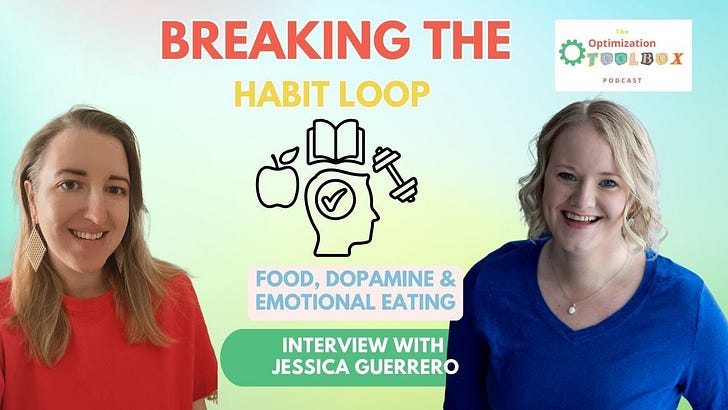
Breaking the Habit Loop: Food, Dopamine & Emotional Eating with Jessica Guerrero
Mar 4, 202500:38:32Tap to summarizeHey everyone! If you’ve ever found yourself snacking without thinking, struggling to stop at “just one more,” or feeling stuck in a cycle of food guilt, this episode is for you.As ADHDers (or anyone who struggles with habits), we know that habits shape everything—both positively and negatively. Food, in particular, is a huge part of this because we have to make decisions about it multiple times a day. But what happens when impulsivity, dopamine-seeking behaviors, and mindless eating take over?In this week’s episode of The Optimization Toolbox, I sit down with Jessica, a health coach specializing in food freedom, to unpack:• Why ADHD brains struggle with dopamine-driven food habits• How our habit loops around food can either support or sabotage us• Why impulse control isn’t about willpower (and what actually helps)• Simple, ADHD-friendly strategies to make eating decisions easierThis conversation hit so close to home for me, and I know so many of you will relate. If you’ve ever wondered why you eat when you’re not hungry, struggle to plan meals, or get caught in food FOMO, this episode is packed with insights you won’t want to miss.🎙 Connect with Jessica:💻 Website: https://www.thisisyourlifecoaching.com/📸 Instagram: https://www.instagram.com/thisisyourlifehealthcoaching/🔗 LinkedIn: https://www.linkedin.com/in/jessica-guerrero-3164b11000:00 - Welcome to The Optimization Toolbox1:14 - Meet Jessica: A Health Coach’s Journey from Nursing to Food Freedom3:50 - How Diet Culture Shaped Jessica’s Early Relationship with Food8:25 - The Turning Point: Breaking Free from Food Obsession12:15 - What is Food Freedom? A New Perspective on Eating14:42 - Understanding Intuitive Eating: Tuning into Your Body18:10 - Habit Loops & Emotional Eating: Why We Keep Repeating Patterns22:05 - The Role of Dopamine in Cravings and Emotional Eating26:30 - Managing Triggers: Stress, Boredom & Unpreparedness30:40 - Meal Planning & Prepping When You Hate Planning34:20 - Breaking the Cycle of Food Guilt & Perfectionism37:05 - Final Thoughts: Self-Compassion & The Path to Food Freedom Get full access to The Optimization Toolbox by Jenna Redfield at jennaredfield.substack.com/subscribe
Transcribe →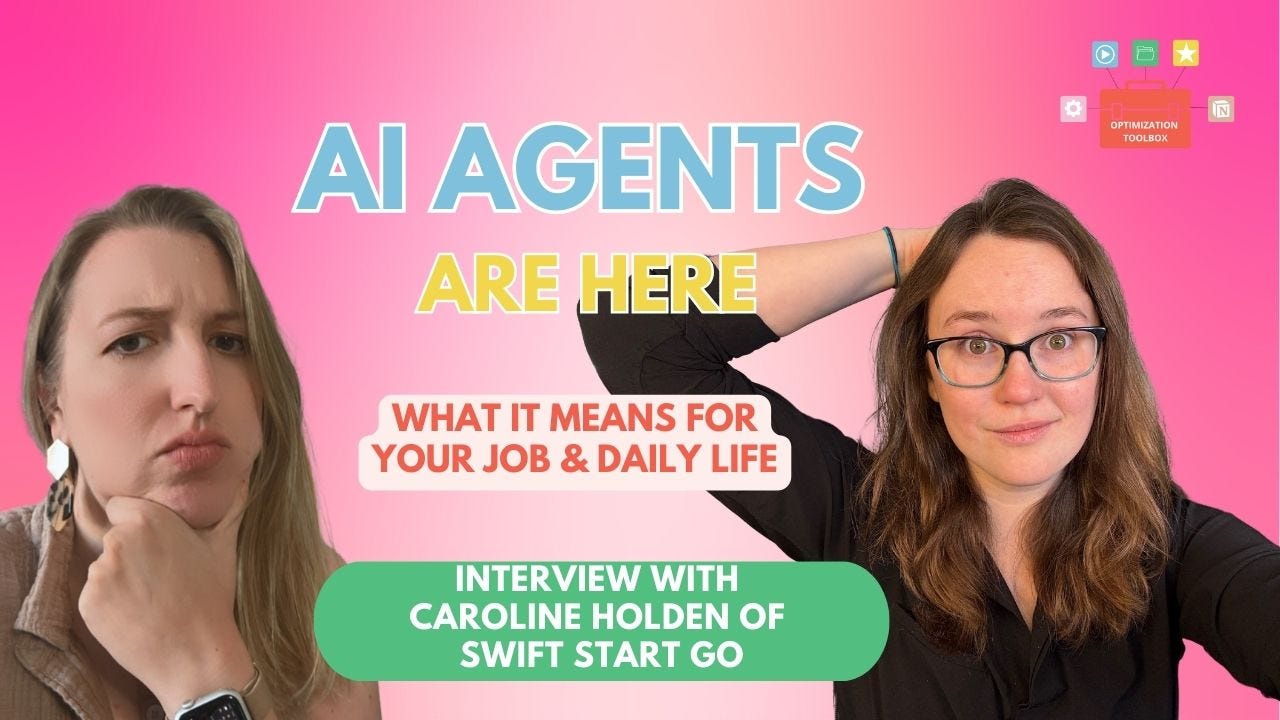
AI Agents Are Here: What It Means for Your Job & Daily Life (w/ Caroline Holden)
Feb 11, 202500:48:14Tap to summarizeWatch the interview on YouTubeAI is evolving fast—are you ready? In this episode of Optimization Toolbox, I sat down with Caroline Holden, an AI expert, to dive deep into the rise of AI agents, their ethical implications, and how they’re reshaping work and productivity.🚀 AI Agents: The Next Big Shift in TechIf you’ve been keeping up with the rapid advancements in AI, you’ve probably heard the term AI agents popping up more frequently. But what exactly are they? AI agents are automated assistants that can complete tasks independently, from scheduling meetings to handling customer service inquiries and even writing reports. Unlike traditional AI tools like ChatGPT, AI agents don’t just respond to prompts—they take action on their own.This raises huge questions about efficiency, ethics, and the job market. Will these agents make work easier or replace human jobs? Will businesses use them responsibly, or are we headed toward another wave of mass layoffs?These are the questions Caroline and I explored in our latest conversation.🤖 What We Covered in the Episode:✔️ The rise of AI agents—how they work and why they’re different from standard AI tools✔️ The ethics of automation—what happens when AI starts replacing jobs?✔️ Practical ways AI agents can boost productivity—for business owners, content creators, and everyday users✔️ AI’s impact on the job market—what roles are at risk, and how can you stay ahead?✔️ How AI is already shaping industries like healthcare, marketing, and customer serviceThe Ethical Dilemma: Is AI Helping or Hurting?AI has the power to dramatically improve efficiency, but there’s also the looming fear of job displacement. Companies are already replacing human roles with AI-driven systems, which raises questions about fairness, transparency, and how businesses will balance automation with human labor.Caroline and I talked about how AI agents can be both a tool and a threat—it all depends on how they’re implemented. Instead of seeing AI as an enemy, we need to learn how to use it effectively and position ourselves to work alongside it, rather than against it.How to Use AI Agents to Your AdvantageRather than fearing AI agents, the key is learning how to leverage them. Here are some practical ways they can be used right now:🔹 Automating repetitive tasks – AI agents can handle scheduling, customer service inquiries, and even email responses.🔹 Boosting content creation – From writing blog posts to generating YouTube descriptions, AI can save hours of work.🔹 Enhancing research & data analysis – AI can scan massive datasets in seconds, giving businesses and researchers a competitive edge.🔹 AI-powered personal assistants – Imagine an assistant that learns your workflow and anticipates what you need before you ask.💡 Bottom line: AI agents aren’t going away. The best way to stay ahead is to understand them, use them, and adapt to the new AI-driven landscape.🔗 Find Caroline Online: 💡 Swift Start Go Substack https://carolineswiftholden.substack.com 📺 YouTube Channel https://www.youtube.com/channel/UC3POxFk1afpw_aqIXFVXftw 💼 LinkedIn https://www.linkedin.com/in/carolineswiftholden/00:00 Meet Caroline Holden! How she and Jenna first connected 03:15 From film and comedy to venture capital—Caroline’s unexpected path to AI 05:30 First encounters with AI—how generative tools caught her attention in 202207:45 AI vs. crypto—what makes AI actually useful?11:30 How generative AI works—pattern recognition, data, and why it’s so powerful15:30 AI agents 101—what they do and how they’re automating tasks19:45 AI in customer service—automating routine tasks (so humans don’t have to)23:15 AI and the workplace—how companies are running leaner teams with AI 26:30 AI in healthcare—can it really improve diagnosis rates?29:45 The future of college—how AI is shaking up education33:20 Why soft skills and humanities are becoming more valuable in an AI world 35:20 AI and the environment—what’s happening with energy use and sustainability38:45 How fast is AI evolving? The tech is moving faster than ever40:30 Real-world AI—practical ways to use ChatGPT and AI tools for work and life44:15 AI and SEO—how generative AI is changing digital marketing (GEO SEO) Get full access to The Optimization Toolbox by Jenna Redfield at jennaredfield.substack.com/subscribe
Transcribe →