Podcast
The Reading To Connect Show
Hosted by Quinn Cummings · EN
A show that encourages families to deepen their bonds and raise resilient kids through the shared experience of reading — with Quinn Cummings and special guests from the world of books and parenting.
readingtoconnect.substack.com
readingtoconnect.substack.com
11episodes
Episodes
Newest firstAll episodes
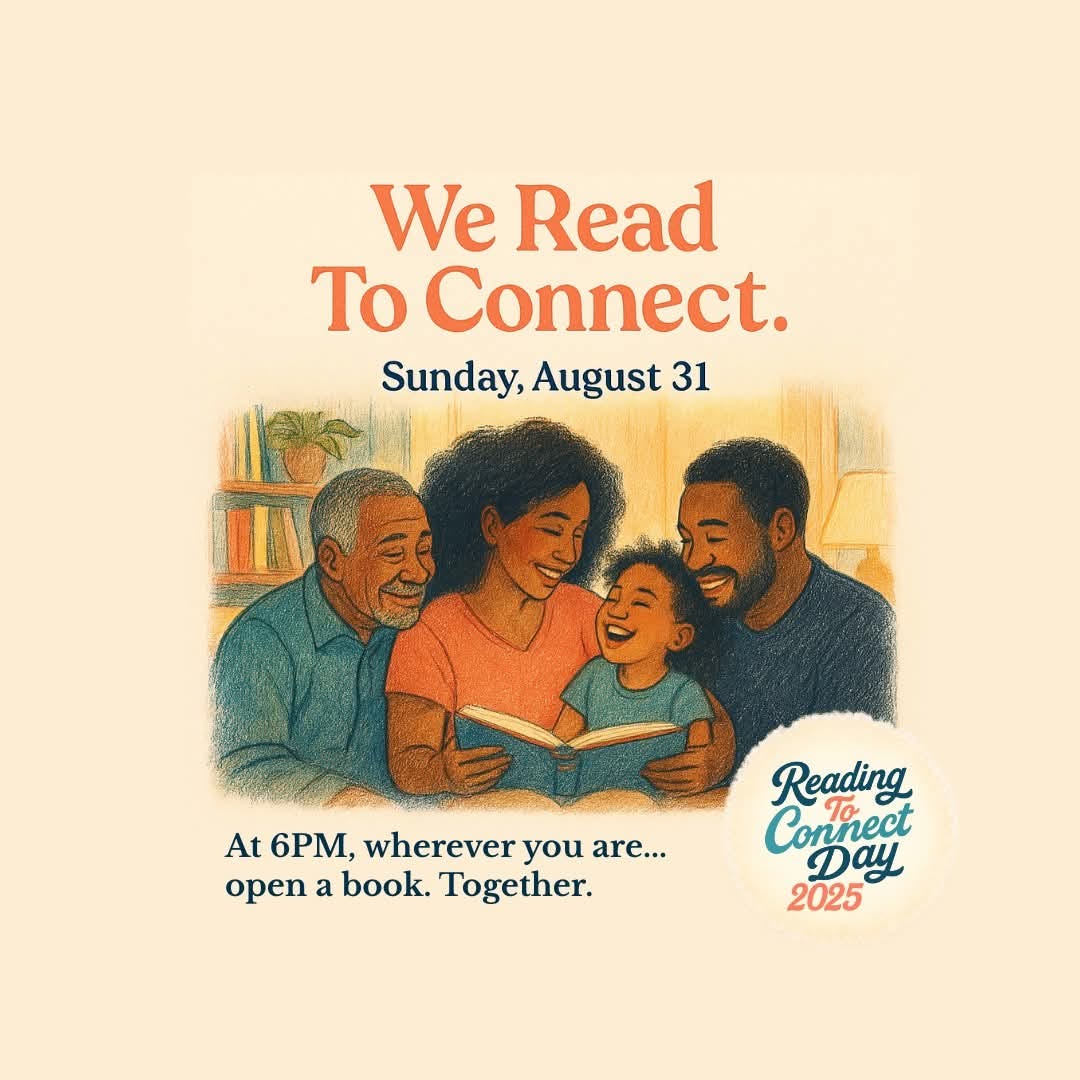
From Aidyn & Quinn: A Quick Voice Note for Tonight, 6PM local
Aug 3100:01:47Tap to summarizeTonight, 6PM local — Reading To Connect Day is here 📚💕It’s happening. Families around the world are already gathering — and tonight at 6PM your local time, it’s your turn.Reading To Connect Day™ was born from something simple: me and my son Aidyn choosing to read for connection over performance. That choice has grown into proclamations from cities and counties, support from authors, and families across the world saying yes to pausing together.In this short episode, Aidyn and I share exactly what to do tonight, why it matters, and how to join the movement.Key Topics:What Reading To Connect Day™ is (and isn’t)How to join in at 6PM local — no rules, no pressureSimple ways to post and share your moment so other families feel encouragedGratitude for our giveaway partners, authors, and proclamations already in placeWhy reading together builds connection, not performanceLinks:🔹 Enter the giveaway: ReadingToConnect.com/Day🔹 Share page + graphics: ReadingToConnect.com/Day/Share-RTC-Day📬 Contact: quinn@readingtoconnect.com This is a public episode. If you'd like to discuss this with other subscribers or get access to bonus episodes, visit readingtoconnect.substack.com/subscribe
Transcribe →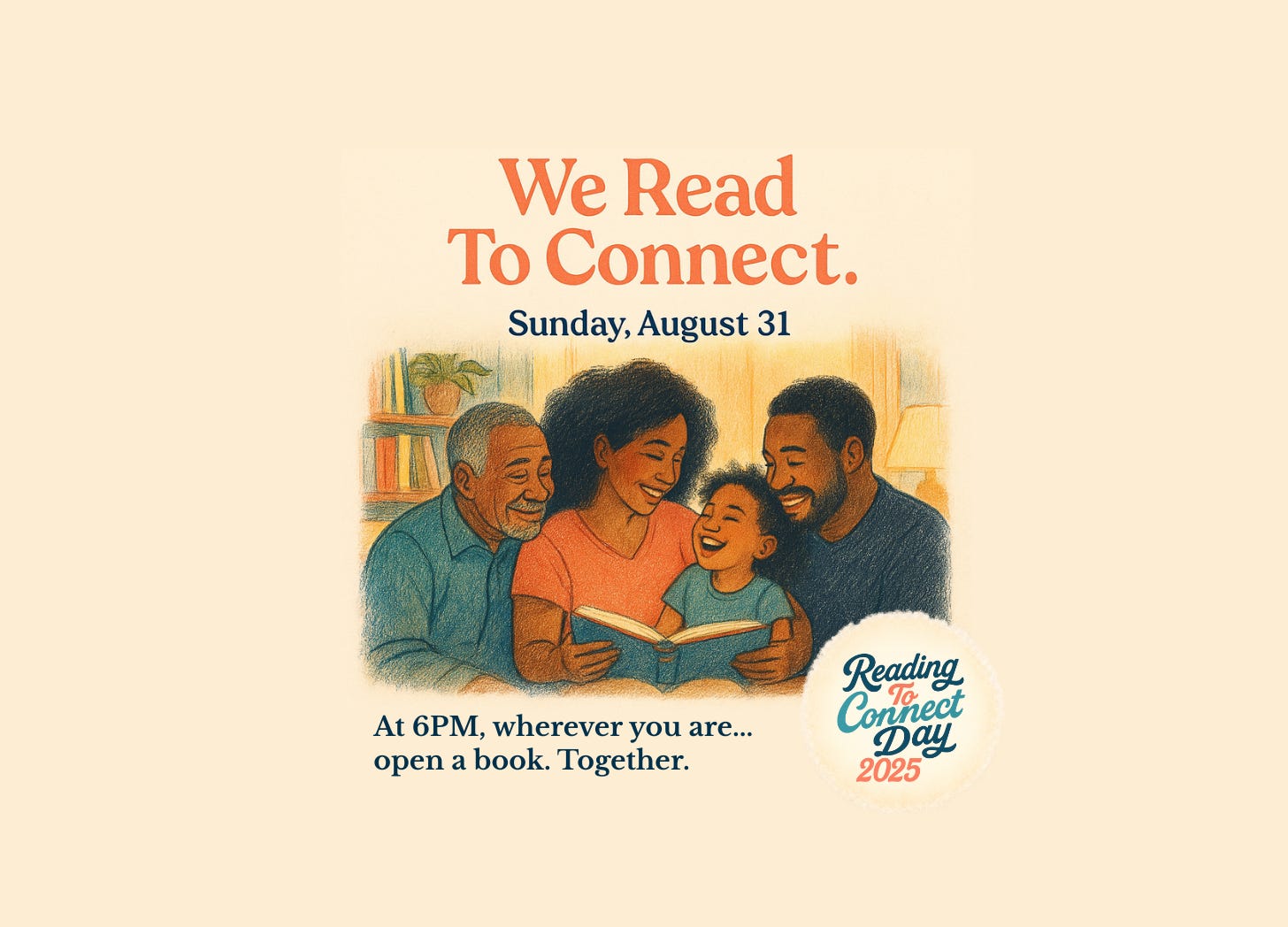
It’s happening.
Aug 1, 202500:06:43Tap to summarizeAnnouncing the first-ever Reading To Connect Day™I didn’t plan to create a holiday.I just wanted families to feel safe again—to pause, not perform. To read like it mattered beyond the reading. And when I started sharing our story, something happened.Parents from everywhere started joining in. Not for a program. Not for a prize.For a moment.In this episode, I’m announcing something we’ve been building toward all along—Reading To Connect Day. It’s not a trend. It’s not a hashtag. It’s a return. And this time, it’s happening together.Key Topics:- Why “just one moment” might be the most powerful thing we offer- How a late-night scheduling push revealed a deeper purpose- The shift from performance-based reading to legacy-based connection- What happens at 6PM in every time zone on the last Sunday in August- How you can be part of a global pause—without needing to performLinks:🔹 Reading To Connect Day Info + Share PageEverything you need to join (or invite someone else to)📬 Contact: quinn@readingtoconnect.com This is a public episode. If you'd like to discuss this with other subscribers or get access to bonus episodes, visit readingtoconnect.substack.com/subscribe
Transcribe →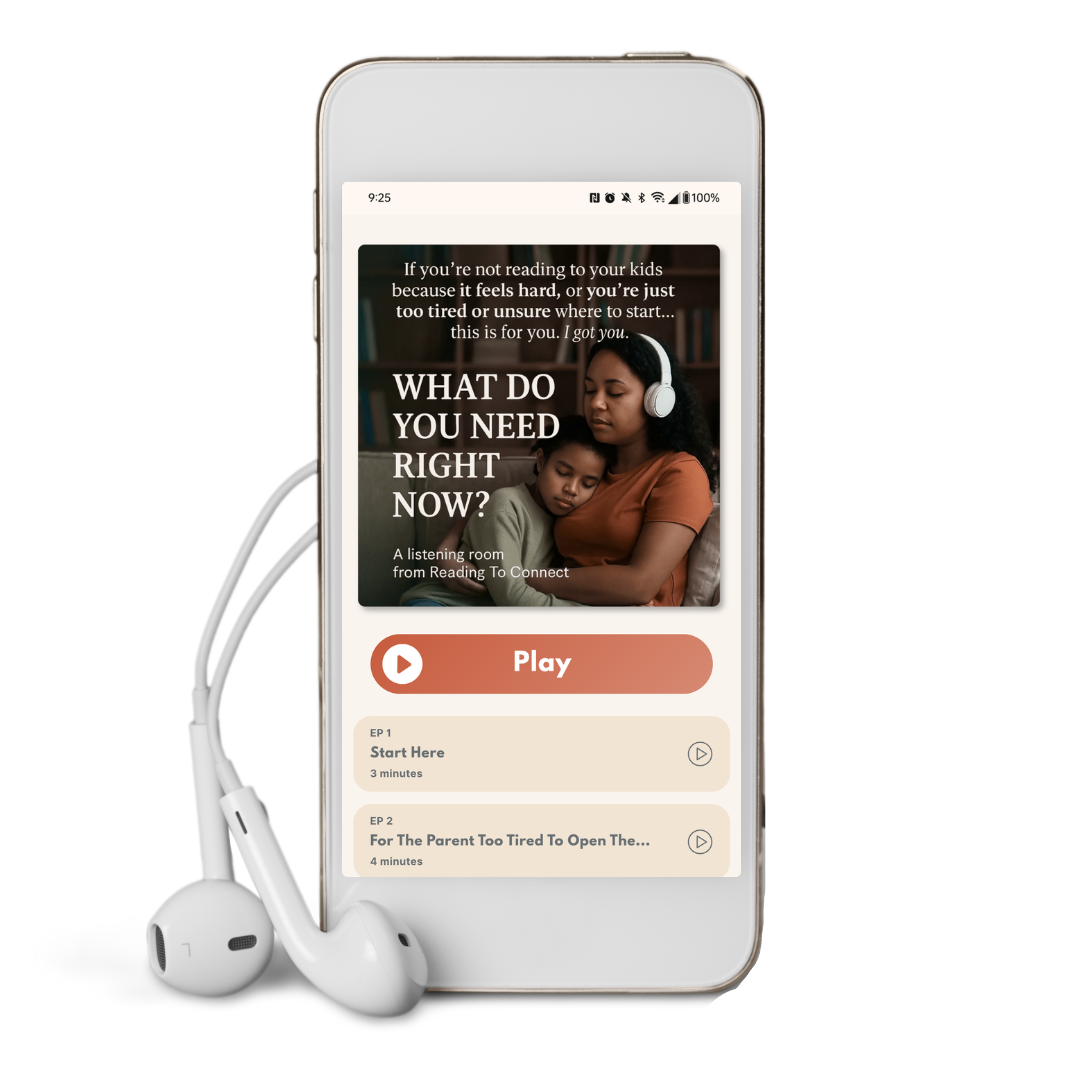
For some... it's deeper than being tired
Jul 15, 202500:09:03Tap to summarizeFor Some, It’s Deeper Than Being TiredWhy one wrong math answer made her stop reading to her son.She helped him with his math.She got it wrong.It became his lowest grade of the year.So she stopped reading with him.It wasn’t even a reading moment. But it made her feel like her voice didn’t matter—and that maybe she was holding him back.This episode isn’t about math. It’s about what we’ve done to reading.And why tired is often just code for something deeper.Key Topics:The invisible shame many parents carry when it comes to readingHow we’ve trained families to believe reading is academic, not relationalWhat gets lost when we make reading about scores instead of storyWhy I created The Listening Room—and what it’s really forA personal moment I didn’t expect to uncover on airLinks:🔹 What Do You Need Right Now? A quiet room for parents who feel far from readinghttps://readingtoconnect.com/what-do-you-need🔹 ENGAGE Shared Reading Manifesto Not about performance. About presence.https://readingtoconnect.com/engaged-shared-reading/🔹 Reading To Connect The movement. The method. The invitation.https://readingtoconnect.com/📬 Connect: quinn@readingtoconnect.comBecause you're not the problem.And it’s okay to begin again. This is a public episode. If you'd like to discuss this with other subscribers or get access to bonus episodes, visit readingtoconnect.substack.com/subscribe
Transcribe →
We’re Not Just Reading...
Jul 2, 202500:07:57Tap to summarizeWhat My Son—and One Surprising Conversation—Reminded Me About This MovementWhen my 11-year-old said "I love it because it just feels good...brings us closer" about our reading time, it reminded me why I started all of this. Then a friend shared how my private podcast shifted her from rushed, tense reading to creating intentional moments with her kids.That's when I realized: Most families read together, but they're using the wrong map.In this episode, I'm naming what we've been building all along—Engaged Shared Reading—and why it's not about reading more, but reading differently.Key Topics:Why reading together doesn't automatically create connectionThe difference between compliance and connection in reading timeHow one conversation revealed the movement I had to nameWhat Engaged Shared Reading actually meansLinks:Engaged Shared Reading Manifesto: https://readingtoconnect.com/engaged-shared-reading/Every Parent Reads Aloud. Few Do This: https://listen.readingtoconnect.com/fewdothisReading To Connect: https://readingtoconnect.com/Connect: quinn@readingtoconnect.comYou're not just reading anymore. You're connecting. This is a public episode. If you'd like to discuss this with other subscribers or get access to bonus episodes, visit readingtoconnect.substack.com/subscribe
Transcribe →
Staying Connected: Friendship, Challenges, and the Stories That Help Us Understand
Mar 12, 202500:31:08Tap to summarizeJoin me in this episode of Reading To Connect as I sit down with Hope Larson, New York Times bestselling and multi-Eisner award-winning cartoonist, to talk about her new middle-grade graphic novel, Very Bad at Math.We dive into the power of shared reading experiences, the impact of learning differences like dyscalculia, and how books can help kids feel seen. Hope opens up about her personal struggles with math, the pressure of perfectionism, and how her own experiences shaped Verity, the book’s protagonist. We also explore friendship dynamics in middle school, the challenges of asking for help, and why kids' interests—including comics and pop culture—are key to connection.What You’ll Learn:📚 How shared reading (even with older kids) creates powerful bonding moments🧠 What dyscalculia is and how it impacts kids—and why stories like Very Bad at Math matter💡 How books can help kids navigate friendship struggles, self-doubt, and big emotions🎨 The role of comics and graphic novels in engaging reluctant readersThis episode is a reminder that books are more than just stories—they’re tools for understanding ourselves, each other, and the world. Very Bad at Math isn’t just about struggling with numbers; it’s about learning to ask for help, embracing your strengths, and knowing that you are more than your struggles.Let me know what moments stood out to you! 📚💕 This is a public episode. If you'd like to discuss this with other subscribers or get access to bonus episodes, visit readingtoconnect.substack.com/subscribe
Transcribe →
When I Hear Spirituals: A Children’s Book Rooted in the Beauty and Deep History of Black Music
Feb 28, 202500:42:18Tap to summarizeJoin me in this episode of Reading To Connect as I sit down with Cheryl Willis Hudson, author of When I Hear Spirituals and co-founder of Just Us Books, to explore how music, storytelling, and Black history come together in children’s books.We dive into the rich legacy of spirituals, how they carry the voices of our ancestors, and why these songs continue to resonate across generations. Cheryl shares her journey in children's publishing, the origins of Just Us Books, and the ongoing fight for Black representation in literature. We also discuss how parents can use books and music to create powerful moments of connection with their children.What You’ll Learn:- How spirituals serve as a bridge between history, culture, and storytelling in children’s books- The importance of Black-owned publishing and why Just Us Books was founded- Why representation in children’s literature goes beyond visibility—it’s about preserving history- How parents and educators can use books and music to spark deeper conversations with kidsTune in to discover how music, history, and storytelling come together to empower young readers and ensure that our stories—and our voices—are passed down for generations to come.Let me know what moments stood out to you! 📚💕 This is a public episode. If you'd like to discuss this with other subscribers or get access to bonus episodes, visit readingtoconnect.substack.com/subscribe
Transcribe →
A 10-Year-Old’s Take on Trump: What Sandcastles Teach Us About Power and the Power of Story
Feb 14, 202500:08:22Tap to summarizeCan Stories Build a More Just World for Our Children?In this heartfelt episode, I share a powerful conversation with my 10-year-old son, Aidyn, sparked during our morning drive to school. His reflection on Donald Trump’s proposal to eliminate the Department of Education stopped me in my tracks:“What does he think America is? His playbox? All he’s doing is building up sandcastles.”To Aidyn, sandcastles are fleeting—ego-driven creations that crumble with the tide. And in that moment, I realized: His ability to see power so clearly didn’t come from nowhere—it came from stories.Books have been our bridge to understanding justice, humanity, and the weight of power. Together, we’ve explored how power can lift or destroy, and how justice demands more than showmanship—it demands care, courage, and connection.But this conversation isn’t just about politics—it’s about parenting. It’s about how we prepare our children, especially Black children, to navigate a world that often misjudges them. Through stories, Aidyn has learned to recognize injustice, challenge false narratives, and see beyond fear-laden stereotypes to the truth.Because storytelling isn’t just an art—it’s a tool for connection and change.In this episode, I also draw from the wisdom of:📚 Deepa Iyer, author of We Are the Builders, who reminds us that building a just world requires every one of us to understand our roles and responsibilities.📚 Rio Cortez, author of The ABCs of Black History & The ABCs of Women's History, who urges us to know and share our histories with our children, ensuring their stories are rooted in truth.And through The ENGAGE Method, I share how you can turn reading time with your child into a powerful tool for connection and growth—because every story you share becomes a brick in the foundation of their future.So, let’s build something that lasts. Not sandcastles, but legacies—strong, enduring, and just.Listen Now and Start Building:🔗 Deepa Iyer’s Episode – We Are the Builders - Building the Future🔗 Rio Cortez’s Episode – The ABCs of Black History & The ABCs of Women's History - Resisting Erasure🔗 Explore The ENGAGE Method – Build Lasting Bonds Through Reading This is a public episode. If you'd like to discuss this with other subscribers or get access to bonus episodes, visit readingtoconnect.substack.com/subscribe
Transcribe →
Resisting Erasure: The Power of Black Stories & Women’s History in Children’s Books
Feb 12, 202500:37:04Tap to summarizeJoin me in this episode of Reading To Connect as I sit down with Rio Cortez, author of The ABCs of Black History and The ABCs of Women’s History, to explore how children’s books can resist erasure and bring diverse voices to the forefront of history.We dive into the power of representation in children’s literature, the thought process behind selecting historical figures, and the ways parents can use books to spark meaningful conversations about history, justice, and identity. Rio shares her journey as a poet and author, the impact of her work in classrooms, and how books can empower young readers to see themselves in history.What You’ll Learn:- How The ABCs of Black History and The ABCs of Women’s History challenge traditional narratives and center diverse voices.- The process of choosing historical figures for children’s books—and making peace with who gets left out.- How parents and caregivers can use books as tools for deeper conversations with their kids.Tune in to discover how we can use books to ensure our stories—and our children’s—are seen, heard, and celebrated. This is a public episode. If you'd like to discuss this with other subscribers or get access to bonus episodes, visit readingtoconnect.substack.com/subscribe
Transcribe →
Let’s Read Together—The 28-Day Read Black Voices Challenge 📚💕
Feb 2, 202500:15:07Tap to summarizeJoin Our 28-Day Read Black Voices for BHM Reading Challenge! 📚✨It’s here! Our 28-Day Read Black Voices for BHM Reading Challenge invites you to read books featuring Black main characters or written by Black authors—one intentional moment of reading at a time.But don’t worry—it’s not about finishing the book. The goal is simple: start reading, connect with your child, and spark meaningful conversations.Here’s what to expect:- Daily prompts to guide your reading time.- A supportive community on Substack or in our Facebook group.- Prizes: Weekly giveaways for participants who engage and share their reading moments!📧 Free subscribers get weekly updates and prompts.💡 Paid subscribers unlock daily reflections, journal prompts, and exclusive guidance.Ready to join the fun? Join in the group.Join on Substack.Let’s create meaningful moments, one page at a time. This is a public episode. If you'd like to discuss this with other subscribers or get access to bonus episodes, visit readingtoconnect.substack.com/subscribe
Transcribe →
Building the Future: Kids as Social Change Makers in a Complex World
Jan 25, 202500:32:01Tap to summarizeJoin me in this episode of Reading To Connect as I chat with Deepa Iyer, author of We Are The Builders!, about introducing kids to social change in a way they can understand and act on. Deepa’s book inspires children to see themselves as active change makers in their communities, whether through roles like "experimenter" or "caregiver."We dive into how parents can use the book to reflect on their own roles in the community and start meaningful conversations about justice, empathy, and action at home.What You’ll Learn:How Deepa’s book simplifies social change for kids.Why roles like "experimenter" and "caregiver" resonate with young readers.Easy ways to introduce community-focused conversations with your kids.Tune in to discover how books can spark important, empowering discussions that deepen your family’s connection and inspire action. This is a public episode. If you'd like to discuss this with other subscribers or get access to bonus episodes, visit readingtoconnect.substack.com/subscribe
Transcribe →