← The Rich Roll Podcast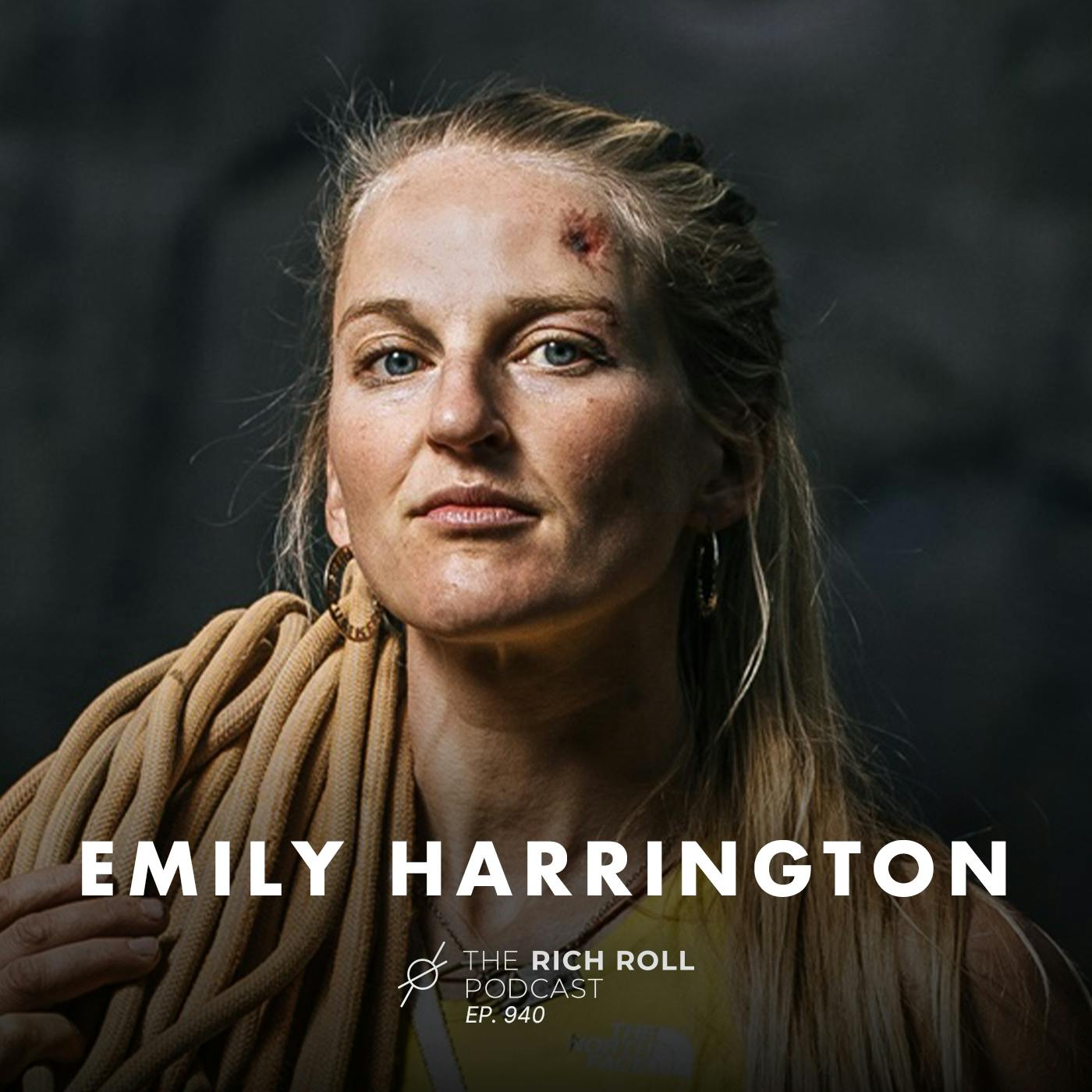
The Rich Roll Podcast
How Emily Harrington Became The First Woman To Free Climb El Cap’s Golden Gate In Under 24 Hours
02:02:07
Loading summary
Transcript443 lines
- [00:01]
Rich Roll
After hosting more than 900 episodes of this podcast, I have noticed a pattern. And that pattern is that the highest performers don't buy into the latest trendy hacks. Instead, they obsess on what actually works, which is always the unassuming basics. And there is nothing more basic than hydration. Your body can't hold on to water without the right minerals. Without them, water is just like this temporary visitor. But Element has cracked the code on this, which is why I've been using it religiously for years. Zero sugar, no artificial junk, just sodium, potassium and magnesium. In the race, they work. And look, I'm not exactly crushing ultras right now healing from this surgery, but in some ways I need it even more. In order to properly recover, I need to treat my body even better than ever so it can heal properly and expeditiously while also maintaining my focus and my energy levels. All of these podcasts write a book, be a husband, and a dad, and I gotta say, Element keeps my brain firing in a way that water alone can't. Their new sample pack features their most popular flavors. Citrus Salt, Raspberry salt, Watermelon Salt. That's my favorite. And orange salt 8 perfect for finding your favorite or sharing with a friend. Get a free 8 count sample pack of Element's most popular drink. Mix flavors with any purchase@drinklmnt.com Rich Roll Find your favorite Element flavor or share it with a friend. This podcast is brought to you by Squarespace. When it comes to the infinite scroll of our digital world, there's an important distinction I like to draw, which is that there is a difference between consuming content mindlessly and on the other hand, using our computers with creativity and intention as a tool to something meaningful. Whether that's a coaching practice, for example, a store or a portfolio for your photography, what you need and deserve is a high quality, highly designed platform that reflects your personality without compromising functionality. And now Squarespace is even more powerful, courtesy of something they call Blueprint AI, which asks you to answer a few questions about your goals and your style. And then it generates this completely custom website that looks professionally crafted without any tech skills on your part, even nominally required. Their analytics show you what's actually working, where your audience comes from, what content resonates, real data instead of guessing. So head on over to squarespace.com richroll to save 10% off your first purchase of a website or domain using the code Rich Roll. There's one sequence in the film that is definitely like the most terrifying thing that I've seen in a Climbing movie. Can we talk about the fall?
- [03:10]
Emily Harrington
Yeah. So I had tried to achieve this goal, free climbing Golden Gate, in a day. And I just remember like slipping and falling over sideways. Like, I think my foot slipped, fell about 50ft. And so I hit like a ledge and flipped upside down, hit my head, lost consciousness. It was very bad. Don't be afraid to do things in your own way, to fail in your own way, to not be afraid of fear, to not be afraid, to try hard and care about things and be vulnerable and be open. And it's really not all about success. The majority of life is about how we deal with failure and how we deal with discomfort and struggle. And so I think we should never be ashamed to be a part of that. Just go for it. Foreign.
- [04:03]
Guest or Co-host (possibly a family member or friend)
Emily Harrington. You guys, Emily Harrington. Emily is.
- [04:08]
Rich Roll
There's really only one way to say it.
- [04:10]
Guest or Co-host (possibly a family member or friend)
She's a badass.
- [04:11]
Rich Roll
Emily is one of the most accomplished.
- [04:13]
Guest or Co-host (possibly a family member or friend)
And versatile professional climbers in the world, man or woman. She's a seven time national champion, known also for mastering these legendary big walls and insane peaks, among which of course, includes Everest, where she met her husband, friend of the podcast, Adrian Ballinger.
- [04:33]
Rich Roll
But Emily is probably best known for.
- [04:35]
Guest or Co-host (possibly a family member or friend)
Free climbing Yosemite's El Cap, which she did in less than 24 hours, which is astonishing. And she's also the first to do it by way of this very challenging route called Golden Gate, all of which is captured in her new nail biter of a documentary called Girl Climber. So, yeah, Emily's a beast. But you know who else is a beast?
- [05:03]
Rich Roll
My mom.
- [05:04]
Guest or Co-host (possibly a family member or friend)
Yeah, it's true. All hunched over at 82. This is a person who knows exactly how to push my buttons because as they say in aa, she installed them. And let's just say over the past handful of days, she, meaning my mom, has me pretty lit up. And so, yeah, I. I need to talk about it.
- [05:32]
Rich Roll
Let's talk about it.
- [05:33]
Guest or Co-host (possibly a family member or friend)
Because the thing is, my mom now has dementia. Her brain no longer works the way it used to, except for the part, I should point out, that knows exactly how to punish me. But that aside, yeah, it's. It's really sad, it's painful, but it's also a chaotic and dangerous situation right now that over the last handful of weeks has demanded a new level of my personal involvement. So over the past couple days, several days, my life has really been about showing up, being of service, and returning her tough love by having to do some tough things myself, to do some sober and rather somber adulting, because life has been lifing.
- [06:37]
Rich Roll
By way of background.
- [06:38]
Guest or Co-host (possibly a family member or friend)
It'S been about a month since I've been home. I was in New York City for like a week, Then I went to D.C. to see my parents. Then I was back to New York. Then I went to Tokyo for almost two weeks, then back to New York City, mainly to move on my book. But let's just say God had other plans for me because basically shortly after I arrived in New York City, I needed to pivot and go immediately back to Washington as things on the family front really started to spiral a bit out of hand. And my dad, God bless him, he's been managing my mother's decline for a very long time, doing the best that he possibly could for years at this point, living with her alone in their home in Washington, D.C. and while my sister lives there as well and has been showing up and doing her best, really on the front lines of this for a long time to pitch in and to assist it recently just reached a new level of unmanageability and basically insanity. And the deal is essentially that my mom, at this point, really can't remember much of anything from one minute to the next. She barely recognizes me anymore. She doesn't really know where I live or that I've been married for like 25 years or. Or really even that she has grandchildren. And on top of it all, this is somebody who's always been a very fearful person, a very controlling person, judgmental, uncompromising, prone to angry outbursts, and just the kind of person whose emotional needs have always been a little bit more urgent than anyone else's needs that must be met. Without all that much awareness around how her behavior impacts everyone else around her in that way where, you know, these people that just tend to suck up all the oxygen in every room they enter, that's kind of her. And that is just kind of the deal. It's always been the deal. And now in this more advanced stage of mental decline, it's on full display. And as much as people say it's not her, it's the disease, the truth is, it really is kind of her. Just without the filter and turned all the way up to 11. And I know enough from hosting so many experts on the podcast over the years that this, her difficult, challenging behavior is really just a response to trauma that she suffered in her earlier years due to an unavailable mother who was a depressive shut in. My mom is somebody who just never really quite learned how to give and receive love, how to be open, how to be vulnerable, how to be emotionally intimate, and the Love that she did entrust in others in her dad and in her older brother was returned with both of them passing away on her when she was still fairly young. Her dad from a heart attack and her brother by way of a tragic auto accident. And because this went down in the 70s, and my mom being who she is, instead of seeking out help to process all of this, she essentially just compartmentalized it, pushed it down, pushed it away, and for the past 50 years, just basically pretended that she was fine, that everything was fine, when her behavior consistently, and it's basically always said otherwise in this controlling nature that she has, driven by a fear of abandonment, which in my case meant that my mother was basically ill equipped to meet my emotional needs when I was young, because my job was, and basically has always been to meet her needs instead as the person responsible for making her feel safe. Anyway, there's a lot more to say about her, about me, about attachment theory, transference, unhealed trauma, projection, and the work that I've done to overcome the wounds caused by all of that. But the point for now is that the moment arrived where she really could no longer take care of herself. And taking care of her became too much for any one person to do, let alone my dad. Assisted living has been on the table for some time, but, you know, my mom is this person who lives in such a state of denial that she refuses to even see a doctor for a simple medical checkup. She gets angry if the subject even comes up. And she's so far away from anything resembling acceptance that the prospect of moving her out of her home into a safe place where she can be cared for is just something resembling Mission Impossible. And so this is where I come in, because it's been too much for my dad and my sister to manage on their own. So my week, which was intended to be focused on writing, you know, working on this book, turned into a maternal intervention, which was this all hands on deck, multi day, Ocean's 11 type operation to essentially rip the band aid off to get my mother out of the house and into a place that could provide her with the help that she needs, which was no small thing. It's a long story, but despite the insanely high degree of difficulty, we were successful. We got her into a memory care facility. The goal was achieved, but it was about as emotionally difficult and draining as you can imagine. Just the sadness, the guilt, but also, confusingly, the catharsis, because my dad, who still has quite a bit of life force and vitality in him, has basically been held Prisoner by her for years, doing his best to take care of her without complaining, enduring her confusion, her anger, her outbursts, which can be so intense. It really has been for him sort of elder abuse that has prevented him from being able to really even leave the house. And so, as hard as this experience has been, it's also been this incredible gift that I got to help give to my dad. The gift of him getting to have more life, liberated from the burden he has been enduring longer than anyone should ever have to. Which, as hard as it's been for him, has been this beautiful, albeit, let's just say, somewhat codependent, but essentially selfless commitment and demonstration of love for her that is this weird mix of unhealthy, but also inspiring. So I'm pretty wrung out, but I am grateful. I'm grateful that my mom is safe now. I'm grateful that I got to participate in returning some life to my dad, to contribute to alleviating some of the burden that my sister has been shouldering, to be able to show up sober and do the right thing, the hard thing, in service to my family in this moment of need. This is what being sober is all about. You get to show up, you get to be there, you get to be present. You get to stand up for the people you love. And that gift, this gift is something that has given me just such incredible gratitude, meaning, and what it means to truly love. Did you know that Emily Harrington is on the pod hard gear shift here?
- [14:29]
Rich Roll
Well, she is. And this one rocks hard.
- [14:32]
Guest or Co-host (possibly a family member or friend)
It's about risk. It's about embracing fear, accepting failure. It's about curiosity, the importance of cultivating a beginner's mind. We talk about humility. We discuss what it's like for her being a woman amidst the boys club culture of climbing. We talk about her friendship with the late Hilary Nelson, friend of the podcast, who was very much Emily's mentor, and the role that vulnerability plays in Emily's high risk, high performance adventures, which in my experience, has demonstrated in this conversation and also on screen in, in her super gnarly dock, in a way I actually had never before seen in Climbers. So this is good stuff, people. Emily really sends it. So send yourself into this one, and when it's done, do the thing by dialing up Girl Climber, which screened briefly in IMAX theaters, but is now available to stream at Jolt Film. Enjoy.
- [15:42]
Rich Roll
So nice to have you here today.
- [15:44]
Emily Harrington
Thanks for having me.
- [15:45]
Rich Roll
I feel like I'm this layperson who has this privileged opportunity to host all these conversations with all of these climbers, like most of the people who appear in the movie, have sat across from me at some point. Alex has been here a couple times. Your husband, what a beautiful man. Adrian Hilary Nelson, who I want to talk about Conrad Anchor and not being a climber myself, and just somebody who is just an average person who kind of watches these movies. It's always interesting because I feel like I get it. And then I realize with each successive, like, new film that I watch, I'm like, oh, I don't get it at all. Like, it's so hard to grasp the enormity and the difficulty of these types of challenges.
- [16:29]
Emily Harrington
Yeah, yeah. I think that's probably true in any, like, elite athletic world or any world in general. Right. Like, there's these little nuances and subtleties that you kind of just get a peek into when you're like a layperson or in the mainstream. But I think that's kind of the beauty of films like this is that it does give people a glimpse into this, like, elite athletic world.
- [16:52]
Rich Roll
I want to understand your life and your career. But we're here on the occasion of this documentary that's about to be released called Girl Climber. Tells your story through the vehicle of this goal that you set for yourself, which is to be the first woman to climb this particular route up El capitan in under 24 hours. And it takes you multiple attempts to do that. So maybe we can begin with just talking about this goal specifically and what it is about El Cap that is so magnetic for the climbing community.
- [17:26]
Emily Harrington
El Capitan, I mean, it's just the biggest, most difficult, most beautiful wall in the world. It also just happens to be in Yosemite national park, which is a very accessible place compared to a lot of places in the world. You know, there are lcap sized walls in the world, but they're in these incredibly remote corners of the earth that are super difficult to get to. And, and the thing about Yosemite granite is it's, it's incredibly smooth and polished and solid. So you don't have a lot of like, Chauss is what we call it, which is like loose rock. It's just sheer and it's steep and it's so difficult. And climbers have been going there for decades to test themselves on these walls. And initially everyone thought it was impossible, impossible to get up, impossible to free climb. But gradually, over the decades, there's been these outstanding achievements on this wal. And so it's also historic. And no climber doesn't know what El Capitan is. And it's kind of that place that you go to test yourself. It's a proving ground in a way.
- [18:35]
Rich Roll
The documentary Valley Uprising does a pretty good job of recounting that history. You know, sort of this rogues gallery of like, you know, like sort of van life dropouts and you know, you know, in a period of time that was very kind of like counterculture.
- [18:50]
Emily Harrington
Exactly. Yeah. It used to be like climbers were essentially these outcasts of society that were just, just living in their cars or living in the dirt in the valley.
- [19:01]
Rich Roll
At that time though, you could basically just set up camp like in the park though, at the base of the climb. It's not like that anymore. Right. Like you have to drive in and out or how does that work?
- [19:10]
Emily Harrington
Yeah, it's been, yeah, I think back in the day it was a bit easier, but also it's, it's been a national park for quite a while and there are a lot of rules and it's a little bit tough to exist in the valley as a climber. I mean. Yeah. Throughout the years there's been differing relationships with the park between climbers. A lot of climbers used to like poach camping or. Yeah. Just arrive in the dark, sleep and then leave early morning. I've heard of climbers who slept in the boulder fields at the base of the walls, like in these little caves.
- [19:46]
Rich Roll
So there's like tension between the park rangers and the kind of civilian campers in the climbing community who are trying to always kind of like be stealth and get away with stuff.
- [19:57]
Emily Harrington
Well, yeah, and there's, there's rules, right, like, and you're not meant to stay for more than 14 days, but climbers stay there for much, much longer. So throughout the years and throughout these like generations, there's been tension between the rangers and the climbers. I would say it's, it's greatly improved now just because the way that climbing is so mainstream now and we've kind of had to mature and had to develop good relationships with these places that we visit. And Yosemdi an example of that.
- [20:27]
Rich Roll
Yeah. One of the things that you, you comment on in the film is the boys club nature of the climbing community. And, and, and I inferred from that, you know, specifically around Yosemite and El Cap. Is that like historically been true or what is the, like, how does, how does a female climber fit into that subculture?
- [20:48]
Emily Harrington
Well, it's interesting because, you know, the most maybe well known achievement on El Capitan, aside from Alex Honnold free soloing it is Lynn Hill and her achievement. So that kind of. It's interesting that a woman sort of owns that groundbreaking, like once in every, you know, every other generation achievement. And it's on lcap and there are women who excel up there and have excelled up there over the years. But it is a little bit similar to a lot of other, you know, on the edge type activities where you'll have like one or two women, but then the rest will be men. And it very much does feel like you're a little bit of an outlier. That is changing, I would say, even since what I did in Yosemite in 2020, in the last five years or so, there's been a lot of activity from women on lcap. And so that's just like anything. I think that's changing rapidly. But yeah, of course, climbing is primarily a male dominated sport. And as you get into these different disciplines that require a bit more risk and a bit more experience, there's generally just more men than women.
- [22:04]
Rich Roll
But Lynn was always your North Star, like dating back all the way to you being a little kid, like obsessed with climbing.
- [22:12]
Emily Harrington
Yeah, I mean, Lynn Hill was the first person I found out about when I started climbing. It was like, oh, Lynn Hill, first person to free climb the nose in under 24 hours. Like the most badass achievement in rock climbing history. And I just thought that that was so amazing that it was a woman.
- [22:28]
Rich Roll
And what is the relationship, you know, between her and then this goal that you set for yourself?
- [22:34]
Emily Harrington
So she was the first person to free climb LCAP in a day. And, you know, it, it's still, still the route that she did. The Nose hasn't been completed in a day by very many people. I think maybe just Tommy Caldwell has done it. So it really was this achievement that's, that stands out. And it broke through. It was this, it was, it was groundbreaking. It was pioneering. It was something nobody thought was possible. And then. And she did it. And so in my mind, climbing was a place for women to excel. And I really found a lot of inspiration in that. But as a young girl, I was really focused on climbing competitions and sport climbing, which is just a different genre entirely from big wall free climbing, which is what climbing on El Cap is. And then throughout the years, as I sort of diversified in my climbing, free climbing on El Capitan came. Came into my, you know, perspective of something that maybe I could do someday. And so it just gradually, it kind of like it was this first thing I found out about, but I never really thought it was for Me, because I was so focused on competition climbing, and I wanted to, like, go to the Olympics and win World Cups. And then as I grew and developed and matured as a climber, I decided that maybe someday I could free climb El Cap in a day.
- [23:57]
Rich Roll
I mean, you straight up say, like, basically at the beginning of the movie, like, you're at the base of El Cap and you're like, nobody talks about how scary this is.
- [24:04]
Emily Harrington
Yeah.
- [24:05]
Rich Roll
You know, like, everyone's just, you know, alpha.
- [24:07]
Emily Harrington
Yes.
- [24:07]
Rich Roll
And it's like, no, this is like, it never gets smaller. I'm always amazed at how big it is. And it's really fucking scary.
- [24:14]
Emily Harrington
Yeah. And I think most of the stories we see about El Cap are, you know, the Dawn Wall and Free Solo are these two figures that are just. I mean, I don't think that Alex really feels that much fear when he's up there.
- [24:26]
Rich Roll
Well, he has a very different relationship. He has a very unique relationship with fear.
- [24:30]
Emily Harrington
Totally different human. And then Tommy Caldwell has probably spent more hours of his life on the side of El Cap than, like, in his own bed. So for me, I think it was important to kind of convey just the enormity of that place and how special but also terrifying it can be for some people. And for me. But I still went up there and I think that that was a cool part of the story and a part that people really relate to and can identify with.
- [25:01]
Rich Roll
I know that at least originally, you weren't crazy about the title of the movie. Girl. Girl Climber, right?
- [25:07]
Emily Harrington
Yeah, I really didn't like it. I mean, I think a lot of people don't like it still, but I really. I didn't like it.
- [25:13]
Rich Roll
Do you like it now or do you still not like it?
- [25:14]
Emily Harrington
No, I. I'm into it now. I think it's good. Yeah.
- [25:18]
Rich Roll
So what is it that you didn't like about it and how did you change your mind about that?
- [25:22]
Emily Harrington
I think I had this really visceral, like, knee jerk reaction to it, that it was like putting this label on me and it was somehow diminishing me and my achievement and just, I think the cringy.
- [25:40]
Rich Roll
The cringy girl power.
- [25:42]
Emily Harrington
Yeah, exactly. Cringy girl power kind of vibe. But then it's kind of like you watch the movie and you see that there is a lot of. There's a lot of femininity in the film and there's a lot.
- [25:54]
Rich Roll
You're emoting in a way that, like, male climbers are not, you know, are. And there's something really kind of like Honest and refreshing about that, I think.
- [26:02]
Emily Harrington
And I think, like, the emotions in it and the vulnerabilities, I think a lot of times those types of things are perceived as a weakness. And I think the film does a really nice job of revealing those as a strength.
- [26:17]
Rich Roll
Also, the title Girl Climber, like, how is that going to sit with the climbing community?
- [26:22]
Emily Harrington
Yeah, I think it's least liked by the climbing community. I think a lot of people in the mainstream kind of, like, really liked it and. And. And thought it was a cool title and kind of like, owns that female climbing story. Whereas a lot of climbers are like, this title is so dumb. Like, why would. Why would anybody name it like that? You know? And, you know, I get that side of things, but also, I think as, like, language evolves, for me, the title doesn't emote that so much anymore. And especially once you see the film, you just kind of see, like, okay, like, this is a powerful story. It's about a woman. There's a lot of, like, female centric themes going on in the film, but.
- [27:05]
Rich Roll
With a light touch, it's not the focus. The focus of the film isn't like, you know, the, you know, the place of women in climbing. It's just sort of inferred. And there's, you know, there's references here and there to it without, like, drawing too much focus on it. I mean, you, like, you know, you're like, okay, here comes the mansplaining, you know, from all the El Cap dudes who are going to tell me how to do this. And it's like, I know how to set a goal. Like, you know, it's cool, but, like, I got it.
- [27:31]
Emily Harrington
And I think it's. I think there's a lot of humor in it as well, which I also really like. Like, I think Alex is truly, like, pure comedy throughout the whole thing.
- [27:41]
Rich Roll
He's. He's one of the funniest people. Like, I don't think. I think his humor is underappreciated. You know, like, he's really funny.
- [27:48]
Emily Harrington
He's really funny.
- [27:49]
Rich Roll
He has incredible comedic timing.
- [27:51]
Emily Harrington
Timing. He's dry. Yeah. And I think that that really shows in the film, which is. Those are some of my favorite scenes in the whole movie.
- [27:59]
Rich Roll
Alex also a mentor, but basically you're, you know, kind of like compadre in this whole thing. Who's there right by your side throughout, you know, all of these for attempts that you make.
- [28:11]
Emily Harrington
Yeah, yeah. And I. I am super grateful that he's, like, willing to keep going up there with me. And other people now he just seems.
- [28:22]
Rich Roll
Like, good to go.
- [28:22]
Emily Harrington
He's good to go. He's. But you know, we're talking about like.
- [28:26]
Rich Roll
Getting up at one in the morning. Getting up is like, this is not like, oh, we're going to sleep in until 9 and start this thing. This is not like, you know, this is a lot.
- [28:33]
Emily Harrington
Yeah. And he loves it. I do think that that is like truly his, his happy place. He likes going up there, he likes being up there. He like other people. He likes like showing his expertise and knowledge and sharing it and such a.
- [28:48]
Rich Roll
Steady, calm, even keeled like, presence to have like right there, you know, for every step.
- [28:54]
Emily Harrington
Yeah. I always say when I'm with Alex, like, I, I, I climb better, I'm more confident. I like do things that I didn't think I could do.
- [29:03]
Rich Roll
What is it about him, to your mind, that makes him different and special?
- [29:10]
Emily Harrington
I think he is exactly who he shows himself to be. You know, like, if he doesn't like something, he'll tell you. If he thinks something is stupid, he will straight up say, that is stupid.
- [29:22]
Rich Roll
Yeah.
- [29:23]
Emily Harrington
And so when he's telling you that you're doing well or showing that he believes in you, you know that he means it. And he's, he's just an incredibly smart and capable person as well. And even though it doesn't seem like it at first, and maybe he's sort of evolved into this, but he, he does, he is a great supporter for those reasons because he can be brutally honest. And he really does care for his friends and he wants to see them succeed. And so it's just this very genuine presence.
- [29:59]
Rich Roll
I love the scenes where you're like, sorting out your gear and he's like, oh, you're gonna, that's what you're gonna bring that like, you sure you need this? He's like, okay, yeah.
- [30:10]
Emily Harrington
And then when you get like a little nod of approval, you're like, yes, it's pretty funny.
- [30:16]
Rich Roll
And there's almost no footage of him climbing really. He's sort of this presence that's there on the wall with you, but there's a very short, very brief clip. And he's wearing like a red like, hoodie. The hood is, the hood is up. And he just makes this like real quick move, like where he kind of just goes up like 10ft. But it's like, it's almost like, I mean, literally he looks like Spider Man. I was like, he just kind of went like this up the mountain with just an incredible like, degree of like balletic precision. And you're like, oh my God. Like in that two seconds, like I saw somebody do something that I, you know, like I didn't think humans could do. And I was like. It was kind of like all. Do you know what I'm talking about? That one little clip.
- [31:00]
Emily Harrington
I'm not sure I know what you're talking about.
- [31:01]
Rich Roll
But you have to remember the fact that he had a red hood. His hood, red hood was over his head. I mean, it was like, oh, it is Spider Man.
- [31:07]
Emily Harrington
Yeah, I can see that. Well, you have to remember that, like the section of the wall that he climbed with me is the same as the Free Rider route. So that's the same terrain that he free soloed. So he's practiced that a bazillion times. A bazillion? Yeah, more than you know. Yeah, it's. It's like he knows it like the back of his hand, which is why he's such a great partner up there in part.
- [31:31]
Rich Roll
There's one sequence in the film that is definitely the most terrifying thing that I've seen in a climbing movie. Can we talk about the fall? I don't want to give away everything, but we have to talk about this.
- [31:45]
Emily Harrington
Yeah, that was an unfortunate incident.
- [31:49]
Rich Roll
So set it up.
- [31:51]
Emily Harrington
Yeah, so I had, I had tried to achieve this goal, free climbing Golden Gate, in a day in mid November of 2019. And I came incredibly close to success. Like, I essentially failed in the very last hard section of the route, around 3,000ft off the ground. I just like couldn't complete this one section. And so it was, it was a failure. You're done, go home. That's it. And I, so I decided to try again maybe a week later, maybe 10 days later. And you have to, I think of it like, it's kind of like doing an ultra marathon. Like you put in so much physical and mental energy and usually after you do something like that, you need to like take a break, take a step back. But for me, I had this, I had this angst of like, I just want to get it done. Like, I just want to do it this year. I want it to be done. I want to complete it that to ticking clock type feeling. And so I set out to try again not long after that, that one, like very close attempt. And.
- [32:57]
Rich Roll
And this was attempt three?
- [32:58]
Emily Harrington
Yeah, it was attempt number three. And I remember waking up that morning, it was like at, you know, whatever, three in the morning. And I just remember I just didn't want to go climbing. Like, I just didn't want to. I was Feeling afraid. I was feeling hesitant. It was just like all that, those red flags in your head. But I just pushed through. I was just like, really kind of like, adopted that, like, almost punishment mindset of my youth. Like, just do it. Just like suck it up.
- [33:27]
Rich Roll
But not listening, not really being honest.
- [33:29]
Emily Harrington
With yourself very much. Like, just suck it up, get up there, go do this thing, get it over with. And you can't just like, get it over with when you're trying to do a 24 ascent, 24 hour ascent of El Cap. Like, it's just a bad mindset. So basically I got to the base, it was really, really cold. There was. It was the end of November. There was a storm coming the next day. There was just all this, like, anxious energy in the air. There's also like a lot of humidity as well. Like, I think the storm was coming and. But it was also like below freezing. So there was just like, it almost felt like there was a little bit of frost on the wall. But I just kept like, no matter what happened, I was just like, stop thinking about it. You need to go, you need to go, you need to go. So I started climbing and Alex and I, what we do is we simulclimb the bottom of the route. So you're basically ascending the wall together, just attached with the rope. It's kind of like between, like normal free climbing when you're just being belayed pitch by pitch, and like free soloing. It's kind of like, it's not ideal for either person to fall in this scenario, but it's used as a speed tactic.
- [34:35]
Rich Roll
Doing it that way allows you to move more quickly.
- [34:37]
Emily Harrington
We move so fast, like, so much faster. And so I'd started and I just was like, not placing very much gear because you want to, like, be able to spread out your protection over really long distance because you don't want to have to stop. So I was just placing, like, very little protection. And I just remember, like in my head, like, just telling myself, like, be confident, be confident, be confident. Like, keep moving, keep moving, keep moving. I just was motoring and I just. I hadn't placed very much gear. And I just remember, like, I just kind of remember slipping and falling over, tipping over sideways. Like, I think my foot slipped something like that.
- [35:16]
Rich Roll
You fall 50ft?
- [35:17]
Emily Harrington
I fell about 50ft, yep. And the way the bottom of the wall is, like, pretty. It's. It's less than vertical. So it's a slab. That means that the falls are very not clean. So I hit, like, I just kind of tumbled down and hit like a ledge and flipped upside down, hit my head, lost consciousness. It was very bad.
- [35:42]
Rich Roll
Brought to you today by AG1 Listen Nutrition is something that all of us wellness concerned folks have a little bit of a proclivity for unnecessarily over complicating, focusing too much, I think on debates on the margins while tending to overlook the less sexy but more important parts that I are actually quite simple. AG1 next gen changes this equation entirely. It's a daily health drink that consolidates your multivitamin, prebiotics, probiotics, superfoods and antioxidants into one scoop that is clinically shown to support gut health and fill common nutrient gaps. What's compelling isn't just the ease and convenience, it's the quality. Five probiotic strains working with prebiotics to support digestion and reduce bloating, 75 plus vitamins and minerals and bioavailable forms. People, including myself, often notice improvements in digestion, less afternoon sluggishness, and basically just more consistent high level energy sustained throughout the day. Sometimes less is more meaningful. The best optimization is often simplification. One scoop water foundation set and with four flavors to choose from, even that simple routine doesn't get boring. Head on over to drinkag1.com richroll to get a free welcome kit including a bottle of vitamin d and free AG1 travel packs when you first subscribe. That's drinkag1.com richroll to try AG1 today. Movement is so much more than just exercise or training or motion. Even movement is a language. It's a way of connecting body, mind and environment.
- [37:37]
Guest or Co-host (possibly a family member or friend)
Movement as a way of being.
- [37:39]
Rich Roll
A way of being that brings me close to myself, closer to other people and to what matters most in life. And for me, what we wear in that pursuit plays a crucial role.
- [37:49]
Guest or Co-host (possibly a family member or friend)
And that's what I appreciate about on.
- [37:52]
Rich Roll
They engineer apparel that supports and elevates the practice of movement itself. From running shorts with built in support to technical tees that cool you down.
- [38:02]
Guest or Co-host (possibly a family member or friend)
Right where it matters.
- [38:03]
Rich Roll
This is apparel born from precision and tested by elite athletes, but made for anyone committed to the path I've been with on since 2023 and I'm still just so impressed by how they can continue to elevate and innovate in the name of purpose, not Flash. Head to on.comrichroll to explore gear that supports you every step of the way. In the film, the camera is on Alex at the base. Yeah, it's the middle of the night, it's pitch dark out and suddenly the Rope starts to, you know, like, you can hear a little bit. And then the rope starts to go like this. And he, like, grabs it.
- [38:43]
Emily Harrington
Yeah.
- [38:43]
Rich Roll
And then holds on to it. And then all you hear is, like, you screaming in the distance.
- [38:49]
Emily Harrington
It's like.
- [38:50]
Rich Roll
It's an absolute.
- [38:51]
Emily Harrington
So bad.
- [38:52]
Rich Roll
I know. Movie, you know.
- [38:53]
Emily Harrington
Yeah. It's horrible.
- [38:54]
Rich Roll
And he's like, oh, my God. You know, and. And. And, you know, starts trying to get up there to find out what's going on, but not. But, like, in classic Alex Honnold, like, complete calmness, you know, to handle a crisis. But that was just absolutely terrifying to watch. And then to see, you know, you get kind of hauled off, you know, in. You know, you're all in. What do you call that? Like, in traction, you know, put into the.
- [39:20]
Emily Harrington
Unlike the backboard and everything.
- [39:21]
Rich Roll
Yeah, I mean, absolutely, like, crazy. That's. That's crazy, man.
- [39:28]
Emily Harrington
Yeah. I often. I often leave the theater when. When that.
- [39:32]
Rich Roll
Do you. It's got to be hard for you to see that.
- [39:35]
Emily Harrington
Yeah, it's just hard. It just keeps going. Like, the wailing and the. It's just very visceral and, like, traumatic. And so I often, like, don't. I prefer to not watch it.
- [39:44]
Rich Roll
Yeah. And he's like, it's bad. It's bad. Like, you know, he's like, new. It's bad.
- [39:49]
Emily Harrington
Yeah. So. Yeah.
- [39:51]
Rich Roll
And then you're like, okay, I'm gonna do it again.
- [39:53]
Emily Harrington
Yeah, well, that's.
- [39:54]
Rich Roll
I mean, you're like. It ended up not being that bad.
- [39:57]
Emily Harrington
It wasn't that bad.
- [39:58]
Rich Roll
It looked really bad.
- [39:59]
Emily Harrington
The thing that I think happened to me, though, is people are often like, oh, why didn't you? You know, did you ever think about quitting? Did you ever think trying again? Like, didn't that experience, like, kind of, like, scare you into not wanting to do it? But the thing is, like, I pretty much immediately recognized, like, all of those red flags along the way that I could totally control in the future. Like, there. It wasn't like, this huge objective hazard, like, random rock fall or like some sort of avalanche or something that you really can't predict. It was like. Like everything that happened was fully within my control. Yeah, I. I can choose when to go climbing. I can choose how much gear to place. Like, I can choose how fast to go. So I just felt like I had made all these mistakes, so I had a lot of agency moving forward in terms of what I could do differently.
- [40:52]
Rich Roll
What I took from that, though, was. Was something a little bit different. Like, you're in the hospital and you're very upset, and you're like, I did everything right. I didn't do anything wrong. I did everything right. And to me, I was like, yeah, you can do everything right, and this is still what can happen. You know what I mean? So it's like that idea that, oh, yes, I can control this, because I know how to do all these moves and all of that. That's where it gets scary for me, you know, because your husband talks a lot about, like, ego versus humility. Like, he did a whole TED Talk on it. Right. And so it's like, like, the humility required to understand that, yes, you can do everything right and still, like, nature might have a different plan for you.
- [41:38]
Emily Harrington
Yeah, totally. And I think as climbers and mountain people, we kind of accept a certain level of that, you know, in everything, no matter where you fall on that risk spectrum.
- [41:51]
Rich Roll
Yeah. You go back the following year for the next season, you train your butt off. You. You know, you work all of those challenging aspects of the wall that were tripping you up, and it's attempt number four, and you're kind of like, I mean, we can, like. I don't want to do, like, a race report type thing where we do, like, every aspect of this. I'm watching this going, please make it to the top, because I don't know if I can handle watching her do this again from the bottom so much. But you're very close where you. You then fall, and it's another. Like, you see. You fall and you see your head, like, hitting. Hitting the rock, and you're like, oh, this is not happening again.
- [42:34]
Emily Harrington
Yeah, that's exactly what it felt like that time. It felt like I was doing everything right. I was just crushing it. I felt so good. And then I just kind of slipped and fell. And then I felt stupid for smashing my head. And it just. Yeah, it was just this crushing disappointment.
- [42:54]
Rich Roll
That I felt in that moment. You're very emotional. I mean, you essentially have, like, a breakdown. Your head is bleeding. Like, it looks bad. Like, I saw your head hit the rock.
- [43:06]
Emily Harrington
I'm like, yeah, it looks.
- [43:06]
Rich Roll
Who knows what, actually? Because you don't know. Like, this could be a really bad concussion. You don't. You don't actually know. Your confidence is erased. Like, you're just a mess. You're a wreck. You've got Alex there, You've got Adrian there, and they're tending to you. But I thought it was so interesting that Adrian's like. As you begin to calm down, he's like, you know, I think you can do this.
- [43:34]
Emily Harrington
Yeah.
- [43:35]
Rich Roll
And I was like, oh, my God, he's going to push her to do this. Like, I would have thought he would be like, look, there'll be another day. You know, like, your skills are dialed like, you know, it just wasn't your day. We're gonna have to do this again. But for him to say, I know you, and, like, I know that, you know, you can make this happen, I was like, oh, my God. I guess that's the climbing mentality, because it's like, who knows what's actually going on in your skull, you know, at that time. Also to be. To, like, have all of your, like, all of your confidence is gone.
- [44:05]
Emily Harrington
Yeah, that was.
- [44:06]
Rich Roll
All of these things you need.
- [44:07]
Emily Harrington
Yeah. So we did do, like, a. There was, like, a pretty heavy, like, first aid, like, concussion assessment to make sure that I was actually wasn't showing signs of concussion, which.
- [44:19]
Rich Roll
That didn't make it into the movie.
- [44:20]
Emily Harrington
No, I didn't lose consciousness. There was a lot of things that, you know, we were. We're all like, woofers, wilderness first responders. So we, like. We did the whole scenario. And Adrian is quite good at these situations because he encounters them a lot just with his profession as a mountain guide. And so he was like, you know, he was rationally, like, I think you're okay. We're up here. Really, the best way out of this is up. Because we're that high on the wall, it's quite hard to bail down. So it really was just like, okay, we either, like, ascend the ropes to get out and then walk the three hours down.
- [45:01]
Rich Roll
You know, the safest and quickest way to get out of here is to just complete this thing.
- [45:06]
Emily Harrington
Or you try again because I, you know, he's like. Or you try again because I think you're okay. Physically, you're okay. You don't have a concussion, so why not just give it another try? And I think that was the attitude that I needed to hear and that like. Like, true belief in me when I really did, like, you're right. Confidence erased. This isn't happening. I can't believe this is happening again. Like, how. How could this be? Like, disbelief just, like, kind of shattered. I think my spirit was shattered. And I think, yeah, having him in that position and telling me that he thought I could do it and that I needed to try again was really, really important.
- [45:50]
Rich Roll
Obviously, he knows you better than anyone.
- [45:52]
Emily Harrington
Exactly.
- [45:52]
Rich Roll
And wouldn't have said that if he didn't truly believe that you could do it. So what makes that so profound? For me is your husband, your life partner has that kind of conviction and belief in you, which is really cool. And just the experience of prevailing, pushing through this is like, if it's a movie, this is the. The second act, you know, like the. This is where all hope is lost, right?
- [46:24]
Emily Harrington
Yeah.
- [46:24]
Rich Roll
And somehow you find a way to prevail. And like, isn't that the whole. The whole, like, ball game with climbing? Like, from you being 10 years old at the Boulder Reservoir and being like, I was scared, but I. But I overcame it and got to the top. And like, that is the most, like, you know, on. On El Cap. Like, you're having the most extreme version of that experience.
- [46:47]
Emily Harrington
And it was. It was one of the more profound experiences of my life was like, that climbing again, it really was that flow state. Like, I. It's hard to explain. It was like I wasn't even there. It's like I was watching myself in a way, and I was just executing the moves and it felt easy.
- [47:06]
Rich Roll
How are you maintaining your energy levels over 21 hours, you know, on that, on that wall, like, what is the hydration and the fueling? I know, like, you guys ran out of water, right?
- [47:15]
Emily Harrington
We did run out of water. That was. Was a bummer. That was that right before the last pitch we ran. Yeah, we, you know, obviously, like, at first, Alex was supporting me, so he was carrying a backpack, and he was just like, ascending the. The rope a lot of the times. And so he had a pretty heavy backpack with, like, snacks and water. And then Adrian actually came down from the top and he also brought, like, water and snacks. And so you're just kind of constantly feeling just like, you know, any, like, triathlon, ultra run type thing. Every hour you're. You're fueling every pitch. You're drinking water.
- [47:46]
Rich Roll
And what, what is it that you're eating? Like, are you e. Eating like, you know, bars and nuts and things? Yeah, everybody.
- [47:52]
Emily Harrington
Everybody's different, but yeah, I like bars and nuts and dried fruit. I didn't. I don't like to eat, like, real food up there as much as, like, I remember Alex being like, you need to bring like, a sandwich. I was like, I just don't. I don't think a sandwich is right for me. But a lot of, like, I also dealt with a lot of cramping, so, like, some. Some salty things as well, like making sure that get electrolytes because it's crazy. You'll, like, start on big walls. You'll start. Your hands will start to cramp, and they just kind of like form like this, and you can't. You have to like physically open your.
- [48:26]
Rich Roll
Finger or whatever they call that. I don't know what it's called. And like, at some point you have to go to the bathroom. Right. Like, how does that work?
- [48:34]
Emily Harrington
Well, you just pee off the wall, basically. And I'm very good at it. It's much harder for women, but I do have a good system that I use. And then. Yeah. On a 24 hour ascent, you generally go to the bathroom before or you just don't go at all. Just because that's kind of like how your body works. But usually it is like very much leave no trace principles, much like in the mountains. So we carry wag bags with us and then you just like carry it up and out.
- [49:01]
Rich Roll
You bring it out with you. Most people who do this climb that you did in 21 hours do it over like five days, right?
- [49:11]
Emily Harrington
Yeah, five to 7ish days.
- [49:13]
Rich Roll
Five to seven days. And you're setting up. What is it called? Like, where you kind of set up a ledge. Yeah. And you're literally sleeping. Sleeping on the wall.
- [49:21]
Emily Harrington
It's like a piece of nylon with aluminum poles and you kind of like construct it and then it becomes really taut and so you can sit on it and sleep on it and you set it up and clip it into the wall and that's your body.
- [49:34]
Rich Roll
How is it possible to fall asleep on those things?
- [49:36]
Emily Harrington
Oh, you'd be surprised. So I climbed Golden Gate for the first time. I climbed it over six days. It's also not in the film. In 2015, Adrian and I went up and climbed it it over many days. And it's interesting how, like, you just are doing so much all the time, all day, that when you finally do get to lay down and be horizontal, you just fall asleep. Like, it's amazing. Humans are very adaptable. And in terms of like, what, what are, you know, your body, it just.
- [50:05]
Rich Roll
Looks terrifying to me. I mean, like, I would just be so, like insanely afraid that I wouldn't obviously. Right. I know. That's like a trust thing though. It's like I'm like, are those things really going to hold me?
- [50:18]
Emily Harrington
Yeah. Yeah. No. But I guess as climbers, you kind of like get used to that from the beginning with trusting ropes and stuff. But for me, it's funny because if I go back to Yosemite or go back to a big wall and I'm up really high, I. It does take a while for me to trust everything. Like, I have trouble sitting back, I have trouble trusting the rope. Like, there's a lot of things where I get really weighed out.
- [50:39]
Rich Roll
What are they called? The pins in the rock? You know that the calipers are on? Like I don't know any of the terms. Yeah. Like the bolts, like is that really going to, is that going to hold?
- [50:48]
Emily Harrington
Yeah.
- [50:49]
Rich Roll
And what is that, what's that like when you're in the, in the, the, the crags or like the, the crevices and you have that like metal thing.
- [50:58]
Emily Harrington
The device that expands.
- [51:00]
Rich Roll
That's handy.
- [51:01]
Emily Harrington
It's called a cam. So it's spring loaded. So you squeeze it and it contracts and it will put it in the.
- [51:04]
Rich Roll
Crack and it holds you. Yeah. And so you can literally. It will hold your body weight when.
- [51:08]
Emily Harrington
You hold your body weight. Yep. And more obviously like a lot of impact on falls and stuff. Stuff. You know, they're test. They're rated to hold much more obviously.
- [51:16]
Rich Roll
Yeah, yeah. I'm like, I don't know. Can I trust that thing?
- [51:21]
Emily Harrington
Baby steps though.
- [51:22]
Rich Roll
Yeah, I guess.
- [51:23]
Emily Harrington
Definitely baby steps.
- [51:25]
Rich Roll
How do you train? Like, what is the, what is the training regimen like for this? Do you have a coach? How does that work?
- [51:33]
Emily Harrington
I didn't have a coach for Golden Gate in a day. I do now actually, because it's just like a lot harder to fit in with a kid. But training for it was really difficult because it's, it required an, it required a really interesting set of fitness. Like I equate it to having to run an ultra marathon. But at the end you have to do your best mile splits because El Cap is, is kind of structured that way. The bottom, the bottom two thirds is the easiest climbing and then the top is when the climbing gets steeper and much more difficult. Um, and so you had to know, you had to be able to climb 2,500ft of like relatively easy terrain and then be able to execute really difficult moves way up high on the wall. So you had to have like strength and endurance. And you know, I guess as athletes, you know that like, it's really hard to kind of excel at both. Like the more endurance you have generally that's when like your power and strength goes down. And so you're trying to find that perfect line where it's like you're capable of both. And for me it was a lot of like, I trained a lot in the climbing gym. I trained my fingers a lot.
- [52:50]
Rich Roll
And you do that by literally just.
- [52:52]
Emily Harrington
Hanging on a couple edges and with different hand positions for periods of time. So that's something that climbers do that's you know, very common. But then I also mimicked the day a lot. So one day I went to our local crag and I climbed 34 pitches, and I tried to do the hardest ones at the very end. So I just, like, tried to mimic the day, um, and just a lot of climbing. And then going to Yosemite a month beforehand and practicing the pitches, and I did, like, sections of the route. Like, at one point, my friend Jordan and I, who was also trying to climb Golden Gate in a day, we did, like, we basically did it in two days. Like, we climbed from the bottom up to the middle. And then the next day or two days later, we wrapped down to the very middle and climbed out. So you're kind of just like, you're building that fitness. Yeah. Over time.
- [53:42]
Rich Roll
And are you doing anything, like, in the gym or aerobically that isn't as climbing specific?
- [53:49]
Emily Harrington
I mean, I've always been a trail runner, and I think that, like, having that, like, base level fitness helps, especially with, like, the hiking and stuff that you do in Yosemite. It's just a lot of big days where you don't want to get. You want to be fit enough that, like, the, the approaches and the descents don't exhaust you. Um, so I, I definitely trail run, like, kind of probably like two or three times a week.
- [54:12]
Rich Roll
Yeah. And do you taper or periodize that? Like, how specific does it get?
- [54:17]
Emily Harrington
It gets pretty specific now. I think when I was training for Golden Gate, it was a little bit like, you definitely rest a lot before the attempt, like up to four or five days. Um, and yeah, trying to taper a little bit. Not climbing as often, but when you, you are climbing, having really high quality days. And yeah, I try to build my strength and power early, early on because that's. That type of strength takes longer to acquire, but it also stays with you a little bit longer. And then leading up to a trip or project like this, like, building on that endurance.
- [54:53]
Rich Roll
Yeah. Well, you were pretty jacked in the movie.
- [54:56]
Emily Harrington
Yeah.
- [54:56]
Rich Roll
You were like, yeah, I worked really hard. You were firing on all cylinders, like, so strong. It's crazy.
- [55:03]
Emily Harrington
I worked really hard. I went sport climbing a bunch that summer and I, Yeah, like I said, I was like, trying to climb really hard sport climbing grades, like 5, 14, which is like an elite level grade. But then, you know, usually if you're just trying to climb those grades, you. You try a hard route and then you'd, you'd stop and you'd rest and that's all you'd do. But for me, I was like, trying the hardest route and then I would keep climbing after that. You know, kind of just like burn out the whole. My whole body.
- [55:28]
Rich Roll
So there's a physical aspect of it, but there's also the whole mindset, mental side of it. I remember in Free Solo, it's sort of like, you know, Alex decides when he wakes up, like, am I right with myself today for this to be the day, like, having that, like, internal connection with yourself so that you're, you know, you can show up as your best self. And in the movie, there's one short clip where, you know, you're on the phone with your sports psychologist. Right. So talk a little bit about the mental side of it and how you train and prepare that aspect of, of your craft.
- [56:04]
Emily Harrington
Yeah, so I do work with a mental health coach and she helps me a lot with the performance side of things, which, you know, I think that mental side of, of athletics is. Has been overlooked. I think now it's kind of like, definitely being talked about a lot more. It's a muscle that you have to kind of train just as much as your body. And so, you know, we do a lot of like, kind of like validation of how we're feeling or how I'm feeling and leaning into those feelings and allowing them to exist. And then kind of like, I guess the shift comes in terms of, like, how we relate to those feelings, how you relate to how you're feeling that day, and kind of how you can make small shifts. And a lot of it, a lot of it for Golden Gate came down to, like, really trusting myself, trusting my process and my path and the way that I was gonna do it, because it did feel like I was needing to do things a little bit differently than people who came, you know, who did it before me. And so I did need mentorship and I needed guidance and I needed help. But at the end of the day, I also. It was very mental. And it took a lot of belief in myself and trust in myself and a lot of, like, my own understanding what my own needs were up there and how I wanted to do it.
- [57:22]
Rich Roll
Were there certain techniques or practices that were helpful?
- [57:27]
Emily Harrington
Yeah, yeah. The one that comes to mind that I'm really proud of is there's one pitch called the Monster off with, and it's not actually like graded that hard, but what it is, is it's a. It's just a 200 foot crack that's like 6 inches or so wide. And that type of climbing is really difficult because you can't Just, like, jam your hands in there and climb. Climb. They won't. They're too big. So you're essentially jamming half of your body into this crack and ascending. It's what we call, like, wide climbing or off with climbing. And you really don't see that much of that type of climbing anywhere else, but on big walls in places like Yosemite. And so I wasn't very good at it. I'd never really done it. It's. It's a very specific skill. And it was kind of like a running joke since 2015 that I was, like, particularly bad at that style of climbing. And I just. The first time I did it, I wore a giant hole in my elbow and my shoulder, and it was just like. It kind of, like a mess. It completely depleted me, too. And it's right in the middle of the wall, so you really can't be tired after that pitch. But what was happening to me is all these, like, male climbers were telling me, like, you have to, like, kind of cam your foot in the crack. So you kind of span the. Span the crack with your foot, and you have, like, your heel in the back part and your toe on the outside, and you're kind of, like, shuffling your foot up like this. But I have a size 6 woman's foot, and so my foot, like, just wouldn't span it. Basically, I was just flailing around, which is why it was, like, all on my upper body. And I was just getting so exhausted. And so ultimately, what I decided was to do was make my foot bigger. So what I did was I put my climbing shoe on, and then there's, like, kind of a hard section of climbing to, like, get into the crack. So I climbed that section with my climbing shoes or, like, my climbing shoes. And then I got into the crack, I wedged my body in. Alex tied his climbing shoes to the rope, and I pulled them across, and I put his climbing shoes on over my climbing shoes, and it made my foot the same size as his.
- [59:34]
Rich Roll
So you could wedge it in there.
- [59:35]
Emily Harrington
So I could wedge my foot.
- [59:36]
Rich Roll
Your weight, and you could, like.
- [59:37]
Emily Harrington
And I could climb up. And it was like. Like night and day, the difference. So it was kind of cool. And then also what makes me more proud is a lot of women who have, and some men who have smaller feet who have climbed that route now use that technique.
- [59:58]
Rich Roll
We're brought to you today by Bon Charge. Now, it's fair to say that I have subjected my skin to a lifetime of harsh treatment. Thousands of hours in overly chlorinated indoor pools, extensive sun exposure, and pretty much almost no concern for skin care. And I would say it wasn't until I was about in my mid-50s that I started doing what I should have done all along, which is taking care of my body's largest organ. This shift marked a fascination with the science of skin rejuvenation and in turn led me to the incredible product line from Bob Charge, most notably their red light face mask. There's so much cool science behind red light therapy and numerous red light products and brands are available. But what drew me to Bon Charge was their approach to specific wavelengths. Their red and near infrared light is designed to rejuvenate your skin at a cellular level. It's completely non invasive. Just 10 minutes is all it requires a day, and which I do at home, preferably when nobody's looking. The design is incredibly thoughtful. There's no cord, it's comfortable and it's slim enough for easy travel. There's just nothing elaborate about it, just science backed wellness made accessible at home. So check it out. Go to boncharge.com richroll and use coupon code richroll to save 15%. That's B O N C-H-A-R-G-E.com R I C H R O L L and use coupon code Richard roll to say 15%. I'm in the process of recovering from a pretty major surgery and this has left me thinking a lot about legacy, the relationship between what we do now and what we're actually leaving behind for future generations. Well, my friend rj, who founded and runs Rivian, thinks about this constantly. Sure, he builds electric vehicles for all kinds of adventures, and amazing ones at that. His mission, however, is way bigger than that. A mission that is informed by asking a pretty deep question, which is how do we keep the world adventurous forever? Adventure is only possible with a thriving planet. You can't have one without the other. Sustainability and adventure, these are not opposing forces that they're simpatico, they're partners. Every generation deserves wild places to roam, to climb higher, to be transformed by the journey. But that only happens if we're designing for a future where exploration doesn't come at the expense of nature, but actually inspires us to protect it. And it's for all these reasons that I'm just so thrilled and honored to join together forces with Rivian to partner with them in support of building the momentum they have already created to move toward a more optimistic, regenerative future. You were off the charts competitive when you were a Kid. I mean, the movie does a pretty good job of telling that part of your story. I mean, where does that, like, fire come from? Is that just the family that you were raised in? I mean, you were just getting after it like a maniac?
- [63:11]
Emily Harrington
Yeah, I think I was born that way a little bit. Grew up an only child. But I had these two cousins who were around the same age as me who were boys. And ever since I can remember, it was just, like, constant battling at whatever we were doing to be better than.
- [63:33]
Rich Roll
The other one across, like, every sport or every daily activity, like, competing over chores and stuff like that at home. Just trying to get the best of them.
- [63:43]
Emily Harrington
Yeah, like, who could. Like, I remember once when I was a kid, we were, like, daring each other to, like, jump off the second floor balcony onto the couch in the house, you know, and it was like. It was like, who could do it first? And so it was just always this kind of, like, competitive, like, who could go further, who could do more, who could take the most risk? Like, it was. It was just constant, and you were.
- [64:09]
Rich Roll
Doing lots of different things. So what was it about climbing that you. That, like, you locked in on and. And that made you decide, like, oh, this is. This is the thing that I'm going to focus on.
- [64:20]
Emily Harrington
I remember the first time I climbed, and it was at the Boulder Reservoir outside of Boulder, Colorado, and I was with my cousins, and we. We spent a lot of time on that lake, water skiing in the summer. And there was this artificial wall that they'd set up for a festival, and they were letting the kids climb it. And I remember my cousins really wanted to try it, and I. I actually vividly remember I. We just had, like, our swimsuits, and I was super embarrassed to, like, climb in my swimsuit for some reason. And so I was really resistant to it. But because they did it, I. I was like, okay, well, now I have to do it. And I just remember the feeling of climbing, and it was like I was. As I got higher and higher, I felt more and more afraid. But I kept pushing, kept pushing, and then I got to the top, and I just. I remember this mix of fear and apprehension, but I had somehow managed to push through that. And it was just this really powerful feeling for me. And as soon as I came down, I looked at my dad and I was like, how do we. Like, how do I do this again? Where can we go? Like, I want to do this.
- [65:33]
Rich Roll
So the added element of risk and fear and danger, like, kind of elevated the stakes. Like, is that. Is that like, because it's obviously like, it's a very different kind of sport, right. In that like there's so much danger and peril involved. You know, it takes a very specific person to be like, okay, this is my deal.
- [65:54]
Emily Harrington
Yeah. I mean I don't think if, I don't think as like a 10 year old girl, I don't think I felt like I was in any danger. I, I just felt this sensation of being able to overcome certain things and push through it. Yeah. Because the style of climbing that I got into is actually incredibly safe. It's indoor climbing, competition climbing. It's very focused on that. I was also a gymnast at a young age and so it really translated well having that body awareness and upper body strength and flexibility and I, I think I also knew that I was, was good at it. I knew that I had talent, so that was very helpful. And then yeah, the added like feeling of fear, but being able to work with that fear and overcome it was really powerful for me.
- [66:40]
Rich Roll
It appears like you, you ascended the ranks like pretty quickly once you focused on it. Like, you know, it's just competition after competition and you start, you know, standing on top of podiums all over the place and there's World Cups, there's like a whole like circuit and world to this, this kind of competition. Right, the climbing competition side of the sport.
- [67:01]
Emily Harrington
Yeah, now it's very established and it's an Olympic sport. Back then it was still pretty, you know, pretty well established. There was national level competitions, world cup competitions, there was a youth circuit that I joined pretty quickly and that was, that was my thing for probably the first decade of my climbing.
- [67:19]
Rich Roll
So the goal at that time was how far can I go with this? Can I take it all the way to the Olympic level? I mean this was before it was in the Olympics.
- [67:27]
Emily Harrington
Yeah, I wasn't in the Olympics yet, but that was obviously my dream. I wanted to be a World Champion and win World Cups. My coach was this woman, Robin Erbisfield Rabotou, who was a four time World cup champion and she's actually the mother of Brooke Rabotou, who just won a silver medal in the Olympics for climbing and is one of the best rock climbers in the world now. So yeah, that was like my dream was to be, was to be like that.
- [67:53]
Rich Roll
And what happened?
- [67:56]
Emily Harrington
Basically I continued to do competitions throughout my teenage years, into my early 20s. I got really very, I put a lot of pressure on myself. I started to kind of spiral into like a little bit of darkness, I would say towards climbing and climbing Became a little bit of a punishment for me. And I really had wrapped my identity in it and into the success of it. And having that like perfectionist attitude mixed with the pressure of wanting to win all the time, wanting to succeed. I developed a pretty, you know, a pretty substantial like poor relationship with food and nutrition. I would say it was an eating disorder. I was very, very thin and I was really under fueling and as a result I was very successful for several years. I started winning competitions. I was the best competition climber in the country for a while. But it just, you know, as we, as we all know, it just was a very unsustainable way to live.
- [69:07]
Rich Roll
Yeah.
- [69:07]
Emily Harrington
And eventually I, I burned out.
- [69:10]
Rich Roll
Yeah. There's a couple things going on. There's the self identifying with, with, with your performance, like you're a good person or a bad person depending upon how well you climb.
- [69:21]
Emily Harrington
Exactly.
- [69:22]
Rich Roll
And then the control issues, like if I can just get myself lean enough so that I can, you know, scurry up that, that, you know, that incline as quickly as possible, then I can achieve these goals and be perfect. Right. And setting that, setting that standard of perfection, you know, obviously is a form of self punishment.
- [69:43]
Emily Harrington
Yep, that's exactly what it was.
- [69:45]
Rich Roll
Yeah. How did you finally kind of have a reckoning with that?
- [69:49]
Emily Harrington
I would say that it, it's probably still ongoing in some ways. I don't think I've ever like fully like. I wouldn't say that I am fully like 100% healthy all the time with my attitude, but obviously I've matured and I think what I realized was if I was going to continue to be a climber, if I wanted to continue climbing, I needed to change some things about the approach. And that took several years. I mean it was a long, it was a lot of back and forth. It was a lot of like taking a break and going back to climbing. And then, you know, the, the thing that actually happened was I joined the, the North Face Global Athlete team and was able to kind of experience climbing through these other athletes on the team who definitely practice different avenues of it, but they also had like a different attitude towards climbing. It was, it took a different role in their lives and that was really eye opening for me.
- [70:50]
Rich Roll
Well, there's one thing to be an indoor climb. What do you call it like when you're doing the indoor walls and all, like there's speed climb, there's different disciplines within that, but everything's being scored and there's a clock and like, you know, it's all heightened and in this contained environment versus you know, you're in nature and you're out. It's like a different relationship. So the evolution, like the change is not only your relationship with the sport, but also with yourself. Right. How do you find a sustainable way to do this thing that you love that is like nourishing rather than self punishing?
- [71:24]
Emily Harrington
Yeah. And I think that took a period of time, you know, as a, as a, an athlete in your early 20s. Like, it was a lot of. It was a lot of struggle to get to that point.
- [71:35]
Rich Roll
I have to imagine that there's a lot of disordered eating in the climbing world.
- [71:41]
Emily Harrington
There's a lot of disordered eating with men too.
- [71:43]
Rich Roll
I would imagine. Probably more quietly even.
- [71:46]
Emily Harrington
Yep. I think it's more quietly done. And you know, it is a, a strength to weight ratio sport. The less mass you have, the easier it is to. To pull yourself up the wall. And there's been a lot of attempts in recent years to kind of address that. One thing in particular is the way that the competition routes are set now. They're set in a way that kind of rewards strength and power. And in order to be powerful and have that type of strength, you need to have a bit more muscle. So that's been kind of an attempt at, at acknowledging it, but I think it will always be an issue in some ways.
- [72:27]
Rich Roll
There's that body aesthetic too, like being super wiry. And I'm much older than you, but I remember in my 20s, I knew a bunch of climbers and a lot of them started smoking cigarettes so they could lose weight. That's a whole thing in that world too, right?
- [72:44]
Emily Harrington
Yeah, Cigarettes and just kind of trying to cut weight as quickly as possible. Yeah, it's definitely a thing.
- [72:52]
Rich Roll
So you go to college and you graduate college, and that's when the North Face relationship begins.
- [72:58]
Emily Harrington
It begins right when I graduated College. I was 20 when I graduated.
- [73:02]
Rich Roll
Yeah. And at what point are you invited to do this Everest expedition? It was shortly after that.
- [73:09]
Emily Harrington
A few years after that. Yeah, I joined the team as like a sport climber. So still outdoor climbing, but really trying to just climb the hardest routes and a competition climber. And I gradually started just practicing other styles of climbing. I started ice climbing a little bit and I.
- [73:29]
Rich Roll
That's the gnarliest.
- [73:30]
Emily Harrington
Yeah, it's not my favorite.
- [73:33]
Rich Roll
That just seems like the most dangerous version of it, version of climbing.
- [73:38]
Emily Harrington
I mean, I think it can be like, beautiful and fun in a lot of ways, and I think it's a very good skill for me. I'm Like, I'm glad I know how to do it, but it's not something I pursue regularly. Also, it's like, why would you go ice climbing in the winter when you can go skiing?
- [73:52]
Rich Roll
There's a couple clips in the movie of you ice climbing, but my frame of reference for that is the alpinist documentary, because you're like, whoa, you know, that is so intense.
- [74:02]
Emily Harrington
And the alpinist is like, obviously alpinism is like an entirely other avenue of climbing. That's like the high. The more. The more you try to excel in that realm, the definitely the more danger you're taking on, for sure.
- [74:15]
Rich Roll
So you're expanding. I mean, you know, Adrian always talks about how you're like the most, you know, diversified, like, well rounded climber in the world, but you're so you're. You're expanding like your. Your skill set and your capacity in all these different types of terrain.
- [74:29]
Emily Harrington
I was definitely expanding my skill set. And what. What happened was Conrad Anker actually invited me to go to the Kumbu Climbing School, which is the nonprofit that was founded in memory of Alex Lowe's. And it's basically an instruction program for high altitude workers for Sherpa to learn the necessary skills to work on mountains like Mount Everest.
- [74:51]
Rich Roll
And Alex Lowe was Conrad's climbing partner who perished on Shishapengma. Right, right.
- [74:58]
Emily Harrington
In avalanche. Yep.
- [74:59]
Rich Roll
And then he married Alex's widow, Jenny. Yeah.
- [75:02]
Emily Harrington
Yes.
- [75:03]
Rich Roll
Conrad's the best.
- [75:04]
Emily Harrington
Yeah, Conrad is wonderful.
- [75:05]
Rich Roll
He's the godfather to everybody in the climbing community.
- [75:09]
Emily Harrington
He really is. Is.
- [75:09]
Rich Roll
He's just an amazing human being.
- [75:11]
Emily Harrington
Yeah, he is wonderful. And he. He definitely kind of helped expose me to a different world of climbing through his mentorship. I mean, he invited me to go to the kcc, and basically our role in the KCC was to help instruct, like, Sherpa to learn how to belay. He wanted us to develop a climbing area closer to their town of Forte. So bolting a little crag near their town. So I went in 2011 with Matt Siegel, who's a really close friend of mine, also rock climber on the team, and Cedar. Right. And we went to Forte and spent three weeks there and bolted Roots and just like existed in the Himalaya. And I just thought it was the most amazing experience of my entire life.
- [76:01]
Rich Roll
And so the invitation from Conrad to go on this Everest expedition happened a year later. Came out of that.
- [76:08]
Emily Harrington
Yeah, basically. I think it came out of it.
- [76:09]
Rich Roll
She put in a little work because in the movie it makes it sound like, oh, you'd Never done anything and like, suddenly you're on Everest.
- [76:15]
Emily Harrington
No, no, I wasn't. I was ice climbing and I was. Yeah, it was winter, you know, going on some winter camping trips. And I was just like, I just really was craving this different experience entirely. I really wanted to go on an expedition. And that's where the invitation came from, essentially, was through that. He saw that fascination in me.
- [76:37]
Rich Roll
What was the difference between what you imagined Everest would be and the actual experience of it?
- [76:44]
Emily Harrington
You know, it's hard to remember. I think I went in like a deer in headlights. Like, I just had no idea what it was going to be about. But I think that's exactly what I wanted. I wanted something that was entirely new. A place where I was gonna learn a lot. I just wanted to be somewhere different. And I didn't wanna have to think about performance and climbing hard and training. I just wanted to go and exist in the mountains.
- [77:11]
Rich Roll
Well, there's certainly no perfection, you know, in that environment or context. Right. Like nature, you know, writ as large as possible, like, is gonna have its say. And so whatever you have in your mind about how you're gonna do that this perfectly is an impossibility anyway. So it kind of dispenses with all of that.
- [77:28]
Emily Harrington
Totally. Yep, exactly. It's. It's expedition. Expeditioning is like this total skill in itself. And people who are good at it are people who are really capable of dealing with that uncertainty and that imperfection and when things go wrong and when you don't feel your best. And I learned that really quickly. I got really sick right at the beginning of the trip. I spent two weeks just like laying in a tent with an upper respiratory infection. And it was brutal. Like, it was. It was awful. It was probably the sickest I've ever been.
- [77:59]
Rich Roll
What was the most unexpected challenge of.
- [78:02]
Emily Harrington
It, the length of the trip, was it was the kind of trip where you feel like you're gonna be there forever and every day is the same and it just almost feels like nothing happens. And. And it was like I couldn't even remember what it felt like to be home. And so I think that the stagnation of that expedition was really challenging mentally because, yeah, there's not a lot going on on a two and a half month trip that you're not doing a whole lot most days. And so you're definitely just left with your thoughts in a lot of ways.
- [78:42]
Rich Roll
Hanging out in a tent.
- [78:44]
Emily Harrington
In a yellow tent.
- [78:45]
Rich Roll
Base camp.
- [78:45]
Emily Harrington
Yep.
- [78:46]
Rich Roll
What is your feeling about the commercialization of Everest? You know, it's a Bit of a sticky wicket for you because your husband, he basically goes there every year and takes people up, right. And so there's a lot of ink spilled about how crowded it is and, like, how it's become this thing. There's a lot of, like, lament about it, but you've done it. And your husband is this incredibly skilled guide for so many people. So how do you, like, what is your take on all of that?
- [79:19]
Emily Harrington
Yeah, so my take on Mount Everest, I mean, it's a little bit parroting what I hear from Adrian because I'm just so in it constantly. Like, I thought I was gonna go to Mount Everest and have completed that goal and then never have to think about it again.
- [79:34]
Rich Roll
But every year now it's. Every year he's packing his stuff and is like, if there's one big takeaway from the movie or. Or like all climbing movies for that matter, it's that climbers spend most of their time, like, you know, folding their ropes and packing their gear. The amount of gear and, like, knowing where everything is and it's just like, that is insane.
- [79:53]
Emily Harrington
It is an insane amount of logistics. But, yeah, I think I have a lot of gratitude for my experience on Mount Everest. It changed my life. It truly changed my life. And I think it does that for a lot of people. And therefore I do think that it is a valuable experience. And obviously, my husband owns a guide company that guides on Mount Everest. I am biased. I think people have really powerful, incredible experiences on that mountain. I think mountain guiding is an amazing way for people to, like, experience suffering, learn about themselves. I think there's immense value in that. Obviously there's issues with mountain, endless issues that I hear about constantly. And I don't need to go into it because I'm not like a mountain guide. I'm not the expert, but obviously there's issues and there's improvements. You know, for Adrian, it's totally his passion. He's chosen this as his cause. He wants to make it a better place. He wants to make it better for everyone. And I think that that's amazing. And I do have a lot of. I do have a lot of gratitude towards. Towards that place. I will say it's a very love hate relationship for me because, like, the Everest show, when it's. When you're prepared, when Adrian's preparing for an expedition to Mount Everest, that is like all anybody wants to talk about. It's all anybody wants to do. And for me, that gets tiresome.
- [81:18]
Rich Roll
You're like, okay, here we go again.
- [81:19]
Emily Harrington
I have Actually nicknamed.
- [81:20]
Rich Roll
We're gonna do this again next year.
- [81:22]
Emily Harrington
I've nicknamed Mount Everest Steve because it's just like this presence in my life that we always joke about. Steve. It's just always there. Everyone's always wanting to talk about it, and sometimes you just want Steve to shut up.
- [81:37]
Rich Roll
And every year, you know, he packs up and leaves. It's like he's gone for four months, right?
- [81:43]
Emily Harrington
Yeah. No, he's better now because he does the hypoxic training.
- [81:46]
Rich Roll
Oh, that's right.
- [81:47]
Emily Harrington
The altitude 10 accelerated, so it's accelerated. So it's around 35 days. It's not so bad. But the lead up is. It's a lot of.
- [81:54]
Rich Roll
But the risk never, you know, goes down on that. So every year it's like, okay, you know, we're entering into this bargain where, you know, there's a chance that, you know, you might not come back. I mean, this is the world of climbing, though. You know, every one of these expeditions and being married and having a child, I, you know, I want to talk about that as well. Like, the. The stakes are higher, obviously.
- [82:15]
Emily Harrington
The stakes are higher. Yep. And I think that we've definitely. Both of us have kind of, like, toned it back significantly since we've had a child. There's a lot less that we're willing to do. There's a lot of experiences that just don't have the same value that they used to. And so I would say we're definitely kind of on the same page with. In terms of the level of risk that we. That we take when it comes to our professions.
- [82:41]
Rich Roll
Now, if you look at LCAP and compare and contrast it with Everest, like, what is the. What is the delta on the skill sets? Like, what do you need to excel on El Capita? And what do you. What. What's different about, like, having a successful, you know, summit of Everest in terms of, like, just, like, general fitness or approach or technique or mindset?
- [83:09]
Emily Harrington
Yeah, I mean, I think, like, it depends on what kind of goal you're talking about. You're talking about free climbing El Cap in a day versus climbing Mount Everest with oxygen.
- [83:17]
Rich Roll
I mean, there's a million permutations.
- [83:18]
Emily Harrington
There's a lot of different permutations.
- [83:20]
Rich Roll
I guess I'm just taking, like, from a layperson's perspective. Like, how do you differentiate these two things? Because they're climbing, but very different things.
- [83:28]
Emily Harrington
Everest is. Is very much, like, how much can you suffer for a long period of time? Like, how. How painful can it get? And you continue to keep going. Like, it is. It is very much that.
- [83:43]
Rich Roll
And also like sleep deprivation and like.
- [83:46]
Emily Harrington
Low oxygen environments, unable to eat properly. Like, really truly we're not supposed to exist in this environment. How. How much can you. Can you endure, essentially? You know, and then climbing on El Cap, Free climbing. We'll use that, for example. It just. It requires a lot of technical skill and experience. Like, you can't just. A lot of people can train for Everest and be really physically fit for. Through other sports, cycling or running or whatever that may be, and train specifically for Everest for maybe a year or something like that, and then go and. And successfully climb it with oxygen.
- [84:24]
Rich Roll
You're not going up El Cap, but.
- [84:26]
Emily Harrington
You'Re not going to free climb El Cap. Coming from, like a different background, like, you have to be a rock climber. So that's a little bit different, I would say, you know, if you're talking about climbing Everest without oxygen, as Adrian has done and something I have not attempted, I think that that requires a level of experience in the mountains that not a lot of people have. So it's probably a little bit more easily compared to. And the depth of suffering, I think, is incredibly intense. I will say that I think, like, I think that there's like a genetic component to people excelling at high altitude without oxygen. Like, I think some people are very, just like, oh, a hundred percent natural.
- [85:06]
Rich Roll
Yeah. Some people are just. Are. Are able to manage that better than others.
- [85:09]
Emily Harrington
Adrian, for example, it's like crazy how good he can be.
- [85:14]
Rich Roll
Are there. Does he do, like, physiological tests? Like, does it relate to, like, VO2 max or. Or.
- [85:20]
Emily Harrington
I don't think it's really heart rate.
- [85:21]
Rich Roll
Variability or any of those kinds of things.
- [85:23]
Emily Harrington
I really don't. And he will tell you that he, like, he gets so stressed before expeditions and he. He thinks he's gonna, like, get crushed by his client. Everyone's gonna be better than him. And I'm just like, dude, you're gonna be. You're totally sandbagging everyone. You're gonna be fine. Like, you. You of all people could literally sit on a couch for six months and go climb Everest.
- [85:43]
Rich Roll
And crazy that he feels that way, though, after having, you know, with so much experience. But you're no stranger to this. I mean, you've talked about impost.
- [85:51]
Emily Harrington
Totally. Absolutely. I think everyone, to some extent feels that way. I feel that way right now about my movie, and I totally get it.
- [85:58]
Rich Roll
Really? What is your fear?
- [86:02]
Emily Harrington
My fear is that really core climbers aren't gonna think it's cool enough or not good enough or I'm not really that good of a rock climber. And therefore why am I the one who's blasted it on an IMAX screen?
- [86:19]
Rich Roll
Well, you're. Because you're the only one who did this thing and you had to do it four times. Like, it's a very human, relatable story on one level, but it's also a story that's very inside baseball. Like, there's a specific way of doing these things. And within the world of climbing, like any subculture, there's all this, this etiquette and certain ways that you're supposed to do it, you know, in order to be considered legit and all of that, you know, that plays into it. I know, like in running there's a. Like an online forum called let's Run. And in triathlon there's one called Slow Twitch. And that's where, you know, all the haters go and, like, you know, bag on people. Like, I'm sure there's something similar in climbing, right. Where everyone talks shit about it. It's like everyone, you know, like, as soon as you. It's like a tall poppy thing. Right. As soon as you achieve something great, like, everyone wants to tell you why you're not so great or why it wasn't what people think it is.
- [87:12]
Emily Harrington
Exactly. And I think in order to protect yourself, you kind of tell yourself those things ahead of time so that you're, like, prepared for when the haters come. And I guess that's what I do a little bit. But also I try to, like. I try to, like, not go into those places.
- [87:28]
Rich Roll
Well, it's a tricky equation. Like, you're trying to thread the needle with this movie because you want it to appeal to a mass wide audience that isn't that familiar with climbing and tell a very human story. But it also, you also want to make sure that the climbing community, you know, is satisfied.
- [87:43]
Emily Harrington
Exactly.
- [87:44]
Rich Roll
And that, you know, that the sport is being managed deftly, you know, and so they feel like they're represented in that story accurately.
- [87:53]
Emily Harrington
Exactly.
- [87:54]
Rich Roll
Yeah. And that's hard to do.
- [87:56]
Emily Harrington
It is hard to do. And I do, you know, when I'm thinking, like, rationally and yeah, I think it's done well. I do think that it's.
- [88:07]
Rich Roll
It's done very well.
- [88:07]
Emily Harrington
It's good. Yeah. Thank you. It's a good climbing film.
- [88:10]
Rich Roll
Let me disabuse you of your imposter syndrome. Like I said, like, I'm a lay person who knows some climbers but knows nothing about climbing. And I was, I was enthralled by the Whole experience of watching it.
- [88:22]
Emily Harrington
Awesome.
- [88:22]
Rich Roll
Yeah. But I think what I appreciated about it most was just the, The. The vulnerability that you demonstrated. And you really get, like, how much you cared about this, how hard it was, what you were, like, risking to, you know, to achieve this goal, and the difficulty of it. Like, I think that we're a little bit warped because of Free Solo. And it's like, well, if you're not, like, you know, doing it like that, then, like, who cares?
- [88:51]
Guest or Co-host (possibly a family member or friend)
You know?
- [88:51]
Emily Harrington
Yeah.
- [88:52]
Rich Roll
But in watching your thing is like, oh, like, well, wait a minute. Alex did this thing and like, you're just trying to do this thing with ropes in a day. Like, how hard can that be? Like, not understanding, like, the context and the difficulty of it and also not appreciating. Like, I think there's this sense also, like, oh, there's this rock face. And yeah, there's a couple different ways to get up there, but, like, you guys all know, like, every crag and minutiae of this entire ascent, and there's a name for, like, every move that you have to make in every specific place, and you're rappelling down from the summit just to practice those specific moves on that specific, you know, little piece of rock so that when you get there on the day, you're going to be able to master it. Like, there's a level. Level of, like, focus and intentionality and granularity to the whole thing that I don't know that I fully understood either.
- [89:47]
Emily Harrington
Yes. That on a granular, granular level, you have to get really detailed with it. And that's really hard to do on a 3200 foot piece of rock.
- [89:56]
Rich Roll
Yeah. Yeah. It's also a Covid movie.
- [90:00]
Emily Harrington
Yeah.
- [90:01]
Rich Roll
You know, it's like, here's what we did. Here's what we did during COVID you know, like, I don't know what you were doing, like, watching Netflix, but, like, here's what we did. You know, you're like, okay, now, talk about imposters. And it's like, oh, now I feel bad about how I wasted all my time.
- [90:17]
Emily Harrington
No, I mean, I was just so grateful that I had the project while Covid was happening. Like, it was. I was just, like, right in the thick of it when Covid was happening. So it was just this very nice. Like, oh, well, this is what I'm gonna focus on.
- [90:28]
Rich Roll
Yeah. You know, there's also. It has the device that every, you know, kind of thriller movie has, which is a ticking clock. So. So the backdrop to this is, like, you do want to Have a family and you do want to have a kid, but you've got unfinished business. And, like, this is something you feel very strongly you want to achieve before you enter into a new phase of life. And if you're not going to achieve it, like, what does that mean? What happens? Like, do you delay starting your family and hang on to this goal, or do you give it up?
- [90:59]
Emily Harrington
Yeah, and I think it's a really intense struggle that a lot of women go through. And so I think that's why it's also, like, very relatable for a lot of women is that when you reach a certain age, you start to ask those questions and you start to hear things and it just becomes so anxiety inducing. And for me, that was like just this constant. It was just. Yeah, it was like there was a ticking clock above my head.
- [91:25]
Rich Roll
So enter stage left. Hillary Nelson. Like, you talked about Conrad Anchor being a mentor, but. But, you know, she's the real kind of mentor throughout this whole story, who is kind of your confidant throughout the entire process as a mother and obviously as this, like, incredible icon. So share a little bit about your relationship with her.
- [91:50]
Emily Harrington
Yeah, I met Hillary on Everest, so she was also invited on that expedition. And I didn't know her at the time. I didn't really know much about her because I was just a rock climber. And it was. It was interesting because at the beginning, she kind of. She just didn't really want to have to take responsibility for me. She didn't want to have to, like, mentor me. She was there to, like, do her own thing and excel in her world. And like, she didn't. She didn't want to babysit some little girl who'd been. I kind of like that about her.
- [92:22]
Rich Roll
She's like, I don't want to deal with this person. I'm here for me, totally.
- [92:26]
Emily Harrington
And she owns it. And she's just like, I'm here to do my thing and I'm here to climb Everest. And let's say. And I, like, this is what I'm here to do. I'm not here to babysit. So she was. She was harsh a little bit at first, but I think we connected in a lot of ways because I think I. In some ways, I think I surprised her on that trip with my resilience and my kind of, like, ability to suffer. And I think without Hillary, I might not have continued on that path of, of diversifying my climbing, of. Of be. Of going on big expeditions because she was the one who, after that trip, just kept Inviting me on other, other trips, other expeditions, and kind of ushered me into this world of a little bit of alpinism, a little bit of ski, mountaineering, adventure, expedition type of world. And that those were some of the most like, formative years of my life, I think, in terms of how I developed as an athlete and a woman. And she was that big sister figure for me, that person who I kind of looked to, to the beginning of my career when I was a 20 year old competition climber. I was like, oh, I'm gonna do competitions, become world champion, rock climb really hard, then I'm gonna probably have kids and then it'll be over. Because that's just the path, that, that's just how it is. And she defied that path and she showed what was possible for me as a woman.
- [93:58]
Rich Roll
What about her made her so iconic and amazing?
- [94:04]
Emily Harrington
I mean, she was kind of like a wonder woman. You know, she looked the part for one thing, and then also she was someone who just did not give up ever. Like, if she wanted to do something, that's what she was going to do. And she was going to work every angle in order to make it happen. And she was going to push and push and push until she got it done. And if that meant going back to Pakistan or India to go ski an unskied peak, it didn't matter. She was gonna go back and she was gonna do it and she was gonna do it all while having a family and balancing being a mom and a professional athlete. And she just did it. Not always gracefully, of course, but she did it and that's what made her so special.
- [94:54]
Rich Roll
Yeah. Share for people who don't know what happened with her.
- [95:00]
Emily Harrington
Yeah. So Hillary was skiing, or she was on an expedition with her partner Jim Morrison, also North face athlete, also like incredibly prolific ski mountaineer. And they were climbing Manasloo, which is the 8th tallest peak in the world, in Nepal, and they had summited the mountain and they were skiing off the summit and she, from my understanding, she triggered like a tiny little avalanche. But it was like, wouldn't have been anything except that it was over massive exposure and she essentially got pushed off the side of the mountain and died.
- [95:41]
Rich Roll
I mean, that was, you know, that was like an earthquake in the climbing community, obviously. But it's such a strange, interesting and surreal thing because everybody in your community understands that this is always kind of of a risk. This is. You're putting your life on the line every time you do this. And yet when it happens, and you know when it happens to somebody like her, it's still, you know, shocking.
- [96:09]
Emily Harrington
Yeah, it's, it's, I think about that a lot because it's like the, the closer you are to the event happening, the more like afraid and sad and tragic it seems. And, and then you kind of like go back to base level of like continuing to live your life and then it happens again and it just keeps happening. And it's almost like, yeah, it's almost like as humans we should, we should be able to grasp it more. But I still find myself being unable to grasp it when, when things like that happen. And the Hillary one was particularly hard for me because I was actually very pregnant at the time when it happened. And so it just hit me in this way that was, it still sticks with me. I think it's one of the only ones in my life where it's still like a little jarring every time I think about it. And yeah, it's been really. It's kind of changed a lot about what I think about as a mom and the risks I take.
- [97:15]
Rich Roll
In what way?
- [97:16]
Emily Harrington
I mean, I don't know if it's because of Hillary or if it's just because of like going through having a child, but I am like, very much more risk averse than I was before in a lot of ways. Like, there's a lot of times, and I think it's a, I think it does hinder me. There's a lot of times where I think about the worst case scenario and what could happen and it prevents me from doing things. But at the same time, there is a decent level of comfort with that place that I'm in now. Now. Like, it's almost like I just don't need to do those things.
- [97:50]
Rich Roll
Yeah, you proved yourself. There's nothing for you to prove. Like, if you had not achieved that goal on El Cap, though, maybe it would have might be taking some different risks right now. But because you did, you can be like, it's cool.
- [98:03]
Emily Harrington
Yeah, it, it's really interesting. Like, I thought that I wouldn't be that way though. Like, I don't think. I think Hillary continued to, to push and continued to go on big expeditions and, and do really rad things. And granted, her discipline was quite a bit different than mine. Ski mountaineering is a different style of mountain experience that does carry a lot of inherent risk. And I think in rock climbing, I can kind of pivot to ways that feel like quite a bit safer, but still challenging and still rewarding. And I think that I'm really lucky for that. But for me I just am like, I have no. It's like, maybe I could do that. I could go to these places. I could. Could. It's possible for me to do these things, but I just don't have. I don't see the value in them as much. I'm not going to get out of them.
- [98:54]
Rich Roll
Yeah, the risk analysis, like, the cost benefit of it, it's like, okay, if I do it and I. Okay, I will feel this way or whatever, but, like, what am I wagering for that experience?
- [99:06]
Emily Harrington
But I think I'm lucky because I have these other ways of expressing myself in climbing that are still super challenging and hard for me, but it just.
- [99:17]
Rich Roll
Feels not as perilous.
- [99:18]
Emily Harrington
It's not as perilous. It feels way more within my comfort zone, and I'm just really grateful for that.
- [99:24]
Rich Roll
I only met Hillary once. You know, I spent the better part of a day with her because she came and did the show when I was still doing it at my house. And then she had a speaking engagement and I drove her and dropped her off, like, you know, for that. And so I got to, you know, it's not like. Like, she was my buddy or I knew, you know, like, I only had that one experience with her. I mean, but it was a. It was very meaningful experience to me. And. And I used to do the podcast in. In this room in my house, as I said, and now that room is. Is our TV room. So last night I'm watching the documentary and I seeing her on screen, and I was like, oh, she was sitting right here and she's here and it's this. And I got, like, really emotional about it. There's something just so special about her.
- [100:06]
Emily Harrington
Her. Yeah, I think that's true. I think that's very true. I think she was a special one, and I think she changed. I think she changed the world in a lot of ways, our world for women. I think she was one of the first women who kind of continued her career after having children. And, yeah, I think that that was important. I think she made it easier for a lot of us.
- [100:30]
Rich Roll
Is it your, you know, hope that the. The film and kind of what you accomplish and what you achieved, you know, updates the. That narrative around, you know, women on the wall?
- [100:43]
Emily Harrington
Yeah. I mean, I hope that this story is the first of many female stories in climbing that are highlighted, because climbing is this really unique sport where, in terms of, like, the upper. Upper levels, men and women are. Are quite a bit closer in terms of what they're capable of, because climbing does reward flexibility and body awareness and a lot of these things that women tend to be better at, be a little bit better at. And so the level is. The gap is closing. And then you also see like these achievements like Lynn Hill's achievement that are just so incredibly ground groundbreaking that are done by women. And so I just think it's. I think they're valuable stories to be told because it really is a unique sport in that we are much, much closer to men in terms of what we're capable of.
- [101:36]
Rich Roll
It's such an incredible vehicle for self actualization. Also just climbing itself, the kind of battle between ego and humility and really having to position yourself and put yourself in these uncomfortable situations, deeply uncomfortable situations where know not only is the fear, you know, profound, but, you know, so is the. So are the, the risks the peril. Right. And can you be your best self or can you use this as a, as a, as a means of self discovery, really?
- [102:12]
Emily Harrington
Yeah, totally. I mean it's. That's been my medium for self discovery, I think, since I was a young girl. And it's totally evolved as I've grown and matured and I as cli. My climbing and my relationship to it has grown and matured. And yeah, for me, I find a lot of value in my exploration of climbing in that process. In particular, the process of like dealing with failure. Like rock climbers, we. We basically just fail 99% of the time. And I think a lot of life is kind of recognizing or reckoning with failure and understanding it and really welcoming it in a lot of ways. I mean, I mean, I'm basically in an eternal process of failure because I just have projects all over the world that I'm trying to complete and I won't complete all of them. And so it's just like you're constantly failing and learning from it. And I think that understanding that is really beautiful in some ways and it teaches us a lot about ourselves. And then I also think climbing and this is highlighted in the film, I think really well and is kind of like not as highlighted in films like Free Solo is. There's a lot of like partner and there's a lot of team aspects to climbing that I think has been overseen until now. There are these deep connections that you build with those people who you're up there with, who you go through really intense experiences with. And for me, that's been super important in my life.
- [103:39]
Rich Roll
There's a team behind every great accomplishment. But like Free Solo is called Free Solo. It's like.
- [103:46]
Emily Harrington
Yeah, and there's an active team behind that.
- [103:49]
Rich Roll
I mean, the movie really is like, it, it has a lot to say about, like, mentorship and teamwork. Like, it's very clear. Like, all of the things that you're doing are a consequence of all the support that you surround yourself with. So how do you, like, for someone who's watching this or listening to it, like, how do you, you know, seek out mentors? How do you surround yourself with that kind of support?
- [104:14]
Emily Harrington
I've been pretty lucky, I think. I think kind of growing up in the world that I got to grow up in, growing up in Boulder and having a lot of, like, rock climbing mentors and coaches and getting to know Lynn Hill. But I think one of the things that I'd done later in life that's been, or later in my climbing career that's been really pivotal for me is, like, I do try to surround myself with people who are quite a bit better than me and more experienced than I am in a lot of things. Like, I, my career has been been kind of defined by becoming good at a certain style of climbing, deciding I want to switch styles and try something different, becoming a beginner again, kind of sucking at it, finding people who are better than me, who are willing to kind of take me under their wing and teach me, and then building myself back up, which has been over and over again, pretty humbling experience. And yeah, so it is hard. I think finding the right partners is one of the, the challenges of things, the things that we do on expeditions on big walls, it is hard to find the right combination of person. But I think, yeah, putting yourself out there, being really open to those experiences, also reciprocating being a good, you know, being a good partner to them. Like, I, you know, I supported Alex on his, one of his training routes to go free, free solo, free rider, stuff like that. Trying to, like, yeah, really leaning into being a good partner.
- [105:42]
Rich Roll
What do these expeditions continue to teach you? Like, what are the lessons that you're learning now that you weren't learning earlier? Like, how has it evolved from that perspective?
- [105:51]
Emily Harrington
I mean, I think I keep relearning the same, the same things over and over again.
- [105:55]
Rich Roll
We as humans need to be, you know, told these things many times.
- [105:58]
Emily Harrington
You kind of have to get it beat into you and then you forget.
- [106:00]
Rich Roll
And then you have to crack your head on the side of the.
- [106:03]
Emily Harrington
Yeah, like, I, I have. Although I do think that I, I, I've really learned a lot about approaching a goal with a, with a good, healthy mindset. You know, the difference between the Way that I approach things when I was 18 years old versus how I approach it now is, is massive. It's just much healthier. It's much more like there's a lot more like empathy for myself and for my own process. And there's a lot more. The goal is different. It's not about like completing. It is about completing the goal, but it's also about like embracing that process and enjoying the, the process along the way and kind of, I guess, understanding that it's, it's never going to be perfect and that I'm never going to have a perfectly sunny attitude the entire time. Negativity is going to come up. Self doubt is going to come up. But it's how I relate to those things that matters, not necessarily the fact that they, that they never happen because I'm human. And of course they're going to happen. Like fear, failure, all of those things are going to constantly be coming up. But it's how I relate to them and move through them that matters in the end.
- [107:10]
Rich Roll
What is your perspective on vulnerability? Because like in the movie you are like, you're demonstrating so much vulnerability and you know, there's that kind of traditional idea or trope like, oh, don't show, you know, don't show anyone what you're feeling. You've got to like, you know, focus and like on and just keep it together. Right. And you're kind of like showing people that there's a different way.
- [107:34]
Emily Harrington
Yeah. I mean, I just think that hiding that stuff and kind of trying to conceal it takes so much energy away from what you're actually trying to do. And I've never been a person who's been able to kind of like bottle things up, I suppose. So I've always just expressed myself in that way. I've always been pretty sensitive. I've always been pretty emotional and I've been able to like. Yeah, I've just let out my vulnerabilities when it comes up. And I think I used to be a bit ashamed of it. I used to see it as a bit of a weakness and now I see that I'm not alone. There's a lot of people like me and there's a lot of people who maybe feel ashamed like I used to. And I think that it is a strength to be able to, to, to show it and show it in a space like on a movie and show people that it's. It's actually a pretty healthy thing to care about something and then to feel a certain way about it and move.
- [108:32]
Rich Roll
Through it, you remember that old. You're probably too young. But there was this movie. What was it called? It was a movie about baseball with Tom Hanks, and I think Madonna was in it, and he was coaching, like, a women's baseball team. And there's one scene where he's like, there's no crying in baseball.
- [108:48]
Emily Harrington
I do.
- [108:49]
Rich Roll
It's like, here you are crying on El Capitan, and you still did this thing. You know what I mean? It's like, maybe there should be crying in baseball.
- [108:57]
Emily Harrington
I mean, there should be crying in baseball. There should be crying everyday life.
- [109:02]
Rich Roll
To not associate it with weakness, it's just like a cathartic moment of processing the weight of an experience while you're in the midst of it, I guess.
- [109:16]
Emily Harrington
Exactly. Like. And I think it makes. I think it can make, in general, like, men feel really uncomfortable to see, you know, a woman crying. And it used to make Adrian feel very uncomfortable, and he used to try to fix it, and he used to try to solve everything. And now he just, like, steps back, and he's like, okay, I'm just gonna, like, let you go through your process. But he used to be like, I can't believe you were just, like, crying while you were climbing. Like, while you were actually, like, executing movements.
- [109:44]
Rich Roll
I'm envisioning Alex just watching it, like, confused.
- [109:48]
Emily Harrington
Yes, he was. I mean, I.
- [109:49]
Rich Roll
He's like, what is going. I don't understand what's happening.
- [109:52]
Emily Harrington
He has his lovely wife, Sonny, who I think has helped him learn a lot about that type of emotion. And at one point, I remember being on the wall and cry. Like, I was in tears, crying. And he looked at me, and he was like, I think you need a hug right now.
- [110:06]
Rich Roll
Now.
- [110:06]
Emily Harrington
And he just, like, gave me a hug, and I was like, that was. That was the right. That was the right move.
- [110:10]
Rich Roll
That's a demonstration of emotional intelligence. Like, very good. Awesome.
- [110:15]
Emily Harrington
Yeah.
- [110:16]
Rich Roll
How does the whole, like, business of this work? I mean, Adrian has the. You know, the Alpenglow Expedition Company, and so I can kind of understand how that operates. But as a professional climber, like, obviously, you're a North Face athlete. There's brands and sponsorships involved. Like, but are you comfortable talking about, like, how do you, like, make all of these pieces fit so that you can, you know, continue to do this and be a mom and, like, pay the bills and everything?
- [110:46]
Emily Harrington
Yeah, I mean, yeah, it's just like you said it, like, I am my own brand, essentially, and I'm managing my own brand with sponsors and producing content, being on Being on podcasts, speaking engagements, there's like a lot of different avenues that I make my income from and like, yeah, one of them is sponsors, but the sponsors are contingent on like, the content I produce and the trips I go on for them. I go on North Face expeditions still where we do photo shoots and other marketing things like that. And then, you know, personally, like, we have our own YouTube channel where we push things out from the social media side. All of that. It's definitely a hustle.
- [111:32]
Rich Roll
Yeah. So not only do you have to be great, like a master of your craft, you also have to be a master storyteller and always be thinking about, like, how are we presenting our life in a certain way? Like, that's like a whole second career.
- [111:48]
Emily Harrington
Yeah, I think it is a whole second career. And it's something that you don't think about, you know, as a 16 year old, like, oh, I want to be a professional rock climber, I want to be a professional whatever type of athlete. But then, you know, if you're actually successful at it, you really do have to acquire those skills.
- [112:03]
Rich Roll
Yeah. You have to be a production company and a publicity firm and like all of these things that aren't have nothing to do with being a professional athlete.
- [112:10]
Emily Harrington
And hopefully you get to a certain level where you have a lot people helping you with that.
- [112:14]
Rich Roll
Yeah. And so there's projects like this documentary where there's, you know, there's other people involved and producers and directors and all kinds of stuff. Stuff, by the way, I always forget, like when I'm watching these climbing movies that, oh, there's a guy like right next to you with a camera who's also there.
- [112:29]
Emily Harrington
Yes.
- [112:29]
Rich Roll
Who also get lost in the story.
- [112:31]
Emily Harrington
Able to get up there and. And is holding camera equipment.
- [112:34]
Rich Roll
Insane. It's insane. The scenes where it starts hailing and it's raining and it's wet up there, I'm like, oh my God, like, how are you doing this?
- [112:42]
Emily Harrington
Yeah, the, the hail scene, that was actually the. All of that footage is mainly just my iPhone.
- [112:48]
Rich Roll
Really?
- [112:49]
Emily Harrington
Yeah, because we were bailing at that point and all the like professionals photographers had their cameras like hidden away.
- [112:56]
Rich Roll
How did that look on. On an imax?
- [112:58]
Emily Harrington
It was all right.
- [112:59]
Rich Roll
Crazy. You can like shoot it on iPhone IMAX screen.
- [113:02]
Emily Harrington
Yeah, no, it was all right. That was a crazy storm. It was like a very memorable, like, kind of funny event that happened. Like, we just totally did not expect the weather to turn like that.
- [113:13]
Rich Roll
So you basically have to have all of these threads that you're pulling. Yeah. Big documentaries. But Also, you know, capturing everything about all of these adventures that you're going on and getting them edited and presented and all of it's like, it's. That's a lot, you know, that's a lot of mind share when the focus is like, how do I get up this mountain or whatever and do it safely.
- [113:37]
Emily Harrington
Yeah, it's a lot of juggling and especially now with a kid, it's just this other layer added on. And I feel like we do have a lot of help. Like we actually, I always say it like we employ a lot of our friends. Like, like I have a lot of friends who are photographers and a lot of friends who are editors. And I like, you spend a lot of time with these people. You go on these trips with these people. And so it's like really nice when you have these people that you like and you like to hang out with who are with you. But it's a lot of dynamics, it's a lot of juggling and yeah, it's, it's fun.
- [114:11]
Rich Roll
How do you make decisions about what the next goal is, what the next expedition is? Like, what are you working towards right now? Now?
- [114:19]
Emily Harrington
Yeah, it, it's basically about what's. For me right now. It's about what's possible time wise, like how much energy I can put into a certain project. For instance, we decided not to go to Yosemite this fall because it's quite a bit easier to, to go sport climbing, which is just like, you know, single pitch, you're coming down to the ground every time. It's, it's less time commitment, it's easier to train for in a lot of ways because you can just train in the gym a lot and then go outside and have these little projects. And I've found a lot of like, fulfillment in that. Right now I'm climbing really well in that style and doing these, like, quicker, like three to four week trips with the whole family finding a project, kind of working on the project and hopefully like seeing it through and finishing it by the end of the trip. And that's been really amazing and successful this year for me. So that's what we're doing right now. Also because of the film stuff, it's just kind of hard when you have to travel for the film as well. It's a little easier to have projects that are a little bit more digestible.
- [115:26]
Rich Roll
What's the big thing lingering out there that's calling you? Like, is there a big goal out there one day? There's always a lot of unconquered whatever.
- [115:38]
Emily Harrington
There's a lot of goals out there. I. I think for me, I'd love to go back to it El Cap. And I'd love to free climb it again. A different route, probably a harder route, probably over multiple days.
- [115:50]
Rich Roll
All roads always end up back on.
- [115:52]
Emily Harrington
Yeah, I know. It's really hard to not be drawn.
- [115:54]
Rich Roll
All the places in the world.
- [115:55]
Emily Harrington
Yeah. There's other places I want to go to and climb big walls. Like, for example, Pakistan. I'd love to go to Pakistan and climb on Nameless Tower. But I'm still kind of like. It's a lot of risk, maybe a level of risk I'm not super comfortable with. Just with Rockfall and things like that and then just being away for that long period of time, I just don't really. I don't know. I'm not. I don't want to miss things when you're. When your kid is little, they. I mean, I guess maybe forever. They just like, change so quickly. And I'm not.
- [116:28]
Rich Roll
It's crazy.
- [116:28]
Emily Harrington
I don't want to leave for two months. I don't want to miss that period of his life. So I'd rather take him with me. Me. And it's a lot easier to have your kid in Yosemite than Pakistan.
- [116:42]
Rich Roll
Yeah, I think so.
- [116:44]
Emily Harrington
And it's fun now because in Yosemite, like, we. We actually last fall, it was really fun. I was there with the Honols, and I was there with the Caldwells, and I was there with some other friends.
- [116:55]
Rich Roll
Are you guys just all pulling up in your respective vans or, like, what.
- [116:59]
Emily Harrington
Is this built and designed by the same person who, like, has this niche of designing, like, family climber vans.
- [117:05]
Rich Roll
You're, like, looking and checking out everybody's vans and comparing, like, oh, you did that. And we have this.
- [117:10]
Emily Harrington
We all roll up into, like, Church bowl, which is this zone in Yosemite, and all our kids pile out and, like, all the younger, like, crusher, dirt bag climbers are just like, what is going on?
- [117:22]
Rich Roll
It's so funny. Van life.
- [117:24]
Emily Harrington
It's awesome. Yeah, we do van life with the kiddo and. And yeah, it's great because everybody kind of had kids at the same time, so we're all kind of commiserating together.
- [117:34]
Rich Roll
What is the investment in all of these young, you know, children all becoming climbers or not?
- [117:40]
Emily Harrington
Oh, I don't know. I mean, I think you probably know, like, I. I just want him to like what he does. I want him to find something. I want him to have a passion of some sort. I would Love for it to be climbing. I'd be lying if I said. Said that I didn't. But it just has to be something. That's my goal is to have a child who's passionate about.
- [118:02]
Rich Roll
Time will tell. Yeah, time will tell.
- [118:04]
Emily Harrington
Um, yeah, so right now we were exposing him to a lot. He go. He understands climbing, um, also skiing. Yeah. He's growing up in Tahoe. So.
- [118:13]
Rich Roll
Right. You know, there's gonna, there's a, there's a little bit of outdoors to explore there.
- [118:18]
Emily Harrington
Yeah.
- [118:19]
Rich Roll
Do you think about. About your role as a role model for young female climbers or outdoor athletes?
- [118:28]
Emily Harrington
Yeah, I think I'm really coming into that role probably right now.
- [118:33]
Rich Roll
In a lot of ways, this is the moment for.
- [118:35]
Emily Harrington
Yeah, this is the moment. And I really do hope to play a small part in that evolution of female climbing and be like a really healthy, positive voice. You know, I feel like I've had. I've been really fortunate to have a lot of great mentors and I just hope to continue that. I've been working with a non profit called Z Girls, which is actually about, like building confidence in young, young girls, like ages 8 or ages 11 to 14. And it's a little. It's an online platform. It's kind of like the mental health coaching you wish you had when you were that age. Because it's a really like, vulnerable, hard thing.
- [119:15]
Rich Roll
Learning it, Learning it early.
- [119:16]
Emily Harrington
Learning it early I think is really important. But yeah, I definitely feel like I'm coming into that place. The North Face team does a really good job of kind of fostering that in a lot of ways. I feel like I'm now coming into that role for the other younger athletes on the team.
- [119:30]
Rich Roll
So I feel like if I think of you and then I pair you with Kate Courtney and Chelsea Sodaro and these other like, you know, women athletes who are like, you know, sending it in different ways. There's something really powerful about all of you in your various different disciplines being these, you know, examples of, of, you know, true empowerment. I don't know. I don't know if there's something there. I mean, these are all, these are all like people under the, you know, the rxr.
- [120:04]
Emily Harrington
Yeah, totally.
- [120:05]
Rich Roll
Umbrella. And maybe there's, you know, there's a, there's a good reason for that, but I feel like it's a, it's a, a interesting moment and time right now where you and others, like you are more fully expressed than they ever have been. And because of social media and all of that, like, there is a direct Communication to the next generation of young athletes that are being influenced by you. And I'm glad that you're like, oh, I'm really thinking a lot about this because I think shouldering that mantle and taking it seriously can be just so impactful in the most positive way.
- [120:41]
Emily Harrington
Yeah, thank you. I mean, I do think it's important. I think it is thanks to social media and kind of the place that we're at in our lives, like, the kind of life transitions that we're going through. I think, yeah, there's a more fuller vision of who we are being portrayed. And I think that in a lot of ways, women didn't have that before. You know, women excelled at athletics when they were in their 20s, and then they had kids and then they were parents and that. That's it.
- [121:08]
Rich Roll
So if you were to, like, look into that, like, camera right now and, like, address the young girl athlete, you know, what is the. What is the message that you want to convey? Like, what is it that you want them to understand about themselves and their potential and how they think about, you know, their own future as athletes, but also just as human beings?
- [121:33]
Emily Harrington
Yeah, I mean, I think I would try to convey to not be afraid of fear, to not be afraid to try hard and care about things and be vulnerable and be open and kind of just go for it in your own way. Don't be afraid to do things in your own way, to fail in your own way. It's really not all about success in a lot of ways is. It's. That's. That is what it's about in some respects, but it's also. The majority of life is about how we deal with failure and how we deal with discomfort and struggle. And I think, you know, as a woman, we do have different ways that we approach things and different things, different. We go through different things. And I think that's just now a story that's being told, and it's an important one. And so I think we should never be ashamed to be a part of that.
- [122:31]
Rich Roll
I read, and I'm paraphrasing your words, but a few things that you said that I think are really profound and impactful. Fear is human, but a strength when given purpose. So seek out fear, discomfort, and failure, because success is built upon in know hundreds of thousands of failures. Find what makes them. Find what makes you uncomfortable, scares you, or causes you to fail, and then use these experiences for learning and growth. Yeah, that, like, says it all to me.
- [123:04]
Emily Harrington
It does.
- [123:05]
Rich Roll
Is there anything that remains to be said about that?
- [123:07]
Emily Harrington
No, I mean, I just love the idea of leaning into fear and discomfort and expressing ourselves through those and kind of like finding meaning through them.
- [123:18]
Rich Roll
I had a woman on here, psychologist called Susan David, and her mantra is discomfort is the price of admission to a meaningful life.
- [123:29]
Emily Harrington
Yeah, that's. That's well said.
- [123:30]
Rich Roll
I think that you. You pay the price of discomfort more than most. And you. You're. You're like the. You're our Sherpa who can report back what you discover from the outer edges of the most uncomfortable places on earth.
- [123:43]
Emily Harrington
Well, I appreciate that.
- [123:45]
Rich Roll
The movie is fantastic. It's going into theaters September 9th, September 3rd. It'll have a couple weeks there after that. It's going to be available for streaming on Jolt.
- [124:02]
Emily Harrington
Yes.
- [124:02]
Rich Roll
So I think it's Jolt film is where you'll be able to see it. So everybody check it out, and I'm excited to see what you do next.
- [124:11]
Emily Harrington
Thank you so much.
- [124:12]
Rich Roll
Yeah, thanks for. Thanks for coming here today. It was inspiring.
- [124:14]
Emily Harrington
Awesome.
- [124:15]
Rich Roll
Yeah, it was great to get to know.
- [124:16]
Emily Harrington
You had a great time.
- [124:16]
Rich Roll
Appreciate it. Cheers. You feel okay?
- [124:18]
Emily Harrington
I feel awesome.
- [124:18]
Rich Roll
Did we do it?
- [124:19]
Emily Harrington
We did it.
- [124:20]
Rich Roll
All right. Anything remains to be said.
- [124:22]
Emily Harrington
No, I think we nailed it.
- [124:23]
Rich Roll
We did. We did it.
- [124:24]
Emily Harrington
Okay. You're good at this.
- [124:25]
Rich Roll
All right, well, come back after you go do some crazy thing and we'll talk some more.
- [124:29]
Emily Harrington
Perfect.
- [124:29]
Rich Roll
All right, cheers. That's it for today. Thank you for listening. I truly hope you enjoyed the conversation. To learn more about today's guest, including links and resources related to everything discussed today, visit the episode page@richroll.com where you can find the entire podcast archive. My books, Finding Ultra Voicing Change in the Plant Power Way. If you'd like to support the podcast, the easiest and most impactful thing you can do is to subscribe to the show on Apple podcasts, on Spotify and on YouTube and leave or review and or comment and sharing the show or your favorite episode with friends or on social media is, of course, awesome and very helpful. This show just wouldn't be possible without the help of our amazing sponsors who keep this podcast running wild and free. To check out all their amazing offers, head to richroll.com sponsors and finally, for podcast updates, special offers on books and other other subjects, please subscribe to our newsletter, which you can find on the footer of any page@richroll.com Today's show was produced and engineered by Jason Cameolo. The video edition of the podcast was created by Blake Curtis and Morgan McRae, with assistance from our creative director, Dan Drake, Content management by Shayna Savoy, copywriting by Ben Prior. And of course, our theme music was created all the way back in 20002012 by Tyler Pyatt, Trapper Pyatt and Harry Mathis. Appreciate the love, love the support. See you back here soon. Peace plants. Namaste.