← The Rich Roll Podcast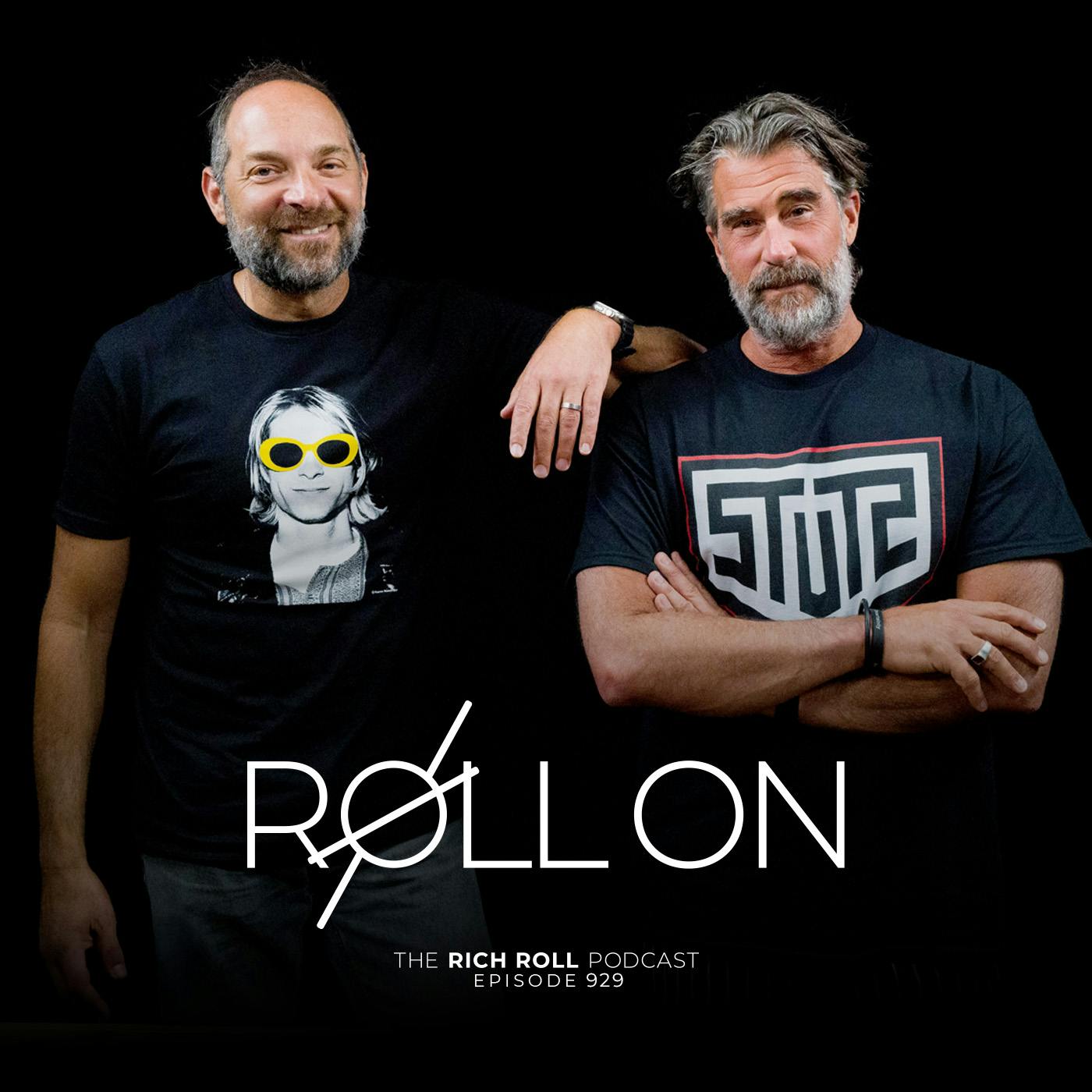
Loading summary
Transcript309 lines
- [00:02]
Rich Roll
Hey, everybody. Rollon is back, and it's coming right up. But first, after hosting more than 900 episodes of this podcast, I have noticed a pattern. And that pattern is that the highest performers don't buy into the latest trendy hacks. Instead, they obsess on what actually works, which is always the unassuming basics. And there is nothing more basic than hydration. But here's the kicker. Your body can't hold on to water without the right minerals. Without them, water is just like this temporary visitor. But Element has cracked the code on this, which is why I've been using it religiously for years. Zero sugar, no artificial junk, just sodium, potassium, and magnesium in the ratios that actually work. And look, I'm not exactly crushing ultras right now healing from this surgery, but in. In some ways, I need it even more. In order to properly recover, I need to treat my body even better than ever so it can heal properly and expeditiously while also maintaining my focus and my energy levels to rock out all of these podcasts, write a book, be a husband and a dad, and I gotta say, Element keeps my brain firing in a way that water alone can't. Their new sample pack features their most popular flavors. Citrus salt, Raspberry salt, Watermelon salt. That's my favorite. And orange salt. Eight stick packs total. Perfect for finding your favorite or sharing with a friend. Get a free 8 count sample pack of elements most popular drink mix flavors with any purchase@drinklmnt.com Rich Roll. Find your favorite element flavor or share it with a friend. We interrupt your programming with an important psa. Happy gut, happy body, happy life. It's important, but to get there, you need a ritual. Mine starts right here with seed DSO1, because here's the thing about probiotics, and many people don't know this, most of the products out there don't even survive your stomach acid. Which is why I was intrigued by Seed because they have this capsule in capsule system which is designed to safeguard 24 probiotic strains and actually deliver them all the way to the colon with precision, where they can be released intact. Seeds DS01 Daily Symbiotic is a 2 in 1, meaning both a probiotic and a prebiotic, which was precisely formulated with these 24 strains that are not only clinically studied, but actually proven to survive the digestive journey through your GI tract and stomach acid. But DSO1 isn't just about your gut. It's about supporting your entire body, your whole body, from your immune system to your energy levels. And since starting DSO1. I. I actually have noticed improved digestion and steady energy. I feel lighter after meals and I really love knowing that I'm supporting my gut barrier integrity and my immune function. So go to seed.com richroll and use the code richroll25 for 25% off your first month of DSO1. If you care about your health, you care about your longevity, you got to start with your gut. So visit seed.com richroll and use the code rich roll25. Bro, I'm just happy to have you here.
- [03:27]
Adam Skolnick
I'm happy to be here.
- [03:28]
Rich Roll
Are you doing okay?
- [03:29]
Adam Skolnick
I'm doing great.
- [03:30]
Rich Roll
What's happening?
- [03:31]
Adam Skolnick
Oh, oh, we've started.
- [03:33]
Rich Roll
We are rolling.
- [03:36]
Adam Skolnick
You know what a big moment happened a couple of weeks ago I wanted to tell you about. I was out with Zuma. You know, we do our breakfast bros. It's usually a Saturday or a Sunday night. Going to be tomorrow for this week.
- [03:49]
Rich Roll
And he is how old now?
- [03:51]
Adam Skolnick
He's going to be 5 on the 29th of August. And so we went and, you know, he had to pee. And so we went into a public restroom. And this one had urinals. One little guy urinal and one big guy urinal right next to each other. And so our first time ever peeing in the urinals next to each other. And it felt like a moment. It felt like a bit of a moment.
- [04:15]
Rich Roll
This concludes Skolnik's Corner. I'm dadding rites of passage for healthy masculinity. Yeah, this is a portal into the manosphere for you. I can see it all unfolding here.
- [04:32]
Adam Skolnick
This is gonna be where it goes.
- [04:33]
Rich Roll
Yeah, yeah. This is gonna be your new thing there.
- [04:36]
Adam Skolnick
I was looking over and we were having a conversation. We were breaking the rules, you know, talking. He was laughing. He thought it was so funny. I mean, come on. I'm still. And like the very fun moments of parenthood. It's cool, man.
- [04:51]
Rich Roll
Awesome, dude. Well, it's good to be back with you. It's been a minute since we've done a roll on and we are appropriately showing up to serve the passionate roll on audience out there. The small but very loyal roll on audience.
- [05:09]
Adam Skolnick
Size doesn't matter, Rich.
- [05:11]
Rich Roll
No, it doesn't.
- [05:11]
Adam Skolnick
It's potency.
- [05:12]
Rich Roll
Yeah. Did you notice the T shirt that I'm wearing? Do you see what that says? Stutz says Stutz. Yes. Yes. Shout out to my friend Jamie Rose, who gave me this as a gift recently. She was wearing it at this book release party that I went to for Phil Stutts for his latest book. And it sort of like has this marvel overtones to it. Like, you know what I mean? It's sort of like a Batman kind of logo for this guy. So I wanted to rock in honor of the great Phil Stutz. I'm still wearing the band that he gave me around my wrist that reminds me of the Three Truths. Do you remember what the three Truths are?
- [05:57]
Adam Skolnick
Yes. Three Truths. I do.
- [06:01]
Rich Roll
You're on the spot.
- [06:02]
Adam Skolnick
I'm on the spot.
- [06:03]
Rich Roll
Can you read this far? Because you could probably see it. Yeah.
- [06:05]
Adam Skolnick
Hard work. You can never get away from it.
- [06:07]
Rich Roll
There are three unavoidable truths of life.
- [06:10]
Adam Skolnick
Yes.
- [06:11]
Rich Roll
Suffering starts with pain.
- [06:12]
Adam Skolnick
A pain.
- [06:13]
Rich Roll
Yeah. Pain is unavoidable.
- [06:15]
Adam Skolnick
Yeah.
- [06:16]
Rich Roll
There will always be a need for constant work.
- [06:18]
Adam Skolnick
Yeah. Constant work.
- [06:19]
Rich Roll
And what's the third? Life is uncertainty.
- [06:24]
Adam Skolnick
Uncertainty.
- [06:24]
Rich Roll
But there's one thing for sure, which is that roll on. Must continue. And here we are.
- [06:30]
Adam Skolnick
Here we are. I can't believe this is. The problem with. This is another problem of parenthood is that you can't remember these kinds of things. They don't come to the front. They don't come to the front of mind as quickly. But, yes, I know Phil Stutt's Three Truths.
- [06:44]
Rich Roll
Yes. You just got back from Alaska. I did. We can talk a little bit about that. I'm now past the initial 90 days since my spinal fusion surgery, so we can bring you up to speed on what that's been like. Celebrated 22 years of being married, as well as my wife's birthday the other week. So, yeah, three anniversaries. My wife's birthday, our wedding, and the anniversary, the three month anniversary of my surgery.
- [07:18]
Adam Skolnick
Holy shit.
- [07:19]
Rich Roll
Yeah.
- [07:19]
Adam Skolnick
So do you celebrate anniversary? Is surgery anniversary a thing?
- [07:23]
Rich Roll
I don't know. I'm making it a thing.
- [07:25]
Adam Skolnick
You're making it a thing.
- [07:26]
Rich Roll
You gotta ritualize these, like, you know.
- [07:29]
Adam Skolnick
Goalposts, but in 90 days. So you're in 90 days. Let's go there first, then 90 days. Is that like a signpost on the rotary recovery? Usually with this kind of surgery, it's.
- [07:39]
Rich Roll
The first kind of major signpost in that you're emerging out of the very acute phase of the healing and into a more rehabilitative phase. So to date, I haven't even started PT. That 90 day mark was my permission to no longer have to wear a back brace every single day. So I've liberated myself from that. I had an appointment the other week where they took X rays and the surgeon looked at it and he said everything is looking good and it's moving along and healing nicely. But still, I'm in the very early stages of the fusion aspect of it. Like, these bones are only starting to kind of grow together, and there's a long way to go before that is completely locked in. So at least I have the green light to begin pt. He told me he was gonna refer me, but I haven't gotten that referral yet. So I haven't really been doing anything except what I have been doing, which is walking and taking things very gently and light and still, like, feeling a little bit better. Not as tired in the afternoons. Like, I can handle a little bit more on the work front, but still fragile, still feeling weirdly uncomfortable, still not supposed to bend or twist or lean or all those sorts of things. So, yeah, it's been a massive test of patience. I know there was a lot of people out there who were enjoying the walks that I was doing.
- [09:07]
Adam Skolnick
I'm one of them.
- [09:08]
Rich Roll
It's like, weirdly, that was a very popular thing, much to my surprise. And then I just completely stopped doing it.
- [09:15]
Adam Skolnick
Did you stop doing the walks?
- [09:17]
Rich Roll
I wasn't doing the. I haven't been doing the walks as rigorously and as regularly as I was, at least in the morning, in that way, because I've been using this time to advance the book project that I'm pretty immersed in right now. And my special creative time is in the morning, so I want to capture that. And so those walks and the other kind of the nominal amount of exercise that I'm doing is a little bit later. But also the whole point of those is to be present to. You know, I keep talking about, like, okay, well, this is the opportunity where you're forced to, like, be still with yourself and to pay attention and to be present and to, you know, lean into the lessons and the opportunity that this unique moment that I find myself in is making available to me. And when I'm thinking about, like, how am I capturing this to share it, I'm completely out of that experience altogether. I'm thinking about, like, okay, should I film this? And where's a good photo? And that's all that's occupying my mind, which is fun in terms of, like, sharing the experience with other people, but it comes at the cost of what the whole endeavor is supposed to be about. So I kind of stopped doing that. Although maybe I'll start doing it once in a while, because people seem to enjoy it. But I am still making sure that I'm getting my steps in and doing my meditation and really honoring the uniqueness of this experience that has forced Me to basically stop everything. And it's very uncomfortable, you know, and it requires a tremendous amount of patience that I. That I don't always have, but it's forcing me to practice all of these principles that I talk about all the time. Like, you know, you can't train where you think you should be or you feel like you used to be. You have to train where you're at. And where I'm at right now is basically like ground zero. And as much as I talk about the present moment being the place where all answers seem to reside, I nonetheless am, you know, always looking for the escape hatch to distract myself and just noticing that in and of itself has been interesting and trying to bring my back, myself back into the present moment to sit with the discomfort of not being able to do the things that make me feel like who I am. And knowing that, you know, it's our resistance to being present, to declining distractions, that always reveals the teachable moments that are lying in wait. If we're, you know, courageous enough to sit with that discomfort and lean into, you know, what those lessons might be, you got to just do what you can with what you have. And when, you know, I don't have much in terms of my physical capacity, you know, it's. It's definitely a sense of being limited, but also this understanding that I'm being prepared for something better. Like, you can't. I can't get back to doing what I love doing unless I really am patient with the moment that I'm in right now. And I've sort of been thinking about this in the context of the caterpillar becoming the butterfly and how Alexi Pappas says you have to. You know, it's not like a trans. Like a transition from one to the other. You have to. The caterpillar has to be completely dissolved into a goo. She calls it the glop. Right? Like, you have to go into your glop state before you can emerge into something else and be transformed by the experience. Or Chip Conley calls it the chrysalis. Right? I mean, that's what it is. It's this chrysalis and really paying attention and honoring, like, these transitions in life. But also my spin on it, this is. This is my big, like, insight, which is that the caterpillar cannot become the butterfly unless it inhabits the mind of the tortoise first.
- [13:18]
Adam Skolnick
Okay, that's a. That's a mixed metaphor, but I like it.
- [13:21]
Rich Roll
I'm using many animals here, but the caterpillar can't hair its way to the butterfly. It has to, you know, adopt the mindset of the tortoise and take these things slow, I guess, is what I'm saying. Like, slow and steady patience. Things I've always promoted, try to live by. But now I'm kind of being forced to live at a whole entirely, like, new level.
- [13:42]
Adam Skolnick
Yeah.
- [13:43]
Rich Roll
And that conjures all these questions around identity, like, who am I? Like, am I an athlete? Like, not right now. I'm not, you know, a different kind of athlete, I suppose. Am I a podcaster? Am I a writer? Are you a father? Are you a husband? Adam? Like, yeah, we're all of these things, but we're also none of these things and so much more. And what happens when you kind of of release your grip on this idea you have of yourself and who you think you are and how you hold yourself out to the world and how you would prefer to be perceived and relinquish, like, all of your energy around that? What happens then? Like, you're in this state of deeper surrender that makes space for something new, something more capacious. I suppose. So that's a little bit about this exploration that I've been on, which is cool, you know, and it's like you were talking to me earlier about this clip that I posted or that my team posted from a podcast that I did with, with Mike Gervais a while back, where I was talking about these phases of life in which we find ourselves dismantled and how it's like, congratulations, like, this is your opportunity, right? Like, this is where all the juice is to, you know, take the experience, learn from it, and build upon it, to emerge transformed as a consequence of that and taking that idea and layering it on top of where I'm at right now, instead of resenting this situation or trying to emerge from it as quickly as possible, instead to just allow myself to completely be in it, you know, without resisting it. And. And it's different, you know, it's been a different experience, and I've got the expanded waistline to prove it. It's like my pants aren't fitting so well these days. You know, it's like, oh, that's interesting, right? You know, how long is it going to take me at 58 to get rid of that? You know, probably a little bit longer than it did 15 years ago, but that this is the reality that I'm in right now. But I'm excited to start the PT and have something to, you know, sink my teeth into that will distract me.
- [15:59]
Adam Skolnick
Well, yeah.
- [15:59]
Rich Roll
So the experience that I'm in right now.
- [16:01]
Adam Skolnick
Two questions. One is just. I know you've. Some of the walks. You've been doing pool walks, too. Is that easier? Is that. Do you find that you can go longer on the. In the pool?
- [16:10]
Rich Roll
I can go as long as I can go long. Like, I. You know, like. Like, that's not the limiter. The limiter is. Is. Is, like, what's hard is doing less than what you feel like you're capable of doing. You know, it's like, okay, you've done enough. The idea isn't to walk a mile longer than you did the day before every single day until you're walking 30 miles every. It's like, this is not what we're doing right now. I could do that. I want to do that. But that's missing the point. So, yeah, I can walk in the pool, do the pool walking. And it's cool because you get a little bit more resistance without any kind of, you know, strain on the lower back or any of that. And I would admit to doing a little bit of swimming and kicking in the pool just to see how it feels.
- [16:56]
Adam Skolnick
All right.
- [16:57]
Rich Roll
Which is nice. So, anyway, enough on that.
- [16:59]
Adam Skolnick
Enough on that. When you feel the urge to escape from your and try to distract yourself, where do you go?
- [17:06]
Rich Roll
I go immediately to Netflix. No, no, I mean, it's kind of true. Yeah, I've watched a lot of stuff.
- [17:14]
Adam Skolnick
Yeah, Just to get your mind.
- [17:17]
Rich Roll
I mean, I have plenty of work to do, you know, so I can be a workaholic in the midst of all of this. And I' I would plead guilty to indulging that, you know, when you have a book deadline looming.
- [17:28]
Adam Skolnick
It's interesting what you said about the relinquishing, because I was listening to my favorite mindfulness guy, Jack Kornfield, from, like, some 1992 talk, and he was referencing one of his teachers, and the subject was Nirvana. I'm wearing.
- [17:43]
Rich Roll
Yeah, you're wearing the curse shirt.
- [17:46]
Adam Skolnick
And the description of Nirvana. You know, we think of Nirvana as the goal like this enlightenment. Boom. You're a fully realized being. You have ultimate equanimity. You have reached the, you know, the spiritual, you know, Jedi phase. But in reality, there's moments in Nirvana every day. And it's in the relinquishing of the grip. It's in the letting go. And that feeling you have. It's after running hard, and then you stop running and the running high hits you. It's in that moment. It's like. It's like we all have these moments of Nirvana. We just don't label it that way. And this is what these guys were saying, Buddhist scholars and people who've been pursuing this for years by that point. And I just thought that's an interesting way of putting it. In the little moments of nirvana we have in our day because there's multiple things happening all the time. There's the big tragic comedy that we're all immersed in, and it feels very tragic a lot of times. There's the stuff we're dealing with on our own plate, which can be at turn stressful or fun or whatever. And then there's the real subtext, which is what you were saying, where all of these things and to let go in the course of your day, maybe 10, 12 times you have these moments in nirvana and just to kind of focus on those and give them a little attention. I found that that's a. A pretty cool experience. So it just made me think what you said.
- [19:23]
Rich Roll
Yeah, I mean, those experiences happen before we have the mental acuity to label them, you know, as good or bad. We do that in retrospect. And I think to the extent that we can recede into the background and inhabit a more present state of awareness, we make ourselves available for those experiences because it's our. It's our. It's our compulsion to rush in and slap a sticker on it and say, it's this or that, that takes us out of the experience itself and robs us of the opportunity that's available to, you know, inhabit our lives from a more. I'm not. I'm not saying like a perpetual state of nirvana, but to make ourselves available for those experiences when they arise.
- [20:16]
Adam Skolnick
Absolutely. The analysis. The analysis paralysis.
- [20:19]
Rich Roll
Did you have these experiences or an experience like that while inhabiting the vastness of Alaska? Watching grizzly bears chomp down on salmon swimming upstream.
- [20:31]
Adam Skolnick
Alaska, man. Well, you know, Julie's homeland, where she emerged, the legend that she is. Our first time in Alaska, it was. I know, I'll be back. I knew I was gonna love it. I knew we were all gonna love. Just felt, you know, it recalls the same feelings you have in Hawaii and the Pacific Islands. There's something about it. There's a frontier aspect. There's a cultural kind of kinship with those places, and there's actually a lot of travel between those places. You know, it's just. It's the last frontier. And we were only there for like a week. We have a good friend of mine, Leah Barrett, who's an underwater photographer that got me into covering Free there now with her Husband Rob, and their kids, Mako and Tiger. And so we had never. I'd never met her kids, she'd never met Zuma. And so we, we've been talking about how to get the families together. And finally they just moved back there and for a job Rob got. And so we just said, hey, we're coming. And so we stayed with them in Anchorage for a few days. We did the float, mate, float plane trip to Katmai national park, where the grizzlies at that waterfall, Brooks Falls, where that famous picture of the grizzly just about to shine.
- [21:45]
Rich Roll
I know you sent me that video and I was like, oh, that's exactly like that image that I've seen. Like that actually is happening in real time, in real life.
- [21:52]
Adam Skolnick
Dude. It was amazing. It was like. But it's funny, when you do the day trip from Anchorage, you're like, wow, you can just do a day trip and go see these animals. Because it was too late by the time we decided to do this trip. It was only a couple months ago, so it was too late to stay the night there or get any sort of lodging in the national park. That stuff's like lottery two years in advance. And so we just did the day trip, but then you get there, like there was fog in the morning, so we got a little bit delayed. Then we got there and you have to go to something called bear school. So like a 30 minute primer from the national park to teach you what to do. And then you have to, then you wait. Then you have to immediately eat because otherwise you won't eat. And then you finally get on the trails and we had about five hours while in the park itself. And immediately you walk out. Your whole concern is, are we gonna go there, do all this money, spend all this money, take all this time and then see no bears? Like that's what you're worried about. Immediately you hit the trails, there's bears, you know, there's bears everywhere. Grizzly bears. And so from the first lookout, we watched some grizzly bears play. And I let you know, April's the photographer. I mean, she's got the gear, she's got the eye, she's got it all. She's very skilled. And so the whole thing was you go. And Zuma and I had our own little experience. And so it was fun just cruising the trails with Zuma. And then finally we caught up to her because she's shooting a lot of photos. And then we hit the falls. We saw everything. We saw about eight bears. One crossed the path, like 60ft from us or 50ft from us, just like the trail in front of us. And so that was pretty fun. Our bear school kind of kicked in and I picked up Zuma and we just kind of stayed quiet and let it pass.
- [23:31]
Rich Roll
Are they just unperturbed by human observation?
- [23:35]
Adam Skolnick
They seem it. They seem it. You know, if you probably ask them, they'd be like, man, get these. They're like, mosquitoes. Get these people out of here. You know, But. But they seem fine. Like there, there didn't seem to be anything. And like nobody's got weapons around. They've got. The rangers have bear spray. Yeah. And maybe some of them have sidearms. But. But for the most part, it's a very low stress, low concern thing. The big concern is if you don't do what they advise and you just stay in the trail and the bear is right there. The bear will just lay down. It won't move for two hours. And then nobody gets their plane and nobody leaves the park. It's a big problem.
- [24:12]
Rich Roll
It's a standoff.
- [24:14]
Adam Skolnick
That's the big concern. It wasn't like attack. Attack was never a concern. And also make sure the food's out of the cabins and things, like the normal stuff so that they don't just break in and associate food with. And so that's the main thing. But with this much salmon, I mean, the river was red. I mean, with this much salmon right now, there's no concern. There's food everywhere. And so that was fun. And then we did. We went down to a place called Between Beaches, which is on a spit about four hours south of Anchorage. Then you catch a boat to some place called McDonald's Spit in the Seldovia region. And it's like this little spit of sand and rock and both sides. There's a beach on the lagoon side and there's a beach. There's a beach on the ocean side. And it's just magnificent. Like, you know, snowy peaks and bald eagles everywhere. And it just was like magnificent.
- [25:04]
Rich Roll
Did you get your cold water immersion?
- [25:06]
Adam Skolnick
I did. There is free diving in Alaska. And I brought my fin and mask and my fin bag with me the whole time. Like I'm carrying, like. We do not travel light. We don't travel light. We had a guitar, we had my fin bag. We had everything. And so we got in. I got in. The viz was terrible. But I'm used to bad viz. It was. It was warmer than I thought. It was warmer than like the Oregon coast that summer. I dove there. So it was like 49 degrees at depth Fahrenheit, but it was a blast. Hung out with Alaska Free Diver. There's a new shop in Seldovia. Shout out Chris and Amelia. Chris took me out and had a great time. And so, you know, it was just. It was epic. We're going to be back and between beaches is a great spot. Highly recommend for people who are looking, like, for a remote kind of cabin on a beach in Alaska.
- [25:59]
Rich Roll
Yeah, I'm looking for this new goggle that Speedo recently came out with. I saw an image of it on the Internet and I'm trying to find it right now. I was going to send it to you and I forgot and I can't find it now, but maybe we can insert it into this video later.
- [26:16]
Adam Skolnick
I need to see it.
- [26:16]
Rich Roll
But the reason is that it's sort of of a hybrid in between a, you know, a scuba diving mask and actual goggles. It's like goggles, but it has these flanges that kind of go over your thing. And I was like, oh, this is the compromise that Skolnik and I have been looking for.
- [26:34]
Adam Skolnick
Well, you need the nose, though, or you can't dive.
- [26:37]
Rich Roll
Yeah, it doesn't have the nose thing.
- [26:38]
Adam Skolnick
Right. So then you can't dive.
- [26:40]
Rich Roll
So you won't even consider this even for swimming, even though you don't need your nose to be covered.
- [26:44]
Adam Skolnick
No, you're not dive goggles. I have goggles.
- [26:47]
Rich Roll
Okay. I thought the whole thing was you insist on these masks when you know you should be wearing goggles. Because this is the etiquette, Adam. This is the rules.
- [26:57]
Adam Skolnick
My problem is I can't swim without trying to dive. That's my problem. But, yeah, no, it was a blast. It was a good time. And Leah, like, fished a halibut off a paddle board, which was pretty incredible.
- [27:13]
Rich Roll
Wow.
- [27:14]
Adam Skolnick
So, yeah, she's become a full on Alaskan. You know, you're picking berries, salmon berries and blueberries fresh off the bush. So, you know, I'm boring people who've been to Alaska who know how great it is but love it there. And we'll be back for sure.
- [27:30]
Rich Roll
A while since I've been there. Yes. Julie's. Julie grew up there. She's got crazy stories of. Of living there.
- [27:37]
Adam Skolnick
Being a kid in the 70s.
- [27:39]
Rich Roll
Yeah, yeah. Latchkey situation, you know, and her and her friends are, you know, on a glacier with, like, no phone and, you know, like. And just you. A can with a rattle in it and, you know, that's basically it. And there's crevasses everywhere. And it's just like amazing. Amazing that like they survived and people would die all the time. Yeah, people did die, you know, like it was just like a hap, you know, the thing that happened like all the time because nature is so uncompromising and so, you know, gigantic.
- [28:11]
Adam Skolnick
And apparently like the beaches off Anchorage, it's like they look like sand, but it's mud flats. And so if you go down to the mud flats and try to like get in, you could stuck there and the tide could come in and just suck you like it'd be like the slow death of your, of your nightmares. And so like you, you see this water, it's flat and it looks amazing and inviting and it's like do not go there. And there's no signs or anything. Like any tourist could end up getting stuck. But apparently there are stories in the newspaper so and so stuck in the mud flats.
- [28:40]
Rich Roll
Are you old enough to remember when we were kids and it was just all about quicksand? We would talk about quicksand all the time. There was an obsession with quicksand and people dying in quicksand and then that just went away at some point and people don't talk about that anymore. But when I was 12, I can tell you that was your phone nationwide there was a conversation happening amongst my peers, my age group, around quicksand.
- [29:06]
Adam Skolnick
Yes, the different ways to die. As you grow older, you learn more and more ways it could happen, you know.
- [29:18]
Rich Roll
So I constantly find myself in this situation, a situation I suspect many of you can relate to, where almost every day it seems I'm being pulled in a thousand directions too much to do. But I need to not just show up for it all, but show up with my best self, with clarity and with purpose. And I will lean into anything that will facilitate that in a healthy way. Which is exactly what Nandaka by Peak is designed for and why it is my new favorite coffee alternative. So what is it? It is a nootropic adaptogen blend built for focus and calm energy without the crash. No low rent mycelium fillers, just 100% fruiting body mushrooms. The legit high quality stuff like lion's mane for cognitive support, Reishi and Chaga for your nervous system. Plus ceremonial grade cacao rich in anandamide, the bliss molecule. They've added fermented probiotic teas for gut health and cacao butter that delivers nutrients right where they're needed. So this isn't about chasing another caffeine high, it's really about nourishing your brain at a cellular level with organic plant based ingredients. For me the energy is clean, the focus is steady and it really does help me with my creative flow. Genuinely enjoyable. Smooth earthy cacao with this subtle spice. Very tasty and basically a daily ritual I actually look forward to. And right now you can get up to 20% off for life plus a free starter kit including a rechargeable frother and glass speaker. Head to peaklife.com Richard Ritual to try Mandaka and feel the shift for yourself. There's this persistent myth that creatine is just for bodybuilders and gym bros and I kind of get it. The marketing has been terrible for decades, but what the science shows is that creatine is actually this fundamental cellular fuel. Your brain uses it, your heart uses it. Every energy demanding process in your body relies on it. And this connects to everything I explore on the show. Cognitive well being, physical performance, recovery, longevity. It's about improving how your cells generate energy at the most fundamental level. Momentous understands this and their new lemon travel packs make it simple. I've got them right here. They're all naturally flavored of course, perfectly portioned with grab and go convenience. But the real differentiator is Momentous creatine itself. It's pharmaceutical grade, not the bulk powder of questionable origin that floods the market. Theirs comes from Germany and it's called Creature. So if you have been curious about creatine but just kind of put off by the Broscience marketing, this is your entry point. Use code richroll@livemomentous.com Richroll for up to 35% off your first order. We're brought to you today by Calm. We live in a culture that glorifies being busy but rarely talk about the mental residue that constant stimulation leaves behind. And I've learned over time that our greatest breakthroughs emerge from our quietest moments. Mental resilience isn't about pushing harder. It's really about intentional pause. And meditation has become a tool very important to me in the context of exploring how I approach my life. My anxiety, my stress, my my creativity, my sleep, my productivity. Offering this new perspective on what it means to perform those few intentional minutes have become invaluable. Calm provides mindfulness tools that help you reconnect when you need it most. Calm is the number one app for sleep and meditation, giving you the power to calm your mind and change your life. And right now, Calm has an exclusive offer just for for all of you listeners of the show get 40 off a Calm premium subscription at calm.com richroll this is an amazing value. Go to C-A-L-M.com richroll for 40% off unlimited access to Colm's entire library. Calm.com richroll and tell Calm you heard about them from me. All right, what do we want to talk about? All right, let's talk about. Well, first of all, this week we put up a podcast with Dr. Jessica Nurik. I mean, it's Monday morning when we're recording this. This podcast that you're listening to or watching will go up on Thursday. But it's been cool to see this guest be embraced by the audience. Somewhat of a controversial conversation that we have around the state of the Make America Healthy Again movement, which I felt compelled to have with her, and I'm glad that I did. And it's been nice to see her message embraced right now. I wrote a substack article that I published right before we started recording with some thoughts on that conversation and kind of what's going on generally with the Make America Healthy Again movement and what is actually going on behind the scenes with those who hold power and the impact and implications of how that power is being used and leveraged, mostly in the context of deregulation in ways that are actually undermining any good faith attempt to actually make America healthy. Setting aside the again part, which is debatable, but anyway, I think it feels good to kind of take a stand on that, understanding that it might be divisive or controversial. And it also feels good to begin to share thoughts on Substack because we're in the process of really looking at how we can use and leverage Substack for the benefit of the community. I think it's a really powerful and super cool and also very intuitive platform that we really haven't been taking advantage of. And I recently participated in this thing that Elizabeth Gilbert has on Substack. She was a guest a while back on the podcast. We still still haven't published that episode, but she has a thing called Letters from Love, and she's developed this community of over 200,000 people. And what she's doing is encouraging her community to practice this thing that she's been practicing for a long time, which is to write a daily letter to herself from this perspective of love. Like, dear Love, what would you have me learn today as a prompt? Right. And it's an exercise in self love and in kind of honoring yourself and showing yourself gratitude. And she every week invites somebody to perform this exercise, write a letter, share that letter with her Community and kind of make a video where they read it. And she asked me to do it, and I did it the other week. And it's a confronting exercise for somebody who is challenged with the idea of self love, which was kind of the subject of the letter that I wrote to myself and shared. But it was cool. But I think even more cool than that was to see the engagement of her community around this one idea. And it led us to thinking about what our version of that might look like. Because I think the real benefit of Substack is the way in which you can cultivate community, which is something I've been thinking a lot about in the broader kind of context of podcasting itself and what I want to do with it as somebody who's been doing it for a long time. Because it's changed quite a bit since I began the humble beginnings, where it was the kind of purview of the hobbyist, where there was no business plan and it wasn't a income generating adventure, let alone a vocation. But now things are very different. And so I thought it would be cool to kind of talk about that a little bit like the state of the union of podcasting. Like I said, you know, it had a humble history. I had a sense when I started it that it would grow into something bigger and more meaningful than it was at the inception. Like back in 2012 when I began, which was early. Not that I wasn't one of the first, but I was pretty early. And what it's like now, which is it's essentially become almost mainstream media, like.
- [38:18]
Adam Skolnick
All these people, it's going that way.
- [38:20]
Rich Roll
Basically all running their own public access television show and working very diligently to garner people's attention. From my own experience, what's happened is that in many ways, podcasting has become almost an adjunct of the publishing industry. Publishers realized pretty early that the way to sell books is to book their authors on prominent podcasts. And I've participated in that economy for our mutual benefit, I would say. And it's been great because. Because it gives me access to interesting people, because they're making themselves available to promote their wares, their goods, their latest book, their latest offering. But it's kind of gotten to the point now where it's harder and harder to create something that stands out and that's unique. And individuals who are good guests learn quickly that they are good guests and start making themselves available for lots of podcasts. You know what I mean?
- [39:24]
Adam Skolnick
Unprofessional.
- [39:24]
Rich Roll
When the prominent individual, be it an author or Whoever is like, okay, I need to get out in the world and promote something. They are going to book themselves on all of the podcasts that are similar to mine. So you enter into this equation or this agreement where you know that you're going to get access to this person, but you also know they're going to go across the street and do the other guys and the other guys and the other guys. And by the time you publish this, this person is going to appear essentially simultaneously on all these shows. And what happens over time is that all of these shows start to look similar and bleed together. And when you layer on top of that the incentives that are now in place in podcasting, it creates a very interesting situation where in order to stand out in a very. In what is now a very crowded marketplace, you need to learn about things like algorithms and analytics and what gets people to not only pay attention, but to sustain that attention. And that has costs and benefits. Like, if you do it right, you can benefit by growing an audience and maintaining a large audience. The cost, of course, comes that kind of the whole raison d' etre of the entire affair. Like, when you start to book guests based upon what you think is going to grow your audience, or what's going to constitute rage, bait, or incite people, or is going to lend itself to creating a bunch of clips that have the potential to go viral. To me, on some level, you're sort of losing the plot of the whole affair. And I've been thinking a lot about this and the ways in which it's impacted me and this show and how I want to kind of move forward in the context of this environment that's now very different from the one in which I started. And I think while everyone's out kind of chasing trends, oh, this works, or we need this kind of intro, and that hooks people. And here's your title and your thumbnail and all that kind of stuff. In this world that is increasingly video first, as opposed to audio first, which is the way that we started. Rather than chasing trends, where is the white space? What are people not doing or under appreciating in this whole thing? And for me, much of it goes back to the very beginning, which is the whole appeal of this, is that you're crafting, curating, and cultivating something real, something honest, and something authentic that that is appealing because it's not in a rush, and it's not trying to manipulate you or game your attention. And so that is why I've been doing these longer intros in the Audio version of the podcast where I can share my thoughts and take my time. I'm not interested in whether you're gonna, you know, click away five seconds later, like, that's up to you. Because I'm gonna do what I'm gonna do. And I also think in the context of this, when everybody is so focused on growth and audience capture and attention farming, that the real differentiator isn't the size of your audience, but more the depth of your audience. Like, how real is that audience, how loyal are they, and how well do they feel like you're nourishing them? And the differentiator, in my opinion, is going to be that community piece. Do they feel like they're being nourished? And how can you, rather than being focused on growth, like, how can you really serve the people that are already there who are taking time out of their day to pay attention to what you're doing? And I think the answer to that is by emphasizing and investing in ways to bring them in even more. Which is why we have this new studio and we have this theater. We're going to be doing live events and live podcasts and creating more immersive of experiences. And it's why this substack idea, leveraging it to bring the community in and try to create some kind of community based enterprise around it, I think is so vital and important and exciting.
- [43:47]
Adam Skolnick
Cool, man. There's a lot there to kind of unpack and tease out. I love the letter from Love that you did. And Liz, an old friend, and she's asked me to do one. And at first I thought, when I first got the instructions, I was kind of hastily read them and I thought it was like a letter to your younger self. And then so I thought, okay, I have an angle on that. And then when I realized what it was and I read yours and I'm like, oh, this is much more challenging actually than I thought. And when she first approached me with it, she goes, she thinks it's such an important practice for men to do because we are less likely to be so sweet with ourselves or to even tap into that angle. Not to that we're less likely to be sweet with ourselves, but we're just less likely to even consider that lens, lens to which to kind of filter our perspective. And so I thought I was going to do it In Alaska, like five, my five or 10 minutes to go sit there and do it, but I haven't done it yet because I'm afraid of it.
- [44:44]
Rich Roll
Well, the whole thing is like, don't Spend more than five minutes on it.
- [44:47]
Adam Skolnick
Right.
- [44:47]
Rich Roll
Nobody only spends five minutes on this. I probably spent like two hours on it.
- [44:51]
Adam Skolnick
Right. You know, but you might have done the original thing and then played with it. But in terms of the Maha stuff, I thought in your post you mentioned Trojan Horse, and I think that's like the perfect analogy because Maha was kind of brought into the fold during the campaign as a way to lock down the election. Right. So it was. It was kind of a strategic. It was never about. We believed in these things. It was about, we believe that this thing could help us get what we want. And so. And it was worked, right? It totally worked. And then as to your point, I don't want to belabor it, but like in your essay, which I thought was brilliant, you lay out how, yes, red dye number 50 is being 40 out of 40 getting cast aside seed oils, and you mention all the things, but then you're like, yeah, but the Clean Water Acts being repealed, the Drinking Water Act's being repealed in certain ways, and that is going to impact us in a much greater way. And so I thought that was really well said. I just want to reinforce that.
- [45:57]
Rich Roll
Yeah, I mean, I think that what Jessica did such a brilliant job at elucidating was providing a sympathetic understanding around this groundswell of support. Because it is good that we get these dyes out of our food. And it is important to say out loud that Big Pharma and Big Food and all these companies are, you know, have incentives that are at cross purposes with our individual health and our collective well being. It's just that the solutions to those problems are not actually what's happening. What's happening is massive deregulation that's giving all of these kind of quote unquote corrupt behemoths more and more bandwidth to do as they please. And it's easier to continue for them to do as they please if every once in a while they voluntarily say, we're gonna swap this for this and our ingredients. Not because the government is making us like, they're volunteering it. It's not like, you know, anybody's telling them they have to, and they get, like, a little more latitude to play behind the scenes in ways that people are not paying attention to as much as perhaps they should.
- [47:17]
Adam Skolnick
Right. I mean, all the information we're getting on how things are unhealth because there's a regulatory framework and because universities and institutions have had federal money to do certain kind of research, now the federal money is going away from universities, so the research is going to be much more privatized. And so that means it's going to be in the hands of industry more and more. It is already in some respects, but it's going to be more so. And so the science, you're going to have less science to kind of be able to gauge what's healthy and what's not. So there's so many. At least that's my limited understanding of it. But that seems to be at risk. Right. The ability to research what, what is unhealthy and what is healthy is getting, is, is being compromised. And then of course, the EPA is no longer going to be able to regulate pollution. Pollution. You wonder when power switches back because it always does cycles and cycles kind of fold in on, on each other. How much of this becomes the new norm because it's so hard to get things passed now. Like, does this, is it become the new normal norm? You know, does it, you know, it's a good question.
- [48:23]
Rich Roll
So it's one thing that history teaches us is that the more that you, you grant, in our case, the executive branch power, like, it's hard to, it's hard to then, you know, take that power back from them. So this, you know, tripartite system where we have the three branches of government that are supposed to, you know, operate in parity with each other is very much out balance. Like more and more of that power is obviously been transferred over to the executive branch. And once it's there, it stays there regardless of who's in office.
- [49:02]
Adam Skolnick
So that's the right, so there you go. But anyway, that's one piece of it, like the Maha piece of it. And I, I, I've been following Jessica before. I didn't, you know, when, when I found out she was on the pod, I was like, wow. Because, because I've been following her on the same kind of track over the last last few months. And you know, she's explaining it very well. Like you can get, you can understand why people are attracted to that movement. But then like you say very well, but that's not the whole story. And sometimes these days where it's almost impossible to tell what's real and what's not, you can easily get, get you know, roped into supporting something you're not, you're not supporting. The great example of that is the hunters that had to rise up and scream and yeah, about the big beautiful bill because the public lands that they rely on for recreation were getting sold if it went through. And to their credit, credit Cameron Haynes. Yeah.
- [49:59]
Rich Roll
Made a big Push raising awareness around that. And they were successful. They got that dealt with. But it took quite a bit.
- [50:07]
Adam Skolnick
It did.
- [50:08]
Rich Roll
And short of the sort of Teddy Roosevelt Republicans standing up and letting their voices be heard around this, it would have sort of surreptitiously just like pass through.
- [50:20]
Adam Skolnick
Yeah. But part of it was the podcast realm came in as well. So Cam Haynes kind of tapped into that and it just rippled like the Teddy Roosevelt aspect, like you said. But the thing that I thought was amazing, the reason I wanted to bring that up, I know it's a little bit older news and shout out. Kyle Tierman, who also was public on this, is that Kyle the environmentalist also likes to hunt occasionally. And Cam, who, who voted Republican, you know, Kyle did not. Kyle's Democrat. It's one of the few times you actually see hunters and environmentalists coming together. You don't see it too much. When it comes to marine protected areas in the ocean, the commercial fishermen kind of have their take. And those political takes usually get absorbed by the recreational fishermen. No regulation, please, no more regulation. We have two. Our waters are too over regulated. And the same thing happens often in ranching and hunting communities in regards to open space and public lands. This was the first time I can remember, and I've been involved in some ways in the environmental movement since the 90s, that these two groups came together to actually get something done like this. It's almost always there at odds. And so I feel like that matters. I don't know if it's something we can build on or not, but I think it matters. And part of it is the intentionality behind a guy like Cameron Haynes who cares deeply, he's deeply passionate for the earth. Now how can we communicate with that side of the aisle and come together on other issues? Because I feel like. Yeah, exactly.
- [51:57]
Rich Roll
I mean, it is such an interesting thing because truly, at least in America, environmentalism was born out of, you know, the Republican perspective, courtesy of Teddy Roosevelt, who said, we need to protect these lands and we need to kind of, you know, exercise our federal power to make sure that they stay the way that they are and that they are preserved. Like he's the original American environmentalist.
- [52:26]
Adam Skolnick
Right.
- [52:27]
Rich Roll
And so then, you know, but then, you know, these parties shift and morph in the tectonic plates of policy, you know, move them in different directions such that, you know, environmentalism became the purview of the Democratic Party and deregulation of the environment, that of the Republican Party. But as in all cases, when there's overreach in either of These be it with the Republicans, you know, allowing corporations to pollute these lands or trying to pass a bill that's going to allow, you know, the privatization, like you know, the sort of, you know, building of developments etc, you know, on these lands, there's going to be a backlash. Similarly, on the left, when they get, you know, they get too crazy about the regulation, then there's going to be pushback. So in the middle you have, you know, Kyle and Cam, who are kind of like avatars right at the center who are coming together to resolve an issue that I think we all, you know, it was pretty, pretty pretty much, you know, at least, you know, amongst the citizenry, you know, unanimous that like, we can't do that.
- [53:36]
Adam Skolnick
Right, exactly. And you look at a. So not to, I don't want to bring up names and have people get all scream and yell, but like, it's not that. It's not like our health secretary doesn't understand the link between the environment and all this stuff he helped found. He founded Waterkeeper. Waterkeeper is one of the great environmental organizations out there.
- [53:58]
Rich Roll
He did a lot to clean up the Hudson and other rivers. And that organization still exists.
- [54:04]
Adam Skolnick
Right. And they're amazing.
- [54:05]
Rich Roll
It's done a lot of good.
- [54:05]
Adam Skolnick
Yes.
- [54:06]
Rich Roll
Which makes it all the more curious and bizarre.
- [54:09]
Adam Skolnick
Bizarre.
- [54:10]
Rich Roll
Like the whole thing.
- [54:11]
Adam Skolnick
The whole thing. Which brings us back to the podcast realm you're talking about. It's so interesting because while this deregulation is happening on the national level in relation to the environment and food systems, where there's increased regulation on one hand in a narrow way, but more broad deregulation, the broadcast universe is like, that's the tectonic plates that are shifting the most. And we feel it here in Los Angeles, where there's less work for longtime crew and up and comers who want to start as PAs and get into production, there's just so much less work in Los Angeles, partly because of that production work, but then also it's just that the nature of the economy that is broadcasting and filmmaking in general is shifting. And you know, you. We come out here to this amazing studio that you guys built and you're one of, you know, I didn't realize it at the time, like when you were putting this together. I've only learned it over the last year or so, but there are, you know, you are one of several now that have popped up kind of indie podcasters that have grown and grown and you have a footprint here that is a real part of the broadcast future. And, you know, we think of you, I think of Mel Robbins, Steve Rinella, that you can, you can, you know, obviously Joe Rogan was the first with his studio in Woodland Hills and now in Austin. But you have kind of a small footprint in, in relation to the others, but, but actually a growing one. It's really interesting to see how the, how that system is, is changing.
- [55:46]
Rich Roll
Yeah, we're definitely in this, this flux state of transition in terms of the media landscape, you know, writ large and small. We have the Colbert show getting canceled. You know, that's a whole, you know, sticky wicket. Like, you know why that's happening at the same time that YouTube creators like Rhett and Link from Mythical Mornings, those guys are coming in later this week to do the show. I'm excited about that. That and a handful of others are being submitted on behalf of YouTube for Emmy consideration. So the lines are getting blurred between what is traditional or mainstream media and what is alternative or online digital media. Essentially everything's on a screen. And we're in this position now where it doesn't really matter if you call it television or you call it YouTube. These things are all just, just buttons on a screen that we choose. And whether it's being broadcast by one of the big four three lettered networks through an antenna and satellites, or it's coming through an ethernet or your WI fi into your office on a smaller screen really doesn't matter anymore. All of these things are being put in the Vitamix and they're being blended together. And we haven't really emerged yet yet from that with any clarity. Like right now, it's all confusing, but it is true. Like here we are in Los Angeles, the global capital of content creation for as long as any of us have been alive. And people who have had long careers in this industry can't find work, or at least can't find work that pays a habitable living wage.
- [57:43]
Adam Skolnick
Oscar nominees are driving uber mercy.
- [57:45]
Rich Roll
These people move from working on television shows or movies into the digital space looking for jobs at places like this, which I think is incredibly fascinating.
- [57:59]
Adam Skolnick
It's so fascinating and I feel so.
- [58:01]
Rich Roll
Lucky to even have a foothold in all of this. I mean, we're a small operation in comparison to what many others are doing out there right now. And it's really special and I'm so glad, grateful to be able to do this thing and, and to kind of grow it and now to start to work with other creators and kind of expand what we're capable of doing, which I think is really exciting. But I think it's important to hold on to, like, why it is that you're doing it in the first place. Because with all of the incentives like I was mentioning earlier, that are out there, it's very easy to lose sight of the why. And I've borne witness to people who are doing that. And when you get to a certain size and scale and you're staffed up with all kinds of people who know how the Internet works, I've seen people kind of move into this place where their perspective on what they're creating and sharing is really entirely through the lens of what, like, what's going to go viral, what's going to be the thing that is going to travel across the Internet the most fluidly. And as a consequence of that, the programming starts to get reverse engineered. Rather than it being what perhaps it was at the outset, like this more authentic, original, kind of organic exchange between people has now become kind of completely predetermined in advance. And I think that comes at a certain cost. It certainly works. People are. There are people out there who have become very successful doing this. And I don't begrudge them, they're doing what they're doing. But I just think for me, and also as somebody who's been doing it for a very long time and wants to continue to be able to keep doing it and be in love with it in the same way that I always have been, I always want to come back to the why. And the why is like, I want to serve the audience in a meaningful way. I want to create something that will have the potential to be impactful, not on a surface level, but really on as profound a level as I'm capable of doing. And in order to do that, I have to step outside all of the gamesmanship that I think is going on right now and. And just lean into my strengths and try to double down on them and allow it to be what it wants to be, rather than trying to force it to be something else. Because this is what other people are doing that's working really well.
- [60:46]
Adam Skolnick
It's interesting. It's like what we were talking about before you went into that was the shift in the flux. And like you said, people from professional broadcasting careers coming over to YouTube, well, what you just described as gamesmanship or as like planning on the questions, having, you know, what you're gonna get back from the. From the guest. I mean, that's late night talk show. That's talk show stuff, right? That's Donahue's car.
- [61:10]
Rich Roll
It's basically going back to. Yeah, it's like, you know, all of these things are moving in bi directionally. You know what I mean? Like, the talk shows have to become more like podcasts. And the podcasts are becoming more and more like the late night talk shows and the morning shows where it's like, here's my card with the question on it. And this question has. Has been vetted based upon a B testing to solicit the answer that is going to be the most popular with our audience. And it's like, okay, well, right now we're doing television.
- [61:41]
Adam Skolnick
Now you're doing television. And what you're talking about is, I gotta stay true to my rudder and just keep going. And stay indie, and stay indie, but also stay indie in your own mind.
- [61:53]
Rich Roll
It's probably like a Gen X thing. It's like the Gen X, like, don't sell out while you're selling out. Or like, you know, like. Or you have. You're guilty about it or something like that, you know? Yeah, I mean, it's. You're wearing a Kurt Cobain T shirt, right? This is like, you know, this is like very Gen X. I am wearing the shirt.
- [62:10]
Adam Skolnick
But I did find out, I read somewhere that, like, when the money started rolling in, Kurt somehow negotiated 75% of the royalties for himself. So, yeah, and he probably deserved him. He probably deserved him, but it doesn't.
- [62:23]
Rich Roll
Mean there wasn't a part of him that was like, you know. Yeah, you know, like, the guilt of selling it. You know, it's like there's this sensibility for people of our age, like, the way that we were raised in this sort of, you know, fuck you, punk rock. Like, it's not cool to care. And, you know, everything is sort of, you know, it's sort of like this veneer of nihilism over everything, right, where the worst thing you could do was sell out. And now we're in a culture where, where, like, selling out is the point, you know, like, this is the thing that everyone is celebrating. And, like, look, this is a commercial enterprise. Like, I want it to be successful, and I'm glad that it is, and I'm very proud of it. And I get to employ all these people and do all this cool stuff. So I'm not necessarily hung up on that. Only when it comes at the erosion of the value system that gave birth to it.
- [63:15]
Adam Skolnick
Well, I think your intentionality, personality comes through also. And like I was telling you before we got on here that, like, I called you a tastemaker. You called yourself a curator. More of a mindful Curator and like someone people depend on for. Not just like we call tastemaker. Usually it means what you eat or what you consume, media wise. But you're introducing concepts and experts as well. Well as when we talk about like things to watch and books to read and things like that. So you're bringing that. And that intentionality kind of comes through I think because you're, you're the way you started which was your, your kind of three niche. Your three niches. The, the plant based, the, the sober living and the endurance sports. So those three niches crossed over and you're able to, to kind of introduce them to each other. And now you're continuing to do that. That's great growing. So that intentionality comes through. And the other thing I think of in that regard is, you know, even though guests rotate between shows and from a host perspective it's gotta like make, make you a little nuts. But from a user perspective, like how many websites do we actually visit on a daily? Like if you really monitor some people really range across the web. I would venture to guess most people don't. Most people have their favorite sites and they have their favorite shows. And yes though you've had this person on and they, and so and so's had the same guest on and you can name 10 people that have had that guest on. Probably a good chunk of your audience has only consumed that guest on your show. So there's something about that too because you know, in the sil. Siloization of media, which is what we're talking about, and this is one silo you, you've become instead of you, you've actually become a silo. So you're, you're kind of the filter through which some of this stuff comes, gets in. You want to channel.
- [65:10]
Rich Roll
Yeah, I mean I think there's, there's some truth in that. I think what I was getting at was more that, and this is a little inside baseball or like you know, how the, how the sausage is made. But essentially when you get to the point that you know that where we're at it becomes very easy to program the show reactively because you get so many pitches like every day, like 20 to 30, 30 incoming emails with so and so in their book or whatever. There's, you know, I'm on publicist lists and I get the galleys for all the self improvement books and, and all of that. So it's, it's really like, you know, I can just pick and choose what appeals to me and just say yes to this and no to this and, and, and booking the show because I'm the only one who books. I know other people have like bookers. People might not realize that, but they hire bookers to like, get people to come on the show. Like, I'm the only one who books. I'm the only one who is, you know, reaching out to guests and you know, making lists of people that I want to have, et cetera. But I will admit to having gone through periods where it's just like, it just becomes easy to do that and you don't really think about it. And I've sort of woken up from that phase to realize in this space where, yes, there are these respective silos and maybe there's some, you know, kind of cross pollinization there, but maybe not also because people have their favorite hosts and they want to hear their hosts talk to this person, et cetera. At the same time, I think there's a lot to be said for really being proactive rather than reactive and thinking hard and long about the people you really want to have and going after them intentionally. And so I'm trying to do more and more of that, to step out side the ecosystem where you're just picking and choosing among the people that are doing the rounds to find the hidden gems and the amazing people who maybe have never done a podcast or maybe only did that tiny one, but it was amazing and you saw it or heard it and thought like, oh, wouldn't it be cool to broaden their reach and amplify their voice by having them on? And so that's kind of like where my head is at in terms of that. And I think the only way to distinguish yourself if, if your audience is cross pollinated with a bunch of other people is to, you know, venture outside the lines a little bit and, and you know, make your stamp by doing something a little bit different rather than going along to get along and, and just following, you know, whatever happens to be the trend at the moment.
- [67:48]
Adam Skolnick
I like it, man. So I'm not in demand by the other podcasts. So that's why, that's why I'm a good guest for you right now. I'm very much not in demand.
- [67:57]
Rich Roll
I've tried, I've tried my best, Adam, to like position you as an in demand guest for other podcasts, but there's only so much I can do.
- [68:05]
Adam Skolnick
There's only one podcast that needs, you.
- [68:07]
Rich Roll
Know, it's, it's up to you at some point.
- [68:09]
Adam Skolnick
Exactly.
- [68:10]
Rich Roll
You know, you gotta like, let's, maybe I should have ab tested A bunch of questions for you and. And then thrown them at you. And we could rehearse before the podcast so that by the time you're behind the mic, you could just lay down some truth or some monologue, and we'll clip that, we'll put it up there, it'll go crazy, and then all those podcasters are gonna be calling you.
- [68:31]
Adam Skolnick
I get invited. I say no. It's like. I say no a lot. I get invited to smaller podcasts sometimes. There's a time and place. There's a time and place. Maybe that day.
- [68:42]
Rich Roll
I am encouraged, though, by the fact that I think the most popular podcast that we've done in the last. In the last handful of months was with Craig Mod.
- [68:53]
Adam Skolnick
Yes.
- [68:54]
Rich Roll
And that's also like the longest and the. The kind of conversation that lends itself the least to the viral clip. You know what I mean? It's like, you gotta be in for the entire experience with this guy. And if you're. If you go all in, you will be nourished and rewarded and you emerge, like, better than you were before.
- [69:16]
Adam Skolnick
Yeah.
- [69:16]
Rich Roll
And feeling better. Like, it's, you know, it's. It was. That was an incredible one. And I love the fact that it was also popular because sometimes, you know, those really deep and heartfelt explorations don't necessarily translate into, you know, views and listens on the Internet because people are busy or because whatever, for a million different reasons. But to see that is like, oh, yeah, yeah, that's right. This is what we do here. You know what I mean? More of that, please.
- [69:45]
Adam Skolnick
Yeah, yeah, I love that one. Go for a long walk with Craig Maude.
- [69:49]
Rich Roll
Yeah, I know.
- [69:49]
Adam Skolnick
Yeah, he's. Yeah, I love. I mean, it's so funny. Cause when that one starts, it's like, here's this really cool, nice guy who has these great insights, but then as the podcast goes on, you realize he's like this incredible polymath that's great at a million things. Like, great musician.
- [70:08]
Rich Roll
Oh. I can create my own social media media platform that is exactly like Twitter because I can code, but I can also write better than everyone else and create these art books and I can walk for days and do. Yeah, like, exactly.
- [70:21]
Adam Skolnick
Like, by the end, I was like, man, this guy's not an underdog. This guy's one of the greats.
- [70:25]
Rich Roll
I never said he was an underdog. I think he's sort of a quietly under the radar, you know, super, like, superhero type figure.
- [70:33]
Adam Skolnick
So, big fan.
- [70:36]
Rich Roll
Is there anything else I want to say about that? I think we said what we needed to say. I feel good about the place that we're in right now. I'm excited for the future. I'm excited to be able to expand our offerings and reach our tentacles deeper into you guys, the community, to reward you for your attention and to hopefully strengthen. Strengthen our ability to not only feel connected to you and you to us, but to serve you better in a more immersive way. So there's a lot in development right now as far as that goes, and I'm.
- [71:15]
Adam Skolnick
I'm psyched to be a part of it, partly because in this new, like, in a way, you didn't even mean to be doing this when you asked me to come on and start doing Roll on, kind of in the. In as the pandemic hit. But, like, you know, when the New York Times shut down their sports section, like, a lot of stuff's been shutting down. Outside fired. I mean, they're coming back and they're doing well, but they, they, they did fire everybody I worked for.
- [71:41]
Rich Roll
Yeah, everybody got fired. Everyone at Outside magazine got fired. Like, this is happening, you know, all across the board in publishing, in television. You know, only movies that are getting made are these gigantic movies. Right. You know, the exception of a few we're going to talk about in a sec. But yeah, like, we're, we're in a weird state right now in terms of the business model for media.
- [72:07]
Adam Skolnick
Right.
- [72:07]
Rich Roll
But then, but what we're doing, I really believe is the future, and it holds promise. Whereas legacy media is, is, Is dying right now. You know, sort of network television programming, like all of that, like the business model is just eroding underfoot as we speak there. And what is that going to look like in a couple years? CBS is going to cut its slate. All these networks, they can't afford to continue to underwrite the programming that they always have been underwriting because the advertiser dollars are not there, because the eyeballs aren't there. And the eyeballs that are there are basically geriatric.
- [72:49]
Adam Skolnick
Yeah, there's no doubt about it. And that's what I was getting at, is that it's, for me, somewhat a professional in this space that has, like, always, you know, when I. Looking back, it's easier to see. But every story I've. Almost every story I've done has been about expanding our awareness of, of what this world really is and what our life is really about. Like, if you look at it like everything from the Goggins books to some of my sports reporting to, to my own projects, it's like it's all about like expanding, expanding that sphere of awareness, piercing the bubble and see that there's so much more. And so for me to land here, it's like, I think that's where we kind of link up in that same idea. And so to be a part of this and to have, you know, my small foothold here as part of what I'm doing, it just means a lot to me. And especially because of this, this audience, you know, this audience has been incredibly affirming for me and just a great place to kind of, to share what I'm doing and receptive in that way. And so it's like, it's been such a pleasure. And I've said it before on social media, but to be able to say it now on the podcast, how grateful I am am for the audience, for the listeners here and to, and to be part of what you're doing, it's awesome.
- [74:14]
Rich Roll
Yeah, well, it's, it's been great doing this with you, man. I love doing it. Yeah, it's been fun. Thanks. But you know what? You know what? You know what the most fun is?
- [74:23]
Adam Skolnick
What's that?
- [74:23]
Rich Roll
What I really want to do.
- [74:24]
Adam Skolnick
Watch Netflix.
- [74:25]
Rich Roll
Yeah. I want to have like a. I want to have like a movies podcast. Hey, man, this is like, that's all I really want to talk about. Adam.
- [74:32]
Adam Skolnick
Let's do it.
- [74:33]
Rich Roll
All this stuff about change and transformation, it's great, you know.
- [74:37]
Adam Skolnick
Yes. But let's, let's talk about movies.
- [74:39]
Rich Roll
Yeah. Like, like dismiss audience receptivity and just, you know, talk about like, you know, stuff that I think is fun to talk about.
- [74:50]
Adam Skolnick
Let's do it, man. We should.
- [74:52]
Rich Roll
But I think the roll on audience now is, is relatively attuned to the fact that Media Diet has become a cornerstone. It is a cornerstone in this edition of the show. I want to talk about fasting, something I used to think about in binary terms, like you're either eating or you're not. Right? Well, if you're a longtime listener of this show, then you'll probably recall my conversations with Dr. Valter Longo, who, if you don't know, is one of the world's preeminent research scientists on nutrition and longevity. And this is the guy who pioneered a very novel middle ground approach to fasting where you can actually nourish your body while also triggering cellular repair processes that happen during fasting, like autophagy, a Nobel Prize winning cellular repair process that cleans house in your body and you get to eat while it happens, which is nuts. Right? And now there is a safe and simple way to do this at home courtesy of Prolon's Fasting mimicking diet, a five day plant based nutrition program developed over decades at USC's longevity institute by Dr. Longo himself. It's got soups, it's got snacks and beverages that nourish your body while also keeping it in a fasted state. Prolon Next gen features include 100% organic soups and teas with richer taste. Everything prepackaged and ready to go. It supports biological age reduction, metabolic health, skin appearance, fat loss and energy. Prolon is the first and only patented nutrition program for longevity through cellular rejuvenation. For a limited time you can be the first in line to experience the new next gen at Special savings. Prolon is offering all of you 15% off site wide plus a $40 bonus gift. When you subscribe to their five day nutrition program just visit prolonlife.com richroll that's P R O L O N l I f e.com to claim your 15% discount and your bonus gift. Prolonlife.com richroll Summer is about shifting gears, slowing down, being present, enjoying simple pleasures, stripping away what doesn't serve you to better focus on what does. And you know what doesn't serve anybody? Big monthly expense expenses that are unnecessary. Expenses like our phone bill which we just pay on autopilot without weighing other options. Blind to the fact that we don't have to be held hostage by big phone when right in front of our faces there is mint mobile with three months of unlimited service for just 15 bucks a month. $15. With Mint you get the same nationwide 5.5G coverage you're used to at a fraction of the price. And yeah, you get to keep your phone and you get to keep your phone number. Everything just transfers right over. So this summer, skip breaking a sweat and breaking the bank. Get this new customer offer and your three month unlimited wireless plan for just 15 bucks a month at mintmobile.com richroll that's mintmobile.com richroll upfront payment of $45 required equivalent to $15 a month limited time. New customer offer for first three months only. Speeds may slow above 35 gigabytes on unlimited plan. Taxes and fees extra. See Mint Mobile for details.
- [78:29]
Adam Skolnick
All right, so we get into it.
- [78:31]
Rich Roll
Yeah. What have you seen?
- [78:32]
Adam Skolnick
I've been watching the first season of Deadwood. Have you heard of that show?
- [78:35]
Rich Roll
I have heard of it. One of the greatest of all time.
- [78:38]
Adam Skolnick
I'm a reader.
- [78:39]
Rich Roll
Watch by. You know the great David Melch.
- [78:42]
Adam Skolnick
Oh my God.
- [78:43]
Rich Roll
Who. Who. Ask anybody who is a screenwriter, and they'll all pretty much agree that he's like the goat.
- [78:50]
Adam Skolnick
Yeah, yeah.
- [78:51]
Rich Roll
In terms of television writing.
- [78:52]
Adam Skolnick
Well, he was Hill Street Blues. Right, Hill Street Blues. And then what did he do after that?
- [78:58]
Rich Roll
He did Deadwood. He had that show. Didn't he do the show about horse racing for hbo? He did Justin Kaufman in that got canceled. Yeah, I'm sure he's done a lot.
- [79:09]
Adam Skolnick
Of other stuff, but Deadwood is. Especially the first two seasons. I'm only watching the first because that's, to me, the pinnacle of it. And then I'll go back to trying to be a current person and not an old bastard. But that show that came on HBO right, when Entourage was hitting, and so their big. It was a big Sunday night. One two was Entourage, and then Deadwood and maybe Six Feet under was in that lineup. I forget. But it was like this great Murderers Row lineup and NYPD Blue Street Blues.
- [79:43]
Rich Roll
That's it.
- [79:44]
Adam Skolnick
Yeah. NYPD Blue, which, by the way, NYPD Blue Detective also. Oh, really?
- [79:49]
Rich Roll
The first season, I think. Okay. I'm looking on IMDb right now. Sorry, go ahead, though.
- [79:54]
Adam Skolnick
But NYPD Blue is considered very much groundbreaking television. And Deadwood is so Shakespearean. And it's not just the writing, but the acting is just incredible. And to watch.
- [80:04]
Rich Roll
Watch.
- [80:05]
Adam Skolnick
Just to watch it, it's like artistry. So for. So. And I, you know, I do like a western. I do like west and Wild Bill Hickok and Calamity Jane and all that. And so if you haven't seen it, you probably have seen it. But if you haven't seen it, that's what I've been watching.
- [80:22]
Rich Roll
And if you love Deadwood, then maybe check out the podcast I did with Titus Welliver. Oh, yeah, on that show. Who talks about Milch in. In that conversation?
- [80:30]
Adam Skolnick
Okay. Yeah, yeah, definitely. I mean, he's. Isn't he. He comes in at the end of the first season, I think.
- [80:37]
Rich Roll
So. It's been a while since I watched it. My boys love it. I think they recently rewatched the whole thing themselves. And they talk about it all the time.
- [80:43]
Adam Skolnick
Yeah, yeah. It's unbelievable. Well, Swearengen is one of the great. One of the great.
- [80:46]
Rich Roll
All right, so you're. You're staking your. You're. You're planting your flag at Deadwood in the. Yeah, in.
- [80:51]
Adam Skolnick
I watched Dead. I've been watching Deadwood, the Dodgers, and then I read a book. I mean, it's medium a diet, so books. Do books count?
- [80:58]
Rich Roll
Yeah, I read for now.
- [81:00]
Adam Skolnick
James Re. Exactly. James Rebank's new book who shares an agent with. With you and I. A bird is his agent. Called the Place of Tides. He is I think the best naturalist writing today. It's one of the best nonfiction books I've read since Zeitoun. I put it on a list of, you know, five or six top books. It's very quiet, beautiful, kind of earth based and Earth and water based book. And it's about. He spends. He wrote Shepherd's Life and Pastoral Song which is, you know, his day job is running a farm in the north of England where he was born. His family's been farming there, ranching there for 600 years. And he basically did regenerative agriculture, brought that to bring his family farm back. And so the first two books are kind of about that. And this one he embeds himself with the eider down duck ladies of the Norwegian islands. And so he spends a season with a 70 year old woman who has brought back an age old custom which goes all the way back to the Vikings, which is to protect and provide shelter for eider down ducks. Eider ducks to come on land, protect them from predators and then let them hatch their eggs. And then when they go back with their young to the ocean, they leave the down behind. And so all this idea of like down is kind of cruel. This is not that eider down is not that eider down is like they just leave it behind in their nests. And so he spends. It's this way of life that it's. Has gone obviously vastly out of fashion. Everyone's leaving the islands, the kids go to Oslo and she has brought back. She went to islands that were all built around this economy since the Vikings. And since she was a kid the islands were still functioning this way in a vast way. And thousands of ducks were coming to the point when she was having kind of her own midlife crisis. The ducks weren't there. No one was doing it. And she brought the customer back to several islands, she and some others. And so he met her and he spent a season doing that. And so that's the book and it's remarkable.
- [83:23]
Rich Roll
But I'm sure the writing is beautiful and obviously it's like.
- [83:27]
Adam Skolnick
And easy to read and just like you go on and he has these incredible insights about kind of our humanity and what it means and the nature of the modern world. Because you know, we're all kind of stuck. You know what it is is we're all like kind of cogs in this modern world and we have to detach and look around every once in a while to kind of realize that we're not that because it can become all consuming. And I think that's really the heart of the book is like that he is this high functioning guy doing. Running this. He's written bestselling books. He's in demand and he wants to be in demand because, you know, it gives him somehow makes him feel valid. And being with her, he realizes actually being part of the land and sea and the wind and she's part of everything when she's doing her thing, it makes him realize that that is actually the point.
- [84:21]
Rich Roll
Right. That's the whole thing.
- [84:24]
Adam Skolnick
Yeah.
- [84:25]
Rich Roll
I love it. That's beautiful, man.
- [84:27]
Adam Skolnick
Thanks, man.
- [84:27]
Rich Roll
You've gone very high brow going high brow this week.
- [84:30]
Adam Skolnick
Yeah. And one last, last thing. Eddie Palmieri, the great Salcero, the great musician. Latin jazz and salsa innovator. Latin music innovator. He died at 88. He's one of the great. If you haven't. This is a media diet thing. If you haven't ever listened to Eddie Palmieri, he is an absolute maestro. He kind of was one of the first to put out like six 8 minute songs on record. Like the record companies weren't doing it and he did it because of the band he put together. He started playing piano at 8 years old in Washington Heights. He's a Washington Heights kid. He's a New Yorker from Puerto Rican descent and just a master musician. And I'm not going to drone on too much, but there's an incredible obituary in the New York Times that I can give you the link if you want to add to the show notes and just Spotify him and I'll throw a few songs on there if you want, for people who are interested in that kind of thing. I love all kinds of music and if you're not a big salsa or person, give it a listen because it's funky and deep and really cool.
- [85:40]
Rich Roll
Nice, man. Yeah, That's a good one.
- [85:42]
Adam Skolnick
Hey, thanks.
- [85:44]
Rich Roll
It made me think about a documentary that I'm excited to see that I haven't seen yet. This documentary on Jeff Buckley that's coming out soon. I love Jeff Buckley and I'm fascinated by his life and his music and this life that was cut short far too early. I'm not sure when that date of that is coming out. I'm starting to see previews around that.
- [86:06]
Adam Skolnick
It's a biopic or a documentary?
- [86:07]
Rich Roll
It's a documentary. Yeah, it's a documentary. But speaking of movies, I mean, I'm gonna pick the low hanging fruit here. I mean, I saw Weapons this week and it's just like amazing. This movie is fantastic.
- [86:21]
Adam Skolnick
The marketing, amazing. Looking at the posters, they freaked me out the minute I saw them.
- [86:26]
Rich Roll
I'm not like a huge horror guy, okay? So I'm not necessarily like the, the, you know, the prime audience for this kind of thing. Like, I like horror fine, but I'm not the guy who's like running out to see the latest, you know, scary movie or, you know, Friday 13th or whatever, Blumhouse or whatever. Yeah, it's like, it's fine, but it's not like it's. That's not my sweet spot at all. But I do admit to really enjoying this new trend of kind of auteur driven horror is high art. Like the Midsommars, you know, those types of movies that are, yeah, get out. Things like that. Like these directors who are pushing the envelope and kind of redefining horror. And that's what obviously made me interested in Weapons because it was clearly, if you watch the trailer like this is in conversation with those filmmakers in those movies. But I steered away from reading anything about it or wanting to know too much about it, or even the director who created it and who has his own really interesting story in and of itself. He comes from improv comedy and it's like a very interesting origin story. So I suppose I went into it with a projection or an assumption about what I thought it was going to be, and it just wasn't that at all. You know, it's sort of a movie that keeps you on its toes because every time you feel like you have your footing and you feel like you understand the movie that you're in, it becomes a different movie. And it's almost as if he's playing with these tropes or these, these things that he's dropping into the frame that you're used to seeing and you're like, oh, when I see this, it means this, or this is what's gonna happen. Or I can foresee how this story is gonna play out. And he's constantly subverting those expectations. And it's really fun. Like it's uproariously fun and it's funny also. It wasn't necessarily. I mean, it has a, you know, the construct of it is like a scary idea. But I wouldn't say, like, it's scary. You know, it has disturbing moments for sure, but it's wildly entertaining and super fun. And I think, I mean, I checked like a day ago, it was scoring like 100% on Rotten Tomatoes. Like, people love this. And when I went to the movie theater, it was packed. And I think movies are really back in no Small Reason due to sinners 28 years later, which is also amazing.
- [89:03]
Adam Skolnick
I heard that's great.
- [89:04]
Rich Roll
And now this movie, like, these are. These are really well done. Very crowd pleasing movies that have brought audiences back into the theater in a moment where it's like, oh, theaters are dead and the movie going experience is defunct. But if you make great stuff, people will come. They're coming out for this. It's great. My kids went to go see Naked Gun, which is like, not that interested in seeing it, but apparently that is, like really well done and they loved it and it was super fun. And it's been a long time since, like a broad comedy was in theaters.
- [89:37]
Adam Skolnick
Is it Zuckerberg?
- [89:38]
Rich Roll
Zuckers again? I don't even know who. No, no. Are they still making it? I don't know. I should know. If I'm gonna host a movie podcast, I should know things like this.
- [89:46]
Adam Skolnick
Well, I'll watch these. I'll watch these.
- [89:48]
Rich Roll
The point being, like, when was the last time there was a really broad comedy that did really well at the box office in theaters? Like, like, really, you know, like, like on the broadest level. Like a movie like this.
- [89:59]
Adam Skolnick
Step Brothers, probably.
- [90:00]
Rich Roll
Um, yeah, that's. That was a long time ago.
- [90:03]
Adam Skolnick
Right.
- [90:03]
Rich Roll
Like, they're not making these kinds of wedding crashes probably because these movies don't do well overseas. So they don't have the global comedy transfer. Yeah, so they're not making them because they. These things cost money and more money than they used to.
- [90:15]
Adam Skolnick
Right.
- [90:16]
Rich Roll
But anyway, Weapons. That's my choice. I still want to see Eddington. I haven't seen it yet.
- [90:22]
Adam Skolnick
Okay.
- [90:22]
Rich Roll
But I'm busy.
- [90:24]
Adam Skolnick
Right? We're busy.
- [90:25]
Rich Roll
I can't move my body.
- [90:26]
Adam Skolnick
You can't move your body. And I can't get out at night. So it's kind of like we're a little bit mixed. But I think Weapons is on Netflix, right?
- [90:33]
Rich Roll
Weapons is in the theaters, right?
- [90:34]
Adam Skolnick
It's in theaters only.
- [90:35]
Rich Roll
Yeah, yeah, yeah, it's in the theaters.
- [90:37]
Adam Skolnick
Okay, So I need to see it. Yeah, I need to see Weapons. How about the F1? Did you see F1?
- [90:42]
Rich Roll
Yeah, I saw F1.
- [90:43]
Adam Skolnick
Okay.
- [90:44]
Rich Roll
I loved F1. I mean, it's. The cinematography is fantastic in that movie. It's something you really should see on the big screen. I don't think it's in theaters anymore, is it?
- [90:56]
Adam Skolnick
No, maybe not.
- [90:57]
Rich Roll
I didn't see it in imax. I would wish I had. The story is incredibly basic, but I think it needs to be because there's so much else going on. Like, the sport is so complex. And I think they did a really deft job of trying to explain it without too much exposition or leaning too much into the insane complexity of the whole thing by focusing on, like, tire choice and some kind of basic strategy stuff that a broad audience can understand. And it's wildly enjoyable.
- [91:30]
Adam Skolnick
Okay.
- [91:31]
Rich Roll
I was at the Formula one race in Austin a couple of years ago, right. With the boys and. And had the opportunity to be in the paddock and visit the Mercedes garage and like, meet. I got to very briefly meet Lewis Hamilton and Toto and like, you know, it was a wild experience.
- [91:55]
Adam Skolnick
That was his last year being the best too, I think. Right? Yeah. Or was up there.
- [91:59]
Rich Roll
That was the year that he was still. That he was starting to struggle a little bit. But while in the. In the Mercedes garage where you get the. They. You have the headphones on and you kind of hear what everyone's saying. Like, it was. This was like the day before the race when they were. I think. No, actually, this was during testing, maybe where the drivers are out and they're reporting back, like, how the car feels and what they feel needs adjusting and all that kind of stuff, which is super interesting to hear. But literally, like, standing next to me was Brad Pitt. He was like, you know, he was already. And then we went into like, each of the. Each of the teams, you know, they have their own garage and then like across the little roadway, paddock, you know, in this paddock area, they have these hospitality suites where they. They have, like, it's a little cafe kind of situation. And like, Brad and Joseph Kaczynski, you know, are sitting with Lewis Hamilton and they're like, you know, this is like two years before the movie comes out. Like, they're figuring it out, which was wild.
- [93:00]
Adam Skolnick
That is wild because Brad Pitt's character is basically Lewis Hamilton now, right? Like, he's like in the. On the. He's at the end, towards the end of his career.
- [93:08]
Rich Roll
And Brad Pitt's 60 years old.
- [93:10]
Adam Skolnick
Well, right, but that's the idea, right? No, he's not playing a 60 year.
- [93:12]
Rich Roll
Old, though, in the movie, but he's playing in a much more. Have you seen the movie?
- [93:17]
Adam Skolnick
No.
- [93:17]
Rich Roll
Okay, so you're talking out your ass right now. I am too, even though I saw it. But anyway, I wouldn't draw that much of a parallel. I think they were really careful to not over identify the characters with any. You know existing drivers in an unfair way. And they also did a really great job of. Obviously it's immersive because they're filming this like in the midst of these races going on. And so the real drivers and the real cars are part of the story, but not in a way that. That intrudes upon the narrative such that the real life drivers become characters necessarily, which I think was a smart choice. But, you know, Joseph Kaczynski, who's an engineer by trade, like he was a mechanical engineer along with. Before he was a filmmaker. Like, he is engineering these movies in really fantastic and unique and creative ways. Like, they had to basically come up with all of these new cameras that separated the lenses from the bodies so that they could place them all over the cars and hide the bodies underneath the chassis so the cars wouldn't. Would still function properly in their weight, balance and aerodynamics. I mean, like, you can go down the rabbit hole on YouTube and on sort of behind the scenes and how they actually did this. And it was. It's quite a masterstroke.
- [94:42]
Adam Skolnick
Interesting.
- [94:43]
Rich Roll
Yeah.
- [94:44]
Adam Skolnick
It's like the way George Lucas had to create new cameras. He's creating new booms and new, like, new ways of holding cameras, I would imagine. Right.
- [94:51]
Rich Roll
And, you know, I would buy stock in Joseph Kosinski because he sort of emerged as, you know, one of the most prominent filmmakers when it comes to super high budget budget action thrillers.
- [95:05]
Adam Skolnick
Yeah.
- [95:05]
Rich Roll
Because he's able to do things no one's ever done before, and it's. It's thrilling to watch them.
- [95:09]
Adam Skolnick
Well, I would agree that movies are back and TV is kind of like slumped. You can't think. That's one of the reasons I'm watching the first season of Deadwood is that like, we just. Although we did watch the Bear, but like, we did watch the Bear recently. We watched the Bear.
- [95:23]
Rich Roll
You know what I started re watching, like, in my convalescence, because I just. I wanted something that made me feel good, that was earnest.
- [95:35]
Adam Skolnick
Okay.
- [95:35]
Rich Roll
And so I went back to the beginning and started watching Friday Night Lights. From the beginning.
- [95:40]
Adam Skolnick
Yes.
- [95:41]
Rich Roll
And that show holds up. It's pretty good. It's kind of awesome, right?
- [95:46]
Adam Skolnick
The show, not the movie, the show.
- [95:48]
Rich Roll
It's so earnest in a way that you don't kind of see right now in culture. And I found that to be heartwarming.
- [95:54]
Adam Skolnick
Okay.
- [95:55]
Rich Roll
So I like it. I think that concludes Media Diet for this week.
- [95:59]
Adam Skolnick
It does.
- [96:00]
Rich Roll
Any. Any parting thoughts?
- [96:02]
Adam Skolnick
Well, we should shout out some of the. The. Oh, shout out to friends of the pod.
- [96:08]
Rich Roll
Yeah, Friends of the Pod update.
- [96:10]
Adam Skolnick
Friends of the Pod update.
- [96:11]
Rich Roll
Who's. Who's out there doing stuff?
- [96:13]
Adam Skolnick
Well, while we were all sleeping, David Goggins and Harvey Lewis were finishing Bigfoot 200. A 200 mile race that I think, I think is like 47,000 elevation gain and loss or something. Incredible.
- [96:26]
Rich Roll
Where does it take place?
- [96:27]
Adam Skolnick
It's in the Cascades in Washington State.
- [96:31]
Rich Roll
David hasn't competed in quite a while.
- [96:33]
Adam Skolnick
No, he keeps it super under the radar and I didn't know he was competing until Ben Prior.
- [96:42]
Rich Roll
Shout out. Ben.
- [96:43]
Adam Skolnick
Shout out. Ben sent me a link to the tracking and I was tracking him and I haven't talked to him about the race or anything yet, but it was such a pleasure to watch him do it. And I just, and I like, I knew he was towards the end he was like picking up pace and just like, like he always does and tracking people down. And I think it was like a top 20 finish and Harvey was right there. I think Harvey finished around the same time. And so it was, it was cool to watch to watch both those names and go and go and go. But it was a long one. It was like, it's like, it must be harder than Leadville. It's like a three. Well, it's 200 miles, but it's twice the, twice the distance. But even Moab, I feel like was incredible too. And that's 240 miles. This seemed to be the same amount of time for less miles, so I think it's the terrain.
- [97:31]
Rich Roll
Wow.
- [97:32]
Adam Skolnick
Yeah.
- [97:33]
Rich Roll
Meanwhile, Kate Courtney won the Leadville 100 Mountain Bike Race and record breaking time. Incredible. So shout out to her, which is cool.
- [97:42]
Adam Skolnick
Under seven hours.
- [97:44]
Rich Roll
She's a machine, man. Do not get in her way. That woman is so capable. Whatever she chooses to focus on in her life, I have no doubt she will, you know, set, set whatever you would consider to be a course record in whatever pursuit it is that, you know, she decides to laser in on. She's an extraordinary person. And Tom Holland back in the Spider man suit, back on set. People seem very excited about this. For all the Marvel heads out out there, I'm sure there's other people who have been on the show who are out doing interesting things right now.
- [98:21]
Adam Skolnick
We haven't checked. Was there one other person that you had on mind? No. Tom. Oh, Christian Blumenfeldt.
- [98:26]
Rich Roll
Oh, Blumenfeld. What's he up to?
- [98:28]
Adam Skolnick
He's been dominating. He's out crushing. He's out there winning. He's winning all the races he enters and he's just like crushing the comp, because I think he had one down season where it was hard for him to get on the podium and people wondered, is that the end of the year?
- [98:42]
Rich Roll
Yeah. I did a podcast with him in New York right after Kona.
- [98:45]
Adam Skolnick
Right.
- [98:45]
Rich Roll
So five years ago, Christian wins gold at the Olympics. He moves into half Ironman and Ironman becomes a dominant force in that world and then decides that he wants to return to the Olympics in Paris to win gold again. This unprecedented thing, well, all did not go as planned. He did not have a great performance in Paris. He went from Paris to Kona to step right back into Ironman Iron man, where he was just throwing up and blew up. So that didn't do very well. We did a podcast in New York City right after that and he kind of shared his experience and how he was going to pick up the pieces and move forward. And it seems like he's done that because now he's back and he's crushing it once again.
- [99:29]
Adam Skolnick
Yeah.
- [99:30]
Rich Roll
Yeah.
- [99:30]
Adam Skolnick
He just won the Ironman 70.3 championships and then he won Ironman Frankfurt, which was the European championships. He's won his last three events. Events. Gold, gold, gold. Has dominated.
- [99:43]
Rich Roll
Awesome.
- [99:43]
Adam Skolnick
Yeah.
- [99:44]
Rich Roll
All right, man. Well, I think we did it for today.
- [99:46]
Adam Skolnick
I'm gonna close this so I can.
- [99:48]
Rich Roll
Get a better feel. I'll close mine too.
- [99:50]
Adam Skolnick
I feel good.
- [99:51]
Rich Roll
Look you right in the eye, Adam. Tell you I love you.
- [99:54]
Adam Skolnick
Oh, thanks, man.
- [99:55]
Rich Roll
So grateful for our time together. I love you too. Friendship that we have.
- [99:59]
Adam Skolnick
Me too, man. It's great. It's a great time. You know what? I appreciate your taking a stand in the health and well being of our. Of our world and having me along for the ride.
- [100:12]
Rich Roll
Awesome, man. Thank you. Well, let's do this again soon.
- [100:14]
Adam Skolnick
Let's do it.
- [100:15]
Rich Roll
All right, buddy. Peace. That's it for today. Thank you for listening. I truly hope you enjoyed the conversation. To learn more about today's guest, including links and resources related to everything discussed today, visit the episode page@richroll.com where you can find the entire podcast archive my books, Finding Ultra Voicing Change and the Plant Power Way. If you'd like to support the podcast, the easiest and most impactful thing you can do is to subscribe to the show on Apple podcasts, on Spotify and on YouTube and leave a review and or comment. And sharing the show or your favorite episode with friends or on social media is, of course, awesome and very helpful. This show just wouldn't be possible without the help of our amazing sponsors who keep this podcast running wild and free to check out all their amazing offers, head to richroll.com sponsors and finally, for podcast updates, special offers on books and other subjects, please subscribe to our newsletter, which you can find on the footer of any page@richroll.com Today's show was produced and engineered by Jason Cameolo. The video edition of the podcast was created by Blake Curtis and Morgan McRae, with assistance from our Creative Director, Dan Drake, content management by Shayna Savoy, copywriting by Ben Prior and of course, our theme music was created all the way back in 2012 by Tyler Pyatt, Trapper Pyatt and Harry Mathis. Appreciate the love, love the support. See you back here soon. Peace. Namaste.