Podcast
The Rx Bricks Podcast
Hosted by USMLE-Rx · EN
The Rx Bricks podcast from USMLE-Rx is designed to help you master medical school. Each episode is an audio version of one of our revolutionary Rx Bricks, which are short, high-yield, interactive learning modules. Each week, we present a new audiobrick based on an important basic science topic (e.g., pressure-volume loops) or clinical concept (e.g., ischemic heart disease). Learn more at www.usmle-rx.com
21episodes
Episodes
Newest firstAll episodes
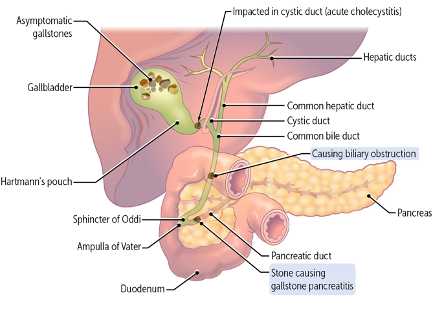
Essentials – Cholelithiasis and Cholecystitis
2d ago00:29:08Tap to summarizeGallstones are hardened deposits that form when substances such as cholesterol or unconjugated bilirubin become overly concentrated in bile. They vary greatly in size and often cause no symptoms, but stones that leave the gallbladder can obstruct the biliary tract and cause inflammation or infection. After listening to this AudioBrick, you should be able to: Compare cholelithiasis, choledocholithiasis, cholecystitis, and cholangitis. Describe how cholesterol and pigment gallstones form. Identify the major risk factors, clinical course, and complications of gallstones. Distinguish acute from chronic cholecystitis. Describe the treatment of gallstones and acute cholecystitis. Explore the original Cholelithiasis and Cholecystitis brick from our Gastrointestinal collection. Access more than 230 Rx Bricks for free: https://usmle-rx.com/free-bricks/ Learn more about Rx Bricks: https://usmle-rx.com/products/rx-bricks/ — Enjoyed the episode? Leave us a review on Apple Podcasts to help more medical students discover the show: https://podcasts.apple.com/us/podcast/the-rx-bricks-podcast/id1530646481 Follow USMLE-Rx: Facebook: https://www.facebook.com/usmlerx Blog: https://usmle-rx.com/blog-posts/ X: https://x.com/usmle_rx Instagram: https://www.instagram.com/usmle_rx_/ YouTube: https://www.youtube.com/USMLERX
Transcribe →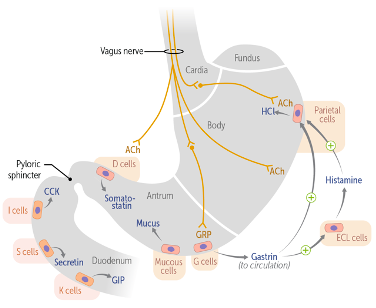
Essentials – Gastrointestinal Regulatory Substances
1w agoTap to summarizeDigestion is regulated by a complex network of hormones, peptides, and neural signals. In this episode, we review the major gastrointestinal hormones, introduce several secondary regulatory peptides, and explain how the GI tract senses its luminal contents and integrates multiple signals to control digestive function. After listening to this episode, you should be able to: Identify the source, release stimulus, and function of the major gastrointestinal hormones, including secretin, cholecystokinin (CCK), gastrin, and vasoactive intestinal peptide (VIP). Summarize the release stimuli and functions of key GI regulatory peptides, including bombesin, GLP-1, GLP-2, ghrelin, leptin, motilin, somatostatin, and glucose-dependent insulinotropic polypeptide (GIP). Explain how the physical and chemical properties of luminal contents are sensed and how they trigger hormonal responses. Describe how GI cells integrate hormonal and neural inputs to regulate digestive function. You can also check out the original brick on Gastrointestinal Regulatory Substances from our Gastrointestinal collection, which is available for free. Explore more with USMLE-Rx Create a free USMLE-Rx account at www.usmle-rx.com. You’ll receive five days of full access to Rx360+, including over 800 Rx Bricks. After the trial, you can continue accessing more than 150 free Bricks, including the complete General Microbiology and Cellular and Molecular Biology collections. Enjoyed the episode? Please consider leaving us a review on Apple Podcasts. Reviews help more medical students and future medical students discover the podcast…and help us continue creating resources for the physicians of tomorrow.
Transcribe →
Rx Question Lab: Neurology
Feb 1201:00:49Tap to summarizeQuestion Lab: Neuro for Step 1 Think you can spot a subarachnoid hemorrhage from the clues alone? What about localizing a stroke to the exact arterial distribution? In this episode of Question Lab, Dr. Abraham Titus walks through 4 board-style neurology questions, breaking down the clinical clues, teaching the underlying pathophysiology, and walking through the answers step by step. Pause the episode, commit to your answer, then listen to the explanation. It’s the closest thing to a live boards review session you can get on the go. Topics covered: Berry aneurysms and their classic associations Stroke localization and aphasia types Parkinson’s disease pharmacology Traumatic intracranial hemorrhages and herniation syndromes Want to try these Qmax questions yourself? Take the test: https://usmle-rx.scholarrx.com/share/jory9yevdp5kd3g Free Rx Study Planner: https://go.usmle-rx.com/study-schedule Learn more: www.usmle-rx.com
Transcribe →
Shock
Nov 12Tap to summarizeLooking for more information on this topic? Check out the Shock brick. If you enjoyed this episode, we’d love for you to leave a review on Apple Podcasts. It helps with our visibility, and the more med students (or future med students) listen to the podcast, the more we can provide to the future physicians of the world. Follow USMLE-Rx at: Facebook: facebook.com/usmlerx Blog: usmle-rx.com/blog-posts X: @usmle_rx_ Instagram: @usmle_rx_ YouTube: youtube.com/USMLERX Learn how you can access over 150 of our bricks for FREE: https://usmle-rx.com/free-bricks/ from our Musculoskeletal, Skin, and Connective Tissue collection, which is available for free. Learn more about Rx Bricks by signing up for a free USMLE-Rx account: www.usmle-rx.com You will get 5 days of full access to our Rx360+ program, including nearly 800 Rx Bricks. After the 5-day period, you will still be able to access over 150 free bricks, including the entire collections for General Microbiology and Cellular and Molecular Biology.
Transcribe →
Rx Question Lab: USMLE Step 2 CK Cardiology
Oct 1800:56:23Tap to summarizeTackle High-Yield Concepts for USMLE Step 2 CK Cardiology This interactive session, led by Dr. Abraham Titus (Hematology/Oncology Fellow, University of South Alabama) and ScholarRx’s Jeff Downing, focuses on challenging USMLE Step 2 CK cardiology questions that will sharpen your clinical decision-making skills and deepen your understanding of cardiovascular medicine. WHAT YOU’LL LEARN: In this episode, we work through four board-style questions using our proven systematic approach that helps you think like a clinician first, then a test-taker second. You’ll learn how to apply clinical guidelines and make evidence-based management decisions through detailed explanations that go beyond just identifying the correct answer. Topics Covered: Cardiovascular risk management and pharmacotherapy Acute coronary syndrome management strategies Peripheral vascular disease evaluation and treatment Secondary hypertension workup and management Perfect for: Medical students preparing for USMLE Step 2 CK Clinical year medical students on cardiology rotations IMGs studying for board exams Anyone looking to strengthen their cardiology clinical reasoning Review the full test: https://usmle-rx.scholarrx.com/share/1do75erd2wnmg0y Free Resources: Biochemistry Course: https://usmle-rx.com/biochemistry-course/ More Rx Bricks Podcasts: https://usmle-rx.com/podcast Study Planner: https://go.usmle-rx.com/study-schedule/
Transcribe →Physiology of the Renal Tubular System
Sep 2Tap to summarizeLooking for more information on this topic? Check out the Physiology of the Renal Tubular System brick. If you enjoyed this episode, we’d love for you to leave a review on Apple Podcasts. It helps with our visibility, and the more med students (or future med students) listen to the podcast, the more we can provide to the future physicians of the world. Follow USMLE-Rx at: Facebook: facebook.com/usmlerx Blog: usmle-rx.com/blog-posts X: @usmle_rx_ Instagram: @usmle_rx_ YouTube: youtube.com/USMLERX Learn how you can access over 150 of our bricks for FREE: https://usmle-rx.com/free-bricks/ from our Musculoskeletal, Skin, and Connective Tissue collection, which is available for free. Learn more about Rx Bricks by signing up for a free USMLE-Rx account: www.usmle-rx.com You will get 5 days of full access to our Rx360+ program, including nearly 800 Rx Bricks. After the 5-day period, you will still be able to access over 150 free bricks, including the entire collections for General Microbiology and Cellular and Molecular Biology.
Transcribe →
Pericardial Effusion and Cardiac Tamponade
Aug 5, 2025Tap to summarizeLooking for more information on this topic? Check out the Congenital Adrenal Hyperplasia brick. If you enjoyed this episode, we’d love for you to leave a review on Apple Podcasts. It helps with our visibility, and the more med students (or future med students) listen to the podcast, the more we can provide to the future physicians of the world. Follow USMLE-Rx at: Facebook: facebook.com/usmlerx Blog: usmle-rx.com/blog-posts X: @usmle_rx_ Instagram: @usmle_rx_ YouTube: youtube.com/USMLERX Learn how you can access over 150 of our bricks for FREE: https://usmle-rx.com/free-bricks/ from our Musculoskeletal, Skin, and Connective Tissue collection, which is available for free. Learn more about Rx Bricks by signing up for a free USMLE-Rx account: www.usmle-rx.com You will get 5 days of full access to our Rx360+ program, including nearly 800 Rx Bricks. After the 5-day period, you will still be able to access over 150 free bricks, including the entire collections for General Microbiology and Cellular and Molecular Biology.
Transcribe →Blood Pressure Control: Foundations and Frameworks (Re-release)
Jul 29, 2025Tap to summarizeLooking for more information on this topic? Check out the Thrombotic Disorders: Foundations and Frameworks brick. If you enjoyed this episode, we’d love for you to leave a review on Apple Podcasts. It helps with our visibility, and the more med students (or future med students) listen to the podcast, the more we can provide to the future physicians of the world. Follow USMLE-Rx at: Facebook: facebook.com/usmlerx Blog: usmle-rx.com/blog-posts X: @usmle_rx_ Instagram: @usmle_rx_ YouTube: youtube.com/USMLERX Learn how you can access over 150 of our bricks for FREE: https://usmle-rx.com/free-bricks/ from our Musculoskeletal, Skin, and Connective Tissue collection, which is available for free. Learn more about Rx Bricks by signing up for a free USMLE-Rx account: www.usmle-rx.com You will get 5 days of full access to our Rx360+ program, including nearly 800 Rx Bricks. After the 5-day period, you will still be able to access over 150 free bricks, including the entire collections for General Microbiology and Cellular and Molecular Biology.
Transcribe →Diuretics: Foundations and Frameworks (Re-release)
Jul 22, 2025Tap to summarizeLooking for more information on this topic? Check out the Physiology of Diuretics brick. If you enjoyed this episode, we’d love for you to leave a review on Apple Podcasts. It helps with our visibility, and the more med students (or future med students) listen to the podcast, the more we can provide to the future physicians of the world. Follow USMLE-Rx at: Facebook: facebook.com/usmlerx Blog: usmle-rx.com/blog-posts X: @usmle_rx_ Instagram: @usmle_rx_ YouTube: youtube.com/USMLERX Learn how you can access over 150 of our bricks for FREE: https://usmle-rx.com/free-bricks/ from our Musculoskeletal, Skin, and Connective Tissue collection, which is available for free. Learn more about Rx Bricks by signing up for a free USMLE-Rx account: www.usmle-rx.com You will get 5 days of full access to our Rx360+ program, including nearly 800 Rx Bricks. After the 5-day period, you will still be able to access over 150 free bricks, including the entire collections for General Microbiology and Cellular and Molecular Biology.
Transcribe →Rx Question Lab – Neurology
Jul 5, 202500:52:47Tap to summarizeJoin us for this special edition of the Rx Bricks Podcast, featuring a complete Rx Question Lab session designed to help medical students master high-yield neurological concepts for USMLE Step 1. In this interactive session, we work through four challenging board-style questions that cover essential neurology topics, including speech disorders, genetic syndromes affecting the nervous system, stroke recognition, and neurological pain conditions. Learn systematic approaches to neuroanatomy questions and develop the clinical reasoning skills needed to tackle even the most complex neurology scenarios on Step 1. Dr. Titus, a hematology/oncology fellow at the University of South Alabama, provides expert explanations that connect basic neuroanatomical concepts with clinical presentations, helping you understand not just the correct answers but the underlying pathophysiology. Whether you’re struggling with neuroanatomy or looking to refine your knowledge of neurological disorders, this Question Lab offers practical strategies and insights that will boost your confidence on exam day. Perfect for medical students and IMGs preparing for USMLE Step 1. For more USMLE-Rx resources, visit www.usmle-rx.com and use the code RXPOD for 30% off any new subscription. This special edition was recorded live during our regular Rx Question Lab series. Learn more at https://go.usmle-rx.com/question-lab
Transcribe →