
Podcast
The Scaling Lab
Hosted by Tried and True Media · EN
The podcast for founders, marketers, and operators who want to scale DTC brands with precision and profitability. We break down the systems, strategies, and signals behind predictable growth: offer design, creative strategy, customer acquisition, funnel optimization, unit economics, retention, LTV, and full-funnel performance. Each episode delivers frameworks, case studies, and actionable insights from 8- and 9-figure operators across eCommerce, direct response, health & wellness, and supplements. If you want to master scaling and build a high-performing marketing engine, this is your playbook
18episodes
Episodes
Newest firstAll episodes
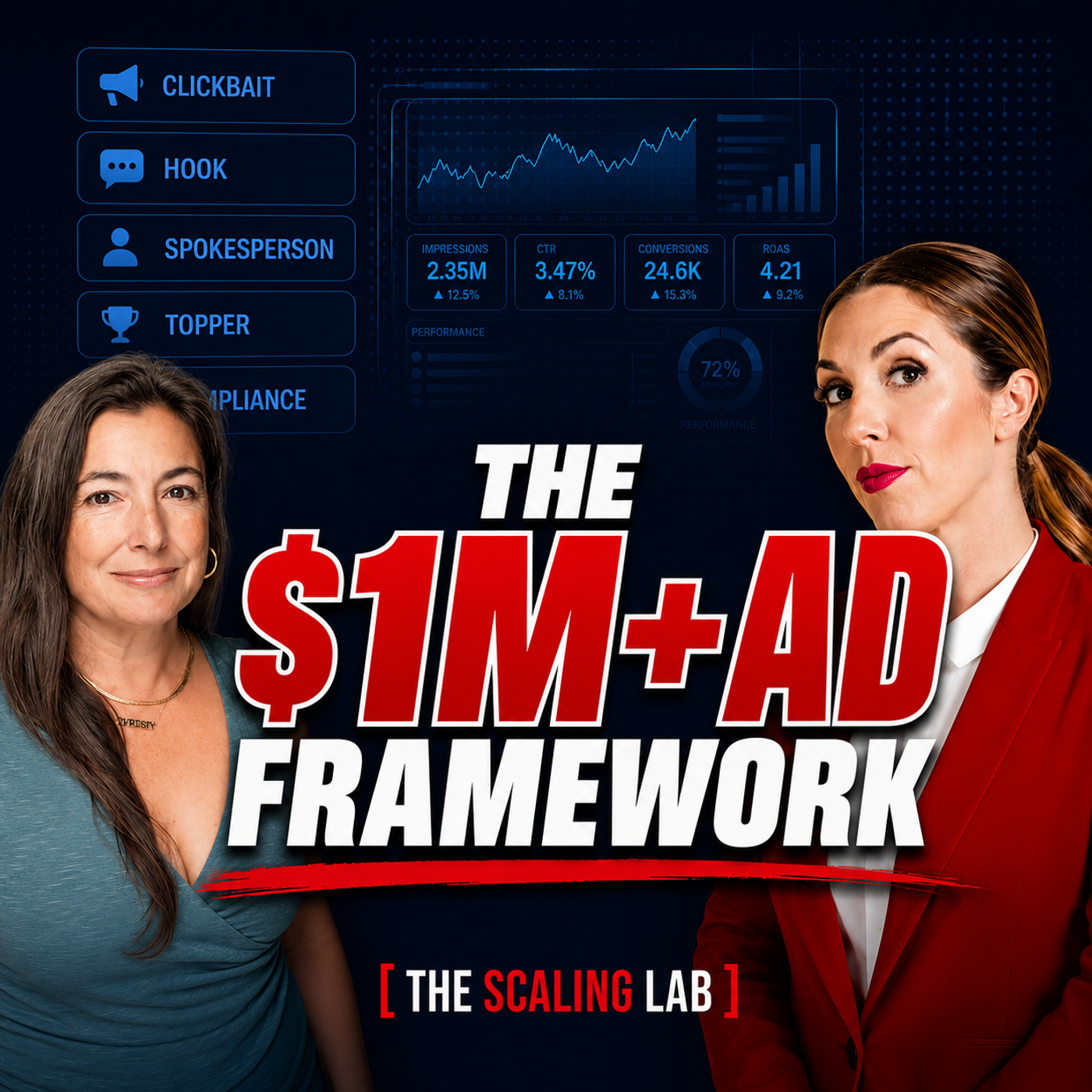
We Reviewed 16 DTC Ads That Broke $1M: Here's Every Pattern We Found
2w ago00:34:04Tap to summarizeOn this episode of The Scaling Lab, host Kira Hug sits down with Christy Ingkavet, creative strategist and associate copy chief at TNT Performance Agency, to break down exactly what separates a good ad from a $1M+ ad. They walk through the early signals that predict scaling potential, dissect two full case studies — a nearly $2M ad called "Artery Cement" and a $5M ad called "Discredit Fiber" — and lay out the condensed, repeatable recipe TNT uses internally to take ads from six figures to seven.Key Takeaways• How to know an ad is ready to scale — before committing another dollar past the first $1,000–$2,000 in spend.• The single testing element quietly responsible for half the revenue across 16 separate seven-figure ads — and it's not the hook, the topper, or the talent.• Most teams assume a $1M ad starts with a brand-new creative concept. It doesn't — it starts with one of four formats already proven across $30M+ in ad spend.• Why just two tested elements — not twenty — are typically responsible for 50–80% of a scaling ad's total revenue.• The library sitting inside your own ad account that most teams never touch: proven elements worth $20K–$200K in additional spend per ad.• WARNING: the bigger an ad's spend gets, the smaller the share of revenue that tends to come from hook testing — unless a fixed percentage of the budget is protected for it.• Seven spokespeople, tested on a single ad — the pattern behind why certain faces convert on YouTube and completely different ones win on Facebook.• The truth about getting flagged on YouTube: it's almost never the offer itself that gets pulled.ConnectBook a strategy consultation: [Link]Sign up for our Scaling Secrets newsletter: [Link]
Transcribe →
How We Scale YouTube Ads to $500K/Month (Without Getting Crushed by Compliance)
Jul 100:48:15Tap to summarizeMost DTC teams try YouTube once, run into a wall of disapprovals, and quietly go back to Meta. They tell themselves it's not worth the headache. Meanwhile, the brands hitting $30K days — some pushing past $50K — aren't doing anything most teams couldn't do:They just built the system to get through compliance instead of around it.The thing about YouTube compliance is that it looks like a gatekeeping problem when it's actually an operational one. Teams that treat every disapproval as a dead end stay stuck. Teams that treat every disapproval as data eventually stop guessing — they end up with a tested playbook of exactly what passes and what doesn't, and that's what drives the approval rate up.That gap in speed is where scale lives.In this episode of The Scaling Lab, Kira Hug sits down with Marc Mares (Performance Manager, TNT) and Christy Ingkavet (Creative Strategist & Copy Chief, TNT) — two of the people most responsible for TNT clients hitting $500K+ months on YouTube. They break down the full compliance system: what to move from Meta, what to edit, what to appeal, and how to build the operational infrastructure that keeps the pipeline moving.KEY TAKEAWAYS:Why YouTube beats every other second channel DTC brands consider, and the resource-leverage math that makes native, TikTok, and Snapchat look like a waste of time by comparison.The exact spend threshold Marc uses to decide which Meta winners are worth the compliance rework, and which ones aren't worth your team's time.The 4 compliance layers that decide whether your ad gets approved or killed, and the specific language and visual patterns flagged on each one.Pooling compliance feedback across all your accounts seems efficient, right? Wrong. It's slowing down every approval. The account-specific tracking method that gets ads through in fewer rounds.The 3 ad formats that pass compliance AND perform on YouTube, including the "expert debunk" structure most DTC teams have never tried.The "balloon trick" Christy uses to replace graphic visuals with something Google approves, without losing a single ounce of the message.What happens when nobody owns your compliance pipeline: high-priority tests stall for weeks. The two-role system that keeps that from ever happening.Why YouTube's strictness, the exact thing scaring most advertisers away, is the reason this is still a blue ocean for the teams willing to do the work.CONNECTBook a strategy consultation: Book HereSign up for our Scaling Secrets newsletter: Sign Up Here
Transcribe →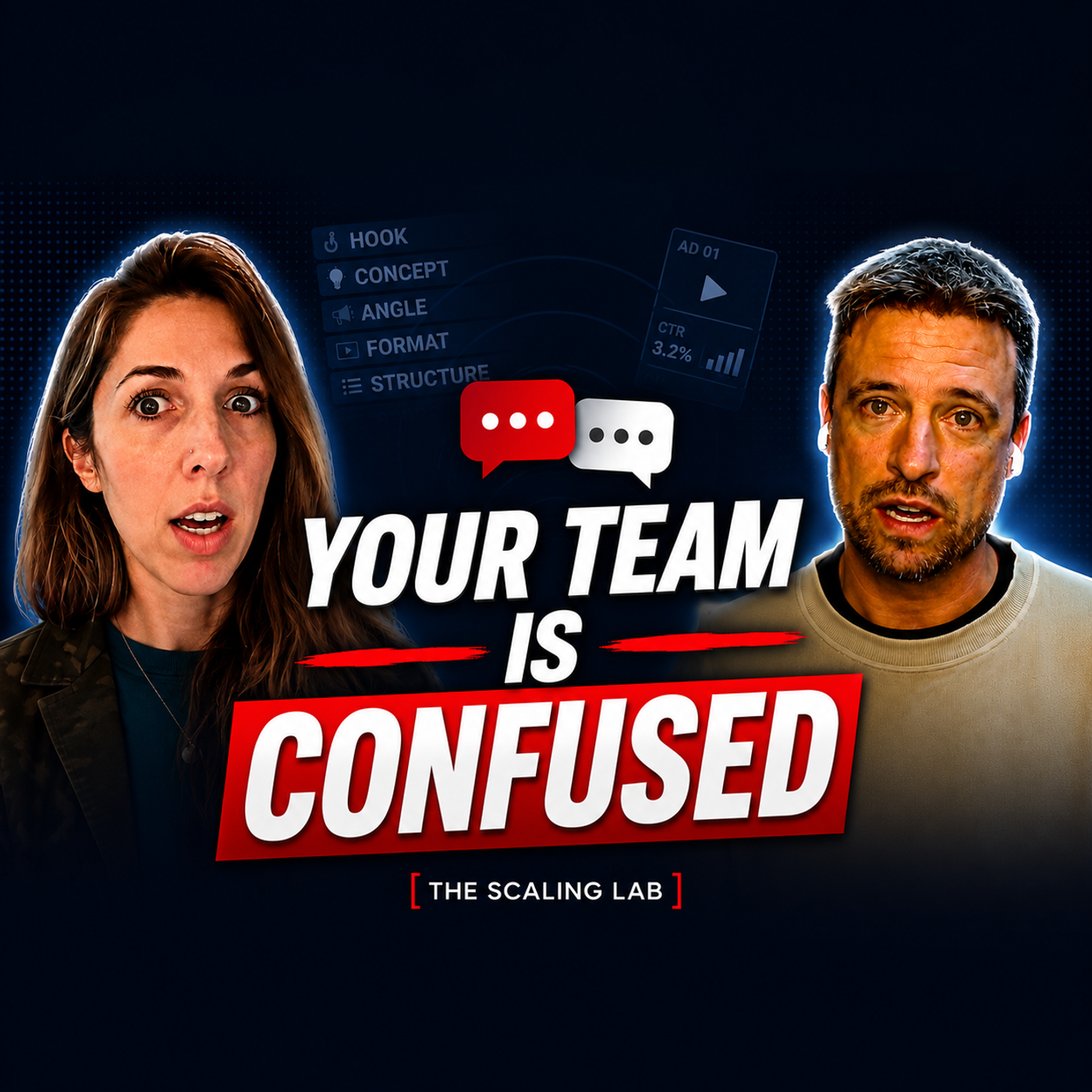
Your DTC Creative Data Is USELESS If Your Team Can't Define These 4 Words
Jun 1700:51:09Tap to summarizeYour creative team says they shipped 100 new concepts last month.They didn't.They shipped 100 variations of a handful of real ideas labeled each one a "concept" — and called it a strategy.Here's what matters: it's not their fault.Nobody handed them a glossary. The confusion got baked in from day one.And now it runs silently through every brief, every post-mortem, every "let's test a new angle" conversation that goes nowhere — because everyone on the call is picturing something different.The four words responsible for most of it?Concept. Angle. Format. Structure.Not interchangeable. Not close enough. Not "we all know what we mean."When a team uses them at random, they lose the ability to read their own creative data.Which means they lose the ability to learn, improve, or deliberately scale anything.In this episode of The Scaling Lab, Jairet and Kira go head-to-head on exactly these four terms — breaking down what each one actually means, how conflating them distorts your testing data, and why variation and iteration aren't the same thing.Whether you're a brand operator, a growth lead, or running an in-house creative team, this is the shared language your team needs to stop guessing and start winning. Key Takeaways• Why confusing Concept with angle is costing your team valuable resource dollars and keeping them on the hamster wheel of creative output.• How using the lens of "why should I care" helps your team create better angles.• The two meanings of “Format” that have your creative strategist, designer, and media buyer using the same word for different things. • Jairet’s approach to Structure you can use like legos to ship more winning ads.• Why Iteration vs. variation are often used interchangeably and how to tell them apart.• How leveraging a shared language plus rigorous tagging gives you a creative moat• The simple reason why AI won't save you when it comes to creative tagging (hint: garbage in, garbage out)ConnectBook a creative strategy consultation with the TNT team: [link]Download our free Creative Jargon framework (concept / angle / format / structure): [link]Subscribe to Scaling Secrets, our weekly insights newsletter: [link]
Transcribe →
How to Ship 500 Ads a Week Without Killing Quality
Jun 300:52:44Tap to summarizeWhy does promoting your best copywriter to run the team usually break it?Most copy chiefs got the job because they wrote great copy. They never learned operations, performance management, or how to build training systems. The result is predictable: the team scales past two or three writers, quality collapses, and everyone blames the wrong thing.The skills that make someone a great copywriter — intuition, instinct, the "magic sauce" — are almost the opposite of the skills that make someone a great manager. Most creative leaders can't even articulate how they make their own decisions, much less teach them to someone else.In this episode of The Scaling Lab, Jairet and Kira sit down with Colin Chung — TNT's Director of Creative Operations, with over half a billion in sales across his career and copy credits at Agora, Newsmax, Barton Publishing, Paleo Hacks, Jim Kwik, and Jay Abraham — to break down what creative operations actually looks like inside a team producing thousands of ads a month.Bonus meta layer: Kira is on Colin's creative team, so she's effectively interviewing her own boss on what's working and what isn't.You'll walk away with the structures, hiring filters, training systems, and feedback loops that let creative teams hit serious volume without quality collapsing — plus Colin's unfiltered take on AI, juniors, and why the future of creative isn't better ads, it's better people.Key TakeawaysUnderstand why creative teams break the moment they grow past two or three writers (hint: it's never just about the copy)Discover the pod structure that integrates copywriters, strategists, and a performance manager from day oneLearn how to run a weekly "best ads" call that postmortems winners and losers — and why forcing "why?" into every analysis changes everythingUnpack the portfolio mix that protects against creative monotony and unprofitable chaos at the same timeSteal Colin's bonus structure — designed specifically to kill internal toxicity before it startsGet his hiring filters, including the two written tests every candidate runs and the one non-negotiable he won't hire pastHear Colin's unfiltered AI take, and why the bigger problem isn't replacement — it's that nobody is training the juniorsConnectBook a strategy consultation: https://triedandtruemedia.com/book-consultation/Sign up for our Scaling Secrets newsletter:https://triedandtruemedia.com/newsletter-lp/
Transcribe →
Stop Blaming CPM—This 1 Formula Tells You If You Can Scale
May 2000:23:09Tap to summarizeDo you know what you can afford to pay for a click? Most brands that scale on ROAS or CPA miss the one formula that determines whether scaling is profitable or just looks good on paper.You might be hitting your targets while quietly losing money on every visitor. Or worse, losing out on profit by playing too conservatively.In this episode of The Scaling Lab, Jairet breaks down Allowable CPC (ACPC) and how it reframes scaling decisions through unit economics instead of surface-level metrics. You’ll walk away with a clearer understanding of where your growth ceiling actually is and what needs to change to scale.Key TakeawaysUnderstand if scaling is actually viable for your brand.Learn the formulas behind calculating what you can afford to pay per clickImprove your ability to compete in ad auctions by increasing your economic ceilingDiscover why optimizing toward ROAS or CPA alone can hide unprofitable growthUnpack the difference between AOV-based and LTV-based decision makingExplore why conversion rate and AOV are the real levers behind scalable growthBuild a clearer framework for prioritizing optimization efforts across your funnelConnectBook a strategy consultation with Jairet: https://triedandtruemedia.com/book-consultation/
Transcribe →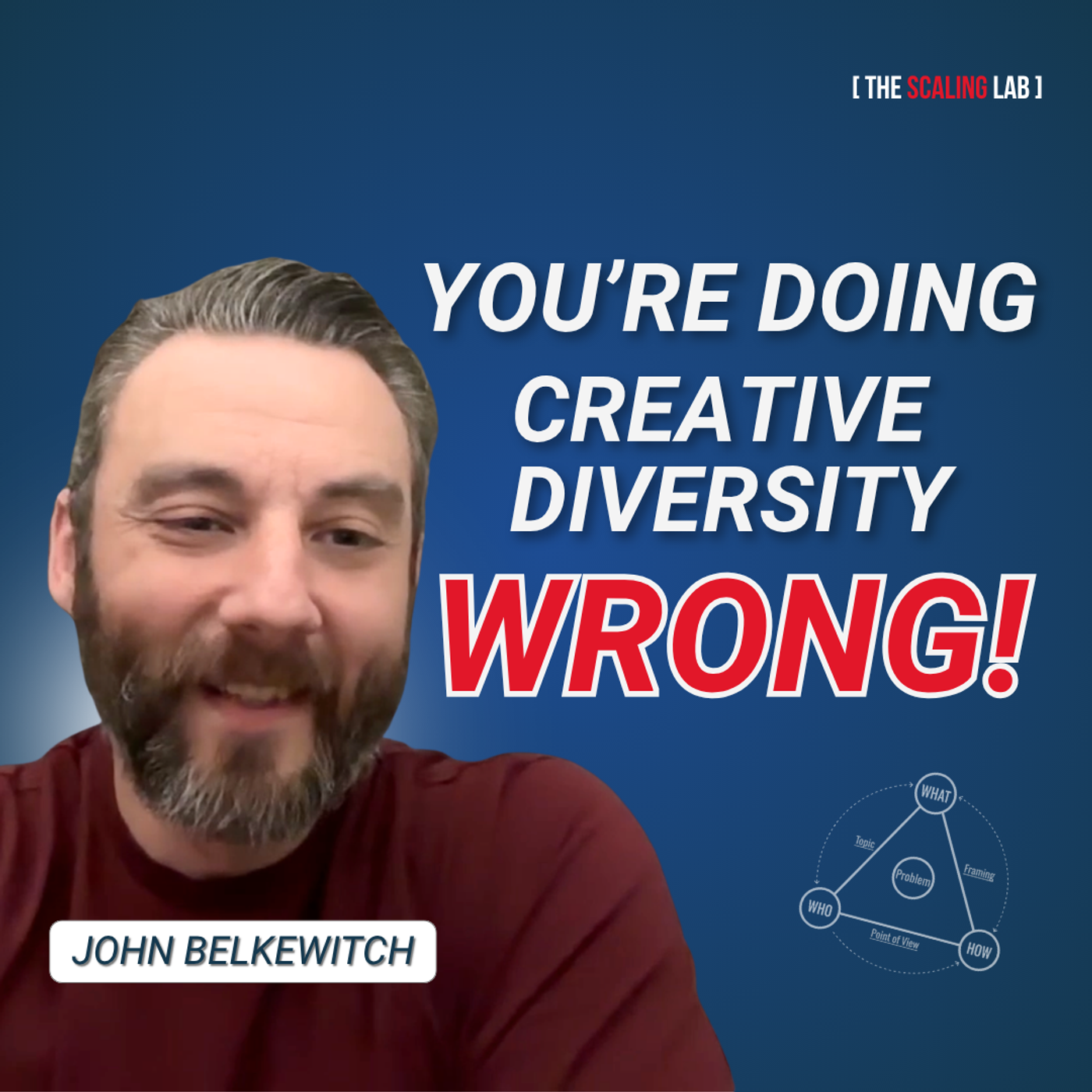
Creative Diversity Explained: The Who/What/How Triangle Driving Our Top Scaling Ads
May 600:53:28Tap to summarizeDo you know why your winning ads actually work?Most creative teams pump out variations without understanding what they're really testing. They rely on "proven frameworks" and intuition, but when stakeholders ask why a creative decision was made, the answer is often "because it worked before" or "it felt right."You might be hitting your targets while missing the deeper strategic insights that could unlock your next level of scale. Or worse, training your team to be order-takers instead of strategic thinkers.In this episode of The Scaling Lab, Jairet and Kira sit down with John Belkewitch, one of TNT's top creative strategists, to break down the Creative Strategy Triangle—a framework that transforms how you think about creative diversity, testing methodology, and strategic decision-making in the post-Andromeda world.You'll walk away with a clear system for building creative variations that actually teach you something, plus insights into how AI is reshaping both creative development and the future of advertising.Key TakeawaysLearn what creative diversity really means beyond surface-level iterationsUnderstand why asking "why" at every creative decision point unlocks better strategyDiscover the Creative Strategy Triangle framework for systematic creative developmentExplore how AI tools can amplify strategic thinking instead of replacing itBuild a testing methodology that generates actionable insights, not just winning adsUnpack why teaching frameworks beats relying on creative intuition for scalable teamsGet John's perspective on the future of AI-to-AI advertising interactionsConnectBook a strategy consultation with Jairet: https://triedandtruemedia.com/book-consultation/Sign up for our Scaling Secrets newsletter: https://triedandtruemedia.com/newsletter-lp/
Transcribe →
Your Winning Meta Ad Will FAIL on YouTube Unless You Do This
Apr 2200:57:56Tap to summarizeMany DTC advertisers embraced AI to scale production and reduce creative bottlenecks, only for outputs to fall flat. If different departments are feeding different prompts to different bots, the issue is not the technology- it’s the system. In this episode of The Scaling Lab, Jairet Crum walks through the exact workflow for creating and deploying a series of custom GPTs that move you from raw research to finished ad sets in under 15 minutes. Instead of guessing what to prompt next, you’ll have the exact tools and structures to move from idea to faster, sharper, cohesive performance creative. Key TakeawaysStructure multiple custom GPTs into a single creative workflow Learn why clear instructions and guardrails matter more than chasing perfect promptsTransform customer research into high-performing creative strategy and briefs Develop reliable formats, angles, hooks, and visuals that connectMove faster with a repeatable system that supports scale.
Transcribe →
Create Winning Video Ads in 15 Minutes (My Custom GPT Workflow)
Apr 400:15:32Tap to summarizeMany DTC advertisers embraced AI to scale production and reduce creative bottlenecks, only for outputs to fall flat. If different departments are feeding different prompts to different bots, the issue is not the technology- it’s the system. In this episode of The Scaling Lab, Jairet Crum walks through the exact workflow for creating and deploying a series of custom GPTs that move you from raw research to finished ad sets in under 15 minutes. Instead of guessing what to prompt next, you’ll have the exact tools and structures to move from idea to faster, sharper, cohesive performance creative. Get the free resource with the GPT instruction sets and workflow assets: https://triedandtruemedia.com/build-ads-in-15-minutes-with-this-ai-workflow-guide/Key TakeawaysStructure multiple custom GPTs into a single creative workflow Learn why clear instructions and guardrails matter more than chasing perfect promptsTransform customer research into high-performing creative strategy and briefs Develop reliable formats, angles, hooks, and visuals that connectMove faster with a repeatable system that supports scale.ConnectWant help building a creative system that scales without sacrificing quality? Book a strategy consultation with Jairet: https://triedandtruemedia.com/book-consultation/
Transcribe →
Only 1% of Businesses Know Their LTV (Are You Guessing Your CAC?)
Mar 2400:59:42Tap to summarizeDirect response founders think they know their numbers, yet many can’t answer the only question that matters most: How much can you actually afford to spend to acquire a customer… for each offer, channel, and day in the journey?Founder & CEO of LTV Numbers, Tyler Ryan, joins The Scaling Lab to explain why brand LTV (lifetime value) isn’t one simple metric you can quote in a Slack thread.Instead, it’s a curve shaped by refunds, backend sales, fulfillment costs, and time. If your metrics don’t account for these shifts, you’re making million-dollar CAC decisions on incomplete data.Backed by $2.3 billion in revenue, Tyler transforms LTV from a vague metric into a clear, decision-driving system—so you can set smarter CAC targets, reduce refund losses, scale with confidence, and build a more resilient, profit-first business.Learn how LTV is transforming 2026 VSL funnels in this recent episode with Jairet: https://youtu.be/oxCoypxzEKg?si=cTKoG3Kuj8Y3yXKrKey TakeawaysUnpack the value of LTV that is time-based and segment-specificLearn the dangerous impact of refunds on your front-end economics Discover crucial insights that come with post-purchase dataBuild brand resilience by improving profit per customerScale strategically with clear CAC targets based on where you can afford itConnectConnect with Tyler on Instagram: @tyler_ltvnumbersLearn more about LTV Numbers: https://ltvnumbers.com/Sign up for our Scaling Secrets newsletter: https://triedandtruemedia.com/newsletter-lp/Book a strategy call with Jairet: https://triedandtruemedia.com/book-consultation/
Transcribe →
Ad Creative Winners vs Losers: Hooks, Bridges & UGC That Actually Convert.
Mar 1000:43:41Tap to summarizeThe Scaling Secrets team is back and reacting to more ads from across the internet!In this episode, Jairet and Kira break down another round of real direct-response ads—highlighting the creative decisions that keep attention… and the subtle missteps that make “good” ads fall flat. Expect sharp takes on hooks, continuity, talent, pacing, and why certain formats work brilliantly in one execution and completely flop in another.Learn what separates the winners from the losers, and what we’d test next!
Transcribe →