Podcast
The Spark with Madelyn Postman
Hosted by A monthly podcast for ravenous readers and wonderful writers · EN
A monthly podcast with author interviews and reading recommendations. This is the audio version of The Spark, which you can subscribe to by email or read in the Substack app.
Madelyn Postman is the author of Staring into the Sun, which links memoir with her Chinese American family's intergenerational tales.
madelynpostman.substack.com
madelynpostman.substack.com
24episodes
Episodes
Newest firstAll episodes

04 Snowballs in November
Nov 16, 202400:11:23Tap to summarizeAfter eight years of research and writing, everything has snowballed in the most wonderful way. Find out more after the author interview, reading recs, and writing resources!📖 Author interview with Alex PickettAlex Pickett grew up in Wisconsin. He received his MFA from the University of Florida.His debut novel, The Restaurant Inspector, was published in 2021. His short story collection, Camera Lake, was published this year. His stories have appeared in literary journals such as The Southern Review and Subtropics. The Restaurant Inspector was selected as the Wisconsin Public Radio "Book of the Month" in May 2024.But he has had to work to live. He was an inspector in New York City and supervised a warehouse in Fairbanks, Alaska. He has worked at two cemeteries and four factories. He has been a movie extra, a researcher, a copywriter, and a winter caretaker at Denali State Park. He also managed a London homeless shelter and taught creative writing to undocumented refugees and asylum seekers for the British Red Cross.Currently, he is a doctoral researcher at the University of Westminster and teaches creative writing at City Lit in London. He just got a dog named Maxine.What inspires you?Being able to sit down tomorrow and write fiction.Do you have a writing routine?Do I ever. I eat the same breakfast every day. Oatmeal, coffee, smoothie. The muscle memory of preparation allows my mind to ease into the day. After breakfast I drink coffee and read. I used to read fiction during coffee time. But I began to notice the style of what I read seeping too much into my own writing. Sitting down to write is scary. The words might not come. When motivation strikes, I force myself to the computer. I write or edit for three to five hours, eat lunch, and then go back to work. But usually not writing work. Emails, editing, answering these questions, that kind of thing. Every day that I am able to adhere to this routine is a gift.Writing’s biggest secret is…I wish I knew! Well, I’ll say this. Don’t stop. Keep going. Figure some stuff out. Fail. Get used to failing. Figure more stuff out. Keep writing. Enjoy writing. Writing is difficult. Is that the secret? Writing is difficult? Or, revised: Writing is difficult but worth the heartache.My worst writing momentHow to choose from all the rejection! Fine, I’ll do a workshop story. Padgett Powell, a wonderful writer, concluded my workshop by saying, “If this is the story that Mr. Pickett wanted to write, then he has done it.” I had played it safe. I did not risk failure. I knew what I was doing. I still regret it. I don’t want to be that person. But I was that day.My best writing momentI’ll interpret “moment” loosely. I stopped writing for a few years after university. I had nothing to write about. Plus, I was able to sacrifice writing from my life. Then, one summer, I think it was 2010, I decided I would write. That was it. I decided to. I had a horrible apartment with no bed. I slept on the floor, wrapped in a quilt, surrounded by books. I worked at a cemetery. Every free moment I wrote. I sat at a glass-topped table that came with the apartment and typed on a netbook. I had no internet access. A flip pay-as-you-go phone. I read short story anthologies and anything by a Russian. I had two stories in mind and spent the summer obsessing about them. It was so hot. I had no air conditioning. Incredible.What are you reading right now?Time Shelter by Georgi Gospodinov. It’s great.Book recommendationThe Quick & the Dead by Joy Williams? Or Oreo by Fran Ross? The Dog of the South by Charles Portis? Horse Crazy by Gary Indiana? Those are all near-perfect books, but I feel I should be imperfect and recommend a deeper cut. How about Memories of Amnesia by Lawrence Shainberg. Yes, that. It’s about a brain surgeon who realizes he has brain damage while performing brain surgery, then describes his ailment in meticulous detail as both practitioner and patient. It’s wild. The novel I am writing for my PhD involves memory loss. If anyone has any amnesia or memory loss fiction recs, please get in touch.Where can we find you?My website is rapickett.com and Twitter is @alex_pickett1.📚 Recommendations for ravenous readersI thoroughly enjoyed Alex Pickett’s short story class at City Lit last autumn. Fittingly, I also love his short story collection, Camera Lake, as well as his novel, The Restaurant Inspector, which is told masterfully from many points of view. His characters are unforgettably unique, and he weaves together tragedy and humor in his plotlines.Speaking of short story collections, Jhumpa Lahiri’s Interpreter of Maladies tells nine stories set in the 1980s and 1990s of Indians, Americans, and Indian Americans. Full of subtle observations and sensory details, Lahiri explores personal relationships as well as wider cultural expectations and clashes. It’s the closest comparative title I’ve found for my own short story collection (I say humbly, noting that it won the 2000 Pulitzer Prize for Fiction).In my exploration of dual timelines and historical fiction, I read The Alice Network by Kate Quinn. The novel incorporates elements of mystery, suspense, and thrillers. I’d categorize it as “upmarket” or “book club” since it balances character development and gorgeous (yet non-gratuitous) language with the fast-paced plot. In 1947, Charlie St. Clair is investigating her cousin’s disappearance in France, aided by Eve Gardiner. In 1915, during the Great War, Eve is a spy in France. As the search for the cousin unfurls, the women discover that one man lies behind their suffering.✏️ Resources for wonderful writers(Or, The Tale of Two Jessicas)Save the Cat! Writes a Novel is a classic book for plotters. Jessica Brody takes 15 essential plot points from screenwriting and adapts them to novels. It’s a helpful way to structure your three-act plot.Jessica Payne, The Spark’s featured author last month, has written a super-useful post, ”A How-To Guide: from Pantser to Plantser Pt 1,” in her Substack, The Payneful Truth About Being a Writer. I’ve even printed it out for easy reference. In this guide, she mentions both Lisa Cron’s Story Genius and Save the Cat! Writes a Novel. I’m excited to use her approach to map out my first full novel.👣 Updates on my moseyingSo: the snowball effect. I started researching and writing about my family in January, 2017. From the summer of 2023, I started querying agents and in August, my query letter and first five pages were critiqued on The S**t No One Tells You About Writing podcast. After a few months, with some feedback from agents, I decided to rework the manuscript. Around that time, in autumn 2023, I began submitting to contests and literary magazines. Fast forward a few months to spring 2024, and two stories got long-listed in Flash 500 Short Stories 2024, and another story was featured on <a target="_blank" href="https...
Transcribe →
03 Coffee and capybaras
Oct 15, 202400:16:27Tap to summarizeHope you enjoyed The Spark’s new theme music, with a huge thanks to my brother Anthony Postman for the original composition and all the mixing. This month’s interview is with psychological thriller author Jessica Payne. I have a whole new batch of amazing reading recommendations for you, some top writing tips—and some very exciting updates on my moseying!📖 Author interview with Jessica PayneJessica Payne is a psychological thriller author who has probably spent a little too much time studying the dark intricacies of the human mind. An expert coffee drinker, she loves to go on long runs to manage the resulting caffeine jolt. Jessica lives in the Pacific Northwest with her husband, daughter, and their many (many!) cats and dogs. Her novels include Make Me Disappear, The Lucky One, The Good Doctor, and Never Trust the Husband. (Note: book links go to Jessica’s local bookstore.)What inspires you?I always wonder if any author truly knows the answer to this. For me, there is no one answer. I get ideas from everywhere, and sometimes, seemingly from nowhere—the idea just pops into my head. In my debut, Make Me Disappear, all I knew was that there was this nurse in Seattle trapped in a bad relationship and that she wanted to have herself kidnapped to escape. Then, in my research, I discovered extreme kidnapping—people treat it like a sport!My latest book, Never Trust the Husband, was all inspired by running alone before sunrise in Texas when I briefly lived there—people leave the lights on in their homes, keep their curtains drawn back. Whether I wanted to or not, I'd get glimpses inside their houses, see them drinking coffee and reading the newspaper. It sparked an idea for a character who ran through the darkness looking in people's houses on purpose—why would she do something like that? What did she want? Thus, a plot was born. Other ideas have come from podcasts, dreams, overheard conversations...I think a lot of it is about being open to creativity. Letting your mind wander and speculate.Do you have a writing routine?No. Yes. Kind of? The reality is that my routine is constantly changing—each book demands something different, and also, I'm responsible for a small human. As she's in school, on summer break, or sick for a day, my routine fluctuates around her. But you know what, I love that I can work from home and be around for all these moments, and I wouldn't have it any other way. My weekday routine looks similar to this:* 5am - alarm goes off. I ignore it.* 5:20am - my cat gets annoyed and stomps all over me until I pull myself from the bed.* 5:21am - COFFEE.* 5:40am - I'm at my desk, checking emails, social media, chugging coffee, etc.* 6am - working on whatever needs attention most. This might be writing the next chapter, combing through revisions from my agent, or writing up pitches for the next book. * 7am - kiddo is awake and I get her ready for school.* 9am-10:30am - workout (running, yoga, gym time, not all on the same day), shower, eat.* 11am - back at the desk, again working on writing or revising for the next book. * I work until about 3pm, taking breaks to stretch, walk the dogs, make tea, etc.Once I've picked my daughter up from school, I'm usually done working for the day. Occasionally, if I have a pressing matter, I'll work more at night, after she's in bed, but that's fairly rare. I'm of the opinion it's important to intake creativity as much as I put it out—so reading books, watching shows, going on walks with my dogs to let ideas percolate—that's all important, too!Writing’s biggest secret is……not giving up. So many people expect their first book to land them an agent and a huge book deal, and they're devastated when it doesn't work out that way. I get it—I, too, thought everyone would love my first book. But I got zero requests from agents, and now I realize that it lacked plot and character development. It takes time and hard work to get good at writing, and that's normal and okay. It took me four books to get an agent and a publishing deal. For some of my friends, it took five or six, and then for some it took ONE. Every writer has their own journey. You just have to keep going. Also, your path will likely look different than your friends', and again, that's okay and normal!My worst writing momentWhen I realized I needed to rewrite a book that was on deadline. That felt really icky—realizing it wasn't good enough, realizing it wasn't ready to go to my editor, but instead, I needed to ask for an extension and rewrite a big part of it. But it also taught me to trust my gut when something felt off, and it's kept me from making that same mistake. My best writing momentGetting a book deal. When you get that call or text from your agent—discovering an editor loved your book and fought to acquire it and that manuscript you've been working on for the last 6 months or year is going to become a REAL book. Publishing has so many ups and downs, and this is one of my favorite moments. Another best writing moment would be my first book event. It was held at Browsers Bookshop in Olympia, Washington (it's adorable, go there!). So many friends—and strangers!—came to support me and my debut. It was just incredible. What are you reading right now?I'm currently reading an Advance Review Copy (an ARC) of You Are Fatally Invited, Ande Pliego's debut. She and I are writing friends, and I got to see an early version of it. Now, on the verge of her publication date, it's such a privilege to hold a physical copy and get to see how that raw manuscript transformed. It's such a good book—I highly recommend pre-ordering it!Book recommendationShoot, I suppose I already recommended a book! Well, here's another: It Had to be You by Eliza Jane Brazier. Think Mr. & Mrs. Smith but...different. Overseas and hired killers hired to kill one another while trying not to fall in love with one another. Part romcom (seriously hilarious dialogue) and part thriller (so tense!), this is one of my favorite books this year. Where can we find you?On my website jessicapayne.net or on Instagram as @jessicapayne.writer. But I'm pretty much everywhere online, including here on Substack.📚 Book recommendations for ravenous readersTold through the points of view of three sisters a year after the death of their fourth sister, Blue Sisters by Coco Mellors is excruciatingly stark and tender. Set in the present day, the novel travels between Los Angeles, New York, London, and Paris. Last month, I was struck by the figurative language of Kaliane Bradley’s The Ministry of Time. Blue Sisters is also full of original similes and metaphors—there was one about a hungover Lucky crawling up her sister’s front stoop like a Slinky going up stairs. (The only drawback of listening to books is that it’s tough to find quotes if you don’t note the time stamp when they’re spoken.) Lucky spends a lot of time hung over, so here’s a description of her in that state.“Her body no longer felt like a pillowcase that had been filled with rocks and broken glass, then put in the tumble dryer, but she didn’t feel great.”Holly Graziano’s career as a game designer is apparent in her debut, The Husbands. Lauren returns home one day to find an unknown man in her house who thinks he’s her husband. His belief is backed up by everything around them—wedding photos, text messages, and so on. He goes into the attic and—bzzzz—another one comes down the ladder. Repeat. It’s like Sliding Doors on steroids—or rather than Choose Your Own Adventure, it’s You Don’t Get to Choose Your Own Husband. While the story is entertaining, between the lines it makes you reflect on big topics like fate (or lack thereof), “what if?,” happiness, pet peeves (like separate-toe shoes), and commitment. Oh, and there’s a simile with a capybara which I won’t attempt to find (neither the quote nor the capybara).Hidden: The Lies She Told recounts growing up in Liverpool, mixed-race, with an absent father and an abusive mother. Lisa Nicol’s memoir details her harrowing “…daily life in this so-called United Kingdom, which felt anything but united.” The big, hinted-at reveal about her ancestry, discovered through a DNA test bought for her by a f...
Transcribe →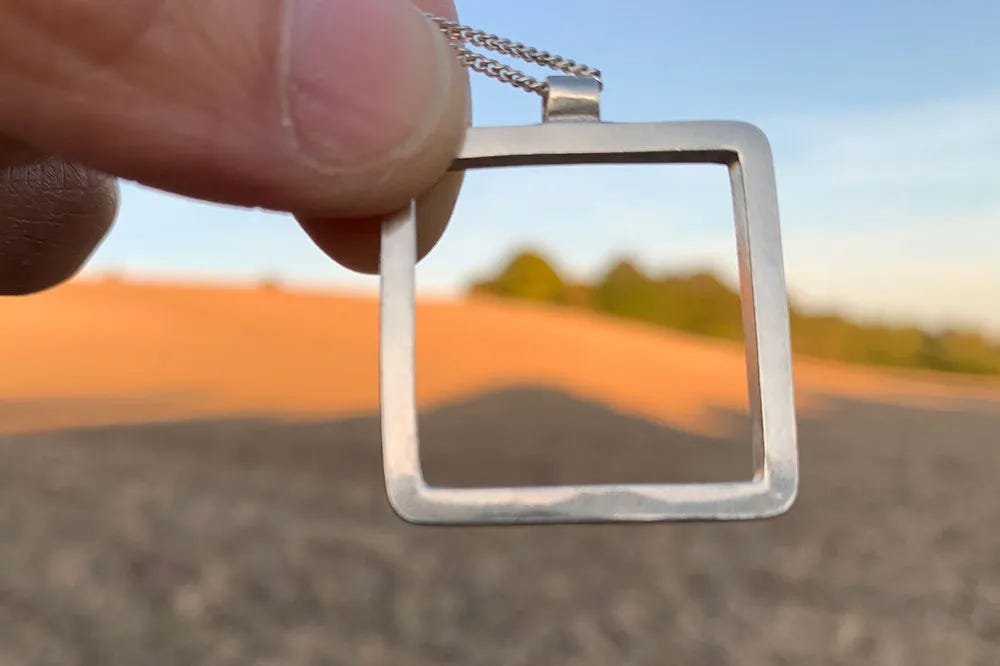
02 In full flow
Sep 28, 202400:09:32Tap to summarizeLast week was the first full week of the younger kid being back at school (the older one is off to uni/college next week), with my husband and me back at work at our sustainability consultancy. I got in a little bit of writing on Wednesday morning and then a fantastic 4-hour session on Saturday, so I’m all fired up now.Author interview with Sophie ThomasSophie Thomas is a Londoner, writer, and reader. She breaks the rules of grammar far too often for someone with an English degree. When she's not coming up with ideas on her hot girl walks or sitting in a theatre watching a musical, she enjoys getting people to fall in love and kiss each other (and get secret tattoos for one another).What inspires you?Anything can if I am in the right mindset. Typically there is something magical that happens when I hear a certain song lyric when I am mid-walk and an idea sort of spools from there. Sometimes my ideas come to me when I am not quite asleep but not quite fully awake. When I am reading a book I can come across something that I can use as a springboard for something in the piece that I am working on. Recently just watching sports has inspired a couple of ideas that I've had to add to the burner. Do you have a writing routine?For the most part I write in 50-minute bursts during Writers’ Hour hosted by London Writers’ Salon four days a week a minimum at 4pm. If I am in the flow then I will write for longer, or I will pick up my laptop and write at different times, but it's mostly in those 50 minutes that have allowed me to write and edit two novels, draft this third novel, write all my Substack posts, create content for marketing purposes, and so much more.Writing’s biggest secret is……there is no magic way to do it. You really do just have to sit there and put words on the page. Be that in large chunks of time or in stolen moments throughout the day in your Notes app. Then you have to delete those words and write them again. And again. And again. And it will somehow never feel “done” but it will feel “done enough.” Eventually.My worst writing momentI hate when you can feel yourself writing your way into a corner. You know where you have to go but you haven't quite made the journey to that end point clear and as you try to figure it out the words do weird things that kind of make sense but aren't actually getting you any closer to the destination you are trying to reach. So you keep going in the hope that the right path reveals itself but you actually just end up stuck. I hate having to sit in that corner and try and figure out if any of what I've written is salvagable or if I’m going to have delete it all and start again.My best writing momentWriting “The End” on my first book. I had attempted to write a book so many times over the years but had always run out of steam around 15-20,000 words. I could never make anything stick. I had a lot of beginnings and a lot of endings but the first time I managed to stick both the beginning and the end together with a mostly well-constructed middle felt almost euphoric. It unlocked something in me and gave me the confidence to know that I can do it again. And again. Writing the middle is still always a little bit terrible, but I have belief that I can navigate my way through it and that would not have been possible if it wasn't for what I am still lovingly calling Thing 2 (I do have the title and it is currently due to be released next year, I've just not made the title official yet).What are you reading right now?I am basically incapable of only reading one book at a time so at the moment I have What A Way to Go by Bella Mackie, Emily Wilde's Encyclopaedia of Faeries by Heather Fawcett, and Funny Feelings by Tarah DeWitt.Book recommendationI will keep telling people to read Savor It by Tarah DeWitt until I have achieved the goal of getting everyone to read this book (the second venture to her Spunes, Oregon via her Left of Forever out next year is just as delicious). How to End a Love Story by Yulin Kuang is also a gorgeous novel. And for a trio of romance book recs I close it off with Kennedy Ryan’s Before I Let Go.Where can we find you?The Giraffe Files on Substack and @ashakespearenerd on Instagram.Book recommendations for ravenous readersIn The House of Doors, Tan Twan Eng transports us to Penang, Malaysia in 1910 and 1921. Think of a framed narrative, add a couple more frames, including spinning doorframes, and then you’ll grasp the nested structure of this work that fills all the senses. It could have been a response to, “What would it be like to invite Willie Somerset Maugham and Dr. Sun Yat-sen to a dinner party?”Speaking of transporting people through time, Kaliane Bradley’s debut, The Ministry of Time, is shockingly stunning. The plot, characters, and particularly the figurative language is outstanding: every simile and metaphor is perfectly on point. I recommend the audio book, narrated (mostly) by Katie Leung.Adela shrugged. "We have time-travel," she said, like someone describing the coffee machine. "Welcome to the Ministry."And again speaking of time (see what I did there?), I consumed Ocean Vuong’s poetry collection Time Is a Mother like chocolate truffles, savoring it, reading and re-reading one poem per day or even less frequently. He packs entire, often heart-breaking, worlds into few words. I received this book in the mail a couple of years ago and it took me a few weeks to figure out that it was a gift from my brother. Thank you, Anthony.Resources for wonderful writersWho understood the reference from this month’s header photo? If you’ve read Bird by Bird: Some Instructions on Writing and Life by Anne Lamott, you’ll remember her advice: if you’re feeling overwhelmed about what to write, start with what you can see through a 1-inch-square frame. I was looking for a 1-inch frame in wood and then found a necklace which Chriscelle, based in Bristol, made to the exact size for my bestie Kate Hammer and me.Remember last month’s guest, Iqbal Hussain? He’s interviewing Fighting Fantasy author Ian Livingstone on Monday October 7, from 7-8pm BST (2-3pm ET, 11am-noon PT). Tickets are free for the online "YOU are the hero!" Meet Fighting Fantasy author Sir Ian Livingstone.I regularly listen to Sacha Black’s The Rebel Author Podcast, and on practically every episode she mentions the Strengths (listeners can do a shot every time she says it). I DMed her to ask what the heck she was talking about, and she pointed me toward The Better-Faster Academy with Becca Syme. I now have all 34 of my Gallup CliftonStrengths and through the BFA, I’m learning how to apply them to my writing. It’s mind-blowing and I’m really immersing myself in it (hello, Learner and Activator!).Updates on my moseyingOn September 3, freshly arrived home after a week away at a family wedding in the U.S., I attended a talk at the University of West London by Jung Chang, author of Wild Swans: Three Daughters of China and <a target="_blank" href="https://bookshop.org/p/books/big-sister-little-sister-red-sister-three-women-at-the-heart-of-twentieth-century-china-jung-chang/11162290?aid=105498&ean=9781101972922&listref=chinese-and-chines...
Transcribe →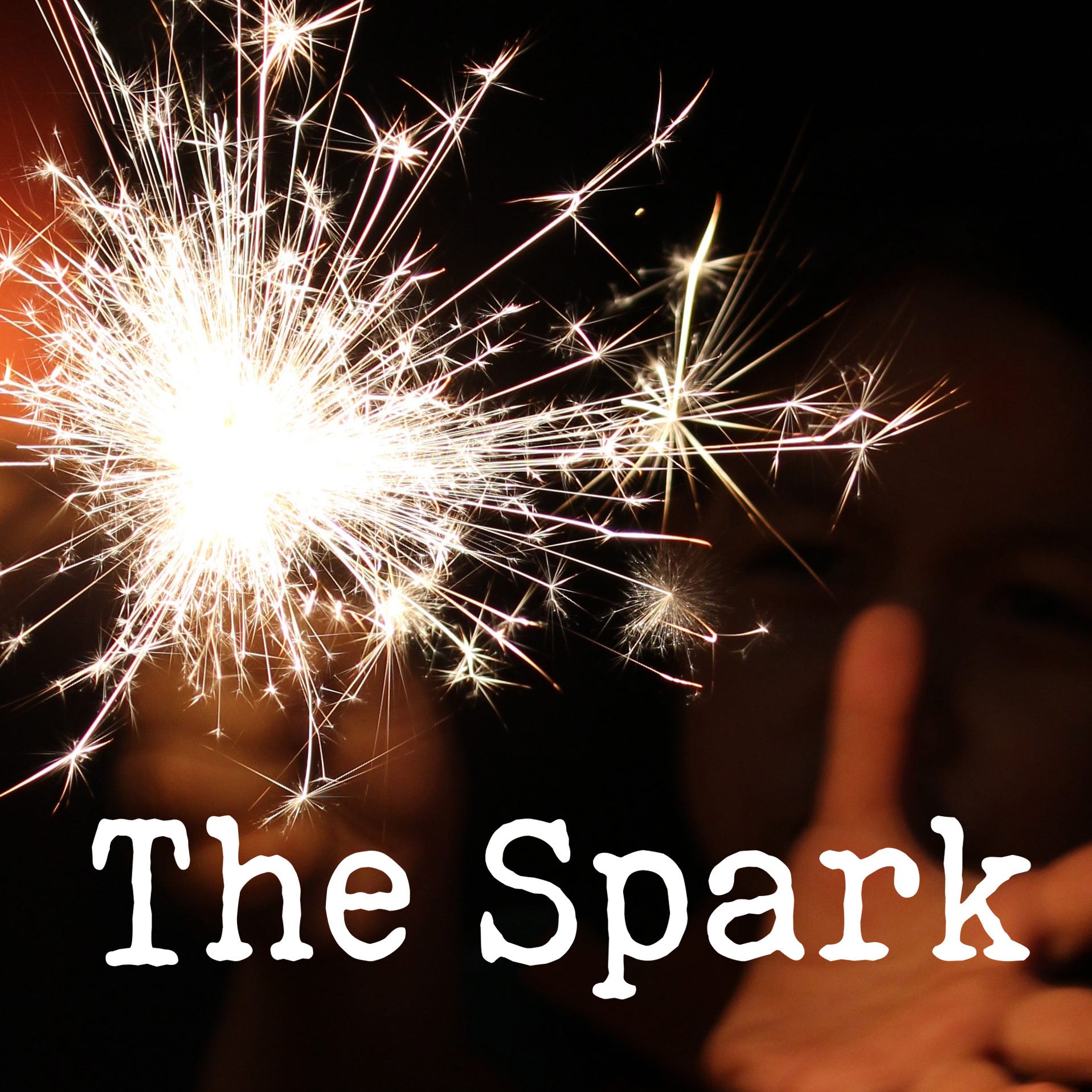
Podcast episode 01: Relaunch of The Spark
Sep 17, 202400:11:13Tap to summarizeWelcome to the relaunch of The Spark. I published a dozen weekly editions last autumn which you can find online. This new incarnation will be monthly, with four sections: an author interview, book recommendations for ravenous readers, resources for wonderful writers, and updates on my meanderings.Author interview with Iqbal HussainIqbal’s debut novel, Northern Boy, about being a “butterfly among the bricks”, was published in June with Unbound Firsts. He is currently working on edits for his debut middle grade children’s novel, The Time Travelling Misadventures of the 7th Son. His work appears in various anthologies, including Mainstream by Inkandescent, and Lancashire Stories by UCLan Publishing. Iqbal’s short stories have won multiple awards, including the Creative Future Writers’ Awards, Writing Magazine’s Grand Flash and the Evening Standard Short Story Competition. You can read Iqbal’s nature writing on sites including The Hopper and Caught by the River.What inspires you?I’m often inspired by things that happened in my childhood. My first novel, Northern Boy, is semi-autobiographical, and draws on a lot of things that happened while growing up in a Northern former mill town. I just think that if I don’t document what happened back then, those stories, characters, and streets will be lost for ever. The neighbourhood I grew up in was razed to the ground after a compulsory purchase order, so my past has literally been wiped out — so it’s so important to preserve it in any way I can.Do you have a writing routine?I have a regular job for four days of the week, working in the word-processing department of a City [of London] law firm, so I write on the other three days. I tend to start around 9 in the morning, and then keep going until 5, with breaks to take our labradoodle Milo out for his walks. I’d love to have a day off, when I can just spend time with my partner, but it’s tricky to build in, especially when there are always deadlines to be met. I tend to say yes to most writing opportunities that come my way, as I can’t bear to miss out! I write directly on the computer — my handwriting is too terrible to sustain an analogue process. I use Word, which I’m able to manipulate to be the best writing software for my needs. I’ve tried Scrivener, but have found the learning curve too steep, plus the one time I exported back to Word I ended up with section breaks everywhere, which really weren’t helpful.Writing’s biggest secret is……it’s not that lonely! I have a good group of writing friends, from various parts of my writing past. It keeps me sane, and you know that they will completely understand what you’re saying when you go into raptures about a scene you’ve written, or when you’re banging your head against a wall when the words won’t flow. I also love a book launch, where I’m often found to be gossiping around the drinks table with a samosa in one hand and a glass of bubbly in the other, putting the world to rights. I can’t stress the importance of finding your writing community, to exchange views, news, tips, challenges. To share in each other’s successes — and failures and rejections, as there are plenty of those outside of the curated posts we put on social media.My worst writing momentWhen Northern Boy failed to be picked up on submission. It was incredibly dispiriting. All those years of working on it, only to be told no-one wanted it. Nothing prepares you for it, as you always assume once you’ve got your agent the rest is plain sailing. Sadly, it isn’t, and there are many more hoops to pass under and gates to walk through.My best writing momentWhen Northern Boy got picked by Unbound Firsts as one of their two novels by debut writers of colour for publication in 2024. I sent the manuscript to them on an off-chance, not for one second thinking it would be picked — and then it was! I can’t describe how loudly I screamed. I’m delighted by how gorgeous a job the whole Unbound team have made in bringing my characters to life. I can’t think of a better home for my debut.What are you reading right now?I’m a magpie, and read widely and, often, simultaneously. Currently, I’m reading Timeline by Michael Crichton, a highly entertaining blend of sci-fi, time travel and historical fiction. Also on the go is The Explorer by Katherine Rundel, a rip-roaring read about four children whose plane crashes in a South American rainforest.Book recommendationHarriet the Spy by Louise Fitzhugh. This New York-set children’s book from the ‘60s made me laugh and cry when I was a child, and it still does (I’ve read it many times over the years). It tells the story of Harriet, who keeps a notebook in which she makes observations about her friends and neighbours. These aren’t always nice observations, but they’re always honest. When her friends find her notebook, they’re understandably annoyed and upset, and Harriet finds herself ostracised. What’s extraordinary is that, even when the odds are stacked against her, Harriet remains true to herself — a message that really struck me as a child, and which appears throughout Northern Boy. With the help of her former nanny, Harriet realises you sometimes have to tell a lie to keep the peace, but to always be true to yourself. I spent many hours as a child spying on neighbours, making a spy route like Harriet did, and she inspired me to become a journalist and a writer. Thank you, Harriet!Book recommendations for ravenous readersSpotify’s decision to include audiobooks for Premium users has been a game-changer for me. I always listen to podcasts on dog walks and often while driving. I think it was on the now-ended podcast Literary Friction where I heard about finding your way into audiobooks with nonfiction. My first listen was The Salt Path, written and narrated by Raynor Winn. It was disturbing how a middle-class couple could become homeless so quickly due to one bad investment and a lost court case. After the bailiffs claimed their house, they gathered a few things into backpacks and set off on England’s 630-mile South West Coast Path. Winn originally wrote the account for the eyes of only one person, her walking companion: her husband. Her writing, particularly about the natural world, is lyrical and evocative.A more recent listen was Echo Boy by Matt Haig. It’s a young adult thriller romance set in 2115. Because I’m toying with a near-future thriller concept for my second book, I appreciated the characters, pace, and world of Echo Boy. Also, I haven’t read much YA (young adult) since I was a YA myself, and I do enjoy the definition of one’s identity and coming to know the world that are typical of that age category.Resources for wonderful writersThe Write Now with Scrivener podcast features interviews with authors in all genres. It was a fun surprise to hear Natasha Bell, a thriller author who taught a one-day course I took at City Lit on writing autofiction. (My affiliate link for the Scrivener writing software is here.)Lisa Cron’s Story Genius: How to Use Brain Science to Go Beyond Outlining and Write a Riveting Novel focuses on characters’ backstories and psychology: their “live wire” that is the root of their expectations and desires. The plot is there to serve that third (electrified) rail. Using her scene card format has strengthened my writing.I’m on Chill Subs most writing days, to look for magazines and contests, and to track my submissions. The team there also runs the weekly Sub Club...
Transcribe →