← The Ultimate Human with Gary Brecka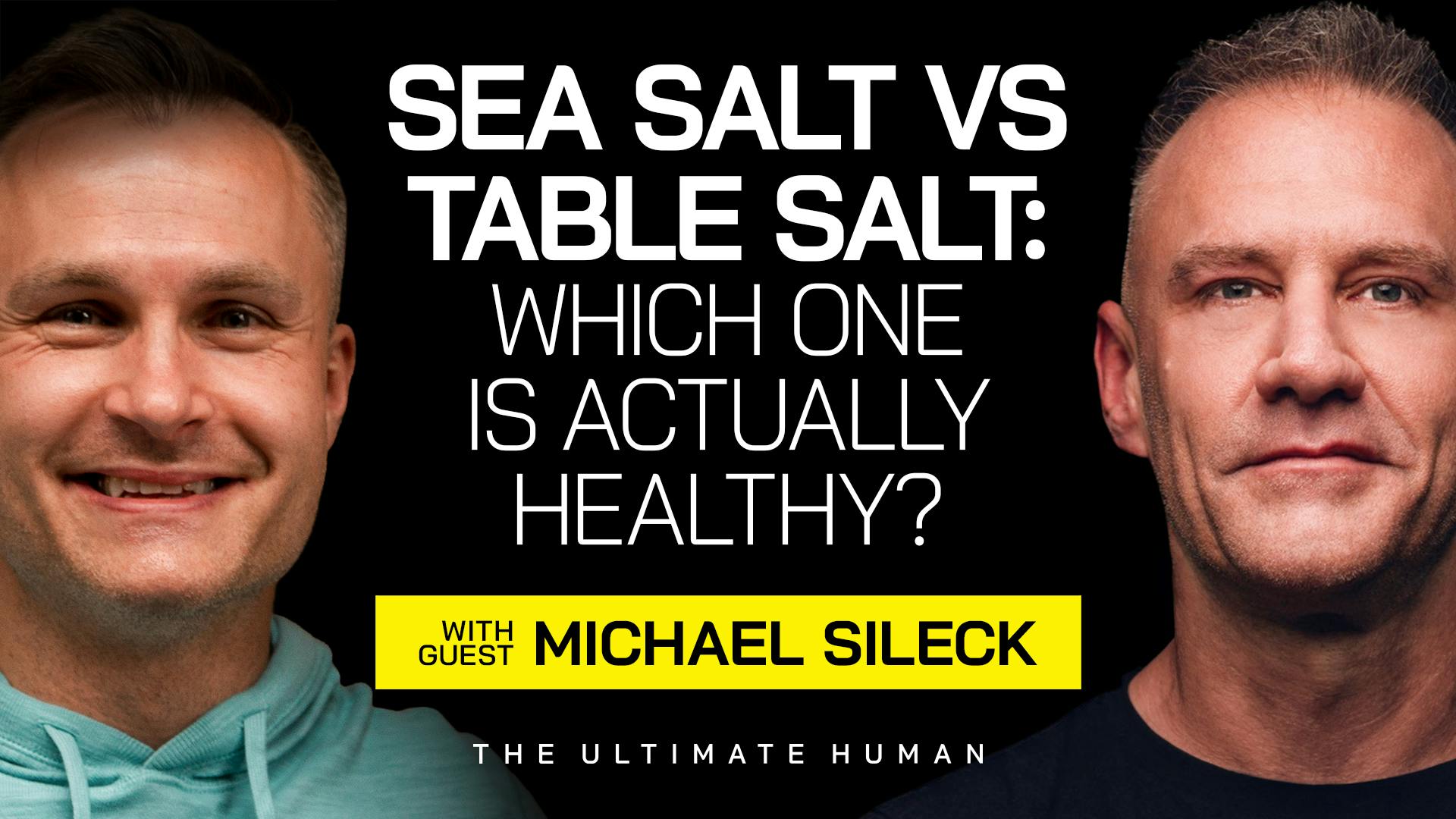
The Ultimate Human with Gary Brecka
195. Michael Sileck: Sea Salt Benefits, Mineral Depletion & Soil Health Crisis
01:00:59
Loading summary
Transcript192 lines
- [00:00]
A
I think one of the biggest challenges in America is people don't know who grows their own food.
- [00:04]
B
Very often it's not the food, it's the distance from the food to the table. We just get back as close to the soil as we can get. That's the secret.
- [00:11]
A
This has been a long standing problem and unfortunately it's gotten a lot worse in the last 70 years on an already bad decline.
- [00:17]
B
I think a lot of people are really familiar with the gut microbiome, but not in soil health.
- [00:21]
A
In soil microbiome, all life begins in soil. Soil is not just dirt, but it's an active breathing organism. And like you said, what we eat, what that eats matters. And so food, it's not just about being unprocessed and unrefined. It actually has to be grown from the right building blocks. It starts with the soil and it starts with mineral nutrient density.
- [00:40]
B
What is it specifically that's in mineral salt that allows it to be a good fertilizer? The extra minerals?
- [00:45]
A
It is, yes. We need to bring the minerals back into the food.
- [00:48]
B
I think the majority of America had hypertension or some kind of cardiovascular issue. First thing they do is stop taking salt. Does low salt necessarily mean heart healthy?
- [00:58]
A
It does not, no. If you're doing all the right things to change your diet, you need to.
- [01:09]
B
Ultimate Human. Hey guys, welcome back to the Ultimate Human podcast. I'm your host, human biologist Gary Brea, where we go down the road of everything, anti aging, biohacking, longevity and everything in between. And today I have a very special guest, Michael, who's become a incredibly good friend of mine. We're actually partnered in a sea salt company that his family founded and started. I fell in love with this family and their commitment to the resources that they are actually mining and putting back in human beings body. As you know, I am an enormous fan of Baja Gold sea salt. I'm an enormous fan of the minerals that are in mineral salts, not just the sodium content. But today we're going to take a diversion into how this kind of agriculture can restore life to the soil. You know, Bobby Kennedy talks a lot about it's not seed to table, it's really soil to table. And what's happened over the last 50 or 60 years to our soil. Why is, why is soil health so important to your health? Why is it so important to your kids health? And why could the depletion of the minerals and the vitamins and the nutrients in our soil be contributing to the chronic pandemic of disease in America? So we're really going to explore how if we got back to the soil, to the roots, we would really restore the nutrient density to our food, our microbiome, to our animals, to our plants that we're consuming. Because the truth is, we're not what we eat. We're what we eat eats or what we eat grows in what? Does that sound accurate?
- [02:45]
A
Michael, you nailed it.
- [02:46]
B
Yes.
- [02:47]
A
Yeah, it's fantastic.
- [02:47]
B
I'm so excited to have you today. I'm a big fan of your family. You know, I've gotten to know your mom and dad and your brother very well, and, you know, the mission of your family with, with Baja Gold Sea Salt and, and Sea Agri Solutions. And, you know, I want to take a little diversion. You know, my audience is probably pretty familiar with your mineral salt, because I talk about it all the time and I use it all the time. But, you know, I think the side of the business that a lot of people are not familiar with is your, you know, commitment to soil health. Yes. And your sea agri and, and, and C90 solutions. Can we just talk a little bit about soil health? Because, you know, we were sitting, we were at dinner last night, and you were talking about the soil microbiome. And I think a lot of people are really familiar with the gut microbiome, but talk a little bit about soil health and, and, and soil microbiome.
- [03:43]
A
Absolutely. So all life begins in soil. Soil is actually the biggest living organism that you can think of on the entire planet. So soil is not just dirt. I know that's a common misconception, but so active, living, breathing organism. And like you said, what we eat, what that eats matters. And so what plants grow in the animals that are grazing on that, on those plants, what the environment that they're living in looks and feels like is really important. And so it really does all start in the soil with the soil microbiome. And what I love about Baja Gold, and thank you so much for saying that about our family. We feel really committed to this purpose. It starts with the soil, and it starts with mineral nutrient density. And we have origins, actually, with a doctor who worked in soil health back in the 40s and 50s. And so that is where all of this started from.
- [04:30]
B
Wow. You know, I, I read a soil lineage study. I published it months ago. I didn't publish it. I put it on my, my social media months ago. And I'm gonna misquote it, but essentially it was looking at the nutrient density of spinach, broccoli, cabbage. There were several vegetables that they chose between 1945 and 2018 and the depletion in the mineral content and the nutrient density even in some of these organic produce items was astounding to me. And you realize that they've got to get these nutrients from somewhere. I mean, obviously plants photosynthesize, they get light from the sun and they turn that into, into energy and they grow. But they, but really they get the nutrient density from the soil.
- [05:25]
A
They do, yes. And how you treat that soil, your farming techniques, fertilization, how you manage that soil really matters and it really impacts the overall health of the soil. And so you mentioned 1945. Unfortunately, we've actually been denigrating our soil for long before that. So the C90 story actually begins in the 30s, 40s and 50s. And Dr. Maynard Murray, who really pioneered this idea of sea energy agriculture, he looked at data from the early 1900s and found that even by the 40s you were starting to see declines in vitamins and minerals, in the produce that you're growing, the grains that you're growing, and then ultimately the animals that grow that graze on those, that grass, that pasture, it also is dropping in magnesium and calcium content in the milk, in the, in the beef that you're eating. So my point is this has been a long standing problem and unfortunately it's gotten a lot worse in the last 70 years on an already bad decline.
- [06:18]
B
Is that, is that because of industrial farming? I mean, is it because we were mono cropping, we're just planting the same crop over and over and over and over and over again. And obviously the same plant is going to take the same nutrients and therefore you're not really restoring those nutrients back to the soil. And you know, how, how do you solve for that? I mean, what are the kind of farming practices that would really support healthy soil health?
- [06:42]
A
Absolutely. There are five key soil practices. And you had mentioned, you know, organic produce is also undergoing this challenge.
- [06:48]
B
There are, yeah, the study that I published was organic.
- [06:50]
A
Exactly. And so consumers do their best to try and understand, okay, I should buy organic, I should consume organic. Organic doesn't necessarily refer to the entirety of how you manage your soil and how you grow things. It really just refers to the inputs or the fertilizers and the way that you maybe fertilize what you're growing. So there's a whole other world about how you treat your soil, what you think about from a five and ten year plan perspective. So there's wonderful work in the space by a gentleman named Gabe Brown and others in the regenerative ag industry. But there's five, five key soil health practices. Okay, so just quickly. The first one is you want to minimize. Minimize disturbance of the soil. So for many, many centuries there's been, or decades rather, there's been heavy tillage, which is this idea of like removing the entirety of the topsoil to plant the next season's crop. And so you actually remove a lot of the healthy.
- [07:38]
B
When you say remove it, don't we, don't we just kind of turn it over? Or do they actually.
- [07:42]
A
Well, you may, that. That's fair. You may really just be turning it over. What you're doing is breaking all those bonds and connections for the bacteria and the fungi that live within that soil. So you heavily disrupting the life. So you might as well be removing it. So you're having a really negative impact on the health of the soil. The second thing that you want to do is make sure you have what's called crop or soil armor. And so you want to make sure that your soil always has something on it so that you don't have just wind and various other things kind of blowing away topsoil into the wind, if you will.
- [08:10]
B
Right.
- [08:10]
A
On the next thing you mentioned, Mon.
- [08:12]
B
Soil armor is a crop.
- [08:13]
A
Soil armor is just anything. It could be crop, it can be residue. So instead of. Once you maybe harvest your crop, instead of fully removing the remaining corn stalks or something like that, you want to leave some of that on your, on your land there. A good example of this is, you know, the American lawn, right? Everyone wants to blow their leaves away and kind of have that pristine American lawn in the fall. It's actually pretty beneficial to leave the leaves on your soil and on your grass over the, over the winter period because they kind of start to compost and help support the soil life. I know it's not as pretty, right. But that is beneficial from a soil microbiome standpoint.
- [08:47]
B
Yeah. And okay, so now number three is what.
- [08:49]
A
So number three, what you want to do is have diversity. So you mentioned mono cropping. So it's really important not to continually mine out of the soil the same minerals and trace elements. So when you grow something, you're essentially mining the soil for minerals and vitamins. When, when you grow produce, when you grow grains, when you grow grass, you're pulling and extracting things out of that soil. If you're not allowing that soil to kind of experience different extractions, if you will, and different types of root growth and bacterial interactions, you go down this path of soil degradation. So number three is going to be Diversity in what you're growing. So at the most basic level, this can be just alternating between crops on a seasonal basis, but then you also want to be working in, like, cover crops as well. And so that's another. That's the fourth principle, actually, is going to be always having living roots in the soil. Wow. You want to make sure that you don't just, you know, have your seasonal summer harvest and then let the soil be dormant because that bacteria lives in a symbiotic relationship with what's growing. So you want living roots in the soil interacting with those enzymes, that fungi, and that bacteria, so that maybe that is not your cash crop, if you will.
- [09:56]
B
Yeah.
- [09:56]
A
But it's called a cover crop so that you're benefiting the soil microbiome for the next season.
- [10:01]
B
That's wild. You know, I grew up. And I want to hear the fifth one in a second, but I. I grew up on a. On a farm. It was a tobacco farm in Southern Maryland, and my parents owned the center, 12 acres. And so they just leased it out to a farmer. So my, when my dad was in the Navy, my mom was a flight attendant that we didn't farm the land, but we leased the land to a farmer, and then that had hundreds of acres of tobacco. But one of the things they did was they. They grew soy, winter wheat, corn, and tobacco.
- [10:28]
A
Perfect.
- [10:28]
B
And. And so sometimes in the winter, the, you know, the fields would just be completely covered in winter wheat. And there's actually a point where the winter wheat looked amazing. It looked like a beautiful, like, golf course. Yeah. It's like two weeks long. And then it didn't look like crap again. But I, I do remember, like, as. As a kid, because I, I cut tobacco as a, as a kid. I never chewed it or smoked it or anything like that. But, but, but I, I cut green tobacco, which, by the way, is the hardest labor you'll ever do in your life. You only need to cut tobacco for one season to know you never want to do that again. But I, I would notice sometimes when I would pull the plant over, sometimes when the root would come out of the ground, there would be white fungi on there like this. This. It looked like feta cheese.
- [11:14]
A
Yeah.
- [11:15]
B
In. In the soil. You know, thinking back, you know, I never really realized there was this microbiome that's as diverse as our gut microbiome.
- [11:27]
A
It is, yes.
- [11:28]
B
So what is the fifth one?
- [11:29]
A
So the fifth one is going to be thoughtful animal integration, actually. And this kind of goes back to ancestral land management. So in the old Days, if you will. You know, before synthetic fertilizers and whatnot, we lived in homeostasis with plants and animals and humans. And so the most simple example of this is, you know, that you can use manure as a fertilization tool. So having a, a pasture setting where you are growing grass for your animals, you have cattle that come in there, they eat the grass, of course, and then they, you know, create a waste. Create waste product. Yes.
- [12:01]
B
And then see it take a dump. Yeah.
- [12:03]
A
And what's great about cattle is they have, they have no shame. So they'll stomp in that, in that waste product and they'll actually bring it into the soil for you. And so they're self fertilizing that land in a way that we've never really been able to replicate. So their waste product actually has the same gut bacteria and biome from the soil that they're growing. So it's all in symbiosis there, it's all working together. And then you also have this idea of, you know, diversity, because if you've ever seen cattle or whatnot, they will have maybe seeds of other plants that kind of get attracted to them and then they stomp them into a different pasture and then all of a sudden you have a different, you know, species of grass growing over there. And so you end up with this really nice, non homogeneous kind of pasture setting.
- [12:43]
B
Yeah.
- [12:44]
A
And that leads to very, very healthy soil because of all of these elements working together.
- [12:49]
B
Yeah. You know, it's interesting to think about sea salt. Right. You know, as being a potential fertilizer source. So talk to me a little bit about that because, you know, I do remember there were times where they would actually bring topsoil into sometimes to these, these fields. And it was always very black, it was very, very dark and kind of light and fluffy. Maybe it had peat moss in it or something like that. But, but they would, every few years they would bring in multiple trucks and the trucks would, you know, drive in these lines and dump it out in the fields and then they would till it back.
- [13:24]
A
Looks like chocolate cake. The best soil is like chocolate.
- [13:26]
B
Yeah, it was like, it was not the soil, but this, the soil that they brought in was literally like chocolate cake. So. But, but where do. Because I, I don't think that most of us think about salt as we know it's a mineral, but as something that could fertilize the soil. But it's more than just that, right?
- [13:44]
A
It is, yes. And I'm excited to kind of share more about what C90 and Baja Gold are relative to table salt, of course. Yeah, we are not talking about table salt. NaCl, sodium chloride. This is a mineral rich sea salt. It has a significantly lower sodium chloride percentage and much higher proportionally. Magnesium, calcium, boron, all of your trace minerals and all of the, you know, accompanying macro minerals. So the story is really cool, actually. This gentleman, Dr. Maynard Murray here, so he was a doctor and he was looking at the food nutrient analysis in the 40s and 50s, and at this point you were already seeing these declines in mineral content, essentially from what we were growing. And he made the connection that human health was also declining because the food that we were eating was not mineral rich. So the theme of this whole episode is minerals. Why does it matter?
- [14:30]
B
Yeah, no, I said, listen, you don't have to convince me, you just got to convince people that are listening.
- [14:36]
A
So he said, okay, if we're not getting the minerals from our food, we need to bring the minerals back into the food. And he also found that around that time there was a lot of just work being done around blue zones and marine life and kind of better understanding oceans. People still say to this day we better understand outer space than we do our own oceans. Right. And so you can imagine there's still a lot of research going on. We refer to the oceans as salt water, when really that's, that kind of betrays what it is. It's really this complex mineral rich saline solution. It's not just saltwater. Right. It has magnesium, potassium, calcium, all of earth's minerals and trace elements. And so what Dr. Murray said was if our soils are depleted from all of these minerals and trace elements, can we use this, you know, God given miracle solution here? The ocean, which is so full of vitality and re, fertilize, remineralize our soils. And so his whole journey started with that concept. Can you bring the vitality of the ocean to America's heartland and help grow healthier food for our people?
- [15:33]
B
One of my favorite biohacks outside of Breathwork by far, is mineral salts. Baja Gold, sea salt. It's got all of the trace minerals that the body needs. You know, most of us are not just protein deficient, meaning amino acid deficient or fatty acid deficient, we are mineral deficient. So a quarter teaspoon of this in water first thing in the morning will make sure that you get all of the essential minerals that you need. It tastes amazing. In fact, I made a steak today. I actually made a grass fed steak with grass fed butter. And I put just mushrooms and a.
- [16:01]
A
Little bit of rosemary.
- [16:02]
B
And I sprinkled Baja Gold sea salt all over the top. Try it. It'll be your new favorite for cooking, too. It's the cheapest and one of my favorite biohacks. I don't know, a 15 or $20 bag of this will probably last you five years. And this is literally the world, world's best biohacking secret. Now let's get back to the ultimate human podcast. And now how. How do you harvest it? I mean, I know. I know it's. It's harvested in Mexico, and. And, you know, I've looked at your practices, you know, sort of staying away from the perimeter of these big flats where they. Where the salt, you know, dries, where the mineral salt dries, and. And harvesting more towards the center. So you have. You reduce the metal content, which we should talk about, too, because there have been a lot of, you know, salts in the. In the news lately. Celtic salt, pink, Himalayan pink, Himalayan sea salt that have been really pinged for having abnormally high and dangerously high in some cases, you know, heavy metal content. Is it naturally occurring? Is there a way to remove it? Should we remove it? Should we be concerned about it? How does it get in there?
- [17:08]
A
Yeah, so thanks for bringing that up. I want to answer that truthfully, transparently, and with full context. So Baja Gold is unequivocally safe and healthy to consume. I stand by that. By actually feeding it to my children. I have three young children. We eat Baja Gold every single day. Baja Gold is an unrefined sea salt that has been used throughout human history since the Roman times and really all the way back to biblical times. There has never been a single documented case of any negative. Any negative interactions from heavy metals within sea salt.
- [17:38]
B
Okay, but they are present. I mean, you have. You have heavy metals in broccoli, you have heavy metals in cacao.
- [17:44]
A
And that is the context. Yes.
- [17:45]
B
Okay.
- [17:46]
A
So the amount, as we grow as a species, we're able to actually detect at lower and lower thresholds. And so what you may not have been able to test for 10 or 15 years ago, you can now get into parts per billion of certain things and certain elements. And so Baja Gold, the one that most everyone talks about, is leading. And so Baja Gold does have a very minute amount of naturally occurring lead within the Baja Gold sea salt. That amount of lead is less than or comparable to a single serving of something like spinach, quinoa, baked potato, or even a sweet potato. And so when you think about the Earth's crust and soil, there is A very minute amount of heavy metals in our soil. So root vegetables, leafy greens, they will also have a very minute amount of, of heavy metals. Again, the amount that you're consuming is the important part there. You don't consume a significant amount of salt throughout your day the way you do with other things. So it's really important to look at not just the quote unquote percentage or the parts per billion, but the actual amount consumed in micrograms, for instance.
- [18:48]
B
Yeah, you know, we, we also methylate heavy metals. I think people struggle to understand that we. There are so many light metals in the body. Magnesium, zinc, copper, vitamin B12 is a metal that we don't realize are so important to our mental health, they're so important to our emotional health, they're so important to our physical fitness. Nerve transmission. There's so many things that, that these light metals do. As soon as you say heavy metals like mercury, lead, arsenic, palladium, when you get into the heavy metals, the reason why these metals are heavier is because they, well, they're, they're, they're heavier on the periodic table, but they also take longer for the body to metabolize. So really in that case, the dosage is determining the poison because you don't want to overdose on these or you want to take such minute amounts as you're saying parts per billion, that your body can slowly methylate those and out of the body. And they're not, they're not overwhelmed. But how does the, how does the salt become so mineral dense? You know, is it because you're, you're, you're harvesting it from the bottom of the ocean? Like, how does it become so mineral rich?
- [20:01]
A
So a couple years ago, I had to become a real salt expert. So I've studied a lot about how people created salt all the way back to the Roman times. So people have been looking for ways to create salt. Salt has been such a critical part of the human race. You know, before refrigeration, salt was the main form of storage and preserving foods. So it was absolutely critical up until like the last 200 years or so as like an actual functional part of people's lives. There's also a lot of ev that the amount of salt that was consumed by the human populace before the invention of processed foods and Sugar was possibly 5 to 10x as high as it is today. So the human body actually needs and can benefit in certain instances from pretty heavy salt intake. When you're consuming a whole food diet and we don't have other processed items within your Kind of your body, if you will. I was actually listening to the podcast with Steven, I believe is his name the other day, and he made the interesting point about seed oils and alcohol and how there's such a proliferation of seed oils in our guts these days that actually we can consume less alcohol.
- [21:00]
B
Wow.
- [21:00]
A
And so that's an interesting way of. Okay, if there's other quote unquote poisons or bad things that actually throws off the ability to consume and benefit from more healthy natural things, if that makes sense.
- [21:11]
B
Yeah, that makes a lot of sense.
- [21:12]
A
So the, the scene. So C90 is our agriculture brand and our Baja Gold is of course our human health and wellness brand. And so we have this spot in the Baja Peninsula. So the Baja Peninsula is on the western part of the North American continent. And we use the Sea of Cortez, ocean water. So the Sea of Cortez is a very clean, pristine body of water. And this was actually selected by Dr. Murray because he did a couple of years, maybe up to a decade of ocean water research. And he was really focused on improving the health of the human populace. And he said, I will. If you've ever been in logistics, Dr. Murray is a smart guy. He said, I'll never change the world if I have to ship liquid containers of ocean water from Florida or wherever into the middle of Illinois.
- [21:58]
B
Right.
- [21:58]
A
It's not going to work. It's just, it just doesn't work. You can't get enough ocean water. It's too expensive. And so he said, I need to find a way to concentrate this down to a sea salt that maintains as much of the minerals and trace elements as possible. And so he identified five key factors where you would have the most mineral rich sea salt. And so the first is you start with a mineral rich body of water. The Sea of Cortez has elevated mineral levels. So it's a very rich, clean, mineral rich body of water. The second is that you want a location where either currently or previously there was a fresh water connection point into that body of water. So you almost create more of a brackish water.
- [22:34]
B
Yeah, an estuary.
- [22:35]
A
Exactly. So, yeah, so we had the Colorado river for millennia would run into the Sea of Cortez. And now it was dammed off about 100, 150 years ago, but for many millennia, you brought the mineral, the Rocky Mountains down into the Sea of Cortez. Oh, wow. So you had this mineral soup kind of occurring there. You also have the San Andreas fault line, which runs directly underneath, of course, California, but then the Sea of Cortez and within that, you have these geothermal vents that push up these rare earth elements, so you have even more uniqueness with the mineral composition of that water. And then lastly, you want to, of course, be in an area without industry or pollution. And you want to ideally, be in an area where you can produce consistent mineral salt year round. And so that means your, your weather patterns have to be appropriate and your heat. So essentially it's very hot, very arid year round, very minimal humidity. So you're really just in perfect conditions to produce this salt year round.
- [23:31]
B
Wow. Does it occur when the water recedes and it dries? Is that what happens? Is there a time of year where the, the, the salt flats at the, you know, at the bottom of the ocean, they're exposed to the sun. And is that when you harvest them?
- [23:46]
A
So we actually are about 12 miles inland off of the actual sea of. And so that's important because we, the lunar tides will bring the water about 12 miles inland. And we have constructed, essentially dug out these retention ponds, we call them, or salt flats. And so the tide brings the water in, it fills up the salt flats. This happens about four times per year. And then over a period of four to six weeks, the salt will dehydrate out to those beautiful sea salt crystals.
- [24:13]
B
Yeah.
- [24:13]
A
And then you can harvest them.
- [24:15]
B
You know, I was telling someone the other day, I said, you realize that if your blood pressure was so high right this moment that you called 91 1, when they got on site, the first thing they would do is they would actually bag you with saline.
- [24:27]
A
It's not water. It's saline.
- [24:29]
B
Yeah, yeah, it's not water. You know, and when you're so dehydrated that you, you know, need intravenous fluid, the first fluid they give you is a saline iv. I mean, when I was racing triathlons, whenever somebody, we called it bonking would bonk and end up on the side of the road, usually what would happen is they would get severe cramps first and that would make them stop. But if they were, you know, a more accomplished athlete, they would, they could push themselves into that real threshold of, of dehydration and mineral depletion. And sometimes they wouldn't even put these people on a gurney or anything that the paramedic would pull up on on a motorcycle and hook and saline line up right there. So I think there's a lot of misconceptions around salt, that sodium is just dehydrating, that it raises your blood pressure, that it dries out your skin. All of these things When I believe that the reality is is, is different. Especially when you talk about mineral salts.
- [25:26]
A
Yes. Salt is the electricity of life. All living things need salt. All living things very likely need more salt than what is currently recommended. And that goes for the soil, through the animals and all the way to human beings.
- [25:38]
B
Yeah. You know, I also have been studying methylation pathways and, and the, the number of times that key minerals are required in these pathways is mind numbing. And I've always tried to put forward the notion that the majority of humanity is not as sick or diseased or as pathological as we think we are. We are nutrient deficient. And I think one of the most overlooked, because it's rarely talked about, are actual minerals. People know what potassium, magnesium and sodium are, right. Because they, those are the big ones. It's in every electrolyte drink. But when you get into the boron, manganese, molybdum, silica, the ones that are, I guess, less sexy for.
- [26:18]
A
Yeah, the trace minerals.
- [26:19]
B
Yeah, the trace minerals. Those are equally as important. And the realization for me several months ago that even eating organic, that it's very difficult, if not almost impossible to get your mineral content into. Into the optimal range.
- [26:37]
A
Yes.
- [26:38]
B
And so talk a little bit.
- [26:39]
A
It doesn't need to be that way.
- [26:41]
B
Yeah, no, it does. Definitely doesn't. Look, I say, I say all the time and, and I won't hide it. I mean, I think Baja Gold is probably my favorite and least expensive biohack. I mean, I don't know, 15, 20 bag of that will last you years. It's really. And you can get all the minerals that you need. Need. What was astounding to me is that we're also using mineral salt to restore soil health. So what else is in the salt besides sodium, obviously, sodium chloride. What else is in the salt that just makes it so viable for restoring the soil?
- [27:14]
A
Of course. So it is God's building plan. It's the entire periodic table of elements in a consistent proportional balance to really feed your enzymes, your bacteria and your fungi in your soil microbiome. So, so you had mentioned kind of the trace minerals. They are critically important to soil health. And unfortunately, if you go and get an agriculture degree, they're really only going to harp on 12 to 20 minerals that need to be restored into the soil. But what we have found is that it is critical to have the entire spectrum of trace minerals available. We may not be able to specifically say what mineral 52 exactly does, and it is usually context dependent, but making sure that they are all available and in, you know, present if the soil needs them, is critically important and it can unlock genetic potential in ways that you might not have seen before. And so soil varies significantly from coast to coast. The amount of, you know, the type of soil that you see, the minerality differences between soil in Illinois versus Washington is very, very different. So what C90 does is actually allows you to provide a full spectrum of minerals and trace elements and allow that soil to kind of work through what it needs, context dependent to unlock its, its most perfect self, if that makes sense.
- [28:29]
B
Wow. What are some of the myths about salt and mineral salt or even sodium that. That bother you? That bother you? Because there's something that bother me.
- [28:39]
A
Yeah, no, it's a great question. You know, the entire C90 business is, is the open question is you want me to put salt on my land? Well, I don't understand.
- [28:49]
B
Yeah, I mean, as if I were a farmer. That would kind of be my first re.
- [28:53]
A
Yeah. And you talk about, you know, the salting of Carthage and kind of some historical things as well. And so there is, you know, an education that needs to occur. And it's not just sodium. We've done tests where you do, if you take like table salt for instance, and you do a side by side with C90, the results are dramatically different. In 90% of cases, just putting pure table salt will not provide benefits for you.
- [29:15]
B
Right.
- [29:16]
A
But when it's C90, which is a reduced sodium, extra minerals and trace elements, you know, solution for you, then that soil responds positively. Then you get the plant growth, you get the nutrient density improvements. So that's the number one, you know, thing on the agriculture side of things is just help me understand why I need to do this. And then of course on the human health and wellness, there has been a, a war, if you will, against salt and perpetrated by other individuals to really elevate well, maybe sugar should be, you know, more, you know, more acceptable. And so there, there are certainly a common understanding that I should, I can eat more sugar than salt. And I would say that is completely backwards.
- [29:56]
B
Wow. That's insane. Yeah. And you know, what is it specifically that's in the mineral salt that allows it to be a good fertilizer, the extra minerals.
- [30:05]
A
It is. Yeah. So it's that natural mineral composition. What we found is that the bacteria and the fungi within the soil microbiome, they use the soy, the C90 nutrients as a food source. And so this isn't necessarily feeding the plants, it's feeding, maybe to your point earlier, it's feeding what Feeds the plants.
- [30:22]
B
Yeah.
- [30:23]
A
So it gets that soil microbiome, the gut health of the soil going in a way that it can process all environmental factors and then provide the most nutrient rich medium for that plant to grow in.
- [30:35]
B
You know, I think too, when we, when we talk about minerals, like I said, people know the big ones, potassium, sodium, magnesium. They don't realize the molybdenum, the silica, the manganese, the boron, you know, all of these other copper, all of these other minerals that are naturally occurring in nature that are critical to biophysiologic processes. You know, I, I believe that the majority of our country is mineral deficient.
- [31:02]
A
They are.
- [31:03]
B
Right.
- [31:04]
A
Full stop.
- [31:04]
B
Yeah. Okay, great. And, and that if you actually saw this chart and I do this sometimes when I do stage talks, I'll put up this really complicated chart of methylation pathways and cellular bio. And I do it first to freak people out a little bit because it looks so complicated. There's like arrows going everywhere and there's circles and if you've ever seen a methylation chart, guys, just Google one and your, your eyes will roll back in your head. But the reason why I do that is because I, I tell people to look at that chart and as they zoom in on it, they start to realize they know, they recognize the name of, of all of the compounds on that chart. Oh, they're like, oh, that's tryptophan, that's an amino acid. Oh, that's magnesium, that's zinc, that's copper, that's iodine, that's palladium, that's, that's, or not palladium, that's boron. And you start to see the importance of these minerals in your cellular physiology. Because our cells are so busy, they're like many businesses, right? I mean they've got to eliminate waste, they got to repair, they got to detoxify, they got to regenerate, they got to bring things through this phospholipid bilayer membrane. They've got participate in oxidative phosphorylation. You know, the, the mitochondria's got to create energy. And this takes fuel.
- [32:21]
A
Yes.
- [32:22]
B
And very often I think we think of the fuel as our macros. Like how much protein am I getting? How much, how much sodium? I mean, sorry, how much carbohydrate am I getting? How much fat am I getting? But the truth is, beyond those macros are the micros are the, the traces are the traces are the minerals. And what are some of the consequences of us not having mineral rich soil or not having mineral rich bodies. If you know me, you know I'm a huge believer in the benefits of hydrogen water. H2TAB delivers cost effective portable tablets that generate ultra clean molecular hydrogen at 12 parts per million, one of the highest concentrations on the market. With over 1300 published studies showing benefits of oxidative stress, energy recovery, brain function, and so much more, Taking charge of your health has never been easier or more cost effective. Just drop a tablet in water, let it dissolve and drink it back. It's less than a dollar a day, science backed and part of my daily routine. I never travel without this and it is my favorite biohack. Visit drinkh2tab.com that's drinkh2tab.com and upgrade your hydration today. Now let's get back to the ultimate human podcast.
- [33:46]
A
The consequences are are poor human health. Yeah, said frankly. So when you have this epidemic of some people, to use the term hidden hunger, there's this idea that we are eating plenty of like volume of food, but the actual density of the food that we're eating leaves our bodies malnourished and hunger and hungry. Excuse me, but it's a hidden hunger because you're not going without food, you're going without minerals. And so your cells, like you mentioned, don't have the basic building blocks that they used to receive from the food a hundred years ago. It's why, it's the same reason why, you know, you'll eat 2x the amount of volume as you would have 50 years ago and you'll feel less full, you'll feel bloated and like, I don't know why I needed to do all that and I still don't feel satiated. You go to different cultures that are ahead of the curve in this and you'll have a plate that looks tiny and you're like, where's my triple patty Big Mac or whatnot? You know, and you're like, what is this? And then you eat it, you're like, oh my gosh, I'm so satiated. Yeah, because that food is so mineral rich. It's a true whole food. You know, a whole food doesn't. It's not just about being unprocessed and unrefined. It actually has to be grown from the right building blocks. Because, you know, it's interesting when you think about produce and you think about growing. Going to the grocery store, right, we have a lot of like, specifications and governance around processed foods. You have your nutritional facts, you have all of your regulations, if you will. You know, there's not really a whole lot of regulation around what a tomato is. Right, right. And so like if you think about going to a grocery store 50 years ago or just going to the farmer's market, then 50 years ago, 60 years ago, a tomato was so much more mineral dense and nutrient dense than it is today. But they're still called tomatoes.
- [35:29]
B
Right.
- [35:30]
A
And so it's not the, the, you know, the population's fault that this is happening. They don't even know it because how could they? But you know, there's this other parable where people talk about, oh my gosh, I, I've, I remember growing up, it's always like, I remember growing up on Papa's farm and the vegetables we would get from his garden were so, so delicious and just so, like, fulfilling. And now I go, I've been chasing that at every farmer's market and Whole Foods for years and I can't ever find. I try organic, I try all these different things, but that richness of like homegrown, nutrient dense produce is something that like, it locks into your brain almost just like instinctively.
- [36:08]
B
Yeah.
- [36:08]
A
And, and people know what they need, they just can't find it.
- [36:12]
B
Yeah. What are some of the outcomes you see when farmers start using a mineral sea salt on their land? Because even for me, that was, I grew up on a farm, I'm familiar with farming practices, I'm very familiar with different types of fertilizer. Actually where our fluoride comes from is that fluorosilic acid that's being discarded from phosphate fertilizer production. But what are some of the outcomes that farmers experience when they actually just start to put mineral rich sea salt in, into their soil?
- [36:41]
A
Absolutely. So most farmers are businesses. So number one, we're going to help your business from an overall, you know, economic perspective. So if you look at your net inputs, right. You can most, in most cases, you can reduce a lot of your synthetic fertilizers. I will say that C90 is not fully and exclusively an organic and regenerative agriculture input. It has a whole place within conventional agriculture as a substitute or something to work in parallel with current farming practices. So while we maybe prefer organic and regenerative agriculture, if you are using traditional conventional methods, C90 is still a great product for you. So you can reduce whatever your input structure looks like today. And the outputs of what it is that you're growing are going to be superior either from a quantitative, a quantity standpoint and, or a qualitative standpoint. And so what we mean by that is the, you know, the amount of bushels per acre that you're growing, which is what you're selling, that's going to be elevated for you. But the actual quality of what you're growing, if that is important to your context, will also be more valuable. So if you're selling hay, for instance, you want to look at your protein and your RFV values, which is this is kind of farmer parliaments. But the quality of what you're growing is superior because it's more mineral rich. And so you might be able to sell that at a higher price, for instance, or if you're feeding that to your animals. And I want to talk animals kind of in a second. Yeah, the animals benefit from that. So.
- [38:06]
B
Yeah, they benefit from. From mineral dentures.
- [38:08]
A
Exactly.
- [38:08]
B
Rich produce. Yes, I totally agree with you. It must be frustrating that you hear a lot about salt not being heart healthy. Salt raises blood pressure, even though. Yeah, I talk about this all the time. If you were, your blood pressure was so high that you called 91 1, the first thing they would do when they got there is they would bag you with saline and sometimes they'll actually just squeeze it in to try to rapidly, rapidly to lower your blood pressure. And I think the majority of America, if probably the majority of people listening or watching this podcast, would say, yeah, you know, my father or grandfather was, you know, had hypertension or had some kind of cardiovascular issue and the first thing they told him to do was stop taking salt. And I mean, can you speak on that a little bit? I mean, does low salt necessarily mean heart health issues?
- [39:01]
A
It does not, no. And there has been a significant amount of research in this space from qualified individuals and we can post that maybe in the show notes of.
- [39:10]
B
Yeah, I'd love to. I'll link to the show notes for sure.
- [39:12]
A
But the, the amount of definitive research that says low salt is better for your heart is, is virtually nil. Um, it is very context dependent. And in general, I think it's safe to say, in general, if you are following a exercise protocol and eating healthy and you're practicing healthy lifestyles, the amount of salt that your body not only could benefit from, but really needs is going to be much higher than what the recommended level is. So today I think the recommended level for sodium is, is about 2000 milligrams per day, 22,000 to 2300 milligrams per day. There's research that would show, again, if you're a healthy, active individual, you should be closer to that. 4,000 to 6,000 milligrams of sodium per day to help keep everything moving. Again, salt is electricity. So it provides the electricity for your cells. If you are in eating a mineral salt as well, then you're getting that magnesium. They talk about the sodium potassium pump and that connection, and so you have that added potassium to help your hydration and your overall cellular, you know, processes. Okay, so, yeah, so no, we. We believe that, again, everyone's context is individualized and they need to speak with a nutritionist and their doctor. But in most cases, the idea that lower salt is a healthier option, we. We would disagree with that.
- [40:26]
B
I would totally disagree with that, too. I take this mixture every morning when I get in the sauna, and I'll. I'll put Baja Gold sea salt. I put a little turmeric and I put a couple tabs of hydrogen tablets in there and a scoop of perfect aminos. And, man, I feel amazing. Especially after I sweat and that stuff circulates around. I mean, I can actually feel the minerals, like, going into my body, like legit feel it.
- [40:52]
A
Yeah.
- [40:52]
B
And then days when I travel and forget it or don't have it. I notice I've actually read reviews, peer reviews, where there was actually an interesting article published in the Wiley Journal of Headaches, and they looked at migraine headache sufferers. And did you see that one?
- [41:11]
A
Yes.
- [41:11]
B
I mean, I've talked about it a lot. Where they found an inverse relationship between sodium and deep in the study, if you read it, it was sodium and other minerals and highlighted the difference between mineral salt and just table salt, iodized table salt. Because I want to make it clear we're just not talking about iodized table salt. And I guess in the commercial production of a lot of salt, for some reason, there seems to be high lead contents showing up, not in Baja Gold, but in. In some of, you know, your peers in the mineral salt industry. And it's freaking people out. You know, a lot of the pink Himalayan sea salt that was coming from China had extraordinarily high mineral content. And I. You see sales of that, those kinds of mineral salts plummet. And then recently, and I'm not trying to throw Celtic salt under the bus, I used to take Celtic salt. I would actually put it straight on my tongue. I looked at the level of lead coming out in some of the reports on. On Celtic salts, and it was very hot. Is that because of industrial processing? Is that because of how it's harvested? Because, you know, there is going to be some hemi heavy metal content in produce. It's going to be in mineral Salts, like we talked about earlier. But what, what keeps your, what keeps your heavy metal content so low? And where are these heavy metals coming from that are showing up in a lot of these mineral salts?
- [42:40]
A
Sure. So we're looking at mineral unrefined sea salts is where typically there's these challenges.
- [42:45]
B
Unrefined, meaning it's just not highly processed.
- [42:47]
A
Corre it's actually more natural.
- [42:49]
B
Okay. You're not denaturing it and just taking.
- [42:51]
A
The actual salt sodium out. Exactly, yeah. So how we harvest and where we harvest is really key to this. So we start with a very pure mineral source. We have a couple of different filtration elements throughout the process there. But really the key is that we have very, very large salt flats. Historically, salt flats have been a little bit smaller. And so there is pieces of all elements in ocean water, but the surrounding ponds themselves can also have some of these heavy metals. And so Baja Gold is unique.
- [43:24]
B
The perimeter.
- [43:25]
A
Correct. Exactly. And so Baja Gold is unique in that we only harvest from the very center of our ponds. And our ponds are like 10 or 20 times larger than most traditional ponds. So instead of having like a nine by nine, you know, y square yard pond end, you're going to have more of a football field size pond for Baja Gold. So it's significantly larger. So you are, I mean, 200ft away from that perimeter where you're harvesting Baja Gold from. So it is a very clean and pure salt. You had mentioned some of the others. You know, they have trace elements of these potential heavy metals in them. And we do think the difference largely is because of the size of our salt flats and how we kind of harvest it.
- [44:07]
B
So you kind of, you leave some waste or you actually don't harvest around the printer.
- [44:11]
A
We don't harvest around the perimeter. Yes, exactly.
- [44:13]
B
And then I'm always curious about what the process of salt is. So you, I mean, harvesting the salt. So you go in, you scoop the salt out and you bring it over to the plant. And then what happens to it? Does it go in a big like stainless steel drum and. And you like slowly get dried? I mean.
- [44:32]
A
Yeah. So we have. So we can do salt 101. Why don't we. We'll. Yeah, yeah.
- [44:36]
B
I'm really curious. You know, there, there was. There used to be this show on, it might still be on cable called how it's Made.
- [44:41]
A
Yeah. Did you ever see that?
- [44:43]
B
Like, I stopped eating half the things in my life because I saw how they. Like, if you ever watch sausage.
- [44:48]
A
Yes.
- [44:48]
B
You'll never eat sausage again. But it was a really cool show. It was. But they never did one on mineral salt.
- [44:56]
A
So there's three, I, I categorize there's three different types of salt. So we'll start with kind of the, the worst type. So that's going to be your table salt. So highly processed, refined table salt. For really millennia, table salt didn't exist because humans hadn't kind of invented it yet, if you will. It is, it was produced to allow salt to be more of a commodity, more easy and accessible for people to use. And then it was kind of taken in a, I would say a negative direction by processed foods. Right. Because you can use it so readily and it's so inexpensive to, you know, you can integrate it in everything thing. Right. So what table salt is, it either originates as rock salt, which is then processed and stripped of minerals and trace elements, or in some cases it actually originates as unrefined sea salt. And then they strip the minerals and trace elements out of it, they bleach it, oftentimes to make it pure white. And then they will add one of two things, possibly both. In the, I want to say the 30s and 40s, there was a goiter challenge in America because we had a severe iodine deficiency as a country. And so the, I think it was the fda, they regulated this idea of putting artificial or synthetic iodine into salt. And so the reason I bring this up is people will say, what, why, what is iodized salt? What does that mean? So there was a regulation to put synthetic iodine into salt. So you will see on your grocer, regular table salt and then iodized salt. That's what that is. They take table salt, they add, I think it's either a half or 1% of iodine, and then they call it iodized salt salt.
- [46:26]
B
Okay.
- [46:26]
A
That's one of the two things they add. The other is many salts will contain an anti caking agent or what's called a flowing agent. And so salt is naturally hydroscopic, which means it attracts moisture and it tends to clump up.
- [46:40]
B
Right.
- [46:40]
A
Even table salt, which has been dried and processed.
- [46:43]
B
Yeah. You go to restaurants and they put rice in it.
- [46:45]
A
Exactly. To try to keep it flowing. Moisture. Yes. So there are other synthetic ways to do this. Some of them are, are more healthy than others, but that it's an artificial component that's being added. Some of them are aluminum based, I believe.
- [46:59]
B
Wow.
- [47:00]
A
So, you know, do your research, look into that and look at the back of your salt canister. It'll tell you what's in it. So that is table salt. We never recommend table salt for anything.
- [47:09]
B
Right?
- [47:10]
A
Yeah, yeah. The next best thing is going to be rock salt and. Or earth salt. And so what rock salt and earth salt is, it's a close cousin of unrefined sea salt salt. It is a body of water that was captured by the tectonic plate movement generations ago, millennia ago. And so it ultimately dried out that ocean water and left behind a salt mine, essentially. And so when you hear pink Himalayan salt, that's a rock salt or an earth salt. The there was a body of water in Pakistan that was free flowing at one point in time. The plates moved around it, the mountains moved around it. We're talking eons here. Right. And captured that body of water. And over time, it dries out and it leaves behind salt. What's interesting is these are deposits that are thousands and thousands of years old. There is some interaction with the soil and the earth around it. And so pink Himalayan salt is pink because of the excess iron it has absorbed over generations. And so that's not necessarily a bad thing or a good thing. It just is why it is pink. Now, that indication also shows you that there's other imbalances in pink salt salt. So you're going to have different levels of magnesium and potassium in all of your trace minerals versus an unrefined sea salt. So that's pink Himalayan. There's Redmond is in America. Same concept. It's an underground salt mine. Okay, so then the best category is unrefined sea salt. This is heritage style salt creation. Free flowing ocean water into a salt basin or a salt flat that you exclusively let the sun dehydrate, preserving all of your minerals and trace elements, resulting in the lowest sodium chloride proportionally relative to your macros and traces. That's a Baja gold. So Baja Gold, you know, it's flashy, new, exciting, it's. It's a centuries old innovation. We're not remaking the wheel here. So, yeah, this is how salt used to be made. This is if you take, you know, a rock and you pour some salt water on it at the beach, you let it sit in the sun, you're going to get some salt.
- [49:07]
B
Right.
- [49:08]
A
Not all that dissimilar from what we do do. We have a different location and different processes, but that's the same concept. So you mentioned from the salt flats to the facility, we bring the salt there, we do some screening for grain sizes and then we bag it. That's it. There is no other processing. There's no additives ever. And it is a pure, clean, unrefined sea salt with all the minerals intact.
- [49:32]
B
When it comes to healing, recovery, cognitive performance or even hormone balance. Balance peptides are one of the most powerful tools in human biology. I use them every single day. But not all peptides are created equal. That's why I partnered with Peptool, a company that's setting a new standard in peptide care. Their products are manufactured in an FDA registered CGMP certified facility, shipped cold on dry ice to preserve the potency and only available through a licensed telehealth provider. You'll even get a free telemedicine consult to make sure you're stacking the right ones for your goals. Head over to telehealth.pe.com ultimate that's telehealth.pe.com ultimate and use code T10 for 10% off and get access to the same premium grade peptides that I trust with my own health. Now let's get back to the ultimate human podcast. How does you know when we talk about hydration? It's interesting to talk about salt, Salt and hydration at the same time. I mean we've known this in athletic performance for, for years that you know, athletes need higher amounts of salt when they're respiring. But you know, I, I've, I've often used in, in clients of mine that have very high triglyceride levels, fat levels in their blood. I very often used keto resets, what I call 10 week ketogenic reset. Putting somebody on a very clean keto diet it so that they can begin to switch their fuel source from, from glucose to beta hydroxybutyrate over to a fat source and when they do that and their body metabolizes and begins to break down the triglyceride, the fat that's in their blood. And it's a really fast way to reduce triglycerides in the blood, kind of restore that balance. Was originally formulated for, for epilepsy.
- [51:25]
A
Okay.
- [51:26]
B
A lot of other benefits, but their sodium requirements go up by fourfold.
- [51:31]
A
Interesting.
- [51:33]
B
And so can you talk a little bit about the, the reason why sodium and some of these minerals are so important in hydration?
- [51:43]
A
Absolutely. I mean from a hydration standpoint, the first thing we talk about, you mentioned athletes is perspiration. So we are constantly, even sitting here, we are perspiring out minute levels of sodium and of all of your minerals and trace elements. So, so you are, you are perspiring them out so you need to replenish them and so that's why it's not enough to just drink water. You need to make sure that you're getting all of those electrolytes as well. On a cellular level, there are specific needs for sodium, for potassium and for magnesium to help regulate the, the osmosis process, I believe, from a cellular hydration standpoint. And then the other macros and some of the traces also play roles in like muscle recovery, in regulating daytime versus sleep time functionality within the body, within regulating reproductive health within the body as well. And so it's all of, I think what is happening in, in the situation you described. We've heard of something called like the keto flu.
- [52:38]
B
Yes.
- [52:38]
A
Which is like, and so like people are like, I just, I take a ton of Baja Gold and it really helps with the keto.
- [52:43]
B
Well, yeah, it'll completely avoid it. I mean, yeah, the keto flu, it's because the, the kidney is using 4 times the amount of sodium when you're in a ketogenic state than if you're not in a ketogenic state. Your, your sodium need quadruples and you shouldn't get the sodium from iodized table salt. I agree with that. And we've, you know, we've seen this and one of the ways that I manage it in my clients is giving.
- [53:06]
A
Them high doses of, yes.
- [53:09]
B
Of a mineral salt.
- [53:09]
A
And that's the key with earlier of, you know, if you're doing all the right, the right things to change your diet.
- [53:15]
B
Right.
- [53:15]
A
Be more healthy. And then all of a sudden you're, you're moving your nutritional source to this practice, but you're also trying to follow a low salt diet. It won't work for you.
- [53:23]
B
Yeah.
- [53:23]
A
So that doesn't, you know, it's, you need to pick carefully what it is you're following, if that makes sense.
- [53:28]
B
So how much Baja Gold, for example, should people consume in a day?
- [53:33]
A
So of course they should always talk to a nutritionist and their doctor and kind of work through that plan for them. The average recommended sodium level is about 2300 milligrams per day. Again we found and you know, others in this space have started recommending 4,000, 6,000, even 8,000 milligrams per day. It really is context dependent. It depends on how often you're exercising, how heavily you're exercising, what your overall nutritional patterns look like. Thank you for dinner last night. Unbelievable. Unbelievable. But such clean, simple food that you can add, not that we needed to, but you can add more sodium into it because you're not getting it from the Food itself. My point in saying this is if you are shopping in the middle of the grocery store, right in the middle aisles, you probably need less Baja Gold because you're getting so much sodium from all that packaged and processed food. If you can transition to the outer aisles and start eating whole foods exclusively, start really narrowing in on those basic building blocks, then, yes, your sodium content will be elevated. You're going to want it for seasoning and for flavoring, but then also for your cellular kind of overall health. Health. So it's, it's not as simple as just, okay, start taking 6,000 milligrams of Baja gold every day. It needs to be more thoughtful, if that makes sense.
- [54:45]
B
Yeah, that makes a lot of sense. Are there any kind of salt myths that, that bother you?
- [54:53]
A
Well, we've covered, yeah, we've covered a.
- [54:55]
B
Couple of like that, that it's, you know, increases blood pressure, that it's, you know, not heart healthy or that it dehydrates you.
- [55:02]
A
One thing, one thing I will say just a nitpick, right? But so, so I mentioned the three different types of salt. So table salt, rock salt, and then mineral sea salt. Unrefined sea salt. So there is a practice of labeling, and you take an unrefined sea salt, you process it, you either wash it, dry it, or do other things to it. And then the mineral content is nowhere near a Baja Gold or a Celtic. It's not that in any way.
- [55:27]
B
Not even a mineral salt.
- [55:28]
A
It's not a mineral salt. But they sell it as a sea salt. And so you'll look and see and, and the manufacturer will say, well, it started as a sea salt, so it's a sea salt.
- [55:37]
B
Right.
- [55:38]
A
It is challenging to really educate on the difference between those two. So that is, that's a personal pet peeve of mine. I go to the supermarket, I'm like, gosh, that is not a real sea salt.
- [55:47]
B
So, yeah, you know, I, I, I, I've heard Bobby Kennedy say it before too, and I say it a lot. That, you know, it's not very often. It's not the food. It's the distance from the food to the table. Right. It's the processing. We put it through seed oils or are prime example of this, you know, the processing of the seed oils, processing of meats, processing of vegetables. You know, sometimes it's the industrial processing. And that's what you're referring to. Yes, that just, just destroys it. If we just get back to as close to the soil as we can get, that's where that's the secret.
- [56:19]
A
I think one of the biggest challenges in America is people don't know who grows their own food. And if you told our ancestors that 150 years ago, they, they wouldn't even be able to comprehend that statement.
- [56:28]
B
Right, right.
- [56:29]
A
But if you, for a vast majority of people and said, do you understand kind of where these food staples come from, how they're grown, where they're grown, they. We don't know. And that's.
- [56:38]
B
Oh, yeah, right.
- [56:40]
A
Exactly. And so getting back to, if you look at blue zones, like two of the big things for blue zones are community and Whole Foods. Right. They're located in different parts of the world, but it's always community and it's always Whole Foods. And so getting back to that principle of even if it's just going to your local farmer's market, it. You don't have to grow your own entire food source, but knowing that it came from, you know, two. Two streets down or whatnot, and being able to shake your farmer's hand and say thank you. And now I understand where this is coming from. The gut synergies, all of that ties together. And it's in ways that maybe we don't fully understand, but the world worked that way for many thousands of years, and it worked well. And now, you know, it's. It's challenged.
- [57:20]
B
So, you know, I've been on this journey with your family for a while, and I already talked about how much I respect you and your family and the practices that you're using to make sure that you're not destroying the mineralization in the salt. Well, you guys just made it into Whole foods. You're like, big time now. Don't forget about me, by the way. Don't forget about the elephant, human and all my peeps. But what's next for Baja Gold? You going to expand your product line? Are you going to? Because I noticed Celtic salt and pink Himalayan salt. I mean, they're. They're like in everything. You know, electrolyte, light drinks, and they're in. They make all kinds of steak seasonings and things. You know, part of me wishes you guys would expand to those. Those areas because I would be. I would be a user, that's for sure.
- [58:02]
A
Yes. So for Baja Gold, we have a lot of exciting things coming, so stay tuned. Yes. We're working on different ways to use Baja Gold within those types of applications. Try to make it more user friendly and more accessible. I will say. I guess maybe one myth is, is or one misconception. People, people wonder why the Baja Gold is wet or a little bit moister and damper than a typical salt. So maybe that's a good question, is why is that the case? When you use an unrefined heritage creation process, you do not expose the salt to significantly high heat temperatures like a traditional processing plant would. And so there is a little bit of moisture in your salt that's completely normal. Some people will call us to open their bag and say, it must have been a rainstorm or something, what happened here? So. But actually, that's the mineral magic. Magic is, is preserving that little bit of moisture within your salt there. So that is. That's completely. Okay, that's actually meant to be that way. But we are working through, you know, how can you have a grinder or a shaker application while preserving those minerals and trace elements?
- [59:00]
B
Certainly pull some of the moisture out without extracting the minerals.
- [59:03]
A
Without extracting minerals. Yes, exactly. So that's on the docket.
- [59:07]
B
And I'd like to put a steak seasoning on the menu.
- [59:11]
A
Okay. I like it.
- [59:12]
B
Yes, you can call it Gary's, but, yeah, I'll be a big, big fan of that. Michael, this has been amazing. It's just been an incredible journey with. With you and your family. And I deeply appreciate, you know, your commitment to quality and. And not over processing, you know, your mineral salts. You know, I. I wind all of my podcasts down by asking my guests the same question, so there's no right or wrong answer. Okay, question. And that is, what does it mean to you to be an ultimate human?
- [59:40]
A
Gary, I'm very blessed to have a very fulfilling professional life. I have a really awesome personal life, really great friends, great family, but my most important job every single day is dad. And so when I think about being an ultimate human, it's about being the ultimate father. It's about being the ultimate dad. And with my wonderful wife, making sure that my three kids grow up to be curious, selfless, respectful, intelligent, and just above all, good people. And that's the legacy that we leave. You know, one day, we all. We all go.
- [60:12]
B
Yeah.
- [60:13]
A
And what's left behind is our kids.
- [60:14]
B
And times undefeated for sure.
- [60:16]
A
For me, being the ultimate human is being the ultimate father.
- [60:19]
B
That's amazing, man. Well, I let my VIP community know that you were coming on the podcast, so they've got some questions for you. So after the cameras go off, we'll go into my VIP room, we'll answer their questions. If you're interested in becoming one of my ultimate human VIPs, the community that I really pour myself into. You can just go over to theultimatehuman.com forward/vip. It's 97 bucks a month. I pro. I promise you that I provide $97 a month in value. You'll get private podcasts in there, access to me and to group questions, and we do all kinds of challenges, and it's just such an amazing community that we built. So go check out the ultimate human VIP until next time. That's just science.