← This Guy Sucked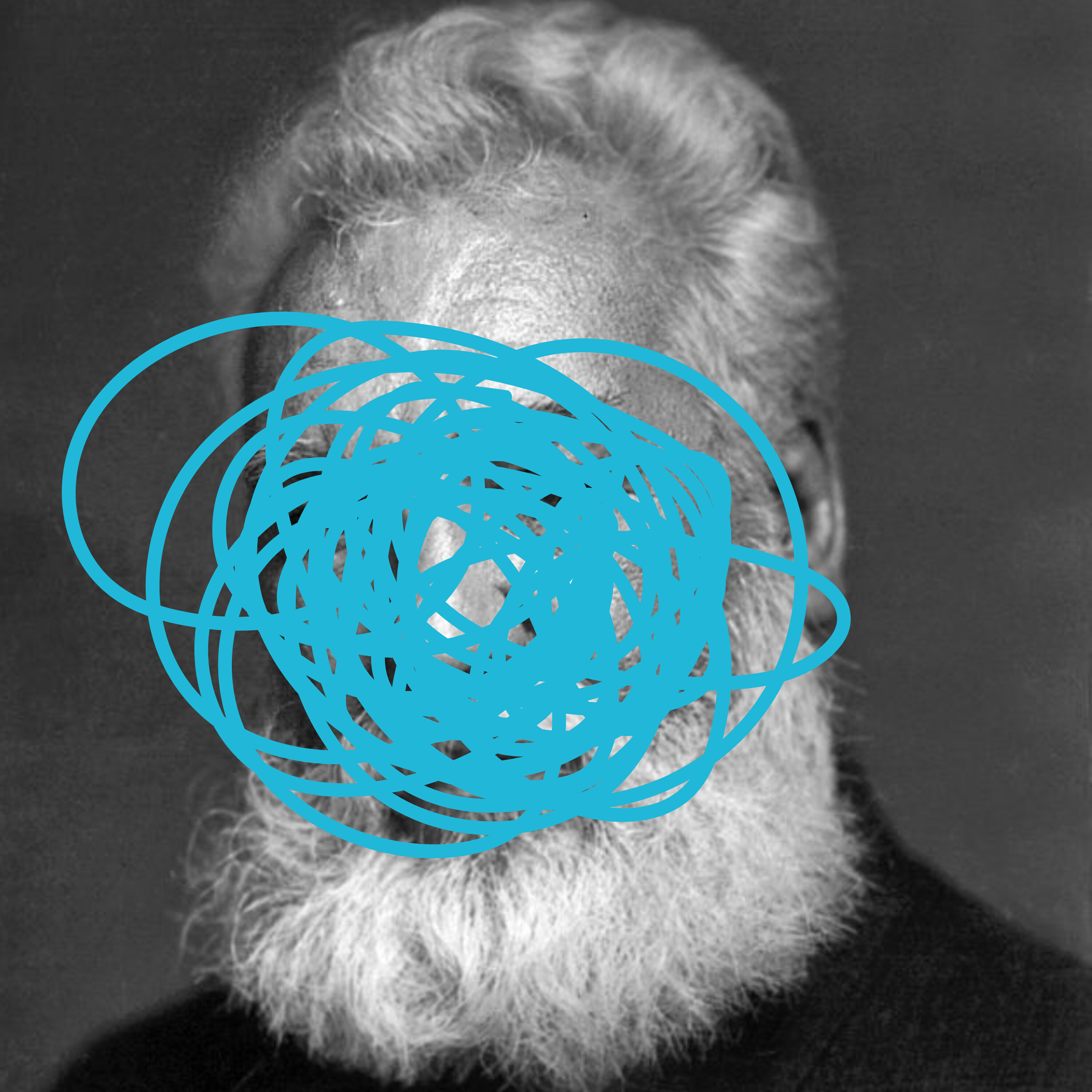
Loading summary
Transcript37 lines
- [00:00]
Dr. Claire Aubin
Hi there, it's Claire. If you're hearing me, that means you're listening to the free preview of one of our Patreon episodes. We switch off every week between free and Patreon exclusive episodes. So if you'd like to hear the rest of this conversation, head over to patreon.com thisguysucked and join our honorary haters club. A list of sensitive themes and topics covered in this episode can be found in the episode description. Welcome to this Guy Sucked the show where we prove that it's never too late to have haters and you can't libel the dead. I'm your host, Dr. Claire Aubin, and I'm a historian, writer, and as you all know, certified hater. On this show, we talk about people from throughout history with legacies that need a little updating. Whether it's because of their politics, their behavior, or their impact on society and culture, these guys actually kind of sucked. And we bring in a new scholar every week to tell us why. With me today is Annabel Mailer, who is an assistant professor of music theory at the University of British Columbia. Her research interests include music and disability, deaf music making, sign language music, musical form, post tonal music, and embodiments of music, all kinds of music. She's also got a new book out called Seeing Analyzing Sign Language Music. Welcome to the show, Dr. Slash Professor Mailer.
- [01:33]
Dr. Annabel Mailer
Thank you for having me. I'm really excited to be here.
- [01:37]
Dr. Claire Aubin
Okay, so this is going to make me fail the Bechdel test. Actually, this entire episode in like the whole show makes me feel. The Bechdel test, the entire show is me talking about men. But you are not the first member of your household to be a guest on the show. This is the first time that that has happened. Also, your husband, Robert Kanecki, was one of our very first guests actually on the show. The video about his episode on Instagram has like over a million views.
- [02:06]
Dr. Annabel Mailer
Wow.
- [02:07]
Dr. Claire Aubin
Which is insane. My question is, do you think your guy or his guy is worse?
- [02:15]
Dr. Annabel Mailer
Oh, my gosh.
- [02:16]
Dr. Claire Aubin
Or bad in different but equal ways?
- [02:19]
Dr. Annabel Mailer
I actually was talking to Robert about this and I think that they're bad in different ways. Jerry Lee Lewis is very obviously bad. Right. You know, he did some really atrocious stuff like there's murder, there's marrying your 13 year old cousin. I mean, he didn't have a lot of redeeming qualities. I would say Alexander Graham Bell is more complicated in terms of his impact. I think his impact has been really terrible. You can't find like a lot of really salacious details in his life, but it's more about the effect that he's had on the world that has been very negative. So, yeah. Bad in different ways, I would say.
- [03:07]
Dr. Claire Aubin
Yeah, I would tend to agree. I just thought it was. To me, it was funny to imagine the first time we've ever had two people who were like, from the same household talking about the show. In my head, that's just such a wild thing to me that there are, like, people out in the world discussing things like this. Did he give you any tips for coming on this? Or, like, did you have any discussions what it was going to be like?
- [03:27]
Dr. Annabel Mailer
I mean, I've been very nervous because I don't really like the way my voice sounds. So he's been trying to reassure me that I don't have a horrible voice. He, of course, has this wonderful voice. I mean, everyone who knows Robert, who hears him, teach or present is always like, oh, my gosh, you have such a great voice. Do you do radio? Nobody ever says that to me, so it's a little bit of a high bar to compete with my husband on that count.
- [03:52]
Dr. Claire Aubin
But he does have a deeply soothing voice.
- [03:56]
Dr. Annabel Mailer
Yes, he does.
- [03:58]
Dr. Claire Aubin
He does, yeah. I mean, to be fair, like, it was funny when we released the episode, so many people were like, does he have his own podcast? How can I get him to, like, read me stories or whatever? And I was like, okay, everybody, calm down. If there's one thing that having a podcast will do for you as a person. I used to be fairly self conscious about my voice. It's gone. I have to be really comfortable with my own, like, voice. My own mouth sounds. Things that you don't think about on the daily basis. I think about a lot. I don't think there's such a thing as like a. Well, that's a lie. There is such thing as a bad voice, but you don't have one of.
- [04:36]
Dr. Annabel Mailer
Them, so it's okay. Just, you know, compared to Robert, you.
- [04:42]
Dr. Claire Aubin
Know, look, we all have our areas of expertise within our relationship. His is, I guess, having a voice. He's gonna hear this and be like.
- [04:52]
Dr. Annabel Mailer
What the fuck are they talking about?
- [04:58]
Dr. Claire Aubin
Okay, let's get into what we are really here to talk about. You mentioned him previously, but let's reiterate it. Who are we talking about today?
- [05:08]
Dr. Annabel Mailer
We are talking about Alexander Graham Bell.
- [05:12]
Dr. Claire Aubin
This is also worth noting that this is the first episode that we've done as a direct response to a listene request, which I think is pretty cool. Typically, we only choose the scholar. We don't choose the guy that we're talking about because I can't really anticipate who people are going to want to talk about. And that gets us, I think, a lot more interesting topics and interesting perspectives. And oftentimes other people will choose or scholars will choose people that the average listener has never heard of. So I don't typically invite people to talk about a specific person. However, when an audience member wrote in and asked if we could cover Alexander Graham Bell, I was like, oh, I know who the person to do this is. Like, I thought, okay, immediately I know who would want to talk about him. So we reached out to you specifically for this, so you get the honor of answering the first ever, like, requested guy, which I think is fun.
- [06:11]
Dr. Annabel Mailer
I am very honored that you thought of me for this. And I'm always happy to hate on Alexander Graham Bell. So this is, this is delightful, really, for me to get the opportunity.
- [06:24]
Dr. Claire Aubin
We'll, we'll begin by. Some people already know about him or maybe need a little refresher or only know a little part of why he's famous. So let's talk about that for a second. What is he famous for? Or what's his popular narrative? Like, what do most people know about him?
- [06:38]
Dr. Annabel Mailer
Yeah, Alexander Graham Bell is mostly known as an inventor, specifically as the inventor of the telephone and really beginning kind of modern communications. So he was an inventor who was working a lot on the telegraph and improving the telegraph, also other kind of sound reproduction technology. He also worked on the gramophone, improving the gramophone. But his big innovation, the big invention, was that he was the person to patent the telephone in the United States in 1876. And Bell Telephone Company, you know, was the first telephone company in America, and it later became eventually AT and T. So that's, I think, what most people would know Alexander Graham Bell for.
- [07:29]
Dr. Claire Aubin
Yeah, I mean, it, I mean, he's very famous for that. And I really think it kind of can't be overstated how much life has. We know it currently is thanks to the existence of the telephone, which is his thing. So, I mean, this is he really the same way that Henry Ford, who we talked about on the show not that long ago, really reinvented the way that we think about cars. Alexander Graham Bell has this enormous outsized relationship to how we think about communicating and telecommunications. He also invented or worked on developing lots of other things. So looking up the list of his inventions is pretty bananas. So he worked on the photophone, which was a device that transmitted sound using a beam of light. So it's like a precursor to fiber optics. He worked on the graphophone, which was an improvement on Thomas Edison's phonograph, using wax cylinders instead of tin foil. For sound recording. He worked on the audiometer. So a device that we use to test hearing acuity. It's the early version of hearing test tools that we use today. The early metal detector. It was invented or used as a prototype to try to locate the bullet in President James Garfield after he was shot. That's a wild thing that Alexander Graham was somehow involved in. He worked on the vacuum jacket, which is a precursor to the iron lung. Like an early respiratory aide, he worked on the speech transmitting helmet. So it's designed to amplify the human voice. It's an early concept like the megaphone. He worked on water desalination. Like this guy was working on, like, everything.
- [09:11]
Dr. Annabel Mailer
Yeah.
- [09:12]
Dr. Claire Aubin
So what he's really known for kind of above all else, is being this pioneering, innovative visionary who wants to make the world a better place, more connected, technologically advanced like that is how we think of him or how most people. I'm not gonna say, wait, now that I know what his whole deal is, but how most people think of him.
- [09:34]
Dr. Annabel Mailer
Yeah, absolutely.
- [09:36]
Dr. Claire Aubin
And, you know, who on earth could have a complaint about that? You know, But I think that this one, before we get into what's wrong with him, requires a little bit of explanation of his life, his family and his background and the way that he grew up before you can really problematize what his whole issue was. So can you tell me a little bit more about his background and his family?
- [10:00]
Dr. Annabel Mailer
Yeah. So he was born in Scotland in 1847, and his father, Melville Bell, taught speech and elocution to deaf students. And he had this system that he called visible speech, which was meant to show every single possible mouth movement, mouth shape, oral posture, to create spoken language. So that was what Melville Bell was working on. And Alexander Graham Bell's mother was mostly deaf, so she became deaf. She started to become deaf in her kind of late childhood. And then during Alexander Graham Bell's childhood, she lost a lot of her hearing. And so they communicated partially through speech and lip reading. And apparently Alexander Graham Bell would speak really close to his mother to kind of. And in a particular tone of voice that would amplify his voice so that she could hear it better. And then they also communicated using the British Sign Language Alphabet. So he would very discreetly sign on his hands using the Alphabet, fingerspelling to her when they were out somewhere. And he wanted to make sure that she understood what was being said. So both of his parents were a huge influence on his life and what he would do with his life. He started out kind of taking up his father's visible speech method and teaching it to deaf students. He went to London to teach students there, but then his older brothers both got tuberculosis and died. And Alexander Graham Bell also got tuberculosis. He was the last remaining child. And so his parents wanted them to move to Canada because they wanted him to be in the fresh air and recover from his illness. And they thought that the best thing for him would be to move him to Canada so he could recovery. Alexander Graham Bell did not want to do this. He wanted to stay, wanted to keep teaching in London, but he decided to go with his parents and also his brother's widow as well. And so they moved to Ontario. And so he was based in Ontario for a while, eventually moved to Boston, but he worked in schools in Boston other and he had his own private tutoring school where he would teach deaf students using this visible speech method.
- [12:31]
Dr. Claire Aubin
So there's this shift in his life or this thing in his life that is shaped by his family's experience of and with deafness and the concept and the experience of being deaf. It's very interesting. I think rightly suspect that that's gonna be the big problem later on, like we're foreshadowing here. But it's really important to have that context to understand that what later becomes this obsession with deafness is based out of this family life that in many ways revolves around it, not just in terms of having a mother who is deaf. He also had a wife who is deaf.
- [13:09]
Dr. Annabel Mailer
Yes.
- [13:09]
Dr. Claire Aubin
So his mother, Eliza Gray Simmons, and his wife, Mabel Gardner Hubbard, are both profoundly deaf. So it's like his family life revolves around this, but then also his work life and his family's work revolves around this too. His obsession with communication and him being this innovator in the field of communication technology really stems from and is related to his relationship to deafness, or in many ways grows out of that, which is very important to understand that these things can't really be separated from one another in the story of his life.
- [13:43]
Dr. Annabel Mailer
No, the work of Alexander Graham Bell's life was deafness, was educating the deaf. It was truly what motivated everything that he did. Like, he was obsessed with this, and the invention of the telephone came out of this as well. Everything that he did was related to this. So this was truly the passion of his life, was educating the deaf. And he said this all the time, that this was what he was truly passionate about what he really wanted to do. And I was gonna get to Mabel, Mabel Gardner Hubbard Bell. But, yeah, she was a huge. A huge part of this as well. So her connection with Belle also turns into a part of the business connection of the telephone as well, through her father.
- [14:23]
Dr. Claire Aubin
This is a good moment now that everyone has all the necessary context here to get into what your main issue with him is, which, by the way, after doing the research, like I said, is now my issue with him too. So we'll start. We can do a list. But what's your first big problem with Bel?
- [14:44]
Dr. Annabel Mailer
So Bell truly stands for what is known as the oralist movement of deaf education in North America and in the world in general, but specifically in North America. He is the oralist of deaf education. And he was a massive figure in oralist education in deaf education in general. And he really influenced the course of history when it came to deaf education in America in a way that has kind of resounded across the following more than a century, up until today, continuing today. His legacy is still very much alive in deaf education and the way that we treat deaf children, in the way that we think about sign language education and oral education for deaf children. And so he is really responsible. Not fully, but he is partly responsible. And he was really the figurehead of the oralist movement. And in that way, he was partly responsible for all of the terrible things that happened because of oralism afterwards. So all of the atrocities that happened in oralist schools that kind of ended up spreading across America, really, and taking over from manualist education. He was also a eugenicist. So that's another thing. He was a big figurehead of the eugenics movement in North America. And that also, of course, led to a lot of atrocities, a lot of horrible things. So those are, I think, the main things that I have enormous beef with Alexander Graham Bell. There is also some debate about whether or not he truly invented the telephone. So we can, if you want, there's a controversy there about whether or not he plagiarized the telephone. Patent.
- [16:38]
Dr. Claire Aubin
Bonus. Bonus.
- [16:39]
Dr. Annabel Mailer
Patent.
- [16:46]
Dr. Claire Aubin
Thanks for listening to this preview of a Patreon exclusive episode. To subscribe and listen to it in full. Head over to patreon.com this guy sucked.