← This Guy Sucked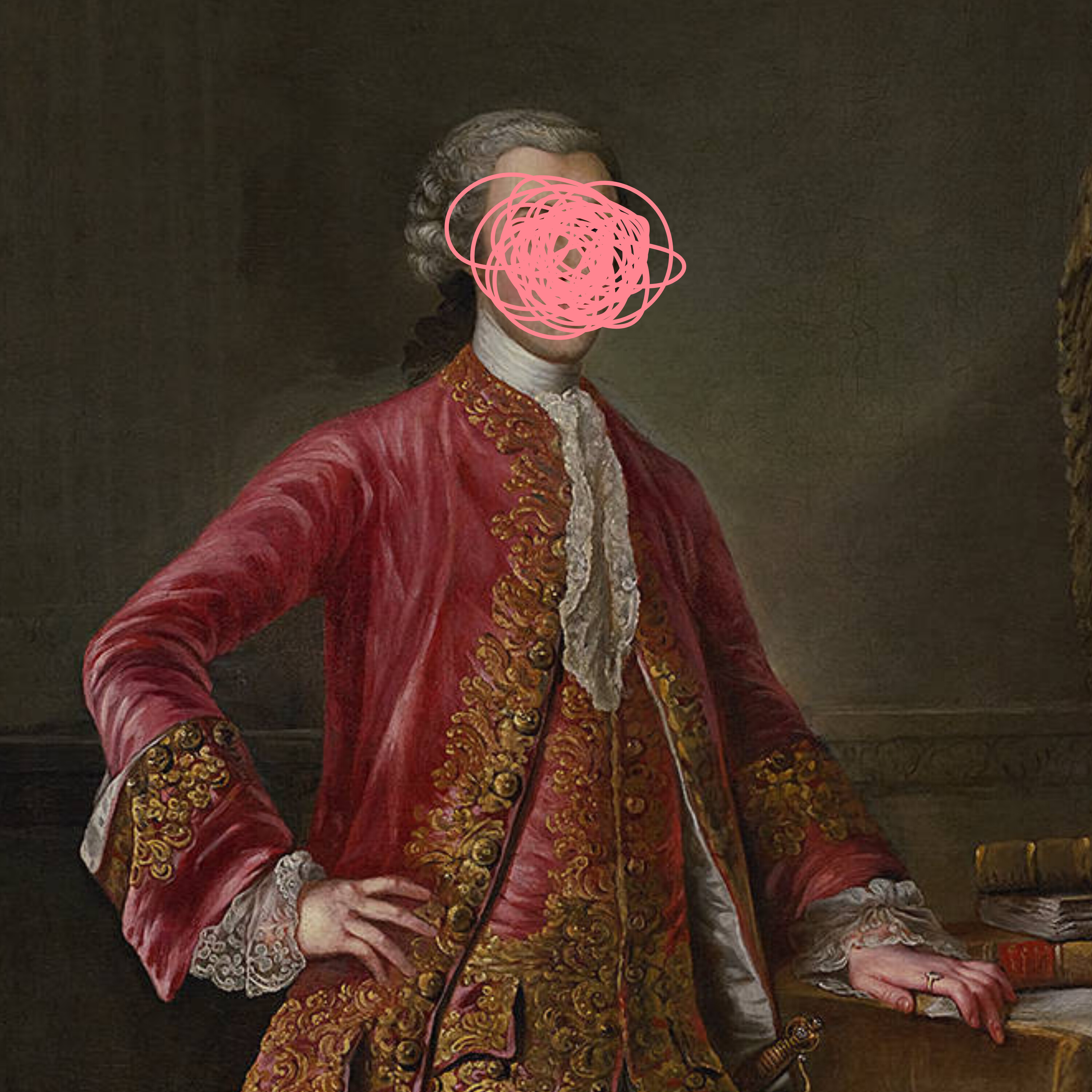
This Guy Sucked
Frederick Calvert, 6th Baron Baltimore with Brendan Greeley (Subscriber Preview)
00:18:27
Loading summary
Transcript39 lines
- [00:00]
A
Hi there. It's Claire. If you're hearing me, that means you're listening to the free preview of one of our Patreon episodes. We switch off every week between free and Patreon exclusive episodes. So if you'd like to hear the rest of this conversation, head over to patreon.com thisguysucked and join our honorary Haters club. A list of sensitive themes and topics included in this episode can be found in the episode description. Welcome to this Guy Sucked, the show, where we prove that it's never too late to have haters and you can't libel the dead. I'm your host, Dr. Claire Aubin, and I'm a historian, writer, and most importantly, as we all know, a certified hater. On this show, we talk about people from throughout history with legacies that need a little updating, or in this case, highlighting. Whether it's because of their politics, their behavior, or their impact on society and culture, these guys actually kind of sucked. And we bring in a new scholar every week to tell us why. With me today is Brendan Greeley, who is the former US Economics editor and a regular contributor and, I think, contributing editor.
- [01:19]
B
Contributing editor? Yeah.
- [01:20]
A
Contributing editor at Financial Times, as well as a finance and economics writer at places like the Economist and the New York Times and the Washington Post and the Wall Street Journal.
- [01:28]
B
Europe.
- [01:29]
A
As if that weren't enough, he is Also currently a PhD student at Princeton and has a new book out, the Almighty dollar five of the World's Most Powerful Money, which I have right here next to me and which I read, which is crazy, for reasons that will soon become clear to everyone. Welcome to the show and congratulations on the book.
- [01:47]
B
Thank you so much. Is it so crazy that someone would read a work of financial history?
- [01:51]
A
No, that I would. That me. Not that anyone. It's not crazy. Everyone should read this. It's crazy that I personally would. I normally start with some sort of patter, banter, whatever, which you and I just did for, like, 40 minutes.
- [02:06]
B
It was a great conversation, everybody. I'm sorry you missed it. We get along like puppies in a box. It's great.
- [02:13]
A
But in reference to me saying that it's crazy that I read this, this is a stupid question, so please indulge me. I am not an economic historian, nor do I understand, A, finance or B, the economy, which is terrible. But I also know a lot of people do not understand finance or the economy. Despite you having spent several decades trying to make more people understand these things, what drew you to working on and studying this.
- [02:39]
B
So I became a financial journalist because I had been a tech reporter and I got tired of hearing myself make the same arguments. 2010, I was at BusinessWeek and I was writing about basically every week I was writing the same story, which is why Verizon and AT&T are ruining America. And it didn't change them. They didn't care what I wrote. I'd be like, haha, I really nailed them this week. And then they would just like continue doing their thing. And around the same time there was this interesting thing going on in economics where they had diagnosed the crash. We sort of understood what happened, but economics was having, as an academic discipline a reckoning with itself because it had missed the crash. And that was fascinating. So people rethinking the way they think was a great beat. And I just asked for it and they gave it to me. And luckily at BusinessWeek at the time we had Peter Coy, who eventually ended up at the New York Times just like a fantastic economics writer. And he was always taking the top level story, which meant that I could just wander around in the margins and in the footnotes and ask, how are people changing the way they think? And to me, you know what really helped me, if we're gonna talk about sort of ways of doing history, was a book by Rebecca Spang called Stuff and Money in the Time of the French Revolution.
- [03:50]
A
Okay.
- [03:50]
B
I loved that book so much that I emailed her and forced her to be my friend. And what she does is. So she came at economic and financial history. As somebody who wrote her dissertation about restaurants, she wrote a great book about the sort of the invention of a restaurant in post revolutionary France. She basically asks a deceptively simple question which is how do they pay for that? No, seriously, literally like what did one person hand another in return for bread? And that's usually taken for granted by economic historians. They're usually looking at high level data at sort of big amounts of money moving from one country to another or moving in and out of banks. And they neglect the study of just figuring out how normal people paid each other. And it turns out a lot of this is credit. Most normal people use a lot of ledgers. They're basically lending to each other for short periods of time. There aren't a lot of coins in the normal person economy. We assume that everybody used coins and then we moved beyond coins. But it turns out we've always been using ledgers with each other. And her obsession with like, no, seriously. And then how did they print the money? No, what did they Print it on who was responsible for printing it. Why did they believe that? You know, these notes, when they showed up, that really appealed to me because it's almost a journalist's way of looking at history, which is that as a journalist, one of the things that you're taught is people are always lying to you. And the way they lie to you is they make things needlessly complicated. And particularly for financial journalists, you don't want to look stupid in front of them, and so you pretend to understand what they're saying, when in fact they're saying absolutely nothing. And so her obsessive focus on literally what happened on the barrel head, and she has this great quote in her book where she says any woman buying bread in a market knew as much about money as David Hume or John Locke, which I think is really true. And when you read the great philosophers of money, they don't seem to care or understand how normal people paid each other. And I've been doing this thing recently for my dissertation where I'm looking at the use of gold and the gold guinea that came from the Royal African Company during the English financial revolution. One of the investors in the Royal African Company was John Locke.
- [05:52]
A
Okay?
- [05:53]
B
He saved every scrap of financial paper that he ever used. We have an entire financial picture of his life. And so I spent a week at the Bodleian looking at his financial archives.
- [06:06]
A
Shout out to the bod. By the way, I love every time an archive comes up in the show.
- [06:11]
B
Yes, absolutely. There was this amazing moment. I'm in the Bodleian, and the head of the Bodleian complains that so many LLMs, large language models are sort of pinging the Bodleian. That's hard to keep the website up. And I'm literally in that moment in the Bodleian looking at stuff that has not yet been digitized by. So, you know, John Locke had this theory that silver is the perfect money. And, you know, money is the product of labor, and it always starts with a coin, and then, and only then do you build credit on top of it. But a coin is the perfect money, and the coin has to be perfect. You know, it's not negotiable. You know, it only works if it's always the same weight and the same size. I will tell you, like, for a man who believed that, that dude used a lot of credit. He lived his entire life on credit. Everything he did was basically borrowing money from his bookseller who kept an account for him, and then he topped up the account every time John Locke sold copies of any of his works, you know, and so he was constantly writing, essentially what we would think of as a check, like, to other people for food and stuff, saying, if you want to get paid, go to my bookseller. He's got the money. These are all small acts of credit. And so an obsessive focus on, no, seriously, how did that actually work? Actually helps us understand how money works a lot better. And that approach, I have to credit Rebecca Spang for it. And she and I have talked about this and we've agreed that what we look at is low finance.
- [07:29]
A
I've been thinking a lot about. I mean, I talked about this before in an earlier episode with the idea of, like, how history has kind of fallen out of vogue a little bit. But it's very much what I do and the style of history that I do, which is, like, so often people fail to interrogate the obvious a little bit and they'll say, well, it's just obvious, like, well, people did this. So, like, my first book, Nazis Coming to America, they'll be like, yeah, obviously they did that. We know that they did that. And I'll say, but, well, how did they integrate into communities? How did they. What ships did they come over? For example, if they came over on a ship, surely that means that they were in some cases on the ships that carried, for example, Holocaust survivors with them. So there are moments of intersection. We need to actually be thinking about the how because that opens up all these other questions. But so many people are basically skipping over that because they think it's not high level enough. But, like, that is, for me, that unit is very useful for understanding the world.
- [08:29]
B
No, absolutely. I absolutely love that approach. I've been thinking recently about. I've been talking to Sean Venata, who's a financial historian, he's at the University of Glasgow, and he and I are obsessed with how gold moves from place to place.
- [08:42]
A
Sure.
- [08:42]
B
And there's this assumption in financial history, you reach what's called a gold point, where if the value of gold reaches a certain point, then it's actually cost effective to ship coins instead of moving pieces of paper back and forth. How, literally, who carried the gold to the ship? Who signed for it? Where did it sit on the ship? Like, did they wrap it up in cases like, how did you get it safely from the bank to this? All these questions, I think, are really important. Yeah. And he and I have both realized, like, a lot of the stuff that we take for granted, like the mechanics of the gold standard, literally, like, how did you Redeem something for gold really matter.
- [09:14]
A
Yeah.
- [09:15]
B
And it turns out that, like, the mechanics of the gold standard in America, there was a counter in Manhattan where you could drop your bills off for gold. That's how the treasury did it at the beginning. And that counter matters.
- [09:24]
A
And even thinking about, like, okay, well, people are using credit, and there's this assumption that they're actually using coins instead. They're not using credit, they're using coins. That also requires you to imagine, like, again, I say this every episode, but, like, the people we are now is still the people we were several hundred years ago. Evolution doesn't move that quickly. That requires me, Claire Auben, to have a sack of coins that I'm dragging around all the time to buy expensive things. Surely not. Or even inexpensive things. The physical weight of some of the things that you're talking about, like, you have to imagine, would I want to do that? Or could I just be like, here's a piece of paper. I'm going to pay you back when you come here. Can we just deal with this another way? Like.
- [10:08]
B
Yeah, and that. That piece of paper becomes money.
- [10:09]
A
Yeah. And now that paper is my credit card.
- [10:12]
B
Yeah, exactly. You. You said we were allowed to swear on this podcast. Am I allowed to use the word historiography?
- [10:19]
A
Of course. Please do.
- [10:20]
B
Let me give you a basic historiographical framework that I think will be actually relevant to the asshole we're talking about,
- [10:26]
A
which we will shortly.
- [10:28]
B
The worst. This guy was the worst. Which is that there is a very current debate about the historical nature of money among historians. And until the financial crisis, money was not seen as an interesting or cool subject for historians. And there's now a whole generation of people who have trained since the financial crisis. I'm one of them who are obsessed with money and how it worked. And historiographically, there's sort of two main ways of thinking about it, which is that there is a medalist school, and this is the version that we were. This is the sort of simple history of money that we were given by economists if we ever took micro or macro in college, which is people bartered with each other, but barter was inconvenient. So they had these little pieces of silver and gold, and then they stamped them to make sure that people knew that their value. And then the gold and then piece of paper represented gold in a vault, and then the gold went away and the paper stayed. That story, I think it's got a ton of holes in it particularly. And this. I spent a lot of time in the book Looking at this, you have to believe that gold goes away and paper still has value. Requires a healthy belief in magic. And maybe it was another mechanism that gave the paper value. Okay, that's the metallist school. There's also the chartalist school, and this comes from charto, which is Latin for ticket. That really believes that money is something that the treasury, that the government spends into the economy, and then taxes back out. This is a dramatic simplification. But this is the tension when we look at financial history and monetary history between these two competing ways of thinking about money. One says it starts with a coin. Everything is built on top of the coin. The challenge with that is when you take the coin away like it's not magic. Like, how do you solve that gap? It means the theory is lacking. The other one, though, kind of says coins were a mistake and they existed. We find them. They had meaning. We have to recognize that whatever we think of historically has to both incorporate lots of personal credit and lots of coins because they're in the record. We find them, they show up at archeological digs. And so this book, in a way, is a response to this, which is I've tried to describe in every chapter, we're looking at a different century in the history of the dollar, often at a completely different place, a different continent in every chapter. What I have found is the way money worked is a frustratingly ambiguous combination of credit and coins, and that people had lots of small acts of credit that they shared with each other on local, private levels. And at some point, you run out of credit, and that credit's got to clear with a coin, and then you start it back over again. The coins were important for the credit, but the credit had value on its own. So if we describe a system like colonial America, what you have is a ton of ledgers that barkeepers kept, that tradespeople kept. And they would let you take something from their store or from their bar, so long as you wrote down the amount in a ledger. And I think that this was a public performance of credit. When you look at these ledgers, they're often stained from being on the countertop and they're marked up. I think they opened it on the countertop, and they were like, claire Auburn got one bourbon. And everybody's like, we heard Claire Auburn got a bourbon. I don't. And, like, I don't know if that's your jam. And then they'd write it down. And so we can really read in these ledgers how they also then traded those credits back and forth. And so two people would then show up and agree, look, his bar tab is now mine because I owe him money. So it begins to form a deposit system. So that was all over colonial America. Promissory notes, what we think of as an IOU where people just wrote down IOU 10 shillings. Those were so much more widespread in the colonies than they were in England that the law of promissory notes that made them tradable as money actually began in Massachusetts and Maryland. And then, and only then sort of became something that Parliament accepted. Promissory note could be negotiable. So we're looking at lots and lots of acts of private credit that formed the monetary system. However, that doesn't mean that it was a credit only system. Coins were really important and they were desperate for coins in colonial America because there was no domestic source of silver or gold. And so they were getting what we now refer think of as silver dollars from trade with slave and sugar islands of Barbados and Jamaica. They were getting some Portuguese and Spanish gold. Most of it was silver though. And these coins sat on the edges of all these credit transactions. And there's a constant frustration in all the colonies that there aren't enough coins to clear these transactions. And so then you get what we think of as state issued paper money to serve in the same place that a coin does to clear a credit transaction. Eventually some kind of cash has to enter the picture. And again, there is a tradition within history that looks at. But all of the colonies eventually issued their own paper money that looks at this as a chart, as a ticket that they spent out and then taxed back in. I don't think that's wrong necessarily. I think that's not complete. I think these pieces of paper had to have some financial meaning. And one of the things I'm working on right now for conference paper is looking at how it is that a sinking fund, which was basically the state would issue paper money and then it would promise to take in taxes at the port in silver or gold to then sink those bills, buy them back later on. I think the sinking funds were really important for the value, but that's all that's needles on the head of a pandemonium financial historians. More broadly, I can't tell you, look, it was coins and the credit sat on top of the coins. That doesn't describe that market. I also can't tell you it was just credit and the coins were irrelevant. It looks like those two things worked together in really interesting ways, in really complex ways. And so sort of trying to figure out how systems of money worked is the basis of this book. Like, how did people actually make dollars century after century after century? In ways that worked for them and in ways that sort of didn't blow up and leave us with valueless money.
- [16:11]
A
Yeah. I mean, and I think the way that you've explained it in the book is really accessible and really thoughtful. And we talked about this before we started the episode, but I think it's well worth reading for people who are like, I don't understand what's going on or what it means or how it started. This is great for that. I do think we need to. Now that everyone has all of the. Like, genuinely, I think, has useful context for all of this. Talk about the guy who sucks for this episode. Yeah. Because he sucks for both financial and other reasons, which I think is fascinating.
- [16:40]
B
Yeah.
- [16:41]
A
I said this before we started, but this guy is a freak, like, in a lot of different ways. Who are you here to talk to me about today?
- [16:52]
B
Frederick Calvert, the sixth and final Lord Baltimore, was the lord proprietor of the province of Maryland from the. I think the late 1750s until 1771 when he died. And I had a problem writing this book because one of the chapters of this book takes place in provincial Maryland, where the. And I am proud to say this as a Marylander myself, proud to say that the first printed dollars were printed in Maryland well before the revolution.
- [17:25]
A
Okay, shout out to Maryland.
- [17:28]
B
Yes. And part of actually, the irony of the story is like, a recent resurgence in Maryland pride. But he shows up in my book because the real character in the book is Horatio Sharpe. He's the provincial governor of Maryland, and he's desperately trying to figure to solve this problem that we were just talking about, which is how do you create some form of cash in a place that cannot possibly have enough coins? And so he's desperately sort of like, negotiating with the Maryland assembly and negotiating with the tobacco planters who have all the power in the province, but also sort of dealing with Pennsylvania, which has its own paper money, which is leaking over the border. And he seems like a pretty competent civil servant, but in his letter. I'm just reading his letters, trying to figure out how he solved this problem.
- [18:08]
A
Problem.
- [18:09]
B
And Lord Baltimore keeps showing up in these letters, and he's just the worst human being.
- [18:14]
A
Yeah. Thanks for listening to this preview of a Patreon exclusive episode. To subscribe and listen to it in full. Head over to patreon.com thisguysucked when it's time to scale your business, it's time for Shopify. Get everything you need to grow the way you want. Like all the way. Stack more sales with the best converting checkout on the planet. Track your cha chings from every channel right in one spot. And turn real time reporting into big time opportunities. Take your business to a whole new level. Switch to Shopify. Start your free trial today.