← This Guy Sucked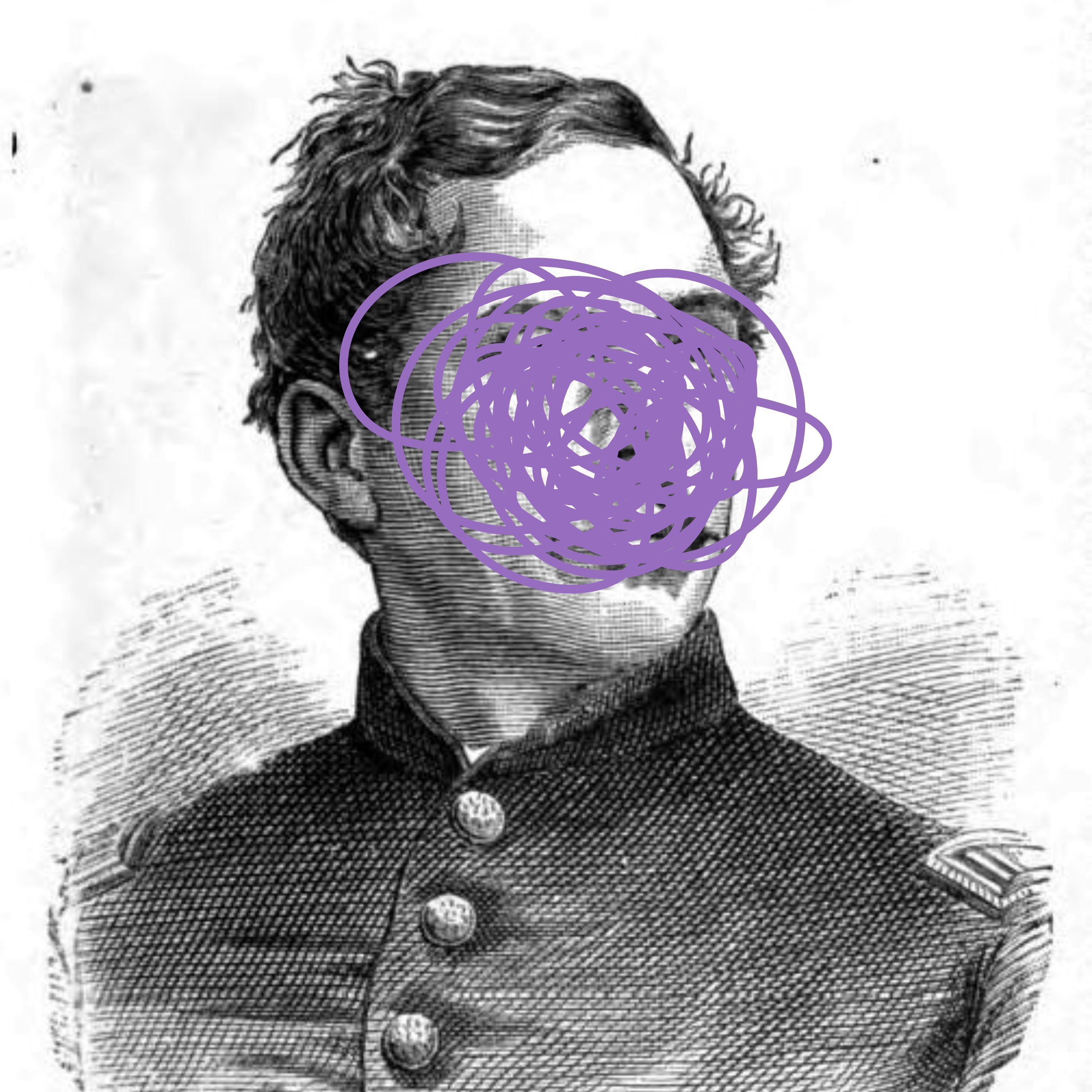
Loading summary
Transcript22 lines
- [00:00]
A
Hi there, It's Claire. If you're hearing me, that means you're listening to the free preview of one of our Patreon episodes. We switch off every week between free and Patreon exclusive episodes. So if you'd like to hear the rest of this conversation, head over to patreon.com thisguysucked and join our honorary haters club. A list of sensitive themes and topics included in this episode can be found in the episode description. Welcome to this Guy Sucked the show, where we prove that it's never too late to have haters and you can't libel the dead. I'm your host, Claire Aubin, and I'm a historian, writer, and most importantly, certified hater. On this show, we talk about people from throughout history with legacies that need a little updating. Whether it's because of their politics, their behavior, or their impact on society and culture, these guys actually kind of sucked. And we bring in a new scholar every week to tell us why. With me today is Andrew Wender Cohen, who is a professor of history at Syracuse and primarily works on 19th century American law, society, and political economy. And he's got a new book, freshly out, which our shared editor shout out to Cecilia, hooked me up with an advanced copy of Gangster of New A violent life in 19th century America. Welcome to the show.
- [01:30]
B
Thank you for having me, Claire.
- [01:32]
A
So I try to rotate our questions, like our starter questions a little bit, and I don't know if the audience likes them or hates them. If you do, post it in a comment somewhere that I can see but that other people cannot see. I try to rotate our questions a little bit. Let's do one we haven't done in a while. Do you have a favorite archive, slash library, slash place to conduct research? And if you do, why?
- [01:55]
B
Well, my favorite archive is actually my house.
- [01:59]
A
Okay.
- [01:59]
B
Because I now do, I would say, 85% of my research in digital materials, mostly digital newspapers. Now, you can't do that if you work on a lot of subjects, but if you work on the history of crime, and all three of my books have been about the history of crime. My first one's about racketeering, my second one's about smuggling, and my third one is about this 19th century gangster. They pop up in the news all the time. Sure, thousands of times. So you can really construct a life of a criminal or of the history of a particular type of crime by looking at digital newspapers. Now, you might ask me, well, when you started working as a researcher, you couldn't do that. And that's true. So when I started my career, my first book, all the research was done in the Cook County Circuit Court archive, which is basically Chicago's trial court system archive. And I had great luck there. But one of the things you learn very quickly about criminal case files is that they don't have that much information in them. Mostly what they give you are dates. And those dates are incredibly useful for finding things in the newspapers. Obviously, once you started having digitized newspapers, you were able to go directly to that source. And so you could then look at the case files after, because they really don't produce as much information as the actual newspapers newspaper articles.
- [03:22]
A
So, I mean, I don't know if this is true for you, but that means that also we probably share a favorite archive, which is times machine.com, which is the New York Times, digitized very, very old newspapers from which you can just search names. So, like when I was doing research for this episode, I looked up the name of your guy who we'll get to in just a second. I looked him up and was like, okay, all of the search results are your book and then Times Machine articles. So it's very weird because it means a lot of the research I did for this was primary source research.
- [03:58]
B
Well, the reality is, actually, I started so ProQuest's New York Times database, which is contiguous with Times Machine. That was the first of these databases to come online. And it came online late 1990s. It was somewhat unstable at the beginning, but by the 2000s, it was the established newspaper database. But since then, there are multiple other databases in every city. Chronicling America is a free one that is sponsored by the Library of Congress. There's also a guy I would call out specifically named Tom Trinisky, who lives in Fulton, New York, who put together a database that is a magnificently bizarre set of newspapers that he chose. He's got thousands and thousands of newspapers. And when I say bizarre, the website looks like an old style 1990s website. But if you learn how to use it, man, it is the greatest resource ever. And I owe him so much because he has thousands of newspapers from all over the country, but especially from New York State. And what I discovered is that my guy, Louis Bal, you know, who was in the United states for over 60 years beating people up left and right, committing all sorts of crimes. He just pops up again and again and again and again and again. You can trace him through time, literally from his first arrival in New York city in the 1830s to his last major crime, which was in 1886 to his eventual death in 1900. All of it is documented in the newspapers, every single bit of it. So when you combine that with the census and military records, all of which now are digitized, I do most of my research there and then I secondarily go into the paper archives if there's something I just can't find anywhere else. So when I was looking for Louis Bal, the character in my story, this gangster, early in his life he took a worldwide cruise in the United States Navy to fight pirates in Sumatra. And miracle of miracles, the records of that ship and the discipline on that ship have his name. And he was whipped, you know, on the ship. And it records his being promoted to captain of the meantop. Now that was paper that had to be done in the archive. So not everything is digitized yet. But when you're working with someone, again, who's a criminal, you're able to do a lot of work in the newspapers. And Again, Times Machine, ProQuest, those are just the starting point there. We now have so many wonderful resources.
- [06:33]
A
Yeah, absolutely. Even like public entities like Ancestry.com and newspapers like these places that have done this so that people can do public genealogical research and stuff end up often turning up documents that I would otherwise not have ever seen, basically without being it physically present. Because they will pay to have people go in and digitize a bunch of stuff for them, which I think is really interesting. And like, you know, I sometimes I'm a little loathe to pay whatever amount to some of these websites, but sometimes that's the only way that you can actually access some of the resources that they have. So, I mean, it is cool. I think we are at a moment where historical research is more accessible than ever previously. And a lot of primary sources are more accessible than they ever were previously, which is pretty amazing. And I feel very lucky to have come into my academic career and my scholarly career at a moment where so much of what I can do is kind of at my fingertips in a way that it means research is often faster now than it was in the past. Things are more readily accessible. I still prefer personally going to a special collections and physically having the thing because I enjoy the materiality of it. But it is very cool that we can like, can read all these newspapers from my office where I'm sitting right now.
- [07:51]
B
You know, look, paper is still magic, you know what I mean? It's still a magical feeling, and I can't deny that. But what's also magical is actually finding the thing you want and finding out what actually happened. And one of the things you can do. So the lead character in my story, Louis Bayrell, has a relatively unusual name. Now, of course, they spell it 4 billion different ways, but you still are able to find find him in the records in ways that you couldn't do before. And conversely, it's enabled a certain type of social history. One of the problems we had in finding working people, ordinary people, and Louis sort of, he's a celebrated working person. You know, he's a person who rises out of, to a certain in fame. Ordinary people pop up in the newspaper all the time in the 19th and early 20th century. I mean, it's commonplace. And so you can find them. And moreover, you can find specific acts that you couldn't find otherwise. So if you want to find examples of people being arrested for wearing clothes of the wrong gender. Right. Which was a very common thing in the 19th and early 20th century, women were not allowed to wear pants. You just type the word arrested within a certain number of words of attire, and I guarantee you will get hundreds of hits that give you examples. Well, how would you have found that in the prior era? Where would you have gone? In the archives. Even if you looked in the criminal court archives, they're not putting that under a special file.
- [09:21]
A
Yeah.
- [09:21]
B
Oh, here's our special file for people being arrested for cross dressing. Now with the newspapers, you're able to find that material. And so with Louis, this project would have been completely impossible. It would have been a two page biography without the newspapers. But with the newspapers, again, thousands of articles about him and his career and the ability to connect the dots of where he was at particular times becomes possible.
- [09:44]
A
I mean, I'm also very grateful for it because newspapers are very key to my work as well, because it's like these are people who are not keeping. This will have come up in a previous episode that listeners will have heard. But like the people I work on are not keeping journals and diaries. And if they are, they're not ones that they want to share with historians. Right. They have a reason to not tell people that they were in fact a Nazi. So newspapers are actually very useful for talking about what their reactions of their communities are when they discover, for talking about how neighbors perceive of them. We're talking about how the US Is positioning itself because the US Is releasing all these press releases about them that then get filtered through the newspapers in all these interesting ways. So, yeah, they have also been an enormous part of my research as well, which I think is a really fun, interesting thing. I think they give you such an interesting view into the world when they were being produced.
- [10:37]
B
And for listeners to understand, you really need to remember that as late as the 1960s, it was very common for local newspapers to report on Joe Schmo. Visited his mother for dinner, guy got his finger cut off in a mill accident. I mean, that kind of material was commonly reported in the newspapers. Nowadays we're in a universe where we have way fewer newspapers. And the newspapers really operate on a higher level of what they report on, you know, but they're not reporting on, you know, who's having dinner with whom or who's visiting their cousin in town. I mean, literally, you'll find reports in local newspapers that a particular person is ailing, they're not feeling well, and that kind of reportage just. It doesn't exist. But you're dealing in a universe where the newspaper, you know, you might have a relatively small city with two or three newspapers. You know, it's eminently possible. Now, of course, sadly, those newspapers don't exist at all. Yeah, we have a very different information universe.
- [11:37]
A
Yeah, absolutely. We should probably talk about your guy who you have mentioned several times and who is allegedly the purpose of the show. Who are we talking about for the rest of the episode?
- [11:48]
B
So Louis Bay ral was a 19th century gangster, slash war hero, slash boxer, slash pimp, jockey and horseman who pops up again and again and again the Zelig or the Forrest Gump of historical violence. He beats up everybody in the 19th century. He beat up Richard Henry Dana Jr. Who was a famous anti slavery attorney. He beat up Dormant Eaton, the father of the American civil service. He was involved in the murder of Jim Fisk, the most famous assassination and murder trial of the late 19th century. He was the leader of the federal marshals who escorted fugitive enslaved person Anthony Burns back into bondage. One of the most important episodes in 1850s anti slavery. So Louis is just present at all of these amazing moments in history. Oh, and I haven't even mentioned he, as I said, he toured the world with the United States Navy and fought pirates in Sumatra. I mean, it just goes on and on. And then when he was in his dotage in quite old age, he was working at the Custom House and he was fired by a reformer. Reformers had been trying to get rid of Louis for years and years and years, for really decades. So he got angry and shot him. And this was front page news in every newspaper in the United States that his boss was the surveyor of customs for the poor of New York, which was the second highest Office in the Custom House, which made it one of the most desirable jobs in the entire federal civil service. So everyone knew who this guy was. He was a Civil War hero, but he was also involved again in a wide array of criminal activities, local politics. He was the bodyguard for Boss Tweed at one point, the boss of New York State's Democratic politics, the leader of Tammany Hall. But he was also the bodyguard of William Henry Seward after he left the White House as Secretary of State and became a private citizen and went on a tour of the world. So, Louis, he kind of knew everybody. He beat up a lot of people, and he had this remarkable career.
- [14:05]
A
I mean, even just your intro right now and the introduction to the book are so wild with the amount of information that you are able to package to this guy's life in terms of being like, oh, and, you know, Bill the Butcher from Gangs of New York, Willie Pool, or a Bill Poole that's kind of loosely based off of. He knew him too. Like, he knew them all, every possible person.
- [14:31]
B
And this is the key thing. I mean, I don't know if Butcher Bill Pool was afraid of him, but they were all terrified of him. Even though he was only about 5 foot 6, 150 pounds, because he was just a terrifying individual. He knew how to fight and he had no restraint or fear. Now, obviously, people were shorter back then. People were smaller. They used to refer to the champion boxer, heavyweight boxer of the world, John C. Heenan, as a giant. Heenan was about six'1,200. So he was big, but he wasn't that big, not by our lights. But still, Louis was a terrifying figure. People were really scared of this guy, and not scared just when he was young, but scared of him throughout the period. So from the 1830s to the 1890s, this guy was viewed as a terrifying figure. But at the same time, a lot of people really respected him for being terrifying. He was a bully in an era where bullying was actually kind of how the society was run. It was a society that was run or organized by non lethal violence, as one of the things I argue. So in that context, Louis, ability to fight was actually highly respected. Now we can talk about it, but there were a lot of people who thought it was terrifying and upsetting that someone should have so much power and respect. And so we begin seeing people criticizing a social order in which the ability to terrorize or bully is such a valuable skill.
- [16:04]
A
I mean, one of the things I often get out of our 19th century episodes, which we've had like a little string of them. Recently we've done a bunch of 16th century and a bunch of 19th century episodes or I've recorded a bunch of them. So they're kind of at the forefront of my mind is that the 19th 19th century is so much wilder, so much more violent, so much more jam packed with like important historical moments, particularly in the us. But like then people are popularly imagining it for some reason. The 19th century has like in the popular imagination. They understand it as like the Civil War or like big moments and are not thinking about the general span of the 19th century and how basically insane like all of it was for pretty much everyone. Thanks for listening to this preview of a Patreon exclusive episode. To subscribe and listen to it in full, head over to patreon.com thisguysucked ever
- [17:03]
C
notice how life's best stories don't happen in your living room? They happen on the open road, out on the water, or parked under the stars. At Progressive, they get that you want to focus on the experience, not worry about the what ifs. That's why they offer quality insurance designed for your ride, whether That's a boat, RV or motorcycle adventure with confidence. Visit progressive.com and see how easy it is to protect your favorite way to get away. Progressive Casualty Insurance Company and affiliates not available in D.C. prices vary based on how you buy.
- [17:36]
D
I'm Kiana and I leveled up my business with Shopify. Once I figured out that Shopify was a thing, I never turned back. I can create a site with my eyes closed. Shopify thinks ahead of us, you know, and it thinks about the customer more than anything. Every day I'm thinking about some other new business, but Shopify is doing it to me because it's so easy to use. It's like I can't stop. I'm addicted. Start your free trial@shopify.com
- [18:06]
E
I'll be honest, shopping for clothes is not my favorite thing. I just want to look good without overthinking it. Stitch fix makes it easy. You take a quick style quiz, your size, your vibe, your budget, and a real human stylist sends a box with clothes that actually fit your life. Try it on at home. Keep what works, send back the rest. Shipping's free. No subscription required. Get $20 off@stitchfix.com podcast.