Loading summary
Transcript151 lines
- [00:00]
Dr. Claire Aubin
A list of sensitive themes and topics included in this episode can be found in the episode description. Welcome to this Guy Sucked, the show where we prove it's never too late to have haters and you can't libel the dead all. Claire. I'm your host, Dr. Claire Aubin, and I'm a historian, writer, and most importantly, as we all know, a certified hater. On this show, we talk about people from throughout history with legacies that need a little updating. Whether it's because of their politics, their behavior, or their impact on society and culture, these guys actually kind of sucked. And we bring in a new scholar every week to tell us why. With me today is a repeat guest that you might remember from last year's Alexander the Great episode, Patrick Wyman. He's a historian and a podcaster with an excellent new project that we were just talking about, but none of you got to hear it because you weren't invited to the conversation we had earlier. This new project, which is truly like an antidote to tgs and I highly recommend it, Past Lives. And in addition to this, he's also got a brand new book available for pre order now. Out next week, Lost How Humans Tried, Failed, Succeeded and Built Our World. If you've ever listened to his podcast, Tides of History or Fall of Rome, Those are ending. What? Tides of History is ending now.
- [01:35]
Dr. Patrick Wyman
Yes.
- [01:35]
Dr. Claire Aubin
As you're listening, as we, as we
- [01:37]
Dr. Patrick Wyman
are speaking now, the last episode of Tides of History is rolling off the presses.
- [01:42]
Dr. Claire Aubin
Wild. Ending one start, the start of another. Incredible. Welcome back to the show, Patrick.
- [01:49]
Dr. Patrick Wyman
Thank you so much for having me. It's such a pleasure to be back.
- [01:52]
Dr. Claire Aubin
Congratulations on all these new things. I'm so excited. I've said this before, like, Past Lives is amazing. And I was really glad that we got to feature you guys on TGS to be like, everybody, go listen to pasla.
- [02:05]
Dr. Patrick Wyman
Well, I, I so, so appreciate it because I, I just feel like the two shows are complimentary. You know what I mean? Like, they work really well together that if you, if you listen to both of those, you're going to get a pretty comprehensive idea of the human past through specific examples. And I think, like, history to me is always most useful when you're using it as a tool to think through things. And like, if you're coming at it from above and below, you're covering a hell of a lot of ground.
- [02:33]
Dr. Claire Aubin
Yeah. You don't need the middle ground that much.
- [02:36]
Dr. Patrick Wyman
No. The bourgeoisie, like, we'll leave that to Marx.
- [02:42]
Dr. Claire Aubin
So this is being recorded on Friday the 13th spooky of March. And I like to sometimes point out at what point in human history we were recording the episode because I think it often colors what we're thinking about when we make these episodes and the conversations we have. I would say things are looking pretty bad in terms of the world. How are you feeling?
- [03:06]
Dr. Patrick Wyman
I mean, I would say one of the both upsides and downsides to being a historian is you got a lot of points of comparison for anything stupid that's happening in the world. And on the one hand it's comforting to know that dumbasses have always ruled among us. On the other, that's not always turned out great. And I think that's my concern is like, yeah, I'm long humanity. I think like humanity is in good shape as a species, relatively speaking. Like some, like a few million of us will make it through. I am very short any particular way of organizing human society and any particular state. So I would say those two things are in uncomfortable tension at the moment.
- [03:48]
Dr. Claire Aubin
I also like the idea of being like a few million of us will, will make it through. Considering what percentage of the population a few million.
- [03:56]
Dr. Patrick Wyman
It's not great.
- [03:57]
Dr. Claire Aubin
A few million constant.
- [03:59]
Dr. Patrick Wyman
Look, it's not great. I'm not, I'm not here to tell you that we're all going to like Kumbaya and live happily ever after, but I'm confident in saying that like some small portion of humanity is probably going to stick around for a while.
- [04:10]
Dr. Claire Aubin
Yeah, I think that's fair. Whatever abject conditions they may be living in, we don't need to think about we're past is not futurists.
- [04:18]
Dr. Patrick Wyman
Again, not great, but not the worst case. This is the kind of comfort that you can, that you can find at past lives and in the pages of lost worlds.
- [04:28]
Dr. Claire Aubin
That's why people come here is to be sad, to feel bad.
- [04:34]
Dr. Patrick Wyman
Like right after the start of the pandemic in 2020, when my son was home from school, he was about three and a half years old. I was finishing up writing my first book and I was writing a chapter on the, the Holy Roman Emperor Charles V. And my son kind of strides up to me and he says, what you doing? I said, well, I'm writing. He's like, you writing a story? I'm like, yeah, I'm writing a story. He's like, is the, is it about a good guy or a bad guy? And I'm like, kind of a bad guy, I guess. He's like, is it a happy story or a sad story? I'm like, it's Kind of a sad story. It was about the conquest of the Aztec, and the Inca is not great. And he's like, so that's your job, huh? I'm like, yeah. He's like, so daddy's job is to write sad stories about bad people and, like, same, like, boy, you're not wrong. I. That's not. That's not the worst description of my job I've ever heard.
- [05:25]
Dr. Claire Aubin
I mean, you know, from the mouths of babes, really, like, where you're like, yeah, you know? But again, and I said this in the Frederick the second episode. That's better than your child going to class later and being like, my daddy creates shareholder value. My daddy, you know, my daddy is working on deliverables, you know?
- [05:48]
Dr. Patrick Wyman
Yeah, this is so my. My daughter has a classmate. I met this classmate's father at a bar. It was like a school dad's event. And I made some crack about a soccer team that we had played where the coaches were personal injury attorneys, and they coached like they were personal injury attorneys. And he turns to me, says, I'm a personal injury attorney. I'm like, oh, that's, like, real stepped in it there.
- [06:11]
Dr. Claire Aubin
I went to dinner with some friends not that long ago, like, a few months ago. And I was talking to them about their kid, and I said, what could your kid do that would disappoint you? Like, if they grew up and, like, what would you find disappointing? And they were like, oh, you know, just the normal stuff. Like, nothing too bad. And I was like, what about, like, if they became, like, venture capitalist? And there was silence, and then someone was like, the husband of the friend was like, well, you know, that. That's. That I'm a. And I was like, oh, no. I literally said, the only way a child could disappoint me is if they had the job that you have presently.
- [06:50]
Dr. Patrick Wyman
Oh, I love that. Oh, I love that. But you know what? Sometimes you got to stand on business. I think I was right about the personal injury attorney thing.
- [06:57]
Dr. Claire Aubin
I'm sure you were.
- [06:57]
Dr. Patrick Wyman
And I don't think that it's wrong to be, like, vulture capitalist. Really?
- [07:02]
Dr. Claire Aubin
Like, well, I was like, well, you're wicked, sorry to say.
- [07:06]
Dr. Patrick Wyman
Yeah, I'm like, I'm sorry your job makes the world worse. Like, you would. You would have a more positive impact as a baby seal poacher.
- [07:15]
Dr. Claire Aubin
You know what? Those seals grew up to eat other
- [07:17]
Dr. Patrick Wyman
animals, so, hey, they do recently learned that elephant seals are, like, serial seal murderers. And that was a tough one to find out. Did not. Did not care to Know that Found out after a Wild Kratz episode.
- [07:29]
Dr. Claire Aubin
You know, if you could go back in time, would you kill baby Hitler or a baby seal? Is a crazy, a crazy comparison.
- [07:39]
Dr. Patrick Wyman
That's a thought experiment we could do. I am reluctant to say I've given a lot of thought to various baby Hitler slash baby seal scenarios.
- [07:47]
Dr. Claire Aubin
Hey, I'm just saying, like, again, this is another one. You're not going to get this anywhere else, guys.
- [07:51]
Dr. Patrick Wyman
No, no.
- [07:53]
Dr. Claire Aubin
We should probably do the thing that this podcast is about. So we should probably do fulfill our mandate, unlike all politicians. Who are we talking about today on this? Guy sucked. What guy sucked?
- [08:07]
Dr. Patrick Wyman
So today we are talking about the pharaoh of pharaohs, the king of kings, Ramesses ii, often called Ramesses the Great. This is the guy. If you have heard the Percy Shelley poem, you know, look upon my works, ye mighty in despair. This is Ozymandias. Ozymandias is a kind of a rendering of the Greek version of one of Ramesses the Great's throne names. So this is Ozymandias. This is the king of kings. This is he of the enormous statues and extensive wall panels glorifying his achievements, gigantic temples. Much of what we think of as being like ancient Egypt and much of what we think of as ancient Egyptian kingship is actually just Ramses the Great. He is an extraordinarily important figure. He is one of the great kings of the late Bronze Age world system. So this period when you have these glittering kingdoms scattered throughout Western Asia and North Africa, the Eastern Mediterranean. So you've got the Hittites, you've got the, the Kassites in Babylonia, you've got Assyrians, you've got New Kingdom Egypt, you've got the Mycenaean kings in Greece. And it is this towering era of international trade, powerful states, kind of the first efflorescence of a state system that we can see in human history. And Ramesses the Great is, in my mind, the figure who most embodies that world.
- [09:35]
Dr. Claire Aubin
He's the guy.
- [09:37]
Dr. Patrick Wyman
He's the guy, yeah.
- [09:40]
Dr. Claire Aubin
Before we talk about him, I'm always curious to find out what brought you to studying him or thinking about him. Like, what was your personal access point for interest.
- [09:51]
Dr. Patrick Wyman
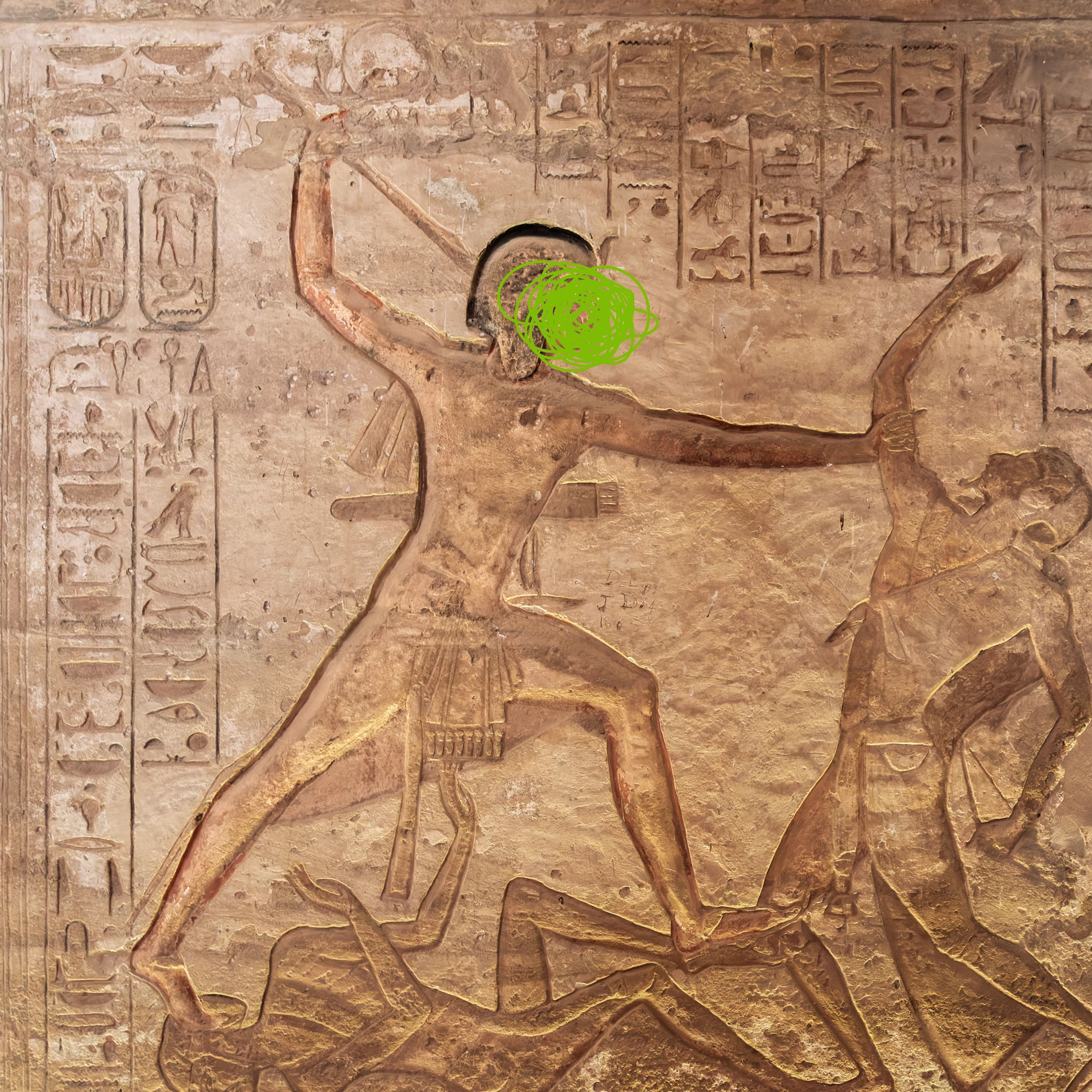
So for Ramesses, for me, it was the battle of Kadesh in 1274 BC. This is one of the first battles in human history that we have any actual descriptions of where we have some sense of kind of what happened in the battle. And I was really struck by the scale of this conflict like that. This is if the numbers that we are given in our sources are even half of the number of people that were actually involved in this battle. And there were probably 40,000 soldiers involved in this. And this is in 1274 BC. So these are armies of a size that we are not, probably not going to see again in this part of the world for another almost thousand years. Like these are armies that would have been respectable in the day of Alexander the Great or the middle Roman Republic. So it tells you how big this world is. And the aftermath of this battle is Ramses setting up a whole bunch of monuments to glorify his role in it. And all of these things depict him as kind of single handedly driving back the Hittites. And I was just like, did he, he really did drive him back single handedly. That, that seems, that seems like it's probably not the case. So that was my entry point to Ramesses was trying to understand what is the reality of ancient Egyptian kingship. How does that impact the thousands and thousands and thousands of other people over whom the pharaoh rules? How do they justify their rule? How are they seen? And I just don't think there's a better figure for understanding that than Ramses. He is the towering figure. He is the, he is the quintessential pharaoh in the most powerful period of ancient Egypt's history.
- [11:30]
Dr. Claire Aubin
Let's go through his biography a little bit so that people can understand people who are new to him or to thinking about him or I think in most cases most listeners will have encountered him in some way. Right. Because of this, especially his like iconographic presence. This idea of like him as the guy we're all familiar. Like there's a huge statue of him that is right now in the British Museum. Like people have seen him in that way but probably will not know their history or his biography in any meaningful sense at all.
- [12:00]
Dr. Patrick Wyman
Yeah, I understand that like not a lot of people are like late Bronze Age heads. So let's dive into Ramses a little bit. So Ramses is born toward the end of the 14th century BC, around a little before 1300 BC. Ramesses is born. He is the grandson of the Pharaoh Ramesses the First, who had originally been an army officer but who was kind of adopted by a pharaoh who had no natural heirs. Ramesses the first gets adopted and named basically the, the kind of the successor in waiting because he already has not only a son, but a grandson. He has a full blown adult son who's also a competent army officer. This is Seti the First. And then he has this young grandson who we know is going to go on to become Ramesses II. So his family gets chosen to become the 19th dynasty of Egypt because there's already a succession plan in place. And this is very important to the Egyptians. You can't have really inter regna in the Egyptian system. Too much of Egyptian culture and politics revolves around the figure of the king to not have one. This is also why, even when towards the end of his life, just to skip ahead a little bit, Ramesses rules until he's like 90 years old. He's one of the longest reigning kings and anywhere in the ancient world. But also a 90 year old Pharaoh who was in real rough shape and we'll get to that toward the end. That guy could never give up power. He could never like abdicate or say, you know what, we could have a co king or something like that. Because the pharaoh is so indelibly bound up with Egypt and what it means to be Egyptian and the order of the whole state. The pharaoh could never be like, yeah, time for me to step down. So he's 90 years old, he can barely stand up. He's got a diffuse condition in his back that leads him to walking essentially completely hunched over. His teeth don't work anymore. He's got a giant hole in his jaw from an abscess. Like really in bad shape.
- [13:55]
Dr. Claire Aubin
Oh my God.
- [13:56]
Dr. Patrick Wyman
Yeah, it's, it's bad. And this guy is still the pharaoh, he's still the king because he rules
- [14:01]
Dr. Claire Aubin
for like 66 years or something like, like a long time.
- [14:05]
Dr. Patrick Wyman
66 years. He rules from 1279 to 1213 BC. Ancient Egyptian chronology is hard, but that is a pretty solid est. So he rules for he is in his 67th regnal year when he dies. And in the course of that time he fathers over 100 children. He has at least 62 sons. He engages in building projects all over Egypt. He builds a new capital for himself called pyramids up north in the Nile delta, which is probably at that point the second biggest city on the face of the planet. The only one that is bigger is probably the Shang dynasty capital in China, Anyang. So he fights war after war, after war. He's busy in the boudoir. He's got a lot on his plate,
- [14:50]
Dr. Claire Aubin
to say the least, given the number of children that we know exist.
- [14:54]
Dr. Patrick Wyman
Yeah. What I find confusing about that is so we know he has at least 100 children. We only know of eight wives and that's a lot of work. I would figure you would want to spread that out a little bit more. What's the math on that, it's not good.
- [15:10]
Dr. Claire Aubin
100 divided by eight. 12 and a half children per wife. Yeah, that's a lot.
- [15:18]
Dr. Patrick Wyman
I assume there were some others that we don't know of in there sharing the burden, I guess, but surely. Yeah, but we know his first consort had eight surviving children. Like his main wife had at least eight surviving children, which means there were probably at least 12 or 15 pregnancies. So this is like Ramesses was a big busy man, he was getting after it in all areas of his life. But like, the thing I have to convey just to really make clear about how ancient Egypt functioned was that the king was not just the leader of the state, he was the state, he was the culture. In a way that is kind of hard for us to understand that when Egyptians thought about what bound them together collectively, the pharaoh wasn't just a stand in for that, he wasn't just a symbol of that, he was that. And so in Egyptian iconography, when we see the king doing stuff, that is the king as stand in for the entirety of the Egyptian people, of Egyptian culture, of the Egyptian state, there were no boundaries between these things in the minds of ancient Egyptians. So when Ramesses is writing about things that he does, it's always, I did this. It's always like, yeah, no, I was the one who found the marble that we used to build that statue. Like, there are very few quarry men, there are very few subordinates. Other Egyptians, lower Egyptians exist only to glorify the pharaoh and like, serve as a foil for him ideologically. That like, if not for Pharaoh, these feckless, weak Egyptians would never get anything done. And that's the overwhelming vibe that you get from reading through ancient Egyptian texts and looking at the iconography.
- [17:03]
Dr. Claire Aubin
Like, not just the royal we, but like really the royalist of Whis, where you're like, ah, I am. Actually everything that happens while I'm in charge here is attributable to me. And I will in his case, go out of my way to ensure that everyone believes that this thing was exclusively my choice at my sort of whim. Is that right?
- [17:26]
Dr. Patrick Wyman
Yeah, that's pretty much correct. And for Ramesses, what really marks him out is not that he did these things, but that he did them for so long and on such an overwhelming scale that there is no king who left more of a personal impact on the landscape of ancient Egypt than Ramesses did. So the great temple of Abu Simbel, that was Ramesses. The Ramesseum, which is this huge peristyle hall near Luxor, that was Ramesses These are like the things that you think of when you think about ancient Egypt. Aside from the great pyramids, which are already. The pyramids are already like 14, 1500 years old by the time Ramesses is ruling. They're. They're already really old. But like, most of what we think of as the architectural achievements of this later period of Egyptian history are Ramses. They're either things that he ordered to be built or they're things that he put his name on, which effectively amounts to the same thing.
- [18:22]
Dr. Claire Aubin
Well, so we know that everything in ancient Egypt is built either by him or by the aliens who came, like, right before him to build the other stuff. So you can see why he's remembered.
- [18:34]
Dr. Patrick Wyman
I the. For all ancient societies. The alien stuff bothers me the most when we're talking about Egypt because we know exactly how they did it. Yeah, our evidence is so good. The archaeology is so thorough. We know exactly how they built the Great Pyramid. We have the. You can see the tool marks on the, on the limestone blocks. We have the tools. We know. We have the smelteries where they would reforge copper tools after using them. We have the ramps. We have the quarry. We know exactly how they did it. It's not complicated. It was just hard.
- [19:04]
Dr. Claire Aubin
Like, the thing that makes me laugh about the aliens thing is that everyone who thinks it is the dumbest motherfucker you've ever met in your life. And the reason that they think that other people couldn't have done things is because they are too stupid to do them. So in their mind, they're like, I'm not smart enough to do the research, to figure out or to just read what people who are smarter than me have discovered about this thing. Instead, they're like, well, because I'm stupid, I can't imagine someone else being smarter than me or more skilled at engineering or whatever than me, and therefore simply not possible.
- [19:38]
Dr. Patrick Wyman
Yet all of the alien discussions are the meme where it's like the two dumbest people, you know, just saying exaa t ly back and forth to each other. That's the alien discussions here. And yeah, it's especially aggravating in the case of Ramesses because we actually have the whole archaeological site of the village where the workers who built the. The tombs in the Valley of the Kings, like all of these famous tombs, we have the village where the workers lived. We garbage. And so we have records of disputes over donkeys. We have the mummies of the tomb workers themselves. We know about their osteoarthritis. We Know about their heart conditions. Like, we know who these people were. We know enough about ancient Egypt that we don't have to look at the king and be like, well, I guess he was the guy who did it. It was either him or aliens. It's like, no, it was just Egyptians. It was just. Just. Just dudes. Just. Just men and women out there doing stuff.
- [20:32]
Dr. Claire Aubin
People have always been people. Just doing people stuff.
- [20:35]
Dr. Patrick Wyman
Y. In really effective, intelligent, and interesting ways. Like, the great pyramid is laid out to within fractions of an inch of true. Over hundreds of meters of length. And this was not magic. It was just. And this was. Again, this is 2600 BC. This is, like, the fourth pyramid that's ever been built. And they did it right because they were smart and because they understood engineering and because they just applied tremendous amounts of labor and. And kind of mental and physical energy to the task. Like, Egyptians were good at that. It's a genuine civilizational achievement that the Egyptians understood these things well enough to be able to build enormous monuments over and over and over again.
- [21:19]
Dr. Claire Aubin
Well, it's also like, you know the monkey typewriter thing with Shakespeare, where they're like, if you put a monkey. What it was. I also feel like, to go against this, like, not that we need to take seriously the alien proposition, but to go against this. The human equivalent of this is if you put a group of toddlers in a room with building blocks for infinite years, they will at some build the valley of gangs, you know? Like, they will eventually come up with the pyramid. Like, because that's the nature of human engineering. Eventually you're gonna start building stuff. Good. Like, I don't.
- [21:55]
Dr. Patrick Wyman
The pyramid thing, especially, like, there's only so many shapes you can build, dude. Like, well, yeah, it's like. It's like. We keep coming back to it because lines go up and meet.
- [22:05]
Dr. Claire Aubin
Yeah.
- [22:05]
Dr. Patrick Wyman
Like, it's not. This is not like some ancient mystical, like, oh, my God, there must be some. Like. No, just. People understand that the foundation needs to be bigger than the top in order to support the weight. Like, this is.
- [22:18]
Dr. Claire Aubin
You go to Dubai, and they're building new skinny pyramids every day. Like, this is. We love them.
- [22:24]
Dr. Patrick Wyman
It's funny how that works. I mean, look, we got. We got one. The bass pro shop pyramid, man. Like, that's. There's. There's one in Vegas. They. I don't know if you've ever stayed at the Luxor.
- [22:33]
Dr. Claire Aubin
Aliens built the bass pro shop is my.
- [22:37]
Dr. Patrick Wyman
I actually have an easier time believing that aliens built the bass pro shot pyramid than the Great Pyramid. Like that's, that's much more plausible. Like I could believe that aliens would go to Tennessee. That's entirely plausible.
- [22:48]
Dr. Claire Aubin
You know what? Jesus went to New York or Pennsylvania or wherever that. Sorry to the Mormons. I think. I don't know where I was going with that.
- [22:56]
Dr. Patrick Wyman
Yeah, no, I mean, I don't think
- [22:58]
Dr. Claire Aubin
we have a high Mormon contingent of listeners, but if we did.
- [23:00]
Dr. Patrick Wyman
I'm sorry, no, probably not. But I mean, again, I think even the Mormons can admit that Jesus needed a really good reason to go to upstate New York. Like, I think we can all be on board with that.
- [23:11]
Dr. Claire Aubin
How do we get this back to Ramses?
- [23:13]
Dr. Patrick Wyman
I don't know. But yeah, I think the main thing that I want to get across about Ramesses and the reason why he sucks through the lens of this show is not because Ramesses was a bad king. In fact, by the standards of ancient Egyptian kingship, he was a great king, maybe the very best king. But the reason why Ramesses sucks and why it's important to understand him through that lens and is as a symbol of Egyptian kingship and what was bad and unfair and exploitative about the institution to start with, and also that Ramesses serves as kind of an avatar for this whole era of history, what we call the late Bronze Age. It's, it's this often seen as a glittering peak of human civilization where you have not just New Kingdom Egypt, which Ramses rules, but also the Hittites in Anatolia, the Mycenaeans in Greece, the Kassites in Babylonia. It's the first flowering of the Assyrians. It is a full blown state system with interconnected trade routes that are moving luxury goods, copper, tin in huge quantities, people, ideas. These are all literate states. They all have bureaucracies, they keep archives of texts. Like, it's really hard if you're looking at human history in kind of a developmental sense to not look at the late Bronze Age and think like we have hit some sort of new peak here, that people are doing things they haven't done before on a scale they, they haven't done things before. And Rameses, because he rules at the, at the peak of this world system, he. The 13th century BC is the absolute heart of this late Bronze Age world system as it exists. It's hard not to look at Ramses and think this is the guy who sums up a peak of human civilization that then collapses very shortly after his death. Like this whole late Bronze Age world kind of goes down in fire. Some combination of fire invasion, climate change, massive Drought, huge famines, like this whole world collapses. And Ramesses is the last guy that you can look at and say this was the great king of the late Bronze Age world system. So he ends up standing in not so much as a person. Even though we have his mummy, we know physically what he looked like. He was a real person. We know about his arteriosclerosis, we know about his kind of bone growth and his vertebra. Like we, we know about the physical person and the actions he undertook. But at the same time he stands in as this symbol for a glittering world that we're all supposed to feel real bad fell apart. And that's the part that rankles me is the idea that that is what we're supposed to look at as the peak of human achievement is states with kings, civilizations that got writing and bureaucrats and they build big old monuments and we're all supposed to feel really good about that. That's the part that bothers me. And that's why Ramesses the Great sucks.
- [26:19]
Dr. Claire Aubin
Hi, it's Claire. Thank you for listening to the show. You're currently hearing the free version of this Guy Sucked. So I'm here to tell you about our Patreon. In order to make the show sustainably and independently, episodes switch off between free weeks and Patreon weeks weeks. So if you're a fan of good, accurate public history made by actual experts, consider supporting us and joining our honorary haters club. It's only one tier, which means everyone who subscribes gets access to the same perks across the board. For the price of a pastry at your local hip coffee shop, you'll get to listen to a new episode every week instead of just the bi weekly free ones. And they'll all be ad free for you. You'll also get access to the full episode archive, bonus content, early access to merch, and lots of other fun Patreon exclusives. To sweeten the deal, just head over to patreon.com this guy sucked. Or follow the link in the episode description to sign up. You know, that makes sense. And I also think he is a good example of when people are imagining themselves into the past, right? Like that's one of the ways that we teach, especially children, to think about the past is by being like, and here's how you understand the past. When we look at that Bronze Age Egypt, often the way that people imagine themselves into the past is like, what were the pharaohs doing? What was their life like? And like, it's so utterly unrepresentative of the experience of living in this time and place, especially as one of his subjects. And that's not to say that he's like this horrible ruler, like you said, like he's not. It's not that, but it's that he, as this avatar for this time period, often becomes replaced in people's minds. Like his experience becomes what they believe the experience of this is. And that's not real, unfortunately.
- [28:11]
Dr. Patrick Wyman
That's such a great way to put this. And I'm so glad you said that, that. That Ramses the Great was not the default ancient Egyptian. He was not even close to being average. He was one of one. And what I find most aggravating about this is that we have such incredible data for ancient Egypt. We have. Have such a layered, textured, nuanced sense of ancient Egyptian society because we have incredible material remains. People have been excavating there for 150 years, and they found amazing things.
- [28:42]
Dr. Claire Aubin
When we started archaeology, we started with this. Yes.
- [28:45]
Dr. Patrick Wyman
You know, we understand ancient Egyptian society in ways that we dearly wish we could for so many other times and places. That what aggravates me the most is that we don't have to think of ancient Egypt through the lens of Ramesses the Great. We have so many other options. And I'll give you two examples of this, and they're physical examples because we have the actual bodies of the people. So a few decades before Ramses the Great was born, there was a religious reformer pharaoh came to power. This was Akhenaten. He was the father of Tutankhamun, and he was one of the world's first, so far as we know, monotheists. He tried to replace the traditional ancient Egyptian deities with a single God, the sun disk, the eye. And one of the pieces of his reform program was building a new capital at a place called Amarna. So this period is often known as the Amarna period because briefly, Egypt's capital is moved. And when archaeologists excavated Amarna, they found all sorts of incredible things. A cache of diplomatic letters that are one of our most important sources for understanding the late Bronze Age. But they also found the workers cemetery of the workers who had built Amarna. And. And I tell you, these were some of the most brutalized human remains I have ever seen in the archeological record. We are talking about teenagers who had been put to hard labor so early that they had broken backs before they reached physical maturity. There's evidence of corporal punishment in these remains that involved being stabbed literally a dozen or more times with a spear. And that was how the person would die. That was corporal punishment in this world. And, and these are the kinds of human remains that very rarely survive from ancient Egypt because they're so low status. We have them here and I think that is kind of the baseline level of experience that if you were at the very bottom of ancient Egyptian society, that's what you could expect. But then we also have the remains of the middle class, what we could broadly call the middle class. The workers who built the pharaoh's tombs in the Valley of the Kings. They lived at a village called Deir el Medina, which survives really, really beautifully. It's one of my favorite archaeological all the world. And we have the workers houses, we have things like sick lists, like who couldn't show up to work on a given day. We know enough that we can track the seasonality of disease in ancient Egypt from Deid el Medina. We also have the workers cemetery there. We have their tombs. So every once in a while you can find, okay, we know where this guy's house was, we know where he's buried, we know what job he did in the tomb. And this is for someone who lived 3,300 years ago. It's crazy. And these people were not nearly as brutalized as the Amarna workers were, but they still had hard lives. They all had, they all had arthritis, they're doing physical labor. They were walking at least a mile or two every day through the hills to the Valley of the Kings. The nearest source of water was a half a mile away from the village. They're kind of stuck out here in the middle of nowhere because their work has to be secret. But like we know what their lives were like. And they didn't look like Ramsey's life. Their experiences were not his. And that's the media in ancient Egyptian. Is someone working in a tomb at Deida Medina or you know, hauling blocks for the pharaoh's new capital at Amarna. Those are the experiences that ancient Egyptians were much more likely to have rather than, you know, Ramesses the Great single handedly driving back the Hittite chariots at the Battle of Kadesh.
- [32:11]
Dr. Claire Aubin
Yeah. And like when people do this, which I don't know how many people still do this now, but you know, like the obsession with your past life and like past life regression and all that stuff. And like, for some reason and everyone is like, I was, I mean, one of his wives I think is Nefertari, who we like know about, but like, and people will be like, I was Nefertari. And it's like, well, first of all, okay, you're popping out 15 kids. Enjoy. Or they're like, I'm the pharaoh or whatever. And it have to be like, at minimum, if past lives were real and you were at some point an ancient Egyptian in a past life, I can guarantee you you were not the guy. Like you can't, because we can't all be that, because not even nobody was that guy. Only one was that guy, and it was that guy.
- [32:55]
Dr. Patrick Wyman
That's not how numbers work. At a really basic level, like, purely statistically, even if you wanted to imagine yourself as a consort of the pharaoh, you're much more likely to be one of the ones who gets stuck in there after he. When he's like 80 years old. Or you're one of the ones that suffers the unfortunate fate of death and childbirth because he's just knocking you up constantly.
- [33:17]
Dr. Claire Aubin
Classic.
- [33:18]
Dr. Patrick Wyman
Yeah. So like, even if you want to imagine yourself as one of Pharaoh's comics consorts, or you want to imagine yourself as one of Ramesses sons, like he had 62 sons, you weren't one of one there. You know what I mean?
- [33:28]
Dr. Claire Aubin
Like, even if you're one degree of separation from the pharaoh, you're still. Their life's still not like his, unfortunately, I'm sorry to say.
- [33:37]
Dr. Patrick Wyman
No, it's this extraordinarily restrictive lens through which to understand the past. And that's not how people were living. And what I find really tragic about it and where, where I think we can kind of make a difference with history is by making people understand that those were not the default experience experiences that you are much more likely if you were living in ancient Egypt, to be knee deep in Nile mud, digging out a new irrigation ditch, trying to haul off manure, getting drafted into doing building work for the local priestly dynasty that you don't particularly want to do. That's kind of the norm of ancient Egyptian life. And it's unfortunate that we weren't all kings and great warriors in our past lives lives. It's unfortunate that we've mostly been shit farmers for most of the last 8,000 years. But like, that's life.
- [34:27]
Dr. Claire Aubin
Someone should consider making a podcast perhaps called Past Lives about these kinds of experiences.
- [34:34]
Dr. Patrick Wyman
Yeah, that's just all about the varieties of shit that you could in fact have farmed over the last eight. Like, yeah, I mean, I happen to think that normal life is interesting.
- [34:43]
Dr. Claire Aubin
Yes.
- [34:43]
Dr. Patrick Wyman
And that just being a person who's alive is interesting enough to justify by wanting to be studied. And what gets me about this, I think Ramsey's is probably a boring guy. I don't think he was that interesting. I don't think he would have had that much to talk about.
- [34:58]
Dr. Claire Aubin
He's a guy who likes building buildings and having sex. And like, that to me is like, okay, you could walk down the street in New York and find 90 of that guy in 10 minutes that's a
- [35:08]
Dr. Patrick Wyman
Queen's real estate developer. Like, that's. I. Not that. Not that we have any recent experience with guys like that, but. But like, yeah, these guys are not special. And. And quite frankly, for those of us who have met famous people.
- [35:23]
Dr. Claire Aubin
Yeah.
- [35:23]
Dr. Patrick Wyman
Often not that special anyway, just. Just people who happen to be famous,
- [35:28]
Dr. Claire Aubin
you know, kind of just guys, you know.
- [35:31]
Dr. Patrick Wyman
Yeah. Just dudes. Just dudes. Guys being dudes.
- [35:33]
Dr. Claire Aubin
Let's talk a little bit about his politics because I think the propaganda aspect of this is a part that we haven't, like, covered fully and I think is fascinating. And of this suckiness. Suckitude, whatever. I say this every episode and I still haven't figured out how to frame it. But he's ruling Egypt during a period when maintaining stability and also like, projecting royal power and authority, especially as he gets older and older and is a million years old, are very important. And like, the way that he does shores a lot of this up. Yes, he has this important battle which we should also talk about. But he also does it by being like. Like, let's build a lot of stuff. Put my name on all the stuff that we build. Let's make a ton of likenesses of himself. Like, he has a lot of monumental architecture, large building projects, like you've said, that are both like, religious and political. And often what ends up happening in people's understanding of things like this is that they condense them solely to the religious and be like, ah, well, this is this temple. They love the gods. And it's also like, well, if someone donates a library at your university and they name it after themselves, it's not just because they love knowledge. Right. Like, it's also because they want you to know it's theirs.
- [36:53]
Dr. Patrick Wyman
That is exactly like that. Right. There is the defining logic of ancient Egyptian kingship, because there is no neat division between the divine and human, especially when we're talking about the person of the king. The king is indeed, Egyptians needed somebody to interact with the gods for them, and that was the king. So the king kind of straddles the boundary between the human and the divine. And at the moment of his death, it was usually thought that that was the moment when the king became divine. So the Egyptian name for like the Great Pyramid of Khufu is the horizon of Khufu, because at the apex of the pyramid is the point where he passes over that horizon and becomes fully divine. Right now that gets a little more complicated as we get into the New Kingdom, because really powerful pharaohs like Ramesses thought of themselves as living gods. So not just that they were straddling that boundary, not just that they were on their way to divinity, but that they were living gods who ought to be worshiped as gods while they were alive. And this is kind of a new thing when we get into the late New Kingdom in Ramesses time. This is one of, in fact, fact, one of his major contributions is a revamping of the royal cult on a never before seen scale. The pharaohs always wanted to put their names on things. Pharaohs always built things. This is part of the job of being pharaoh. The landscape of ancient Egypt is a royal landscape in the sense that it is built by and for pharaohs to reflect the status and power of the pharaoh. And so when we come to Ramesses, it's not like he's come up with an entirely new rationale, it's just, he's blown it up, he's upscaled it. The statues are bigger, there are more of them. The buildings are bigger, there are more of them. Even this is the like super petty pharaoh hours here. But like, Ramesses made sure that when he did, when they did wall carvings, when they did hieroglyphic inscriptions or artistic depictions of him, you know, leading armies or whatever, he made sure they carved it deep, deeper, so that when the light hit it, the shadows in the inscriptions would be deeper and his stuff would look, would like pop. He was like, I want, I want my, I want my inscriptions to pop. So literally, if you look at Ramsey's inscriptions, compared to his father Seti's, his inscriptions are deeper. And that's one of the reasons why we know more about Ramses. Because they've weathered less, because he cut them, because he made sure that his inscriptions were cut deeper. And that's not a bad metaphor for thinking about Ramsay in general is that he cut deeper into the landscape. He cut deeper into the cultural life of Egypt. The reasoning was always the same. The pharaoh was the guardian of Ma', at, of order, and the pharaoh was the only thing holding back the tides of chaos. Isfet is what they called it. And that, that the world is a chaotic place, that there is a firm divide between the civilized and the barbarous. The civilized is the Nile Valley. It is the Black land, Kemet. And around that everywhere is the redland, the desert. And that this is a really powerful way for Egyptians to understand the world and their place in it. And the king's identification with Maat, with order, is so complete that. That there's not even a distinction between the concepts. You know, like, king, order, order, king. Like, does one flow from the other? Not so much. They. They just are.
- [40:18]
Dr. Claire Aubin
Are.
- [40:18]
Dr. Patrick Wyman
They are the same thing. What sets Ramses apart is that he embraces this so fully and stamps it so completely on the landscape. Because it's not just the Capitol. It's not just the giant statues. It's not just the enormous military campaigns or the celebrations and depictions thereof. It's that he does all of this over and over again for 66 years.
- [40:42]
Dr. Claire Aubin
Fascinating. This fits also with the thing that we were talking about before we started, where sometimes what's happening in history is someone is, like, not, like, stumbling into something. Right. But also, like, you can't fully predict what the future is going to look like. And you can be like, I guess we'll carve this deeper. But you don't know necessarily that that is going to be the reason people know about you thousands of years in the future. Right. Like, you hope, maybe. But, like, it is funny how many of these things are just kind of like, well, he built a statue that stood up for longer. He, you know, like. Like, that one was a really good. A good. His tomb was really nice.
- [41:24]
Dr. Patrick Wyman
It's a fantastic statue. Like, that's weird. We're all real happy about the statue. Yeah. And, I mean, one of the things that gets me about Ramesses is just that he did it all so big. So I'm going to read this off to you. One of his statues that survives now is still 35ft tall. This is just a fragment of the statue. It was a seated statue, and when it was originally built, it would have been 65ft tall. So this is a seated statue made out of a single block of marble that is 65ft tall. And just imagine how much work it takes to carve out from a quarry a piece of marble big enough to make a statue 65ft tall. Think about how many thousands of hours of labor it took to do that. And you're going to hate me even more when I point out that the Egyptians didn't have iron tools. They didn't even use metal tools of any kind to cut granite. The way they did it was by taking a harder kind of granite and pounding out a cut until it was powder. So that's how they had to get the marble for these giant ass statues was by literally pounding hard granite with harder granite until it was dust. And that right there is a pretty good image if you're trying to understand Egyptian kingship. The king says to do something, no matter how absurd or ridiculous or time consuming or frankly lethal it will be, because marble dust is not great for your lungs.
- [42:53]
Dr. Claire Aubin
Sure, I can imagine not.
- [42:55]
Dr. Patrick Wyman
Not great. So imagine how many people had to die just to get that chunk of marble out of the quarry. Imagine how many people were crushed underneath it as they were moving it to the place it needed to go. And that right there is what sucks about ancient Egyptian kingship and kingship more generally is that it told people like Ramesses the Great that that was a totally acceptable price to pay for the possibility of future glory. And I wrote about this in Lost Worlds about the Battle of Kadesh and the Battle of Kadesh. It's another one of these things that's like, look at this glittering late Bronze Age world system when you could have these enormous armies marching out on behalf of their kings to do battle. And because of the emergence of writing, we have an actual kind of like tactical and strategic sense of what was happening in this battle. And isn't that great? Like, no. What happens at the Battle of Kadesh is Ramses has bad intelligence and he doesn't know where the Hittite army is. So he marches toward the city of Kadesh. And waiting behind the mound of the city of Kadesh is the entire Hittite army. And Ramesses army is strung out along a line of march. The Hittites launch probably the largest chariot attack of all time time somewhere well north of a thousand chariots. The Egyptians say there's as many as 3,500 chariots here. I think it's easily plausible that it was at least a couple of thousand of them. So this is the largest chariot battle of all time. Part of Rameses's army is shattered. He desperately manages, single handedly, if you believe his artistic depictions, to rally the Egyptian army and kind of fight the Hittites to a bloody draw. Both sides claim victory. The Hittites don't make a big deal about it at all. They just say that they went and won a big battle. That's what the Hittite sources say. Whereas Rameses has wall panel after wall panel of imagery of him in his chariot leading the army at Kadesh. There's, there's multiple different versions of the story that he told about how he single handedly won the battle. Like there's a papyrus version, there's a verse version, there's a prose version, there are all of these different versions of Rameses kind of claiming credit for this victory. But all I could think about as I was reading these accounts and I was writing this up for a chapter of Lost World Worlds is the thousands of people who didn't walk away from that battle.
- [45:15]
Dr. Claire Aubin
Sure.
- [45:15]
Dr. Patrick Wyman
Who weren't, were barely even commemorated by Ramesses the Great. That what Ramses wanted to remember about this battle and what his scribes and artists depicted was the lone king. And as much as that is a standard reflection of ancient Egyptian royal iconography, I'm not saying that this was a uniquely bad Ramesses thing. This was how all Egyptian kings depicted themselves in battle with, as kind of lone warriors out there. And this was a common thing throughout late Bronze Age society that if you look at Hittite accounts of, of battles, it's very similar that it's, it's the king out there doing the stuff kind of as stand in or foil for the, the cowardice and incapability of the, the people as a whole. I just think that sucks, man. Yeah, it's just on some really basic and fundamental level. I just, I just think that sucks like, like that thousands of people, like imagine a massed charge of chariots. These Hittite chariots are big three man vehicles. They're pulled by a couple of horses. You're talking about thousands of pounds of animal and human absolutely crashing into a line of Egyptian soldiers. Like, just think about what that was like. I mean, you're about talking, talking about car crash level injuries even, even before you get to weaponry. And I know what a mass grave from a battle in this period looks like. I know what those weapons do to people. Like there's a, there's a Bronze Age battlefield from northern Germany in the Tolensa River Valley where for a variety of reasons the whole battlefield was just kind of left. And so like we know what bronze spears and swords and wooden clubs, clubs and arrows due to human bodies. Like this is. This is not hard to figure out and it's fucking horrible. Yeah, there's this one spot from this, this Bronze Age battlefield in the Tolensa Valley. It probably represents like a melee where like these two sides kind of crash together. And it was probably in shallow water, so the bodies kind of dropped and stayed there. But it's one of the only places in the ancient world where you can kind of get a sense for like what hand to hand combat was like, like. And there are something like a hundred bodies in an area that's less than 100 square feet. And obviously this is one pocket of fighting in one battle, a long way away from Kadesh. But this is what I had in mind as I was writing. My account of this battle is like, how much different would our portrait of Ramesses the Great be if what we had for the battle of Kadesh was not. Not his artistic depictions, it was not his, you know, carefully worked texts describing his role in this? What if what we had for that battle were the mass graves, the archaeological site? How much different would our portrait of Ramesses the Great be if that was our source of evidence? And to me there's something really profound in there about how we understand these long past societies that what we have have to tell them about like form is function is information. And what we have from Ramesses are these highly stylized, ideological, propagandized accounts of what he did and for whom. And the reality of it was guys getting crushed underneath chariot wheels and teenage laborers with broken backs and you know, even the well treated workers in the Valley of the Kings at the end of a long day being, being like, sure was worth it to hike 2 miles through 120 degree heat to carve out some soft limestone for this guy's tomb. Yeah, and that's just on some level, I can't get over how much that sucks.
- [49:00]
Dr. Claire Aubin
Hi, it's Claire here with my usual quick shout out to tell you about other multitude shows I think you'll like. If you're enjoying this Guy Sucked this week I want to tell you about wow if you True Wow if True is an Internet culture show explaining how what's happening online shapes the real world and tech culture. Journalist Amanda Silberling and science fiction author slash attorney Isabel Kim are really the right Internet experts and real life besties to help all of us understand what the hell is going on. If you haven't listened to our episode on inshidification and the suckitude of the Internet, I can confirm that the show is a very fun to be a guest on and b will take you on some unexpected journeys as a listener, to say the least least. More importantly, they're the only show that will explain both neopets and horizontal mergers in the same episode. So go check out wow if True wherever on the Internet you find your podcasts. New episodes drop every other Wednesday.
- [49:53]
Sponsor/Ad Voice
This episode is brought to you by Progressive Insurance. Do you ever think about switching insurance companies to see if you could save some cash? Progressive makes it easy to see if you could save when you Bundle your home and auto policies. Try it@progressive.com Progressive Casualty Insurance Company and affiliates. Potential savings will vary. Not available in all states.
- [50:13]
Dr. Claire Aubin
Early birds Always rise to the occasion for summer vacation planning because early gets you closer to the action. So don't be late. Book your next vacation early on VRBO and save over $120. Rise and shine. Average savings, $141. Select homes only this summer. Don't squeeze in. Spread out.
- [50:32]
Dr. Patrick Wyman
Find homes big enough for your whole
- [50:34]
Dr. Claire Aubin
gap guest list on vrbo. From family reunions to trips with friends, VRBO has spacious summer stays for every group size and budget. That's vacation rentals done, right? Start exploring on VRBO and book your next day now. Yeah, I mean, I think there's like, the antidote often to thinking about, like, great men and obviously, like, this is what the show is. But, like, the antidote to thinking about these people is often being like, well, what are the horrors that other people faced in their stead? Right? Like, what is the moment before a chariot comes and kills you by crushing you? What is the moment before that like, for you? The person who is about to be crushed and whom later we will have no name for you. You'll be in a mass grave. We'll find you. Like, if we're able to say, people have always been people. Humans have always been doing these crazy things. They're building stuff. They're whatever. We also, like, understand and, like, there's a whole field called the history of emotion, where people talk about, like, how emotion develops over time, blah, blah, blah, blah, blah. But it's about how the language and the thoughts and the things that engender emotion arise. Because in reality, people are still being like, I hope I don't get crushed by a horse right now. Like, people are still being like, I don't want to die. Even if you're in a society where death is not dishonorable, where you have a concept of an afterlife which may or may not be positive in whatever scenario. Regardless of those things, people are still like. This moment is a horrifying one, is one that's full of terror. I still have children back home. Evolution does not move fast enough for us to be a separate person than these two people are. You know, like, they are still us and we are them. And to imagine there being a division between our experiences and their experiences, that division is what allows us to be like, ah, Ramesses is who I would have been in ancient Egypt. Because you're able to say that these other people are somehow different than the person that you or I is today. And I really struggle with trying to get people to like, get that.
- [53:05]
Dr. Patrick Wyman
Yeah, because you would not be the guy being commemorated on the wall, you would be in the mass grave.
- [53:10]
Dr. Claire Aubin
Yeah, absolutely.
- [53:11]
Dr. Patrick Wyman
That's the best way that I can try to kind of make people understand this. And I find it frustrating on the one hand, but on the other I'm like, this is what the Egyptians wanted. This was their worldview in some really profound way. And if the task falls on us as historians and laypeople who are interested in history, to find some sort of middle ground there, to try to understand how the Egyptians viewed their world and to know that, like, it wasn't just Ramses who was like, no, we're going to write those other guys out.
- [53:43]
Dr. Claire Aubin
Yeah.
- [53:44]
Dr. Patrick Wyman
It was when the scribes and artists themselves went to go do it. They were like, this is how we depict a battle, because this is who matters. But I love that you're thinking about the moment before the chariot hits, because in that moment, yeah, like, biological imperatives are what they are. Fear is fear. And if you're about to be run down by a chariot, like you're gonna. You will be feeling fear or you'll be feeling nothing because you don't know what's coming, which is may maybe better. I don't know.
- [54:12]
Dr. Claire Aubin
That's for another show.
- [54:13]
Dr. Patrick Wyman
Yeah, that's a, that's a different question where we're ranking horrible ways to die in the ancient world. Greek fire, probably the worst, easily, again, one man's opinion. But yeah. And for more recent periods, it's easier to see the absurdity of this idea. Like there's a. There's a YouTube channel I'm very fond of. He's a, he's a French doctor. The name of the channel is Crocodile Tear. But this guy goes and he does digs up like basically World War II graves that haven't been located. He makes sure that the remains go where they're supposed to go. Because, you know, you got a few million people dying in war, not all the bodies get recovered. And he went and he was digging at Stalingrad and I just couldn't stop thinking as he was digging up the remains of German soldiers from Stalingrad, like, what was going through these guys minds right before the shrapnel hit or right before the bullet hit, Were they thinking about, about the lies Hitler had told them? Were they thinking about the emptiness of dying for the fatherland? Like what was going through their heads? And it's easier for us to do that exercise for people who lived 80 years ago. When we're thinking about people who lived 3,000 and something years ago, it's really easy to lock ourselves into. Well, yeah, you know, they liked the king. The king was important to them. But in that moment before the chariot hits, that's the moment I think about.
- [55:27]
Dr. Claire Aubin
Yeah. Again, like, are they thinking about the pharaoh, the king, or are they thinking about their toddler? Like, that's a real question that we have to ask. Are they thinking about their partner? Are they thinking about the lunch they were planning on eating? I've been thinking about this. I had a friend the other day talk about someone that they loved. Their parent passed away and they had to clear out all of the groceries that were in her fridge. And how strange it is to think about the idea that, like, someone bought this food because they believed they would be alive to eat it. Right. Like, she went to the store to purchase this and the food is in the fridge and someone else is cleaning it out because she passed away in the, in the, in the intervening period. And, like, those are the things that I think about when I'm trying to understand the experiences of the past. It's not just, just, do people love their monarchs? It's also like, what are the quotidian realities that are lost or are missed? When we think about this, there's a toddler who doesn't have a parent anymore, or there's a metaphorical, obviously, fridge full of groceries that exists in the world. Where is that in history or in. Not in history, but in popular. Popular understandings of history and of the past, you know?
- [56:52]
Dr. Patrick Wyman
Yeah. And those are the people that I'm interested in.
- [56:55]
Dr. Claire Aubin
Yeah, absolutely.
- [56:56]
Dr. Patrick Wyman
Those are the lives that I'm interested in. It's not that people like Ramesses the Great aren't interesting or that we can't learn anything from them. There's tons we can learn from Ramesses the Great.
- [57:04]
Dr. Claire Aubin
Sure.
- [57:04]
Dr. Patrick Wyman
And the period of Egyptian history that Ramesses encompasses is absolutely fascinating. And because Ramesses did all this stuff, we can know a lot about it, which is great. I'm really happy about that. But treating people like Ramesses, no matter how easy it is to do it because of the nature of the source material or the ideological bent of the society that produced the sources, that that perspective is not real. It was not the king doing stuff just because royal propaganda made it seem like the king was the only one who was doing stuff like that. Ideology is not reality. And you get the same thing in the Roman Empire when the Romans talked about. About barbarian peoples or when the Romans talked about the Persians or when the Greeks talked about the Persians, that ideology is not reality. And, like, the way that they wanted to present their society, that, that was an argument, you know, that was an attempt to persuade. It was an attempt to create reality, not a reflection of it. I mean, does Ramesses royal propaganda to some extent reflect how the average Egyptian understood their relationship to the king? On some level, yeah. Like, it's. They're not unconnected, but the one is, not the other. And I think it really brings us closer to the Median Egyptians experience. To think about the person waiting at camp, to think about the person hauling the stone blocks at Amarna, to think about the spouse waiting at home in some village in the Nile delta for a soldier who will never return, who probably died because Ramesses did something silly in the middle of the battle, you know, like. Yeah, and this was something we talked about with Alexander the Great. Right. Like when I, when I was on here a better part of a year ago, was Alexander the Great, like, people died for him, man.
- [58:45]
Dr. Claire Aubin
Yeah.
- [58:46]
Dr. Patrick Wyman
People died so that Alexander could have his silly little battle to make him feel important. And people died so that Ramesses the Great could have that wall panel.
- [58:56]
Dr. Claire Aubin
Yeah.
- [58:56]
Dr. Patrick Wyman
You know?
- [58:57]
Dr. Claire Aubin
Yeah.
- [58:57]
Dr. Patrick Wyman
That at the end of the day, to me, is why Ramesses the Great sucked.
- [59:01]
Dr. Claire Aubin
I am in full agreement. I think this is actually a beautiful place to end the episode where we're like, hey, like, the issue is not just the guy, but it's in rewriting all the other people who are sacrificed in the name of this guy and whose names we don't know now, even in a period where we have, like, incredible record keeping, actually, and we have, like, a huge amount of information, we have that information and there are still people whose existences we have very little information about beyond their bodies in a grave. So I'm very glad to get to have this conversation because it's something I think about a lot. And, like, as a spoiler for people, like, hopefully soon we should have news about a book that's coming out of this, out of these exact conversations. But it's really great to get to make these things explicit for listeners that, like, this is how historians are reevaluating the way that we tell these stories. And not every historian is re evaluating it this way, but we are, for sure.
- [60:04]
Dr. Patrick Wyman
Yeah. And because this is where the exciting and interesting stuff is happening in history. It's in understanding alternative perspectives, digging into alternative bodies of source material that give us access to pieces of the past that we haven't been able to see before. I mean, like, I talked a lot about human remains in this one, but, like, we can read the body like a text. If we have a set of human remains that is an extraordinarily valuable source in a thousand different ways for understanding a past world. And it's a source that tells us about aspects of. Of life that Ramses inscriptions never will.
- [60:36]
Dr. Claire Aubin
Yeah.
- [60:36]
Dr. Patrick Wyman
So for me, this is just such an exciting time to be interested in this stuff that we can know about these people's lives in ways that we couldn't before and that we don't have to be stuck with just the portrait of Ramses and his chariot. That there is a whole world out there beyond that, that we can know about.
- [60:53]
Dr. Claire Aubin
I would like to add we have the portraits of Ramses and his chariot, and you mentioned this, but again, nobody actually wins that battle.
- [61:00]
Dr. Patrick Wyman
No, no, like, he's.
- [61:01]
Dr. Claire Aubin
He's most famous for this one battle that he did not even win. No, to be clear, the Hittite king
- [61:09]
Dr. Patrick Wyman
Muwatali ii, one line where he's like, yeah, no, we won. I would say the best case scenario, we are talking about a bloody inconsequential draw that led to 15 more years of fighting.
- [61:20]
Dr. Claire Aubin
Yeah.
- [61:21]
Dr. Patrick Wyman
And that's his thing. That's his thing.
- [61:22]
Dr. Claire Aubin
And that's his thing. It is so stupid, man. I love this stuff and I find it so interesting, but it's also just like, man, people have been duped forever about all these people. And it just. It's again, this thing that you're saying where you're like, it's not about history, like, rhyming or repeating itself, but, like, we have. We have plenty of moments or points of comparison with which we might learn something at some point. Unfortunately, we have not, but we could. There's still hope for the future.
- [61:54]
Dr. Patrick Wyman
I would say the obsession with kings and guys like Ramses going out and fighting is not doing a lot to beat the whole. Like, everything is gender charges. Like.
- [62:02]
Dr. Claire Aubin
Like, yes.
- [62:03]
Dr. Patrick Wyman
That is like, oh, oh, you, You. You idolize the big strong man who went out and fought wars. Tell me more, like, tell me, like, what's your. What's your relationship with your father like? Like, yeah, gender all the way down, man.
- [62:17]
Dr. Claire Aubin
It really is. Every single time I'm in, I'm recording one of these. I'm like, I'm. I'm sensing some gender happening here. Whether you like it or not, I think that. I think that's part of this. It's. Again, every episode, there are things that come back. There's the. It's always Gender. There's the, you know, Freud was really cooking actually like all of these show show back up. Thank you so, so much for doing this, for coming back on. We love you here. Everyone who, who listens to the show is always like, oh, I love Alex. I know the great episode and where can people other than our episode description where they obviously everything will be linked. Where can people find you?
- [62:56]
Dr. Patrick Wyman
So I would say you can find me first and foremost. Every single week we've got a new episode focusing on a new person in the past. By the time you're listening to this, we will be deep into our second season, which is bodily experiences. So if you were interested in what I was talking about with human remains, that's what I'm doing. With every episode of this new season of Past Lives, Tides of History is just wrapping up. I would say I had to fire off a few missives toward the end. I got a lot of problems with some people and I used those last few episodes to lay some of the masses out. And then I have coming out on May 5th, Lost Worlds, my new book. I promise you, I think it's good and if you enjoyed this discussion, I think you'll probably like the book too.
- [63:38]
Dr. Claire Aubin
Yeah, I think so too. And as always, all of these things will be will be linked in our episode description, as I said. But also Lost Worlds, you can pre order it at our bookshop storefront. Everyone go do that right now. I say this frequently when we we have historians on with books in the pre order phase. It's more useful if you pre order the book than if you buy it when it comes out.
- [64:02]
Dr. Patrick Wyman
The pre orders matter a lot.
- [64:04]
Dr. Claire Aubin
The pre orders matter so much. And then you get a lovely surprise, a little gift for yourself when it arrives at your house and you forgot that you pre ordered it.
- [64:14]
Dr. Patrick Wyman
It's past you doing a favor for future you and you should embrace it. So that's exactly. I just. I can't thank you enough for having me on. Talking with you is just such a pleasure. This show is great and I am so, so, so happy that you're making it.
- [64:26]
Dr. Claire Aubin
Thank you. Me too, man. Thanks for tuning in to this episode of this Guy Sucked. A member of the Multitude Podcast collective. This episode was hosted by me, Dr. Claire Aubin, featuring special guest Dr. Patrick Wyman, and edited by Cleopatra in a past life, Julia Sheffini. All of our theme music was written and produced by the guy who moved all the bricks around, Marshall Dean West Williams. If you'd like to support the show and get access to all episodes, including two extra episodes per month and access to our full archive of episodes. You can subscribe on Apple Podcasts or to our patreon@patreon.com thisguysucked. See you next week.
- [65:20]
Dr. Patrick Wyman
A vacation rental should come with support, not surprises. That's why Vrbo comes with a Verbo Care Guarantee and 24. 7 life support from Real people. So if something goes sideways, Verbocare can help. If the host cancels Verbo care If the listing says heated pool but there's actually no pool to heat. Definitely a verbo care thing. If my teenager starts calling me Leslie instead of mom, that's a family thing. Leslie, that makes sense. Book with support, not surprises.
- [65:44]
Dr. Claire Aubin
Vrbo Care and 24.
- [65:45]
Dr. Patrick Wyman
7 Life Support. If you know you're Verbo terms apply. See vrbo.com trust for details.
- [65:50]
Sponsor/Ad Voice
This podcast is sponsored by Talkspace. November is Men's Health Awareness Month, so Talkspace wants guys to know that being prepared for life's biggest challenges and opportunities means prioritizing mental health too. Talkspace can help you go beyond fine tuned workouts, supplements and productivity hacks. Talkspace can help you fine tune your inner inner life so you can succeed in being the best version of yourself in any situation. And with Talkspace you can get therapy from anywhere and on your time. You can even text your therapist between sessions. If you're depressed, stressed, struggling with a relationship, or just need a little extra one on one support, Talkspace is here for you. Plus Talkspace takes most insurance and most insured members have a zero dollar copay. Men's Health Awareness Month is the perfect time to reach out to TalkSpace. Now get $80 off your first month with promo code SPACE80 when you go to Talkspace.com. match with a licensed therapist today at Talkspace.com and save $80 with code SPACE80@Talkspace.com. that's Talkspace. Com promo code SPACE80.