← This Guy Sucked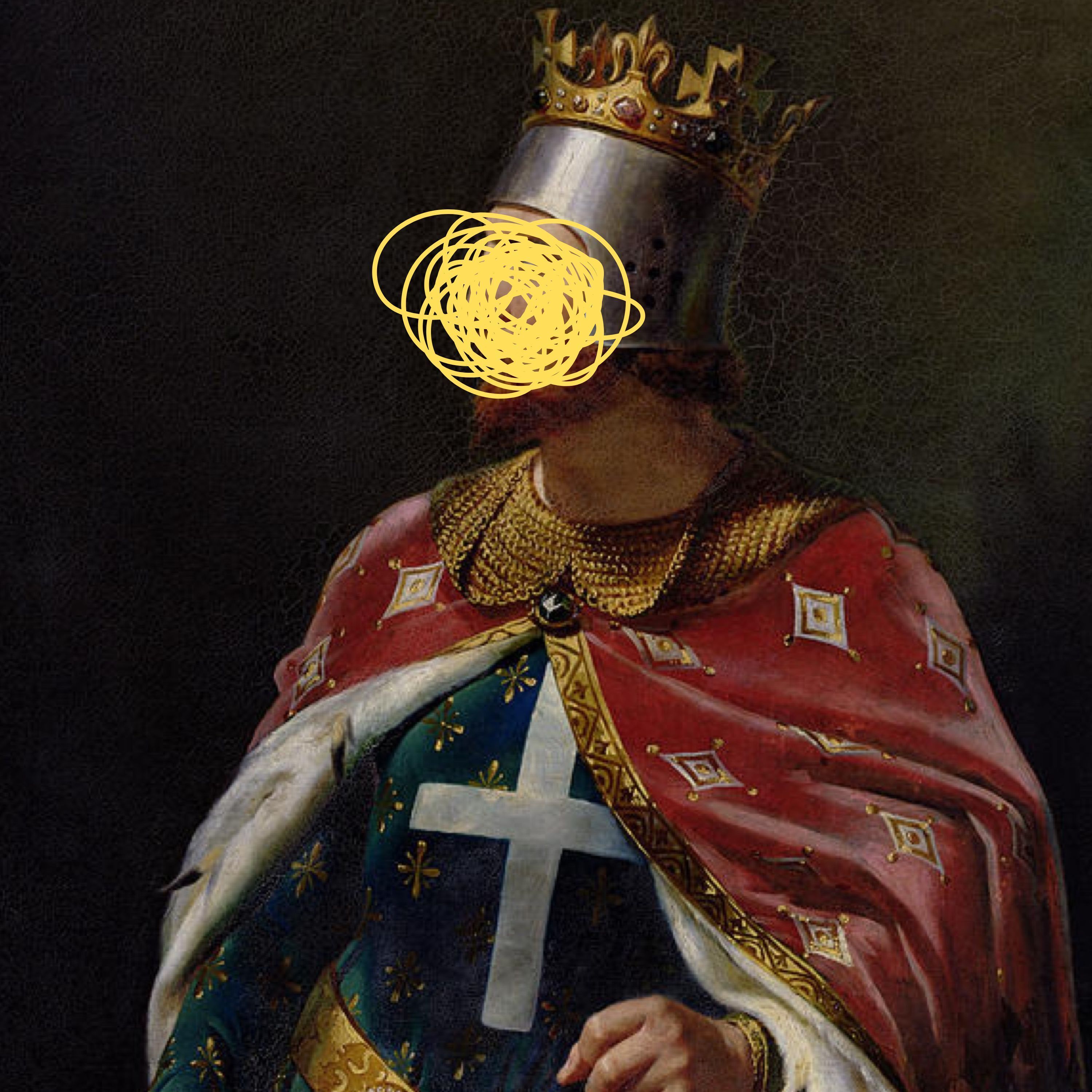
Loading summary
Transcript103 lines
- [00:00]
Claire Aubin
Hi there, it's Claire. If you're hearing me, that means you're listening to the free preview of one of our Patreon episodes. We switch off every week between free and Patreon exclusive episodes. So if you'd like to hear the rest of this conversation, head over to patreon.com thisguysucked and join our honorary Haters club. A list of sensitive themes and topics included in this episode can be found in the episode description.
- [00:44]
Welcome to this Guy Sucked the show where we prove it's never too late to have haters and you can't liable to dead. I'm your host, Claire Aubin, and I'm a historian, writer, and most importantly, certified hater. As we all know, on this show we talk about people from throughout history with legacies that need a little updating. Whether it's because of their politics, their, their behavior, or their impact on society and culture, these guys actually kind of sucked. And we bring in a new scholar, or in this case, a returning scholar every week to tell us why. With us today is number one Charlemagne hater, Matthew Gabriel. Matt Gabriel, if you're his friend, which
- [01:18]
I marginally a professor at Virginia Tech
- [01:23]
and a guy who knows a lot about, as I said in the first time he was on religion, violence, apocalypse, nostalgia, the Middle Ages, et cetera, you might know him from lots of different things, including the or his two books with co author and Petri Arcader, David Perry, the Bright Ages and Oathbreakers. Or perhaps his excellent podcast with Multitude American Medieval. Or if you're one of my students this semester from his guest lecture in my class.
- [01:52]
Welcome back to the show.
- [01:54]
Matthew Gabriel
Thanks Claire. It's so good to be here. Please, please call me Matt. And I think anybody who listens to the podcast really can certifiably call me Matt. That's totally fine as well. It's just that all my publications are under mat. There are Matt Gabriels other Matt Gabriels out there. Most of them are like in medical fields for reasons I don't entirely understand. So it's pretty, it is pretty easy to disambiguate, but I do like to keep it consistent. So. But anyway, I'm so excited to hate once more.
- [02:19]
Claire Aubin
Back on the podcast you have the
- [02:21]
same problem as me because there's a Claire Auburn or Aubin somewhere out in the world and she's a French biologist and so sometimes I get emails for her so I have to publish with the E in my name.
- [02:33]
Matthew Gabriel
I totally forgot about the other Matthew Gabriel that's out there. He kind of almost ruined my life for a while because he thought he had my Gmail account for a little while and he lived in Connecticut. Maybe you still do if you listen out there. Matt, how you doing? It was nice to talk to you that one time.
- [02:49]
Claire Aubin
Connecticut hive.
- [02:49]
Rise up.
- [02:50]
Matthew Gabriel
But like yeah, I would get all his doordash order like receipts and I would get like, I ended up getting like some of his like phone bills, like his mobile bills and stuff like that. And like, like a heat and water bill at one point and it was finally like, oh my God, man. Like you gotta stop doing this. Like I could really ruin your life. Yeah, it all got resolved. He figured his actual email was. And anyway, if you're out there still. Or maybe it was me, I don't know. So who knows?
- [03:15]
Claire Aubin
You're like the Naomi Wolf, Naomi Klein doppelganger.
- [03:18]
Matthew Gabriel
Yeah. But incredibly more boring than that.
- [03:22]
Claire Aubin
Much more tame. So I have.
- [03:24]
I always start with a pattery question type situation and I couldn't really come up with something because you and I already talk on slack and like for
- [03:32]
people who haven't or aren't in the
- [03:33]
multi crew or haven't seen this, I now have accidentally developed a reputation for insulting Matt
- [03:41]
Streams, which is terrible. But my pattern question is how has
- [03:45]
your life changed in the last year since you were last a guest on tgs?
- [03:50]
Matthew Gabriel
So well, I mean I started a podcast so that's changed things since last year.
- [03:55]
Claire Aubin
Don't we all?
- [03:56]
Matthew Gabriel
Don't we all? I mean, like, you know, I'm a white guy of a certain age. So as you've pointed out, of my certain age. So several times in the slack. Which is, you know, if you see again like most people are listening. But if you ever see pictures of me, like it is very clear I am of a certain age. So you know, with the white beard and white hair all over the place. So I started a podcast that's been really great. I started a new research project which I'm very excited about. Announced that on social media. It's. It's a long book project or I should say a book project. A long history of Christian religious violence which was, you know, not at all in the news nowadays.
- [04:32]
Claire Aubin
Yeah.
- [04:32]
Pointless.
- [04:33]
You know, you should switch to stem.
- [04:35]
Matthew Gabriel
Who cares about that nowadays? Yeah, retrain. I should learn to code as everybody has. Has said, no offense to coders out there. I'm really sad for all the jobs you're losing right now. But anyway.
- [04:45]
Claire Aubin
Well, wasn't that a thing? Right. They were telling everyone to learn to code and then everybody in the market got so saturated that then it's like,
- [04:52]
Matthew Gabriel
yeah, the market got saturated. Then an AI came, and then it turns out that AI can actually code pretty well, so. Or at least people think that AI could code pretty well is what I understand. So.
- [05:01]
Claire Aubin
But it's not that good at medieval stuff, so.
- [05:04]
Matthew Gabriel
It is not.
- [05:05]
Claire Aubin
You know what they say, Safe from economic. Safe from economic decline. If you want a job, that's big, that's terrible advice.
- [05:15]
No, yeah.
- [05:15]
Matthew Gabriel
No, don't.
- [05:16]
Claire Aubin
Don't nobody follow in our footsteps.
- [05:18]
Matthew Gabriel
That's literally. You know what I say to my students is, don't be like me. Whatever you do, just don't be like me. And that's been really fun, actually. Going back to the podcast thing. Something that's changed is one of the things I really like about the podcast is with. Talking with the guests, is asking them how they became medievalists. And it's such a weird, interesting journey that people take when they become professional historians or lit scholars or art historians or authors or anything like that. It's like there's. It's just a series of accidents, which gets them excited about a topic, sometimes positive and, you know, going with the theme of the show, sometimes negative experiences about the past as well.
- [05:53]
Claire Aubin
So thank you for that beautiful segue.
- [05:55]
Matthew Gabriel
This is what we in the biz call the segue.
- [05:58]
Claire Aubin
That's right, the segue. Those of us who've been in the biz for a very long time, like
- [06:02]
you and I,
- [06:05]
who are we talking about today on this show?
- [06:08]
Matthew Gabriel
Today, I'm gonna tell you why I hate Richard the First England, also known as Richard the Lionheart, Richard Coeur de Lion, if you prefer the French, because that guy sucked. So if you're unfamiliar, I mean, Richard's one of the kind of more familiar figures, kind of, if you know anything about medieval European history, a lot of it. Because he figures so heavily, I think, in the Robin Hood legends as kind of the good, absent King Robin Hood is, you know, rebelling against the treacherous King John, who has kind of usurped the kingdom away from his brother Richard, who is away on crusade or is under captivity or something like that. And then once he gets back, Robin will kind of hand things over, and Richard will set things right. So most people kind of know about him that way.
- [06:54]
Claire Aubin
Can I ask a stupid question?
- [06:55]
Matthew Gabriel
Of course.
- [06:56]
Claire Aubin
I'm piecing together something in my head that I don't think I've ever thought about until this moment.
- [07:01]
Matthew Gabriel
Okay.
- [07:02]
Claire Aubin
Is that why. Is that why in the animated Robin Hood, they're lions?
- [07:11]
Matthew Gabriel
Yeah.
- [07:12]
Claire Aubin
Okay, great.
- [07:14]
Matthew Gabriel
Richard the Lionheart is portrayed as a lion. That is correct. I mean, that was an amazing kind of symbiosis of minds right there. Because I was just gonna bring up the 1978 Disney Robin Hood, which is formative in so many, again, medievalists of a certain age, kind of paths towards medievalism. And in that case, I mean, it makes it very clear too. Robin is fighting against King John, the kind of cowardly lion. But Richard has actually been kind of hypnotized by John's advisor, the snake, to kind of go on crusade and leave the kingdom in John's hand. And then he comes back at the end, and it all usually kind of works out so
- [07:53]
Claire Aubin
easy.
- [07:56]
Matthew Gabriel
But in the real history, one of the reasons that I am not a fan of this guy, one might say I hate him, is because the story is much more complicated. And Richard was a guy who was ruthless, incredibly violent, and also kind of very devious in some of his kind of political maneuverings. And I think that's really something that I wish more historians would pay attention to and certainly more people who care about the Middle Ages in popular culture would pay attention to.
- [08:28]
Claire Aubin
So now that I've established that I do actually know something about him via Disney.
- [08:33]
Matthew Gabriel
Yeah.
- [08:35]
Claire Aubin
Which, by the way, that me piecing that together.
- [08:37]
That's why we get PhDs.
- [08:39]
Matthew Gabriel
That's right.
- [08:39]
Claire Aubin
It takes a PhD to figure out that's why he's a lion in that movie.
- [08:45]
Can you tell me, everyone, a bit about his life? And we know that he's famous for some of this mythology, which, much like the previous episode we did on Charlemagne, I think there is something happening here in terms of myth making around him both during and after he's alive.
- [09:04]
Matthew Gabriel
Absolutely.
- [09:05]
Claire Aubin
But for someone who doesn't know anything about him and needs to kind of understand the landscape of his life and also the historical context in which he's living in, what are the things that you would need to explain to them?
- [09:17]
Matthew Gabriel
Sure. So Richard primarily. Well, he lives exclusively in the 12th century. So in the 1100s, he is the second son, or. Well, technically, I think there was another son in there. So technically the third son, but the second surviving son of Henry II of England, King Henry II of England. So just to give a little background, first of all, is that the king of England in this period has intense and really deep ties with what we now call France. And this starts with William the Conqueror, the Duke of Normandy who conquers England, becomes King of England in 1066. But then it kind of extends kind of beyond that as well. And by the time that we get into the middle of the 12th century, there's kind of a breakdown in the dynasty, in William's dynasty, in which there's a contested succession where. Because medievals, especially French medievals, really did not like to pass power through a wife or a daughter's line, through the line of women. And so they always needed kind of a guy, and so they always tried to find kind of the nearest male relative. So immediately preceding Henry ii, there's a period that we know of as the anarchy in English history, in which there's kind of a persistent civil war in which Queen Matilda and her husband Stephen are in. There's kind of revolts and things like that going on.
- [10:31]
Claire Aubin
Stephen.
- [10:32]
Matthew Gabriel
Stephen, yeah. Steve to his friends.
- [10:34]
Claire Aubin
Sometimes I forget that these names have just, like, existed for.
- [10:38]
Matthew Gabriel
Oh, yeah, no, they're. Yeah, there's. Yeah, they're kind of all over the place. So one of his great rivals is this guy, Geoffrey Plantagenet, who has a son by the name of Henry. And so by the time that we get. Cause Stephen is. He's originally from the area of Blois, which is in kind of central France, and Geoffrey is from Anjou, which is kind of near central France. So their families had kind of been at odds for a long time. This carried over when they have lands in England as well. And so Stephen dies without an heir, and he names Henry, in order to stop the civil war, his heir. So he takes over and he unites, basically, an empire which is the largest in Europe at the time. It's much larger than what would become kind of the Holy Roman Empire in the east. It's much larger than the lands held by the king of France at the time as well. It stretches all the way from, you know, Scotland all the way down to the. The Mediterranean coast, including most of northern and western France at the time. Henry is an incredibly able and astute ruler. Marries the most beautiful, most learned, most gifted, most intriguing, most amazing of her age, Eleanor of Aquitaine, who brings with her not just immense kind of lands in the region of the incredibly wealthy region of southern France of Aquitaine, but is also incredibly learned and powerful in her own right. This seems to be a real love affair, certainly initially. She's initially married to the King of France, and then they have their wedding annulled. And several weeks later, very, very quickly, she marries Henry, who is a count at the time, but seems kind of ready to. To inherit these things. And so she becomes Queen of Eng, addition to all the lands that they have in France, their second surviving son is Richard. This is important, that he's the second son, because there's another Henry, their first son who survives, who's known as the young Henry, dies before his father. But it seems very clear. In fact, it's incredibly clear. I shouldn't say seems very clear. Like it just is clear. He's the one who's supposed to succeed his father to all these lands, but he dies. And so Richard is always felt kind of marginalized throughout all of this, but at the end, he's the one who solely inherits this kind of massive empire. And what he does is he spends the 10 years of his reign, from 1189 to 1199, kind of trying to consolidate things, but doing so oftentimes at a distance. Because one of the conditions of him inheriting the kingdom and making peace between his father and the King of France, there's lots of revolts that are happening kind of, you know, at this time, he revolts against his father several times, aided by his mother, at times aided by the King of France at other times. So it's a tremendous kind of tumultuous time, is that he agrees to go on crusade. And so from 1189 until the middle of the 1190s, he is off in the Holy Land fighting the Muslims, conquering the island of Cyprus and doing all sorts of things back there. On his way back, he gets captured by the Duke of Austria, and so can't even return to his lands at that same time. So all of these things are kind of happening. And then he kind of finally gets back. He rules for a short period of time, besieges another castle, is hit by a crossbow bolt and dies. So this is part of why kind of the mythology kind of builds up is like he's just this kind of great warrior who's been there the whole time. You know, he was absent in, maybe not because of his fault, because if he felt a sense of duty, and things would have been better if he had been kind of the ruler of, you know, in England or in his counties at the same time. So, and in the middle of that, we have marriage plots, we have revolts against, you know, by his brothers, we have revolts against his fathers, we have massacres that he commits. There's crusade things. There's kind of noble and highly mythologized connections with the great Islamic ruler Saladin. At the same time, like, so all this kind of stuff is kind of happening around him in the middle is this kind of little shit named Richard.
- [14:33]
Claire Aubin
How normal is it in the medieval period or in what, the 12th century for a ruler to just not be
- [14:43]
in the place he's ruling?
- [14:45]
Matthew Gabriel
No, that's, that's a great question.
- [14:46]
Claire Aubin
And like, that's a genuine question.
- [14:49]
Matthew Gabriel
No, no, it's a great question and it's really pretty common in a lot of ways. I think one of the things that distinguishes Richard is it wasn't the case for his predecessor or his successors. So he kind of stands out in that particular way. Part of that is because the Crusade is, you know, even though, you know, he goes on what's known as the Third Crusade in 1189, but he is one of the first English. He's not the last, you know, to do it, but he's one of the first English kings to do so. And it's actually odd by the time to the Third Crusade that a king would go on Crusade. Usually this was something that was reserved for the high aristocracy. So again, I think that that kind of sets him off as different. But that being said is again, Richard is ruling in a territory that is massive, like north to south, again from Scotland all the way to the Mediterranean coast. So he is not in any of the, Even if he's in, you know, in his home or something like that, he's not in any of those, like all of those places all at the same time. So it's, it's really common for lords to have had very diffuse kind of land holdings that they would administer remotely. So they would have a trusted agent or a, you know, somebody else who would kind of collect rents and make sure that everything was kind of going away and they might not visit there very often. And in fact, I was reading something kind of earlier that said that he spent most of his time even when he was in his territories in France and only about 30% of his time in England, like on the, the island itself, because the French lands were much more important to his family and to really, you know, much wealthier and much more resource rich and things of that nature. So this is a long way of saying, like, y, it was pretty common. There's something kind of unique, I think, about kind of Richard's situation. But it wouldn't be uncommon for people to be absent or medieval lords to be absent from the places that they were in charge of.
- [16:33]
Claire Aubin
I mean, that makes sense. I also, and like I said before we started recording, we should talk about this, but I watched a TikTok about him. I watched lots of tiktoks about him because I was curious about what the kids are saying. And one of them was saying that he also did not speak English of any kind. Is that true?
- [16:50]
Matthew Gabriel
Yeah, no, that's. That's probably true. He probably spoke French and Latin. He seems to have been quite learned. Right. I mean, he was literate. He wrote poetry, you know, wrote histories and all sorts of stuff like that. He seems to have been very well educated. And that's probably a product of his mother, Eleanor of Aquitaine. But also his father, Henry ii, was also kind of a noted, well educated person and a scholar kind of in his own right. But the English thing is, it's a little bit of a kind of a head fake, though, because nobody spoke English kind of at that time. And. And I meant kind of the aristocracy and the nobility of England.
- [17:22]
Claire Aubin
Yeah.
- [17:22]
Matthew Gabriel
Like, French was the lingua franca. Like, it was. It was literally kind of the language that was spoken that united the aristocracy against them. Because, you know, as I mentioned, kind of in my brief little history there, is that the ruling aristocracy were Normans. Yeah, right, Normans. Or from Anjou or from, you know, Poitou or from Bois or something like that. Like, they were people who grew up on the continent and then, you know, had lands or spent some. You know, there's exceptions to that, of course, like native people from England in this period. But the way that they would communicate is through the learned language today. You know, it would be akin to, you know, if you're traveling around, like, the common language that you often find when you're traveling in Europe is English. Yeah. You know, because not everybody can learn German or Dutch or something like that. And so it's easier sometimes for people just to communicate in a second, another language in French. And Richard was very much like a product of the continent. Like, he. He got his start as Duke of Aquitaine when he was the second son and he wasn't going to become king of England, you know, spent most of his time there and then on crusade with French troops, and then, you know, came back and spent most of his time kind of in France as well. So it would not have been out of the ordinary for him to speak English. So. And it's really not until much later, probably, you know, I would say, like, maybe even the 14th century, 1300s or so, that you start to get English kings who speak English.
- [18:39]
Claire Aubin
Again, this is just good for clarification for people. I like sometimes, especially when we're talking about Thai periods that feel like, like, much further away from our own to establish, like, what is the baseline understanding of how kings are behaving? Are they in the land that they're ruling, are they speaking the language of their subjects? Like that kind of thing. I think is. Is useful.
- [19:01]
It's certainly not because I don't know the answer to any of these things.
- [19:06]
Matthew Gabriel
No, I think you're absolutely right. Like, because I think and those are like huge assumptions because we still have kings in.
- [19:12]
Claire Aubin
Yeah.
- [19:12]
Matthew Gabriel
You know, the 21st century and we have images that are given to us from, you know, from fantasy literature, from historical fiction or, you know, kind of textbook associations. Is that you assume a king is in a castle, in a capital, speaking the language of his people and somehow connected to the land, to the people or something like that. And this is just kind of the way that it's always been. And in fact that's an imagination like that, that's a total aberration across kind of history is that very often people were ruled by people who were not from there because they were conquering, conquered. And so that is absolutely true throughout the Middle Ages as well.
- [19:47]
Claire Aubin
Yeah. And also like part of the imagined thing, I think within the worlds that you're talking about is also that the king or the ruler in a given space is like even particularly interested in
- [19:58]
what's happening in the place that they're
- [20:01]
ruling and that they have like some
- [20:02]
vested interest in the life and well
- [20:04]
being of people around them. And sometimes they do. But the people who we do remember that way are often, we think of them as like, this is amazing.
- [20:11]
A king who cares about what's going
- [20:13]
on, a king who's interested in what farmers are doing. You know, like, that's actually the reason we remember them for that is because that's strange rather than because that's the assumption.
- [20:24]
Matthew Gabriel
There's not a lot of kings like called the good or the just or anything like that. So.
- [20:29]
Claire Aubin
No, and I mean it fits. Also, I've mentioned this a few times on the show now, but like I'm working on a book right now that's related to this and thinking about the idea of like what it means to be like a great man in great man history. And it is interesting how people often map calling someone the great or like the lion hearted, et cetera onto like
- [20:51]
somehow some moral, like some moral authority,
- [20:54]
some moral justness, which is not what
- [20:57]
these things mean by any stretch of the imagination.
- [20:59]
No, like Richard the Lionhearted is not that because he was like a nice guy?
- [21:05]
You know, like, it doesn't mean he's sweet.
- [21:08]
Matthew Gabriel
No, it's because he wanted to murder. He wanted to kill a lot of Muslims. Well, yeah, like the first instance. The first Evidence that we have of anyone calling him Coeur de Lion, like, with a. The heart of a lion is from a chronicle of the Third Crusade in which Richard arrives in the Holy Land and he sees the city, the city of Acre, which is a modern akko in. I believe it's in Lebanon, but I'm not sure about that. It's still there. It's on the coast. It's a huge port city, very important in the 12th century. And he sees the Muslim army, Saladin's army, kind of encamped around him, and he doesn't flinch. And the chronicler, who is kind of the jongleur, like this kind of storyteller kind of chronicler guy, he says, like, he stood there fierce, like, with a heart, a lion. That's it. That's why he's called that.
- [21:51]
Claire Aubin
Okay, he doesn't.
- [21:53]
Okay, maybe I'm skipping ahead a little bit here, but doesn't he also, like, execute a bunch of prisoners at Ocar? And that's like a big.
- [21:59]
Matthew Gabriel
He sure does.
- [22:00]
Claire Aubin
That's a big thing. Let's move to why he sucks.
- [22:03]
Matthew Gabriel
Yeah.
- [22:04]
Claire Aubin
What's bad about this guy?
- [22:09]
Thanks for listening to this preview of a Patreon exclusive episode. To subscribe and listen to it in full, head over to patreon.com this guy sucks.
- [22:18]
VRBO Narrator
At VRBO, we understand that even the best of plans sometimes need a little support. So we plan for the plot twists. Every booking is automatically backed by our VRBO Care guarantee, giving you confidence from the very start. Whenever you need help, it's ready before your stay, through the moments in between, and after your trip. Because a great trip starts with peace of mind and maybe a good playlist, but we've got the peace of mind part covered.