Loading summary
Transcript57 lines
- [00:01]
Claire Aubin
Hi there, it's Claire. If you're hearing me, that means you're listening to the free preview of one of our Patreon episodes. We switch off every week between free and Patreon exclusive episodes. So if you'd like to hear the rest of this conversation, head over to patreon.com thisguysucked and join our honorary haters club. A list of sensitive themes and topics covered in this episode can be found in the episode description.
- [00:28]
Kevin Schultz
Foreign.
- [00:43]
Claire Aubin
Welcome to this Guy Sucked, the show where we prove that it's never too late to have haters and you can't libel the dead. I'm your host, Dr. Claire Aubin, and I'm a historian, writer, and most importantly, certified haters. On this show, we talk about people from throughout history with legacies that need a little updating. Whether it's because of their politics, their behavior, or their impact on society and culture, these guys actually kind of sucked. And we bring in a new scholar every week to tell us why. With me today is Kevin Schultz, who is a professor of history at the University of Illinois, Chicago, specializing in religion and American intellectual and cultural life. He has several books out, including Tri Faith America and Buckley and Mailer. But most importantly, he has a brand spanking new book out called why Everyone Hates White Liberals, Including White Liberals. And it's very, very good. And I got a copy of it and I'm very lucky because it also looks beautiful. Congratulations on the new book and welcome to the show, Claire.
- [01:36]
Kevin Schultz
Thank you so much. I'm so excited to be here.
- [01:38]
Claire Aubin
I was saying to you before we started recording that I had several previous guests recommend you coming on the show. So I'm very excited because everyone was like, oh, oh, you have to talk to him.
- [01:48]
Kevin Schultz
There's a lot to live up to. I don't know if I'm gonna be able to live up to it.
- [01:52]
Claire Aubin
You'll do great. The pressure, the pressure to be smart and funny. It's terrible.
- [01:57]
Kevin Schultz
By the way, I do love that you complimented the COVID of the book, because the COVID of the book, you can tell the listeners if you want, but what it is, I'll tell them what it is. I think it's magical design that I had nothing to do with.
- [02:10]
Claire Aubin
It's genius.
- [02:11]
Kevin Schultz
But it's about why everyone hates white liberals, including white liberals. 100 year history, basically. And the COVID is. It's like you're looking in aluminum foil, like it's a mirror. And then there's this shape of this person, you know, long hair, short hair, you can't quite tell. It's like a shadow of a person's face. So when you pick it up, you're actually looking at yourself.
- [02:30]
Claire Aubin
You are the person who hates white liberals.
- [02:33]
Kevin Schultz
And you might be a white liberal.
- [02:34]
Claire Aubin
And you might be the white liberal. Yeah, you're totally right. It's a very cool book design. And we've said that before on about other books, but like so far we've mostly had books with really good covers. So that's part of it.
- [02:48]
Kevin Schultz
That's the criteria for being on the show, I think. Right.
- [02:50]
Claire Aubin
Actually you have to have a good looking book to be allowed to be allowed on the show. Everything else is whatever. I have a question and I always have a question because it's literally my job. I'm sure you've been asked this a million times. So here's one more. How did you arrive at the very pithy title of the book?
- [03:08]
Kevin Schultz
Great question. And I'm going to blame my partner. It is her fault. Well, now I get to talk about the book. That's perfect. I was doing some research on certain other scholars and certain other issues that were coming up in the 1960s. I was fascinated and sort of fell in love with James Baldwin. And I really wanted to sort of write about James Baldwin. And every time I present this idea out, people would say, you know, there's a lot written already and other people are writing biographies and nobody wants to hear a white guy's thoughts on James Baldwin. Which I have problems with that statement in general. Sure, okay, but why not? Blah, blah, blah, blah, blah. But the point was the market. Nobody wants to hear a white liberal talking about something. And I was like, why does everybody hate white liberals? Like, what did what. What happened to white liberals in life? And my wife, she sort of said, okay, that's what you need to study. And so I began to focus on that. And she said, and here's your title. Why does everyone hate white liberals? Including white liberals? That's the story you're telling. That's where I came up with.
- [04:04]
Claire Aubin
It's a great title. Shout out to your wife.
- [04:06]
Kevin Schultz
Yeah, no, she takes credit. Don't worry.
- [04:09]
Claire Aubin
Good. I will also say I am also a gigantic Baldwin fan. And this is now, I think, the third episode that Baldwin has come up very organically in the episode. So I'm very, very glad that that's happening.
- [04:23]
Kevin Schultz
You're gonna have to do a whole epis on who doesn't suck and then you can talk about James Baldwin.
- [04:27]
Claire Aubin
Well, yeah, we have a series where we occasionally do like a guy who Rocked this guy, rocked kind of episode. And so far, we've only done one. The issue, right, is that I would love to talk about James Baldwin. However, I'm not the guest, so I don't get to pick who we talk about. So if anyone else wants to interview me about how much I love James Baldwin, I will happily have that discussion.
- [04:52]
Kevin Schultz
So, Claire, tell me which essay you loved the most in Cross of Redemption. No, we don't.
- [04:58]
Claire Aubin
We don't have time. That's a different podcast. But everybody at home, go buy the Cross of Redemption. It's a collection of writings. They're very, very good. It has, like, letters and essays. It's great speeches. Excellent, excellent collection.
- [05:12]
Kevin Schultz
Talk about a guy who could write. Holy cow.
- [05:14]
Claire Aubin
Well, for real. His books, I'm so sorry to say, probably better than yours or mine or pretty much anyone. Everyone on the podcast, I like Baldwin better than you.
- [05:25]
Kevin Schultz
I will grant that. And okay, here I'm gonna do a slight brag thing. I was really excited because for this book that we're gonna talk about why everyone hates my liberals. Harper's Magazine, the oldest magazine in the United States of America, is celebrating its 175th birthday this month. And they excerpted my book as the first reading in this month's Harpers. I'm so honored.
- [05:46]
Claire Aubin
Wow.
- [05:47]
Kevin Schultz
But because it's the 175th anniversary, they have essays from other contributors throughout its past. And there was James Baldwin. So I actually appear higher up on the table of contents in a Harper's magazine than James Baldwin.
- [06:01]
Claire Aubin
Okay, so Harper's does not like James Baldwin for 10 years is what I'm hearing.
- [06:06]
Kevin Schultz
I don't know. Maybe it was recent there.
- [06:08]
Claire Aubin
That's amazing, though, still, even to be like, here's his name, here's mine. Pretty.
- [06:13]
Kevin Schultz
Yes.
- [06:13]
Claire Aubin
Pretty incredible.
- [06:14]
Kevin Schultz
I'm getting that table of contents framed for sure.
- [06:17]
Claire Aubin
You absolutely should. Speaking of James Baldwin, let's talk about the opposite of James Baldwin. Who are we talking about on the show today?
- [06:26]
Kevin Schultz
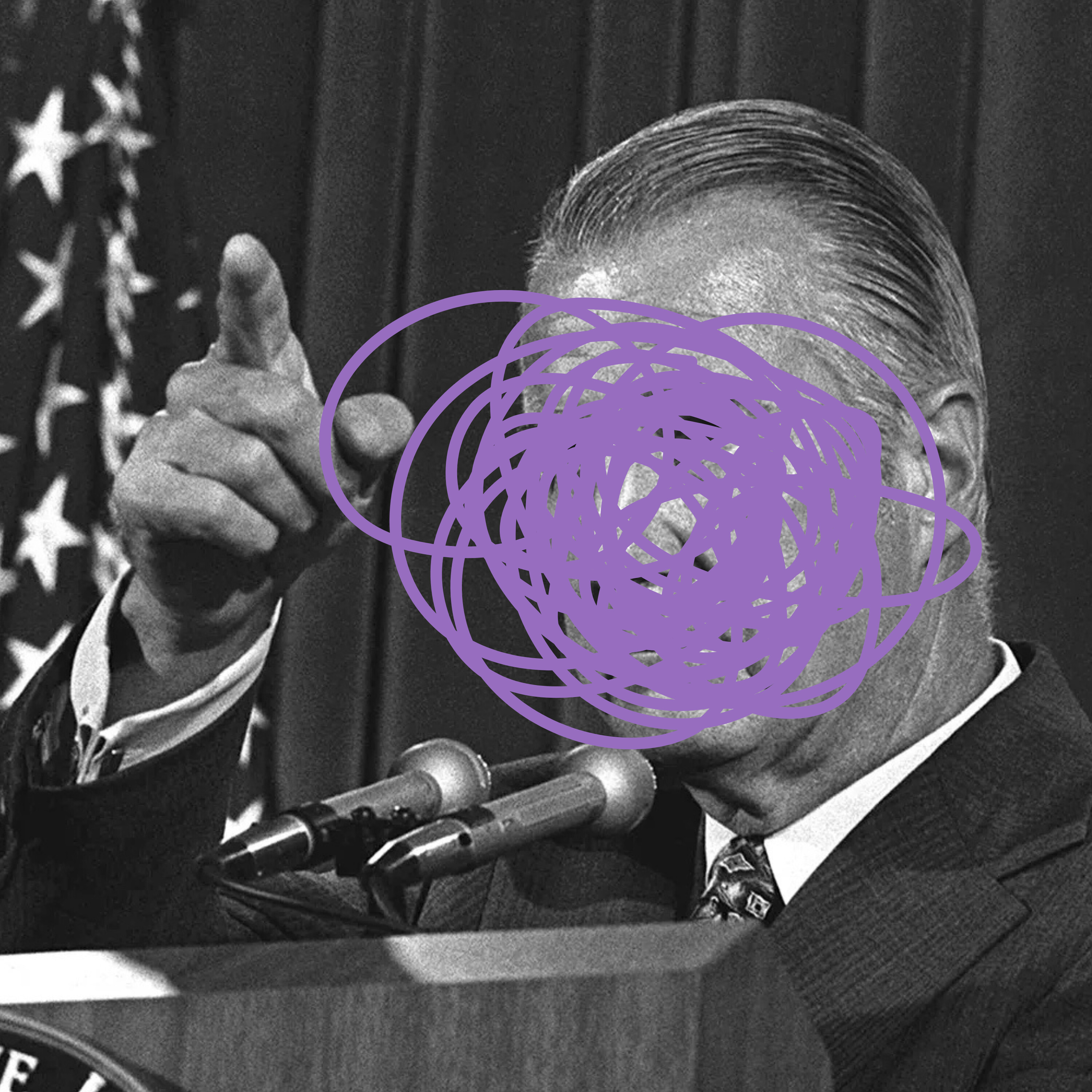
Today we're going to talk about Spiro Agnew, who was the sitting vice president during Richard Nixon's. Well, let me fix. Let me fix that. During most of Richard Nixon's presidency. So he's a pretty interesting guy, and he sort of came out of middle America and he thought of. And a lot of the biographers have called him the first suburban politician to achieve high office.
- [06:55]
Claire Aubin
Okay.
- [06:55]
Kevin Schultz
So a lot of people, you know, we see Al Smith coming from sort of the. The Catholic, urban New York tradition, and we sort of see these politicians coming from various spaces. The Sunbelt presidents or whatever. This guy is sort of the first suburban dad to be at higher office.
- [07:09]
Claire Aubin
Which is now kind of an archetype. Yeah, like that's an archetype of a guy especially becomes like a vp.
- [07:16]
Kevin Schultz
Well, think of Josh Hawley, you know, or. Or like. Yeah, yeah. All these guys are sort of like, well, Kamala Harris is selected vice presidential candidate. Right. Words. He was, he was sort of the suburban dad, football coach guy, right?
- [07:28]
Claire Aubin
Yeah, 100%.
- [07:30]
Kevin Schultz
He was like straight out of an episode of Young Sheldon.
- [07:33]
Claire Aubin
Yeah, I mean if he's the first, it's interesting because now that's kind of a tradition is because he's like theoretically non threatening. He's relatable, all of that. You also said he was vice president for most of Nixon's presidency because he resigned in 1973, which obviously we'll get into. But he. A fun fact that I probably should have known but didn't know. He's only the second VP ever to resign, the first being John Calhoun. So there's a long break between, between these two vice presidents. What else is he famous for?
- [08:07]
Kevin Schultz
Well, he's famous for this meteoric rise, I would say, in 10 years. He went from the president of his local PTA. That was the extent of his civic involvement. He was the president of the PTA in Maryland, in Baltimore county, where he was suburban dad. And then he moves very quickly into county offices and then he moves very quickly into the governorship. So he's the Governor of Maryland for two years and then all of a sudden he's vice President of the United States. So basically, here's a guy who wasn't interested in politics in most of the 1950s. By the end of the 1950s, he's starting to get more interested, he gets more engaged. He tries to volunteer with the county Republicans and they don't really want him, so they accidentally put him up for elections that they think he's going to lose and he ends up winning sort of accidentally because the Democrats implode basically. And fast forward 10 years and he's the Vice President of the United States. And so he was also known for using very creative and colorful language while he was vice president. And in the buildup to it, how he actually got Nixon's attention was through giving some of these really colorful speeches that were poignant, interesting, alliterative. He loved alliteration. I mean, all the time. Very, very famous for his alliteration. But he really served as Nixon's bulldog is what I call him in the book they used to call Him, Nixon's, Nixon. Because when Nixon was Eisenhower's VI vice president, he would do the dirty work and say all the things that Eisenhower, who is supposed to be very presidential, couldn't get away with saying. So he'd have Nixon say all the dirty stuff. So Nixon's Nixon was Spiro Agnew. And what he did was look for targets out there in the American population that would sort of energize the base of the Republican Party. And this was, you know, this is 50 years ago. This was before the base of the Republican Party is what it is today, which is to say there was the breakup of the New Deal coalition was happening in the 1960s, whereby the new Deal coalition, when Franklin Roosevelt pushed through the New deal in the 1930s, he transformed American politics. And what he did was he brought what we think of today as the white working class into the fold of the Democratic Party fully and he made them the base. Union workers, laborers. This was the base of the Democratic Party. And in the 1960s, as the economy is shifting away from sort of union labor in the United States and the Democratic Party is starting to do more expansive things with Lyndon Johnson's Great Society and most especially perhaps civil rights activism, civil rights laws are happening. All of a sudden there's this breaking apart of what was called the New Deal coalition. And the white working class was at play for the first time in two generations. And so a lot of politicians were out there trying to figure out how they could win over the white working class. And Spiro Agnew, with his colorfully alliterative speeches figured out a way to win them over. And it was a real bottom of the barrel kind of way to win them over. But it was powerful and effective and Richard Nixon loved it.
- [11:17]
Claire Aubin
What's interesting now, I mean, I don't want to be like a presentist or whatever and talk constantly about what's happening currently, but it is interesting because we have currently the opposite of that. Where instead of having a sort of even tempered presidential kind of president who is careful about how he speaks, who he speaks to, his image is, is one of someone who's very measured instead of having that with a much more let loose VP who can say whatever and be the attack dog, because that was kind of the archetype before. Now, that was kind of how these were structured previously. Now we have the opposite. And we have like angry speech giving, like, not necessarily, I mean, violent, sometimes rhetoric, but rhetoric that is not tempered, not measured, you know, shoots from the hip kind of rhetoric from a president and Then we have a vice president who's always, like, behind him, trying to, like, calm things down and say often the same thing, but in a much nicer and, like, softer way. So it's interesting to see that this, at least to me, it's interesting to see that these have flipped. And I would say, actually, people like. And I think this is what will lead us towards what you want to talk about. People like Spiro Agnew actually are, who make that possible, who make that sort of, like, intense partisan rhetoric more palatable to the point that even a president can get away with it now.
- [12:41]
Kevin Schultz
Yeah, took the words right out of my mouth as far as when I was researching Spiro Agnew and reading some of his speeches. It did sort of bring me to the present day, as here's a guy who is sort of in full attack mode, not afraid to say things that are pretty terrible and highly questionable and is going to drive the liberal elite nuts. And newspapers are going to write about all this stuff and assume that audiences will be, you know, aghast at all sorts of sins committed, but instead, it actually energizes a different kind of base who's sitting there laughing at the people who are doing the reporting. So, I mean, Spiro Agnew really does kind of accidentally, in a way, craft this position. And that's one of the reasons that I was really struck by him and why he plays kind of a signature role in my book, was because he does craft this position. And, like, if he gets called out for it, he starts this. This mold that we see today. Well, the first thing I'm going to do is attack. Well, I'm going to deny it first off, and then I'm going to attack the people who are making the claims. And then I'm going to attack the mainstream media who's just got this whole agenda. And I'm going to go around the mainstream media and talk to just my people who I want to talk to, and they're going to get, and here's the key part, I think, a dose of authenticity. So I'm going to castigate my enemies as inauthentic, as filters, as people who are sort of going through their commercials and trying to figure out which brands they have to appease before they give you the story. And I'm going to go around that and give you sort of a general sense of truth, even if it might be hopped up on steroids or based in untruths or whatever it is. And Spiragnew sort of crafts this mold on a national stage, sort of for the first time, certainly at that level as a vice president. And you know, you might have seen this before from like George Wallace types, the famous segregationists who ran for president and came out of Alabama. And you know, you could do a different episode on why that guy sucked. But as opposed to sort of being kind of a one trick pony as far as, you know, racism and segregation now, segregation forever. These famous lines of the segregationists. Spiro Agnew sort of aimed his guns at a different target. And I think we have for the last 50 years in the United States been aiming all of our guns at that particular target.
- [14:53]
Claire Aubin
Yeah.
- [14:54]
Kevin Schultz
And I think Spiro Agnew is really one of the primary people to do this in a very public way, especially with the, with the bully pulpit that was the vice presidency.
- [15:02]
Claire Aubin
I think it's also interesting because it's very easy to be a little bit myopic about the current moment politically. It's very easy to say, like, I think a common refrain from people who aren't as versed in American political history is to say something like, the Tea Party is really where this starts. Like, oh, it wasn't Trump who started this, it's the Tea Party. Right. Like, that's as far back as a lot of people are willing to look, because it's harder to see the direct through line, particularly with the Democrats in power in the early 2000s and for part of the 90s, like there's this thing where people are like, not as willing to see that there is still continuity actually from much earlier. So I think this is part of what your book is so good at doing and what spirit Agnew kind of represents. Is this continuity, Is this like really clear through line that actually very clearly carries from the mid century to now? Like easily you can see that. And you talked about earlier periods as well. But this specific style of politics, I think becomes really visible in the mid century period.
- [16:08]
Kevin Schultz
For a long time, people saw a guy like William F. Buckley with, you know, his impeccable looks and his expansive vocabulary. And he's on Firing Line television show for decades and decades and decades. He's engaging with people on the left in a very sort of soothing kind of way that makes you feel like there's a very responsible conservative voice that is actually able to converse intelligently with the left. And there is this sort of rabble is a way that leftists would have called them, that is also on the right, that are the anti Semites, that are the overt racists, that are the people who are crass that are the people who sort of like middle and low brow culture and enjoy wrestling and things like that. And so there's this sense that William F. Buckley was really what conservatism was, and he was sort of pushing and minimizing those facets of the conservative moment and crafting a whole new conservatism. And that's sort of been the line for a long time. And I think in the last 10 years, and especially since Trump was elected in 2016, there's been this sort of revision about this kind of populist conservatism that is crass, that is very cultural, that is about status. And that Buckley had kind of. And his ilk. Buckley and his ilk had kind of like tempered us down and made us not really conscious of. And by the time you get to somebody like Rush Limbaugh, you know it's there. You sort of said, oh, how did we miss that? This was there the whole time because we'd been paying attention to what was in National Review as opposed to what was getting millions and millions and millions of listeners on right wing radio and in more crass venues. So there is this debate of where conservatism is and how successful Buckley was from, say, 1950 to through the George Bush years, you know, both George Bush years. And then all of a sudden, Trump pushes this through. So it is sort of a question is, where did this other populist conservatism lie? Was it always there? And we think that now we're uncovering all these roots of it and how was it able to be minimized for so long? It's an interesting debate and it's a fair question to say, is that like a key component of what conservatism is like? Does conservatism have to be, you know, a closed sense of like, my nation, right or wrong? And I'm going to put the American flag up above any other flag. And I'm very conscient of any critiques of what the United States is and stands for, because it's been this beacon of freedom for so long now in the history business, we might believe that, but we also are going to have our notes, right? We're going to have criticisms. That's sort of one of the things that is the story of America, like it or not, that is true to what the facts of America are. And so I do think it's this component that has been contested for so long.
- [18:52]
Claire Aubin
Sure.
- [18:53]
Kevin Schultz
So, yeah, it's enjoyable to sort of see us read back into the past and say, oh my gosh, these notes that we're seeing today that we think are new in sui generis, they have these antecedents back, back 50 years, back 75 years. And it's kind of interesting. And one of the reasons that we're going to get to eventually when we talk about Spiro Agnew is he's one of the ones who really is not shy about bringing up what we today call the culture wars. And he sort of moves it out of sort of a religious realm and brings it into the mainstream. And it's not so much about the issues that you and I might think of with culture wars, which might be the lyrics and rap music or, you know, Taylor Swift's choice of boyfriend and football team to follow, or on a more serious note, things like abortion. Right. They've got. The issues have changed. Right. Back then, nobody was really concerned about trans rights, and now we're talking about trans rights as part of the culture wars. So sometimes it's interesting to trace these ideas and issues back in time to see what were those issues that were hot button cultural issues. And Spiro Agnew is one of the ones who sort of came up with this list in the late 1960s.
- [19:56]
Claire Aubin
Yeah. And like when you're saying, for example, nobody cared as much about trans rights, we're talking about, like, as a conservative politician, you're not getting up on the stage in 1980, 60, whatever, talking about trans rights as being a major danger to American culture. Like, that's not. It's still. It might be like a belief that people are holding, but it doesn't have such a central location within the arguments the way that it does right now. So, yeah, you can see this sort of the evolution of this culture wars and of Spiro's. Spiro, like my. This guy, your buddy Spiro. My buddy. I hope not. Spiro. Spiro Agnew's whole thing. You can see that happening earlier. It's just the way we talk about it and the things that are central to it have shifted over time as well. And this is actually a perfect moment for me to ask you, what's your beef? We can start. I mean, he might be a list, but what's a big beef that you have with my buddy Spiro?
- [20:53]
Kevin Schultz
Okay, this guy sucked for at least two reasons.
- [20:55]
Claire Aubin
Okay. At minimum.
- [20:56]
Kevin Schultz
At least two. At minimum. At least two reasons.
- [21:02]
Claire Aubin
Thanks for listening to this preview of a Patreon exclusive episode. To subscribe and listen to it in full, head over to patreon.com thisguysucked.