Loading summary
Transcript173 lines
- [00:00]
Dr. Claire Aubin
A list of sensitive themes and topics covered in this episode can be found in the episode description. Welcome to this Guy Sucked. The show where we prove that it's never too late to have haters and you can't libel the dead. I'm your host, Dr. Claire Aubin, and I'm a historian, writer and most importantly for the purposes of this show, certified hater. And also today we have Chuck Cora.
- [00:41]
Chuck Cora
From App Pod Latcha. And I'm so happy that we're collaborating on this episode. This is so exciting.
- [00:48]
Dr. Claire Aubin
Yeah, it's our first ever crossover episode. I was just saying to Chuck before we started, I've been a fan of Appod Latcha for years. So when it came time for me to think about some people I want to work with, it was was kind of a no brainer to slide into Chuck's dms, which I did. And I'm really, really excited about and I think it's going to be really fun.
- [01:07]
Chuck Cora
Yeah, me too.
- [01:09]
Dr. Claire Aubin
So on tgs, we normally talk about people from throughout history with legacies that need a little updating. In a lot of these cases we're talking about people who made others lives a little or a lot harder and the world a little or a lot worse. I think Appalachia is a really incredible part of the US and is often, as your show is trying to like work against, is often kind of maligned and given what I would consider the short stick in terms of cultural representation as a result of long term economic and political disenfranchisement in the region, because of that, I thought you'd be a great person to talk to because I think there are probably a lot of people who have made the lives of Appalachians harder, in my opinion.
- [01:49]
Chuck Cora
Yeah, it's a long list.
- [01:50]
Dr. Claire Aubin
And so I think those stories often get passed over because Appalachian stories in general often get passed over. So I think this is a really good opportunity to get to talk about that. And the group that you wanted to talk about, I'm very excited about because I had never heard of them and now I absolutely hate them.
- [02:08]
Chuck Cora
Yeah, I mean, look, you're right. The list of people who have maligned and hated on Appalachia, made it into a worse place to live is not short and including, I guess, people that hold very high federal offices in the land, so to speak today won't name any names, but the one I guess that we're talking about today is one that I think a lot of people probably haven't heard about. In fact, I hadn't heard about this particular group until relatively recently, when I was learning more about the Mayan wars in West Virginia and Appalachia. But it is an organization that is notorious. It is one that I think anybody who cares about organized labor and the rights of workers should know about, be concerned about, and honestly be worried about as far as whether or not we see activities like what this organization engaged in coming back. And that is the Baldwin Felt Detective Agency. And it sounds like a cool name, but they are not a cool organization.
- [03:19]
Dr. Claire Aubin
Not cool, No. I will also, before we get really into them, I want to say that you and I have a shared enemy, which I think is a hilarious thing for us to have, but it's for different reasons. So I have said this online several times, but JD Vance is my Wario. He has the same birthday as me.
- [03:38]
Chuck Cora
Oh, no way.
- [03:39]
Dr. Claire Aubin
Which I hate.
- [03:40]
Chuck Cora
Oh, my God, it makes me. I'm so sorry.
- [03:44]
Dr. Claire Aubin
I remember going on Twitter last year and people being like, August 2nd, by the way, for anyone who wants to send me gifts, that's my birthday and not J.D. vance's. But everyone was posting, like, J.D. vance on his birthday. And that is how I found out it was the same as mine.
- [04:00]
Chuck Cora
Oh, my God, that's terrible.
- [04:03]
Dr. Claire Aubin
So there's that. And also, in approximately three days, I will be starting to teach at Yale, which is.
- [04:08]
Chuck Cora
Oh, wow, congratulations.
- [04:10]
Dr. Claire Aubin
School. Thank you very much. The law school that he attended and, like, hates, but also finds a way to bring up constantly, is, like, down the street from my office. I hate him.
- [04:22]
Chuck Cora
He is truly one of our worst. And we don't claim him. Even though he claims Appalachia, we don't claim him. I will say that. I will say that. And we don't claim Hillbilly Elegy. And we have made that very clear for the past five years.
- [04:38]
Dr. Claire Aubin
Yeah. So for anybody who has not listened to or followed Appalachia anywhere, Like, I'm not saying they have anything to do with him. I'm saying, truly a shared enemy here. Mine is a very personal vendetta against him for ruining my birthday.
- [04:51]
Chuck Cora
Wario is a very apt analogy. Yeah.
- [04:54]
Dr. Claire Aubin
Yeah. Like the guy that I'm like, you are the opposite of me in every single way. And somehow our lives have this weird, annoying, parallel crossover thing happening, and I hate you.
- [05:05]
Chuck Cora
Oh, gosh. I am. That's a birthday.
- [05:08]
Dr. Claire Aubin
Oh, yeah. I know. Isn't that awful?
- [05:10]
Chuck Cora
We won't associate him with that date. We'll just. We'll pretend like that's not his birthday. Birthday.
- [05:15]
Dr. Claire Aubin
We're reclaiming it for my birthday.
- [05:17]
Chuck Cora
That's right.
- [05:17]
Dr. Claire Aubin
Talking about a guy who sucks. Anyways, let's talk about the Baldwin Felt Detective agency. I want to say bfda, but I know that people just call it Baldwin Felt. So can you give us a little rundown of their whole deal?
- [05:32]
Chuck Cora
Yeah. So for people who are listening, they might be familiar with the Pinkertons. I'm going to brand them as like a regional version of the Pinkertons. I mean, the Baldwin Felt like they did have some activity outside of Appalachian, the South, but for the most part that was really where they were active. I consider them a disgusting, bootlicking private security and detective agency that operated in the United States roughly from around the 1890s into the early 20th century. They were infamous for their capo like role in acting as union busters for coal companies and violent labor uprisings, most famously for the mine wars. They did the bidding of rich coal operators and preventing workers from organizing. They were based out of Roanoke, Virginia primarily, although they had a second headquarters in Bluefield, West Virginia. They offered different services, including railroad security, private investigations, labor surveillance, armed protection of corporate executives. But primarily labor surveillance and strike breaking were what they were known for and what they were hired for the most. I mentioned railroad security and we'll probably get into this a little bit, but that is how essentially they were formed. Because I mentioned 1890s is when they were formed. That was like around the time that railroads were really hot. And it's kind of funny to think about now that railroad robbery and that type of thing was like an actual thing. It's almost like comical to think about nowadays. But back then it was a real thing, like trains were getting robbed. And so they were formed in some sense to be private security for railroads and railroad companies and for trains. And that was part of how they came to be. And then we'll get into it probably a little bit later. But they essentially caught the eye of coal operators and ended up being glorified strike breakers.
- [07:26]
Dr. Claire Aubin
Yeah, you're totally right. This sort of railroad thing now has almost like a cartoonish connotation. Like people are thinking of a sort of like cartoony thing or a Wild west movie thing. But I mean, they start with investigating train robberies, investigating wrecks, thefts, protecting coal and rail assets. By the early 1900s, they have expanded to federal and state investigations and payroll escorting. And then that's when they really get their, their claws. And either they get their claws into the coal industry or the coal industry gets their claws into the Baldwin felts. But yeah, there is a very clear kind of evolution in what they're doing. One of the things that I said before we started is that they also kind of turned into this, like, paramilitary group is the best way to describe them, which we will get into, particularly in how things that they're involved in get literally called battles because of the level of.
- [08:20]
Chuck Cora
Oh, yeah.
- [08:21]
Dr. Claire Aubin
Resources that they have and access to, like, weaponry. So we're not just talking like two private security guards walking around the mall. Like, we're talking about like a serious, well armed private security force who is basically behaving like a paramilitary. As you mentioned, they start 1890ish. They officially closed down in 1937 after the deaths of both of their founders, I believe. At least one, if not both of their founders, I think.
- [08:51]
Chuck Cora
At least one. Yeah. One went on and had a stint as a state senator, I believe for at least two terms. But that may have been during. While they were still in operation. I'm not sure about the timeline there.
- [09:00]
Dr. Claire Aubin
You mentioned that they are headquartered in Roanoke. They also have, as you mentioned, a satellite office in Bluefield as well as Thurmond, West Virginia.
- [09:09]
Chuck Cora
Thurmond, yes. A wonderful town. That's a ghost town now and a beautiful place to go to if anybody has a chance to visit outside of Fayetteville, West Virginia. Whoa.
- [09:18]
Dr. Claire Aubin
Okay.
- [09:19]
Chuck Cora
It's awesome. I love it.
- [09:20]
Dr. Claire Aubin
Really. Okay. I've actually, I will also add to this. I have not been to West Virginia. I really want to do like a full, like, Appalachian trip thing, but I've been on the west coast for so. Well, first I was on another continent and now I've been on the west coast and now we're moving to the East Coast. So I think it's much more doable.
- [09:36]
Chuck Cora
Yeah.
- [09:37]
Dr. Claire Aubin
Like, once I'm not like, stuck in, like, California desert, all of that stuff here. Okay. So for the Baldwin Felt Detective Agency, there are a few things to kind of understand before we get into, like, all of the terrible, terrible things that they've done. That being said, they're kind of awful from the beginning.
- [09:55]
Chuck Cora
Oh, yeah.
- [09:55]
Dr. Claire Aubin
So it's. There's not a. There's not a lot of background you can give on, like, oh, and this is why they're famous and this is why they're bad. Because they're kind of famous for being bad.
- [10:06]
Chuck Cora
Being bad.
- [10:07]
Dr. Claire Aubin
That's kind of the main thing that they're famous for. But they're not, as you mentioned earlier, they're not famous outside of a fairly niche group of people who are interested. But it does actually matter and have a lot of consequences for the world that we live in today. So in 1910, after they're hired to suppress a miner strike against the northern coal and coke companies, they also expand westward. So they also have offices in Denver. So this is not just limited to. They also have a whole Coloradan wing thing happening. There are so many things wrong with them that I, like, don't even know how to get into this. Maybe we should start with who they are and the sort of thought behind them.
- [10:51]
Chuck Cora
Yeah, can. Yeah. I'd like to mention something about them because I think what's important about the two individuals that started it that's relevant today, because I think a lot of times when we think about businesses, because at the end of the day, this is a business.
- [11:06]
Dr. Claire Aubin
Yeah.
- [11:06]
Chuck Cora
The way that they're branded to the public versus when you dig into the nitty gritty of what they actually are and what they do and the people that they hurt. So to most people, it was owned by William G. Baldwin, Thomas L. Felt. And so their origin story, one worked as a detective for a place called Eureka Detective Agency in Charleston, West Virginia. The other one was, I believe, a law enforcement officer of a sort. To most people who weren't like a coal miner or in the labor world or coal industry, these were just fine, upstanding businessmen and citizens. They were doers of great charitable deeds, so to speak, successful job creators, you know, which I say that because Felt, Thomas Felt, I believe, was actually a state senator for two terms. So, yeah, on the outside looking in, these are just two guys that were successful businessmen creating jobs for the public. And at the time, if you were not seeing the headlines of what was happening in the coal fields, which, if you lived in maybe even Roanoke or Richmond, Virginia, for example, you probably weren't, because this is the early 1900s, very late 1800s, early 1900s, you probably weren't. So if you'd heard of the Baldwin's Felts Detective Agency, you're probably thinking, oh, that's just a fine bunch of gentlemen, and that guy's a state senator and he probably is going to cut my taxes. And that may have been their reputation. That's why it's important to, like, really understand this organization, how terrible they were. So I'm glad that we're talking about them as individuals as well, because I think that once you peel back even one layer of an onion on these people, you realize how awful they really are.
- [12:44]
Dr. Claire Aubin
Yeah, absolutely. And it was interesting looking into some of this and looking into some of the primary sources on it. A few of the people that were interviewed about them were kind of like, oh no, they were just some guy who were a part of our community, spent all this money. And it's because those people being interviewed were not familiar with the agency's relationship to the coal industry and to minors specifically. So for some background on each individual guy like you mentioned. So William G. Baldwin was, as you said, a former detective in the Eureka Detective Agency. He was a railroad detective there. So that's how he gets kind of the idea to start his own, own agency. So he served railroad and coal industries. He founded what was originally called Baldwin's Railroad Detectives in Roanoke. And he took over investigative work for the Norfolk and Western Railway where his brother in law, William Jackson Jenks, was a top executive. So there's already like a little sort of nepotism thing happening here where he basically took over railroad investigations from these other companies. His agency, the agency that would become Baldwin Felt, operates across Western Virginia, West Virginia and Eastern Kentucky, doing all the things that we talked about before. So what they were calling train security, theft investigations and labor control. He remains very, very active in the agency's often violent operations until he retires. So Baldwin has a really like hands on, in the middle of it role compared to Felt, who has a much more removed role. But there is also some interesting information on Baldwin as a person pre the founding of the agency in 1898. We're a little bit into the, into the founding. In 1898, he is acquitted of murder after killing a black man during an arrest in Petersburg. They claimed he had fired on 14 men in the line of duty. He's also involved in two major episodes of racial violence in Roanoke. So in 1893, after the arrest of Thomas Smith, a black man accused of assault, Baldwin refused to protect him from a white mob and Smith was lynched. And then in 1904, Baldwin obtains a confession from Henry Williams, another black man accused of attacking a white woman. Williams later alleges that the confession was coerced while he was drunk in custody. And although a lynch mob was prevented, Williams is later executed by the state. So Baldwin, shitty guy, like terrible person.
- [15:08]
Chuck Cora
It is so interesting that someone that. That has a natural tendency for violence would start a company that would have a natural tendency for violence. I'll just say that.
- [15:20]
Dr. Claire Aubin
Yeah, and I do think you're right that there are some analogues here in terms of what's happening right now. Like there are some things here where you're kind of like these guys who just do whatever they want and have these terrible backgrounds and a tendency towards violence. Start having a lot of state support for the things that they're doing and the sort of terror that they're enacting on groups. So I mean, it's important to understand these people as individual. Felt's trained lawyer. So that's his thing is that he sort of adds legal structure and oversight to the group. They're both businessmen, but Felt doesn't have the same level of like, shady illustrious past. He's really just in it for money and respect, which also goes to him becoming a senator later. He does, however, and this becomes important later, heavily involve his family members, particularly his brothers, in on the ground operations. So Felt's family is very involved in on the ground operations, but he himself is not Baldwin also very involved in on the ground operations. So these are the people that this is coming from. So it kind of starts bad with bad people and it just like goes on the sort of the rest of the way. Hello, everybody, it's Claire. If you're hearing me, that means you're currently listening to the free version of our show. Because we're trying to make accessible, engaging history independently and sustainably. We switch off between free weeks and Patreon weeks. So if you're a fan of public history made by actual experts and it's in the budget for you, consider supporting our Patreon. It's only one tier, which means everyone who subscribes gets access to the same perks across the board. For the price of a pint of beer, you'll get access to a new episode every week instead of just the bi weekly free ones. And they'll all be ad free for you. You'll also get access to the full episode archive, bonus content, early access to merch, and lots of other fun Patreon exclusives to sweeten the deal. Just head over to patreon.com this guy sucked. Or follow the link in our episode description to sign up. Can you tell me us a little bit about coal and like the coal industry in West Virginia and just generally early 20th century Appalachia.
- [17:34]
Chuck Cora
Yeah, so a couple of important contextual things. So especially at this time, this was before there was a lot of labor rights in the United States. So National Labor Relations act, which is the landmark act that gave a lot of of rights to workers in this country, that was passed, I believe, in 1935. So that was before what we're talking about today. Workers did not have a lot of federally codified rights and the conditions they had to work in were very difficult. And especially in Appalachia. It was basically indentured servitude. When I say that coal companies controlled their entire lives, that is not hyperbolic. Coal companies owned your house, they owned the schools, they owned the churches, they owned the mines, they owned the stores. And they paid you in their own currency, coal scrip, and you could only use it in their stores. So your life was dictated by the coal company, revolved around the coal company, and was orchestrated by the coal company. That is essentially how they operated in a lot of parts of West Virginia, eastern Kentucky, southwest Virginia. That was life for a lot of coal miners in the early 1900s. And if you can imagine, it was miserable. And you take all of that just like your daily life, and that's everybody, that's the miners, that's their. Their family, primarily, like the women and children. And so your daily life outside the mine was miserable. But inside the mine, I mean, there's. You can imagine, like, there's basic protections. There's no, like, OSHA at this time. There's.
- [19:22]
Dr. Claire Aubin
Yeah, there.
- [19:23]
Chuck Cora
There's no Mine Safety and Health Administration. There's no regulatory framework. So, you know, mine mine accidents, mine disasters were, I wouldn't say, like, common, but they were certainly more prone to happen. And the companies were terrible to work for. And they were also notorious about breaking up any even semblance of unionizing. And that's really, like, where the Baldwin Felts agency comes in. Like, they were actually referred to as Baldwin thugs. And that's where I think the value of them. That's what the coal companies saw in them. Because coal companies, like, even today, especially today, one of the biggest threats to them is unions, the United Mine Workers of America, God rest their soul, And Cecil Roberts, who will be retiring soon, a great president of the United Mine Workers of America, his tenure. They are an organization that was around back then. And even though workers lacked the rights that they do now under the National Labor Relations act, unionizing then was still important because you had collective worker power. And so back then, if the company even sniffed out a whiff of unionization, you were gone. Not only were you fired, you were evicted. And they could do that because they own the housing. So your entire life was over, basically. You were kicked out on the streets, you were homeless, you were penniless, you were nothing. And so, I mean, if you can imagine that as a prospect, the idea of unionizing was terrifying to a lot of people. So the risk that came from that was astronomical. And that's the context that this company, this organization, the Baldwin felt organization, enters into, and they Were hired primarily to break up strikes, but also to police the workers to ensure that unionizing did not happen. But if it was happening, they'd sniff it out and basically snitch on workers and evict them, get them fired and then rip them out of their houses. So it was a really bad time.
- [21:27]
Dr. Claire Aubin
Yeah, I mean, it's hard to kind of like overstate how much oversight a coal company could have over your life as an individual, your family's lives. Like, I think you've done a very good job of summarizing that. The totality and the sort of totalizing aspect of this. Like you are basically participating in a closed economic system. You don't have access to money outside of this. You're constantly, consistently in debt to the company that you're working for, which, as you said, owns your home. Also, a lot of these coal towns and company towns would be constructed in very isolated valleys. So you also can't access anyone other than the people that you're working with. Yeah, your social relationships are related to all of these things too. I also think it's really important when we think about this, to talk about this sort of long term relationship this has to the region as well. Even now, where coal is essentially the economic backbone of 20th century Appalachia, shaping nearly every aspect of life in the region. For a huge, huge percentage of people living in the region. From its industrial growth to its labor struggles to political and social hierarchies, all of these things revolve around coal. The rise of coal extraction between 1880 and 1930 basically transforms a. What was previously a kind of like rugged subsistence based or largely subsistence based Appalachian economy into an extractive industrial zone. So the industrialization of Appalachia comes out of the coal industry. It also serves both national and global markets. The majority of the coal, or not the majority, I think it's about half of the coal in the country comes from Pennsylvania and West Virginia alone. It's really hard to overstate how important this is to the region. And the people who are doing the enforcement around this are the people we're talking about, the people who are trying to maintain this extreme strict control and structure, this very, very rigid structure and rigid hierarchy are people like Baldwin felt and Baldwin felt specifically in a lot of these cases.
- [23:27]
Chuck Cora
I think your point is reinforced so much and will be reinforced when we talk about the battles that happen. Because, you know, when you have these militias bringing machine guns, firing them on coal miners houses, that implies that there is something that is so valuable to protect, that it is worth bringing in weapons of war in order to protect it. And you're right, I mean even today, coal's relevance is fading every day pretty much just because our energy economy is a lot more diversified now with renewable energies, with nuclear being more common, with clean energy and everything, and natural gas, Marcellus Shale being a more common and cheaper form of energy, that coal's days are behind it. There's I think like 8 out of the 10 largest coal companies have gone bankrupt in the past 10 to 12 years. I believe something like that. That number might be slightly off, but anyway, coal companies have been on the decline, but it's still an important part of the economy even today. But back then it was the economy and even up to like in the 90s and early 2000s was the economy. And so once people started realizing the value of it, the value of this extractive product they could pull out of these mountains or these, these poor mountain folk who didn't have any idea what they were sitting on top of, let alone have the, the resources in order to extract it. They knew the type of gold mine they were sitting on and they knew they could get it out of there. And they knew the one threat to that was worker solidarity.
- [25:01]
Dr. Claire Aubin
And obviously also this worker solidarity is needed because as you mentioned, mine safety is abysmal. Working conditions are horrifying. Minors were working 12 hour days, six to seven days a week, often in extremely dangerous conditions. Literally thousands of miners would die every year in accidents. At some points it's up to four or five thousand people a year.
- [25:20]
Chuck Cora
God, that's terrible.
- [25:21]
Dr. Claire Aubin
It's, it's horrifying. Like I think sometimes when I record this because I have the voice that I have, people seem to think that I'm like happy about things that I'm saying, but I just have a high pitched voice. These are horrifying, horrifying statistics. And so when I say thousands of people are dying, I'm just talking about in mining accidents. So on the job accidents, not including the long term physical devastation that working in mines could lead to, you could just easily die on the job itself. So you can understand why people want workers, unions, like want labor unions. But how do you go about that at this point in time without losing your home, losing your source of income, losing every aspect of your social life. And in some cases, and this obviously intensifies over time. But Baldwin felts were also like beating people who are interested in forming unions. So you're also putting your physical health and safety on the line with even attempting to form a union. So when we talk about the idea that coal companies hire Baldwin Felt agents to evict union organizers, destroy union tents, spy on workers, prevent workers from forming successful labor unions and asserting their human rights and rights as workers, we just like, it's very clear that Baldwin felts are very much and very obviously on the wrong side of history here. Like, these are not people that we have to add a lot of nuance to their story. We just need people to know the story in general also, because I don't know if you came across this or have come across this, but there are like, quite a few people who write, like, very apologetic books about this. There's one that I came across that's literally called Baldwin Felt. Let me find it. It's called, like, the finest. One of the region's finest detective agencies or something.
- [27:05]
Chuck Cora
Wow, I missed that one. Good Lord, it's horrible.
- [27:09]
Dr. Claire Aubin
Let me find it.
- [27:10]
Chuck Cora
Finest while you look that up. Speaking of books, it's actually really interesting because not explicitly mentioning Baldwin Phelps, but just as like. I don't know if allegory is the right word, but the Hunger Games trilogy, it really is a part of it. At least like the district where the main character comes from is a reference to coal mining in the coal wars. It really is. And people kind of like, poo poo it as like, oh, it's just this famous book series. It was a cash grab. It's really not. And I'm actually working on a thing about it. But there are a lot of really important references to Appalachia and to like, the Mayan wars uprising in that book series that I think gets overlooked. But that's actually really important. It's very interesting.
- [27:56]
Dr. Claire Aubin
Yeah, I think that's. It's also. The author has literally said that that's meant to be latcha. Like, it's very.
- [28:03]
Chuck Cora
It says it in the first book thing.
- [28:05]
Dr. Claire Aubin
Like, it's very clear that that's what's happening here. Okay, so I found this book. It's the true story of the Baldwin Felt Detective Agency. It's published in January 2004, and it's the true story of the Baldwin Felt Detective Agency. An in depth look at one of the nation's finest railroad and private detective agencies.
- [28:23]
Chuck Cora
Wow.
- [28:23]
Dr. Claire Aubin
And I was like, it's for everyone listening. It's only $151 on Amazon. So that's for the paperback. You could buy it used for $147.
- [28:37]
Chuck Cora
Wow. They like, what is it a blank book? Because there's not. I mean, my God, is this like Iraq War Apologia. Because it was published in 2004. Like what it's.
- [28:48]
Dr. Claire Aubin
I think there are a handful of reviews on it and a few of them say this is. This is a very balanced. And don't everyone's being too mean to them. And it's. Sometimes we have to be mean to people. Like I want to.
- [29:01]
Chuck Cora
Yeah.
- [29:01]
Dr. Claire Aubin
Sometimes Histor. That's why this. My show exists.
- [29:05]
Chuck Cora
Not everybody deserves a Like. Like a. Well, if you think about it from both sides. No, there's not a both sides of a lot of things. Actually there very much is like a one side. It's not like.
- [29:16]
Dr. Claire Aubin
Yeah.
- [29:17]
Chuck Cora
Like Adolf Hitler, for example. You don't. Both sides. That. There's a very clear one side on that.
- [29:21]
Dr. Claire Aubin
Yeah. And this guy, like this group of people. There is one side. And again, like I also sometimes will get accused of like being too me mean. Too mean to people on the show. And it. Whatever. That's literally the point of the show. But like some of these people. Well, actually almost all these people literally murdered people in there. And I don't care if that hurts someone's feelings that I've said that because on the scale of violence, me talking about them on a podcast, significantly lower than them killing people.
- [29:53]
Chuck Cora
Yeah. Normalize being mean to murderers merch idea. Yeah. I don't think that that's controversial. If it is, then I'm sorry, that's not a. So be it.
- [30:04]
Dr. Claire Aubin
Speaking of murdering, all of this culminates their whole thing. Bfda Baldenfeld. What it would be. BFD means Big fucking deal. Big fucking deal. Anyways, the bfda, all of this culminates in the West Virginia Mine wars, which are the West Virginian part of the broader early 20th century American historical phenomena known as the Col wars, which you have mentioned a few times. Baldwin felts. I don't want to overstate this. Baldwin Felts are involved in nearly every event of the West Virginia Mine wars. They are a part of this. You cannot talk about one without talking about the other. And so it's important to kind of understand them because a lot of the way that we think about labor today is dependent on some of the events that happen at this point in time. Let's get into some of the events of the mine wars.
- [30:52]
Chuck Cora
Absolutely.
- [30:52]
Dr. Claire Aubin
Because I didn't know that much about a lot of these things. I knew some of the general ideas and the stuff around them, but getting to learn about the specifics, I was like, what the fuck with a lot of these? Because they're really appalling.
- [31:04]
Chuck Cora
I would love to Plug the West Virginia Mine Wars Museum. If anybody ever finds themselves in Matewan, West Virginia, and even if you're not, go to their website, support their work. It is a very important museum. Their executive director, Kenzie New Walker, she is a wonderful woman who is doing incredible work. Her entire team is. That museum has preserved so much history from, like, the mine wars. A lot of their staff has family members that were a part of it. And like, their board members, I think Chuck Keeney is on their board. His, I believe his father, his great grandfather or grandfather was a key figure in the mine wars. And so these are people whose family members were a part of it. And they put. They put together a museum. They're celebrating their 10th anniversary, I think, this year, preserving history. And it's really important. And so I hope to make it up there soon. But they're doing really important work. I just want to put a plug in for them. But, I mean, the Mind wars is something. Ironically, growing up in West Virginia, having a West Virginia history class in eighth grade, I still did not learn about. So whoa. I'm glad that we're talking about them because unfortunately, we didn't learn much about them.
- [32:09]
Dr. Claire Aubin
West Virginian history teachers play this podcast for your students. Just bleep out the swear words, please, or don't you know, that's history. Also, that museum sounds incredible, and I love public history, and I should probably shout out more of that on the podcast because, yeah, this stuff matters. And a lot of times these histories will not be preserved unless there are groups who are willing to put together organizations and. And be, like, very dedicated to their preservation. So museums like that are always worth supporting, giving money to, visiting. For anyone at home listening. If you find yourself in West Virginia, you should go. You should go listen. Go listen. You should go visit. Okay, so we'll start with the Paint Creek Cabin Creek strike, which happens from April 1912 to July 1913. Is that really how long that lasts? That sounds crazy.
- [32:55]
Chuck Cora
I saw that too. And I like. I mean, I had some knowledge of it, but I was like, this is. That seems long.
- [33:02]
Dr. Claire Aubin
I mean, it literally is so, so long. It's a. I mean, all the things I'm seeing say it. Yeah, it lasts for over a year.
- [33:12]
Chuck Cora
Yeah.
- [33:13]
Dr. Claire Aubin
Which is pretty incredible. I will also say for anyone at home who doesn't know this, we've had a few. On my show, we've had, like, a. A few conversations around labor. And this is obviously, I would hope you, everyone would know this is a very pro labor, pro union, at least from my End. I'm a very. I. I have literally been out in the snow on a picket line for a union that. That I was in. So, like, I'm 13 months is crazy to me. Like, that's. I. That. That was in teaching unions that I've been in. I can't even imagine that.
- [33:46]
Chuck Cora
That's long. That's very long. My dad was in one for five months. That was a very long one for our family. And I think most recently, though, one in Brookwood, Alabama. Coal mine strike went on for almost two years. And, yeah, that was a pretty brutal one.
- [34:06]
Dr. Claire Aubin
So I did my PhD at University of Edinburgh. Which universities in the UK are very, very well organized and are part of. Yeah, one gigantic labor union. Rather than here where you have, like, individual ones at each university or can have different ones. This is like one big labor union. And so we were on strike every single year of my PhD at some point or another. So every single year that I taught, I was on strike at some point. And for one of them, pre Covid, I remember being, like, out in the snow, on strike, on picket lines, being snowed on for, like, weeks. And then Covid happened, and then we were on action short of strike, which is where we were only working to contract for, like, months, where we couldn't do any extra work. You couldn't do any overtime. You couldn't. There was, like, this whole thing. So strikes, like, they're hard and you get paid less or not at all, and your life kind of sucks during them. And mine was not in a physically laborious union, so I can't even.
- [35:04]
Chuck Cora
Yeah, they're tough.
- [35:06]
Dr. Claire Aubin
13, 14 months is a long, long time to be on strike. So, okay, in April 1912, there's a wildcat strike in which workers in the Kanawha and New river coal fields launch a work stoppage without union assistance. If you don't know what a wildcat strike is, not you. But if other people don't know, you basically say, okay, we as an individual workplace, are going to strike. We don't care if the union is into it or not, whether they support us or not, we're doing it. This, for a lot of people, is the beginning of the West Virginia mine wars.
- [35:34]
Chuck Cora
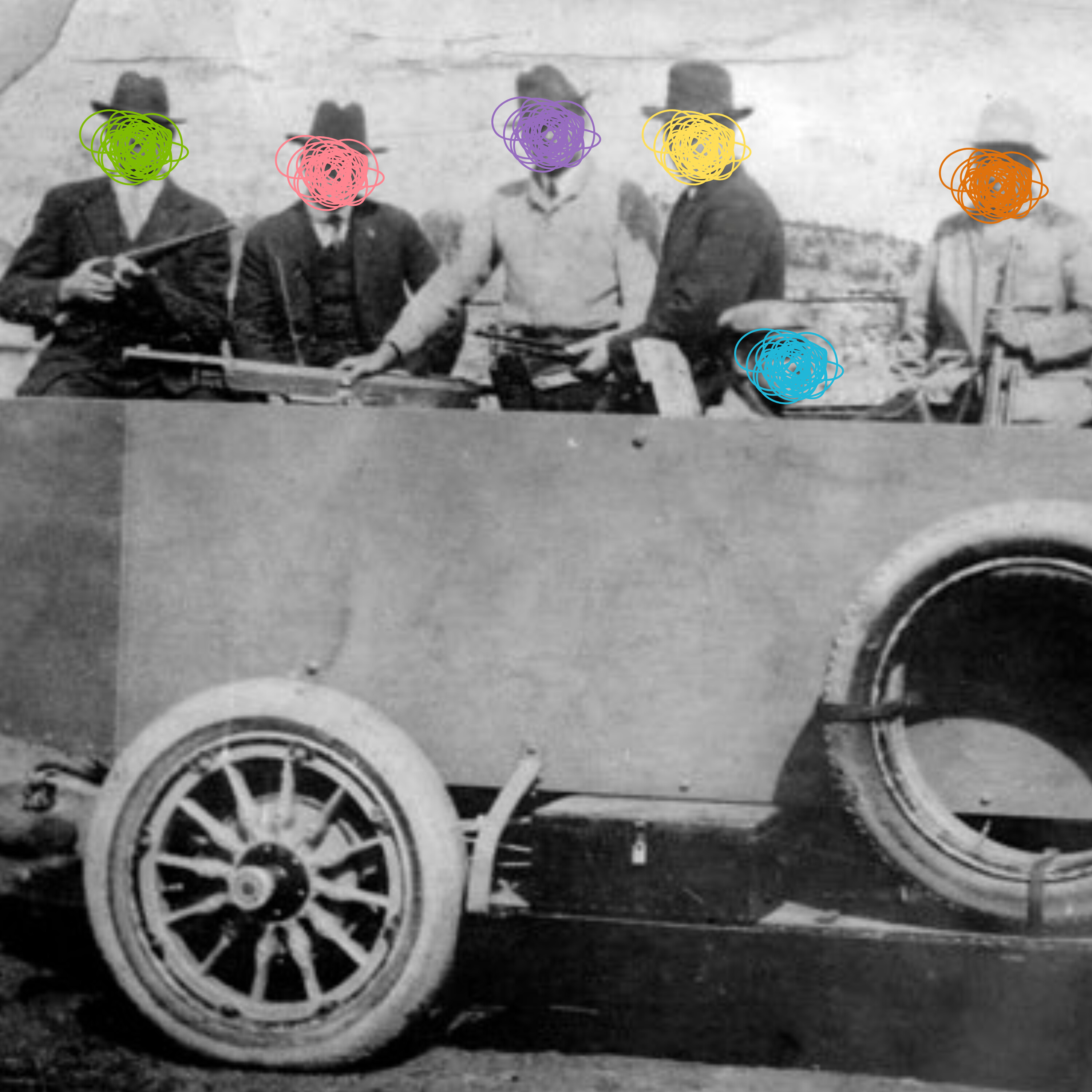
This wildcat strike, it's an interesting strike because it happened, like, concurrently Paint Creek and Cabin Creek, which for those of you who might be familiar, Cabin Creek, if you don't know anything about it other than that, was what Jerry West's nickname was, Zeke from Cabin Creek. Great basketball player, played for LA Lakers. Sorry. Fun. Little. Little West Virginia history nugget there for you. All the numbers I think are what were staggering for this. And when we mentioned earlier, just like munitions and battle and making it sound like a war. War is not a term used flippantly when talking about the mine wars. You can have a war and have it not just be countries. Okay. Like at the height of this strike, Baldwin Phelps had sent, I think 300 agents, which I did not realize, like they were even that big at this time, to paint and Cabin Creek. I think to break the strike. I believe they had declared martial law. At one point there was 1500 National Guardsmen there. And this was within the first week of this strike, if I have that correctly. So if this strike had lasted, how long did we say? Over a year? It looks like April to July. April 1912, July 1913. So over a year, within the first week there was martial law declared. That to me is wild. First of all, at one point, and this is where I mentioned like the whole machine gun thing, Baldwin Felt's agents brought an armored train that they called a Bull Moose special, which I take offense to that because they are appropriating a Teddy Roosevelt term, I believe at that point, which they rolled into a striking miner's camp and fired a machine gun into one of the miners houses in the middle of the night. So it's not just a miner, it's probably the miner's family. At least one person was killed that we know of at that point, probably more. This is what we know that was tabulated, that that was surrendered to the militia. All right, just pure numbers. 1900 rifles didn't even bother. I don't think counting the amount of handguns that were seized, six machine guns, 225,000 rounds of ammunition. So almost a quarter million rounds of ammunition just for this one strike. And what the.
- [37:48]
Dr. Claire Aubin
That's crazy.
- [37:49]
Chuck Cora
It's insane. And first of all, like, this was just for like co operators and Baldwin Felt agents. So first of all, like what I mean at this point, like, I don't know how they even got a hold of this much ammo. Yes, I do. It's America even at this point.
- [38:03]
Dr. Claire Aubin
You could get that now if you wanted it, right?
- [38:05]
Chuck Cora
Oh, hell yeah, absolutely. I, I know people in West Virginia that probably do. I mean, if I'm being real. But like, it just is wild to me that this is. When we talk about the term escalation, I think escalation is a key term when it comes to the mine wars. This is a strike, two strikes. I guess if you want to call it that. Paint Creek, Cabin Creek, two strikes. Now, there were 7,500 miners on. So that's a lot of miners on strike. But this is a strike at this point. Escalation. You're talking almost a quarter million bullets for 7,500 miners. But to me, like, this is insanity. This is what we're talking about. People who are ready to kill because they are more concerned about their bottom line. They're more concerned about their bottom line than worker dignity, than worker respect, than their safety, their health, their welfare, and the fact that they want a better living condition. Because at this point, miners are striking for a number of reasons. Like, yeah, they wanted better pay, but more important than that, they wanted to like, live. They wanted to make sure they were going to go home to their families. Maybe. Maybe have a day off. Maybe have a day off. Yeah, Maybe not have to, you know, live in the confines of what essentially was a indentured servitude camp. And this is the situation they're living in. So when we talk about the context of like, it being a horrifying concept to unionize because the, the consequences of getting caught were tremendous. But you have to look at like the alternative. You're living in hell. And so they're bringing the hell on these workers. And this is just the start of it. Once we get to like the Meiwan massacre, I mean, this is a wild escalation, I guess is my point. And when I saw these numbers, because I didn't know much about this strike before going and looking into this, this is just like insanity to me.
- [40:06]
Dr. Claire Aubin
Yeah, I looked at some of the numbers for this was, were just like kind of mind blowing for me as well. Doing, doing the research for this episode also to just understand like the escalation this starts with. They have the work stoppage, the wildcat strike, the companies immediately start evicting people from their houses. So it, that's, that's the response to the strike after they get hired to suppress this, Baldwin Felts construct fortified concrete guard posts.
- [40:32]
Chuck Cora
Oh my God.
- [40:32]
Dr. Claire Aubin
Equipped with machine guns. So you're right when we say like war, we're not talking like some quaint feud situation. We're talking like war style, like military style operations. Baldwin Felt's agents maintain cold operators dominance over every aspect of these company towns while this is happening. Block strikers from crossing mountain stream bridges, boarding trains regularly, using violence and beating anyone who tries. On February 7, 1913, the Bull Moo special that you mentioned, which is this armored train, they also have one called, I think the Death special. They have another armored rail cart, which just embarrassing.
- [41:08]
Chuck Cora
I hate these so much. God, I hate them.
- [41:12]
Dr. Claire Aubin
Awful. So this Bull Moose special opens fire on the Holly Grove tent colony and like you said, they kill civilian minor Franchesco Estep, who is shot while attempting to shield his pregnant wife. That he gets shot in the. Sorry for people at home. He gets shot in the face while he's trying to shield his wife from violence. Strike related violence includes over the course of this strike. That is just one night. Over the course of the strike, there are more than 50 fatalities and over 30 arrests that happen as well, including jail sentences. So that's one strike. That's just the first of these wars. Even the names of these events, I think, really convey the seriousness of them because the next big major event is about seven years later. I mean, there are lots of other things that happen in between there. But is the Matewan Massacre, which you mentioned, and that happens on May 19, 1920?
- [42:04]
Chuck Cora
Yeah. The Meituan Massacre is, I would argue, one of the most important and pivotal events in the Mayan Wars. And well, I know why it became that, but I'm not sure what triggered it for people. I guess because as we'll see, a gentleman named Sid Hatfield kind of became, I think, the symbol of resistance, of union resistance. And I'm not sure why all of a sudden he rose to that level. Because Mother Jones was, I think, around during this time. But for whatever reason, I will make a Hunger Games comparison. I guess he became the Mockingjay, so to speak.
- [42:42]
Dr. Claire Aubin
Be.
- [42:43]
Chuck Cora
So what happened? Matewan massacre. It was in Matewan I made. I made a reference to Matewan earlier where the Mineworth Museum is great institution. Matewan is in Mingo county, which is southern West Virginia, borders eastern Kentucky. Mingo county, great community, very isolated still even to this day. My. My sister actually was a teacher there for about five years. She taught Spanish and a couple other classes in the middle school and high school. And to give you a sense of like, how isolated is even now, they would have to cancel school sometimes if a coal truck turned over because the only road to and from the school was one road. So if coal truck turned over and they couldn't get out of the way in time, the buses couldn't get through and they had to cancel school. So.
- [43:24]
Dr. Claire Aubin
Huh. Yeah, yeah.
- [43:25]
Chuck Cora
To give you a sense of like, how like isolated even now it is. So back then, still like extremely isolated. So the Mae Wah Massacre, basically, miners in Mingo county decided to go on strike in 1920, which is largely because the Mine operators that were using Baldwin Felt's agents decided to suppress miners attempts to organize. They started like the past strike, evicting minors from company housing. They hired more agents to forcibly remove the people from the housing. So like these people, these agents were really terrible. I mean, you could kind of make a sort of a comparison to ICE agents in a way.
- [44:01]
Dr. Claire Aubin
Yeah. I mean 100%. That's what I was thinking when you, when you first said that. There are some, some comparisons here.
- [44:08]
Chuck Cora
I kind of just had that revelation now. But they really are in a way our modern day ICE agents. Wowed. Bf. Whatever. Ice. Yeah. It's wild. So we enter in these characters. I don't want to call them characters because it sounds pejorative. Sheriff Sid Hatfield, who's the Sheriff of Mate 1.
- [44:26]
Dr. Claire Aubin
He is also, I would like to add, by the way. Yes. One of those Hatfields. I looked this up and that's like his. It's his. His grandfather's brother is like, it's. He is related to the Hatfield of the Hatfield.
- [44:39]
Chuck Cora
The. The very famous pig feud. Yes. My sister knew some hatfields and some McCoys. They. There are so many of them. Oh my God. There's so they. Like, seriously, there are so many.
- [44:53]
Dr. Claire Aubin
So if you meet a Hatfield, it's probably a. Yes, one of them.
- [44:56]
Chuck Cora
I swear to God, if they live somewhere in West Virginia, they probably can draw some lineage to them. I would not be shocked.
- [45:01]
Dr. Claire Aubin
I bet you will get a comment from someone being like, I'm a Hatfielder, I know a hat.
- [45:05]
Chuck Cora
Yeah. Because they will be like. Because they will tell you. It's kind of like the. And not offense to any vegans. It's just like the joke, like, how do you sell a vegan? They'll tell you. I'm not saying that because it's a thing. It's just the joke people make. How do you know if somebody's a Hatfield? They will tell you.
- [45:19]
Dr. Claire Aubin
They will tell.
- [45:19]
Chuck Cora
And I mean that with respect. I love the Hatfields and I'm Team Hatfield because I'm from West Virginia and.
- [45:25]
Dr. Claire Aubin
After this guy too, you should be Team Hatfield.
- [45:28]
Chuck Cora
Actually. Yes. This is interesting turn of events here because like generally not a fan of cops. However, this one we make an exception. Sheriff Sid Hatfield, Sheriff of Mate 1. So him and Mayor Cabell. I think it's spelled cable. I think it's Cabel.
- [45:44]
Dr. Claire Aubin
Yeah, I've seen it spelled two ways also. I've seen it spelled cable, like cable car. And then also C, A, B, E, L, L. So I think it's probably Cabel.
- [45:51]
Chuck Cora
Okay. And that makes sense because Cabel is also a name of a county in West Virginia. So I would check out Cavill Testermen were basically. So they caught wind of what was happening in Mate 1 and in Mingo county, and they decided to investigate what's happening because, like, they're pissed off about this. They don't like what's happening here. And they were also union sympathizers, meaning the unions. They may have also been union sympathizers for Civil war. I don't know. Who knows. They demanded to see warrants for the evictions. Of course, the Baldwin Felt agents didn't have any. There was, I think there was a period of time in between then where maybe they left and came back. But then the Baldwin Felt's agents came and then I think possibly falsified warrants for the arrests of Sid and Cavill Testerman.
- [46:35]
Dr. Claire Aubin
Yeah, they produce a fake warrant for Hatfield, specifically Hatfield's arrest.
- [46:40]
Chuck Cora
Shady motherfuckers. All right. Like, these are the types of guys. And if you can imagine, like, dealing with these people in the modern context, like, unreal. I mean, there's people out there that will. But like, these people probably exist, but it's just like, wild. The audacity.
- [46:55]
Dr. Claire Aubin
Yeah. Like the idea of being like, essentially what they're doing here when they say we have a warrant for arrest is they're saying, oh, you're the sheriff, I'm citizen arresting you.
- [47:03]
Chuck Cora
Like citizens arrest.
- [47:05]
Dr. Claire Aubin
Yeah, like that's basically what they're doing. These are not official law enforcement agents. They're just guys who are essentially private security par. Paramilitary.
- [47:15]
Chuck Cora
Yeah, except we're going to bring our train with our machine gun. So, like, they attempted to arrest him, which led to a massive verbal altercation. Now, from what I have read at this time, there were people, miners assembling around the. Around the area where this altercation was happening, in buildings and around the area having their guns ready. And a shootout happened. And now, unfortunately, Cabell Testerman lost his life as well as seven Baldwin Felt agents, including two of Felt's brothers. And then I think two townspeople as well died in the crossfire.
- [47:55]
Dr. Claire Aubin
Yeah.
- [47:55]
Chuck Cora
But out of all this, Sid Hatfield rose as a major symbol of this struggle. He was seen as like the symbol of. Of standing up for the unions, rightly so. And standing up for the union miners who needed somebody to stand up for them. Because this is a guy who, like, you know, if you put it in the modern context, this is the guy that's standing up for. For. For the, the immigrants getting arrested by ice. Like, he's the one standing in the way of mm.
- [48:22]
Dr. Claire Aubin
But also much like we're saying right now. And again, like, I'm a historian, so I'm. I'm not as focused on the present day. I think about it a lot, obviously, but, like, that's not my area of expertise. That being said, I do think there's something to be said about there's a person who. A political person who stands in the way of this paramilitary group. And there's a clash between local law enforcement and elected politicians in literally a paramilitary group who say, okay, fine, well then we'll just take you away or we'll shoot you or whatever. And the result of that, which we are also seeing now, this massacre, becomes a turning point for minor solidarity and union strength. It becomes this, like, really pivotal moment where people say, well, actually this is horrible. The only thing we can do is develop stronger unions and more solidarity. And it gets a lot of national attention too, which is really important. Much more national attention than some of these other earlier events had. And it draws the attention of larger national union organizing groups as well. But what happens next is also wild. This was the thing I. The other ones I kind of knew a little bit about, but this was the one where I was like, are you joking? Because I had no idea that this happened. Hi everybody, it's Claire here with my usual quick shout out to tell you about other multitude shows I think you might be interested in listening to this week. I want to talk to you about wow, if True. Wow, if True is your one stop Internet culture shop explaining how what's happening online shapes the real world. And tech culture journalist Amanda Soberling and science fiction author slash attorney Isabel Kim are the right Internet experts and real life besties to unravel it. Every week they're asking and answering your burning questions about the Internet. Like, what is giblification? Why does Erewhon keep going viral? Why are YouTubers locking people in grocery stores? And just how many secret babies does Elon Musk actually have? I recently recorded an episode of wow, if True about some Internet issues that are very near and dear to my own heart. So I can confirm that the show is a very fun to be a guest on and b will take you on some unexpected journeys as both a guest and a listener. More importantly, they're the only show that will explain both neopets and horizontal mergers in the same episode. So check out wow, if True wherever on the Internet you find your podcasts. New episodes drop every other Wednesday after the Matewan Massacre. The same sheriff Sid Hatfield and his deputy, or former deputy, I think, Ed Chambers, are brought to trial at the Mingo County Courthouse for their involvement. Hatfield is acquitted of murder charges, but he still kind of faces several unresolved charges. One of the most serious accusations leveled against Hatfield is that he had blown up a piece of coal loading equipment in the town of Mohawk, West Virginia. So he's like going to. All these trials are happening because he's being accused of sabotaging mining operations as this figure. The trial for this charge is set to take place at the McDowell County Courthouse in Welch, West Virginia. His co defendant, Ed Chambers is a 22 year old, so very young. And on August 1st, another thing, this is the day before my birthday. I would like to say bad juju happening around my birthday in this episode. On August 1, 1921, Baldwin Felt's agents ambush and assassinate Chief hatfield and this 22 year old guy Chambers while they're walking on the steps of the McDowell County Courthouse with their wives in full view of witnesses.
- [51:55]
Chuck Cora
Unbelievable.
- [51:57]
Dr. Claire Aubin
Like, I don't understand how someone could see, like find out that people are literally being assassinated and saying, well, there are two sides to this story, you know, like, how do you do that?
- [52:08]
Chuck Cora
I mean, unless they're denying that Baldwin Feltz was involved, like there is, I mean it's insane. Like these people were, I don't even know, there's no words to describe it. I mean, they saw this man as essentially the animating force behind this movement that they were literally hired to stamp out, to snuff out. And they were like, well, we have to kill him. So they did. And I believe that there was no consequences to them because none of them were ever tried or found guilty or anything. There was, I believe that his murder or his assassination was technically unsolved.
- [52:49]
Dr. Claire Aubin
Yeah, I think so. That's what I came across as well. But what happens is it heightens these tensions that were already existing. And especially while Hatfield had become this kind of icon or this iconic figure, heightens tensions that culminate in the armed miners insurrection known as the Battle of Blair Mountain, which I think is kind of the last big thing we need to talk about here. The largest uprising in US labor history, like largest single uprising. And wouldn't you know it, the Baldwin Felts Detective Agency plays a part in that one too.
- [53:19]
Chuck Cora
Shocking.
- [53:20]
Dr. Claire Aubin
It's also known as the March on Logan county, which is something I learned that there are two names for this.
- [53:25]
Chuck Cora
Yeah, this is like roughly, I think three weeks after he was assassinated and his, his assassination really just, I mean, it was the catalyst that led to this culminating event. And this involved, I think, 10,000 armed coal miners, 3,000 armed law enforcement strikebreakers, including the Baldwin Felt agents. It began with them miners marching from Marmet, that's how it's pronounced, Marmet, to Logan county, which I think is about 60 miles if I had. I think so. I think that's about right. Marmet is like right outside of Charleston, I believe. Don't quote me on that, because I could be wrong. To protest the anti union violence and to demand justice. And so as that is happening, the sheriff of Logan County, a guy named Don Chaffin, who you. If you're listening to this, you will come to view this man with so much contempt that he might become your new J.D. vance. He might.
- [54:22]
Dr. Claire Aubin
When you pitched who you wanted to talk about, he was your alternate guy was that it was Baldenfelts or this guy.
- [54:28]
Chuck Cora
He was.
- [54:29]
Dr. Claire Aubin
How awful. He is.
- [54:30]
Chuck Cora
Yeah, he is pretty terrible. He was like. They caught wind of what this is happening. He was like, we need to basically organize an army armed resistance at Blair Mountain, which is sort of like this natural bottleneck into Logan and Mingo counties. And I mean Logan and Mingo county, like this is all southern West Virginia. So already you have like natural. I mean, when you, when you have a war mentality, I guess when you're thinking like that, like this is very rough terrain and you're. You have a fortified natural bottleneck boundary of Blair Mountain. They set up trenches, they set up machine gun nests. I think they even had like tear gas and other things. He deputized local people. He got Baldwin Felt's agents, he had coal company guards. He got about 3,000 or so people. So he was ready for them when they came. They had skirmishes across around 25 miles. Miners attempted to flank and overrun them using their knowledge of terrain. There was gun battles. I think it lasted around a week, I believe.
- [55:38]
Dr. Claire Aubin
Yeah. August 25th to September 2nd.
- [55:40]
Chuck Cora
Yes. And I think, don't correct me if I'm wrong, but I believe there was even air support that was flown in.
- [55:48]
Dr. Claire Aubin
Like, yeah, so there is air support that's flown in. This is one of the things that people are a little unsure of what happened and why and what exactly was going on. Yeah, they definitely did have people flying over them for surveillance reasons at least. But also some Baldwin Felt men reportedly coordinated aerial bombings using private planes. So what people claim is that they dropped makeshift explosives on miners positions. If this did happen, like the bombing specifically, it would have been a very, very, very Rare instance of air power being used against U.S. civilians inside of the U.S. it really matters that people know about this and the consequences of it, because that is. Is wild.
- [56:32]
Chuck Cora
It really is. And it's. It's like imagining this happening in the modern context. Like, unreal. Federal troops intervening in order to. To stop what is essentially like a guerrilla civil war, so to speak. And if you think about it, it's like, what did we count the numbers to be, like 13,000 people almost. Which is probably. I don't remember the populations of these counties. That's almost the entire population of these counties, I would be willing to bet.
- [57:01]
Dr. Claire Aubin
Yeah.
- [57:02]
Chuck Cora
So you think, like, 13,000 people, armed to the teeth, going at it with these. In these mountains. They had. And this is actually, like, I know the lore. I should introduce the lore here about rednecks. That is important. There's a great book, Black Coal and Red Bandanas. It's actually a graphic novel about the battle of Blair Mountain. So out of solidarity, the union miners wore red bandanas around their necks as they marched onto Blair Mountain. And that's where the term redneck comes from. So take that fun knowledge with you when you go. But this is like something where it was this radical group of resistance. And it's hard to imagine an event like this happening. And the fact that these miners, a lot of them knew, like, they were marching to their deaths, and this is the point where they were at in their lives, their lives were so difficult. They knew that, like, it's either this or nothing, and they're marching to their deaths. And they knew that, like, they had to make this sacrifice for the future of themselves, the future of this country, and the future of their union brothers and sisters. And that's why, like, this act of labor solidarity is so powerful, because it forced the federal government to get involved. It forced federal troops to intervene and to effectively bring a halt to this.
- [58:23]
Dr. Claire Aubin
Yeah. When we think about sort of like how desperate you have to be to do this, right? People could say, well, why don't they just leave? Why don't they just go somewhere else? But how do you go somewhere else if all the money that you have is paid to you in script, which keeps you from spending money elsewhere if the people that you're working for own your home, like, with what money, with what resources? How could you possibly have made a different or better life with what? With. With what you know? So you have to be very, very desperate. Be, like, truly willing to give up your entire life, forfeit your life in order to do this. So yeah. After nearly a week of, of very fierce fighting. I also want to mention, and you said this a little bit, but they literally start to fortif, like build fortifications as well as machine gun nests. Like by they, I'm talking like Baldwin Felts and Don Chaffin's people. All of these coal operators and their little local militias essentially have machine gun nests that they're using. There are dozens of people killed. Over a million rounds are fired. One. A million rounds for 10,000. That's.
- [59:30]
Chuck Cora
I, I don't know.
- [59:32]
Dr. Claire Aubin
That is like, to me, I don't even know how to comprehend that. That is just insane. Eventually, as you said, Warren G. Harding, President Harding sends in federal troops. Most miners start to surrender peacefully because they don't want to fight the U.S. army, which I think is fair. The revolt is suppressed. Hundreds of miners are arrested. But also the conflict brings national attention to the miners cause. And most importantly for the purposes of the show, all of this brings attention to the very, very brutal tactics of private security forces like Baldwin felt. It's not the beginning of the end because they last for another 16 years past this, but this is a moment of definition in American labor history, right. Where there is like, there are clear good guys and bad guys. And it's kind of recognized nationally that people like Baltenfeld are the bad guys in this scenario, which is really important for the cause that nationally there's a lot of understanding that what's happening here, especially on, in terms of like the suppression, is very, very bad and very dangerous. So that is one good thing that comes out of this.
- [60:37]
Chuck Cora
Yeah. One way to look at it in terms of like, the trajectory of labor history is like, in the short term, it was tough for labor. It was a short term defeat for the United Mine Workers. Right. Because the companies, they came down on them like a hammer. They fired the union miners, they blacklisted them, they crushed organizing for decades. But in the long term, this brought so much attention to what was happening because so much of this happens in a vacuum. Like people in D.C. they have no idea what's going on in West Virginia in the mines, they just know, like, coal, great, okay, well, we got electricity in Rayburn hall, but this brought so much attention. Like they had to activate federal troops. Okay. So like once this happened, you know, it started getting the attention of like, oh my God, like these corporations that coal bosses are really out of control down here. We don't need more of this happening. And so this inspired labor reforms the federal level. It certainly inspired the National Labor Relations act and other New Deal reforms to the labor movement. So the lasting impact is really important. And I think that while this may have not directly improved the lives of the miners that were a part of the Battle of Blair Mountain, their legacy and their impact drastically improved the lives of every single coal miner and every single worker that came after them because of what their legacy inspired. And it's an interesting thing to reconcile with, right, because it was violent, it was bloody and it was violent. And that's hard to really talk about and reconcile with because, you know, and I point to the man whose face is behind me, John Brown, who also had a violent event that triggered a, a really important part of history, which was the Civil War. And so I think that it inspires important question about nonviolence versus violence and how that relates to how you effectuate change in society. And so I think the Battle of Blair Mountain certainly does that and certainly it inspires a lot of important discussion about not just labor history, but how you effectuate change in society.
- [62:54]
Dr. Claire Aubin
Yeah, absolutely. In the short term you can say, right, they're acting violently, but their whole lives are violent before that, right?
- [63:02]
Chuck Cora
Absolutely.
- [63:02]
Dr. Claire Aubin
Violent deaths in, in the mines, they're subject to violence in their homes, at work, in all these different ways, economically, their lives are suppressed. They, they experience violence in all aspects of their lives. And this is just the culmination of that. Oh, a hundred percent is just a reaction to that. Right. Ultimately, there's a series of congressional investigations. There are new federal labor laws like you mentioned, which gradually erode demands for private detective strike breakers because, because they're not, they can't legally operate anymore. Baldwin retires in 1930 and the agency formally dissolves in 1937, shortly after Baldwin's death and as well as Felt's death. So Baldwin dies in 1936, Felt dies in 1937. And the agency says, okay, this is stupid. Why do we have this anymore? But the whole thing, just from start to finish, is just like appalling and horrific. And I'm hoping that people listening at home are hearing this and saying, okay, so there are parallels because this kind of of group exists over and over and over again in different contexts and just gets, keeps getting sort of like respawned consistently throughout American history. But it's a group that's always reacting to another group gaining any kind of power or any kind of, you know, enfranchisement. There's always some reactionary, like, often like militia style group that's thrown into suppress any kind of sort of, of political gains. And so hopefully people can hear this and think, like, okay, I can see this elsewhere. Or I saw this before, or I know, like, understanding this one group can help you to understand a lot of other ones, I think.
- [64:34]
Chuck Cora
Oh, yeah. I mean, in thinking in terms of, like, what was the primary purpose of this? The primary purpose of this organization was to protect the company, to protect their assets, to protect their ability to make more money, and also to like. Like, in a secondary aspect, to surveil for them. And when I think about that, I think about a certain company that's coming into a lot of prominence right now doing those things, which is Palantir. And so, like, they're. They were kind of the Palantir of their day in a way, with how they surveilled and kept tabs on things and quashed certain uprisings, so to speak. And so I think that there's a lot of similarities to a lot of things that are assisting companies and protecting shareholder value and making money. And it is scary to think about like that. But it's also like, you look at what this company did and you can see where there's a lot of companies like this that exist to do the exact type of purpose that they existed to do. It's pretty wild when you peel back the layers like that.
- [65:37]
Dr. Claire Aubin
There are two things I want to mention. One is that you've activated my other Wario, which is evil companies who info Tolkien because I'm a gigantic Lord of the Rings and Tolkien fan. Also because Palantir is saying the word wrong. And that really bothers me because that they literally mispronounce their own name. And that pisses me off as a Tolkien head because it's Palantir. The land is where the emphasis is supposed to be, not the pal. And Peter Thiel is a idiot. And I think we should.
- [66:08]
Chuck Cora
I think we should call him Peter Thiel because of that.
- [66:11]
Dr. Claire Aubin
Well, yeah, in order. Yeah, in order to. To turn it back on him. So that's my own little other secondary beef along with the J.D. vance thing. But one thing I wanted to mention, because I didn't say this during the episode or during the earlier part of this, I found some interesting quotes, like primary source quotes that I thought were really good. Let me find this that I wanted to read. So one of these quotes is about the people being hired by Baldwin felt because sometimes it's hard to kind of conceive of this without understanding who is actually doing these things rather than just the owners or the founders of the company. According to Howard B. Lee West Virginia Attorney General in the late 1920s and early 1930s. He says they were fearless mountain gunmen, many with criminal records, whose chief duties were to keep the miners intimidated, to beat up, arrest, jail, and even kill, if necessary, any worker or visitor suspected of union activities around the camps. So this is how people contemporary to them were thinking about. About them, People who were alive, working in and around them thought about them as these horrible thugs, like you said. Like, there is knowledge that what they're doing is bad and wrong and that the people doing it also have sort of criminal and violent proclivities.
- [67:21]
Chuck Cora
Yeah.
- [67:22]
Dr. Claire Aubin
And then also in a 1912 commission appointed by Governor William E. Glasscock, they described the role of Baldwin felt. I think this is in response to the Paint Creek strike. There's a. I'm not sure who this is in response to, but there's a commission, and they say, we find the system employed was vicious strife promoting and un American. No man worthy of the name likes to be guarded by another armed with blackjacks, revolvers, and Winchesters while earning his daily bread. It is repugnant to the spirit of the laboring man. And we believe the opinion of the American people. So they basically said, these guys are horrible and this is un American behavior, even though, you know, most historians would argue this has happened throughout all of American history. So it is actually very American behavior. But there are federal, you know, and statewide commission saying this isn't right and essentially saying it's understandable that there would be a strike or that there would be some sort of union organizing in response to it, because no man worthy of the name likes to be guarded by another.
- [68:22]
Chuck Cora
Yeah.
- [68:23]
Dr. Claire Aubin
It's important when we think about this, to think that even at the time that these things are happening, people who are not just coal miners are saying, there's something wrong here. This is not how this is supposed to happen. Because it's very easy to look back at history and say, well, everyone probably thought it was okay, or they didn't. Like. No.
- [68:37]
Chuck Cora
Yeah.
- [68:38]
Dr. Claire Aubin
This is a known thing in the area that there's a problem here.
- [68:42]
Chuck Cora
That's a great point.
- [68:43]
Dr. Claire Aubin
Yeah. I mean, I think we're probably out of time. Unless people want to listen to two full hours of nothing from Falsefeld's detective agency, unfortunately. Is there anything else you want to add to the episode?
- [68:58]
Chuck Cora
Oh, man, I think we have covered them enough. I mean, they are truly terrible. I feel like we've covered the broad strokes of them in a way that is comprehensive enough. The only thing I would add, it's not about Baldwin felt Don Chafin, the guy I mentioned, the Logan county sheriff, I would just like to end with saying that he capped off his career by being a lobbyist for the coal industry, which I felt was fitting for the type of person that he was. That's all I wanted to say. But yeah, no, I think that you covered them quite well and I think that people should understand that this was really how these companies, these coal companies operated. And if they were allowed to do it today, they would still be doing this.
- [69:44]
Dr. Claire Aubin
A hundred percent. Absolutely. And I think that's very clear with a lot of these, these large industrial fields like that, if there were not regulations in place, they would still be behaving the way that they were at the start of the 20th century.
- [69:58]
Chuck Cora
Unquestionably, Amazon would be hiring. Baldwin felt they could, a hundred percent.
- [70:03]
Dr. Claire Aubin
I think you and me together have made a convincing argument for them sucking. I want to thank you so much for coming on. I want to quickly, also, before I do all the where people can find you shout outs for my listeners, I also want to tell people to go explore your Appalachian Accents project because that is to me one of the coolest things that you have done and one of the things that makes your, I mean everything about your podcast is, makes it really valuable. But as a historian, that to me is an extremely valuable historical resource that you are creating in real time and I think it's pretty amazing. Can you just like give a 30 second overview of what it is?
- [70:40]
Chuck Cora
Yeah, well, thank you for mentioning that. Absolutely. So I had people reach out and send me small clips of them saying a reading from a script that I put together saying that this is their Appalachian accent, the Cellise Appalachia. And I had them basically from people from all throughout the region. So the 13 state region as defined by the Appalachian Regional Commission, from those counties in there, 423 counties. And I did the painstaking work of putting that all together in an audio video compilation that you can find on my YouTube. YouTube channel. And I did it because I really wanted to see both the variations of the accents, but also because there's a stigma against both Southern and Appalachian accents and there's obviously overlap there. And one of the missions of this podcast that I do is to break down that stigma and show that there's nothing wrong with accents. Like it's part of who you are and you should be proud of it and embrace it. And so it's a really fun project to do and I'm just glad that people have found meaning in it.
- [71:43]
Dr. Claire Aubin
It. Yeah, and as an academic historian, I know a lot of other American historians who really like it and are. Are interested in it just for like a. So that you know that people are paying attention to this and think it's cool. I know of several other American historians who think it's. It's really exciting and cool that you're doing this because it's an example of citizen archiving, which rocks and public archiving is incredible. It's like oral history as well, things like that. If we don't preserve them, they do. They can get lost or they do get lost. And it's just been so interesting. And I think it also helps to answer Genu, the question of like, how do you pronounce Appalachia slash Appalachia? Because the answer is all of the ways that people pronounce it. And you can listen to people who are from Appalachia slash Appalachia, say Appalachia or Appalachia, and they're both right, which I think is cool.
- [72:30]
Chuck Cora
I was very deliberate in the way that I wrote the script for that purpose. And I went back. There's one post where I kind of. I made a map and catalog, like how people pronounce it and did like a. Like a county by county catalog of that. It is really interesting. It definitely like there, there is a variation where people. More people say Leisha, like when you get towards, like north towards Pennsylvania and then towards like Alabama area. And so. And there's a myriad of reasons why I don't really know them all, but it is fascinating. It really is.
- [73:06]
Dr. Claire Aubin
Yeah. So anybody at home who, if you haven't haven't done this already, if you aren't familiar with Appalachia or anything like that, go on their YouTube or wherever else you have it posted. But I know you have it on YouTube. Go and look at. It's so interesting. Like, it's genuinely fascinating. And I, I found it really useful. So yeah, the plug, other than that is Chuck and Appodlacher can be found on Twitter, bluesky, Instagram and TikTok at Podlacha. And you can sign up for their patreon@patreon.com appaudlacha for five bucks a month.
- [73:34]
Chuck Cora
That sounds right.
- [73:35]
Dr. Claire Aubin
Totally reasonable. Well, there you go. And they post. You post so many things on it. If anybody is listening to this from our Patreon, we have them linked directly there as a show that we recommend.
- [73:44]
Chuck Cora
Yes, likewise. I do believe that I did that with you as well.
- [73:50]
Dr. Claire Aubin
Thanks for listening to this episode of this Guy Sucked. A member of the Multitude Podcast Collective. This episode was Hosted by me, Dr. Claire Aubin and Chuck Cora of Apod Lacha and edited by Julia She Sheffini. All of our theme music was written and produced by Good Guy Wearing Cool Shorts Marshall Dean Williams. If you'd like to support the show and get access to all episodes, including two extra episodes per month and access to our full archive of episodes, you can subscribe@patreon.com this guy sucked. See you next week. Sam.