← Thriving Kids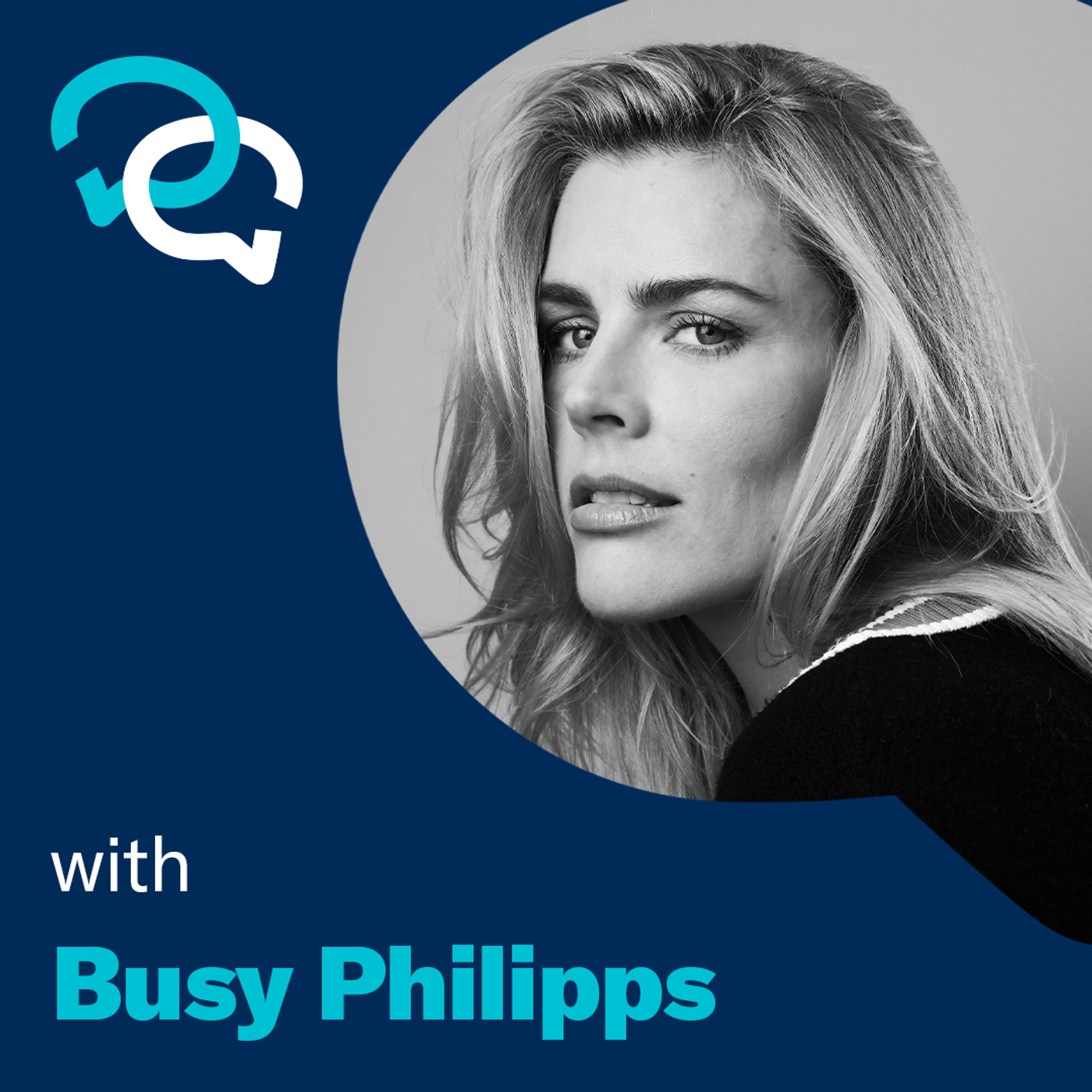
Loading summary
Transcript105 lines
- [00:01]
A
Hello and welcome to Thriving Kids. This is a podcast from the Child Mind Institute and we are a nonprofit dedicated to transforming the lives of children and families experiencing mental health and learning disorders. I'm your host, Dr. Dave Anderson. Today I am delighted to be joined by actor, author and activist Bizzy Phillips. Bizzy is known for her incredible candor, and in this conversation she opens up about everything from the active participation required in modern parenting to her own journey with an adult ADHD diagnosis. We're jumping straight into the heart of the conversation where we discuss the challenge of staying connected to our kids in a digital world. Let's get into it. Hello everyone, and welcome to the Child Mind Institute's Thriving Kids podcast. I AM your host, Dr. Dave Anderson, and I am here today as a great privilege with busy Phillips, talking about all kinds of things related to your experiences with mental health, your advocacy, your family, yourself. Right. So if we look at your 17 and 12 year old, for example.
- [01:01]
B
Yeah.
- [01:02]
A
Like, how much do you let them, you know, how much do you let them consume? How do you talk to them about what they are consuming? What have you thought about over time about kind of like the ways they get their news? Because I'm assuming that they haven't gotten all their news just from like, you know, mom's Instagram feed and that kind of stuff.
- [01:20]
B
Oh, I mean, I don't even think they, they don't even follow me on Instagram.
- [01:23]
A
They don't follow you, exactly. There we go. Sorry.
- [01:26]
B
And neither one of them, I would expect ne, Neither one of them have public Instagram.
- [01:33]
A
Yeah.
- [01:34]
B
Accounts. Birdie and I just had this conversation about it. She turns 18 this year and she was talking about having. Making her account public and I was like, well, that's a conversation that you can, we can have in a little bit. But also, yeah, you're going to be 18. If that's what you want to do, you can do it. She's very savvy, though, and aware of all of, I don't know, the pros and cons of doing that, especially as my daughter, as my kid, because, yeah, I haven't sort of shied away from explaining to them that part of, first of all, my career, but also the world and how the world can be mean and not kind online. And you know, I think the real work is sort of younger, when they're younger in terms of the Internet and social media and YouTube and Roblox and gaming. You know, you and I were on a panel years ago and I remember having this conversation because, you know, there Were a lot of parents that I think they like want to quote, do the right thing in terms of access to phones and social media and texting and those things. And I was sort of surprised by how many parents of kids, and this is when I think my older daughter was like 9 or 10, 11 maybe how many parents in her class, classmates, parents didn't really understand that a lot of the gaming is actually online and social media essentially like it's its own back door to social media. And so while these parents are like, well we're signing the pledge so our child is never isn't going to have a phone until she's 15. And I'm like, that's great. They play Roblox, babe. They're like literally getting into it with other kids and maybe adults online. So if you're thinking that you're protecting them by making like just one, you know, declaration, just know that there are ways around it and that what it really requires is so much active participation as a parent to your own detriment of like, you're not going to be able to consume media you want to consume. You're not watching White Lotus because you're watching, you know, YouTubers with your kids. Which is what I did for years. Because there is nothing more effective than course correcting bad ideas in real time.
- [04:23]
A
Yes.
- [04:23]
B
So if you're watching, you want to watch the stuff your kids are watching.
- [04:27]
A
Yeah.
- [04:28]
B
And not passively watch it. Engage with them.
- [04:31]
A
Yeah.
- [04:32]
B
Also, you know, I went to the Hoffman Institute. You know what that is?
- [04:36]
A
No, I don't know. The Hoffman Institute. What's up?
- [04:38]
B
The Hoffman Institute is a week long therapy. Like.
- [04:43]
A
Okay, I'm thinking this is like some sort of place for actors where you're doing your craft. Yes. Okay.
- [04:49]
B
No, no.
- [04:49]
A
Therapeutic. Yeah.
- [04:50]
B
This is, it's a therapy thing.
- [04:51]
A
And now that you put in the right world a job.
- [04:53]
B
Yeah.
- [04:54]
A
Yes.
- [04:54]
B
Sorry. We're talking about mental health. Right.
- [04:57]
A
I realized that. But I was like, well, I went
- [05:00]
B
to, when I went to the Hoffman Institute and I highly recommend it. You can research the program yourself if it's something that you're interested in. Like, yeah, know parents or caregivers. Or caregivers. But it's a week long sort of intensive program and it's got a lot of different sort of modalities that it moves through. But I found it incredibly helpful. But one of the biggest takeaways for me and I went in the fall of 2021 was really this idea that what my kids needed most from me was not passive participation but Active participation in their life and actively. So that's why I say, like. I mean, I missed so many television shows for years because I was watching these YouTubers and, like, for a minute, Discord. I watched Discord. Um, I know, yeah, But. But I was able to have conversations with my kids. And also, like, at a certain point, I just kind of got over it, and I was like, well, maybe I can find this enjoyable. Like, yeah, you know, let me try. At least I learned how to play Roblox. I, like, taught myself how to navigate it. And I think the more that you can engage with kids on that level as they're younger, the more they're gonna come to you as they age up with things that are questionable or they don't really understand or they want your thought about. And that's what I've just seen in practice with my kids. And, like, it was not the easiest thing. Oh, no, for sure. But it has paid off.
- [06:49]
A
The things that you're highlighting are that, like, if you are curious with your kids, even if they know that you don't necessarily like this stuff, they know that you're in their world, and they're more likely to kind of bring it to you. Like, if I just think even of the last day when we're sheltered with the snow, I figured out that my son has gotten so good. Like, you know, we. We watch a lot of live sports on tv, and we like that as a family. He has gotten so good at quoting either insurance commercials or these side effects to various medications.
- [07:21]
B
Great.
- [07:21]
A
He is nine years old, and he will sit down.
- [07:24]
B
He hasn't memorized.
- [07:25]
A
That's the whole thing. It's like. And I'm realizing something about his exposure, and I'm kind of like, maybe we don't need to watch every tremfaia commercial that comes on between every NFL, you know? Right, Exactly. That kind of stuff. Because he's literally sitting there being like, what's Crohn's disease? And do I have Crohn's disease? And these side effects are really crazy. And then he's, like, listing them off, and I'm like, okay. Like, I know you've seen this, but we've got to at least talk about it. And then my daughter, to your point around the YouTube thing, I'm in this. You know, they have to watch YouTube on full volume with us in the room. And when they're watching YouTube, my daughter in particular just loves these two guys who just do insane stunts, and all they're doing is, like, this last one. She was watching last night was them trying to break 100 slime balls with various household objects they draw at random, like a rotary telephone or a Rubik's cube. Sure, she thinks these are amazing, but the reality is, like, we're talking to her about why it is that we might only watch this for a certain period of the day, because it doesn't necessarily enrich our brains to watch us breaking slime balls with a rotary telephone. But we're willing to do that for 15 minutes at night. But every one of these. My daughter knows I can't stand that video. My son knows I can't stand that we allow pharmaceutical companies to advertise directly in the middle of football games. But at the same time, we can all delight in the weirdness of, like, what is existence by being in it together and then kind of talking through, like, what all this stuff means and why our society is constructed this way. And there's so much to, like, unpack on that.
- [09:00]
B
I think that's very real. And also it Dev, you know, they're developing their senses of humor around the media that they consume and the things that they are interested in. And, you know, you really do. This idea that you can, like, force a kid to like anything is just insane. You cannot. But what you can do is you can participate in what they're interested in and then from there, like, have conversations with them, try to introduce other things, see if it works out. I mean, you know, TikTok is another version. And as your kids get older and they probably will get, you know, be able to access TikTok or, you know, that was really. We went through a real phase with one of my kids where they were convinced that they had every medical and every mental health thing under the sun because of, like, mental health TikTok. And once that, like, gets in your algorithm, you know, which, by the way. And like, the neurodivergent TikTok, and by the way, bless it, because it is. There are so many great people that are doing, you know, get. Putting out great information and really helpful
- [10:20]
A
things, great neurodiversity content out there that helps you to really appreciate. Including all humans and their neurodiversity. Absolutely on that. Yes.
- [10:28]
B
Yeah. But then also. But also for an impressionable kid, that it could be the kind of thing where they're like, well, I like eating the same thing over and over again. I guess I have that. And, you know, we really. I really had to. We really had to try to gently sort of course correct and. And help her.
- [10:50]
A
I think about one of these things related to your story. So you first realized that you satisfied diagnostic criteria for ADHD in what decade of your life?
- [11:00]
B
Oh, my gosh. Well, I was, I guess almost 40. I was in my late 30s.
- [11:05]
A
Right.
- [11:06]
B
And this story is actually so common. And once I started talking about it, I mean, women reached out to me when I, you know, via my podcast and on Instagram. But it was because we were taking my older daughter to be for a, you know, neuropsych eval and to be sort of. Yeah.
- [11:29]
A
Learning challenges. Anything.
- [11:30]
B
Yeah, she was just having some learning challenges. And. And it was, you know, that. That time, like fourth grade. Right. I think is when it was. And just as the doctor was going through all of the diagnostic checklist, I was. It just dawned on me. I'm like, well, that's me my whole life then. I mean, the second part of the story, which is even crazier, is that. But it was a different era, different time that I called my mom and I was like, was I ever diagnosed with add? And she's like, no, you weren't. You know, did it. And then she called me back like two hours later and she's like, well, I pulled out your medical records because my mom never gets rid of anything. And it fully was. I was like in fourth grade and diagnosed with adhd. And they, I guess, I don't know.
- [12:16]
A
There was though, the number of parents I see where they will get a report or an IEP on their kid or something like that, and years later we'll go back and look at it and I'll say, so your son has a diagnosis of adhd? And they'll say, what? And I'll say, well, it was in the IEP from an outside evaluation. They'll say, no one ever said that to me. And I'll be like, well, maybe they were too scared to say it to you, but they wrote it in this thing. And that is a common experience too.
- [12:39]
B
Yeah. Or maybe they said it. And also parents are dealing with a lot, all the time.
- [12:44]
A
Also, if you get a 35 page report, a lot of parents don't read the whole thing. And for good reason. They're too busy. Like they've got too many things to read and look at and they don't know that, you know, the term at the end is what's bold. So you're telling me I didn't hear that part. Your mother came back to you and was like, actually, we could have known this a good 30 years prior.
- [13:03]
B
We apparently did know it. Right.
- [13:04]
A
We Barely did. Yeah, okay.
- [13:05]
B
Yeah, apparently we did know it, but it was. That was like an actual diagnosis when I was in. When I was in fourth grade. But again, it was like the middle
- [13:14]
A
ages also the difference, right?
- [13:16]
B
Yeah.
- [13:16]
A
So this is the difference in parenting generations too, because we are. We are of similar ages. But my. My parents are a psychologist and a psychiatrist, so I was raised by mental health professionals. I got to college and realized that that thing that my parents had gotten me treatment for was OCD when I was a kid. But like, even as a kid, and I think this is a function of my parents generation and the fact that they were raising me, I think it was a little bit difficult because of stigma even at that time for my parents to fully be honest with me about what I was going through as a kid, because there's just like, they didn't want to give me a label. They didn't want to make me feel bad about myself. I was already massively socially anxious. Like, you know, why give this to me now? See, this also relates to your TikTok point because, you know, you've been so vocal about, you know, adult diagnosis, about how much women can be overlooked, particularly for ADHD symptoms in early ages, because people think, oh, no, she's anxious, she's depressed or something like that. It could be ADHD or something. And then, you know, you get to your daughter's evaluation, you're like, holy crap. But yeah, you know, the. The whole thing is that what I find is now the mechanism is I get the kids who get on TikTok, and yes, they've seen six ADHD videos and they've been told that instead of the inattentive and hyperactive impulsive clusters of ADHD that, like, you know, I know I have ADHD because I like Diet Pepsi and sometimes I don't like to go on walks and I feel cold and I'm like, no, that's not. And none of those are symptoms like that was someone talking about their ADHD online. But, like, that's not anything. But it's actually kind of wonderful because if. If we, you know, pull these threads together that like, if kids are critical thinkers and they've then looked at TikTok, I just want them to have a friend like me or someone they can come to and be like, so I saw these three videos, right? Does this actually jive with what the symptoms are? Can I get myself diagnosed at 12 instead of 39 and suddenly, like, maybe help myself to get to a better place? Because also, like, if I look at what You've messaged about following from this in your late 30s. That was also the first time you ever got treatment for adhd, right?
- [15:28]
B
Yeah. Mm.
- [15:29]
A
Yeah.
- [15:29]
B
Yeah. And medication, which was sort of. Yeah. Which was a game changer. And previously I'd been put on, you know, antidepressants. I, you know, of different. I don't even know. I'd been put on like lots of different stuff over the years from my teen years until like my mid-30s. And none of it ever worked, really
- [15:51]
A
worked with the medications you had taken, did you ever feel like they were actually linked to a diagnosis you had? Or do you feel like people were always reading it as, like, you know, the wrong thing?
- [16:02]
B
Well, in retrospect, I mean, I think it was definitely being read as the wrong thing.
- [16:08]
A
Yes.
- [16:08]
B
Yeah. Because then once I got sort of treatment for ADHD specifically.
- [16:14]
A
Yeah.
- [16:16]
B
Then it became clear.
- [16:18]
A
Yeah.
- [16:19]
B
That all of those other symptoms, like, ceased to exist because I was dealing with more sort of the, the way that it sort of presented more for me was like almost like a low grade depression or low self work feelings of low self worth and low self esteem. Like an underlying feeling that I, I mean, I don't even know that I was kind of an idiot, that I couldn't, you know, that I couldn't get things together. Even though I was honestly very successful and, you know, doing so many different things. But this kind of like cloud that was constantly with me and so that was, I think, you know, diagnosed as low grade depression, anxiety disorder, you know, a bunch of different things. But once I started getting treatment for adhd, that stuff all went away.
- [17:21]
A
Well, it's also a kind of malaise that can lead to a lot of people who have ADHD and who have it untreated becoming anxious or depressed. Because at the end of the day, one of the problems being smart and having ADHD for so many of our patients is that their insight allows them to see what the world could be like if they were functioning at 100% efficiency. And that's what their intelligence allows them to see. But then they can't exactly figure out why they go through long periods of not functioning with that efficiency. And so then it just feels like there must be some personal failing. And so you watch folks kind of descend into this. And this is where, like we get into my line of work where it's like, I tell parents all the time, like, there's no reason not to treat the ADHD at a younger age because the pathway is I suck depression, you know, possibly substance abuse because of Academic failure. Pure rejection. Because you don't really, can't really figure out exactly why you know, you're doing
- [18:09]
B
this and or self medication because that too because when you, I mean the amount of caffeine that I used to consume was insane. And when I look back on it, I'm like drinking like two gigantic, you know, cold brew like nitro coffees right before noon. That's like not a normal amount of caffeine to consume.
- [18:34]
A
One of my favorite patients ever, I still remember it was like his psychiatrist came to me at one point and said have you ever talked to him about his caffeine intake? And I said no. And he goes ask him. And I was like okay. The next session I was like how much caffeine do you have a day? And he's like I don't know, you know maybe like four espresso shots when I first wake up and then like another four probably around 11:00am and then like another four maybe, right? And I'm like we are talking about 12 espressos, you know, before we hit like 3:00pm and he was like well yeah, it's what I need to make sure my brain stays on. And the psychiatrist, like I go back to him and he's like so you can see why I'm asking him to replace the espressos with maybe another thing. And I was like oh yeah, the self medication is real but right, it's very real. Also this kid was spending a fortune at Starbucks. I mean he had an incredible number of points but you know, I just, we didn't need to spend all of our money there. But no, it's like so do you feel like, and this is what I always feel like is like the, the generation because like my parent, my, my parents, I feel like I had the, the blessing that they were both mental health professionals. So even if they didn't tell me what was going on, they were fantastic at supporting me through it. My wife and I are both massively anxious. We really feel like we have targeted our own kids anxiety and social anxiety, you know, in a way that helps keep the generations going stronger. Do you feel like your 17 year old and 12 year old have gotten more openness, more understanding of themselves? You know, are they going to be hit in 22 years with suddenly a revelation of something they never knew about themselves?
- [20:05]
B
I don't know. I mean maybe. Because isn't that just human?
- [20:10]
A
That's also the thing is that like you don't know your blind spots until they hit you in the face. So there may be something 20 years from now where they're like, why didn't you tell me? And you're like, I didn't realize this thing.
- [20:18]
B
Yeah, I don't know, possibly. But, you know, I think that we are sort of all in this generation and trying to parent with a lot more transparency with our kids. And I think that for finding the balance of having like, and this goes back to the political conversation and all of it really is like having the ability to negotiate what is age appropriate and how you handle age appropriate conversations. And I do find, you know, sites like Child Mind super helpful when things happen, especially when the kids were younger, you know. Yeah. I mean, when your kids are little and they start, and they start having active shooter drills in their school, like, how do we talk about those things with the kids? And like, I do think finding that balance of, of helping them to be able to critically think and formulate their own opinions about things. You don't, I don't want. This is the other thing about, I don't know, whatever. It just is who I am. You know, I don't want anything to be dogmatic. Like, I want my kids to be independent thinkers. I want them to, you know, draw their own conclusions, you know, and politically or otherwise. But I, but the moral compass piece of it is the thing that I feel really strongly about. Like these are the values, you know, we believe in that people are equal and they deserve equality. And you know, starting from like the, and love, like, that is the. I mean, it's so dumb, but like that is literally what it is. It's all about love. You know what I mean?
- [22:05]
A
I'm, I'm with you. I could wear a shirt all day long that just is all about love and could be like, it's all about love. Yeah, we're just a random reflection. Like, is this leading with love just in any of our actions? Like all of us, if we can go with that. Correct, I'm there. But the, the thing that this also makes me think of and I thank you, by the way, for the cross promotion of childmind.org but like, you know, the, the thing that I think about is like, we did, I did a panel with Sergo Health and Kate Snow from NBC recently where Sergo had done a report with us looking at political discourse, particularly the beginning of the, the second Trump administration. And the amazing thing is that like, you know, the, the results from this youth survey and, and these, what adolescents told us is similar to the way you're trying to engage in this open dialogue with your Kids, where you said, I want to be talking about civics in school, I want to be talking about politics. I want to be critically thinking about this with my peers. I don't want my parents, my school district, my teachers to outlaw political discourse because it's too inflammatory or something like that. And I was even saying during this panel that, like, you know, in my elementary school, public elementary school in Georgia, every year we would have elections whenever any elections were being held. And like, in my class, we would know the results in our class of the election. And like, I knew who in my class voted for Dukakis and who voted for George H.W.
- [23:25]
B
remember that? Yeah.
- [23:26]
A
You know, in those elections. And it's like, my kids who go to a public school in Connecticut do not have elections in school. Not like this kind of, you know, civics lesson. And what the Ciro Health survey also said was that in families where kids have divergent political views, it is so much better for parents to just have an open dialogue about critical thinking about what our values are, things like that. And then in families where kids views are dismissed or where divergent political views are told like they have no space here or anything like that, it actually is highly psychologically injurious to the kids. And so, like, there was so much that was like, could be red, blue, purple about this stuff where we want to go back to. And I thought of this when you referenced our website and school shootings too, so much of our articles on our website. And I don't want to in any way minimize the work of all of our editing staff and writing staff. It is talking points that we say over and over that are just simple, basic values. Like, you want to talk to your kids about any traumatic event. You say, these things happen in the world. You don't try to deny them. You say to your kids, I want to be here for whatever feelings or questions you have. And here's all the things we're doing to keep you safe. We want to talk about politics. It's these are the things that are happening in the world. These are the things that we care about as a family. I'm interested in what you care about. I'm interested to hear what you think. And if you have any fears or things like that, or you want to know how to take action, let's talk about how one does that in a civil society. Like, that's always a conversation, no matter what side of the political spectrum you fall on. And these are values that seem central to, I think, much of the psychological stress you Currently feel in our country that I feel deeply for.
- [25:06]
B
Yeah, I. Yes, exactly that. Yes. Yes. So with that. Which more adults were heeding that well.
- [25:16]
A
And the reality is, like, I treat patients across the political spectrum, from far right to far left and everything in between. And at the end of the day, as a therapist, so much of what I'm thinking about is how does this person's values line up with their own mental health and what they want to see for their friends, for their families, for their communities and. And how. And in all honesty, like, I think that your. Your principle of leading with love, like, you know, in general, if any human is thinking like that, no matter what their political leanings are, it does, I think, lead towards certain decisions on behalf of the greatest amount of humans, and you end up in kind of a good place. I have to be careful of this as a therapist, because even though my patients can read a mile away exactly what my political leanings are, you know, they. There's still this kind of, like, openness, like, what are our core values? And how do we critically think about the information we're receiving? And so much of treating adolescents and young adults today is, where are you getting your information? Okay, like, let's talk about where you got that. Does that seem like, you know, it is a complete, you know, vision of the entire issue? You know, let's think about what other people in your life might be affected by this in your village. You know, that stuff.
- [26:32]
B
So, yeah, I mean, I just would encourage parents to not tune it out. To not tune out what they're. Especially preteens and teenagers are watching and listening. When my older daughter. So let's see. I guess it was probably five years ago or four. Four years ago, there were boys in her middle school that were Andrew Tate followers.
- [27:01]
A
Yeah, yeah.
- [27:02]
B
And for any listener that doesn't know who Andrew Tate is, it's.
- [27:06]
A
You can just look at the manosphere. You'll get a quick AI summary of some of Andrew Tate and his contemporaries.
- [27:11]
B
Yeah, yeah. I mean, he's also just like, you know, he's espoused that, like, you know, rape is okay, and that, you know, male domination is what, you know, is what needs to happen. And. But the way in to those videos that were on YouTube, and I actually don't even know because I sort of. I don't know, whatever, if they're Even if he even still has videos on YouTube. I don't know.
- [27:38]
A
My understanding is the videos still live somewhere on the.
- [27:41]
B
Yeah, they do. Yes. But the way in. And these were kids that were like, 7, 6, 7, 8th grade were cool cars. Like, cool cars and, like, get. And bodybuilding, like, getting muscles. Yeah. And, you know, I had a conversation with the school about it because there were some really distressing things that my daughter was reporting back that these boys were saying and doing. Oh, and entrepreneurship. That was it. It was like, yes, it was like, very cool cars. A lot of, like, building muscles and a lot of, like, build your brand entrepreneurs. And then mixed in was just the most horrific, misogynistic, you know, disgusting talk about women and, you know, sex and rape. Okay, so one parent. This is not a joke. One parent literally said to me, I think that guy's just about. I think it's just about cars, those videos. And I was like, okay, yeah, yeah. When you walk in the. When you're walking through the room, as you, like, go to get your computer and walk back out and you see the cool cars. Great. Doesn't mean the video is safe.
- [29:00]
A
It could just be, you know, what you think is the sampling.
- [29:02]
B
Right. That's what I'm saying. Like, that's why you have to be just super participatory. And even if your kids are like, you can look at their history and you can, like, do it yourself. It's a pain. Parenting right now is. It's a drain on your own personal time. But, like, if you want to raise people that are cool.
- [29:26]
A
Yep.
- [29:27]
B
You got to put in the work, man.
- [29:28]
A
You got to. I don't know what to tell you. Got to do with them and understand something. Look at. And I can't tell you. I mean, I hope I'm this cool with my own kids when it gets to this, because I've had lots of patients bring up, you know, Andrew Tate and his contemporaries, and always what I'm focused on, and I only hope I can apply this. When my kids bring this up when they're first going down these rabbit holes is like, I just say, like. And what do you think about that? Like, you know, what do you. What do you notice when you look at these things? And for the most part, this is where, like, I have great belief in the critical thinking skills of the, you know, kids growing up in the digital age. Because most of the kids that I talk to in the teen, young adult years are like, oh, my God, like, this is crazy. But you also have to know what it is. Like, you can't. In this day and age, you can't not know who he is and not know some of what he espouses, because this is a corner of The Internet that's well known and referenced by a generation. And so to know at some level what it is and to know exactly what values he espouses is to be literate in some way in the digital age. It's just we were careful to make sure that it's not values that for example, someone is taking on themselves.
- [30:35]
B
Right.
- [30:35]
A
I was gonna bring us in for a landing, but then I saw you take your glasses off.
- [30:38]
B
I was like, no, I'm injured. No, no, they just, there was something on my glasses. But no, I think that's, I think that's right and I think you know, it also, parenting doesn't exist in a vacuum. And so becoming at least knowing the parents of your kids friends is so important still. And that's a thing that I feel like is just a, that's just true. Like you just have to be able to text, you just have to be able to text other parents and say, oh my gosh, is your kid interested in this? Is your kid doing this? My kid told me that this happened at school today. Did that, did your kid report the same thing?
- [31:17]
A
Yeah.
- [31:17]
B
What's going on?
- [31:18]
A
I feel like as a community what we've gotten for our kids is like we figured out which kids are the big reporters and then those kids, their information spreads to all the parents because like, yeah, we'll kind of be like, hey, can you ask your kid? Because we know your kid is the one who tells it like it is. And like then we can all get the information depending on these little like periscope depth stuff that we've gotten from our own kids.
- [31:38]
B
And I had, my older daughter is the big reporter. I know everything about everything. My little one is not, she is not exactly. And I gotta go, I gotta figure it out from other parents and cobble it together and get, sometimes get my older daughter to do recon and with
- [31:57]
A
the younger one, we're trying to shift our 6 year old toward a more self focused view. Like our nine year old is one of the reporters, but our six year old is one that she reports mainly on others misbehavior. And we really just want her to tell us about her experiences, you know, and I get that, like she's a rule follower and we love that about her. But like we're also kind of like, no, no, no, we don't need to know what all of the boys in your class did wrong today. We could just hear about what you learned in science. That's what we're looking for.
- [32:26]
B
But, but isn't that a Phase, too.
- [32:28]
A
Yeah, it. It is, very much so. I mean, the reality is my, my daughter has this, like, very odd thing that happened with her elementary school where her grade is 45 boys and 15 girls. And so that has by. By virtue of just those numbers, the girls, there's five of them in each of the three classes. And so they've kind of banded together. Like, there's, there's an in group, out group dynamic that unfortunately can't be prevented. Even as she's got lots of, you know, boys who are friends. Okay with this. Let me just say we've got to bring ourselves into Atlantium, because you have to check if anybody is still sledding in Central Park. I have gotten a notification while you and I have been talking that the plow finally came to our street. And so I will be able to get to the Childmind Institute tomorrow. So happy things all round. And in the meantime, busy Phillips, thank you for this wide ranging conversation at the intersection of Winter Storm Fern, the state of our country, Civic Education, John McCain and Mental Health. You know, I mean, yeah, there's a lot of.
- [33:30]
B
There's a lot, but we've got to try to hold all these things as parents, and it can feel super overwhelming. And, you know, it was really important that I had my own therapy session this morning at 10:00am you know, and my therapist was like, you're the third person I've talked to this morning. And this has been the conversation I've had with every single one of my patients, clients, like, you know, trying to negotiate how we continue to show up in our everyday lives while we're being faced with atrocities worldwide, while we're being faced with atrocities in our own country. And, and also we have to, like, be there for our kids when they are having a heartbreak or, you know, trouble in school or, you know, getting a D on their mouth test or whatever. So, yeah, it's a lot. And I appreciate that you do this podcast to help parents out. I really love childmind, and they've been such a great presence in my life as a parent.
- [34:28]
A
And you just gave a great summary of what many parents are looking at across every level of their existence at the moment. And I hope that even if people have listened to us this far, a few of them have thought, you know, I should get back in touch with my therapist that might actually help me to bring my best self to my kids a little bit better in the midst of everything that's going on. So that's good news.
- [34:49]
B
Well, I mean, honestly, because I do you do, you get. Your fuse gets short, you know, and you. And that's not the best place to be when you're trying to parent, especially preteens and teenagers, because their fuse doesn't exist. They have no choice.
- [35:03]
A
Exactly.
- [35:04]
B
They're ready to go.
- [35:05]
A
You're the only one ready to fight a fuse. Absolutely.
- [35:08]
B
That's right. So, you know, you have to just take care of yourself. You gotta, you know, put that air oxygen mask on.
- [35:16]
A
There you go. And that is a great phrase for us all to think about, especially because I will say I always say this during talks that, like, my one problem with the oxygen mask metaphor is that the plane has to be in some sort of distress. But given the conversation we've had today, you know, it. It sounds like it might be a moment where the cabin has depressurized a little and we probably want to think about our own stress. Okay, so with that, yes, we're going to end the Thriving Kids podcast episode and tell our listeners that we will include Child Mind Institute articles about civics discourse politically with your kids, things about how to talk to your kids about trauma, and things about how to break down stigma, all in our show notes because they're all relevant to this conversation. Good stuff.
- [35:59]
B
Fantastic. I love that.
- [36:00]
A
Thank you busy fellows for joining us.
- [36:02]
B
Thanks so much for having me. It was nice to see you again.
- [36:05]
A
Absolutely.