← Thriving Kids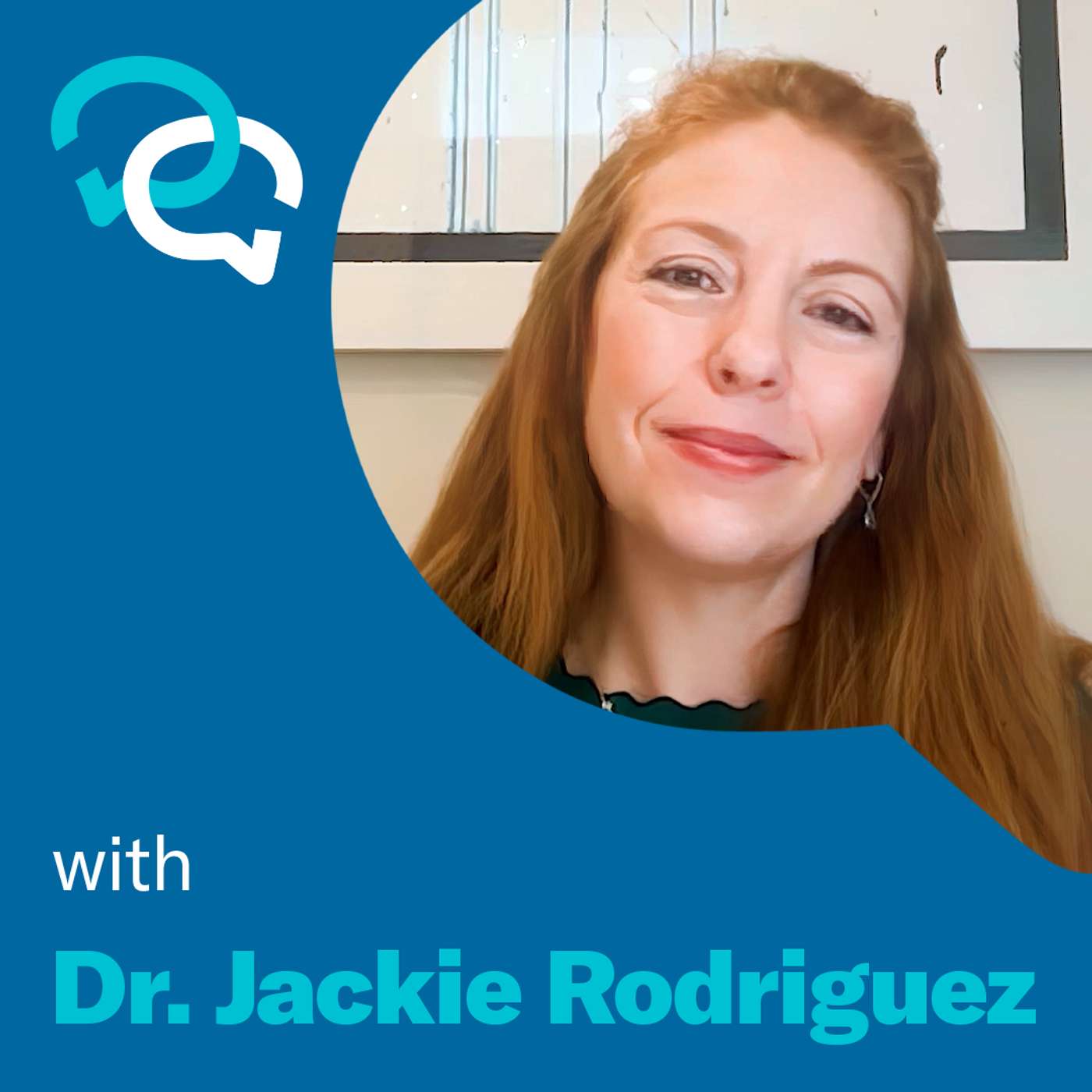
Loading summary
Transcript66 lines
- [00:01]
A
Today we welcome a visionary leader in inclusive education and disability advocacy, Dr. Jacqueline Rodriguez, CEO of the National center for Learning Disabilities, or NCLD. With a PhD in education, Dr. Rodriguez brings decades of on the ground experience as a former special education teacher, K12 instructor, and university faculty member at NCLD, Dr. Rodriguez leads a committed team at the forefront of the learning disabilities movement, championing equitable access, inclusive policy and high quality education for students with learning issues across the country. We're honored to have her join us to share her insights on building inclusive educational systems, overcoming barriers faced by neurodiverse learners, and imagining a future where every student can reach their full potential. Let's get into It. Hello to all of our listeners on the Thriving Kids podcast. I AM your host, Dr. Dave Anderson. This week we are welcoming Jacqueline Rodriguez, Jackie, the CEO of the national center for Learning Disabilities. Welcome.
- [01:02]
B
Thank you so much for having me. I'm really thrilled to be here.
- [01:06]
A
So our topic this week, we really want to talk about kind of the landscape of learning disabilities in this country. So if you're a listener, what I expect you will get out of this podcast episode is a sense of Jackie's 30,000 foot view as one of the foremost experts on learning disabilities in the country. In looking at what we're seeing from kind of federal policy on down to local school districts around learning disabilities. And then I want to promise everybody, we're also going to make sure in our conversation talk about what parents can do in their own personal sphere to support their kids. Because you may be saying this is really great and I may have the ability to call my congressperson, but at the same time, what do I do for my own kid who's struggling right now in second, fourth, sixth or 11th grade, you know that I really want to help. So Jackie, just to start off with how did you get into this work? How did you become CEO of the ncld?
- [01:55]
B
It was a circuitous pathway into the profession, one that I'm very grateful for. I am the type of person that sees a door swing open or perhaps slightly ajar and thinks I should go through that. Let's see what is on the other side. So I've typically said yes to all the opportunities that have been before me. And if I didn't know exactly what I was getting into, I found a way to resource myself, as the kids say these days, so that I better understood what people expected of me and I could meet those expectations. That's not to say that I am necessarily the foremost expert, as you mentioned, I think what I am great at right now is being an emissary for those thought leaders, those experts in the field. My PhD is in special education with a master's degree in learning disability. So I have the content knowledge. I was a special education teacher for years, so I have the practical knowledge. I'm also a parent of children, one of whom receives services. And so I have that institutional space in which I occupy. But I will be honest with your listeners in saying that I didn't originally intend to go into this field. I did not check the box, so to speak. I began thinking that I would use my dual major degree in international development and international affairs to become a diplomat. And we could argue, right, that what we do on a daily basis as educators, there are a little bit of
- [03:31]
A
crossover skills for someone who leads a major advocacy organization for something. I can see that, yeah, I think
- [03:35]
B
that's true for parents, especially parents of kids who receive either special education services or related services for mental health. We are really good diplomats. We're great at advocating because we have to be. So I started off originally in the field of education as a short term aspect, thinking that I would do that for a few years. And then I realized I could have a big impact on kids who don't have a voice at the table and primarily for families who are either marginalized or vulnerable second language learners. And so I continue down that pathway because I recognize that not everybody has the privilege. I do. And if I have that opportunity, I should use it for good.
- [04:25]
A
And do you ever watch the Netflix series the Diplomat? I think it's Keri Russell and think like, what? What did I miss? Now, granted, this is full of high drama for diplomats.
- [04:35]
B
Oh, listen, I love that show. I do think about that. I think about it all the time. But I was in DC Last week. I'll be in DC next week. I'll be in DC On Wednesday. I'm there fairly often on diplomatic, you know, envoys to meet with Hill staffers and legislators, as well as the White and the Department of Ed to communicate what good public policy looks like for kids with learning disabilities.
- [05:02]
A
So you're feeling a little bit like you're on that show. I mean, for me, no shade to any of the cast members, but Allison Janney as the president in that show, truly, I mean, it's harkening back to her days of C.J. craig and the Wesley. My favorite TV show ever. Right. It's just like for those of us who might have thought of political office and or the State Department as other careers, which I share with you, there's, there's a little bit we need to get from that of like, oh, this is what could have been. But still, it's great to be speaking in your case, speaking for those who might not have the ability to speak for themselves or to have the voice that you have. So speaking about what that platform is, what are the major pillars of the NCLD's work at the moment?
- [05:41]
B
So we updated our mission last year. I think it's really important for folks to know that in the past, and I think in the disability community we've often said we advocate for or on behalf of. Our mission at NCLD is now we advocate with. And so we are, of course, the foremost advocacy organization for people with learning disabilities and related disabilities and disorders. We often see lots of kids and adults with LD who have comorbid disabilities with mental health concerns like anxiety and adhd. But we also have some of the leading research in this space that is national. So we have two large nationally representative surveys that we do do looking at educators and their work with kids as well as young adults with learning disabilities and their experiences in K12 and then post K12, either in the workforce or college. We also do a ton of programming. We have constituencies from young adults. We have families and caregivers. We have professionals who are leading thought experts in the field and of course our board, who in all honesty, while it's a board of directors, everybody has a personal tie to LD on our board and we do fellowships for students in that vein.
- [07:01]
A
I mean, it sounds like you prioritize lived experience and expertise and making sure that you have engagement at every single level that you possibly can, down to the most immediate experiences that youth may have had in the system related to learning.
- [07:14]
B
We cannot be an accurate, scientifically grounded, evidence based organization if we're not hearing from the local level all the way up to the national level. So we do ensure that everybody's voice comes to the table and they're heard. And then we parse out what we think are the largest priorities or perhaps urgent and the priority given what is happening in the world.
- [07:45]
A
And just one note of nomenclature before we zoom in on the local, before we go back up to the kind of national across this field. I mean, the reason why I asked this question is the Child Mind Institute's mission statement includes the line kind of transforming the lives of children and adolescents with mental health and learning disorders. Your organization is named the national center for Learning Disabilities. When we talk about this nomenclature, should people be concerned about whether or not they call it a Learning disability, a learning disorder, a learning difficulty, a learning concern. Let's talk about nomenclature for one sec.
- [08:18]
B
I think this is the question of the last 10 years. In the disability community, evolution in language is commonplace. We no longer use pejorative hate language and slurs like we heard last week during the Thanksgiving message. The R word is considered hate language. Right? Just like five decades have evolved with legislative efforts and practical efforts, language around what people prefer has also evolved. I say that because if you are 80 and you were not identified with learning disability, but perhaps you were named slow learner because of your generation, you may not want to be identified or defined as learning disabled. If you're 18, it's more likely that you have grown up in an era where people own the fact that they have a learning disability. You were talked to about what a learning disability is, how it impacts your life and your learning and it's a part of your identity. And so from 18 through 80, there are a variety of terms that people will use for the exact same neurological response to learning and thinking and demonstrating mastery. And so we often hear people in the same paragraph say neurodivergent, learning disabled, a person with a learning disability, or my child has a learning difference. And I don't think any of those are necessarily correct, nor do I think we should say any of them are incorrect. This is about an individual's personal preference and how they define themselves.
- [10:04]
A
And at the end of the day, what we can agree exists below that umbrella is a significant issue with reading, writing, math, or nonverbal learning that needs support.
- [10:13]
B
That's exactly right. We at NCLD define learning disabilities per the legislative language and idea. So we have a name in our titling, we have a vernacular within our website and our social media, but it all aligns with the legally entitled services that students receive when being ident as having a learning disability. Which is why we say ld.
- [10:38]
A
You just highlighted a huge question that comes up with us for parents where we will give, what is more, the psychiatric diagnosis, where we'll say, oh, your child has been diagnosed with learning disorder. And the parent will say, well, wait a second, on their iep, they're designated as something different. We say, yes, that is the legal, legislative language that exists within school districts that you also need. None of this is exclusive. We're not telling you your kid has something different. We're just. You're right that we want to make sure that everybody understands that they qualify for those services as well.
- [11:07]
B
Each discipline has its own vernacular, and there should be bridges, but this is Our bridge, perhaps?
- [11:15]
A
Yes. Well, I think at the end of the day, it's that, like, you commonly see these kind of debates where people get. And I think this is something that we see in kind of the zeitgeist is that if people can't agree on a label for something, folks start to decide that it is perhaps something to minimize or something to say, like, because this is kind of chaotic, I'm just going to wait until people can agree on it and then I'll learn about it. And at the end of the day, this is more a function of, I think, the way that you framed it, of empowering people to be able to advocate for themselves and take on the description of their difficulties that still is honest about their difficulties and gets them the services they need, but also is what makes them feel comfortable being able to advocate and less about, like, whether or not, you know, you hear the same term over and over and aren't confused. It's not about you or I should say not about the general you. So going to, you know, the local. Before we zoom back out, what do you see as an organization when you, when you talk to constituents within school districts, when you talk to concerned parents who are looking at the landscape for their kids right now, who are suffering with regard to their learning, what kinds of things do you generally hear from parents?
- [12:24]
B
Well, I think that there is a very natural, even organic divide when a parent hears from their child that they're really struggling in school. And that divide is a chism between what the student is describing as their experience and what the parent wants to believe is happening in the classroom and what the teachers might be observing. And I think it creates a sense of anxiety around families who believe the teacher's doing everything they can, believe the student continues to struggle and believe the school is doing what they think they need to be doing to support both the teacher, the parent and the student. And yet something's awry and they can't put their thumb on it. And that creates a level of frustration. And it starts to peel away this generosity of spirit that most parents have framed toward a school. And instead it replaces that generosity of spirit with a sense of concern and maybe even a little bit of frustration. And I think for most families, they still want to see their public school as a public good, an institution in which their child is being raised to be not just a helpful and thoughtful citizen, but a citizen who recognizes, like, their place in the world. And when kids come home with the inability to make sense of letters or to sequence numbers or to Write down what they know, they see in their mind. That for parents, becomes a real. It's a fear. It's a sense of fear that I think parents have because they don't know what to do to help their child. It's unlike a child putting hand over a burner. You know exactly what to do. But for parents who aren't educators, that moment of vulnerability creates fear. And I think across the country, it's educators and school leaders and other community leaders and organizations like ours that help parents understand that there are 15% of kids in the country who receive special education services. Half of those, two thirds of those may for other reasons, one third have a learning disability. It's a huge two and a half million kids, right? So they're not alone. They're definitely not doing this in isolation. And we need to make sure that we are supporting parents as they get introduced to what it's like to have a learning disability and what schools and what teachers can be doing to support their kids.
- [15:12]
A
Well, and also, if I'm. If I'm kind of extrapolating, I mean, like, if your kid's school has 100 kids in it, you're going to expect how many kids to have a learning disability?
- [15:22]
B
Probably, if we're going with, probably between five and 10 kids will have a learning disability in that school, right?
- [15:29]
A
So, like, I think about, like, my son and daughter's public elementary school has about 400 kids in it. So I'm expecting that of those kids, we're gonna see anywhere between, you know, say, 25 and 40 kids that might have, you know, depending on kind of like luck of the draw and which kids are struggling with different things. You also just gave something in your last answer where, you know, what's really important to think about is like, okay, let's think about that kind of at the level of the school. So you gave a really good layperson's kind of way of understanding a learning disorder or learning disability in the sense that, like, if you see your kid having difficulty in elementary school, sounding out words, engaging in math, being able to produce written material, you just gave the kind of lay explanations of dyslexia, dyscalculia and disorder, written expression, which is great. So, like, we know those concerns are there. What do you think? So now we've got a parent who knows something is going on and is afraid now because something is amiss. They want to believe their public school is a force for good. Where do the tensions start to happen as a parent starts to think, okay, how do I Find my kid the support they need.
- [16:35]
B
Yeah, Initially, I think parents are of two minds. On the one hand, they want to believe their kids doing everything they can and that maybe there's something going on in the classroom that is not conducive to the child's learning. On the other hand, they recognize that even at home, the child might actually be struggling with very similar tasks that the parent is also noticing. And they fully recognize their own ability to be a great parent. And so there's this moment of reconciliation where they have to go, okay, if I'm seeing the same thing at home in different activities that transfer into the classroom, then I probably need to start asking the teacher, not only are they observing these same. I won't call them symptoms necessarily, but these same factors. What can we be doing to necessarily determine? Is that something that requires additional supports and services, or does it simply require an intervention, perhaps six to 12 weeks to get the child sort of built back up?
- [17:43]
A
Right. And to that point, I mean, this is where I love the intersection of evidence based science, these things that it's not common knowledge across the population that, for example, you can help dyslexia with an evidence based intervention that will take a portion of an academic year and get a child to grade level, or you can help, you know, an issue with math with an evidence based intervention that can get a child to grade level in the kind of automaticity and work that they're doing in class. You know, even though this might be a diagnosis or a particular challenge that requires some level of ongoing support or doesn't necessarily leave the child as they, you know, continue to get old. I just, I just did a podcast recently, it's about to be released with Orlando Bloom. Talking to Orlando Bloom about his dyslexia, and clearly to this day he has developed workarounds for his dyslexia. But that's, that's the kind of thing it's like, you know, if we're able to get in there these critical periods for learning reading and for learning math and for writing, where if we can get in at that stage and get kids support they need, it might not necessarily be the same level of intensive intervention in perpetuity.
- [18:49]
B
Listen, you just gave the argument. For every early interventionist in the country, we have boatloads, decades worth of data that doesn't just suggest, but clarifies for the public why early intervention, universal screeners for kids early ages 3 to 5 can be so helpful as they move into public school systems. Because those interventions that you just described can be Happening far sooner than they typically are in the public school classroom. And they can not extinguish a disability, but they can give the child the supports necessary to, as you pointed out, meet grade level expectations, continue to make progress, even if that progress is a little bit slower than what we consider like a typically developing kid. And we want that for every kid in the country. Every young person in the country should receive that early intervention support and a universal screener.
- [19:50]
A
And how do you respond to parents who say, well, I hear this policy, solution, universal screener, early intervention, but I don't want them to label my kid or put them in some other track that won't allow them to have the same access to learning that other people will. Or I don't want them to over intervene for my kid and have them be separated from their class all the time and have them singled out in front of their peers. How do you talk to parents about those kind of things?
- [20:17]
B
Well, I don't think that that is a wild accusation. I think parents have a right not only to be wary of something very
- [20:25]
A
validating about what you just said, but
- [20:27]
B
yes, I think honestly parents not only have a right, but in their own experience and the generation that they grew up, my own generation, that would have been very problematic. I recall being a part of the mainstreaming generation as we talked about earlier in the evolution of special education in particular, where we went from simply integrating kids into classrooms, then we went to mainstreaming them. They were in the classroom for larger preponderances of the day to now we call it inclusion where there is differentiated supports for every kid in the classroom. I think we are in an era where kids who do have an identification and we can call it a label or we can call it a diagnosis, but they have been identified from the school or from a professional as having a learning disability. That identification actually comes with quite a few things. It comes with this expectation that the school provides specific supports, specific accommodations that if necessary they modify the curriculum. And it comes with the legal protections that all of that happens in the classroom. So when parents become nervous about what will happen to their child, if I like to remind them that we do belong in a different generation where people like Orlando Bloom and people like the previous JetBlue CEO all had learning disabilities extraordinarily successful, and that those protections that are cemented in IDEA come with that identification so that the parent can consistently advocate and have the law on his or her their side,
- [22:15]
A
that's a terrific way of kind of yes and ing that parent concern. Now interestingly so we already have a couple things that you're looking for for. You're looking for universal screening, you're looking for early intervention being available and hoping that as much as parents are concerned, they see that identification as supportive of their child and protective as kids get older. So beyond elementary school for kids who have learning disabilities, what do you expect to be their needs in middle and high school?
- [22:42]
B
Listen, we continue. NCLD continues to advocate essentially early childhood through career pathways. So what we love to see in high schools in particular are great transition specialists and transition supports to help that child who's becoming an adolescent, who then becomes a young adult to sit at the table, at their own IEP meeting or 504 meeting and clearly define what they would like for their own future and to help with the support of parents and teachers, define that pathway. So whether they want to go to a four year institution, a two year institution, take AP classes, become an International baccalaureate student, go into the workforce doing a trade, they know that somebody's going to sit at the table with them and each year define and clearly guide them through that pathway. And I think for a lot of kids with learning disabilities, the more accurate view of transition currently is one that is a little less supportive than we would like and far less resourced. And that's not because teachers are not doing their job. It's because there is just so much work to be done. And more typically, students with more significant needs receive more significant transition plans. And so kids with LD are often left to be supported by either the guidance counselor, who does a great job and, or their parents. So I'd like to see more transition support in high school to give kids with LD in particular, who are mild to moderate disabilities, you know, according to the, the vernacular,
- [24:28]
A
and I hear in the background, I'm assuming the shark on your wall didn't just come alive.
- [24:32]
B
You may have a pet video recording, of course, during the holiday season and one of the bells just fell.
- [24:39]
A
I think I was figuring there was a dog in the background, maybe knocked a, you know, a toy around or something like that that normally sits quietly in the office, but that's it. Okay, so you're saying a decoration of the holidays was not properly secured such that it decided to ring in affirmation of your transition coaching for high school. Yes, that's exactly right. I see that because I often, you know, I'll have patients who will ask, like, why do I have to go to this meeting and talk about like the career that I want? And I'll say, I wish that it was part and parcel of our entire public education system that high schoolers got career counseling through the lens of neurodiversity for every kid. Where every kid would be able to say like, okay, your person is going to understand your strengths and weaknesses, how that might overlay onto your career choices. But all too often what we see is that kids who are not identified don't get any counseling. They're kind of shooting in the dark. And then, you know, you get kids who are identified who get this counseling and don't see it as like a real, like, honestly, like fantastic space to be able to think through. Like, okay, if I really want to be in this career. But I also know that I don't want this to be writing heavy. Or at least if it is writing heavy, I gotta be thinking about how I can use technology to make it so the writing is a little bit easier. You know, this is great, like consultation for anybody.
- [25:47]
B
Yeah.
- [25:48]
A
So before we get into things that you think people should be really advocating to fix, where do you think people are doing this? Well, are there places around the country that you look at now, see, there is a dog.
- [26:02]
B
We're seeing that there are school systems that are doing extraordinary job, and I think there are classrooms with teachers who are just tremendously gifted in their craft. Right. But I also think right now we're in a very anomalous place in the United States where parents are questioning whether the IEP or 504 plan their student has already received is going to be upheld. They're questioning whether the services that their student receives will continue. They're questioning whether special educators, the profession as we know it will continue to exist because of the deep shortages we see in the profession. So I think we're in a different kind of time and place than we were even just last year. And for parents who want to make sure that their kids and their adolescents, their young people, continue to receive what they're legally entitled to, what they really need to be doing is talking to school leaders and the teachers in their kids schools to be sure that nothing has shifted, that services continue to exist and that their students are still receiving those services.
- [27:14]
A
And what I'm guessing right now is that as you talk about the things that students are needing, again, a bell has rung. An affirmation. Your dog has also barked. An affirmation of these various things. I was guessing an Amazon delivery person was occurring, but, you know, there's that but no. So like kind of thinking about, you mentioned, you know, conversations on the hill, conversations with the current executive administration conversations you're having around the country. What are some of those conversations about right now? Because you mentioned that parents have those fears, it sounded like you were suggesting that those fears might be very real and that there are things that need to be in the national discussion right now. What kinds of things are you having conversations about?
- [28:00]
B
Sure. I don't think it's a mere suggestion. I'm hearing from parents that those fears are real. And I think right now the national conversation is about whether or not the Department of Education, as it is legislatively put together right in statute, continues to exist. We've seen the public dismantling of the department over the last, let's see now, two weeks. The secretary shipped off portions of the entire department to other federal agencies. And in that vein, we're seeing families of kids impacted starting to question whether or not their public schools will be able to comply with not only what's legally required, but also in good faith of the law. I think some of the larger concerns are whether, you know, special ed and general ed have consistently been paired together with intention. There's always been this expectation that a kid receiving special education serves services is not a special ed kid, but rather a general education student first. And in that vein, how does that continue to be if the general education curriculum is being housed at the Department of Labor when the Office of Special and Element, excuse me, Office of Elementary and Secondary Education was shipped off? How can we continue to see the type of collaboration that we expect from those two spaces if they're no longer in a space to create the collaboration and the consistent communication?
- [29:38]
A
And what would be at risk if that current vision of the separation of general and special ed, as well as the continued kind of like, you know, shaving down of the Department of Education would actually come to happen?
- [29:52]
B
Well, right.
- [29:52]
A
Like how would communities see that, you know, kind of. I don't know if this is definitely an economic term that applies here, but how would communities see that trickle down?
- [30:00]
B
So in most cases, kids receiving services in the inclusion classroom are receiving it with a general education teacher. So special education teachers are coming in, often co teaching in some cases. In other cases, they're doing small group instruction or even pull out supports, just like a related service provider, a school psychologist, a speech pathologist, et cetera. Well, in those cases, what we're wondering is how does the general educator continue to get the kind of intensive intervention support to make sure that all of the kids in the classroom are learning and being able to demonstrate mastery on their learning? So general education teachers very rarely get prepared to meet the needs of kids with disabilities through their early preparation. They get maybe three to six coursework hours, but they really get most of that support on the job. They get it in professional development. And what we're worried about is the student receiving services in the gen ed classroom will no longer have an educator in that classroom who has access to the variety of interventions and resources. Because these two now departments within the Department of Education have been parsed out to different agencies, agencies that don't typically talk to one another and they don't have a bridge to do that either.
- [31:26]
A
Right. So I mean, and I don't mean to be terribly fear mongering right as we reach the last couple minutes of the podcast, but the reality is the advocacy that you, you and others like you are doing right now on behalf of the very parents and kids you've talked about through much of this podcast episode is to ensure that the very framing you gave earlier that by being identified you gain some sort of legal protection a is at risk. And that beyond that the notion of inclusion push in versus pull out support services is also at risk if there's not cross talk between aspects of federal administration of education that make sure that evidence based models are in the classroom. Because you know, to illustrate this, I think this also relates to a huge point of advocacy for the Child Mind Institute as well, where when we look for example at reading interventions over the last 10 years, it has been a long road of taking a detour that happened in reading education over the last couple decades that was then implemented across many school districts which itself was a non evidence based way of teaching reading that suggested that kids do not need to sound out words, instead memorize words and guess them via pictures. That there's been a lot of work nationally to unwind that to then unify state and federal education systems to make it so that we're not dooming a certain portion of elementary schoolers to actually need more support because we're teaching reading in an unscientific way. So the movement in this country toward a more scientific phonics based teaching of reading across elementary school public education classrooms has truly made it so that fewer students will even need special education supports the more we implement those things in general ed settings. But that only happens if we've got all this kind of cross talk going on. So in thinking about just how much reading research has helped us to have centralized distribution to general ed classrooms of intervention models that can actually support kids with dyslexia, you know, it seems all that much more important that people listen to you about keeping this crosstalk happening.
- [33:32]
B
Absolutely. I think right now what I want Americans to understand is that the issue of educating our students in this country isn't a parental issue. It's not an issue of people who only have kids in the school system. It's an everybody issue. If we want an informed and educated society in the future, one that recognizes what it means to have a social good in public institutions, every kid should have access to high quality education. And so for the 65 year old grandparent, for the 45 year old single person without any kids, and for the 20 year old who just left high school and is becoming an electrician, when we think about what is happening at the Department of Education right now, this is your issue too. Everybody should want general and special educators and all related service providers to have an opportunity to collaborate so that every kid in the classroom, whether you're identified with a disability or you simply struggle or you breezed through school, every single one of those kids should have access to high quality interventions and evidence based practices. And I do think right now we're at a real quandary whether or not those practices can continue to persist if we don't have the support of the Department of Education.
- [35:00]
A
Yeah, and I think you bring it back home to where much of this advocacy lies, which is that if someone knows 20 kids, they know a kid who's struggling with learning 100% and you know, in that sense they'd want that kid to have the same level of opportunity and, you know, protection that any other kid would get.
- [35:17]
B
Exactly.
- [35:17]
A
And the hope is that given that we don't know who that kid is going to be, we might kind of work on this together. So just to kind of like bring us in for a landing here, is there any message of hope that you would give at this stage or what you're hopeful for over the Next? We'll say three to five years of the NCLD's work.
- [35:35]
B
The disability community specifically has had many decades, even before IDEA was passed in 1975, many, many decades of advocating on behalf of people who learn and think differently. We are not, quote, unused to this kind of process. I do not think it should be the burden of parents who have kids receiving services to advocate for those kids. I think everybody should see their part in this and everybody should be at the table clamoring for the kinds of supports that kids should be receiving. But I do think that we are unique in this space, as the disability community often is. We have become a debt at creating coalition. We've become adept at raising our voice with a sense of reason, thoughtfulness and purpose, with evidence and science, and without backing down. And I think good public policy always shines through. So while we're in a moment that I do think is unlike one we've seen for many, many years, I don't think this will persist because I do believe in the power of coalition.
- [36:56]
A
And if someone is immensely inspired, having listened to this point of the podcast thus far, what would you say might be, you know, how they would take action if they decided they wanted to get involved in this kind of advocacy?
- [37:08]
B
Well, of course you can join NCLD's Legislative Action Center. You can send letters to Congress that are not political. They just describe what it means to have a learning disability and why good public policy in this space is helpful and meaningful for everybody in the country. You could reach out.
- [37:26]
A
I'm confident that red, blue and purple politicians know kids who are struggling like this and want to know what these stories are and how to help them.
- [37:32]
B
And legislators of all parties and all creeds have kids who are struggling like this. So I think this is not a political issue. It may be politicized, but educating kids, period, that's what we want. So you can join a Legislative Action Center. You can reach out to me directly. I can put you in touch with folks across the country. We also would love, love to have young people, parents and caregivers, professionals in this space join our constituency groups. We typically have them with, with us a year or three years and bring them in for a summit each year for learning, engagement and networking. And we would also be very happy to connect folks, folks with other organizations in this space. If your child does not have an ld, but your child has an intellectual disability and you want to get more involved, I'd be happy to make the connection for you.
- [38:28]
A
And do you already have the location for your next summit picked out?
- [38:31]
B
We do. We'll be in D.C. we are always in D.C. because we got it. Okay, folks from all parties and all lines to the table to discuss good public policy. It'll be in June and we'll be bringing all of our constituents to the city. And then we might be hosting something in October as well.
- [38:49]
A
Very well timed, by the way.
- [38:50]
B
Right.
- [38:51]
A
You know, end of school year, then beginning of next school year. Like, I could see how people would be thinking most about this, you know, at those certain times. That makes sense. Well, look, Jackie, it's been wonderful to have you on the podcast. Thank you so much for being our guest this week.
- [39:04]
B
I so enjoyed it. I appreciate the time that you gave to us as an organization, but also to kids with learning disabilities, and I hope we can collaborate further.
- [39:14]
A
Me, too. And also, who were our canine collaborators today?
- [39:18]
B
We had Aspen and Khyber, the White German Shepherd. House wolves.
- [39:24]
A
Okay. See, that's the whole thing. It's like, I was gonna say, like, they sounded like dire wolves out of Game of Thrones. Like this elf.
- [39:30]
B
They look like the dire wolves, and their barks sound just the same. They're very clear about protecting their family.
- [39:38]
A
Yeah. They may be the first dog guests that we've had on the Thriving Kids podcast, so an equivalent. I thank you for, you know, breaking a ceiling for dogs to be guests on the podcast and to speak on behalf of education. But to Jackie, to Aspen, to Kyber, thank you for being on the Thriving Kids podcast.
- [39:52]
B
I'm so grateful to you all and for everything you're doing for all kids across the country, and I look forward to chatting again another time.