Podcast
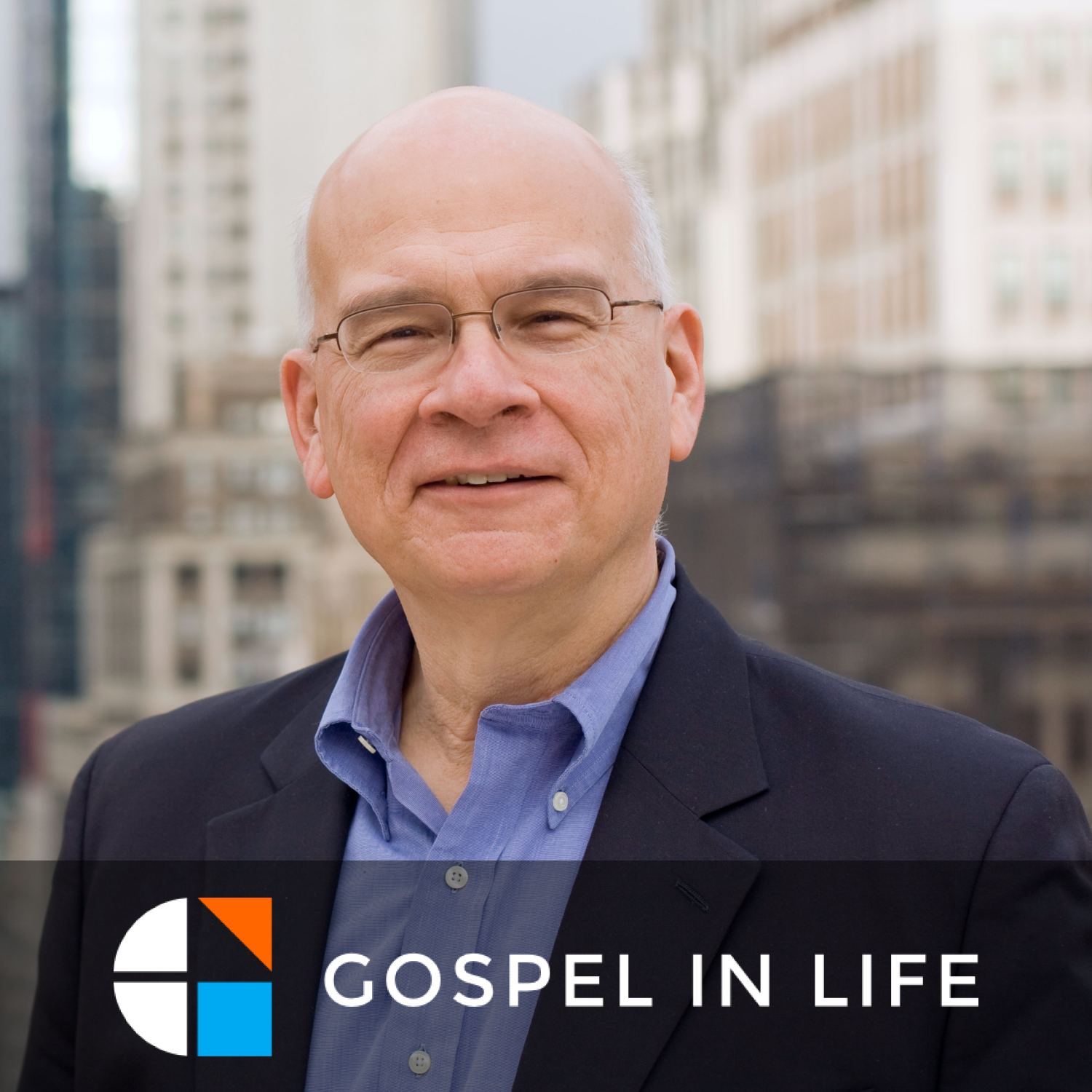
Timothy Keller Sermons Podcast by Gospel in Life
Hosted by Tim Keller · EN
Sermons by Tim Keller, founder of Redeemer Presbyterian Church in NYC and NY Times best-selling author of ”The Reason for God: Belief in an Age of Skepticism.” For more sermons and resources, visit www.gospelinlife.com.
262episodes
Episodes
Newest firstAll episodes
Ei Forum: Creation and Creativity
Jun 11, 202500:39:23Summary readyWhen we talk about creativity, we mean artists of course. But we also actually mean entrepreneurs—whose creativity is as important to what they do as anything else. So thinking about creativity, what does Christianity have to say to it? The answer is a lot. Your deeper beliefs about the meaning of life and the world actually does shape your work. The Bible says the world was created, has fallen, is being redeemed, and is going to be restored. How does that affect or shape our creativity? The Christian understanding of creativity is that creativity is something you do 1) because you want to, 2) out of love, 3) in full knowledge of the risk and the cost, and 4) knowing that there will be satisfaction. This talk and Q&A was given by Dr. Timothy Keller at Redeemer Presbyterian Church on April 16, 2010. Series: Center for Faith and Work. Today's podcast is brought to you by Gospel in Life, the site for all sermons, books, study guides and resources from Timothy Keller and Redeemer Presbyterian Church. If you've enjoyed listening to this podcast and would like to support the ongoing efforts of this ministry, you can do so by visiting https://gospelinlife.com/give and making a one-time or recurring donation.
SummaryRe-Imagine Law
Jun 9, 202501:36:01Summary readyHow can practicing the law be shaped by the Christian faith? And how can we reimagine lawyering? If you’re reimagining the legal profession, you don’t want to just be a Christian who happens to also be a lawyer. You want the way you practice the law to be shaped by your faith. For this reimagining, we need to understand three things from Christian theology: 1) that every human being is called to be a gardener, 2) that the law is a form of gardening, and 3) that you need to figure out your own idols. This talk and Q&A was given by Dr. Timothy Keller at Redeemer Presbyterian Church on November 2, 2007. Series: Center for Faith and Work. Today's podcast is brought to you by Gospel in Life, the site for all sermons, books, study guides and resources from Timothy Keller and Redeemer Presbyterian Church. If you've enjoyed listening to this podcast and would like to support the ongoing efforts of this ministry, you can do so by visiting https://gospelinlife.com/give and making a one-time or recurring donation.
SummarySelling – Tim Keller Talks to a Marketing and Advertising Group
Jun 6, 202500:58:27Summary readyA lot of people have an incredibly negative view of marketing and advertising. Not too long ago, I heard somebody say that advertising is the first profession: in the Garden of Eden, the serpent said, “you need that apple.” They were saying that marketing is creating need in somebody else for your profit, whether they really need it or not. On the other hand, you could make a case that marketing is the oldest profession because of when the Bible says, “in the beginning was the Word.” God invented communication. And in many ways, at its best, that’s all marketing is: communication. So let’s look at 1) what marketing is, 2) what’s wrong with marketing, and 3) how you can integrate the Christian faith with work in marketing, advertising, and promotion. This talk and Q&A was given by Dr. Timothy Keller at Redeemer Presbyterian Church on March 4, 2005. Series: Center for Faith and Work. Today's podcast is brought to you by Gospel in Life, the site for all sermons, books, study guides and resources from Timothy Keller and Redeemer Presbyterian Church. If you've enjoyed listening to this podcast and would like to support the ongoing efforts of this ministry, you can do so by visiting https://gospelinlife.com/give and making a one-time or recurring donation.
SummaryMoney: The Good, the Bad and the Ugly
Jun 4, 202500:37:01Summary readyThe Bible says probably 20 times more things about money than it does about sex, maybe more than that. So if you’re trying to know the Bible, you’re gonna know a little bit of something about money. We all have our own filters. We all have mental maps, assumptions about God and the universe and human nature and what’s important in life. It’s what we call a worldview. So what is the Christian worldview when it comes to wealth creation? The real question is whether wealth creation is good or bad or halfway in the middle? And we’ll see that the Bible is more nuanced on that answer. In the Christian worldview, wealth creation 1) is not bad, 2) is not good, and 3) is not something in the middle. This talk was given by Dr. Timothy Keller at Redeemer Presbyterian Church on February 27, 2004. Series: Center for Faith and Work. Today's podcast is brought to you by Gospel in Life, the site for all sermons, books, study guides and resources from Timothy Keller and Redeemer Presbyterian Church. If you've enjoyed listening to this podcast and would like to support the ongoing efforts of this ministry, you can do so by visiting https://gospelinlife.com/give and making a one-time or recurring donation.
SummaryFaith and Work
Jun 2, 202500:40:54Summary readyIsaiah 60 describes the new heavens and the new earth. It’s looking to the end of time when God makes everything right—paradise restored. And in this passage, all the nations of the world are bringing their work products. What is gold and silver? What is the flux and the grain? They’re bringing the products of their work to God as offerings to God. And this means that just as there was work in the original paradise, there’ll be work in the future paradise. What does that mean for our work? Let’s notice three things: 1) the goodness and dignity of work, 2) what’s wrong with work, and 3) how work can be healed. This sermon was preached by Dr. Timothy Keller at Redeemer Presbyterian Church on April 10, 2016. Series: Where We Are Going: The City and the Mission. Scripture: Isaiah 60:1-11, 18-21. Today's podcast is brought to you by Gospel in Life, the site for all sermons, books, study guides and resources from Timothy Keller and Redeemer Presbyterian Church. If you've enjoyed listening to this podcast and would like to support the ongoing efforts of this ministry, you can do so by visiting https://gospelinlife.com/give and making a one-time or recurring donation.
SummaryOur Power: Spirit-Filled Living
May 30, 202500:41:05Summary readyLiving the Christian life is not a matter of willpower and self-effort. Because of the Holy Spirit in our lives, we have the potential for radical and organic growth and change. 2 Peter talks about moving from selfishness to unselfishness, from enslavement to freedom, from foolishness to wisdom. It’s talking about inward character change, about spiritual growth. According to this passage, spiritual growth is 1) possible, 2) gradual, 3) essential, 4) practical, and 5) ultimately wonderful. This sermon was preached by Dr. Timothy Keller at Redeemer Presbyterian Church on June 8, 2014. Series: Following Jesus. Scripture: 2 Peter 1:3-11. Today's podcast is brought to you by Gospel in Life, the site for all sermons, books, study guides and resources from Timothy Keller and Redeemer Presbyterian Church. If you've enjoyed listening to this podcast and would like to support the ongoing efforts of this ministry, you can do so by visiting https://gospelinlife.com/give and making a one-time or recurring donation.
SummaryDavid’s Friend
May 28, 202500:33:49Summary readyThe friendship between Jonathan and David is rightly famous. Because we have so much information about the life of David, the narrative arcs are long. So to follow David’s friendship with Jonathan, you have to see it over multiple passages. We’re going to look at four passages in 1 Samuel to see what the Bible tells us about the importance of friendship. From the friendship of David and Jonathan we can learn 1) the absolute importance of friendship, 2) the necessary elements of friendship, and 3) the requisite power for friendship. This sermon was preached by Dr. Timothy Keller at Redeemer Presbyterian Church on May 17, 2015. Series: David: The Man of Prayer. Scripture: 1 Samuel 18:1-4. Today's podcast is brought to you by Gospel in Life, the site for all sermons, books, study guides and resources from Timothy Keller and Redeemer Presbyterian Church. If you've enjoyed listening to this podcast and would like to support the ongoing efforts of this ministry, you can do so by visiting https://gospelinlife.com/give and making a one-time or recurring donation.
SummaryA New Sabbath
May 26, 202500:45:58Summary readyWho is Jesus? In Mark 2 and 3, Jesus makes a claim about himself that’s so immense it almost defies categories. In this text, two incidents are detailed and they both have to do with how we observe the Sabbath day. To understand the magnitude of Jesus’ claim here, we have to unpack the meaning of the entire text and then ask what he’s actually claiming. Let’s look at the features of the story and learn from each of these: 1) the anger of Jesus, 2) the enemies of Jesus, and 3) the claim of Jesus and what that means for you. This sermon was preached by Dr. Timothy Keller at Redeemer Presbyterian Church on February 8, 2015. Series: Light in the Darkness: Glory of Jesus in Mark. Scripture: Mark 2:23-3:6. Today's podcast is brought to you by Gospel in Life, the site for all sermons, books, study guides and resources from Timothy Keller and Redeemer Presbyterian Church. If you've enjoyed listening to this podcast and would like to support the ongoing efforts of this ministry, you can do so by visiting https://gospelinlife.com/give and making a one-time or recurring donation.
SummaryA Movement
May 23, 202500:40:33Summary readyIn this unparalleled text in the Bible, we learn not so much what the church does, but what the church is. We’ve been looking at the animating gospel principles that have profoundly shaped our church’s life in the city and service to the city. And that often means we’ve looked at something the church does. But now, let’s look at what the church is. In 1 Peter 1, we can get insight into the church’s 1) glory, 2) gifts, and 3) grace. This sermon was preached by Dr. Timothy Keller at Redeemer Presbyterian Church on April 24, 2016. Series: Where We Are Going: The City and the Mission. Scripture: 1 Peter 2:4-12. Today's podcast is brought to you by Gospel in Life, the site for all sermons, books, study guides and resources from Timothy Keller and Redeemer Presbyterian Church. If you've enjoyed listening to this podcast and would like to support the ongoing efforts of this ministry, you can do so by visiting https://gospelinlife.com/give and making a one-time or recurring donation.
SummaryYou Are My Friends
May 21, 202500:38:09Summary readyIn The Bride of Frankenstein movie, the monster stumbles into a blind man’s cottage, and they become friends. The only humanity he ever develops is in that cottage, where a person grabs him by the hand and calls him friend. And what it’s saying is that there’s nothing more humanizing than friendship and there’s no pain more horrible than loneliness. In fact, all kinds of studies show that people who have fewer friends die more readily of disease and heart attacks. So as we look at John 15, there are two questions I’d like to ask: 1) why do we need friendship, and 2) how do we meet that need? This sermon was preached by Dr. Timothy Keller at Redeemer Presbyterian Church on January 19, 1992. Series: Gospel of John, Part 2. Scripture: John 15:9-17. Today's podcast is brought to you by Gospel in Life, the site for all sermons, books, study guides and resources from Timothy Keller and Redeemer Presbyterian Church. If you've enjoyed listening to this podcast and would like to support the ongoing efforts of this ministry, you can do so by visiting https://gospelinlife.com/give and making a one-time or recurring donation.
Summary