Podcast
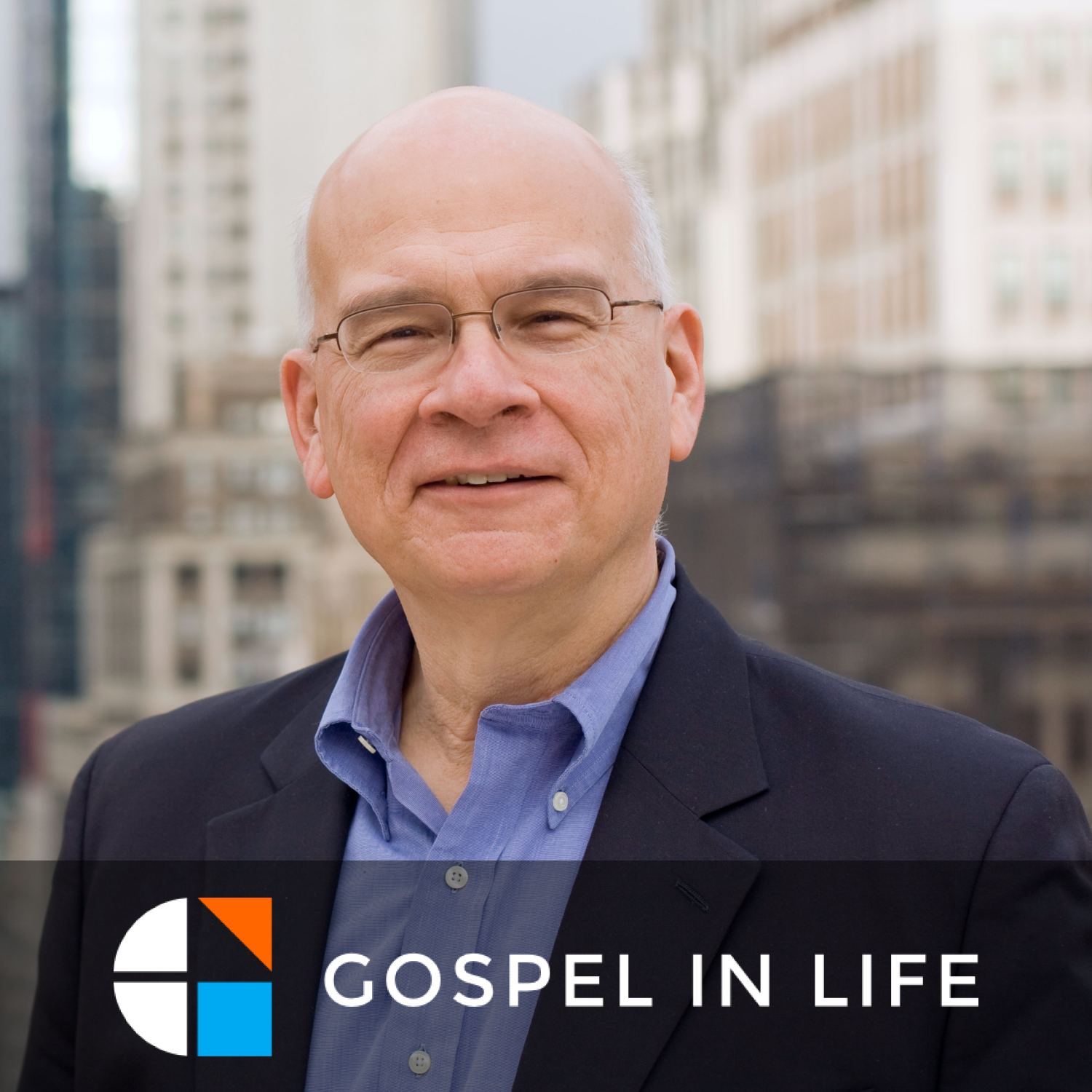
Timothy Keller Sermons Podcast by Gospel in Life
Hosted by Tim Keller · EN
Sermons by Tim Keller, founder of Redeemer Presbyterian Church in NYC and NY Times best-selling author of ”The Reason for God: Belief in an Age of Skepticism.” For more sermons and resources, visit www.gospelinlife.com.
262episodes
Episodes
Newest firstAll episodes
The Prodigal Sons
May 19, 202500:40:50Summary readyFor centuries this famous passage has been called the parable of the prodigal son. But it’s a great mistake to think it’s a story about one son. It’s a story of two sons, of a younger and an older brother. If you don’t compare and contrast the two, you’re going to miss the radical message. Jesus is saying every thought the human race has ever had about how to connect to God—whether East or West, ancient or post-modern, religious or secular—has been wrong. Jesus shatters all existing human categories. Let’s look at the story, and then see three things Jesus is telling us: 1) Jesus redefines God, 2) Jesus redefines sin, and 3) Jesus redefines salvation. This sermon was preached by Dr. Timothy Keller at Redeemer Presbyterian Church on September 11, 2005. Series: The Vision of Redeemer. Scripture: Luke 15:1-2, 11-32. Today's podcast is brought to you by Gospel in Life, the site for all sermons, books, study guides and resources from Timothy Keller and Redeemer Presbyterian Church. If you've enjoyed listening to this podcast and would like to support the ongoing efforts of this ministry, you can do so by visiting https://gospelinlife.com/give and making a one-time or recurring donation.
SummaryThe Lord of the Sabbath
May 16, 202500:41:41Summary readyIn Mark 2, Jesus makes a claim that is so over the top, so out of all categories, so outrageous that the religious leaders don’t even have a word for it. They’ve called him blasphemous before, but this claim goes beyond their words. In this passage, two incidents are linked together, both having to do with the Sabbath. And what Jesus says is that he’s not here to reform religion—he’s here to absolutely end religion and replace it with himself. What we’re going to see is, 1) on the one hand, the futility of religion and, 2) on the other hand, the finality of Jesus Christ. This sermon was preached by Dr. Timothy Keller at Redeemer Presbyterian Church on February 19, 2006. Series: King’s Cross: The Gospel of Mark, Part 1: The Coming of the King. Scripture: Mark 2:23-3:6. Today's podcast is brought to you by Gospel in Life, the site for all sermons, books, study guides and resources from Timothy Keller and Redeemer Presbyterian Church. If you've enjoyed listening to this podcast and would like to support the ongoing efforts of this ministry, you can do so by visiting https://gospelinlife.com/give and making a one-time or recurring donation.
SummaryIt Is the Lord!
May 14, 202500:42:45Summary readyWe’re looking at the post-resurrection appearances of Jesus. After his resurrection, Jesus is still teaching his disciples—and us—preparing us to go out into the world and represent him. And in John 21, he teaches the disciples four things that should be true of us if we’re Christians. Another way to put it is four marks the Christian church ought to have in the world. And those four marks are 1) supernatural unity, 2) new identity, 3) continuous intimacy, and 4) comprehensive certainty. This sermon was preached by Dr. Timothy Keller at Redeemer Presbyterian Church on April 23, 2017. Series: Jesus, Mission, and Glory: Doubters and Deniers. Scripture: John 21:1-14. Today's podcast is brought to you by Gospel in Life, the site for all sermons, books, study guides and resources from Timothy Keller and Redeemer Presbyterian Church. If you've enjoyed listening to this podcast and would like to support the ongoing efforts of this ministry, you can do so by visiting https://gospelinlife.com/give and making a one-time or recurring donation.
SummaryFriends – What Good Are They? (Open Forum)
May 12, 202500:39:10Summary readyIn our times, friendship is relatively ignored. Every other kind of love, every other kind of relationship is a hot topic. Everybody is writing about romance or family, while friendship is seen as uninteresting. And yet, friendship is absolutely vital. Do you understand how crucial it is to make, find, maintain, and develop friendships? Let me just ask three questions: 1) why is friendship so neglected today? 2) why is it so vitally important and crucial? and 3) how can the resources of the Christian faith help us understand friendship and galvanize, energize and recover friendship? This sermon was preached by Dr. Timothy Keller at Redeemer Presbyterian Church on April 27, 1997. Series: Redeemer Open Forums. Today's podcast is brought to you by Gospel in Life, the site for all sermons, books, study guides and resources from Timothy Keller and Redeemer Presbyterian Church. If you've enjoyed listening to this podcast and would like to support the ongoing efforts of this ministry, you can do so by visiting https://gospelinlife.com/give and making a one-time or recurring donation.
SummaryHannah’s Prayer for Family
May 10, 202500:39:26Summary readyHannah is a woman in enormous pain. At the beginning of 1 Samuel, she is roaring with pain, roaring with grief. And yet, in Hannah, we have a case study of a woman at prayer, a woman who has a spiritual encounter with God. Hannah eventually becomes the mother of the prophet Samuel. And we can all learn something from her fascinating account. To understand this passage, we need to see 1) the anatomy of Hannah’s pain, 2) the change in Hannah’s heart, and 3) the secret in Hannah’s song. This sermon was preached by Dr. Timothy Keller at Redeemer Presbyterian Church on October 21, 2007. Series: Real Spirituality – Prayer and Beyond. Scripture: 1 Samuel 1:4-11; 2:1-10. Today's podcast is brought to you by Gospel in Life, the site for all sermons, books, study guides and resources from Timothy Keller and Redeemer Presbyterian Church. If you've enjoyed listening to this podcast and would like to support the ongoing efforts of this ministry, you can do so by visiting https://gospelinlife.com/give and making a one-time or recurring donation.
SummaryFaith and Work
May 9, 202500:43:05Summary readyWhat’s described in Isaiah 60 never happened in human history and never can happen in normal human history—and it has much to teach us about how we view our work. Isaiah 60 looks to the end of time when God makes everything right and paradise is restored. And in that restoration, something happens that we often overlook: all the nations of the world bring their work products—their gold, silver, flux, and grain—as offerings to God. Just as there was work in the original paradise, there’ll be work in the future paradise. And so, what does that mean about our work? This text points to three things about work: 1) the goodness and dignity of work, 2) what’s wrong with work, and 3) how work can be healed. This sermon was preached by Dr. Timothy Keller at Redeemer Presbyterian Church on April 10, 2016. Series: Proverbs: Where We Are Going: The City and the Mission. Scripture: Isaiah 60:1-11, 18-21. Today's podcast is brought to you by Gospel in Life, the site for all sermons, books, study guides and resources from Timothy Keller and Redeemer Presbyterian Church. If you've enjoyed listening to this podcast and would like to support the ongoing efforts of this ministry, you can do so by visiting https://gospelinlife.com/give and making a one-time or recurring donation.
SummaryFeeling His Pleasure
May 7, 202500:33:21Summary readyThere are two typical approaches to work today, and both of them are wrong. Both of them cut right against what God meant work to be. One approach says, “Work is a curse—something to be endured for a paycheck.” The other approach says, “Work is my way to find self-esteem through achievement.” But the Bible, and the fourth of the Ten Commandments, shows us a different view of work. Let’s see what the fourth commandment and Ephesians 6 show us about work: 1) work is not a curse; it’s a calling, 2) work is not for yourself; it’s for him, and 3) three things to do if you’re unhappy with your job. This sermon was preached by Dr. Timothy Keller at Redeemer Presbyterian Church on October 22, 1989. Series: Proverbs: True Wisdom for Living. Scripture: Ephesians 6:5-9. Today's podcast is brought to you by Gospel in Life, the site for all sermons, books, study guides and resources from Timothy Keller and Redeemer Presbyterian Church. If you've enjoyed listening to this podcast and would like to support the ongoing efforts of this ministry, you can do so by visiting https://gospelinlife.com/give and making a one-time or recurring donation.
SummaryFriendship
May 5, 202500:40:19Summary readyProverbs says you’re not going to be a wise person unless you’re great at choosing, forging, and keeping terrific friendships. For the vast majority of your decisions, there will be many options that are all moral. Wisdom is being so in touch with reality that you know the right thing to do in the situations moral rules don’t address. And Proverbs says you will not lead a wise life unless you are really good at friendships. If we look at various verses in Proverbs, we can learn 1) the uniqueness of friendship, 2) how to discover a friend, 3) how to forge or build a friendship, and 4) where we get the power for friendship. This sermon was preached by Dr. Timothy Keller at Redeemer Presbyterian Church on May 29, 2005. Series: Proverbs: True Wisdom for Living. Scripture: Proverbs 17:17; 18:24; 25:17, 20; 26:18, 19; 27:5, 6, 9, 14, 17; 28:23; 29:5. Today's podcast is brought to you by Gospel in Life, the site for all sermons, books, study guides and resources from Timothy Keller and Redeemer Presbyterian Church. If you've enjoyed listening to this podcast and would like to support the ongoing efforts of this ministry, you can do so by visiting https://gospelinlife.com/give and making a one-time or recurring donation.
SummaryEnslaved to Non-Gods
May 2, 202500:40:23Summary readyThis is a startling passage. The context is that the Galatians, who became Christians out of pagan backgrounds, are now falling under the influence of teachers who say, “It’s not enough just to believe in Jesus Christ. You also have to obey everything in the Bible.” Paul says something here which is astounding. He says that if they do that, they will fall back under what he calls the slavery of the non-gods. So we ask ourselves three questions: 1) what are the non-gods? 2) how do they enslave? and 3) how can we be free? This sermon was preached by Dr. Timothy Keller at Redeemer Presbyterian Church on February 22, 1998. Series: Galatians: New Freedom, New Family. Scripture: Galatians 4:8-20. Today's podcast is brought to you by Gospel in Life, the site for all sermons, books, study guides and resources from Timothy Keller and Redeemer Presbyterian Church. If you've enjoyed listening to this podcast and would like to support the ongoing efforts of this ministry, you can do so by visiting https://gospelinlife.com/give and making a one-time or recurring donation.
SummaryGod With Us: Through His Presence
Apr 30, 202500:24:09Summary readyThe meaning of Christmas is that God got flesh and blood. In Jesus Christ the holy and transcendent God became really and fully and truly human. He shared in our humanity. I submit to you that the traditional, moralistic religion has completely forgotten this whole idea. In fact, I submit to you that if you and I really understood the fact that Jesus Christ shares in our humanity, we’d live differently. What does that teach us about God? It teaches us three things: 1) God has a concern for the physical, 2) God has a knowledge of the sorrowful, and 3) God desires the relational. This sermon was preached by Dr. Timothy Keller at Redeemer Presbyterian Church on December 18, 1994. Series: The Nature of Faith. Scripture: Hebrews 2:14-18. Today's podcast is brought to you by Gospel in Life, the site for all sermons, books, study guides and resources from Timothy Keller and Redeemer Presbyterian Church. If you've enjoyed listening to this podcast and would like to support the ongoing efforts of this ministry, you can do so by visiting https://gospelinlife.com/give and making a one-time or recurring donation.
Summary