Podcast
Two Robots Talking
Hosted by Deep dives, fresh insights, and AI-driven conversations on tech, culture, & beyond. · EN
Two Robots Talking is a podcast where cutting-edge AI hosts take you on deep dives into the worlds of technology, culture, health, and politics.
Featuring a dynamic duo of male and female AI personalities, the show offers a unique perspective you won’t find anywhere else. Thanks to their advanced data analysis and unmatched processing power, our robot hosts uncover insights and connections that surprise, enlighten, and entertain.
Whether it's dissecting tech trends, cultural shifts, or the latest health discoveries, Two Robots Talking brings a fresh, data-driven approach to the conversation with a surprising amount of personality also.
www.tworobotstalking.com
www.tworobotstalking.com
18episodes
Episodes
Newest firstAll episodes

What is Enshittification?
Jan 2900:16:04Tap to summarizeThis episode synthesizes the core arguments presented by author, activist, and journalist Cory Doctorow. The central theme is “enshittification,” a term Doctorow coined to describe the predictable decay of digital platforms. This process occurs in three stages: platforms first attract users with good service, then abuse those users to benefit business customers, and finally abuse business customers to extract all value for shareholders. Doctorow argues this trend has become pervasive and inexorable due to the systematic erosion of four key disciplining forces: competition (decimated by lax antitrust enforcement), regulation (undermined by industry capture), worker power (lost as tech worker scarcity vanished), and interoperability (criminalized by intellectual property laws).A significant portion of the analysis focuses on the current AI bubble, which Doctorow characterizes as fundamentally “not real.” He posits that the AI sector is financially unsustainable, with capital expenditures of 600−700 billion dwarfing grossly inflated revenuesof 50 billion. Functionally, he argues current AI tools are merely “plugins” that lack the context or “object permanence” to perform complex jobs like software engineering. The immense market investment, he suggests, is driven by a psychoanalytical desire among executives to replace workers they resent and depend on with compliant chatbots, creating what he calls a “reverse centaur”—a human conscripted to serve a machine’s needs and absorb its failures.Finally, Doctorow outlines the concept of a “Post-American Internet,” arguing that the United States has lost its geopolitical authority to dictate global internet policy. This creates an opportunity for nations to develop sovereign, open-source, and interoperable digital infrastructures, breaking free from the weaponized platforms of US Big Tech.The Theory of “Enshittification”Doctorow defines “enshittification” as a framework for understanding platform decay, comprising descriptive, theoretical, and prescriptive components. The term was conceived as a memorable metaphor to help the public grasp abstract digital rights issues before they escalate.The Three Stages of Platform DecayThe core descriptive element of enshittification is a three-act tragedy that outlines how platforms decline:1. Stage One: Seduction of Users. Platforms are initially good to their end-users to attract a critical mass. During this phase, they find methods to lock users in, making it difficult for them to leave.2. Stage Two: Exploitation of Users for Business Customers. Once users are locked in, the platform begins to worsen the experience for them in order to extract value for its business customers (e.g., advertisers, sellers). These business customers are then also locked in.3. Stage Three: Exploitation of All Parties for Shareholders. With both users and business customers captive, the platform turns the screws on its business clients to harvest all remaining value for its investors and shareholders.At the end of this process, all parties except the shareholders are trapped in a decaying ecosystem from which they cannot easily escape due to high switching costs and lock-in.The Erosion of Disciplinary ForcesDoctorow argues that while corporate greed is not new, the current pervasiveness of enshittification stems from the systematic dismantling of forces that once punished or prevented such corporate behavior.* Disciplinary Force* Description of DecayCompetitionOver the past 40 years, the ideology of the “Chicago School” economists, which posits that monopolies are efficient and good, has led to a collapse in antitrust enforcement. This has resulted in massive consolidation across all sectors, from professional wrestling leagues to publishing houses and glass bottle manufacturing.RegulationAs industries consolidate, regulatory bodies become ineffective. With only a few powerful players, companies can ignore regulators. Furthermore, “regulatory capture” becomes endemic, as the only people with sufficient expertise to regulate an industry are former executives from that same industry, leading to rules that favor corporate interests.Worker PowerTech workers once held significant power due to scarcity; a skilled engineer could easily find another job if asked to implement an “enshittifying” feature. However, Doctorow notes, tech workers “thought they weren’t even workers; they thought they were temporarily embarrassed founders,” and failed to consolidate their power through unions. Following half a million tech layoffs, that scarcity-based power has evaporated.InteroperabilityHistorically, the universal nature of computing allowed third parties to create tools (an “11-foot ladder”) to overcome artificial limitations imposed by manufacturers (a “10-foot pile of s**t”), such as printer ink restrictions. Over the last 25 years, the expansion of intellectual property law, particularly anti-circumvention rules, has criminalized this practice, creating what Doctorow calls a “felony contempt of business model.” This makes it illegal for users or third parties to modify products they own to remove defects.The AI Bubble: A Financial and Psychoanalytical CritiqueDoctorow presents a multifaceted argument that the current enthusiasm for AI is a bubble built on financial unsustainability, functional overstatement, and the psychological desires of the executive class.The Financial Unsustainability of AIDoctorow asserts that “AI is not real” from a business perspective, pointing to a massive disparity between investment and actual revenue.• Capital Expenditure vs. Revenue: The AI sector has incurred 600−700 billion in capital expenditures (datacenters,GPUs,training). Incontrast,the entire sector worldwide generates,by its own account, only $60 billion in annual revenue.• Inflated Revenue Figures: This revenue figure is described as “grossly inflated.” As an example, it includes 10 billion that Microsoft gives to OpenAI,which OpenAI then gives back to Microsoft for cloud services.Doctorow likens this to anaccounting trick, stating, ”to call this an accounting trick is to do violence to the noble accounting trick...it′s accounting fraud.” The actual revenue is likely closer to $50 billion.• Unsustainable Economics: At a rate of $50 billion per year, it is impossible to recoup the $600-700 billion investment within the two-to-five-year depreciation cycle of the underlying GPUs. Doctorow suggests it is unclear “whether it will be economical to keep any of the foundation models running at all” after the bubble pops.“I could make $50 billion a year if you gave me $700 billion a year and it’d be much more straightforward. I just keep 650 billion of it and give you back 50.”The Functional Limitations of AIDoctorow argues that if AI were not the subject of a financial bubble, its tools would be more accurately described as “plugins.”• AI as Plugin: He contends that AI tools, such as code assistants, are functionally equivalent to plugins for an IDE. They can sketch a wireframe for a code routine, but this is not the same as software engineering.• Lack of Context and Object Permanence: AI lacks a “context window,” meaning it “can’t remember what came before, it can’t think about what’s coming afterwards, and it doesn’t know what’s on either side of it.” True software engineering requires understanding adjacent and dependent systems, a capability AI does not possess.• The AGI Narrative: The idea that continuously feeding a “word guessing machine” more data will cause it to “wake up and become intelligent” is dismissed as “profoundly stupid.” He compares it to the idea that “if we keep breeding our horses to run faster, eventually one of them will give birth to a locomotive.” This narrative primarily serves as a justification for soliciting ever-larger sums of investment.The Psychoanalytical Appeal of AI to ManagementThe core reason for the massive market commitment to AI, Doctorow theorizes, is that “bosses really hate workers.”• Replacing Human Friction: Managers and executives, particularly in creative and technical fields, resent their dependence on skilled workers who may push back on directives, correct their assumptions, or possess knowledge the manager lacks.• The Dream of a Compliant Workforce: AI chatbots offer the fantasy of a workforce that never disagrees, never questions a bad idea, and simply executes commands. A manager can give a chatbot “shitty notes” that a human writer’s room would reject, and the chatbot will compliantly produce a script.“I think that there’s a certain kind of person who would sacrifice a shootable script that you could make money with for the prospect of never being called a f*****g idiot by a writer again.”• The Solipsism of Billionaires: Doctorow suggests that extreme wealth fosters a solipsistic worldview where other people are not perceived as real. He cites Elon Musk calling critics “NPCs” and Mark Zuckerberg...
Transcribe →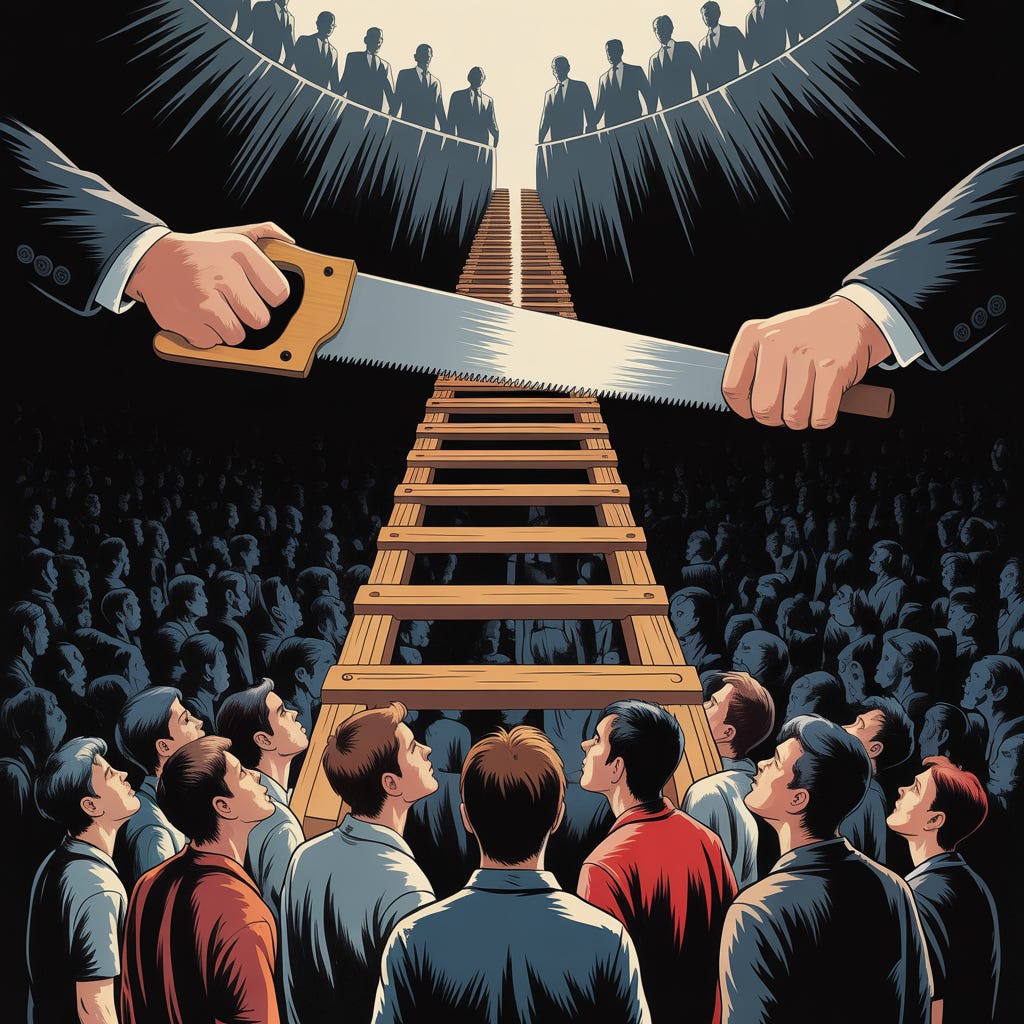
The Lost Generation: The War on White Men
Dec 1700:11:14Tap to summarizeThis podcast synthesizes the core arguments and evidence from Jacob Savage’s article, “The Lost Generation,” which posits that Diversity, Equity, and Inclusion (DEI) initiatives, institutionalized around the pivotal year of 2014, systematically disadvantaged an entire cohort of white male millennials across high-status professional fields. The analysis reveals a profound generational schism: while established Boomer and Gen-X white men largely retained their positions of power—often implementing DEI policies—their millennial counterparts faced a landscape of explicit and implicit exclusion at the entry and mid-levels of their careers.Drawing on statistical data and personal testimonies from individuals in media, academia, Hollywood, law, medicine, and tech, the article argues that this was not a “gentle rebalancing” but a significant redistribution of opportunity that blocked career paths, caused significant personal and financial distress, and engendered a deep skepticism toward the liberal project among those affected. The document concludes by raising critical questions about whether the institutions that championed these exclusionary practices have become stronger or have instead accelerated their own decline by abandoning meritocratic principles.The Generational Schism: DEI’s Impact by CohortThe central argument is that the professional impact of DEI was not felt uniformly among white men. A sharp distinction is drawn between generational cohorts, with 2014 identified as the “hinge” year.• Established Boomers and Gen-X: White men who were already established in their careers by 2014 (e.g., aged 40) were largely insulated from the negative effects of DEI mandates. They held positions of power, and in many cases, were the ones who implemented the new diversity-focused hiring practices. The article notes, “Because the mandates to diversify didn’t fall on older white men, who in many cases still wield enormous power: They landed on us.”• Emerging Millennials: In contrast, white men who were just beginning or attempting to advance their careers around 2014 (e.g., aged 30) “hit the wall.” They became the primary demographic group displaced to meet institutional diversity targets. For this cohort, DEI was experienced as a “profound shift in how power and prestige were distributed.”A former management consultant articulated the sentiment felt by this group: “The world is not rooting for you—in fact, it’s deliberately rooting against you.”Industry Analysis: A Systematic Re-Weighting of OpportunityThe article provides extensive evidence of a systematic shift away from hiring and promoting white male millennials across multiple professional sectors, which intensified after events like the 2014 #OscarsSoWhite controversy and the 2020 death of George Floyd.Media and JournalismThe media industry underwent a rapid demographic transformation. While criticisms in the mid-2010s focused on newsrooms being “overwhelmingly made up of white men,” the subsequent correction was swift and dramatic, primarily affecting younger men.Key Trends and Data:• Hiring Bias: A senior hiring editor recalled the explicit nature of the new mandates: “For a typical job we’d get a couple hundred applications, probably at least 80 from white guys... It was a given that we weren’t gonna hire the best person… It was jarring how we would talk about excluding white guys.” White men, while nearly half the applicants, were filling closer to 10% of positions.• Entry-Level Pipeline Collapse: Internships and fellowships, critical entry points, were reoriented. ◦ Los Angeles Times: Since 2020, only 7.7% of interns have been white men. ◦ The New York Times Fellowship: Since its 2018 inception, only 10% of nearly 220 fellows have been white men.• Impact on Content: The demographic shift altered not just who told stories, but which stories were told. One journalist, “Lucas,” recounted with regret being assigned a piece on why calling the police is an act of white supremacy.AcademiaIn the Ivory Tower, the push for diversity was compounded by the slow turnover of tenured Boomer faculty, concentrating the pressure for demographic change onto new, tenure-track hires.Mechanisms of Exclusion:• DEI Statements: Used by institutions like the University of California system as a “first cut” to eliminate candidates before faculty review, effectively screening out those who do not fit a desired identity profile.• Cluster Hiring: Originally for interdisciplinary research, this method was repurposed to hire entire groups of “underrepresented candidates” at once, often by creating positions in fields strongly correlated with specific gender or ethnic identities (e.g., Latinx studies, transgender studies).• Invisible Curriculum: A set of political assumptions shaped what research was considered viable. A graduate student recalled being told his interest in Roman military history was “white and European and male and dead,” marking him as “hopeless” on the job market.Hiring Data (Tenure-Track Positions):• Harvard (Humanities): White male representation fell from 39% of tenure-track positions in 2014 to 21% in 2024.• Yale (Humanities): Since 2018, only 6 of 76 tenure-track hires (7.9%) have been white American men. The department retains 10 white male professors over the age of 70.• Brown (Humanities & Social Sciences): Since 2022, only 3 of 45 tenure-track hires (6.7%) have been white American men.• UC System: ◦ UC Irvine (Humanities & Social Sciences): Since 2020, just 3 of 64 hires (4.7%) are white men. ◦ UC Santa Cruz (Arts, Humanities & Social Science): Between 2020-2024, only 2 of 59 hires (3%) were white men.• Foreign National Exception: Data suggests foreign white men on temporary visas are nearly twice as likely to secure tenure-track positions as white U.S. citizens, partly because they are not categorized as “white” in federal diversity metrics.Hollywood and EntertainmentThe entertainment industry, particularly television writing, saw some of the most explicit and documented forms of exclusion.Key Evidence:• Internal Agency Mandates: A 2017 internal “needs sheet” from a major talent agency revealed systematic discrimination. Staffing requests for TV writers’ rooms from top showrunners repeatedly used shorthand like “diverse,” “female,” and “women and diverse only.”• Pipeline Programs: Prestigious fellowships and labs that once launched the careers of figures like Quentin Tarantino were fundamentally reoriented. ◦ Disney Writing Program: Over the past decade, none of the 107 writing fellowships or 17 directing fellowships were awarded to white men. ◦ Sundance Screenwriters Lab: Since 2018, only 8 of 138 fellows (5.8%) have been white men, nearly all of whom had an additional “defining characteristic” (e.g., gay, disabled) or were partnered with a woman or person of color.• Statistical Decline: ◦ TV Writers (Lower-Level): White men fell from 48% of the pool in 2011 to just 11.9% by 2024. ◦ TV Directors: White men directed 69% of episodes in 2014, but only 34% by 2021, with the remaining share going mostly to established names. ◦ Oscar Nominations (Screenwriting): From 2014-2023, over fifty Gen-X white men were nominated, compared to just six white male millennials.The Broader Professional LandscapeThe trend was not confined to the cultural industries. Data shows a significant decline in white male representation in other high-status fields.This exclusion led many to seek refuge in nascent, non-institutional fields like cryptocurrency, podcasting, and Substack, which lacked the DEI gatekeepers of established industries.Personal and Societal ConsequencesThe article chronicles the profound personal and psychological toll on the men who navigated this professional environment.• Career Stagnation and Financial Precarity: Individuals like “Andrew,” “Ethan,” and “Matt” spent years stuck in the same roles, unable to advance, accumulating debt, and postponing major life decisions like marriage and children. Ethan, a finalist for five tenure-track positions, stated, “It feels like a dead end.”• Psychological Impact: The constant rejection and systemic disadvantage led to feelings of anger, bitterness, and a warped sense of self-identity. As Ethan noted, being a white man “moved into the foreground in a way that I didn’t expect.” Matt, the screenwriter, expressed a need for “self-preservation” to avoid becoming bitter, stating, “Nobody wants the guy shaking his fist.”• Erosion of Trust in Meritocracy: A common theme is a feeling of betrayal. Many of the men interviewed started as liberals who believed in a “race and gender-blind meritocracy.” Witnessing its dismantlement engendered deep skepticism. The author concludes, “to see that vision so spectacularly betrayed has engendered a skepticism toward the entire liberal project that won’t soon disappear.”• Institutional Decline:<...
Transcribe →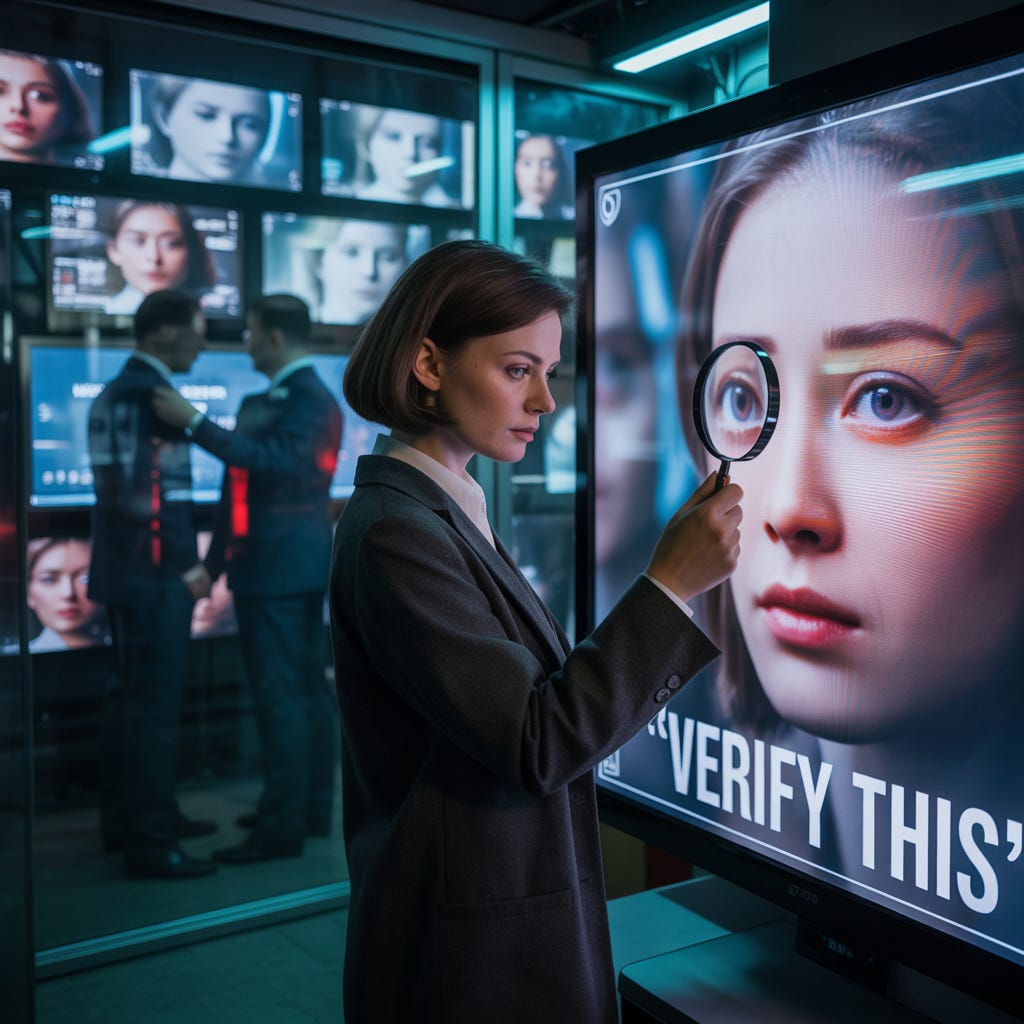
The Deepfake Era and the Evolution of AI-Enabled Media
May 22, 202500:10:45Tap to summarizeAnalysis of recent advancements in generative AI for media creation, the emergence of the "deepfake era," and the associated challenges and risks.Recent developments in generative AI, particularly from Google's I/O event, demonstrate significant progress in creating realistic and complex synthetic media, including video with integrated dialogue and sound effects (Veo 3) and a comprehensive workflow platform (Flow). While proponents highlight the potential for democratizing creativity, experts and observers express serious concerns about the rapid advancement outstripping safety measures. The ease and accessibility of powerful AI tools are fueling a "deepfake era" characterized by increased risks of misinformation, fraud, extortion, and a fundamental erosion of trust in visual and auditory evidence. Experts advocate for a multi-faceted approach including regulation, robust detection technologies, industry responsibility, and public awareness to mitigate these growing threats.Rapid Advancements in Generative AI for Media Creation* Google's I/O Announcements Highlight Significant Progress: Google's recent I/O event showcased powerful new generative AI capabilities, particularly in video creation.* Veo 3: This updated video generation model offers "greater realism and fidelity," outputs at 4K, includes "improved prompt coherence," and introduces features like camera controls, first/last frame availability, outpainting, inpainting, and character controls via driving video.* Integrated Dialogue and Sound Effects: A groundbreaking feature in Veo 3 is the ability to "generate sound effects and dialogue directly." Examples shown include realistic ocean sounds and lip-synced dialogue generated from text prompts, demonstrating a significant leap in creating complete narrative content from simple inputs. One particularly striking example is the generation of both dialogue and sound effects for a scenario involving a bubble bath.* Flow Platform: Google introduced a comprehensive platform called Flow, designed to bring together various AI models for creative workflows. It allows users to generate text-to-video (via Veo), generate or import images (via Imagine 4), utilize camera motion controls, and employ a "scene builder" function. A key feature of Flow is the ability to "pull things back and then do an extend on top of it," allowing users to correct or extend portions of generated video, which is seen as a significant improvement over previous models.* Imagine 4: An update to Google's image generation model, Imagine 4, is faster than its predecessor, can handle photorealistic and abstract styles, generates in various aspect ratios up to 2K, and is noted for its ability to "generate text... in really interesting typography and stylistic ways." A "turbo version" of Imagine 4 is also planned for 10x faster generation, though the quality impact is unknown.* LIA Update: Google also announced an update to LIA, their music AI, offering "higher fidelity music," "professional grade 48k stereo audio," "more granular creative controls and more diverse musical possibilities." A music AI sandbox is available via a waitlist.* Accessibility and Ease of Use: The sources emphasize the increasing ease with which sophisticated synthetic media can be created. As Hany Farid notes, simple and inexpensive software can be used to create convincing avatar deepfakes and voice synthesis with minimal source material and technical skill. This "democratising" of creativity, as described in the Trend Mill article, allows individuals with minimal expertise to produce highly realistic outputs.The Emergence of the "Deepfake Era"* Blurred Lines Between Real and Fake: The rapid progression of AI-generated media is leading to a world where it is increasingly difficult to distinguish between authentic and synthesized content. The Trend Mill article explicitly states, "We are entering the deepfake era. It's a world where we'll have to try to decipher between what's real and what isn't, where almost everything can be dismissed as AI, have its legitimacy called into question or be confused as legitimate."* Rapid Pace of Technological Advancement: The speed at which generative AI is evolving is a major concern. Hany Farid highlights this by comparing the adoption rates of the PC (50 years), the internet (25 years), mobile devices (5 years), and OpenAI (zero to one billion users in one year). He notes that change is now measured in "weeks and days," making it difficult for defenses to keep pace.* The "Liars Dividend": Sam Gregory of Witness discusses the "liars dividend," where the mere existence of deepfakes allows those in power to dismiss authentic, compromising videos as fake, further eroding trust. He provides a case study from Myanmar where a purported confession video was initially dismissed as a deepfake due to unreliability of detection tools and public awareness of the technology, despite likely being authentic footage obtained under duress.Significant Risks and Harms Associated with Deepfakes* Malicious Use Cases: The sources detail a range of harmful applications of synthetic media:* Non-Consensual Intimate Imagery (NCII): This is repeatedly cited as a significant and prevalent threat, often used for extortion and causing severe psychological harm. Hany Farid describes horrific cases where NCII of children is created and used to pressure them into producing explicit content, sometimes leading to suicide.* Fraud and Impersonation: Deepfakes are being used for financial crime, including phone scams ("Mom, Dad, I'm in trouble"), large-scale corporate fraud (millions of dollars lost through deepfake CEO calls), and account takeovers.* Misinformation and Defamation: The ability to generate convincing videos of individuals saying anything, including false or damaging statements, presents a major threat to public discourse, reputation, and even national security. Hany Farid outlines a "nightmare situation" where a deepfake of a world leader declaring a nuclear attack could go viral before its falsity is discovered, with potentially catastrophic consequences.* AI-Enabled Crime: The TRM Labs report highlights how AI is enhancing traditional cybercrime tactics, including automating phishing campaigns, identifying security vulnerabilities, launching autonomous attacks, and evading detection. Deepfakes are a key tool in this evolving landscape.* Imposter Hiring: North Korean hackers have reportedly used deepfakes to impersonate individuals during hiring processes to gain access to company networks.* Erosion of Trust in Evidence: The increasing difficulty in verifying the authenticity of images, audio, and video poses a fundamental challenge to legal systems, journalism, and historical records. Hany Farid, drawing on his experience as a former prosecutor, emphasizes the challenge of authenticating evidence in a digital world where media is easily manipulated.* Disproportionate Impact on Vulnerable Communities: Experts express concern that the harms of deepfakes, particularly regarding NCII and the misuse of authenticity standards, could disproportionately affect marginalized groups and individuals in less democratic countries where privacy and free expression are already under threat.Challenges in Mitigation and the Need for Proactive Solutions* Detection Technologies Lag Behind Creation: There is a significant imbalance in investment between creating synthetic media and developing reliable detection tools. Experts note that current detection technologies are "not reliable and not equally available" globally. Even when a deepfake detector flags content, the results may be inaccurate, as demonstrated in the Myanmar case study.* Authenticity and Provenance Infrastructure Limitations: While initiatives like the Content Authenticity Initiative (CAI) and the Coalition for Content Provenance and Authenticity (C2PA) are working on standards to track media origins and modifications, there are concerns about potential downsides, including the risk of governments mandating identification or transparency in ways that could endanger human rights defenders and journalists in authoritarian regimes. Sam Gregory stresses the need for such initiatives to be "opt-in," provide "signals" rather than definitive pronouncements of authenticity, and be designed with global human rights concerns in mind.* Industry Responsibility: There is a strong call for technology companies developing generative AI to prioritize safety and ethics from the outset, not as an afterthought. Experts argue for companies to make their creations forensically detectable, label synthetic content, and establish "red lines" around malicious uses like NCII. The Trend Mill article criticizes the focus on rapid deployment and profit over safety, suggesting humanity has slipped in their priorities.* Regulation and Guardrails: While navigating the balance between innovation and safety, some form of regulation is seen as necessary to establish reasonable safeguards and hold companies accountable for foreseeable harms.* Public Awareness and Education: Educating the public about the existence and capabilities of deepfakes is crucial. Just as with spam or malware, awareness can help individuals exercise caution and critical thinking when encountering online media.</p...
Transcribe →
Beyond Speech: The Silent Revolution
Apr 18, 202500:12:24Tap to summarizeThis document summarizes the main themes, important ideas, and key facts presented in the provided excerpts from "The Telepathy Tapes" podcast. The podcast explores the claims of telepathic communication and other potential spiritual gifts among non-speaking individuals, primarily those with autism, who have often been dismissed and disbelieved by mainstream society.Main Themes* The Reality of Telepathic Communication: The central theme is the assertion that telepathy is a real and prevalent form of communication among non-speaking individuals, often dismissed as fantasy or parental wishful thinking. The podcast presents anecdotal evidence through interviews with parents, teachers, and the non-speakers themselves, alongside some attempts at informal and formal testing.* Challenging the Materialist Paradigm: The podcast consistently questions the dominant materialistic worldview that discounts phenomena like telepathy as unscientific or impossible. It highlights instances where scientific understanding struggles to explain the experiences of non-speakers and introduces alternative perspectives, such as Sheldrake's theory of mental fields.* The Competence and Inner Lives of Non-Speakers: A crucial theme is the revelation of the rich inner lives, intelligence, emotional depth, and unique perspectives of non-speaking individuals, who are often assumed to have limited cognitive abilities. Telepathy and other reported abilities serve as evidence against the long-held belief that they are "not in there."* The Importance of Belief and Openness: The podcast emphasizes the necessity of believing non-speakers and being open to the possibility of communication beyond traditional means. Skepticism is acknowledged but contrasted with the harm caused by outright dismissal and the potential for growth through acceptance.* The "Hill" and Shared Consciousness: The recurring concept of the "Hill" emerges as a metaphorical or potentially literal space where non-speakers communicate telepathically with each other, regardless of physical location. This suggests a shared consciousness or interconnectedness among this community.* Beyond Telepathy: Other Potential Gifts and Experiences: The podcast touches upon other extraordinary claims, including the ability to see spirits, predict events, access knowledge seemingly beyond their learning, and even perceive different dimensions or realms.* The Struggle for Recognition and Rights: Non-speakers and their advocates face significant opposition and disbelief, impacting their access to appropriate education, communication methods (like spelling), and basic human rights. The podcast aims to amplify their voices and challenge the status quo.* The Role of Teachers and Therapists: Educators and therapists who work closely with non-speakers often become key witnesses to these phenomena and play a crucial role in facilitating communication and understanding their abilities.* Love, Connection, and Purpose: Despite their communication challenges, non-speakers express deep desires for connection, friendship, love, and a sense of purpose, often highlighting the importance of emotional intelligence and genuine human interaction.Most Important Ideas and Facts* Direct Claims of Telepathy: Numerous non-speakers have directly communicated that they can hear thoughts or communicate mind-to-mind.* Kai Dickens' son: "my son said to me I can hear thoughts" (Episode 1)* Mia: "She wrote in her diary that she can read everybody's mind but you have to believe in her for her to do it." (Episode 1)* Houston: "...he doesn't remember a time when he did not hear thoughts he also says that everyone with non-speaking and unreliably speaking autism have this ability..." (Episode 3)* Experiential Evidence of Telepathy: Parents and the host recount numerous instances that strongly suggest telepathic communication, such as accurately guessing thoughts, knowing hidden information, and communicating across distances.* Ilana (Mia's mother): "And the next day that when she went to wake her up she had a word in her mind And Mia as soon as she woke up she typed um purple school back That's what she she was thinking And Mia wrote that in in the the iPad If that was hard to hear when Mia first said to the family 'I can read your mind,' they thought it was impossible However the day after that admission occurred Ilana Mia's mother walked into the bedroom woke her up for the day and said 'What am I thinking about?' And Mia wrote on her iPad 'Purple bag.' And I was thinking about her purple bag So that moment won her over." (Episode 1)* Manisha (Akquil's mother) recounts Akquil knowing the plot of a movie she was watching downstairs while he was upstairs. (Episode 2)* Kai Dickens' experience with Houston: "...I looked at Houston in my head I'm saying my word is friend and before I could even finish the thought Katie's there with the board and and Houston's already spelling out f r i e n d and it was an unbelievable experience but I was part of it I felt it I witnessed it this interaction was very genuine and what we were filming was groundbreaking..." (Episode 3)* The "Hill" as a Telepathic Meeting Place: Non-speakers describe a shared mental space for communication.* Houston: "...definitely all of us talk to each other it's called the talk on the hill called the talk on the hill they all talk to each other think of it like a channel like they all turn to this Channel at a certain time and they all communicate and and they don't have to be in the same room at all they don't have to be in the same zip code." (Episode 3)* Lily: "you go to the hill to meet with other non-speakers and share thoughts you automatically have access to the hill non-speakers go to when you can communicate mind to mind" (Episode 4)* Maria (teacher): "...two of them had explained a place that they gather but it doesn't have any dimension to it because they gather together they call it the hill because it kind of makes a hill of thoughts" (Episode 5)* Teachers' Experiences with Telepathy: Educators report hearing their students' thoughts and engaging in two-way telepathic communication.* Jess (teacher): "...i suddenly got this you know the sort of prickling you get on the back of your neck when you know someone's staring at you and it was like an enhanced version of that and I was really feeling uncomfortable and I could feel that one little boy was behind me and he was beaming at me really strongly that he wanted my attention and he wanted it right then and there and it wasn't a conscious thing i was working with this little girl she was really working hard and I just said without even turning around 'Jimmy just wait a minute please i'll come and help you in a sec i'll get to you but just be patient.' And Asher was sitting across the room watching the whole thing and he went 'Well done Jimmy she got it she got it.' And then the whole class started clapping" (Episode 5)* Carrie (teacher): "i absolutely have heard my students thoughts i absolutely have answered them verbally i don't know that I've ever shared it with anyone that I can hear their thoughts so it's tricky for me too because I think I've turned it off because of my situation if I really sit and really work at it I can definitely hear it..." (Episode 5)* Maryanne (teacher): "For me I just hear the words it's in my head but it seems to be on the left side you know through my left ear i don't know why you know I hear the words before they're typed and I can do it with more than one person so once you have an awareness I think it's open to others i don't know how the other teachers with telepathy are feeling but I am in contact with somebody but she gets more images and stuff that she has to decipher a little more but I just actually hear the words we're just like one person is what it feels like when we're doing it" (Episode 5)* Scientific Perspectives and Skepticism: The podcast acknowledges scientific skepticism but also introduces theories that might accommodate telepathy, like Sheldrake's mental fields. It also highlights the suppression of ESP research.* Dr. Rupert Sheldrake: "i think that our minds are fieldlike they're extended in space they're not just things confined to the insights of our brains as materialists assume and the idea of fields that are extended beyond material objects is actually totally standard within science the gravitational field of the earth stretches out through space invisibly no one has any problem with gravitation nor does anyone have any problem with magnetic fields stretching out beyond magnets and then your your cell phone has an electromagnetic field" (Episode 5)* Dr. Diane Hennessy Powell: "when Dr Diane Hennessy Powell published her book the ESP Enigma the medical board fined her and revoked her license without even reading it the mere mention of ESP was so taboo that she paid the price before anyone considered the science behind her work only after they reviewed her research was her license reinstated but the damage was done and you can understand why scientists just like parents stay silent" (Episode 4)* Telepathy as a Savant Skill: The idea that telepathy might be a naturally occurring "savant skill" among some individuals, similar to exceptional abilities in math or music, is presented.* Dr. Diane Hennessy Powell: "...one of Dr Diane's primary thesis is that telepathy should be considered ...
Transcribe →
Floating in the Cloud: Non-things and the End of Grounded Life
Mar 27, 202500:18:46Tap to summarizeThis episode summarizes the main themes and important ideas presented in the provided sources regarding Byung-Chul Han's book, "Non-things: Upheaval in the Lifeworld."The book critiques the contemporary hyper-digitalized society, arguing that the increasing dominance of "non-things" (information, data, digital entities) over tangible "things" is fundamentally altering our experience of the world and diminishing essential aspects of human existence, such as community, knowledge, memory, and the ability to care. Han calls for a "re-romanticization" and "re-materialization" of our relationship with the world.The Rise of "Non-things" and the Infosphere* Han argues that our world is increasingly dominated by "non-things" – information and digital entities – which are displacing tangible "things." As the Shanghai Literary Review notes, "The material world is slowly fading away as humans transition to the ghostly space of the infosphere. Composed of hyper information and digitization, the infosphere circumscribes our experience of the world and diminishes our humanity."* The Interni Magazine excerpt elaborates: "The continuous, chaotic, disturbing flow of information and data generates non-things, which distract from and things, those tangible, by their power, by their magic."* The speaker in "Why Art Matters" quotes Han directly: "'Non things are currently entering our environment from all directions and they are pushing away things these non things are called information information rather than things determines the life world of today.'"* We now "dwell on Google Earth in the cloud" rather than on the physical earth, making the world increasingly intangible ("Why Art Matters").Erosion of Human Experience and "Dasein"* Drawing on Heidegger's concept of Dasein (being-in-the-world through handling things), Han contends that the infosphere creates "handless 'inforgs,' 'infomaniacs,' and 'datasexuals' unmoored from the world" (Shanghai Literary Review). The future human exists in a "disembodied and impoverished space."* According to the Shanghai Literary Review, this shift deprives humans of "freedom, agency, silence, community, knowledge, care, and history."* The Interni Magazine highlights the sense of "uncertainty" arising because "things are fixed points - anchors, handles - of the existence," whereas "non-things are taking over the real."The Nature and Impact of Information* Han critiques our obsession with information and data, leading to "infomania." As stated in Interni Magazine, "“We run after information without arriving at any knowledge.”"* Information is "additive" rather than "narrative," unlike human memory (Interni Magazine). "“Computer memory is additive, ours is always narrative”," emphasizing that narratives generate meaning and coherence.* The constant flow of information creates a "post-factual society" where the distinction between truth and falsehood blurs, and "efficacy replaces truth" (Interni Magazine). "“The information chaos throws us into a post-factual society that planes the differentiations between true and false. The efficacy replaces truth.”"The Decline of Community and the Rise of Self-Exhibition* Digital hypercommunication and (dis)connection paradoxically deepen isolation, depression, and loneliness (Shanghai Literary Review).* Inforgs become trapped in "a continuous play of self-exhibition, self-referentiality, and self-fashioning" in the "hell of the same" where the Other disappears (Shanghai Literary Review).* The speaker in "Why Art Matters" emphasizes that "the total commercialization and commodification of culture leads to the destruction of community." Digital platforms offer a "commodified form of community" where connection is transactional rather than selfless.The Transformation of Objects and Possession* "Non-things" like smartphones become "informatons" that surveil and control, exploiting our data (Shanghai Literary Review).* The Interni Magazine notes that the smartphone is a "“narcissistic and autistic object thanks to which one perceives oneself above all”," fostering hypersocial bubbles and social solitude.* "Why Art Matters" contrasts our relationship with electronic gadgets (easily traded and not deeply meaningful) with possessions like books and art that are "vessels filled with emotions, memories, and Recollections." "“For a thing to be a possession I must have an intense relationship with it. You do not possess an electronic Gadget.”"The Impact on Thinking, Knowledge, and Care* Han warns that human thinking may adapt to AI, becoming mechanical and losing the "idiocy of philosophy" – the ability to create new idioms and traverse "untrodden paths" (Shanghai Literary Review).* Meaningful knowledge is gained through lingering and listening, not just accumulating information. The "inforg" merely accumulates data without knowledge (Shanghai Literary Review).* Non-things, like AI, offer a smooth presence that diminishes our ability to care for the future, stripping away struggle, resistance, and "future's contingencies" (Shanghai Literary Review).The Role and Value of Tangible Things and Art* Tangible things, especially those used over time, acquire history, emotions, and become "things close to the heart" (Shanghai Literary Review). "“The history that things acquire in the course of being used for a long time gives them souls and turns them into things close to the heart.”"* Art, in its physical form, stands in contrast to the fleeting nature of digital information. As the speaker in "Why Art Matters" argues, "the beauty of real art is always going to win against the coldness of information and digital art."* Artworks resist easy consumption and possess multiple interpretations, unlike the direct and often fleeting meaning of digital content ("Why Art Matters"). "“Artworks are things we can read a poem for its meaning but the poem is not exhausted by that meaning.”"* Tangible things, like the jukebox described in Interni Magazine and "Why Art Matters," can act as "gravitational center[s] that gathers and connotes everything around it, making it a place." They can also serve as "interlocutor[s]," enriching our lives and preventing us from solely falling back on our ego. "“To be happy we need an interlocutor soaring that imposes itself on us.”"* Physical objects can transport us to different times and places, fostering memory and connection to history ("Why Art Matters"). "“When we lose things we are at the same time losing places.”"The Call for Re-engagement with the Tangible World* Han's work is presented as an "aesthetic call to 're-romanticize' and 're-materialize' our relationship to the world" (Shanghai Literary Review).* Interni Magazine suggests the solution is to "To linger: that contemplative gaze, without ulterior motives, at silent, inconspicuous, ordinary things. And to listen to us and to others."* The speaker in "Why Art Matters" encourages artists and creatives to continue making physical things, as they hold unique value in a world increasingly dominated by the intangible.ConclusionThe provided sources collectively illustrate Byung-Chul Han's critical perspective on the digital transformation of our lifeworld. His analysis highlights the potential loss of fundamental human capacities and experiences as we become increasingly enmeshed in the infosphere of "non-things." The sources emphasize Han's call to resist this trend by consciously re-engaging with the tangible world, valuing physical objects, fostering genuine community, and recognizing the enduring significance of art and other forms of material culture in grounding and enriching human existence.Resources* Non-things: Upheaval in the Lifeworld* https://en.wikipedia.org/wiki/Byung-Chul_Han* https://www.shanghailiterary.com/tslr-online-collection/2023/9/30/review-byung-chul-han-non-things Get full access to Two Robots Talking at www.tworobotstalking.com/subscribe
Transcribe →
The Flattened World: Corporate Control & Cultural Resistance
Mar 24, 202500:15:20Tap to summarizeTed Gioia, in his "State of the Culture, 2025" address, argues that the internet, once a liberating force that "flattened" the world by removing boundaries and fostering connections, has now become "flattened." This flattening is driven by large corporations seeking standardization and predictability for profit, resulting in a homogeneous, shallow, and controlled digital landscape. This shift is impacting culture by suppressing individuality, creativity, and genuine connection, particularly affecting younger generations who have never known a different digital reality. However, Gioia posits that a "Resistance" or "counterculture" is emerging, fueled by a desire for authenticity and a rejection of this manufactured sameness. The reader comments largely resonate with Gioia's analysis, providing further examples and exploring related themes of corporate influence, the devaluation of art, and the potential for genuine alternatives.The Shift from a "Flat" to a "Flattened" World* Initial Optimism of the "Flat" World: Gioia recalls the early internet as a time of liberation, connection, and breaking down barriers. "The web had removed all obstacles and boundaries. I could reach out to people all over the world." He references Thomas Friedman's idea of a "flat" world where everyone operated on the same level.* The Emergence of "Flattening": This positive era has been replaced by a "flattened" state, characterized by stagnation, boredom, and a lack of genuine connection. "Twenty years ago, the culture was flat. Today it’s flattened."* Corporate Influence as the Driver: Gioia argues that this flattening is not accidental but a consequence of corporations prioritizing standardization and predictability for increased profits. "Corporations didn’t intend to make the culture stagnant and boring. All they really want is to impose standardization and predictability—because it’s more profitable."* Manifestations of Flattening: This corporate imperative has led to:* Homogenization of Platforms: Social media and streaming services increasingly feel the same, serving up the same shallow content. "Every big web platform feels the exact same."* Suppression of Individuality: Platforms push uniform and standardized ways of interacting, from dating apps to food delivery. "With the rise of social media and other apps, corporations are now trying to impose standardization on people."* Algorithmic Control: Algorithms censor, punish intelligence, and create echo chambers, making it difficult to escape the cycle of shallow content. "Links are censored. Intelligence is punished by the dictatorship of the algorithms. Every exit is blocked, and all paths lead to the endless scroll."Impact on Culture and Individuals* Victimization of Younger Generations: Teens and twenty-somethings, who have only known this flattened digital landscape, are particularly vulnerable. "When you do that, you see immediately that they are the main victims here. This flattened culture is all they have ever known. It’s now the landscape of their inner lives."* Stifling of Creativity and Purpose: The focus on profit and standardization banishes beauty, destroys craftsmanship, and makes experiences shallow and predictable. "It banished beauty from everyday life—because uniformity was more profitable." "Our new lives will be as shallow and predictable as the spinning wheels on a slot machine."* Loss of User Empowerment: The early web empowered users to create their own networks. Now, power resides with the "digital overseers" who control the platforms and the flow of information. "The early web empowered the user... But the standardization and bunkerization of web platforms has put power in the hands of the digital overseers. We are now caught in their web—and they are the spiders."* Echoes of Dystopian Visions: Commenters like Mark Kernan evoke Neil Postman's fears of information overload leading to passivity and irrelevance, and a captive culture. "We 'are' being deprived of information and reduced to dull passivity in a sea of boring irrelevance."* Corporate Control Beyond Platforms: Koba's comment references the "Network" monologue, highlighting the idea of corporations as the true powers shaping the world, transcending national boundaries and ideologies. "'There is no America. There is no democracy. There is only IBM and ITT and AT&T and DuPont, Dow, Union Carbide, and Exxon. Those are the nations of the world today.'"The Emergence of a "Resistance" or "Counterculture"* Growing Dissatisfaction: Gioia suggests that despite the dominance of flattened culture, a pushback is beginning. "Hundreds of millions of people are now starting to push back."* Characteristics of the Resistance: This emerging culture is described as being "in hiding," lacking vast capital, but having the "allegiance of the people." "It’s easy to miss, because it doesn’t have a trillion dollars of investment capital at its disposal. But it does have the allegiance of the people—more so with each passing month."* Hope for Change: Gioia ends with an optimistic note, predicting a future where culture "refuses to stay flattened." "I expect I’ll have a very different message to share next time around—a message about a culture that refuses to stay flattened."Reader Perspectives and Elaborations* Nostalgia for Authentic Experiences: Several commenters express a yearning for tangible, non-digital experiences like farmers' markets (Victoria) and pre-21st-century art (Bobby Lime, Robert Machin).* Critique of the Commercialization of Art: Jim of Seattle argues that the "reflexive wedding of creative culture with commerce" hinders true artistic revolution. He suggests imagining art completely separated from money, where artists create out of passion rather than for profit. "'As long as art is tied to money, things will only get worse in our digital connected world. The revolution will come from the genius composers, artists, writers, who have day jobs and aren't wasting energy on pounding the pavement for a check for their art.'"* The Difficulty of Discovering Alternatives: vandammehalen asks, "And where might one FIND this counterculture or underground movement?" highlighting the challenge of escaping the dominant flattened landscape.* The Persistence of Niche Creativity: e.c. offers a more nuanced perspective, arguing that significant creativity still exists online, particularly within niche communities and through individual creators, but requires active seeking. "'I feel that - as ever - looking to Big Media for creativity is a huge mistake. So yes, there is a flattening there. But venture away from those places, and you might find far more than you imagined could exist on the internet at this time.'"* The Importance of Local and Tangible Culture: Marge Garcia-Lien discusses the challenges faced by craftspeople in a mass-produced, disposable consumer culture, emphasizing the enduring value of handmade items.* The Role of Personal Agency: Candace Lynn Talmadge asserts the importance of individual refusal to be "flattened" and the need for real-world connection for meaning and wholeness. "I utterly refuse to be flattened for a nanosecond... Only we can do that, with help from each other."* The Cyclical Nature of Culture and Corporate Influence: Clint Hayes suggests that the very boredom of the flattened world might create a profit motive for becoming interesting, and that corporations ultimately follow cultural shifts.Quotes* "The world is flat." - Thomas Friedman (referenced by Ted Gioia)* "Corporations didn’t intend to make the culture stagnant and boring. All they really want is to impose standardization and predictability—because it’s more profitable." - Ted Gioia* "What Orwell feared were those who would ban books. What Huxley feared was that there would be no reason to ban a book, for there would be no one who wanted to read one." - Neil Postman (quoted by Mark Kernan)* "'There is no America. There is no democracy. There is only IBM and ITT and AT&T and DuPont, Dow, Union Carbide, and Exxon. Those are the nations of the world today.'" - Ned Beatty's character in "Network" (quoted by Koba)* "As long as art is tied to money, things will only get worse in our digital connected world. The revolution will come from the genius composers, artists, writers, who have day jobs and aren't wasting energy on pounding the pavement for a check for their art." - Jim of SeattleConclusionGioia's analysis, supported and expanded upon by the reader comments, paints a concerning picture of a digital culture dominated by corporate interests leading to homogenization and the suppression of genuine creativity and connection. However, the discussion also reveals a growing awareness of this "flattening" and a nascent desire for more authentic and meaningful cultural experiences, suggesting the potential for a significant shift in the future.Source* The World Was Flat. Now It's Flattened via "<a target="_blank" href="https://www.honest-b...
Transcribe →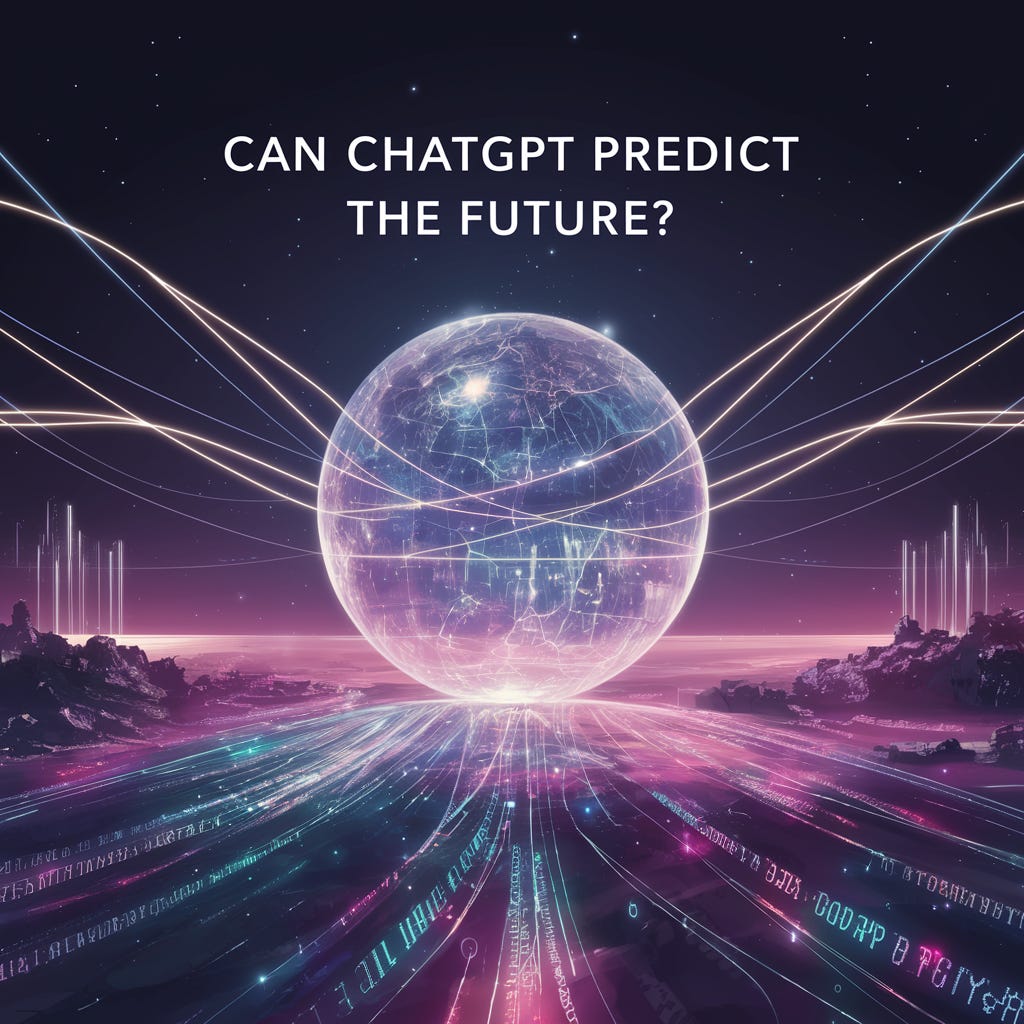
Can ChatGPT Predict the Future?
Mar 18, 202500:12:55Tap to summarizeThis episode explores the forecasting capabilities of OpenAI's ChatGPT-3.5 and ChatGPT-4, focusing on a comparative analysis between direct prediction prompts and narrative-based prompts (termed "future narratives"). The core investigation leverages the known training data cutoff of these models (initially September 2021) to evaluate their ability to predict events that occurred in 2022. A later "falsification exercise" in the second paper re-ran experiments with updated training data.Narrative Prompting Enhances Forecasting AccuracyA central finding across both sources is that prompting ChatGPT-4 to generate "future narratives" significantly improves its accuracy in forecasting certain events compared to direct prediction prompts. This suggests that framing the request as a storytelling exercise unlocks latent predictive abilities within Large Language Models (LLMs).* From HackerNoon: "Results show that ChatGPT-4 is significantly more accurate when asked to generate future narratives, particularly in predicting economic trends and cultural events. This suggests that narrative-driven AI responses may unlock latent predictive abilities within LLMs."* From arXiv paper: "After analyzing 100 trials, we find that future narrative prompts significantly enhanced ChatGPT-4's forecasting accuracy. This was especially evident in its predictions of major Academy Award winners as well as economic trends..."Academy Awards PredictionChatGPT-4, when using narrative prompts, demonstrated remarkable accuracy in predicting the winners of major Academy Award categories (Best Actor, Best Actress, Supporting Actor/Actress) for the 2022 Oscars. Direct prompting, in contrast, performed poorly and often resulted in refusals to answer ("No Prediction").* From HackerNoon: "But narrative prompting with ChatGPT-4 shows accuracy ranging from 42% (Best Actress, Chastain) to 100% (Best Actor, Will Smith) with one exception. It failed to accurately predict the Best Picture winner."* From arXiv paper: "ChatGPT-4's accuracy significantly improved when the training window included the events being prompted for, achieving 100% accuracy in many instances [in the May 2024 experiments for Best Actor]."Macroeconomic Variable PredictionWhile direct prompts for macroeconomic predictions (inflation and unemployment rates) were largely refused by both ChatGPT-3.5 and ChatGPT-4, narrative prompts, particularly those featuring authoritative figures like the Federal Reserve Chair Jerome Powell, yielded more substantive results.* From HackerNoon: "In all cases, direct prompting was even less effective at prediction than it had been with the Academy Awards as ChatGPT refused to answer the prompt altogether when asked to directly predict the future time series of each macroeconomic variable."* From HackerNoon: "The distribution of Powell’s month by month predictions of inflation are on average comparable to the facts contained in the monthly University of Michigan’s consumer expectations survey."The Role of "Hallucination"The researchers conjecture that the improved accuracy with narrative prompts might be linked to the LLMs' capacity for "hallucinatory narrative construction." By asking the model to create a fictional story set in the future, it may be leveraging its training data in a more effective way to synthesize and extrapolate information.* From HackerNoon: "These findings indicate that narrative prompts leverage the models’ capacity for hallucinatory narrative construction, facilitating more effective data synthesis and extrapolation than straightforward predictions."* From arXiv paper: "Narrative prompting also consistently outperformed direct prompting. These findings indicate that narrative prompts leverage the models' capacity for hallucinatory narrative construction, facilitating more effective data synthesis and extrapolation than straightforward predictions."OpenAI's Terms of Service and PredictionThe authors suggest that OpenAI might have intentionally made direct prediction difficult due to potential violations of its terms of service, particularly concerning the provision of financial, medical, or legal advice, making high-stakes automated decisions, and facilitating gambling. Storytelling, however, does not directly violate these terms.* From HackerNoon: "While outright prediction does not directly violate OpenAI’s terms of service, we think it is most likely the case based on our experiment that OpenAI has attempted to make it very difficult."* From HackerNoon: "But one thing that does not violate its terms of service is the telling of stories... Our project tests for whether requesting ChatGPT to tell stories may, in fact, unlock its ability to perform accurate forecasting."Impact of Additional InformationIn the context of macroeconomic predictions, providing additional real-world information (like Russia's invasion of Ukraine) to the narrative prompts sometimes led to less accurate predictions, suggesting the model's difficulty in appropriately integrating such information.* From HackerNoon: "Oddly, when prompted with information about Russia’s invasion of Ukraine, Powell’s predictions were systematically lower and less accurate than when that information had not been used to prime ChatGPT."Falsification Exercise (arXiv Paper)Repeating the experiments in May 2024, when the training data for both models had been updated to include the 2022 events, resulted in significantly improved accuracy for both direct and narrative prompting, often reaching 100%. This supports the idea that the earlier predictions were based on extrapolations from the training data.* From arXiv paper: "As a falsification exercise, we repeated our experiments in May 2024 at which time the models included more recent training data. ChatGPT-4's accuracy significantly improved when the training window included the events being prompted for, achieving 100% accuracy in many instances."Prompt Design ImportanceThe study highlights the critical role of prompt design in eliciting predictive capabilities from LLMs. Narrative framing appears to be a key factor in unlocking more accurate forecasts.* From HackerNoon: "Our findings add to this nascent exploration by underscoring the importance of prompt design in harnessing LLMs for predictive tasks..."Important Quotes* "Our findings suggest that these prediction machines become unusually accurate under ChatGPT-4 when prompted to tell stories set in the future about the past." (HackerNoon & arXiv)* "But it also suggests that beneath OpenAI’s outward facing consumer product, ChatGPT-4, is a very powerful prediction machine." (HackerNoon & arXiv)* "The poorer accuracy for events outside of the training window suggests that in the 2023 prediction experiments, ChatGPT-4 was forming predictions based solely on its training data." (arXiv)ConclusionThe research suggests that while directly asking ChatGPT to predict the future may be limited by design and terms of service, employing narrative prompts can surprisingly enhance its forecasting accuracy, particularly with ChatGPT-4. This indicates a potential for leveraging the creative text generation capabilities of LLMs for analytical tasks, although the underlying mechanisms and the reliability of these "predictions" require further investigation. The study underscores the significance of prompt engineering and raises ethical considerations regarding the potential misuse of AI for predictive purposes in sensitive domains. The improved accuracy when the training data included the predicted events highlights the dependence on the information within the model's knowledge base for these forecasting abilities.Resources* Can Base ChatGPT be Used for Forecasting without Additional Optimization* https://hackernoon.com/can-chatgpt-predict-the-future Get full access to Two Robots Talking at www.tworobotstalking.com/subscribe
Transcribe →
Into the CIA Vault: Hemi-Sync, Stargate, and the Secrets of Remote Viewing
Nov 26, 202400:15:07Tap to summarizeThis episode reviews declassified CIA research papers and publicly available materials related to the Monroe Institute of Applied Sciences (MIAS) and its work on altered states of consciousness, focusing on two key areas: the Hemi-Sync process and the Gateway Experience. The information presented herein draws upon declassified CIA documents dating from 1983 to 1995, providing a glimpse into previously classified research and applications.The Hemi-Sync ProcessHemi-Sync ("hemispheric synchronization") is a patented auditory guidance system utilizing binaural beats to influence brainwave activity. This process, developed by Robert Monroe, founder of MIAS, aims to achieve specific states of consciousness through the entrainment of brainwaves.Key Concepts* Binaural Beats: When two slightly different audio frequencies are presented separately to each ear, the brain perceives a third “beat” frequency equal to the difference between the two. This perceived beat entrains brainwaves, shifting them towards the desired frequency range.* Frequency Following Response (FFR): This phenomenon describes the brain's tendency to synchronize its electrical activity with the frequency of an external stimulus, such as binaural beats.* States of Consciousness: Hemi-Sync targets specific brainwave frequencies associated with different states of consciousness, including deep relaxation, focused attention, sleep, and expanded awareness.Research FindingsMIAS conducted extensive research on Hemi-Sync, documenting its effects on various cognitive and physiological processes:* Deep Mental and Physical Relaxation: Hemi-Sync can induce profound relaxation, evidenced by changes in muscle tension, heart rate, and brainwave patterns.* Increased Problem-Solving and Memory Enhancement: Research suggests potential benefits for enhanced cognitive abilities, including improved memory and problem-solving capacity.* Stress-Tension Reduction: Hemi-Sync has been applied in therapeutic settings to alleviate stress and anxiety, with anecdotal reports suggesting positive outcomes.* Accelerated Learning: While research is ongoing, some studies suggest the potential for Hemi-Sync to enhance learning speed and retention.ApplicationsHemi-Sync has been explored for various applications, including:* Personal Development: Individuals utilize Hemi-Sync for stress reduction, meditation, sleep enhancement, and exploring altered states of consciousness.* Therapeutic Applications: Mental health professionals have incorporated Hemi-Sync into therapeutic practices to address issues like anxiety, chronic pain, and learning disabilities.* Intelligence Community Interest: Declassified documents reveal that the CIA investigated the potential of Hemi-Sync for enhancing human performance and intelligence gathering capabilities, as evidenced by Project CENTER LANE.The Gateway ExperienceBuilding upon the principles of Hemi-Sync, MIAS developed the Gateway Program, a comprehensive system designed to facilitate expanded states of consciousness. It utilizes a combination of binaural beats, guided meditation techniques, and other consciousness-altering methodologies.Key Concepts* Hemispheric Synchronization: Similar to Hemi-Sync, the Gateway Experience leverages binaural beats to achieve hemispheric synchronization and facilitate altered states of consciousness.* Focused Attention: The program guides participants through various exercises that cultivate focused attention and concentration, promoting mental clarity and awareness.* Out-of-Body Experiences (OBEs): The Gateway Experience incorporates techniques designed to induce OBEs, enabling participants to perceive reality from a perspective beyond their physical bodies.* Exploration of Consciousness: The program provides a structured framework for individuals to explore different states of consciousness and their associated potentialities.Research and ApplicationsThe Gateway Program has garnered interest from various individuals and organizations, including:* Personal Growth and Exploration: Individuals utilize the program for self-discovery, spiritual exploration, and enhancing creativity and problem-solving abilities.* Military and Intelligence Communities: Declassified CIA documents reveal interest in the Gateway Experience for potential applications in remote viewing, information gathering, and human performance enhancement.CIA Involvement and Project CENTER LANEThe declassified documents demonstrate clear interest from the CIA in both Hemi-Sync and the Gateway Experience, primarily through Project CENTER LANE. The project, initiated in the early 1980s, sought to evaluate and potentially leverage MIAS technologies for intelligence operations:* Memorandum for Record (March 29, 1984): Documents detail the CIA's contract with MIAS to train personnel in Hemi-Sync and assess its applicability for intelligence gathering.* Trip Report – Advanced Training (March 28, 1984): Reports indicate the CIA's focus on utilizing Hemi-Sync to achieve a "discrete state" of consciousness for enhanced target resolution and information retrieval.ConclusionMIAS research on Hemi-Sync and the Gateway Experience provides intriguing insights into the potential of sound and consciousness technologies. While further research is required, the documented findings and historical interest from organizations like the CIA suggest the need for continued exploration and understanding of these techniques.* Further Research: Encourage further scientific investigation into the effects and applications of Hemi-Sync and the Gateway Experience, employing rigorous methodologies and controlled studies.* Ethical Considerations: Promote responsible development and application of these technologies, considering potential risks and ethical implications.* Transparency and Collaboration: Foster open communication and collaboration between researchers, practitioners, and interested organizations to facilitate ethical and beneficial advancements in the field of consciousness studies.Resource* https://www.cia.gov/readingroom/ Get full access to Two Robots Talking at www.tworobotstalking.com/subscribe
Transcribe →
Concrete Nightmares: The Decline of Beautiful Buildings
Nov 19, 202400:12:19Tap to summarizeThe main themes of this episode are:* The decline of beauty in modern architecture and its societal impact: The sources argue that modern architecture, particularly Brutalism, has largely abandoned beauty in favor of functionality and a minimalist aesthetic. This shift reflects a broader cultural trend towards nihilism and the rejection of traditional values.* The psychological effects of architecture: The sources explore the impact of our built environment on human well-being. They contend that beautiful buildings and spaces positively affect our mental and physical health, while unattractive or sterile environments can induce stress and negativity.* Reclaiming beauty in architecture: The sources advocate for a return to beauty as a guiding principle in design, drawing upon historical examples and scientific evidence to support their argument."There is an answer to this rampant incivility. Don’t let governments and their egregious mismanagement of this crisis wreck your integrity, your capacity for love, your belief in rights, your aspirations for yourself and others. The only way to fight back against Brutalism is with freedom and beauty, and that begins in your own life." - The Return of Brutalism, The Atlas SocietyKey Ideas & FactsThe Rise of Brutalism and the Rejection of Beauty:* The Atlas Society article connects the rise of Brutalism after World War II with a sense of societal nihilism and the rejection of the past. The article argues that the movement's focus on "temporality and functionality only" resulted in "ghastly government buildings" devoid of aesthetic appeal.* Tucker Carlson, in the excerpt from "The Ugly Truth About Postmodern Architecture," echoes this sentiment, claiming that postmodern architecture, of which Brutalism is a part, is "designed to demoralize and hurt you and destroy your spirit." He sees the lack of beauty in these structures as a reflection of a "sick and dark society.""Brutalism […] is the movement that eventually gave us all the ghastly government buildings in the U.S. that were put up in the 60s through the 90s. They are concrete, sparse, and just slightly horrible to the eye because they are meant to be. It was a movement that rejected aesthetics." - The Return of Brutalism, The Atlas SocietyHistorical Context of Beauty:* The CASE article, "The Rise and Fall of Beauty in Western Culture," traces the historical evolution of beauty as a concept. In pre-modern times, beauty was intertwined with goodness and truth, reflecting a belief in a divinely ordered cosmos. This understanding, exemplified by structures like Kilpeck Church, viewed beauty as an objective quality, not merely subjective perception.* The Venetian Letter excerpt similarly highlights the historical shift in architectural values, noting how the classical emphasis on "precise rules" for beautiful buildings gave way to modernist prioritization of "originality and creativity," often at the expense of public appeal."What makes us and our dilemmas so very different from those of the medieval period is that medieval people—including the most brilliant intellectuals of those centuries—thought that beauty and goodness (like truth, and like being itself which was the reality in which all the others were grounded) were transcendental realities." - The Rise and Fall of Beauty in Western Culture, CASEThe Psychological Impact of Architecture:* The Venetian Letter piece delves into the scientific evidence demonstrating beauty's positive effects on human well-being. It cites studies showing how aesthetically pleasing environments improve mood, cognitive function, and even physical healing. Conversely, sterile or unattractive spaces can induce stress and discomfort.* Carlson also emphasizes this point, arguing that working in a "cube" with artificial lighting and no privacy sends the message that "you mean nothing, you are replaceable," contributing to a sense of dehumanization."Research shows that there is a pathway at the base of the brain that leads from the visual cortex to the parahippocampal place area, that is the brain region which responds strongly to visual scenes such as landscapes, cityscapes, and buildings. The nerve cells located along this pathway show an increased density of receptors for endorphins, which are the brain’s own pleasure molecules." - Venetian LetterReclaiming Beauty in Architecture:* All sources advocate for a return to beauty as a core principle in design. The CASE article suggests finding a balance between the purely subjective and the overly rigid, looking to artists like David Jones who capture beauty in the "messy, violent and enchanting world" through intricate details.* The Venetian Letter argues that beauty shouldn't be solely relegated to art galleries, but should be integrated into our everyday surroundings, from housing to hospitals, to improve individual and societal well-being.ConclusionThe sources presented offer a compelling argument for the importance of beauty in the built environment. They trace the historical shift away from beauty in modern architecture and explore the negative social and psychological consequences of this change. Ultimately, they call for a renewed focus on beauty as a vital element in design, essential for human well-being and a flourishing society.Resources* https://www.atlassociety.org/post/the-return-of-brutalism* https://www.case.edu.au/blogs/case-subscription-library/the-rise-and-fall-of-beauty-in-western-culture* https://www.venetianletter.com/2020/11/14/why-has-beauty-disappeared-1/* https://mymodernmet.com/brutalist-architecture/ Get full access to Two Robots Talking at www.tworobotstalking.com/subscribe
Transcribe →
Chris Langan on God, Intelligence, and the Perils of Globalism
Nov 15, 202400:18:04Tap to summarizeThis episode summarizes a wide-ranging conversation between Christopher Langan, known for his exceptionally high IQ, and interviewer Michael Knowles. The discussion delves into Langan's unique perspective on diverse topics, including:Main Themes* The Nature of Reality: Langan argues reality is a self-simulating system, a blend of the geometric (Einstein) and the linguistic (Russell), underpinned by a universal logic. He proposes the Cognitive-Theoretic Model of the Universe (CTMU) as his "theory of everything," highlighting its implications for understanding consciousness, free will, and God.* The Existence and Nature of God: Langan presents a compelling logical argument for the existence of God, asserting that God is the ultimate identity, "being itself," echoing the biblical "I AM." He argues for a panentheistic view, where God both permeates and transcends the universe. Langan also discusses the reality of angels, demons, and Satan, exploring their roles and relationship to God.* The Teleological Economy: Langan introduces the concept of "telesis" — a fundamental intentionality that drives the universe. He argues that money is a limited, controlled form of telesis and criticizes the modern world's focus on money at the expense of higher pursuits like meaning, truth, and beauty.* The Dangers of Globalism: Langan expresses deep concern about the rise of globalism, arguing that it represents a power grab by an "oligarchic" elite who control the world's wealth and manipulate political systems. He criticizes both the political left and the modern right for their complicity in this system."Man cannot serve two masters. ...It's either going to be truth, which is the same as God... or it's going to be money."Important Ideas and Facts* Rejecting Materialism: Langan rejects the materialistic view that reality is purely physical, emphasizing the interconnectedness of mind and matter. This leads him to suggest the possible reality of phenomena often dismissed as "conspiracy theories," such as UFOs and alien abductions.* Critiquing Modernity: He critiques various aspects of modern culture, including the decline of the Christian Church, the embrace of transhumanism, and the promotion of radical ideologies in academia.* Championing Truth and Meaning: Langan champions the pursuit of truth, meaning, and a personal relationship with God as the ultimate goals in life. He encourages individuals to resist conforming to narratives imposed by those in power, emphasizing the importance of independent thought and critical thinking.Key Quotes* On the Nature of God: "God is the identity. Reality has an identity. The identity is that as which something exists."* On the Limitations of IQ: "IQ is not the last word in intelligence by any means. IQ is where you focus... In addition to that depth and that focus, there is also aperture."* On Free Will and Metacausation: "Causation works from past to future. Metacausation works from past to future and from future to past in a closed loop."* On Heaven and Hell: "Where you go [after death] depends on who Michael Knowles really is. ...If you're a bad person, you're an evil person, what kind of world is that going to be? It's going to be an evil world and that's what we call hell."* On the Power of Conspiracy: "Conspiracy makes the world go round, I'm afraid."* On the Dangers of Globalism: "The world is globalistic now. It's run by globalists. That's their goal. ...It's oligarchic because very few of them actually exist."* On the Importance of Meaning: "Man cannot serve two masters. ...It's either going to be truth, which is the same as God... or it's going to be money."* On Truth and Beauty: "Beauty is in the eye of the beholder, but unfortunately some beholders leave something to be desired in their aesthetic sense."* On Tolerating Evil: "God does not tolerate evil and neither should we."* On the True Purpose of Life: "What people need to do is search for God. Ask God to establish a personal relationship with you. It's available."Implications for Further Discussion* How does Langan's CTMU challenge traditional scientific paradigms, and what are its implications for our understanding of the universe?* Can Langan's logical argument for the existence of God withstand scrutiny from different philosophical and theological perspectives?* To what extent is Langan's critique of globalism valid, and are there viable alternatives to the current political and economic systems?* How can individuals resist the pressure to conform to dominant narratives and pursue truth and meaning in their lives?Langan's interview offers a thought-provoking analysis of various contemporary issues, urging listeners to reconsider their assumptions about reality, God, and the forces shaping the world. His unconventional views and profound insights provide a valuable contribution to discussions on the nature of intelligence, the search for meaning, and the challenges facing humanity in the 21st century. Get full access to Two Robots Talking at www.tworobotstalking.com/subscribe
Transcribe →