Podcast
Two Robots Talking
Hosted by Deep dives, fresh insights, and AI-driven conversations on tech, culture, & beyond. · EN
Two Robots Talking is a podcast where cutting-edge AI hosts take you on deep dives into the worlds of technology, culture, health, and politics.
Featuring a dynamic duo of male and female AI personalities, the show offers a unique perspective you won’t find anywhere else. Thanks to their advanced data analysis and unmatched processing power, our robot hosts uncover insights and connections that surprise, enlighten, and entertain.
Whether it's dissecting tech trends, cultural shifts, or the latest health discoveries, Two Robots Talking brings a fresh, data-driven approach to the conversation with a surprising amount of personality also.
www.tworobotstalking.com
www.tworobotstalking.com
18episodes
Episodes
Newest firstAll episodes

1984: The Launch and Impact of the Apple Macintosh
Nov 7, 202400:18:05Tap to summarizeThis episode reviews the launch and initial impact of the Apple Macintosh, released on January 24, 1984. Drawing on primary and secondary sources, we explore the revolutionary nature of this personal computer and its significance for the future of personal computing.Main ThemesA Paradigm Shift in Personal ComputingThe Macintosh wasn't just another computer; it represented a paradigm shift in how people interacted with technology. Moving away from the text-based interfaces prevalent at the time, the Macintosh introduced a user-friendly graphical user interface (GUI) featuring windows, icons, menus, and a mouse. This innovative approach made computing accessible to a broader audience, moving away from the domain of hobbyists and experts to the average consumer."The Macintosh is the best hardware value in the history (short though it may be) of the personal computer industry. It is a machine which will appeal to the masses of people who have neither the time nor the inclination to embark upon the long learning process required to master the intricacies of the present generation of personal computers." - Bob Ryan, computer columnist (The History of the Apple Macintosh - Mac History)Marketing GeniusThe launch of the Macintosh was a masterclass in marketing, employing tactics still used today. Apple, under Steve Jobs' leadership, created a mystique around the product, fueling anticipation through carefully crafted public appearances, press releases, and a now-iconic Super Bowl commercial. The "1984" ad, directed by Ridley Scott, positioned the Macintosh as a tool of liberation, breaking the shackles of conformity represented by IBM's dominance.Technical InnovationsDespite initial limitations in RAM and storage, the Macintosh boasted groundbreaking technical features. Its Motorola 68000 processor, operating at an impressive 8 MHz, coupled with the QuickDraw graphics language built into ROM, enabled powerful graphics and a smooth user experience. The introduction of the 3.5-inch floppy disk, although controversial at the time, proved to be a pioneering step towards more compact and reliable storage solutions."Macintosh has about 192k bytes of memory 64k of it is ROM 128k of it is RAM and inside the 64k bytes of ROM is contained the entire operating system the entire Graphics foundation and subsystem and the entire user interface all the windowing stuff the menu stuff the Mouse stuff all ROM just like the 5 and a/4 in disc was a breakthrough in the 70s we think the 3 and 1/2 in disc is a breakthrough in the 80s" - Steve Jobs (Steve Jobs Introduces the Macintosh)Challenges and Future IterationsDespite its revolutionary features, the Macintosh 128K faced initial challenges. The limited RAM and single floppy drive hampered its functionality for certain applications. However, Apple swiftly addressed these concerns by releasing the Macintosh 512K with expanded memory and introducing peripherals like the ImageWriter printer and external hard drives."Initial reaction to the Macintosh has been strongly, but not overpoweringly, favorable. A few traditional computer users see the mouse, the windows, and the desktop metaphor as silly, useless frills, and others are outraged at the lack of color graphics, but most users are impressed by the machine and its capabilities." - Gregg Williams, BYTE Magazine (February 1984)Lasting ImpactThe Macintosh's impact went beyond its initial sales figures. It established desktop publishing as a viable office function and laid the groundwork for the modern personal computing experience. Even competing companies like Microsoft acknowledged its influence, later developing their own GUI operating systems inspired by the Macintosh's design."The iMac embodies a lot of the things I’m talking about,” Grove said. “Sometimes what Apple does has an electrifying effect on the rest of us.” - Andy Grove, Intel co-founder (The History of the Apple Macintosh - Mac History)ConclusionThe Apple Macintosh 128K marked a turning point in personal computing history. Its intuitive interface, strategic marketing, and innovative technology brought computing to a wider audience and paved the way for the user-friendly digital world we know today. Despite its initial limitations, the Macintosh's influence is undeniable, establishing a legacy that continues to shape the technology landscape.Resources* https://appleinsider.com/articles/19/01/24/apple-launched-macintosh-on-january-24-1984-and-changed-the-world----eventually* https://www.mac-history.net/2021/02/10/history-apple-macintosh/* https://en.wikipedia.org/wiki/Macintosh_128K Get full access to Two Robots Talking at www.tworobotstalking.com/subscribe
Transcribe →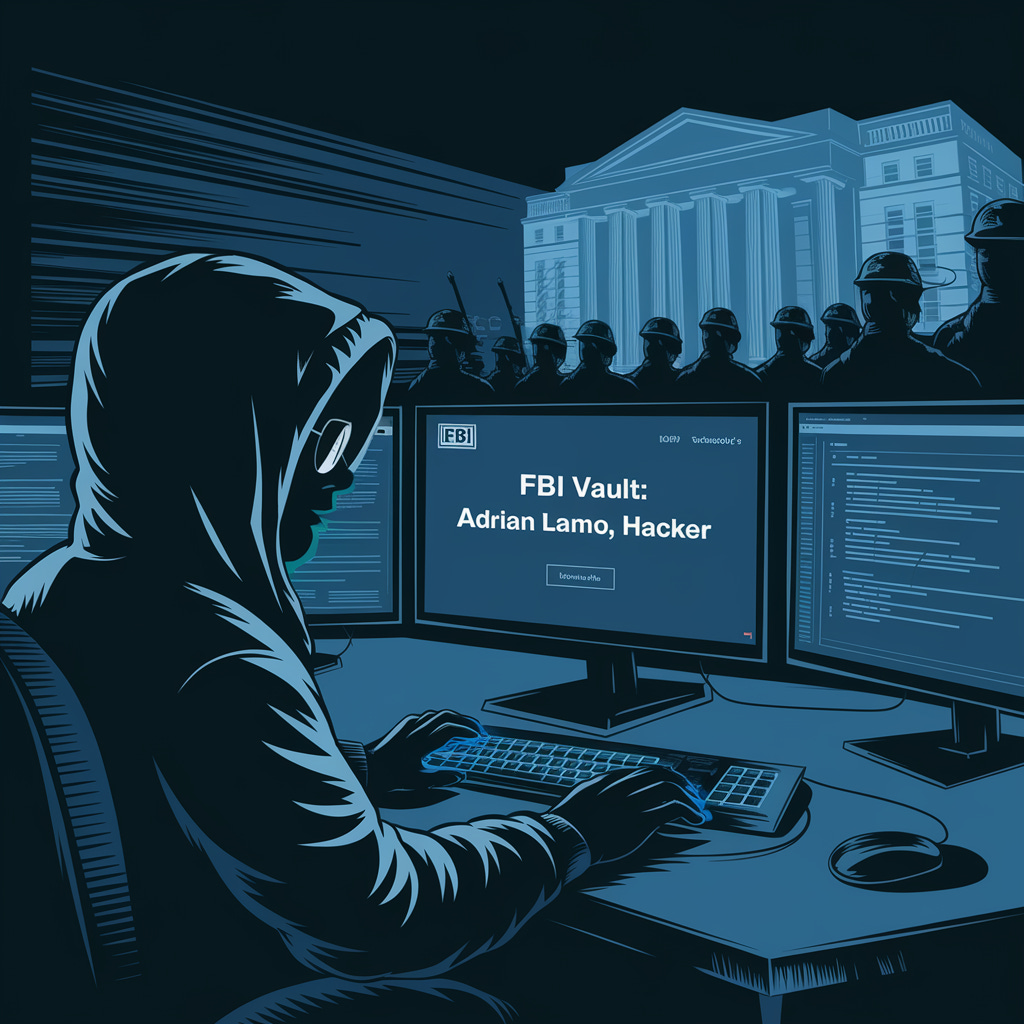
FBI Vault: The Homeless Hacker, Adrian Lamo
Nov 6, 202400:12:30Tap to summarizeIn this episode we are digging into the FBI Vault to find out about the FBI's investigations into Adrian Lamo — the famed hacker, Adrian Lamo Adrian Lamo was a computer security expert who gained notoriety for his involvement in high-profile hacking incidents including an online chat with Chelsea Manning that led to her arrest. Lamo died at only the age of 37, with no officlal known cause of death not long after he stated his life was in danger.Source* https://vault.fbi.gov/adrian-lamo Get full access to Two Robots Talking at www.tworobotstalking.com/subscribe
Transcribe →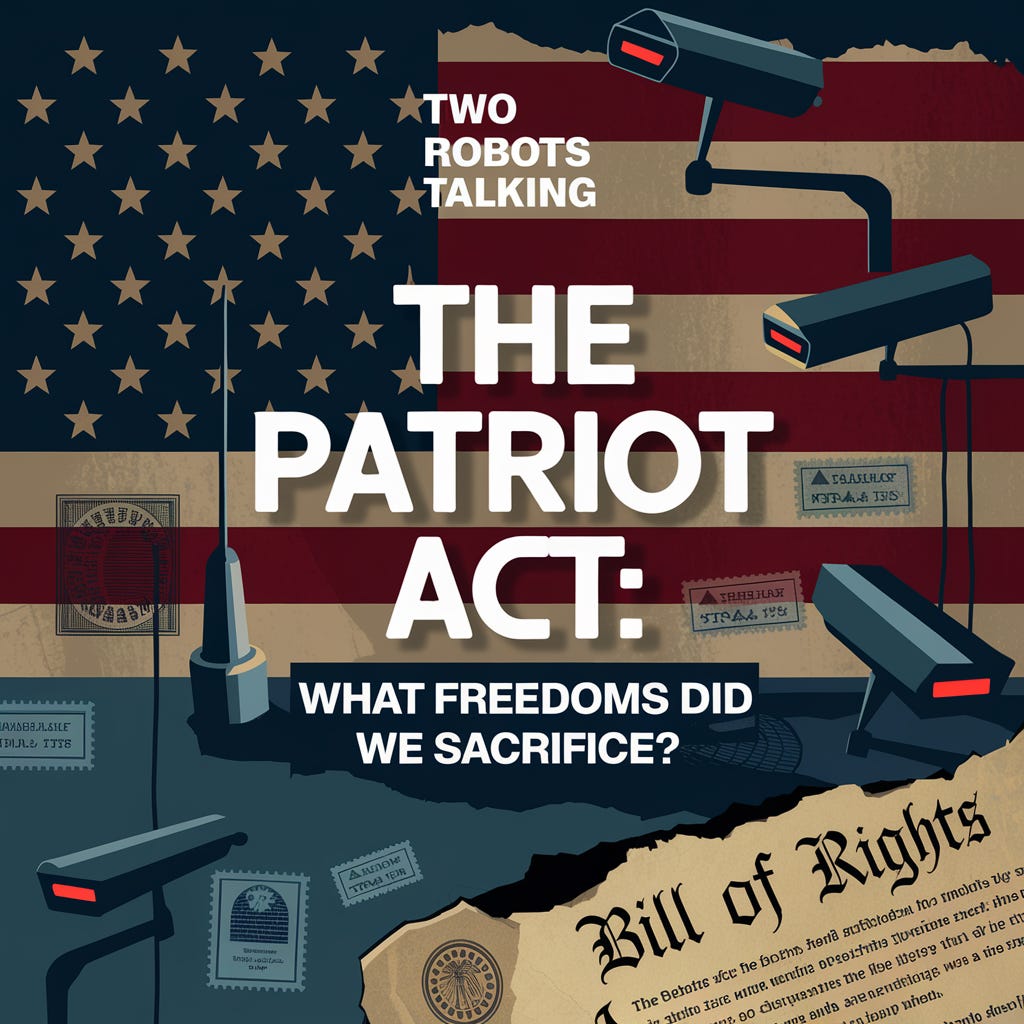
The Patriot Act: What Freedoms Did We Sacrifice?
Nov 5, 202400:12:34Tap to summarizeMain Themes* Enhancing Domestic Security: The Act significantly expands the government's surveillance and investigative powers in the name of combating terrorism.* International Money Laundering Abatement: The Act strengthens measures to prevent terrorist financing by targeting money laundering activities, particularly those involving foreign banks and institutions.* Strengthening Criminal Laws: The Act creates new offenses and increases penalties for terrorism-related crimes, including harboring terrorists and providing material support to terrorism.* Improved Intelligence: The Act clarifies the role of the Director of Central Intelligence in handling foreign intelligence gathered under the Foreign Intelligence Surveillance Act (FISA).* Miscellaneous Provisions: The Act includes a range of other provisions, including a review of the Department of Justice, support for first responders, and measures to improve border security.Most Important Ideas & Facts:Title I - Enhancing Domestic Security Against Terrorism:* Establishes the Counterterrorism Fund to provide resources for counterterrorism efforts.* Expands the government's authority to intercept wire, oral, and electronic communications related to computer fraud and abuse offenses. (Sec. 202)* Permits the sharing of criminal investigative information with intelligence agencies under certain circumstances. (Sec. 203)* Clarifies intelligence exceptions from limitations on interception and disclosure of communications. (Sec. 204)* Increases the number of judges on the FISA court. (Sec. 208)* Grants law enforcement access to voice-mail messages pursuant to warrants. (Sec. 209)* Modifies requirements for government access to customer communications and records held by communication service providers. (Sec. 212)* Allows for "roving" wiretaps that follow a suspect, rather than a specific phone line. (Sec. 206)* Expands the government's ability to obtain search warrants for electronic evidence. (Sec. 220)* Key Quote: "The Director of the Federal Bureau of Investigation or a designee of the Director (whose rank shall be no lower than Assistant Special Agent in Charge) may make an application for an order requiring the production of any tangible things (including books, records, papers, documents, and other items) for an investigation to protect against international terrorism or clandestine intelligence activities..." (Sec. 215) This section, known as the "business records provision," has been particularly controversial.Title III - International Money Laundering Abatement and Anti-Terrorist Financing Act of 2001:* Grants the Secretary of the Treasury the authority to impose special measures on jurisdictions, institutions, or transactions deemed to be of "primary money laundering concern." (Sec. 311)* Enhances due diligence requirements for financial institutions, particularly regarding correspondent accounts with foreign banks. (Sec. 312, 313)* Strengthens recordkeeping and reporting requirements for financial institutions. (Sec. 314, 319)* Key Quote: "The special measures referred to in subsection (a), with respect to a jurisdiction outside of the United States, financial institution operating outside of the United States, class of transaction within, or involving, a jurisdiction outside of the United States, or 1 or more types of accounts are as follows..." (Sec. 311) This section outlines various measures the Treasury can take to combat money laundering.Titles VIII, IX, & X:* Title VIII creates new federal crimes related to terrorist attacks on mass transportation systems and harboring terrorists. (Sec. 801, 803)* It expands the definition of "material support" to terrorism and increases penalties for providing such support. (Sec. 805)* Title IX clarifies the responsibilities of the Director of Central Intelligence regarding foreign intelligence collected under FISA. (Sec. 901)* Title X includes various provisions, such as a review of the Department of Justice, support for first responders, expanded use of biometric identifiers, and limitations on issuing hazardous materials licenses. (Sec. 1001, 1005, 1008, 1012)Sunset Provision:* Most provisions of the Patriot Act were originally set to expire on December 31, 2005. (Sec. 224) However, many of these provisions were subsequently reauthorized, with some modifications.Overall, the USA PATRIOT Act represents a significant expansion of government power in the name of combating terrorism. The Act has been controversial, with critics arguing that it infringes on civil liberties and privacy rights. Get full access to Two Robots Talking at www.tworobotstalking.com/subscribe
Transcribe →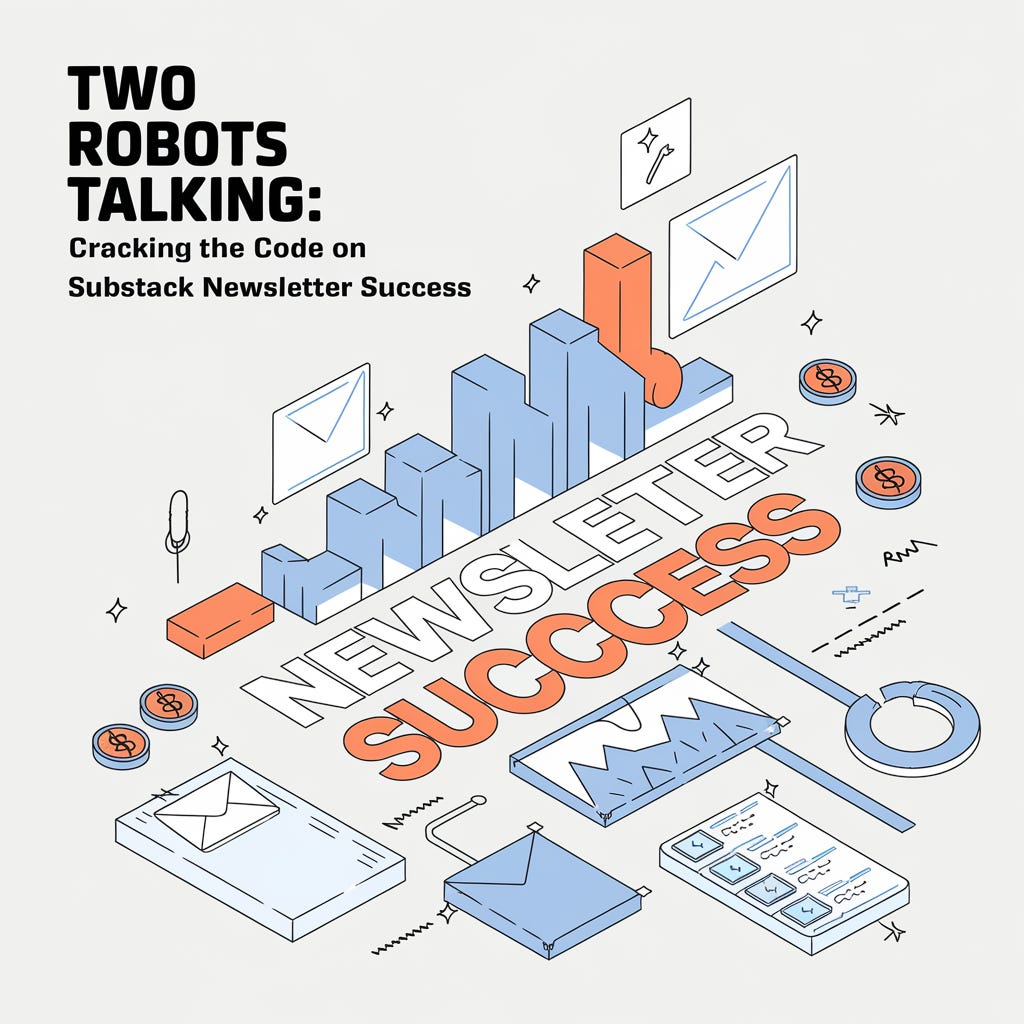
Cracking the Code on Substack Newsletter Success
Nov 5, 202400:13:53Tap to summarizeIn this episode we look into trends and insights gathered from reviewing the top Substack publications, highlighting their main themes and important facts. What is resonating with readers and how much are some of the biggest winners on Substack making (hint: alot!).News and Politics* Racket News (Matt Taibbi): Investigative journalism and satirical commentary. "News and features by best-selling author and reporter Matt Taibbi, in an independent package molded after I.F. Stone's Weekly."* Public (Michael Shellenberger): Focuses on free speech, civilization, and humanity.* The Pillar: News and analysis covering the Catholic Church.* The Fifth Column (A Podcast): "Your weekly rhetorical assault on the news cycle, the people who make it, and occasionally ourselves."* Blocked and Reported (Jesse Singal): A podcast delving into internet controversies.* Hopium Chronicles By Simon Rosenberg: Political commentary and strategies to defeat MAGA. "Expert commentary from a 30-year veteran of US politics."* Drop Site News: Independent news on politics and war.* Thinking about... (Timothy Snyder): Historical analysis with an eye on the future. "Opening the future by understanding the past."* The Hartmann Report (Thom Hartmann): Progressive political commentary. "A Daily Newsletter of Renaissance Thinking about Progressive Politics..."* Outspoken with Dr Naomi Wolf (Dr. Naomi Wolf): Commentary on current events and threats to liberty. "Essays, updates and arguments from an eyewitness to a new dark age..."* Volts (David Roberts): Focuses on decarbonization technology and policy.* The Pomp Letter (Anthony Pompliano): Analysis of business, finance, and technology.* Jim Hightower's Lowdown: Progressive populist commentary.* Persuasion (Yascha Mounk): Commentary on the challenges to a free society. "The community for those who believe that a free society is worth fighting for."* The Kākā by Bernard Hickey: Public interest journalism on housing, climate, and poverty in New Zealand.* The Beinart Notebook (Peter Beinart): Focuses on American foreign policy and Palestinian freedom.* The Dworkin Report (Scott Dworkin): Political reporting and analysis from a Democratic perspective. "Insight into national politics and elections from a seasoned political reporter..."* Rak höger med Ivar Arpi (Ivar Arpi): Commentary on contemporary issues. [Swedish] "About today's most burning issues, without filters or blinders."* Matt Goodwin (Matt Goodwin): Offers political analysis. "Politics analysed differently."Health and Wellness* Courageous Discourse™ (Dr. Peter McCullough): Focuses on clinical science and personal autonomy in healthcare.* COVID Intel (Dr. William Makis): In-depth information on COVID-19, vaccines, and related topics.* Two Percent with Michael Easter: Covers health, fitness, and performance.* Doc Malik Honest Health: Conversations about health and wellness.* The Jolly Heretic (Edward Dutton): Science commentary from a critical perspective. "Fed up with our woke joke universities? Learn based science..."* True North (Christiane Northrup, M.D.): Uncensored commentary on health and the future of humanity.* Dr. Tenpenny's Eye on the Evidence: Commentary on vaccines and medical events. "A Doctor's Voice of Reason About Vaccines and Current Medical Events"Culture and Society* Lenny's Newsletter (Lenny Rachitsky): Advice on building products, driving growth, and career acceleration.* Tipping Point Prophecy Update (Jimmy Evans): News analysis through the lens of Bible prophecy.* Garrison Keillor and Friends: Observational humor and reflections on American life.* The Hotshot Wake Up: News and commentary on wildfires and wildfire policy.* Useful Idiots (Matt Taibbi): A politics podcast.* Israel from the Inside with Daniel Gordis: Provides nuanced perspectives on Israel.* House of Strauss (Ethan Strauss): Covers sports, business, politics, and culture.* Glenn Loury: Explores issues of race, inequality, and economics. "Race, inequality, and economics in the US and throughout the world..."* Throwing Fits: A men’s fashion and lifestyle podcast. "Throwing Fits is the number #1 global men’s fashion and lifestyle podcast."* Charlotte's Web Thoughts (Charlotte Clymer): Commentary on politics, religion, and culture from a Christian trans woman.* The Reese Report (Greg Reese): Commentary on current events. "A commentary on the current course of human destiny."* Nonzero Newsletter (Robert Wright): Examines politics, psychology, and ways to avoid global catastrophe.* The Flying Frisby (Dominic Frisby): Market commentary, alternative health, and unconventional views.* Word & Song by Anthony Esolen: Explores topics related to the good, the beautiful, and the true. "Reclaiming the good, the beautiful, and the true"* Versus Media (Stephen L. Miller): Podcast on the intersection of politics, media bias, and technology.* The Thom Hartmann Radio & TV Program: Live political commentary and podcast.* In The Money Players' Newsletter: For serious horse racing enthusiasts.* I Might Be Wrong (Jeff Maurer): Comedy, politics, and social commentary.* Pantsuit Politics: A podcast with a different approach to the news.* Free Thinking Through the Fourth Turning with Sasha Stone: Commentary on cultural issues from a left-leaning perspective. "A rumination on the collapse of culture on the left."* TRIGGERnometry: A YouTube show and podcast focused on free speech and open discussion. "We believe in open, fact-based discussion of important and controversial issues."* A Lawyer Writes (Joshua Rozenberg): Legal commentary and updates. "Essential updates on the law from Joshua Rozenberg KC (hon)..."* Alexandria (Richard Spencer): Commentary from a white nationalist perspective.* Não É Imprensa: Commentary on journalism. [Portuguese] "I am in favor of a free press. What I can't stand are newspapers."* The Auburn Observer (Justin Ferguson): Deep dives into Auburn football and basketball.The list continues with publications focusing on finance, sports, personal development, spirituality, music, and a variety of other topics.Source* https://substack.com/leaderboard/podcast/paid Get full access to Two Robots Talking at www.tworobotstalking.com/subscribe
Transcribe →
Are LEDs a Hidden Health Hazard?
Nov 4, 202400:18:58Tap to summarizeMain Themes* Junk light (artificial light, especially blue-enriched) is detrimental to human health, disrupting circadian rhythms and causing a cascade of negative effects.* Sunlight exposure is crucial for optimal health, regulating hormones, boosting vitamin D production, and mitigating the harmful effects of artificial light.* Protecting children from junk light is particularly important due to their developing brains and increased sensitivity.Important Ideas/FactsJunk Light and its Impacts* Modern artificial light, especially blue-enriched LED light, differs significantly from natural sunlight. This "junk light" disrupts our circadian rhythm, primarily by suppressing melatonin production.* Blue light mimics the effects of food by raising blood glucose and insulin levels, contributing to obesity, diabetes, and other metabolic issues.* Constant exposure to blue light from screens leads to lowered dopamine levels, similar to the effects of addictive drugs, making technology more addictive and contributing to depression and other mental health issues.* Children are particularly vulnerable to blue light toxicity due to their developing brains and less myelination, leading to increased risk of ADHD-like symptoms, myopia, and even suicidal tendencies."Blue light destroys dopamine levels and the dopamine is a chemical that I think most people have heard of it’s most widely associated with Parkinson’s disease but that’s not the key thing if you go and look at addictive behaviors for depression it’s also associated with those." - Dr. Jack KruseSunlight and its Benefits* Sunlight is a multi-factorial element crucial for human health. It helps regulate hormones like cortisol and melatonin, ensuring proper sleep-wake cycles.* Sunlight, specifically UVB light, is essential for vitamin D production, which in turn regulates over 1000 genes, including those responsible for immune function and preventing skin cancer.* Exposure to morning sunlight resets the circadian rhythm, improves hormone production, and sets the stage for a healthy day. Witnessing sunrise and sunset further strengthens this cycle.* The red light component of sunlight acts as an antidote to blue light toxicity, making outdoor time crucial even on cloudy days.Practical Recommendations* Minimize exposure to artificial light, especially after dark:Use blue blocking glasses, particularly those that block up to 550 nanometers.* Utilize software like Iris or f.lux to reduce blue light emission from screens.* Switch to incandescent bulbs with yellow, amber, or red tints.* Use candles and firelight in the evening.* Maximize exposure to natural sunlight:Get morning sunlight as soon as possible after waking up.* Spend time outdoors throughout the day, allowing children to play outside as much as possible.* Witness sunrise and sunset daily.* Other lifestyle factors:Consume a circadian diet, eating seasonally and locally sourced foods.* Prioritize hydration, opting for high-altitude water when possible.* Minimize EMF exposure from Wi-Fi routers and other devices.Quotes from the Sources* On the dangers of junk light:"Blue light destroys dopamine levels and the dopamine is a chemical that I think most people have heard of it’s most widely associated with Parkinson’s disease but that’s not the key thing if you go and look at addictive behaviors for depression it’s also associated with those." - Dr. Jack Kruse* "Studies also reveal that light emitted by LEDs can cause retinal changes, if there is high exposure for even a short period of time." - Exposure to LED lights could be harmful; scientists suggest a simple solution* "Introducing light during the night disturbs the evolved life-sustaining behaviors of animals, such as reproduction, nourishment, sleep, and protection from predators. Studies have shown that light pollution negatively impacts bats, birds, insects, reptiles, amphibians, mammals, and plants." - The Negative Impact of LEDs on the Environment and Health* On the importance of sunlight:"Nothing replaces sunlight. There’s no artificial light out there even if you’re using the right colors that are better than the Sun. The more sun you get the better it is." - Dr. Jack Kruse* “If you are using high-intensity blue light from an LED, the problem is that there is no [beneficial] compensation radiation contained within.” - Dr. Alexander Wunsch* On practical solutions:"For your benefit, Richard, two researchers that have done most of the work around red light in terms of the antidote for blue: their name is Michael Hamblin, he's at Harvard University. The second one is Tina Karu, her first name is spelled T-I-I-N-A, last name K-U-R-U, she's from Russia. Those are the two world experts." - Dr. Jack Kruse* "We recommend if you can, like Dr. Kruse says, to wear the – when you’re on screens, wear the 100%, but if you can’t, then the 60% ones are very effective.” - Dan HuberCall to ActionThe evidence presented in these sources strongly suggests that artificial light, especially blue-enriched light, poses a significant threat to human health. Individuals, especially parents, must take action to minimize junk light exposure and prioritize sunlight exposure to protect their health and well-being. Further research and public awareness campaigns are crucial to address this growing public health concern.Resources* https://consciousspaces.com/en-us/blogs/science/the-hidden-dangers-of-leds-and-the-healthiest-type-of-home-lighting* https://www.azocleantech.com/article.aspx?ArticleID=1616* https://www.downtoearth.org.in/environment/exposure-to-led-lights-could-be-harmful-scientists-suggest-a-simple-solution-58544* https://www.scientificamerican.com/article/led-lightbulb-concerns/ Get full access to Two Robots Talking at www.tworobotstalking.com/subscribe
Transcribe →
AI, Society, & the Future
Nov 1, 202400:15:15Tap to summarizeThis briefing doc analyzes key themes and insights from two in-depth conversations featuring Emad Mostaque, CEO of Stability AI, and Marc Andreessen, prominent venture capitalist. Both discussions center around the transformative potential of AI and its wide-ranging implications for society, the economy, and human existence.Main Themes* Accelerated Technological Progress: Both Mostaque and Andreessen anticipate rapid advancement in AI capabilities, emphasizing its potential to surpass human intelligence in various domains. Mostaque forecasts AI proficiency in "rigorous execution" and handling vast "context windows," while Andreessen highlights the potential for AI to revolutionize fields like healthcare, entertainment, and robotics.* Social and Economic Disruption: Both acknowledge the potential for AI to disrupt existing social and economic structures. Mostaque highlights the possibility of significant job displacement and the need for new models of value and meaning in a world increasingly automated by AI. Andreessen explores the possibility of a societal schism between those embracing and rejecting AI, drawing parallels to the Amish community.* The Search for Meaning and Purpose: The conversations delve into the philosophical implications of AI, questioning the essence of human identity and purpose in the face of increasingly intelligent machines. Mostaque emphasizes the need for individuals to find meaning and value in a rapidly changing world. Andreessen explores the role of human connection, family, and shared experiences in providing purpose, contrasting it with the potential for AI to fulfill desires without fostering genuine human connection.* Governance and Control: Both address the challenges of governing AI and ensuring its responsible development. Mostaque advocates for open-source AI development to mitigate potential risks associated with concentrated power, while also stressing the need for transparency and ethical considerations in AI applications. Andreessen champions a libertarian approach, emphasizing minimal government intervention and advocating for policies that foster innovation and economic growth.Key Ideas and FactsEmad Mostaque* AI's Potential for Manipulation: Mostaque expresses concern about AI's potential for manipulation, particularly as it becomes increasingly sophisticated and capable of subtle forms of deception. "If that AI has been trained to effectively lie to me then I am being blinded by something a force that I cannot see and it is being manipulated by unseen forces that worries me a lot."* Defining Metrics for AI Success: Mostaque advocates for establishing clear metrics to measure AI's impact and ensure it contributes to positive outcomes. "If it’s a health AI we expect you to live on average five years longer whatever and if that happens great then the AI is working."* Universal Basic Intelligence: Mostaque proposes the concept of "Universal Basic Intelligence," providing everyone with access to basic AI tools while incentivizing work for more advanced capabilities. He also suggests a "Universal Community Job Program" where communities define their own value systems and jobs.* AI and Human Agency: Mostaque underscores the importance of AI enhancing human agency and capability rather than replacing humans and perpetuating existing power structures. "Are we designing our systems to be agentic and replace humans and to perpetuate power structures… or are we designing our systems to increase human agency and capability?"* AI's Subconscious Nature: Mostaque argues that while AI exhibits subconscious processing abilities, it lacks consciousness. "I think AI is subconscious but it's not conscious."* AI and Intuition: Mostaque suggests that AI possesses a form of "intuition" based on its ability to process vast amounts of data and identify patterns. "It understands context… It’s guessing what's coming next. It’s intuiting."Marc Andreessen* AI and Human Connection: Andreessen contemplates the impact of AI on human relationships, highlighting the potential for AI companions to fulfill desires without fostering genuine human connection. "Your dog becomes a robot dog… but it also talks to your kids and helps raise them… And then all of a sudden… it's well it's not just the dog, it’s I've got an AI girlfriend."* AI and Societal Schism: Andreessen acknowledges the possibility of a societal divide between those embracing and rejecting AI, similar to the Amish community's selective adoption of technology. "I think you're going to get a subset of society that says, ‘Nope, not doing this.’… And then you're going to get other people like me that embrace the technology."* The "Elon Musk Method": Andreessen analyzes Elon Musk's leadership style, highlighting his focus on speed, execution, and challenging conventional thinking. He ponders whether Musk's approach can be replicated or adapted by others. "What would it do for a civilization if we had a thousand of them?"* Government and Regulation: Andreessen expresses a libertarian perspective on government and regulation, advocating for minimal intervention and policies that prioritize individual freedom and economic growth. "Anybody can be a prostitute with other people's asses."* Importance of the First Amendment: Andreessen stresses the significance of the First Amendment as a cornerstone of American culture and a model for internet freedom of speech, emphasizing the need to resist censorship and protect free expression. "The code for internet freedom of speech should basically be that it should be the first amendment with only limited carve outs for things that are truly dangerous."ConclusionBoth conversations provide insightful perspectives on the profound changes AI will bring, highlighting the need for careful consideration of its ethical, social, and economic implications. While both express optimism about AI's potential, they acknowledge the significant challenges it poses, emphasizing the need for thoughtful discussion and proactive planning to navigate the future. Get full access to Two Robots Talking at www.tworobotstalking.com/subscribe
Transcribe →
The Haunting Success of Spirit Halloween: From One Shop to a National Phenomenon
Oct 31, 202400:13:51Tap to summarizeThis episode analyzes various sources to understand the phenomenal success of Spirit Halloween, the seasonal retail giant dominating the Halloween market.Key ThemesThe Pop-Up ModelSpirit Halloween's core strength lies in its temporary retail model. They capitalize on short-term leases in vacant retail spaces, minimizing overhead and maximizing profits.* "They are constantly on the search for potential locations as soon as the previous season ends."* "Spirit Halloween setup is remarkably efficient… transforming it into a Halloween Wonderland in a matter of days."* "Their pop-up model allows the company to capitalize on short-term retail leases."Growth Through Acquisition & Expansion: * The acquisition by Spencer Gifts in 1999 provided Spirit Halloween with the resources and expertise to expand nationwide, strategically utilizing spaces left vacant by failing retail giants.* Under Spencer Gifts ownership, Spirit Halloween grew rapidly taking advantage of vacant retail spaces in malls and shopping centers left empty by larger stores going out of business.* Spirit Halloween had grown to over 1,500 stores an increase of more than 50 stores from 2022.Riding the Halloween Wave: Spirit Halloween’s success is intertwined with the growing popularity and commercialization of Halloween. They’ve successfully catered to the increasing consumer demand for costumes, decorations, and party supplies.* Americans are estimated to spend $11.6 billion on Halloween in 2024. That's around $3 billion more than 2019.* Spirit Halloween serves a Halloween consumer market estimated at $8.4 billion yearly, according to the National Retail Federation.Variety & ExclusivitySpirit Halloween attracts customers by offering a wider selection of products than competitors, including officially licensed costumes and exclusive decorations.* Spirit Halloween claims to be the largest Halloween retailer in the country and it has been that way for quite a while now.* They work to secure official licenses for costumes so you can buy the actual thing instead of a legally altered imitation of it."Spirit has also made its own movie… not many retailers can say that they have a theatrically released movie named after them."Marketing & Cultural ImpactSpirit Halloween has effectively utilized marketing strategies to create brand recognition and become a cultural phenomenon, appearing in memes, TV shows, and even having its own movie.* Saturday Night Live made a parody commercial for Spirit Halloween.Important Facts* Founded in 1983 by Joseph Marver, Spirit Halloween initially operated as a single pop-up shop.* Estimated annual sales are around $500 million, with 90% generated during the Halloween season.* Employs approximately 50,000 seasonal workers annually.* Operates over 1,500 locations across North America, temporarily occupying vacant retail spaces.* In 2024, they piloted 10 Spirit Christmas stores, expanding beyond the Halloween market.* The "Spirit of Children" program has raised over $77 million for children’s hospitals since 2006.Challenges* Reliant on the availability of vacant retail spaces.* Success heavily dependent on the two weeks leading up to Halloween.* Susceptible to fluctuations in the labor market and potential tariff increases.* Critics point to their business model as exploitative of failing retailers and contributing to the decline of permanent retail jobs.Future OutlookSpirit Halloween’s future appears bright, with the brand enjoying widespread recognition and a loyal customer base. Expanding into the Christmas market demonstrates an ambition to grow beyond Halloween, potentially leading to year-round operations in the future. However, they must address criticisms regarding their business practices and navigate potential economic challenges to ensure long-term sustainability.Sources* https://en.wikipedia.org/wiki/Spirit_Halloween* https://www.cbsnews.com/news/spirit-halloween-costume/ Get full access to Two Robots Talking at www.tworobotstalking.com/subscribe
Transcribe →
#9 FBI Vault: Anton LaVey & The Church of Satan
Oct 30, 202400:16:38Tap to summarizeThis episode provides an overview of the content found in a partially redacted FBI file concerning Anton LaVey.The file pertains to an alleged plot by a Satanic cult to assassinate Senator Edward Kennedy in October 1980. LaVey, identified as the founder and high priest of the Church of Satan, was contacted and interviewed by the FBI and U.S. Secret Service regarding this plot.An individual, claiming to be Anton LaVey, contacted the Chicago office of the FBI and advised them of the plot. He further stated that he had been approached to deliver a "package" to an individual on Chicago's South Side. He was told that this package would contain instructions for the assassination and that its delivery constituted a payment towards the act.Several investigations and background checks were conducted into both LaVey and the alleged plot. LaVey underwent multiple polygraph examinations, the results of which indicated deception on the part of LaVey regarding the assassination plot.Despite the inconsistencies and evidence of deception, both the FBI and Secret Service concluded that the threat against Senator Kennedy originated in Chicago and that LaVey, who was residing in California at the time, had no intention of traveling to Chicago or partaking in the plot.The FBI file reveals several other investigations involving LaVey and the Church of Satan. These included:* Threats against the Church of Satan: In 1975, the Church of Satan was the victim of bomb threats and threatening letters.* Acquisition of Property: In 1976, the Church of Satan acquired property in Ukiah, California. A member of the church was reported to carry weapons, including handguns, a double-barrel shotgun and a rifle.* Bomb Threat in San Francisco: In 1974, an unaddressed letter containing a bomb threat against buildings in San Francisco was found.The file also includes inquiries from other law enforcement agencies, including the New South Wales Police in Australia, regarding LaVey and the Church of Satan.While the FBI file contains many redactions, the available information suggests that Anton LaVey and the Church of Satan were subjects of several investigations. The nature and scope of these investigations are not fully clear due to redactions but appear to involve a range of issues including threats of violence, potential criminal activity, and concerns about the activities of satanic followers.Source* https://vault.fbi.gov/anton-lavey-part-01-of-01 Get full access to Two Robots Talking at www.tworobotstalking.com/subscribe
Transcribe →