← Unashamed with the Robertson Family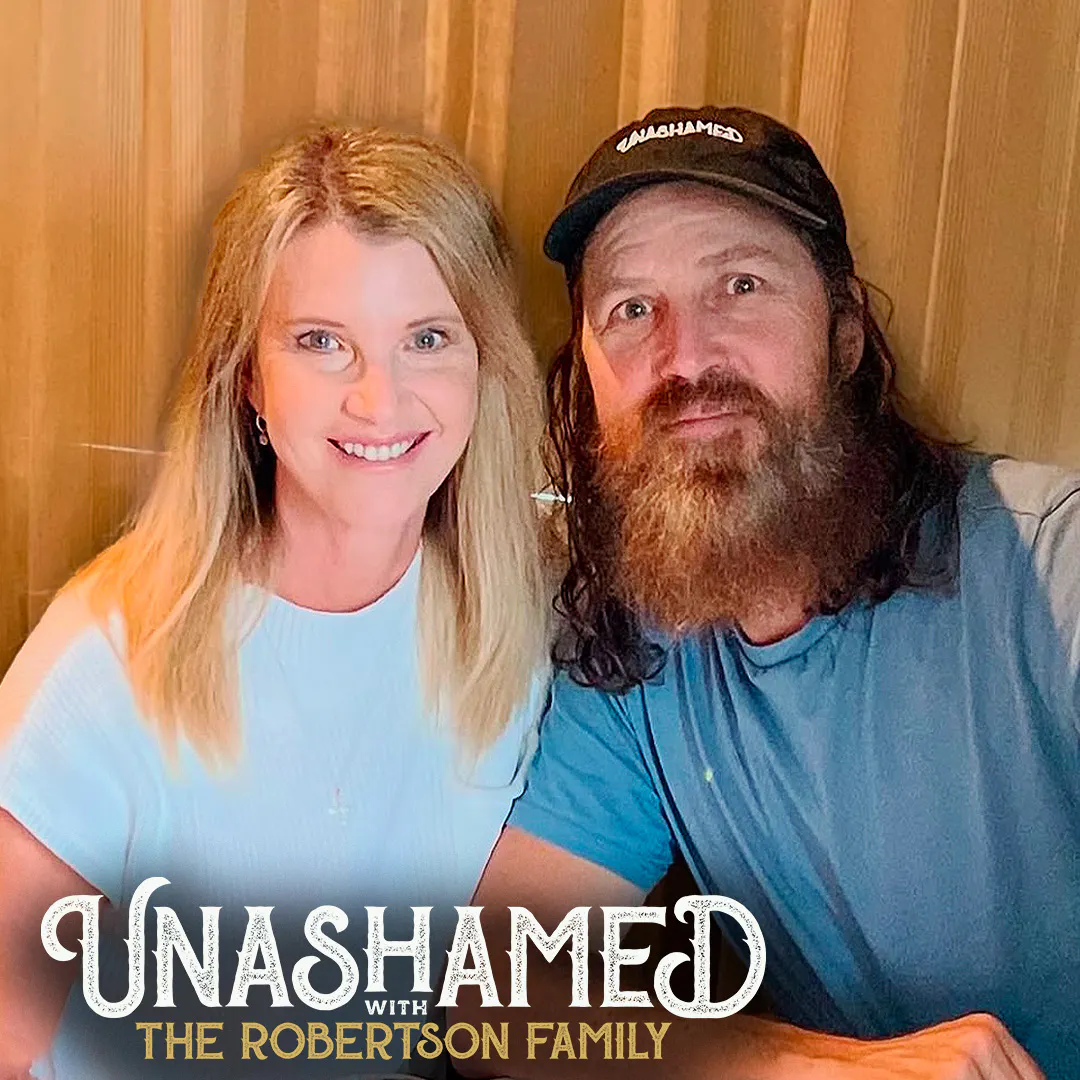
Unashamed with the Robertson Family
Ep 1015 | Phil’s Top 3 Things to Look for in a Wife & the Marriage Mistake Jase Made for 20 Years
00:56:00
Loading summary
Transcript139 lines
- [00:01]
Phil Robertson
This episode is brought to you by Dutch Bros. Big smiles, rocking tunes and epic drinks. Dutch Bros. Is all about you choose from a variety of customizable handcrafted beverages like our Rebel energy drinks, coffees, teas and more. Download the Dutch Bros app for a free medium drink. Plus find your nearest shop, order ahead and start earning rewards offer valid for new app users only. Free medium drink Reward upon registration. 14 day expiration terms apply. See Dutchbros.com I am unashamed.
- [00:34]
Jase Robertson
What about you?
- [00:37]
Al Robertson
Welcome back to Unashamed. We are kind of at that. That new. That crossroads place, Jason. The new year looming. Yeah. You know, because right here for 2025, a lot of changes. I mean we got a new president, we got a new administration. People are excited about, you know, know different things that are going on. People make their resolutions. You know, I had made a push a while back was Jace, you're not going to win your bet. Just to give you the bad news.
- [01:08]
Jase Robertson
$10, I'll never get that back.
- [01:11]
Al Robertson
But 60, I was trying to lose 60 by 60 and I failed miserably. But I did realize just. Just to let you know, I'm not giving up, I'm not quitting because a lot of people just then walk away and just, you know, then your next thing you know, you're on my 600 pound life. But I'm. So I figure I'm going to be 60 for this whole year.
- [01:33]
Jase Robertson
Yep.
- [01:34]
Al Robertson
So technically I'm still going to do 60 by 60, but it's just going to take longer than my birthday.
- [01:39]
Jase Robertson
So in the betting world, so I've heard because I'm not a gambler. That's why I follow. Jesus, let me.
- [01:45]
Al Robertson
You finally gambled and you lost. That's why you don't gamble because you had no control over my eating pattern.
- [01:50]
Jase Robertson
But the $10, I put that in the category of not gambling. I put that in category of entertainment.
- [01:56]
Al Robertson
Okay.
- [01:57]
Zach Dasher
Is that in your New Year's resolution? Al of you just have you. Are you adding in the.
- [02:02]
Al Robertson
Yeah. I mean I didn't have to have a New Year's. I had already made the resolution even a few months ago. But I've just decided I've got to get this weight off.
- [02:10]
Jase Robertson
Yeah, but my thought out is saying so I've heard in the betting world. So now they don't. The. The bet will not be canceled because now you're making another stab at it now. Now it brings in.
- [02:23]
Al Robertson
I could technically I can still do 60 by 60. I'm 60 for a whole year.
- [02:27]
Jase Robertson
So what they'll do is that is true. They'll call that doubling down.
- [02:31]
Al Robertson
Doubling down. I am doubling now.
- [02:33]
Jase Robertson
I could go double or nothing.
- [02:35]
Al Robertson
Yeah, that.
- [02:36]
Jase Robertson
I get 60. That's what I'll do.
- [02:38]
Al Robertson
Do it.
- [02:38]
Jase Robertson
But now we're up.
- [02:39]
Al Robertson
It's gonna happen because Zach and I have decided we're doing it together. Zach wants to lose a few. You probably don't have to lose as much as me, but we're going to get on a plan together, right? Zach, you're going to be my.
- [02:49]
Zach Dasher
I'm going to scour.
- [02:50]
Al Robertson
You'll be my buddy.
- [02:51]
Zach Dasher
Yeah, you will. I'll be your accountability partner. Phil commissioned me years ago to scour the earth for the best coffee. I never was able to deliver on the best coffee. I identified several sources, but he never. Because I wanted to do a coffee brand.
- [03:08]
Jase Robertson
Well, I was fixing to quote Phil myself, however you chose to go the coffee route, which is deflecting the attention on Yalls weight issues. So I'm gonna go.
- [03:20]
Zach Dasher
No, I was gonna say I'm scouring. So I'm looking for a. I'm fixed.
- [03:25]
Jase Robertson
To give it to you. I'm gonna quote Phil. Yeah, do more and eat less.
- [03:32]
Al Robertson
That's a good way to do more.
- [03:34]
Jase Robertson
Physical things and eat less honey buns and things of that nature snowballs and you say no. So that's what he would say. Do more physical.
- [03:50]
Zach Dasher
Sometimes you need help, you know, for the first step is admitting you have a problem, and then the second step is that your power.
- [03:57]
Al Robertson
So Zach's job, because Zach's role on our podcast is always, you know, helping find sponsors, people that can line up with what we're trying to do on the podcast. So I've commissioned Zach to find someone that we can partner with and do some sort of weight loss with that we can get this off. So that's our plan for 2025. So. And I got a year. 60 by 60.
- [04:20]
Zach Dasher
Got a year to do it.
- [04:21]
Al Robertson
I got to get this done by this time next year.
- [04:23]
Jase Robertson
I think these new. These New Year's resolutions are a good idea, but what I found is most people don't do a very good job of sticking to it. Yeah, that's how people say, I'm going to read the whole Bible. They start in Genesis. I've said this many times. I didn't know it was so controversial. Somebody put these books in the order, and they mainly went by time, but not all. I mean, Al, didn't we learn in school that the first book written was actually the book of Job?
- [04:52]
Al Robertson
Yeah, it's the Most ancient, they think, yeah.
- [04:55]
Jase Robertson
So I'm saying, now stop your head from spinning. It's like, oh, we got these out of order. I've said many times the Bible's about Jesus, but what I recommend people to do, it started Matthew, Mark, Luke and John, and then go back.
- [05:09]
Al Robertson
When you start with Genesis, it's great for Genesis and Exodus because it's. It's quite the story. But. But man, then you hit the Leviticus bog and.
- [05:19]
Jase Robertson
Well, that's what I'm saying. Start Matthew, Mark, Luke, and John. I mean, Jesus multiple times quotes. Especially where we're at today in Colossians, when you talk about the family dynamic. Jesus, he continually went backwards and quoted what happened in Genesis about how males and females Exactly. Were supposed to conduct themselves. And there's a famous quote, I think it's Matthew, what is it? 19, where he says, for this reason, a man will leave his father and mother and be united.
- [05:52]
Al Robertson
And it was actually in the context of. Of debating divorce with some Pharisees, you know, because they were like, well, you know, Moses said we could get a divorce. What do you say? You know, everything was trying to trap him. And then he's like, you don't know the scriptures. You don't even understand any of it. I love the way he attacked it. But then he went back to the very beginning, to your point, to Genesis 2.
- [06:15]
Jase Robertson
Yeah.
- [06:15]
Zach Dasher
He said, Moses. Moses made a concession. Yeah, because of your hard hearts. That was never. You missed the whole point of the whole.
- [06:22]
Al Robertson
Missed the whole point.
- [06:23]
Zach Dasher
But. But to Jason's point, it is interesting when you. When you read it that way, because Jesus, like I was. I mentioned this on a previous podcast. I probably said this a lot, but I love that. That road to Emmaus when it. When Jesus is resurrected from the dead and he meets with. With the. The disciples and everybody that he talks with, like the two guys on the road, and then. Then he goes and meets with the disciples. But he says that he open their minds to the scriptures. He showed them from the scriptures. So he's going back and reinterpreting the Old Testament. So it is kind of difficult to understand the Old Testament. Well, you're not going to understand it.
- [07:05]
Jase Robertson
Well, that's why salvation came to the Jews first. We've said this a lot, but it helps you understand the Bible. The Old Testament was pointing to the coming Messiah, which was Jesus. So here's these Jews who said they're waiting on this Messiah, but they're thinking physical kingdom. They're thinking, oh, he's going to come and Destroy Rome. Maybe he'll do it in our lifetime. Bring out the tanks and the weapons. And not literally the tanks and weapons, but swords and chariots and conquer the world. He had a different plan because of his selflessness and his sacrifice for our sins and the resurrected body from the tomb. Well, that, that was way. But he was thinking bigger than just some kind of physical altercation in the nation of Israel. So that's why you mentioned Luke 24, the Road to Emmaus. But I love the John 5, which is one I quote a lot, when he's got some Jewish believers in God gathered around him and he says, where exactly is that at? Verse 39. Listen to this. This is John 5, 39. So I'm going to show you how this goes backwards. He says you diligently study or study diligently. There's a little letter over that study. So it can be interpreted both ways. You diligently study or study diligently the scriptures. Well, what scriptures is he talking about? He's talking about the Old Testament, the.
- [08:46]
Al Robertson
Only thing that's around at this point.
- [08:47]
Jase Robertson
At this point, there's nothing else there. And he's like, you study them because you think by them you possess eternal life. These are the scriptures that testify about me, yet you refuse to come to me to have life. And I'm saying that because when I first said that start in Matthew, Mark, Luke and John, people, so I'm told, wrote in saying, what is Jay's talking about? The Old Testament is not about Jesus. It's about, like now. And I was, well, what is Jesus's point here? Yeah, those scriptures that you're saying. Yes, we're saying is about eternal life. And he's like, they're about me. So he went. He went back.
- [09:29]
Zach Dasher
It would be interesting if you're making New Year's resolutions, which we're going to talk about on the Not yet now podcast tomorrow, we're going to talk about some resolutions that a guy named Jonathan Edwards made. And those are daunting. But. But I think if you, if you're going to make a resolution of reading the Bible, because that is a big. That is like one of the. For Christians. That is. I feel like so many people make that resolution. I'm going to read the Bible in a year, which I think is great. But it would be interesting to take the approach of what you're talking about. Start in Matthew, and anytime there's a mention of an Old Testament passage, then go back, just take a break, go back, find that, find that reference and Do a deep dive on that and then, and then go back to the New Testament and just move your way forward. I think if you read the Bible in that way, it will fundamentally change your whole perspective on the entire thing. Because I did that and it changed my whole. I mean, it rocked my world. I mean, there's so much that I assumed about the Scripture that once I read it in the context of the New Testament, reinterpreting the Old Testament, it made the whole thing come alive for me. I'd never done that before.
- [10:42]
Al Robertson
Well, it also Acts shows you how much has been fulfilled in the New Testament Scriptures and in the Gospels from all that time ago. Because you got so many people today that don't look at the Bible that way and they're still waiting around for all this fulfillment. You're just like, I mean, so much has already happened and you wonder sometimes about the relevance. Think about it. So a lot of Christian leaders today, Christian pastors, you know, a lot of high profile people will look back in that passage at Matthew 19, and they'll look at what these. Look at these Pharisees, you know, they're missing the whole point. Jesus showing the bigger picture, talking about divorce, because they agree with that. But then they'll say, some of those same people will turn around and say, well, you know, Jesus never really addressed same sex. He never addressed trans. He never addressed these things we're dealing with. And so then they create these whole new things when you're like, no, he addressed it.
- [11:37]
Jase Robertson
He just said, here's the idea, here's the idea. In the beginning, God made them male and female. And for this reason, a man will leave his father and mother and be united to his wife, and they will become one flesh.
- [11:50]
Al Robertson
Very clear.
- [11:51]
Jase Robertson
He then goes physical, because as my dad would always say, you look at the parts of a male and a female and you're like, yep. You look at any other combination and you go, nope. And you see how other human beings are formed. It's pretty simple. He get, he gives you the ideal. That's why when you get to Colossians 3 and you know, we're doing a whole podcast on this, when you get to verse 50, I mean 18 through chapter four, verse one, this is probably through the years, been one of the most weaponized passages of scripture based on the culture and religious leaders of the time than any other passages in the world. I mean, and so really the shock when you look at, you know, get the idea that Jesus changes the culture, whatever culture you're in, he changes it for the better. And he goes back to Genesis 1 and 2 over and over and over again. This was God's design. We're made by God. This is the design of humanity. Here. Here's how other humans populate the earth. And then he gets into these family dynamics. But what he said here really shocked the Roman world and their. Their culture. And so it does matter, because you think about where we're at in Colossians. He spends this first couple chapters talking about who Jesus is, why he's king of kings. And then it gets to those who surrender to him as human beings. They put off the old self, put on the new self, and then he's like, well, this is what it looks like in your family, in your. In your home. And so you got to remember. So what was going on in their current culture. This is. We're in Colossians. There was a town called Colossae, and it was under Roman rule. Well, if you look up the history of the Roman organized families, it was basically this entity. The father was the ruler of his wife. Women were considered inferior beings under their culture.
- [14:10]
Al Robertson
Couldn't work.
- [14:11]
Jase Robertson
Yeah, couldn't work. And had no. Their eyewitness testimony. They're never testifying in a court of law.
- [14:18]
Al Robertson
Couldn't testify. Had no role in governance. Nothing.
- [14:21]
Jase Robertson
Yeah.
- [14:21]
Al Robertson
And for the most part, there were some exceptions.
- [14:24]
Jase Robertson
Then the father was the ruler of the children. Even to the point if he wanted to issue the death penalty based on whatever, he had the authority to do it. So it really was about power. And then the, you know, their idea of, you know, servants and masters was more an economic way to, you know, where we have gas and running water and all these things. They would hire people based on, you know, being in debt or some kind of war. And you conquer the other nation. Well, you would get a certain amount of servants to do this work. It wasn't like what we think when you see this master slavery.
- [15:08]
Al Robertson
In fact, most of these people were happy to be living with a family and have a roof over their head and a place to raise their family. I mean, they were very pro. The setting was because they. Otherwise they're going to have to live out under a bridge somewhere.
- [15:21]
Jase Robertson
So this wasn't. This wasn't based on race. And like, it was mainly it's really about authority in, in an economic environment because these people had a chance they could work their way up and make a living. And so it's totally not what we think of when we. We've seen what, what happens, the atrocities where people think they're better based on race and slavery and all that, which was. Is abhorrent, you know. So I think once you kind of realize the context of this. So when they're reading this and back then they would read these letters to the community. Well, his first phrase, they're like, okay, wives, submit to your husbands. Well, that was a given. But he throws in this as is fitting in the Lord. So there's some selflessness that he's saying that they're all like, okay, great.
- [16:21]
Zach Dasher
But then there's.
- [16:22]
Al Robertson
It's an attitude as much as anything, because obviously they're in a setting where what are you telling these people? But there's difference in doing it because I have to and doing it because I want to.
- [16:32]
Jase Robertson
Exactly. But then the second verse would have probably got an audible gasp, which is, husbands, love your wives and do not be harsh with them. And when you combine this with Ephesians, because he does the same thing in Ephesians, when we studied that, he said there. Now he starts off in 21 of chapter 5 of Ephesians saying, submit to one another out of reverence for Christ, because really he's going to give a picture of how, even though we're equal footing, because he just said in Colossians 3:11, Here there is no Greek or Jew circumcised, uncircumcised, slave, or free. He says in Galatians, there's no male or female slave or free. Galatians 3:27. You remember that. It's like you're all under Christ now in the, in the marriage role. We have different roles, but there's no, you know, you thinking you're better than a woman, because back then they even would, would get up every morning, the men and I read this quote somewhere, and they would thank God that they weren't a slave or a Gentile or a woman. I mean, that was, that was something they would say every morning. Yeah, well, if you said that today, you know, you better duck. I mean, it was just.
- [18:00]
Zach Dasher
I mean, it's one of the reasons in apologetics, when you, if you read any of, like the historical evidence for the Resurrection, any of those arguments, then there's a ton of them out there. But one of the key factors in how we, if you said, how do we know that Jesus rose from the dead? This is a question that probably any Christians ask, or even non Christians, one of the things they look at is this, this thing called embarrassing details or embarrassing facts surrounding the event. And the, the thought is, if you were to make this up, you Would, if you go, you wouldn't, you wouldn't have put these things in there because at the time they would have been embarrassing. And one of the most embarrassing facts about the resurrection, if you were to transport yourself back to the time when these accounts were written about, was that women found the empty tomb first. Because Josephus said this in one of his writings that like the testimony of a, of a woman was not credible. So they like, even that, like, like the. Think about the time period that we're talking about. Women did not have any credibility then. There was a intense misogyny and disrespect for women at the time. So Jesus's teaching actually is.
- [19:16]
Al Robertson
But even, but Zach, even the women. And Jesus mentioned this several times in the Gospel, even the women who were there were supporting his ministry and the disciples ministry. There was a group of women that were financially supporting as well as then functionally supporting.
- [19:34]
Jase Robertson
Oh, and Remember in Romans 16, at the end of the letter, he names all these women, they were meeting the church. You think Priscilla and Aquila, they're mentioned always, you know, together. Here's a husband, wife, team.
- [19:45]
Al Robertson
And, and the reason why, I think from the days of Jesus, then going forward in the early church, Luke was really big on in his book about highlighting women, what you're seeing is the, the idea of true equality in Christ. I mean, exactly. That's what he's bringing forward here. And so when we get to the marriage context, it's like, well, now we're going to go back and not have equality. Wait a minute. This is what the whole thing was about. Of course we're equal. There's no higher value on one or the other.
- [20:12]
Jase Robertson
Which is why he keeps lumping all these different things that divide us into one class in Christ, which is the Galatians 3:27 that I mentioned. And I want to read it because I mean, that's what it says. Even though we have different roles, both roles are with Jesus in mind. Because when he said in Ephesians 5, he's like, Husbands, love your wives. As Christ loved the church, he expands in Colossians he just says, love your wives, don't be harsh with them. But in Ephesians 5, he's like, as Christ loved the church and gave himself up for her. So when you get a picture of Jesus as a husband being the head of the wife, well, Jesus, he's washing the disciples feet. Remember, even though there was a betrayer while they were arguing about who was going to be the greatest, speaking of power and authority, and then he goes to a cross and dies for the church. Are you kidding me? That's what I'm supposed to be doing for my wife as I'm leading her.
- [21:12]
Al Robertson
Exactly.
- [21:12]
Jase Robertson
Well, there's not a whole lot of room for weaponizing this authority. And look, I think it's something we all learn. I mean, we came from, you know, a worldly environment when our parents weren't Christians, and my dad was a man's man. And a lot of the advice he gave me as a teenager, I found out to be completely false compared. I'm just telling. And he knows that, you know, as.
- [21:38]
Zach Dasher
Speaking of interpreting the past with the future. Yeah.
- [21:41]
Al Robertson
So the only one I held on to was, don't compliment bad cooking. Yeah, that's the only one I held on to.
- [21:48]
Jase Robertson
Well, Phil used to say, you know, there's three qualities that you need to look for. Now he would say, does she care? A Bible.
- [21:54]
Al Robertson
Yeah.
- [21:55]
Jase Robertson
But then it was like, can she cook? You know, which when you tell a kid a kid is impressionable. And so when I started dating my wife, I realized pretty quick, she can't.
- [22:08]
Al Robertson
Cook and mine couldn't.
- [22:10]
Jase Robertson
We violated one of the three deity aspects of my dad's advice. And then the third thing he would say is, will she pick your ducks? Well, I thought, my wife. She's only 33% of this. What I'm looking for does care about. She cares a Bible out of Bible. But she can't cook now. And she's sure now. Yeah. Is not going to pick a duck. No, that's not going to happen. So what I realized is, it's like, that wasn't a very good guide to be looking for, because that first one made. Made those other two obsolete. You know, I mean, my wife is a, you know, a warrior mother for the Lord with our kids, and she's been an awesome, selfless wife to me, and she's on fire for the Lord. So what I'm saying is I had to work through that because we all bring a certain amount of baggage in that. But when I started acting like I need to give my life for her on a daily basis, like Christ gave himself up for the church, I started realizing that leadership was not exactly what I thought it was in Christ.
- [23:25]
Al Robertson
Well, and to be fair to dad, he was telling us that when he was pretty young and immature in the faith. And so I would say, as he's grown, that's changed. You remember a few podcasts back, we had the Chad Squared, the two military guys on. And what I found fascinating was when those Guys, because I brought up this text to them. And when I asked them, they both said they were selfish. Because I was like, what changed? You guys are in the military, you're serving our country, you're operators. I mean, you're doing amazing things. But it obviously, because I knew their story, it wasn't working great in your personal family. So what changed? I was curious to hear them say. And they both said the same thing. We were selfish, but through Christ we learned to be selfless, which is what love is. It's the whole thing.
- [24:11]
Jase Robertson
So I got a couple quotes I want to read you. I heard a sermon on this, Colossians 3 the other day, and these quotes were. He quoted them, and I took a picture of them on the screen. This first one says, this is David Garland, NIV Application commentary. The verb submit here. And he's got it written out in Greek, hypotasso. So my apologies for mispronouncing. That does not convey some innate authority, but is used for a modest, cooperative demeanor that puts others first. So I thought that was interesting. And this one is from Matthew Henry. I really like this. It says, the woman was made out of Adam's side. You remember when God took a rib from Adam's side, she was not made out of his head to rule over him, nor out of his feet to be trampled on by him, but out of his side to be equal with him, under his arm to be protected and near his heart to be loved. And now I get it, he just made a quote out of that. And I think it's a random thought that he.
- [25:33]
Al Robertson
But it's a pretty good one.
- [25:34]
Jase Robertson
It's a pretty good one. I thought, you know, he's right, because when you read the Definitions of Ephesians 5, which he goes into more detail, I mean, just like, well, love your wife, like Christ loved the church and gave himself up for. And then he goes into anybody who, you know, you should care for your wife like you do your own body. I mean, he's making these illustrations that. That you're realizing this is going to take some selfless moments here.
- [26:06]
Al Robertson
Plus, I hadn't thought about it. You just said that. But the ribs job in your human body is protection. They protect all your vital organs, the things that matter. That's why God put that rib cage there, for protection. Think about how much our wives protect us.
- [26:24]
Jase Robertson
Yeah.
- [26:25]
Al Robertson
Sometimes from ourselves, sometimes from getting into bad situations. I mean. I mean, that role is huge in terms of us doing it together. That's a great point.
- [26:34]
Jase Robertson
It's two selfless people coming together. And so Al, you've done a lot of counseling, way more than I have in marriage situations. And it's almost the same story every time. Well, we were married. It was awesome at first. And then at some point and they usually make a statement like, well, he just wasn't meeting my needs. Or the woman or the man says, she just, you know, my needs weren't being met.
- [27:03]
Al Robertson
Or they'll say, I'm not sure we ever should have gotten married. I picked the wrong person.
- [27:08]
Jase Robertson
But think about that statement. Actually, that's the opposite of what God is calling both of you to do. Which. What is love? It's putting the other person, their needs in front of your own. Because in, in these definitions of our roles, even though they're different and God allows for that because we are. When you think about men and women, generally, men want to fix everything. Now, there are exceptions to this, but just generally. And women. And I got this from the same sermon. Darren Whitehead is the one that gave it at Church of the City. But he said women generally want to feel things, right? And he kind of had a little three point deal of how you navigate that. Where you know, we went when something bad happens, we forgot the exact staircase. But we, we want to dismiss it. You know, we.
- [28:03]
Al Robertson
And they want you to feel and care for what they feel and care for.
- [28:07]
Jase Robertson
Well, exactly.
- [28:08]
Al Robertson
That's where the.
- [28:08]
Jase Robertson
I remember the positive was. They, they need to be validated, they need to be comforted. And this needs to be repaired. Because I remember he said vcr. So I remember those three things. But what we want to do is basically ignore it and dismiss it and just say, well, how can we fix it? But they're like, well, wait a minute. And we've had this happen in my marriage hundreds of times. Because she'll come in, be upset about something, and I'll just give her a quick fix it. Well, here's what you need to do. But she, she just didn't want to hear. She wants to hear, oh my goodness, how could that have happened? I bet you're so upset about that and have every right to be. What a. So you validate it, you know, and then you comfort. Well, you know what, it's going to be okay, we're in Jesus and what can we do to.
- [28:56]
Al Robertson
And it's. And you're so good. It's about. Because they have something they're wanting to share. It's like Lisa came in just the other day and she had been shopping and one thing she loves to do, she Goes and buys stuff, which I don't care. You know, she works, I work. You go buy stuff. And then I don't really ever care to see it. I don't care anything about it. Makes no difference to me. But she loves to come in and she. I'll say, how'd it go? How the shopping go? Oh, it went great. You're not. Believe what I got. Tell me about it. Now, I don't really want. I do not care at all, but she does. She comes in, she sets that bag down, and she goes through everything in it and pulls that. See, I got this for your mom. See this top? And I was like, yeah, that was great. And then I got this, and this was on sale, and then I got this for the kids, and. And she goes through the whole bag. And I was, yes, yes, yes. Because I really don't care, but she cares about it.
- [29:49]
Jase Robertson
I figured this out, Al. We're tracking on this. I'm going to help. I know we're deep into the bowels of this, but I figured something out.
- [29:58]
Al Robertson
Maddie, got your chat. You get your book out of there.
- [30:00]
Jase Robertson
You're taking notes, or get your notebook out. So for 20 years, guessing for the first 20 years of marriage, every time my wife came in and said, you're not going to believe what's happened, I spiritually threw a hammer toward her and said, use this. That'll fix anything. So that didn't work. That made it worse. And so now you know what I do. And that's the opposite I do when I'm around men. I get out my violin and I start playing a song, and it's beautiful.
- [30:37]
Al Robertson
This is not actually happening.
- [30:39]
Jase Robertson
I'm playing that song because, like, when I do that in a duck blind, when I get out a violin, it embarrasses other men because I'm like, you're on. You're on it again. You're on it again. And they're like, oh, quit playing the violin. You're embarrassing me. Give me a hammer. Tell me how to. How to crush it.
- [30:55]
Al Robertson
How do I fix it?
- [30:56]
Jase Robertson
And so now when she comes in, I get it out. Zach, look. And I start playing, and it's just beautiful harmony going in. I'm like, wow.
- [31:08]
Al Robertson
Whoa.
- [31:10]
Jase Robertson
Incredible. But I'm not doing it. Sarcastic.
- [31:13]
Al Robertson
No, you can't be sarcastic.
- [31:14]
Zach Dasher
That's a big but. That's a big difference. I mean, somebody and someone accused me and Brandon on our other podcast of this, but they could also accuse us on this podcast of this, which is they said, do you guys ever Ask each other questions? Are you all just trying to one up each other? And I. And I sat with that comment for a little bit. I thought, why would I. Why would I ask Brandon a question? I'm just gonna tell him what I think, and then. And then if I'm wrong, that is that. That is the question, right? Prove me wrong. And that's how we kind of. You got it. So.
- [31:46]
Jase Robertson
But.
- [31:46]
Zach Dasher
But the way we interact, too, is like that, like, with each other. Like, I mean, I don't call Jason very often, say, hey, can you tell me about this? Typically, what I. Is, I call you, I have an idea already in mind, I give it to you. And implied in that is, if this is wrong, fix it. And then you respond. And that's the thing. But that's.
- [32:07]
Jase Robertson
And so we weed out all the filler. But.
- [32:09]
Zach Dasher
Yeah, there's no but.
- [32:11]
Jase Robertson
The filler and the completion of our lives. And actually, if you'll, you know, just stop and listen for a minute, which is very difficult for me to do. It is very difficult for me. You're like, okay, you kind of see it, and once you see it for the first time, you can't unsee it. And you're like, okay, she's upset about this, and I need to let her get it all out. Assure her that she is completely right for feeling this way, because this is just. And you believe this happened. Okay, it happened. And then let's give her some comfort on it and say, you know, say. Say some complimentary things. And then the next thing you know, she's off, that we've moved on.
- [33:00]
Al Robertson
Well, and you also build up a certain trust level from them to us, because if you're willing to listen and hear someone out, then when they say, well, what do you think? I mean, they'll begin to trust you enough to ask the question so you can help come up with ideas. And so I've noticed that Lisa and I have grown to that point in our marriage where she says, do you think we should do this, that, or the other? She's asking me, as. As the leader of our family, what do you think about this? But if I never heard her, if I never listened to what she said, she would only resent it when I talk. So that's what happens when you don't build it this way.
- [33:41]
Jase Robertson
Yeah.
- [33:41]
Zach Dasher
And if you never listen to her, your leadership is. Is going to be horrible. I mean, I think. I mean, honestly.
- [33:49]
Al Robertson
And.
- [33:49]
Zach Dasher
And I know you guys will say the same thing about your wives, but Jill has a discernment that is far beyond anything that I could discern. I mean, her like her voice in my life is the dominant voice outside of Christ, you know, or the Holy Spirit, like.
- [34:05]
Al Robertson
Sure.
- [34:05]
Zach Dasher
Her when it comes to people. And you say man, who influences your thought, who influences what you do, like who has the biggest influence in your life as a person, as a human being that's living right now or dead. And it's Jill. I mean, Jill, she has a discernment. So if I was, if our relationship was one sided, where I was just where it was like she was treating her like a child, I'm leading her in that way.
- [34:30]
Jase Robertson
That's.
- [34:30]
Zach Dasher
That ain't what this is. This is not that type of relationship. It is. The term used in theological circles is. It's. It's a compliment. It's a complementarian thing that the different roles complement each other. So you have a synergy, which means the sum of the parts is greater than the whole. Where 1 plus 1 doesn't equal 2, it equals 10 when you bring them together. And that's what happens inside of a marriage, I believe. I think scripture teaches this too. Inside of a marriage you had. Yeah, there's some different roles going on here and not. And one's not better than the other. It's the complement of the. Of both of them. And the reason why is because it reflects the triune nature of God. I mentioned this in one of our other podcasts. This is rooted back into who is God? God is Father, Son, Holy Spirit. When God creates man in, in his own image, it says he created them both male and female. And when God had just created man by himself, he hadn't created Eve yet. He looked down and said, it's not good that man should be alone.
- [35:29]
Al Robertson
Why?
- [35:29]
Zach Dasher
Because it doesn't reflect his nature. So it's the coming together of the diversity and the unity. And if you erase the diversity, then you don't have, then you don't have the relationship. It's not let's all be the same thing. That's not what this is. It's not a call. Let's all be exactly the same. No, it's actually let's take the differences between the two, bring them together in one being and that is the reflection of who God is. God is a Father and God is Son and God is Spirit. The Spirit is not the Father, the Spirit is not the Son, the Son is not the Father, the Son is not the Spirit, The Father's not the the Son or the Spirit. They're not the same person, but they're one in being. And that's what's reflective in these passages here that we're looking at in. In Colossians.
- [36:15]
Al Robertson
Well, and think about this thing about. Because we have a lot of young men in our audience, is it coincidence that the two things that Paul says you got to look out for men is being harsh with your wife and embittering your children? Yeah, I mean, he said that directly to us as a dad and as a husband. So when I look at all the situations I've talked to Jase, you mentioned many, many times with a couple over parenting issues or over marriage issues. I would have to say those two were at the top of the list for most men in terms of a weakness that they had in their relationship, harsh with their wife, and embitter their children at a place then where it becomes hard for either to respect you as Christ would want you respected, as he respects the Father. So to your point, Zach, you see the nature of Christ and you see the nature of how we strive to be.
- [37:10]
Jase Robertson
Well, what Zach said and what you just reiterated is Philippians too. We always go there to show how Jesus, you know, became a man. And he did it in humility. And I've always linked it to him becoming a man. He. He didn't do what Adam and Eve did, which was that temptation was, you know, if when the evil one told him, said if you do this, you'll be like God. And here's Jesus becoming a human. Well, he was tempted by the same evil one and went through the three temptations. You know, that's recorded. But he didn't consider him being a God on earth as a. As what we all do as humans. And I think that's what that phrase is talking about when he says verse six, who being in very nature, God did not consider equality of God something to be grasped, but made himself nothing, taking the very nature of a servant. But what's interesting is that is in response to what Paul wrote, the Philippians. In the first four verses about us, he says, if you have any encouragement. This is verse 1 of Philippians 2 from Being United with Christ, if any comfort from his love, if any fellowship with the Spirit, if any tenderness and compassion. These are all relationship qualities that you can only share with some other being or some other person. Then make my joy complete by being like minded and having the same love, being one in spirit and purpose. Do nothing out of selfish ambition or vain conceit. So we're back on this selflessness again. But in humility consider others better than yourselves. Each of you should look not only to your own interest, but also to the interest of others. We never think about this section being the foundation for marriage. It is, but it's the foundation for all relationships, friendships, parenting, the Godhead. I mean, these moments where you're sacrificing and being selfless is how we come together despite our differences and despite our roles.
- [39:18]
Al Robertson
No, this.
- [39:18]
Zach Dasher
That's what. It's that. It's that idea, though, that was corrupted in the fall, that the. The words in this passage are submit, which is a bad word in 2024. Because I'm thinking, submit. I ain't submitting. I mean, I. Even when I hear it, I'm like, well, I'm not. If someone said, hey, submit to me. If someone told me that anybody, I'd be like, no. That'd be my first response. No. Why? Because that word, it means something different post fall. Because now if I submit to you, that sounds like you're in control of me. Or words like serve, like it says right here, you are serving the Lord Christ. Serve me. Like these. These are things that are like. We have a negative understanding of them because we live in a. In a world that's fallen. So we live. Which means we live in a world where there's this word called abuse. We live in a world where there's this thing called manipulation. We live in a world where there's this thing called positioning. And so in that world, yeah, it's risky. It's very risky to submit. It's very risky to serve. It's very risky to love. It's very risky to obey these things because they put me in a position where if I obey you and you have nefarious intentions, then you may harm me. But that's the thing that Christ is redeeming is that is not how it enter how it is in the inner life of God. There's no fear of submission inside the Godhead, because no one's ever going to take advantage of you. And so the coming of the kingdom is to re. It's to. Is to redeem that and to restore that order. That was. That was there pre fall.
- [41:04]
Al Robertson
Think about it. What you just said was Jesus was consistent before he came here, he submitted to the Father that he would come here. That was an act of submission. Like you just read. He did not consider equality to be grasped, but he became us a servant. When he got here, he's a baby, and then he's a child, but he's still the Son of God. And then you remember the scene in Luke 2 where he gets lost. And then they come back and they're like, well, what are you doing? Three days we've been looking for it. He said, well, didn't you know I'd be here at my father's house? And then the Bible says he went with them and obeyed them. So now he's submitted to his earthly parents and his dad. His earthly dad is not even really his dad, but he submits to him. Then he has disciples, and on the night before he's going to be betrayed, he gets down and washes their feet. He submits himself, even to his followers. And then later that night when they come to get him. And he could have ended the whole thing if he wanted to. He submitted to his enemies.
- [42:09]
Jase Robertson
Exactly.
- [42:09]
Al Robertson
So you look at the consistency of Jesus in every aspect of his deity and his humanity. The one consistent is submission and sacrifice.
- [42:19]
Jase Robertson
That's what I was going to say. Everybody goes here. And like I said, people have weaponized this throughout history. And even the part where it gets to the slaves and masters and I think hopefully depicted that this was a totally different situation than what slavery became, an abuse of the scriptures themselves over, you know, taking advantage of races or lower classes.
- [42:45]
Al Robertson
Well, like Zach said, there's plenty of Old Testament passages where they were told, the Israelites were told, don't do that.
- [42:51]
Jase Robertson
Oh, yeah. I mean, people have always wanted to have an elite status of human beings over other human beings, and great atrocities have. Have happened because of that. But in this case, you know, they had a system where they. It was like what we view employers and employees and they, they went around with the family and not to say there probably wasn't abuses of that, because I'm sure they're.
- [43:17]
Al Robertson
There was and there still are.
- [43:19]
Jase Robertson
But this was more about, what are you going to do with this power and authority, you know, on earth? Well, in Christ, he kind of gives you this idea that what Jesus said, all authority on heaven and on earth has been given to me, and I'm in all through all. I mean, not only did I save you, I want to work through you. I want your spirit, my spirit, to be in you. And so we know what the fruit of the spirit is. It's the same kind of qualities we're talking about love, joy, peace, patience. So even in your leadership, that's what people should see. Well, when they see a husband and wife come together and they both have this. Even though their roles are different, they both have this selfless acts of love on a daily basis. That's why when he got to the end of Ephesians 5. And he said, this is a mystery, but I'm talking about you're married to Christ. But you can see that in the way that two spirit filled people are functioning, male and female in a marriage relationship, they can become one and this thing can become vibrant. And you really see that with people who are in the Lord and have been married a long time and they just, I mean they just feed off each other. It, it becomes a beautiful spectacle to the, to the planet in this relationship. So I really think once you start reading it in that vein, it comes to life. So after, I mean, yeah, it could be beautiful.
- [44:44]
Zach Dasher
I mean, I think that it's super controversial, obviously even in theological circles and good people, great people disagree on what we're talking about. And it particularly even in when you get to how God interacts in his inner life and there's these big terms like the subordination, eternal subordination of the Son, which is basically that the Son always was he always subordinate to the Father or not. And there's lots of controversy and discussion around it. But I do think when you boil it all down, that Philippians 2 passage is so key for me too. I actually think that there's something in the cross that is reflective of the very core of the nature of God. And in that, I mean that in God's nature there is this sacrificial nature, sacrifice being defined as meeting the needs of others, unto meeting the needs of others. So but Christ embodies that in his incarnation. I mean, if you just look at, like when you try to get your mind around, around the income we just got through with Christmas and you think, you try to get your mind around the fact that the God of the universe incarnated that passage in Colossians that the fullness of God lives in a body. I mean, that alone. You want to talk about a submission, you want to talk about a sacrifice, you want to talk about it empty. I, and I think there's something in this that is the key to our own human flourishment is when we embody that type of life, the life of Christ, we actually experience something vibrant as opposed to the opposite of that which the opposite of the cross is. I'm going to conquer you, I'm going to destroy you. I'm going to win at all costs. That doesn't seem to be the pathway to human fulfillment, but the pathway to human fulfillment seems to be what Jesus modeled for us here in the cross. And I think this passage reflects that.
- [46:40]
Jase Robertson
Yeah, exactly, I agree. And that's why when he moved to children, saying, children, obey your parents in everything, for this praises the Lord. Well, if you realize this is about how you use your authority, and you realize in that moment. So in the Ephesian passage, he adds this amendment with, not only do you obey, but you honor your parents. Where's that at? Ephesians 6, children, obey your parents in the Lord, for this is right. But then he says, honor your father and mother, which is the first commandment, with a promise that it may go well with you and that you may enjoy long life on the earth, which a lot of scholars kind of look at it like, all right, when you're a kid, you obey. When you become older, as an adult, you, Honor, it's like that's your phase, which is what we do. I mean, we're doing that, you know, with my dad right now. He's down. He's, you know, he's ill. His mind's not working as much. And you say, well, what do you do? Well, we're honoring him because, I mean, boy, did he lay down a legacy for us to live in the Lord. And I really believe that comes, you know, with a. With a blessing. But it also is scary because you realize that you have an opportunity with your kids in your position, you know, as fathers or mothers, well, you can really do them some harm in your decisions. And that's what you mentioned about. You know, here comes manipulation and abuse. And. And I just think it's a dangerous responsibility that we have. And outside of Christ, that would just be really dangerous on how you're influencing your kids.
- [48:31]
Al Robertson
Well, listen to people in our culture today, because that word embitter, the Greek word there is erectus. Oh, and there. And I've. And I didn't realize this. I looked at that word. There is a disorder now called erectism, and I know it has to come from that word erythro. And you know what the. The symptoms are of this disease? Jays. Extreme irritability. Someone that's irritable all the time has this. They call it eretheism. And it's interesting because how many people in our culture do you hear talk about their relationships that they didn't or didn't have with their mother or father that had led to so much of how they're acting out now in their entire lives? So when he just says this one little statement, do not embitter your children, that has a huge broad spectrum of bad that can happen. You don't live.
- [49:20]
Jase Robertson
And you remember, we brought up. We Started off as podcast talking about Matthew 19 when divorce got brought up and he went back to Genesis saying, this is the way. This is the ideal. God designed one woman, one man for life. But right before that chapter is Matthew 18. And you remember what that's all about, and I think we should talk about it next time on the podcast, is that he's like, you want to know who the greatest in the kingdom of heaven is? And he's like, he called a little child and had him stand among them. And he said, I tell you the truth, unless you change and become like little children, well, he goes on to give you the reasons why. But when you think of a child and what they are asked to do, which is sacrifice, what they want to do and obey and trust, and it's back to that authority thing, they're totally dependent on you, especially the smaller they are. And it gives you a picture of what we are to be created in Christ Jesus to our heavenly Father, which is totally dependent on him and trusting him. Well, for us as fathers, that's a big responsibility. You better sure make sure what you're doing is godly. Because he goes on to say, if you cause them to stumble, it'd be better for you to be thrown in a sea with a millstone tied around your. It was the most graphic that Jesus.
- [50:47]
Al Robertson
Could be, which shows you how much he loves them. So we're out of time. We'll get into that next time. And also we're going to kind of do a detour over to the book of Philemon. We want to read ahead because it is an actual story from someone in Colossae. This very much fits this context.
- [51:03]
Jase Robertson
It is.
- [51:04]
Al Robertson
So we'll do that next time. See you. Thanks for listening to the Unashamed podcast. Help us out by rating us on itunes, and don't miss an episode by subscribing on YouTube. And be sure to click that little bell to get notified about new episodes. And for even more content that you won't get anywhere else, subscribe to BlazeTV@BlazeTV.com Unashamed.