← Unashamed with the Robertson Family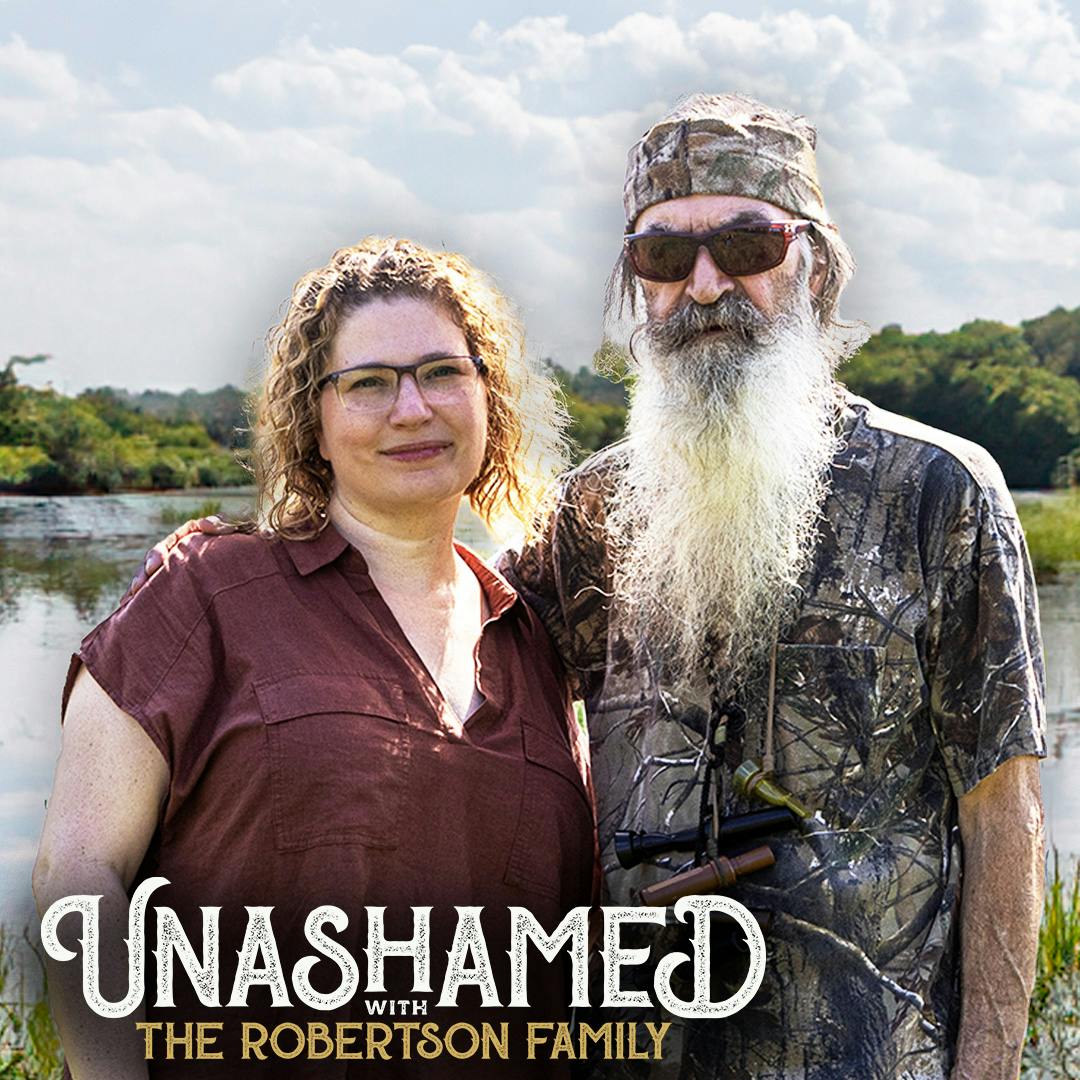
Unashamed with the Robertson Family
Ep 1258 | How Phil Faced His Past With Daughter Phyllis: “I Never Knew”
00:54:46
Loading summary
Transcript105 lines
- [00:02]
A
I am unashamed. What about you?
- [00:07]
B
Welcome back to Unashamed. Jason, I got a question for you. So it's by the time this episode drops will be probably right at the very end of duck season this year. And we've been talking, you know, a lot about hunts and, you know, ducks coming and are not coming, as it were. And this season started with kind of a call to arms, I guess we had after dad crossed over back in, right before Memorial Day last year in 25, that we were gonna. The brothers were gonna hunt together, which we did. And it was great because it was kind of a, I guess an homage to dad, you know, just to kind of say, you know, we're here on open today because you're not here. So whatever. Whatever his experiences are crossed over. We don't know. And. But we. You killed a band of duck.
- [01:02]
A
Yeah, my first duck, which was. Has never happened. So that made me kind of chuckle.
- [01:07]
B
Yeah. And they just kind of give us that thing. So. So I got a quite my question for you because we got a guest coming on a little bit later. So we're going to be talking quite a bit today about. About dad, about Legacy, about a lot of things that he brought to us and obviously our kind of family tagline. It was faith family ducks. You know, especially when the show came along in that order. You know, dad used to say and what I just want to know from you, like, so now we're ending a first complete season without dad being there. What's that been like to you? I mean, do you do this. It does his kind of like with this podcast. Is the presence of him come up often? Do you think about him? Do you quote him?
- [01:50]
A
Yeah, I've thought about him every day. Just because we had this weird phenomenon because we pump our water in. In low water years from the Ouachita River. But what happened was, and I've shared this before, we had a series of unfortunate events come together. We had an extremely dry year, but they also dropped our river down from Pool Stage. You know, they call it Pool Stage because that means this is as low as it goes until they decide the government to drop it down 7ft lower because they need to work on some locks and dams so barges can traffic the river. And so when those things happen, we could no longer pump from the river because we pump from an offshoot creek of the river. Well, that just. That just put it where it was unpumpable. There's no water. I mean, a little bit with what little. We did pump, we. We dried the creek up. And so I thought every day, I mean, he would have never. He would have been so frustrated that we. It just won't rain and we can't get any water. Because my dad, he pretty well hunted every day of duck season every year for how many years?
- [03:17]
B
60. So 65 years.
- [03:21]
A
The couple times. Just think about. Duck season is 60 days. Now, there was a period. It was 30 days a season, but he pretty well hunted every day. And so there was only a couple times, I remember, where he got so sick that he could not put one foot in front of the other. But even then, he shuffled out there where he could hear whether we were shooting or not from his porch. And one of those days was famous because we hammered him. And he said, it's the first time in my life that I almost cried. You know, it's just hard for him. But I will say, this year has also, you know, Willie, from our first hunt this year, it kind of ignited a resurgence in his duck hunting practices. He's gotten more this year than he has in the last 30 combined. So I thought that was interesting. And maybe it is just that kind of nostalgic, passing down the legacy. But, yeah, I quote him often because I miss him and it's been. It's been weird without him. And I've missed more days this year than I've ever missed just because we simply have no ducks and traveled a lot.
- [04:43]
B
Well, I was. And I thought about it because he couldn't really. He wouldn't have imagined, although he was good at adapting and reacted, but he wouldn't imagine not being able to pump water out of the river because the river was the one constant. Right. As long as he'd been out there. Now, he expected it to come out of his banks, but not to go below pool. And so that would have been a whole new experience for him. But I was thinking about, you know, the decision to move out on the river was made with the idea that we would live off the river and live off the land. And I just thought about through all those years of us being out there and growing up until we kind of left and made our own way in town, our own life that, you know, it was always things you didn't anticipate, like the whole crawfish enterprise that came up for what, maybe about three years when people were start crawfish craze really took off when north Louisiana and man, they were looking for whatever they could get. And we had access to flooded property. And so then it was like, well, we can make Some money off of crawfish. So it's like there was always an adaptation to what nature or in our, we would know. Nature, of course, is God. But what's being offered for us to take advantage of to make a living? I mean, wouldn't, was that, would you say that's a good description?
- [05:58]
A
You know, I think it contributed in me being just grateful for what I have and appreciating things and, and having a non entitlement spirit. I mean, working the land, it just teaches you certain ethics. You know those, those were hard years. I mean, I remember being so nervous just as a kid, running this machinery, making the duck calls. And even if you're a commercial fisherman, you know, it's dangerous. I mean, you're out there in the river, you fall out of the boat or catch a rope on your leg, which happened many times, but you know, thankfully never fatal. Over just catching fish that was. You were making so little of money. And I remember as a kid I used to be thinking, how come this is not worth more? I mean, we're out here risking our life and they, they're fantastic tasting fish. This is the cream of the crop. Even the crawfish operation, because we would eat them every day and which we could have made, you know, more money, but my dad was like, I just can't in good conscience take all the bags to the market. They're too good.
- [07:07]
B
Yeah.
- [07:08]
A
I mean, because we were like wanting to reward ourselves for just back breaking work from day before daylight till to after dark. And I'm just so thankful for all those, those ethics that I learned doing that process.
- [07:24]
B
But he also had a philosophy of what I would later learn through the Bible was what I would call his philosophy now, a first fruits philosophy. That whatever we got from, from the land, from the water, from the river, his family always got the first fruits.
- [07:42]
A
Oh, he did, yeah.
- [07:43]
B
Of that labor, in other words, we got the best. And I've told the story before. We would take our fish into the fish market and they, they ate the scraps because they were trying to make money off the best. And then they ate the fins and the tails or whatever. And so I just always thought, hmm, because when we were eating, we were eating like belly meat of the Appaloosas. You know, we're eating the best. And so I just. But that's a first fruit philosophy. That's the idea of God saying, you bring me the best first, don't bring me the last, don't bring me the scraps, don't bring me the leftovers and that's the way we grew up. When you say Jay.
- [08:15]
A
Well, yeah. And I mean, you look at our culture now, since the phone epidemic and all, and you just. You have kids growing up who don't want to work, don't appreciate it, or, you know, can't do anything out in the wilderness or the wild man. And I'm constantly taking people duck hunting. That me and this the other day, I was hunting with a guy who guides, and we were swapping stories about the guide process when you take people. And he was like, I mean, the other day he said, I had, you know, they were five people from the corporate world in their early 30s, and it had had a big rain and I couldn't haul everybody out there, but I was like, they all had waiters. And he said, so I just thought, I'm going to take all their gear to the blind and just have them walk. I mean, it's shallow water. There's nothing can happen. And he said, it's maybe 200 yards. He goes, gets all the stuff. And when he turns around and starts looking back, he said it just looked like some creature had attacked them all. He said they were all on the ground and he thought, what is going on? They literally were just falling out. They couldn't walk in gumbo mud 200 yards without remaining standing. And these were like young in shape people. And I was like, you got to be kidding. And he's like, no, he's like, it was traumatizing.
- [09:50]
C
They're just falling down all over the place.
- [09:52]
A
They're just wallowing around in 6 inches of water in the mud. And they can't walk 200 yards through the mud and get in a blind. And he said, it's the most scared I've ever been while hunting. Because I thought, if you can't walk 200 yards in the mud to go duck hunting, how are you going to do with a firearm? And I thought, man, are we really there in our culture where people just from these big cities and cult, these corporate, you know, America can't go out in the wild, not. Not just survive. They can't walk 200 yards.
- [10:31]
B
That's exactly.
- [10:31]
C
I mean, well, to be fair, you guys had. And I remember this just growing up, one thing we had was the benefit of the. Of whatever the end product was. You had that reward waiting on you. And so when you've. When you've tasted that fried Appaloosa catfish, that belly, those OP bellies, then you know, you know what's on the other side of that. So you, it's, it's, it kind of biblical. And the Bible says, for joy set before him, he endured the cross. You can endure all the hard work for the joy set before you, but you got to see and got to get to that reward. And I think that was like a motivation when you think about growing up like that. I mean, because I always thought, it's funny, y' all grew up poor, but I always thought y' all were rich. You know, when we would come in town, I knew the food was going to be better than what we were getting. Y' all were going to have all the, all you can eat crawfish. You're going to have all. I mean, like, so we always thought we come in town, it was like, oh, they, they've hit the big times. You know, that's how we perceived it.
- [11:29]
B
Well, Zach, your, your family was in full time ministry, so you were the only people poorer than us, which is pretty bad. So. So about 10 years ago, just to shift this, because I want to bring our guest in. So as the show was winding down, Zach, we dad approached you and you guys started talking about some opportunities post Duck Dynasty to do some things that Dad's up really wanted to do with the platform that God had given him now. And that was more to get the gospel to everybody. And that started with a movie that wound up being then this podcast and another show we did for Blaze. And so all those were opportunities. And then about, you know, six years ago, something very life changing happened. And so that's what we want to talk about the rest of this podcast today. And so that life changer is going to join us on the other side of this break. So let's take a break and I'll introduce our special guest today. So, Jase, you've been on the road here quite a bit lately. When you got back home, were your little poochies glad to see you?
- [12:34]
A
Oh, yeah, they know what that means. When I start rustling this bag, my two little dogs, booty, starts shaking and they come running.
- [12:45]
B
So if you're a pet owner like us, you know, sometimes your pet gets to feeling down, gets to feeling bad. You load up, you go see the vet, they're giving you the shots, they're telling you about the diagnosis, and it seems like you just get locked into a pattern. But the truth is, the problem is the same. You're getting a weak immune system from eating processed dead food year after year. That really is the source of many of our pet's problems. We don't want to do that. We want to change that. So that's why our good friend Dr. Dennis Black came up with a product called Rough Greens. They love it. Mine do as well. They look better. Their coats are shinier. That's because this product is packed with nutrients that helps them work from the inside out. It gives your dog the foundation they need to thrive instead of just patching up symptoms and getting them by. We want to get you off that vet visit. Merry go round with America's number one dog supplement. Thousands of pet owners are seeing the difference. You should try it. Fewer problems, more energy and shinier coats. Right now you can try it for yourself with a free Jumpstart trial bag. Just cover the shipping because the best doctor visit is the one you never have to make. Go to roughgreens.com use the promo code Unashamed to break the cycle today. R u f f greens.com promo code unashamed. So welcome back to Unashamed. We have our esteemed guest, our baby sister, Jace. Phyllis is joining us from St. Louis, Missouri. Welcome, Phyllis, back to Unashamed.
- [14:20]
D
Hello.
- [14:21]
A
Hello.
- [14:21]
D
Good to see y'.
- [14:22]
B
All.
- [14:23]
A
Good to see.
- [14:23]
B
So it's been. It's been a minute. We kind of opened this talking about our faith family ducks legacy with dad. We're talking a little bit about our childhood and I kind of tease you're coming on and you got a new book is that we're going to be talking about a little bit later just to let our audience know what we're going to be talking about today. But obviously, you know, all of us miss dad. This was his podcast to begin with and Zach and I weren't really even going to be a part of it. And Jace wasn't a part of it at all in the early days. And it has wound up being what it was with the four of us and obviously not only us, but the unashamed audience misses dad, as we all do. But I did think it was interesting, Phyllis, that you so you came into our lives in. In 2020. We found out about you right there at the beginning. Right. Just before COVID And actually I was meditating about this this morning about you being on today, and I realized that the unashamed audience had the front row seat, the first ears to hear your story as it now has connected to our story and you finding us and everything that happened. And so I looked it up because, you know, Jason, I'm a Note taker. And May 18, 2020, way back, the title of it, the podcast, those two podcasts were our new family and so, you know, early on Unashamed. So if you've been around a while, if you've been with us from the beginning on Unashamed, you remember this. And you were the. You were the pathway to the rest of the world. We told our story and Phyllis's story to the whole world through the Unashamed podcast. And it was really great. Zach, you remember we were, you know, wondering how this was going to kind of come out in terms of how the story went. It turns out our discussion on the podcast, first with the brothers and dad, and then with Phyllis and mom and me, Jason, dad, and we told the story. And so the only quotes that were out there, because it was a news cycle, you know, for a day or two, was what we had talked about on the podcast, which we didn't really necessarily, you know, know what was going to happen, but it turned out to be a great way to tell the world. Don't you think you remember that, Zach?
- [16:45]
C
I do. I remember sitting up here in a restaurant and you were telling me the story of Phyllis, you dropping off a envelope to somebody in the family. I can't remember who. And I was like, I think there may be some legs to that story. We might want to look into that, because they were kind of another, you know, somebody kind of reached out. What? Yeah, I was like, I. I think that sounds legit. And it's. So the initial contact, I think I was the first. Was that the first one?
- [17:12]
B
You were the first.
- [17:13]
D
You were the first one.
- [17:14]
B
Yeah.
- [17:15]
D
I was bummed because you didn't stay the main one, because when we ended up visiting later, I was like, are you going to be there? You know, you're like my little, like, lifeline. And you're like, no, no. You know, I'm like, okay, okay.
- [17:28]
C
I've been accused of that before. Get the ball rolling. And then where's that? Yeah, he gone. Hey, guys.
- [17:32]
D
So what made y' all think, like, out of other maybe people that had contacted you? Because I think that had happened before, like, hey, I'm your long lost cousin, or whatever. What made y' all think, hey, this one has legs to it, or.
- [17:44]
A
Well, I remember that was me, by the way, Zach.
- [17:48]
C
So you got the initial thing?
- [17:50]
A
I got. Yeah. I met. I met Phyllis for the first time when Phil and I did the. What would we call that? It was kind of the Christmas season service.
- [18:01]
B
Well, it was the last Sunday of the year, and everybody that normally would be doing things at our church were gone. And so for some reason thought it was a good idea For Jason dad to do a takeover.
- [18:14]
A
Al, let me explain that story. I'll tell you, this is a very good lesson in life. I griped to your right hand man, Mike Kellett. I said, hey, of course, here I am a member. I have no authority. I'm not in leadership. I'm, I'm a member that shows up half the time because half the year I'm gone somewhere. And I said they were going to do a kind of state of the church, the local church. And I, I just, he was walking by and I said, hey, I got a question. Why would you do a state of the church when none of the church are going to be here? It's the Christmas season. I was like, that's a terrible idea. He said, well, why don't you do it then? I said, gulp. Okay. And so I, I got Phil. I was like, hey, there's. Because there's a lot of visitors. People are bringing their family in. Half, half the normal members are gone visiting family. And I was like, let's just do it about Jesus. And so that's how that happened. Al. But the problem was there were so many visitors that Phyllis and Tony were just in a line of other visitors. And I was in meet and greet mode and you handed me an envelope. But I was just. And when you're in that mode, you understand that now, but I'm in that mode all the time. People are constantly coming up, they're taking pictures and they're handing you stuff and you're looking, and most of the stuff is like, oh, wow, I don't even know what this is. You know, is this a lot? You're shaking the envelope, seeing if there's anything alive in it. And then of course, I forgot all about it, put it in my truck somewhere and never even looked at it. But then we had podcasts a couple days later, and you had also dropped an envelope at Duck Commander and one.
- [20:06]
B
At the church that I go.
- [20:08]
A
And so then in a weird thing, this has never happened before, and I do see God working in this in some way. But I was stopped in at Duck Commander to get the mail and they handed me that. And I was on the way to the podcast and I didn't realize that this looks exactly like the one you handed me. It never registered. So we do the podcast and I was fixed to leave back then we did the podcast out on the river and I handed it to Al because it was addressed to Phil. And so we opened Phil's mail because that's just what you do as A family that's famous. And Al was going through it, and he looked. I was like, here we go. We got another. We got another family member, because here we go. When you said that, Phyllis, we got hundreds of those via email. I mean, the list is long about.
- [21:00]
B
Not necessarily like your story, but like, we're related. I found it.
- [21:06]
A
I can say I've had hundreds of people send me an email or an envelope saying that we're family and they need $17,000 or 28,000 for something. But anyway, so Al started. So our attitude. I'm trying to tell this story, realizing that we got a lot of junk at that time. So we were obviously apprehensive about this. But when I saw the picture of you, for some reason, I think we kind of stopped Al and said, huh. Even though the math didn't line up at the time, because we didn't realize when Phil came to the Lord, that was late in the year. So this. This actually would have been pre Jesus where this relationship happened. And so. But the picture, for some reason, I could see a little bit of my grandma. You know, I just. That's what hit me. I was like, she actually looks like somebody that would be in my family. And so that started the rabbit hole.
- [22:14]
B
Well, we said the picture. In the picture, Phyllis, you're sort of a compilation of Robertson women. A little bit like Aunt Jan, a little bit like Judy, maybe a couple of cousins. And so there's these characteristics. And then Zach told me when he called me after he talked to you, because we were all highly anticipating what was going to happen from that conversation. And Zach said, dude, it was like talking to my mom.
- [22:40]
A
And.
- [22:41]
B
And so. Which was, we took as a high compliment. But also my Aunt Jan was a little bit crazy, too, a little neurotic. So. But now that I know you, Phyllis, it fits perfectly. I was going to. I was going to say all counts, honestly, all counts. I was going to say this because. So your. Your new book is called I Never Knew Finding Healing and Renewal After Trauma. And. And Maddie's going to show a picture of that, and so you can see it. And I'm super excited. I haven't read it yet. I've just read some excerpts, and I've also read the summer you sent me, but I did read last night dad did the forward for the book. Because you started working on this while he was still. Before he got sick. Because you've been working on this a while, and. And initially even you and dad were going to write something together, right? So it kind of Ebbed and flow, but. But something he said. So I wanted to say this in his own words because I thought this was powerful. And this is during Dad's forward for the book. It says two things happened in 1975 that set in motion an almost miraculous ending to our story. And I thought that was very powerful because I thought about it, it was the beginning of a story. And yet, because it's been such a short time, it was also the end of a story, just within a small framework. But he said two things happened. I surrendered control of my life to Jesus. And that's what Jace was mentioning. And that happened at some point, I would say around fall of 75, somewhere, late summer. I don't exactly remember, but I do remember him showing up, and Jace probably does, too, at our house, our apartment, I mean. And it says, the second thing was Phyllis, my daughter, was born only a few months later. So I tell people I was reborn and my daughter was born all in the same year, which is something very powerful. I love it. It's a tagline, and I know you use that when you speak. And so I just want to ask you before we get into some of the tenets of the book, because now you're back in Missouri, because that's where your grandkids are. You got a new career, you're doing some things. So I want to catch up with our audience for where you are. But I just want to say, what was it like? I mean, you wind up moving to Louisiana later that year in 2020. You can't. I think you guys came like that September or something, August. And. Yeah, and then you live there up until just this past September. And so what. What was your experience like in Dad's last years? Was it what you expected? I mean, what. What do you take from that? You know, five years you got. You guys had together. And of course with us too, but especially with mom and dad, it's hard.
- [25:24]
D
To think about having really an expectation. I don't think I. What to expect really, but it was. It just became like a natural ebb and flow of living with family because we were right next door. We could walk down there in minutes. And, you know, their house is always open door. You can just come in anytime, just kind of knock on your way in. And dad would say, hey, you know, every time we walked in. So it just became this kind of just this natural flow of family living next door, which brought such deep connection that you really couldn't get if we had lived in town and even had even down there. If we lived in town and had to drive out that 30 minutes to come out and see them with work, people get busy, you know, this. All y' all are in town.
- [26:07]
B
Yeah.
- [26:07]
D
It just wouldn't have been so easy. So it made. Made them accessible physically, which made them more accessible emotionally for that connection to.
- [26:18]
A
Happen, which I think it was wise of you to deduce that. My dad, he basically lived a line off of Jeremiah Johnson. When he's like, I've been to a town, I don't want to go back. He just does, you know, he just didn't. That's where he was at. He was going to stay there no matter what.
- [26:38]
B
Well, he only went once a week, and that was to meet with the brothers, as he would say, or to, you know, share the gospel and do what he did. And the rest time he did it out there. You titled the book I Never Knew. And Phyllis, I want you to tell the story of where that came from, because that's a very powerful part of the. Of the. Of the narrative and when dad said those words. So tell that story. Where I never knew came from, how that happened.
- [27:03]
D
Y' all had arranged for us to come down to visit and meet everybody. So this was in February of 20. 20. 20, I guess. Yeah, it was 20. And so we got there and you and Lisa picked us up from the airport, and we jumped in the truck with you and just kind of visited on the way. And as we pulled up into yalls driveway, I saw dad and Ms. K standing there side by side. And it was, you know, I was nervous. I didn't know. I had no expectation what does a person expect in that moment? But I wondered, like, is he gonna, you know, is he going to reject me? Is he going to accept me? And y' all had said he's not nurturing. You'd said he's not touchy feely. And so I walk up there not knowing what to expect. And when I did, he reached out his hands and he put his hands on either side of my face and just looked into my eyes and he said, I never knew. And I mean, it was just that moment where, you know, if he had said anything else, I can't imagine if he had said anything else. It was the first thing he said and the first thing he needed to say that he. Had he known about me all my life, it would have been different. So it helped me to understand that it's not like he knew about me all my life and just failed to reach out.
- [28:15]
B
Yeah. And I want to read These words, these are from the forward. So these are Dad's words. I feel like since dad, you know, is obviously not physically with us, it is great that he left this behind. This is powerful to go with what you just said. He said, I'm going to be honest with you. I was nervous about meeting her. I wouldn't have blamed her if she had spit in my face and told me to take a hike. I was also fearful that I had passed on to her my predisposition to debauchery and addiction to sin. Is she promiscuous like I was? Is she a drunk or a drug user like I once was? Is she mean and hateful to the people who love her the most, like I was? When it came time to meet her face to face, I had a speech prepared for her, a lengthy one. And then the day finally came, and I stood outside with Ms. K, my long lost daughter, walked up to me, and I'm not going to lie, I was afraid. And that got me that, that one thing, because I've never known dad to be afraid of anything. And so for him to say that and be honest about his feelings was very powerful to me. And then he said dreadfully. So at this point, my prepared speech had evaporated into thin air. So with tears streaming down both my face and hers, I took her face in my hands, I looked her straight in the eyes, and I said the only words that I could. I never knew. I never knew. And I mean, it's just. It's such a powerful moment to such a powerful man, you know, from our perspective. But it also showed the humility. And I noticed, Phyllis, the first probably. I don't know how many hundred words of Dad's forward was him talking about what a bad person he was. And then he. Then he pivoted when he got to that point about coming to know Christ. And so I think part of this whole thing late in life. And, Zach, I don't know that you and I could have ever. And none of us could have ever foreseen this, but I almost saw dad grappling with the old man versus the new man he had become. Even in this final years of realizing how powerful forgiveness is and the love of Christ is and the Holy Spirit, and I don't know, it just brought some things to light. And Dad, I don't think he ever thought he would grapple with again, because kind of when you bury an old man, you never expect to live anything from that past life. And so, Phyllis, it was interesting because he had this New perspective and a chance to look back. And you really brought that to him. And I think it turned out to be a great gift because there was a tenderness about him that he showed with you that I think neither Jason or I really ever saw that much of, to be honest, as. As young men and growing up, maybe Jeff a little more because he only knew him as a Christian man. But for us, it was. It was a different dad, I think, sort of in his. I mean, that's my observation. Is that what y' all thought? Jace or Zach?
- [30:59]
A
Yeah, I thought the same thing. I mean, you know, I look back on just my synopsis of the situation. I thought it was incredibly difficult for you, Phyllis, to come into a famous family because you realize all our lives are just blurs. I mean, we're going ripping, tearing, and there's so much false information out there and all this kind of thing. And I thought, man, what a challenge for you to come into that. But then on the other side, personally, with my dad, I thought, you have no idea. Because I remember the first conversation I had with you. I don't know if I was the first person who taught.
- [31:38]
B
We talked.
- [31:38]
D
You were the last. You were the last brother. That's actually in the book. Even though the book's not a memoir. I do share stories just to give everything context. But you were the last brother to call.
- [31:48]
A
Okay, well, I called him. We talked a long time. And I was trying to, like, prepare you for. Because even though, you know, we all love dad and, you know he's a mighty warrior for Jesus, I was like, man, he is pretty rough, you know, just as a dad. Well, like what Al said, mildly. I mean to say, there was no emotional connection or no bit of softness. And, you know, I'm familiar with the female race of our planet. I'm like, trust me, this could be difficult for you. Yeah, it just. He's just a hard man and. But.
- [32:31]
D
And see, he was tender hearted toward me. He just was.
- [32:38]
A
I was so fascinated on seeing this side of my dad come out, which he really. You would see that more as he. Even when he got sick and just with the grandkids and all. I mean, it's like once you kind of peel back that layer of toughness, it was something beautiful to watch and it was needed. I really think he came full circle in some of the fruits of the spirit that had been lacking. And so that's kind of my view of how that happened.
- [33:10]
C
You asked a question earlier, Phyllis. You were asking about, how do we. What was it about your Story that kind of was like, well, maybe we should look into this for me. And I think this is a Holy spirit thing. But we had. I just written the story for the blind, and a lot of the story that was based on interviews that I had with Phil, with Jace, with Al. All you guys are super helpful. I mean, there's in fact, that one scene in the movie where Jace and. And Al come out to visit Phil in that trailer when he's living in the woods. That was a story that Jace told me directly that we changed a little bit in. In the movie, because in real life, that was Jace going out with my Uncle Tommy. But it was like this moment. So I had all this, like, history of the interviews, and I'd written the story for it. I'm not sure if. If we had done the script yet. I think we may have just finished the script, too. And there's a. There's a moment where Phil is. In the original script where he's in the woods. He had gone off the deep end, and he had. Had. He was having all these affairs, and there's a particular woman, and in the script, she had red hair, which is so weird. We. We just. We just kind of just came up with that. And so when I was. When I was reading your. Your letter, like, I had already done all these interviews and had all this collective knowledge of the family that was kind of like I piecemeal together and done the kind of investigative work. This. And I was like, guys, this. I was thinking this. This fits in line with the story. And then when we met and I remember you telling me about your.
- [34:51]
B
Your.
- [34:51]
C
Your mom, I was like, oh, that's weird. That's weird because she had, like. She had, like, strawberry blonde hair. Blonde hair?
- [34:57]
D
Yeah, yeah.
- [34:58]
B
Red.
- [34:58]
C
Yeah, yeah. Red hair. So it was kind of weird how that. And it overlapped with the story that we already told. And so I don't know why we picked that out. So I felt like the Holy spirit was kind of aligning that. And then we had. You guys did, like, DNA tests and we did all that. And then it was like, okay, this is. You know, we kind of. I knew one first time we met, you know, and. But that was like, what's that? But what is the. Because the book's not a memoir. We've talked a little bit about this because you were in town recently. I'd love for the audience to hear from your perspective, what kind of.
- [35:28]
A
What.
- [35:28]
C
What are you hoping to accomplish? What is the book? Because it has some. Your stories in it, but It's a little. It's. It's more than that. This is a book coming from your background as a nurse and a lot of mental health stuff in here. Maybe walk us through that.
- [35:40]
D
Yeah. It's a book about healing. And in part of the idea of I never knew is, first of all, that's what dad said to me first. But also looking back in my life, I realized how I never knew, even as a believer, what healing there was available to me as a person. The way that the Bible talks about being restored and renewed and beauty from ashes. So the stories that I tell in my book are stories, you know, current day and meeting y'. All. It's also going back all the way to my early childhood, though, and I share stories to give context to how we all respond to adversity and. And trauma. And by trauma, I'm talking about big T trauma, relational trauma. So when we're injured by those who are really supposed to protect us and care for us and nurture us. So when that fails, and you can see, like. Like you said as a nurse and as I progressed through the years and God, you know, opens doors and I see more clearly what my calling is. And now I'm a counselor for children, the idea was like, wow, I've learned a lot. And a lot of healing happened in those five years when I was living beside dad and Ms. K and around you all. So when I look back and I see how God has healed me and where he has taken me and how knowledge is power and how we're transformed by renewing our minds, that's not just something you can read once in the Bible and be like, oh, got it. That's a process of renewal. And it. And it does take some teaching. And I think some of that teaching and there's some mental health stigma still in the church or even in. In our country, probably in the world. I address all of that in this book, and I'm like, this is what trauma looks like for children, and these are the responses to trauma, and this is what that looks like even into adulthood. And we bring all of these things into our marriages, into our parenting, into our lives, and is devastating some of those effects of trauma. But it's amazing the healing that can come when you really know what the Bible says about who you are and what God can do.
- [37:40]
C
Yeah. In your case, even the trauma was interesting. So I don't know. I haven't read the book yet, so.
- [37:44]
A
But.
- [37:44]
C
But I know you had some trauma that wasn't even really identified because you didn't know your family origin story. You had. You had an assumption, but I'm sure that that was, like, this weird trauma that wasn't even identified in your life, but it was, like, impacting you, and you didn't realize it till later. And then you have, like, this aha moment when you. What was the test you took? Was it 23andMe or Ancestry DNA? Yeah, you did the ancestry thing and did the DNA test, and then you're like, this gets back. And you're like, oh, my gosh. And you probably. I don't know, you probably. I'm assuming where you like, this makes a lot of sense now.
- [38:19]
D
Oh, a hundred percent. I remember asking my mom once as an adult. I was in my 30s, I think, standing in her kitchen, she's cooking at the stove. I said, mom, are you sure that Wayne is really my dad? And she was. Yeah. And I'm like. Didn't sound convincing. And I already knew I was different. I have a lot of things in common with my. My. I call them my Missouri siblings there, but we were all born down there in Louisiana, but we've migrated to Missouri. But. But there are so many differences. Personality difference, physical difference. So I. I always, in the back of my head, felt like something didn't quite click. There's a certain level of not belonging in this family. And when a child grows up in a family feeling like they don't quite belong, and then there's also abuse and neglect, it's kind of a. A perfect storm, in a sense.
- [39:07]
B
Well, and I have to say, Phyllis, that was one of the things that. One of the excerpts that dad said in the forward. He said the thought that I had left a little girl alone to fend for herself and fight her battles all by herself was too much. And he was talking about when the idea. He was skeptical at first. And part of the reason why is that I think he was hoping it wasn't true only because then he would have to face that, because that's a heavy thing. And I'll admit, the first time. So you and. You and Tony and Lisa and I spoke together in an event last year, last summer. And so I had never really heard you tell your story. I mean, you and I have had a lot of conversations, but there are still pieces of it, you know, like, with anybody, you don't know everything. And so you shared some things in that session we did about your life. And I just. I sat there and wept because I had the exact same feeling dad had. Like, I mean, you're my Little sister. And so I felt in that moment when you were sharing that trauma from your childhood, that I wish I could have been there to do something. I wish I could have been there to protect you. I wish I could have been there to try to, you know, help my sister, because you're my sibling, and I would feel that way about any sibling. And so I think in those moments, that shows some of our. When people go through things there, when you look back later, you're thinking, man, why couldn't I have been there to protect? And so there's a lot of guilt and conscience, things that go with that. And now you're a counselor. This is kind of your new career. And so how do you use some of the things that you put in the book, as well as just your life experiences, as you're now trying to help a lot of children, a lot of families that are in tough situations? I mean, how does that relate over sort of the ministry job you're doing now?
- [40:48]
D
Well, it's powerful because I. I'm very empathetic. Like, I can literally put myself in their shoes. And not everybody experiences the same thing, but the fallout from it is typically very similar. And so I'm able to see the heart of a child. And I think, like, what would I go back and tell myself when I was 3 or 7 or 12? What wisdom and what encouragement would I speak into a child, into my life? And then I take that, and I'm like, I can speak that into a child's life now, and that's my heart.
- [41:26]
B
Yeah. And you never really thought you'd be doing this, right? You're. You were a nurse when you. When you came into our. So really, the whole life change for you and your experiences and meeting us and becoming, you know, a regular part of the Robertson family really sort of reshaped how you wanted to go forward. Did. Did those things link together, you think? Was it the experience that led you to want to do this and do this kind of different pathway?
- [41:50]
D
Definitely. And surprisingly, y' all may not know this, but dad was a huge cheerleader of mine. He would see my work schedule as a nurse, and that's a drag. Like, who? You know, that's us. I don't know how you're keeping a schedule like that, you know, so we would talk about that, and then he would, you know, I would. I would sometimes complain about work, you know, like, I'm going into work, you know, just came in, say hello, or I just got home from work, something like that. And he would. He Would pray, he would bring it. You know, he'd get his Bible out and encourage me with some verses. And he just talked to me about how much I was showing mercy to others and, like, how important the work I was, you know, that I was doing. And just as we talk through that, and again, as I'm reflecting and seeing that healing and. And the book does this too. Just a deep dive into forgiveness. Talk about needing to walk through some forgiveness. My dad wasn't there to protect me because I'm pretty sure if people had known my dad, I think there would have been a lot less happen to me if they had thought Phil Robertson might show up, being the kind of person he was. So. So, yeah, there's definitely a lot of forgiveness, even forgiving him, forgiving my mom for, you know, for what she allowed to happen and what happens. So there is a deep dive into forgiveness. And that had. I had to walk that out those five years.
- [43:02]
A
Yeah.
- [43:03]
C
One of the big things that I think you got to do, too, in overcoming trauma is you have to speak out what's happened. And so, I mean, it's so funny because even, like, what happened with, you know, your story and. And Phil finding out about you years later, it's actually very common now because the way that people are tracking DNA and the way that people are subscribing to. Because Phil never submitted his DNA, and I think this is important. I mean, he never submitted his DNA, you submitted your DNA, and they're building this tree of information that they were able to isolate your genetic code to. My grandparents. Our grandparents. And so since you were related to both my granny and Paul, although they were, I think, cousins, to be honest.
- [43:47]
D
Something went in a loop in the. In the family tree. I could see it. I could point it out on the family tree.
- [43:54]
B
We're airing our dirty laundry now, aren't we?
- [43:56]
C
Well, that's like.
- [43:57]
A
That's what I wanted to ask is. I'm kind of backing up, but I don't. I don't know if I ever found this out. So you look up on this tree, however this works, and then what. What did you do when you saw the names? Did you do an Internet search? Because what I'm getting at is. I mean, most people, I think, who are listening to us would think, how did you get past the first picture you see of your actual biological family?
- [44:27]
C
Well, she starts with the grandparents, right?
- [44:29]
D
I actually, yeah, it was the grandparents. So these are old. There was a Ewan, maybe Robertson or something like that.
- [44:36]
B
Yeah, that was. That was. That was Paul's dad was Ewan.
- [44:40]
D
Okay? So those were like, 100% my great grandparents. So then, because you can track, you know, it trickles down to cousins. And so there were cousins that had completed it. And so all of that happened, and I figured out where I kind of was in that. On that tree. And then I confronted my mom. So I didn't have pictures of y' all going like, oh, okay, yeah. That didn't come until after.
- [45:02]
A
And then when you saw this, you thought, because it's great that you don't have a beard. I guess what I'm getting at is.
- [45:10]
B
You'Re like, wait, what? Give her time. Give her time.
- [45:14]
C
Slow down. She can grow.
- [45:16]
D
That's right. That's right. No, I think, you know, everything that I saw when I did look him up or look y' all up, it was just, you know, there's this. Is this Christian family, and my siblings. My brother and sister had watched the show, and so there was this idea of y' all being a strong Christian family. So I kind of leaned into that. And remember, I came down in that December just to kind of scope it out. Like, I think this is who my dad is. It's not proven, and he's up there boldly proclaiming the gospel.
- [45:41]
A
Yeah.
- [45:42]
D
So I felt pretty good.
- [45:42]
C
The beard, I mean, you could have been a descendant. Well, you had isolated it to who we call Granny and Paul. So you were. You were the daughter of. Of one of the. The five boys in that family. So genetically, it could have been any one of those five is what you had isolated it to. And then when you talk to your mom, she told you it's the guy with the duck whistle, which.
- [46:11]
B
That's one of your chapters, right?
- [46:12]
D
Yeah, I think that's chapter one, the man who Makes the Duck Whistles. That's what.
- [46:16]
C
She's funny because when we found out Willie was like that. There's your movie titled the man who Makes the Duck Whistle, which makes me.
- [46:24]
A
Think that it wasn't an accident that I said that and organized that service the day you were there. I mean, which is just kind of weird to me.
- [46:31]
C
No, I think God organized that, orchestrates that. But you. You find this out, and. And so I. I have actually a several people. When Yalls story came out, I. I had several people like that. The same thing happened to me. And one of my friends who this happened to his wife could not handle this, and they. And sadly, they end up getting a divorce over it. But I think about. When you talk about healing and going through these Things like Al, you. You've said this so many times as a. As a minister and a counselor and even your own story, and it has stuck with me. I mean, this. I. This has been one of the wisest things that you've taught me is Al said this. You got to detonate your own time bomb. And what he.
- [47:20]
B
What you.
- [47:21]
C
What he means about that is we got to get this stuff out and just, like, speak it out. But so many people with, like, trauma. Like, your mom had trauma. Your mom had this shame of this encounter with Phil that resulted in the birth of you. And she's got this secret. She's just holding back all those years. And you think, man, it's so unnecessary. Like, just get it out. Just get the truth out. It will be painful sometimes, but just get it out. Pull the covers off so that healing can begin. I think that's a key part of the story.
- [47:52]
D
So awesome. And look, I'm gonna have to read something based on what you just said. The bomb. And then getting it out. This is an excerpt from the book. Trauma doesn't just shape our behavior. It quietly becomes our identity. The ways we learn to survive begin to feel like who we are, not just what we do. Letting them go can feel terrifying, as though healing requires us to erase ourselves rather than be restored. But healing is not the loss of self. It is the slow unveiling of who we were designed to be all along. It is the movement from being defined by survival to being truly known by God and by ourselves. And while that kind of change feels impossible at first, it is not annihilation. It is recognition that we are putting the past behind us and moving forward to what lies ahead. Philippians 3:13.
- [48:35]
B
That's good. That's so good. So good. Look. So it. It's. I Never Knew. Finding healing and renewal after trauma. And you can go to I never knew book.com. and there's a picture up on the screen. I feel like dad needs the final word here, Phyllis. And so I'm gonna. I'm gonna read the last excerpt from the Forward, he says. One thing I know is that time is short. The resurrection looms closer and closer for me. As I'm writing this, it's becoming clear to me that I'm not what I used to be. My body's breaking down. I'm finding harder and harder to remember things. Way harder. The old doc told me recently to have the same condition. Many of my siblings had dementia. That's bad news for most people. But you won't find me groaning and moaning about it. Not at all. I'm ready to meet my best friend, Jesus in person. My hope is that when you get to this book's end and he's talking about Phyllis's book, you will not, you will only utter one simple question. Is God good or what? And so I can't think of a better endorsement, Phyllis, than dear old dad even from across the pale telling folks to get this book. So Unashamed Nation just want to challenge you guys. Phyllis is doing pre sales now, look, you guys can help make this a success. We told her story first to you. And so if you want to dive deeper into that and where Phyllis is going now with her ministry and helping other people, check it out and get this book, Phyllis. You're always welcome. It's always good. I'm glad you're in Missouri. I wanted to talk more about your grandkids and what you're doing, but maybe we'll do that next time you come on.
- [50:06]
D
Yeah, yeah, we'll do that. Good luck and maybe even get Gordon on here. We, you know, he's helping.
- [50:11]
B
Oh, yeah, by the way, Gordon, Zach's dad, who co wrote dad's last two books, also Ghost Rose with Phyllis on this project as well. So it's. It's a family affair. We love you, Phyllis, and thank you for writing. This is going to help a lot of folks. Thanks for listening to the Unashamed podcast. Help us out by leaving a rating and review on Apple podcast. And don't miss an episode by subscribing on YouTube. And be sure to click the little bell and choose all notifications to watch every episode.