← Unashamed with the Robertson Family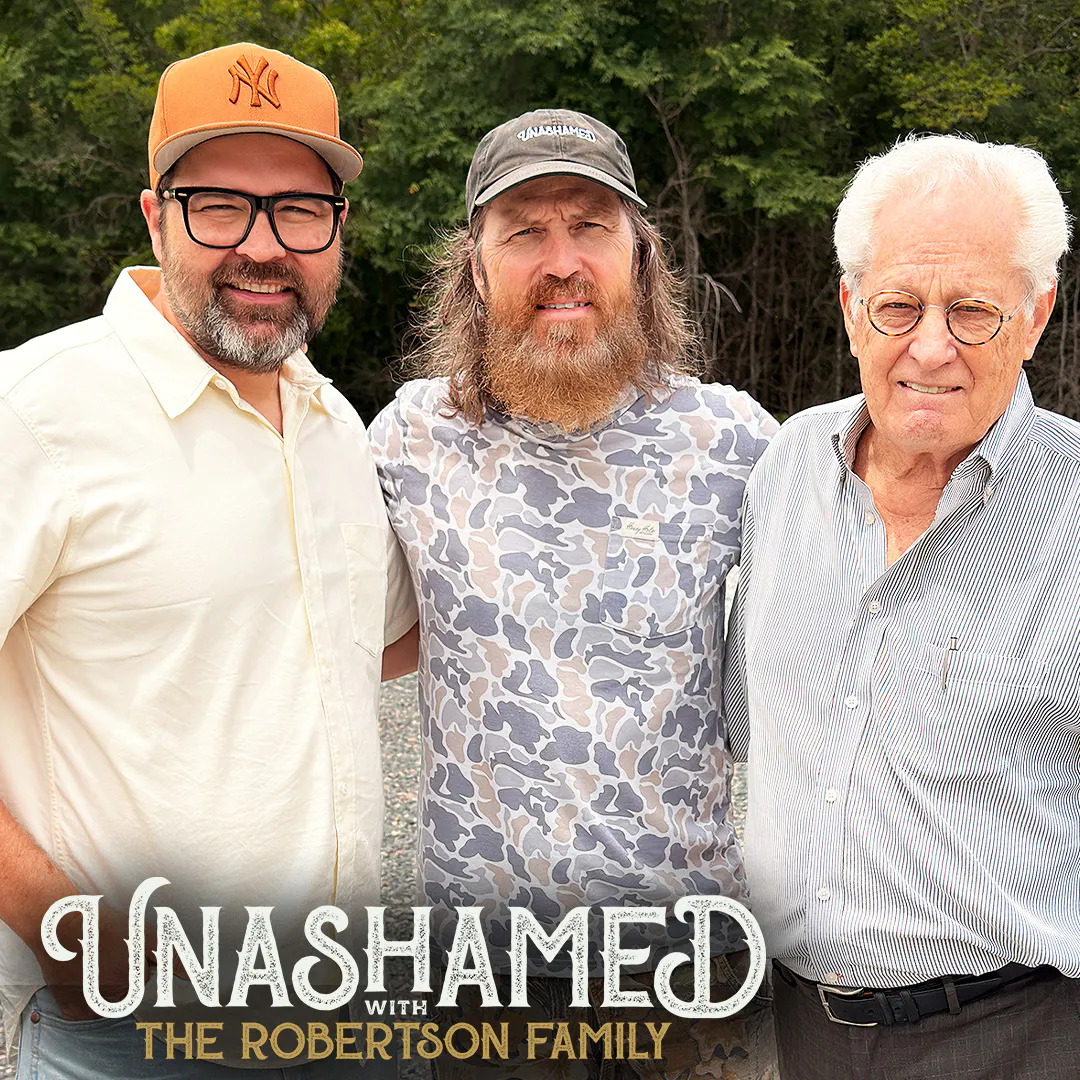
Unashamed with the Robertson Family
Ep 1337 | Hobby Lobby CEO David Green Admits Following Jesus Comes at a Price
00:56:38
Loading summary
Transcript98 lines
- [00:02]
A
I am unashamed. What about you?
- [00:07]
B
Welcome back to the Unashamed podcast. We. We mentioned on the last podcast that Zach is in town, which is unusual, and we have a guest today, and this guest is. Is such a big guest for the Unashamed podcast that Zach could not leave his transport to just some underling, some. Some person at Tread Lively. He had to personally go and bring our guests. Zach, we're proud of you for doing that. And although we did throw you under the bus a little on the last
- [00:37]
C
I heard when I walked in.
- [00:39]
A
We did because. Because we had Gary Glenn here. He's one of your good friends.
- [00:43]
C
Yeah.
- [00:43]
A
And he's like, well, he didn't offer to come pick me up at my house this morning because he was.
- [00:48]
B
Well,
- [00:51]
C
that's true.
- [00:52]
B
Zach, you know what my lie was with Gary Glenn? You're no David Green. So David Green is with us today. He is the CEO of Hobby Lobby, along with many other things. Also Mardell Bookstores, which our family has done so many books. We've been a big part of that as well. But, David, welcome to Unashamed Nation. We're thrilled to have you today.
- [01:13]
D
Thank you. We're honored to be here. Thank you.
- [01:16]
B
So. So David's written a book which we're going to talk about later, and I'm holding it here for you to see. For those of you that are watching, it's called the Legacy Life Leading your family to make a difference for eternity. And certainly that is something that the Green family is known for. There's so many things we want to get into today. But one of the things, David, I want to ask, because I mentioned to you before we came on air that mom and dad and Lisa and I had the opportunity to come to Hobby Lobby headquarters. We were. Dad and I were able to speak to all of your corporate team and everybody was there. We received that day from our publisher, a leather bound version of our Bible, which wound up going in not only Mardell's, but also Hobby Lobby stores as well, which you can't put everything in there because I know it's limited. So we were very honored to be a part of that and just to spend that day with you guys and to see the operation. So that was very special to us. But I got to tell you what was the most special to me and I'd love for you to speak about this before we get to the book later. You guys showed us a lot of, like, ancient text and scrolls and things that were there at this point in time at Hobby Lobby Headquarters. And you had this vision and this idea that you guys were going to build a Bible museum in Washington D.C. or be a part of building it. It's not just you guys, but you spearheaded it. And it happened. I mean, since that time we were there, probably a decade ago, it happened. I've been there, I've actually recorded. I don't know if you know this day, but I recorded a couple of unashamed podcasts from the museum a few years ago, which was super exciting. Had Norm Conrad, one of the curators there on our podcast talking about what you guys are doing. So what, what got you into that? I gotta ask you that right off the bat because the Bible Museum is a huge deal. So tell our audience a little bit about why you're into that, where that came from, and what was the driving force behind the idea of the Bible Museum.
- [03:12]
D
You know, one of our thinkings as a family is there's only two things that's eternal and that's God's word and mansoul. And so this was very, very important to us, that God's word would be lifted up and be shown. And at the time, there really wasn't a museum at this extent that we just know that God had just guided us to do that. And I say to us, because a lot of people have come on online and help us build that museum. So we're real proud of what God has allowed to happen in Washington D.C. to lift his word up. And I think that is so important for living our lives. He was our creator and he left us with a book that tells us how to run our lives. So we really want people to know about God's word. It's very, very important to us. And we really want everybody to know how important this book is.
- [03:59]
B
Well, it was so. It was so powerful to me. Zach, you've been right.
- [04:02]
C
Yeah, we got to see. You guys had an Esther scroll there. That was pretty amazing to see that. Yeah.
- [04:08]
D
And at the warehouse, we keep it at Hobby Lobby, which is in Oklahoma City. There's a lot of antiquities there. In fact, we only have probably 10 or 15% of what we own in the museum. So there's a lot of antiquities. You just can't show them all. So we have an awful lot there as well. And I think that's what you saw when you were at the Hobby Lobby warehouse.
- [04:31]
A
I noticed too when I was reading. I read your book last night and I look for somebody that's simple minded. Zach, I loved it. And I have to say this before I ask You a question. It led me to making a very big purchase this morning. Of course, I sought my wife's approval. This is going to be a strange story for you to understand, but I'm kind of a wilderness guy. And there was so much in the book when you said, I love the perspective. And it. Cause when you think legacy. Because I was thinking, what's this going to be? And most people think, I think it was a line in the book that said, what you're leaving behind. But you had this phrase of a more positive view on what you're setting in motion. Which I really love that because I look back on my life and I'm like, oh, my goodness, look at what my parents set in motion. Through the spirit of the Lord, of course. But it made me think of all the things, all the stories, all the adventures that we had as a kid. Thing that I've missed is my life on the river, because we were raised on the river. So I told my wife this morning, I said, I read this book last night. I was like, you've been to Hobby Lobby. You know, the CEO wrote it. I was like, I need to buy me a boat.
- [05:52]
C
Was that what you had in mind
- [05:53]
B
when you wrote that?
- [05:54]
D
No, no, no. But if it.
- [05:56]
B
If more people buys goods, that's good.
- [05:58]
D
We'll take it.
- [05:59]
A
So here's my point, though. So she looked at me a little bewildered, and I said, because remember when I, you know, took our kids down there, I said, even you were in that. She's like, you need to buy that boat. Because now we have so many grandparents. I mean, our grandkids. And she knew where I was going with that. That experience that I had as a kid with my kid, even her, who is not a wilderness person, but she still found it fascinating. But the whole story about us catching fish and we're with the kids and we're, you know, with our parents, and then we clean them and we eat them and we gather around the table, which kind of launched our. And I said, those were good adventures of just being out. You know, there was no cell phones, but you're just living life, enjoying God's creation, and you're doing it together. And she's like, yeah, let's get that boat. So. But anyway, I was going to ask the question about. I noticed in your book talking about the word of God, and y' all were talking about the museum, but even your son, I think it was your son, works on getting God's word in every language. Can you comment on that?
- [07:05]
D
Or.
- [07:06]
A
I thought that Was fascinating that talking about passing down a legacy.
- [07:10]
D
Yeah, My, my oldest son, Mark, works full time in ministries. He doesn't work at Mardale or Hobby Lobby, but that's what he does. And what he has done with others, he has brought 10 different ministries that have. That takes the word in different languages. And there's about. I don't know what it is. It's several thousand. I think it's 6,000 languages. And so we're in the process of trying to get all of them done by the year 2033. So you have God's word, but does this person? Does this person. Not everybody has God's word. So one of his ministries is working together to get everybody God's word into their language. Now if you go to the museum, there's over 2,000. I think it's closer to 2,500 Bibles there with 25 different. 2500 different languages. But then there's those that's being worked on this shown there, and those that hasn't even been started. So our job is. Or his job is. And he puts his arms around 11 different, different ministries that. That's what they do. They take and get God's word in a different language. So that's one of the projects that we're involved in. And if you go to the. The museum, you'll see all the different languages that have been completed.
- [08:24]
A
I love that.
- [08:25]
C
It's pretty amazing. So when you start your book, which let me tell you how this whole thing even happened, is that you wrote this with Bill Hye, who was going to be here, but he text this morning and said he had a fever. So I was thankful that he didn't come to pass on the fever to us. But he was speaking at an event that I was at and on this podcast we've been talking a whole lot about Genesis 1:28. That is probably a center text for what we've been talking about in terms of the kingdom to be fruitful, multiply, subdue the earth, have dominion over it. And I'm listening to him speak about generational legacy. And one I thought, man, this is like his talk was very tangible about how do we actually leave this legacy to our kids. And it's not just financial. I mean, I know, I think probably people hear your story, maybe know that you guys have been very successful in business. I think maybe that's what I thought when I first picked up the book, that this was going to be more of a how do we leave our businesses to our family? That's not this book there is, that's in there, but I mean it's also bigger than that. And you start with Ecclesiastes 3:11 that God has put eternity into the hearts of men. I want to hear you speak about like why did you kind of begin with kind of that as the anchor for this whole book that you've written about how we pass this down through the next, the third, the fourth generation.
- [09:47]
B
Before I started PhD weight loss, I was always in that mode of trying to figure out why I was gaining weight and couldn't lose it. I would lose a little bit and then I would put it right back on, usually go past it every time. And so I wasn't really figuring out that my as my body got older, stress comes naturally and metabolism slows you hold on to fat, makes it harder to lose weight even if you're eating less and moving more. So you got all these quick fixes, but they don't tend to last. The popular GLP1 shots can help with appetite, but they really don't help you figure out what's going on underneath. And so the good folks at PhD Weight Loss, Dr. Ashley Lucas, helped me focus on restoring my metabolism so my body worked with me and not against me. That's where the real change happened for me. Here's a picture of me at the beginning, which now has been a year and four months, unbelievably. And there I am 80 pounds heavier. Here I am 80 pounds lighter, obviously feeling better than I felt in probably two decades. I'm able to do a lot more with my grandkids. I'm able to exercise regularly off my meds that I was on before. No CPAP machine as well. So a lot of blessings in my life. And look, I know you've been thinking I need to get going on this and I'm telling you, do it now, right now, when you call and mention me, Al Robertson, you'll get two free weeks and they'll pay for the cost of your food, which is a fifteen hundred dollar value right off the bat. Call 864-644-1900 that's 864-644-1900 or you can go to my PhD weight loss dot com. Remember, the goal isn't to lose weight once, it's never having to start over again. So column 864-644-1900 or go to my PhD weight loss dot com.
- [11:38]
D
Yeah, I think that's so important and I think we all know it's important for our life to matter. God has put Us here for a purpose. Every one of us. Not just those that pastor churches, but one of us. He put me here for purpose, and that to be a retailer, that is my purpose. And I think our purpose needs to have something to do with eternity in our lives and other people's lives. And I think about my mom and dad that raised six kids that serves the Lord. Five of them were ministers, and then there was me, the black sheep. But anyway, God can still use all of us. And so I think it's so important for us to think about our. What is our legacy? That's why we wrote the book. There needs to be a legacy. And I think about my mothers and dad. I'd like to have a legacy that goes forward. Not just backwards, but something that goes forward. And for me, one of the biggest legacy is to have all my family. There's 50 of us. Barbara and I started out. We got kids. They got kids, they got kids. We got 22 great grandkids. Seven of them are adopted. So I think we want to leave a legacy and not just leave a legacy, but have something going forward that tells people the good news. The good news about Jesus that died for you and loves you.
- [12:45]
C
I love it because it's so funny when I read that in the book, because it's at the very beginning of the book, and I just had this conversation with a guy probably three weeks ago. I'm not a believer. A good friend of mine, but he's not a believer yet. I'm praying for him. We've been having great conversation. He's kind of going through, I would say, like, an existential crisis. And he came to me and he was like, man, I've just been really depressed lately and, like, really depressed. Like, I just. I don't know how to get out of this funk. I've never been in this position before. And I said, what's going on? So he's talking about, like, basically, he's like, what am I leaving behind? He was using all the same terminology. What's my legacy? Like, what's my. He actually used the phrase what's my story? Which comes up in your book a lot. We need a new story, right? Which we talked about with Theo Vaughn recently. Said, I need a new story. Like, what's my story? What's. Like, what are we doing here? And he was trying to, like, explain eternity. He had this longing in his heart for eternity, but he didn't know what it was. And he's trying to put language to it. And I don't know Why? I think the Holy Spirit gave it to him as, like, you do realize what you're defining? He said what I said. Ecclesiastes 3:11 says that God has put eternity into the hearts of men. Like, that's in you. There's this longing that's in you. So I loved how you brought that as kind of the centerpiece of the beginning of the book, because you're actually hitting on something that, whether you're a believer or not, we got a lot of people listening to this podcast that aren't believers in Jesus yet, but they have a longing for something, and they want to leave something behind. And what the book has done is it's from a biblical perspective. It showed that what you're actually longing for is a way to fulfill what God created you to do, which we would argue is Genesis 1:28. Yeah. Brilliant. It was absolutely brilliant.
- [14:25]
D
It's great.
- [14:26]
A
I read the first paragraph, and I thought, zach's gonna like this book because he talks about that. He quotes that Ecclesiastes 3 all the time.
- [14:33]
C
Yeah. I think that's where people are at. And then you talk in the book a lot, too, about, like, your mom, because you weren't. You weren't born into financial success. Like, talk a little bit about your background, your history, your mom. I love the story about your mom
- [14:48]
D
in the book as well. Yeah. Well, I was born into a pastor. I was a pastor's son. There's six of us children, and my dad never pastored a church over 100. That's who he was. He was a great person, but that's who we grew up with. Six kids. Now, you do the math on that. It's not too good, but I've never complained about it because God always supplied our needs. So we would go out and when we were young and pick cotton, but we made it. And God always supplied our needs. And so that's how I grew up. But I remember when I started working for tgny, which, when I started after high school, I'd come back home and said, hey, Mom, I'm 21 years old and I'm a store manager. And my mom would say, yes, Lord Dave, what are you doing for the Lord? So that was her thought of life. No. No what? I don't care if you're president of the United States. I don't really care. I want to know what you're doing for the Lord, you know? And she really had it right and never regretted her talking that way. But I remember coming back home later, and I was supervisor of a lot of tgny. And mom, I'm, you know. Yeah, she didn't impress her at all. She said, what are you doing for the Lord? And that's really true for all of us. What's going to make a difference? What's going to last for eternity? And otherwise it's just my first book, the last chapter. I said, so what? You know, so what? You got a billion dollars? 100 billion. So what? You know, what are you doing for the Lord? So my mother was right. And hopefully I. I learned that from her.
- [16:17]
A
It's such a great question. Yeah. What are you doing for the Lord? What would you say?
- [16:24]
D
I didn't have an answer because I wasn't doing anything for the Lord.
- [16:27]
B
I was just.
- [16:28]
A
Which is profound.
- [16:29]
C
Were you kind of like, mom, look at what I like. I just told you, I'm the general manager.
- [16:33]
D
Yeah, exactly.
- [16:34]
C
You're talking about something else.
- [16:35]
D
Sometimes if we're not careful, even as Christians, that what impresses ourselves and that's what we're working for, things that really doesn't make a difference.
- [16:42]
C
Yeah.
- [16:43]
D
And that's why I said, so what? You know, on the back of the book, because that's where I was. I was, so what? So what if you are manager at the younger age and you have a supervisor but a lot of stores, you know, the real question is, so what? You know, what are you doing that's going to make a difference for eternity? So that's one of the things that I learned from my parents.
- [17:04]
B
Because, Dave, that's. That's such a profound thing, especially for a lot of our audience, because I just. I was at the airport recently and a young woman who had been there in town for an event or thing, Missy does, had been there that weekend. And so she had been moved, you know, like in her spirit about how she wanted to serve God going forward. And so she came over and asked me some advice about, you know what her future, because she's young, she's not married, but she is. She's an ER nurse. And she was telling me, and I asked her about what she does and she told me and she was wanting to get more into ministry, but she didn't want to walk away from her training because she's a really good ER nurse. And so we had this conversation about kind of what you're talking about in the idea of being able to do something outside of quote, unquote, what we would call ministry or as a pastor working for a church, as opposed to just being the hands and feet of Jesus, where You are. And then building something that you can then impart with other people. And so I just. I think a lot of people out there kind of have this misnomer that you have to work for a church or you have to be on staff at a place to be able to make a spiritual impact. But, I mean, I think you, your family, and you, your patriarch of now, this wing of people that are making such a worldwide impact. And what you. I love what you said. I was born to be a root. I mean, that's what God had put in you. You did that, but you did it for his glory. So how would you encourage people that, you know, maybe you're out there building something. Maybe they have a, you know, they went to school to have a certain skill set and they're good at it. About how they can best serve and build this legacy and not necessarily have to be under the auspices of a, you know, 501c3, but to be something
- [18:48]
D
bigger than that, you know, I think the first thing we need to realize is God is created. He is our creator, and he has created all of us for a purpose. None of us have been created to have no purpose. That we come, we go, we're gatherers. We have more stuff than we. We end with up with more stuff, which we lose when we die. And we just gather. And sometimes Christians, we even see ourselves that way. What's the pastor's job? No, really, if you really study the pastor's job, it's really to get there, to encourage us to do what God would have us to do. Yeah, the audience is the one that's. That we're all supposed to have something to do. We all have a purpose. My purpose is to be a retailer. I know that. I also know that. That I am given God favor, that I am anointed. I'm anointed to be a retailer. That's my purpose. But God has a purpose for all of us. And what is your purpose? Sometimes I don't know. As Christians, we even know what that is if we're not looking for it. But when we're looking for what God would have us to do, we'll find it. God's not hiding it from us, but he has something for every one of us to do that makes a difference. You don't make a difference if it doesn't go into eternity. And so that's somehow somewhere we need to make a difference. And the lady that was taking care of people and taking care of their health, God has given her a purpose. Now, while she's doing that. I think she can also witness to people, because sometimes you think about. Well, God talks about us feeding people. Yes, he does. But he also says that we. We all have eternity. It's. If I'm not telling someone about Jesus while I'm feeding him, I'm not sure that I'm doing the right thing. So somewhere, somehow, I want to tell people when I'm giving them clean water or whether I'm giving them food, that I'm also telling them about something that has to do with eternity. So why do I want to help someone just during this life? And they're not going to make heaven? So I think we can do all the things the Bible talks about, but do it in such a way that we care. If I love you, I care where you spend eternity. I love you and I'm going to feed you. No, I love you while you're here on this earth, but I also love you enough that I want you to spend eternity with Jesus and not have an eternity that you don't want.
- [21:09]
B
Zach, Mother's Day is coming up, and obviously it's a day where we like to honor. But, you know, it's interesting because Lisa and I speak a lot at pregnancy centers, and you know, how much now the idea of the pro life movement is not just celebrating saving babies, which is very important, but it's also celebrating moms and trying to help them, you know, get their lives turned around or even. Even a young man involved to somehow, you know, teach him how to be a dad. So I like the idea that the pro life movement is a pro love movement, and it's thinking about everybody.
- [21:40]
C
I agree. And, you know, it's been a big part of our family is. Is adopting our daughter Ruth.
- [21:45]
B
For some women, obviously, Mother's Day doesn't feel like a celebration. It feels heavy, uncertain. It's isolating. Many women who are facing unplanned pregnancies don't know where to turn to or who to talk to. And that's why preborn exists. At Preborn Network clinics, women are met with compassion, and they're given a free ultrasound, which is so important. When a woman sees her baby and hears that tiny heartbeat, it can change everything, and it doubles the chance that she'll choose life. This Mother's Day, you can be a part of that moment by helping a scared young woman step into motherhood with confidence and support. This is why we love preborn. This is why we love the pro life movement. Just $28 provides one ultrasound. That's less than a dollar a day, and it could save a life. $140 reaches five mothers. To get involved, simply dial pound 250 and say the keyword baby. That's pound 250, baby. Or you can visit preborn.com unashamed. That's preborn.com unashamed.
- [22:51]
C
You guys, I think with what y' all have done, you and Bill, and there's a. I think there's a website that people can go to. What's. Is it Legacy Stone?
- [22:59]
D
I think that's correct.
- [23:00]
C
We'll put it in the show notes because I'm probably getting it wrong, but to get more information on it. So here's what I think that you guys are doing with this book, and I highly recommend it for this reason that we have been incubated in a particular view of how we view family. You guys call it. I think you call it family worldview, which is simply a worldview. It's just a lens through which you see the world. So there's a lens through which we interpret what a family is and what's the purpose of the family. And I would be lying if I said that I haven't fallen victim to the story that's been told through the culture. You mentioned some TV shows. I don't remember all of them. The Walton Family. I remember the Waltons. Father Knows Best, Leave it to Beaver. What was the other one?
- [23:47]
D
I'm sorry, I don't recall right now.
- [23:49]
C
You were talking about some of the older TV shows of how the story of the family used to be told to media, and then you skipped forward.
- [23:55]
A
How it changed.
- [23:56]
C
Yeah, how it changed.
- [23:56]
A
Then it was like Seinfeld.
- [24:00]
B
Modern. Modern Family.
- [24:02]
D
It's totally opposite.
- [24:03]
C
Yeah. So you go. So we. I grew up even thinking, like, okay, the goal. You raise your kids, you push them out, and then you guys go, like, go do your thing. And, like, you're. You're not. Like, you got to go establish your own independence. There is an issue with empty. Not empty nested, with. What's it called? Failure to launch. And that's a real issue. Right. But. But. But the idea of pushing the kids out is such a Western phenomenon that happened really, in the last 50 years. That's a big shift to think about. It's a reframing of the family. I'd love to hear you, because I don't think people realize this, but if you look at passing down, if you just take wealth as an example, the book is not simply about financial wealth that you're passing down. It's part of it, but it's more about the legacy of spiritual heritage and whatnot. But on the wealth side, typically it's like, what'd you say? Three generations? And it's evaporated. Whatever this thing is that we've been doing recently, it's not working. Can you talk a little bit about how you even got into researching some of these families? Bill was a huge part of that as well. I'd love to hear some of your thoughts on that.
- [25:12]
D
I didn't bring it with me, but we have a document, our family, Gen 1 and Gen 2. Myself and my children, we came together from weekend after weekend. Bill helped us with this to say, who and what are we as a family? The first thing we did is we said, this is our purpose and this is our vision, and then it's what's important to us. And that's the thing that we put together. And it basically, it's all based on Scripture, which it needs to be. Not my thoughts, your thoughts, but what does God say? And so that's how we got started. So we have this document and once a year we have a big celebration where all of us, 16 years and oh said, this is who we are. This is who we are. Not necessarily who we are, but we really want to strive to be this. And so that's what we've come together as a family. And as a result, I have about 50 in my family now because my kids, my great grandkids, I have 22 great grandkids. I have eight of them that are adopted. So. But they all serve the Lord. So to me, that is legacy or part of legacy. I want to make sure my children's children's children, if God terrorists serves the Lord, and that's. That's what's most important to us. I don't want to lose my family when I'm telling the world about Jesus. And we want to tell the world about Jesus, but we also, most importantly, as we need our family to serve the Lord. And so we're doing all we can do, all that we know to do to tell people that this person of Jesus that loves you and will care about you.
- [26:34]
C
When did you shift? When did that. Was there a moment or that you were like, I have to start thinking about what I'm passing down. Was there. Because you talk about those pivotal moments. We were talking about that out in the hallway. Like there's. Was there a pivotal moment where you thought. Thought, you know what we. We need to get serious about and intentional about what we're going to be leaving to our. To our grandchildren.
- [26:55]
D
You know, I've had quite a few pivotal moments. And one of the pivotal moments maybe that comes up to with what you're saying is, is when I was under my desk, literally physically, and about 85, we had about 12 stores and we lost money and the Bible was. Or the bank was threatened to foreclose on us. And. And it was between that. I'm a preacher son, by the way, and I'm sitting there, I'm a Christian, and I was kind of an undercover Christian, you know, and people didn't know I was a Christian. And God gives all of us a certain amount of talent. We can do a lot without him. And I did a lot without him. But during that time, I think I really learned. I know that I learned that with him I can do so much more. And I think that was one of the pivotal moments in my life that I needed to walk alongside him and I could do so much more with him, even though without him maybe I can be successful and was until 85, and we had this terrible times. But I think with the Lord, we can do so much more than we can without him. So I think it was a pivotal moment in my life, and I think I didn't learn it overnight, but I think that was the beginning of me saying, you know, I've got to do this with the Lord. And. And not just by the different. He gives us talents. I mean, everybody has talents, and sometimes we can do a lot, but with him we can do so much more.
- [28:21]
A
Well, it made me think of Matthew 25. You brought up talents. And my lovely wife put this on me, and it rocked my world. She was so right. And she said she was. Actually we had a couple there who had just. It had just been one thing after another that was difficult. And they were like, why is this happening? And of all places, she goes to Matthew 25, and she says, most people read this and think, since the talents represented money, and just to familiarize ourselves with the story, he said the parable of the talents. He said, again, it will be like a man going on a journey who called his servants and entrusted his property to them. To one, he gave five talents. So there's a little letter there, and it says about a thousand dollars, you know, to another two talents, and to another one talent each according to his ability. Then he went on his journey, and you remember the story. The man who had received the five talents went and once put it, put his money to work, gained five more. The one with two did it doubled his. But the man who had received the one talent went off, dug a hole in the ground, and hid his master's money, which Jesus was not happy with that. So the point she made, though, was profound because she said, well, he was telling a story about how you respond to what God gives you. And she said, but you read stuff like Romans 5. Suffering produces perseverance. A lot of difficult things that happen we view as something we need to overcome, but it's what you do with it. And so she said, when I view this verse, and she started naming all the most difficult things in our life. We raised a boy that was born in prison, that we didn't volunteer for it. It just kind of fell in our lap. But it was so difficult with all the circumstances around his life. But her point was, we have a different view of talents, and we think, oh, if I make a bunch of money, that's what it's all about. So I need to use this for something good. But she's like, all these G God gives us, they're not necessarily money or ability. They're difficult situations where what can be more valuable than a kid born in prison? That's where we need to do something about that. And it kind of rocked my world because I thought, yeah, a lot of these difficult things are things that God gives us that we can turn around and double the value. And, you know, you raise this kid up, give him a chance like that. So I think it's a profound thought when you're thinking about leaving eternal consequences out there with the situations that. That come in mind. I don't know, I just wanted to see what your thoughts were.
- [31:16]
C
I think the power. The powerful thing about how you respond to those. Those moments is it you. You talked about how. The story that then you import into your family, which. That's one of the stories that hit me. Another one that you mentioned in the book was your mom when she passed away, and she, like, reached up, like, right as she was about to pass, you know, into the arms of Jesus, and she was like, they're coming. Yeah.
- [31:42]
D
Or do you see? I think she asked my sister, because she was holding, said, do you see them? Do you see them? No, I don't see them. And she would see angels. But that's. That's the life my mother and dad lived. And so I think about their legacy. Well, they. It wasn't dollars and cents. They didn't have a lot of dollar and cents. But they have six kids that serve the Lord and they have kids that serve the Lord, and they have kids that serve the Lord. So I think that's the latest.
- [32:06]
C
When did they pass?
- [32:08]
D
My mother passed away in 75, and so it's been quite some time.
- [32:12]
C
So she never got to see even the Hobby Lobby story.
- [32:16]
D
No, that.
- [32:17]
C
That's another big part of this, though, because you'd mentioned Hebrews 11. When it gives the heroes of the faith, he gets on this. It's like the hall of fame of the Christian faith. And there. And I've actually preached on this before, there's that little obscure line at the end of it that none of these live to basically see the promise. They could only see it from a distance. They'll receive it with us. And I think that's such a big point. And I think that to me, that's the big shift, right? Because what. What. Everything that we want is what we can see accomplish in our lifetime. But like my mom, for example, she never got to see the movie the Blind that I wrote. And there was her story of her and Phil and her and Bill coming to Christ. She never got to see A lot of stuff I'm doing now. Phil is going to get to see the things that we're doing now. So I think that that's a. That's a big shift, like to think I may not live to see what God has prepared me for. How have you come to grips with kind of that?
- [33:13]
D
You know, I think the thing for us to do is just be faithful. You know, just be faithful. You know, a lot of times I think about a lot of the things that we do in terms of just being faithful. I think in terms of just do what's right, because sometimes what doesn't. It doesn't look right to not sell Halloween, and you're selling tens of millions of dollars and it costs you a lot of money. It doesn't. You know, there's a lot of things we've done in life that just cost us money, like suing the government. We had less sales, but keep it. We hate women because we sued the government because we didn't want to take life. So we found so many things that we know. We've done it because we've done it because it's right. And most of the times when we do that, it cost. And so I think you're just doing what's right and not question it, and then just trust in the Lord. Now, sometimes people will tell you, oh, we are closing on Sunday, like we closed on Sunday, and we did less business. Well, you're doing God's going to bless you. Well, he didn't. I mean, for two years we did less business. Our busiest days was. Was Sundays per hour. It was our business day and we closed. So there's so many things that God has asked us to do, and in every case they've cost money. So we don't do what we do because we're going to make more money. We should do things just because they're right. And usually if they're right, they're costly. But I think that's the way God wants it. I don't want you to do it because you're going to make more money. I want you to do it because it's right. And that's how I've. I have found a lot of things that God has asked us to do.
- [34:47]
A
Yeah, well, a lot of times when you do get money, you know, I mean, why are we viewing that? You know, that's coming from God. I mean, the evil one's pretty good about tempting people with. Was it the pleasure of the eye, the bursting of what he has and does? And that's why I brought up that thing about the boat, which. It'll make sense. If you look at our life, you think, well, we're duck call builders and this business just exploded. And always tell this in my speeches because I'm like, now let's just get this right, because a lot of people look at my family and they're like, well, how did this happen? You know, how did my dad invent a duck call down here, 20 miles south of us in the middle of nowhere, just with his sons as the workforce, when there's not that many duck hunters in the world? And so I do that. Back when he was first started building duck calls, there were half a million duck hunters. Well, when Duck Dynasty hit the first year, we sold 1.2 million duck calls. Well, if you do the math, my dad sold more than double duck calls to duck hunters. And you're thinking, well, that was just a brilliant marketing scheme. Come up with a product where people who are buying it do not duck hunt. That's how you become the number one selling duck caller in the world. Which was you say, well, that's just lucky they got caught up in the show. It's fun, you know, it makes a sound. So that's why people were buying them. But for us, it was like, well, this couldn't come from us. This is beyond. This idea is so crazy that God. God wants to use. We need to use this for kind of like what your mom Said, what are we going to do with this for the Lord? And that's really how that, how that happened. But I think by viewing the parable of the talents, which I'm glad we got into this because I feel strongly, I think most of the things that we should be viewing are these hard times. Because back when, Al, you remember when we were on the river, times were hard. We had no money, we're working the, the boats was all about the commercial fishing business, which is one of the hardest jobs you can ever do for not much money. But the duck hunting, the commercial fishing, when I look back on it, you know what, the legacy that was passed on, the duck hunting was not going out there and we're going to shoot some ducks and film it. That was happening. My dad made sure that everybody in that duck blind, it was a Jesus conversation every day in the duck blind. And so this past year, this first time, you know, in 50 years that I've hunted without my dad because he went on to be with the Lord, I kind of had that gulp moment because everybody's looking at me like, all right, you're in charge now. And so I told my right hand man, which is your son in law, Al. I was like, you got to remember why this all started. I was like, my dad loved to duck hunt, but he loved Jesus more. And when he got people in a closed setting duck hunting, he talked to them about Jesus. Because you're there for hours and we're just sitting there waiting on the ducks. And I said so we need to, that needs to be the pulse of what we do. Gather up the son in laws, the young men. I was like, because everybody likes to go duck hunting. And then we're going to shock them because when they get in the blind we're going to have some difficult conversations about what they're doing in their life which is really, if you, if I look back on this last season that was the center focus of the first year without my dad was we had a lot of Bible studies about we need to step up because you know we have a warrior that's moved on to the home office. So we need the next men to step up.
- [38:43]
B
So, so I, I, I got a question, I got a question. So David, so I've been in a lot, a couple, maybe two or three different times, I've kind of crossed over and been in events when Steve and Jackie were there, your son and daughter in law and a few of your grandchildren and just kind of talking about this approach, I mean obviously it's Something your whole family is talking about, which I think that in itself is an amazing legacy, hearing you articulated as the patriarch. But then your children are expressing that same thing, and your grandchildren, which. Because I know a few of your grandkids as well. And, you know, the Bible talks a lot about the dangers of money, the love of money, wealth. I mean, you see different writers, obviously, and I think all those are sort of. If you took one sort of poster child of this idea, it'd probably be the rich young ruler in Matthew 19 or Luke 18 and his story, you know, because he was a man of great wealth. But he walked away sad when he had an opportunity to follow Jesus because he loved the money, you know, more than he loved the idea of following Jesus. And so I just. I want you to speak to that because I've heard them speak about kind of what your family has done, because wealth and money sometimes can be a legacy buster and a destructive force. Right. In successful business or families because of jealousy and all the things that kind of result in that you talked. Or greed. Yeah. So I wanted you to talk to that. Just how you guys do that as trying to do it generation to generation to generation. Because, you know, the further you move away from kind of what you said in motion. Can those things be legacy blockers in terms of making money, or is this something you guys have decided and talked about? Here's what we're going to do with the wealth that our business has created to be able to kind of keep the main thing. The main thing?
- [40:32]
D
Yeah, you ask a good question. And that's one of those times when I had one of those pivotal moments. One of the pivotal moments in my life was in my backyard when I say, what do I do with this wealth? Because we have. We'll do about $10 billion in sales this year. And so what do I do with that? And it was very, very, very, very scary. I had to ask people that have written books that are Christians to come in and help me. And they basically said, well, hand it down to your kids and hand it down to their kids and et cetera. And that was the instructions I was being given. And I did not feel comfortable with that. And so at the backyard. In the backyard, I'll never forgive it. It was pivotal for what we're to do with Hobby Lobby. And the Lord asked me a question, and the question I could ask every Christian that's got wealth, what would you do if the Jones family owns it? Now, if you think about what God had said there, he said, you don't own it. You do not own it. Now everything that I've had in pivotal moments also is scripture. If you'll go to Psalms 24 and 1, it says God owns everything. So I tell people, I'm sorry, I'm not, I'm not the one that decided this. God did. You own nothing. You absolutely own nothing. And that's where we have to start. God, I don't own anything. What would you do if the Jones family owns it now if Jesus owns it? We just do what we want, generally speaking as Christians or Jesus owns it. The average Christian don't even pay tithes. They pay less than 3% the average amount that's given by Christians. But you don't own anything. And so this is what I tell businessmen. This is what I tell everybody. But that was the beginning of God solving our wealth problem. So if I don't own it, then I have nothing to give you, child. I have nothing. I and Barbara give our kids gifts because it's our money that we earn. And we give them some gifts, but not at a gift that they don't have to work. They still have to work. But we do not own Hobby Lobby. Not because I say we don't, because God's word says we do not own Hobby Lobby. So what we do is we have a committee, the Bible said in the multitude of counsel their safety that decides. Okay, David, my family decides. The nine of us that earn the money come together and we decide the salaries of each one of us. At mate, if you're sweeping the floor, you get the salary of someone that sweeps the floor. So we come together and said, you should earn this. Now we work for the company so we get a salary. But there's not one penny paid out of Hobby Lobby that is not ear earned by the family. And you earn what you get because we do not earn. We do not own it because the Bible says we don't. So that has stopped the problem. We don't have problem with wealth because we, we don't own it. We're not a wealthy family. But God owns Hobby Lobby. And then therefore that's how we decide what our giving is going to be. And that's, that's a whole nother area of concern is word. Where would God have us to put what he owns? We don't own it. He owns it. So that's another challenge for us.
- [43:50]
C
The one time I went out, I don't know if we went to together. How many times does Phil smoke at Hobby Lobby? Just once.
- [43:57]
B
Once. But we've had a couple of crossover things because we've done some Mardell books.
- [44:00]
C
Was I there when you went? I went. I went at one point with Phil. And what impressed me about it, it wasn't too many years ago, though, probably my six or seven years ago. But here's what I love. You show up and they've made like a waiting room or something. But before you do anything, you walk down this hallway, it's got literally like Illuminations Ministry, the Bible Museum. It's like, this is why Hobby Lobby exists. The intentionality of kind of the day there was impressive. It was like, you need to understand why we do what we do and what our story is. And I left there thinking, like, this is that I think the power of the story is central to the passing down of the family legacy. If you don't tell the story then, like, even when you were talking about that, I was curious, like, you go to your family now and tell them, hey, guys, I don't hold anything. How does that play out? I mean, obviously you got to be a good storyteller to get them on board with this. But how did that play out when you.
- [44:57]
D
You know. It played out because when we first started in business, we did a few things right, just a few. But one of them is we do not own the tree. We own the fruit that's on the tree that we earn. Not the fruit that we don't earn, but the fruit that we don't. And we decide as a group in the multitude of council, there's more safety, and we decide who earns what. But I think when we first started. So we. Our family has no problem with this. They have zero problem with wealth because you don't own it. You get what you earn. And that's as simple as it is, is once you don't own it, when you own it, you have thousands of problems.
- [45:34]
A
Well, I noticed how much y' all give, too. There was some line in there. About 50% of the profits go to these various charities and different things. Which was shocking, you know, to read that in a book. But what I was going to say is, I think because I do my own investing and. And this book, I don't know if anybody's brought this to your attention. It mirrors the key to being an investor, like in the stock market, because you have a whole section on short term living versus long term, which is like the holy grail of investing. You got to look long term, long term. So I thought it was fascinating because the ironic part to it was this was all about eternal investing. So it's like, not only was it, would it be really good for a new investor to read this book which has nothing to do with investing, you don't think. But since I'm in this world, I'm like, oh, this is a blueprint for how to be a good investor, but it's a greater blueprint on what to do with the actual money that you're a long term investing, which makes you a good investor thinking long term when you're thinking of the, you know, the eternal consequences of that. So you actually took that principle, which is the holy grail of investing, and actually gave it a purpose. So has anybody brought that up?
- [47:03]
D
Not, not exactly that way, but that's good.
- [47:06]
A
I'm sure somebody behind the scenes is thinking, oh, we need to get this
- [47:09]
C
in the hands, but it is the eternal investment. I mean, even when you're, when you were talking about the wealth problem and you said we don't own it, I can imagine somebody who doesn't have a lot of money saying, yeah, that's right, you don't own it. But then that same person wants to own their own talent, they want to own their own ability, they want to own their own charisma. It's like they want to own their own intellectual ability. And if you think about these, all wealth is one blessing. It's not the only blessing that God can use to advance his kingdom. And I think the same thing pops up in churches. Like, you know, pastors deal with this. I mean, I've dealt with this like, well, you know, is it really my ability to understand and articulate the scriptures? Do I own that? No, I don't own that. I don't even own that. And it's giving that away. And that deconsolidation of authority is a hard thing to deal with.
- [48:00]
D
Right? Everything's a pretty good word when God owns everything. And you're exactly right. It's our talents, it's everything. You know, some of us, my dad and mine, mom didn't have monies to give, but they had something else to give. And what they gave had six children to serve the Lord and that, that. And so our talents can be different.
- [48:17]
A
Well, see, now you, now you know where I was going with the boat because I want to buy a boat with money because God just poured it out there to show my kids. This is where this started. And this buffalo that we're going to catch or this catfish we were getting 70 cents a pound. I mean you get a 10 pounder, you're like, whoa, seven bucks. That's it. We're doing this every day. So I think it puts it in perspective because really, the bond that formed was those hard times, trusting the Lord. We're going to do this together. No matter what happens, we're going to use it for the Lord. And I think that's why we were blessed in that area.
- [49:02]
B
But part of it was the being trained. I love so much, David, that your whole book and your whole life philosophy, really, all your books have been the idea that when we do it by the principles of God and the word of God, there will be success. It'll be godly success. And you're right, that'll ebb and flow. But one of the main things that God put forth in His Word was that if you can be trusted with a little, and we all came from a little, then you can be trusted with a lot, because the idea is you're going to give me honor and glory. And so I think, think you see these similarities with what you're describing. We talk about it from a standpoint of a hunting business and then a television show, but the whole idea and the way we combated it as a family, just like you guys have, is we got together and verbally, physically said out loud, we can't let this. We can't let the evil one try to knife in here and take away the biblical principle of what God has done. And to do that, you have to have that humility training. And in the book, you talk about the beginning, it starts in a garage, right. Doing picture frames, trusting God and. And he trusts you with a little, and then now he trusts you with a lot because the principles are there. I love it. The chapter you have in there about even American, historical, American companies that have the same concept. And the reason why the Vanderbilts and all these other families had these things that worked across generations is because they trusted in a principle that was a godly principle. Even our country was founded on this idea of godly principle.
- [50:34]
C
But not the Vanderbilts. They. They wasted their wealth. It was the Roth. It was the. The. The.
- [50:39]
B
Yeah, exactly. I'm sorry.
- [50:41]
C
Because they built. Bill.
- [50:41]
B
Yeah.
- [50:42]
C
They built the Biltmore State, which is. I live in Asheville, so I know. I've actually toured it. And it's like a. And it's like. It's a. It's a relic. Yeah. I mean, and to think about, like, that is a. An example of done with wealth, but then, like with the. Who's the other fame of Rothschilds. Yeah, yeah.
- [51:00]
B
But I love the concept the idea of biblical principle being the foundation of what you said, which is really, really powerful. Any last words? David, we're about out of time. Just about the book, the, the family or, you know, something you want to leave with our audience?
- [51:15]
D
No, I just obviously appreciate you buying the book, you know, so everything we do, it used to be 50%, but 60% of everything we make, we give to ministry. Oh. But I must say first that the most important thing to us is take care of our people. Before we give a dime, we have to make sure that we take care of our people in a right manner. We have a minimum wage. We have 70% of your insurance is taken care of. So without. With when you, sometimes you say you give 60%, well, what about your people that got you there? They're the ones that got us there. And so we want to make sure. So when we looking at any kind of numbers, we're finding out that we keep people longer than, than any of our competitors. So that's what's important to us is taking care of the people that brought us here that help us do what we do. And everybody that works for Hobby Lobby know we let them know what we're about and why we do what we do.
- [52:07]
B
Well, it's a great success story because it's God's success. I know some people that work for our local Hobby Lobby there in West Monroe, and they love your family, they love their job. And it speaks to what you said. The book is called the Legacy Life. David Green. Bill High is a part of this as well. And so we encourage you to get the book. Any last words, Zach or Jay, before we sign off?
- [52:31]
C
Thank you for coming on. That was excellent. And I just want to encourage you to be listening that like, if you are thinking about how do I pass down even your, like particularly your faith that you're not just your kids, but your grandkids. And I've been thinking about this a lot lately because we, I got two kids that just recently been, got married. One's getting married this weekend and I'm, me and Jill are having these conversations and I stay up at night praying about it, thinking about it. Go get this book. I, I, I thought it was excellent. I think it's, for me, it's just the beginning. Also, you guys have a lot of other resources that Bill's put together, so we'll be kind of keeping you. We'll have to have Bill on here at some point too, to kind of make up for him.
- [53:07]
B
Yeah. What's since, since we missed out David, thank you for all your family does for the Kingdom of God. We love it. Tell your family the Robertson said hello.
- [53:15]
D
Thank you. Appreciate it.
- [53:17]
B
See you next time on Unashamed. Thanks for listening to the Unashamed podcast. Help us out by leaving a rating and review on Apple Podcast. And don't miss an episode by subscribing on YouTube. And be sure to click the little bell and choose all notifications to watch every episode.