Podcast
unSILOed with Greg LaBlanc
Hosted by Greg La Blanc · EN
unSILOed is a series of interdisciplinary conversations that inspire new ways of thinking about our world. Our goal is to build a community of lifelong learners addicted to curiosity and the pursuit of insight about themselves and the world around them.*unSILOed Podcast is produced by University FM.*
64episodes
Episodes
Newest firstAll episodes
645. Making Money Work: Banks, Capital Theory, and the Fed’s Blind Spot with Steve H. Hanke
Apr 2701:11:36Tap to summarizeSteve H. Hanke is a Professor of Applied Economics and Founder and Co-Director of the Institute for Applied Economics, Global Health, and the Study of Business Enterprise at Johns Hopkins University in the Whiting School of Engineering. He is also the author and co-author of several books on economics. His latest title is called Making Money Work: How to Rewrite the Rules of Our Financial System. Greg and Steve discuss why macroeconomics sidelines banks and money creation. Steve argues macro should rest on the Quantity Theory of Money and Capital Theory, including “waiting” as a factor of production with interest as its price, and criticizes the profession for abandoning these foundations. He contrasts GDP with gross output and links Fisher’s MV=PT to intermediate transactions, then explains why commercial banks create money via lending while investment banks intermediate savings, and why regulation (capital and reserves) matters more than the federal funds rate. Steve critiques universal banking for siphoning capacity from deposit-taking lending, faults the Fed for ignoring broad money measures, discusses Divisia aggregates and Volcker-era measurement errors, and applies quantity theory to post-COVID inflation. Hanke also summarizes his meta-analysis finding that lockdowns saved few lives, describes censorship and publication hurdles, reflects on theory-empirics and the disappearance of the history of thought, and recounts policy, currency board, and trading experiences. *unSILOed Podcast is produced by University FM.* Episode Quotes: On the failure to distinguish between market intermediation and bank intermediation 19:30: Most people think that banks intermediate savings, and that's not really what banks do. Investment banks do that, and other financial institutions do that. But if you have a pool of savings, that goes through investment banking and not commercial deposit-taking banking...[19:59] Let's make it very simple—the savings end up at investment banks, and they go into bankable projects. The savings are intermediated; that's how it goes. It doesn't go through a commercial bank, basically. So what do commercial banks do? They fund bankable projects, but they do it by creating money out of thin air. The beauty of the fractional reserve banking system is just that. The two key legs macroeconomics stands on 08:09: It's capital theory and the quantity theory of money. Those are the two key legs that macroeconomics stands on. And those two legs, by the way, they basically aren't taught in economics today. For the last 30 years, the economics profession has basically spent full time destroying macroeconomics, in my view. The quantity theory of money, in simple terms 31:29: The quantity theory of money, in simple terms, is you change the quantity theory of money significantly, and with a lag asset prices will change. And then, with a little longer lag, real economic activity will change. And then, with a longer lag of maybe 12 to 24 months, inflation will change. Show Links: Recommended Resources: Macroeconomics Quantity theory of money Capital (economics) Federal Reserve Friedrich Hayek John Maynard Keynes Leland B. Yeager John Hicks Mark Skousen Irving Fisher Federal funds rate Milton Friedman Paul Volcker Jonas Herby Google Scholar Page Spanish flu Kenneth Boulding Currency board Geoeconomics Jay Bhattacharya - Lockdowns and Lessons: The Pandemic Retrospective | UnSILOed Ep 427 Guest Profile: Faculty Profile at Johns Hopkins Whiting School of Engineering LinkedIn Profile Wikipedia Profile Profile for the Mises Institute Social Profile on X Guest Work: Amazon Author Page Making Money Work: How to Rewrite the Rules of Our Financial System Capital, Interest, and Waiting: Controversies, Puzzles, and New Additions to Capital Theory Russian Currency and Finance: A Currency Board Approach to Reform Currency Boards for Developing Countries: A Handbook Monetary reform for a free Estonia: A currency board solution Fortune Articles Hosted by Simplecast, an AdsWizz company. See pcm.adswizz.com for information about our collection and use of personal data for advertising.
Transcribe →
644. Reclaiming Joy from Screens and Ultra-Processed Foods with Michaeleen Doucleff
Apr 2400:58:41Tap to summarizeWhat if reducing screen time or eating less processed food didn’t feel like deprivation, but rather it was the key to unlocking more joy and excitement in our lives? Michaeleen Doucleff, PhD, is a correspondent for NPR’s Science Desk, where she reports on mental health, nutrition, psychology and neuroscience. She’s also the author of Hunt, Gather, Parent: What Ancient Cultures Can Teach Us About the Lost Art of Raising Happy, Helpful Little Humans and her latest, Dopamine Kids: A Science-Based Plan to Rewire Your Child's Brain and Take Back Your Family in the Age of Screens and Ultraprocessed Foods. Greg and Michaeleen discuss how many products are engineered to create bottomless, non-closure experiences that leave users feeling drained. They also unpack how the dopamine system in our brains really works, and go over practical tips to reduce reliance on screens and ultraprocessed foods that lead to happier, more fulfilling lives. *unSILOed Podcast is produced by University FM.* Episode Quotes: Why more desire doesn’t mean more satisfaction 09:09: Here's the thing: pleasure. And this is how the system is supposed to work, right? Dopamine triggers desire, wanting, motivation, willingness to work. A lot of scientists will tell you its willingness to work, right? How hard an animal will work for something. And this makes us go, want, desire, want more, want more, want more. But when you actually trigger the pleasure center, the hedonic hotspots, as they're called, you stop wanting, you feel satisfied, you feel you're done. What if parenting isn’t about taking things away? 04:14: Dopamine Kids is really about creating a culture where you're not just taking things from kids or taking things from your family, but you're actually inviting kids to discover better things in their lives. Why kids actually enjoy effort 19:17: What I think parents don't understand is it's pleasurable to work. Kids find it pleasurable to work, and they want to. And I'm not talking about doing things that they don't like and they hate, right? Or they feel really like they have to. But working on something that you are excited about and that you feel some sort of innate drive to do—this is very pleasurable for people, including children. And actually, that's the way the system is. The dopamine system is evolved to work, right? It triggers wanting, desire for something, and then working to get it. And then the pleasure comes after working and the satisfaction. Show Links: Recommended Resources: Hunt, Gather, Parent feat. Michaeleen Doucleff | unSILOed Natasha Dow Schüll B. J. Fogg What You Have in Common With a Pigeon and Why It’s Causing Problems for You by Michaeleen Doucleff | New York Times https://michaeleendoucleff.com/dopamine-kids-resources/ Guest Profile: Professional Website Correspondent Profile for NPR Guest Work: Dopamine Kids: A Science-Based Plan to Rewire Your Child's Brain and Take Back Your Family in the Age of Screens and Ultraprocessed Foods Hunt, Gather, Parent: What Ancient Cultures Can Teach Us About the Lost Art of Raising Happy, Helpful Little Humans Hosted by Simplecast, an AdsWizz company. See pcm.adswizz.com for information about our collection and use of personal data for advertising.
Transcribe →
643. In a Good Place: How Built Environments Shape Agency, Wellbeing, and Behavior with Leidy Klotz
Apr 2200:54:16Tap to summarizeHow has the new understanding of broken-windows theory helped to reinforce the importance of community ownership? How do built environments also transmit cultural messages? What does good workplace design actually look like? Leidy Klotz is a professor of engineering, architecture, and a behavioral scientist. He’s also the author of three books: Subtract: The Untapped Science of Less, Sustainability through Soccer: An Unexpected Approach to Saving Our World, and the latest, In a Good Place: How the Spaces Where We Live, Work, and Play Can Help Us Thrive. Greg and Leidy discuss Leidy’s new book on how the spaces where people live, work, and play affect wellbeing, behavior, and thriving, and why research on the mind–environment intersection remains fragmented across psychology, engineering, architecture, and HR. They discuss habituation and inattention (people missing what should be easily noticeable features like a fire extinguisher or UVA’s Memorial Gym), subconscious environmental impacts (noise stress, off-gassing), and the human need for agency through personalizing spaces, with examples from offices, nursing homes, refugee housing, and Mandela’s prison garden. *unSILOed Podcast is produced by University FM.* Episode Quotes: Why are humans designed to shape their surroundings 11:53: We talked before about, you know, kind of like these robust ideas from psychology, and one of the most robust is this need for agency, right? The need to have a say in our surroundings. And, you know, if you say, “Where does it come from?” The farthest back. It’s like our ancestors roaming around without shelter were more likely to survive if they felt compelled to interact with their surroundings, to make their surroundings more habitable to themselves. Right? And so, if you thought about it, you were pulled psychologically to rear range things or to, you know, move things around to keep the weather away or to keep predators away, you were more likely to survive. And so, that need to interact with our surroundings, right? And now you can get that in a bunch of ways. You can get agency by going to a meeting, but it is still there in that kind of original interaction with our surroundings. Novelty vs. nostalgia 24:26: Novelty is never going to be more than at the beginning. And so, the things that you like about novelty are going to decrease. And then the things that you like about nostalgia are going to increase over time. And so, I think it's just something to really pay close attention to in our surroundings, because it's pretty easy to just go for the novelty. What is the IKEA effect? 13:34: So the IKEA effect is just exactly like it sounds, right, that people build something and that the value that they attribute to the thing is like the material value plus their labor value. So, it's certainly related, and I think the refugee housing is something that they just saw over and over through trial and error. Was that, when people had some say in the things that they built, they felt more ownership over it? So I'd say the IKEA effect is like you're assigning more value to it. Show Links: Recommended Resources: Environmental Psychology Method of Loci Ellen Langer IKEA Effect Habitat for Humanity Broken Windows Theory Eudaimonia Dacher Keltner UnSILOed #140: Leidy Klotz - The Art of Subtraction Guest Profile: LeidyKlotz.com Faculty Profile at the University of Virginia LinkedIn Profile Wikipedia Page Guest Work: Amazon Author Page In a Good Place: How the Spaces Where We Live, Work, and Play Can Help Us Thrive Subtract: The Untapped Science of Less Sustainability through Soccer: An Unexpected Approach to Saving Our World Google Scholar Page Hosted by Simplecast, an AdsWizz company. See pcm.adswizz.com for information about our collection and use of personal data for advertising.
Transcribe →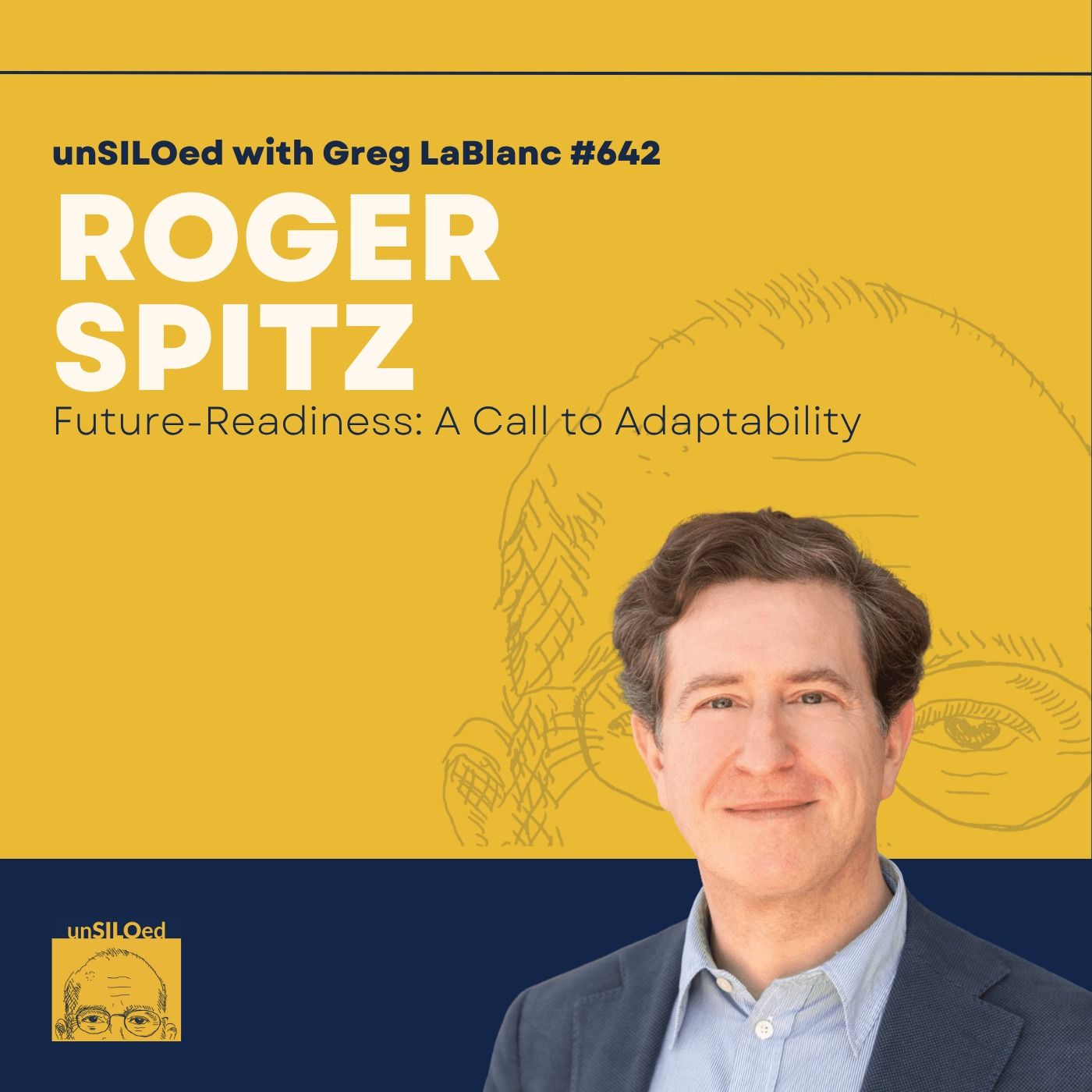
642. Roger Spitz on Future-Readiness: A Call to Adaptability
Apr 2000:58:10Tap to summarizeHow did working with first-principles thinking allow SpaceX to maneuver nimbly past established aerospace giants? What are the limits of prediction and scenario models under “deep uncertainty,” and how can we apply them to AI’s potential effects on society? Roger Spitz is a futurist, the president of Techistential, and the author of several books. His latest titles are Disrupt With Impact: Achieve Business Success in an Unpredictable World and the four-volume series of The Definitive Guide to Thriving on Disruption: Volume I - Reframing and Navigating Disruption. Greg and Roger discuss ‘Techistential,’ named from “tech existentialism,” an agency-focused philosophy for being human in a technological world where algorithms increasingly share decision-making. They argue modern education, governance, and incentives are built for a linear, predictable world, causing people and organizations to seek certainty, delegate judgment to machines, and de-skill. Roger considers resilience in contrast with Taleb’s “anti-fragility,” emphasizing systems that benefit from shocks by avoiding single points of failure, embracing mistakes as data, and maintaining slack. *unSILOed Podcast is produced by University FM.* Episode Quotes: Foresight isn’t about making better predictions. [54:25] Personally, I think if you take foresight or future studies as making better predictions, I think that is the wrong approach, because I think there are probably ways, and there’s some great colleagues, you know, Philip Tetlock and others who write about this topic. I think that for uncertainty, not deep uncertainty, where there are a range of right answers and et cetera, I think that they always are probably making better predictions so that's what Polymarket and these prediction markets help with, right? But in deep uncertainty, which is completely unpredictable, I think that's where foresight is best. Is technology giving us less agency? [03:51] It's an interesting word and it's an interesting question, you know, the meaning of agency. And then the question about whether technology is giving us less agency. My starting point is to, sort of, think about one or two things. So the first one is I’m coming from a filter of systemic change or systemic disruption and unpredictability. I believe the world is not only non-linear, complex, unpredictable, and uncontrollable, but that the cost of relying on the assumption of predictability, linearity, et cetera, is increasing.-( cost in the broader sense.) So in that sense, disruption and change is actually not necessarily a negative, because I think that if things were predictable, things will be predetermined, you'd have no agency. So from a philosophical perspective, you could argue that it is thanks to uncertainty that you can exercise agency as the opposite best spectrum of predetermination. Fragile vs anti-fragile [23:50] Roger Spitz: One of the biggest distinctions between fragile and anti-fragile is that in fragile, which is actually most organizations, you hate mistakes. You hate errors. Not only that, but you have incentives to make sure you don't make mistakes. [24:05] Greg LaBlanc: And if you do have, you disguise them. [24:06] Roger Spitz: If you do have them, you disguise them. Why is that? It's because basically you're fragile. So if there were mistakes, they could have a significant cost. Anti-fragility loves a mistake. Because what is mistake? It's data. It's emergent; it's a discovery process. It's trial and error. You might discover something new. You're going to respond to that in a way. Show Links: Recommended Resources: Shoshin - Beginner’s Mind Nassim Nicholas Taleb Antifragile Viasat Zoom SpaceX First Principle “Move fast and break things” Guest Profile: Disruptive Futures Profile Profile on LinkedIn Profile on Techistential.ai Profile on World Economic Forum Guest Work: Amazon Author Page Disrupt With Impact: Achieve Business Success in an Unpredictable World The Definitive Guide to Thriving on Disruption: Volume I - Reframing and Navigating Disruption (4 Volume Series) Google Scholar Page Hosted by Simplecast, an AdsWizz company. See pcm.adswizz.com for information about our collection and use of personal data for advertising.
Transcribe →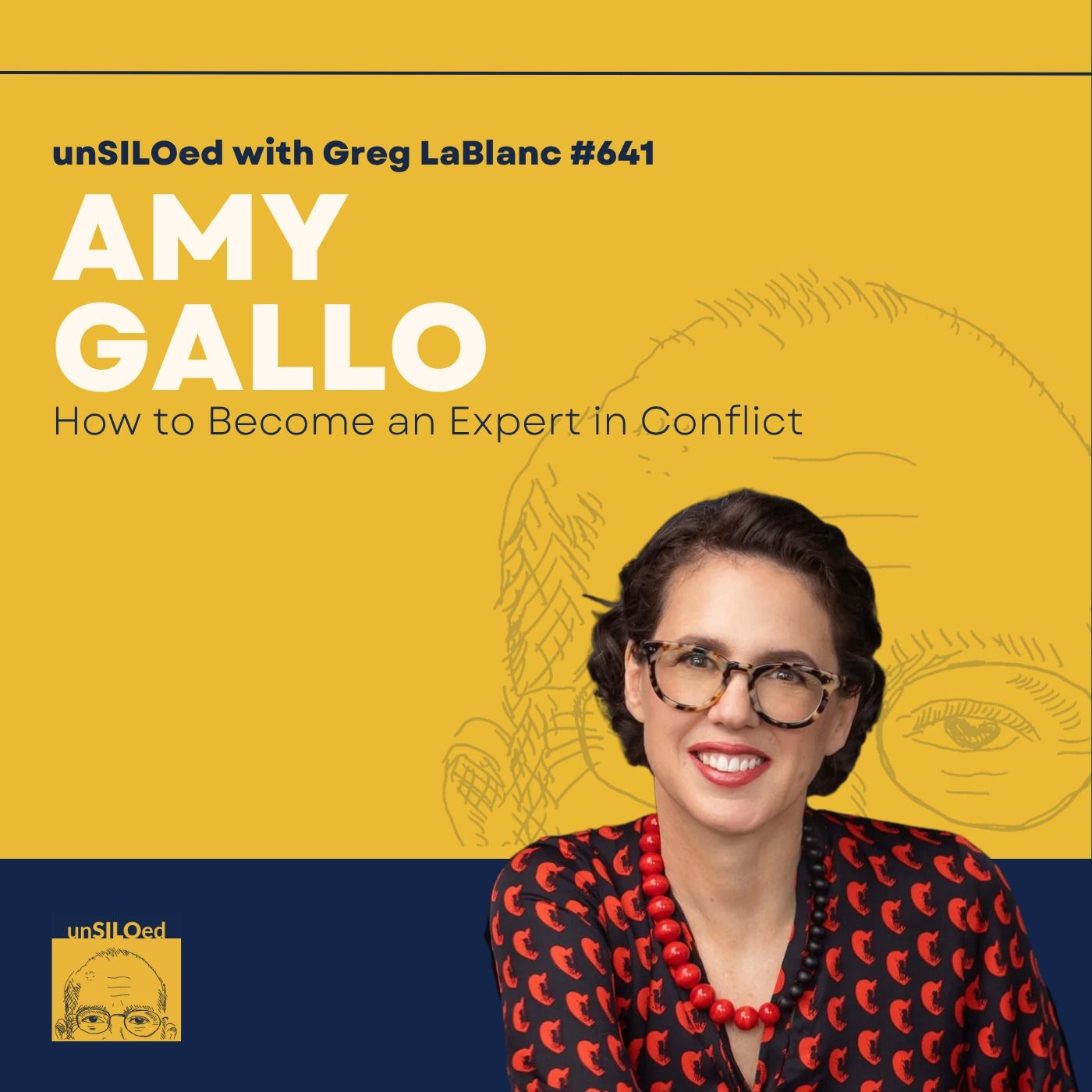
641. How to Become an Expert in Conflict with Amy Gallo
Apr 1600:56:02Tap to summarizeEven though conflict is something we all instinctively want to avoid, it’s an essential part of a healthy culture. So what can organizations do to ensure they’re not only managing conflict productively but also leveraging it to make the organization stronger? Amy Gallo is a contributing editor at Harvard Business Review and author of the books HBR Guide to Dealing with Conflict and Getting Along: How to Work with Anyone (Even Difficult People). Her research and consulting work focuses on how to effectively navigate and even utilize conflict to better your organization. Amy and Greg discuss the necessary ingredients for fruitful conflict, the consequences of failing to manage it effectively, and run through some of the most difficult personalities people might face in the workplace and the best strategies for working with them. *unSILOed Podcast is produced by University FM.* Episode Quotes: Why I disagree with you doesn't equate to I hate you 03:35: Sometimes it feels like saying, “I disagree, Greg,” is the same as saying, “I hate you, Greg.” Right? People find it so offensive; disagreement, conflict is so hurtful, damaging, when actually, if it's done well, it's incredibly productive. We get that sort of friction that you need in an organization to come up with new ideas, to improve the way we work together, to even bond with one another. What if ego didn’t get in the way of conflict? 06:09: Conflicts would be so much easier if no one involved had any ego, which, of course, is not possible. But it's one of the things I try to do when I get involved in a conflict in my work or personal life: think, “Okay, if I wasn't defending my ego right now, how would I think about this problem?” And I think if more people could show up in that way, we'd get through conflicts much, much easier and, really, honestly, with stronger relationships intact. Is there an optimal level of conflict? 02:32: Is there an optimal level of conflict? I've never seen research that says this is the optimal. I think right now, in our current culture, where we are with global politics, with sort of the state of the world, I think the truth is we actually need more conflict in our organizations, on our teams, than we currently have. And so the chances are that the optimal is more than you currently have. Show Links: Recommended Resources: Reed Hastings Sigal G. Barsade Rebecca Hinds | unSILOed Heidi Grant “An illustrated guide to the six types of difficult coworkers you’ll meet at your first job” | Boston Globe Women at Work podcast Guest Profile: Professional Website Professional Profile on LinkedIn Guest Work: HBR Guide to Dealing with Conflict Getting Along: How to Work with Anyone (Even Difficult People) Hosted by Simplecast, an AdsWizz company. See pcm.adswizz.com for information about our collection and use of personal data for advertising.
Transcribe →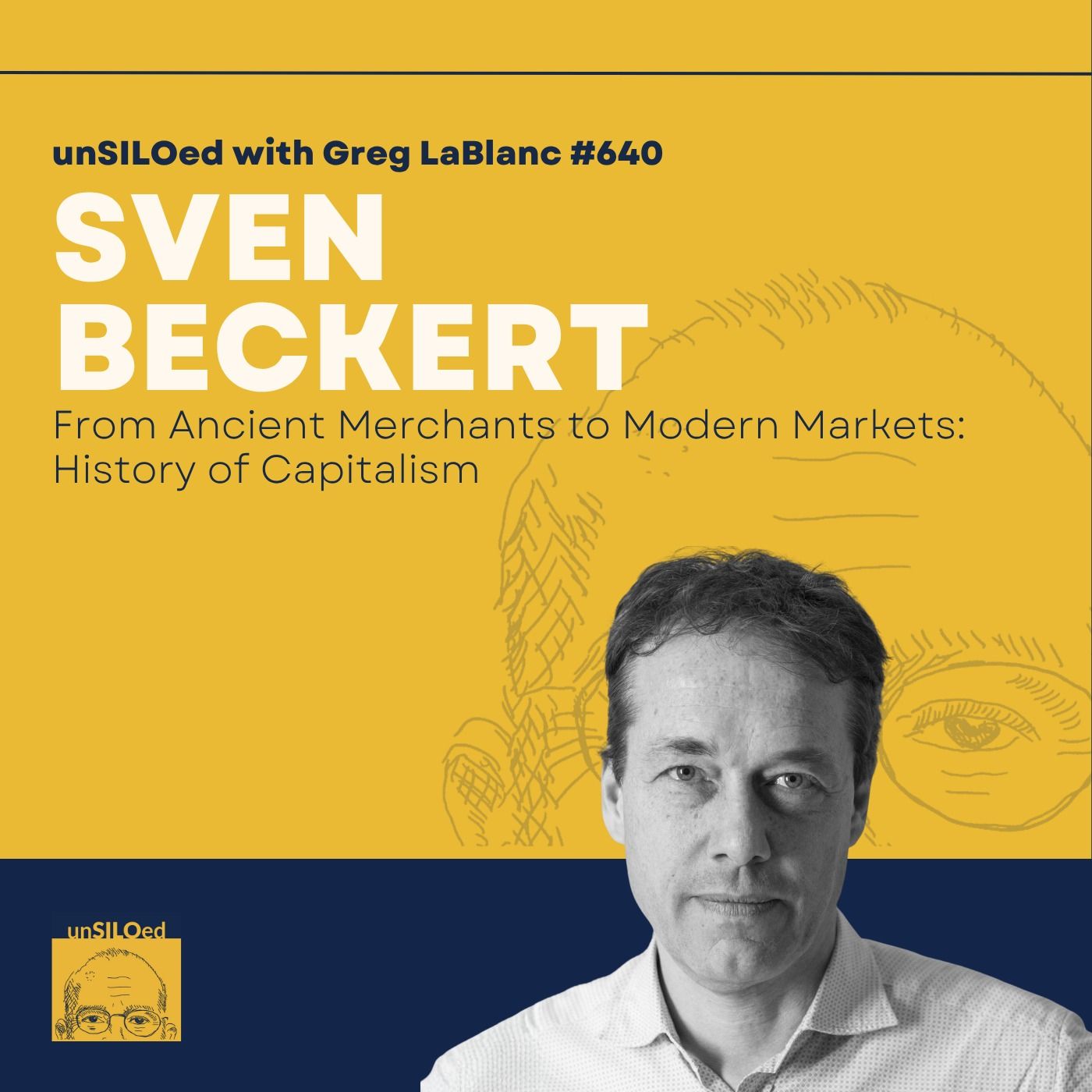
640. From Ancient Merchants to Modern Markets: Sven Beckert's History of Capitalism
Apr 1300:52:22Tap to summarizeHow can you trace capitalism from long-distance merchant networks (including 12th-century Aden) to a modern-day world economy? What are alternative stories to the commonly held Eurocentric view of capitalism’s origins? Sven Beckert is the Laird Bell Professor of History at Harvard University and is also the author of several books. His most recent titles include Capitalism: A Global History, Empire of Cotton: A Global History, and Slavery's Capitalism: A New History of American Economic Development. Greg and Sven discuss how Sven sees the history of capitalism, contrasting it with neoliberal-leaning accounts that underplay violence, the state, and capitalism’s global character. He also offers a helpful minimalist definition—privately owned capital productively invested to produce more capital—and argues markets are universal but become central only in capitalism. He dissects the pillars that propped up capitalism through the years, including diverse labor regimes such as slavery and indenture, noting slavery’s major but time-specific role in the Americas, enabled by European power and used to overcome resistance to capitalist transformation. *unSILOed Podcast is produced by University FM.* Episode Quotes: Challenging Eurocentric narratives about capitalism 23:49: Look at the world today. We are living in a world in which no one in their right mind would, A, say, “Okay, we need to only look at the European continent to understand the global economy today.” And B. Nobody would ignore, you know, the history of Asia or Latin America, or even Africa, in telling the history of the global economy today. So, we are entering this debate now at a different vantage point. I am not saying that, you know, scholars a hundred years ago or so had some terribly ill-intentioned thought in their way of looking at this. No, they lived in a different world, and the world looked different to them. But today we are living in a world in which clearly Europe is not at the center of the universe and not at the center of global capitalism. And that now forces us, I think, to not just think differently about the present, but to think differently about the entire history of capitalism. Capitalism is a state of constant growth 49:25: Capitalism is not conservative. Capitalism is the most revolutionary economic civilization ever. It is a state of permanent revolution. No expansion seems to be impossible within that capitalist civilization. I think it goes against its very core, what it is. It is a state of constant growth. It is a state of constant expansion. Capitalism without markets is conceptually unimaginable 05:05: I think capitalism without markets is conceptually unimaginable, and markets, of course, play a very important role in contemporary capitalism. But I think it would be mistaken to define capitalism primarily by the fact that it is a society in which markets regulate all or parts of economic life. Because, as far as I know, I have not yet found a human society which did not know of markets. I have not yet found a human society which did not engage in some forms of trade. So I think these are kind of universal attributes of economic life on planet Earth. But what is not universal is societies in which markets are not just on the margins of economic life, as they are in many, many societies, but really are at the very center of economic life. And this is certainly the case for capitalism. Why is capitalism essential in our lives? 39:13: Capitalism is extremely important to our lives today. It structures the biggest processes that we inhabit, but also the most intimate parts of our lives. And people are having passionate opinions about capitalism. They want to understand how we claim to live in the world in which we live right now. Show Links: Recommended Resources: Capitalism Karl Polanyi Fernand Braudel Wage Labour Slavery Aden Robert Brenner Karl Marx Industrial Revolution East India Company Guest Profile: SvenBeckert.com Faculty Profile at Harvard University Wikipedia Profile Guest Work: Amazon Author Page Capitalism: A Global History Empire of Cotton: A Global History American Capitalism: New Histories Global History, Globally: Research and Practice around the World Slavery's Capitalism: A New History of American Economic Development Plantation Kingdom: The American South and Its Global Commodities The Monied Metropolis: New York City and the Consolidation of the American Bourgeoisie, 1850–1896 Hosted by Simplecast, an AdsWizz company. See pcm.adswizz.com for information about our collection and use of personal data for advertising.
Transcribe →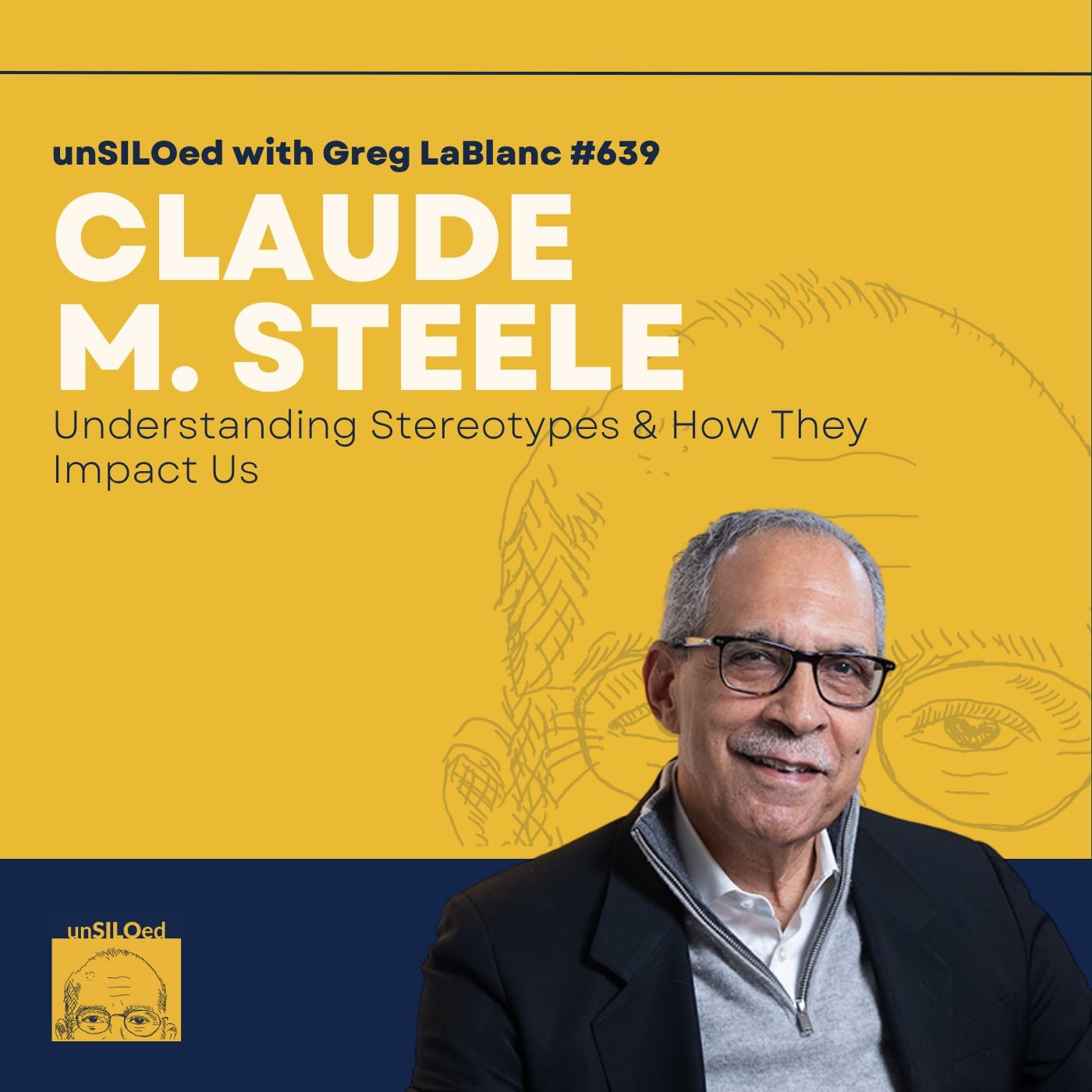
639. Understanding Stereotypes & How They Impact Us with Claude M. Steele
Apr 900:50:11Tap to summarizeClaude Steele is a professor of psychology at Stanford University and the author of the landmark book, Whistling Vivaldi: How Stereotypes Affect Us and What We Can Do. His new book, Churn: The Tension That Divides Us and How to Overcome It, takes the theories from Whistling Vivaldi and examines the psychological stress that comes with navigating diversity. Claude joins Greg to discuss his decades' worth of research on the concept of identity, the impacts stereotypes have on our cognitive load, even if we don’t subscribe to those stereotypes, the limits to “colorblindness”, the concept of “wiseness,” and why trust could be the antidote to the churn. *unSILOed Podcast is produced by University FM.* Episode Quotes: The tension beneath how we come together 08:39: I'm trying to characterize, with the term “churn,” this sort of emotion that can be a real factor in our experience of diversity and our coming together. We're a multiracial, multi-ethnic, multi-religious, multi-class society. And to function well, we have to get along well in these critical situations—school, workplace—and churn is a symptom of the tensions that can arise. Trust is the antidote of churn 10:10: The hopeful part of churn is that it does have a remedy, an antidote, and that is trust. As soon as we've built trust together, then I relax. Well, I know you're not going to do that. How do you build trust? 29:13: You really do have to try to get yourself in the position of the other, to see the world from the other person's shoes. That really helps to build trust. Just the effort that you're interested in doing that is maybe the most fundamental step forward that a person in authority can take to build trust in people that work for them or work with them. The limits of being colorblind 19:48: I think in many aspects of our society, it's absolutely essential. We have to think that way, that we have to have policing, healthcare access, housing, mortgages be colorblind. So, I'm uncompromising on many aspects of it, but I think if we take it too far, we can ignore the experiences that people have because of their identities. Yeah, just because of their identity. So, if we're colorblind, I don't need to know about all those things that affect your life that have to do with your identity. Show Links: Recommended Resources: Erving Goffman Affirmative action “Differences in STEM doctoral publication by ethnicity, gender and academic field at a large public research university” by Mendoza-Denton and Fisher Guest Profile: Faculty Profile at Stanford University Former Provost Bio at UC Berkeley Guest Work: Churn: The Tension That Divides Us and How to Overcome It Whistling Vivaldi: How Stereotypes Affect Us and What We Can Do Hosted by Simplecast, an AdsWizz company. See pcm.adswizz.com for information about our collection and use of personal data for advertising.
Transcribe →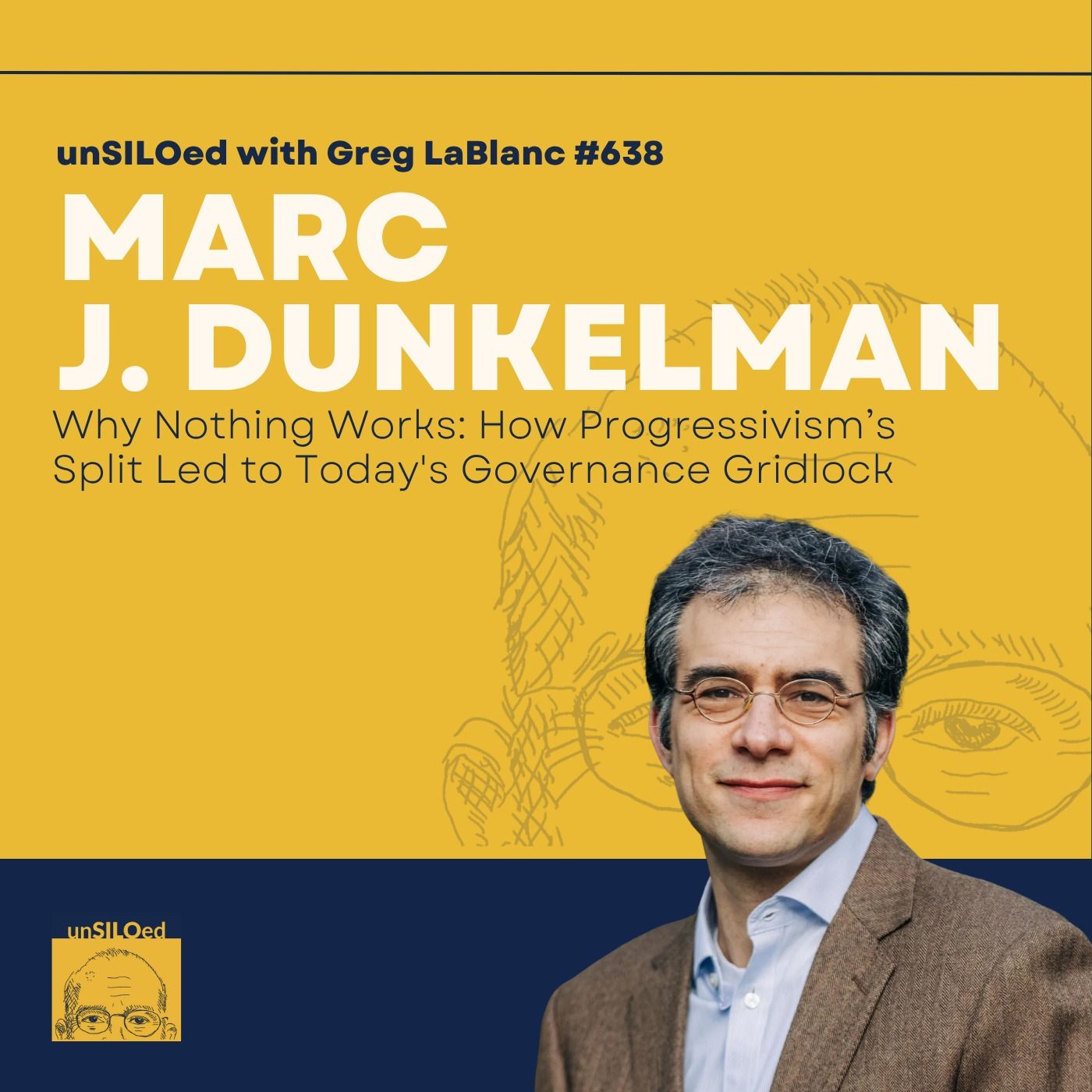
638. Why Nothing Works: How Progressivism’s Split Led to Today's Governance Gridlock with Marc J. Dunkelman
Apr 701:09:19Tap to summarizeHow is governance dysfunction linked to declining ‘middle-ring’ community ties? Marc J. Dunkelman is a fellow at Brown University and a fellow at the Searchlight Institute in Washington, D.C. Marc is also the author of two books, Why Nothing Works: Who Killed Progress—and How to Bring It Back and The Vanishing Neighbor: The Transformation of American Community. Greg and Marc discuss how U.S. progressivism has long been split between a Jeffersonian impulse to decentralize power and curb “bigness” and a Hamiltonian impulse to centralize authority in expert institutions. Marc explains how figures like Robert Moses could push projects through, while today expanded rights, litigation, and procedural checks—driven by 1960s–70s distrust of authority (Vietnam, civil rights failures, environmental and consumer scandals, Watergate-era culture)—have reduced discretion so much that even widely supported projects stall. *unSILOed Podcast is produced by University FM.* Episode Quotes: Why is it so hard to build things? 44:34: You're awarding rights to classes of individuals who have long been stepped on by powerful people. And, like, award these new standing. Exactly. To your point, in order to reduce the discretion of the would-be Robert Moses, who would make that choice on their own without ever really thinking through, alright, now that all these people have, like, a voice, how are we going to resolve that? And to this day, I don't think the progressives have actually answered that question. I don't think that we have in our minds even a system by which you would make trade-offs between those groups. And it's one of the reasons, to your point, it's so hard to build things, like, if everyone wants that new road to be built, but each individual constituency has enough power to say, not through this particular route, you're fundamentally stuck. What motivated Marc to write “Why Nothing Works.” 05:07: The motivation here was to understand what had changed between the fifties and the 2010s, to make it so that it used to be that bad projects couldn't be stopped, and now good projects couldn't go. That prompted a whole series of questions that eventually would lead to this book, Why Nothing Works. On tension within progressivism 36:28: There is sort of a notion that centralized power itself is up to no good, and that, in order for America to restore its promise and luster, we need to restore the power, the individual agency that people once had. And, I want to make this clear: that shift is remarkably profound within progressivism, but it is not that the old effort to centralize power wasn't progressive. And it's not that this new impulse to restore power to the woman who wants to control her own body, to the black family that wants to be able to rent a room in any hotel of their choosing, to the ordinary person who doesn't want to be the victim of discrimination, to the neighborhood that doesn't wanna be clobbered by, like—these are both ultimately progressive impulses. Show Links: Recommended Resources: The Power Broker Robert Moses Progressivism Louis Brandeis Sacco and Vanzetti Felix Frankfurter Cadillac Desert Bowling Alone Abundance Guest Profile: Faculty Profile at the Watson School of International and Public Affairs Searchlight Institute LinkedIn Profile Social Profile on X Guest Work: Amazon Author Page Why Nothing Works: Who Killed Progress—and How to Bring It Back The Vanishing Neighbor: The Transformation of American Community Hosted by Simplecast, an AdsWizz company. See pcm.adswizz.com for information about our collection and use of personal data for advertising.
Transcribe →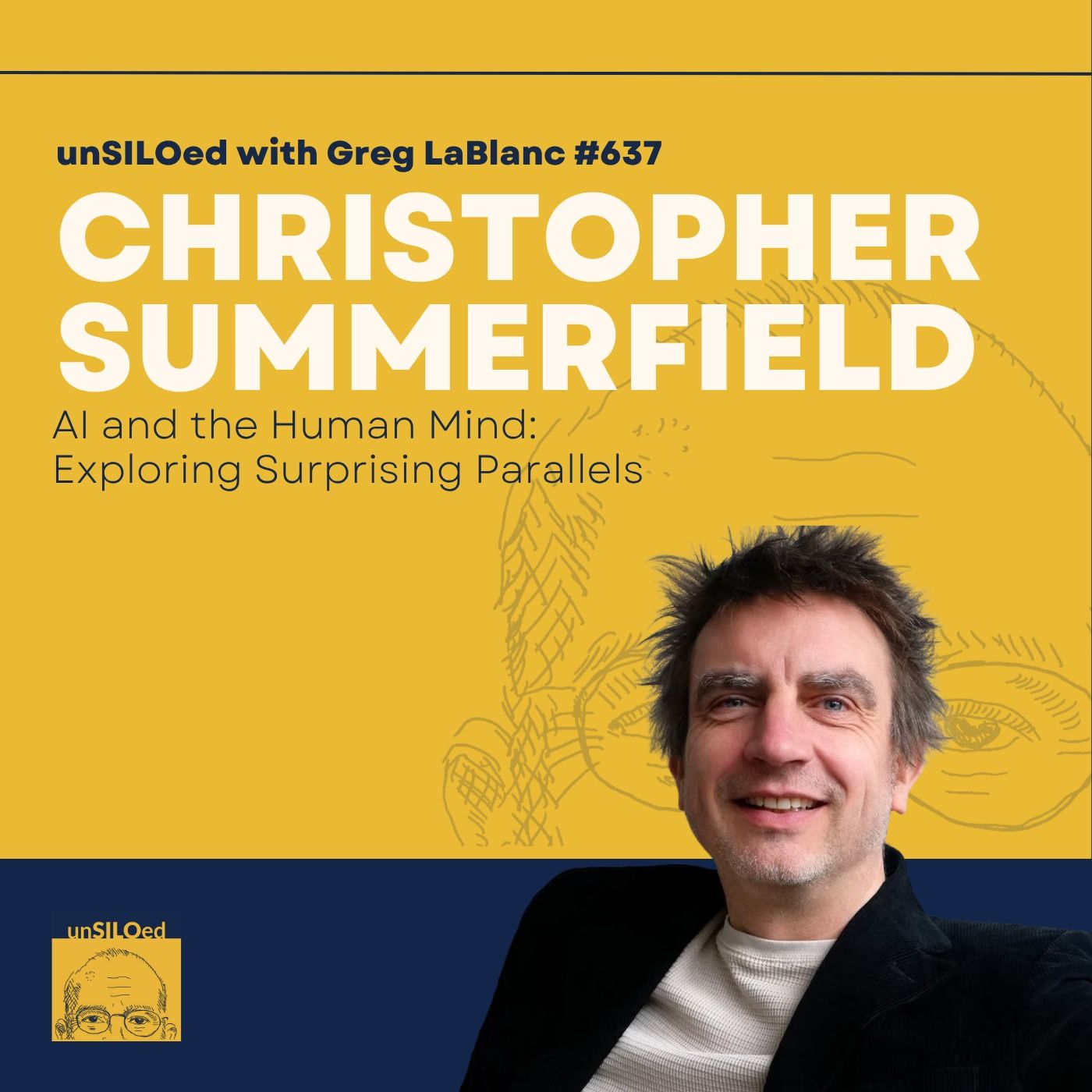
637. AI and the Human Mind: Exploring Surprising Parallels with Christopher Summerfield
Apr 300:59:12Tap to summarizeWhen AI tells us what we want to hear, is it acting in a rogue way, or is it emulating behavior that society clearly values? How does our ability to sleep enable us to update faster than neural networks currently can, and what will be different when they can update themselves more frequently? Christopher Summerfield is a professor of cognitive neuroscience at Oxford University, the Research Director at the UK’s AI Safety Institute, and the author of the book These Strange New Minds: How AI Learned to Talk and What It Means. Christopher and Greg discuss the historical split between symbolic, rule-based “rationalist” AI and data-driven “empiricist” learning, arguing that the recent success of large models vindicates the latter despite earlier skepticism. They discuss how structured behavior can emerge from messy networks, how modern models are trained with reinforcement learning to produce step-by-step reasoning, and why systems often “make” solutions by writing code rather than routing to specialized tools. *unSILOed Podcast is produced by University FM.* Episode Quotes: From messy brains to intelligent machines 04:40: If you look inside the brain, your brain and mine and the brains of other biological species, they're really messy. They're like really, really messy and unstructured. So nature managed to solve the problem. And so maybe that gave impetus for this movement to kind of, you know, continue to sort of plug away. And when we finally got computers big enough to process lots and lots of data, it started to take off. And the rest is history. Hallucinations aren’t just an AI problem 34:36: How does the model know what is the kind of socially or culturally appropriate response? We're often very worried about the models, like, the models don't tell the truth and they make stuff up. But people forget that most of language is literally making stuff up. That is what you do when you open your mouth. Is language more powerful than we thought? 32:05: The surprising thing is that language, it turns out, is sufficiently rich and expressive that if you have it in huge volumes and you process it effectively, then you can actually make a whole bunch of inferences about the world, which are surprisingly accurate. So you would think that you would need to actually experience them firsthand rather than just through hearsay, because we work like that, right? Like we rely on our senses. Of course, we rely on hearsay a little bit, and we think about what other people say, and it allows us to infer new things. But like the models just have language, well, I mean now they have multimodal data, but let's take a conversational agents lms, and what I think has been so surprising is that language contains enough structure that you can really uncover patterns of information that you would think that you would need to see. Show Links: Recommended Resources: Rationalism Empiric School George Bull Frank Rosenblatt Neural Network (machine learning) Marvin Minsky Perceptron GPTs Guest Profile: Human Information Processing Lab Social Profile on X Guest Work: These Strange New Minds: How AI Learned to Talk and What It Means Google Scholar Page Hosted by Simplecast, an AdsWizz company. See pcm.adswizz.com for information about our collection and use of personal data for advertising.
Transcribe →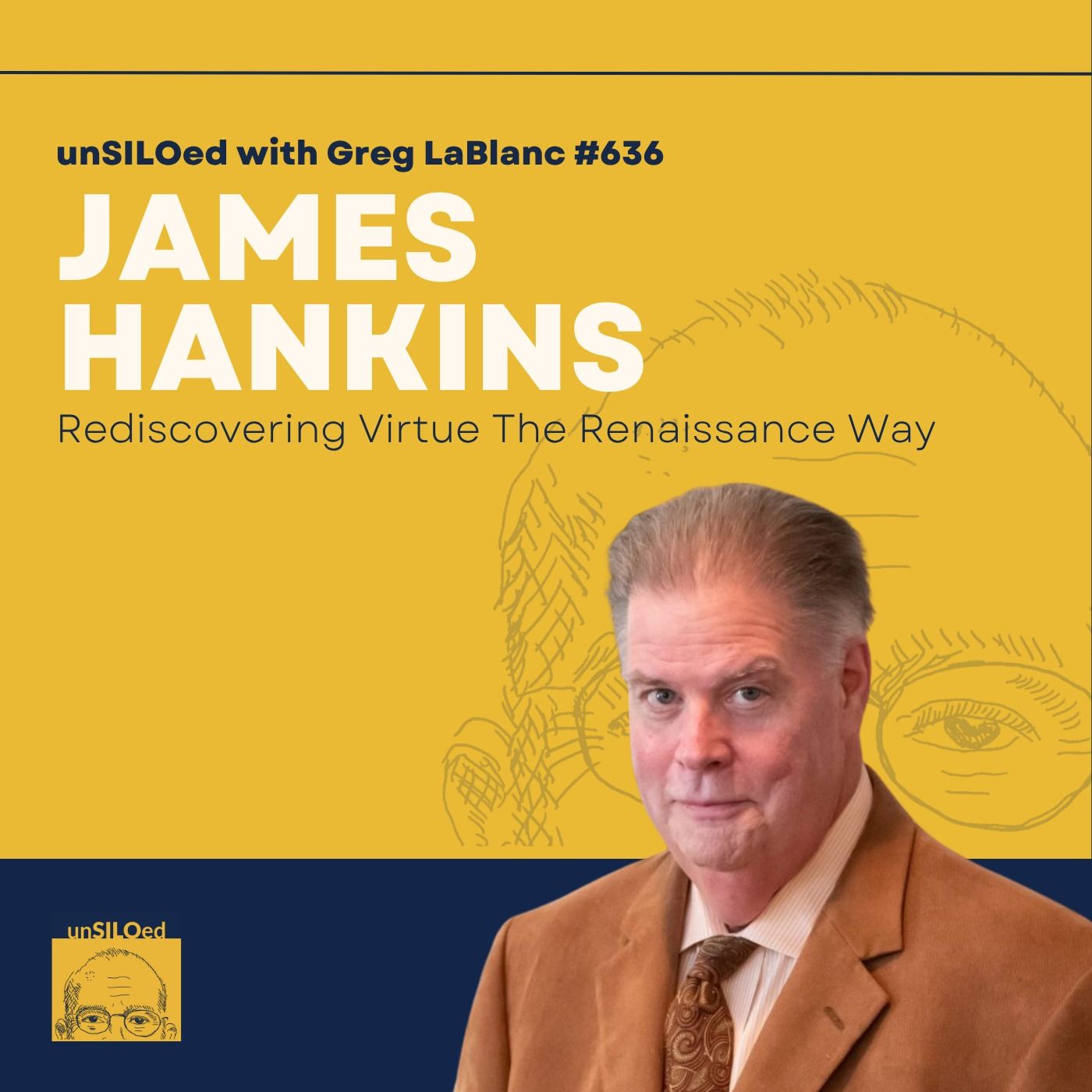
636. Rediscovering Virtue the Renaissance Way with James Hankins
Apr 101:08:55Tap to summarizeIt’s one of the oldest debates in political philosophy: Do good laws make good men, or do good men make good laws? Minds have been wrestling with this question since the days of Petrarch and Machiavelli, but both sides may have insights that can inform modern political philosophy. James Hankins is a professor of history at Harvard University, a visiting professor of humanities at the University of Florida’s Hamilton School, and author of numerous books including Virtue Politics: Soulcraft and Statecraft in Renaissance Italy and Political Meritocracy in Renaissance Italy: The Virtuous Republic of Francesco Patrizi of Siena. He’s also the co-author of the textbook, The Golden Thread, which focuses on the history of Western civilization. Greg and James discuss Renaissance humanism, sparked by Petrarch’s response to 14th‑century crises, and explore the humanist education focused on virtue, rhetoric, and moral philosophy. They also delve into Machiavelli’s critiques and pushback against humanism, how Chinese Confucianism compares with the West’s legal system, and why James believes virtue should be brought back into modern education. *unSILOed Podcast is produced by University FM.* Episode Quotes: Why we need both systems and good character 11:47: I think I agree with the people who think there should be a balance between good character and the formation of good character and expertise and wisdom and competence and the people who say that systems can solve all your problems and you just get the right systems and thinkful function. I think that is a very, kind of left, left hemispheric way of understanding human nature. Good law is nothing without good people 07:59: If you have great laws, but corrupt judges, you are going to have bad laws. If you have laws being written by corrupt people, that is even worse. So the humanist is saying the whole problem is, the human heart, right? This is where the problem is. And what we have to do is to bring back antiquity. Is democracy only the legitimate form of government? 47:14: Today, we might say that a democracy is the only legitimate form of government where a republic reflects the will of the people. But they would not say that in the Renaissance. They talk about better and worse, that monarchs are better when you have got a good monarch. But when you have a bad monarch, the monarch of the republic is better. It is that kind of calculation. It is not the way we think about political regimes today as being, legitimate or illegitimate. Show Links: Recommended Resources: Petrarch Francesco Patrizi Niccolò Machiavelli Isocrates Lorenzo Valla Thomas Aquinas Cola di Rienzo Guest Profile: Faculty Profile at Harvard University Faculty Profile at Hamilton School at the University of Florida Professional Website Guest Work: Virtue Politics: Soulcraft and Statecraft in Renaissance Italy The Cambridge Companion to Renaissance Philosophy Political Meritocracy in Renaissance Italy: The Virtuous Republic of Francesco Patrizi of Siena The Golden Thread: A History of the Western Tradition, Volume I: The Ancient World and Christendom Hosted by Simplecast, an AdsWizz company. See pcm.adswizz.com for information about our collection and use of personal data for advertising.
Transcribe →