← Victory Church: Paul Daugherty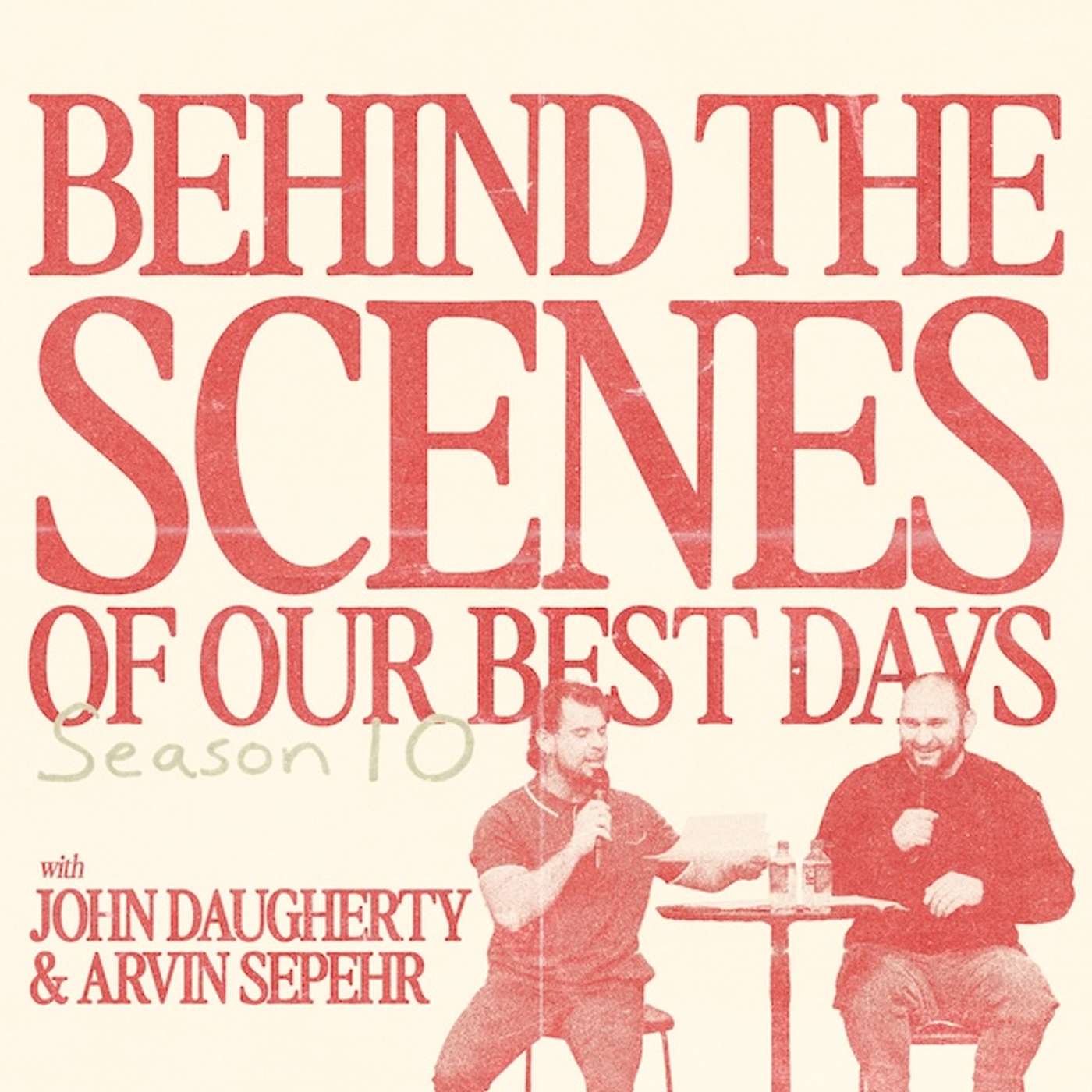
Loading summary
Transcript181 lines
- [00:10]
A
Hey, my name is John.
- [00:11]
B
Hey, I'm Arvid.
- [00:12]
A
And this is behind the scenes of our best days. I don't know if I started in the. I don't know if I was in the shot to begin with, but I am cold. It is 2025. That is why I am in. I got my hood up. I'm getting ready to put my legs inside of my other coat because I don't have pants. Now, if those of you guys who are listening and not watching, I do have on shorts because I finished coaching two classes and I came up here and I thought the church building would be warmer, but it's not.
- [00:47]
B
Not today.
- [00:48]
A
Not today. I'm just like, what happened to that whole let's bring heaven on earth? What happened to that whole thing? Because right now I feel like we're bringing Antarctica to Tulsa. That's what Victory's doing. Anyways, this podcast. This podcast is to talk about the behind the scenes of Victory Church here in Tulsa, Oklahoma. At the beginning of each service, we say this confession. And it is, you know, it's a confession to get our hearts and minds ready for the word of God.
- [01:18]
B
And.
- [01:19]
A
And within it, we say, my best.
- [01:21]
B
Days are right in front of me.
- [01:22]
A
But as you and I know that we all have a behind the scenes of best days, of our best days. And so currently, we are in the heat and throw of things because we are in the middle of, like, Christmas production rehearsals and practices, and it actually starts very, very soon. We're really excited about it.
- [01:43]
B
Yeah.
- [01:44]
A
And then conference in January.
- [01:48]
B
That's right.
- [01:49]
A
Candlelight Christmas Eve service. You know, we have three different toy giveaways and two coat giveaways, and then the end of Victory College, the end of Victory Christian School with finals and all those things, you know, and then you have the end of year. Like, we have this end of year giving thing that we are doing for Camp Victory in the dream Center. So it's a lot of fun, exciting things. It can also just be a lot.
- [02:16]
B
Totally. Yes.
- [02:17]
A
And I find that, like, there's a few things that as you get older, you're like, okay, like, for me, and I don't know those of you who work at a church, you could. Or even actually, I'm going to announce this to all humans. There are people that I believe you can multitask. I believe you can do a lot.
- [02:34]
B
Yeah.
- [02:35]
A
But what version of you is going to be right?
- [02:38]
B
Yes.
- [02:40]
A
Like, I feel like me as John, I can do a lot.
- [02:43]
B
Sure.
- [02:44]
A
But, like, I will be the meanest.
- [02:46]
B
Version of the World. Yeah, yeah, yeah, yeah. Exactly.
- [02:48]
A
I'll be mean and I'll be impatient and I will be kind of passive aggressive. My sister in law, Ashley Doherty, our wonderful pastor. Last night we were at an elementary practice and she was bringing it up because I was coaching. I had said something and she was just like, you know, your family loves to be passive aggressive. And I was like, what? Shots fired? But yes, yes.
- [03:18]
B
Yeah.
- [03:18]
A
And she was like, because you guys won't say the thing.
- [03:21]
B
Yeah, yeah, yeah.
- [03:22]
A
You will hint at it through passive aggressiveness.
- [03:26]
B
Yeah. And that's a lot of people nowadays because it seems, it's. It seems more mean to say the thing, but I have found such a relief in just saying the thing.
- [03:34]
A
Yeah. And at least it's like, the truth will set you free. The truth may sting, but ultimately it'll set you free.
- [03:38]
B
Yeah, yeah, yeah, sure.
- [03:39]
A
But anyways, so one thing is, it's not just how much you can do in a busy season. It's how you do it.
- [03:48]
B
Yeah.
- [03:48]
A
You know, let the Holy Spirit handle the how. Like, release it. Be like, okay. Holy Spirit. I want to be present. Even though I'm doing all these activities with my kids and we're doing this production, I want to be able to, like, within the middle of a production. One of my favorite things, if I'm not in it, is to go to the top of section C to a corner and watch it.
- [04:10]
B
Totally.
- [04:11]
A
And be like, wow, God, look what you did.
- [04:13]
B
Yeah, yeah, yeah, absolutely.
- [04:14]
A
Or my kids are in the production. You know, watching my kids learn the choreography or acting out certain scenes, and I'm like, this is really special. Like, I want to enjoy it.
- [04:26]
B
Right, right, sure.
- [04:29]
A
But I also don't want to be like, sometimes I can get obsessive over details of certain things.
- [04:35]
B
Yeah, sure.
- [04:36]
A
And snappy. So the two things, as I get older, I'm having to learn, it's not just how much you can do, but it's how you do it. And the second thing is lower back and knee problems.
- [04:46]
B
Yeah. We were talking about this.
- [04:48]
A
Yeah. Why am I 41 and needing Bayer aspirin?
- [04:51]
B
I've just been so grateful that John's also a strength and conditioning coach. So he showed me some stretches I do. Be teaching stretches. I do them religiously. I do them in the morning, I do them in the evening. In the middle of the day. I do them in the sauna.
- [05:08]
A
Oh, stretching in the sauna.
- [05:09]
B
Very good. Before run. Totally. Yeah, yeah.
- [05:12]
A
Because your body's already warmed up.
- [05:14]
B
Yeah.
- [05:15]
A
And this is something that those of you are Listening and watching. Like, if you have aches and pains, like, okay, something called a dead hang. A dead hang is where you find a pull up bar and you literally hang. What it does. They say if you can dead hang every day. Now, I know that that's probably not possible for some people, but if you can try to do it two or three times a week and work your way up to a minute or a minute and a half of just hanging, what it does with your spine and shoulders and neck, especially for us oldie goldies, it truly is a game changer. So dead hang. And I'm talking to you guys like you're geriatric. I mean, but I am.
- [05:57]
B
I'm 33.
- [06:02]
A
I'm 41, and I still do these. And then doing this thing called the couch stretch. You can Google this or chatgpt this. The couch stretch, the pigeon stretch. And as you release your hip flexor, your quad, and then as you release your hip and your hamstring. Yeah, yeah, yeah. Those stretches, what it does is all of the tight muscles around your lower back and knee, they begin to become loosened.
- [06:27]
B
Yeah, it's wonderful.
- [06:29]
A
And so anyways, those type of mobility things.
- [06:32]
B
Yeah, like, it's been a game changer. It has. Because I was having back issues and then made a few changes and now I feel good.
- [06:41]
A
Yeah.
- [06:41]
B
I'm like. So I was scared that that was the permanent. This is gonna be this way from now on. You're getting quote unquote old. You better, you know, figure.
- [06:49]
A
And what's unique is that sometimes people will get knee replacements and hip replacements. Yeah.
- [06:54]
B
Wow.
- [06:54]
A
And they will spend all this money where I'm like, hey, before you spend that money, commit to two months of like the deep stretching every day.
- [07:03]
B
That's right.
- [07:04]
A
And see if you still need those replacements.
- [07:06]
B
For sure.
- [07:07]
A
You know, also like. And we're not making this a health and fitness episode, please.
- [07:16]
But you know, there's things like peptides, BPC 5157 peptides kind of help you if after you train or if you've worked in the garden or if you've shoveled snow and you're like, man, I'm sore. Those things that kind of helps relieve that soreness and remove that lactic acid. Also, as you guys know, the fish oil or creatine. Creatine. They say it's not just for 16 year olds that want to juice up. Creatine is a. And we're not getting any, like, money from this.
- [07:47]
B
Not yet.
- [07:48]
A
Saying this. Not yet. Not yet. You know, but creatine regardless the age, man or woman, you need to be taking it. It's a super supplement for your brain, for your. For everything. Anyways, so all that to say? Yeah, now we can talk about ministry. Yeah. Okay. So the one thing that is, that is great about Pastor Paul is that Pastor Paul knows his audience. And I think that anyone who is wanting to write a script, write a song or create something, it's called tailoring it to your audience.
- [08:29]
B
That's right. Yeah. Tailoring is the idea of clothing. Like when you purchase a suit, for example, and you get it tailored, you go in, they measure specifically for your physique, for your frame, for your size. And so I think when you first get into making stuff or speaking or anything, you're so excited to just have the chance to do it.
- [08:48]
A
Oh, yeah. Like the first time someone preaches.
- [08:50]
B
Yeah. And you just what you consider the best thing that you can offer, you're just excited to share that. And that's definitely everybody for a while. And then eventually, if you really pay attention to, like, what is really happening here and what are these people taking from what's, you know, like, obviously if a person's passionate and charismatic about what they want to share, a large number of people are going to, like, feel drawn to that. But that will draw people. It won't keep them there. And if you're in the. That's a big thing is distinguishing.
- [09:23]
A
Okay. What draws people doesn't always keep them.
- [09:25]
B
Yeah. And if you distinguish between, like, this sort of personality or this sort of person will draw attention. But then in a church context, it's cyclical and it's like, are they, like, life is going to have to happen here at some point? This cannot, this has to go from being an event to a rhythm.
- [09:44]
A
And so, so, so make an example of that in a local church.
- [09:49]
B
So there's, let's say I get up there in a local church and I preach a really exciting message that is full of faith and encourages people to seek God and pursue his plan for their life.
- [10:03]
A
That's like a conference sermon.
- [10:04]
B
Sure, sure. But then it's like on a week to week basis.
- [10:10]
What Pastor Paul does is he's preaching to people who are in all different seasons of life, all different socioeconomic places, all different, like, experiences. Some of them just have had a miscarriage. Some of them just had a baby. Some of them, you know what I mean? Like, some of them, their kids have moved out.
- [10:26]
A
It's all sorts of things from newly married to divorced.
- [10:30]
B
Yeah, yeah, yeah, exactly. Every sort of the whole spectrum of life. And to speak to those people on a regular basis, you have to tailor to your audience and understand that it's not just like, what's the most impressive thing I can say here? What's gonna make people go, oh, wow, that's really good. Like, there's such a beautiful. When it's honest and sincere, revelatory things from scripture are wonderful. Where it's like, and then this verse actually means this. And then you can connect it to a person's life. That's great. But more often than not, I have learned.
- [11:07]
That person wants to know, like, why do I need to keep going? Or what's going on with this situation in the world? How am I supposed to interpret the things. Things coming at me? And so I have learned the skill and I think everyone should of. There's my taste. There's like, what.
- [11:24]
A
I personally pay attention to what Arvin feeds.
- [11:28]
B
Yeah, yeah. So the productions are a great example because we are making these shows for.
- [11:32]
A
This audience, for Victory's audience.
- [11:34]
B
That's right. And anyone that would come to Victory and watch it or watch it online. And so a real cool thing is if you notice, like, there have been several shows that have been redone, like, we're remaking Le Mag for this Christmas 2025. If you go watch Le Mag in 2020, it's a completely different. Very, very different, very different songs. And yet we're taking the same biblical story of Jesus birth and telling it through a unique, like, dance Lens. However, the five year gap between the two, the audience changed.
- [12:06]
A
Yeah.
- [12:07]
B
So at 20 20, we were in the beginning of the COVID time period and then that happened. And then all of the residual waves of that are still hitting. And so 2025's audience is very different. And so the sense of humor is different. The way that we enter the story is different. Even the like, decor and how we approach the design of everything is different because our A, the audience has. Has changed. The audience is fluid and it's constantly shifting and moving. And then B, we have also gotten better at reaching that audience.
- [12:44]
A
Yeah, no, I agree with you. I agree with you. And tailoring to your audience is also a great question. Is, you know, someone. There is an individual that has reached out to us a long time ago that was like, hey, I would really love for you guys to take a look at my script. And it was. And it involved Jesus being the part of Luke Skywalker in Star Wars.
- [13:09]
B
Heck yeah.
- [13:10]
A
And it was like, okay, this is such a unique, fun idea. My first question Is who's your audience?
- [13:18]
B
Yeah. Right.
- [13:19]
A
Because if we did that here at Victory, we could be crucified.
- [13:24]
B
Yeah, yeah, yeah, yeah. I mean, it's like that thing at the beginning, like, my first foray into this.
- [13:31]
We wrote Sold for Parts as, like, a script idea.
- [13:35]
A
Sold for Parts was a story that. That Arvin wrote.
- [13:39]
B
Yeah. But it was my version of that where it's like, I'm just so excited to tell this story that I think we should do this. We should pursue it. We shot it, and then it was very clear afterward. Like. But that's not for this audience. Yeah. That's not for the. You know, and so that's a perfect example of, like, real passionate about the subject matter, real excited about what it could mean for people if they. You know what I mean? And.
- [14:06]
A
And so here's. And here's a great lesson for anyone who is. Who has worked or served at a ministry. Like, the behind the scenes of it, you're so excited about a design. You're so excited about a song. You're so excited about a word that God has spoken to you, or maybe a business idea. This thing that we wrote, filmed, casted, created, finished in the can has never been seen by Victory.
- [14:36]
B
Right.
- [14:37]
A
And it was because. Not that it wasn't good. It just wasn't the time for that thing.
- [14:44]
B
Right. And it was for that audience. When you see that audience, where the audience is at and their capacity to receive, that is not gonna work. Even if you think, oh, this is really important. Yeah.
- [14:57]
A
And so it doesn't mean it's a slam on you. Like, it doesn't mean it's a slam on Arvin. Like, oh, you didn't do a good job. And sometimes the dynamics of that doesn't always get communicated. Like, if there is a. Like, this is an example. If there was a designer that was. So we started the. You. The U is the creative department here at Victory. Whenever we first started, there was some design or graphic design ideas whenever Pastor Paul first stepped into ministry. And they were so. They were great, but they were so drastically different from what Victory had ever done before.
- [15:35]
B
Right. Yeah.
- [15:36]
A
We don't know how people would have taken them or received them. You had to take people. This sounds so funny, but when Victory was rebranding from, you know, Victory's been around for over 40 years. So when we have gone through a rebranding, like, you can't just start posting stuff on social media and start putting things, like, out there, because then people will go, well, what happened with this? And what happened with that. And why is it no longer called Word Explosion? Why is it called Victory Conference? Do we no longer preach the word of God? And you're like, no, but. So you have to take the audience on a journey. So it's not only tailoring to your audience, it's like, okay, if we want to do fill in the blank, let's take our audience on a journey. There's nothing. This is what I've learned with coaching young kids. The thing that, like parents, they want to be on the coach's side, but a coach just can't be like, thanksgiving break just happened. Christmas break is coming up. I can't just be like, hey, how come the kids weren't at practice today? It's Thanksgiving. And it's like, well, why would we practice wrestling or basketball on Thanksgiving Day?
- [16:51]
B
Yeah, yeah, yeah.
- [16:52]
A
Let's take the parents on a journey. Let's first communicate to them at the beginning of November, hey, Mom and dad, we're looking at practicing over Thanksgiving break. These are the two options of days that we're looking at. I need a vote by the end of the day. We'll make a decision, and I will let you know what day and time they vote. Blah, blah, blah, blah. The parents are now involved in it. Now we've made a decision. And then we say, all right, mom and dad, we're going to be practicing not on Thanksgiving Day, but on the Tuesday before. Even though there's no school, we know it's hard to get up here. We appreciate you making the effort, and we're going to do this practice at this time.
- [17:29]
B
Yeah.
- [17:29]
A
All of a sudden, the parents now are like, you know what? Thank you for communicating. I'm on your side. And, son, you're going to get to this practice. Does that make sense?
- [17:39]
B
Yeah, absolutely.
- [17:40]
A
So now copy and paste that same mental approach to branding in a church or doing a certain thing. We had designers who designed things that very first beginning, and they were upset that it got like, it wasn't done. You know what I mean? They were like, well, victory is not understanding my creative direction. Now. These individuals are not here anymore. And I'm not slamming the individual. It's just that then as a department head, I had to explain to this creative designer, I had to say, hey, this is a great design. Us not using it is not a slam on you. You working really hard. This is not a waste. It is not yet. So let's do, like, a branding guide where we're able to tell people, like, hey, you know, at the start of the year, we're going to change our logo. And once we change our logo, like, these are some exciting things that are coming for Victory Conference.
- [18:40]
We're changing it to give it a fresh feel. We're still going to be preaching the word of God. And this is our design for Victory Conference. You're explaining to people as opposed to just putting it out there and being like, figure it out.
- [18:50]
B
Yeah, yeah, yeah, exactly. Yeah, yeah, yeah.
- [18:52]
A
You're taking people on a journey. And I think that even with, you know, our productions, like what we are doing for Christmas 2025, if we would have tried that in Christmas 2019, I don't know if it would have gone over well.
- [19:10]
B
Yeah, I agree. I mean, it's really the difference between being just solely an artist and saying, I'm just going to make stuff versus a craftsperson.
- [19:18]
A
Like, if you think of the difference between an artist and a craftsman, yeah.
- [19:22]
B
The craftsperson has all the same abilities as the artist, but. But the direction and the destination are different. And so if you see yourself solely as an artist, I think a lot of people have an artistic gift or a creative gift and they go, if I can just get really, really good at this gift, I will make money doing it. And that's what God wants for me. And I just disagree with that. I think that if you have the gift, then by design, the name, by definition, it's a gift. You didn't earn that. So the thing that you do need to do is develop a core competency around the gift so that it can actually be stewarded correctly.
- [19:57]
A
Oh, yeah.
- [19:57]
B
The first thing that's going to happen is that it's going to be placed into a setting where.
- [20:04]
Leadership and other folks are going to have the. Give you the direction.
- [20:07]
A
The final say. Yeah, the direction.
- [20:09]
B
Yeah. So if you think the scriptural example is Bezalel in the Old Testament.
- [20:13]
A
I was just thinking of that.
- [20:14]
B
Exactly. So the Israelites are going from Egypt to the promised land and they're creating a tabernacle, a place to worship God in the wilderness, in the desert on the way there. And God tells Moses, like, I've given this guy Bezalel this specific gift and ability to create things out of wood and gold and all this stuff. But then he gives very specific instructions as to what those things need to be. And so if Bezalel, if you're in that position, you go, I have this God given ability to build something, to create something, but yet this Moses guy who doesn't have the ability I have, that's what causes the frustration for a Lot of people, this Moses guy doesn't have the gifts and the ability I have, but he's going to tell me what to make and what to create. And I think that's just the first challenge of the amateur is like you have this gift, you have this ability. Maybe it's to preach, maybe it's to.
- [21:05]
A
Make, maybe it's to do audio, visual. So we're also talking to people who run this sound.
- [21:09]
B
Yeah, anyone. If you have a skill set of any kind and even transcends creative skills.
- [21:15]
A
That's true.
- [21:15]
B
If you have any skill set of any kind, any gifting from God, which I believe everybody has something.
- [21:21]
Then you're going to be put into a position where you're given direction and destination. And that is where you develop first and foremost the character.
- [21:33]
To someday be able to steward that gift with your own direction and destination. And the majority of people, this is very unfortunate. And it's the reason, say this part.
- [21:44]
A
Slow, because I feel like I know where you're going.
- [21:46]
B
The majority of people have received a God given gift. And then when they are given a direction and destination by leadership or by the company they work for, whatever, they fail the test of developing the character necessary to be a guard, a guardian of that gift. And their thought is, and it happens more now than ever, they don't have.
- [22:10]
A
The character necessary to be a guardian of that gift.
- [22:14]
B
Yes. So that means anyone can come, steal, kill and destroy it. And so what happens is you have this God given gift that you didn't earn and that you're not guarding. And what's interesting is that when it comes time to guard what God gives us, the guardian is peace.
- [22:33]
This is why a lot of artistic people live life with anxiety and fear and stress.
- [22:39]
A
It's called, the term is called the tortured artist.
- [22:41]
B
Yeah. And it's this very incorrect idea that like the more trauma you go through and the more devastation that you experience in life, that's what makes you a good artist. And I just don't think that's God's design. But what happens is it says in Philippians, it says that the peace of God will guard your heart and mind in Christ Jesus. And so if you are granted this gift by God, whatever the role may be, and you develop the character by submitting to God given direction and destination, then as the character strengthens, it serves as like a border and the gift can be elevated. If you don't have the character guarding it, then two things can happen. Outside influences can come take the gift or subvert it. So the Example of that, practically speaking, is the person who says, I'm a gifted creator of design and graphic design, and these people don't let me make the thing that I want to make. And so I'm going to go out there and I'm going to make a career, and I want to make a living, and I want to make money doing it. And what you tell yourself in that moment, that is a lie, is if I'm good enough at this point, people will let me make whatever I want. That's not true.
- [23:54]
A
Yeah, you're always gonna be serving someone.
- [23:56]
B
Precisely. And if you get out there, and especially if you're chasing money, then people will always tell you what you're gonna.
- [24:02]
A
Make, and you think that's a good note. If you're chasing money, people will always tell you what to create.
- [24:07]
B
That's exactly right. And so you're using your gift in service to what makes that company or that movie studio or that ministry money. And it's like, okay, like, was this the goal here?
- [24:20]
A
And now the audience is tailoring you.
- [24:21]
B
That's exactly right. So if you notice, guys, that's deep.
- [24:25]
A
I bet. Hold on. Y' all better pause and write that down. Not just tailoring the audience. Now the audience is tailoring you.
- [24:30]
B
That's right. So when you look at certain things that get really, really popular, I don't even think that it's personal to the person who made it. I go the market, the industry. The audience was asking for this, and this is just the person who gave it to them.
- [24:44]
A
So basically, I'm just gonna give an example. So what you're saying is, have you guys ever seen a movie on a streaming platform, whether it's prime or something goofy On Tubi. Y' all know Tubi. Tubi. I'm sorry, Tubi continued. Tubi continued. Yeah, that platform is crazy, okay? Or Netflix or HBO Max or Disney or any of those platforms. Have you ever seen something and you go, man, this is so bad. Why is this so bad? And why do they keep making it? And Arvind just answered that. Why do you think they keep making it?
- [25:17]
B
Because the audience is asking for it, and someone is willing for the sake of money, to give it to them.
- [25:21]
A
You know, so money becomes the driving force. That's why whenever and maybe this sentence has come out of your mouth, you've said they just don't make movies like they used to. Correct.
- [25:33]
B
Because, yeah, that's just bottom line, money stuff only. Which is ironic, because the things that are now making money, the comic book franchises, when they came out, they were not making money. And so it's just that over. It just took this long time for it to become the entity that it became. And now they're like, let's capitalize on it and it's falling apart, whatever. So that's the first thing that happens is the outside influence can get in and subvert the long term purpose of your gift, which God gives you the gift to be able to serve him and others in, you know, create this beautiful life that he gives you the vision to have. The other thing that can happen is if you don't have that character piece guarding your gift, then it can't go up, it can only go sideways, the momentum cannot go. And you know what I mean? So I know that there are a lot of people who are very gifted. They're called by God, they have a vision, but they're living cyclically, not linearly. They don't get to go beginning, middle, end. They're just constantly in this cycle and, and you can do it for decades and you can do it your whole life. And it's really devastating because I think the intention of God is that I want you to, as you cycle through each round of creating something, the ultimate direction and destination is determined by God.
- [26:46]
A
Yeah. The ultimate direction and destination is determined by God.
- [26:50]
B
Yeah. And so as the cycle continues, it also widens because your life gets bigger and, and things get busier and life happens. And the intention I think of God is like to go at a pace that you don't lose your mind and you don't lose. You know what I mean? And if you go at the pace of the next dollar or the next project that's going to impress people or the next thing that's going to be enough for the Internet, you know, you've already lost. I think, you know, I think that when God gives us gifts, the intention is that we would make things that simultaneously fulfill a need in us because we need to make them right. And they fulfill a need for his people because they need a place to go or they need a film to watch, or they need thoughts to think. You know what I mean? And so if you see it as a privilege to play a role in how people will perceive.
- [27:44]
God or His church or whatever, if you have reverence for that, then your pace will be very different.
- [27:49]
A
Reverence for it.
- [27:50]
B
Let me give you the example of like, if I was in this role currently doing the productions at Victory with you and the wonderful team here, Ryan Stafford, Jill Stafford. There's so many people to name. But if it was about building a reputation or an ego or a career, then.
- [28:09]
The approach would be very different. Whereas here, the reverence is present, and it's for the people who are. I'm never going to know who are going to watch this story and go, and perhaps I have a particular.
- [28:25]
A
Love.
- [28:25]
B
For individuals who are overly familiar with the literal scriptures.
- [28:31]
A
Overly familiar with the Bible.
- [28:33]
B
Yeah. They know that the story of Jesus birth is that a baby was born in a manger, and there's something about an inn, and they're familiar with that. They've seen that 100,000 times. But this. This Christmas in particular, they're going to have, you know, certain questions in their own life where it's like, why does it matter that this baby was born?
- [28:53]
A
Yeah.
- [28:54]
B
And that's what Maggie answers.
- [28:56]
A
Yes. And I think that that is something that whenever you are creating something and the Holy Spirit is involved, it will always be an answer to a problem.
- [29:05]
B
That's right.
- [29:06]
A
It'll always be an answer to a question.
- [29:08]
B
That's right.
- [29:08]
A
That people are asking. Yeah. And that's the great thing, is that you can't really take. Yes, you are. That's being used to create the thing. But at the end of the day, if someone's like, man, how did you guys do blah? How did you guys do blah? How did this happen? And how are you able to film? It's like, okay, I would love to tell you our structure. And, yes, we do have an outline, and there is a structure we follow. And there are people involved that have been involved for a long time, and they know what they're doing and they're good at what they do. But at the end of the day, it is a Holy Spirit thing.
- [29:42]
B
That's right. Yeah.
- [29:43]
A
You know, like, that's the sauce. Like, there ain't no secret thing.
- [29:48]
B
100%, it's that. Yeah. Yeah. And if that ever stops, that would suck. And that's what's happened in major media and studios where it's like, there used to be this. We were talking earlier about different films from the 70s, 80s, and 90s where if you look at, like, how they wrote the Godfather, like, if you just look at that, there's a show about it called the Offer, and there's the process of Mario Puzo and Francis that.
- [30:13]
A
Wrote the movie the Godfather.
- [30:14]
B
Yeah. And the work that went into this one script. And nowadays it's like there's thousands of scripts that are just floating around, and it's not even about what the story is anymore. It's about what actor you can attack. You know, that's why we're in this position and stuff. So I would love. I would really love if people who know God and operate outside of Christian media circles would create. And that is happening in some places, it is. Would create things that force the. The viewer to wonder about those questions. Because I think some people are escaping life's questions and they go to media and Netflix to escape. And. And that's fine for a little while, but you can't make a. If you're escaping your whole life, you're homeless. You're right. You know what I mean? You're nomad.
- [30:58]
A
Yeah, no, that's a good word.
- [30:59]
B
And so to try and create stuff that is encouraging people to, like, you can pay attention to what's going on in your life because God wants to be there with you. Like, I won't say too much about Lemak, because it comes out soon, but that's the idea. There is. People are going through loss. They're going through really difficult times, and then holidays are really hard when you've lost somebody you love, and it's like, okay, God, what do you. What do you. What's your story for this? Like, what do you. You know what I mean? And so I think it's important to tell stories about it because that's exactly what Jesus did.
- [31:35]
A
Amen. And I hope that that makes sense to you guys listening and watching. And I thank you for, you know, for those of you who. Who listen to this podcast and. Because this is where we say these things for you.
- [31:51]
You know, not that we. We don't know more than you, you know, but our brains are. Are always in this. And so hopefully it helped. And we just wanted to say we are so grateful for those who listen and watch behind the scenes of our best days. You know, we would probably still do this if no one listened.
- [32:09]
B
Yeah, we'd be talking.
- [32:10]
A
We'd still be talking, you know, but it does make a huge difference that there are people. And whenever you come up to us and you say, hey, you know, we heard the podcast, or we listened or watched it, you know, it's not why we do it, but we are very grateful that you listen and. And watch it. So we just wanted to say Merry Christmas.
- [32:31]
B
Merry Christmas.
- [32:32]
A
We love you.
- [32:33]
B
Yeah.
- [32:33]
A
And let us know what you think about Blade. Magnificent. Yeah.
- [32:37]
B
See you there.
- [32:38]
A
See you.
- [32:38]
B
Bye, guys.
- [32:39]
A
By.