← What Your Therapist Thinks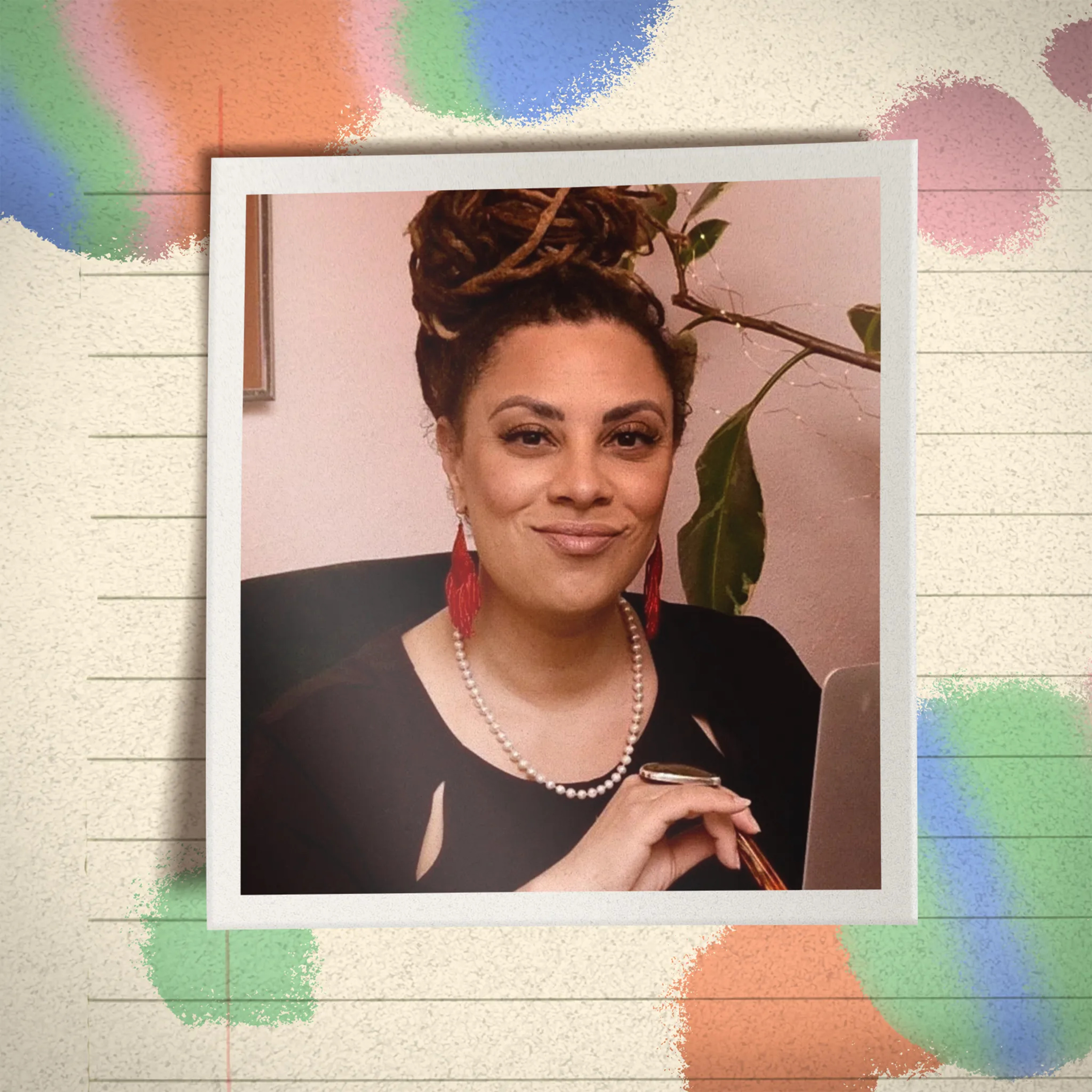
Loading summary
Transcript123 lines
- [00:01]
A
Masking as a tool can definitely help you get some things done. If you don't have access to your authentic, genuine self and no one else around you knows what that looks like, that means you're invisible.
- [00:13]
B
This is the episode where I get diagnosed with adhd.
- [00:17]
A
As far as long term effects, being depressed, not being able to keep a job, those can come out of undiagnosed
- [00:23]
C
ADHD stuff like saving for retirement too. If you're kind of like future planning.
- [00:29]
A
Percy, get out of my head. I'm gonna tell you something really interesting right now, okay?
- [00:37]
B
If you're new here, welcome. I'm Felicia Keller Boyle, a licensed somatic therapist and clinical advisor at Best Therapists.
- [00:44]
D
And I'm Christy Plantinga, founder of Best Therapist and Therapy Connoisseur.
- [00:49]
B
This is what your therapist thinks. A mental health show where actual therapists open up about real world stories and the questions people wish they could ask them.
- [00:57]
D
And by real world, we mean Reddit posts, incognito, Google searches, and the things you want to bring up in therapy, but maybe you don't.
- [01:05]
B
You'll hear conversations on everything from the best dating advice to adhd, EMDR therapy,
- [01:11]
D
body dysmorphia, and more. Sometimes it will make you feel seen
- [01:15]
B
and sometimes it'll make you laugh out loud.
- [01:18]
C
We're so glad you're here.
- [01:19]
B
Now let's get into the episode.
- [01:21]
C
Today we are speaking to Dr. Rebecca Lyles. Dr. Rebecca Lyles, DNP. She her is a psychiatric nurse practitioner and founder of the Mind Medicine Clinic. Rebecca focuses on unmasking and authenticity with a candid, often humorous style. She supports people who are ready to trust themselves, letting go of performance and choosing lives that feel more honest and self directed. Rebecca, welcome to the show.
- [01:48]
A
Thank you. Hello.
- [01:50]
B
Hello everyone.
- [01:51]
A
I'm so happy to be here.
- [01:53]
C
Yes, this topic is searched so much online. Today we are specifically discussing ADHD in women. I've been, you know, reading up on this topic online and it seems like ADHD in women is really under diagnosed. It appears differently. So I'm excited to hear from your perspective. And another great reason that you're on is you are a prescriber of medication, which is obviously a huge part of the conversation with adhd. So we are very excited to pick your brain on that as well.
- [02:26]
A
Yes, absolutely. And in fact, my hands are a little sweaty right now because I just took my Adderall for the day.
- [02:34]
C
Perfect. So you get it not just as a provider, but also as someone who has adhd.
- [02:39]
A
Absolutely. I do have ADHD and I was diagnosed as an Adult. And that is one of the reasons I'm passionate about helping folks who were not diagnosed as children, especially people who were assigned female at birth. People who were raised as girls weren't identified as having ADHD as children.
- [03:01]
C
So I think that is my first question. What does ADHD look like in women specifically, and why is that? Typically, it flies under the radar to people who would normally identify the symptoms, like teachers or after school directors in those activities.
- [03:22]
A
I think there's a lot of reasons that ADHD flies on the radar in young girls. One of the things that comes to mind specifically is we are taught to behave, and we're usually pretty good at behaving really well, even when we don't feel like it's. Even when we feel like wiggling or walking around, we may stay in our seats because we don't want to get in trouble. We want to be good girls. And this can make it so Teachers, for example, won't identify a child as being hyperactive, even if they do have this impetus inside of them to want to move. Right. So oftentimes, young girls will spend a lot of time in the classroom daydreaming, and maybe that's something someone on the outside wouldn't pick up on. So I think that that's one of the very common reasons that little girls are missed in the diagnosis as children.
- [04:19]
B
Would you say that's a form of, like, dissociation? Is that. Is that a way to put that, or would you categorize it differently as, like, a feature of adhd or is dissociation sometimes a feature of adhd?
- [04:32]
A
Bingo. So dissociation is extremely common. Adhd. When I. If you're picturing this little girl in the classroom, looking out the window, daydreaming, that is a form of dissociation, which is very common in adhd in women, girls, AFAB people. Absolutely. And I would say yes. For me personally, growing up, that was very common. And now in public speaking, in educational settings and places where I feel a little bit nervous, my mouth and the things I'm saying can disconnect from my brain in such a way that I'm really glad for all the embodiment therapy that I do to come back into my body.
- [05:13]
C
Pluck therapy?
- [05:16]
A
Yes, absolutely. Is it okay for me to ask a question?
- [05:21]
C
Yeah.
- [05:22]
A
Well, my question is, as we're sitting here today, I'm super curious if either of you have ever considered yourselves to have ADHD or were diagnosed with ADHD or some sort of neurodivergence of that kind, because, yeah, I Think it really changes, like, how we communicate.
- [05:40]
B
So I've never been diagnosed with any neurodivergence, but it was funny listening to you talk. Right. And describe some of the symptoms that girls have. The daydreaming, maybe having a lot of energy. I don't know that I fit all of those descriptions, but there were some things that you said where I was thinking, huh, okay. I never really thought of that as being an aspect of adhd, but I've never sought out a diagnosis before. I've never. I've never been assessed for that. So I don't know. What about you, Christy?
- [06:12]
C
So on our very second episode, it was on emotional numbness, we had Ariana Wheat, and she was talking about emotional numbness, and I was kind of talking about how I feel as if I am the opposite and I cannot get my emotions to stop. And I was like, yeah, I. You know, highly sensitive person. I really identify with that. Very, very sensitive to noise and overstimulation. And she said that can be considered sometimes to be on the neurodivergence spectrum, but that's about as close as I think I would get. But I do have many friends with adhd, so they tell me all about it.
- [06:48]
A
Yes. Well, to me, this is, like. It's so important to me when working with folks is to be unmasked. And the idea of being unmasked for me is just accepting myself the way that I am. And I always apologize for interrupting, but I do it a lot anyway because I can't help it.
- [07:06]
B
I'm an interrupter, too. It's very, very hard for me not to interrupt. So hard. So I'm right there with you.
- [07:13]
A
I'm doing my checklist of ADHD symptoms over here, and that's actually. She's got a few.
- [07:21]
B
Oh, me? Yeah. I wouldn't be surprised.
- [07:27]
C
So next. And again, this is all kind of a generalization, right, when we say women. But, I mean, I'm curious, what does ADHD look like in women, and how does that present differently from men in that. That broader sense?
- [07:41]
B
Like, in adulthood is what you're talking about, like, as opposed to, I think,
- [07:45]
C
in adulthood, because, again, women are diagnosed, if at all, so much later. So I think a lot of times when people are searching this question online, it's more about women, not girls. Right?
- [07:59]
A
Okay. I freaking love this question. The reason I love this question is because actually, ADHD kind of starts to look similar in women and men when they become adults. So oftentimes, folks who are not diagnosed as kids who are getting diagnosed as adults with ADHD or perhaps maybe being on the autism spectrum, they can present in some similar ways. However, there is a social factor that I think is really important to note that I think pushes women to a different point, that they need to address their adhd, and that is the pressure that adult women feel to do it all, to have a job, raise children, take care of the home, et cetera. And oftentimes, when this pressure to do it all is really hitting women, they get to a breaking point of. Of stress and burnout, not just due to their adhd, but the exacerbation of their ADHD symptoms under these. These pressures that we put on women in our society. And I think men maybe can lean on some other things, but women often end up dealing with mood symptoms related to their adhd. And what I mean by that is that all of those pressures mixed with the ADHD can cause depression, anxiety, burnout. And so at that point, people are seeking mental health care, and that's when they meet me, and that's when I'm like, oh, maybe this is adhd, you know, and the other piece, a lot of adults, generally, both men and women and everyone in between, are diagnosed when they're parenting because their children are getting diagnosed, and they're like, my kid's not autistic. My kid doesn't have adhd. They're just like me. And then it's like, oh, yeah, they're just like me because I have adhd. So these are some scenarios within which adult women and men and everybody else can be diagnosed with ADHD as adults, even though it was missed as children.
- [10:15]
C
Are there any telltale signs? So, you know, a woman sits down in your chair, and you're like, oh,
- [10:22]
B
you've got your checklist.
- [10:24]
A
Yeah, yeah. Telltale signs. That's kind of. That's an interesting question. Like, can you spot it? It's a little sticky, right? Because one of the things that's interesting about ADHD is a lot of other things can look like adhd, including trauma and complex trauma. And oftentimes when people are at the point where they're like, holy cow, Rebecca, I need meds. They're having an acute situation where their stress is higher, and so their trauma symptoms might be coming up. But I can just point to myself and say, skipping topics, skipping over different topics. I do that a lot. So connecting things silently and then saying them out loud so that people are like, that seems like a non sequitur. Like, what the heck does Christopher Reeves have to do with us going camping And I'm like, oh, but it's so obvious. So making, like, weird connections.
- [11:24]
B
This is the episode where I get diagnosed with adhd. Did you schedule this for me? I'm not trying to make light of this diagnosis that I'm already like, oh, oh, boy.
- [11:36]
A
Well, you know what, Felicia? I kind of love that you say that because that's sort of how I was diagnosed, too. I was writing my dissertation, and I was hanging out with another nurse practitioner who also has adhd, and they noticed that it was really difficult for me to stay on topic. I just couldn't do it. And they would keep redirecting me. And they said, have you ever thought you might have adhd? And I said, what are you talking about? Wait, I forget. What are we talking about? And they said, yeah, you have adhd. So that is actually how it happened. Is like something that someone can observe in you, is not seen on topic, connecting disparate things, interrupting like I just did to you. Yeah. Moving around a lot in the scene, having trouble sitting still. But like I said, it can also. Those can also be symptoms of other things. So I don't want anyone to hear this and think, well, I definitely have adhd, you know, just like Felicia and Rebecca clearly do. Just kidding.
- [12:43]
B
Tbd. Stay tuned.
- [12:45]
A
Yeah, tbd. Yes.
- [12:48]
C
The sentiment behind this question that I'm seeing most online is, you know, really, what does it look like? And I know I've had friends who often relate to maybe less of the kind of, you know, telltale symptoms because I remember growing up, it's like, oh, that person's so adhd. And it was just because, like, they tap their knee a lot. Right. But it seems to me, after having conversations with my female friends who have adhd, it's a lot more internal oftentimes. And maybe that's often why it's under diagnosed. Just because it's maybe not. Doesn't present as physically in women for, you know, societal conditioning reasons, whatever. For women. Do you see any of those more subtle things? I know we've talked about a couple interrupting, you know, jumping from topic to topic. Is there anything else that you notice that is a little bit more subtle that often signals in your brain? We should maybe explore an ADHD diagnosis
- [13:41]
A
a bit more perfectionism and anxiety. So a lot of worry about how one will be perceived. A lot of planning or trying to stay organized and feeling like you're failing at it. So being down on oneself because things aren't turning out the way someone thinks they're supposed to be or the way that they should be, I think, is very common in folks and women who have adhd because things like being able to keep their house clean or organized, being able to get their kids lunch ready every single day, these outside expectations that they feel strongly they should be able to keep up with, and yet they're having a lot of difficulty doing that. And attempting to do it brings this sense of not enoughness, anxiety, and anxiety of perfectionism that I witness a lot in AFAB people with adhd.
- [14:51]
C
And I think what that would lead to is self esteem issues where.
- [14:55]
A
What's wrong with you?
- [14:56]
C
Oh, my God, why can't I do this? My friend does this. Or, you know, I imagine that would lead to a lot of. Because you can't meet this expectation. It's like, well, what's wrong with me? Like, why can't I do that? You know?
- [15:09]
A
I know. Doesn't that suck? I feel so bad for people who are feeling this way, especially when we're getting assigned too many tasks, y'. All. Like, women are getting assigned too many tasks and so not being able to meet all of those standards and having a disability. Yes, disability on top of that, and then blaming yourself for that disability is one of the reasons it can be so powerful to see, seek out, and get a diagnosis if that's what a person wants to do. Because then it's an explanation for why they might not be in quotations performing the way that they think they in quotations should be. It makes me mad. It makes me mad. And it's also one of the reasons that I love what I do. Because if I can tell someone like, oh, girl, it is not you, and really help someone see that their ADHD can be a superpower, it can also hinder them. But there is help that they can get and they do not have to blame themselves. Like, there's something inherently wrong with them. It just brings me so much joy.
- [16:19]
B
Can you talk a little bit about those superpowers? I would really love to hear about, like, from your perspective, like, what are the superpowers that women and AFAB people have who are diagnosed with adhd?
- [16:32]
A
First of all, I love that question. I love that question because I do want anyone listening to this or seeing this to feel empowered to know that the things that they might do with their because of their ADHD makes them really special. And I know that it can be really frustrating some of these symptoms, but things like what we were talking about earlier, Felicia, like connecting disparate facts together, making these connections, sure, it might be just like something nerdy when you're watching a movie. But sometimes it's like connecting world events to something that's happening locally, to something that's happening inside of you, making you feel more connected to the world or helping another person feel more connected to the larger world. That's huge. To be able to see the way things can braid together. I also think the speed at which folks with ADHD can skip around different ideas can be very cool. I also think, what else? With my adhd, I can be so intense on one topic for hours at a time. If there's something that is a special interest of mine, I can go deep for a very long time. For example, in graduate school, there would be a paper. So one thing that can frustrate a lot of people with ADHD is that they procrastinate. Okay, procrastination, not necessarily a good thing. Depends who you are. Right. But what I found was I would procrastinate. But then when it got down to it, I was able to do so much work in a short amount of time with an intensity that I produced something really good. And so, you know, if I could enjoy the time I was procrastinating and not feel guilty about it, I could actually just work less than other people. And that I do believe was part of my ADHD superpower. There you go.
- [18:28]
B
I really love that reframe. You know, I can think of so many times in my life where I've not allowed myself to enjoy something. The meaning that we make about it. But at the end of the day, is it really hurting us beyond the meaning that we're making about it? I think, yeah. You're speaking also to, like, our cultural norms around, like, work ethic. Right. The expectation that we'd work hard more or less continuously, that we'd be really forward thinking and we'd plan and we'd have everything kind of, like measured out a little bit at a time as opposed to, like, doing everything we need to do really quickly but really intensely. Like, that is kind of looked down upon and seen as, like, irresponsible. But another way to look at that is like, you're just being super efficient with your time. That is actually potentially a really good thing.
- [19:15]
A
Absolutely. And I think that that planning piece. Thank you for saying that. Piece around planning is such a wonderful tool for folks with adhd if they're aware that they're using it and we can communicate about it, that we're using that as a tool to help us with our adhd, that's great as well. However, if it feels like you're pretending and that you're not being genuine to yourself. And it feels as though you are struggling and trying and striving and never hitting the mark, then that's not as great. Yeah.
- [19:54]
B
I think you're speaking to the difference between using it as a tool versus seeing it as a sort of moral imperative.
- [20:01]
A
Right.
- [20:01]
B
Planning can be right, a tool that we use to benefit ourselves and others. But when it gets imbued with like this moralism of being like the good or right thing to do as opposed to simply a tool to live your life better and avoid, you know, negative ramifications, it's like, that's fine, but let's not make it into this thing that's like, this is the ideal way to be. Cause I mean, that's just something we all made up.
- [20:26]
A
I really love that framing of it. And the more that we can say we're using a tool instead of pretending, the more that we're unmasking and being more authentic in our lives, the better, in my opinion.
- [20:41]
C
What are the long term effects of undiagnosed ADHD in women?
- [20:45]
A
It's definitely some of the things that I was discussing earlier around. I think some of the most harmful things are around depression, anxiety and feeling not enough depression. Anxiety is such huge issues for adult women, especially moving into menopause and middle age. And so I think that as far as long term effects, those are some of the biggest long term effects. There are many other ones as well, including, you know, folks with ADHD being less likely keeping up with their healthcare appointments and so they miss screenings. That kind of thing can happen. Folks with ADHD not planning and not being able to stay in employed because of symptom, untreated symptoms of adhd. And so that can. So underemployment or no employment obviously can lead to long term ill effects in your life if you're not able to support yourself. Those are some of the things that come to mind right now and those are huge things like being depressed, not being able to keep a job. Those can come out of undiagnosed adhd. Absolutely.
- [21:52]
C
I imagine stuff like saving for retirement too. Like if you're kind of like future planning and like that just is not not working right now because you need to get help.
- [22:04]
A
Kirsty. Get out of my head. Get out of my head. Oh my God. Sue. Are my Felicia now. This is like one of my, like, yes, the ghosts that haunt me. Like, Rebecca, get it together. I need to like start planning. And yeah, long term planning can be really hard. And of course, like, to your point, that can affect your health long term? Absolutely.
- [22:26]
B
It seems like it can be the sort of like, cascading situation. It's like you are struggling with perfectionism. You're trying to do a million things. Your brain is all over the place. So it's really, really hard, but you feel bad about yourself. So now it's showing up as like a mood disorder, basically. You've got a lot of anxiety, you've got depression, you're maybe missing appointments, you're struggling at work. And it's like, well, once you're missing appointments, that's really important for your physical health. Or you don't have a job now, you're socioeconom status is affected, you have really bad health outcomes. And it's just like it can really be. Yeah, exacerbating all of these problems. So, yeah, I mean, it's like high stakes. When I hear this, it makes me think like, preventative care or as early as possible. Granted, like you said, a lot of girls aren't getting diagnosed with ADHD when they, like, otherwise should be. But what I'm thinking when I'm hearing this is like, oh, if you suspect you might have adhd, you should probably get that checked out.
- [23:22]
A
Yes. If you. If a person feels as though the way ADHD may be showing up in their life is bad, then, yeah, seeking help sounds like a great idea. If the person doesn't find their symptoms to be negatively affecting their lives, then, you know, a diagnosis may or may not be useful. One of the ways the diagnosis can be super useful is to get accommodations. So if someone has a diagnosis, they may be able to get accommodations at work or at school that will help them be more successful. And so I think that can be very cool. And that's one of the things that I do a lot in my work, is helping people get accommodations. And it works. It does help them become better and more successful in their endeavors.
- [24:11]
C
That's so cool. I just imagine that would make a world of difference. Like one of my friends in high school, you got a whole separate room, all this, you know, extended time just for standardized testing. And I have no doubt that that absolutely made a world of difference for him and dramatically just improved his future. And honestly, those standardized test rooms are trash for anyone. Like just all these desks at a sad gym.
- [24:36]
A
Horrible.
- [24:37]
C
You know, but I imagine especially all that pressure, having adhd, that just sounds so difficult and very, very unfair to be having to be in the same environment, judged the exact same way. You know, and then that affects your future.
- [24:53]
A
I mean, systems should be adjusting to people, not the other way around. And so what's interesting with your example about like, wanting to be alone to test, you know, there are like Dr. Gabor Mate and others who relate ADHD to early childhood attachment trauma and this relationship between ADHD and attachment. So, you know that kid that they always talk about who's like in the classroom, who's like talking to everyone around them and can't, you know, can't focus is because those are the kids that often get flagged as adhd. And they say that maybe that's like an attachment thing, that they're trying to connect with other people. And so there's this cool thing called body doubling. I do it all the time and I also do it with friends where people just come over and hang out and it really helps me do more work if there's another person there with me so that some of this attachment stuff can calm down and I can actually concentrate and focus. And so your friend in high school being in the room by himself can be helpful for some people with adhd. And then other people with ADHD need to be around others and actually helps them become more productive. As long as these systems are paying attention to what people really need to be successful, it's not a one and done or one size fits all solution.
- [26:19]
B
That's going to be one of my takeaways from this episode is that systems should conform to people, not people conforming to systems. Like, they need to be adaptive. Obviously there needs to be some structure in systems, otherwise it's not a system, but it's like, what are our systems for? Why are we building these things if not to make our lives better and make our society more functional? And if we're all part of it, then how do we begin to accommodate more people? And yeah, Kristi, to your point about your friend, it's like had that young kid not gotten accommodations to allow them to maybe be more successful on tests, they might have had a completely different path in life. But it's like this probably opened up doors for them academically, which opened up career options. It's like again, all of these cascading impacts. Yeah, I also like what you said, Rebecca, about how sometimes what people need is that body doubling. And I feel like what's different about maybe body doubling and co working or having someone come over to your house to help you with something versus a standardized test is you're not allowed to talk to people in those giant rooms with a standardized test. So, like, how painful would it be if you're that kid who's like, I just need to talk to somebody. And then you're like, having to sit there silent and would get kicked out of the room if you try to talk to somebody. So it makes sense that in that case they might have to be like, I need to be in a room by myself or else I will just want to talk to everyone around me because that was what I need right now.
- [27:43]
C
I love that.
- [27:45]
B
Yeah. I was also that kid up until a certain point, actually, so. So here we go again.
- [27:53]
A
When you say that, Felicia, it was such a. I had this, like, beautiful vision of this same scenario and this person being in this room with this test with somebody that they were allowed to talk to. Totally. You know? Yeah, absolutely.
- [28:10]
B
And how much better that might have been for exactly that person.
- [28:15]
A
And I. And I also. I can't help it because I am always thinking about systems and how they work. As we're talking about, young girls may not be being diagnosed at all. And then also many people, including people of color, who are misdiagnosed with things that are considered more behavioral issues. And so if they're not given accommodations, they're punished for the ways that their ADHD might be showing up. So, yeah, it's just something that came to mind when you were saying that. I'm glad that your friend got those accommodations and that they helped. Yeah, me too.
- [28:54]
C
Hope he's doing well. Haven't talked to him in ages, but
- [28:57]
B
maybe he'll listen to this episode.
- [29:00]
C
Well, I would love to move on to some posts from Reddit, really kind of spanning different topics around adhd. I hope we have time for all of them, but I did rank them in terms of what I would like to hear from you on. So let's get into it. This is in the subreddit ADHD written Generational differences in coping mechanisms for women with adhd. I'm not talking about the mentality of. Back in my day, there wasn't ADHD as a Gen Xer. I sometimes have an issue with old ways to cope with neurodivergence versus the modern. How do you see changes in how you view and cope with yourself? I see a lot of the mentality that masking is bad. Be true to yourself. Masking is necessary, mandatory in most daily situations. I see a lot of the benefit and kindness to self that's much more prevalent than when I was growing up. You still have to get on with things. Get over yourself. Suck it up. Can you tell I'M Gen X. Sometimes we simply are too much for other people. I grew up as very ADHD undiagnosed until 42ish and. And 10 years later. Now off the meds and reprogramming myself is hard. Perspective and suggestions desired.
- [30:13]
A
Okay, so my neurodivergence is showing up right now. Cause I'm like, what? Those are so many words. Okay, so this is a Gen Xer. Who noticed that back in the day? You know, it just got ignored. ADHD was just ignored. And now there's this, like, overcompensation of like, well, masking's bad. You should just let your symptoms be free and be true to yourself. But masking is important. Yes. And sometimes masking saves your life. By the way, masking is certainly something that we need to do in many situations. And being able to use it as a tool and having agency and choice around putting your mask on and off is an important part of being a happy, safe person in this society. That can be really violent and scary. Sometimes you need to put a mask on.
- [31:08]
C
It's just giving that kind of like millennials, you know what I mean? I. I think there's a lot of that where it's just like, oh, these, these soft millennials. Especially as a parent now, there's so much of that stuff. It's like, you don't let your baby cry for 30 minutes. Ugh, you're such a millennial. Like, stuff like that. And I think this is a similar kind where it's like. And I'm not saying it's wrong, like, I'm not the expert in adhd. Right. Like, I would love to hear more about when masking is necessary to save lives. Can you say more about that?
- [31:43]
A
It's something I was speaking on recently around folks that are in different places on the gender spectrum and presenting in the way that people might expect them to present in order to stay safe in a situation. So if you have a beard presenting in a very masculine way, even if it doesn't necessarily fit how you are feeling in that moment, or wanting to present yourself generally, or how you feel on the inside. And so that to me is. You know, I understand that masking within the context of ADHD can be like doing well in school. You know, it's like being quiet in class and not getting kicked out and then missing the day's lesson so that you can pass the class. That's a way of masking. And yeah, I, I don't think that there is a blanket idea that unmasking good masking bad, because masking as a tool, if you have agency around it, can definitely help you get some things done. I would say though, an awareness around it is really important because if you're doing this on a daily basis with no access to the real you, like, if you personally don't have access to your authentic, genuine self and you don't even know what that looks like, and no one else around you knows what that looks like, that means you're invisible. That's not a good feeling. And that is going to lead to a lot of fallout, mental health fallout, poor relationships. And so, yeah, masking is sometimes good so that we can perform in ways in order to get what we need to get out of a situation, whether that be passing the class or getting a job. However, knowing yourself, at least unmasked for yourself, you know, and knowing yourself and also knowing that you have a choice around how you want to behave or how you want to present to others instead of feeling forced into it, I think is a really important thing. Another piece, of course, around masking is like changing your behavior in a way to be socially or behaviorally acceptable for the people around you, even if it doesn't necessarily feel good for you or feel natural for you. And some people do it so much that they're not even sure when they're doing it. And we live in a society where there is a very clear expectations about how people are supposed to behave in certain spaces, how loud they're supposed to be, how much they're supposed to laugh, if they're supposed to stay seated or all of these things and following those rules, you know, it helps sometimes and other times it's soul crushing. So, yeah, you gotta decide what's best for you. I think this person is getting to something really heartbreaking. This thing that they say at the end about reprogramming themselves, it kind of bums me out a little bit. To me, this process of unmasking isn't about being like a horrible monster in public, but it is about understanding yourself, accepting yourself. And like we were saying earlier, figuring out ways that the systems and people around you can adjust to you if they're open to doing that so that you can live in better harmony while being yourself. I hope that's what they mean by reprogramming.
- [35:33]
B
Beautiful. Yeah, I'm really hearing when it comes to masking your perspective isn't it's it's all good or it's all bad, but rather it functions best if it's a choice. Like if the person has the Agency and they are choosing to mask. They're choosing to do something that isn't like maybe their natural inclination in that moment, but it is something that is going to maybe help them get something else that they want, whether it's to be able to like remain in that classroom or like get to know the people around them a little bit better because they're going to be not doing something that might. Those people might move away from them. That as long as it's a choice and there are opportunities for them to take the mask off and just be authentically how they want to be, that can be okay. It would be like overly simplified to be like all good or all bad.
- [36:24]
A
Right.
- [36:25]
B
And I think on the Internet, so often people want to know, like they're asking, well, which is it? Are we like pro masking? Are we anti masking? And it so often the answer to the question is like, neither like it. It really depends. What's more important is for you to have agency.
- [36:42]
A
The word empowerment comes up for me a lot. It's so much how I connect to myself and how I connect to my own happiness is feeling empowered. And there are so many things in this world that try to make us feel less empowered. And I think if we can feel that agency around masking, then we can feel more empowered. And frankly, this person's post is rad because it's such a ADHD post. Because they are back and forth, they're saying masking bad. Well, maybe not. I mean, you know, there's just a lot there and I really appreciate their diverse perspective. All in that big paragraph. I love it.
- [37:24]
C
Thank you. Okay. Oh, this is interesting. This is in the subreddit antipsychiatry. So as a prescriber, I am very interested to see what you have to think. There's something insidious about all these adult women being diagnosed with adhd. I'm not sure what it is, which is why I'm posting here. There's a long, long history of women, especially middle and upper class white women, being prescribed psychiatric medications to help them cope with the drudgery of their existence. And to keep their trim figures, of course. Mothers, little helpers, black beauties. I remember 10 or 15 years ago when it was a hot button issue that working moms were stealing their kids Adderall to get through the day. That was back when ADHD was seen as a little boy's disease. Now those working moms don't have to bother stealing their son's pills. They get their own ADHD diagnoses and their own Adderall prescriptions. If you try to point out that something is funky about this, people just claim that it's sexism. Because the old definitions of ADHD only focused on male children. And there are thousands and thousands of undiagnosed adult women who also have adhd. And okay, sure, ADHD is one of the diagnoses I'm somewhat less critical of. And I believe that people get missed when diagnostic criteria focuses on one demographic. But nearly every woman I know between the ages of 20 and 40 has ADHD and can't function without her ADHD meds. That's not statistically likely. So what's the deal? Well, my particular social circle is mostly middle class white women who are working parents and middle class white women who are graduate students, some of whom are also parents. What do all these people have in common? Crushing workloads. If psychiatry was an ethical field, they'd be telling these women that not being able to maintain focus and energy and perfect memory for 8 to 12 hours on grueling work, plus keep up with all the details and grunt work of running a household and raising children to stick to your diet and get to the gym and have a social life all on very little sleep, is not a disease. But they're not, because ADHD meds are expensive. And of course, most of these women are also on SSRIs for anxiety. And that's a feedback loop you can jump into at either end. Either the SSRIs cause brain fog that is diagnosed as ADHD, or the ADHD meds cause anxiety because they're fucking amphetamines and that's what they do. Either way, you're now taking two psychiatric medications for a problem that doesn't actually exist. Or rather, the problem exists, but not in your brain.
- [40:00]
A
Well, okay. Oh, my God, I love them. I love them. They are so clocky and cranky. Okay? So I'm like, listening to this person, like, they make great points. They make some really great points. And actually, you know, there's some callback stuff to what we were talking about earlier, right? So around society and the pressures that are on women, they lay out very well. This particular demographic and the pressures to perform and this perfectionism, the place that I kind of see the issue in what they're saying is that somehow psychiatry is, to me, someone's coming to me because they need help. And I would never gaslight them and say it's because your brain don't work. You know what I'm saying? Like, if someone comes to me and they're experiencing these issues. The first thing I'm going to do is put it into, because I'm an intersectional feminist in how I approach care, is I'm going to think about the societal factors that are contributing to the reason that they feel the way that they feel and that they're functioning the way that they're functioning. And so, at least from my perspective as a psychiatric provider, there isn't a idea of blaming or shaming someone who's coming to me for help ever because of the way their brain works or is being affected by the larger society. That's one thing. I think they make a great point about the psychiatric medications. So they make a point about taking an antidepressant, which could possibly cause problems, brain fog. And maybe that is part of the reason they were diagnosed with adhd. And then they also make a good point about the medications for adhd, possibly causing anxiety. Absolutely. What is fascinating and something that I. That they missed entirely. Oh, this is exciting. I'm going to tell you something really interesting right now. Okay, Ready? Oftentimes, not always. Okay. Medications that are prescribed for ADHD can help diagnose adhd.
- [42:21]
B
Okay, that is really interesting. How and why.
- [42:24]
A
Okay. If you take a stimulant medication that's supposed to help with ADHD and you fall asleep because the dose is too low, you probably have adhd. If you take an ADHD medication, a stimulant medication, and you are helped, meaning it doesn't make you anxious and in fact, it calms you down, helps you concentrate and get things done and feel more present in your life, then you likely have the neurodivergence that is benefiting from an ADHD medication because you don't feel like you're partying with your friends during lines of Coke. It's a very different feeling and it can be super helpful. The other piece is if it does help someone in their lives without creating addiction, because if it. If someone is taking this as prescribed, it's probably not creating addiction. What's the point problem?
- [43:30]
C
I don't know.
- [43:31]
A
I kind of am like. But I know what the problem is. This person doesn't like meds. That's the issue. So personally, I like meds because I like things that help me feel better.
- [43:43]
C
There's just so many great pull quotes from this episode.
- [43:46]
A
So, yeah, I. I think they make some really great points, including that the crushing pressures that women feel in society is driving them, I would argue, getting diagnosed with ADHD because they have adhd. And also, I just want to say, I don't benefit if someone is on meds. I don't like. I don't get money from that. And if they're on more expensive meds, I also don't get paid more. So there's no. Can you talk about that a little bit?
- [44:14]
B
Like, the confusion that people might feel about. Like, yes. People thinking that psychiatrists are making money off of. Or psychiatric nurse practitioners, anybody who's prescribing psychotropic medication that they're somehow making money,
- [44:27]
A
girl, tell me how, because I would love. Yeah, give me that money. I don't make money off of that. So, like, I prescribe a medication, and then someone goes to the pharmacy and then they get their meds. I have got nothing to do with that. So there is, like, this scenario that I've heard about this beautiful time. I'm just kidding. It's not beautiful. It's actually kind of weird. But where, you know, salespeople for drug reps, they're called, could go around and, you know, have you push a medication for financial benefit. And that's illegal. And I think it might happen in some ways, but it's not. Certainly not happening in my practice.
- [45:07]
B
But it's not supposed to. That's illegal.
- [45:09]
A
It's not supposed to happen. It's certainly not happening in my practice. I don't prescribe something and then get paid more for prescribing something that's more expensive. And in fact, what I want to do is prescribe medication that is going to be as accessible and inexpensive and effective and safe to my clients as possible. I want it to be accessible and. And so the most expensive medication doesn't
- [45:31]
C
really make sense with, you know, addiction that's fucked the nation with Oxy. And I know that part of that was that doctors were getting paid to push these meds. And that doesn't happen in psychiatry. It sounds like, oh, maybe it is like that. I don't know.
- [45:47]
A
What do you think? Listen, listen, listen, listen. Psychiatry, just like all medicine, has its roots in really creepy places, okay? Psychiatry has its roots in the prison system in a lot of really negative spaces. So I'm not trying to whitewash psychiatry. What I'm saying is how this functions in my practice and in the practices that I have worked in, the hospitals that I've worked in and the people that are my colleagues and own their own practices, this is not happening. And we don't make money off of those things. And so I'm definitely not here to represent psychiatry because, hell, no, I'm not going to represent anything establishment like that. All I'm saying is, from my perspective, ADHD medications can be super helpful, specifically for some of the people that this person is talking about. Like, women who've got a lot going on, and I would never tell them they should just work out more and work less when they're trying to support their. Their family and take care of their kids.
- [46:57]
B
It seems a little bit like some misplaced anger, you know, some misplaced criticism. It's like, at the end of the day, this problem that I think this person is describing is much bigger than. Than these individual people, than the psychiatrists that they're seeing. It's like, yeah, this is a systemic cultural problem where we have too many tasks.
- [47:16]
A
And, you know, but.
- [47:18]
B
But not providing medication to people who need it won't change that fact. What I've seen, working with clients who are taking medication, who need medication, oftentimes that. That makes life just a little bit easier so that you can begin to make those other behavioral changes that we're feeling really out of reach prior to getting the medication. It, like, lifts the floor a bit. It, like, creates a little bit of a sturdier foundation under your feet so you can do those things. Expecting people to make big behavioral changes when they're barely keeping their head water because that's morally better is not actually going to make the world a better place.
- [47:54]
A
Oh, my God, Felicia, thank you for saying that. It warms my heart. It is so true. Here's the thing. You want people to go to therapy. You want them to get up in the morning, go work out if they're so depressed they're not getting out of bed. That's not happening, y'. All. Sometimes you need a medication. We're talking about antidepressants now. But sometimes you need something to help you get to the point where you can do the things that will help you long term, like exercise every day. You know, these are just tools like masking. If you have agency and choice around whether or not is a tool you want to use, then I think it can be a beautiful thing.
- [48:33]
B
All right, so I get the sense, Rebecca, that you're pretty. You're pretty straightforward with your clients. You're probably not holding back. But I wonder. I wonder, has there ever been a moment when you're working with a client, a woman, AFAB person who has adhd, where maybe you've wanted to say something, but because of your role clinically, you're maybe, like, not going to say it quite like that? Like, is there ever a moment where you haven't fully said what you're thinking. And if so, like, what is that thing? Like, what do you really think about this?
- [49:05]
A
No. Okay. Okay. So. No, it's never happened to me. You know, it to my detriment. You know, sometimes, like, it always just falls out of my mouth. Okay. So it. It hasn't happened. But I do want to say one more thing, though. I do want to say something about adhd. You know, what is so beautiful about afab, Women, moms, adults getting diagnosed with ADHD and, and getting help with it. One of the things that I'm not sure people think, oh, they'll be more efficient, they'll be able to work better, they'll be able to stay more organized. But you know what is so freaking cool when you get help for your adhd? The increase in presence to allow you to be in the room and connect to the people around you, because your brain doesn't have, you know, 40 tabs open to be able to close some of those tabs so you can make eye contact with your baby and be with them in that moment and have that attachment so that you're not taking something that is. Is in your life and passing it on. You know, this is like inter generational healing stuff. This, this thing of being able to be present. And sometimes medications for ADHD can help you be more present, and sometimes therapy can help you be more present. Having an awareness that this is a possibility I hope inspires some people to consider maybe seeking out support for what are their ADHD symptoms, Whether or not, you know, the ADHD gods told you you actually have adhd, if you have those symptoms, it's worth investigating.
- [50:56]
B
Amazing. I'm so glad, so glad that you shared that. Oh, man, I love it. And if folks are looking for help with ADHD assessments, medication, they can, of course, reach out to you and your
- [51:09]
A
practice, which is Mind Medicine Clinic here in Albuquerque, New Mexico.
- [51:14]
B
Amazing. And if you're not in Albuquerque, New Mexico, and you're looking for a therapist who specializes in working with ADHD, you can go to BestTherapist.com and find a therapist that's been vetted there. So we've, we've got you covered, basically. Rebecca, we are so grateful for you to come on and talk about this.
- [51:35]
C
Thank you.
- [51:36]
B
And unmask with us in some moments and get really, get really honest. Like, it's been such a joy to have you here, and this is truly inspiring, truly uplifting for me and I'm sure for our listeners and listeners, if you want to Leave us comments if you want to share your experience around this topic. If you have further questions about this topic, please make sure to leave a comment. If you enjoyed this episode, make sure to leave a review and share it with someone else who you think would benefit from hearing it.
- [52:05]
A
This was my pleasure showing up here and I'm so glad my Adderall kicked in in time so I could be present for the whole conversation. This was just lovely, lovely. Thank you so much.
- [52:19]
B
Thank you so much for listening to this episode.
- [52:21]
D
We're so glad you're here and we
- [52:23]
B
hope you got a lot out of it. If you're not already following, hit the follow button or subscribe. If you're watching on YouTube, you'll be the first to know when we drop another episode. If you have questions for us, topics you'd like us to talk about, or a comment about what you've heard in this episode, drop a review in your listening app or comment on YouTube.
- [52:41]
D
You can also find us on socials, yttpodcasts for show updates and behind the scenes content.
- [52:46]
B
Our DMs are open and now you
- [52:49]
D
can join our new Substack community for
- [52:51]
B
bonus content like what we really thought
- [52:53]
D
about an episode and monthly posts with the books, music, podcasts and products that Felicia and I are loving. Go to whatyourtherapistthinks.substack.com to subscribe.
- [53:04]
B
What yout Therapist Thinks is hosted by me, Felicia Keller Boyle and me, Christy Plantinga. What your Therapist Thinks is produced by podvision.
- [53:12]
D
See you next time.