Podcast
Write of Passage by Vanessa Riley
Hosted by Vanessa Riley · EN
Join bestselling author Vanessa Riley as she delves into untold histories, reflects on current events through a historical lens, shares behind-the-scenes writing insights, and offers exclusive updates on her groundbreaking novels.
vanessariley.substack.com
vanessariley.substack.com
42episodes
Episodes
Newest firstAll episodes
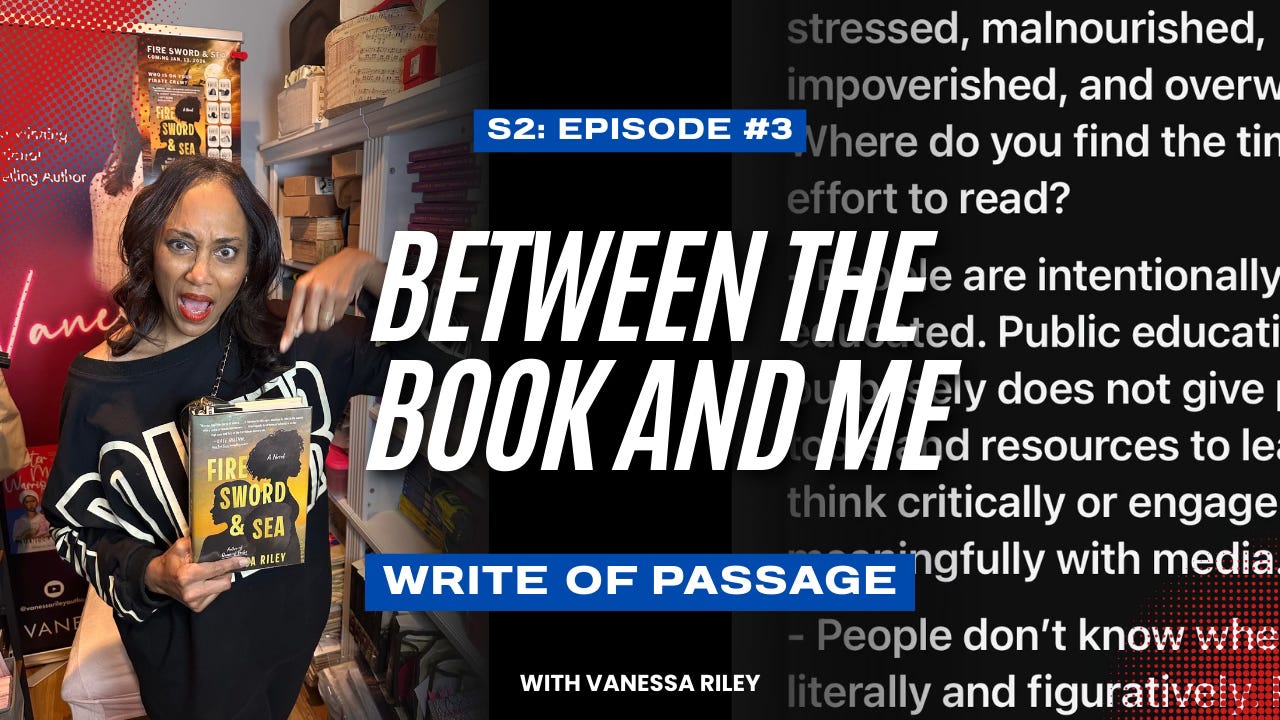
Between the Book and Me
Jan 600:08:42Tap to summarizeSomeone said, “Reading is elitism,” and I knew immediately—we’re in trouble.When people start calling books the problem, it’s never about books.It’s about control.A mind that doesn’t read is easier to steer.Easier to distract.Easier to convince that vibes are enough and history is optional.But reading—especially our reading—was once illegal.Punishable by death.So no—reading isn’t elitism.It’s survival.I saw a screed on Threads that made me stop and stare.“Reading is elitism,” the post declared.It left me scratching my head.Why now?Why is this sentiment surfacing at a moment when people are desperate to escape the hellscape we’re living in—when they’re trying to learn, to grow, to imagine ways to resist?Is it something more sinister?Because an algorithm shaped by bots and billionaires has no interest in a smart, savvy, or hopeful electorate. It wants control. A mind that doesn’t read—one that lives on vibes alone—is easy to steer. It will thrive on chaos. It shall be misled, distracted, and ultimately enslaved.That post made me angry. The kind of angry that pulls my inner poet out of hiding.Yes, Vanessa Riley has been known to write poetry. If you’ve read Island Queen, Sister Mother Warrior, The Bewildered Bride, and others, you’ve already seen my poetic bent threaded through the prose.And don’t you have a new book out? Fire Sword and Sea, next week, Jan. 13? Ain’t nobody have time for all this.No. Nobody does, but I made time. For I got big mad.I reached for the pen—or rather, the keyboard.What came out was a poem I now call Between the Book and Me.Between the Book and MeReading is a privilege, a refuge, a right sorely won.So miss me with the BS, the apathy.Because I Know Why the Caged Bird Sings (Maya Angelou).Maybe it’s my generation.For we came from a time when we were raised as Beloved (Toni Morrison),and hoped for Something Like Love (Beverly Jenkins),Only to learn we were an Invisible Man (Ralph Ellison),Never a Native Son (Richard Wright).We sought out books to find The Souls of Black Folk (W.E.B. Du Bois),but kept our gaze fixed on librarians and mentors,for Their Eyes Were Watching God (Zora Neale Hurston).And they knew what books to pick for our good.They understood which passage would give us hope.When we learned that life—she—was No Crystal Stair (Eva Rutland),They gave us books that fed a Hunger (Roxane Gay),Because they knew we would ache when Things Fall Apart (Chinua Achebe).They understood that verses on a page, in a hymnal, on a screen,would become Kindred (Octavia E. Butler)—Something to remember, to retain, to hug.That touch, that warm embrace, when nouns and verbs paint pictures,Keeps the flames of imagination burning.It will stoke The Fire Next Time (James Baldwin).Reading makes a difference.When peaceful with a psalm or enraged and ready to fight Fire Sword and Sea (Vanessa Riley),Try opening a book—keep going—Fill your soul with words and dreams.Get so full you must Go Tell It on the Mountain (James Baldwin).So it makes me sad when some insistOur whole story lives only in the Narrative of the Life… an American Slave (Frederick Douglass),or the Incidents in the Life of a Slave Girl (Harriet Jacobs).No. Black Boy (Richard Wright).No—Black girl.No bright child misled into craving The Bluest Eye (Toni Morrison).Rise up from The Street (Ann Petry).Savor words as if they are rare,Growing sweeter when harvested in the mind like A Raisin in the Sun (Lorraine Hansberry).If you read, you will learn this:That you are more than Sister Outsider (Audre Lorde).You are The Black Jacobins (C.L.R. James).You are an Island Queen (Vanessa Riley),Swaying to a Harlem Rhapsody (Victoria Christopher Murray).You see, Between the World and Me (Ta-Nehisi Coates)—Between a book and you—AreA mother’s prayer,A grandmother’s wisdom,An ancestor’s war song.So don’t turn your back on reading.Don’t dismiss the act our forefathers and foremothers chose, even under the penalty of death.Reading isn’t elitism.It’s essential to survival.It’s defiance, spelled out.It’s the way to live.This week’s book list is in my poem. Go to the show notes. Get the full list. I’m supporting Novel Neighbor through their website and Bookshop.org.We are less than a week away from the release of Fire Sword and Sea. She comes out on January 13th, 2026. Caribbean women pirates—That’s Black pirates, integrated crews, and secrets—of those who sailed the seas for adventure, a better life, or because they darn well felt like it. Read their truth. Get folks talking about this book.Consider purchasing Fire Sword and Sea from Novel Neighbor or one of my partners in the fight, bookstores large and small who are with me.Come on, my readers, my beautiful listeners. Let’s get everyone excited to read Fire Sword and Sea.Show notes include the poem mentioned in this broadcast.You can find my notes on Substack or on my website, VanessaRiley.com , under the podcast link in the About tab.Enjoying the vibe? Go ahead and like this episode, share, and subscribe to Write of Passage so you never miss a moment.”Thank you for listening. I want you to come again. This is Vanessa Riley.January 10 - Gwinette Library with Jasmine Sinkfield (Click the image for Registration Links)Jan. 12 - Resist Booksellers in Petersburg, VA Jan. 13 - Release Day - Loyalty Books in DC with Victoria Christopher Murray Jan. 14 - Park Books in Severna Park, MD with Kate QuinnJan. 15 - FoxTale Books in Woodstock, GA with Simone UmbaJan. 16 - Novel Neighbor in St. Louis, MO with Pat SimmonsJan. 17 - Black Pearl Books in Austin, TX with Ali Hazelwood This is a public episode. If you'd like to discuss this with other subscribers or get access to bonus episodes, visit vanessariley.substack.com/subscribe
Transcribe →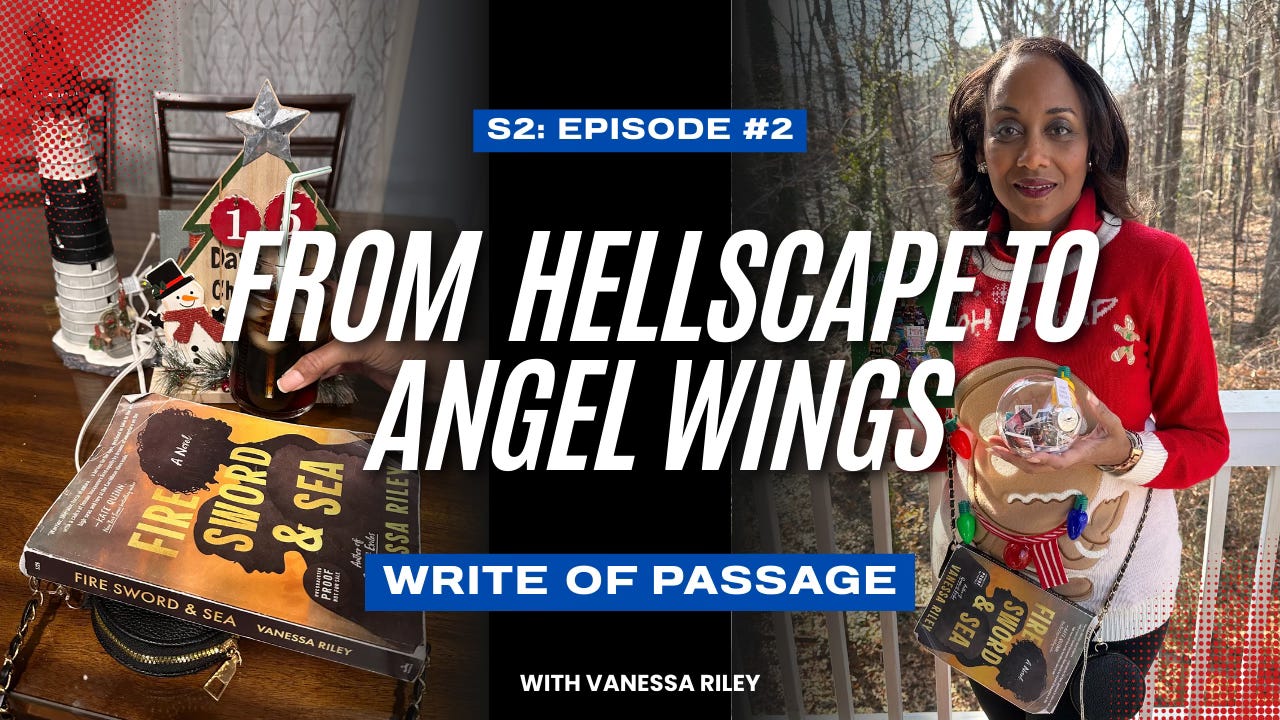
From Hellscape to Angel Wings
Dec 3000:11:39Tap to summarizeThe title of this essay changed from ‘What the Hell’ to ‘Was I Really a DEI Hire?’—and then reality set in. 2025 was a year of whiplash: pride, disbelief, resistance. But I’m still here, with a new book coming in January, while finishing my thirty-first one. I’m a storyteller. And in 2026, I’m coming in hot. I choose ASCENT.From Hellscape to Angel Wings – 2026, Come Get Me.The title of this podcast essay changed several times before it settled into place. It moved from I’m So Glad We’re Almost Out of 2025 to What the Hell to Was I Really a DEI Hire? I want to talk to the manager—and then, reality and sense came to me.That confusion, the whiplash between pride, dishonor, and disbelief, pretty much sums up my experiences in 2025.Don’t get me wrong—there were extraordinary moments. This podcast and speaking to you weekly is something I enjoy. Speaking in front of a packed ballroom of over 800 people at the Jane Austen Society Conference was breathtaking. Traveling to NY for a girls’ trip and to share the stage with Eloisa James was amazing. Some of these moments I never imagined would happen. When I first began writing Regency-era stories, I encountered resistance from people who insisted diversity in that time period was “fantasy.” As if Black people magically appeared in 1865, to be liberated from talent-sourcing camps by a war between the states. And in 2025, we still love our euphemisms. We’re supposed to forget all the atrocities with no second thoughts about lineage and history.For the record, there are entire civilizations—from African kingdoms to complex global networks—that existed. Beauty and scholarship and faith existed before the transatlantic slave trade and colonization.But we’re encouraged not to think about any of that.When I first said I wanted to write about Black women pirates, I’m pretty sure they thought it would be like the movie Girls’ Trip, just set on the high seas. I don’t think the collective thinking—the industry, the world, the gatekeepers—was prepared for the history I uncovered. I found depth. I chose danger. I decided to make visible a period in the 1600s where women took a stand and chose violence. They fought for what they wanted.And I see the conversations beginning. Folks are judging the women through modern lenses. Unfortunately, women are still critiqued the same way. They are made into third-class citizens for not choosing to have children, for not choosing to be a mammy, for choosing careers, ambition, and self-determination over settling. These are conversations we still need to have.And we will have them—with fire, with sword, and seas of truth.My upcoming novel is a naked exploration of feminine power. It’s leadership forged in chaos. It’s truth standing upright in a collapsing world.Back to Publishing:The landscape for 2025 has been equally surreal. Peers have had books that weren’t available on launch day. Others couldn’t get their advance copies because they were held up by tariffs in Canada. I’ve had porch pirates steal mine. Tracking shipments has become a chase that maybe my Lady Worthing might be able to solve. Who knew that a billion-dollar corporation couldn’t get a handle on UPS? Perhaps this is only affecting a few. Perhaps, it’s only an issue for certain publishers. Perhaps, only certain authors are in limbo. Oh, the DEI of it all.And yet.Here I am, a day or two before the New Year, finishing a WIP, my thirty-first book. Thirty-one. This one will be published in 2027—the fourth Lady Worthing mystery, Murder in St. James’s Park. I don’t think I killed enough people. Severn House will have to tell me. So no matter how chaotic or frustrating the system can be, there’s nothing I would rather do than sit down and write stories.I’m a storyteller.I come from a Southern mother who loved literature and a Caribbean father from who loved—loved—loved—telling stories. Storytelling is not just what I do. It’s what I am.So as I step into 2026, my word—my declaration—is ASCENT.Ascent means growth upward. Earned success. Elevation in status and income. It carries momentum. Inevitability. It is not loud, but it’s unstoppable.My ascent into 2026 will be the manifestation of faithfulness. When you are faithful to your craft, faithful to your words, the seeds you planted return as harvest. The earth becomes gentle because you have cared for it. So no matter how crazy—and I mean crazy—this world becomes, no matter how many disappointments or kicks in the teeth you endure, do not give up.Because if you give up, they win.If you give up, every lie they told gets declared as truth.They don’t care that you’re tired.They never cared that you’re human.They do not care if you’re sane.They will rejoice when you are defeated. That side partied too much in 2025.And I’m sorry. I have my dancing boots on right now. I’m too stubborn to give up. I’ve come too far from where I started from. And I have too many stories to tell.So my question to you, in this moment of crazy:Are you a leader?Are you a Moses?A Harriet Tubman?Or are you the woman who wrote Kindred? An Octavia Butler, gifted with foresight, who’ll break stereotypes and venture into the unknown.I suspect some of you are. I know that your ascent is not accidental; it’s strategic. You’ve swung for the fences, and it’s your time.So in 2026, choose ASCENT and leap into this new year with expectations. Let no one—and I mean no one—stop your rise.This week’s book list is a mixed bag of identity, womanhood, and manifest:Kindred by Octavia E. Butler – This is a foundational work on power, survival, and historical memory. It’s a classic. Let it be your entry to her storytelling.Sister Outsider by Audre Lorde – This collection of essays examines womanhood as a site of power, insisting that Black women’s differences, their anger, and lived experience are sources of knowledge, survival, and transformation.Lara by Bernardine Evaristo – This novel traces lineage, migration, and identity across centuries, reflecting inheritance and storytelling.This week, I’m highlighting Mahogany Booksellers through their website and Bookshop.org.We are fifteen+ days away from the release of Fire Sword and Sea. She comes out on January 13th, 2026. Caribbean women pirates—That’s Black women pirates who sail the seas for adventure, a better life, or because they darn well felt like it. Imagine what their truth is. Help me get folks talking about this book.Consider purchasing Fire Sword and Sea from Mahogany Booksellers or one of my partners in the fight, bookstores large and small who are in this fight with me.Come on my readers, my beautiful listeners. Let’s get everyone excited for Fire Sword and Sea and 2026.Show notes include a list of the books mentioned in this broadcast.You can find my notes on Substack or on my website, VanessaRiley.com, under the podcast link in the About tab.Enjoying the vibe? Go ahead and like this episode, share, and subscribe to Write of Passage so you never miss a moment.”Thank you for listening. Hopefully, you’ll come again. This is Vanessa Riley. This is a public episode. If you'd like to discuss this with other subscribers or get access to bonus episodes, visit vanessariley.substack.com/subscribe
Transcribe →
Write, Wait, Win: 10 Ways To Thrive While The World is on Pause
Feb 11, 202500:14:40Tap to summarizeIt’s universally known that everyone who has a career or talent that intersects with the public must learn to deal with waiting. Everyone waits. Whether a king or a servant, a politician or a bank teller, time slows down while you wait to receive or give something. Even though the physical globe continues to rotate around the sun, our present circle will seem stopped or stuck. It’s an uneasy feeling that grows and can become unbearable the longer the wait time.Creatives, especially writers know at some point in their career, will have to wait. Let’s dive into this world. Early on, it’s waiting for the right idea. Then, it’s waiting to find time to write. After that, we wait on edits or feedback from workshops, peers, or critique groups. If you are pursuing a traditional path, we wait for the magic call or Zoom with an agent announcing they love our voice and wish to sign us. Then, there’s the ultimate wait when, as a traditional author, one anguishes for a positive response from an editor at a publishing house. We want that “yes.” We crave that affirmation that we’ve written something that matters.For indie authors, the struggles may look different, but waiting is still inevitable. You might be waiting on cover designers, layout artists, or formatters to deliver essential elements for book production. But no matter how we publish, all authors wait for early reviews and to see how fans and new readers react.I’m reminded of a keynote I once heard Walter Mosley give. He was joking with his close friend, Gregory Hines, about how his world would change now that he had received his long-awaited “yes”. His risks were finally paying off, both literally and figuratively. But Hines, in his wisdom, simply told him, “Don’t worry, you’ll be broke again.” Mosley acknowledged that Hines was right and drew a big laugh from the National Book Club conference admitting that he was again and again.Vanessa meets Walter Mosley at the 2024 National Bookclub Conference in Atlanta.As authors, we will always be in a waiting game until we stop writing. We will be waiting on contracts, ad placements, book launches, or even the next words to come. But waiting doesn’t mean sitting around, worrying while we stave off dread. Waiting should be active.Waiting involves an expectation that things will work together for our good (Romans 8:28). We must prepare for the next step (James 5:7). I want to act as if the answer is yes. I work in the present to be ready for the blessings. I never expect the worst. I try to be joyful until I have a reason to cry.And let's be real. Sometimes, the answer is no. Sometimes, it’s a kick in the gut—the realization that this good thing was not for you. It's okay to grieve. We are human. We can be sad.Yet, when we feel like we've blown it, we must remember that we are seen. We are not forgotten. I love how Psalmist puts it in Psalms 40:1-3:"I waited patiently for the Lord; he inclined to me and heard my cry. He drew me up from the pit of destruction, out of the miry bog, and set my feet upon a rock, making my steps secure. He put a new song in my mouth, a song of praise."So rejoice in the good. Weep in the sadness. And know we are not alone.The Waiting Winners Timeline.Fortunately or unfortunately, I have a list of some of the great waits that eventually paid off. History is full of people who had to wait long periods for their dreams and recognition to come true:• Sister Rosetta Tharpe (1915–1973) – The "Godmother of Rock and Roll" influenced Chuck Berry and Elvis Presley but wasn’t fully acknowledged until her induction into the Rock and Roll Hall of Fame in 2018.• Cicely Tyson (1924–2021) – Though she acted for decades and delivered groundbreaking performances in Sounder (1972) and The Autobiography of Miss Jane Pittman (1974), she never received her full due until 2018 when forty-six years later, Cicely was presented with an honorary Oscar for her lifetime achievements. She was in her 90s.• Zora Neale Hurston (1891–1960) – As I mentioned in earlier episodes, Ride or Die or Get Out of the Way and Grab Somerset Gumbo, Your Best Girl, and Go, Zora’s work during the Harlem Renaissance was intentionally buried by gatekeepers. She died in poverty and obscurity, and her work had to be rediscovered a full decade after her death. I will say this a thousand times: This is not the way. Death and poverty should never be requirements for a writer’s success.• Octavia Butler (1947–2006) – Octavia’s first published work was a short story called Crossover in 1971. Her first novel, published by Doubleday in 1976, was just the beginning. The visionary science fiction writer, who won Hugo (1984) and Nebula Awards (1985), struggled for mainstream success until she published Parable of the Sower in 1993 and won the MacArthur Fellowship in 1995. That’s more than 22 years of waiting. The world is forever grateful for Octavia’s perseverance• Walter Mosley – Walter started writing in the 1980s, and his first novel, Devil in a Blue Dress, was published by WW Norton on June 19, 1990. He faced several years of difficulty in getting published because publishers didn’t think there was an audience for Black detective fiction. Once it sold, it became a classic, even being adapted into a movie starring Denzel Washington.One could say it all paid off. Perhaps. But I’m sure that the waiting wasn’t easy or sweet. I am thankful that each persevered with their gifts and changed the world.How to Productively WaitSince waiting is inevitable, I made a list of practical ways to stay productive and engaged:1. Don’t Obsess—Rest: Avoid refreshing your inbox constantly. Do chores. Volunteer. Don’t obsess on reels or social media, but do find ways to bless someone else.2. Read Widely: Explore new releases, classics, nonfiction, and poetry to inspire new ideas. This is something I do. It’s one of the reasons I confidently write in three genres—historical fiction, romance, and mystery. My voice adapts. I give readers of these genres what they want, what they expect, because I learn from all good stories. Sister Mother Warrior, about the two women who shaped the Haitian Revolution, is my most literary work, but it’s also the most muscular novel I’ve published. Its heft comes from a lot of nonfiction, including books on war and diaspora poetry.3. Take a Class: Study writing guides or attend workshops. Some great books to consider:o Elements of Fiction by Walter Mosley – Explores storytelling fundamentals such as character development, plot, and voice.o How We Do It: Black Writers on Craft, Practice, and Skill edited by Jericho Brown – Features Nikki Giovanni, David Omotoso Black, Natasha Trethewey, Barry Jenkins, Jacqueline Woodson, Tayari Jones, Angela Flournoy, and more.o On Writing by Stephen King, a personal favorite4. Build Your Author Platform: Update your website, refresh your bio, and check your events list. I know some of those dates have passed.5. Network with Other Writers: Attend writing groups, conferences, and in-person events.6. Touch Grass—Literally: Get outside, take a walk, observe nature, and breathe fresh air7. Enter Writing Contests: Consider submitting to:o Writers of the Future Contesto The Bridport Prize (That’s a UK contest)o The Black List Unpublished Novel Awardo Reedsy.com has lists of competitions for poetry and proses.Writers realize that all competitions are not created equal. Some have implicit bias. Do your homework before submitting. I don’t want your work stolen or misrepresented or fumbled by hands that should never had touched your creation in the first place8. Stay Informed on Industry Trends: Keep up with publishing news, avoid scams, and research new agents and publishers and marketplaces.9. Plan Your Marketing Strategy: Work on your launch plan and outreach to bloggers and media, so you are ready when you get your yes.10. Replenish Creativity: Step away when needed—travel, pick up a hobby, or simply rest.11. (Bonus Point) Start a New Project: If you’re querying, don’t immediately start book two in your series. Instead, write something fresh that could be your bre...
Transcribe →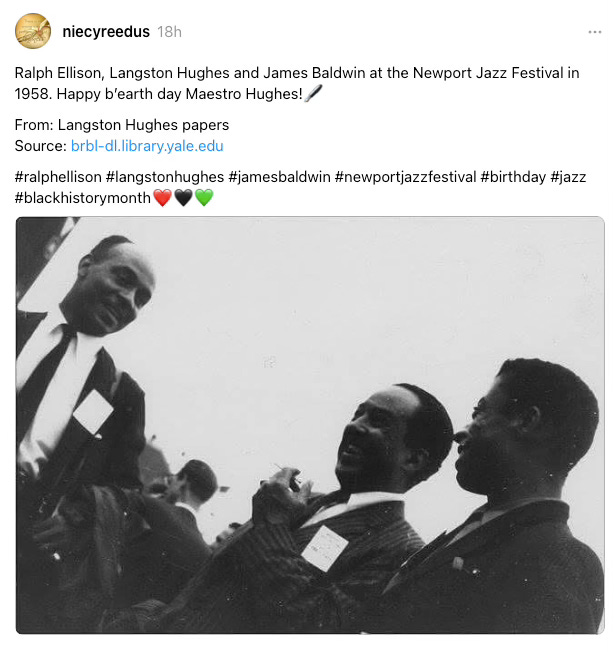
Grab Some Gumbo, Your Best Girl, and Go
Feb 4, 202500:16:11Tap to summarizeHey fearless listeners. We've made it to another week. That accomplishment isn’t something I take lightly. Times feel perilous. Worries are rampant. I’ve had more conversations where I’ve been talked off the ledge—or where I’ve held up safety nets for others.But let’s congratulate ourselves. We’ve made it through the fire. California has literally done that, with most of the wildfires now 100% contained. Let me repeat this: We will get through hard times. My faith is strong, my friendships are firm. I believe in doing life with us, helping each other along the way.Subscribe for free. Get Vanessa's take on current events, publishing drawing from her journey as an indie author turned traditionally published powerhouse: 25 novels and counting.As your historically inclined friend, I thought deeply about writers and writing friendships this week. As a writer, I love studying other writers. I look for habits to incorporate or styles to dissect and admire. There is so much that can be learned from reading and studying the craft of other. While there’s nothing new under the sun, some writers have found ways to capture its light and change the world by focusing its heat and power back on to the earth—our neighborhoods, communities, countries—even for just a mere moment.I draw a lot on images. In my own writing, I want you to feel like you’re in the room where it happens. In Sister Mother Warrior, I make you the warrior Gran Toya, sitting at the table where the boy she raised, Jean Jacques Dessalines converses with the commander of the armed forces, Toussaint L’Overture. They speak about strategies to prosecute the war, and I spend time on the tastes of the foods on the table from broth and its caramelized bits to the roasted pheasant with mushrooms. If this scene were painted or dared to be shown on screen, you should catch the meticulous details and comforts of where they’re sitting, the posturing, even the fumbling of fingers along the buttons of a waistcoat that has crowns or birds or women painted upon them.Images tell us so much. They are testament to what has been and what could be. Remembering photos of writer friendships like Ralph Ellison (Invisible Man) & Albert Murray (The Omni-Americans) and noting the dapper and different styles of dress. Or photos of James Baldwin & Langston Hughes taking in jazz or supporting a civil rights march—all our precious moments. So for this week’s essay, I went down a rabbit hole searching for images of female writer friendships.Ralph Ellison, Langston Huges, and James Baldwin Source: Instagram: @neicyreedus I started with the Brontë Sisters—Charlotte (1816–1855), Emily (1818–1848), and Anne (1820–1849). These literary powerhouses from Yorkshire, England, originally published under male pseudonyms, but their female forward works—Charlotte’s Jane Eyre, Emily’s Wuthering Heights, and Anne’s The Tenant of Wildfell Hall became classics of English literature. I found myself looking at a painting of the sisters created in 1843 by their brother, Branwell Brontë. He originally painted himself into the portrait but seeing the sunshine, their luminous faces, he painted out his own image, leaving behind a ghostly outline. Brontë Sisters—Charlotte (1816–1855), Emily (1818–1848), and Anne (1820–1849). Source: Wiki Commons.Can you imagine Branwell’s humility and protective nature of his sisters and their genius. The portrait now hangs in the National Portrait Gallery in London for all to see.From there, I dove into Sylvia Plath (1932–1963) and Anne Sexton (1928–1974). The two revolutionized confessional poetry, tackling themes of mental illness, feminism, and personal suffering. They often attended poetry workshops and lectures together, but I couldn’t find any pictures of them side by side. They may exist, but what if they don’t. What does that mean to have a friendship so secretive and private? To not celebrate the unity publicly—what does that say about feminine unity?In contrast, I did find images of Anne Sexton and poet Maxine Kumin.Anne Sexton and Maxine Kumin. SOURCE: karenmoline.comAfter meeting Sylvia Plath for drinks, Anne still craved company, so she joined a local writers' group. This where she first heard Maxine Kumin—a quiet but powerful voice sharing a work in progress. They couldn’t have been more different: Maxine, prim and frumpy; Anne, wild and bold. But together, they were yin and yang. They edited each other’s work, co-wrote poems, and built a bond so deep that it became a true creative partnership. You know how rare it is to fully trust another writer with your words? That’s the kind of magic the two had.One of my favorite modern writer friendships is the trio of Beatriz Williams, Lauren Willig, and Karen White. Their collaboration has produced, several books including The Lost Summers of Newport—one of my favorites. They’re often seen together at book events wearing pearls, sipping signature cocktails, and laughing with the kind of joy that only comes from shared secrets, success and sisterly love.The Lost Summers of Newport: Beatriz Williams, Lauren Willig, Karen WhiteAnother legendary literary sisterhood? Toni Morrison (1931–2019) & Maya Angelou (1928–2014). These two are iconic, two of the most important voices of the 20th century. I’ve seen photos of them young and free, standing tall in their brilliance. I’ve seen pictures of them in their later years, side by side in wheelchairs, dressed to the nines, radiating wisdom and grace. Their friendship was built on admiration, public support, and deep mutual respect.Toni Morrison and Maya Angelou. Source: Virginia Tech News.These images are so encouraging to me. As writers, we often work in solitude, wrestling with words and deadlines. But community matters. These friendships remind me of that.There’s one more image I found in 2023. —It appeared in the LA Times article, touting a new book, The Sisterhood. The photo, which serves as the book’s cover, captures eight young, beautiful Black women gathered together, smiling for the camera. Let me set the scene...The hostess, let’s call her June, was waiting for her collection of poems to be published in two months. Every author knows that feeling, the anxiety of waiting for pub day, the stomach-churning dread of the book’s reception, the early reviews. I can imagine June wanting her girls around her for support. She calls her writer friend Alice. Alice is a girl’s girl. She’s written a big exposé for Ms. Magazine and is so close to locating a literary treasure she can taste it. Tasting reminds of her spices. She picks up the rotary dial phone and calls the best cook she knows, Vertamae. Vertamae is a Brooklyn celebrity and a cultural anthropologist, but she brings a pot of gumbo with large shrimp, smoked sausage and proper Geechee rice.More calls are made, and these writers and activists come to June’s apartment. One friend, I think Toni, who had a couple of books published and a little money in her pockets of her fine leather jacket brings the best champagne she can afford. Maybe one bottle of expensive Veuve Clicquot Brut with the Yellow Label to toast something real special. And then she purchases a few bottles of Moët & Chandon or maybe something sparkling and American like André or California Korbel.Are you getting the picture? Glasses in hand, toasting each other. A 12-inch long-play album sings in the background Stevie Wonder’s “I Wish” or Rose Royce’s “Car Wash.” If June’s love for Bessie Smith wins out, she will make sure the Empress of the Blues’s “Downhearted Blues plays.” After the dishes were cleared, I can imagine them reciting poems, like Anne and Maxine. They might work on plot points or tweak a line or two, passing it amongst themselves, much like Beatriz, Lauren, and Karen.And just as they ready to leave and tug on their jackets back to brave the February cold, someone suggests a picture. The ladies group together in the living room under June’s hanging picture of singer Bessie Smith. Click. Someone catches the moment. Much like Branwell Brontë, someone has gotten out of the way to commemorate this moment where the sun shined through and touched legends.Let me formally introduce you to these women:· June Jordan – A trailblazing poet, essayist, and activist whose work championed social justice, Black empowerment, and the experiences of marginalized communities. In the picture, she was two months away from publishing Things That I Do in the Dark (1977), a poetry collection reflecting on race, gender, and personal identity.· Alice Walker – A Pulitzer Prize-winning author and activist, best known for her novel The Color Purple and her tireless efforts in preserving Zora Neale Hurston's legacy, Alice was an established writer, having published Meridian (1976), a novel exploring the civil rights movement.· Vertamae Smart-Grosvenor – A culinary anthropologist, writer, and Gullah culture advocate is known for her work blending storytelling with food traditions, including her groundbreaking book Vibration Cooking: Or, the Travel Notes of a Geechee Girl (1970).· Toni Morrison – A Nobel Prize-winning author and Random House editor celebrated for her powerful novels like Beloved that illuminate the complexities of Black life, memory, and history stands, all cool, in her leather coat. At the time of this gather...
Transcribe →
Ride or Die or Get Out The Way
Jan 28, 202500:17:44Tap to summarizeTo the writers, the creatives: if you’re like me, you possess a deep curiosity about humanity and a desire to do good through your work. But creatives—are you struggling? Are deadlines slipping through your fingers? Is the blank page staring back at you, stubborn and bare?Do you feel alone, like no will ride out to save you?The truth is no one is coming, because we are all anxious and distracted. It’s hard not to be. Since our last episode, it feels like a million and one things have happened all at once.I’ve seen creatives grappling with the still-high price of eggs, building skits about boycotts—or debates about debating boycotts—and the resurrection of TikTok sparking discussions about zombie-like timelines.Time burns.Writers wrestle with their roles. We try to create worlds, worlds that feel diverse and welcoming while rage-watching unqualified individuals ascend to power due to the privilege of their bank accounts or honestly whiteness or white associations. I’ve seen a spectacle of posts from people with crosses in their bios making rage filled takes on what Jesus would or would not do.How do we create, keep creating when everything around us is in flux and chaos? I usually have my act together. I plan and execute. This week I’ve let time get away from me. I’ve written and rewritten this very essay a multitude of times. I want to give you fresh mana every time I step to the microphone.Then unexpectedly, clarity came during a celebration of life for a dear friend’s grandmother.Watching a montage of Mrs. Dorothy’s life in photos, hearing testimonies of love, and, most poignantly, listening to the words of her longtime best friend moved me deeply. Her bestie described their years of shared laughter, prayer, and adventures—as missions of foolery at bars, late-night Thelma-and-Louise-style escapades, and their unshakable bond.When the bestie shared a piece of wall art Mrs. Dorothy had made for her, I choked up. Hung in a gilded frame, the red and orange colors radiated joy. I felt the sisterly love and support. The bestie said that everything wasn’t always perfect between them, but they knew that either would ride to hell and back for the other.At that moment, I knew what I had to write. The question that cut into my soul—are you someone’s ride or die? Are you someone’s safe harbor, their distraction from life’s destructive winds? Or are you a danger in disguise, someone who, by intent or accident, dims their light?“Vanessa, why so serious?” We are living in serious times. Everything must be purposeful. We need to think before we speak. James 1:19-20, says something like, brothers and sisters, everyone should be quick to listen, slow to speak and slow to become angry, because anger does not produce righteousness."Why should we do this slow think? It doesn’t feel good. If I just post on social…No. These social media streets are meaner than ever. And the consequences of a good jab, a quick retort, can have monstrous FAFO reactions. Let me tell you a few short stories to illustrate this.There was once a phenomenal female painter whose work celebrated women and cultural pride with breathtaking power. At the height of her talent, she was mostly ignored. Society lauded her famous husband as the true genius. She was told to be quiet, to support him, to be lesser. I imagine, she often looked up at the sky and wondered why there wasn’t enough light for two.There was a humble poet who burned to tell the stories of ordinary people. When she poured her heart into her writing, critics dismissed her. They wanted stories about the elite, not the impoverished. The fire in her soul left no room for compromise, but her enemies sought to bury her work. They succeeded. No one rode to save her. She died impoverished and in obscurity. She closed her eyes knowing her peers had deliberately dimmed her light.There was once a collector who nurtured others’ prose. She gave so much of herself that her own work was overlooked. After publishing several novels with little acclaim, she gazed at the starry sky and wished there was enough light for her mentees and her too.Imagine women dying spent of their energy and grace, dismissed, barely acknowledged. Unfortunately for a female creator, these are not anomalies.Women Who Didn’t Live to See Their DueArtemisia Gentileschi (1593–1656): An Italian Baroque painter whose powerful depictions of women, such as Judith Slaying Holofernes, were overshadowed by her male contemporaries. Today, she is celebrated as one of the Baroque period’s greatest artists.Sor Juana Inés de la Cruz (1651–1695): A Mexican nun and writer whose literary works were suppressed by church authorities. Forced to sell her library of collected books, she soon died. Her best known work Reply to Sister Filotea of the Cross is a defense of women’s education. Today, she’s a feminist icon.Emily Dickinson (1830–1886): The American poet published fewer than a dozen of her nearly 1,800 poems during her lifetime. Today, she’s a legend.Zora Neale Hurston (1891–1960): A giant of the Harlem Renaissance, Hurston’s work was erased from mainstream consciousness for decades. She died in poverty and was buried in an unmarked grave.Frida Kahlo (1907–1954): Often overshadowed by her husband, Diego Rivera, Kahlo’s work is now recognized worldwide as a celebration of womanhood and Mexican culture.There are more—always countless more women who are dismissed and their greatness only acknowledged posthumously. Death and decades of time shouldn’t be prerequisites for a creative to get their due.Back to my earlier stories, I have some posthumous updates.The Ignored Artist: Frida KahloAlways in the shadow of her husband, the famed 1920s painter Diego Rivera, Frida’s talents were noted and championed by art-world luminaries like socialite Lupe Marín (Diego’s first wife) and photographer Tina Modotti. Lupe introduced Frida to influential figures in the art world, while Tina captured stunning photographs that catapulted Frida’s reputation. These two women helped elevate Frida’s distinctive style and works, including her 1926 piece, Self-Portrait in a Velvet Dress. Their support was instrumental in promoting her art in Mexico and beyond, eventually earning Frida the global acclaim she deserved.The Hobbled Writer: Zora Neale HurstonStory two was about the gifted Zora. During her lifetime, Zora was celebrated as a writer of the Harlem Renaissance. However, after the 1940s, her work fell out of favor. She was criticized by contemporaries for not explicitly addressing racism or aligning with the civil rights movement. Her focus was on everyday folk and folklore. This divergence caused the literary elites to push her into obscurity. Shunned and misunderstood, Zora died in poverty in 1960, and yes, buried in an unmarked grave.Enter burgeoning writer Alice Walker (The Color Purple), who encountered Zora’s Their Eyes Were Watching God in graduate school around the 1970s, a decade after Zora’s death. Profoundly changed by the novel, Alice was shocked that Zora’s legacy had been erased. Determined to restore it, she feverishly researched Zora’s life, eventually writing an essay for Ms. Magazine titled “Looking for Zora.” Alice located Zora’s unmarked grave and purchased a headstone, inscribed with: “Zora Neale Hurston: A Genius of the South.”The Dismissed Editor: Jessie Redmon FausetJessie (1882–1961) was a vital figure of the Harlem Renaissance, yet her work was undervalued in her lifetime and largely forgotten until the feminist and civil rights movements of the 70s. I recently read an advanced copy of Harlem Rhapsody by Victoria Christopher Murray, which chronicles Jessie’s life. Victoria beautifully highlights how the editor’s dreams were often sacrificed to nurture younger Harlem Renaissance writers like Langston Hughes. Her contributions to literature and her own novels deserve the same spotlight:* There is Confusion (1924): Examines issues of race and ambition among Black professionals.* Plum Bun (1928): Explores passing and the complexities of identity, a theme that may have influenced her friend Nella Larsen’s Passing.* The Chinaberry Tree (1931): Focuses on family dynamics and societal expectations within Black communities.* Comedy: American Style (1933): A biting critique of internalized racism and the pursuit of whiteness.Thank you, Victoria, for returning Jessie to our lexicon.That’s what I love about research and writing. Pen to paper, words forming sentences—we get to take readers back in time and restore women. In Sister Mother Warrior, I rediscovered Marie-Claire Bonheur, the first Empress of Haiti, and Gran Toya, a counselor and African military leader to Emperor Jacques I (Jean-Jacques Dessalines). These two women, connected to the man who liberated Haiti, were crucial to shaping the Haitian Revolution. Within the prose, I built the respect and friendship that developed between these two polar opposites. That’s right opposite can respect and ride for each other.With fiction based loosely on historical events and people, I ride for the forgotten and amplify sisterly ideals. In <...
Transcribe →
Consent in the Time When a Black Woman Can Say No
Jan 21, 202500:16:28Tap to summarizeAs a writer, I love giving readers something they didn’t expect. When plotting a murder mystery, I meticulously plant clues, red herrings, and unexpected connections, ensuring readers will turn the pages, eager for what’s next. The writer's mind is a playground. It’s the world as we know it—the familiar, the structured, and the understood. Readers are conditioned for the norm. But when a writer disrupts the mundane, offering a twist, it intrigues and refreshes.We’re curious beings. We crave learning and understanding. We seek order. Flipping gender roles or challenging leadership expectations is a surefire way to shake things up and offer a new perspective.Last year, I wrote a scene I initially thought was humorous: an 1800s heroine, desperate to become a physician, disguises herself as a man to attend medical lectures. At the time, women were barred from pursuing careers as scientists or physicians, often resorting to extraordinary measures to follow their passions. In the scene, Scarlett, the determined heroine, is on the verge of being discovered. Her nemesis, an immigrant physician named Steven, steps in to save her by pretending she’s his male cousin. This clever ruse spares Scarlett from scandal but forces her to blend in with the men—including accompanying them to a brothel. Turning the tables, Scarlett ends up saving Steven. While he’s incapacitated during a narcoleptic episode, she kisses him, adding what I thought was a layer of comedic drama to the brothel scene.Here’s the rub: that kiss happened without his consent. He was barely conscious. It doesn’t matter if it was funny, if readers were in on the joke, or if it showcased her autonomy. By giving her this power, I stripped his from him.That moment had to change. I deleted the kiss. The scene in A Wager at Midnight is still funny, still scandalous, but it’s respectful. Some may say, “Vanessa, lighten up—it’s humor! And don’t we need more joy in the world?” All true. But here’s a greater truth: consent is not a double standard. It’s a rule. It’s a right. Everyone’s "no" should carry the same weight we modern women demand for ourselves.A Wager at Midnight releases March 25.The ability to say no is sacred. To paraphrase Matthew 5:37, “All you need to say is Yes or No; anything beyond this comes from the devil.”Many of you might be nodding in agreement. Yet this week reminds us that some people still struggle with a woman’s no—especially when that woman is Black.This week, a spokesman for the office of Barack and Michelle Obama announced that Mrs. Obama would not attend the 2025 inauguration. Unlike her absence from President Carter’s funeral, which was attributed to a scheduling conflict, this was a clear, definitive, unexplained no.Reactions have been predictable. Some applaud her for setting boundaries, acknowledging the toll of public life and the personal risks she and her family have endured. Others clutch their pearls, lamenting political norms—those quaint phrases that, bless their hearts, weren’t universally applied when it mattered most.Meanwhile, my people—oh, you know who you are—created a delicious meme that summed it all up: If I send you Michelle’s picture, I’m not coming.From: @jennmjacksonphdThese memes reminded me of the ones sparked by Anita Baker when her concert, scheduled to start at 7 p.m. on May 11, 2024, at State Farm Arena in Atlanta, was canceled at 6:54 p.m. due to "unforeseen circumstances."@sweet.alpha.lady from TikTokI’ll admit, these memes are funny. But looking at the popularity of these memes reveals something sobering: Are women the only ones who cancel? Why aren’t there memes like these for men who say no? Do they not have the agency to do so?Of course, that’s sarcasm—because men cancel all the time. They just aren’t mocked as much.Chris Rock, for instance, canceled hosting the 2022 Governor’s Award after his infamous Oscar slap. If humor is fair game, where’s the meme with his picture saying, “Naw. Sorry I can’t be there. Still recovering from saying the wrong thing.”Or take James Franco, who “mentally didn’t show up” to co-host the 2011 Oscars. Sure, he was physically present, but he failed to fulfill his duties. Anne Hathaway, the other co-host, had to carry the night. A woman having to pick up the slack? That sounds familiar—and is definitely meme-worthy.Nonetheless, people have a right to cancel, just as they have a right to say no. That includes celebrities. Saying no should be a human right. But for that to hold true, society must first recognize the humanity and autonomy of every person who withdraws their consent.Historically, women have struggled with autonomy and consent. For much of US history, women were required to live under the authority of a father, husband, or male guardian. It wasn’t until 1974 that women were allowed to obtain credit cards in their own name. Equal pay legislation dates back only to the 1960s. The societal acknowledgment of a woman’s right to make her way in the world is lacking. It’s hard to understand that a woman’s ability to work for fair wages and to decide her own path is merely sixty-five years old. That’s not that old. It’s barely able to get social security.Alas, the history is bleaker for Black women. For us, the ability to say no to the most egregious violations was often denied. Our consent was stolen by laws, society, and systems meant to promote and protect others.A Timeline of Black Women and the Right to Say No1662: Virginia Hereditary Slave LawChildren’s status (enslaved or free) followed their mother, stripping Black women of autonomy over their offspring. Sidenote: This came about because Elizabeth Key, born to an enslaved woman and a white Englishman, Thomas Key, legally gained her freedom in 1655 by arguing that she was baptized and freed by her father. The 1662 law was enacted to ensure such cases could never happen again.1705: Virginia Slave CodesThese codes reduced enslaved people to property. This codifies sexual violence against all enslaved but particularly Black women.1786: Tignon Laws (Louisiana)Black women were forced to cover their hair in public, erasing their self-expression and identity.1857: Dred Scott v. SandfordThis decision denied Black people citizenship. This reaffirms that Black men and women are without legal rights to refuse exploitation or violence, nationwide.1865–1866: Black CodesRestrictive laws curtailed freedwomen’s mobility and punished those who refused exploitative labor with vagrancy charges.1927: Buck v. BellThis Supreme Court decision upheld forced sterilization laws targeting Black women under eugenics programs.1944: The Rape Case of Recy TaylorRecy Taylor identified her six white attackers, but they were never brought to justice. Alabama apologized only in 2011.1980s: Workplace Dress CodesBans on natural hairstyles like braids and afros forced Black women to conform to Eurocentric beauty standards.1994: Violence Against Women Act (VAWA)While a step forward, this legislation didn’t fully address the unique barriers Black women face in seeking protection such as underreporting, racial profiling, mistrust in authority, and Access to Culturally Competent Services.Of course there are some wins.1967: Loving v. VirginiaThis landmark case struck down laws eliminating restrictions on who women could marry.1973: Relf v. WeinbergerThis case exposed federally funded forced sterilizations of Black women, helping to end the practice.2019–Present: The CROWN ActThis legislation prohibits discrimination based on natural hairstyles, affirming Black women’s autonomy over their appearance.So, parity with others—being legally able to say yes to bodily autonomy and hairstyles—is less than a decade old for Black women. That should horrify you.As a Black woman and a lover of history, I’m often told to forgive and forget—and there’s a heavy emphasis on forgiveness and a whole lot of forgetting. That notion is anathema to my soul. My lungs struggle to seize air under the weight of ongoing restrictions. There are new laws stripping away hard-fought rights. Fear and foolishness is trying to make hard-won victories DEI casualties. It’s book bans, whitewashed textbooks, tone policing, and countless microaggressions designed to smother.Breathe.Hear my heart: autonomy for me doesn’t mean taking from you. Equality for one group doesn’t mean making any other lesser. Checking on my sista doesn’t mean I wish ill on others—or the misters. We all gain when everyone’s yes and no are respected.Writers, readers, citizens, hear me. Let us be wise with our words, speaking peace into existence. Let us remember and listen. Let us accept that no is a complete sentence, without the need for adjectives or explanations.In times such as these when injustice still reigns, people have the right to step back, breathe, and find their peace.Writers, I encourage you to take a more critical eye to your work. Let’s not ignore the forces trying to strip away consent—through laws, norms, even memes disguised as humor. We wield power with our words, and we should all consent to building up and renewing everyone who reads them.If you want a deeper d...
Transcribe →
Is Empathy Dead? Writers Don't Answer All at Once.
Jan 14, 202500:16:48Tap to summarizeAs a writer, the greatest gift I can offer a reader is the ability to feel. Love, anger, or the powerful sense of being seen—my books come with an implicit promise. I intend to transport you, enlighten you, and to invite you to inhabit someone else’s shoes. You will tread in their footsteps, see through their eyes, and be consumed by their emotions. This is my gift, my bond with my readers.I truly believe all writers are empaths at heart. That’s why last week was especially hard—a whirlwind of emotions and memories, crashing upon me at the same time.In Atlanta, a rare snowstorm—an event last seen a decade ago—brought the city to a standstill. At the same time, the world paused to honor President Jimmy Carter, a man synonymous with empathy and kindness. He was my first president, well the first I can actually remember. The plain spoken, proud son of Georgia, gave the world a lifetime of service. His passing like his presidency, brought together people across political divides, reminding us of the compassion that once defined leadership.On the other coast, in California, a cruel trifecta of fire, wind, and drought ignited devastating wildfires. Over 20,000 acres have burned in the Palisades Fire. You know the names—Malibu, Mandeville Canyon, Brentwood, and the hills of Encino and Tarzana. The Fires in Eaton which includes devasted generational communities of Pasadena and Altadena--have been hit with significant property damage. The Hurst, Kenneth, Archer and Lidia Fires still rage at the time of this recording.We've Seen This All BeforeThroughout history, natural disasters have tested human resilience:* 1556: The Shaanxi Earthquake in China claimed 830,000 lives, the deadliest recorded.* 1692: The Port Royal Earthquake and tsunami destroyed two-thirds of the "Wickedest City on Earth," killing over 2,000. Neighboring islands sent organized looters.* 1815: Mount Tambora erupted in modern-day Indonesia, leading to the "Year Without a Summer" and a global death toll of 80,000–100,000.* 1900: The Great Galveston Hurricane killed as many as 12,000.* 1931: The China Flood led to approximately 4 million deaths from drowning, starvation, and disease.* 1970: Cyclone Bhola in Bangladesh caused over 300,000 deaths.* 2004: The Indian Ocean Tsunami killed over 230,000 people across 14 countries.* 2005: Hurricane Katrina left 1,800 dead and caused $161 billion in damages, with long-term displacement of residents.* 2010: The Haiti Earthquake caused over 222,000 deaths and displaced over 1.3 million people.* 2011: The Tōhoku Earthquake and Tsunami in Japan triggers the Fukushima nuclear disaster and kills over 19,000 people.* 2017: Hurricane Maria in Puerto Rico caused 2975 deaths and massive infrastructure failures. Puerto Rico was left without power, water, or basic services for months.* 2017: Hurricane Harvey in Texas wreaked havoc, leaving thousands dead and causing $125 billions in damages.2024 Hurricane HeleneHurricane Helene devastated six Southern states from September 24–29, 2024, claiming at least 236 lives. Entire towns in the far inland mountains of North Carolina—Chimney Rock Village, Marshall, and Hot Springs—were essentially washed away by floods.Helene’s damage was personal. It struck my hometown of Aiken, South Carolina—a small town known for horse racing and Refrigerator Perry of the Chicago Bears. My aunt and cousins were without power for almost a week. The massive oak outside the 5-and-dime store where I had my first job was ripped from the concrete sidewalk by the storm’s ferocious winds. When I visited Aiken in December, two months after the hurricane, the town still bore the scars. Fallen trees littered the landscape, and many roads and houses remained in disrepair.Miss me with the idea that this is what we deserved. Miss me with the craven spirit that left people frightened and hopeless, thinking no help was coming because this disaster unfolded during a contentious political season.No place or community is immune to catastrophe. Each disaster brings grief, rebuilding, and, most importantly, a need for solidarity. But are we up to the task? Increasingly, a spirit of division and disdain seems to overshadow the empathy we once showed in times of tragedy. Have we lost our humanity?Going Back to CallyOver 180,000 people have been evacuated, and at least 10 lives have been lost in the fires ravaging California. Sadly, that number will likely rise once the flames are contained. But how do we contain the blaze consuming our humanity? Instead of unity, many are quick to condemn, point fingers, or dismiss the devastation as a plight of wealthy Malibu residents or Hollywood elites.When disaster strikes the rich and famous, cynics are eager to believe they deserved it. But what about places like Chimney Rock or Aiken or other less affluent communities devastated by storms? Did they deserve it? Are you saying the God you believe in has condemned them as well? Tragedy doesn’t discriminate based on wealth, geography, or political allegiance.Empathy isn’t about whether someone “deserves” to suffer. It’s about recognizing our shared humanity in the face of catastrophe.Consider this: the Federal Emergency Management Agency (FEMA) is funded by taxes from both blue and red states. Blue states, often with liberal politics, contribute the most to federal aid, including FEMA dollars. Meanwhile, red states, more prone to natural disasters, tend to receive more federal funding relative to what they contribute. Could it be that we need each other?If we let division overshadow compassion, we risk eroding the foundation that binds us as a nation. We are called to love our neighbors as ourselves. But here’s the question: when was the last time you chose to love someone as much as you love yourself?Subscribe for free. Get Vanessa's take on publishing, challenges, and opportunities, drawing from her journey as an indie author turned traditionally published powerhouse: 25 novels and counting.Atlanta’s and Texas’s SnowmageddonTen years ago, on January 28, 2014, Atlanta experienced a rare snowstorm—just two-and-a-half inches of snow turned interstates into parking lots. People were stranded for hours, some overnight. Weather advisories had warned of impending danger, but when the morning came with no snow on the ground and no sleet in the air, most assumed the storm had passed.I remember leaving my house around 9 a.m. for a dental appointment. By 10 a.m., I had clean teeth but could barely drive home. Tragically, 13 people lost their lives. Life can change quickly, as that day reminded us. Eventually, we thawed out and survived being the butt of jokes for months.Fast forward to 2022, during Winter Storm Uri in Texas. Extreme cold, snow, and power outages swept across the state, taking over 210 lives. While government officials argued and finger-pointed, neighbors stepped up. Families opened their homes, sharing warmth and shelter. I used Instacart to send water to friends who had no running supply.In both of these "snowmageddons," a profound truth emerged: empathy surged. People helped people. Compassion triumphed over adversity. These moments remind us of our capacity to care, even in the harshest conditions.Back to Finger PointingThe news has already shifted its focus in Los Angeles to looters, sidestepping the stories of everyday people who lost their homes or whose retirement facilities were reduced to ashes. Instead, we see blame placed on budget cuts and political decisions. Meanwhile, the unregulated cesspools of Facebook groups are busy mocking “Hollyweird” and spinning the tragedy into another divisive narrative.I hope in my heart that for every negative story circulated, there are countless acts of kindness—neighbors helping neighbors, communities checking on the most vulnerable, and strangers opening their homes to those in need.We still have power in these moments. We can step away from toxic conversations. We can amplify stories of love and solidarity instead of hatred and blame.The goal isn’t to deepen division but to remind ourselves of what’s at stake. We need to care for one another, not because of where we live but because we all share this human experience.It is possible—to mourn together, to heal together, and to rebuild together. If we can’t, can we at least choose silence—do the quiet “thoughts and prayers” thing we do when there’s a mass shooting?What Should We Do?If we choose to mourn and heal together, we must:* Speak with empathy.* Listen actively.* Offer comfort to those in need.As Proverbs 16:24 reminds us, “Gracious words are like a honeycomb, sweetness to the soul and health to the body.” Listening is helping. Platitudes are cheap. Empathy heals.What Books Can We ReadAs a book girly, I’ll make some recommendations:* A Grief Observed by C.S. Lewis: A deeply personal account of loss and healing.* God Will Carry You Through by Max Lucado: Reflections on God’s sustaining grace.* <a target="_blank" href="https://bookshop.org/p/books/sing-unburied-sing-jesmyn-ward/15673349?ea...
Transcribe →
Be Bold, I Double Dog Dare You
Jan 7, 202500:11:36Tap to summarizeFor the past five years, I’ve embraced the practice of choosing a word to frame my year. The selection serves as a calling card, a guiding principle to reflect upon and shape my actions and mindset.My husband suggested tuna. Yes, you heard me—tuna. Lord bless him. He’s cute and a keeper, but tuna? Wanting to be gutted and stuffed in a metal tin is not what I want on 2025’s bingo card.My previous words have included:* Bold: A year of stepping out of my comfort zone.* Happiness: A focus on joy and gratitude.* Peace: Seeking tranquility and balance.* Yes: Inspired by Shonda Rhimes’ Year of Yes: How to Dance It Out, Stand in the Sun, and Be Your Own Person, I committed to saying yes to new opportunities and challenges.Shonda says, “The most important thing you can do is to keep saying yes. Saying yes opened up my life in ways I could never have predicted. It was a powerful force.”The “yes” opportunities, even those that feel outside our comfort zones, can lead to transformation and success beyond our wildest dreams. I’m a writer. I love wild, unimaginable dreams.My Year of Yes was 2019. Despite my skepticism and hesitation, I said yes to some things that ended up changing the trajectory of my career. I began dabbling in and studying mystery and suspense, saying yes to writing new genres and new POVs.I wrote the big book, Island Queen, that I never thought would be contracted or published. The power of yes and being open is unmatched. Could 2025 be a repeat Year of Yes?Well, yes and no. I’m in a different place—mentally, physically, even spiritually. My faith is strong, but I feel loss so deeply. I can’t put my finger on it, nor is it just one thing—but it’s gone.Part of that feeling comes from what I witnessed. Last year unveiled sides of humanity I didn’t want to see. People who should be natural allies were torn apart by self-interest or self-hate. The reality of progress, which I once believed to be within reach, now feels like an illusion. We are not our brothers’ or sisters’ keepers—not when eggs are $9.00. Or when I wrongfully believe that helping another living, breathing soul somehow takes from me.2025, you had me screaming into the void, only for it to suck away the sound. My tears can’t be heard. I need a word that will pull me away from the void—the endless hole called cynicism. I need it to help me rebuild.I know I’m not alone in this. My closest friends and I still gather to discuss, pray, and believe for something better. Yet, the weariness persists, and I can see myself calling out, “Prayers, prayers, sorrows,” for everything outside my circle.I need a new word. I take comfort in knowing that finding a word for inspiration is an exercise as old as time.Historical Timeline of Setting Yearly Intentions* Babylonian Origins (~2000 BCE): The Babylonians made promises to their gods to do good deeds, seeking favor for the coming year.* Roman Influence (46 BCE): With the Julian calendar, Romans made resolutions on January 1, with promises of improvement and good moral conduct.* Peacock Vows (6th–15th Century): In the medieval period, knights participated in the “peacock vow,” an annual pledge to maintain their chivalric code.* Religious Resolutions (~15th Century): Early Christians were encouraged to reflect on past mistakes and resolve to improve in the new year.* Modern Secularization (18th Century): Under Protestant influence, resolutions began emphasizing personal accountability and self-improvement.* The Akan People and Adinkra Symbols (~19th Century–1818): The Akan people of West Africa chose Adinkra symbols to guide them for the year, such as:* Nkyinkyim (initiative/dynamism)* Eban (protection/security)* Victorian Era (19th Century): Making New Year’s resolutions became a widespread practice in Western culture.* Germany’s Word of the Year (1971): The Gesellschaft für deutsche Sprache (Society for the German Language) selects a “Word of the Year” to reflect social and cultural trends. For 2024, they chose “Ampel-Aus” or “traffic light shutdown,” referencing Germany’s coalition collapse.* Self-Help Movement (1980s–1990s): Choosing a word at the beginning of the year gained popularity, encouraging focus on a single concept to guide actions.* Modern Popularity (2000s+): Mindfulness and productivity proponents like Gretchen Rubin (author of The Happiness Project) spread the idea of guiding words over traditional resolutions.* One Word Movement (2010): The book, One Word That Will Change Your Life by Jon Gordon, Dan Britton, and Jimmy Page, brought global attention to the concept.So, from a historical perspective—whether inspired by faith, adventure, the need to organize, or focus—we’ve all been searching for a word to help us get our acts together.It’s still hard. Disappointment and fear make us want to stand still and watch the world burn. In Isaiah 40:31, the text speaks to a desire for the Lord to renew our hope. I want hope. I want to feel it and again soar on wings like eagles. I want to run and not grow weary. I want to laugh and not fear what comes next.Thanks for reading Vanessa Riley's Substack! Subscribe for free to receive new posts and support my work.Meghan Markle, the Duchess of Sussex, says, “The most important thing we can all do for ourselves is leave room for magic.” Like Shonda, Meghan encourages us to remain open to the unexpected, the unknown, and make space for magic. Magic leads to hope, and hope leads to the greatest possibilities.But hope isn’t my word, 2024 took care of that. Hope is a state of being. To me, it’s not an action. It feels passive and implies waiting. Nobody has time for that.My Word for 2025This year, my word is Dare. According to Webster’s dictionary, "dare" means to have the courage to do something or to challenge oneself. I chose this word because it encapsulates my desire to:* Double-dare myself to face fears and doubts.* Stretch beyond the boundaries I’ve grown comfortable within.* Embrace risks that could lead to transformative growth.Daring Myself to DoAs I step into 2025, I dare myself to flee apathy. I dare myself to let my deeds shine brighter, to be bigger and bolder than ever before. This year, I will embrace more risks, more words, more watching, more praying—all while holding onto hope. At times, I will rest, so I can rise with renewed strength. The fire within me hasn’t been extinguished. It still smolders. It burns for you and for me—for what we could become.In these uncertain times, with bombings, terrorism, and tariffs on the horizon, I’ve chosen to take control of my personal narrative. Writing about strong women who overcome extraordinary challenges reminds me that I, too, can dare to be bold, dare to be resilient, and dare to be fully myself.I encourage you to choose your word. Let it be a balm for your soul. Make it your battle cry to achieve something greater—even in moments of disillusionment. I dare you. I double dog dare you to win—for yourself and those you hold dear.Books Mentioned in this Podcast:Year of Yes: How to Dance It Out, Stand in the Sun, and Be Your Own Person by Shonda RhimesThe Happiness Project by Gretchen RubinThat Will Change Your Life by Jon Gordon, Dan Britton, and Jimmy PageIsland Queen by Vanessa Riley This is a public episode. If you would like to discuss this with other subscribers or get access to bonus episodes, visit vanessariley.substack.com
Transcribe →
Lessons for Life and Writing Taken from the Beyoncé Bowl
Dec 31, 202400:20:37Tap to summarizeAs a writer, I believe in using words to tell stories. As a reader, I get very excited when a book transports me to the time and place of the novel. I want to feel like I’m there, all while enjoying the safety and comfort of my home, in my favorite chair.A visual performer does the same thing. Beyoncé Giselle Knowles-Carter is not just a singer—she’s a master of the arts of sound and motion, of textures and hues and imagery. On Christmas Day, she showcased her unparalleled talent during the Baltimore Ravens and Houston Texans' playoff game. Writers can draw valuable lessons from Queen B’s performance:* Craft a Story That Resonates: Create a narrative that connects with your audience on a deep level.* Layer Your Message: Evoke a range of emotions and sensory delights to keep your audience engaged.* Use Your Platform: Elevate causes and ideas you care about, using your voice to make a difference.* Show Up (Period): Deliver with all guns blazing—give your absolute best effort.Those are the easy takeaways. But this is Beyoncé, after all. She deserves an in-depth analysis.Subscribe for free. Get Vanessa's take on publishing, challenges, and opportunities, drawing from her journey as an indie author turned traditionally published powerhouse: 25 novels and counting.Owning Your 13 MinutesFifteen minutes of fame? That’s outdated. In today’s fast-paced world, it’s all about maximizing the 13 minutes you’re given and making them unforgettable. Beyoncé didn’t just perform during the NFL halftime show—she transformed those 13 minutes into a cultural and historical statement that will resonate for decades.When Beyoncé, riding a Lipizzaner and dressed in white, appeared on Netflix for the World Wide Stage, she wasn’t just performing—she was storytelling. Every writer, including myself, needs to take note. On Christmas Day in the year of our Lord 2025, Beyoncé, one of the most famous people in the world, a cultural icon, and a legendary artist, arrived at NRG Stadium.Riding in-hand amid an American Requiem—solemn graveyard of stilled Cadillacs, veiled singers bathed in white light, and cowboys standing shoulder to shoulder with rodeo men and women before a plastic-wrapped flag—Beyoncé delivered an iconic, thematic performance. It was the pinnacle of symbolism and storytelling that will forever be remembered as one of the greatest halftime shows in history.13 MinutesThirteen minutes is 780 seconds, countless steps, innumerable costumes, and cameras capturing every angle. Beyoncé took command of Netflix and reminded everyone that she is country—that country music was built on the backs of Black entertainers. She showcased Black cowboys and the rich traditions of Black rodeo culture. If anyone needed a lesson about belonging, she gave one in a defiant celebration of Black identity and pride. The presentation was audacious and bold—a finger in the eye of a genre and spaces that tried to exclude her... exclude us.The OriginsIn 2016, Beyoncé and The Chicks performed "Daddy Lessons" at the Country Music Association (CMA) Awards, only to face backlash questioning her “country credentials.” Despite, or perhaps in spite of, that rejection, Beyoncé began writing, dreaming, and crafting an album—Act II: Cowboy Carter. Her eighth studio album, released on March 29, 2024, via Parkwood Entertainment and Columbia Records, has topped charts in the US and abroad. It’s genius.Then, the CMA decided to be petty. They didn’t invite her or nominate Beyoncé for any awards at their 58th Annual awards show. The event, hosted in November, drew 6 million live viewers who tuned in to see pretty much the same old guard circle their wagons.When this was announced, Beyoncé didn’t cry for a performative boycott. I call it a "performative boycott" because some of these actions are feel-good movements that don’t address the real issues, instead offering excuses for reckless voting, buying, or other problematic behaviors. Instead, she built her own stage, crafted her own story, and invited others to celebrate with her at the Beyoncé Bowl—the Christmas Day halftime show. Beyoncé secured 27 million viewers, even more than the football game’s audience. Her unapologetic artistry eclipsed the CMA’s viewership and shortsighted attitudes.But let’s take a moment to discover the roots of the matter—or why “petty” feels prejudiced.Black Contributions to Country MusicBlack people are not just coming to country music in 2024—we began it.* Banjo Music, 17th Century: The akonting, the forerunner of the banjo, is a traditional instrument of the Jola people in Senegal, The Gambia, and Guinea-Bissau. Enslaved Africans reconstructed similar instruments for their entertainment and that of their masters.* Fisk Jubilee Singers, 1871: Introduced spirituals and gospel music that influenced the emotional storytelling we find in country music.* DeFord Bailey, 1927: The first African American to perform on Nashville radio station WSM’s Grand Ole Opry, known for his harmonica skills and often referred to as a "harmonica wizard."* Ray Charles, 1960: His album Modern Sounds became his first to top the Billboard 200, and also made him the first Black musician to be granted artistic control by a mainstream record label.* Charley Pride, 1966: Outsold Elvis and John Denver for RCA Records. He had 30 No. 1 hits and 52 Top-10 hits on the Billboard Hot Country Songs chart, becoming one of the most successful country artists of all time.* Linda Martell, 1969: The first Black woman to perform at the Grand Ole Opry.* Kane Brown, 2018: The first artist to top five US country charts simultaneously.* Lil Nas X, 2019: Released "Old Town Road," which sparked debates about the definition of country music. It spent 19 weeks atop the Billboard Hot 100, breaking records.* Mickey Guyton, 2021: Became the first Black female solo artist nominated for a Grammy in a country category.* Shaboozey, 2024: His hit "A Bar Song (Tipsy)" tied with "Old Town Road" for the longest-running No. 1 on the Hot 100.* Beyoncé, February 2024: Her single “Texas Hold ’Em” reached No. 1 on the country airplay chart, making her the first Black woman to achieve this milestone.* Beyoncé, March 2024: Her album Act II: Cowboy Carter became the first by a Black woman to top the Billboard country albums chart since its inception in 1964.In 2024, with country music's Black origins, why are we still seeing “firsts”? Upon being given the Innovator Award by iHeart Radio, Beyoncé said, “My hope is that we’re more open to the joy and liberation that comes from enjoying art without preconceived notions.”13 Minutes of DefianceObviously, the roots and Beyoncé’s achievements weren’t enough. Some still say she doesn’t belong in country music. The CMA snub gave all the haters—those less innovative—a moment to gloat. Beyoncé, with 13 minutes, proved you don’t need to be accepted by aged, fearful, or wrong-thinking gatekeepers. She didn’t ask their permission—she reached out and owned the moment. Her performance was an unapologetic declaration of belonging.Beyoncé’s defiance can be defined in layers:* Historical nods: Her floral carriage evoked early Juneteenth parades and all white, representing Juneteenth parties of celebration.* Black excellence: The choreography showcased line dancing, cultural dances, and the inclusion of HBCU bands like Texas Southern’s Ocean of Soul.* Symbolism: Riding a Lipizzaner horse—a breed born black and turning white with age—served as commentary on the whitewashing of country music’s Black roots. She featured Ja'Dayia Kursh, Arkansas’s first Black rodeo queen, alongside veiled singers referencing the Yoruba Eyo Festival.* Nods to Houston: Still Tippin’ (2004) played by a violin while showcasing Black cowboys and Black rodeo is a nod to Houston via the song, where "tippin’" refers to being on 4s, wrapped in four Vogues. These are rims on 1994 Cadillacs (slabbin’). It’s also a reference to the Acres Homes area of Houston, Texas—the "fo-fo" comes from the 44 Metro bus that services the community.Elevating OthersWatching Beyoncé sing with Tanner Adell, Tiera Kennedy, Reyna Roberts, and Brittney Spencer—all beautiful women in white—was mesmerizing.Blackbird singing in the dead of nightTake these sunken eyes and learn to seeAll your lifeYou were only waiting for this moment to be freeYou were only waiting for this moment to arise.Beyoncé didn’t just own 13 minutes—she shared it. She gave everyone who rocks with her a moment to arise and be free:* The Blackbirds Ensemble: Beyoncé’s group of powerful women performed a reimagining of the Beatles’ Blackbird, a song written by Paul McCartney and inspired by the Civil Rights Movement. The harmony and sisterhood were palpable as they sang. I could feel their support as they stood behind her, holding her up as she walked on, head held high, ready to finish the show.* Small businesses: Latina entrepreneurs behind ASN Hats created her iconic white hat, a piece now featured on billboards and in advertisements worldwide.* Young artists: Rising c...
Transcribe →
The Weight of "Diverse"
Dec 24, 202400:14:06Tap to summarizeWhat does the word "diverse" mean to you when you see it in relation to books and publishing? For some, it is joy. It means being seen. It's a celebration. For others, it is a tag to "otherize" and foment hate. In publishing, it means a journey fraught with both peril and joy. Today, I’m going to give you a state of affairs. In true fashion, I will present the history of diverse publishing in the U.S., work through some of the issues, and then invite you to be a part of the conversation.Vanessa Riley standing on her porch being diverse, holding two genres: mystery and romance… with Black people.Let’s Unpack the Word Itself"Diverse" is often used in publishing as shorthand for books that feature nonwhite characters, non-Western settings, LGBTQ+ protagonists, or disabled representation. But here’s the thing: diverse only exists in contrast to what’s considered "normal"—a category still largely defined by whiteness, heterosexuality, and able-bodiedness.The term can unintentionally center whiteness as the default, as seen in publishing practices where diverse books are often marketed as niche or special interest, rather than universal. For example, promotional materials might highlight the diversity of a story as its primary selling point, rather than focusing on its universal themes or compelling narrative, subtly reinforcing the notion that these stories are "different." Similarly, books featuring nonwhite protagonists are frequently segregated into separate categories, making them less visible to mainstream audiences. When someone says, “This book is so diverse,” what they’re often implying is, “This book is not about the kind of people or places I usually read about.” And if the word diverse causes discomfort, it’s worth asking why. What is it about encountering other perspectives that feels threatening, or so unfamiliar it warrants a disclaimer?Subscribe for free. Get Vanessa's take on publishing, challenges, and opportunities, drawing from her journey as an indie author turned traditionally published powerhouse: 25 novels and counting.A Timeline of Diverse Movements in PublishingThe truth is, the push for diverse stories is nothing new. Starting as early as 1965, one can track the movement or small earthquakes that have changed the publishing industry:* 1965: Formation of the Council on Interracial Books for Children, challenging racist stereotypes in children’s literature and advocating for inclusive stories.* 1969: Launch of the Coretta Scott King Book Awards, recognizing outstanding African American authors and illustrators.* 1975–1990s: A handful of authors break through (or are allowed to breakthrough), leaving a lasting impact on readers:* James Baldwin - The Devil Finds Work (1976)* Mildred D. Taylor - Roll of Thunder, Hear My Cry (1976)* Toni Morrison - Song of Solomon (1977)* Maya Angelou - And Still I Rise (1978)* Octavia E. Butler - Kindred (1979)* Lucille Clifton - Two-Headed Woman (1980)* Audre Lorde - The Cancer Journals (1980)* bell hooks - Ain’t I a Woman? (1981)* Angela Davis - Women, Race, & Class (1981)* Alice Walker - The Color Purple (1982)* Gloria Naylor - The Women of Brewster Place (1982)* August Wilson - Fences (1985)* Virginia Hamilton - The People Could Fly (1985)* Rita Dove - Thomas and Beulah (1986)* Walter Mosley - Devil in a Blue Dress (1990)* Terry McMillan - Waiting to Exhale (1992)* Eva Rutland - The House Party (1991)* Beverly Jenkins - Night Song (1994)* Brenda Jackson - Tonight and Forever (1995)One of my beloved bookshelves.* 2000s: The #WeNeedDiverseBooks movement emerges, pushing publishers to examine their rosters. The next remnant of influential writers and works come to the forefront of publishing:* Edwidge Danticat - The Dew Breaker (2004)* Chimamanda Ngozi Adichie - Half of a Yellow Sun (2006)* Toni Morrison - A Mercy (2008)* Jesmyn Ward - Salvage the Bones (2011)* Marlon James - A Brief History of Seven Killings (2014)* Ta-Nehisi Coates -- Between the World and Me (2015)* Colson Whitehead - The Underground Railroad (2016)* Roxane Gay ( Roxane Gay) - Hunger (2017)* Angie Thomas - The Hate U Give (2017)* Michelle Obama - Becoming (2018)* Ibram X. Kendi - How to Be an Antiracist (2019)* Brit Bennett - The Vanishing Half (2020)* 2018: The Cooperative Children’s Book Center reports that books by or about Black, Indigenous, and People of Color make up only 10% of published books. (This has improved but remains a concern.)* 2020: The murder of George Floyd spurs demand for anti-racism literature. Publishers pledge to diversify catalogs and increase representation in leadership. The #PublishingPaidMe movement highlights disparities in compensation for BIPOC authors.Present DayInitiatives like Blackout Bestsellers Week have faded, with sales and visibility campaigns showing diminishing participation. On June 25, 2025, Publishers Weekly headlined: "Layoffs Hit Little, Brown Editorial; Tracy Sherrod, More Depart." The article states: "With the departure of Sherrod, the trade publishing industry has now seen three high-profile Black women depart from top positions since the big publishers made a public commitment to increase their diversity, equity, and inclusion efforts in the wake of the 2020 murder of George Floyd. Lisa Lucas was dismissed from Pantheon Schocken last month after three years at the imprint, while Dana Canedy left her role as SVP and publisher of the Simon & Schuster imprint in 2022, after two years."In August, the New York Times followed up with, "‘A Lot of Us Are Gone’: How the Push to Diversify Publishing Fell Short." It detailed a system that allows trailblazers to become fatigued, new entrants discouraged, and emphasized the emotional toll of continuously advocating for inclusion in a resistant system.Why This Matters to MeCritics argue that many efforts remain performative. A lot of discourse feels performative. I remember a widely circulated screed on illustrated covers, advocating for photography instead. I sat there, quietly eating my lunch, knowing my most widely circulated and bought romance books are with illustrated covers—like A Duke, The Lady, and A Baby. Its sales dwarf my photorealistic covers, which showcase beautiful Black characters instead of race-ambiguous caricatures.The trade cover of A Duke, The Lady, and A Baby. I, a Black female writing disruptive stories about the true history of Black women and women of color—of Black folks finding love and dignity within systems that discourage anything but conformity—sometimes feel lost. A recent comment on my 2025 historical romance, A Wager at Midnight, read: “Love the diverse characters in this book. It doesn’t take away the romance or the fun. It actually enriches the romance.”Say What?I want to make something clear: reviewing is hard. Putting your thoughts out there, especially in today’s fraught cultural climate, takes guts. I have no intention of criticizing this reviewer personally. In fact, maybe they’re doing a service by signaling to nervous readers that diverse stories won’t accidentally make them "woke."A reader made a Funko Pop of Scarlet from a Wager at Midnight. That’s a reader's excitement for the story.But comments like these invite a larger conversation about how we perceive books by and about people who exist outside of the dominant narrative. While I deeply appreciate the kind words, the phrasing raises questions: Do readers, particularly white readers, still need reassurance that stories with diverse characters are "safe" to enjoy? Is the word diverse itself triggering? Does it bring hesitation?Literature is one of the safest ways to explore unfamiliar perspectives. It costs nothing to empathize with characters who look different from you. In fact, it enriches you. Diverse or diversity shouldn't trigger you. Ask why it does.Moving ForwardBelow are my personal thoughts on how we can reach a point where any book can excite any reader without clauses or pauses:* Books by authors of color should be marketed as universal stories.* Readers should challenge themselves to read widely all year, not just in February.* Reviewers should recognize that their willingness to review, as well as the words they use, are invaluable in shaping narratives about what stories matter.And if you want to read a “diverse” romance, check out A Wager at Midnight. I promise it’s a terrific read, full stop.Be A Part of the ConversationAdd your comments and share your experiences. Authors, feel free to contribute your insights as well. I’ve posted a poll on Spotify to explore where readers stand. There’s no judgment—having open discussions is key to moving forward.This is Vanessa. I’m looking forward to hearing from you! This is a public episode. If you would like to discuss this with other subscribers or get access to bonus episodes, visit <a href="https://vanessariley.substack.com?utm_medium=podcas...
Transcribe →