Podcast
Write of Passage by Vanessa Riley
Hosted by Vanessa Riley · EN
Join bestselling author Vanessa Riley as she delves into untold histories, reflects on current events through a historical lens, shares behind-the-scenes writing insights, and offers exclusive updates on her groundbreaking novels.
vanessariley.substack.com
vanessariley.substack.com
42episodes
Episodes
Newest firstAll episodes
The Copyediting Chronicles: Crafting Your Best Book
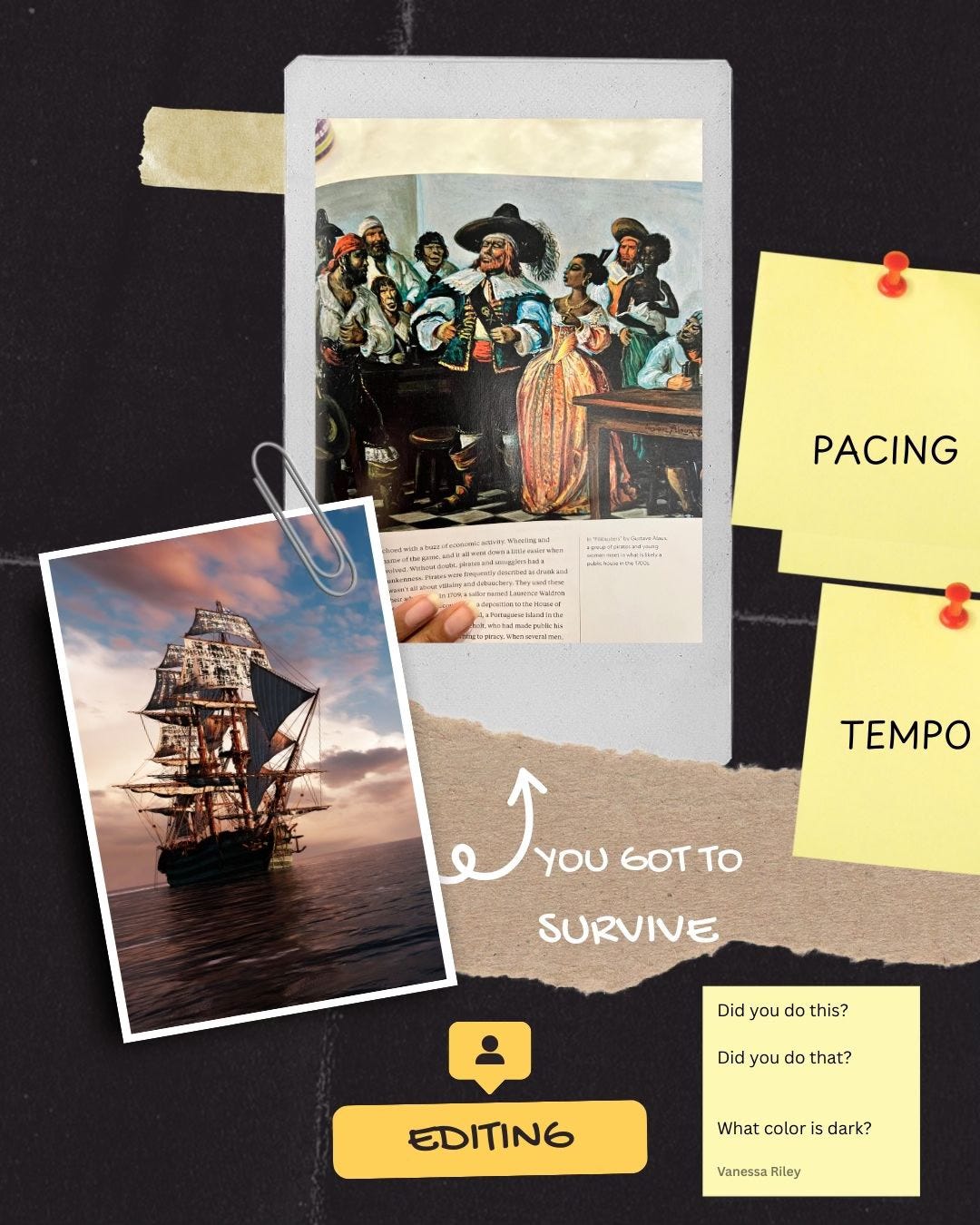
Dec 17, 202400:00:40Tap to summarizeI’ve just completed the copy edits for my 27th book, Ashes on the Sea. Slated for release in 2026, this historical fiction dives into the 1600s—a time when piracy was legal and wenching was a way of life. It’s the wildest story I’ve ever written, one that truly tested me. I can’t wait to share updates about its creation and historical inspirations in 2025.But today isn’t about Ashes on the Sea. Instead, let’s talk about the art of editing—and why every writer, whether indie, traditionally published, or hybrid, owes it to their craft and their readers to embrace the full editing process. Skipping steps is never worth it.Here’s my editing flow: Developmental Edits ➡ Revision Time ➡ Sensitivity Review ➡ Copyediting ➡ Proofreading ➡ (Praying—throughout!)Developmental EditsDefinition: The first and most comprehensive layer of editing. Developmental editing tackles the big-picture elements: story structure, pacing, plot, character arcs, and themes. This stage addresses questions like: Does the story flow logically? Are the characters well-developed? Are there plot holes or inconsistencies?My Process: For every book I write, I hire a freelance editor, Felicia, before sending the manuscript to my acquiring editor. Why? Because she gives me confidence. Felicia spots obvious plot holes, catches when I’ve changed character names mid-story, and pushes me to deepen emotional moments. She knows me—and more importantly, she knows what I’m capable of delivering.Some of you may use beta readers or critique groups. For me, it’s Felicia. Her feedback is my sanity check, giving me the rock-star confidence to share my work with my agent or editor.Expectations: Significant feedback and suggested rewrites. This phase often leads to multiple revisions to get the story right.Why It Matters: Writers are often too close to their stories to see what’s missing. A developmental editor shapes your book into a cohesive, compelling narrative. This phase has existed in some form for centuries—editors as far back as the 18th century guided writers on structure and flow.RevisionsDefinition: This is where the author implements feedback from the developmental edit. It’s your chance to refine the manuscript and ensure everything fits together seamlessly.Expectations: Be prepared to rewrite, cut, or expand sections. It’s a meticulous process, but it strengthens your story exponentially.Why It Matters: Skipping revisions results in a less polished book. Readers notice when story elements don’t align, which erodes trust in your storytelling.Sensitivity ReviewDefinition: Sensitivity readers review your manuscript to ensure accurate and respectful representation of cultures, identities, and historical events. This step is crucial, especially when tackling diverse characters or sensitive topics.Expectations: A sensitivity reader provides notes on areas that may inadvertently cause harm or perpetuate stereotypes.Why It Matters: Stories have power. Authenticity and inclusivity elevate your writing, and ensuring your work does no harm enhances its impact. While sensitivity editing gained traction in the 2010s, its roots trace back to earlier editors who championed fairness and accuracy.CopyeditingDefinition: Copyediting hones in on the finer details: grammar, punctuation, sentence structure, consistency, and clarity. This phase ensures your story reads smoothly and professionally.Expectations: A copyeditor identifies errors, flags inconsistencies, and queries unclear passages. They might also highlight repetitive words or phrases (those dreaded echoes!) and teach you something new along the way. For example, I recently learned that “hubris” wasn’t used until the mid-19th century—a fascinating tidbit for a proud historical fiction writer.Why It Matters: A well-copyedited manuscript shows respect for your readers. Copyediting as a formal discipline emerged in the early 20th century, but its principles—clarity, correctness, and coherence—have been valued for much longer.ProofreadingDefinition: The final pass before publication. Proofreading catches lingering typos, formatting issues, and minor errors that slipped through earlier stages.Expectations: A proofreader ensures your manuscript is polished and ready for print or digital distribution.Why It Matters: Even the most seasoned authors can’t catch every mistake on their own. Proofreading ensures your book meets professional standards, leaving a positive impression on readers.Lessons Learned* Have Your Sources Ready: For historical fiction like Ashes on the Sea, meticulous research is non-negotiable. Cite your references to support accuracy and answer editor queries. The best copyeditors provide their own sources, which helps me learn and refine my craft.* Query, Don’t Assume: Never rewrite based on assumptions—especially from a colonizer’s perspective. I once had a copyeditor tell me the Germans in 1928 named the Khoe people, Khoesans. The Khoe have been in existence since 2300 BC, and incorporated in a book set in 1675. Let that sink in.* Be Humble: Negative feedback stings, but it’s essential for growth. Use it to improve. The query or question is there to clear up confusion, not question your abilities. It shouldn't be thought of as personal.* Avoid Harm: Represent cultures authentically and respectfully. Sensitivity edits reveal potential landmines that could damage your credibility if overlooked.* Echoes Are a Problem: Repeated words or phrases distract readers. Every CE editor should catch these—and if they don’t, side-eye them!* Authentic Dialogue: CE’s don’t overcorrect dialogue to make it sound “too educated or stilted.” Please don’t make changes to make dialogue sound more “hood” if you’ve never met educated POCs. Just query. (Yes, that copyeditor got fired.)Editing is an investment in your craft and your readers. Every step—developmental editing, revisions, sensitivity reviews, copyediting, and proofreading—works together to ensure your book is the best it can be. Writing may be a solitary act, but publishing is a collaborative effort. Embrace the process. Your readers will thank you. This is a public episode. If you would like to discuss this with other subscribers or get access to bonus episodes, visit vanessariley.substack.com
Transcribe →
Arcs to A Wager at Midnight have landed!
Dec 6, 202400:00:46Tap to summarizeJust received a box of ARCs for A Wager at Midnight, and I couldn’t be more thrilled!Meet Scarlett Wilcox, a brilliant researcher willing to defy society's rules to pursue her passion, and Dr. Stephen Carew, a Trinidadian-born physician dedicated to his community. When Scarlett’s secret life as a scholar is exposed, Stephen steps in to save her from disgrace, sparking a connection neither expected.Will their brilliant minds overcome their reluctant hearts? Find out in this enchanting Regency romance! This dazzling series features diverse London and the influence of key British Colonies on the Regency in a romance that has high stakes and even higher emotions. And don’t forget the Duke of Torrance. He wagers his heart to win back the love of his life, the Viscountess Hampton, in a winner-takes-all scenario.Who will win in this enchanting tale of second chances and undeniable love? Stay tuned for more, and let the countdown to release begin! 💕📚Request review copies at NetGalley and Edelweiss: Writing Thought of the MomentDon’t wait for the perfect moment to write—capture your thoughts as they come. Even the roughest idea can spark brilliance later, but only if you get it down today.Quote to Dwell UponGwendolyn Bennett:"We are as the delicate petals of the lotus flower, whose stem is rooted in the dark depths of the river, yet it blossoms out of the darkness, emerging pure and beautiful." —from her poem, Heritage and first published in The Book of American Negro Poetry in 1922, edited by James Weldon Johnson. This is a public episode. If you would like to discuss this with other subscribers or get access to bonus episodes, visit vanessariley.substack.com
Transcribe →